in the frame
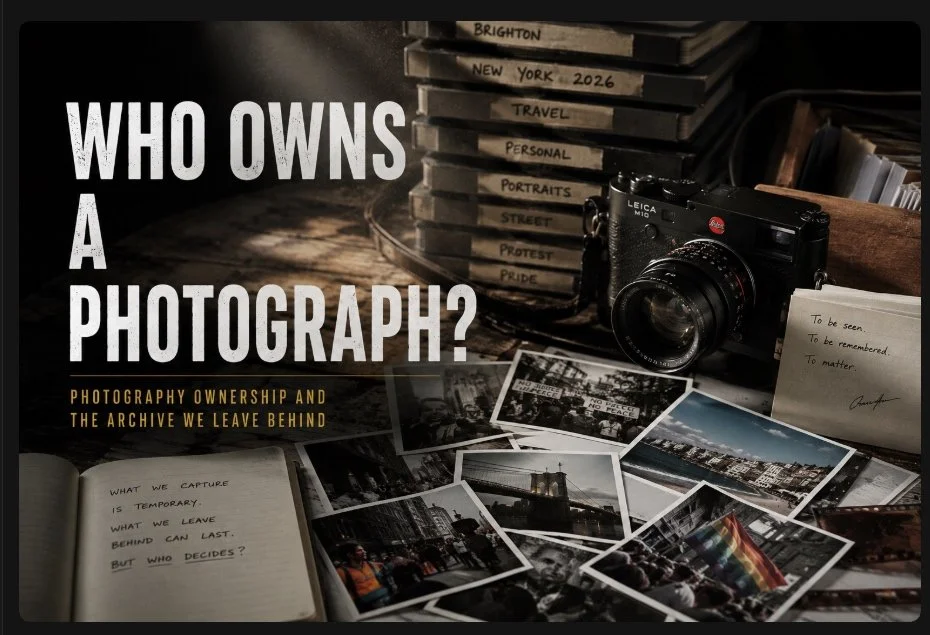
Who Owns a Photograph?Photography, Ownership, and the Archive We Leave Behind
There is a question that sits underneath all street photography, all documentary work, all the years of accumulated frames on a hard drive: who does a photograph actually belong to?
It sounds simple. You take it, you own it. Except it isn't simple at all.
The Carol Highsmith Case
Carol Highsmith has spent decades doing something extraordinary — photographing America. Not the postcard version, not the landmarks and the skylines, but the real thing: the backwaters, the diners, the forgotten main streets, the quiet corners of a vast country that most photographers never think to point a camera at. Her archive runs to hundreds of thousands of images and represents one of the most significant documentary projects in American photographic history.
She donated the entire archive to the Library of Congress. For free. For the public. For future generations.
There is a question that sits underneath all street photography, all documentary work, all the years of accumulated frames on a hard drive: who does a photograph actually belong to?
It sounds simple. You take it, you own it. Except it isn't simple at all.
The Carol Highsmith Case
Carol Highsmith has spent decades doing something extraordinary — photographing America. Not the postcard version, not the landmarks and the skylines, but the real thing: the backwaters, the diners, the forgotten main streets, the quiet corners of a vast country that most photographers never think to point a camera at. Her archive runs to hundreds of thousands of images and represents one of the most significant documentary projects in American photographic history.
She donated the entire archive to the Library of Congress. For free. For the public. For future generations.
Browse Carol Highsmith's archive at the Library of Congress
Carol Highsmith's America — official site
What happened next is one of the more jaw-dropping stories in recent copyright law. Highsmith attempted to use one of her own photographs — an image she had created, that she had donated to the public domain — and received an invoice from Getty Images demanding a licence fee. Getty had been scraping public domain images from the Library of Congress and relicensing them as though they owned them.
Highsmith sued for over a billion dollars. The court ruled against her on a technicality of damages. She couldn't recover what she'd lost. Case closed.
The photographer who gave her life's work to the public, for free, was billed for using her own image.
Why We Shoot
That case forces a question that every photographer should sit with: why are you taking photographs, and what do you want to happen to them?
The easy answer is personal pleasure. The slightly more honest answer is ego — the desire to be seen, to have your eye validated. But the deeper answer, the one that gets more interesting the older you get, is something about time.
I have been looking back through my archive recently. twenty years of street photography. The fashions alone are a document — the clothes people wore, the shops behind them, the buildings that are no longer there. Photographs I took without thinking twice about have become, quietly and without permission, historical records.
Street photography is always, on some level, an act of preservation. You are stopping time at a specific point and holding it still. The question is: for whom?
Jason Eskenazi on Protecting the Archive
I came across this idea reinforced recently watching Paulie B's exceptional Walkie Talkie series — an interview with photographer Jason Eskenazi that's well worth an hour of your time.
Eskenazi makes the point directly: you have to protect your own archive. Not just from hard drive failure or flood or fire, but from the systems — commercial, legal, algorithmic — that will commodify your work the moment you let it out of your hands without understanding what you're doing.
Highsmith understood that. She made a deliberate choice to give her archive to the public, in perpetuity, free of charge. What she didn't anticipate was that someone else would pick it up and sell it back.
The Hard Drive Question
Here is the version of this question that I think about: do we keep photographs stored on hard drives for our own private pleasure, or do we make them for future generations to view?
I don't think it has to be one or the other. But I do think it requires a decision — or at least an awareness. Because photographs left on a hard drive that nobody ever sees are, in a real sense, not finished yet. And photographs released into the world without thought about where they go and who profits from them can end up somewhere their maker never intended.
The Highsmith case is an extreme version of something that happens at every level of photography. The work you make has value — to you, to history, to people who haven't been born yet. That value doesn't evaporate because you gave it away. It just moves somewhere else.
Know where it's going.
Until next time, keep snapping
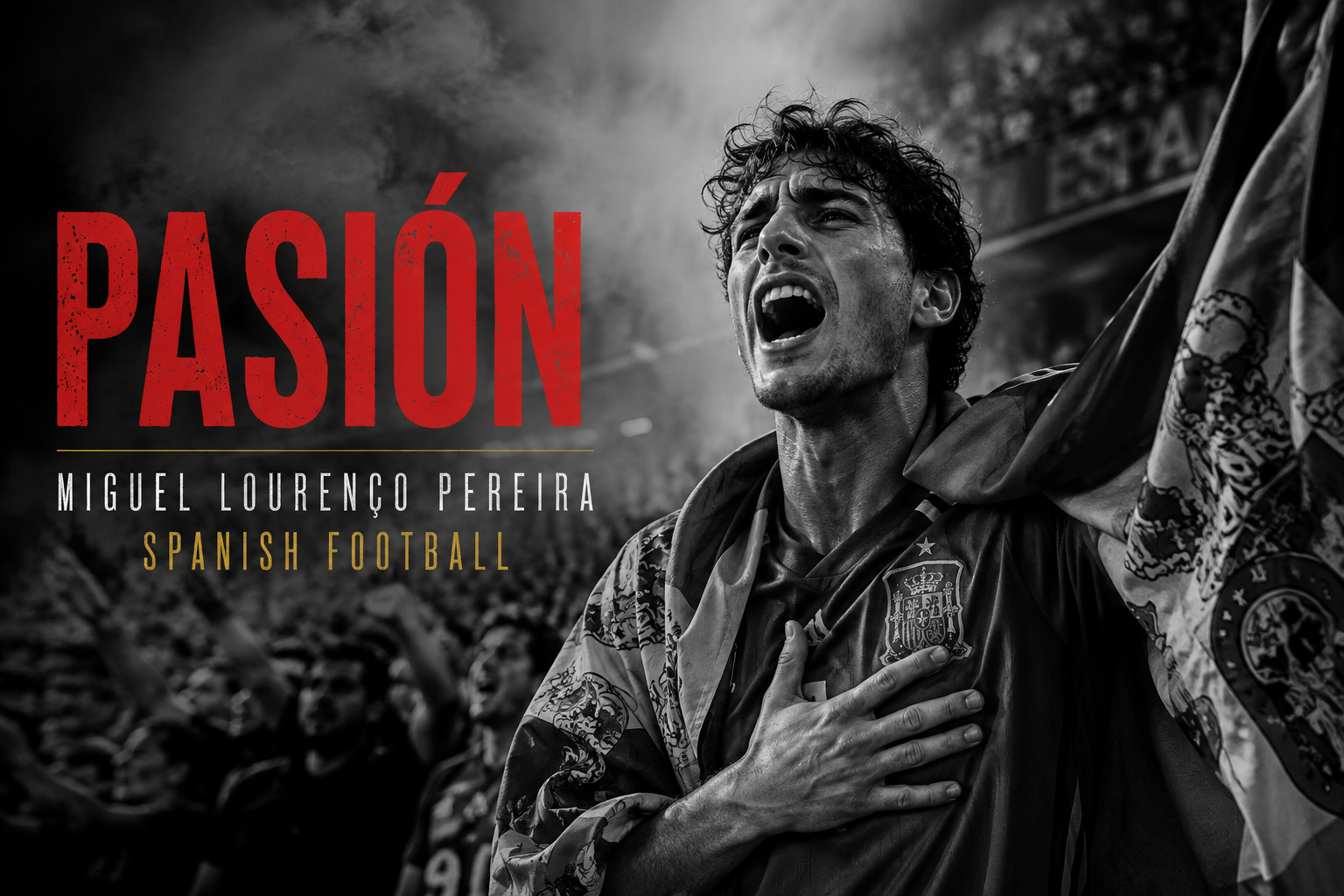
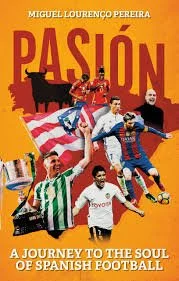
Pasión: A Journey to the Soul of Spanish Football — A Book Worth Stopping For
Not everything on this blog is about photography. Occasionally a book stops me in my tracks and demands to be written about. This is one of those books.
Miguel Lourenço Pereira's Pasión: A Journey to the Soul of Spanish Football arrived in my reading life at the perfect moment — in the weeks immediately after Spain's 2026 World Cup victory, with Argentina's behaviour still fresh and Spain's dignity under pressure still vivid. I doubt Pereira planned that timing, but it couldn't have been better if he had.
Not everything on this blog is about photography. Occasionally a book stops me in my tracks and demands to be written about. This is one of those books.
Miguel Lourenço Pereira's Pasión: A Journey to the Soul of Spanish Football arrived in my reading life at the perfect moment — in the weeks immediately after Spain's 2026 World Cup victory, with Argentina's behaviour still fresh and Spain's dignity under pressure still vivid. I doubt Pereira planned that timing, but it couldn't have been better if he had.
The Right Book at the Right Moment
There is no more instructive way to understand what Pereira is arguing than to watch that World Cup final first. Because Pasión is not really about football results. It is about character — national, regional, cultural — and the 2026 final put that character on the largest possible stage. Spain, provoked, composed themselves. Argentina, for all their talent, showed something else entirely. What separated those two sides in the final wasn't just quality. It was dignity.
"Spanish football — at its best — expresses something deeper than tactics or athleticism: a particular cultural spirit, rooted in the regions, the rivalries, and the contradictions of the country itself."
That is Pereira's central argument, and he earns it through specificity rather than sentiment. This is not a book of grand pronouncements. It is a book of places, characters, and ideas — the kind of book that teaches you to look at something you thought you understood and realise you'd only seen the surface.
Several Countries, One Shirt
The pasión of the title is not the noise in the stands. It is something older and more structural: a cultural conviction, passed down through generations of players and managers, that football in Spain is a form of expression as much as competition.
Pereira understands that Spain is not one country. It is, in reality, several — Basque, Catalan, Galician, Castilian, Valencian — each with its own identity, its own grievances, and its own relationship to the game. Spanish football has always had to hold that tension, and somehow still produces something coherent and brilliant on the pitch. How? That is the question the book keeps returning to.
The regional texture is beautifully handled. A recommendation for the tapas strip on Calle Laurel in Logroño — in La Rioja, on the Ebro, between the Basque Country and Castile, shaped by both but fully neither — becomes a meditation on how Spanish identity works. It's a quietly confident choice: Logroño doesn't shout about itself. Which may, Pereira implies, be the point.
I've done the last three football city breaks — Milan, Naples, and Valencia — and Valencia was, by no half measure, the best for a mixture of culture, football, and general life. Reading Pasión, I understood why. Valencia sits outside the Madrid-Barcelona duopoly, fiercely independent, with a football club embedded in the city's DNA rather than imported into it. The Mestalla is one of the most atmospheric grounds in Europe precisely because of that. I experienced something of what Pereira means by pasión without having a word for it at the time.
The Ghost in the Machine
The chapter on Pep Guardiola's tactical inheritance is the book at its analytical finest. Pereira traces the conversion of the second striker into a roaming attacking midfielder back through Juanma Lillo — a deeply philosophical coach who spent his career in the lower divisions of Spanish football, never winning a major trophy, but whose ideas Guardiola absorbed and then exported to Barcelona and Manchester City and beyond.
"Lillo was developing these ideas while the rest of Europe was still playing flat 4-4-2. The intellectual tradition — the idea that football is something to be thought about, argued about, philosophised over — is embedded in the culture."
Guardiola didn't invent that tradition. He was its most visible product. That is a specifically Spanish football story, and Pereira tells it with precision.
Why I'm Writing About It Here
This is a photography blog, and I make no apologies for occasionally taking a detour into books. The truth is, the best photographers and the best football writers are doing the same thing: learning to see what others walk past, and finding the language to make someone else see it too.
Pasión made me see Spain differently. It made me see that World Cup final differently. And it sent me back, in memory, to Valencia — to the Mestalla, to the streets around it, to the people I photographed there — and gave me a framework for what I'd been looking at.
That's what a great book does. It doesn't just describe the world. It changes the resolution.
Essential reading — whether you love football, Spain, or simply good writing about the things that matter to people.
Until next time, keep reading.
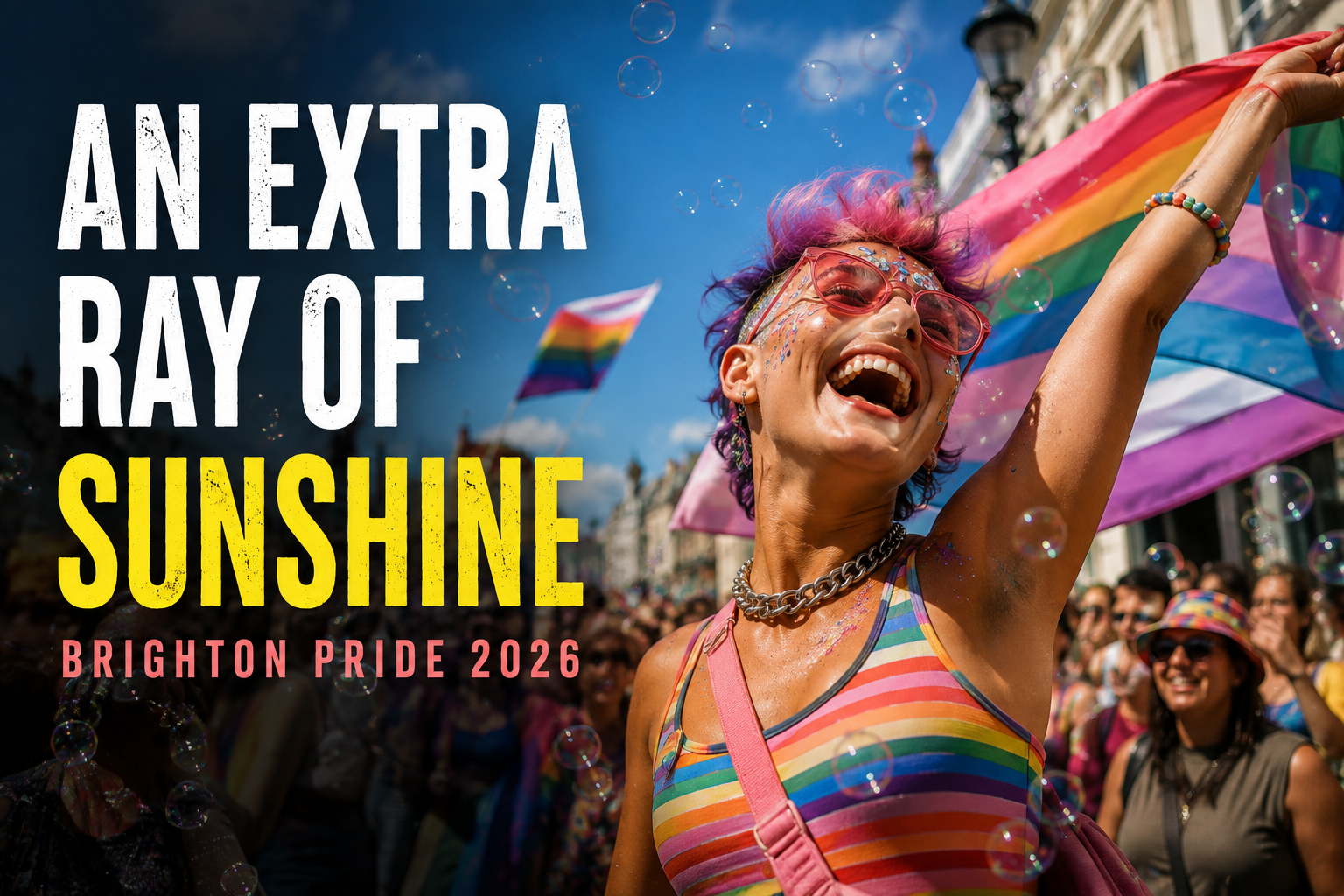
An Extra Ray of Sunshine — Brighton Pride 2026
Flash on the Street: Daylight Portraits at Brighton Pride
Earlier this summer I was at Trans Pride Brighton in July — a chilled, community-led march through the city that felt, in the best possible way, like Brighton simply being Brighton.
You can read that post here. Pride on the 1st of August was something else entirely.
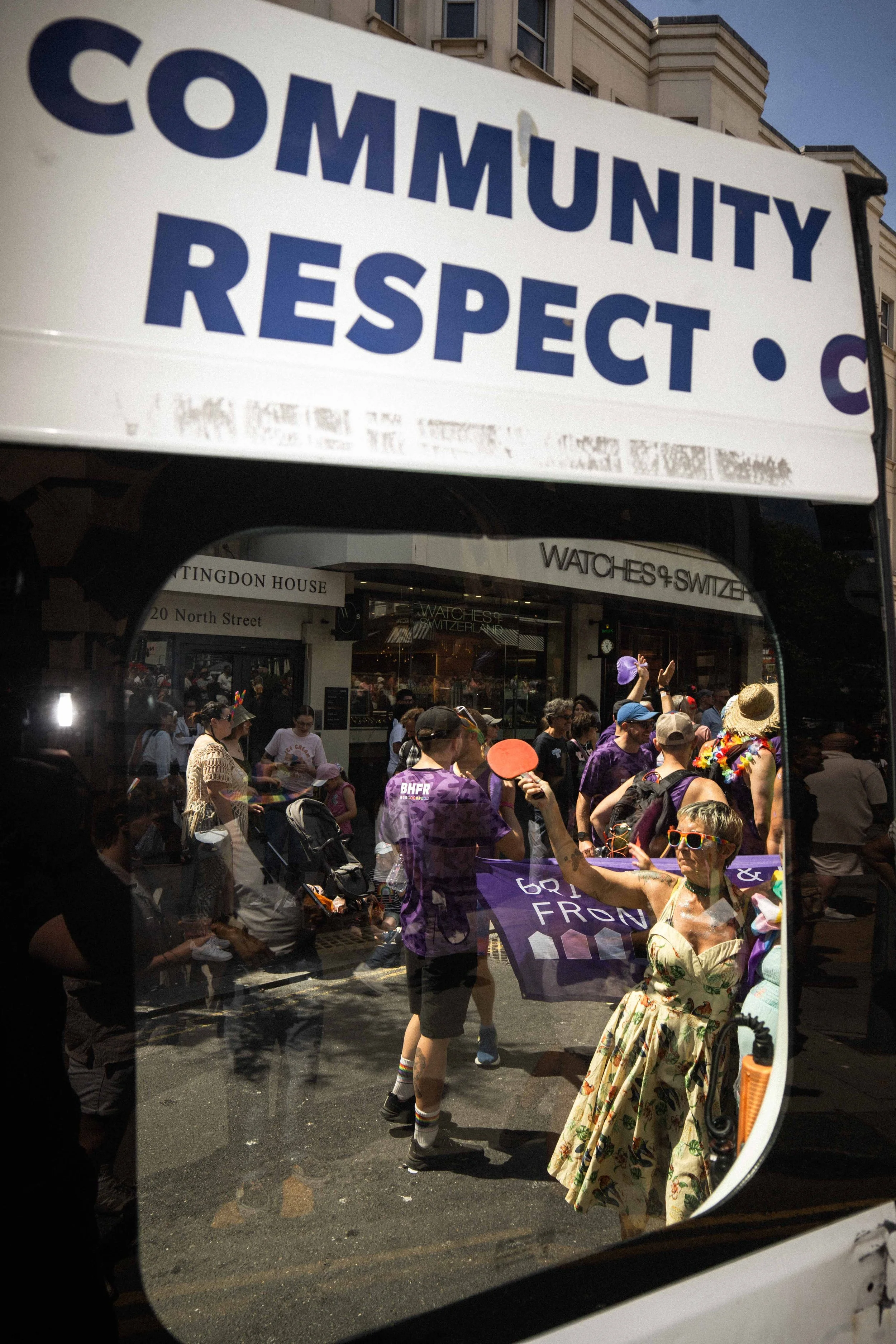
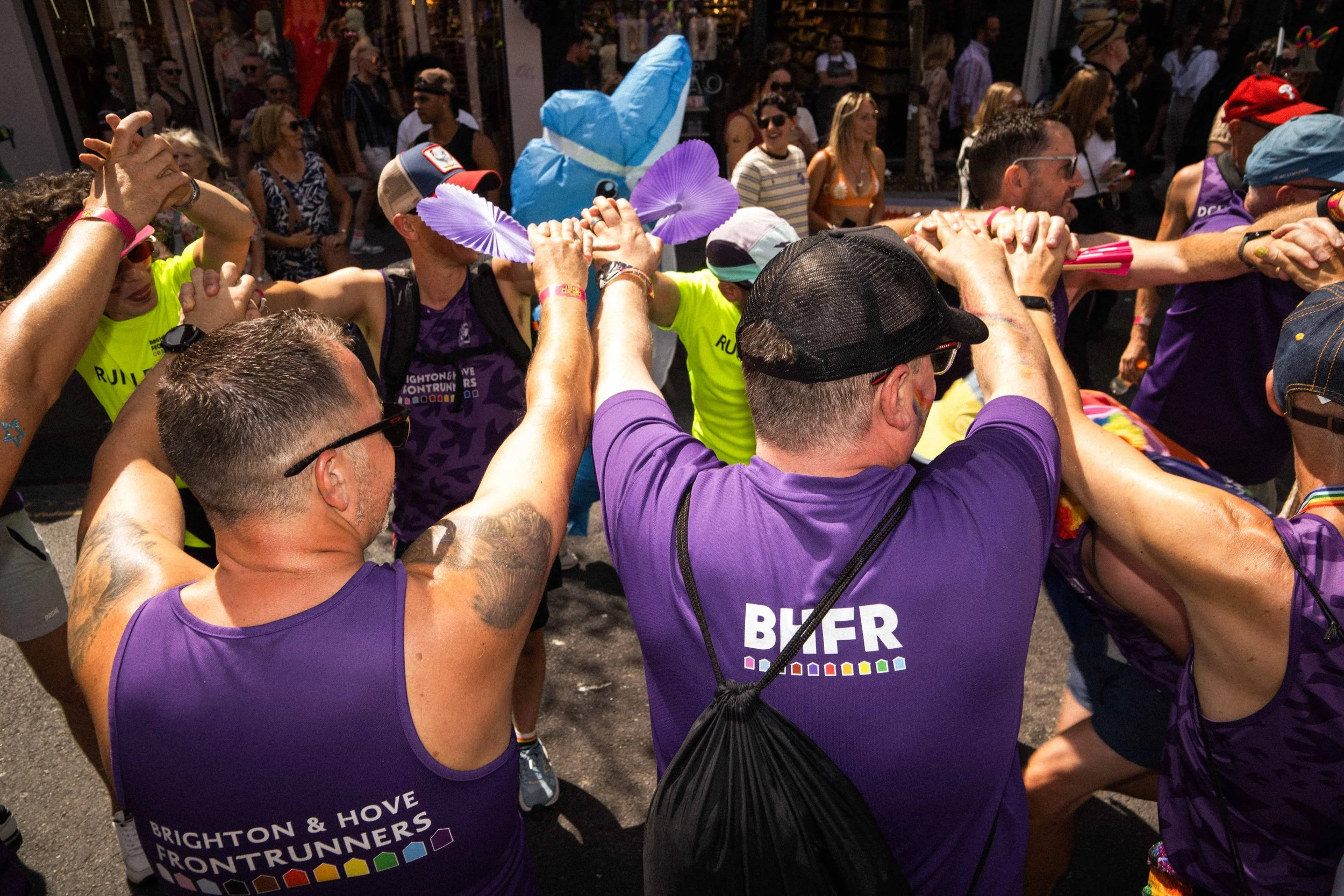
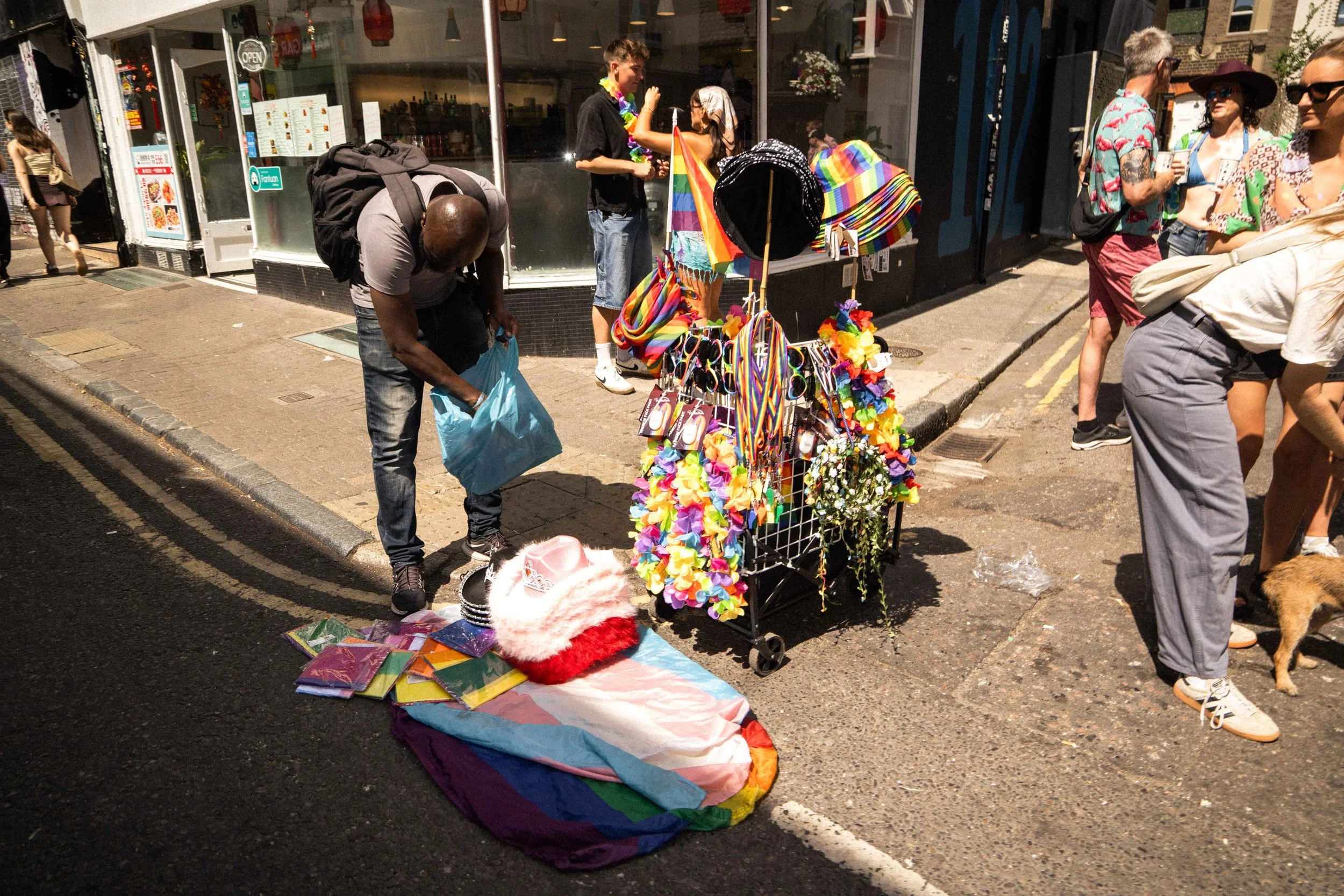
There is an annual moment, somewhere around late July, where I start getting excited about Brighton Pride. It is not just an event. It is a pilgrimage — a gathering that pulls in the four corners of Brighton, Sussex, and the UK, and beyond that, quite literally, the world.
This year I heard Spanish accents, Italian accents, Latin American accents. I stood in the middle of a street in Brighton, in the full heat of an August afternoon, surrounded by people who had come from everywhere to be here. That is what Pride does, and why it matters, and why I keep coming back with a camera.
Flash on the Street: Daylight Portraits at Brighton Pride
Earlier this summer I was at Trans Pride Brighton in July — a chilled, community-led march through the city that felt, in the best possible way, like Brighton simply being Brighton.
You can read that post here. Pride on the 1st of August was something else entirely.
There is an annual moment, somewhere around late July, where I start getting excited about Brighton Pride. It is not just an event. It is a pilgrimage — a gathering that pulls in the four corners of Brighton, Sussex, and the UK, and beyond that, quite literally, the world.
This year I heard Spanish accents, Italian accents, Latin American accents. I stood in the middle of a street in Brighton, in the full heat of an August afternoon, surrounded by people who had come from everywhere to be here. That is what Pride does, and why it matters, and why I keep coming back with a camera.
A Different Kind of Day
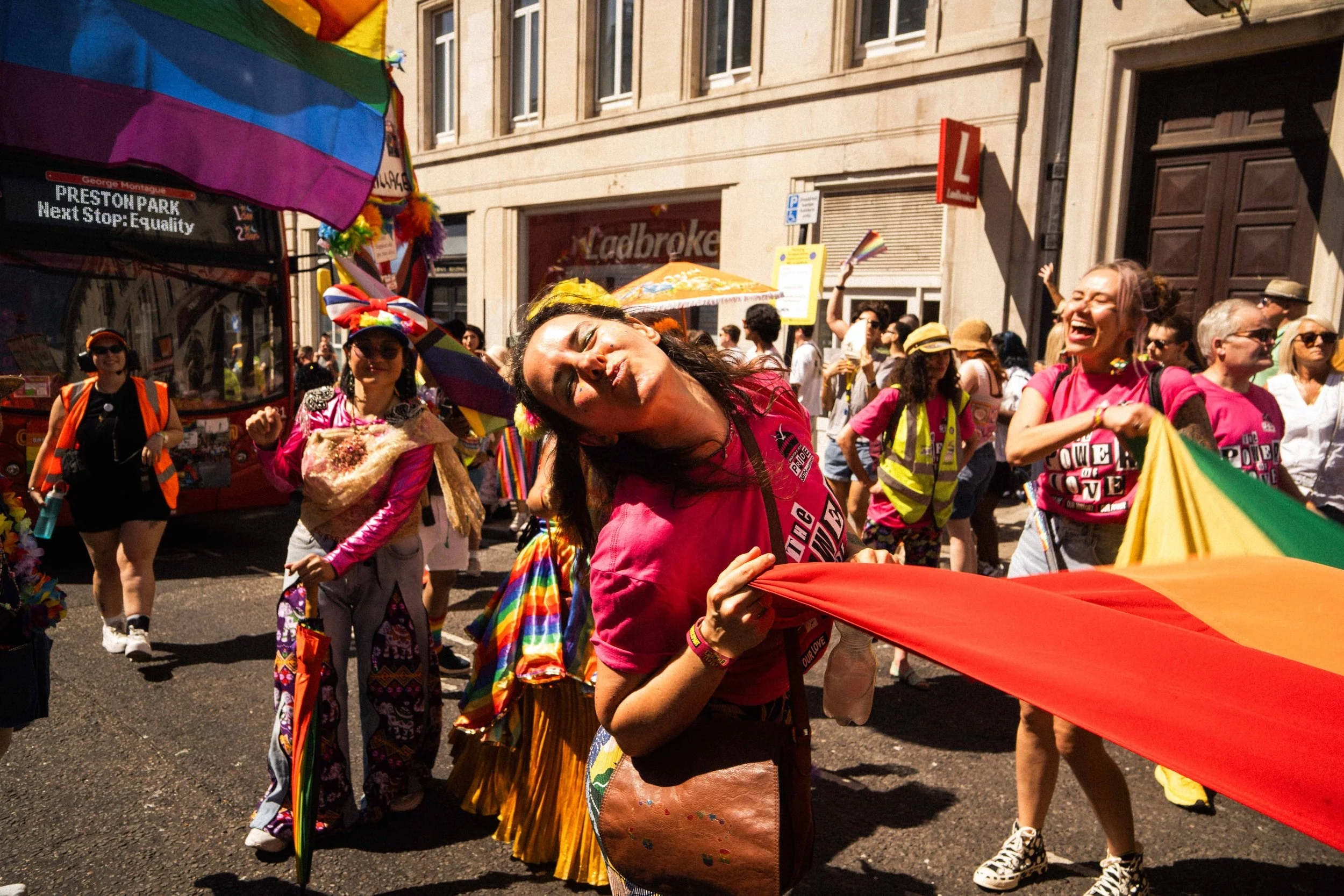
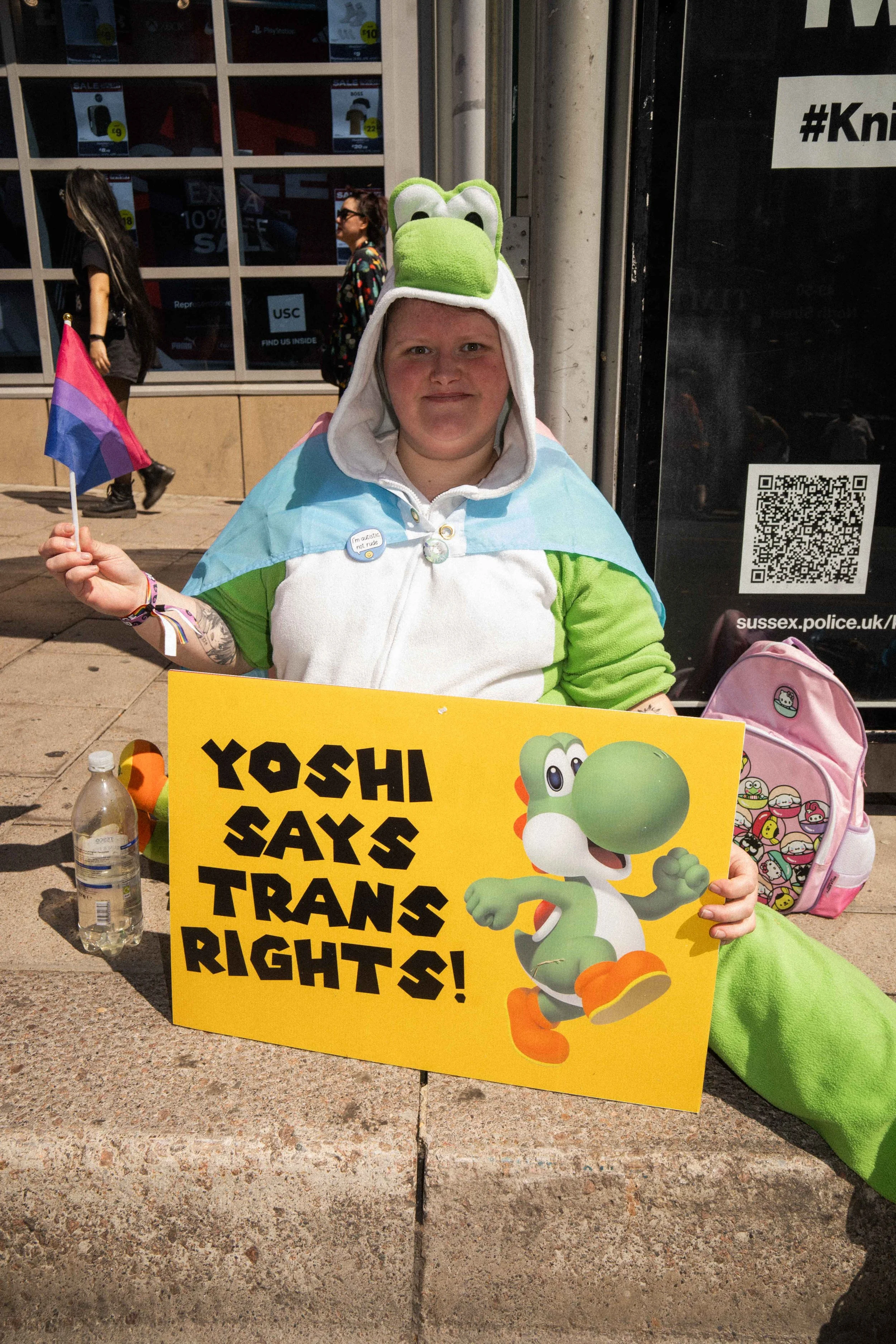
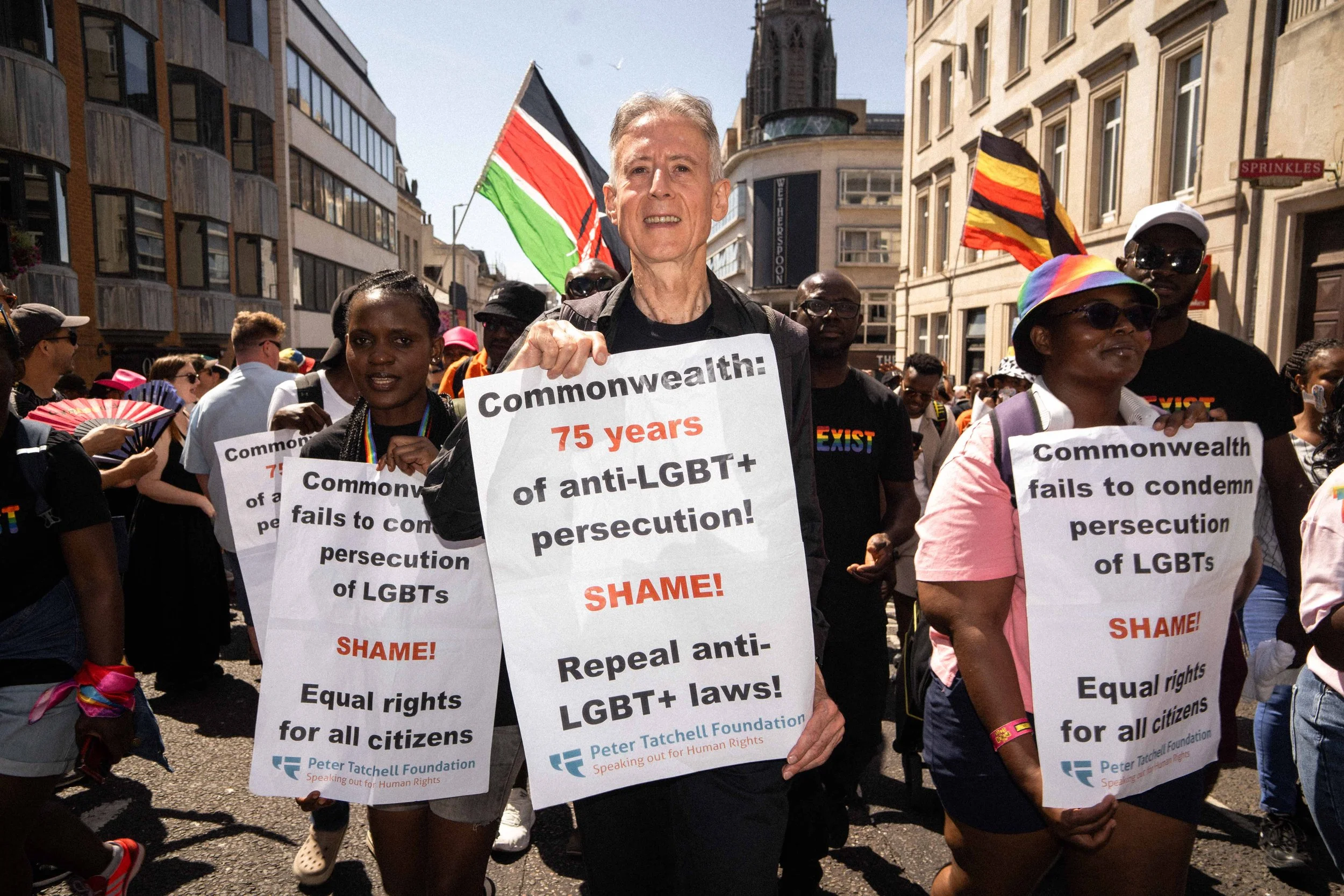
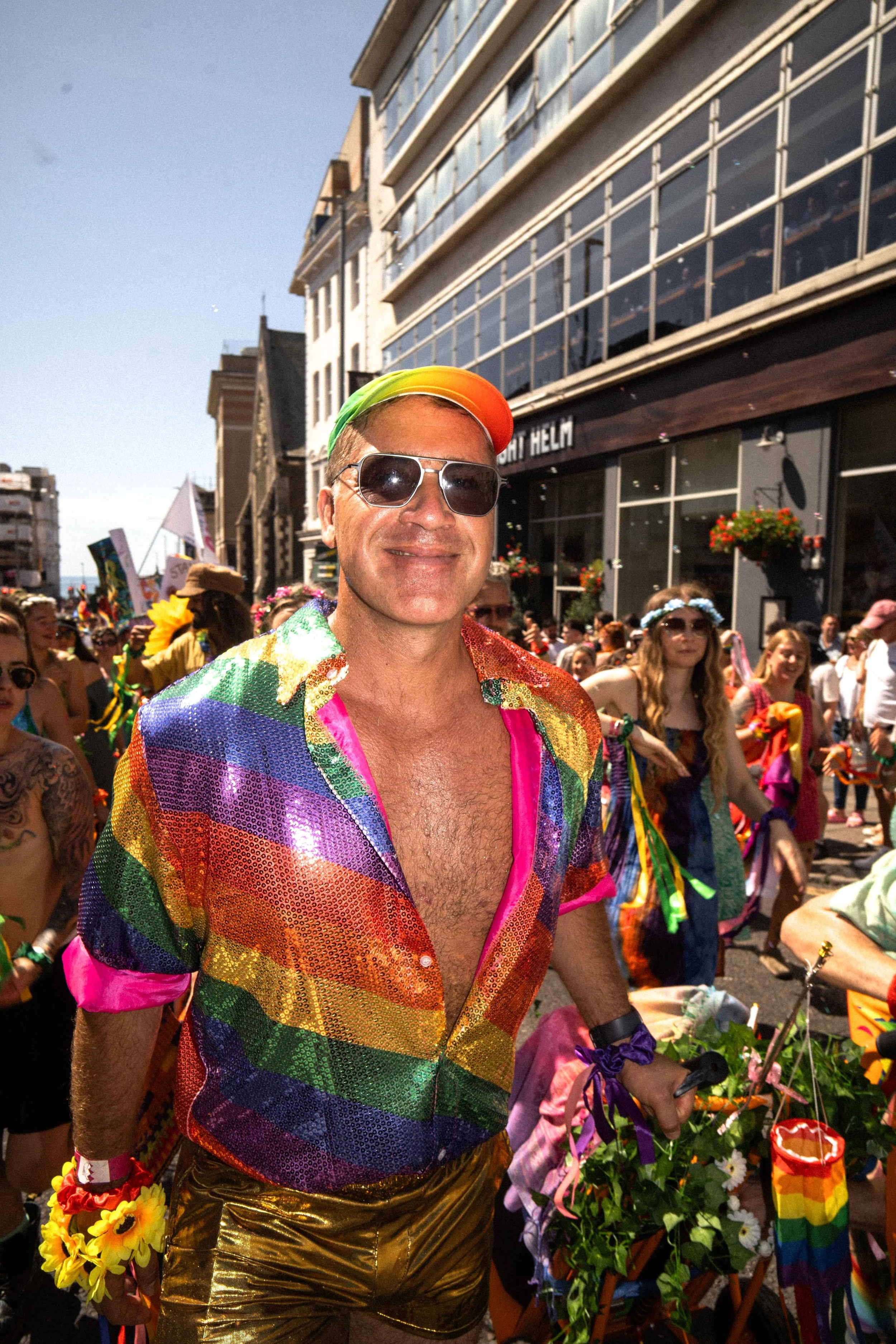
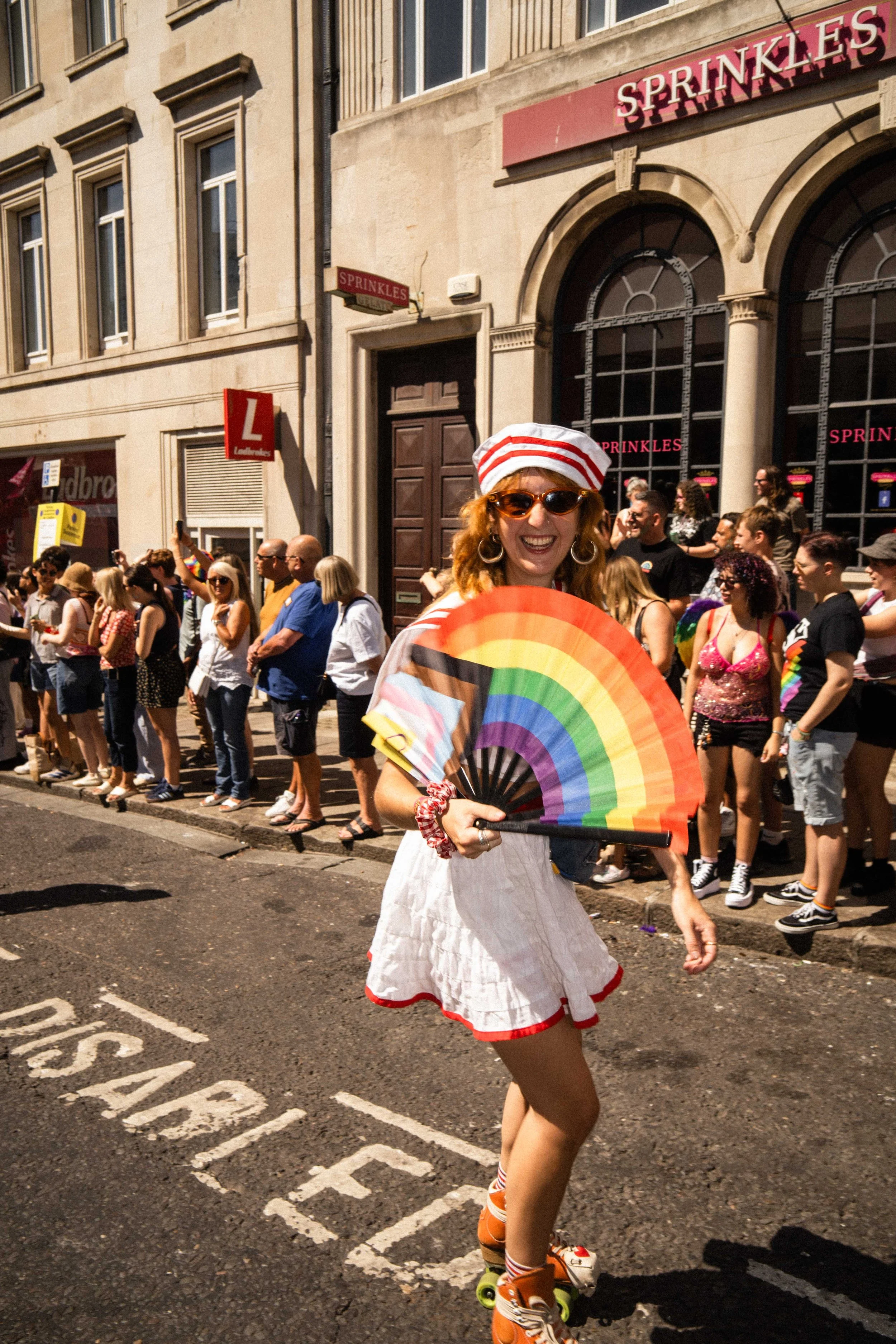
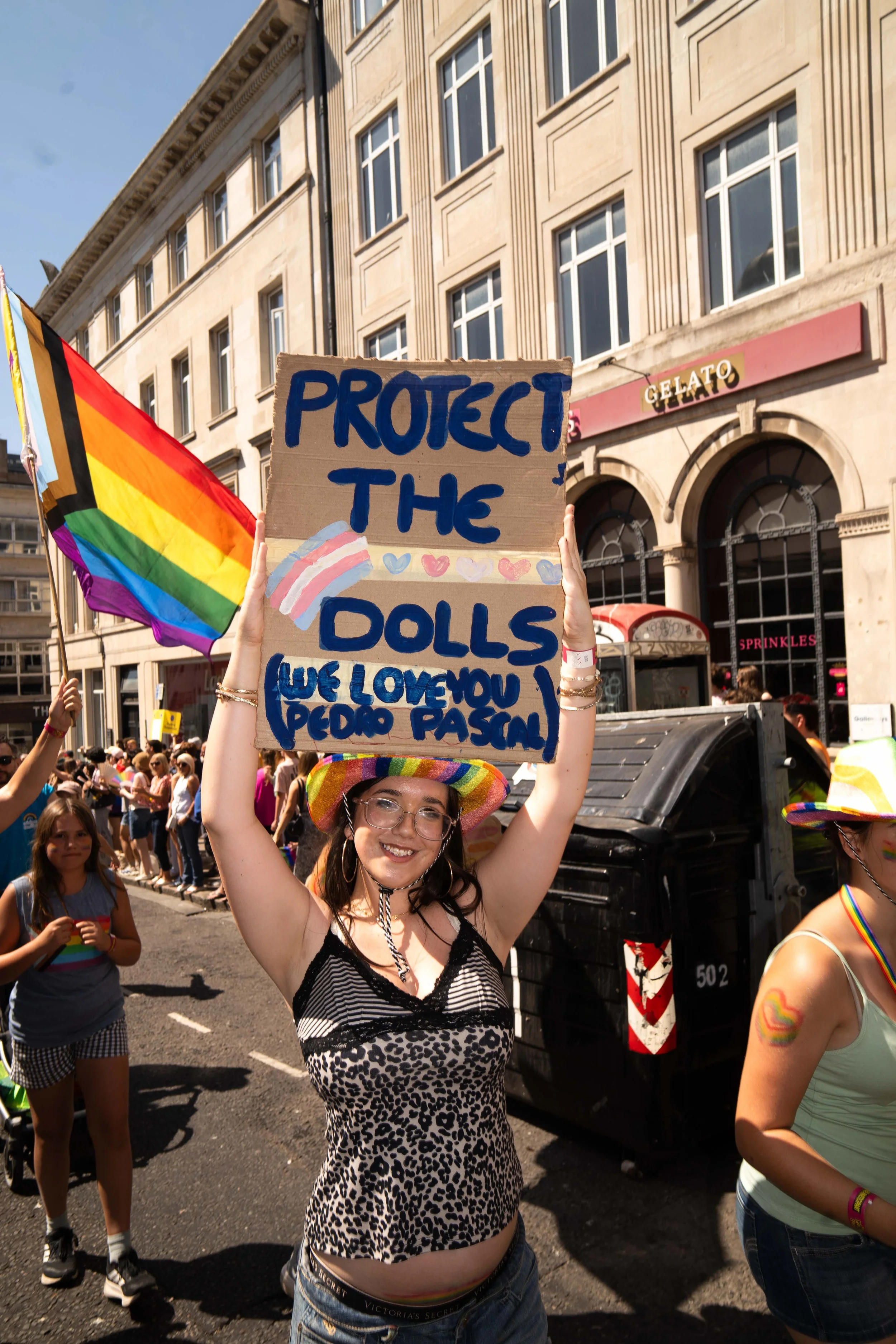
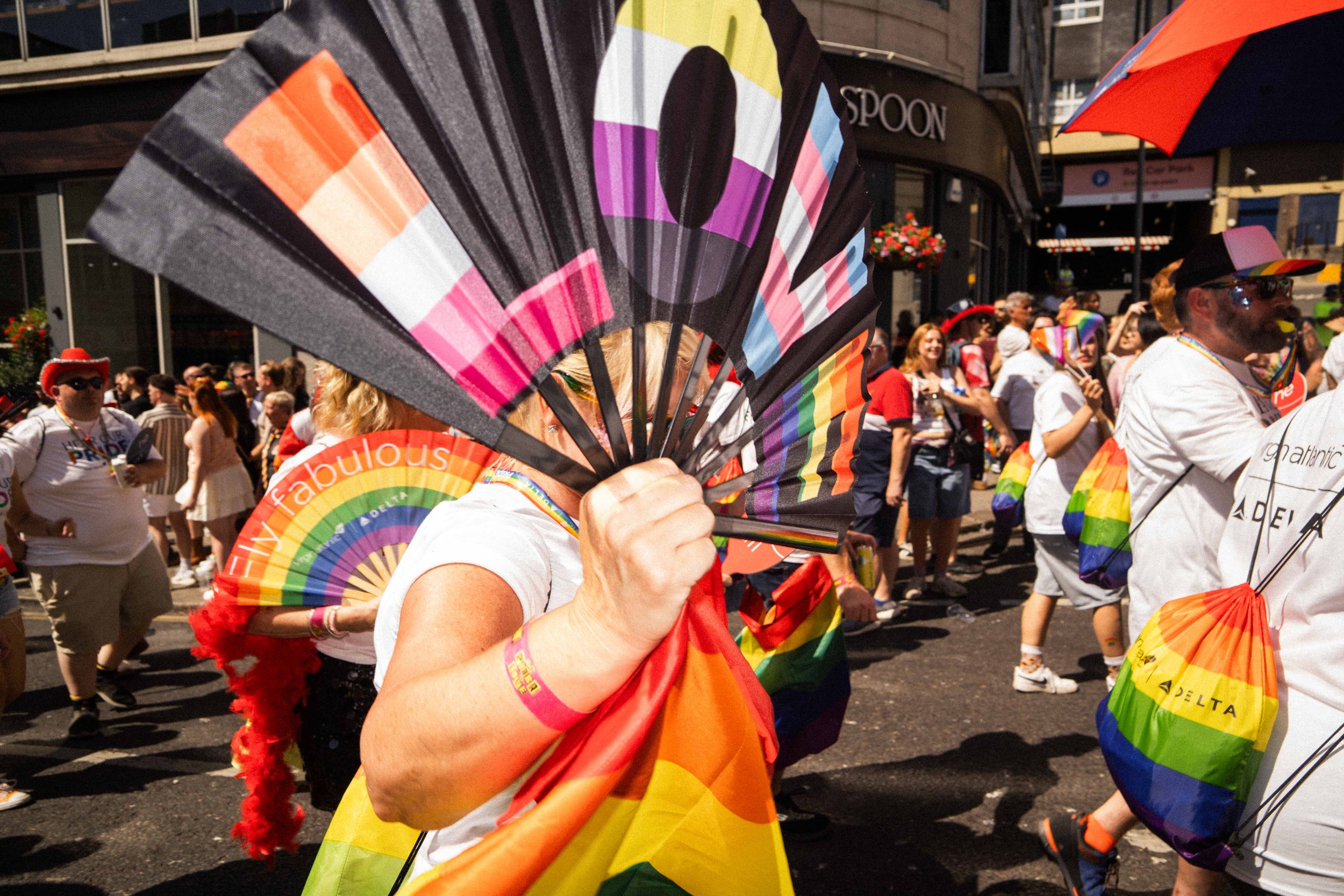
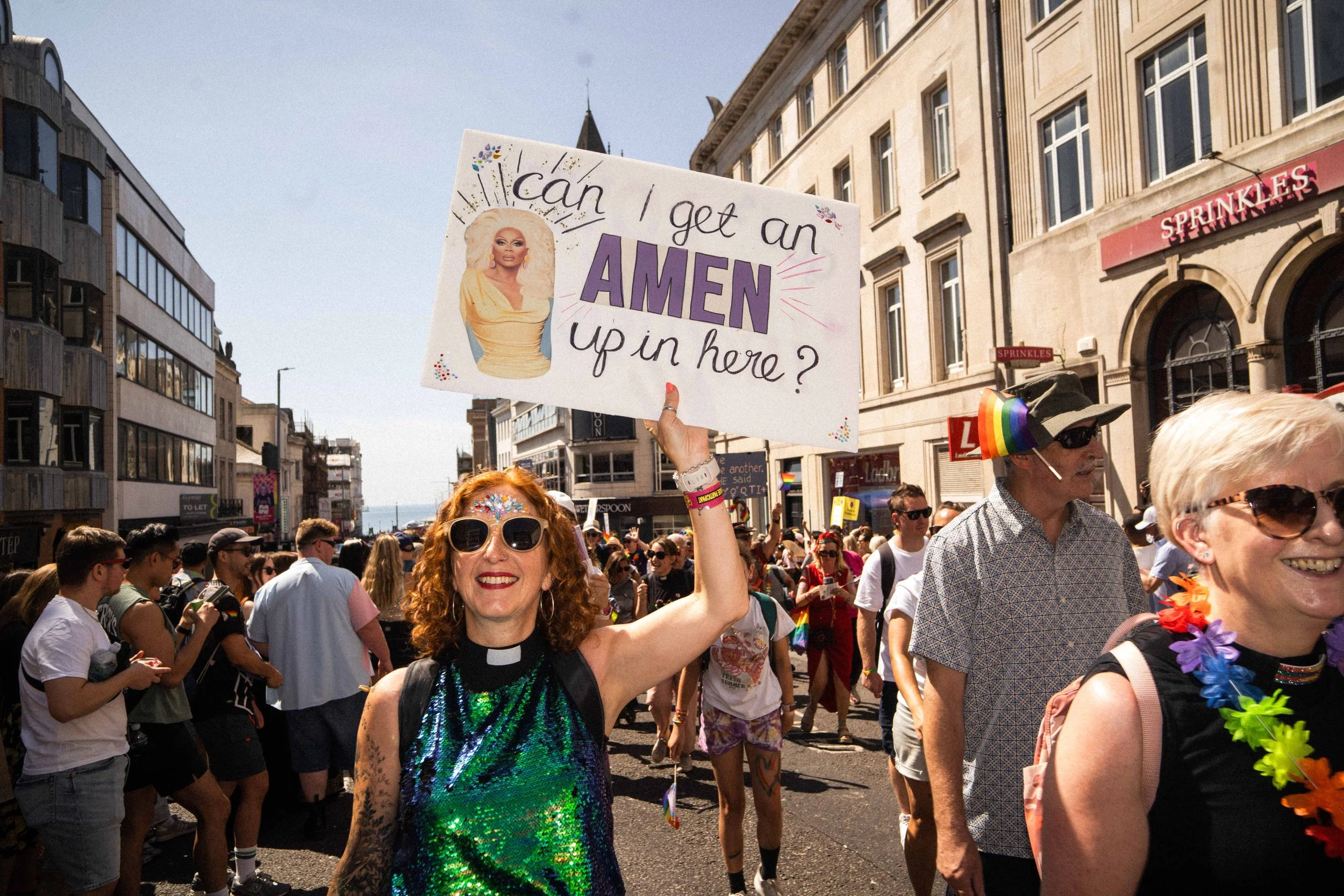
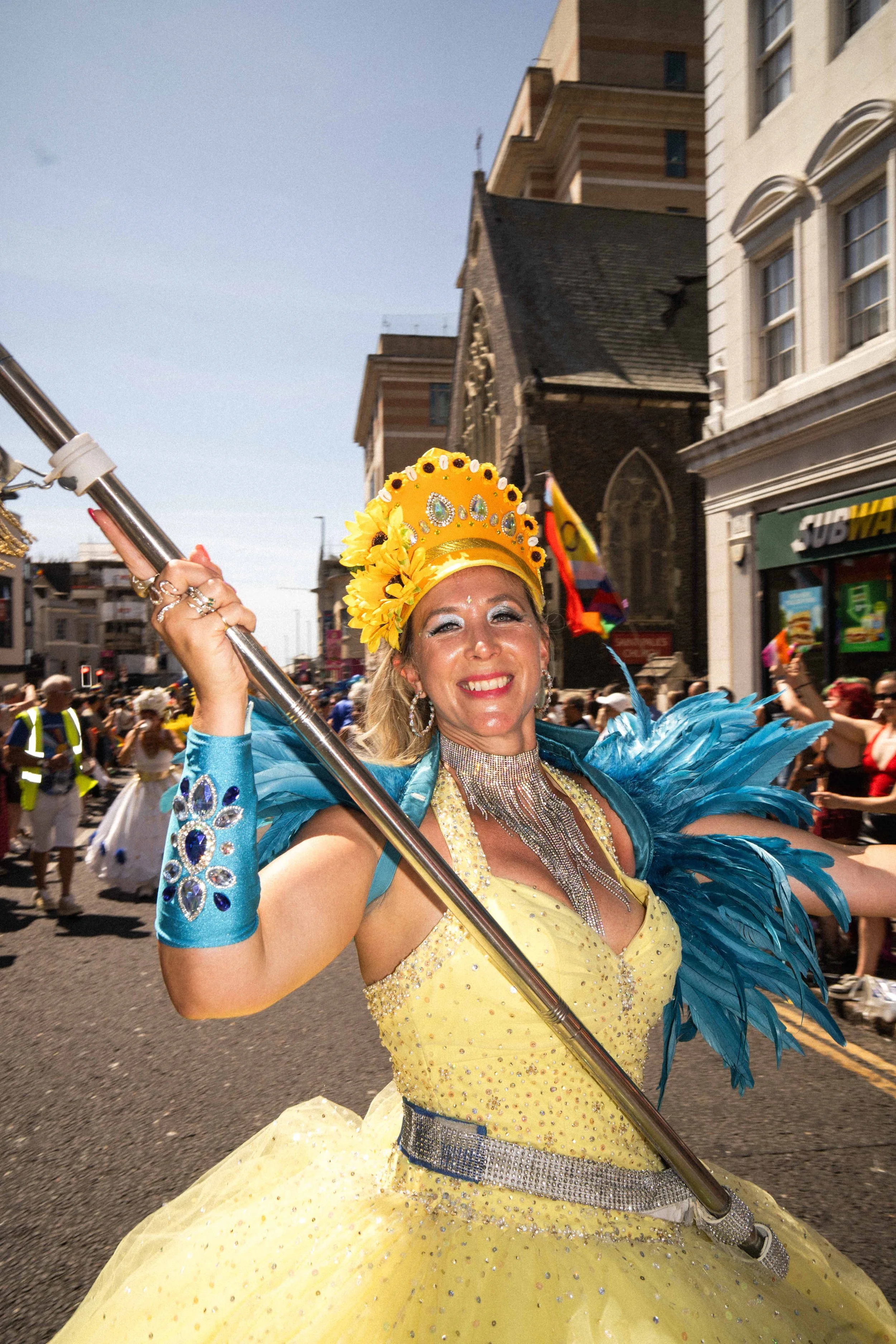
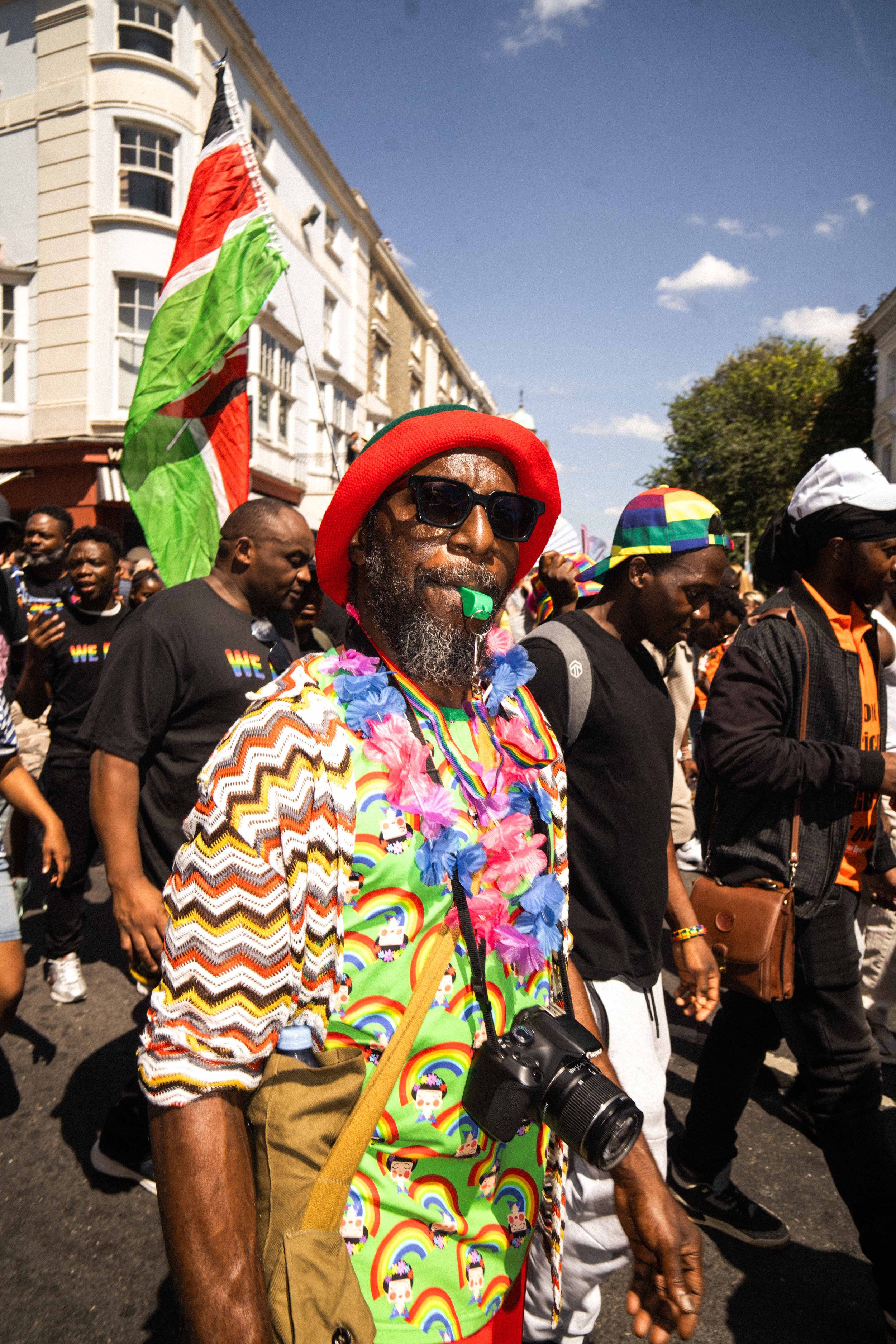
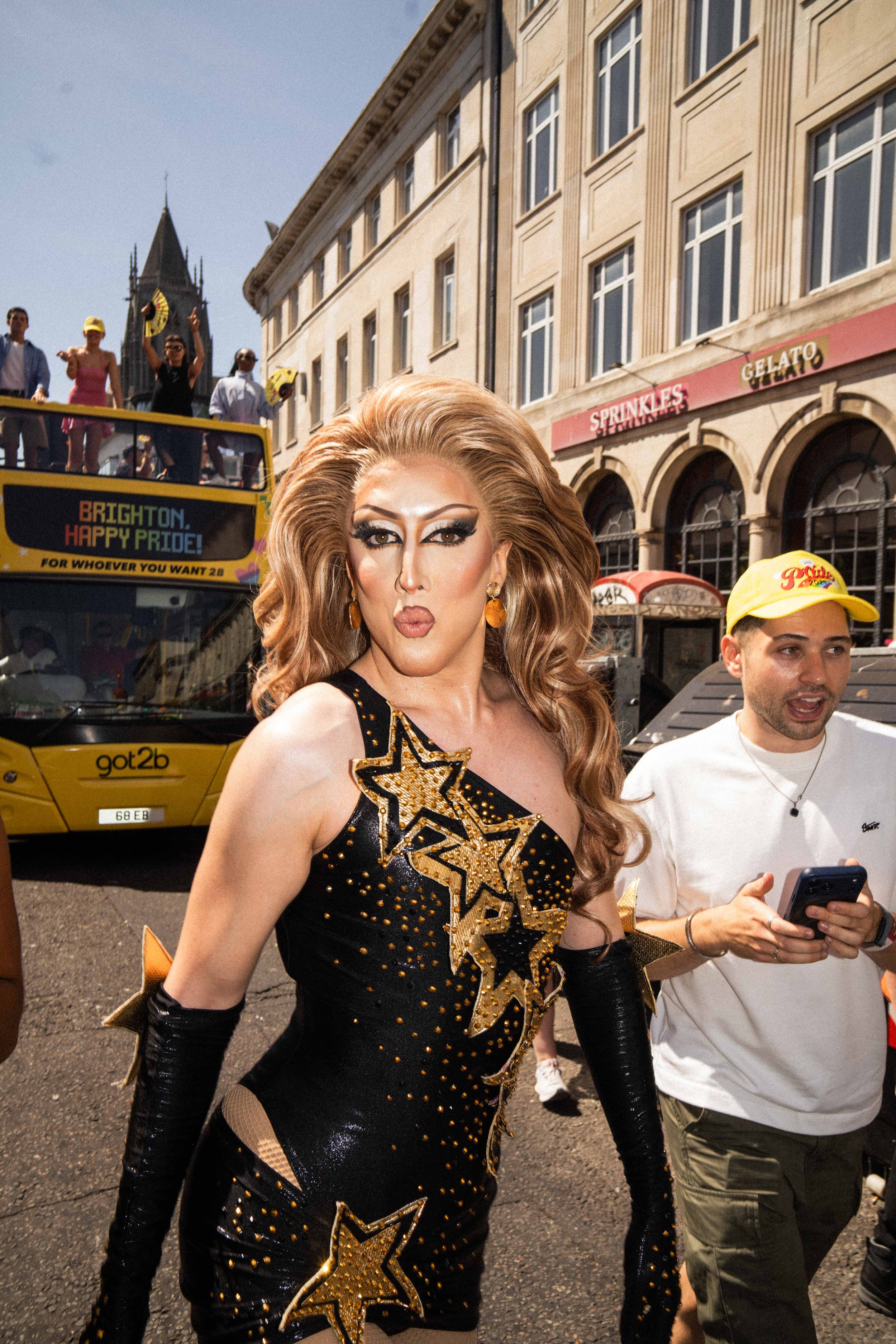
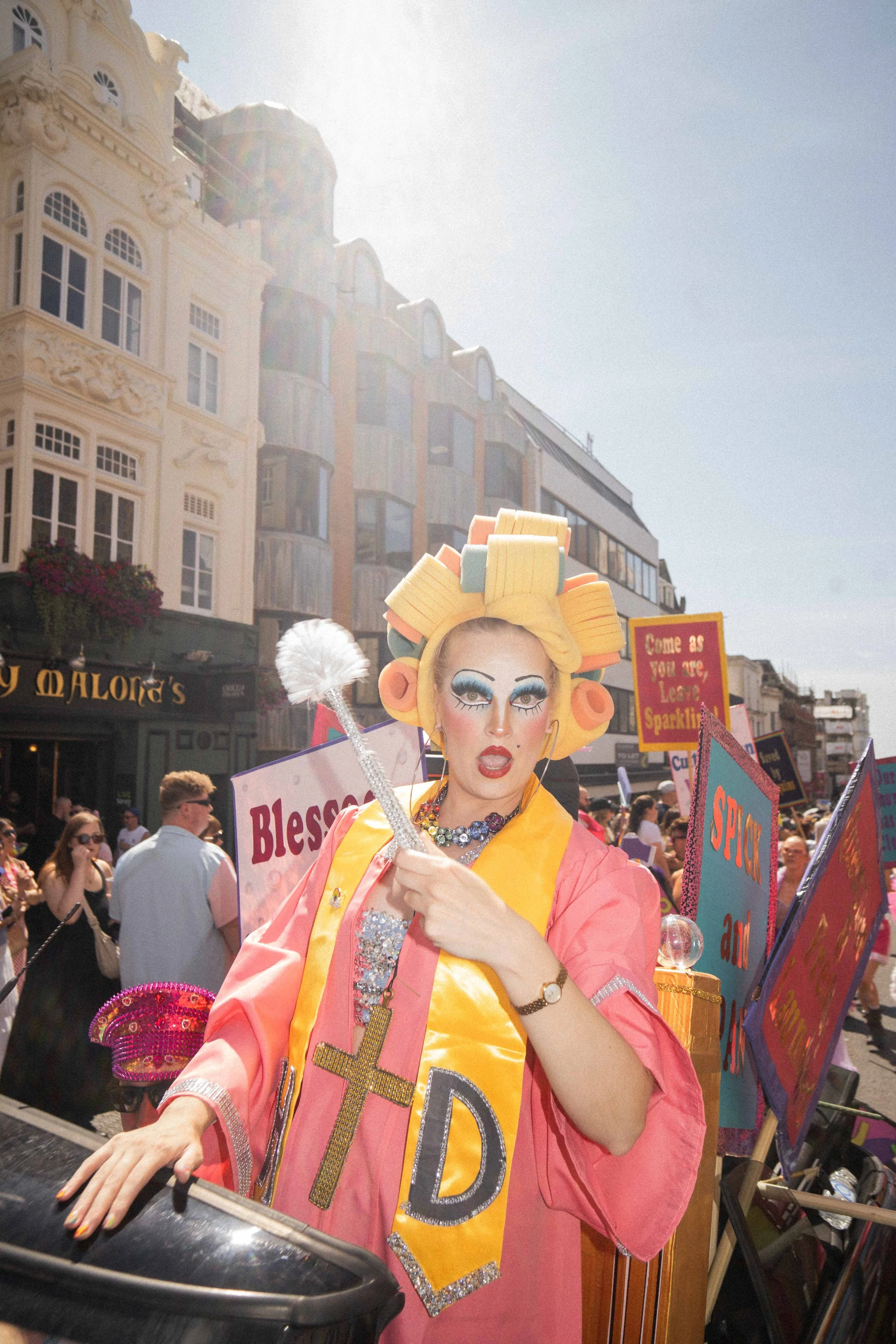
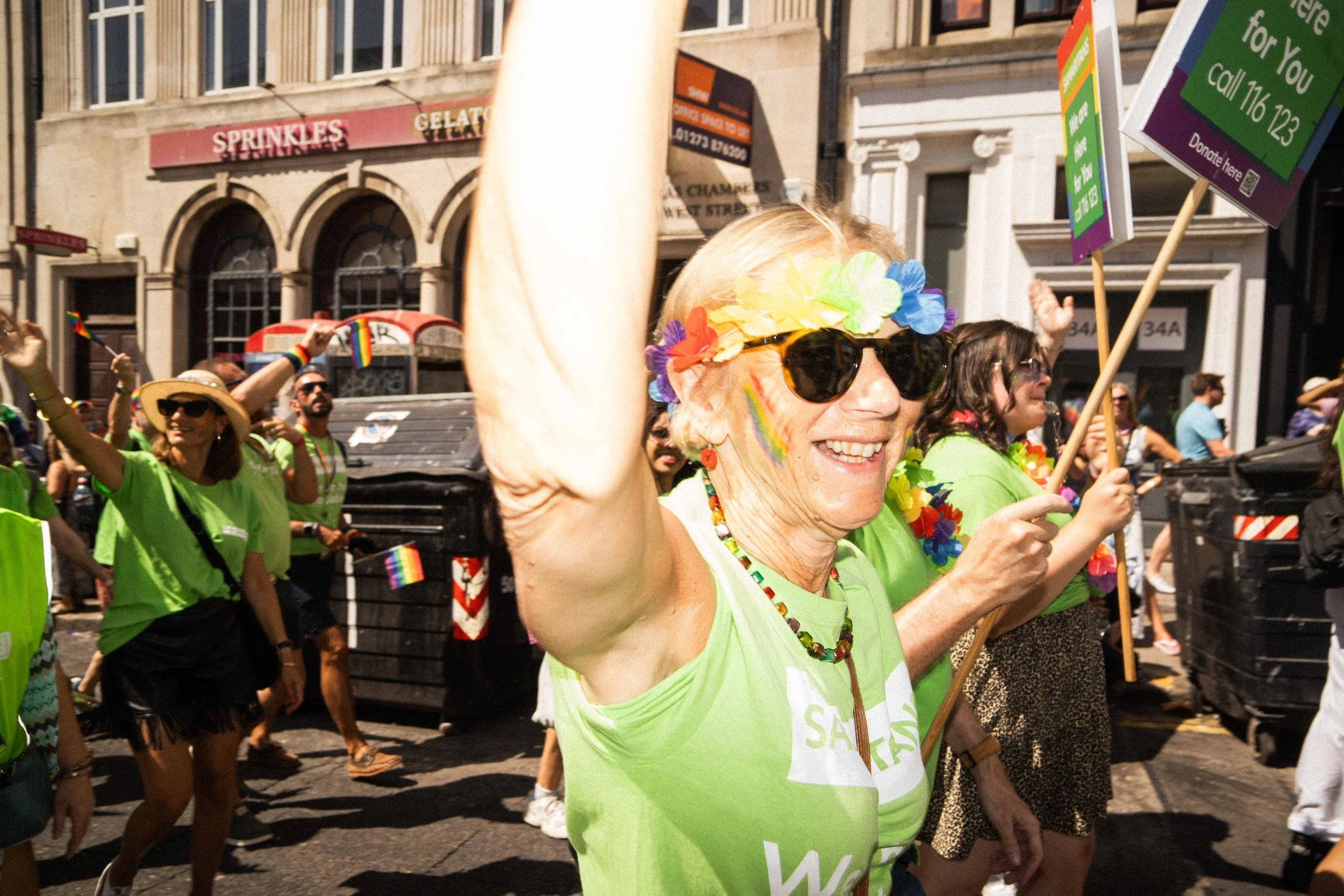
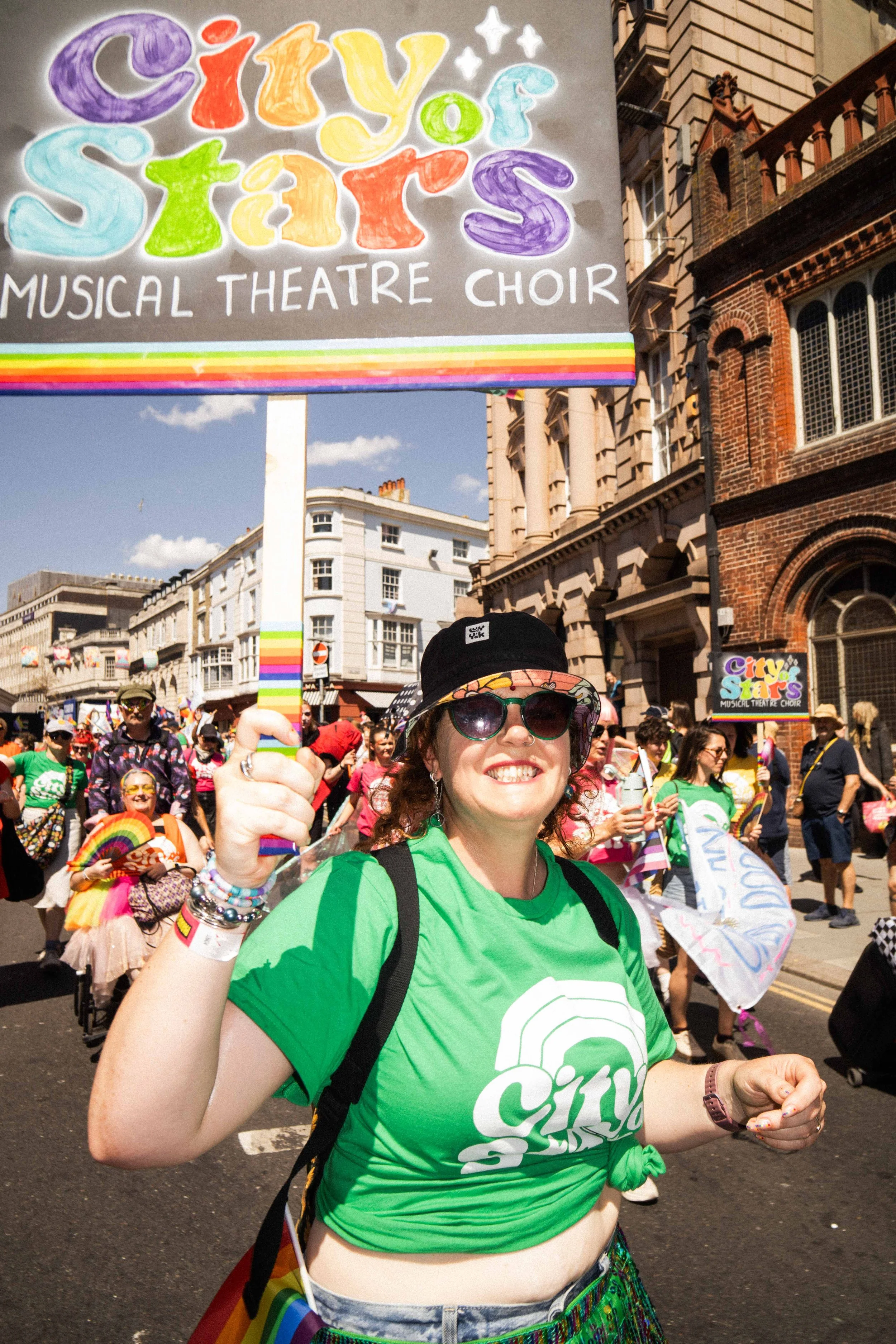
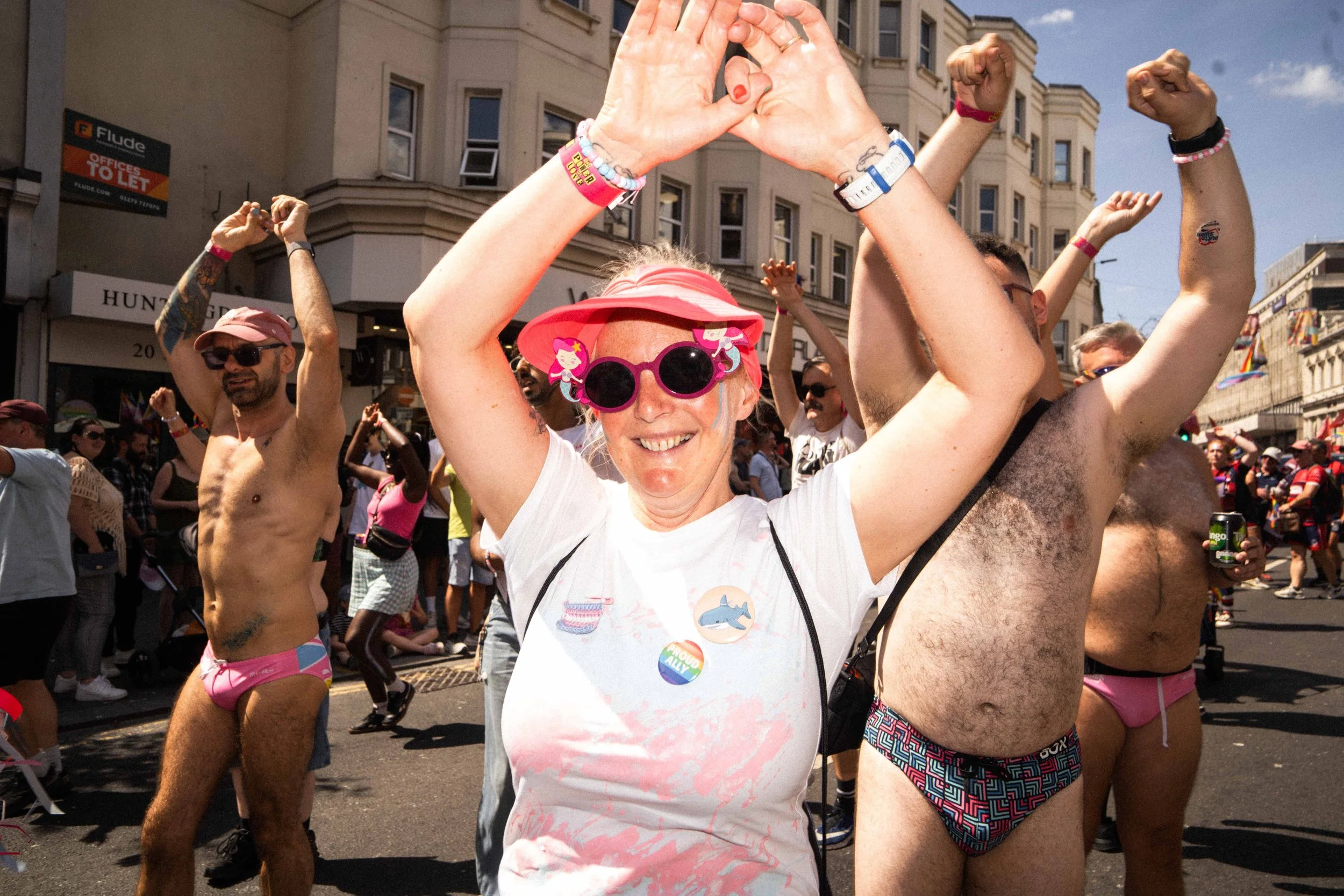
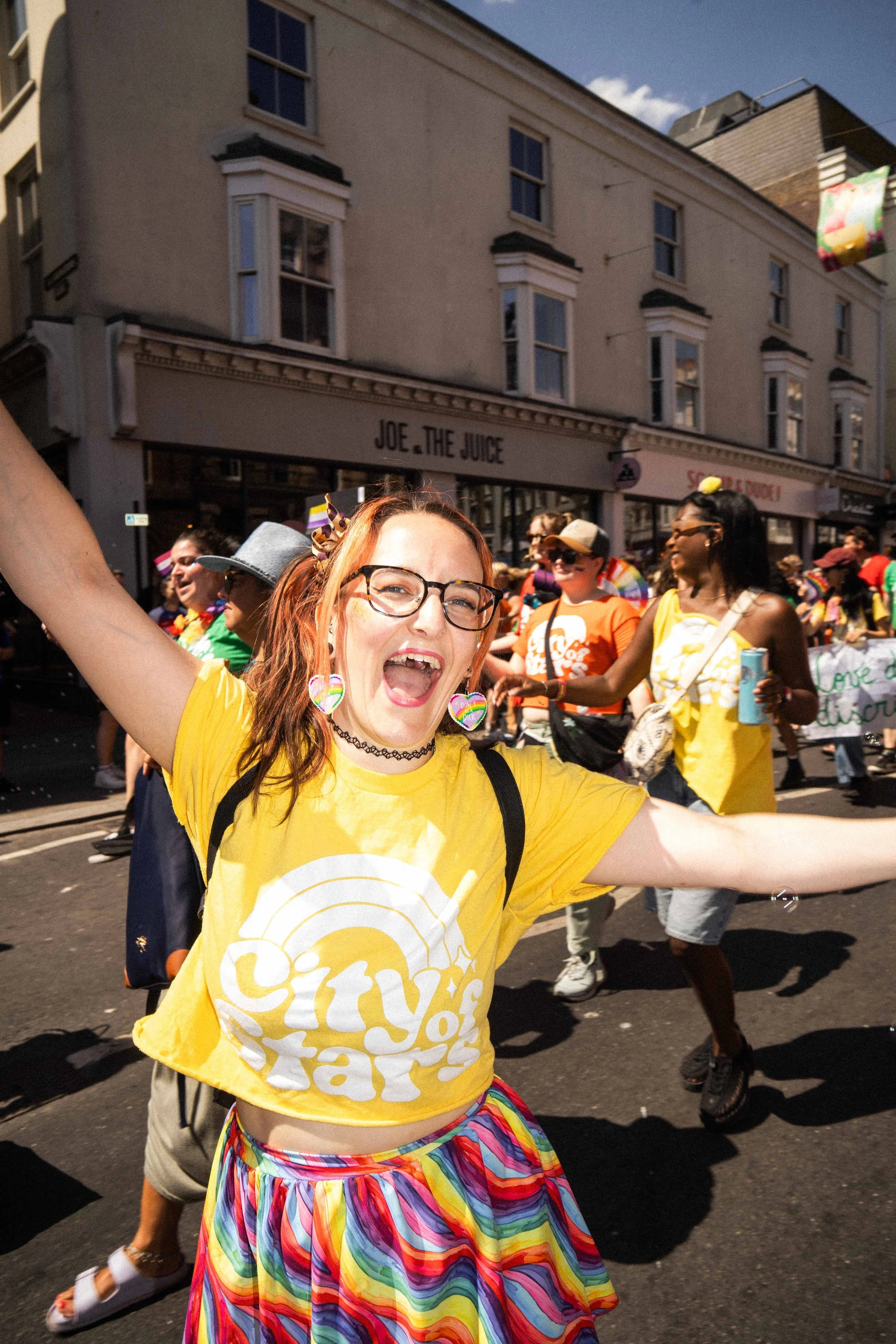
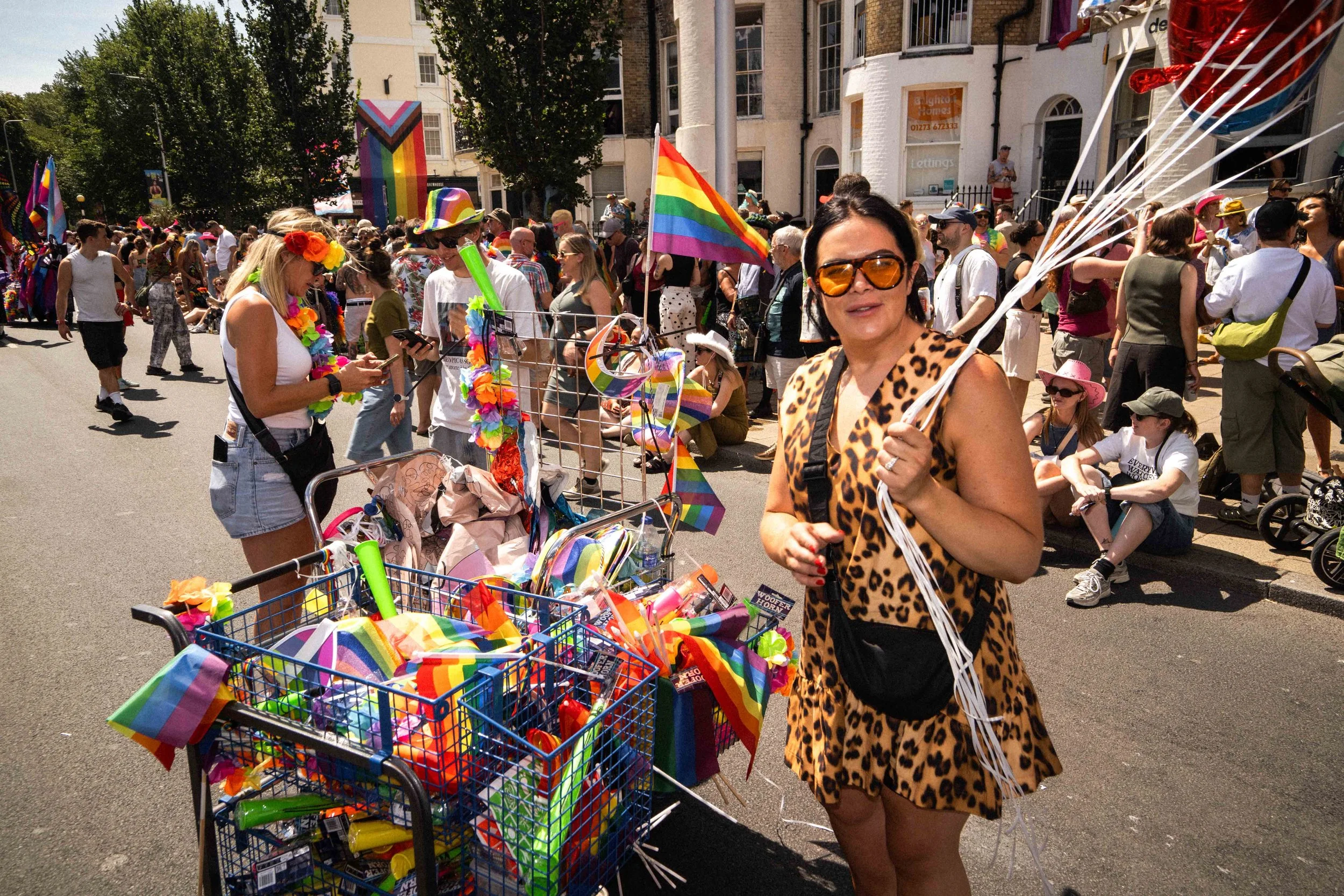
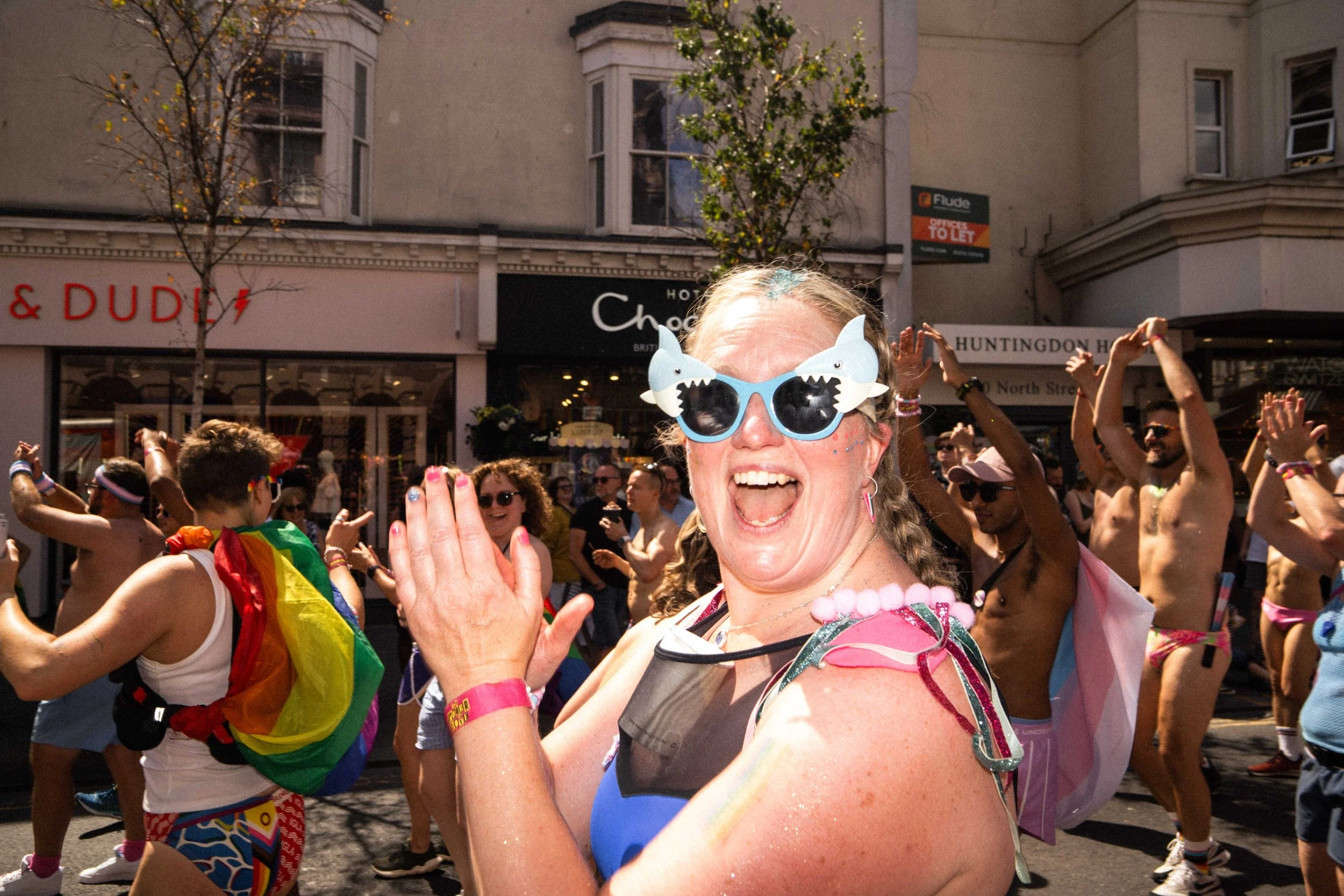
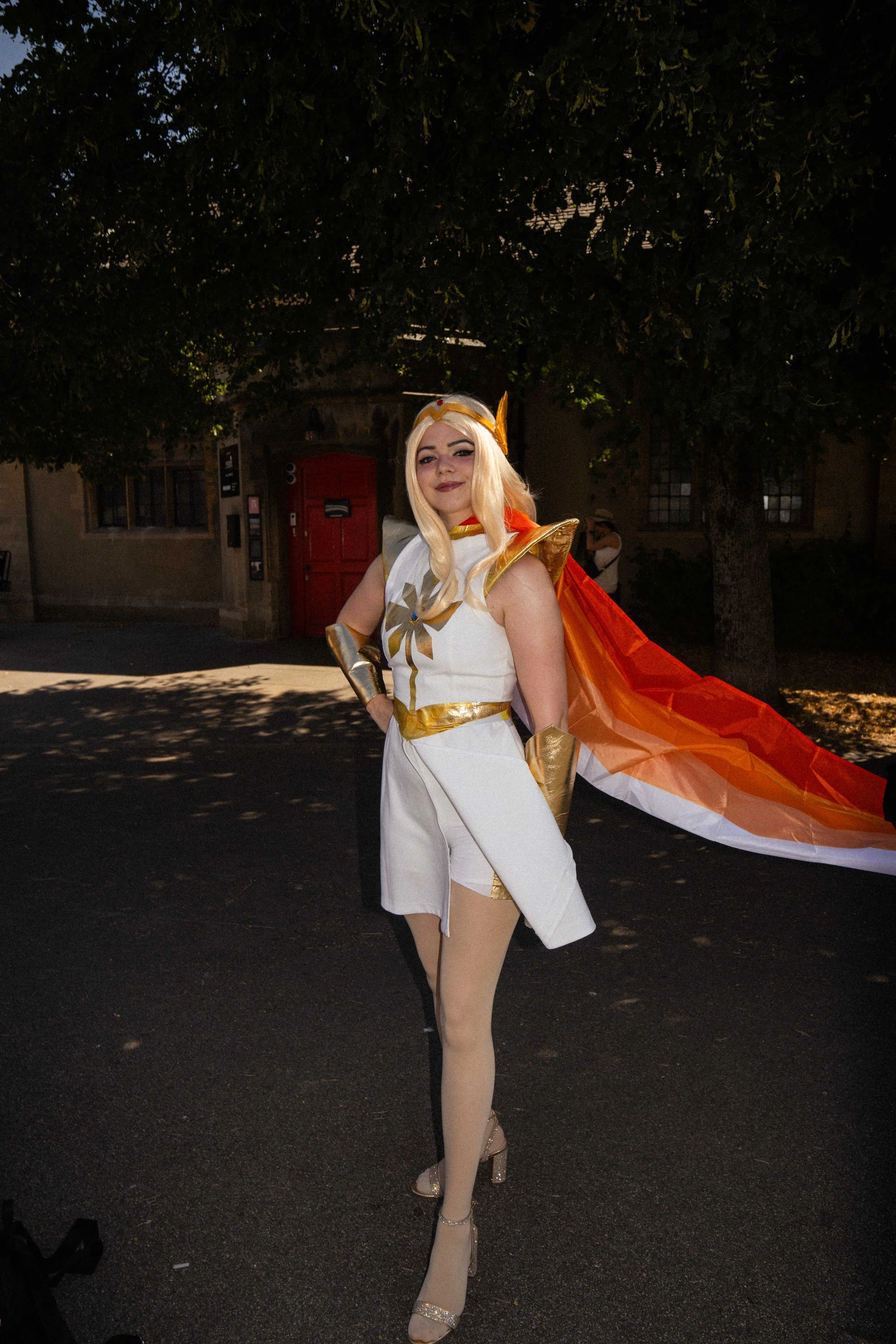
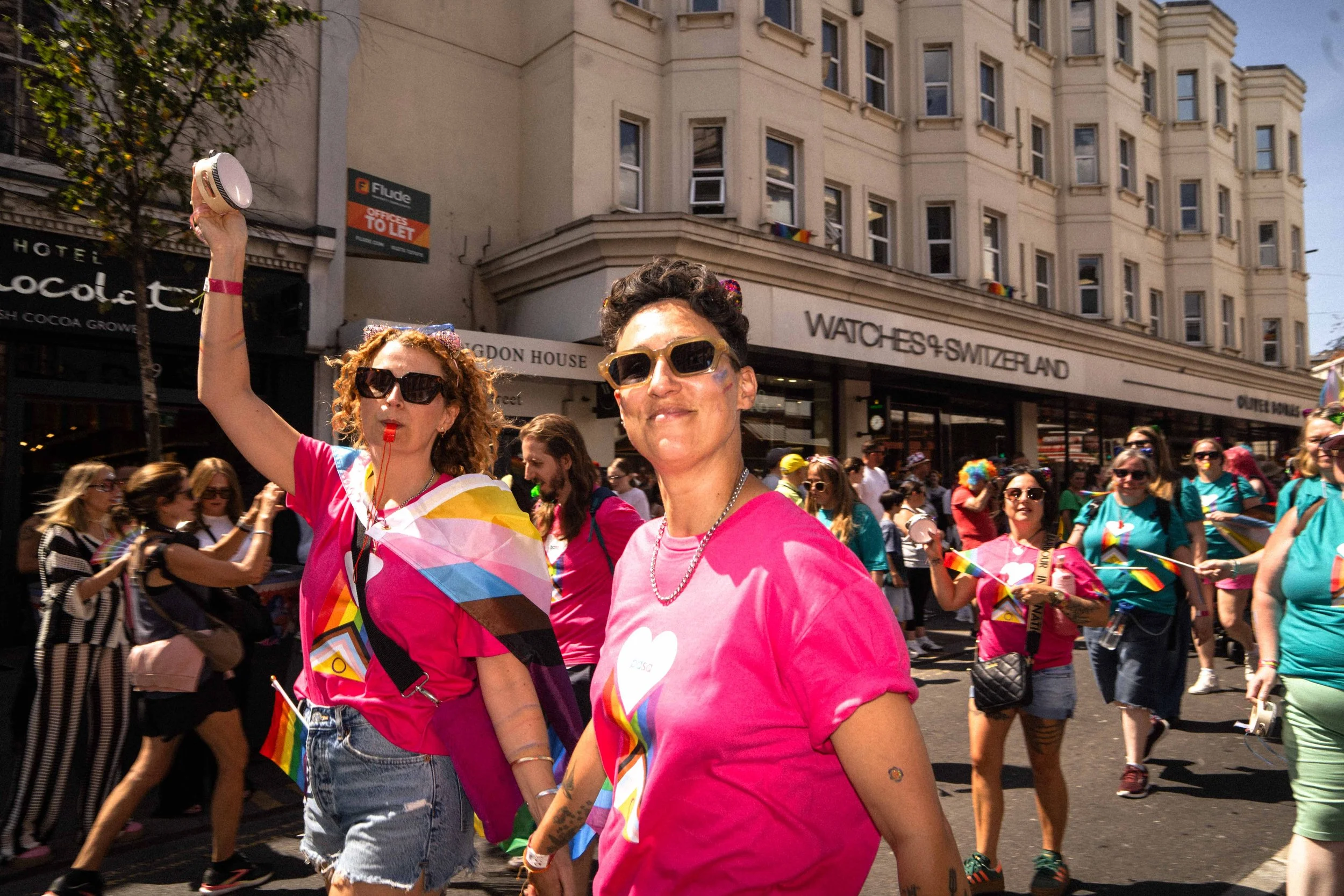
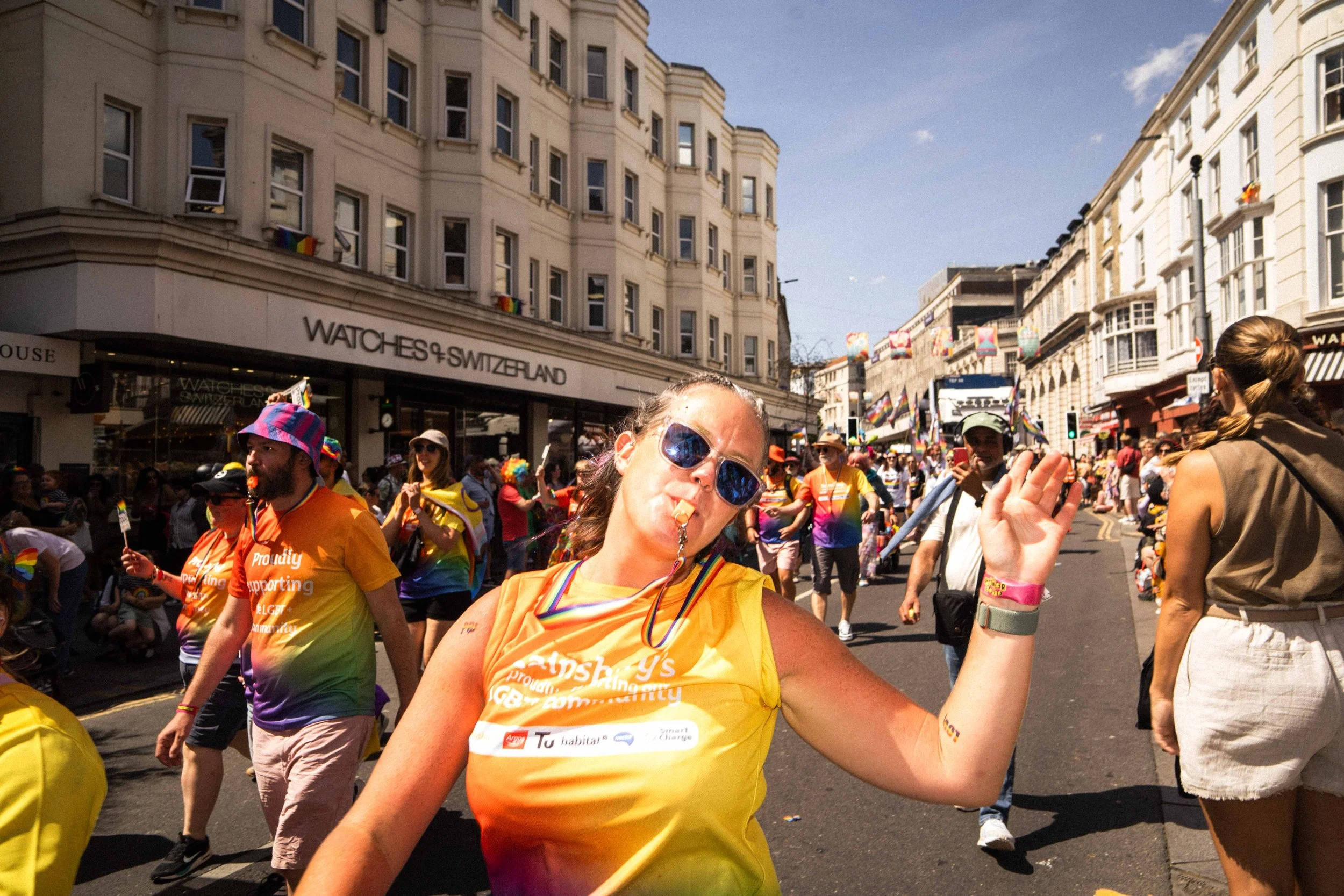
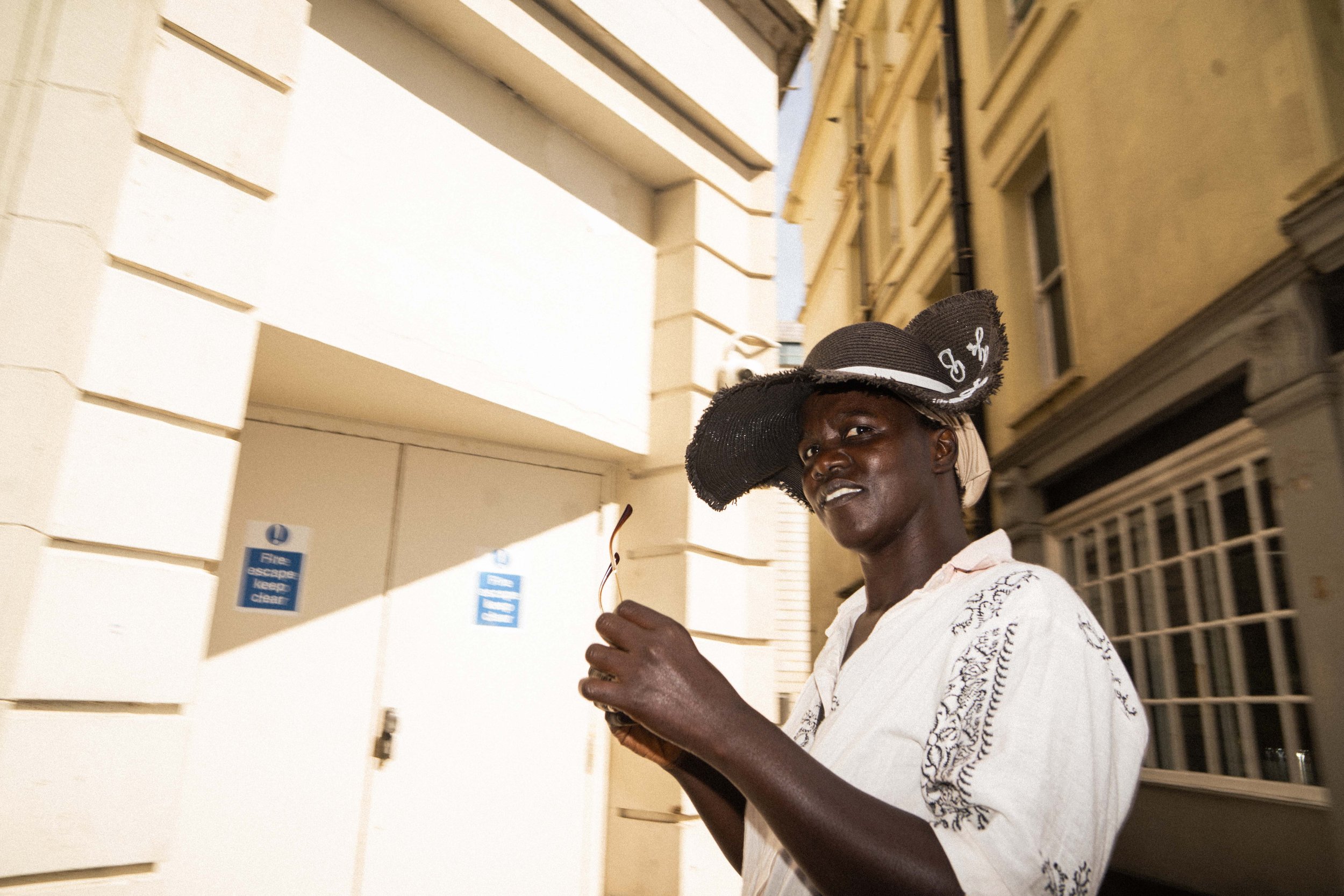
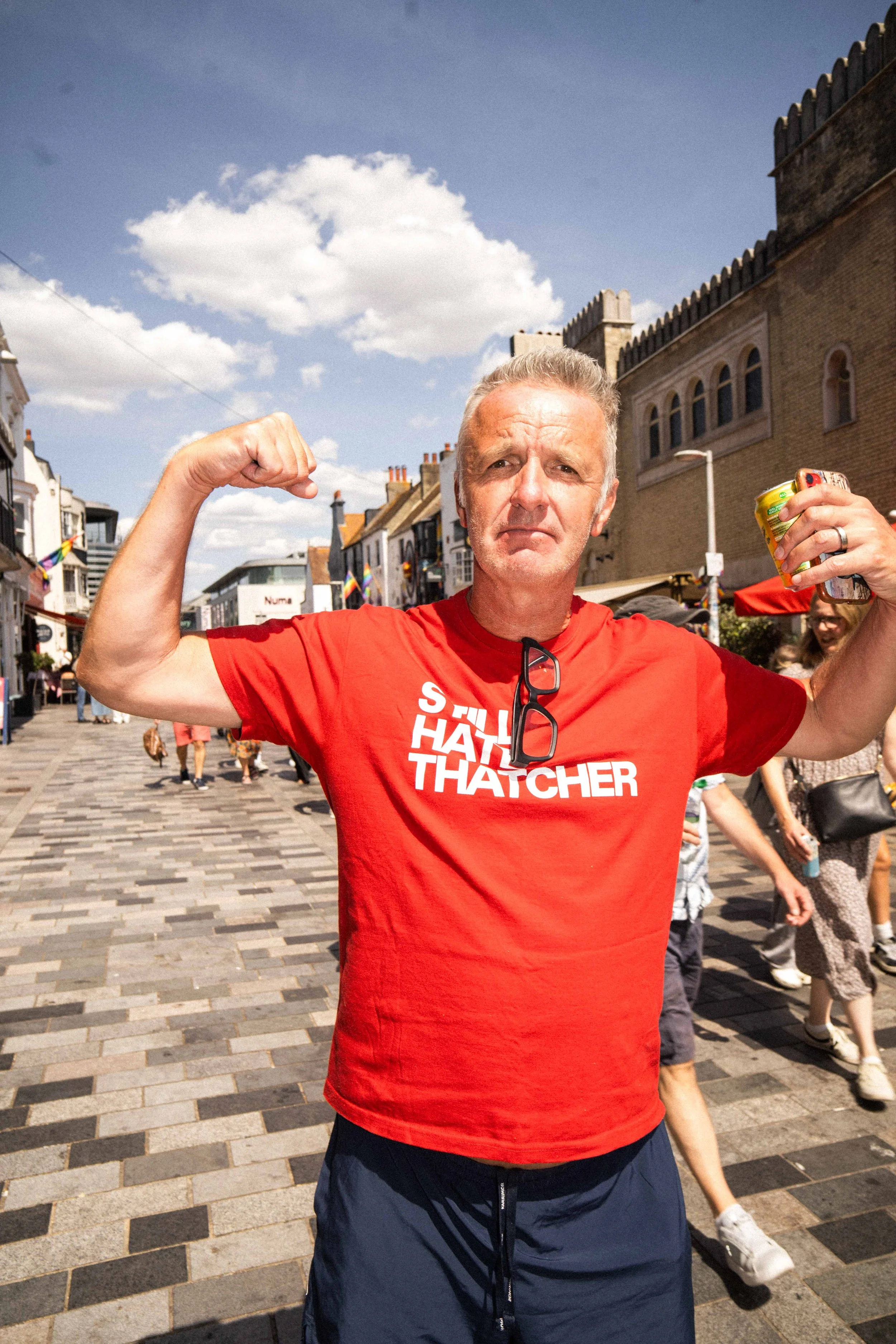
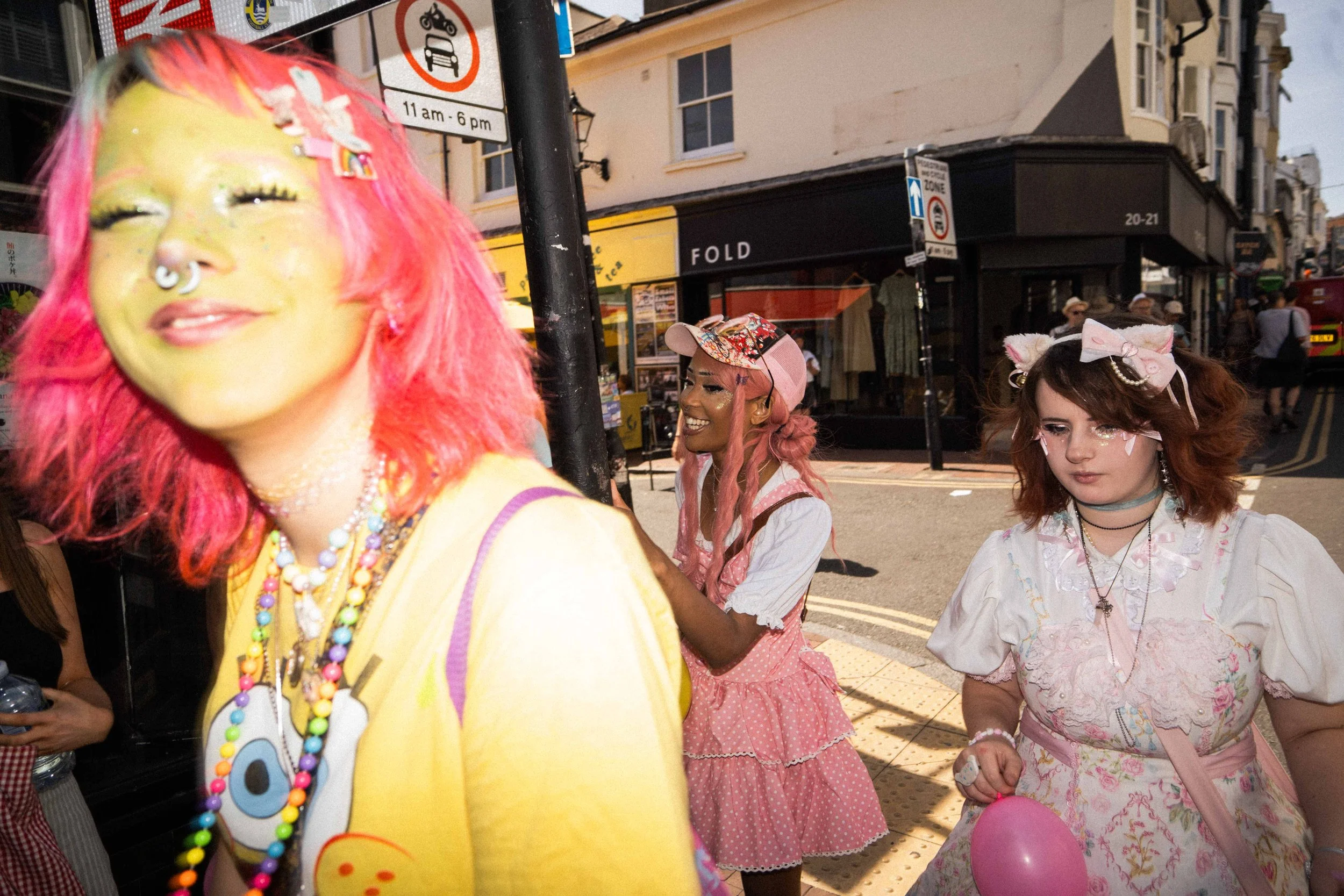
This year I came with something new in my bag: a Godox IM30 manual flash. First outing. The plan was to use it for daylight street portraits — shooting with my Sony A7 III and a 24mm lens — and the discipline it imposed was immediate and unforgiving. To get the flash working properly, I needed to be between six and nine feet from my subject. No hanging back. No safety of distance. Right in, close, direct.
It is, to put it plainly, quite an intimate way to photograph strangers.
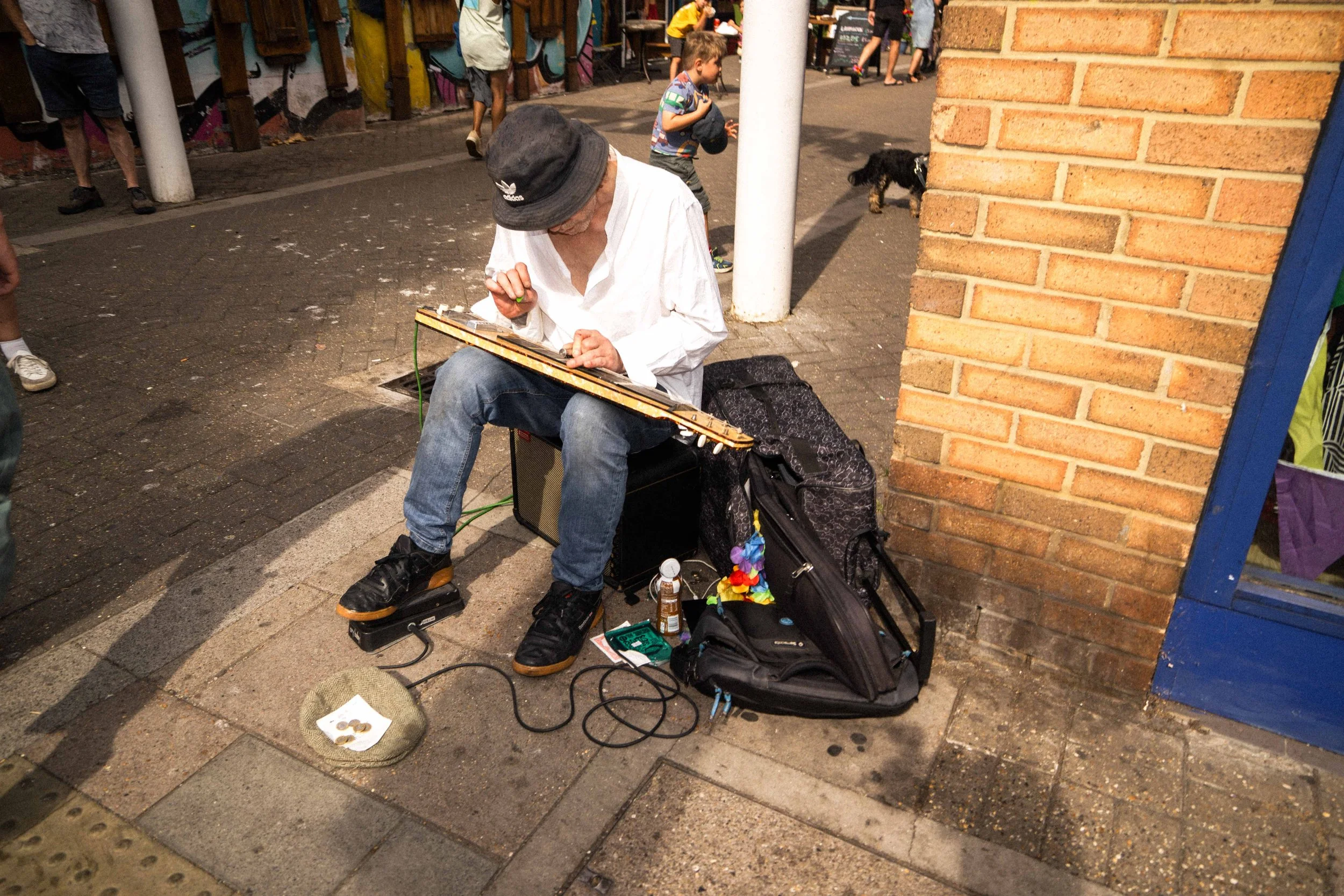
What surprised me was how it was received. At an event like Pride, where self-expression is the whole point, people understood the camera. They gave me their time. They gave me their faces. They stood still for a moment in the middle of a moving crowd and let the flash do its thing.
In my eyes, the flash added an extra ray of sunshine to what was already a glorious day.
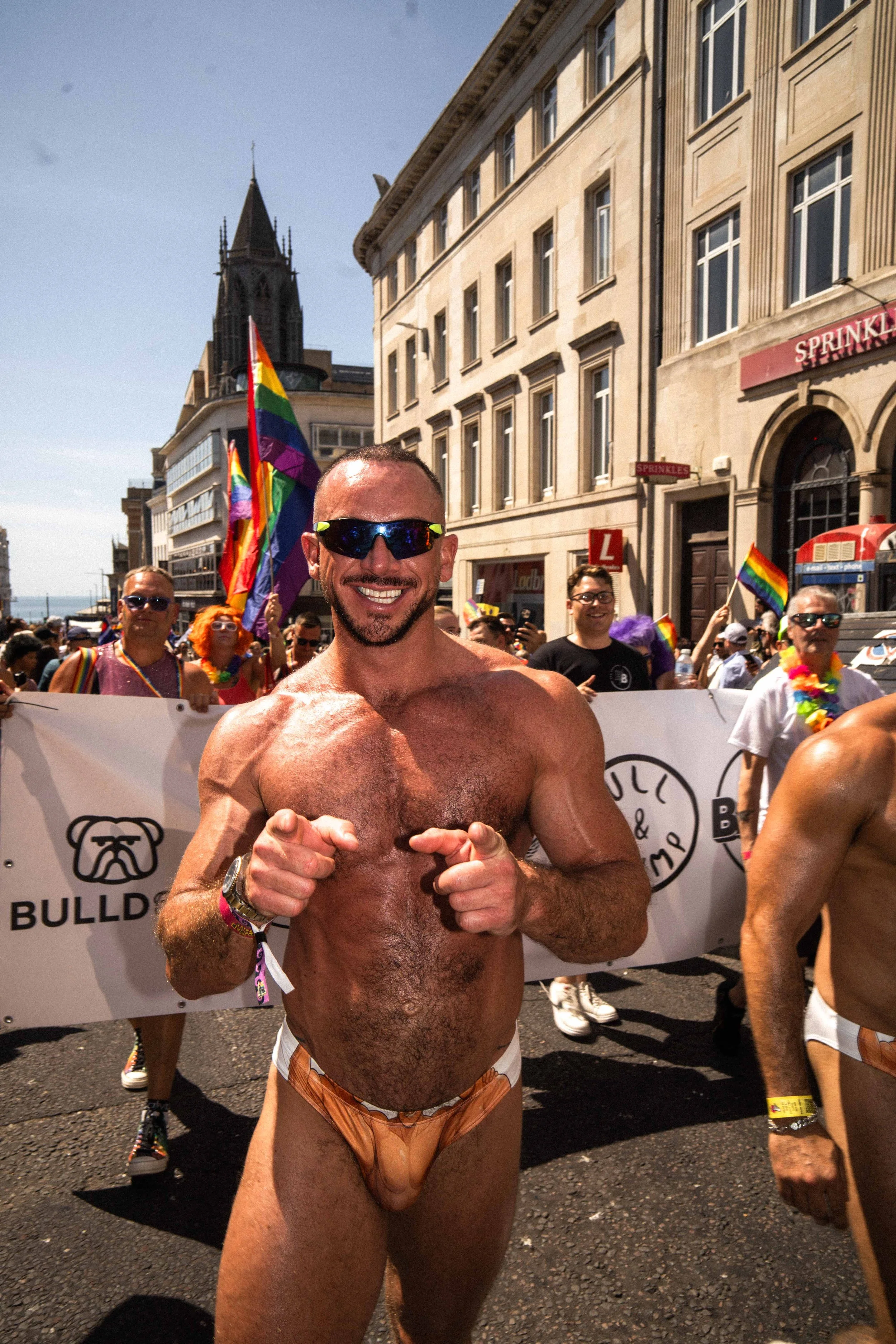
The World Came to Brighton
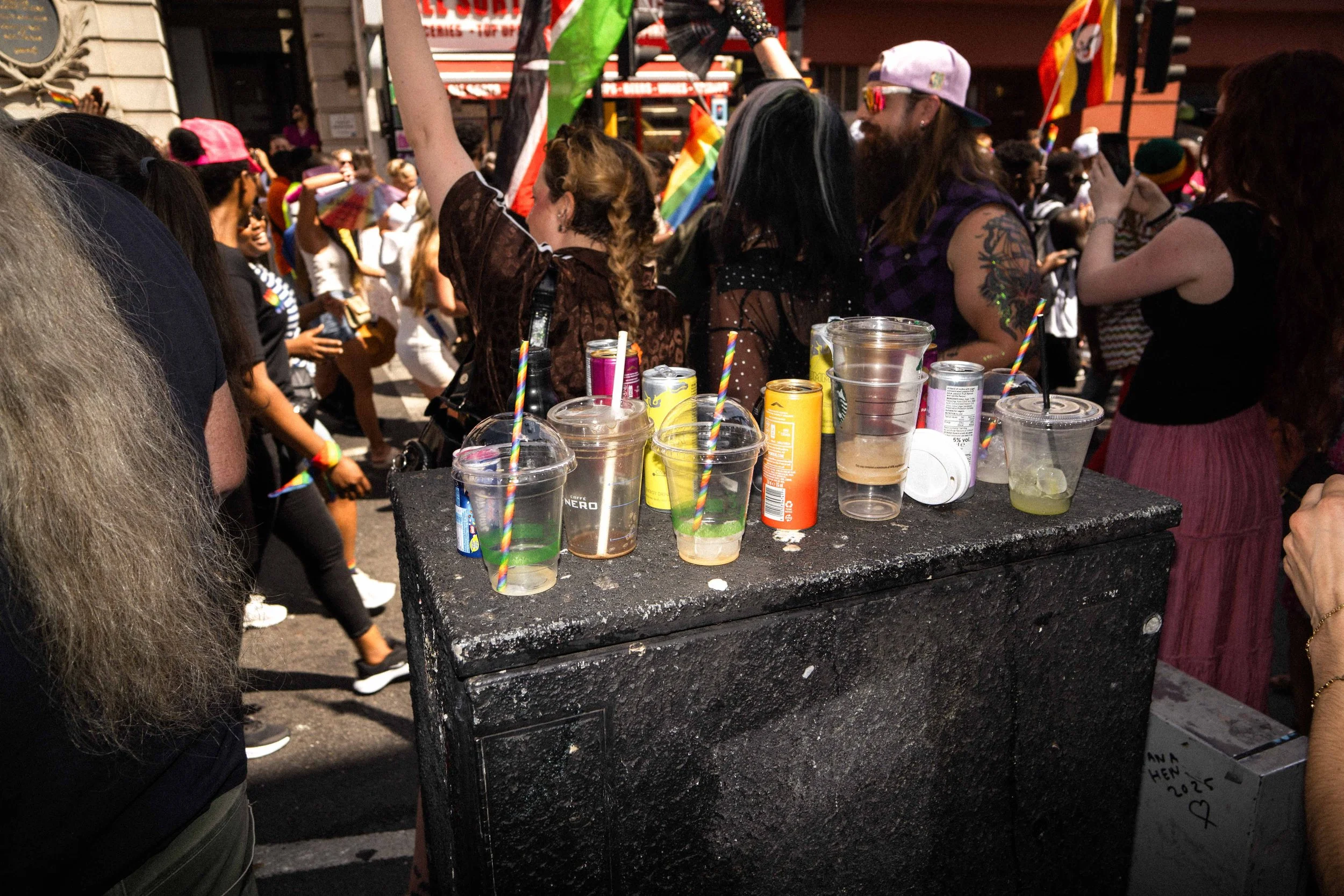
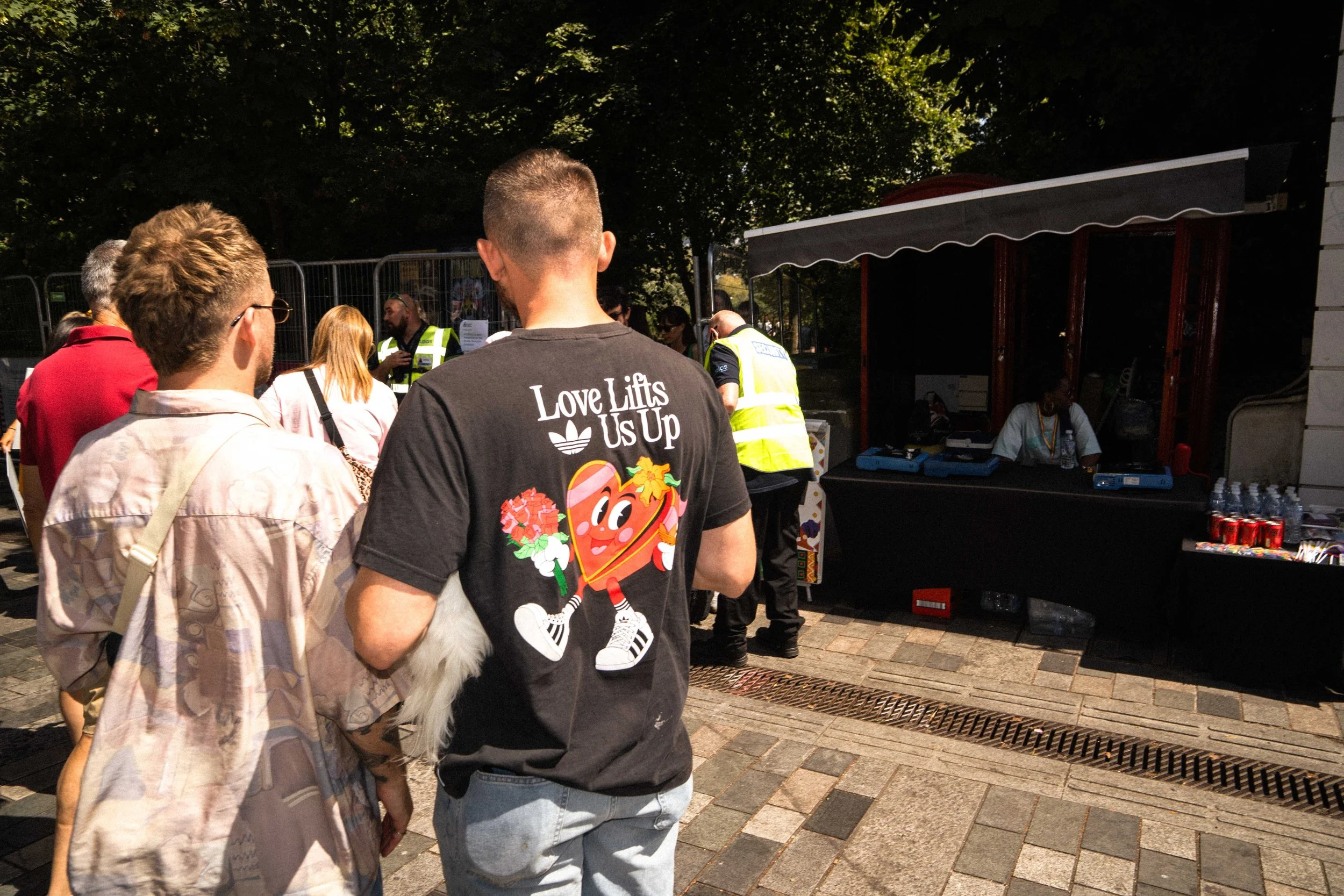
This year's Pride carried a weight that last year's didn't. In the background — not spoken about loudly, but present — was the shadow of the terror attacks in Berlin. The police presence was visible and increased. Security was tighter. You noticed it if you were looking.
And yet the crowd filled the streets regardless. That is not naivety — it is something closer to defiance, or perhaps just determination. The people who come to Brighton Pride have usually decided, in one way or another, that they are not going to let fear dictate where they stand.
The sun helped. It is hard to feel anything but alive in that kind of heat, in that kind of crowd, with that much colour moving through the streets.
Brighton, After Twelve Years
I have lived in Brighton for twelve years. My children, who are now nineteen and twenty-three, grew up here. I have watched this city shape them in ways I couldn't have planned, and I remain grateful for it every time I walk these streets.
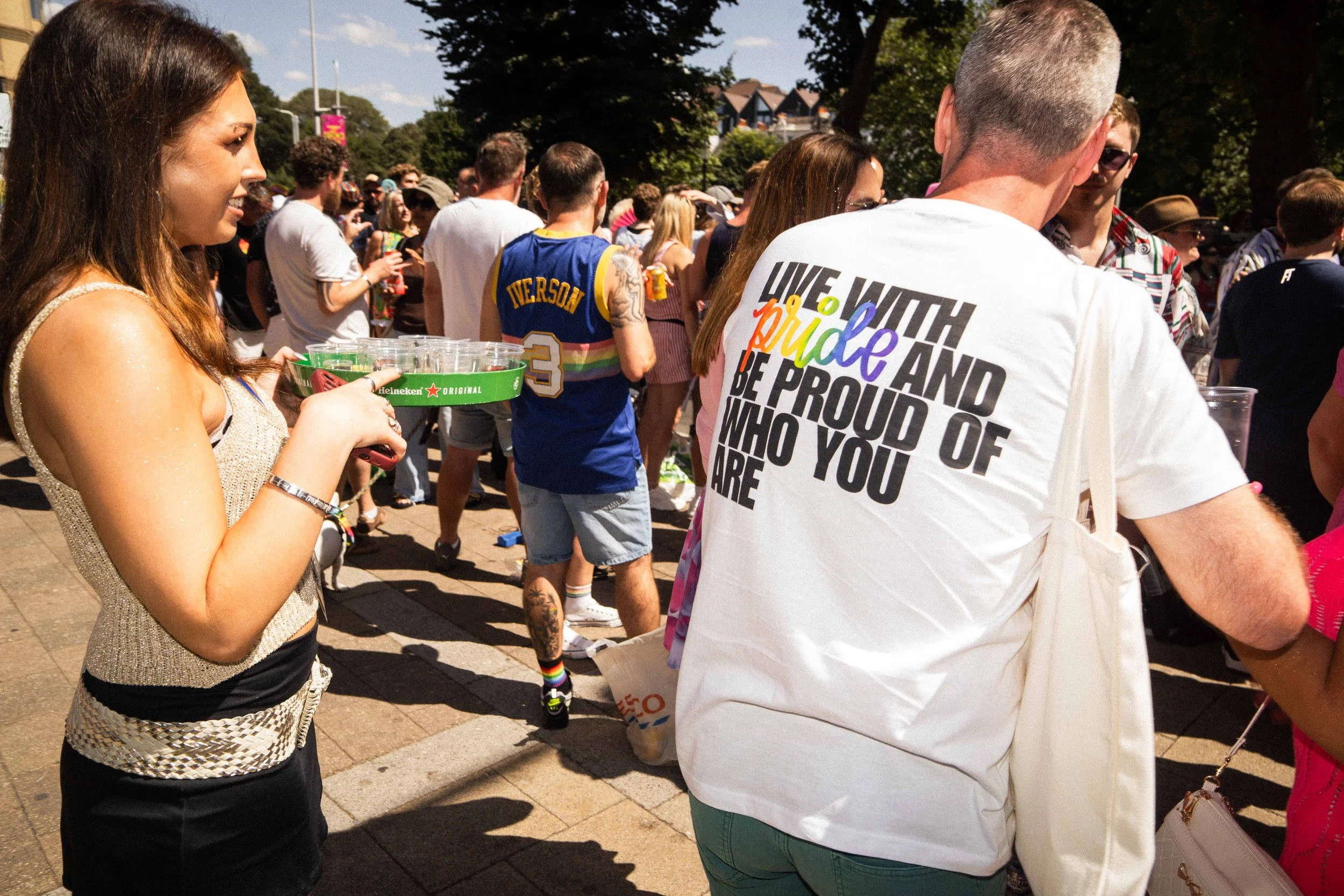
After the parade, my son and I had a wander. No agenda — just the two of us, a beer somewhere, a bite to eat. The kind of afternoon that doesn't photograph well but stays with you.
Brighton is a wonderful place to bring up children. It teaches them, early and without fuss, that the world contains more kinds of people than they will ever be able to count — and that this is not something to be afraid of. It is something to be curious about.
That is what I was doing on Saturday with the Godox IM30. Being curious. Getting close. Asking people, with a camera and a flash and six to nine feet of space between us, if they'd give me a moment.
Almost everyone said yes.
Until next time, keep snapping
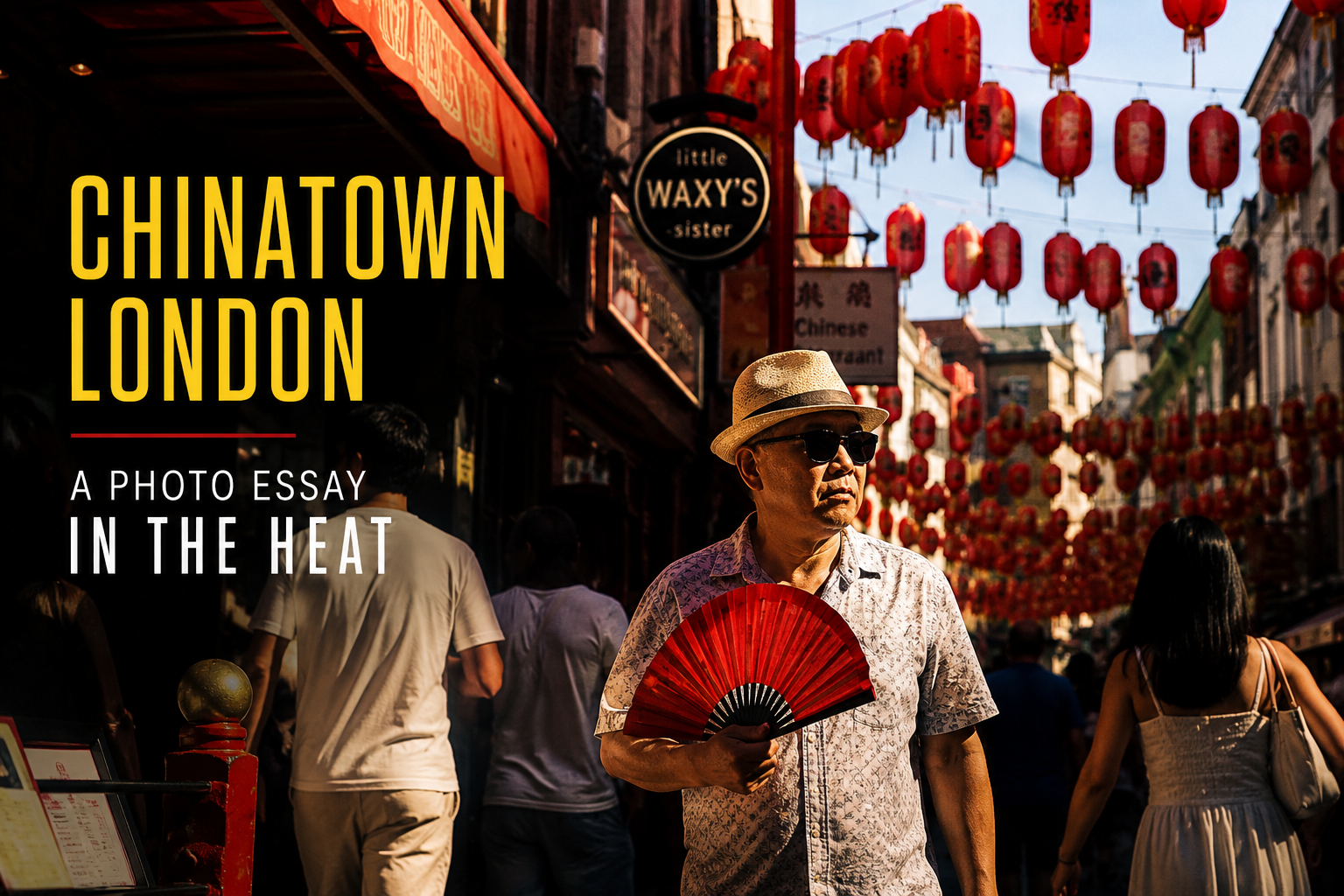
Chinatown, London - A photo essay in the heat.
We weren't in London for photography. We were there for a passport office.
My son's emergency passport appointment had us waiting around central London yesterday, in the kind of heat that makes the pavement shimmer. With time to kill and nowhere in particular to be, we drifted into Chinatown. No plan, no theme — just a Leica M10 round my neck and a DJI Nano tucked in my pocket for something faster and looser, a short-form POV video to go alongside the stills.
A Different Kind of Errand
There's a particular restlessness to killing time in a city. You're not shooting a project, you're just present, camera in hand, waiting to see what the street hands you. Chinatown handed us plenty.
We weren't in London for photography. We were there for a passport office.
My son's emergency passport appointment had us waiting around central London yesterday, in the kind of heat that makes the pavement shimmer. With time to kill and nowhere in particular to be, we drifted into Chinatown. No plan, no theme — just a Leica M10 round my neck and a DJI Nano tucked in my pocket for something faster and looser, a short-form POV video to go alongside the stills.
A Different Kind of Errand
There's a particular restlessness to killing time in a city. You're not shooting a project, you're just present, camera in hand, waiting to see what the street hands you. Chinatown handed us plenty.
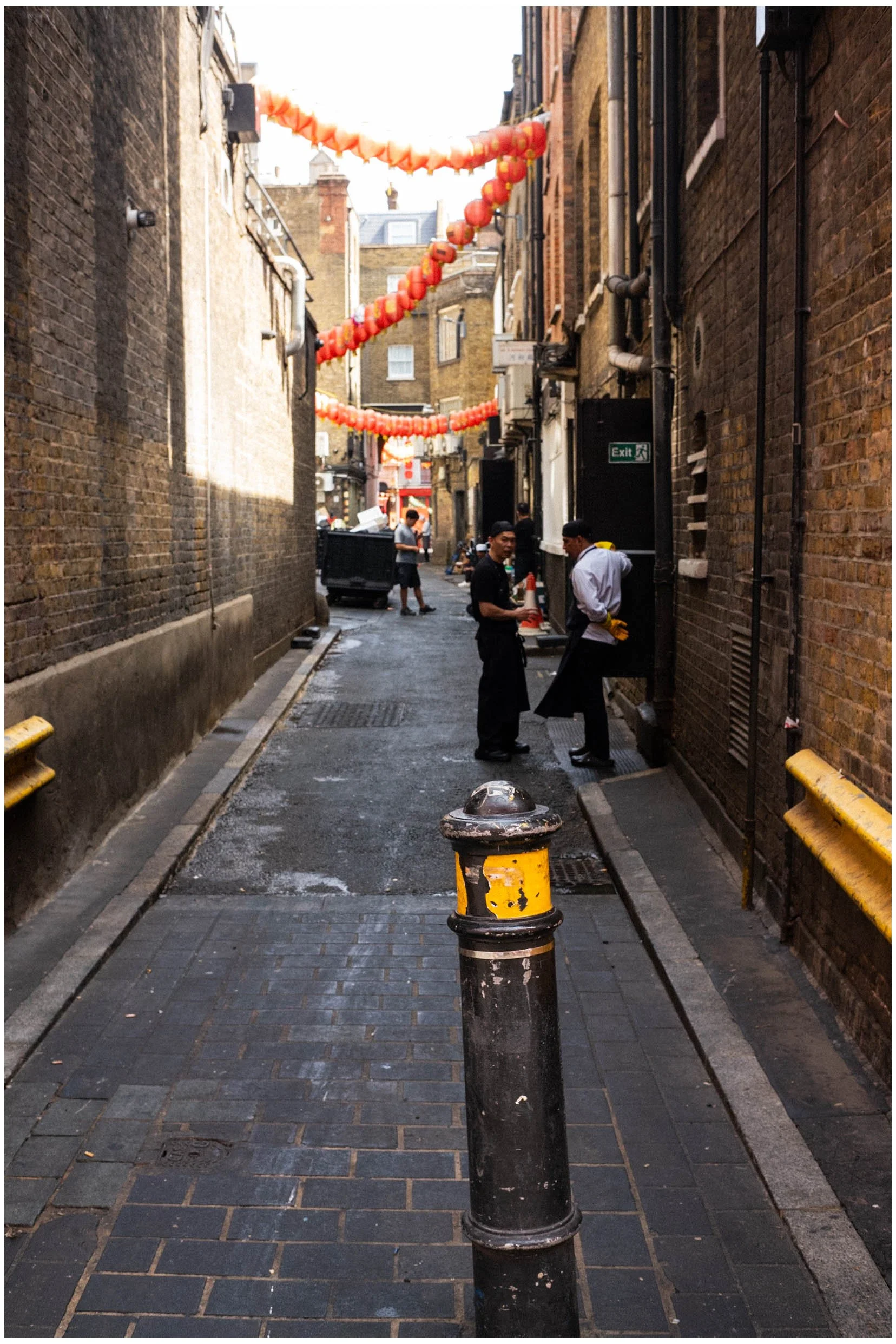
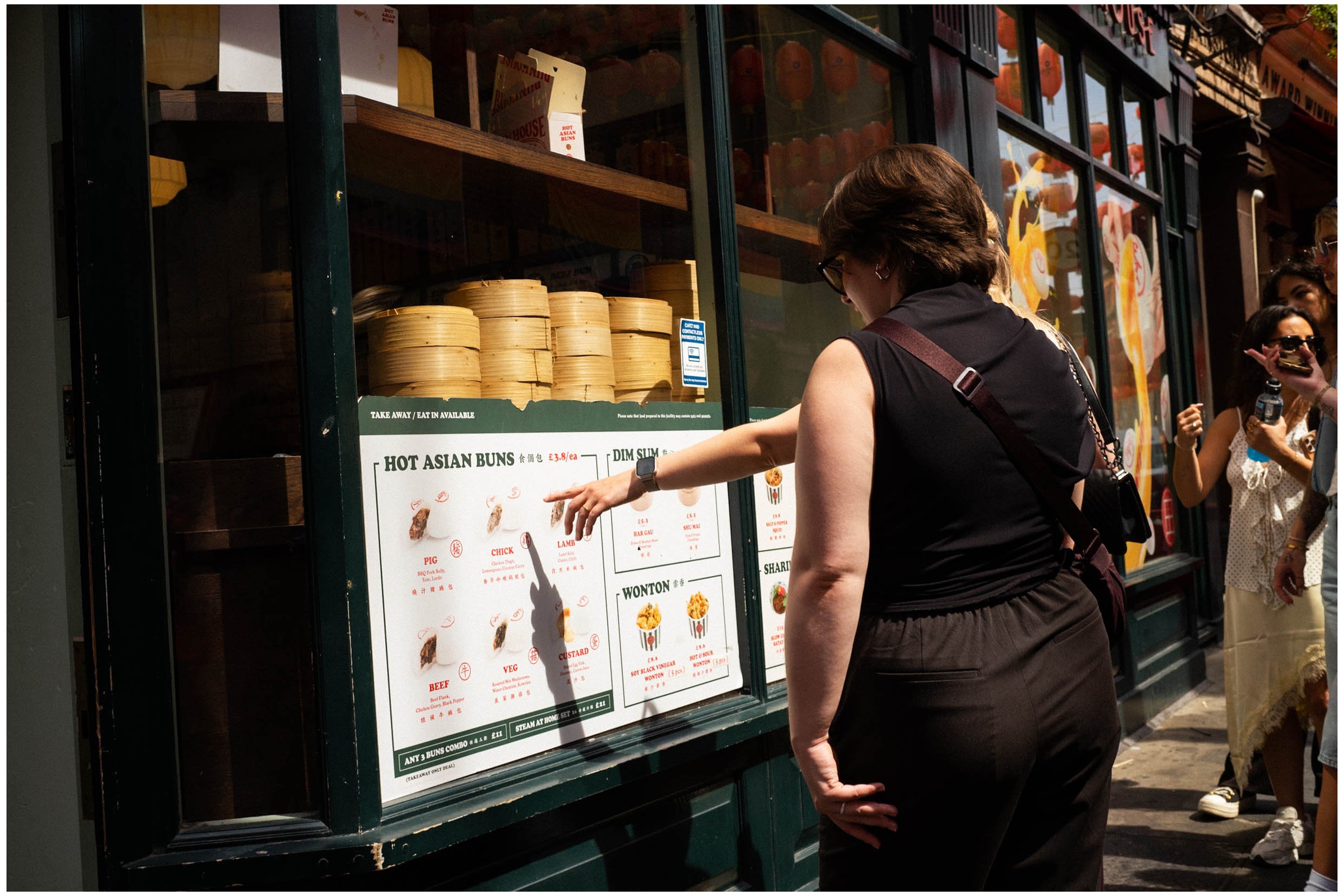
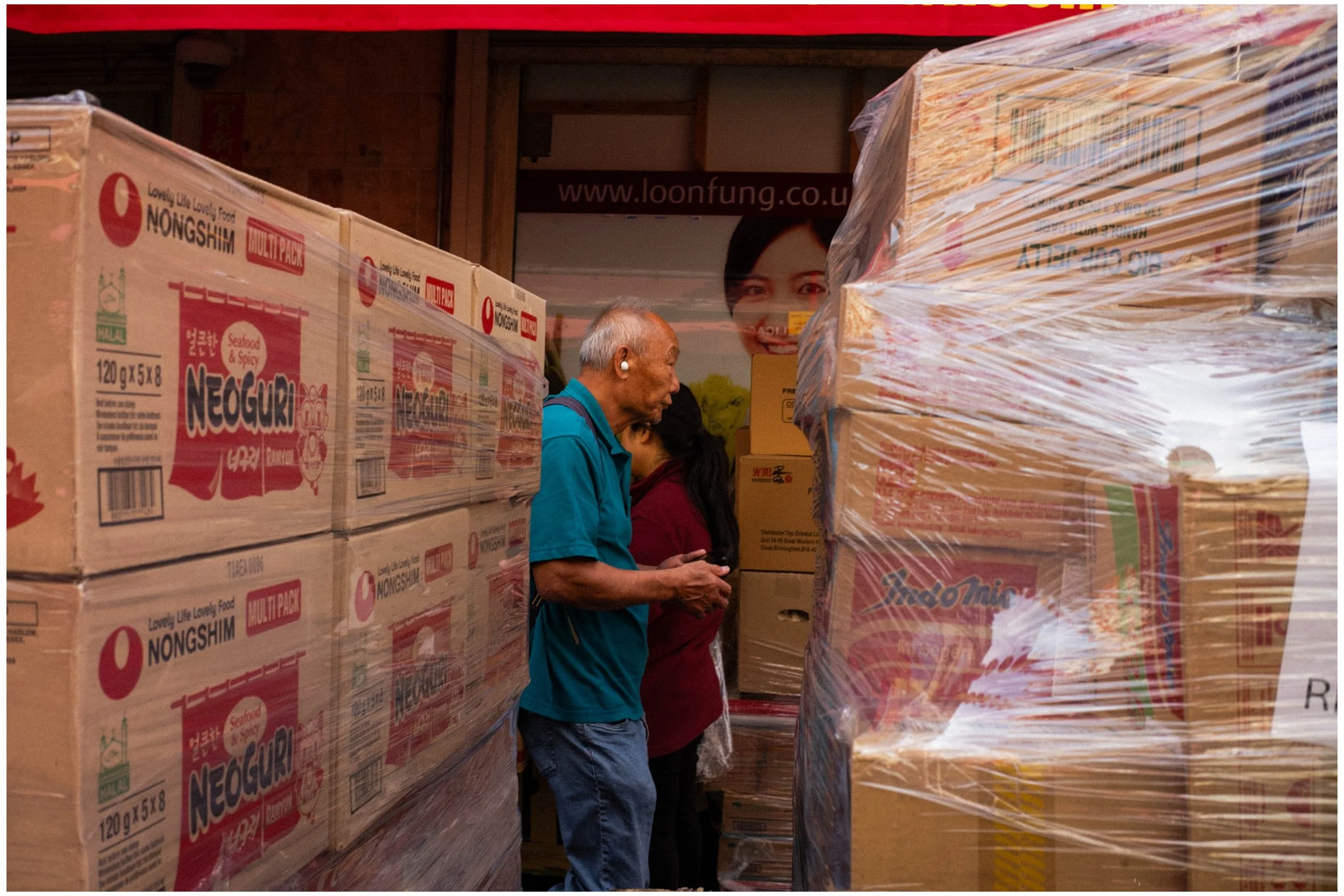
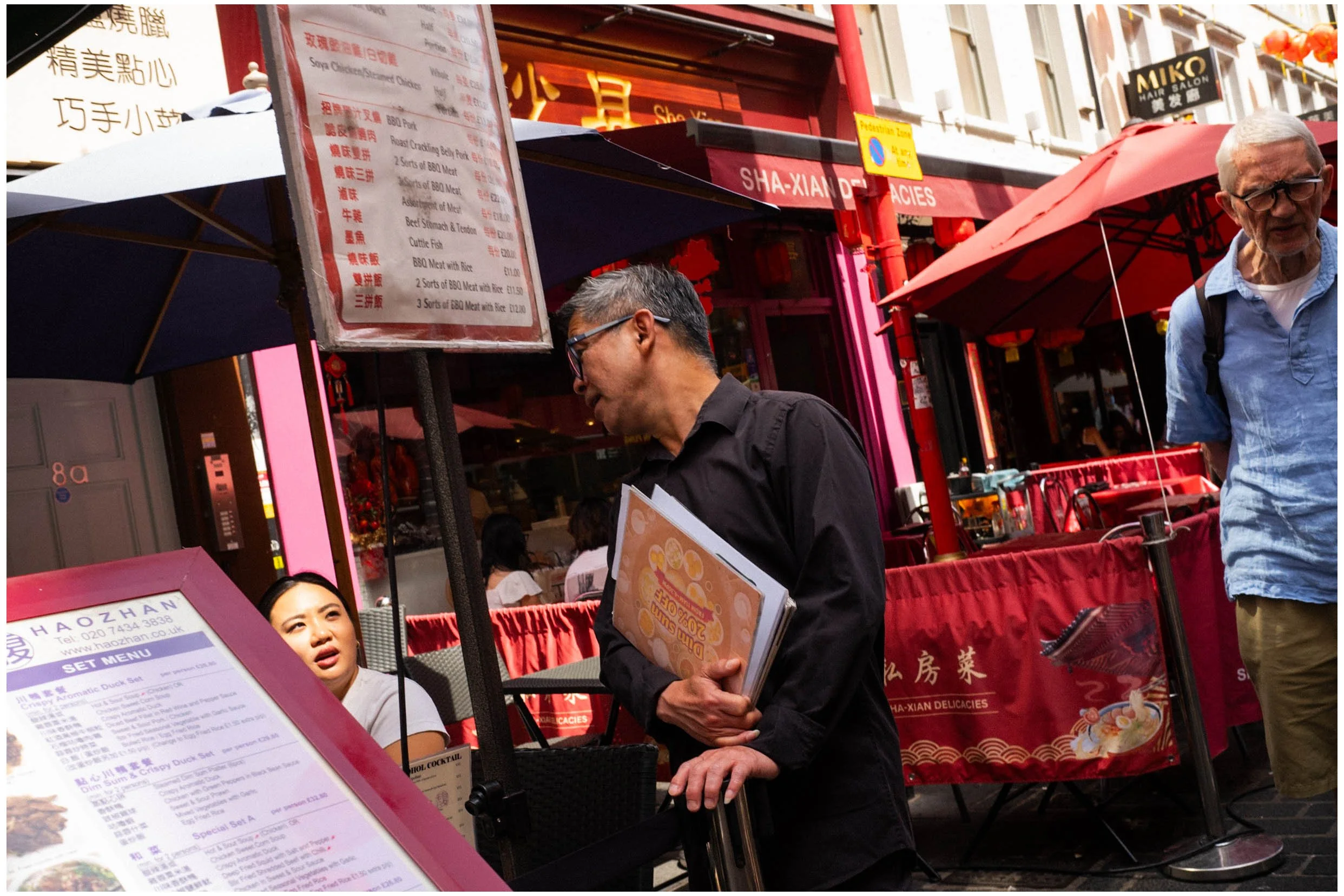
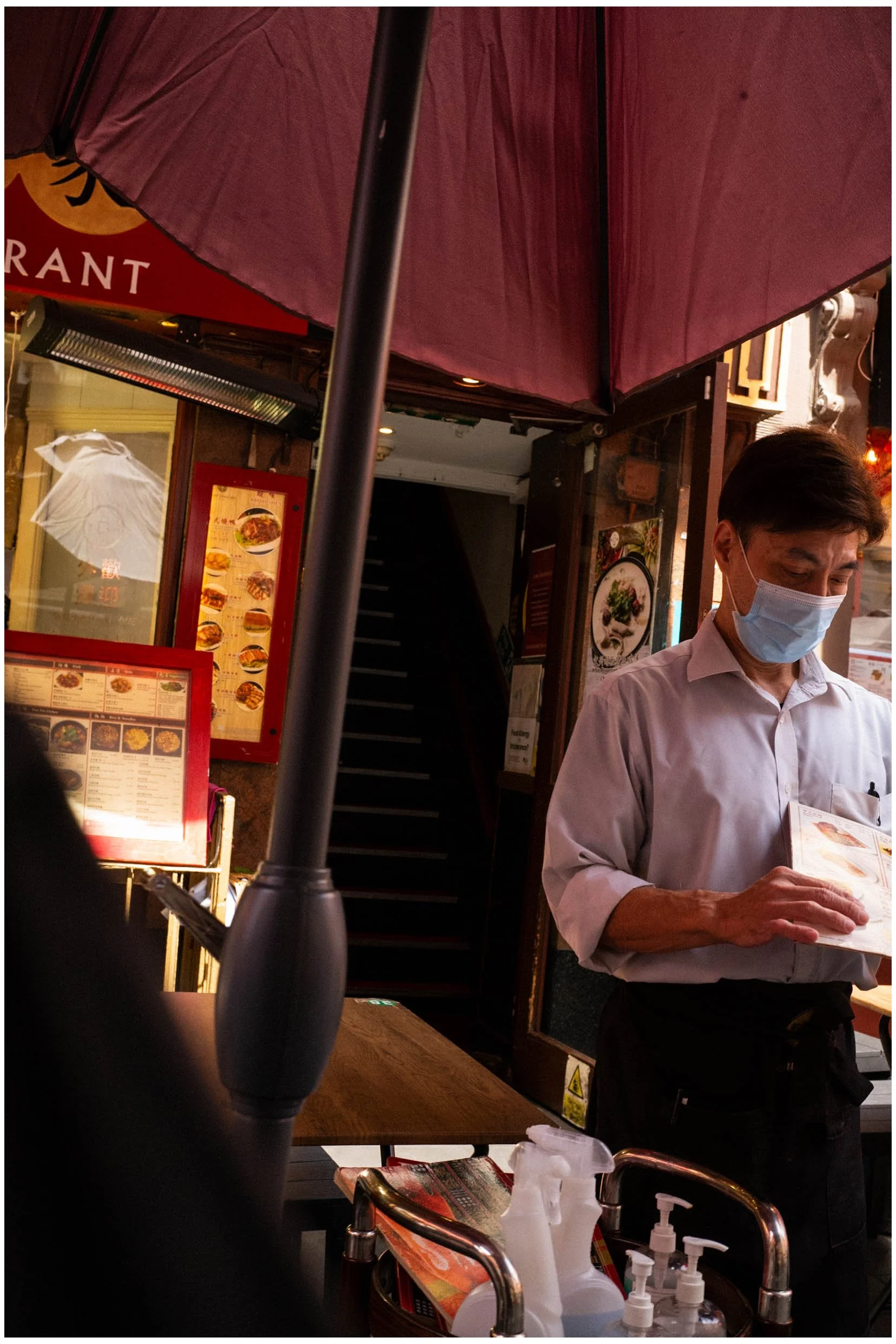
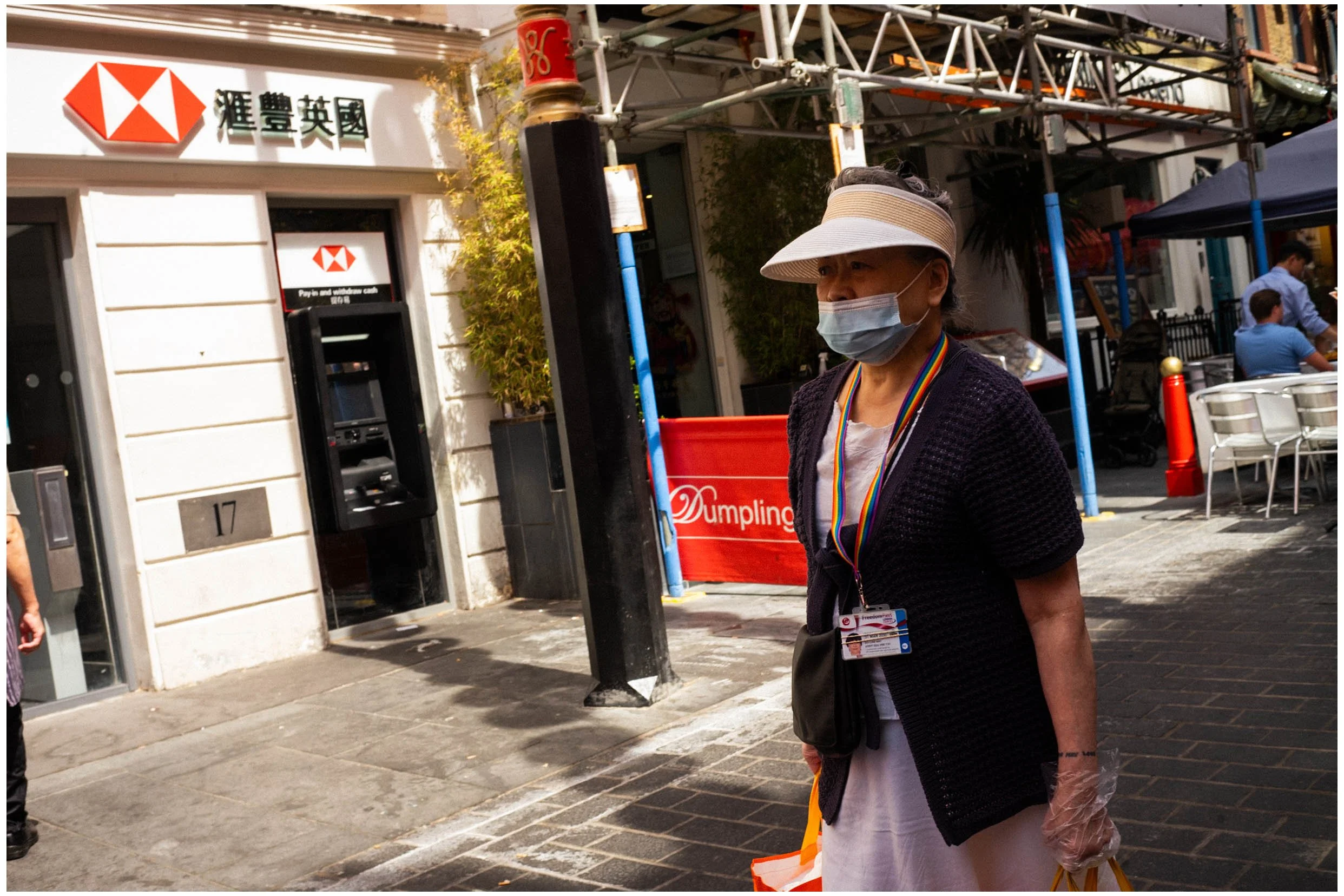
The heat had a way of slowing everyone down and speeding the street up at the same time — lanterns hanging still in windless air, awnings throwing hard shadows across the pavement, and underneath it all the usual London churn: delivery bikes, market stalls, tourists, locals, everyone moving through the same few hundred metres of Gerrard Street for entirely different reasons.
It was a hive of activity, and every corner of the world seemed to be represented in it.
Four Corners, One Street
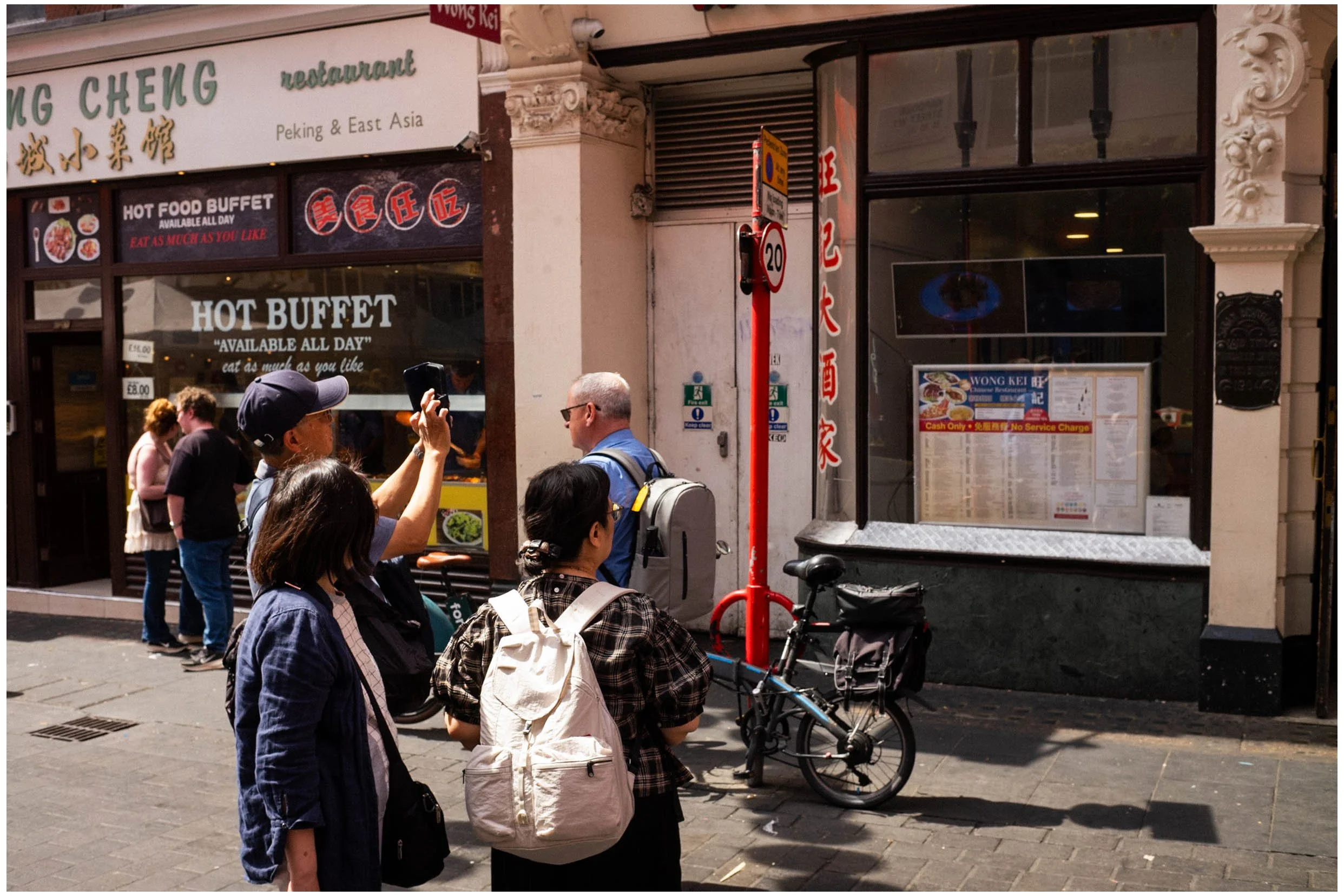
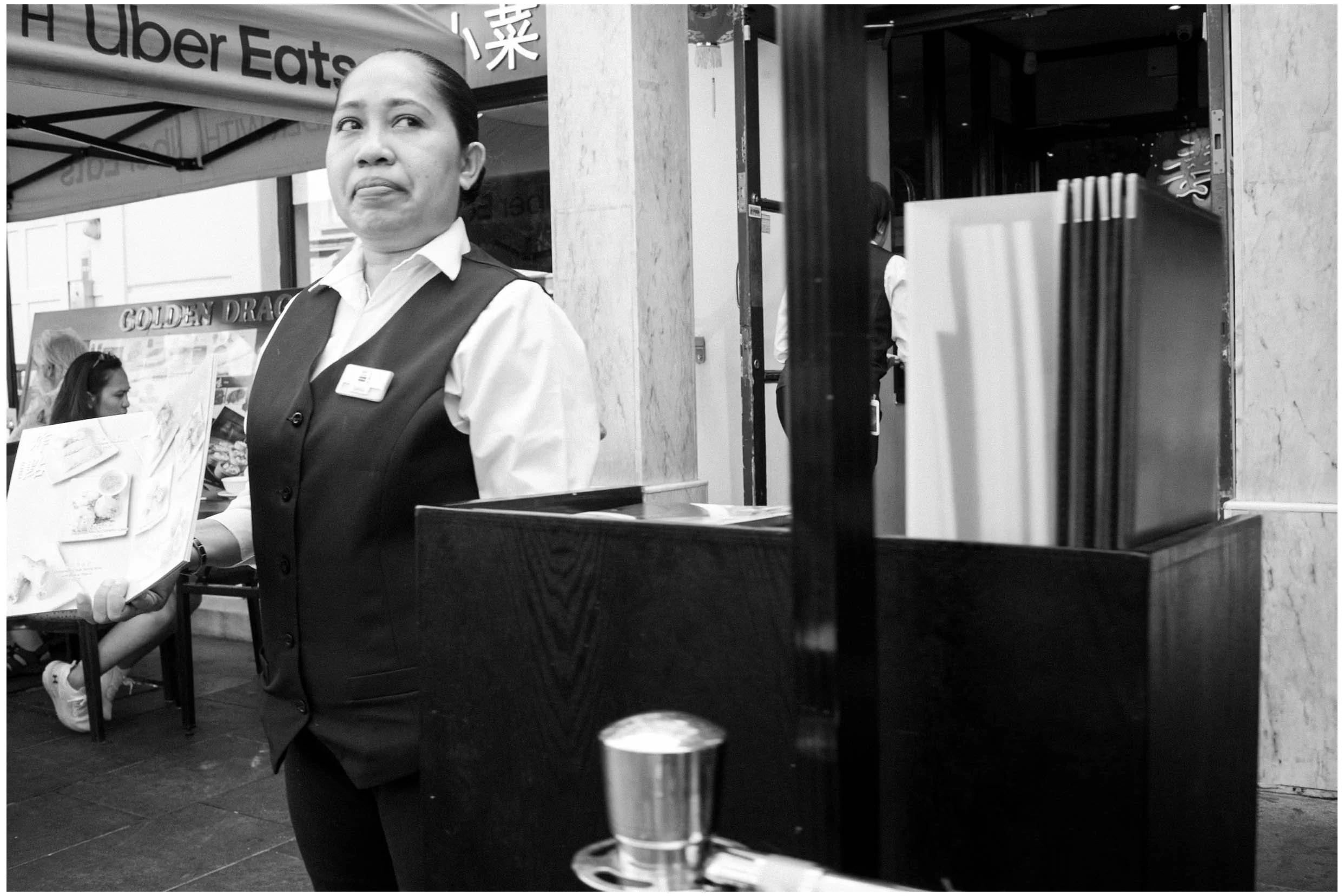
That's really what stayed with me. Chinatown isn't just Chinese — it's a compression of the whole city into a handful of streets. Cantonese and Mandarin over the counters, but also Spanish, Italian, Japanese, half a dozen accents I couldn't place, all folding into each other in the queue for bubble tea or the doorway of a dim sum spot. Nobody there was performing London. They were just living in it, in whatever language and however they'd carried it with them.
That's the bit of this country I never stop being grateful for. You don't have to go looking for the world — in a place like this, it comes to you, and it does so without ceremony.
Shooting Loose
The M10 did what it always does — quiet, quick, unobtrusive, good in the kind of scattered light you get under those red arches. But the Nano was the more interesting exercise. Shooting POV, low and close, running alongside the stills rather than instead of them, gave a different texture entirely — less considered, more immediate, closer to how the afternoon actually felt than any single frame could manage on its own.
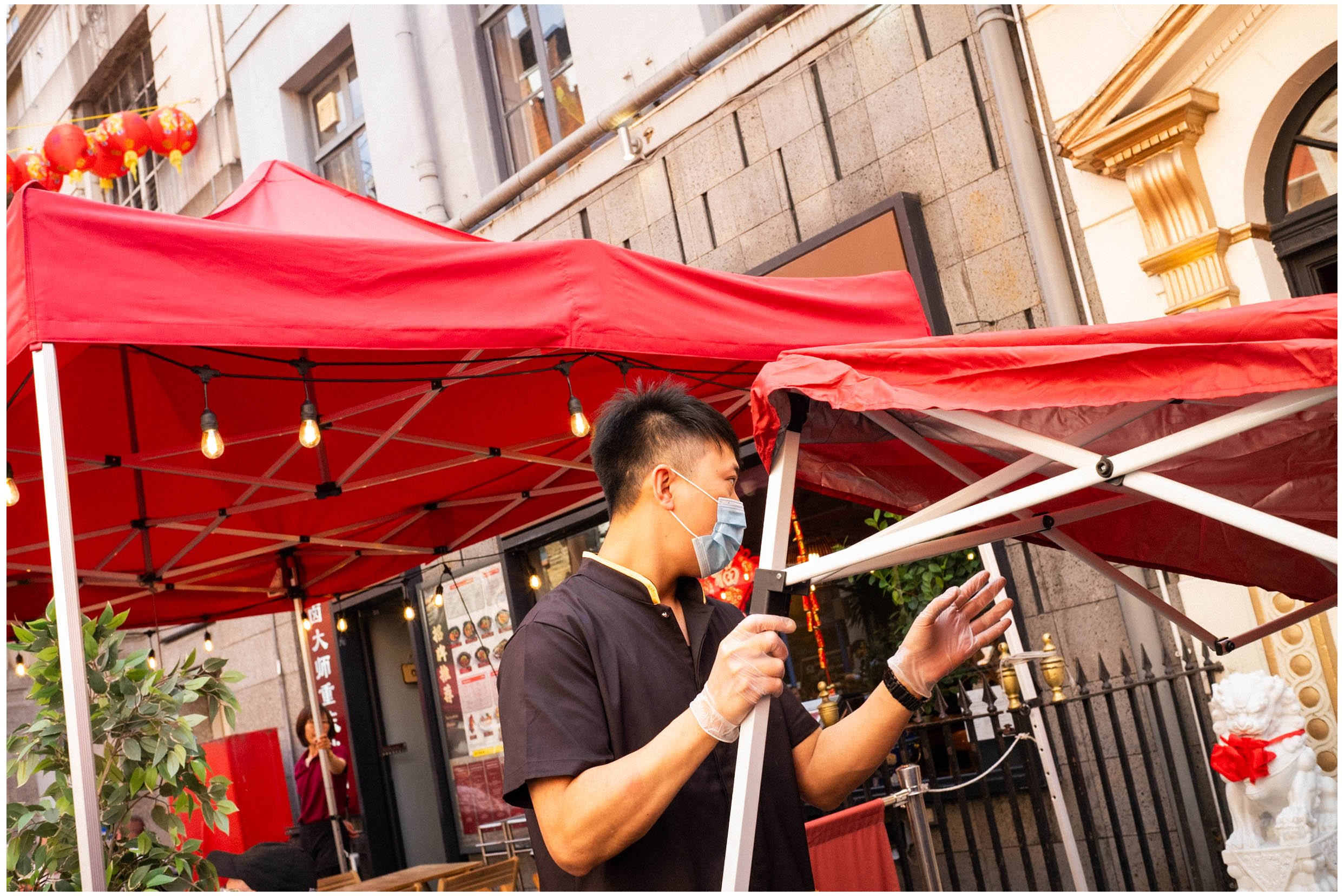
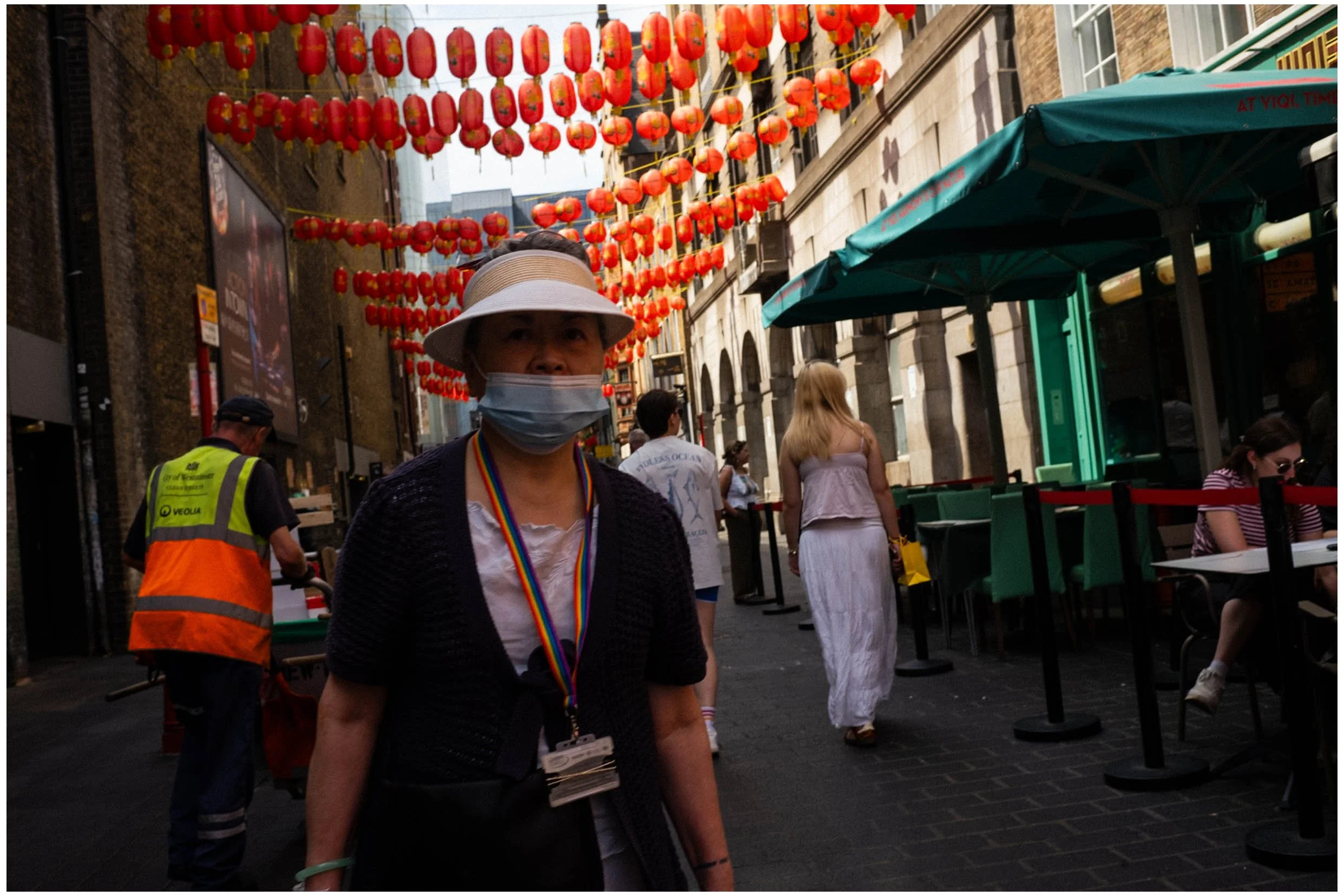
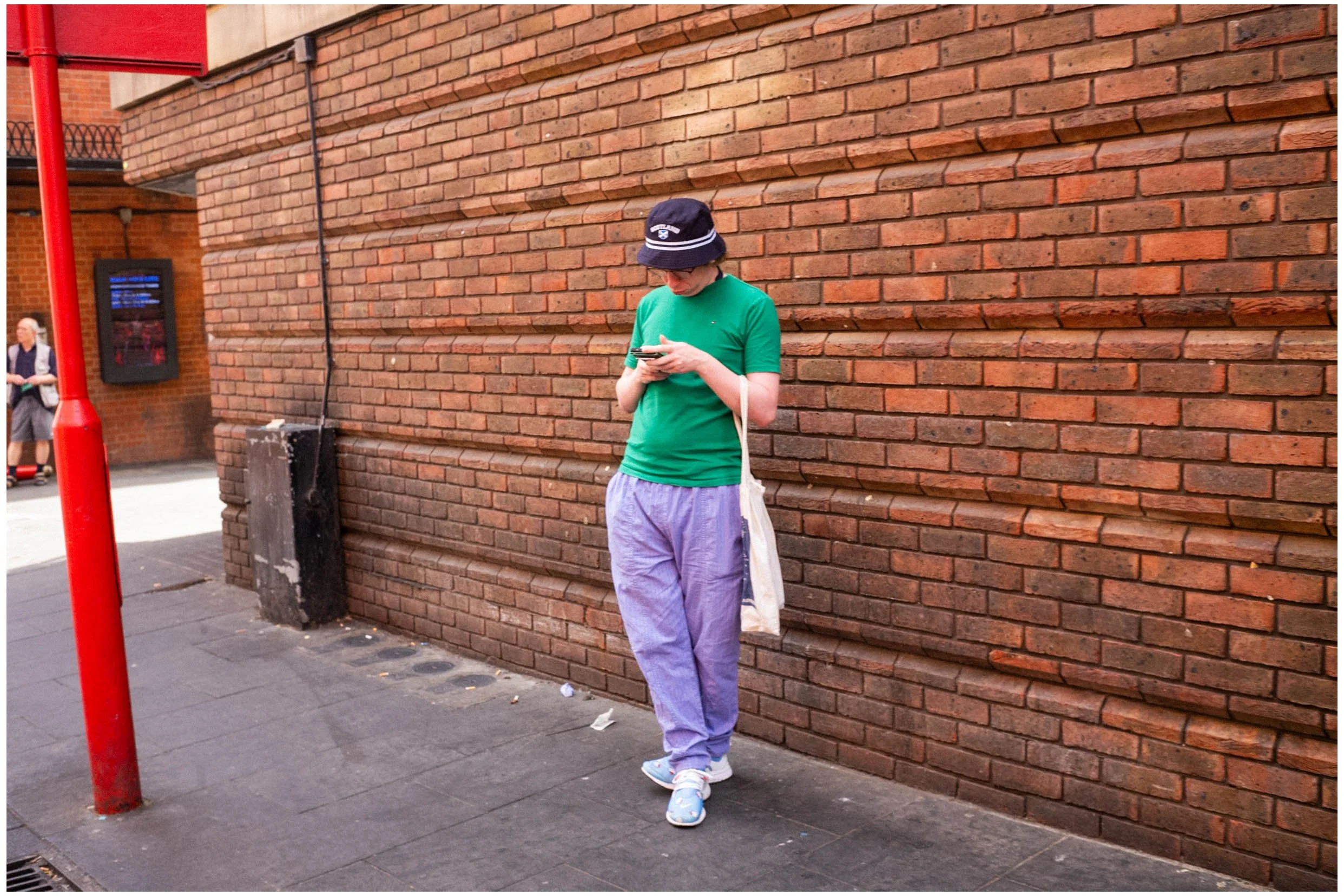
No theme, no brief, no real intention beyond paying attention. Sometimes that's the whole job.
Until next time, keep snapping.
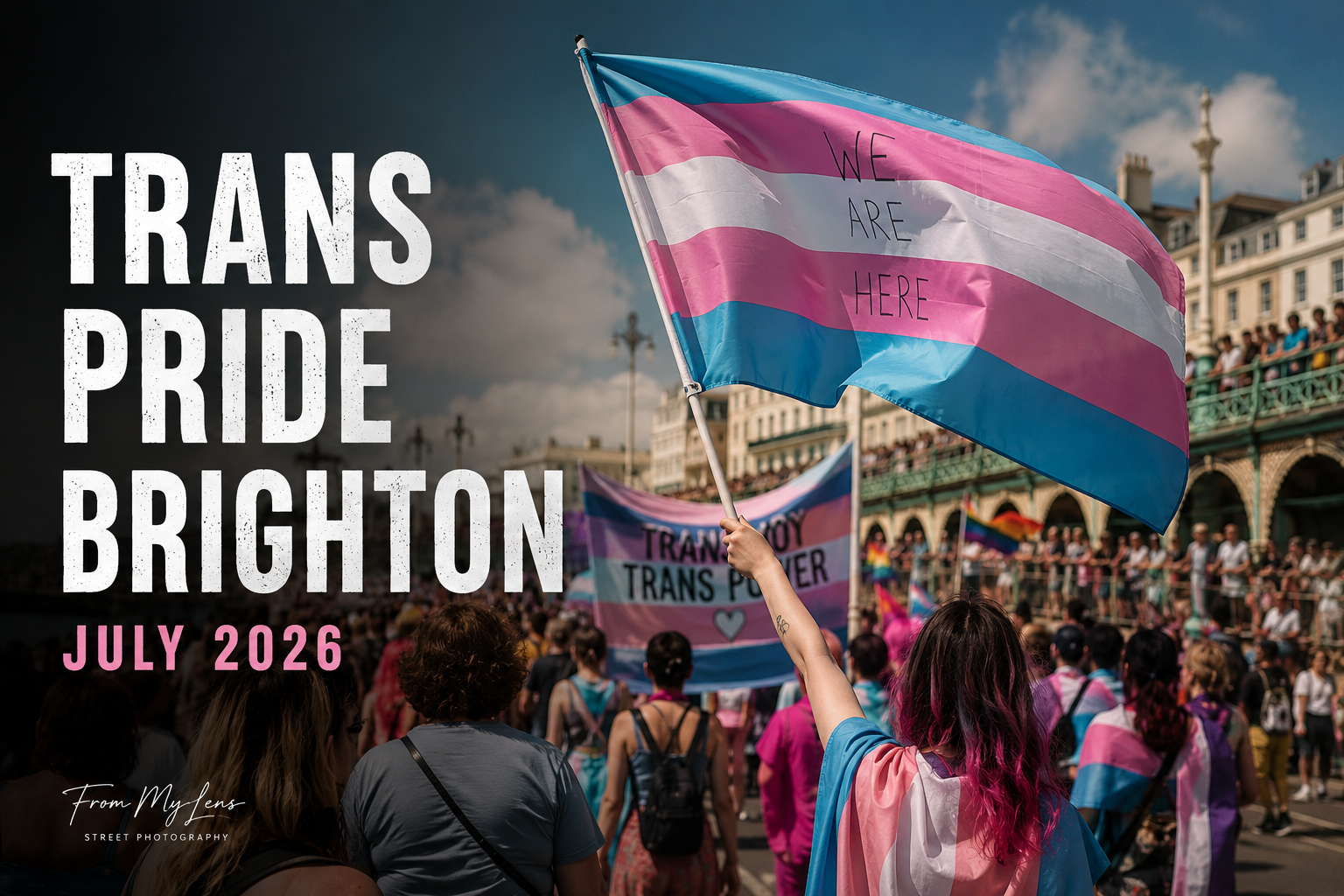
Trans Pride Brighton, July 2026
A Chilled Day. An Unchilled Moment.
Why Brighton
There are cities that tolerate difference and cities that are built from it. Brighton is the latter.
It has been a refuge and a gathering point for LGBTQ+ communities for decades — longer than most of the legislation designed to protect them. The Kemptown scene, the annual Pride in August, the sheer density of queer life woven into the fabric of the place. Brighton doesn't perform acceptance. It simply gets on with it.
A Chilled Day. An Unchilled Moment.
Why Brighton
There are cities that tolerate difference and cities that are built from it. Brighton is the latter.
It has been a refuge and a gathering point for LGBTQ+ communities for decades — longer than most of the legislation designed to protect them. The Kemptown scene, the annual Pride in August, the sheer density of queer life woven into the fabric of the place. Brighton doesn't perform acceptance. It simply gets on with it.
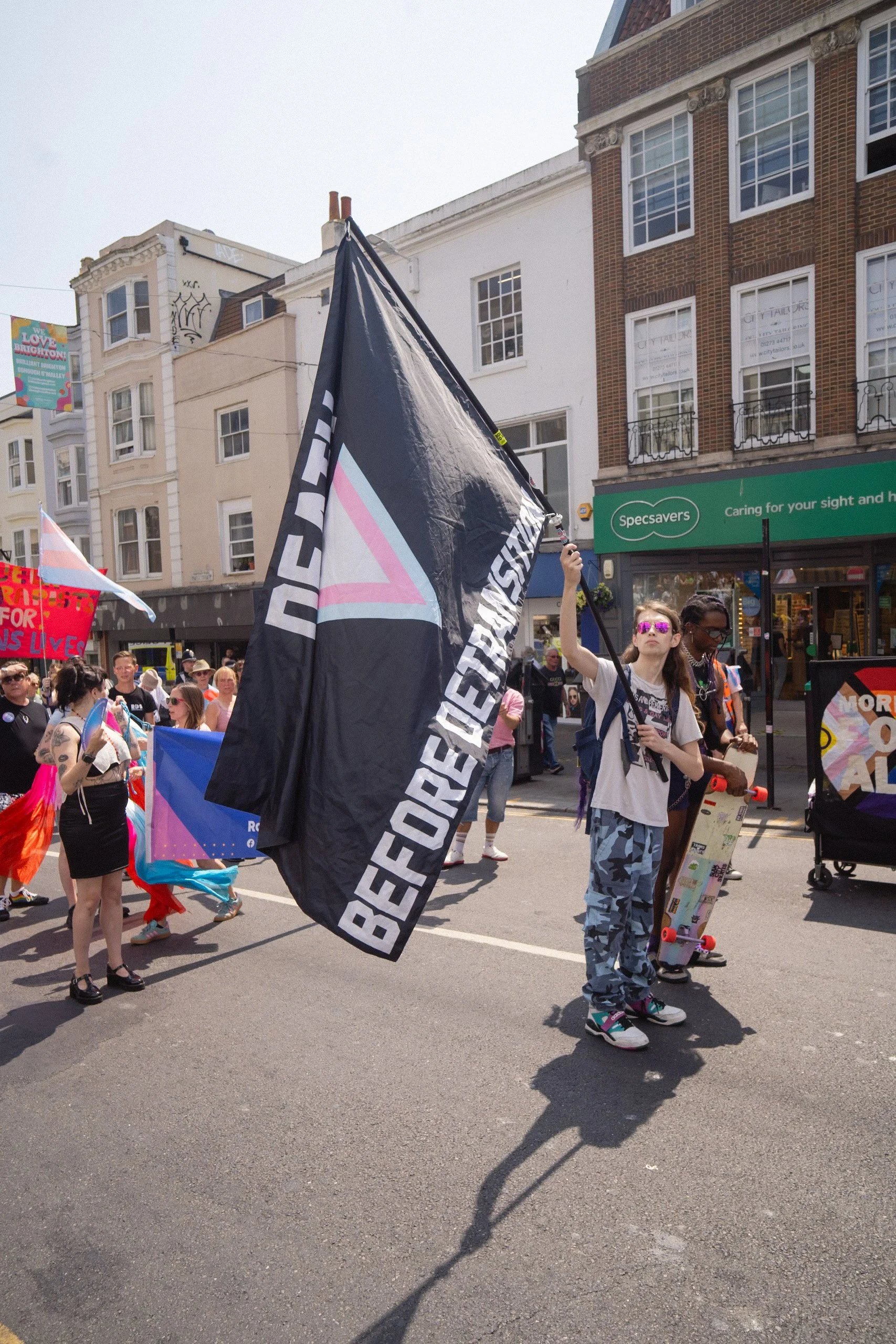
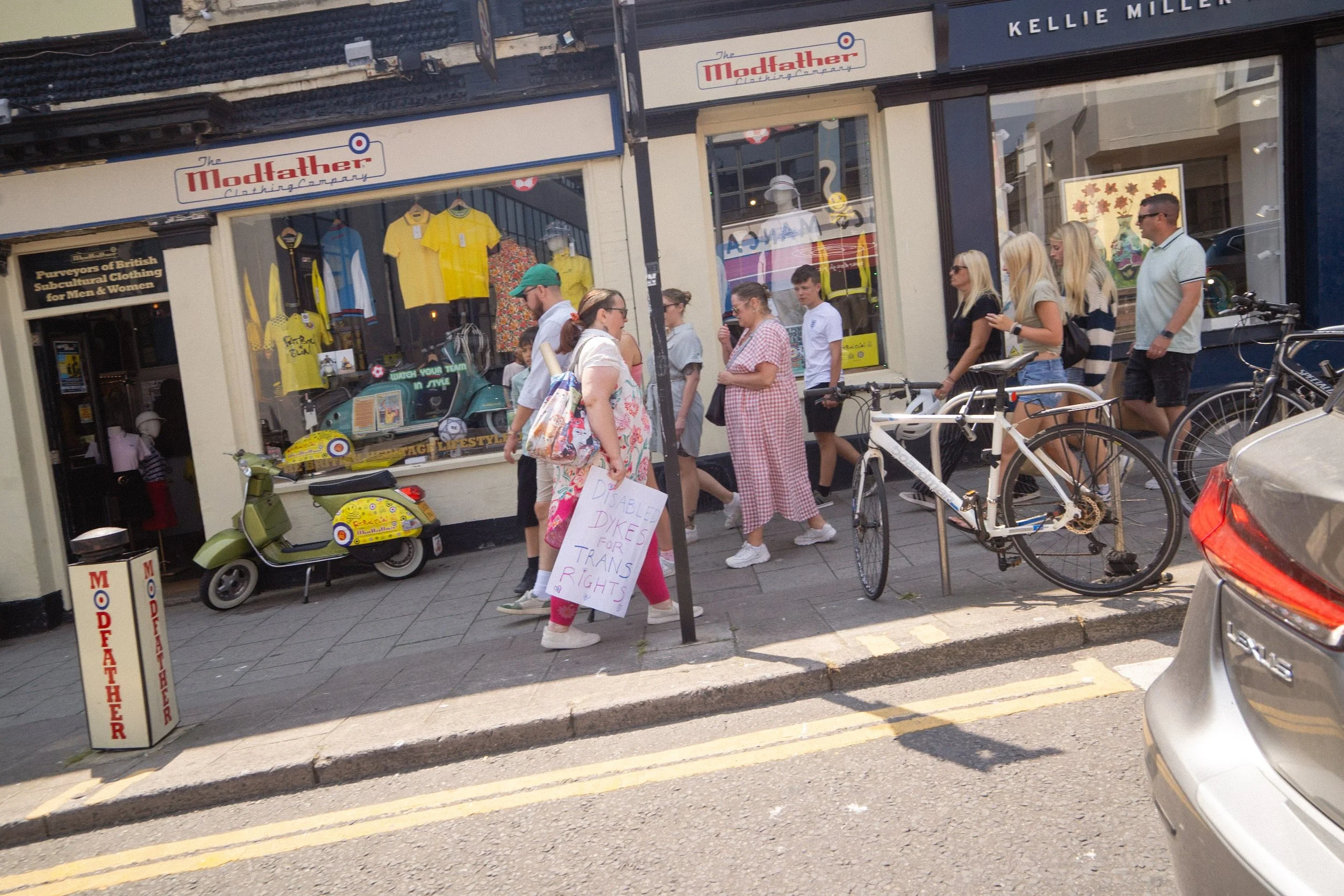
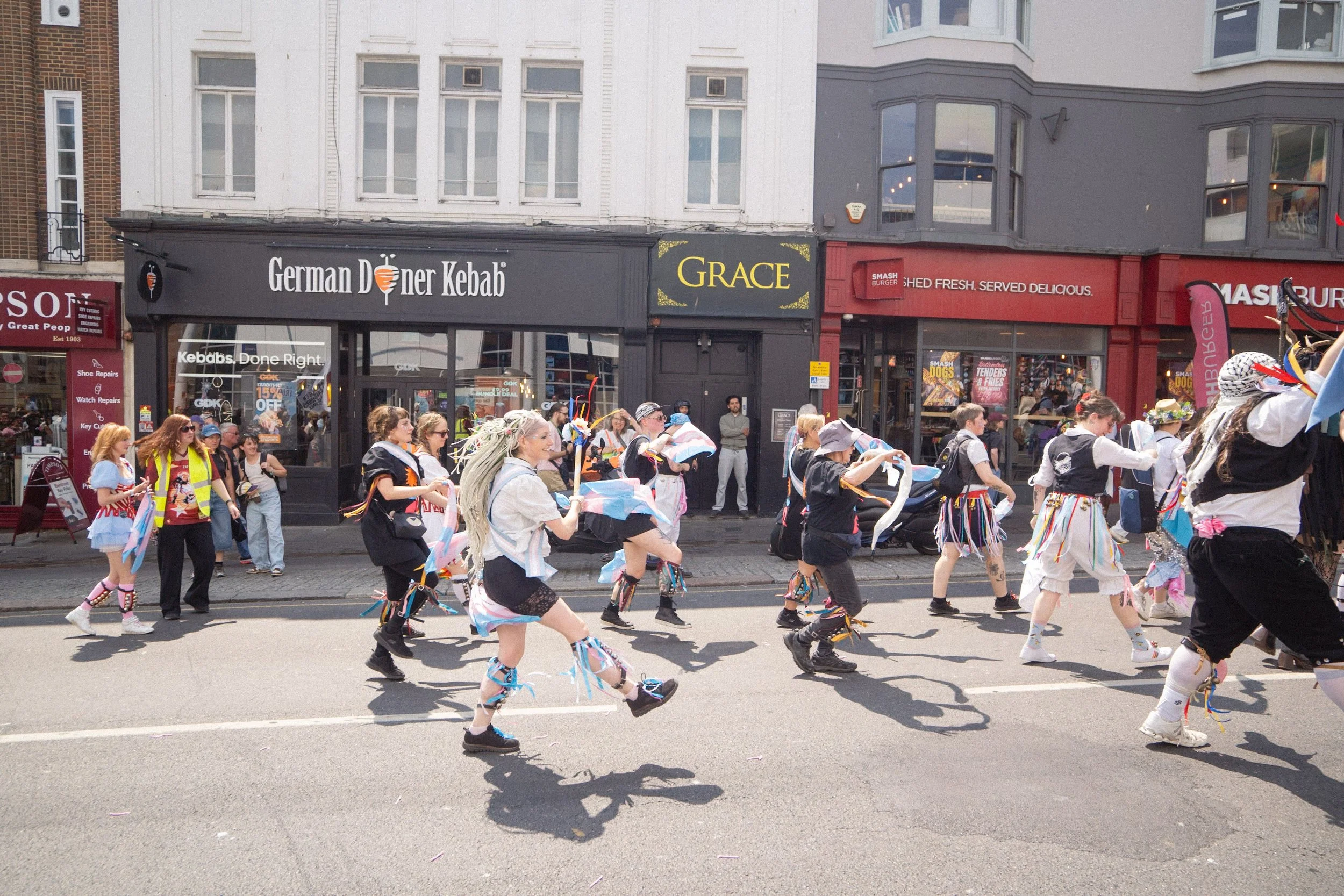
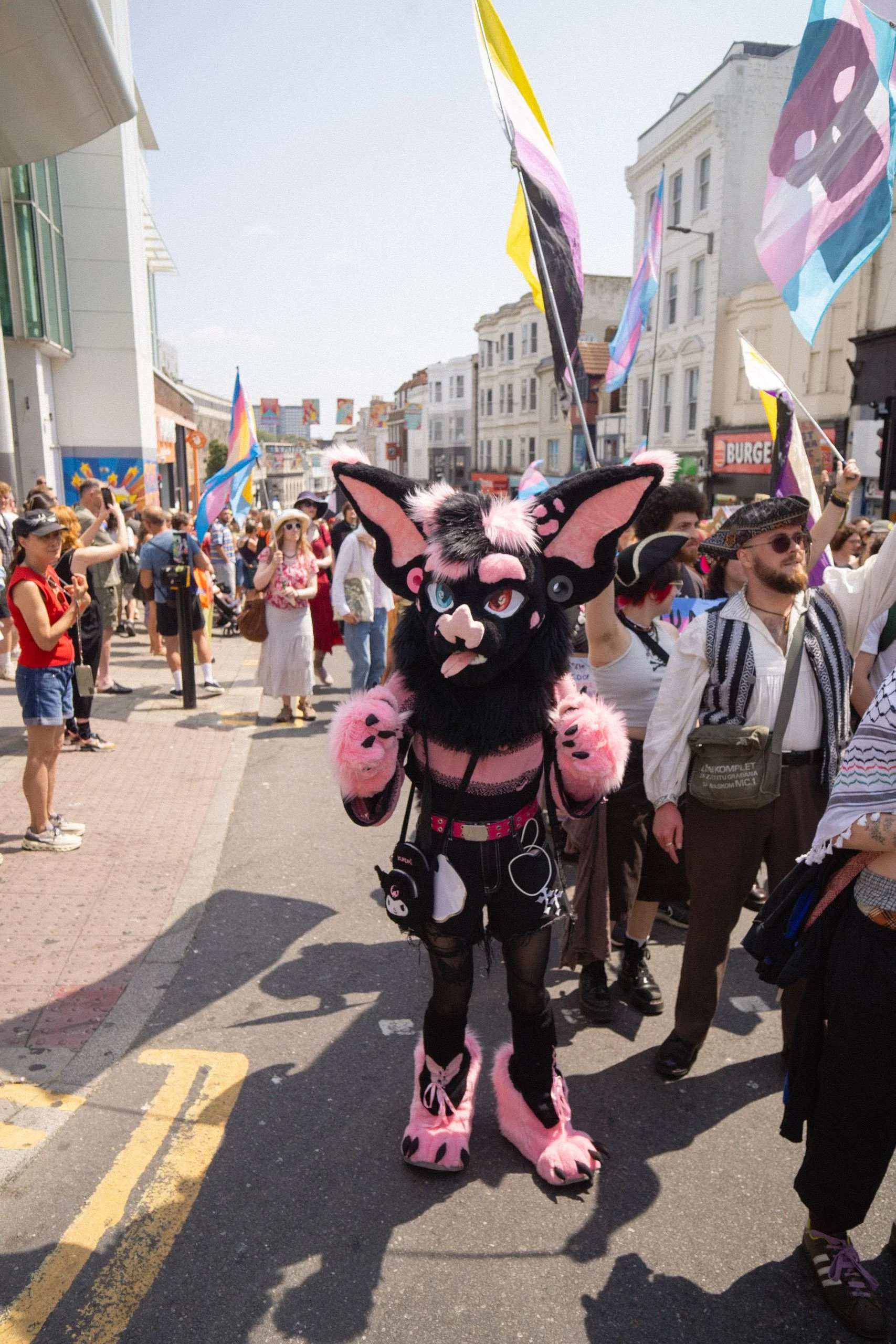
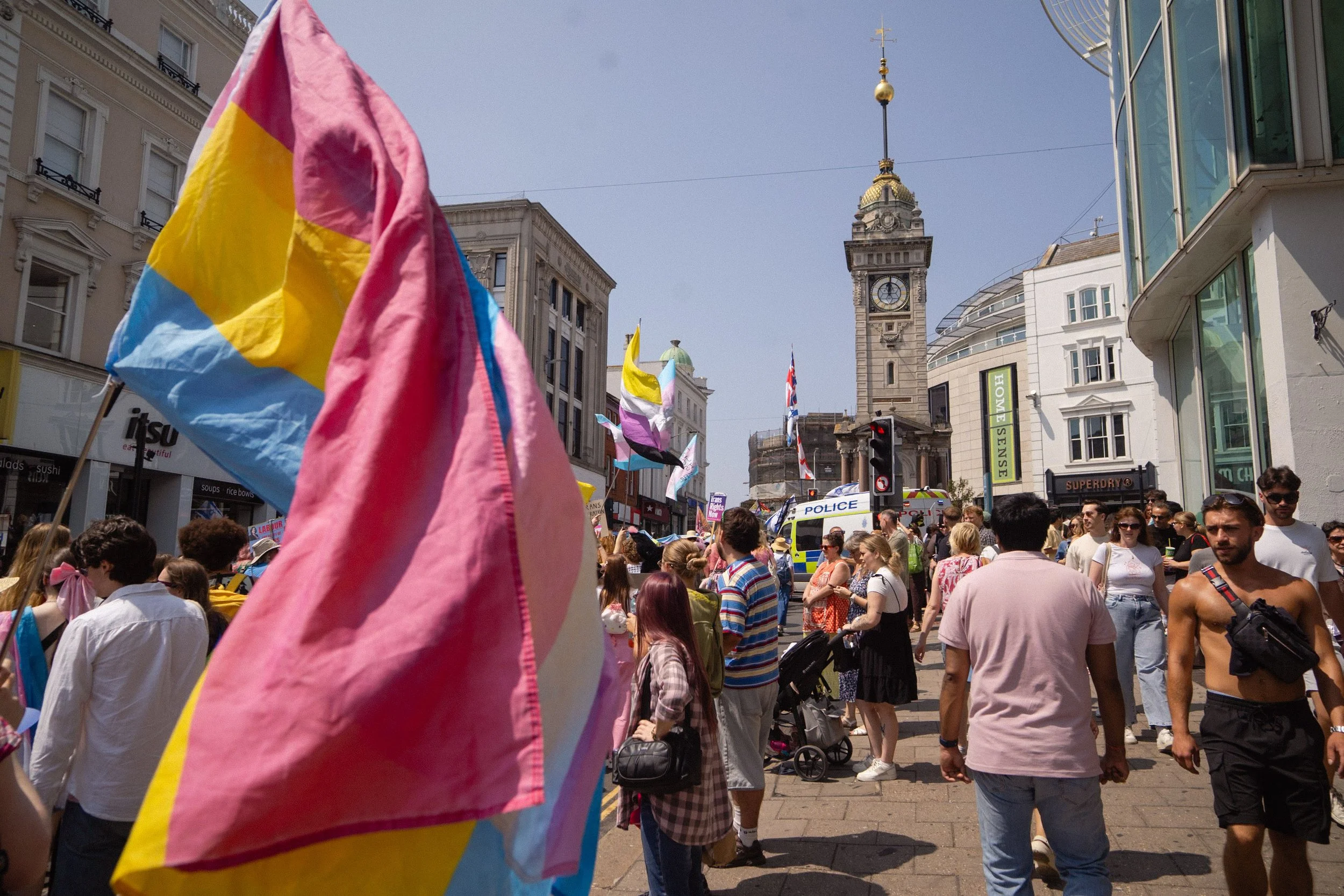
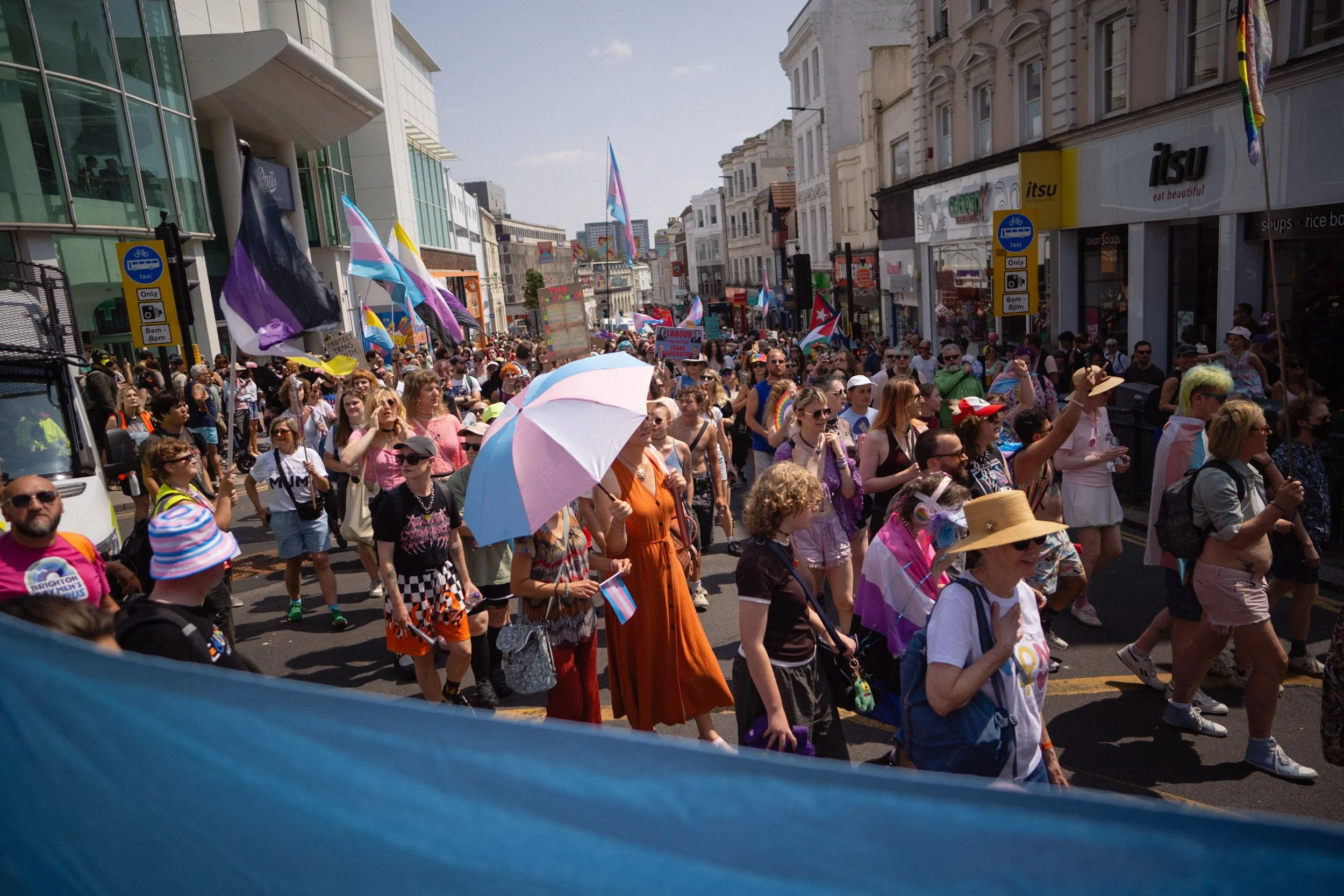
Trans Pride Brighton has been part of that fabric since 2013, when a small group of organisers decided that trans people deserved a dedicated space within the broader Pride calendar — not a footnote, not a float, but a march of their own. It was one of the first events of its kind in the UK, and it has grown every year since.
What has also grown, in the years since, is the noise around trans rights in Britain. The political temperature, the media coverage, the Supreme Court rulings, the parliamentary debates. The bathroom signs. The wee.
Against that backdrop, a chilled day in Brighton is a political act whether it intends to be or not.
Open as Usual
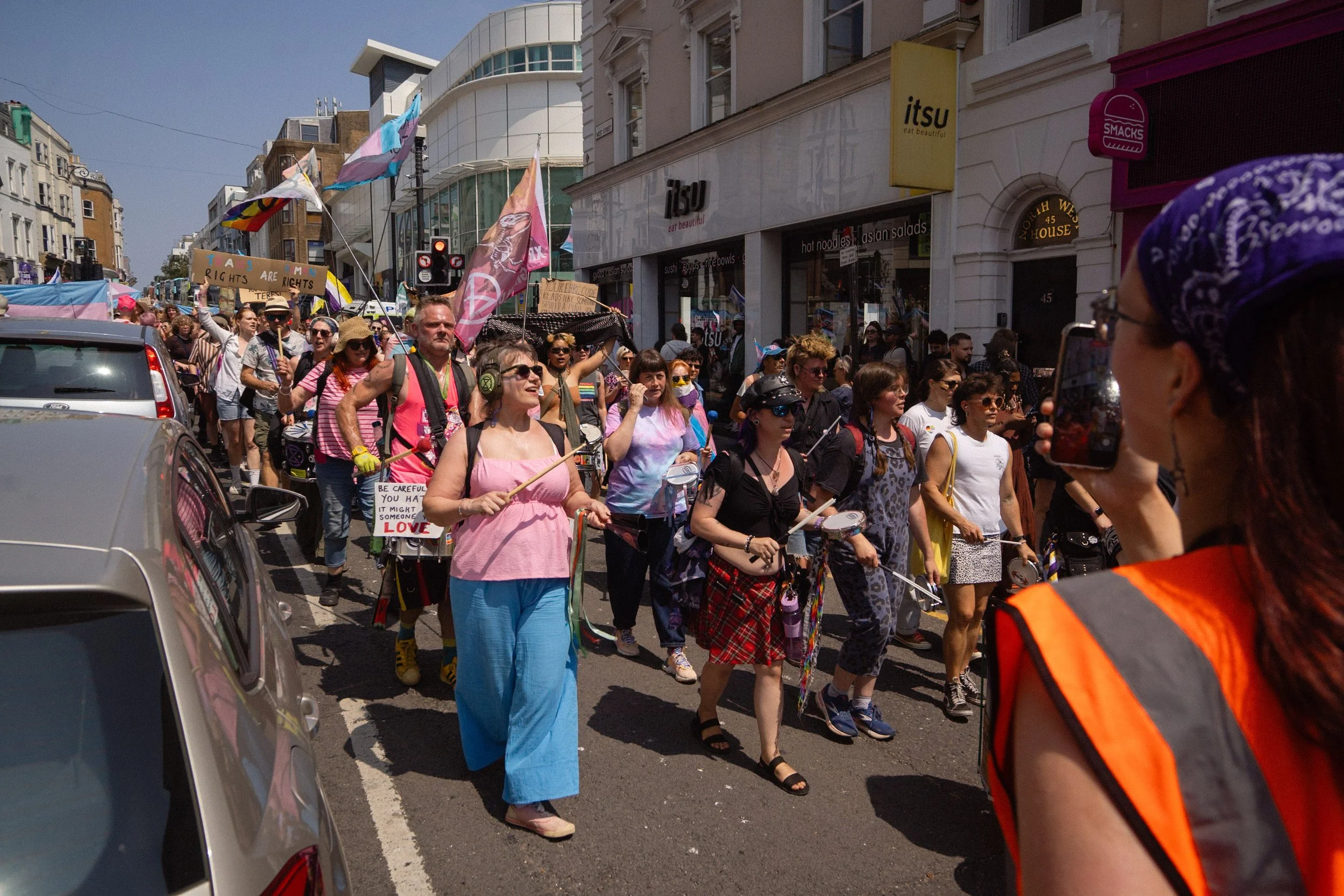
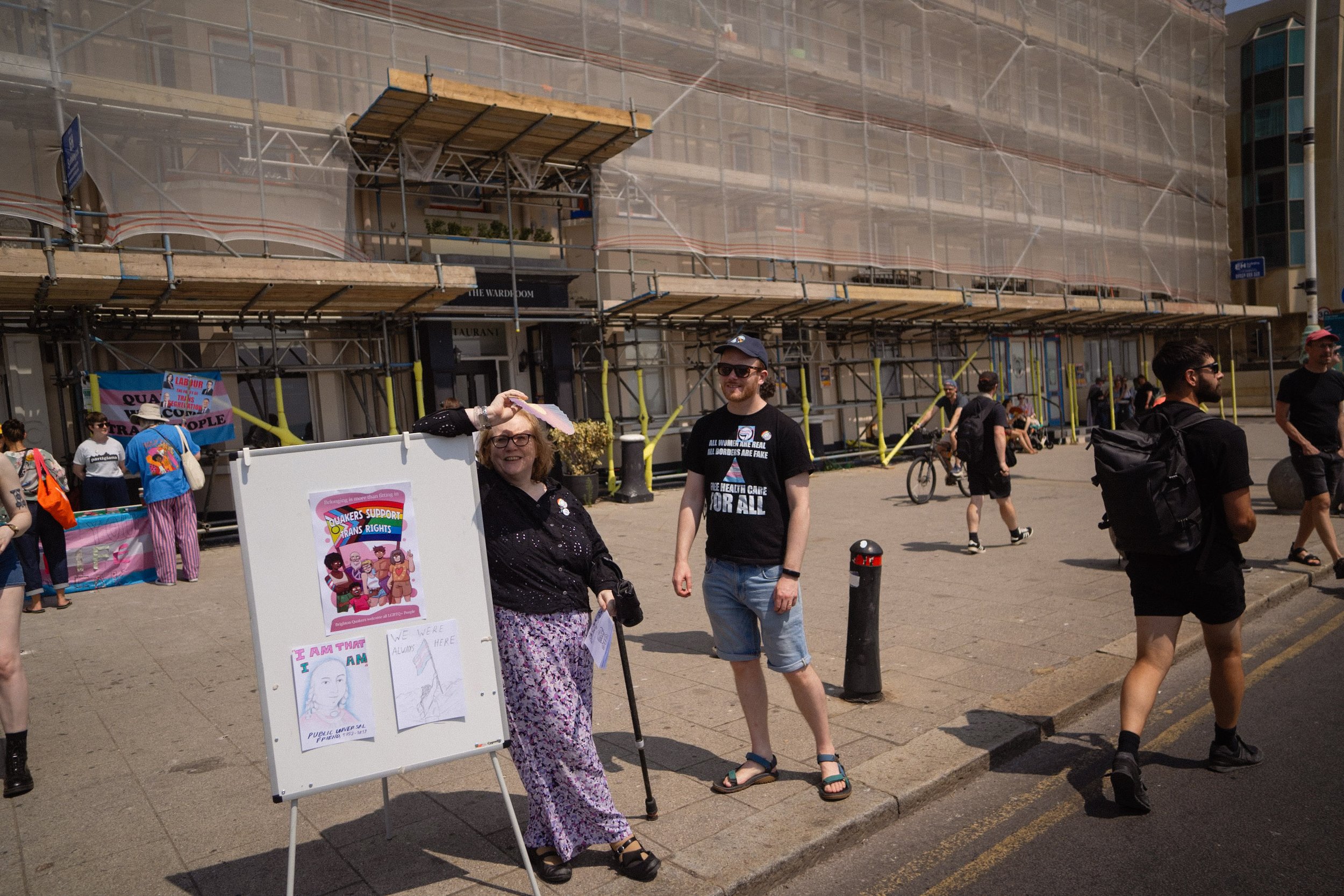
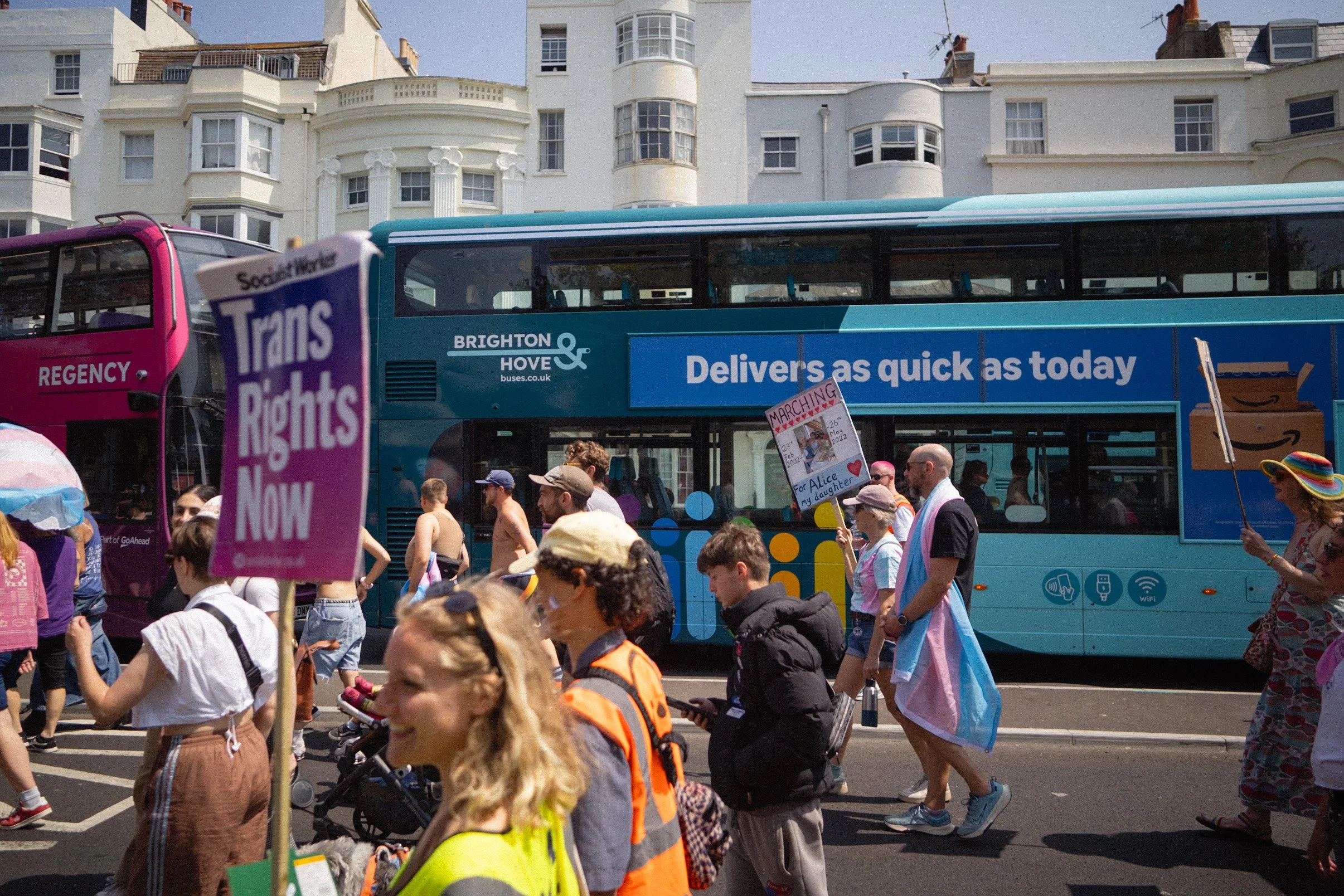
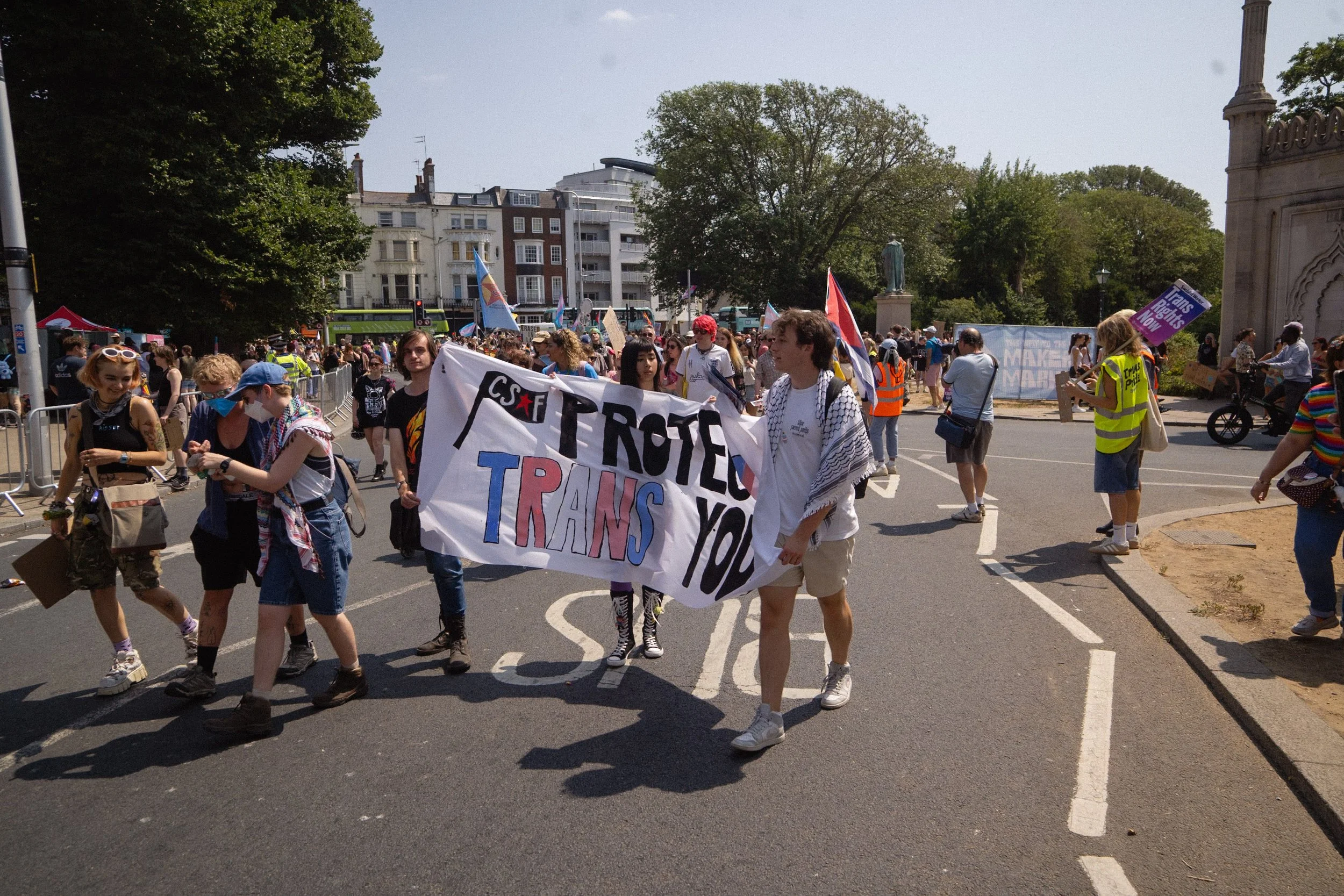
What struck me on the day was how relaxed it was. Not passive — the signs were sharp, the flags were flying, the drum lines were going — but there was no tension in the crowd. People were dancing. People were eating ice lollies in the July heat. People were dressed exactly as they wanted to be dressed, moving through the city centre as though it belonged to them.
Because, for the afternoon, it did.
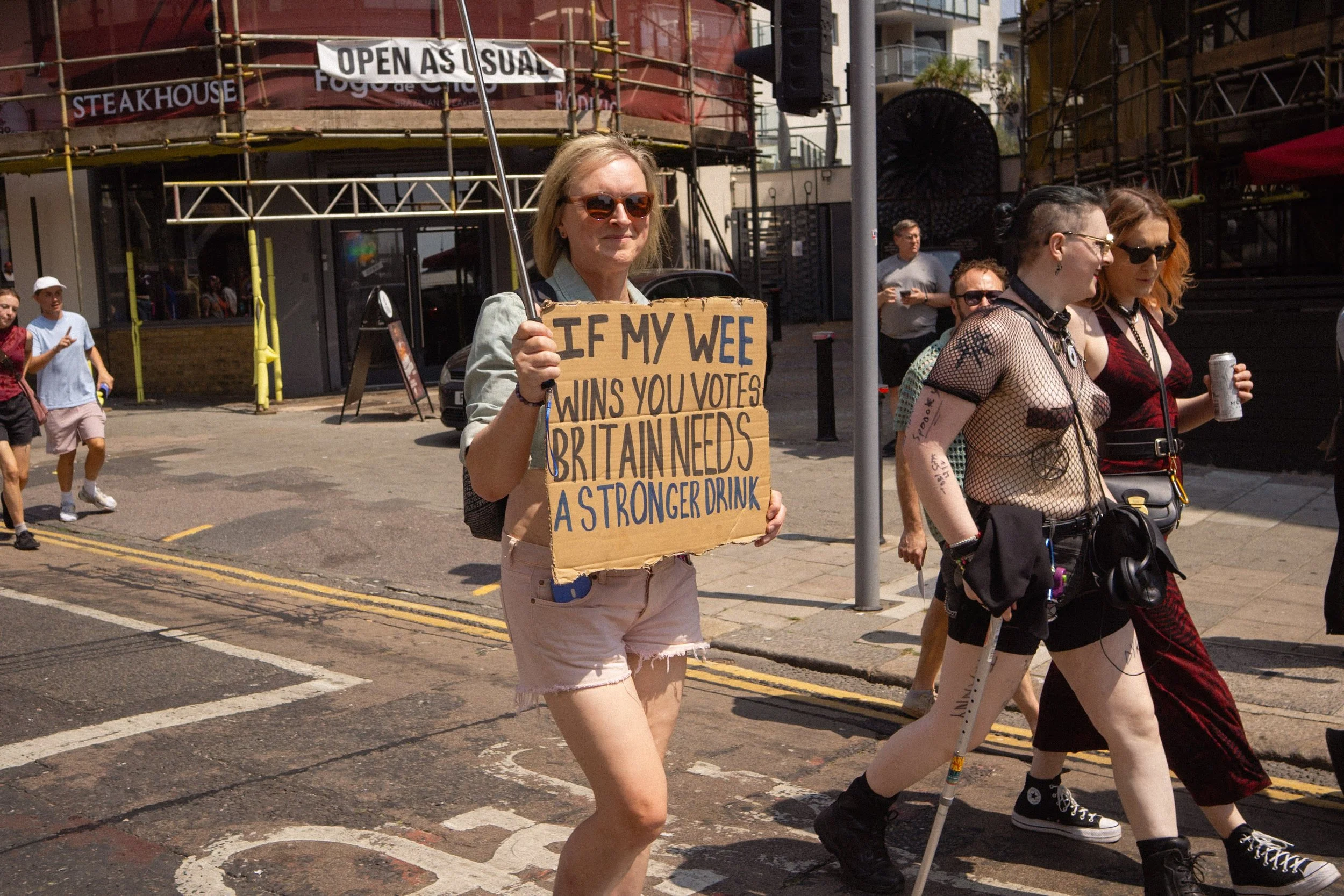
The city largely carried on around the edges of it. Bars stayed open. Shoppers paused to watch from the pavements. One banner above a pub doorway read Open as Usual — not a protest sign, just a pub doing what pubs do — but it landed as something else entirely. Business as usual. Life as usual. That's all anyone was asking for.
"Be careful what you hate. It might be someone you love."
That sign, hand-painted and carried through the street, is both a plea and a warning. It also happens to be accurate.
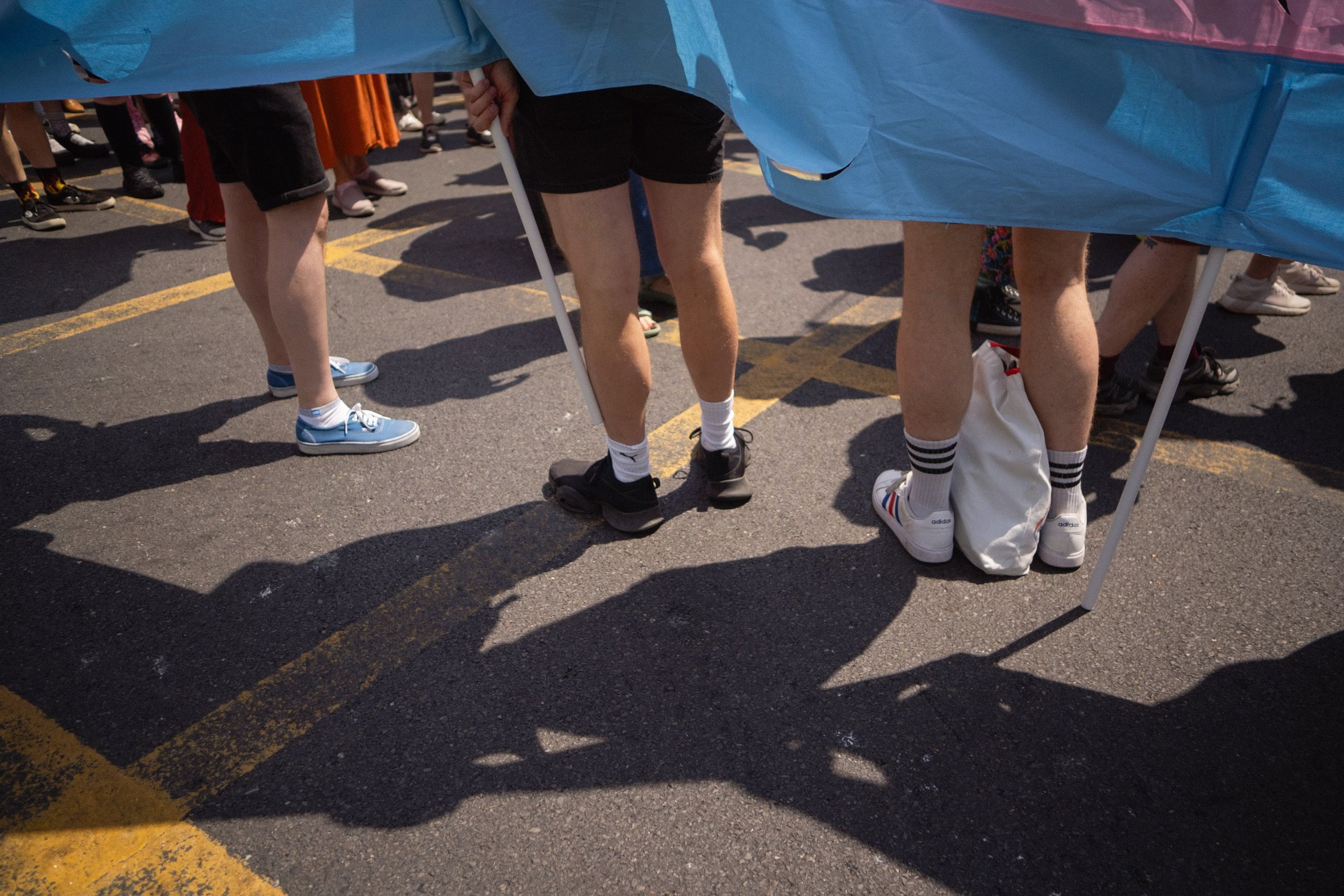
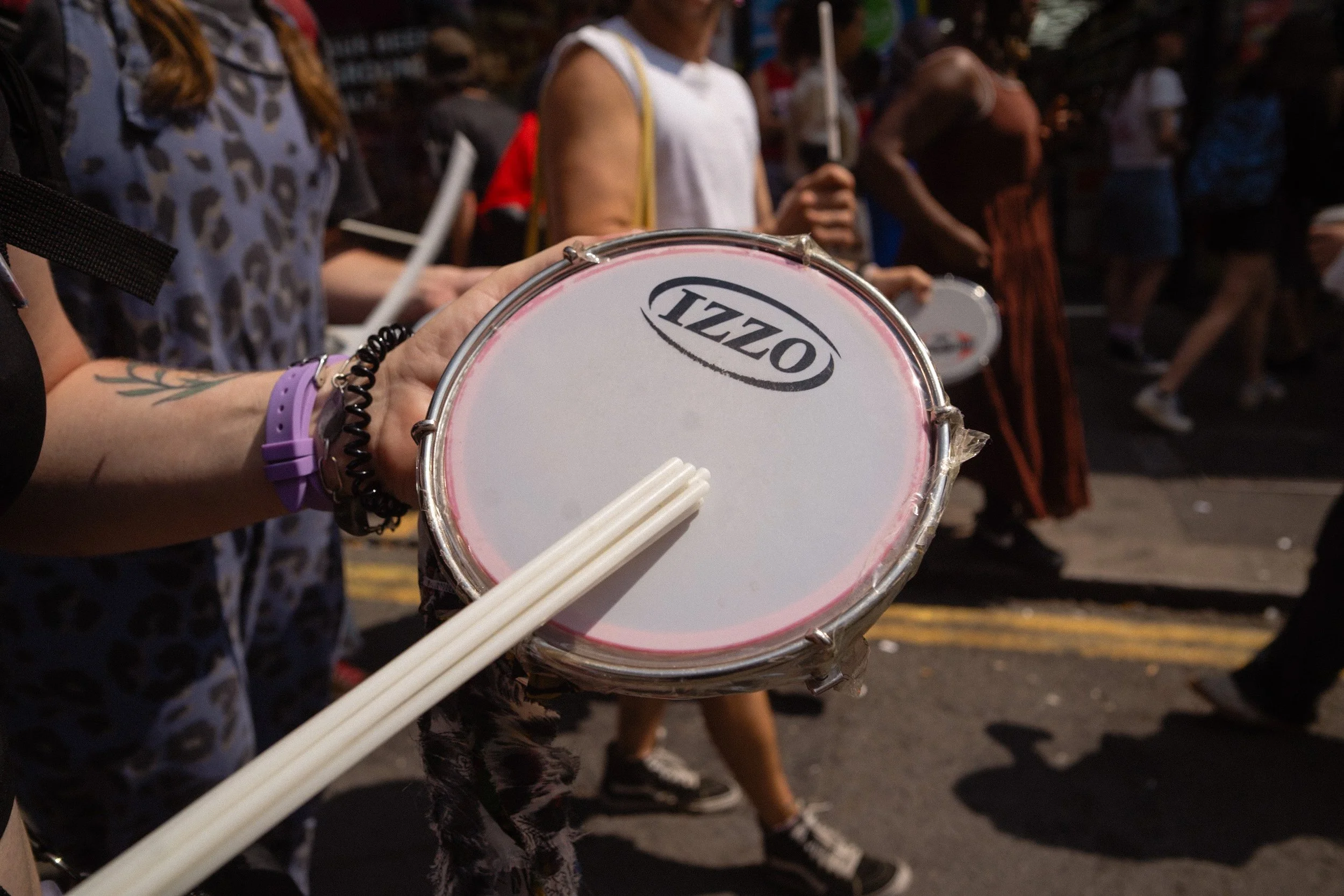
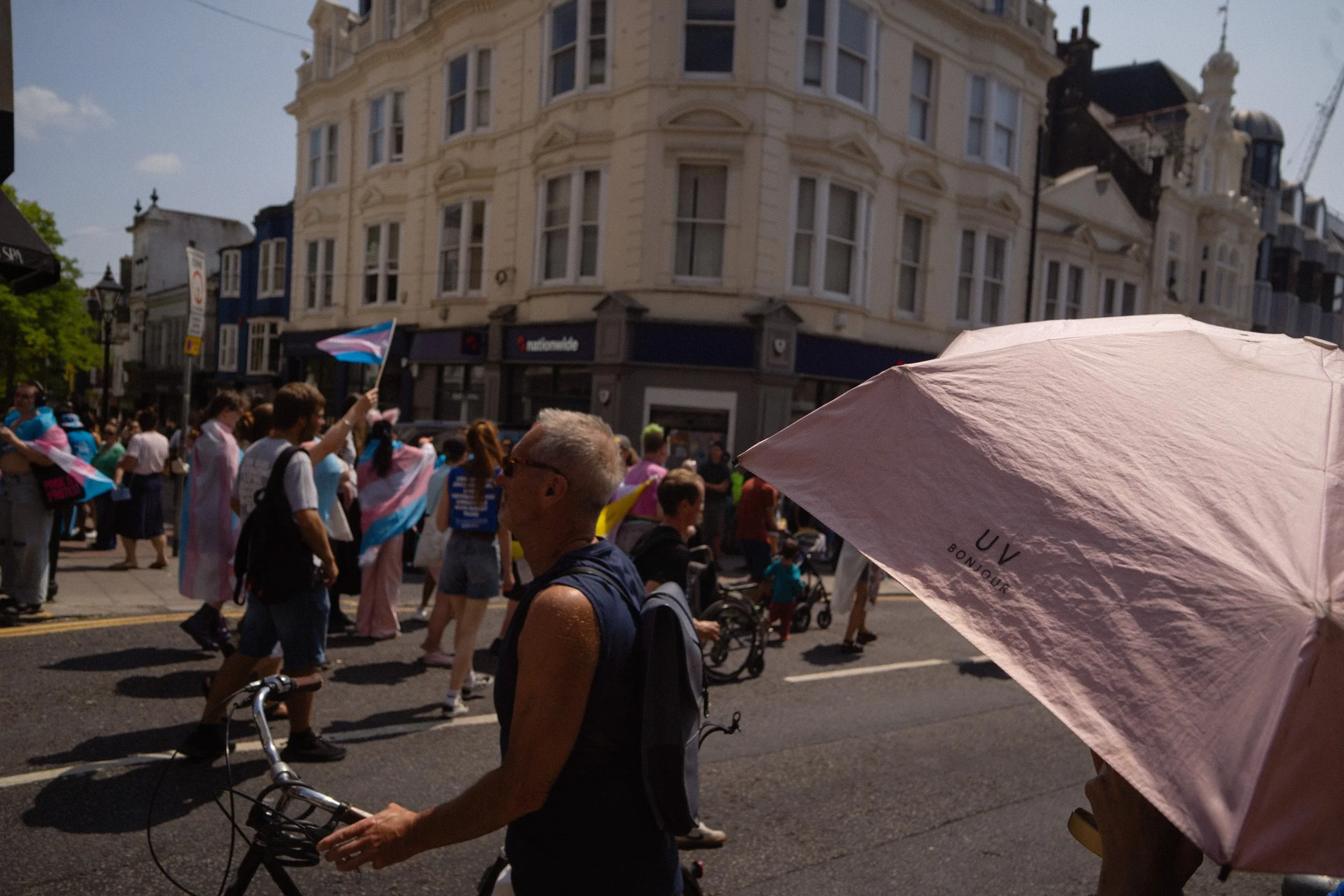
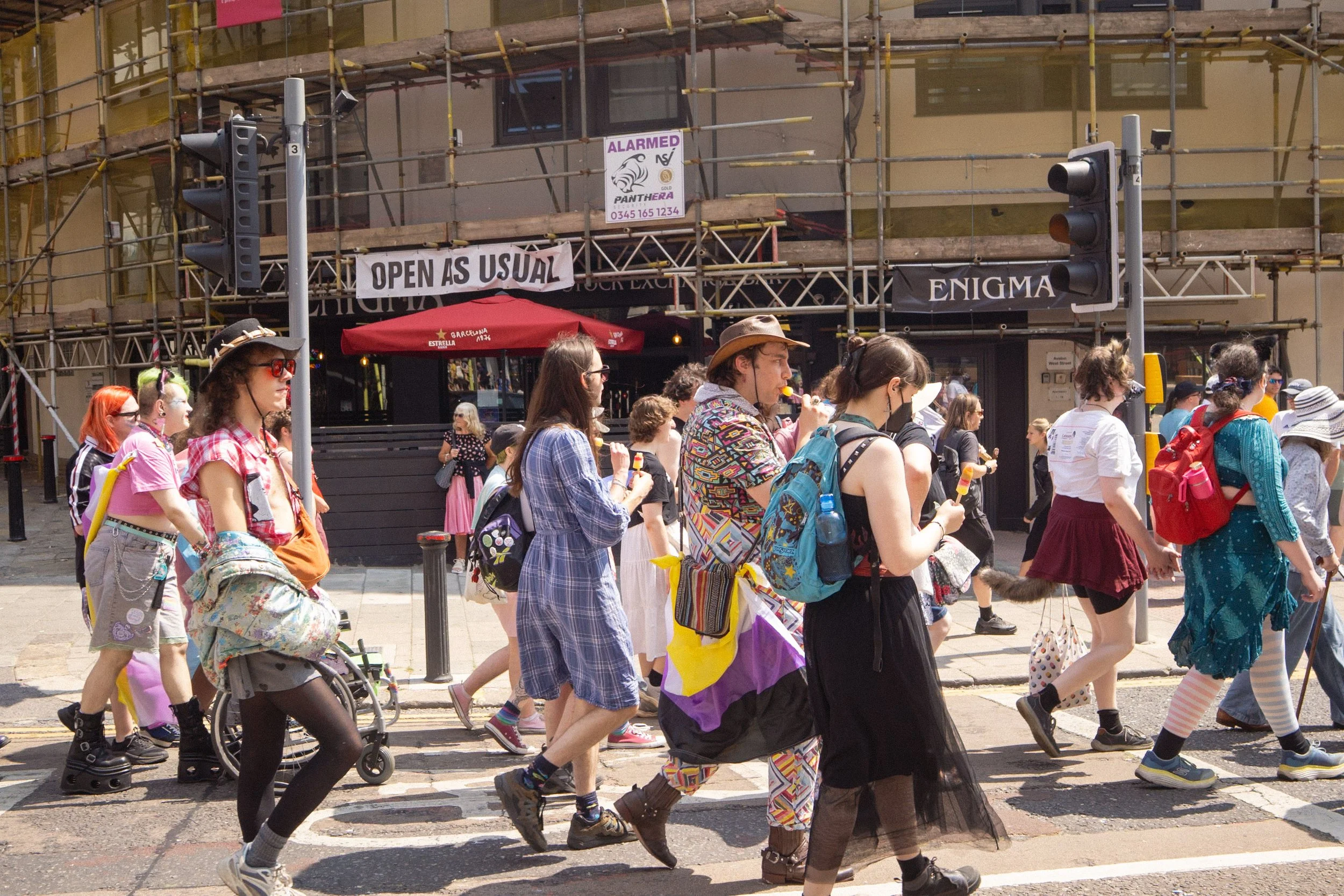
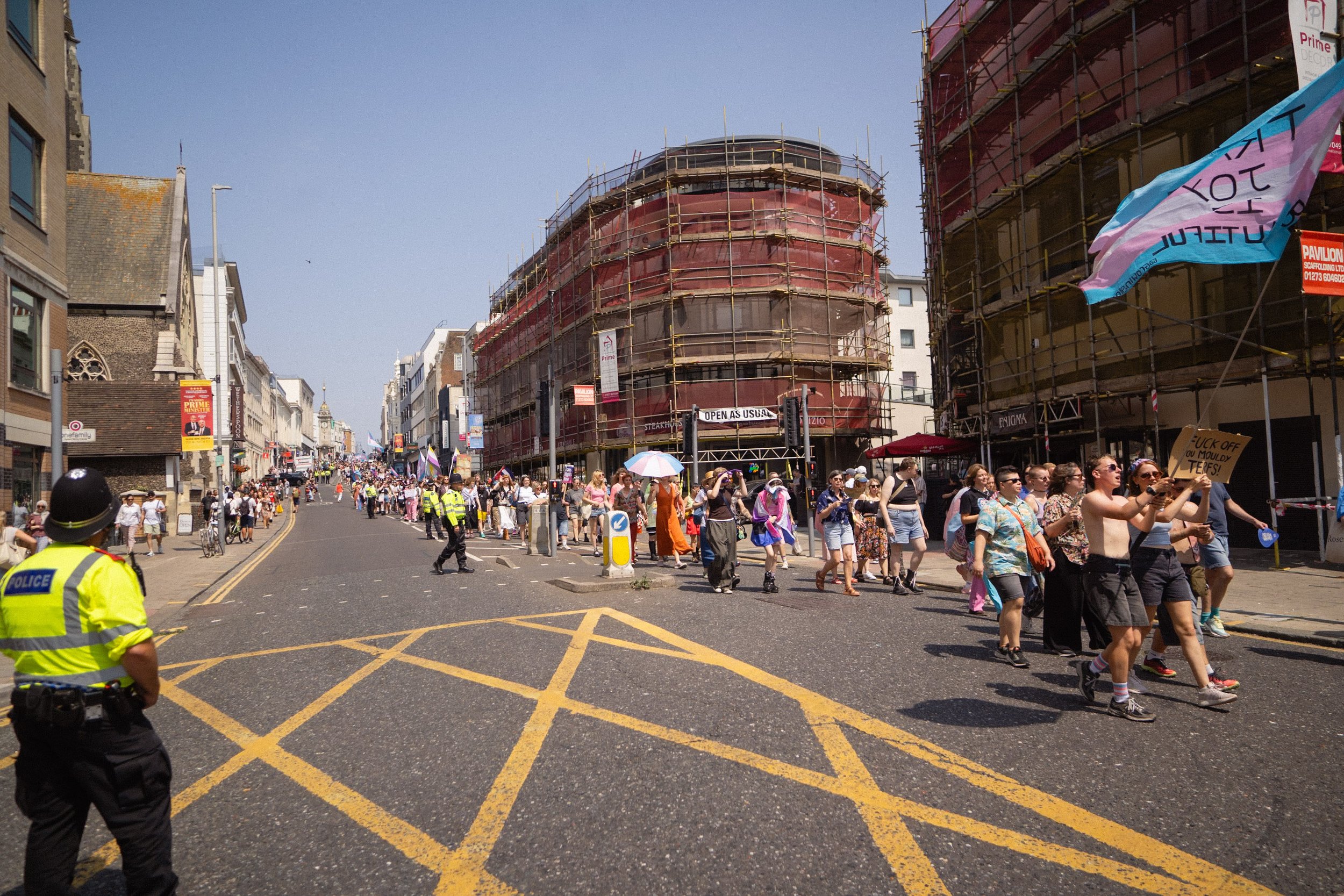
The Signs
Street photography at a march is its own discipline. You're not making the event; you're reading it. And what a march says through its placards and banners is often more revealing than anything a speech could manage.
"Dead Before Detransition." A large black flag, carried by a young person in camo trousers and coloured trainers, held high above the crowd. The weight of that phrase is considerable. It is not hyperbole — it is testimony. And it landed.
"If my wee wins you votes, Britain needs a stronger drink." Cardboard, marker pen, absolute precision. The bathroom debate — the idea that trans people's use of public toilets represents some kind of threat — has been deployed by politicians across the spectrum as a wedge issue. This sign answered it in eleven words. Brighton laughed. Brighton usually does.
The Pedigree
Trans Pride Brighton is free to attend. It is community-organised. It has no corporate sponsors headlining the stage, no VIP enclosures, no branded lanyards. It is, in that sense, closer to what Pride was originally — a march, a gathering, a refusal to be invisible.
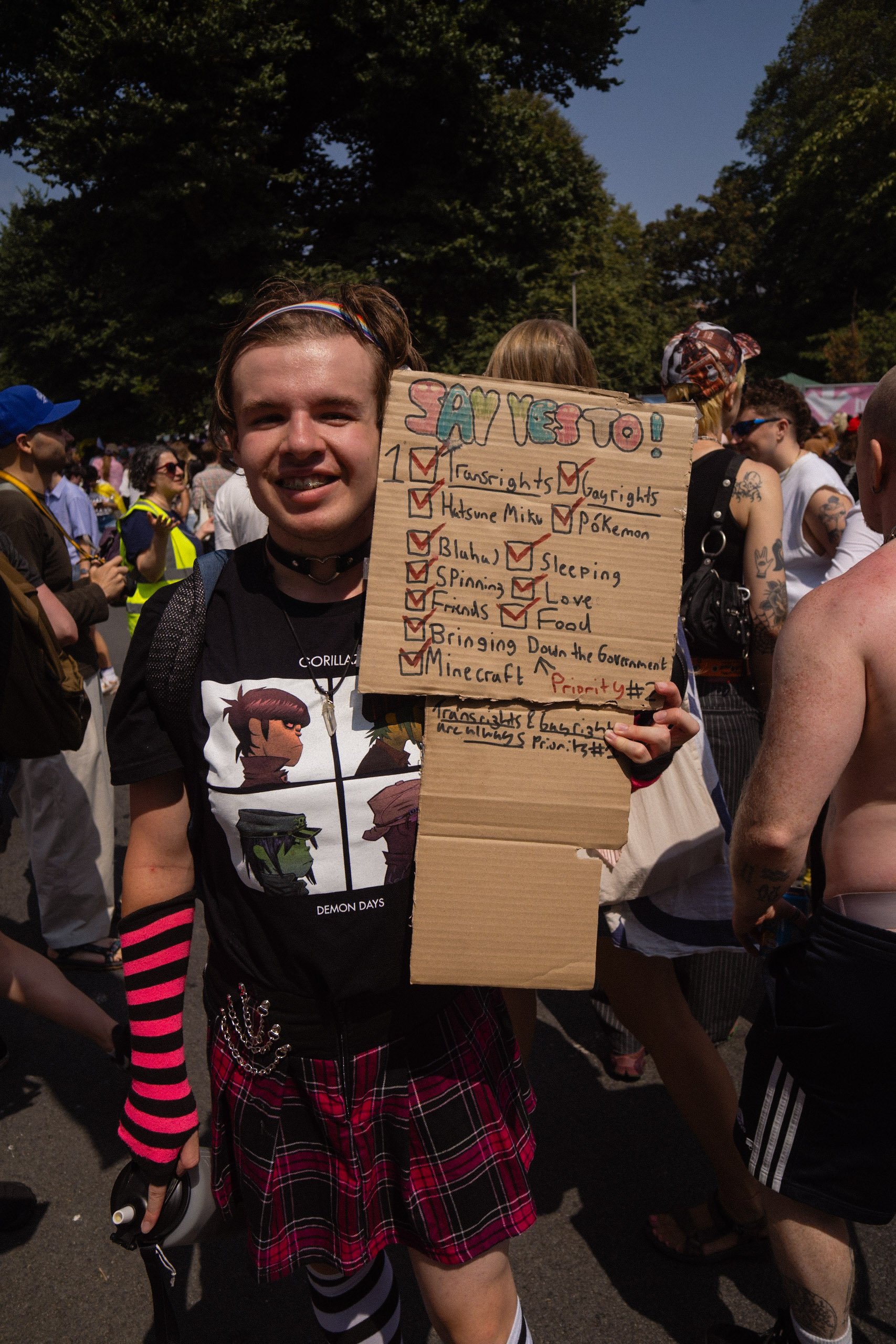
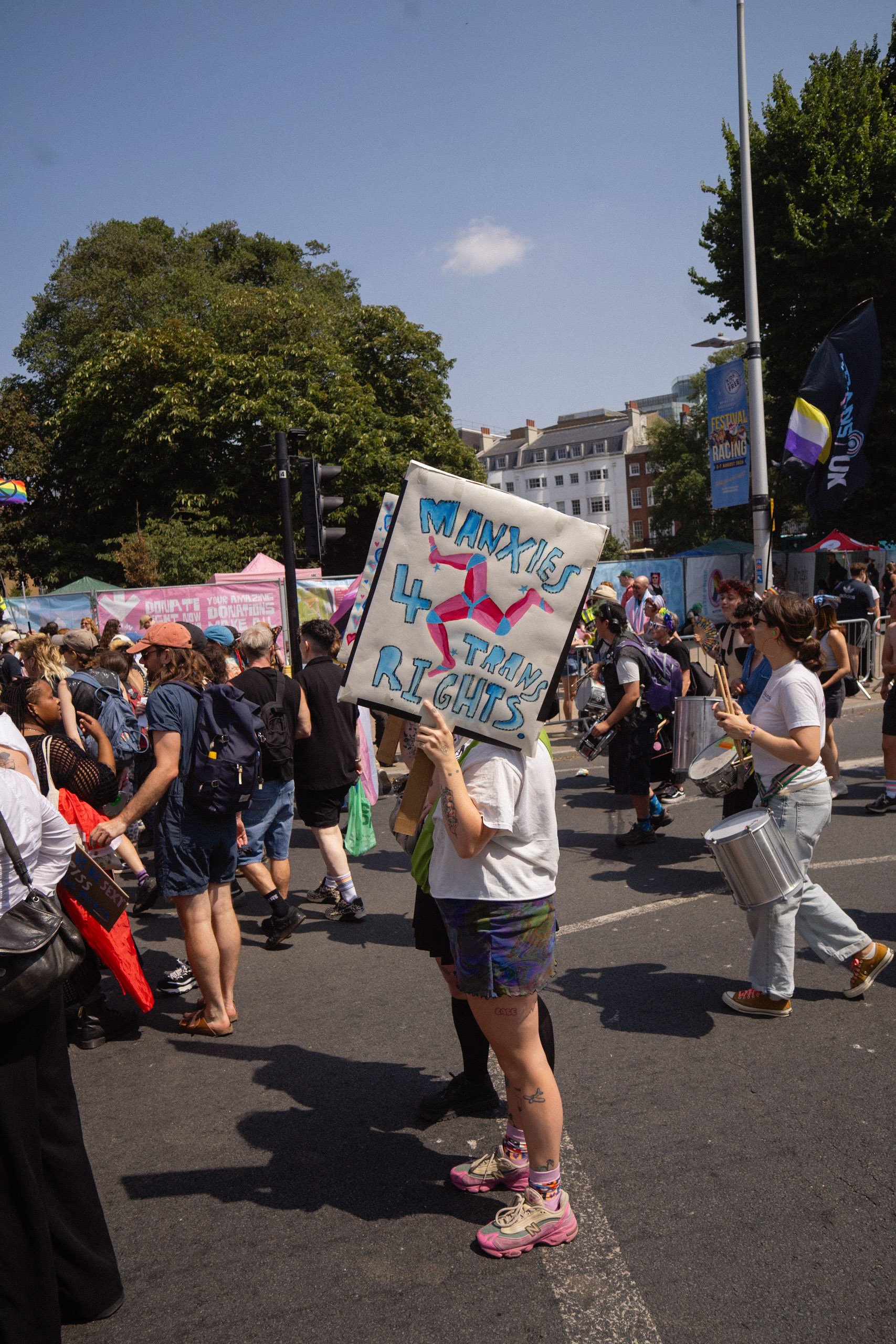
That it takes place in Brighton is appropriate. The city has always understood that visibility is not vanity. It is survival.
The people who turned out on the 18th of July were not making a statement at anyone. They were living their lives on a sunny Friday afternoon, in a city that has always made room for exactly that.
The camera just happened to be there.
Until next time, keep marching
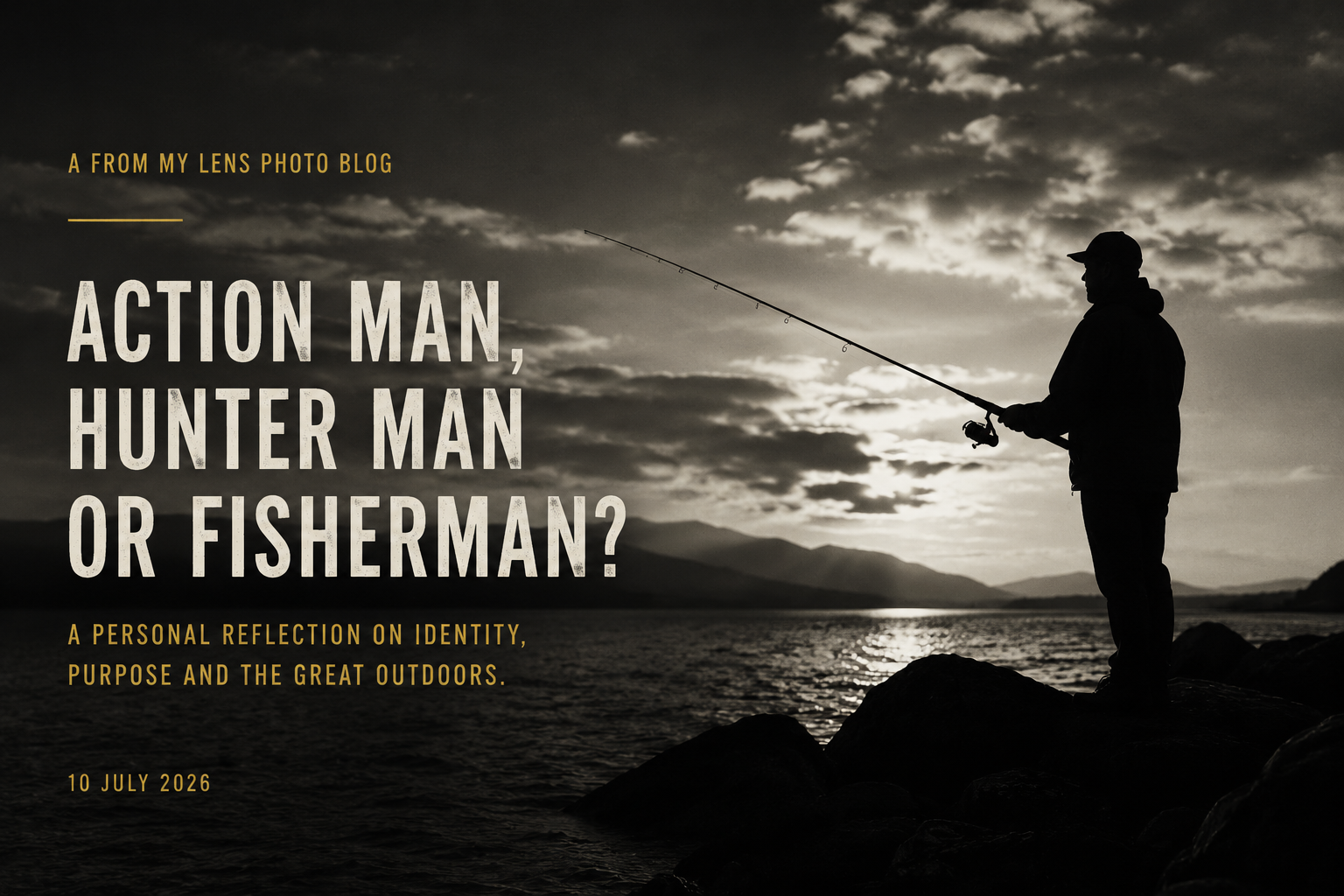
Action Man, Hunter Man, or Fisherman?
Brighton POV Street Photography: 1 Frame or 25 Frames Per Second
I've been doing something a little different lately. Strapping a DJI Osmo Nano action camera to myself while I head out on a photo walk, and documenting the process. Not the photographs — the making of them. The route, the decisions, the near-misses, the moments just before the shutter fires.
The result is a new short-form video series: Faces of Brighton. Watching the footage back has made me think harder about something I've always taken for granted.
1FPS or or 25FPS?
The allure of photography is the single frame. That's the whole game. Out of everything that exists in time — the noise, the motion, the mess of the world moving at 25 or 30 frames per second — you choose one. One rectangle of light. One frozen sliver.
Brighton POV Street Photography: 1 Frame or 25 Frames Per Second
I've been doing something a little different lately. Strapping a DJI Osmo Nano action camera to myself while I head out on a photo walk, and documenting the process. Not the photographs — the making of them. The route, the decisions, the near-misses, the moments just before the shutter fires.
The result is a new short-form video series: Faces of Brighton. Watching the footage back has made me think harder about something I've always taken for granted.
1FPS or or 25FPS?
The allure of photography is the single frame. That's the whole game. Out of everything that exists in time — the noise, the motion, the mess of the world moving at 25 or 30 frames per second — you choose one. One rectangle of light. One frozen sliver.
Video doesn't work like that. Video is continuity. It holds everything, which means it decides nothing.
But here's what I didn't expect: the POV footage is revealing in a way I hadn't anticipated. Watching myself walk the streets of Brighton with a camera, you see not just what I photographed but how I photograph. The rhythm of it. The decision-making. What I stop for. What I walk past. The brief pause before the raise. The moment I turn back.
It turns out that 25 frames per second is very good at showing you what 1 frame costs.
Hunter or Fisherman?
There's a question every street photographer should ask themselves, and most never do:
Are you a hunter or a fisherman?
The fisherman finds a spot. A good corner, a shaft of light, a doorway with the right background. He sets up, waits, and lets the scene come to him. An hour. Two hours. He works the same ground, patient and still, trusting that the frame will eventually walk into the net.
The hunter moves. He covers ground. He reads the street at pace, reacts, instincts sharp, always searching for the next thing rather than waiting for it. He might spend twenty minutes on one block or twenty seconds — it depends on what the street is offering.
Neither approach is wrong. Both produce great work. But they are fundamentally different temperaments, and the footage from these Brighton walks made mine undeniable.
I am a hunter.
Watch the videos and you'll see it. I walk a route. I keep moving. I don't linger unless something catches — and when it does, the stop is brief. The camera barely settles before I'm walking again. There's no fishing going on. I'm covering the ground.
The DJI Nano and What It Shows You
The DJI Osmo Nano is a small thing — genuinely pocketable, unobtrusive — and that matters when you're already carrying a camera and trying not to look like a television crew. It clips on, records, and largely stays out of the way.
What it gives back is a kind of honest testimony about your own process. There's no flattering edit here, no highlight reel — just the walk as it happened. The dead minutes between frames, the doubling back, the missed moments. The footage holds everything that the photographs discard, which is most of it.
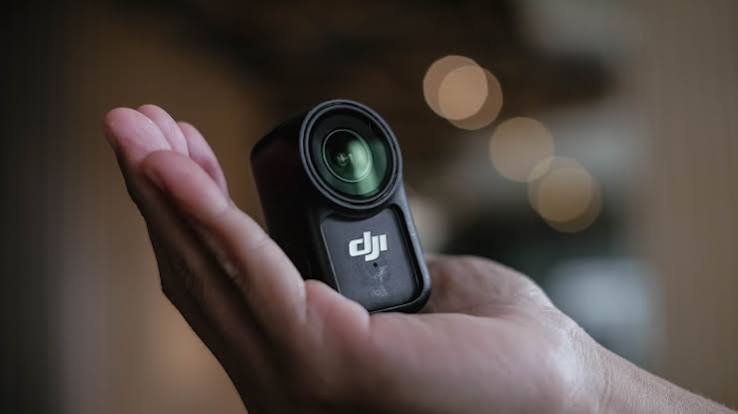
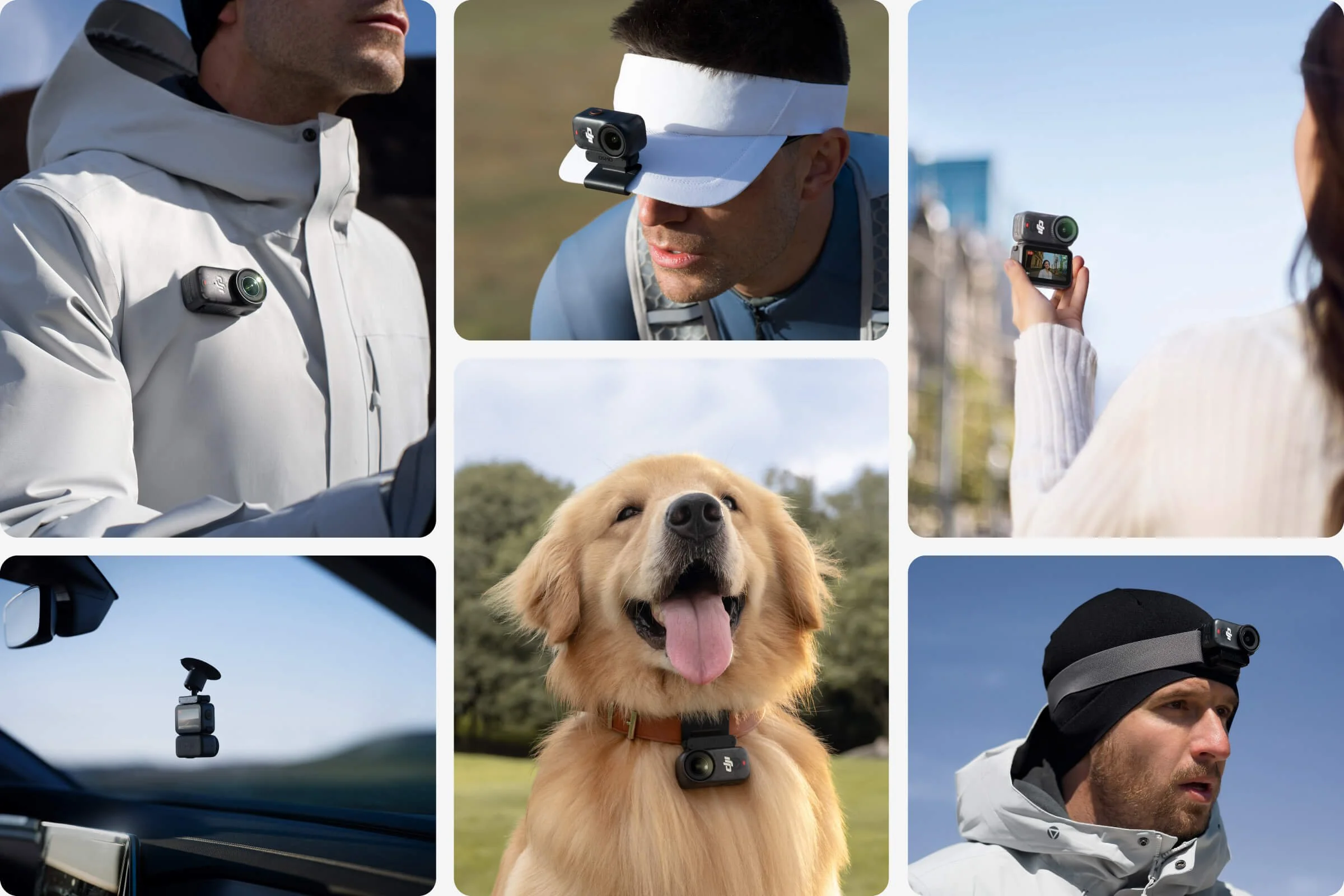
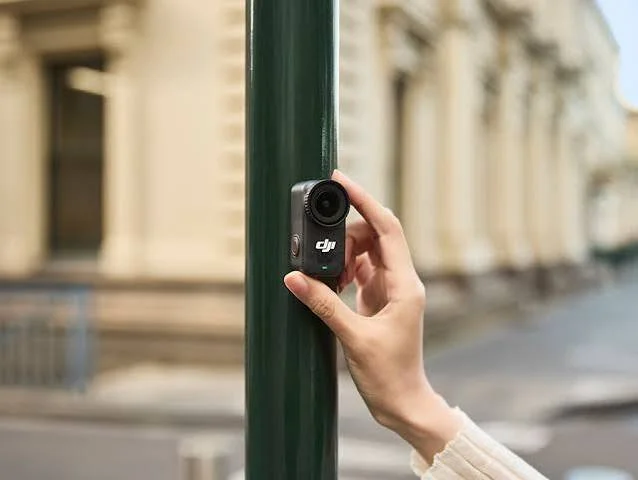
I'm taking the Nano to New York later this year, and that's when the series will really be tested. Brighton is familiar ground — I know the streets, I know the light, I know roughly what I'm looking for. New York will be new. The hunter in a city that moves at a different speed entirely.
That will be worth documenting.
Faces of Brighton — Episodes 1 & 2
In the meantime, here are the first two episodes. Two walks. Two routes. One approach.
Episode 1 — Faces of Brighton
Episode 2 — Faces of Brighton
Watch them back to back if you can. You'll see the hunter at work — and you'll probably start asking yourself which one you are.
Until next time, keep snapping
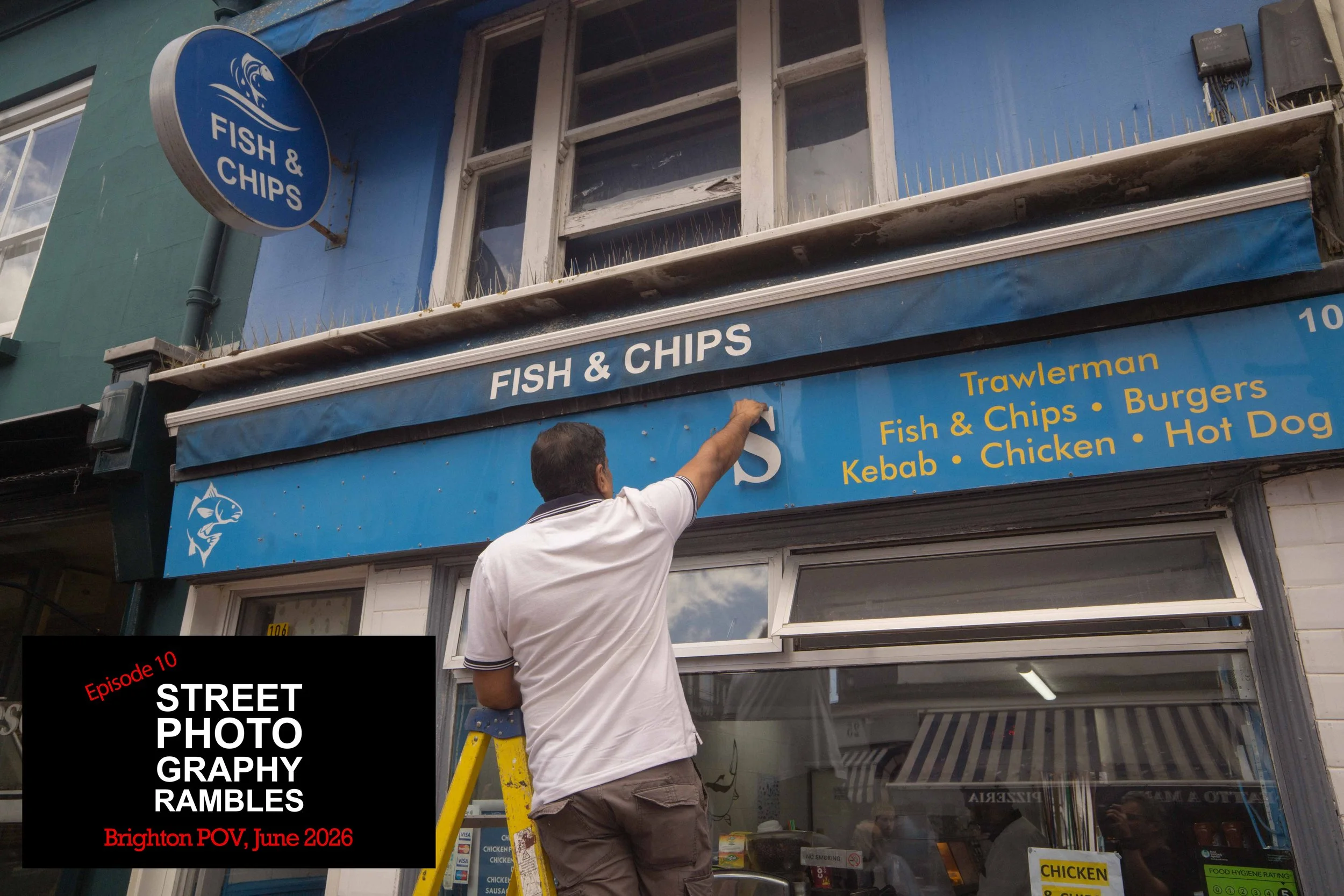
POV Street Photography: First Look at the DJI Osmo Nano in Brighton
Two days ago I took the DJI Osmo Nano out onto the streets of Brighton for its first proper test — running it alongside my usual setup, the Sony A7 III with a 24mm lens. The idea was simple: capture the same walk two ways, one through stills, one through continuous POV video, and see what each format actually gives you that the other doesn't.
Two days ago I took the DJI Osmo Nano out onto the streets of Brighton for its first proper test — running it alongside my usual setup, the Sony A7 III with a 24mm lens. The idea was simple: capture the same walk two ways, one through stills, one through continuous POV video, and see what each format actually gives you that the other doesn't.
There's an old distinction in street photography between hunters and fishermen. Fishermen find a spot — a doorway, a corner, a patch of good light — and wait for the scene to arrive. Hunters keep moving, reading the street, closing distance on a moment before it disappears. I've always been a hunter. I don't work a scene; I'm constantly on the go, which is exactly why the Osmo Nano interested me — a camera that rolls continuously seemed like the obvious pairing for someone who never stops walking. What I hadn't expected was how differently the two approaches actually felt once I was out there: the A7 III still demanded the hunter's instinct, spot-and-strike, while the Nano just kept recording regardless of whether I'd found anything worth catching.
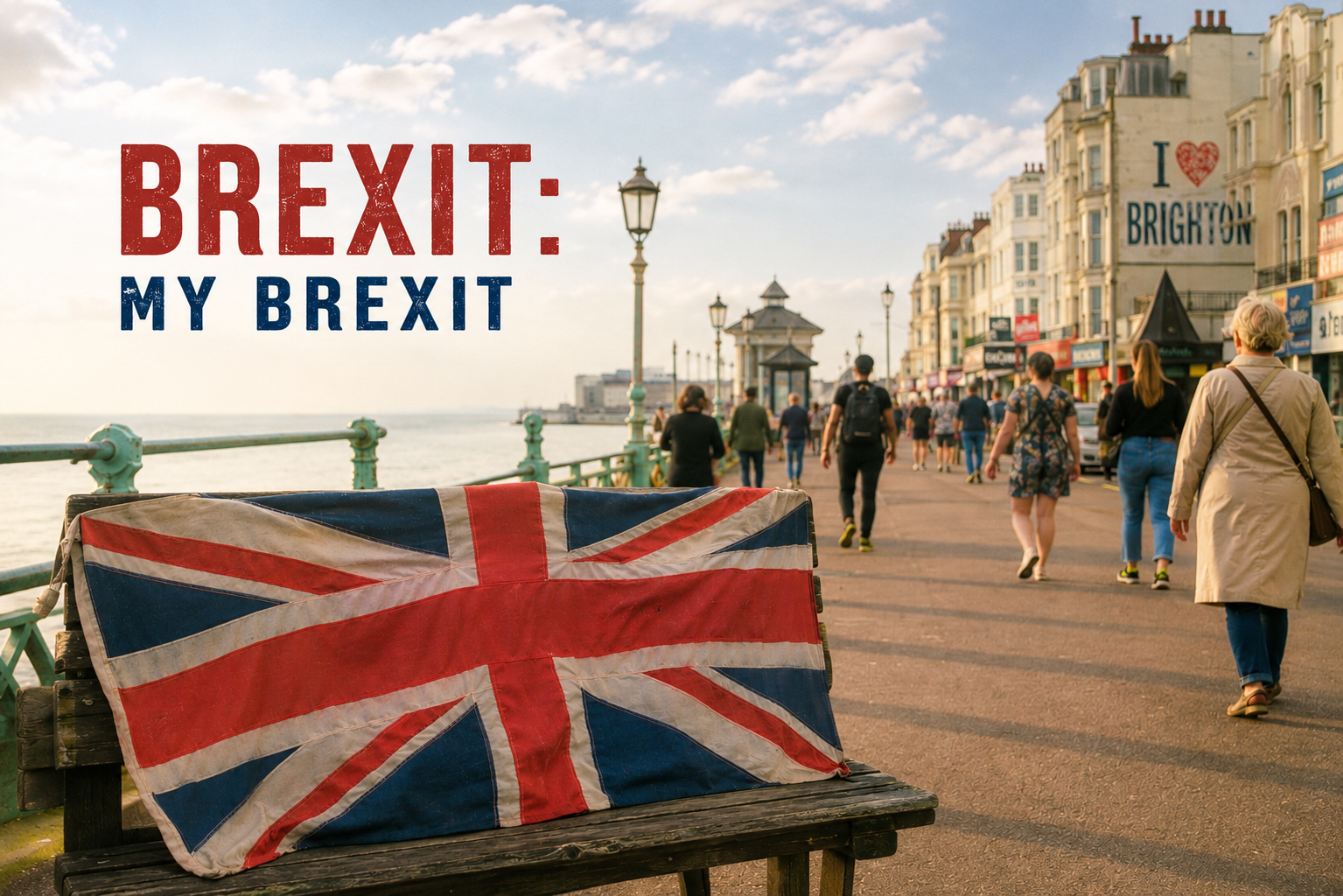
Brexit, my Brexit
O Captain, my Captain — our fearful trip is done.
Except it isn't done. That's the problem. We don't know where we're going.
Ten years ago this month, Britain pressed a button it couldn't un-press. Twenty-third of June, 2016. The margin was thin — 52 to 48 — but the consequences were not. A decision made in the space of a single day has been ricocheting ever since, a butterfly flapping its wings somewhere over a polling booth in Sunderland, and a decade later the storm has not arrived, but something is building on the horizon that we cannot quite name.
"The unknown sent us on a trajectory into the unknown."
That is Brexit's defining condition. Not the trade deals or the queues at Dover or the strawberries rotting unpicked in Kent. It is the shapelessness of what comes next. We voted to leave something. We never agreed on what we were arriving at.
O Captain, my Captain — our fearful trip is done.
Except it isn't done. That's the problem. We don't know where we're going.
Ten years ago this month, Britain pressed a button it couldn't un-press. Twenty-third of June, 2016. The margin was thin — 52 to 48 — but the consequences were not. A decision made in the space of a single day has been ricocheting ever since, a butterfly flapping its wings somewhere over a polling booth in Sunderland, and a decade later the storm has not arrived, but something is building on the horizon that we cannot quite name.
"The unknown sent us on a trajectory into the unknown."
That is Brexit's defining condition. Not the trade deals or the queues at Dover or the strawberries rotting unpicked in Kent. It is the shapelessness of what comes next. We voted to leave something. We never agreed on what we were arriving at.
An Englishman's Home Is His Kebab Shop
There is an old saying — An Englishman's home is his castle — and it contains within it everything you need to understand the Leave vote. The drawbridge. The moat. The idea that Englishness is a thing to be defended rather than shared, inherited rather than made.
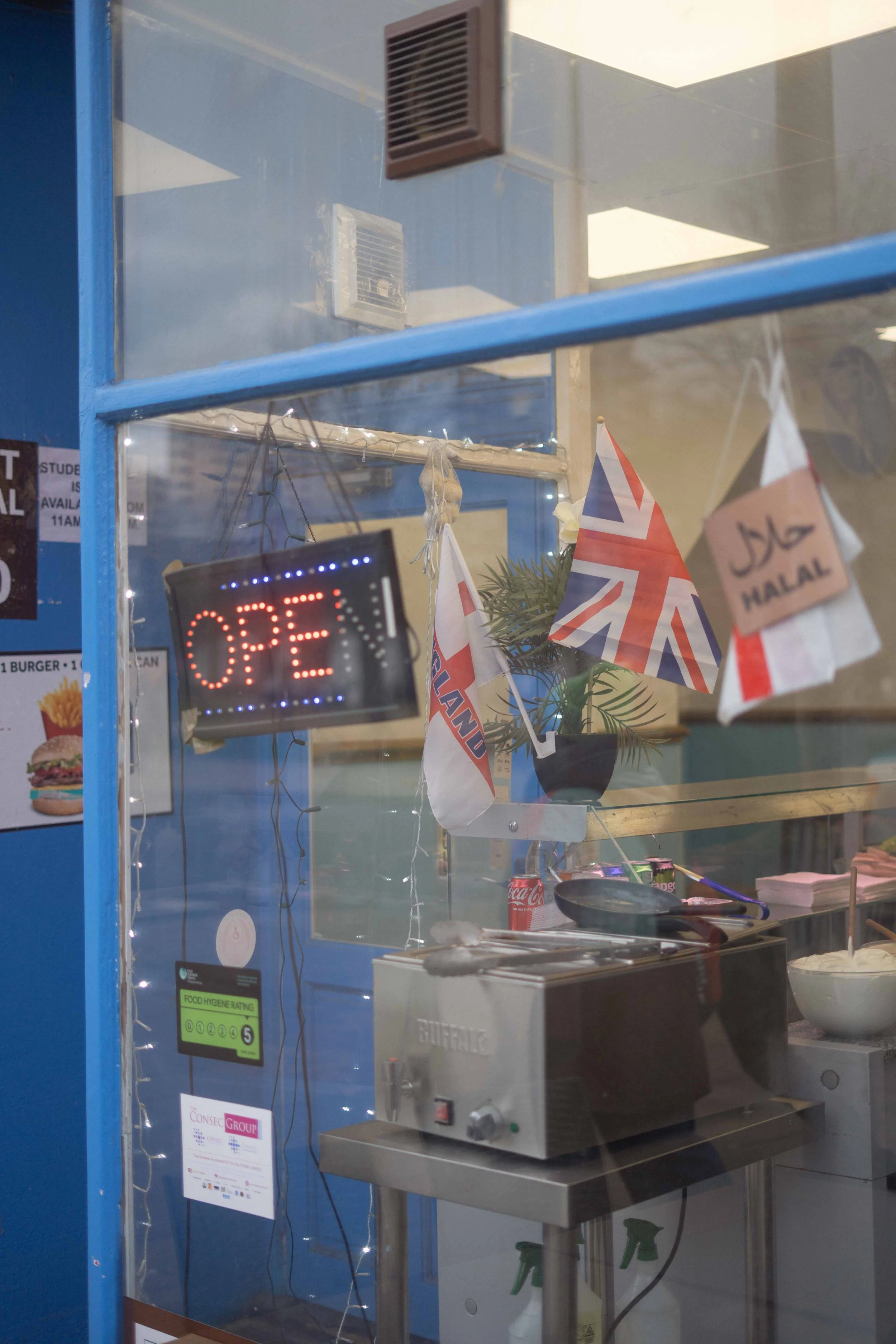
Walk the streets of any English town and ask it what England actually looks like. The answer is not the castle. It is the kebab shop: Union Jack in the window, halal sign alongside it, England flag between the two, the OPEN sign glowing red. It is the most English thing imaginable and the most unEnglish thing imaginable, simultaneously. It is the country that voted to close the door, feeding itself every night through the gap underneath it.
This is not irony. It is identity. Britain has always been a country of contradictions held in uneasy balance. Brexit did not create the tension — it detonated it.
The Spell Cast in June
Spells & Charms. Harry Potter. Lord of the Rings. The Hobbit. Game of Thrones. Britain sells its mythology to the world by the container-load and cannot understand why the world keeps arriving to live inside it.
The referendum was a spell cast by people who wanted their country back. What they got was a country more contested, more divided, and more uncertain of itself than at any point in living memory. The spell worked. Just not the way they intended.
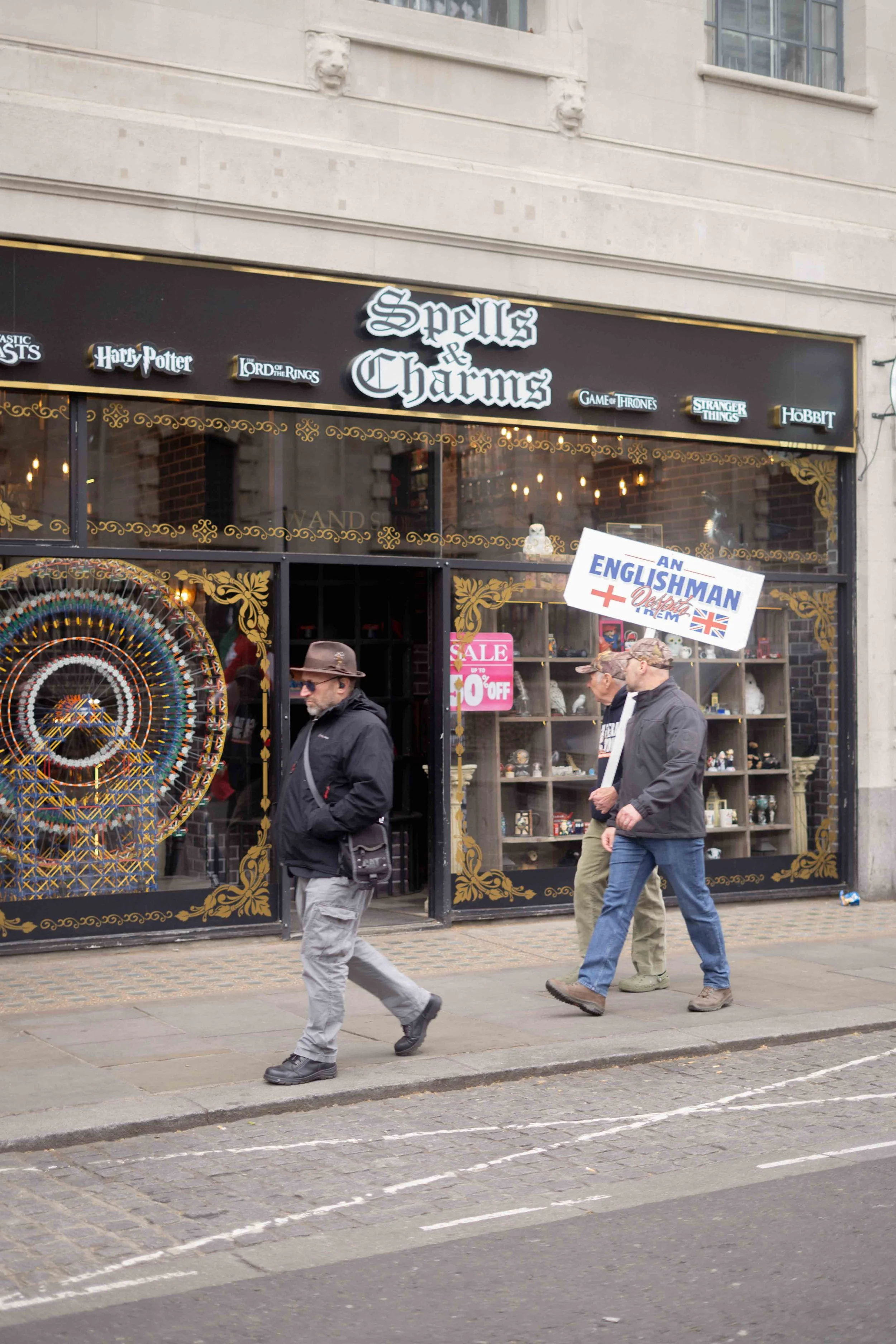
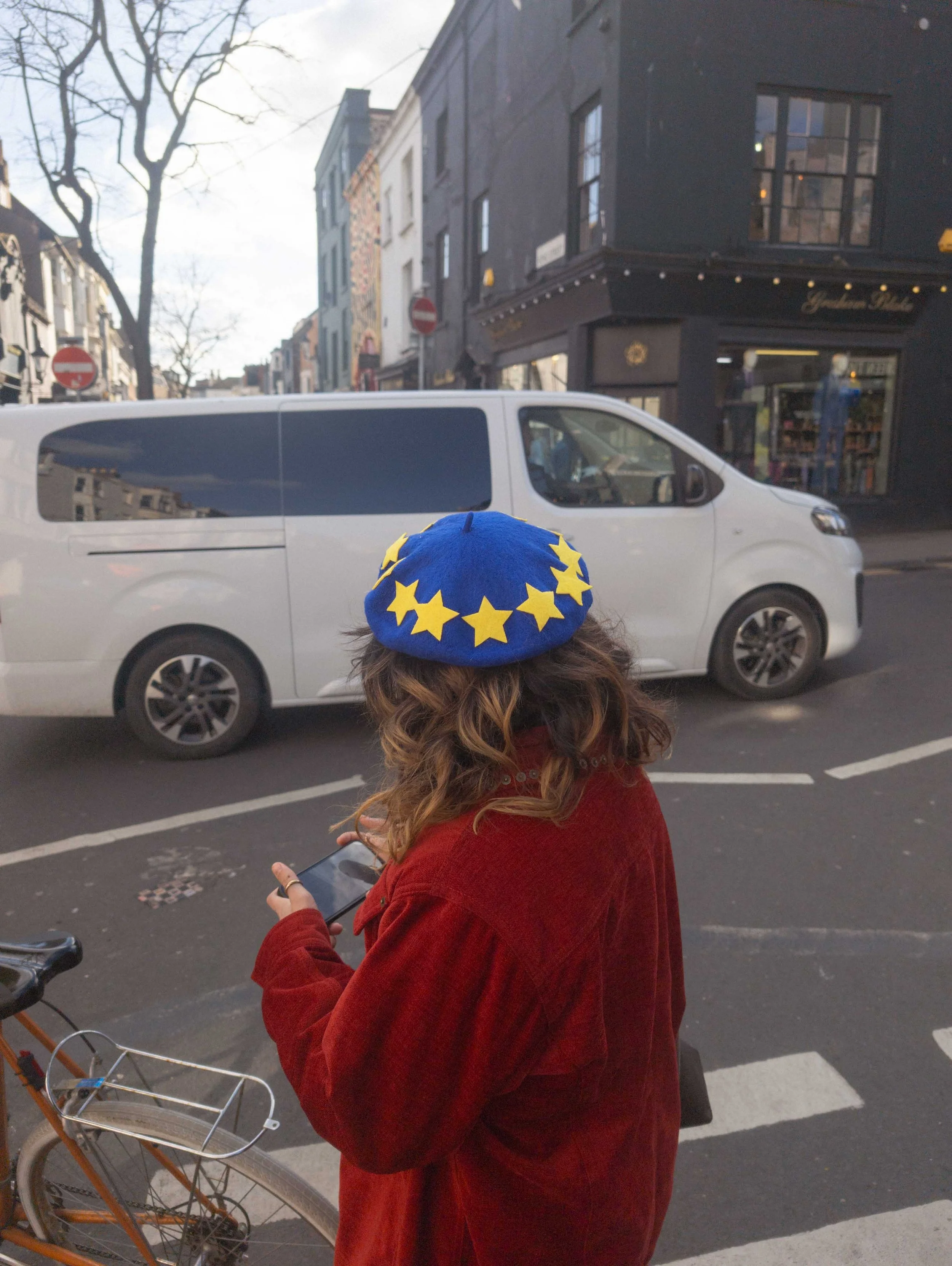
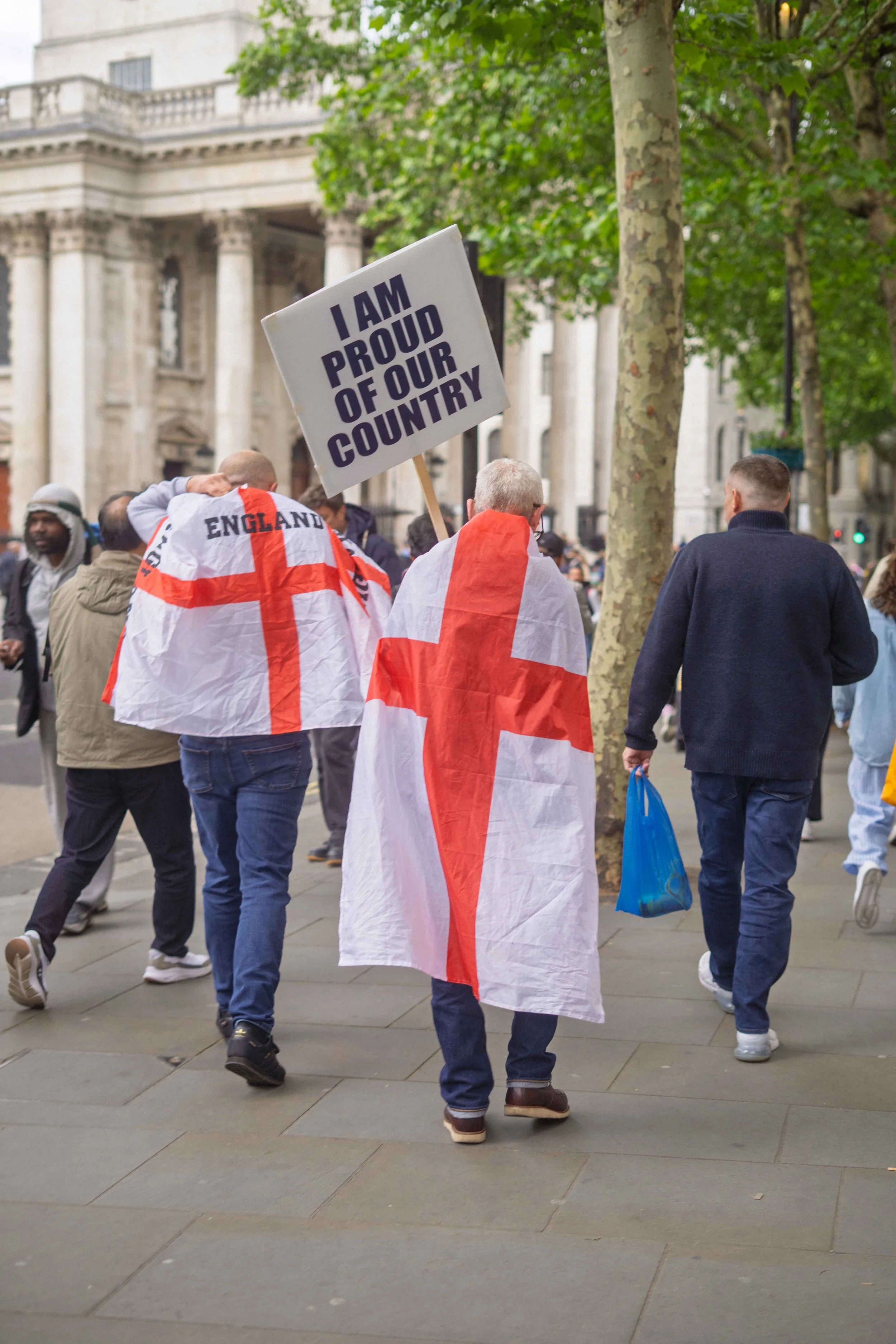
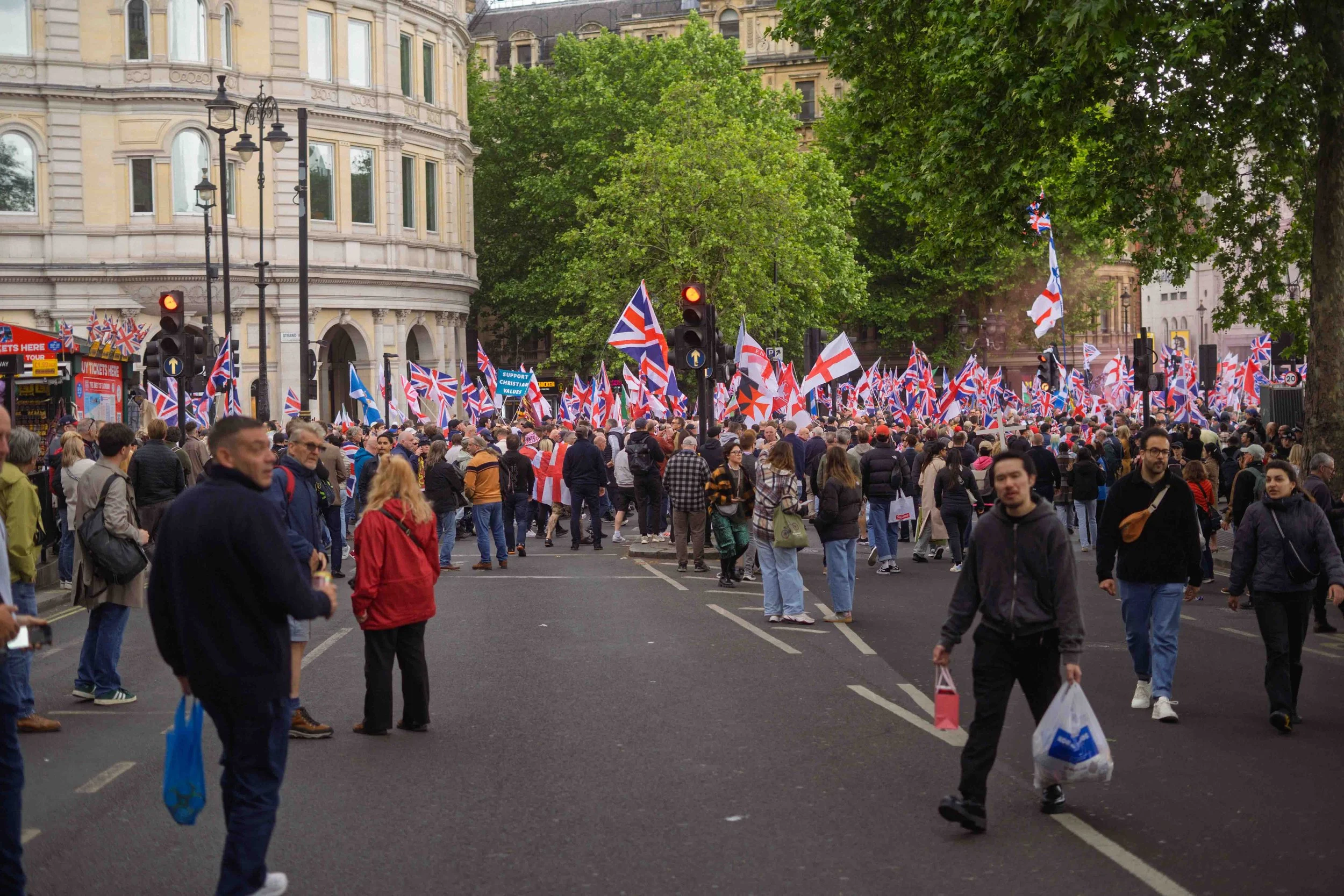
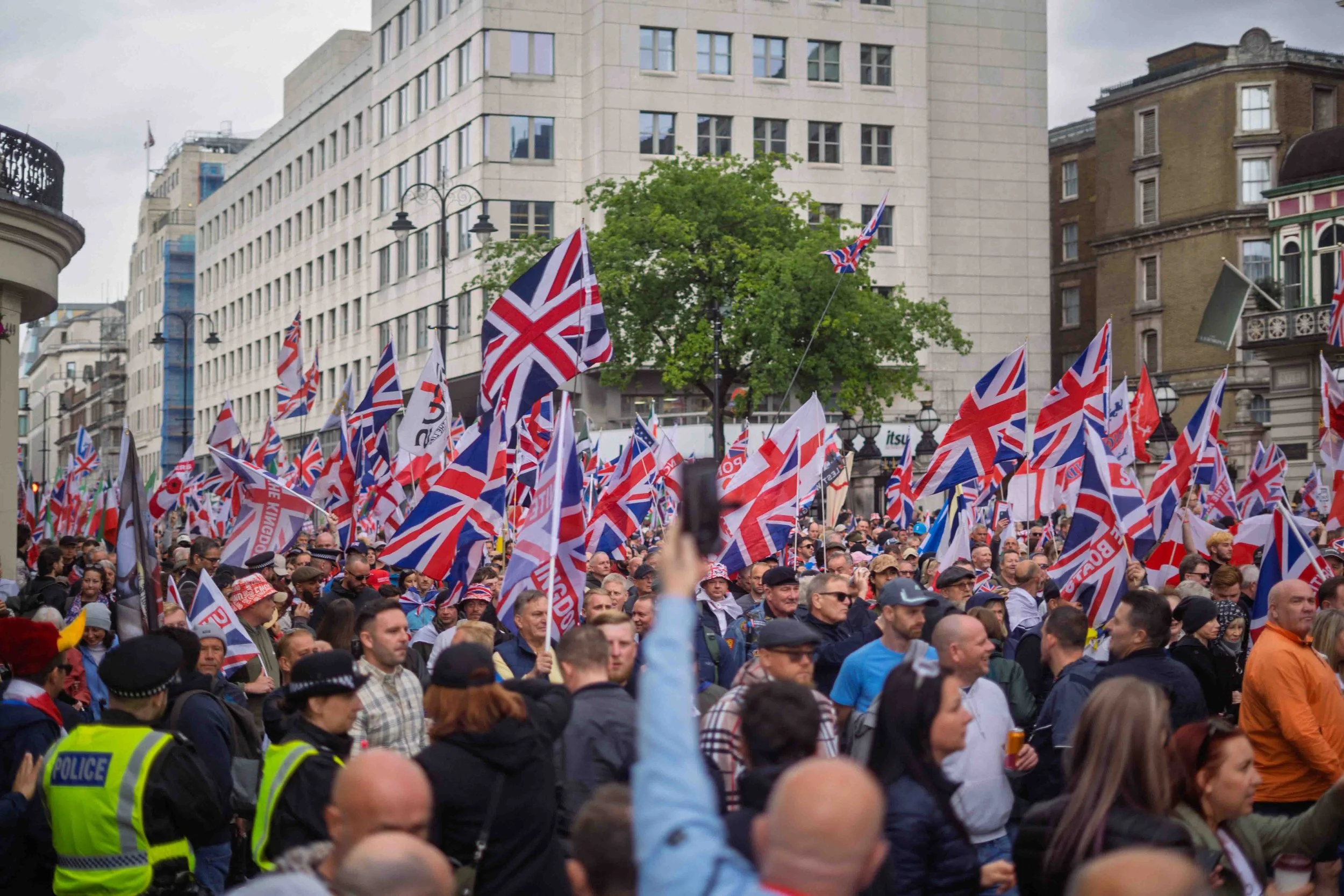
You can still see the believers and the bereaved on the same streets, sometimes passing within feet of each other without acknowledgement. A woman in a blue beret ringed with yellow stars, scrolling her phone at a Brighton crossroads. Men carrying placards through the old city. Neither speaking to the other. Both certain they are right.
The Era of Salvage
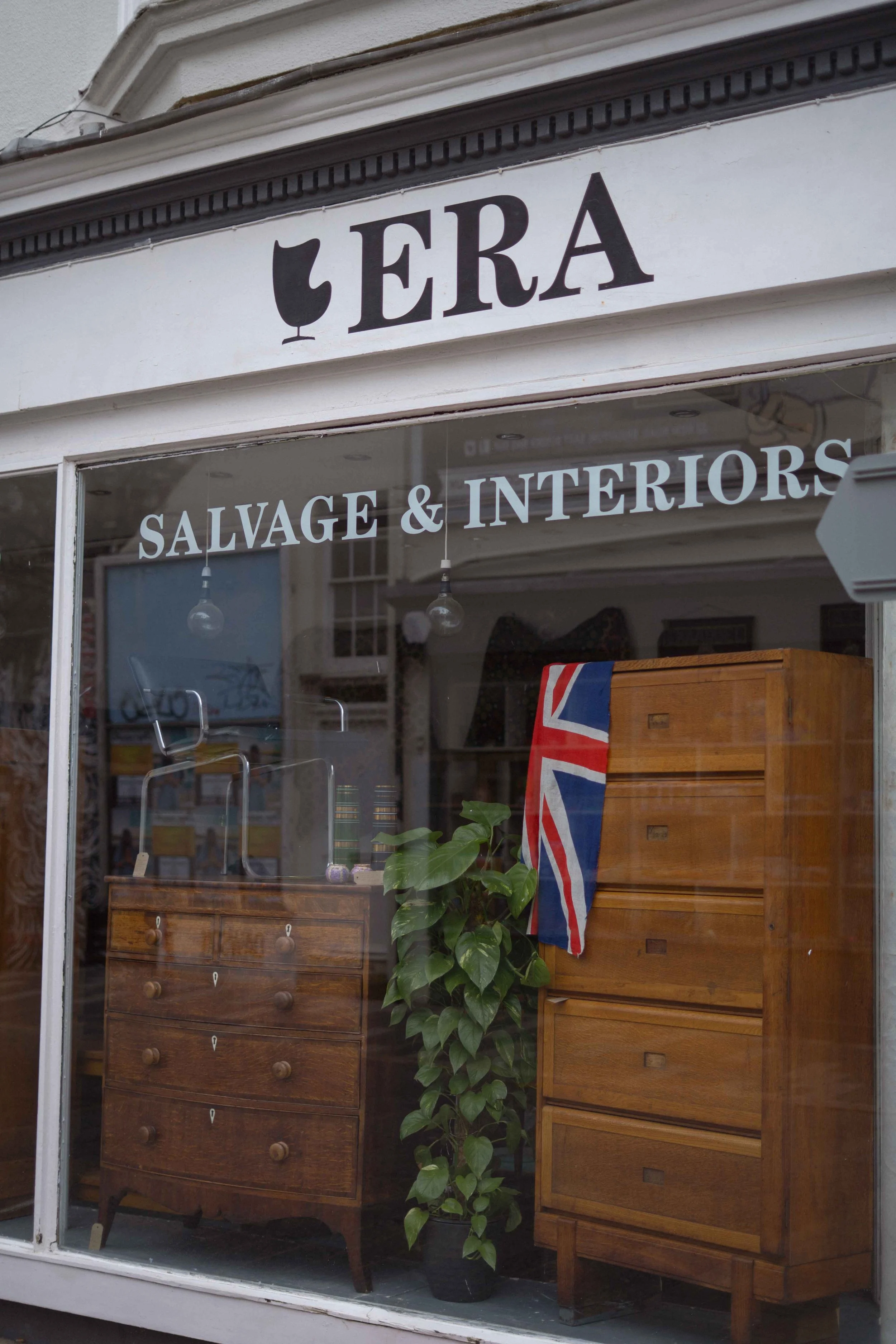
ERA — Salvage & Interiors. A Union Jack draped between two wooden chests of drawers in a shop window, half-decorative, half-forgotten. There is something in that image that captures the post-Brexit condition perfectly: a national symbol repurposed as furniture dressing, displayed alongside things that belonged to another time, offered for sale at an uncertain price.
Britain has been in the salvage business since 2016. Salvaging its reputation. Salvaging its institutions. Salvaging its sense of itself. The interiors have been rearranged; nobody is entirely sure they prefer the new layout.
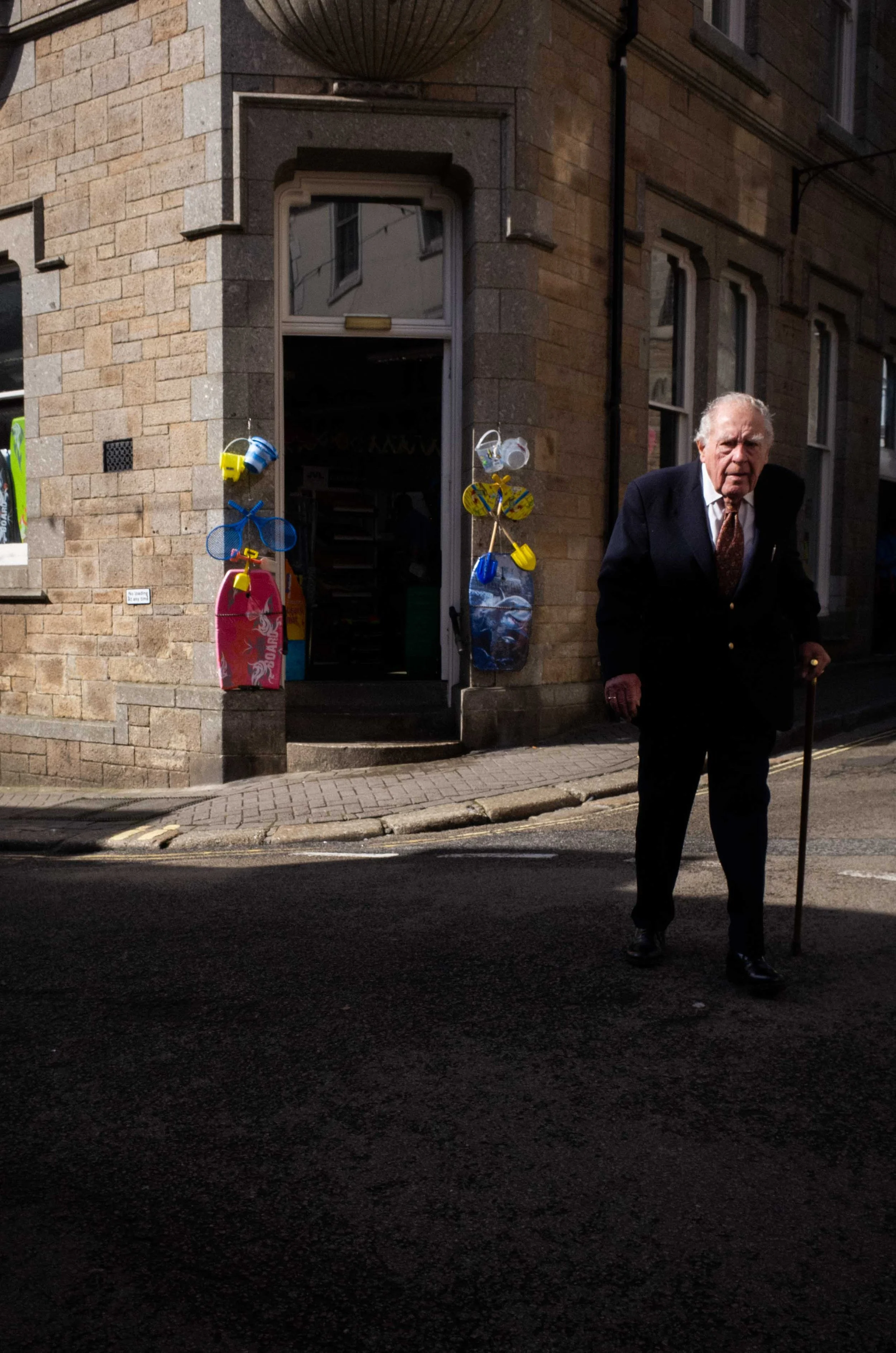
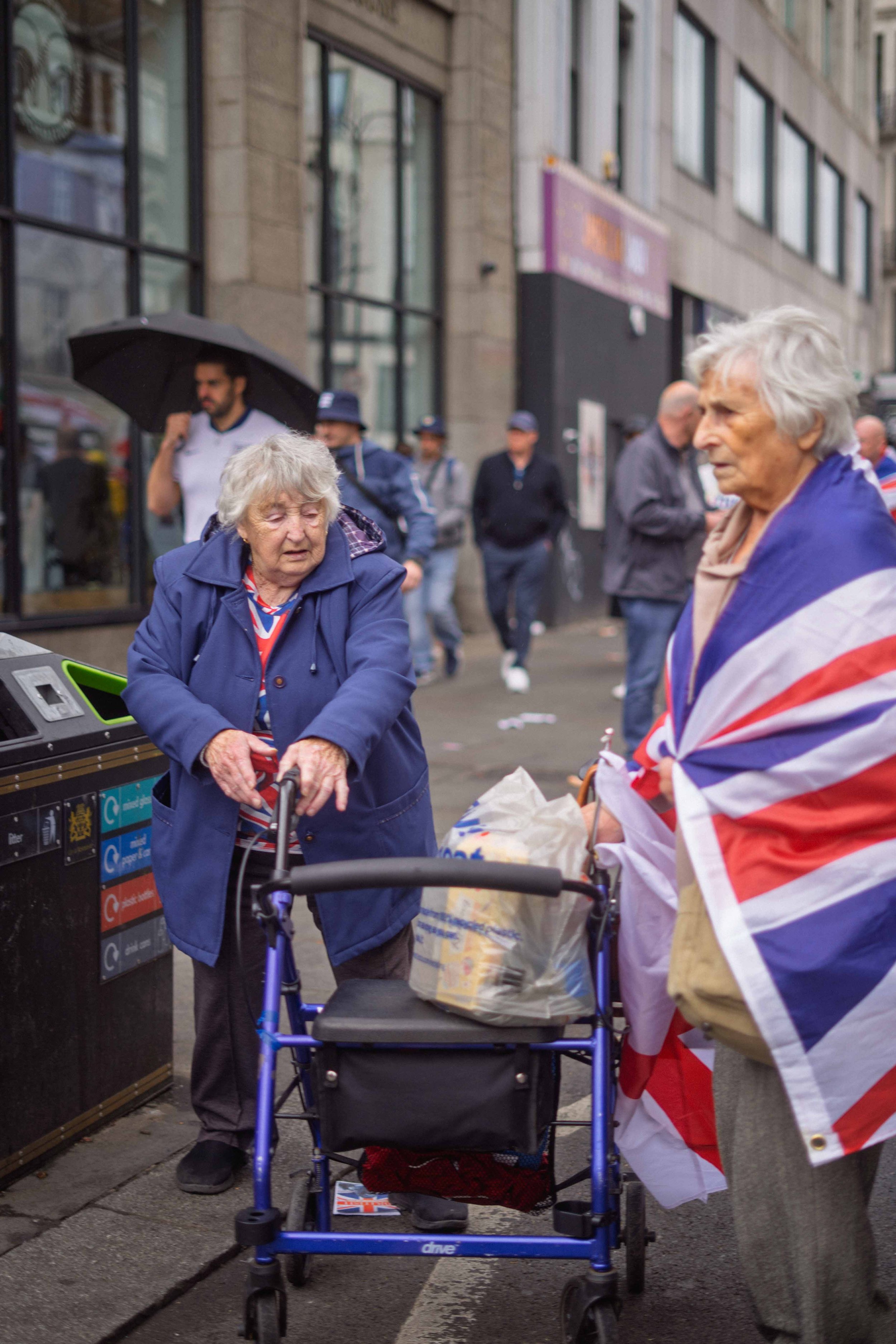
The elderly man walking the seafront town in his dark suit, cane in hand, dressed for a formality that the street no longer requires — he carries himself with the bearing of a country that remembers itself differently. Whether that memory is accurate is another question.
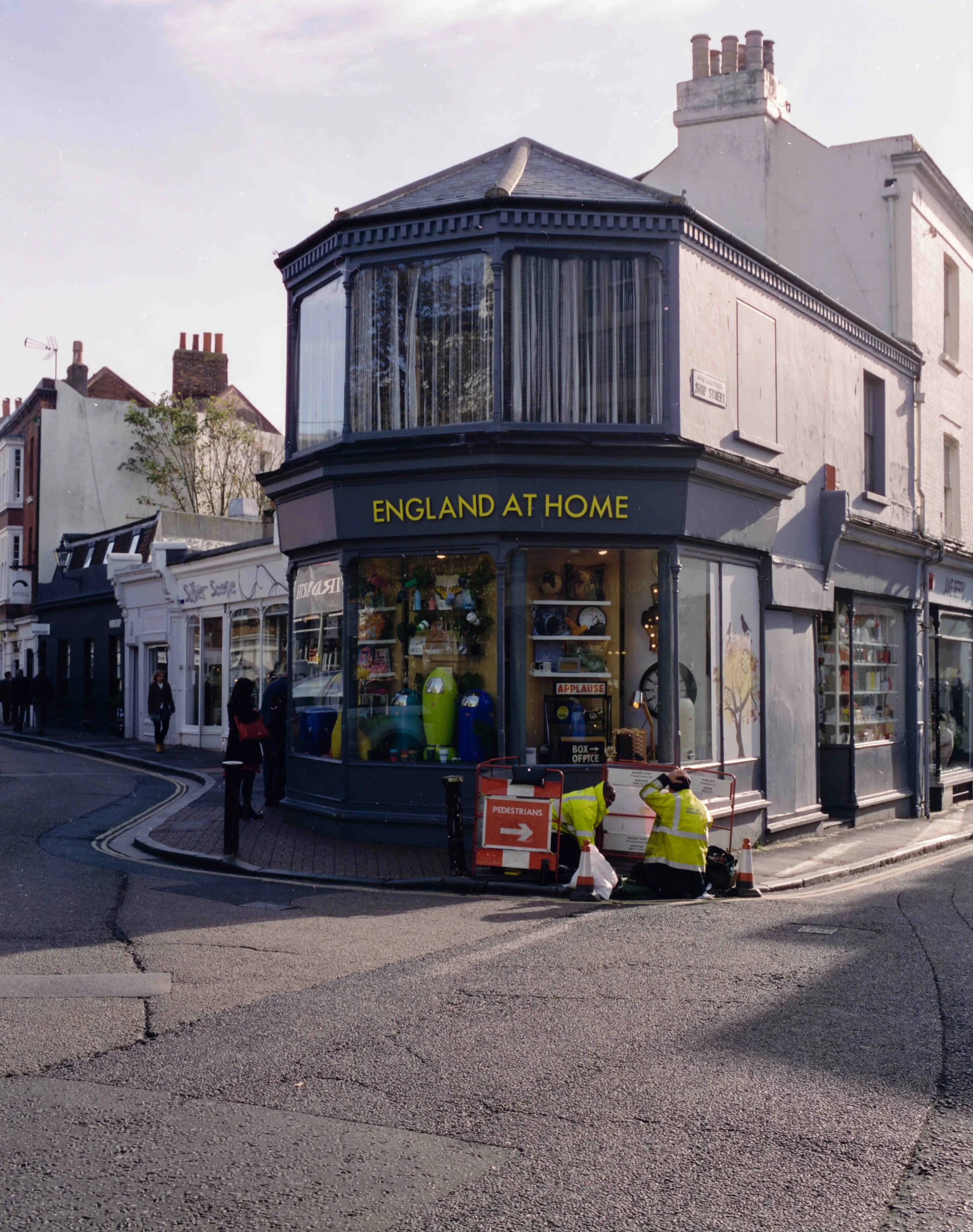
Little Britain, Under Construction
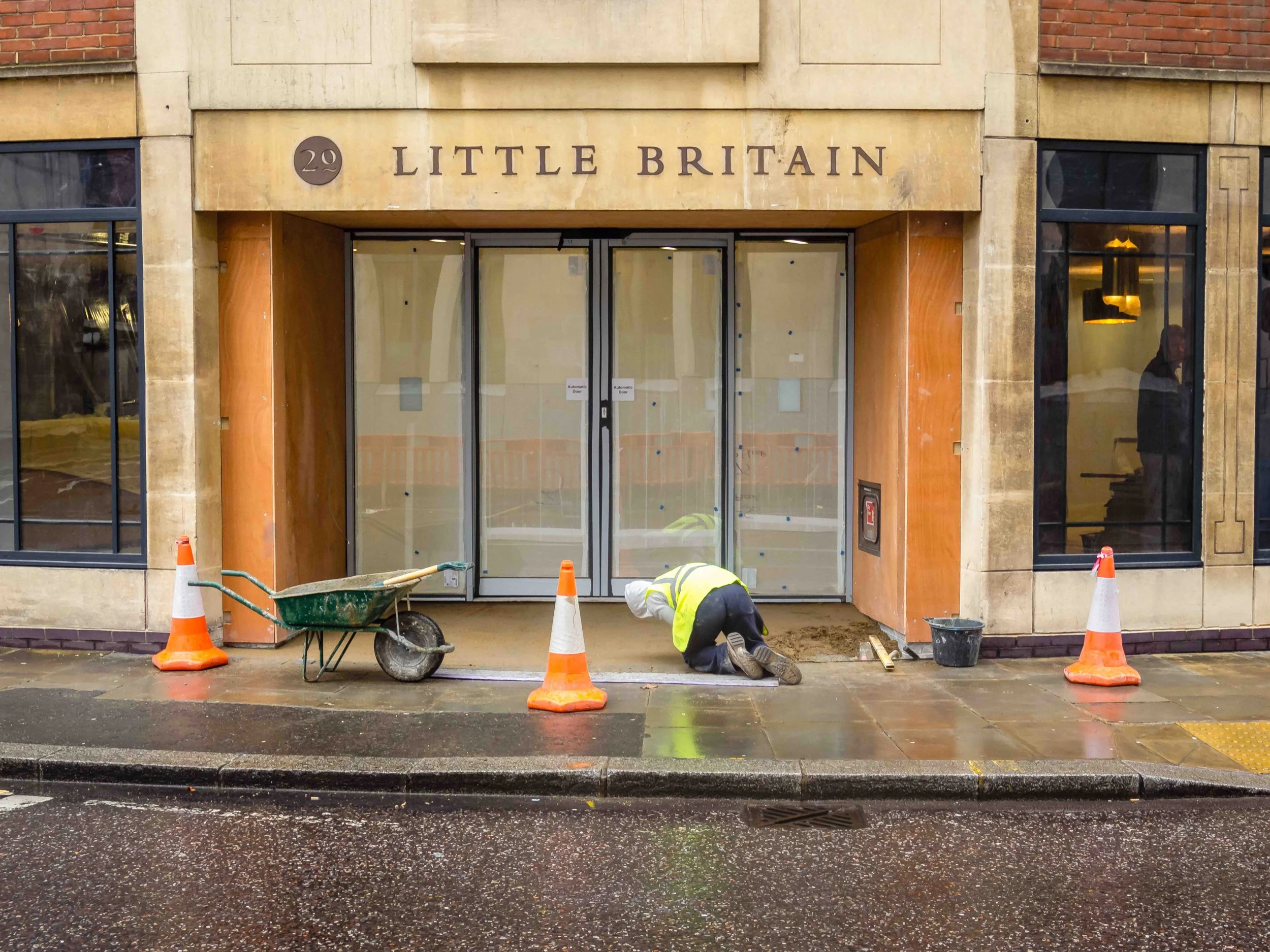
There is a building in London called Little Britain. Outside it, a worker in a hi-vis jacket kneels on the wet pavement, head down, working at something in the ground. The entrance behind him is boarded up. Cones everywhere.
It could be a photograph taken on the morning of 24th June 2016.
The vision of Little Britain — sovereign, self-sufficient, free from the bureaucratic grip of Brussels — has spent a decade under construction and remains, in important ways, boarded up. The project is not abandoned. But the entrance is not yet open.
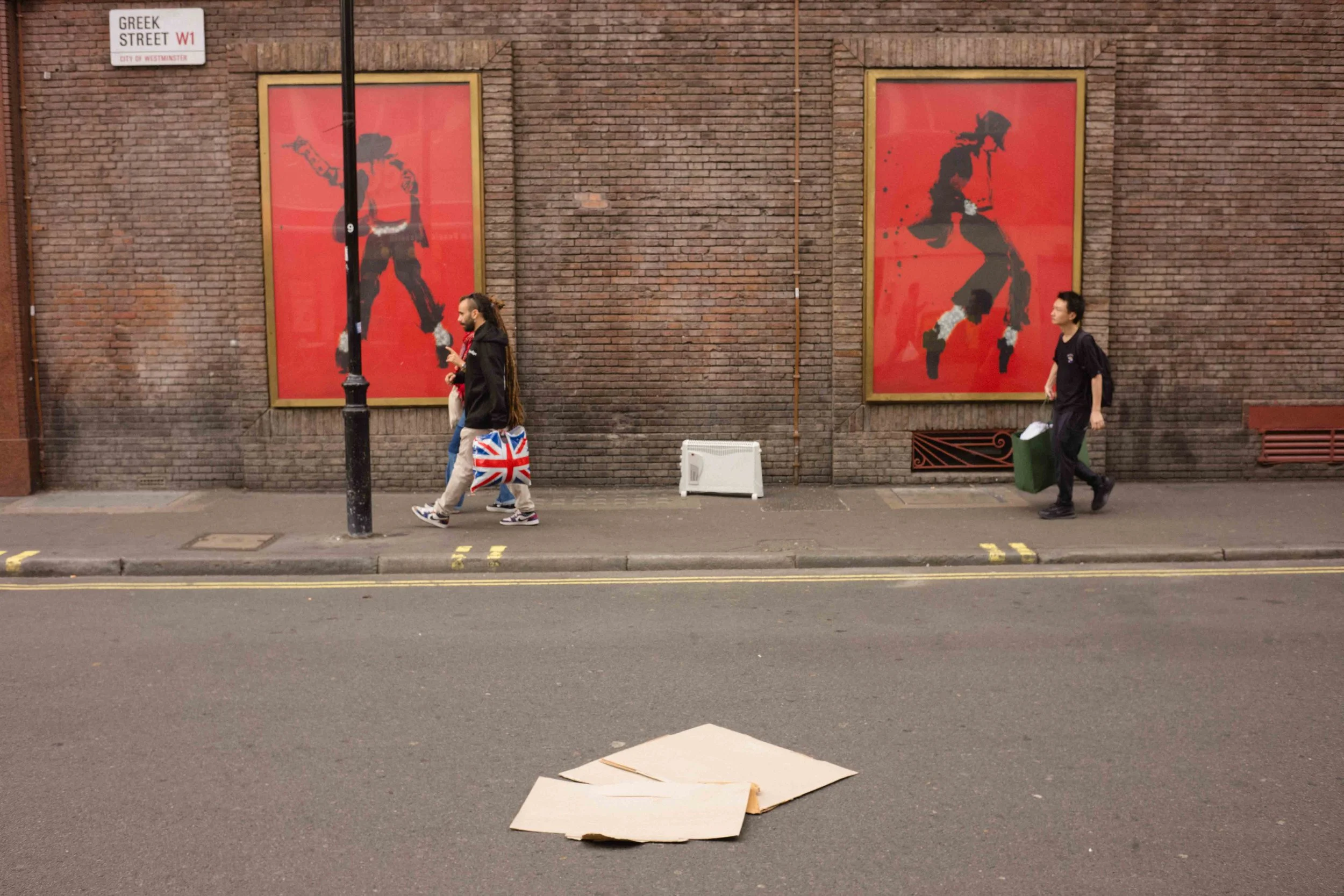
Meanwhile, the street outside carries on regardless. Multicultural, busy, indifferent to the political weather. On Greek Street, a man with long dreadlocks carries a Union Jack bag past a Chinese man heading the other way, both of them moving in front of twin red posters of Michael Jackson mid-dance. This is what London looks like. This is what Britain looks like, whether the dreamers of Little Britain want it or not.
The Trajectory
Here is what concerns me. Brexit did not emerge from nothing. It was the product of decades of austerity, deindustrialisation, and a political class that had stopped listening. The Leave vote was, in part, a howl from communities that had been told for thirty years that globalisation was working for them when they could see with their own eyes that it was not.
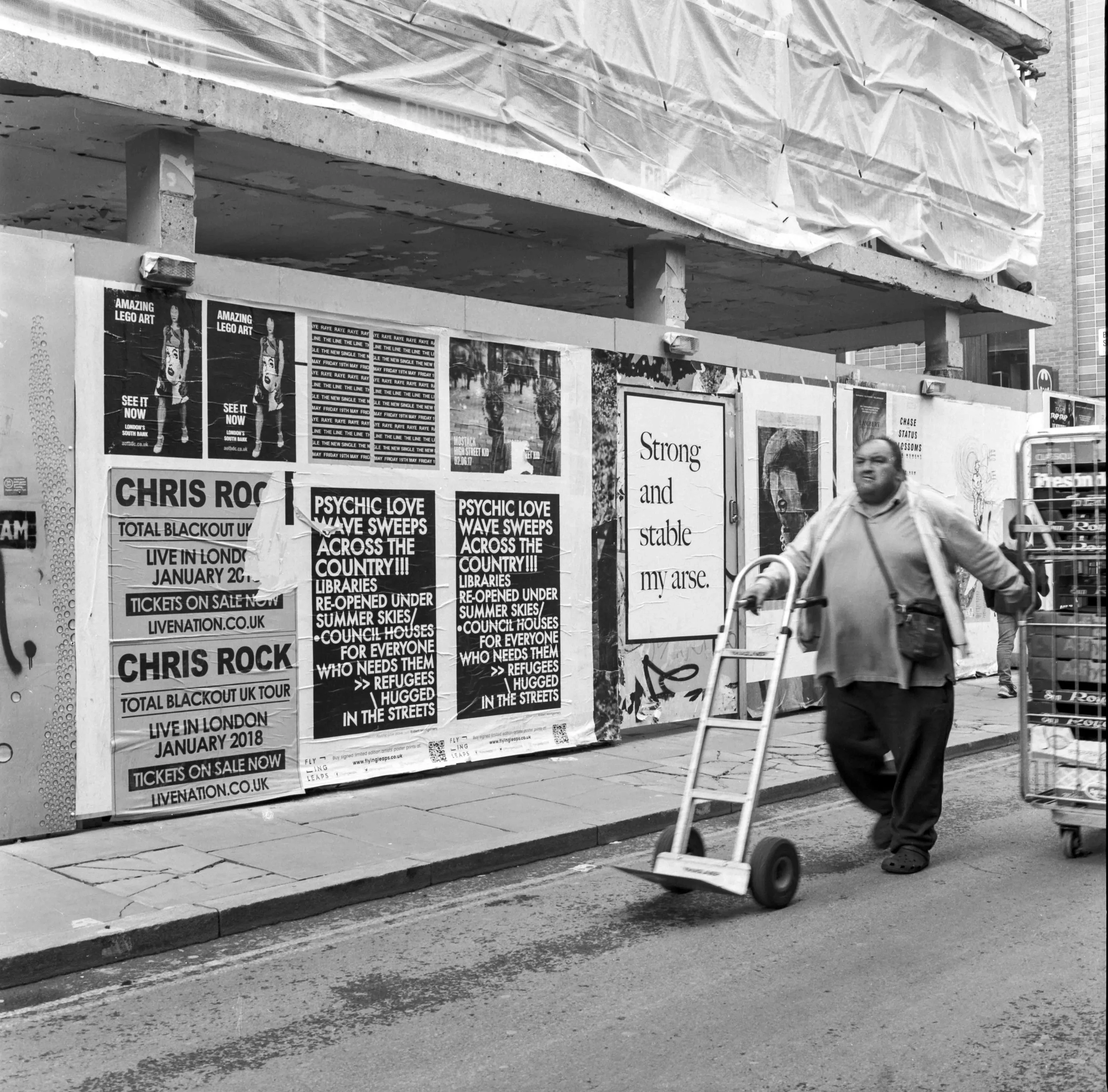
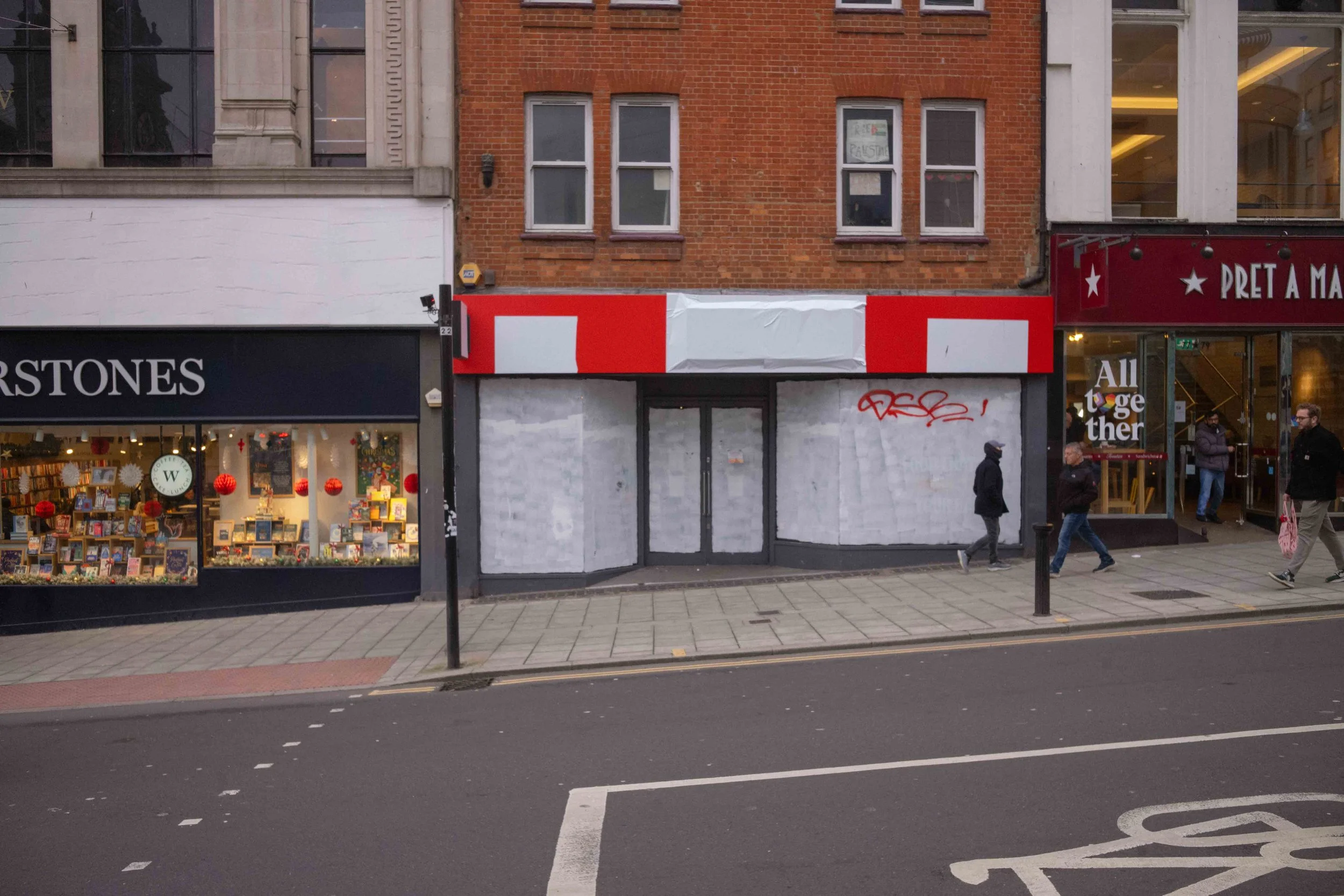
That howl found its expression in Brexit. But Brexit did not fix the thing that generated the howl. The shops are still boarded up — not just in London, but in every high street that Waterstones and Pret a Manger and "All Together" slogans cannot paper over. The anger did not dissipate. It continued downstream.
"The butterfly flaps its wings. Ten years later, the storm has not yet broken. But the sky has a particular colour."
The far right did not invent British disillusionment. It found it, already there, and offered it a shape. That is the butterfly effect of June 2016 that nobody in the campaign — Leave or Remain — wanted to acknowledge. When you destabilise a consensus without offering a replacement, you do not create a vacuum. You create a space that something else will fill.
We have not arrived there yet. That is the honest answer. We are in the ten-year corridor between the decision and its final destination, and neither door at either end is fully in view.
What England Is
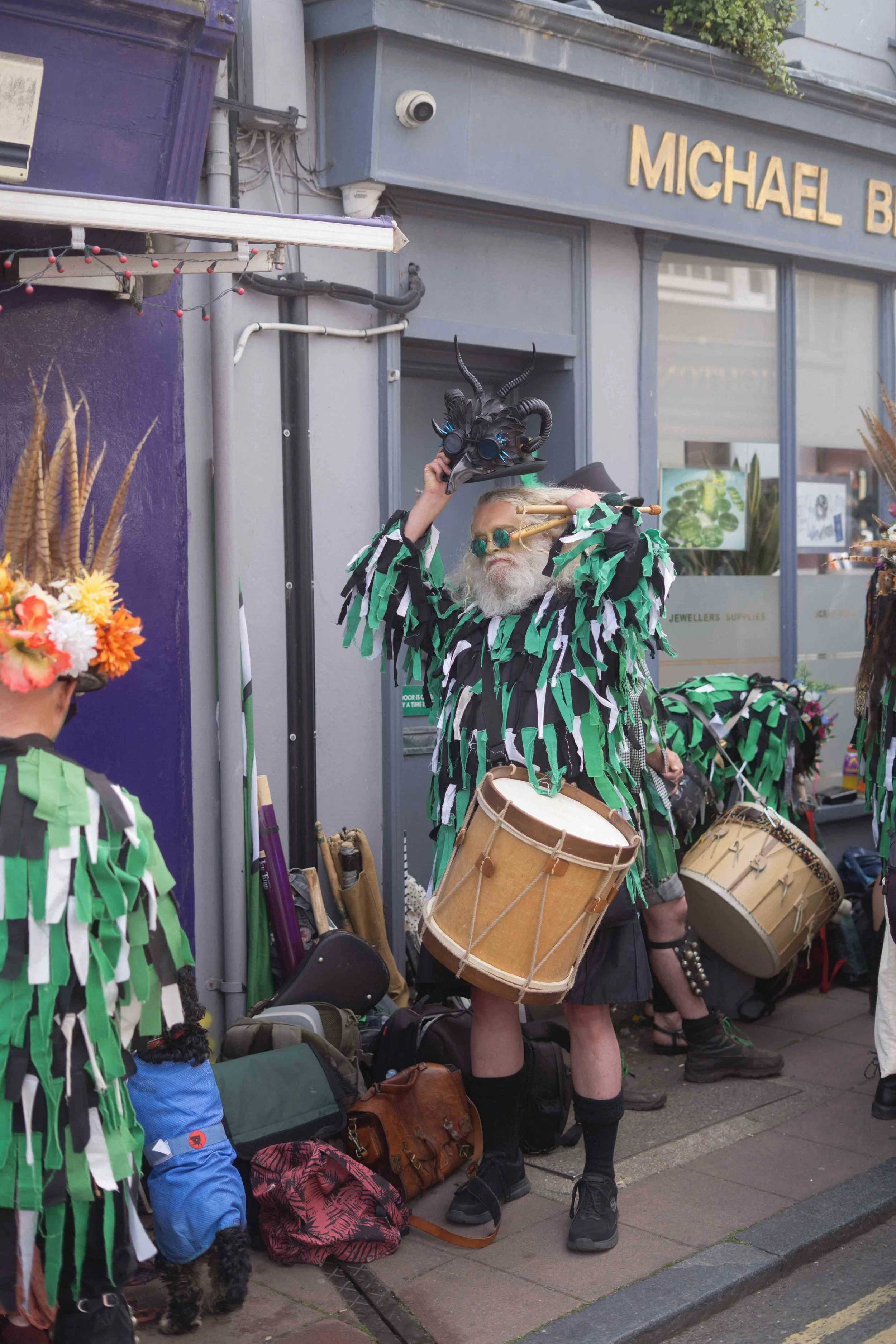
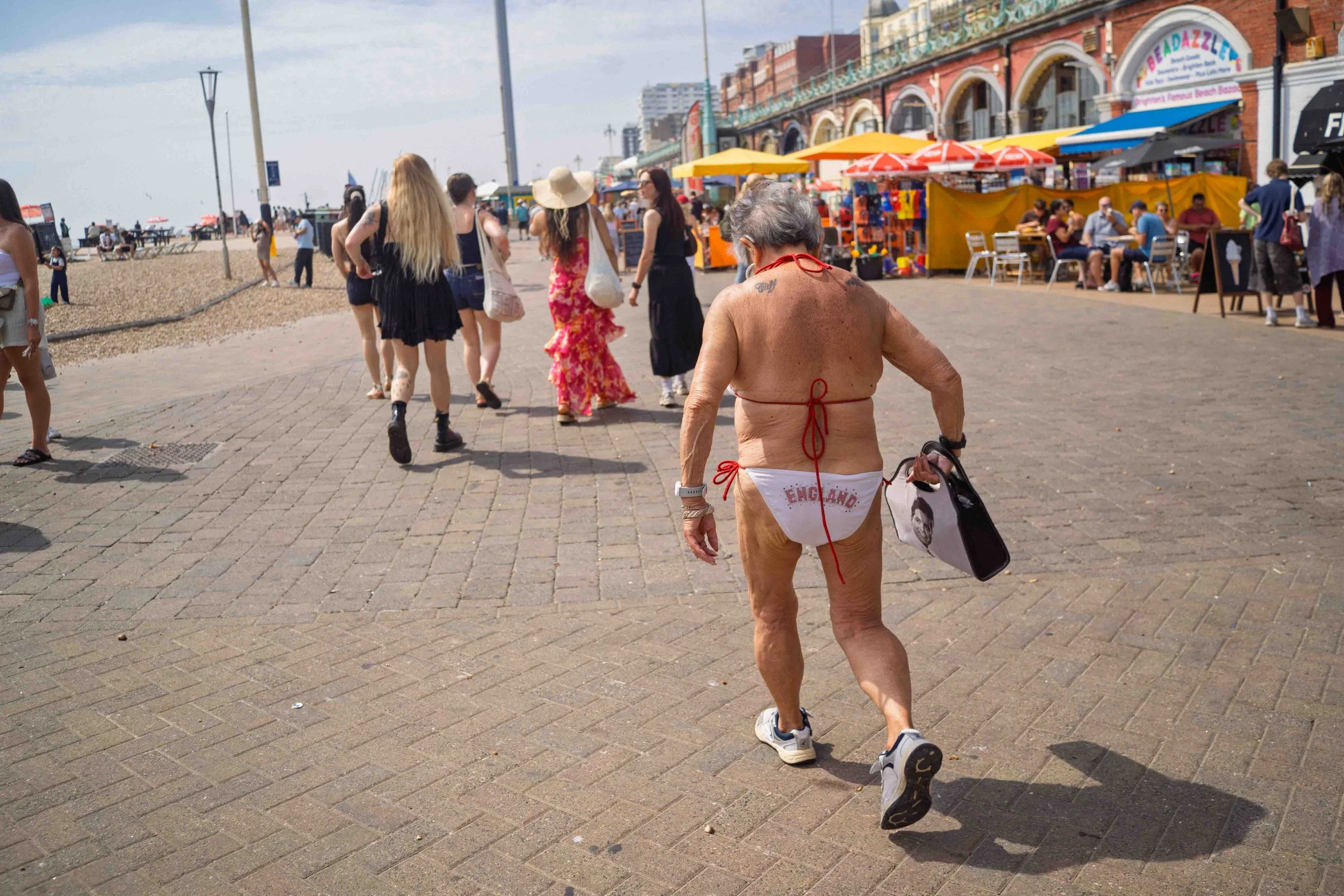
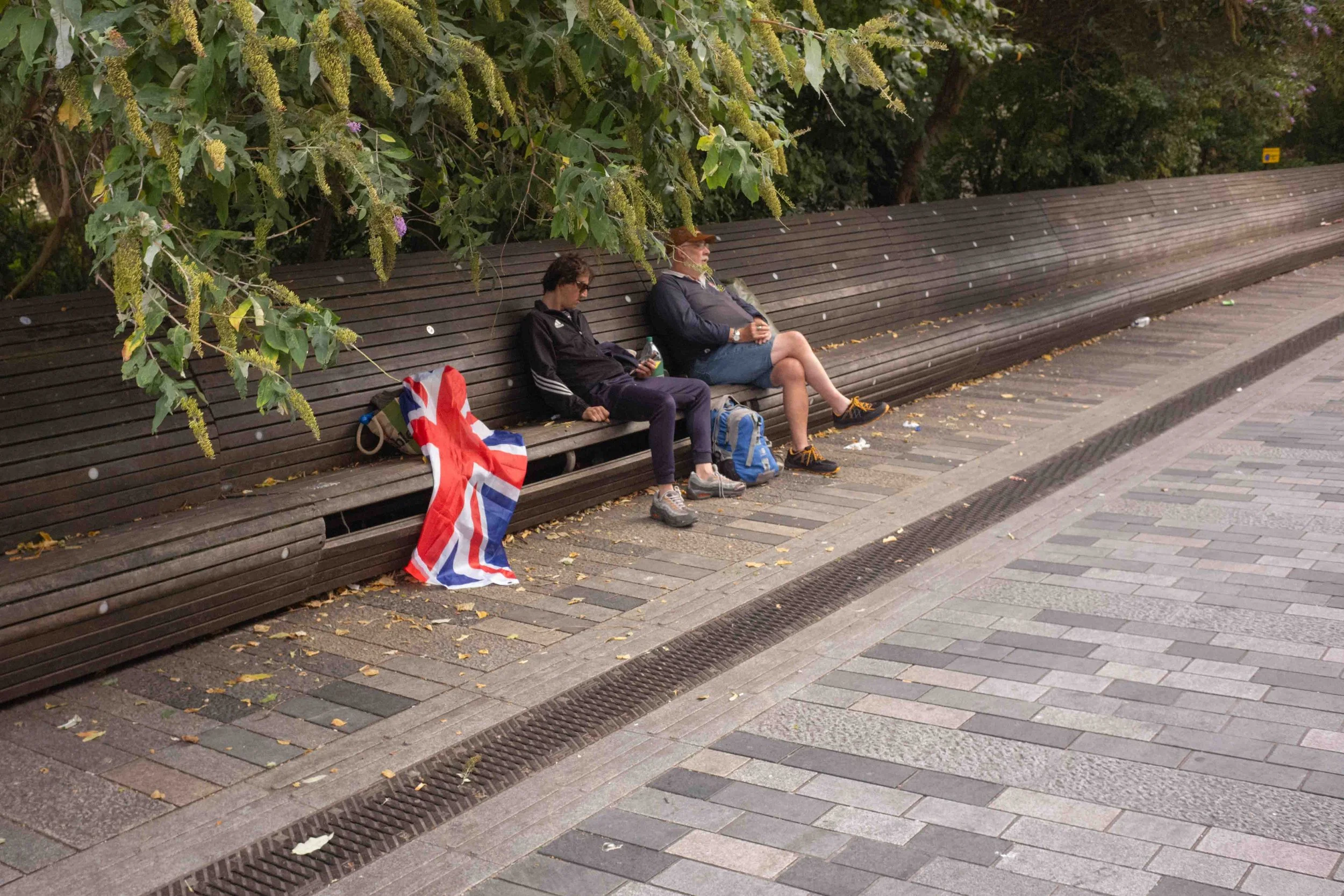
England, this summer, is an older man on a Brighton promenade in an England bikini, walking in the full sun without apology. It is Morris dancers in horned hats and shredded green coats keeping something old alive in a Brighton side street, whatever that old thing is. It is a Union Jack left on a park bench like something forgotten, or discarded, or simply put down for a moment's rest.
It is loud and quiet, proud and deflated, certain and entirely lost, all at once.
The kebab shop is open. The England flags are in the window. The halal sign is next to them. Whatever Britain thought it was voting for in June 2016, this is what it got: itself, unresolved.
The unknown sent us into the unknown. We haven't arrived yet. The question is where we're heading.
Until next time, keep snapping
Yes please, keep me posted when there’s a new blog
Instagram - Film