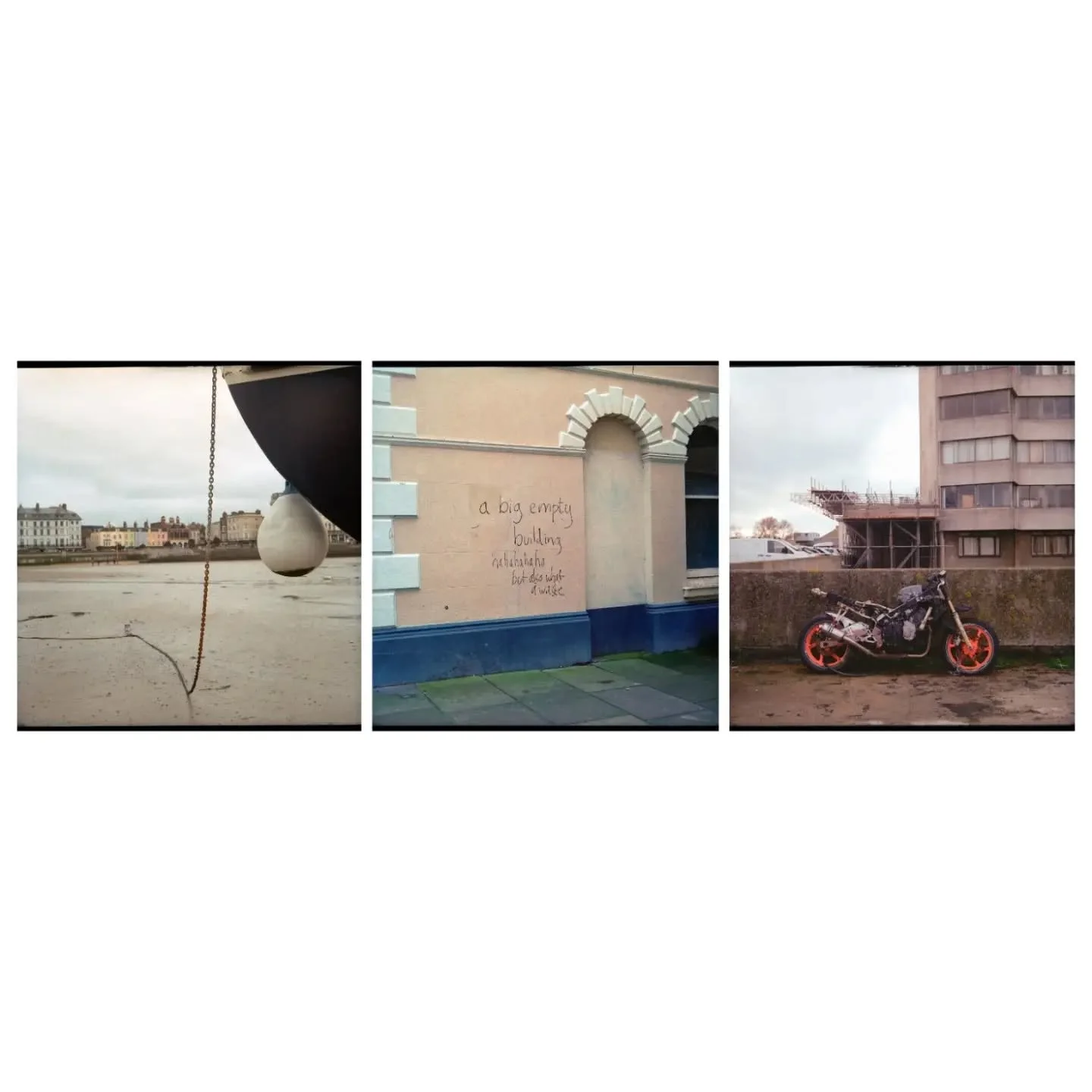
in the frame
Hello old friend
It feels good to have a camera strap around my neck again.
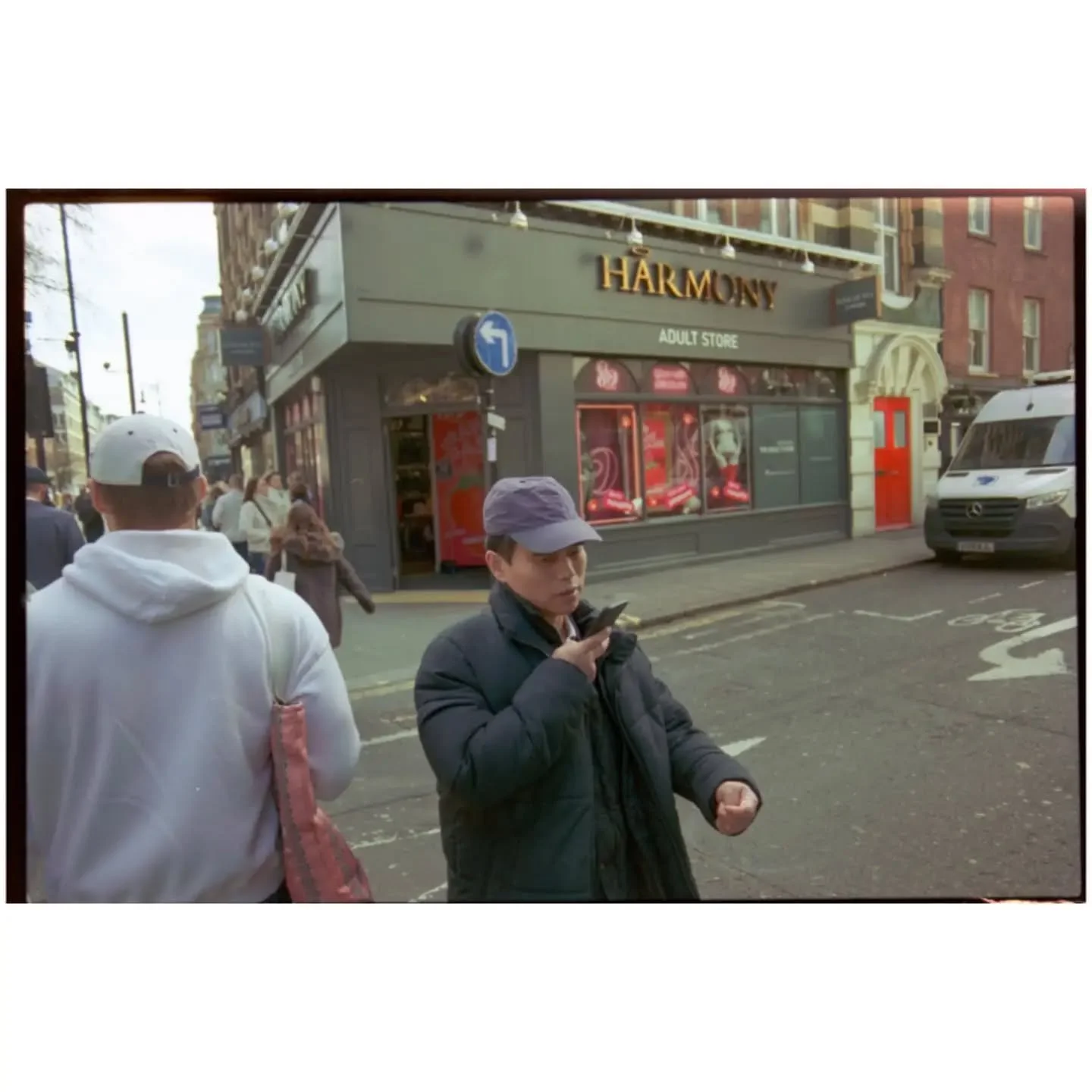
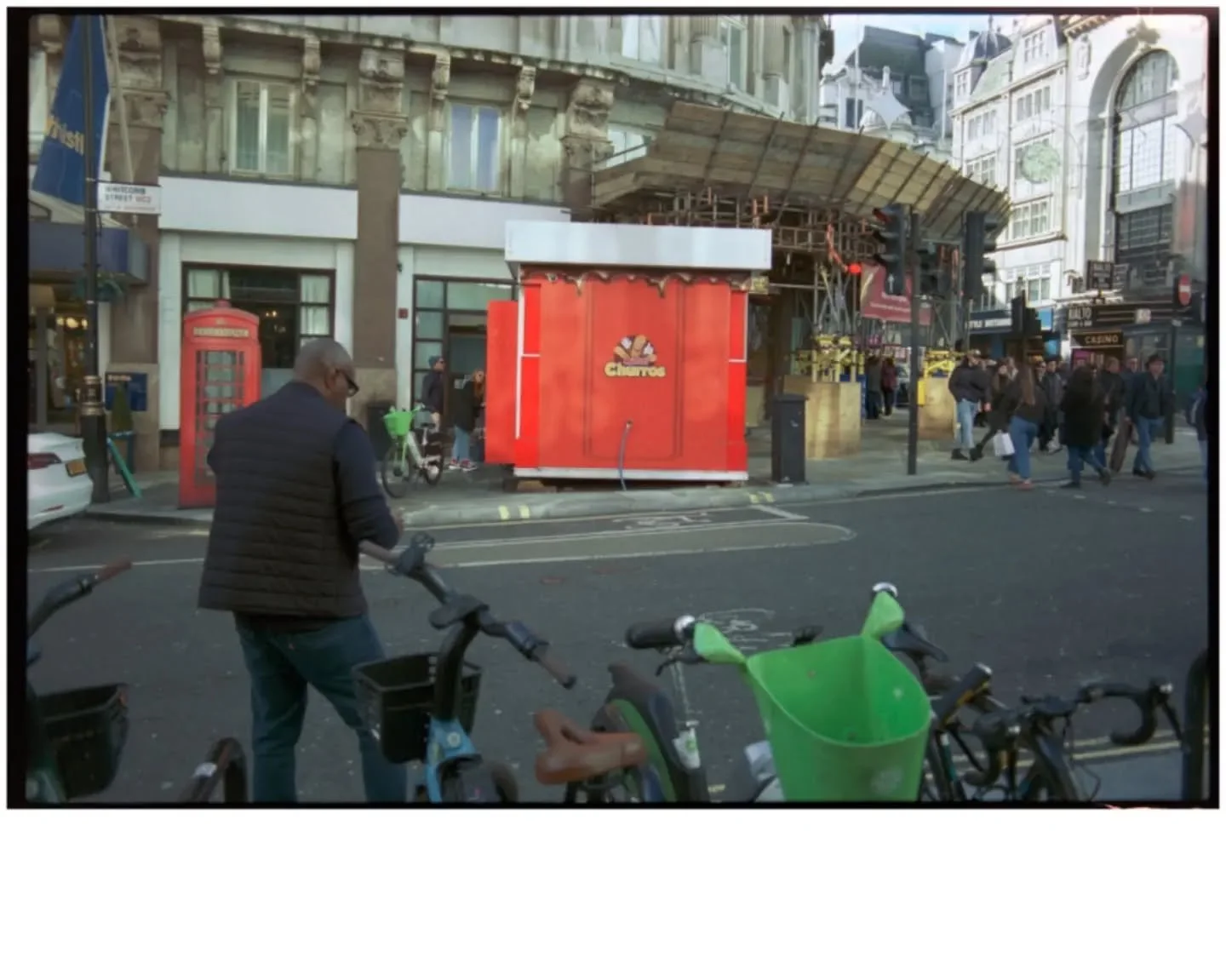
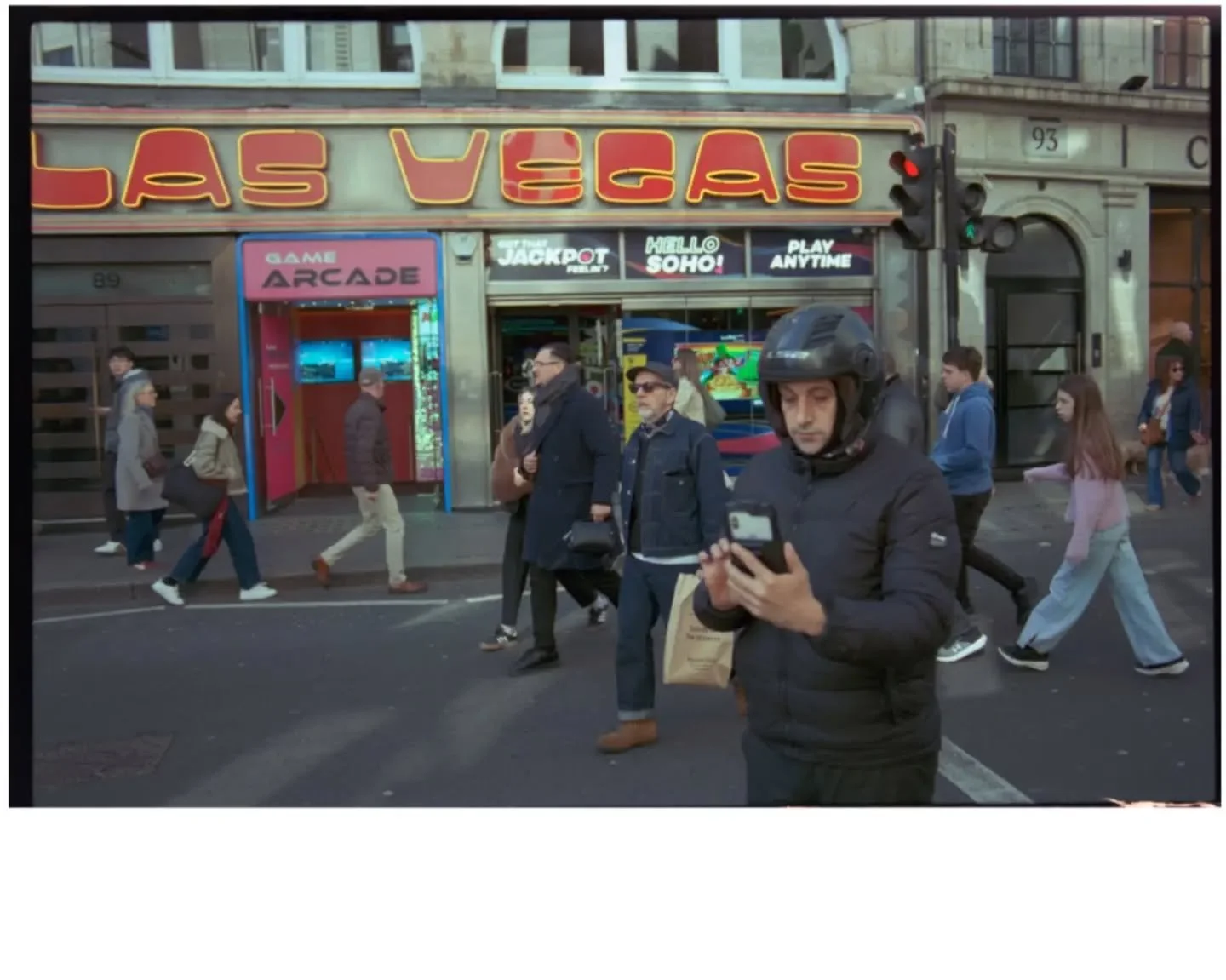
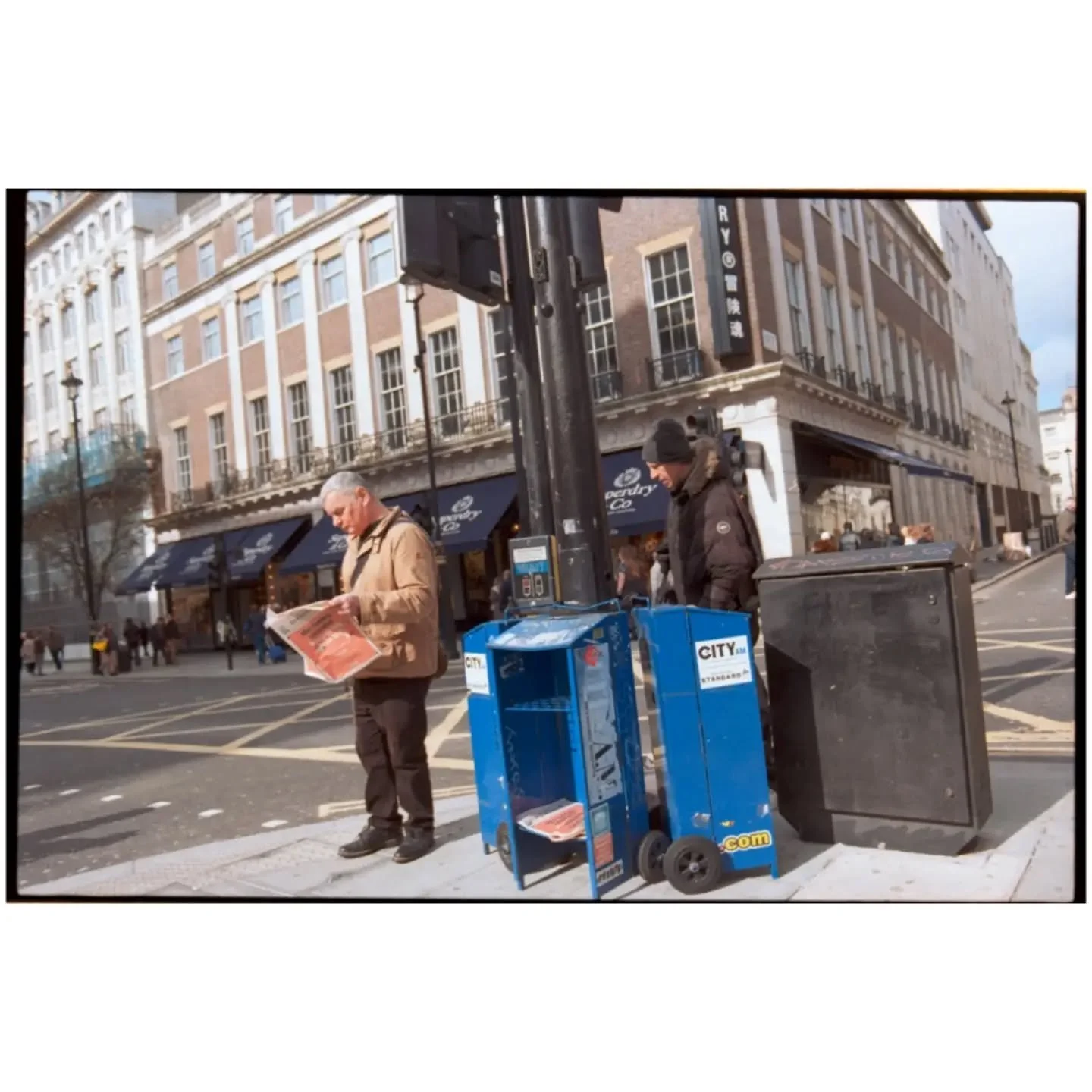
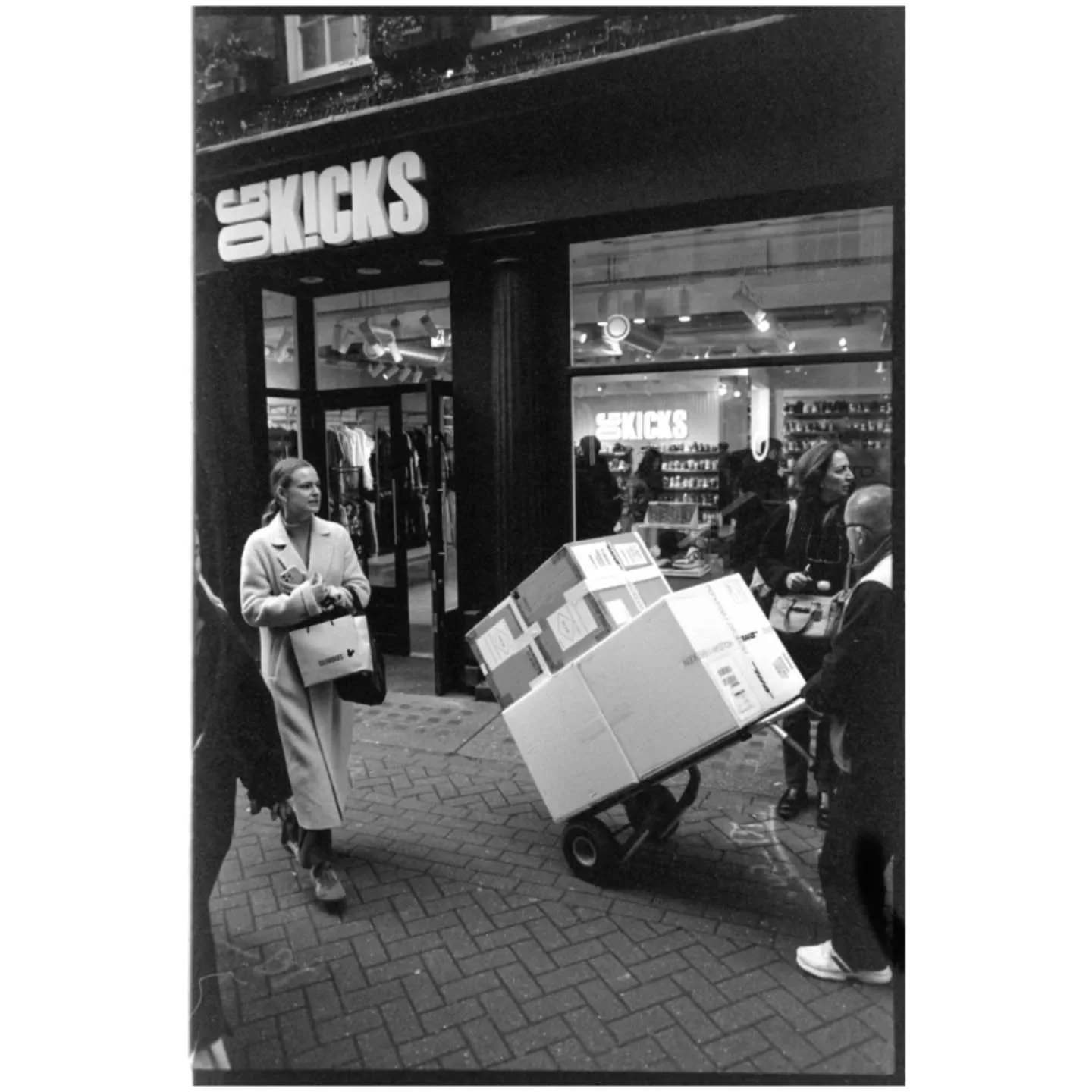
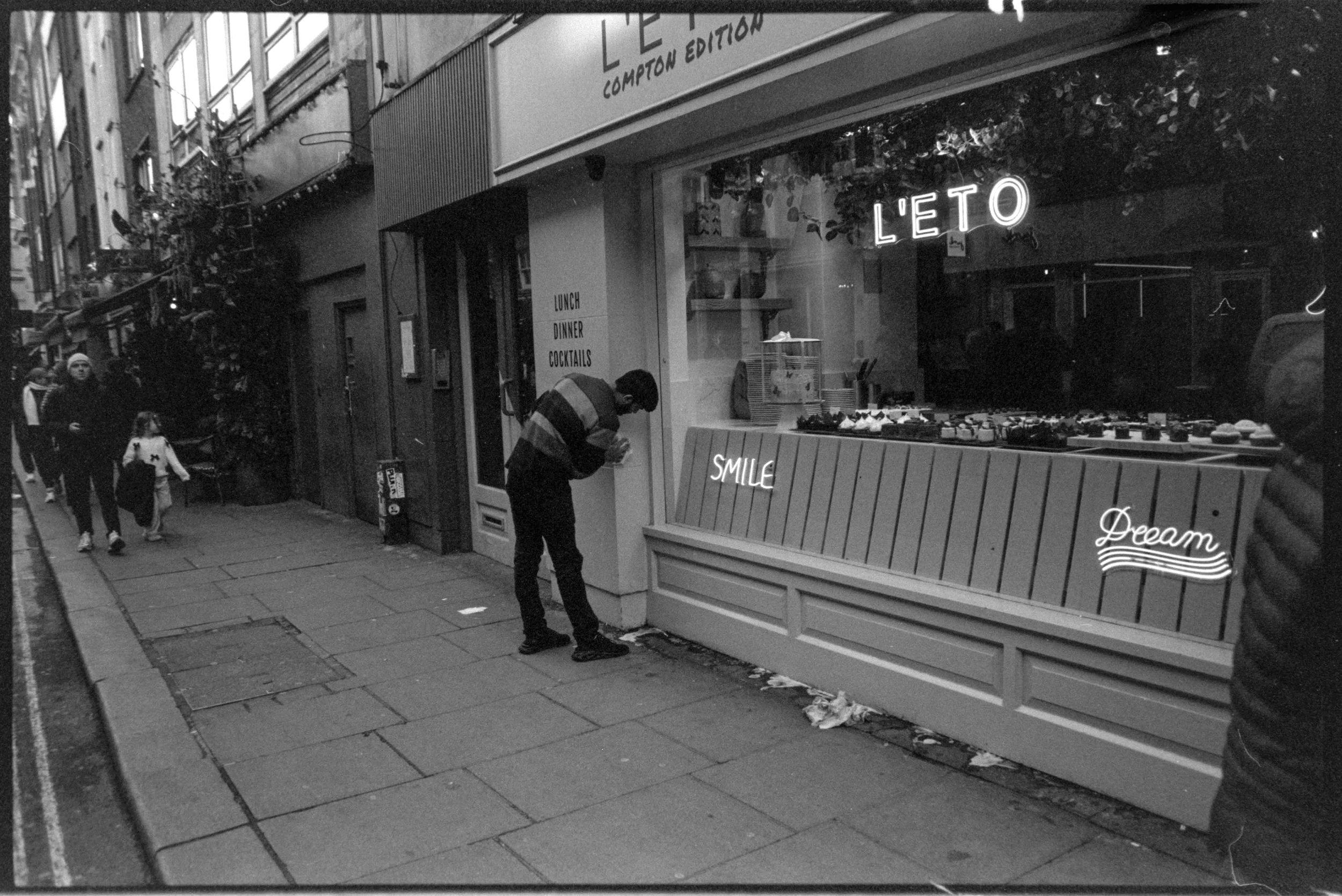
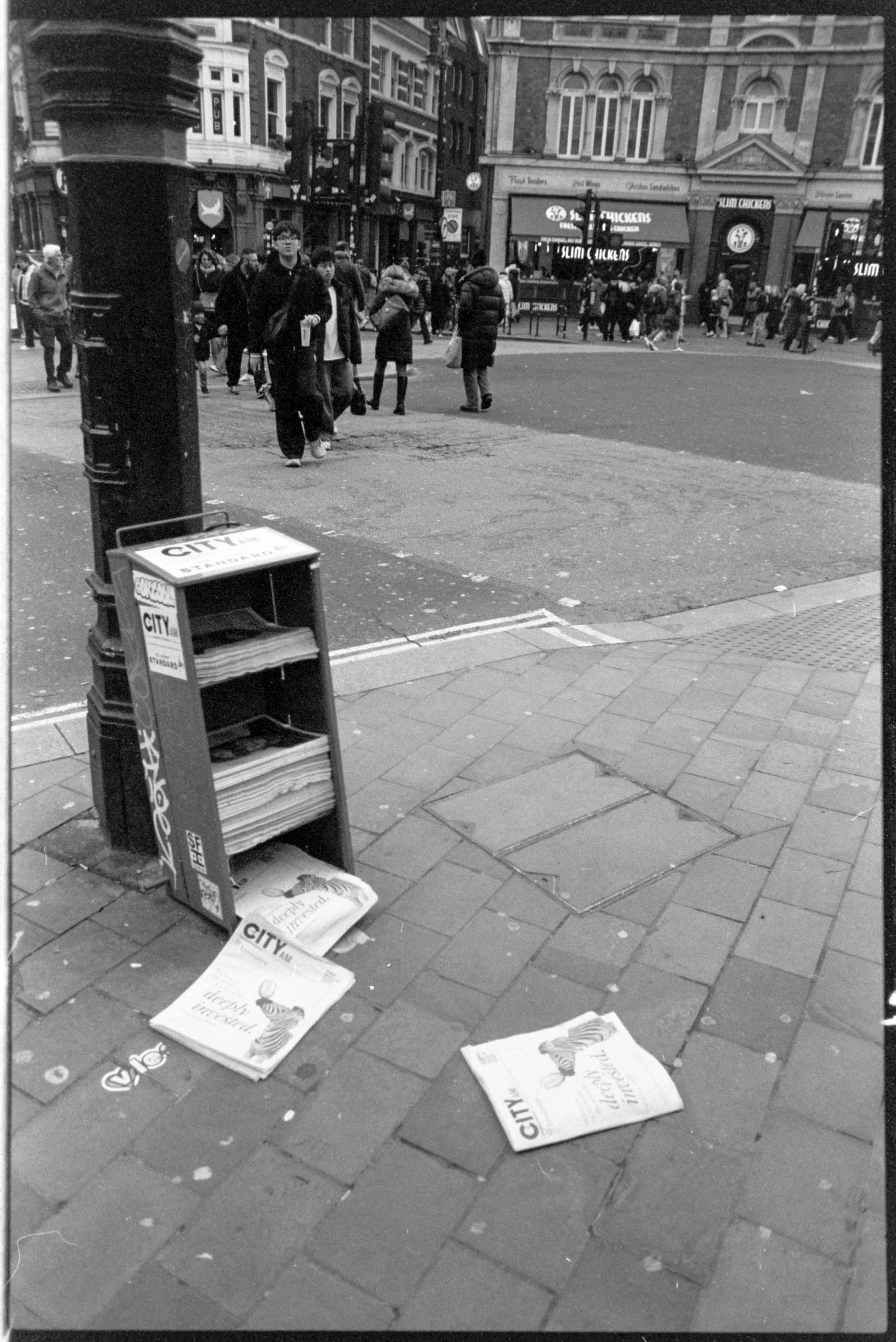
This past weekend, I took to the streets of London for a long-overdue photowalk, with my Nikon F80 film camera and some trusted Kodak 5222 Double XX cinefilm. There is something uniquely grounding about the city’s pace when you’re viewing it through a viewfinder—the way the light hits the brickwork in Soho or the hurried energy of shoppers carrying Waitrose bags.
It feels good to have a camera strap around my neck again.
This past weekend, I took to the streets of London for a long-overdue photowalk, with my Nikon F80 film camera and some trusted Kodak 5222 Double XX cinefilm. There is something uniquely grounding about the city’s pace when you’re viewing it through a viewfinder—the way the light hits the brickwork in Soho or the hurried energy of shoppers carrying Waitrose bags.
These frames mark a bit of a personal milestone: this is the first time I’ve shot and developed film since September 2025.
The London Photowalk
Returning to film after a few months away always feels like re-learning a language. You remember the mechanics, but the "poetry" takes a moment to click back into place.
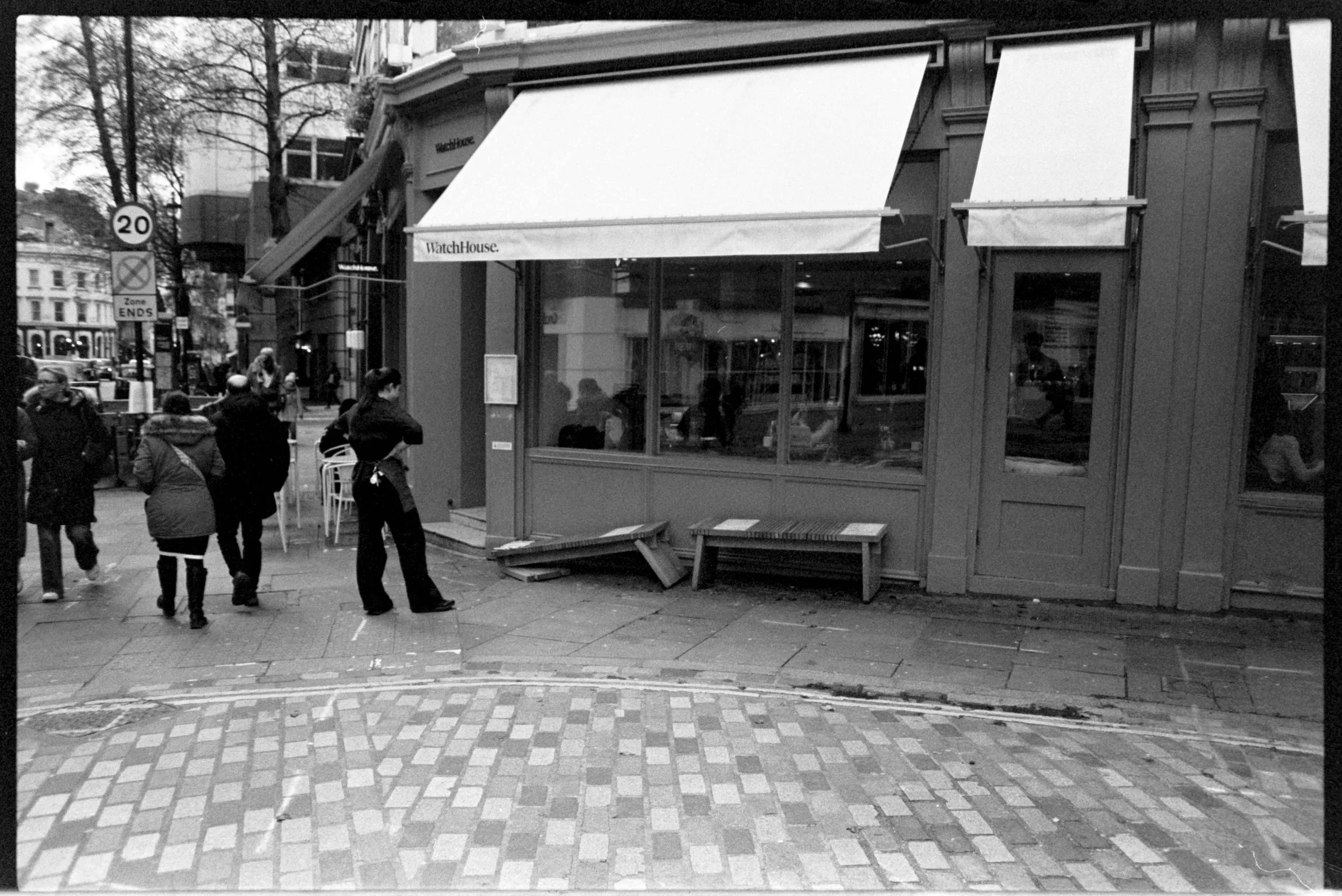
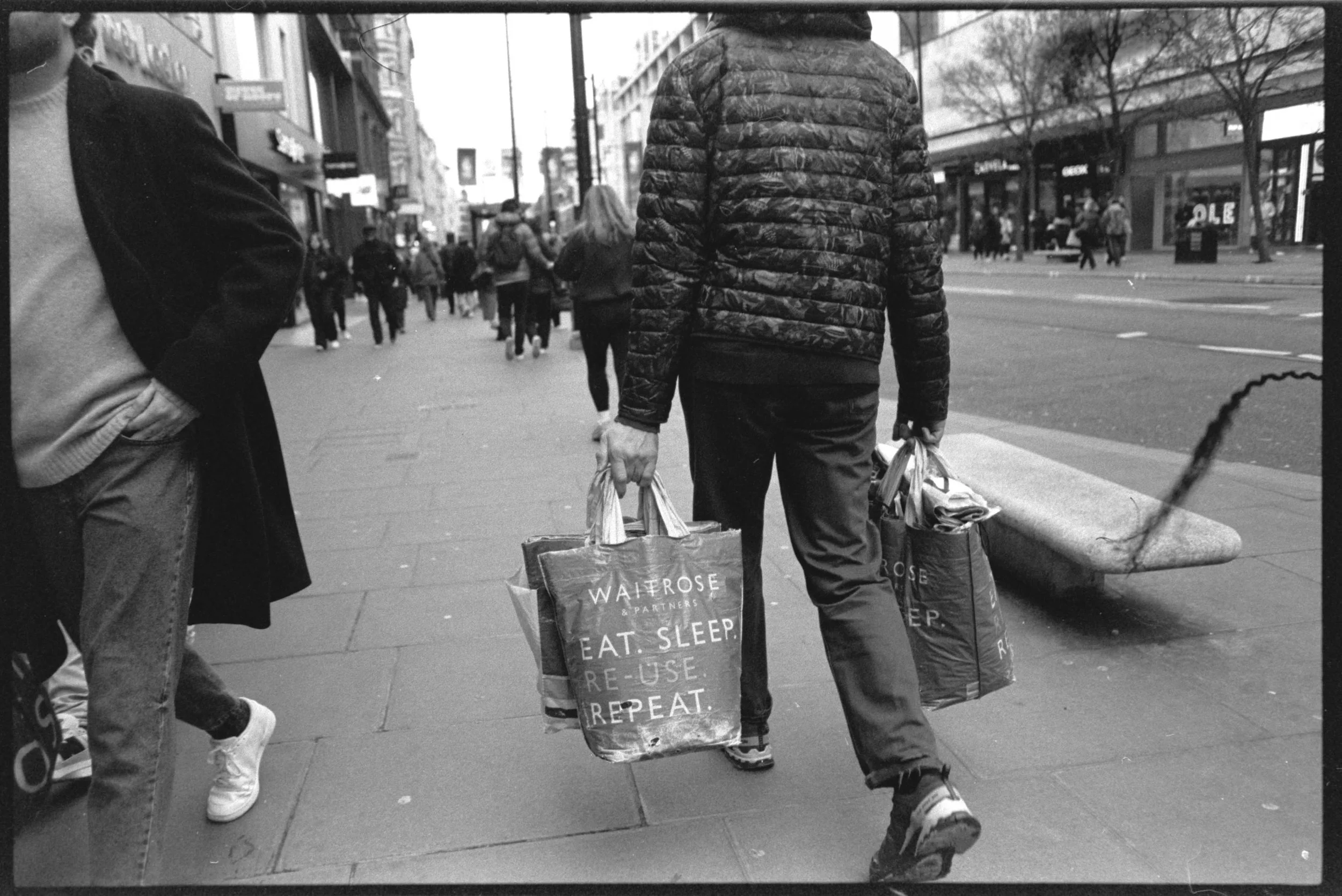
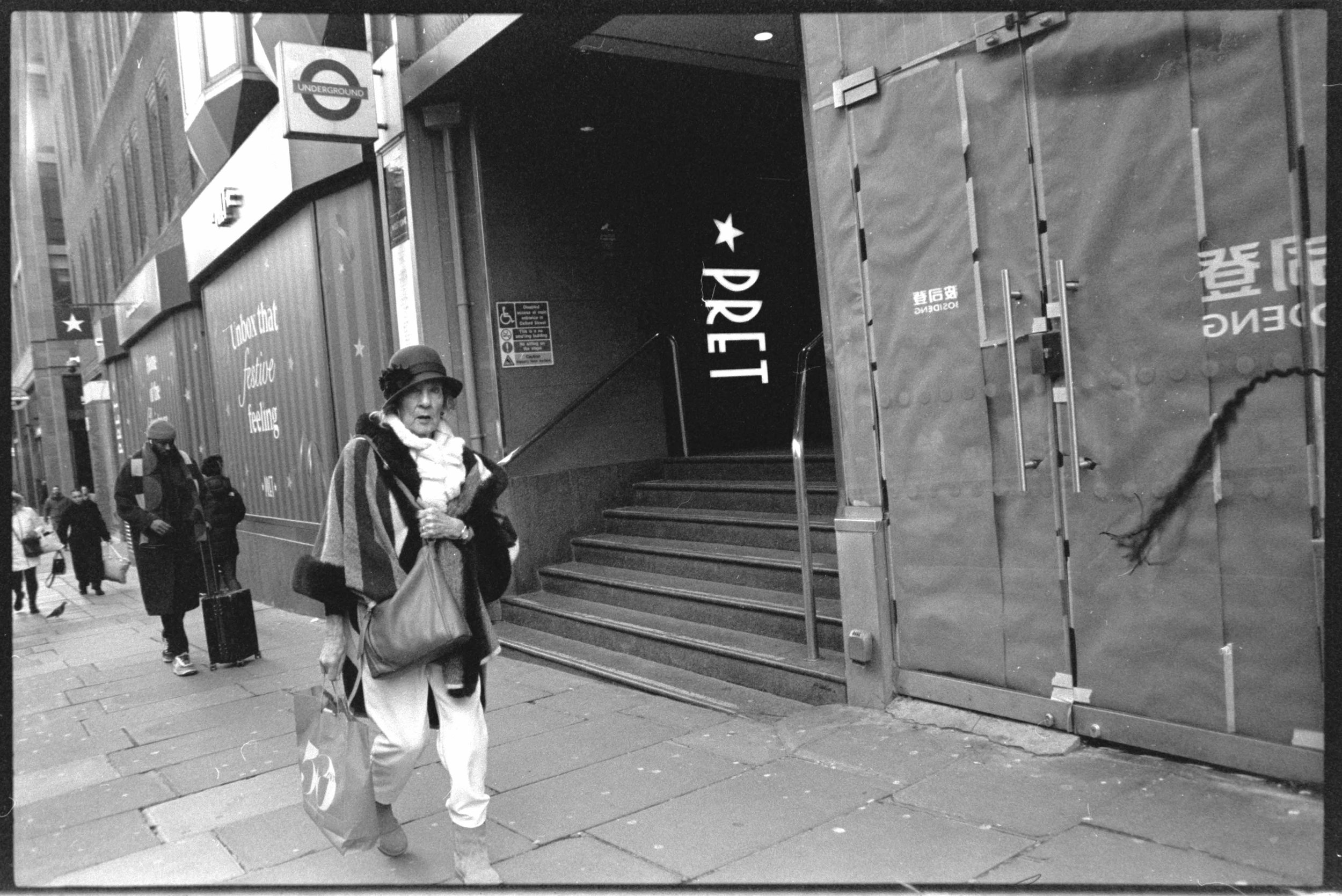
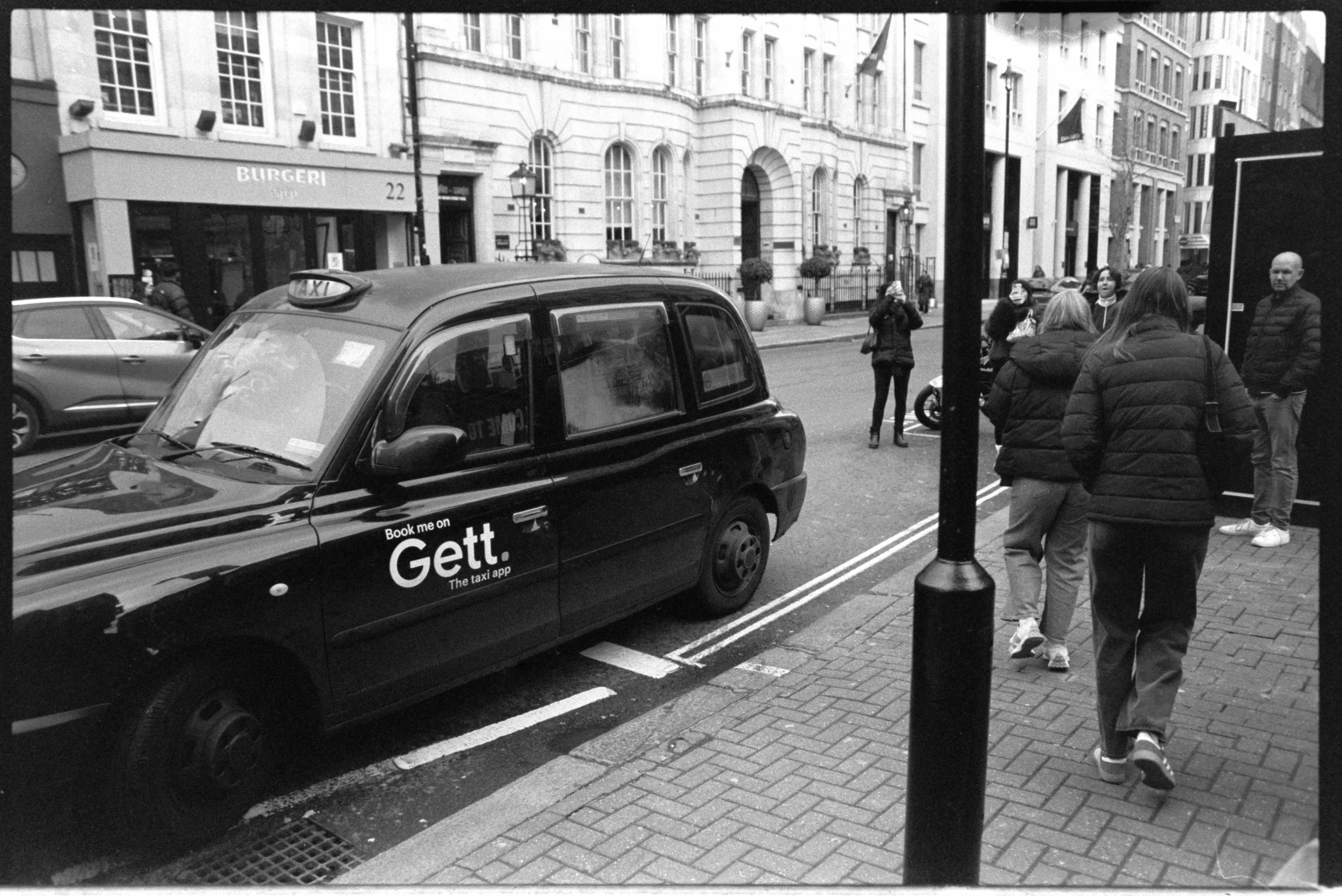
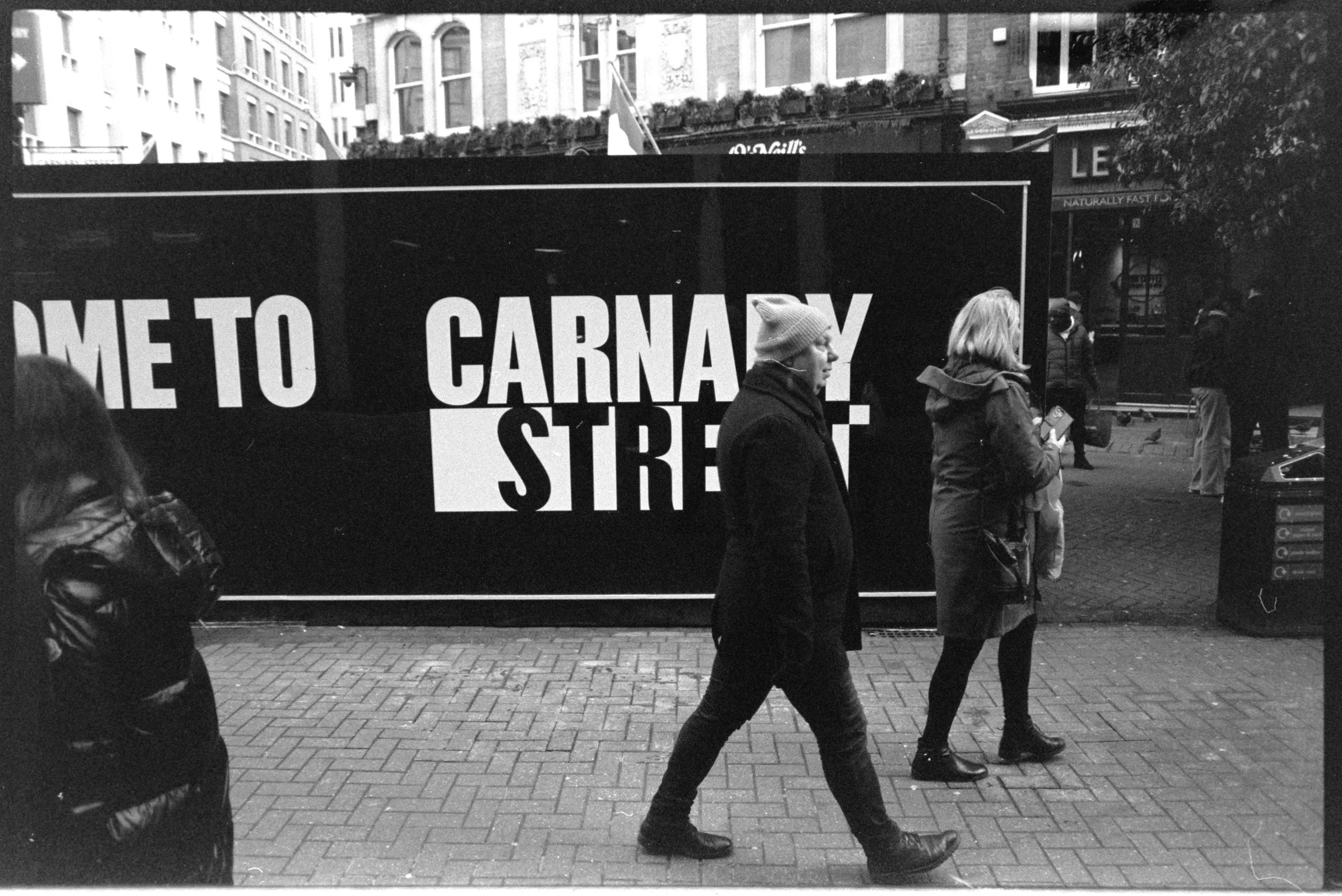
Walking through Carnaby Street and past the iconic storefronts of Soho, I wanted to capture the mundane yet beautiful moments of London life:
The Contrast: The stark white of a "Thank You" storefront against the narrow, dark alleys.
The Commute: A classic black cab waiting in the grey London light.
The Routine: People grabbing coffee at WatchHouse or checking their phones in those quiet pockets between busy streets.
Back in the Darkroom
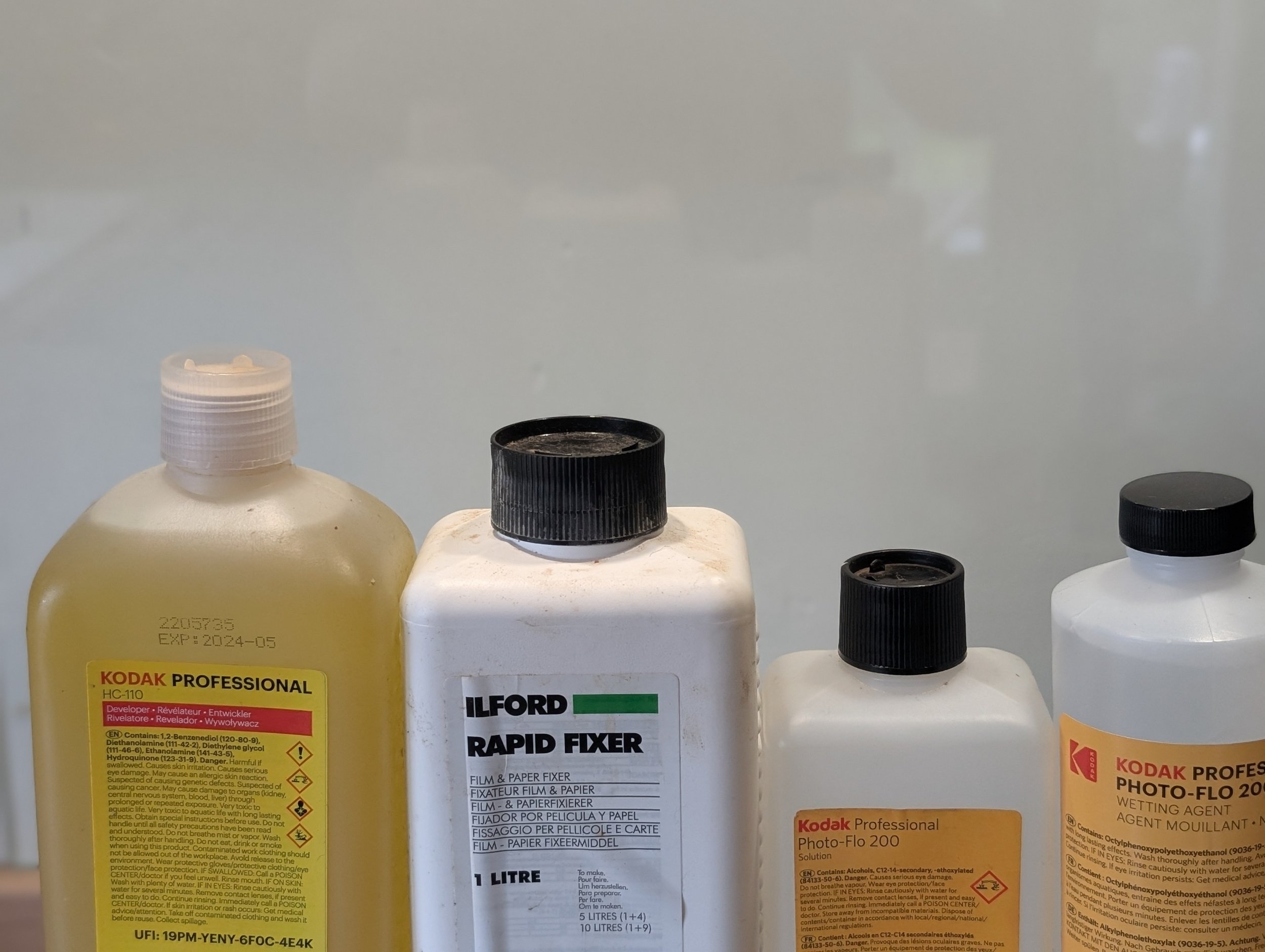
Developing these shots myself this weekend was the perfect way to close the loop. There’s a specific kind of anticipation that comes with pulling a wet roll of film out of the tank—especially when you haven't seen that chemical magic in months.
The grain, the shadows, and the inherent "imperfection" of these black-and-white shots captured the weekend exactly how it felt: raw, busy, and authentically London.
"Photography is an itch that won't go away. No matter how much you film, you always want more." – Bert Hardy
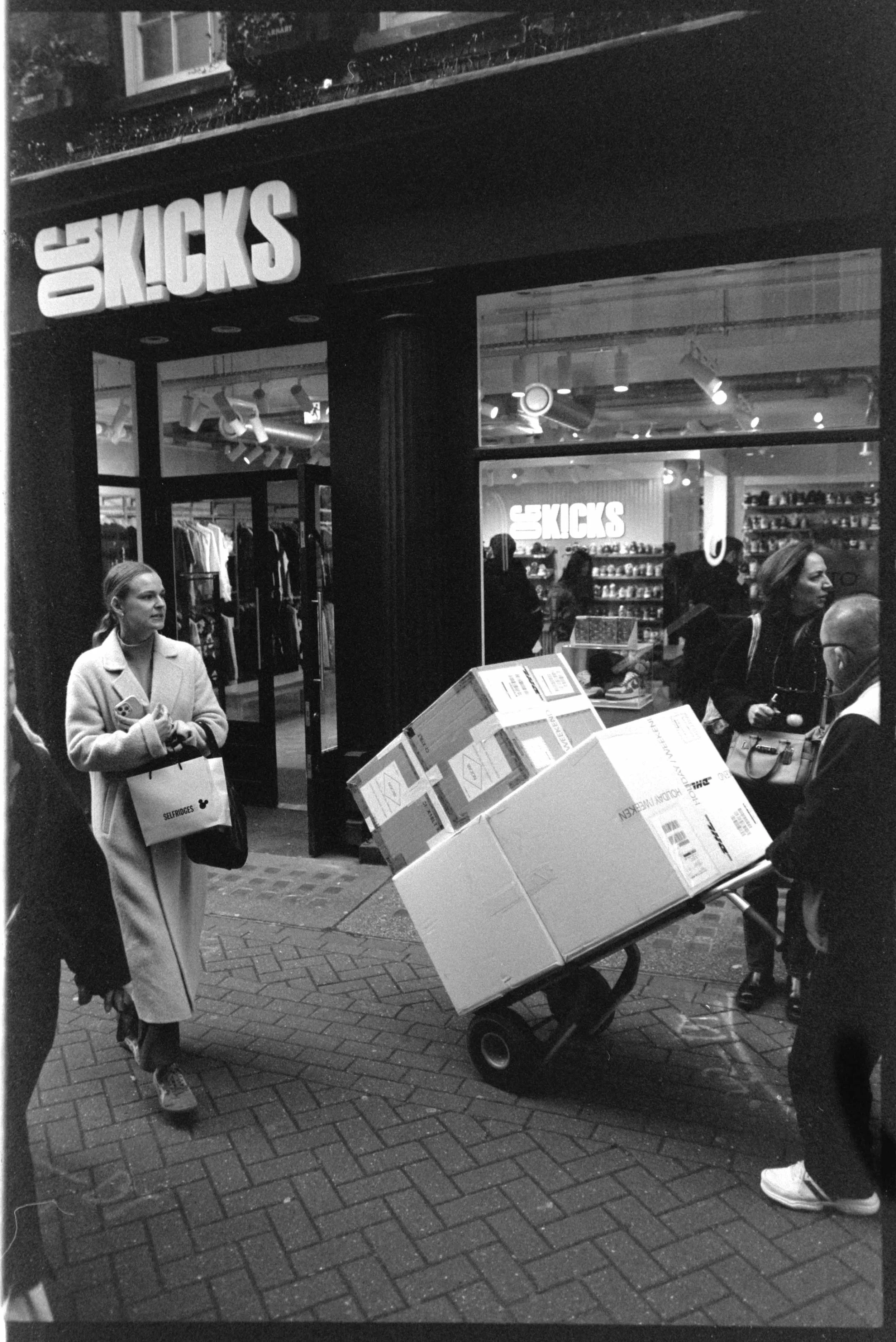
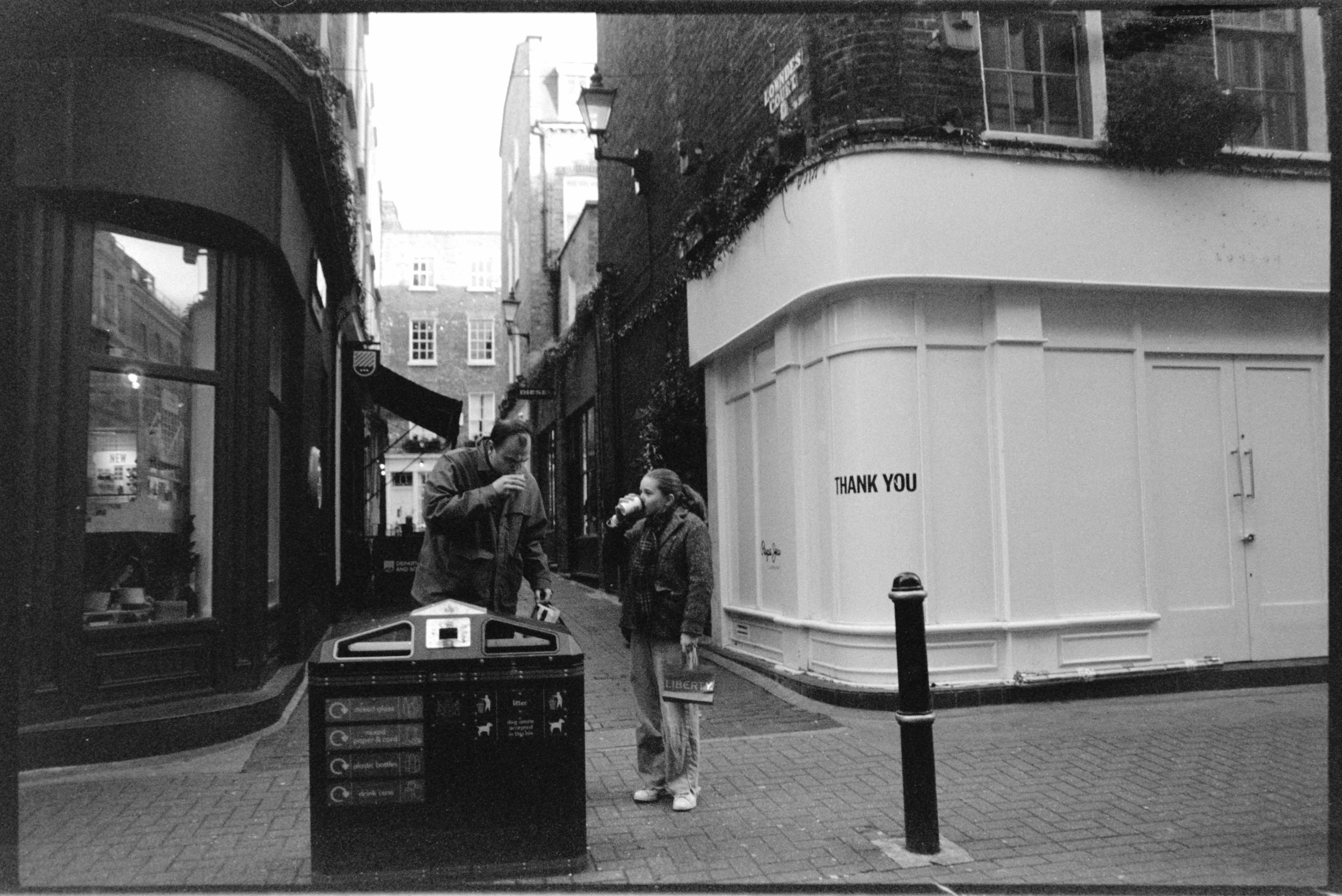
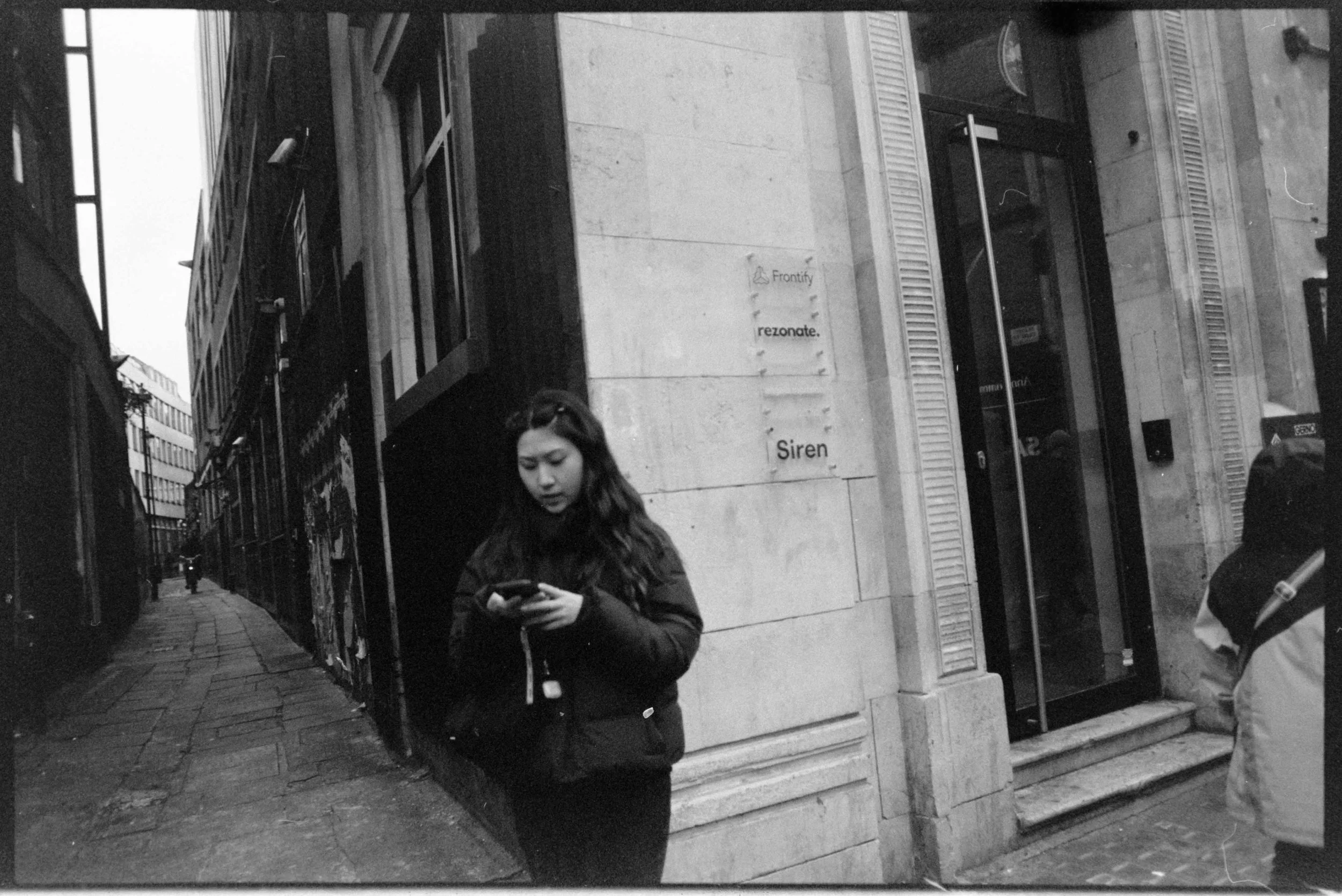
It’s good to be back. I’ve missed the wait, the tactile nature of the process, and the way film forces me to slow down and actually see the city.
Which of these shots is your favorite? Let me know in the comments below!
Would you like me to help you draft a social media caption for one of these specific photos to help promote the post?
Until next time, keep snapping.
Camera Santa
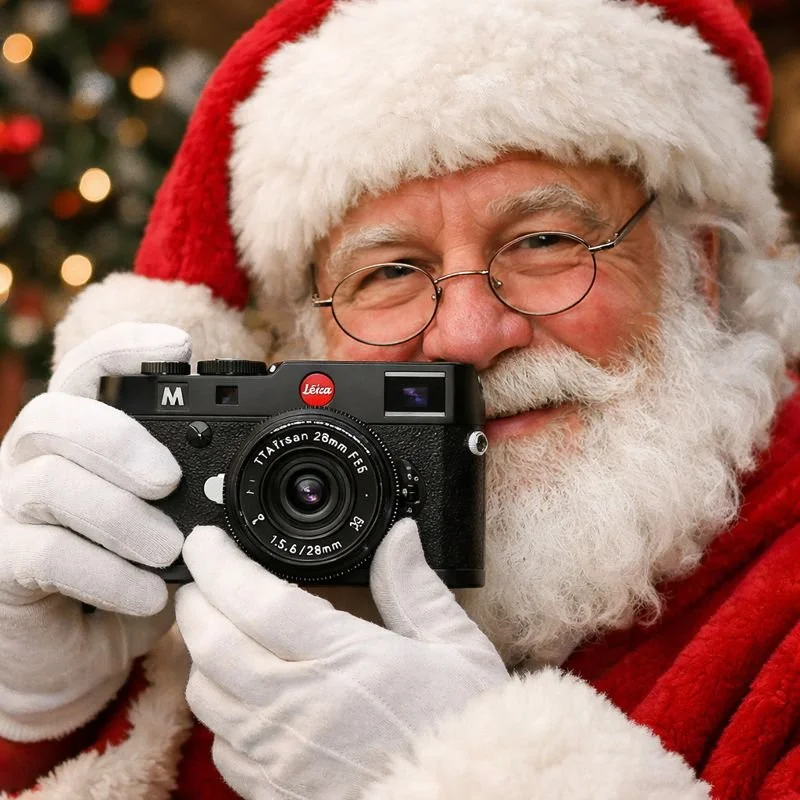
Camera Santa was very kind to me this year, I was lucky to get a 28mm M mount lens for my Leica cameras.
The 28mm focal length is often called the "goldilocks" of street photography. It’s wide enough to capture the energy of a city street but tight enough to feel personal. Recently, I took my Leica M10 paired with the tiny TTArtisan 28mm f/5.6 for a spin through the heart of London to see how this modern "tribute" lens handles the grit and glamour of the capital.

Camera Santa was very kind to me this year, I was lucky to get a 28mm M mount lens for my Leica cameras.
The 28mm focal length is often called the "goldilocks" of street photography. It’s wide enough to capture the energy of a city street but tight enough to feel personal. Recently, I took my Leica M10 paired with the tiny TTArtisan 28mm f/5.6 for a spin through the heart of London to see how this modern "tribute" lens handles the grit and glamour of the capital.
I’ll be honest: 28mm is my absolute favorite focal length. I have loved this aspect since I bought the Ricoh GRII (second hand) a couple of years ago. Its also generally the focal length of smartphones, which was origins of my interest in street photography (whilst on my commute into the office, back in the day). Whilst I really enjoy both the 35mm and 50mm, there is a specific immersion you get with a 28mm that makes the viewer feel like they are standing right next to you on the pavement.
Standing on the Shoulders of Giants
Before diving into the photos, it’s worth noting that the 28mm has a legendary pedigree. Some of the most influential street photographers in history chose this perspective to document the world:
Garry Winogrand: The master of the 28mm. He used its wide field of view to pack his frames with "organized chaos," often tilting the camera to create a sense of frantic energy.
William Klein: Known for his raw, "in-your-face" style, Klein loved the 28mm because it forced him to get physically close to his subjects, creating a sense of intimacy that a longer lens just can't replicate.
Daido Moriyama: For his gritty, high-contrast snapshots of Tokyo, Moriyama famously utilized the fixed 28mm lens of the Ricoh GR series to capture the "are-bure-boke" (rough, blurred, and out-of-focus) aesthetic.
The Walk: From Embankment to the West End
The TTArtisan 28mm f/5.6 is a "pancake" lens, making the M10 incredibly pocketable and discrete. Because the maximum aperture is a modest f/5.6, this lens is designed for zone focusing. It’s kind of counterintuitive to have a F2 28mm lens, when the basis of the lens is to shoot wide and deep. I set my aperture to f/8, my focus to between 2 / 3 meters, and let the depth of field do the work.
1. Embankment & Southbank
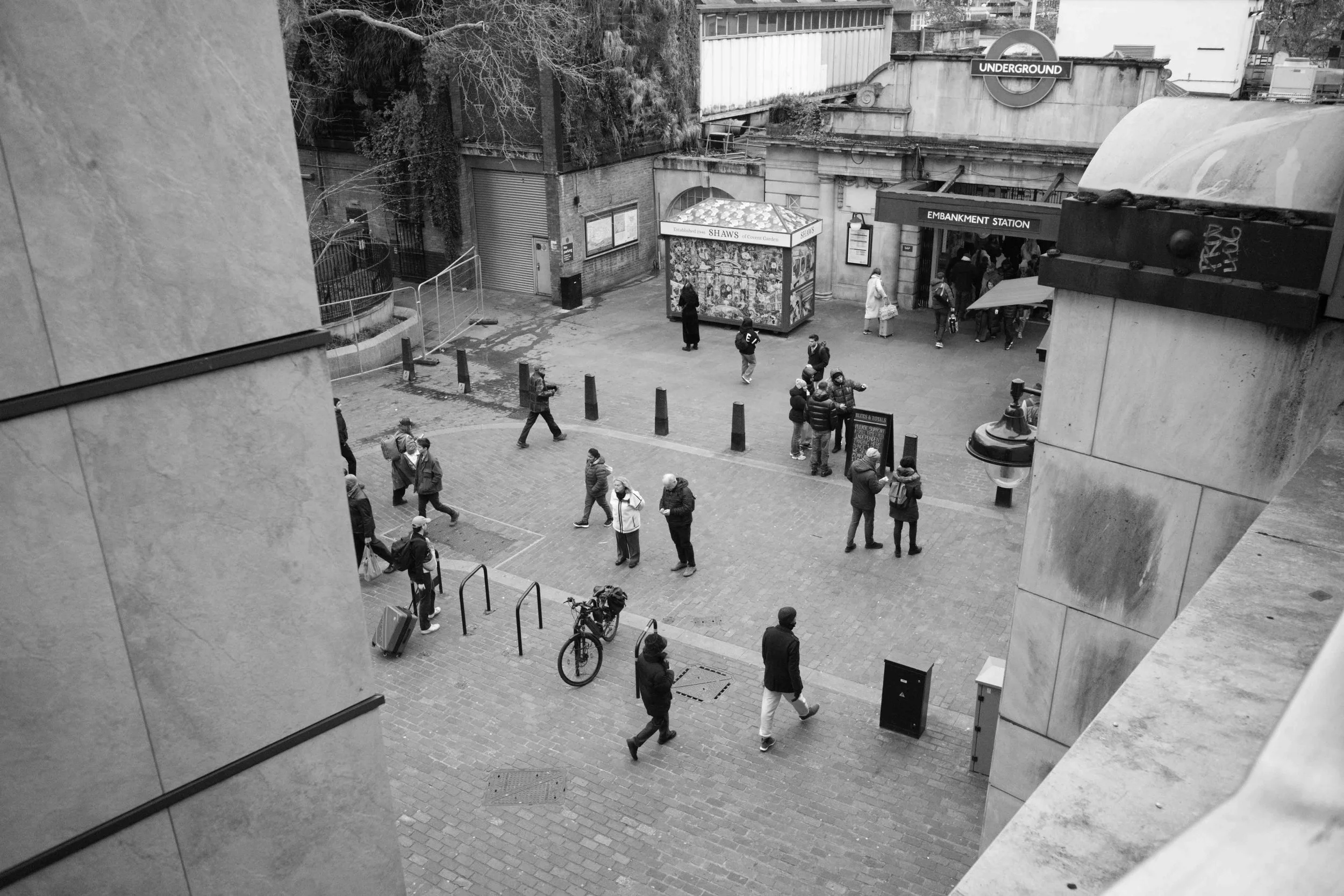
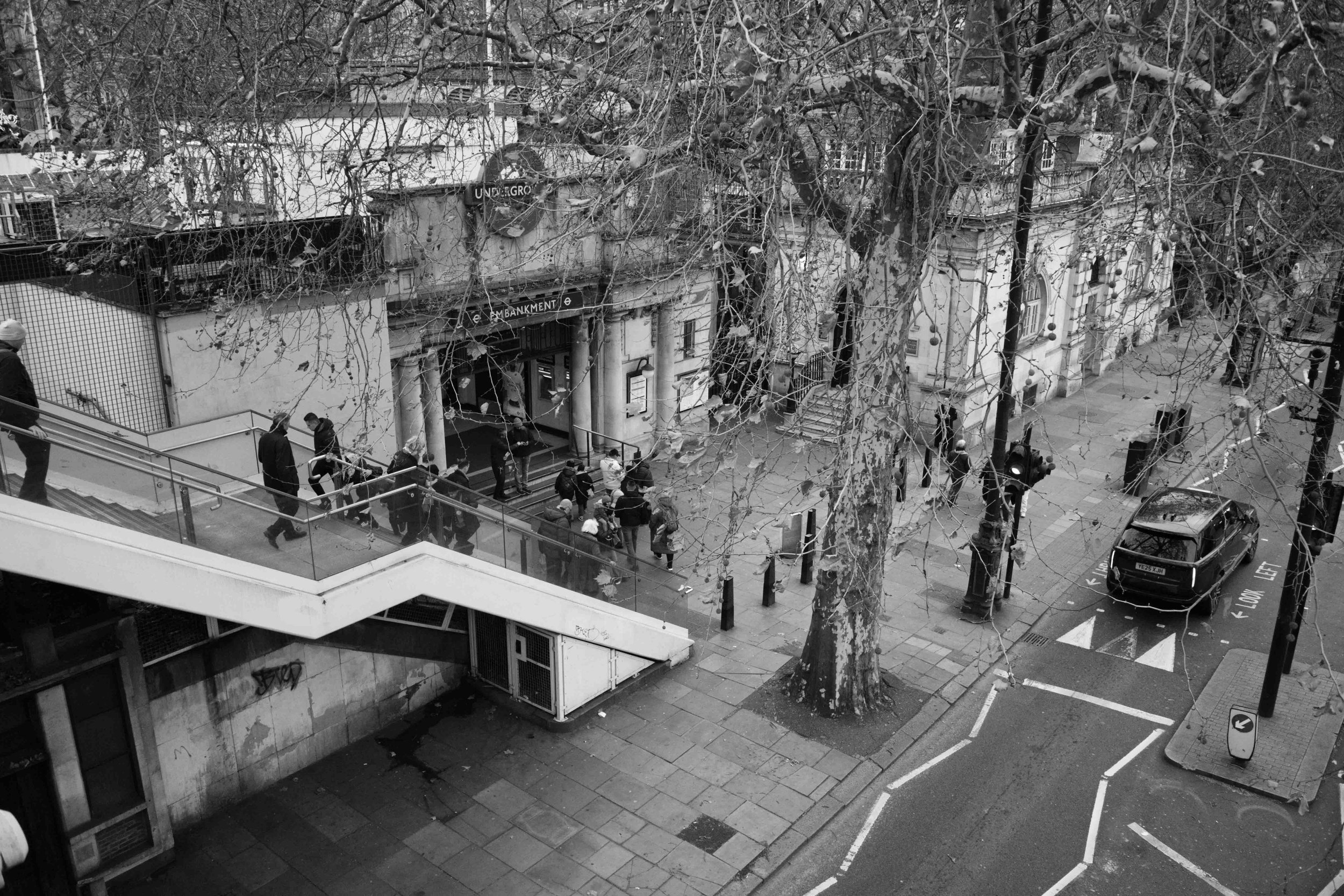
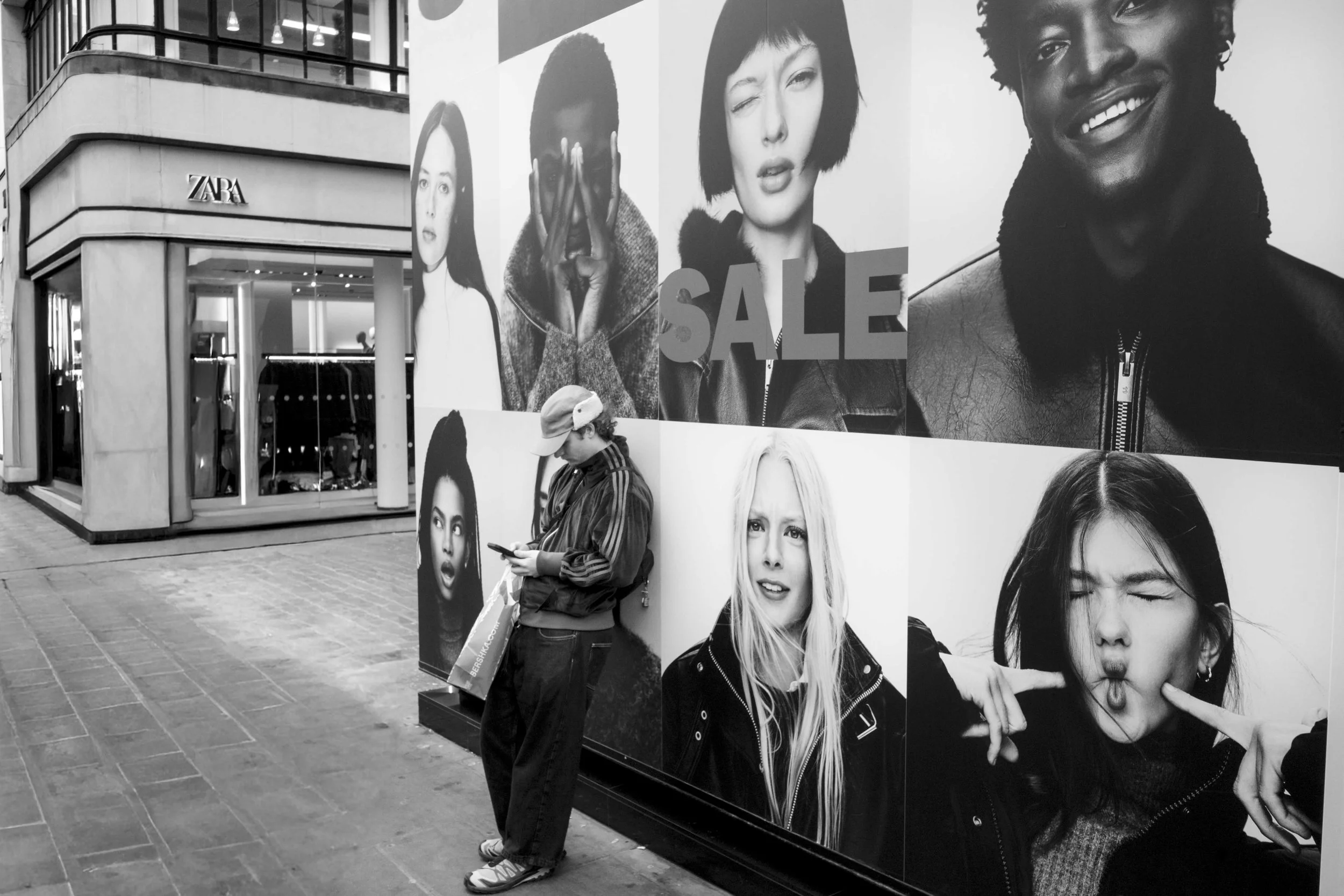
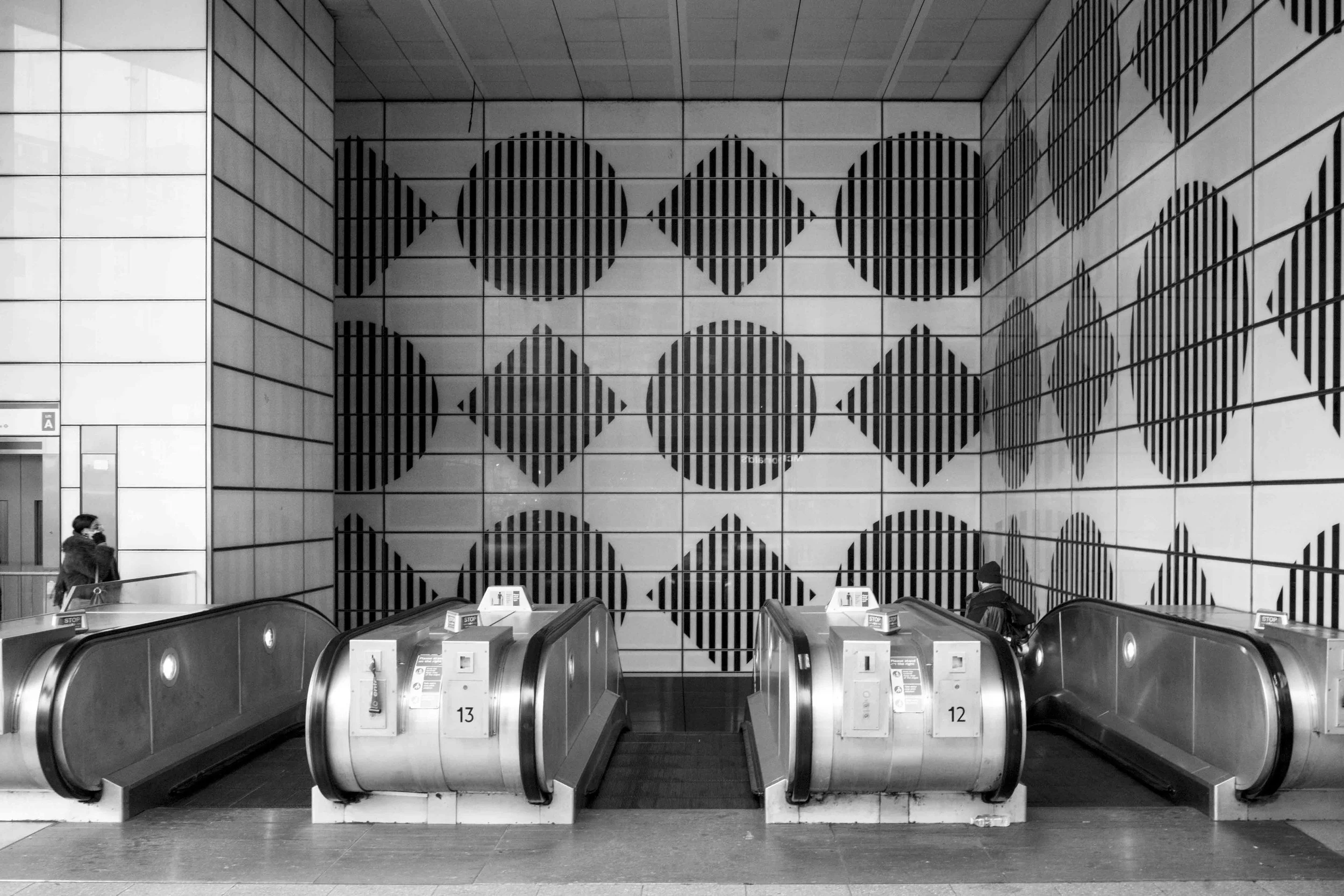
I started at Embankment. Looking down from the walkways, the 28mm allowed me to capture the geometry of the station entrance and the flow of commuters. The high-angle shots showcased how the lens handles architecture and human movement simultaneously.
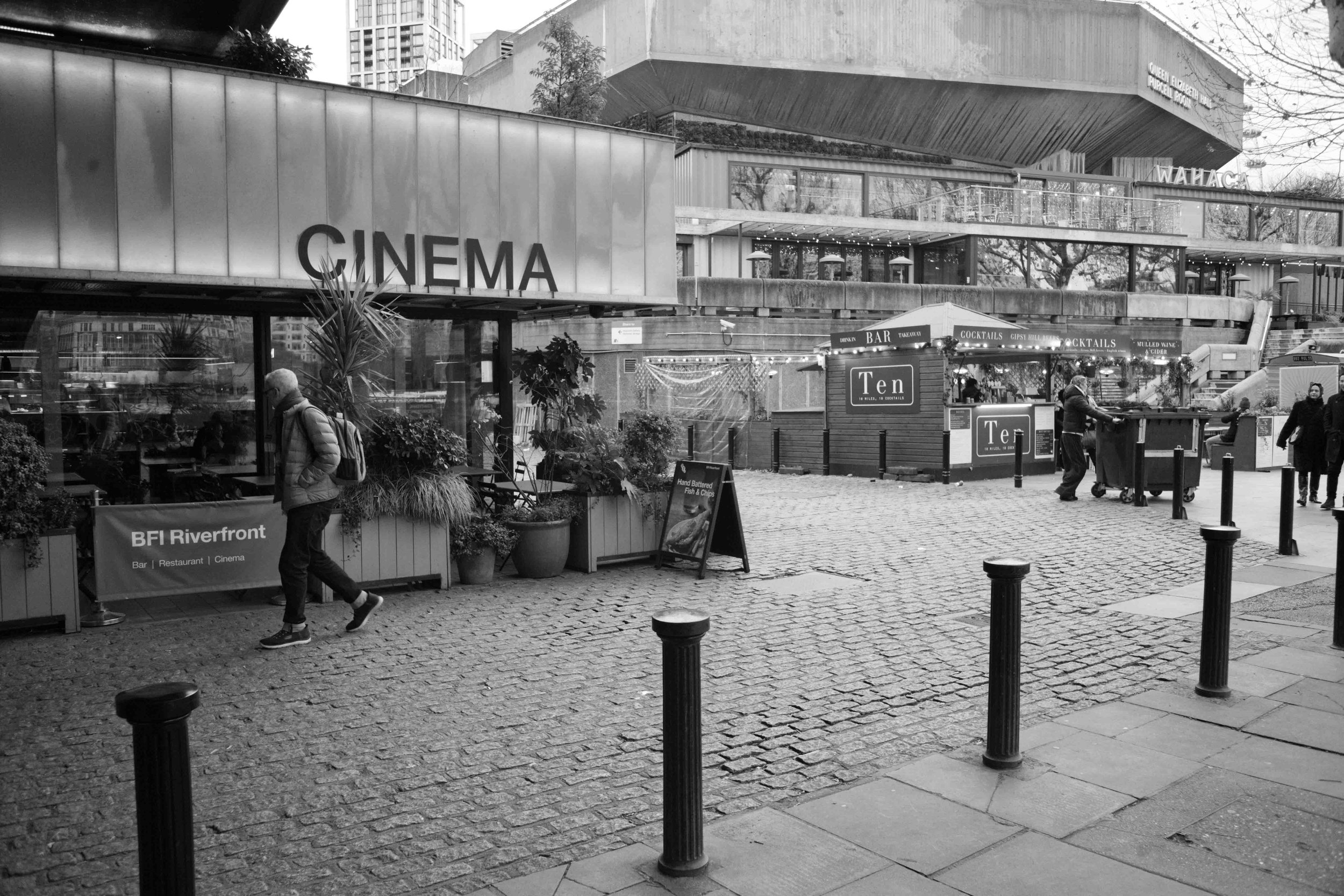
Crossing over to the BFI Riverfront, the "CINEMA" sign provided a classic London backdrop. The wide angle excels here; it lets you frame a large subject like a building while still catching the candid expressions of people walking past.
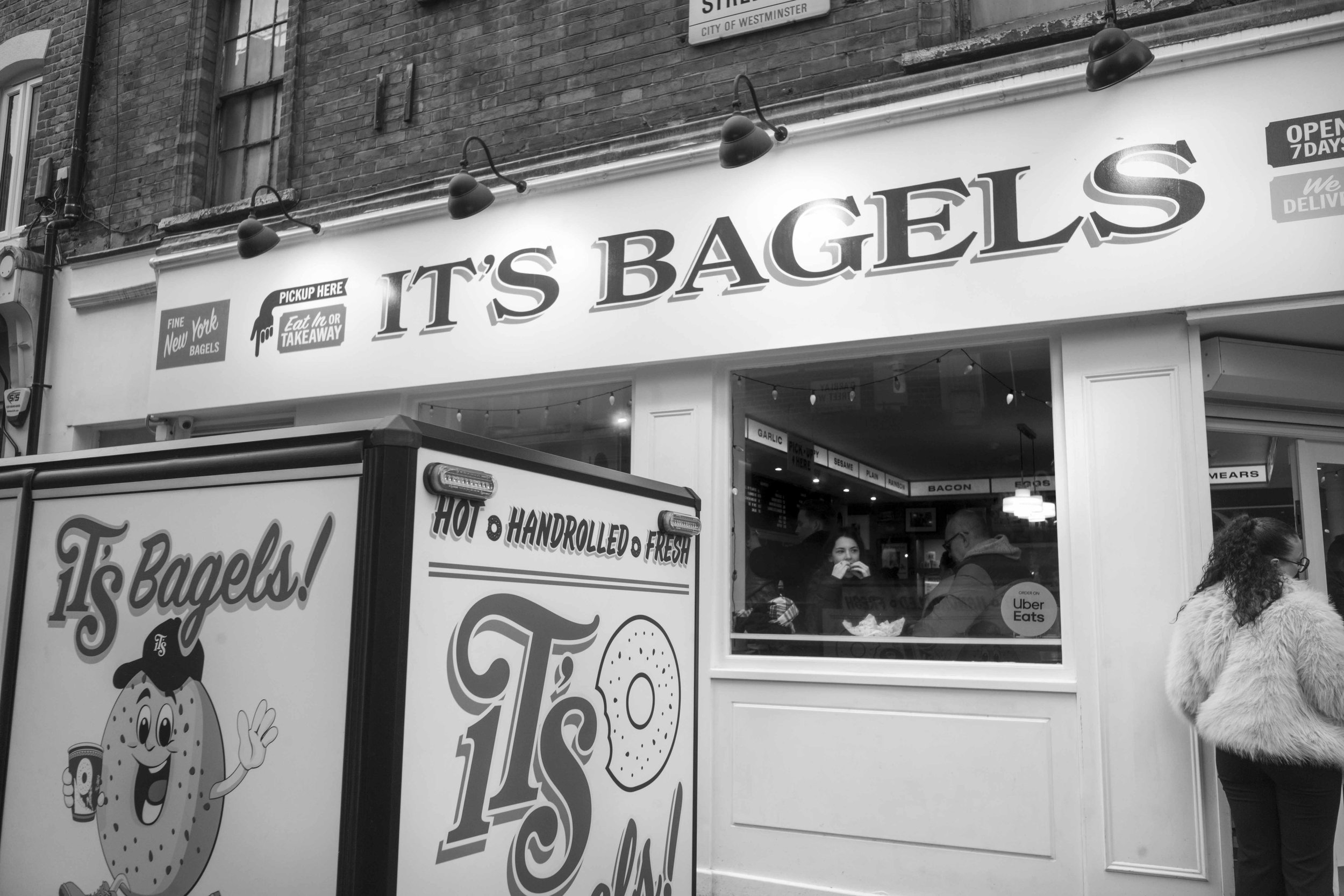
2. The Grit of Soho and Chinatown
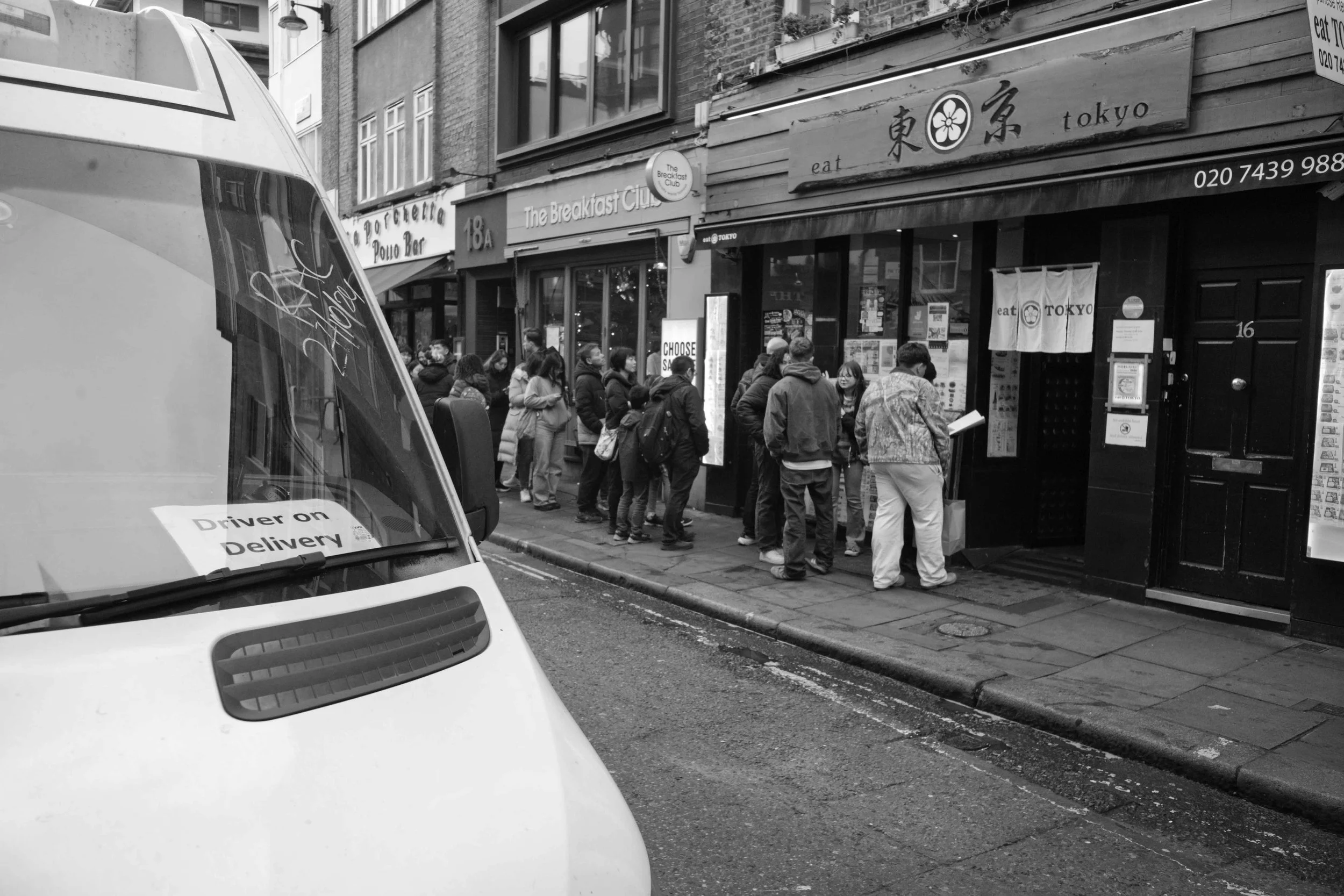
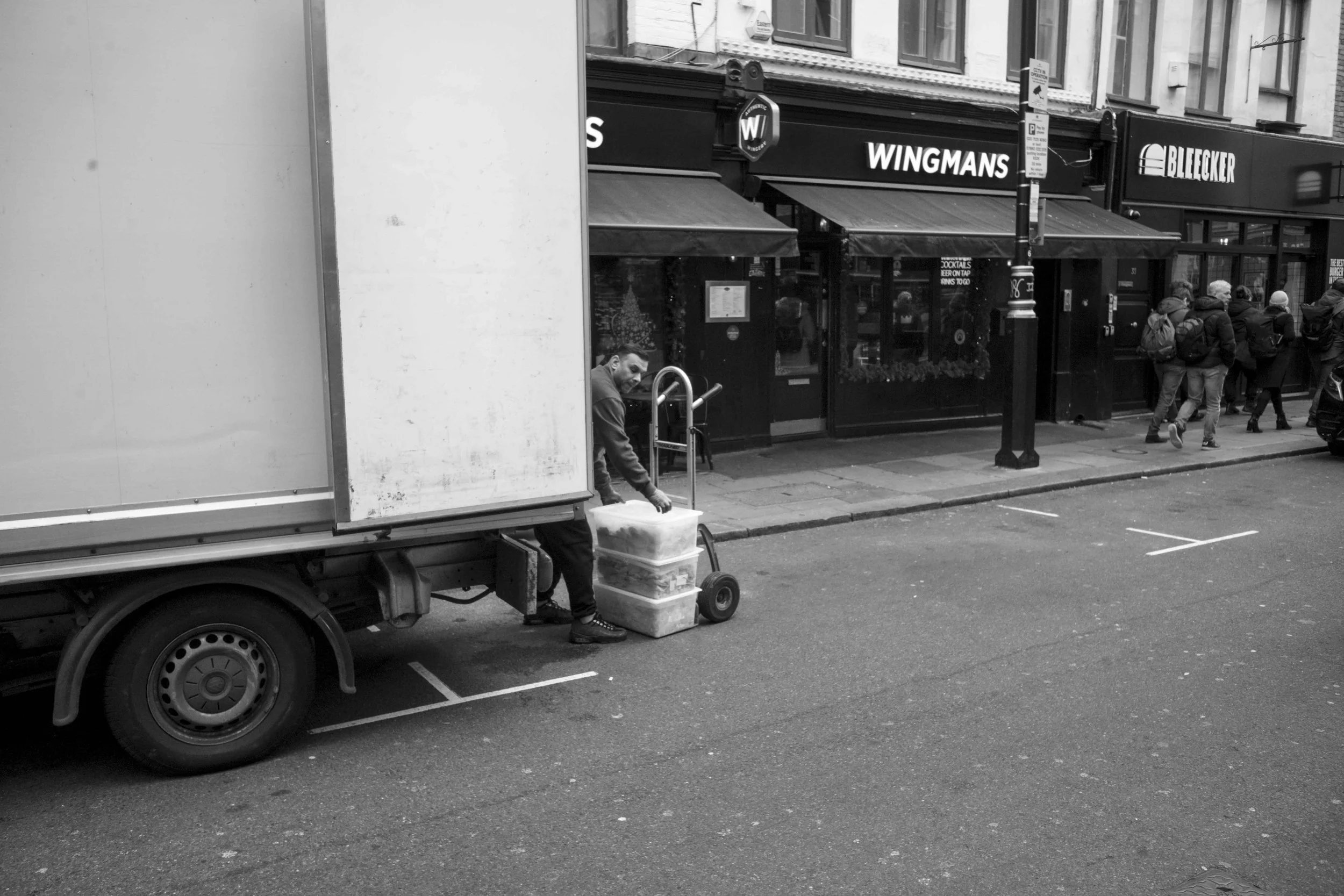
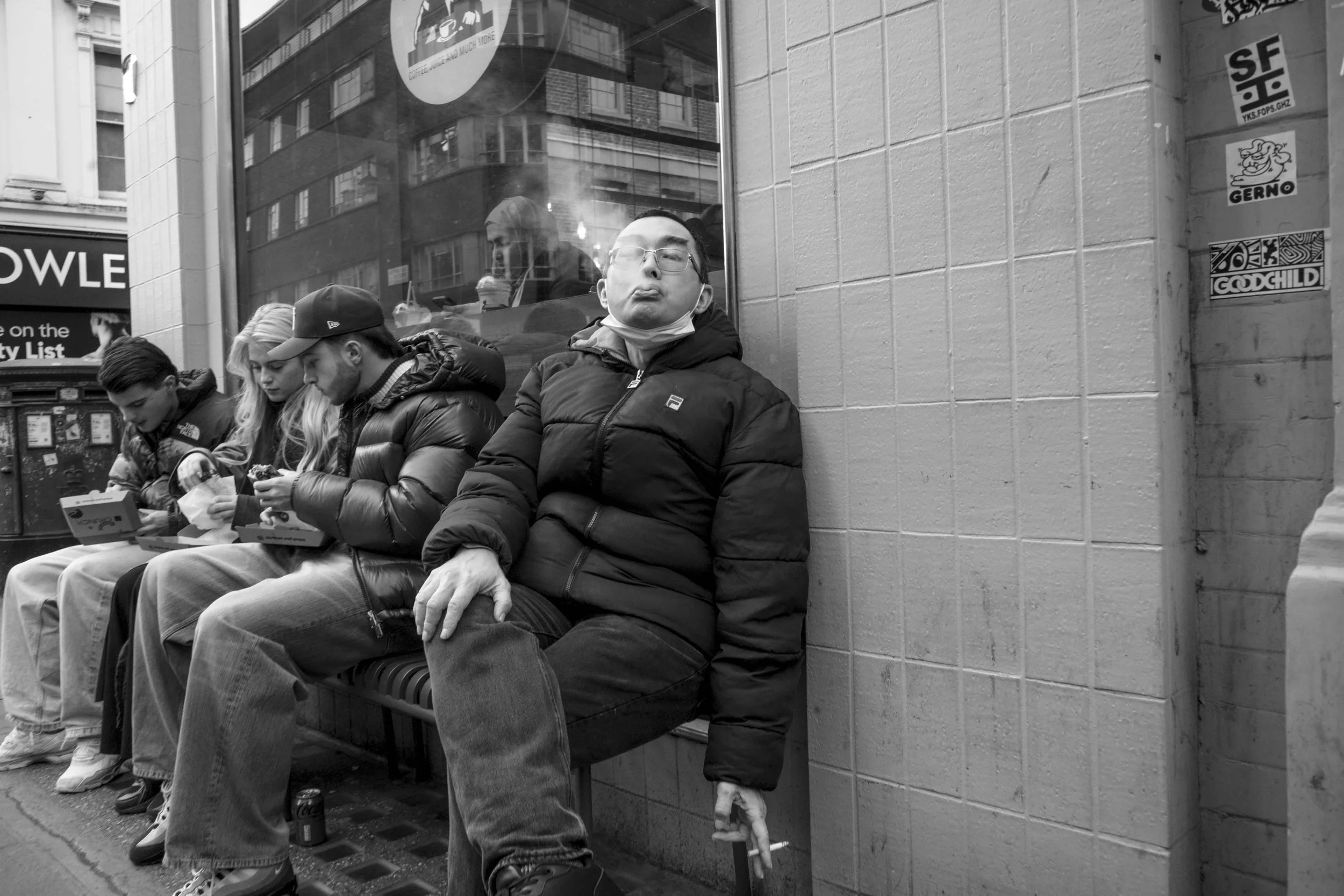
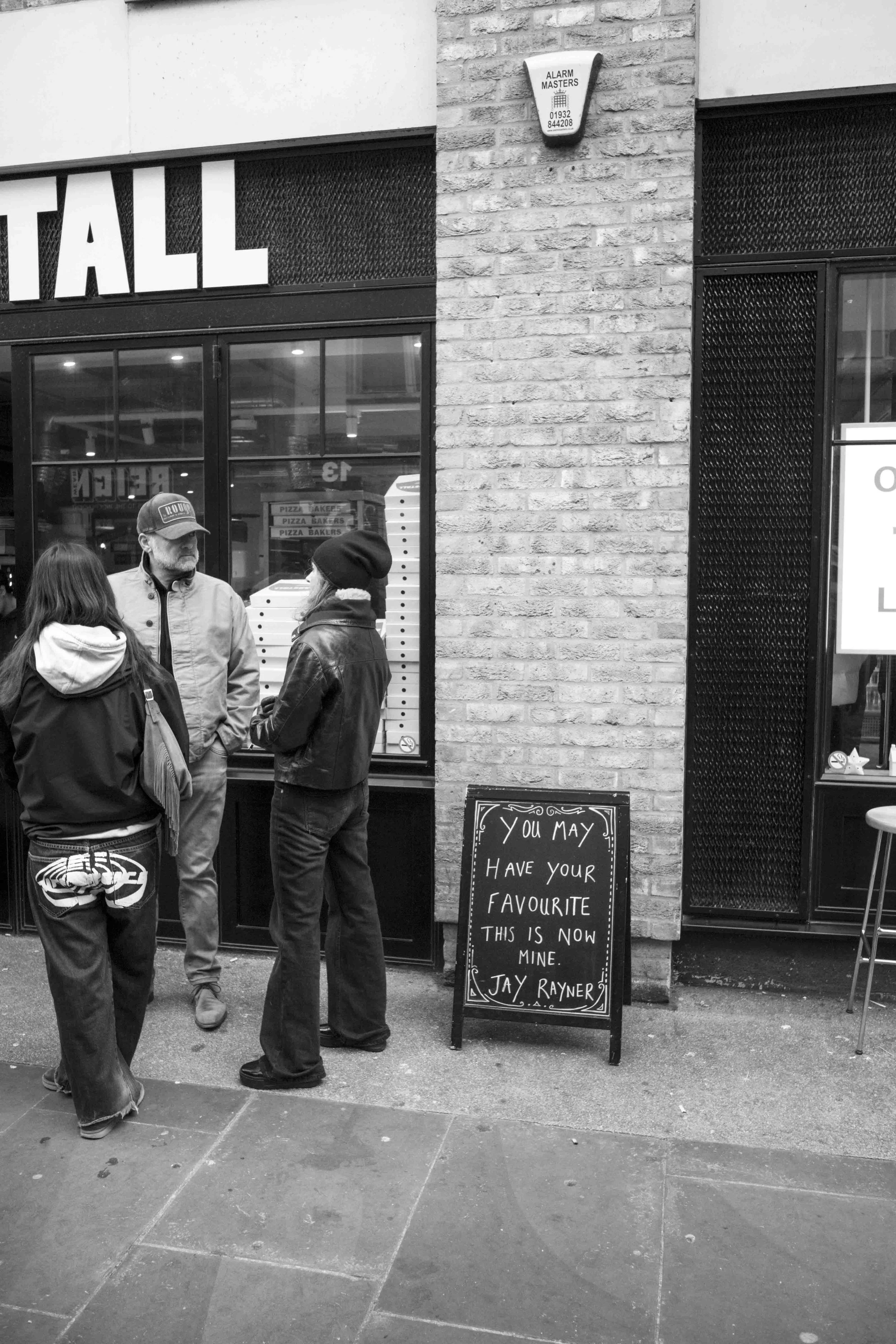
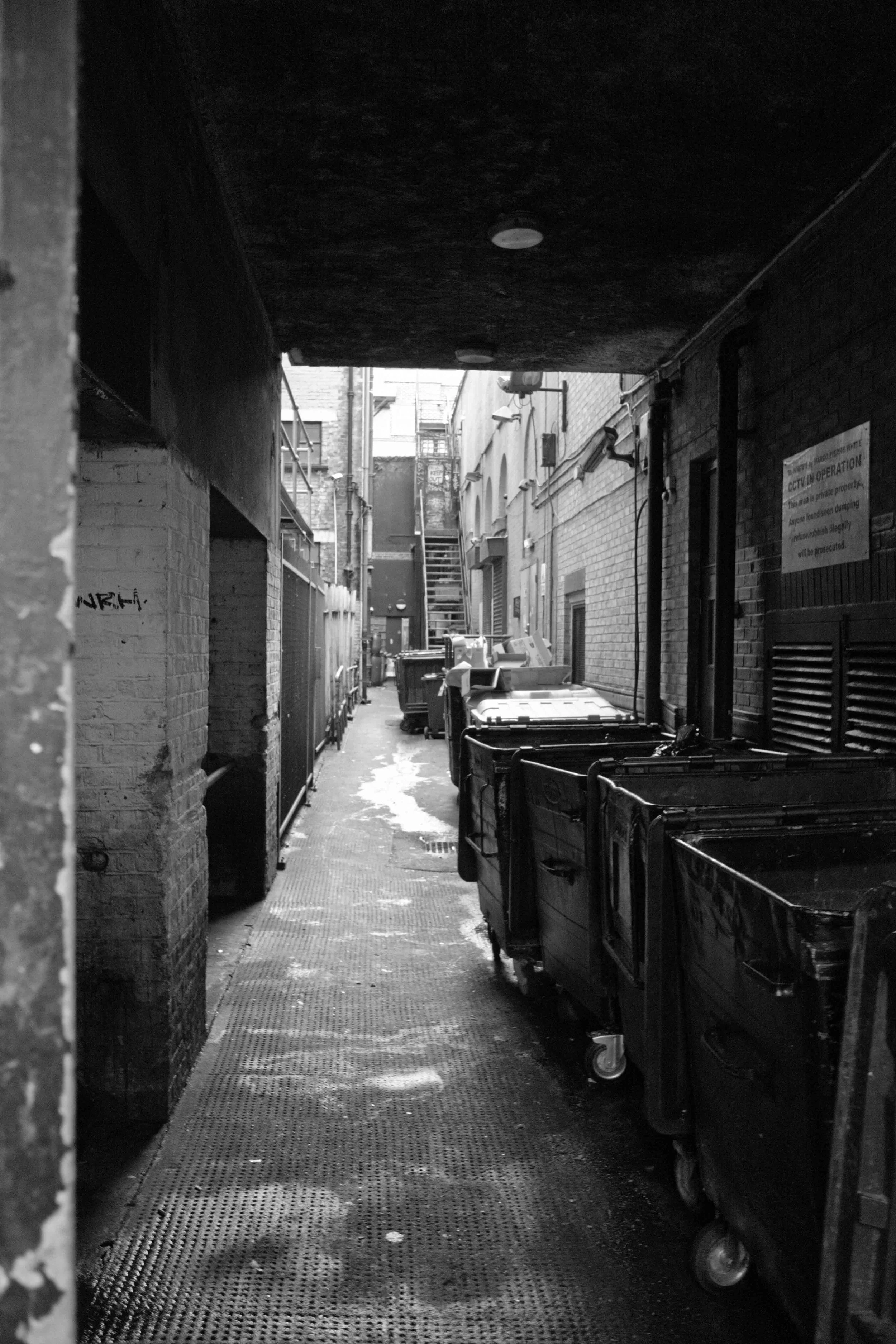
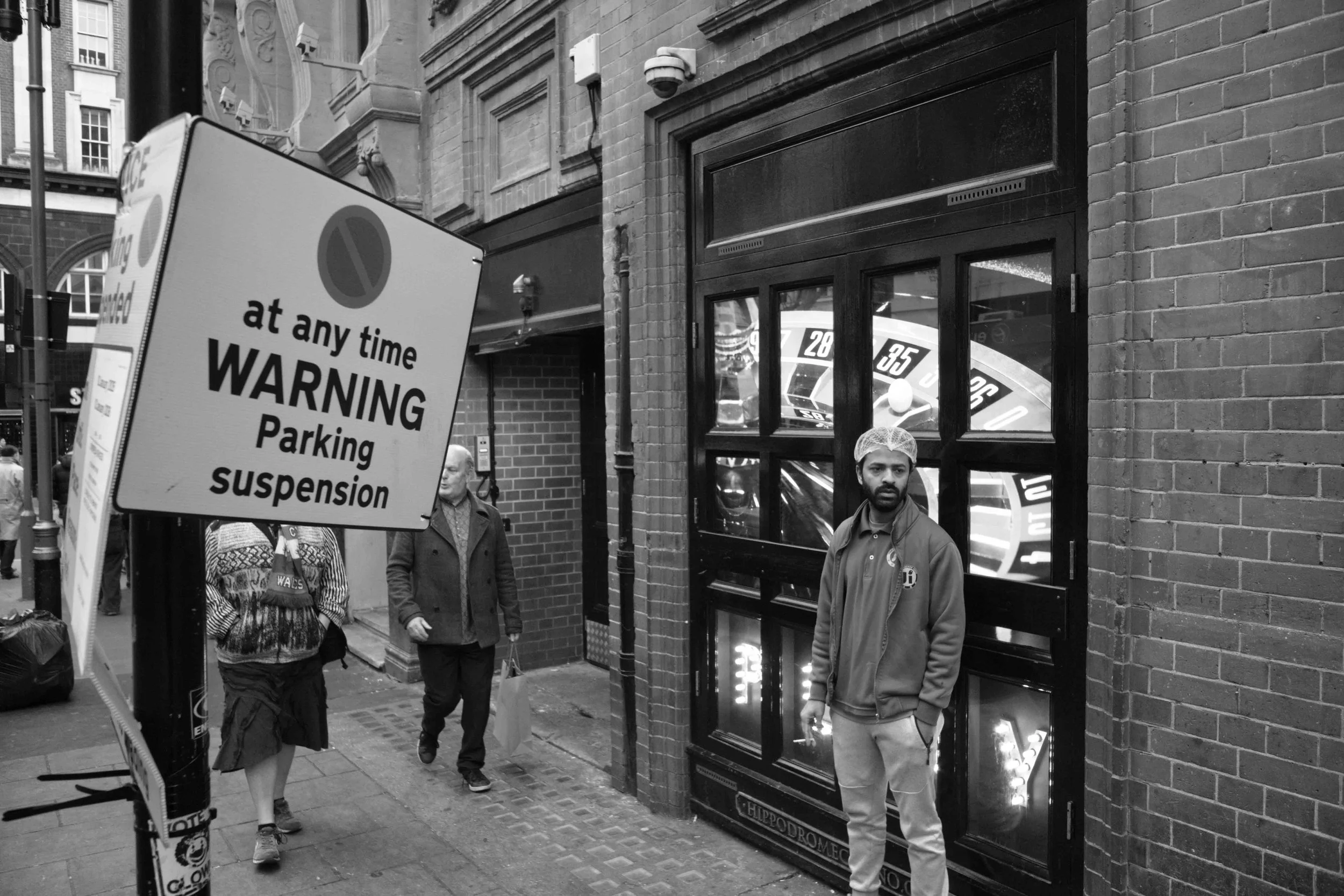
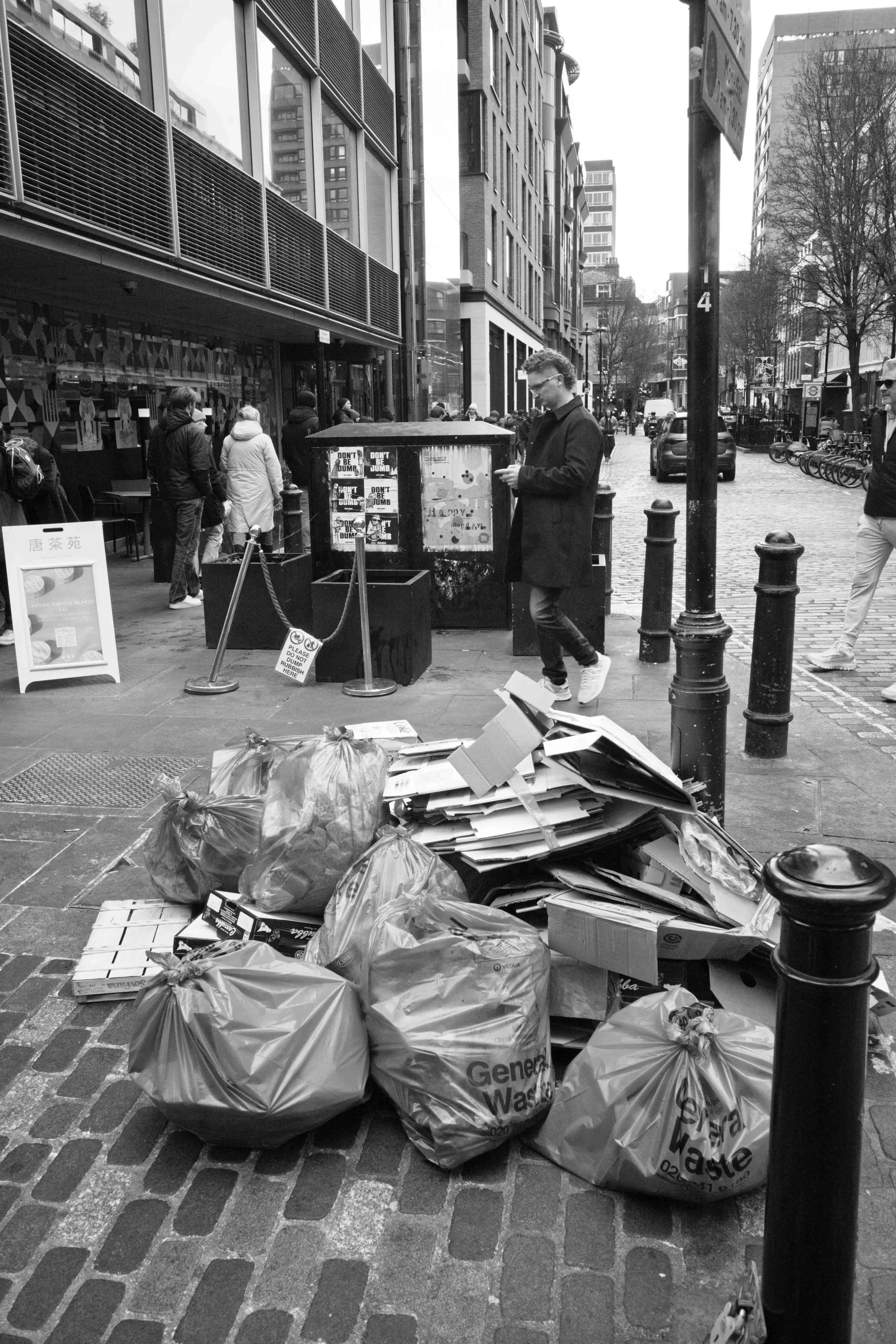
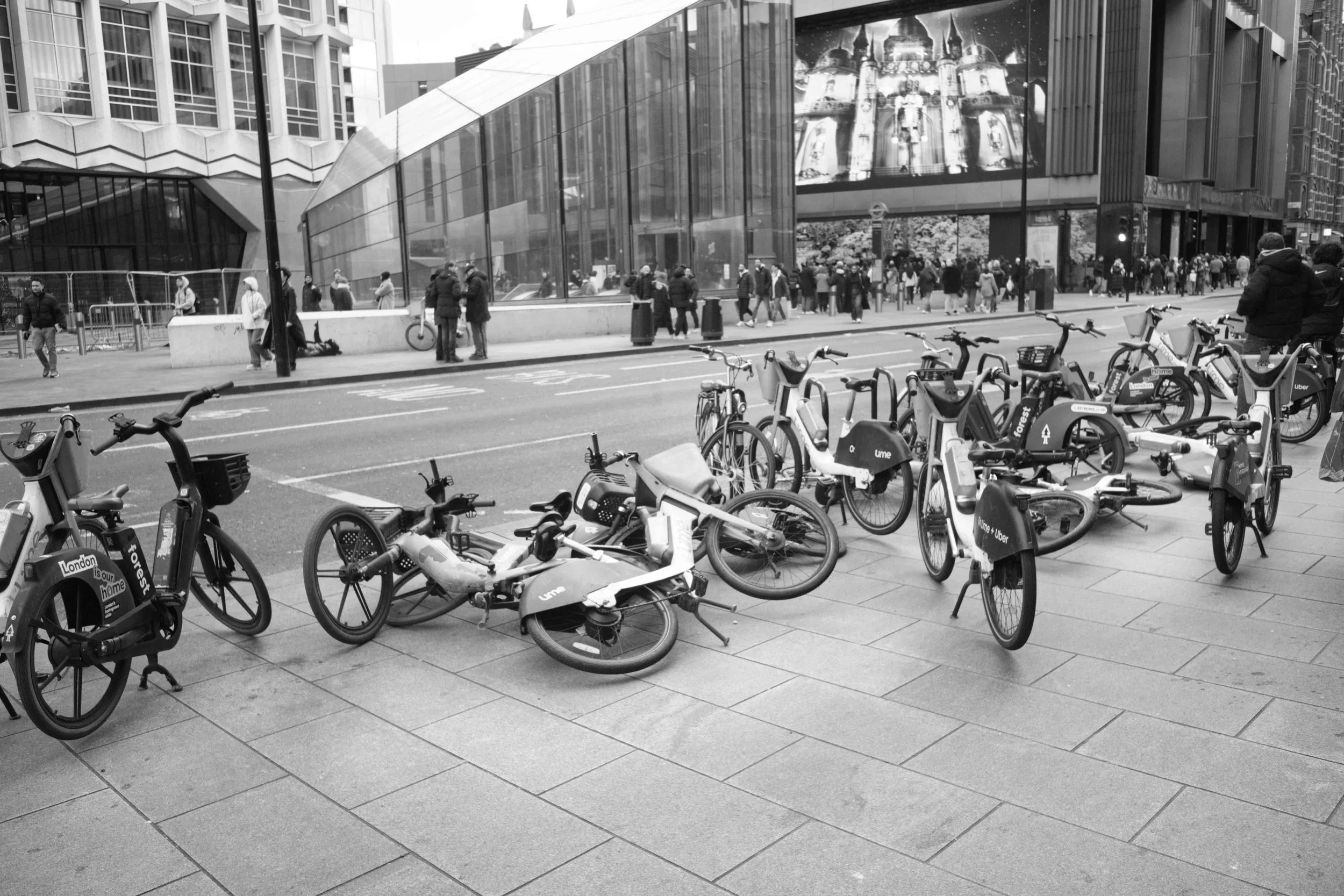
Street photography isn't always about the landmarks. Sometimes, it’s about a pile of trash bags on a busy corner or the narrow, bin-lined alleys behind Leicester Square. The 28mm is perfect for these tight spaces.
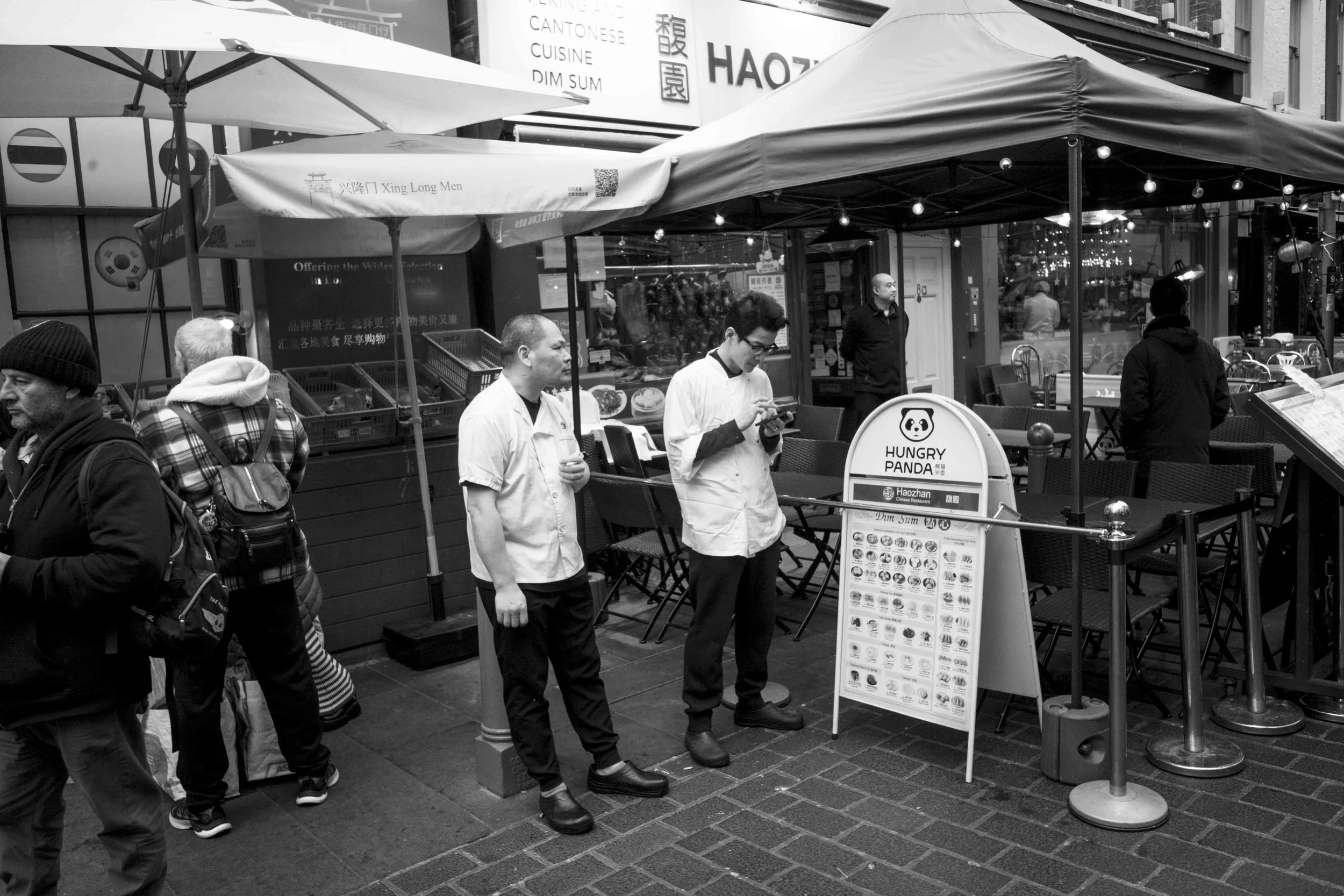
In Chinatown, I caught a great moment of the chefs taking a break outside "Hungry Panda." The lens is so small that they hardly noticed me, allowing for a truly candid slice-of-life shot.
4. Details and Characters
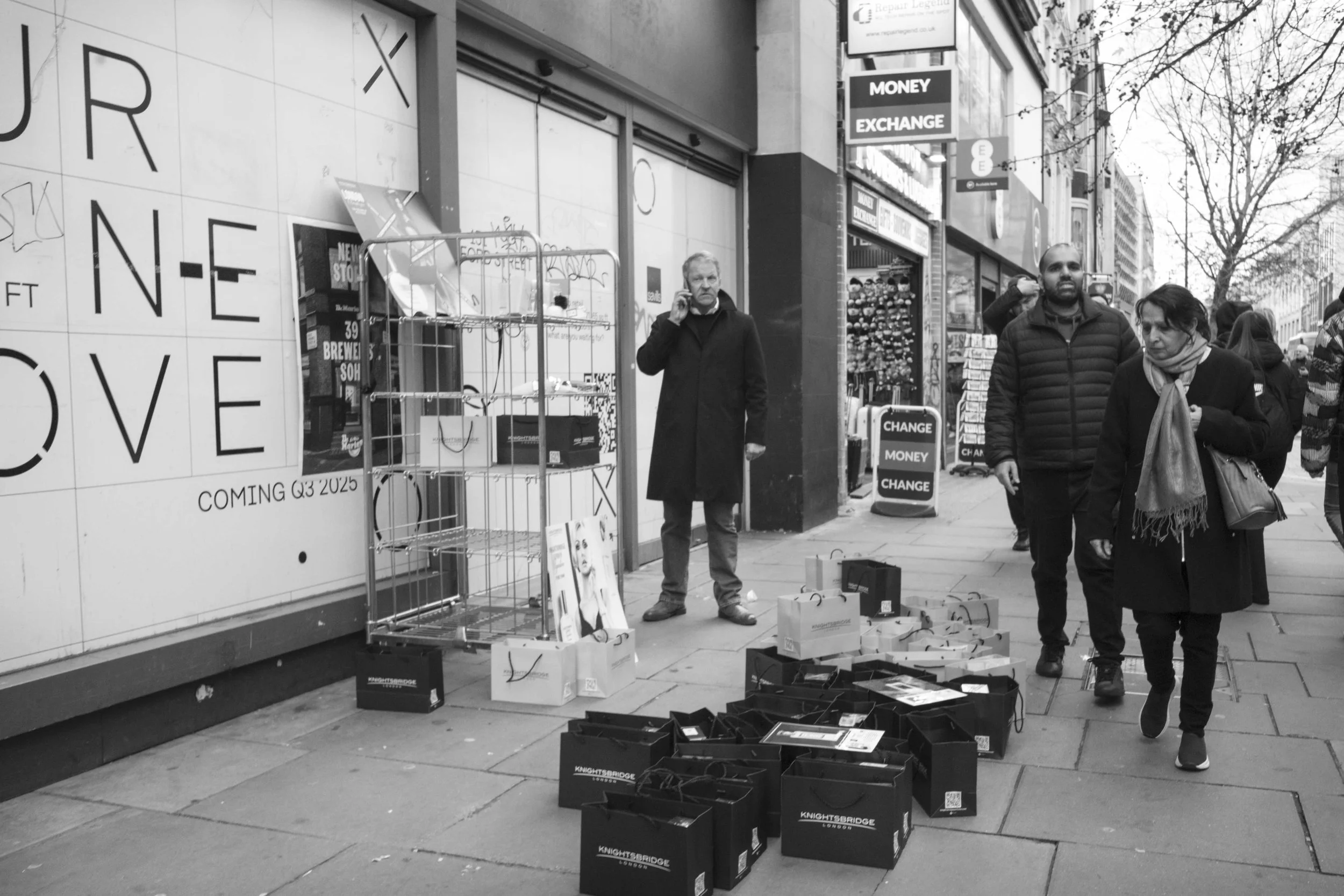
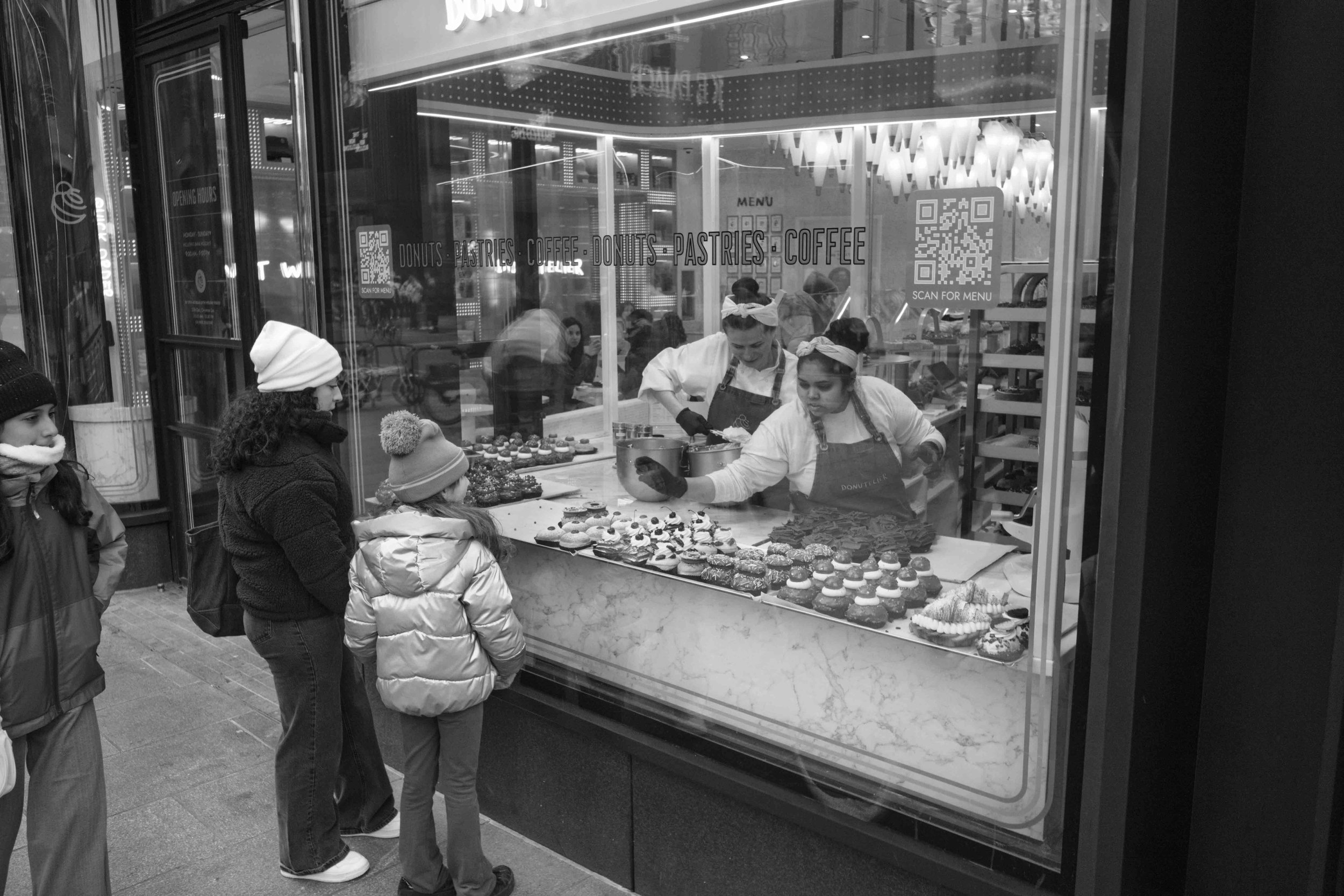
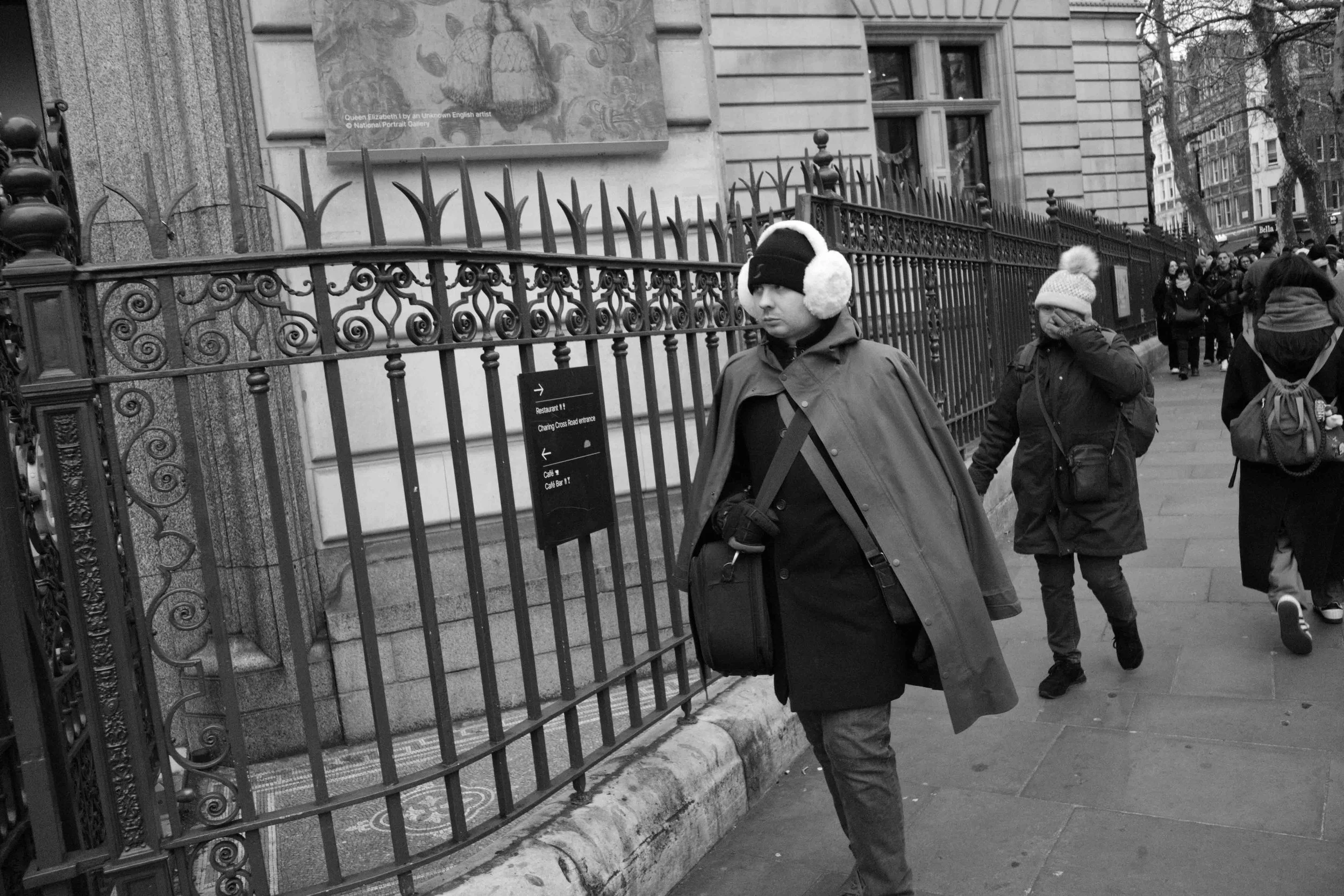
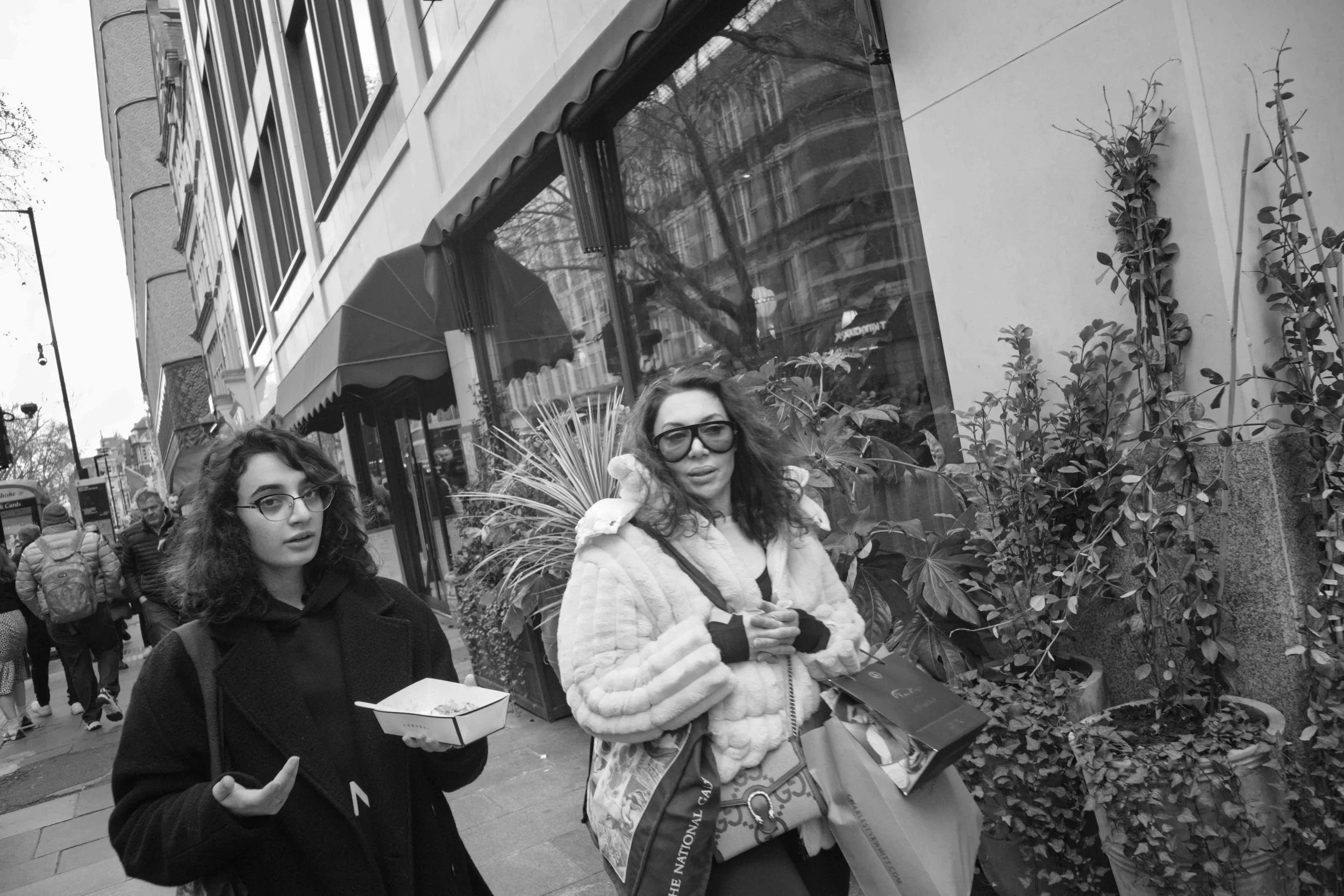
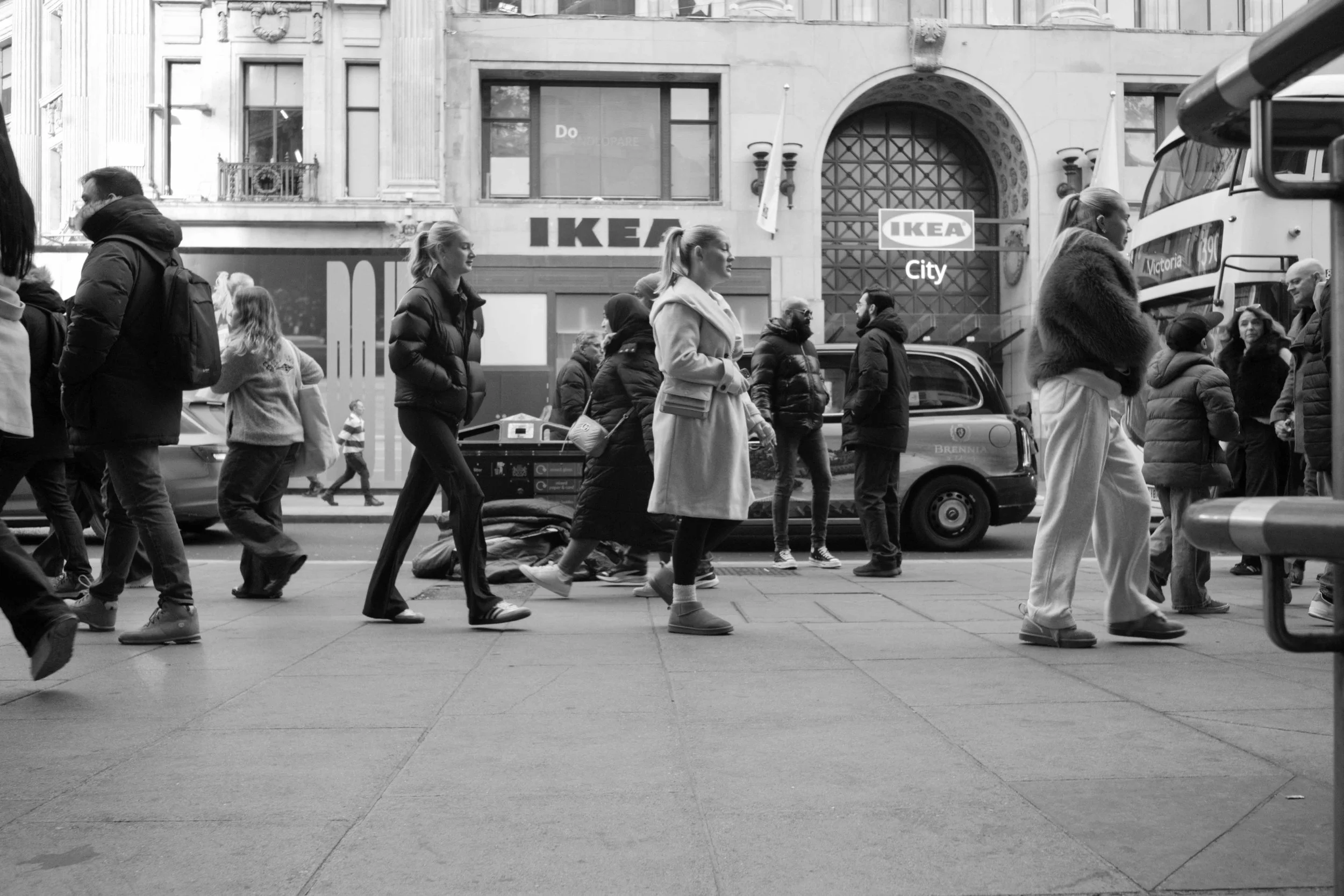
A jaunt upto London also warrants a stroll along Oxfrod Street and the like to photograph the shoppers. As I moved toward the National Portrait Gallery, I spotted a man in a heavy coat and earmuffs. The 28mm creates a unique "environmental portrait" where the subject is clear, but their surroundings—the ornate metal fences and London stone—tell the rest of the story.
Final Thoughts on the TTArtisan 28mm
For a fraction of the cost of the Leica Summaron, this lens delivers a lot of character. It’s sharp in the center, has a lovely vintage-style vignette, and the "clicky" aperture ring is a joy to use. Shooting digital, you are blessed with ‘fixing’ and fall off to the ourside of the frame in LRC.
Using a 28mm forces you to be a participant, not just an observer. You can’t hide in the shadows with a telephoto; you have to be in the thick of it, just like Winogrand.
Until next time, keep snapping.
Past Masters 2 - Martin Parr: The Anthropologist of the Everyday
This blog-post is uploaded with a heavy heart, following the untimely passing of Martin Parr in December 2025.
This is the second instalment of our Past Masters series, we delve into the saturated, often uncomfortable, and undeniably witty world of Martin Parr. If there was one photographer who defined the "British look" of the late 20th century, it was Parr—a man who turned the mundane into the magnificent and the grotesque into the high-art gallery.
This blog-post is uploaded with a heavy heart, following the untimely passing of Martin Parr in December 2025.
This is the second instalment of our Past Masters series, we delve into the saturated, often uncomfortable, and undeniably witty world of Martin Parr. If there was one photographer who defined the "British look" of the late 20th century, it was Parr—a man who turned the mundane into the magnificent and the grotesque into the high-art gallery.
Martin Parr was born in 1952 in Epsom, Surrey. Unlike many who stumble into the craft, Parr knew he wanted to be a documentary photographer from the age of 14. His early interest was sparked by his grandfather, George Parr, an amateur photographer who encouraged Martin’s budding eye.
The Rise to Fame & The Big Break
Parr studied photography at Manchester Polytechnic (1970–1973), where he was part of a legendary cohort including Peter Fraser and Brian Griffin. His career began in earnest with quiet, black-and-white studies of Northern England, notably in the series The Non-Conformists and Bad Weather.
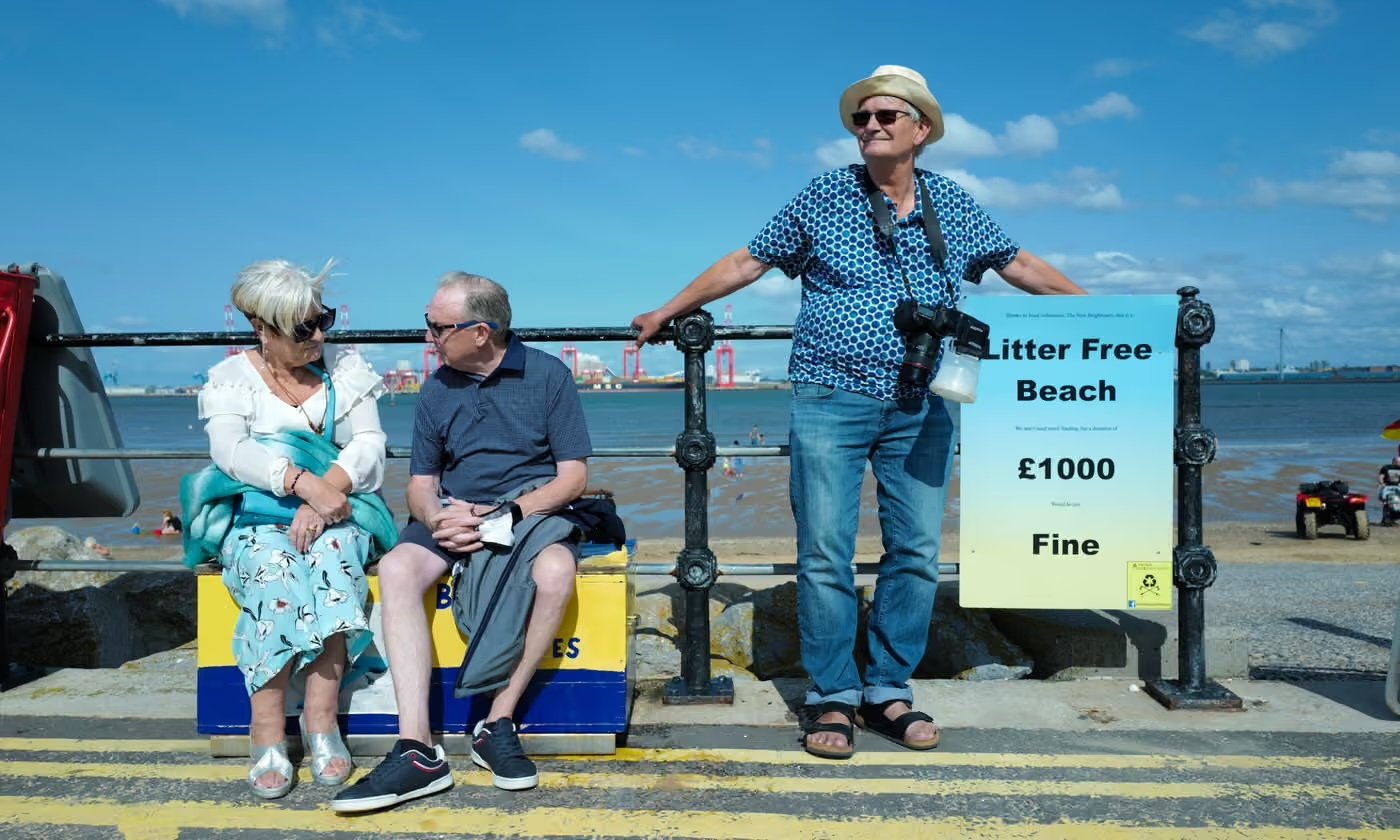
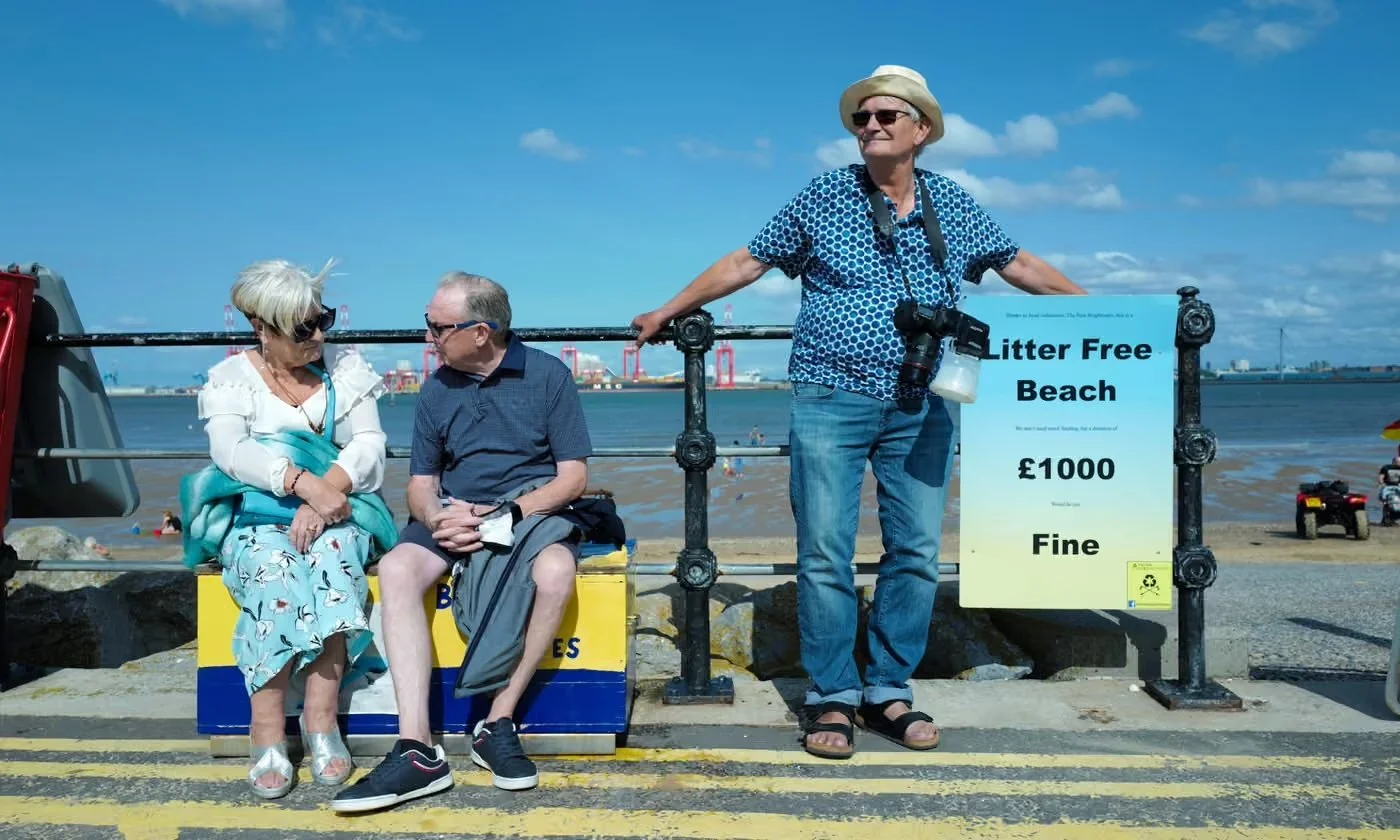
However, his "big break" and subsequent rise to international notoriety came in 1986 with the publication of "The Last Resort." This series, documenting the working-class seaside resort of New Brighton, was a shock to the system. Using garish, saturated colors and a ring flash, Parr captured the "messy reality" of British leisure—crowded beaches, overflowing trash cans, and melting ice cream. It was hailed as a masterpiece by some and decried as "cruel" and "snobbish" by others.
Style and Philosophy: The "Parr-esque" Gaze
Parr’s style is defined by:
Hyper-Reality: Using macro lenses to zoom in on textures (like half-eaten food or leathery sunburnt skin).
Saturated Colors: He famously used Kodachrome and later ultra-saturated films to make reality look almost artificial.
Humor as a Weapon: He used wit to critique consumerism, tourism, and national identity.
"I think the ordinary is a very under-exploited aspect of our lives because it is so familiar." — Martin Parr
Equipment: The Tools of the Trade
Parr’s gear evolved with his shift from the "quiet" observer to the "loud" social critic:
Early Era: 35mm Leica M3 for his black-and-white work.
The Big Shift: For The Last Resort, he moved to a medium-format Plaubel Makina 67 (a wide-angle camera) and later used a Mamiya 7.
The Signature Pop: He is famous for using a ring flash or a side-mounted flash to create flat, shadowless, and clinical lighting that exposes every detail.
Digital & Modern: He eventually transitioned to the Canon 5D series and even shot his later work on an iPhone.
What he didn't like: Parr famously disliked "pictures of everywhere looking beautiful." He loathed the romanticized, soft-focus view of the world, often calling sepia-toned or "pretty" travel photography a "soft version of propaganda."
Black and White vs. Colour: Which was Better?
This remains the central debate of Parr’s legacy.
The Black and White Case: Many peers, including the legendary Don McCullin, praised Parr’s early monochrome work (like Bad Weather) for its exceptional eye and humanist celebration of community.
The Colour Case: Most critics argue that Parr only became Parr when he switched to colour. The "acidic" palette allowed him to move from celebration to critique.
The Verdict: While his black-and-white photos show more "empathy," his color work is what changed the course of documentary photography. As Parr himself said: "My black-and-white work is more of a celebration and the color work became more of a critique of society."
Peer Endorsements & Quotes
Parr was notoriously divisive. When he applied to join Magnum Photos, Cartier-Bresson famously voted against him, calling his work "from another planet." However, he eventually became the agency’s president.
Don McCullin: "Martin, you're an excellent black and white photographer... you transposed that eye to the world of color."
Grayson Perry: Noted Parr's "needle-sharp eye for the material culture of our times."
"Photography is the simplest thing in the world, but it is incredibly complicated to make it really work." — Martin Parr
Essential Viewing & Reading
Top Photo Books
The Last Resort (1986): The definitive book on the British seaside.
Small World (1995): A scathing and hilarious look at global tourism.
The Non-Conformists (2013): His early black-and-white masterwork.
Common Sense (1999): An explosion of close-up consumerist detail.
Famous Photographs (Links)
Multimedia
The End of a Career
Martin Parr passed away in December 2025, leaving behind a legacy that transformed photography from a "fine art" pursuit into a sociological tool. He established the Martin Parr Foundation in Bristol to preserve the heritage of British documentary photography, ensuring that his "oblique approach" will influence generations to come.
Would you like me to create a comparison table of the specific cameras and films Parr used for each of his major book projects?
Martin Parr | A Visual Tribute to the Master
This video provides a poignant retrospective of his career, contrasting his early black-and-white masterpieces with the saturated color aesthetic that became his signature.
Who are you, Martin Parr? Since the 1970s, Martin Parr has fearlessly held out his unique photographic mirror and given us some of the most extraordinary and unique visual clichés of modern times.
Kodak Double X in Pompey: Searching for Middle England in a Great Port City
There’s a particular energy to photographing a port city—a sense of history anchored to the sea, mixed with the transient, hard-edged reality of a place that lives by trade and naval tradition.
Having originated from a small landlocked West Midlands town, I find the allure of a port / seaside location alluring when its outside of the ‘high season’.

There’s a particular energy to photographing a port city—a sense of history anchored to the sea, mixed with the transient, hard-edged reality of a place that lives by trade and naval tradition.
Having originated from a small landlocked West Midlands town, I find the allure of a port / seaside location alluring when its outside of the ‘high season’.
My latest few rolls of Kodak 5222 Double X, shot on the Nikon F80, took me to Portsmouth, a city whose identity is defined by the weight of its naval past. The classic black and white aesthetic of Double X, with its deep shadows and rich midtones, was the perfect medium to explore this contrast.
The photos capture a visual argument about what Portsmouth is today: a distinct entity shaped by maritime life, or merely a reflection of generic "Middle England."
The Weight of History and Local Commerce
Portsmouth's naval history isn't just a museum exhibit; it’s a living part of the city's commercial DNA. You see it subtly in the high street: the name of a local business like Admirals Fish & Chips, standing proudly next to an Acorn Cycles and a local bakery. This isn't the generic retail environment of an inland commuter town; it's a place where service and local trade are rooted in a community that has historically served the Navy.

Even the classic seaside fish and chips kiosk on the promenade speaks to this coastal identity, catering to both the local population and visitors drawn by the sea.

The architecture reinforces this feeling—a blend of sturdy, post-war residential blocks, modern civic centres, and a bustling central square that carries the echo of centuries of public life.


Flags, Identity, and the Political Subtext
The presence of overt national symbolism in cities like Portsmouth often invites political analysis. As observers, we look for visual evidence of strong national identity, and you can see a large Union Jack flag near the Citizens Advice building.

In a city defined by the Royal Navy, the flag functions primarily as a symbol of service, heritage, and deep-seated local pride. However, in contemporary political discourse, this kind of visible, declarative patriotism can sometimes be interpreted as a shorthand for the nationalism associated with the far-right.
My photographs, however, largely capture an ambiguous reality. They show people going about their daily lives—visiting the bike shop, queuing for fish and chips, or passing a spiritual message in the city centre. The overt displays of national pride appear less as a political statement of exclusion and more as a natural extension of an identity intrinsically linked to the history of the United Kingdom at sea.


Port City vs. Middle England
The question of whether Portsmouth reflects "Middle England" or a distinct "port city" is a matter of visual language.
"Middle England" often implies a certain suburban homogeneity, a focus on commuter rail links, and national chains. While Portsmouth does feature modern retail hoardings like the H&M re-opening and contemporary flats, these elements are always layered onto a grittier, more historically saturated urban core. This constrast viewpoint of a city is intriguing.


The pervasive maritime influence, the blend of hard, functional architecture, the visible working-class heritage, and the cultural specificity (like the "Admirals" shop name or the seafront kiosks) all mark Portsmouth as something unique. It's a city with a stronger, less diluted sense of place.
The Double X film stock beautifully highlights this gritty authenticity—the textures of the pavement, the worn brickwork, and the earnest faces of the people. Portsmouth is clearly a Port City, possessing a unique character forged by its relationship with the water, far removed from the softer, more generalized aesthetics of inland urban life. It is a visual challenge to the idea of a uniform national character, a vibrant, complex reality captured one frame at a time.
Until next time, keep snapping.
Mod Weekender
Celebrating Two Decades of Style: The Brighton Mod Weekender 2025
This post is a little delayed, as I wanted to wait until I received my developed film negs from the photo lab.
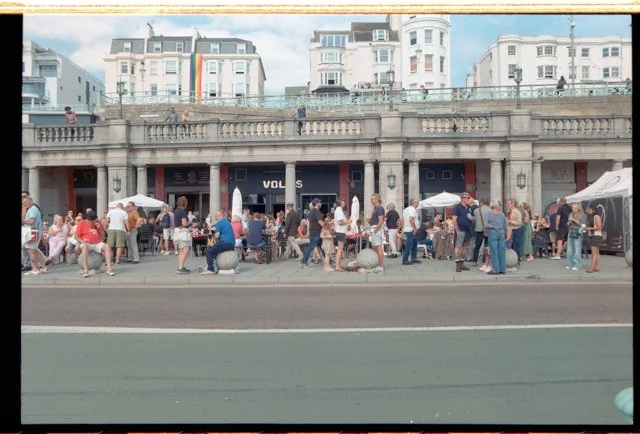
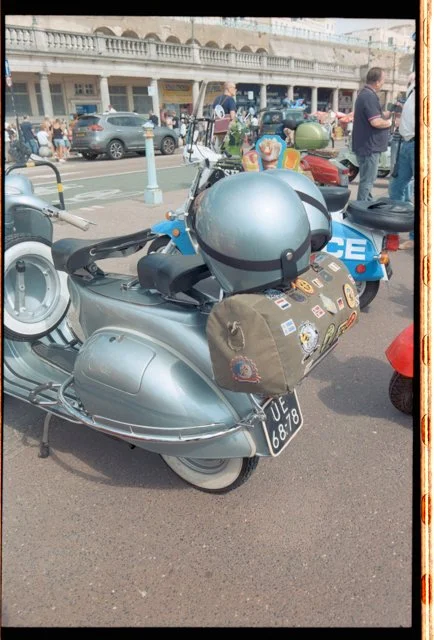
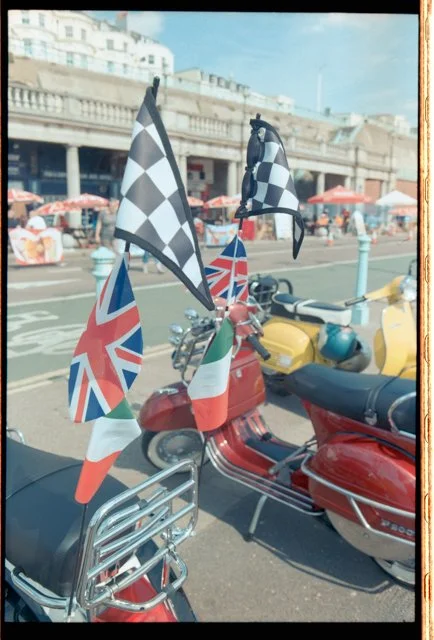
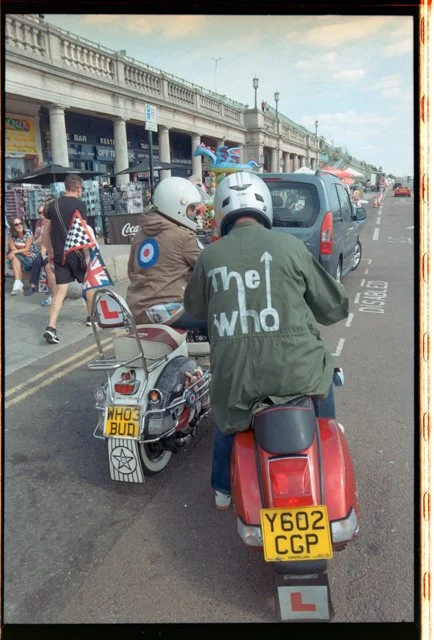
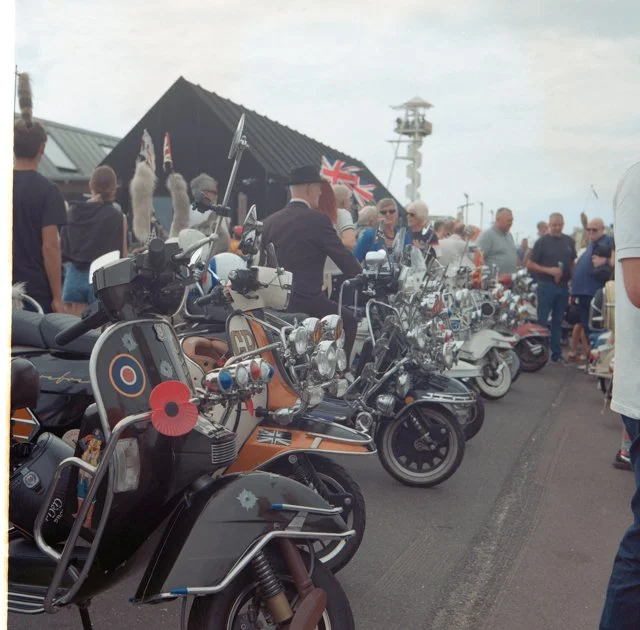
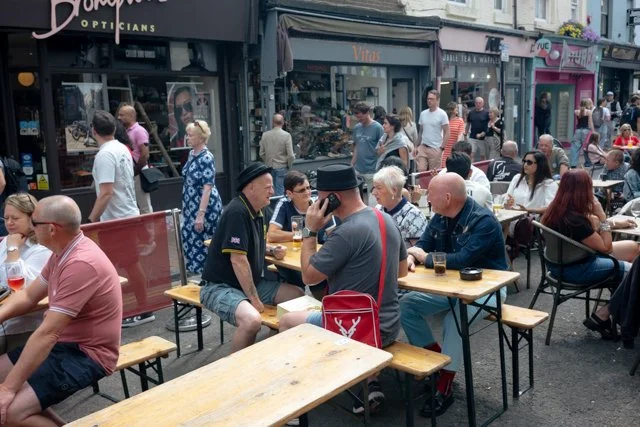
The August Bank Holiday weekend in Brighton has always been special, but this year it was truly historic. The Brighton Mod Weekender, the annual pilgrimage for Mods from across the globe, celebrated its 20th anniversary from August 21st to 24th, and the city was buzzing with more style, music, and scooter pride than ever before.
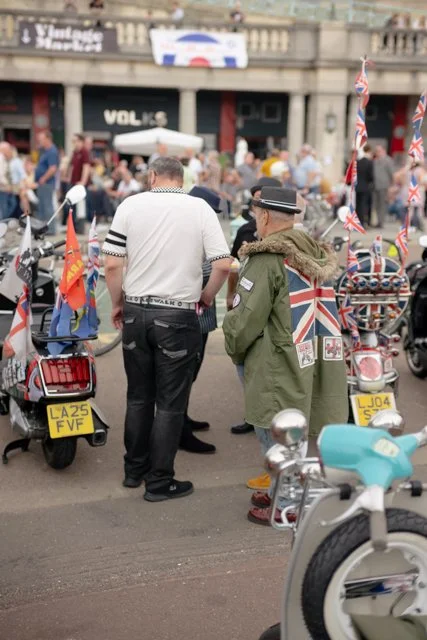
Its a blend of old timers reminising of the past and generational newcomers. All parading around as proud as peacocks.

Celebrating Two Decades of Style: The Brighton Mod Weekender 2025
This post is a little delayed, as I wanted to wait until I received my developed film negs from the photo lab.
The August Bank Holiday weekend in Brighton has always been special, but this year it was truly historic. The Brighton Mod Weekender, the annual pilgrimage for Mods from across the globe, celebrated its 20th anniversary from August 21st to 24th, and the city was buzzing with more style, music, and scooter pride than ever before.
Its a blend of old timers reminising of the past and generational newcomers. All parading around as proud as peacocks.
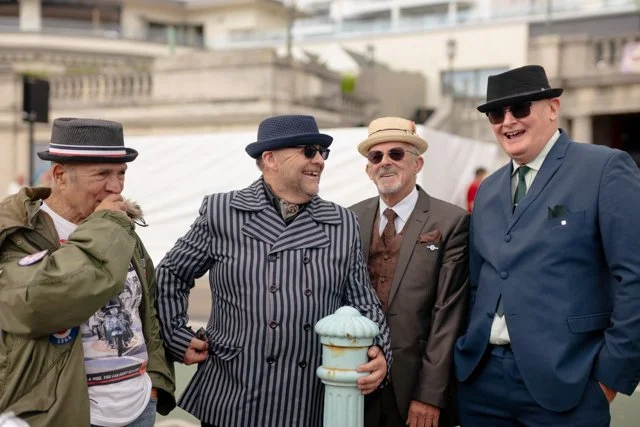
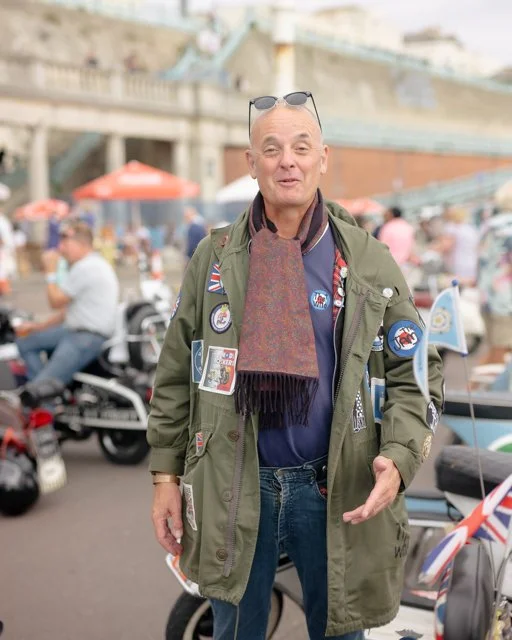
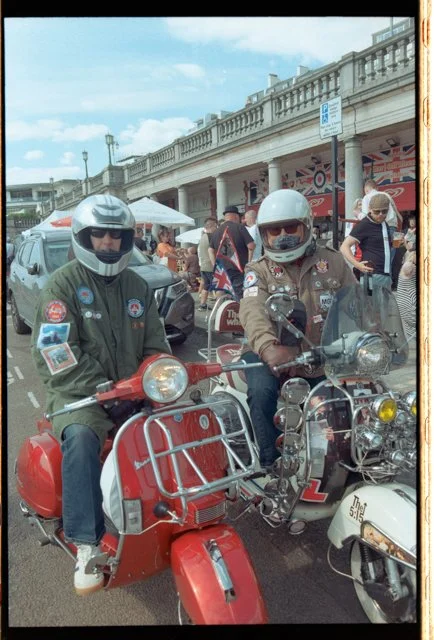
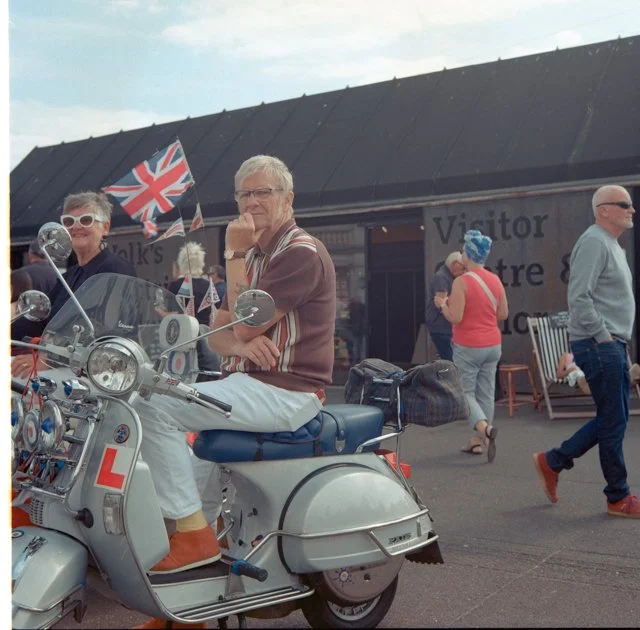
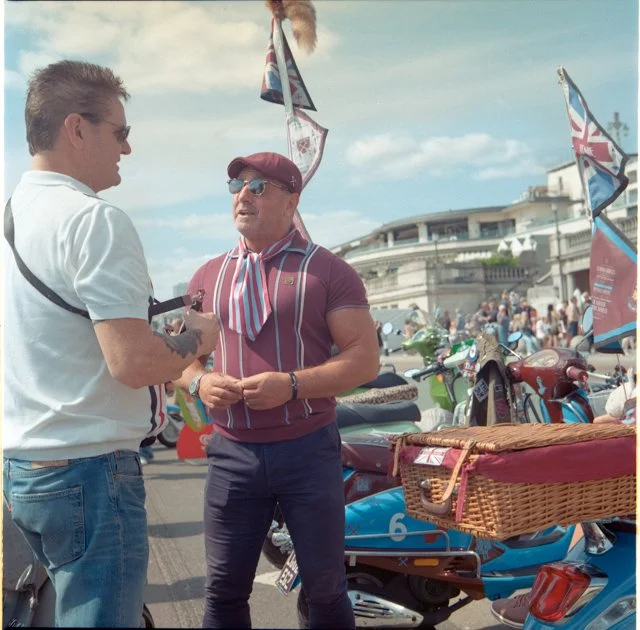
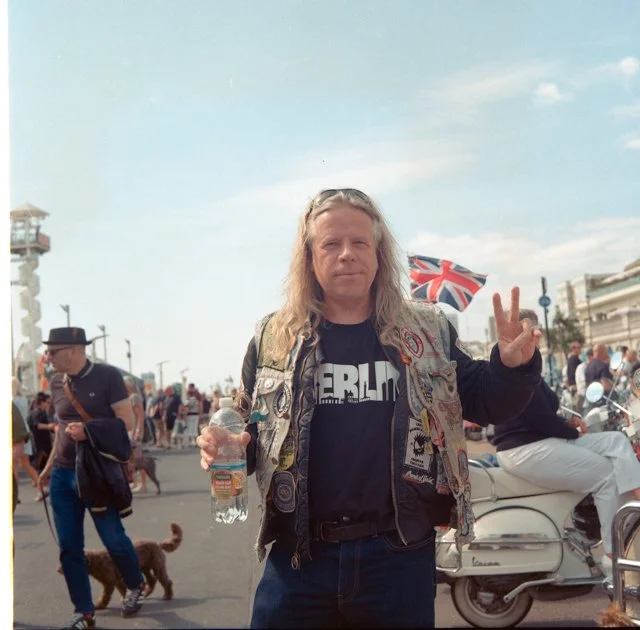
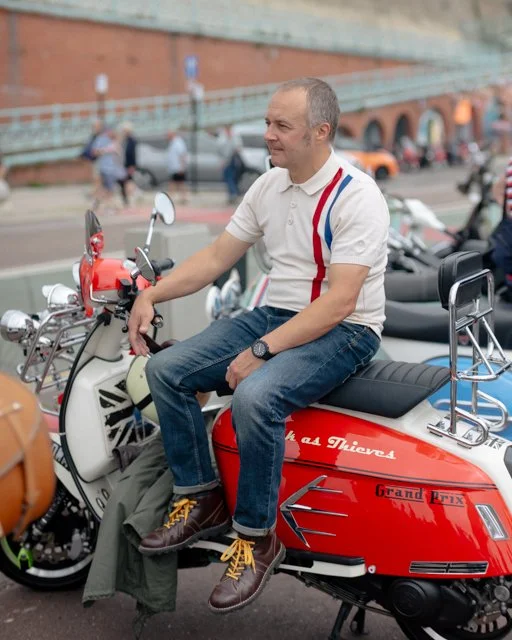
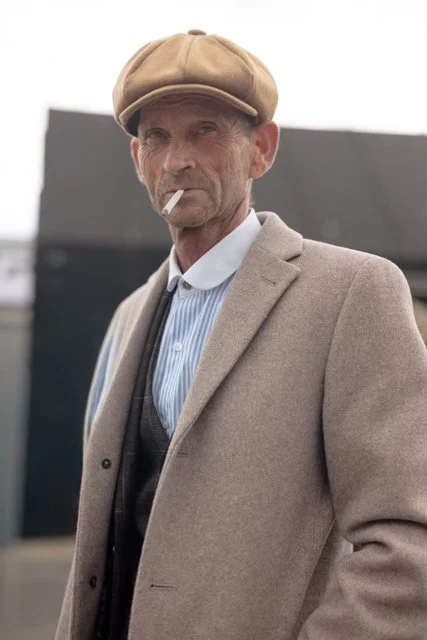
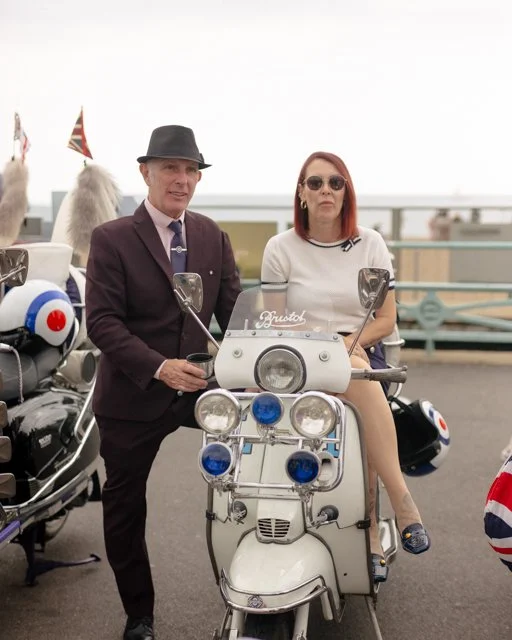
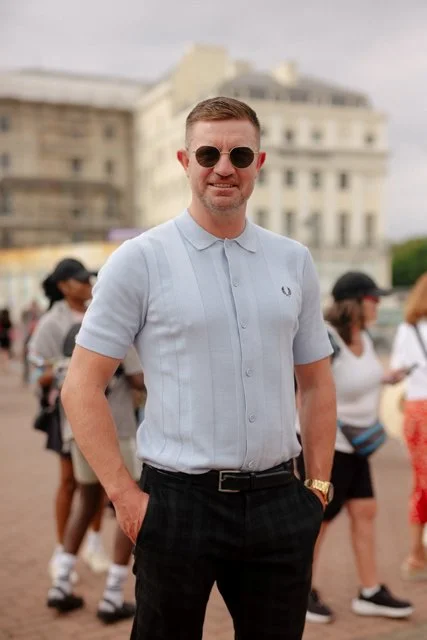
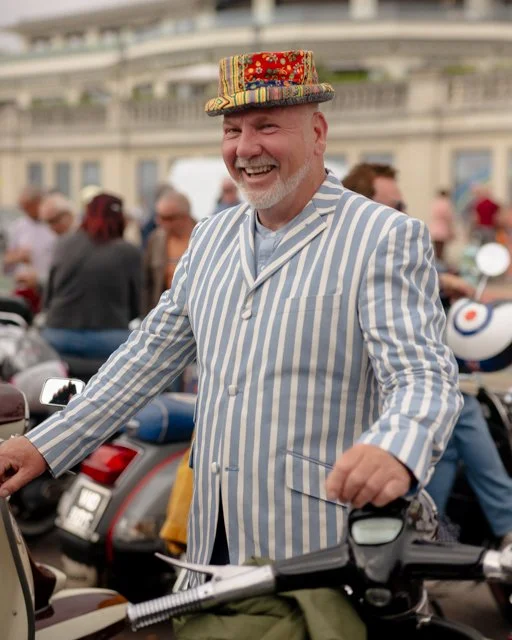
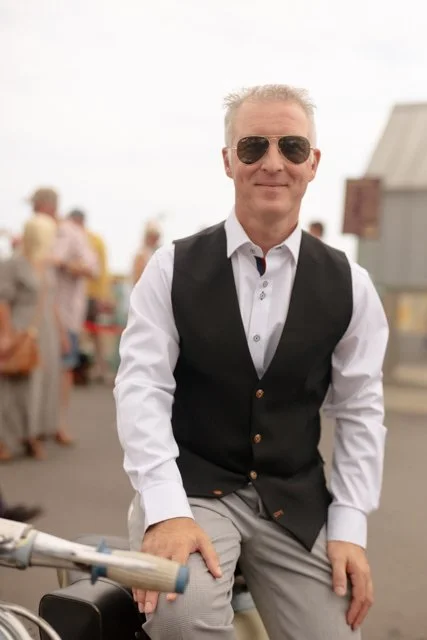
This is four-day festival that pays homage to modernist and sixties-inspired culture. The evenings are typically a non-stop party, with venues like the Komedia hosting all-night club events where the legendary NUTs DJ Team spun Northern Soul, R&B, and garage to a packed dancefloor. The live music lineup was a celebration in itself, featuring iconic acts and rising stars, proving the scene is as vibrant today as it was in the past.
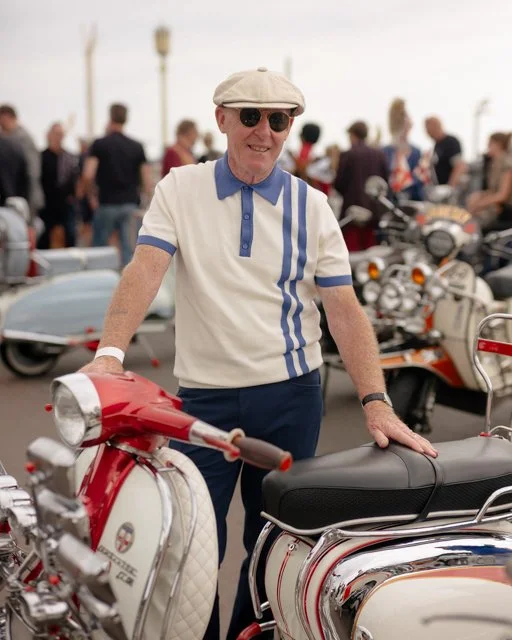
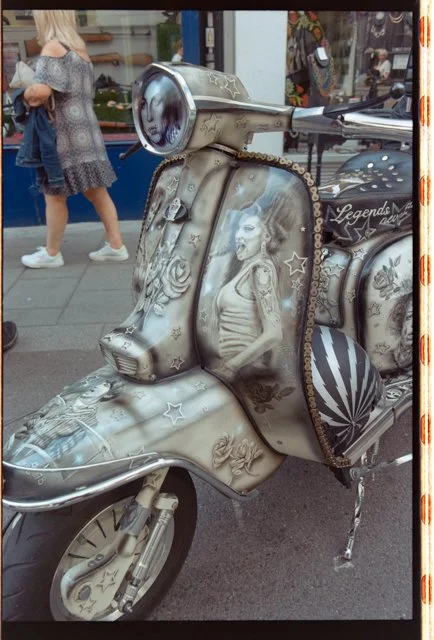
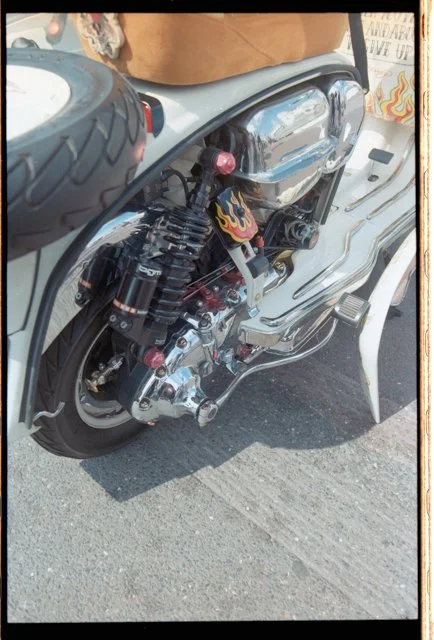
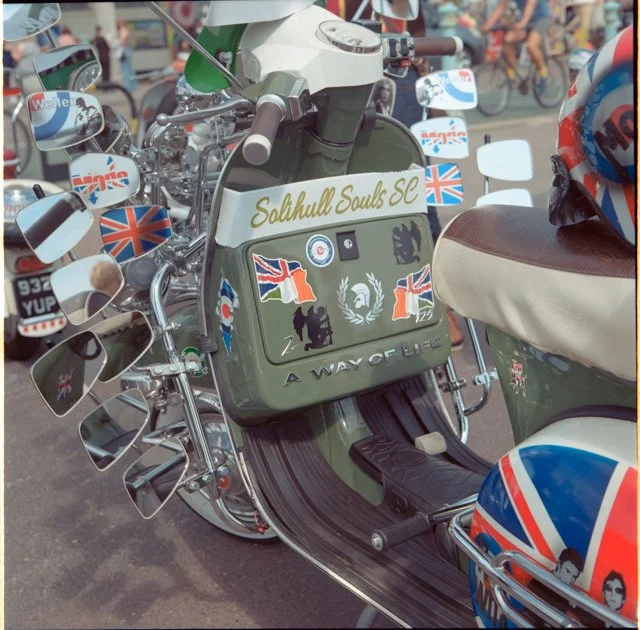
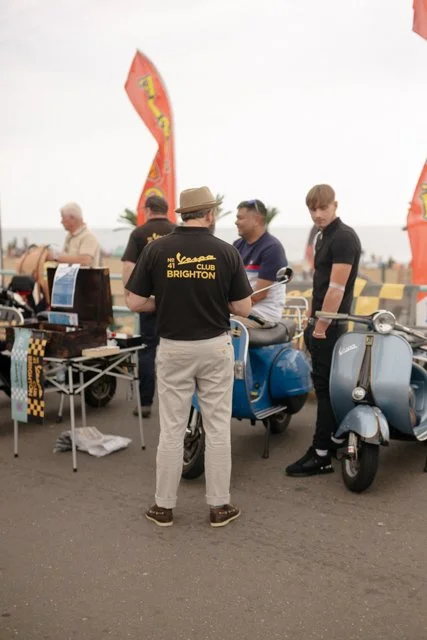
But the heart and soul of the Brighton Mod Weekender, and the thing that makes it so iconic, is the daytime spectacle. All weekend long, Madeira Drive transformed into a breathtaking open-air scooter show. Hundreds of gleaming Vespas and Lambrettas, adorned with countless mirrors and Union Jack flags, lined the seafront. This is where the community truly comes together.
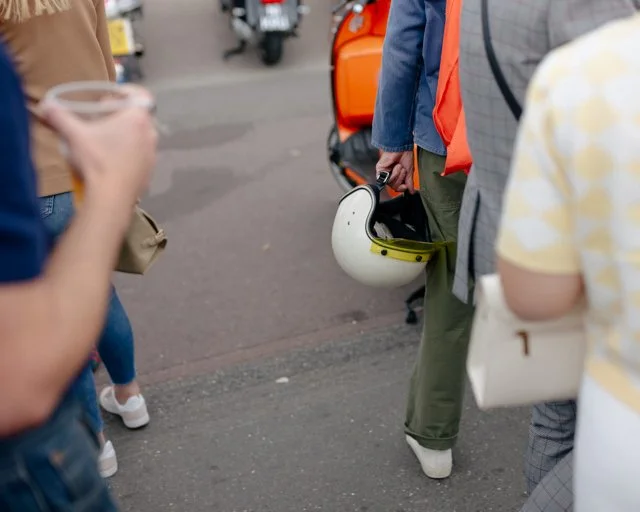
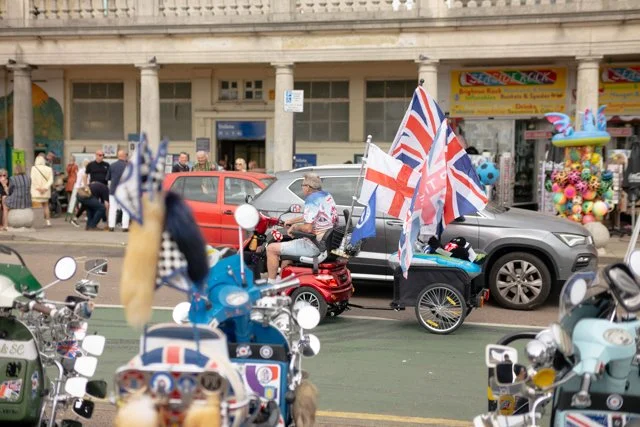
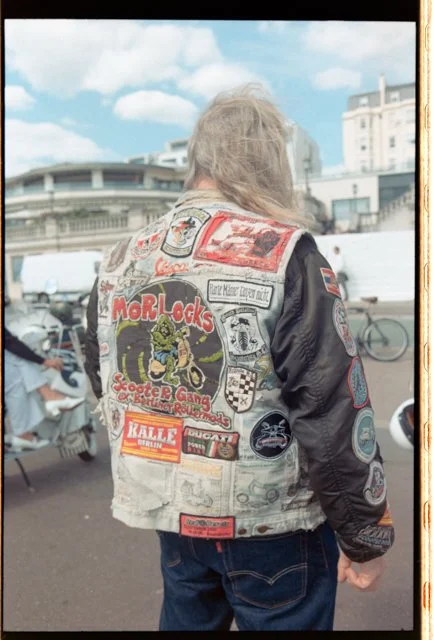
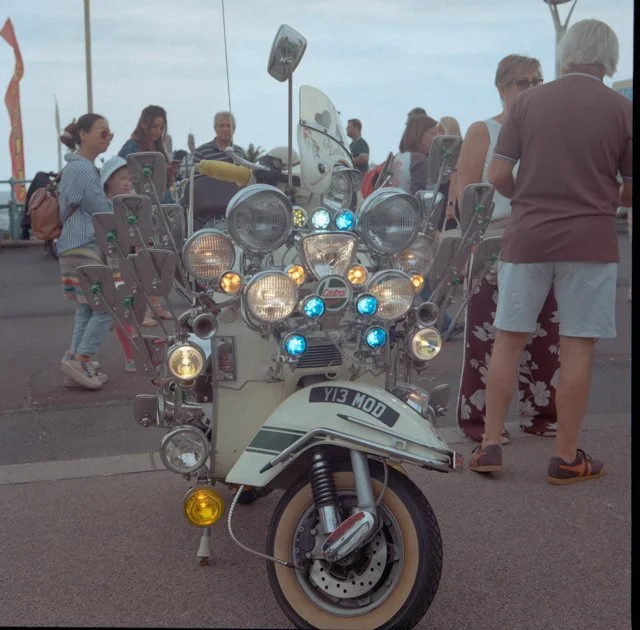
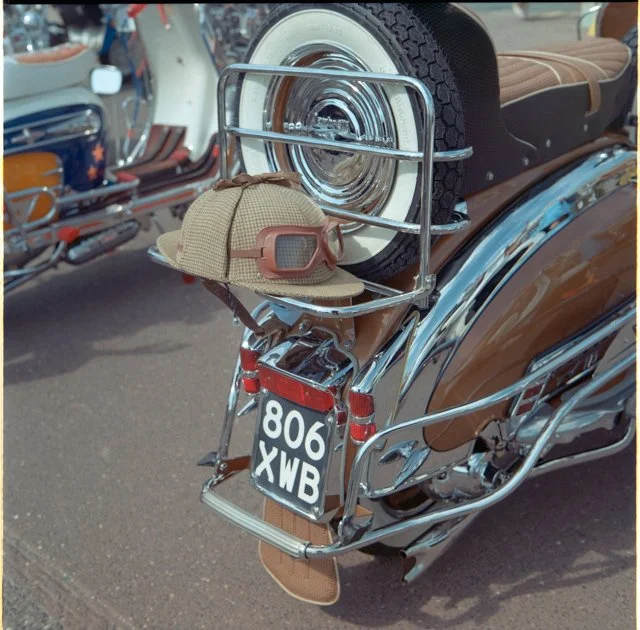
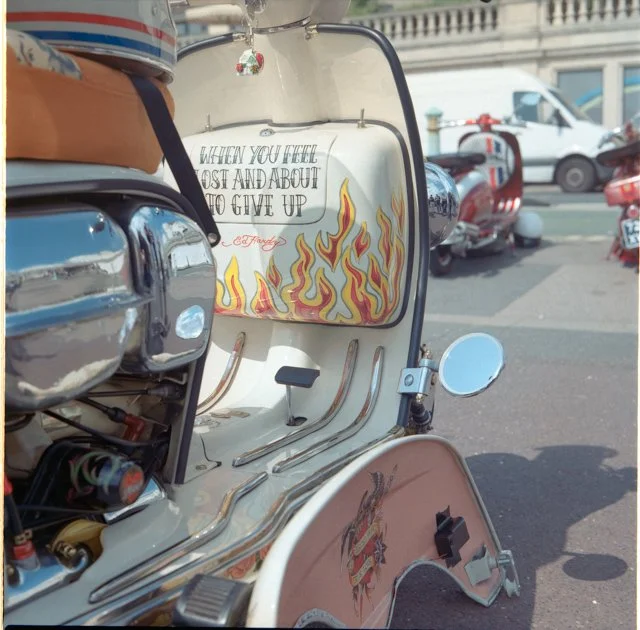
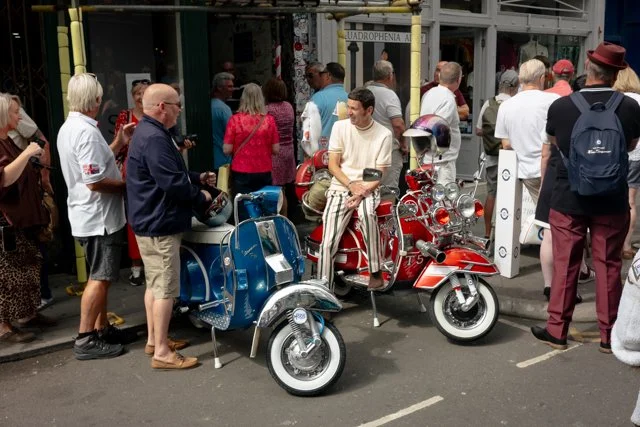
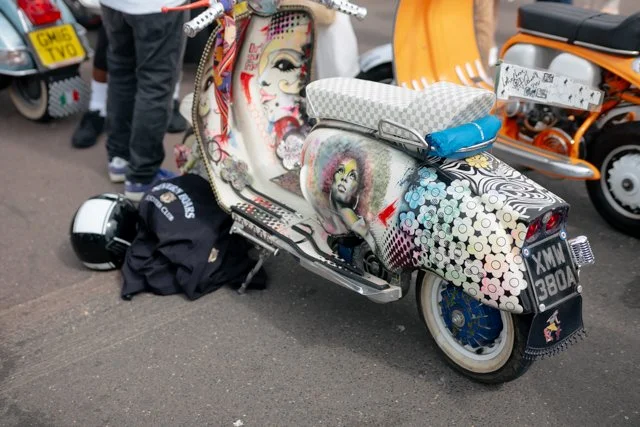
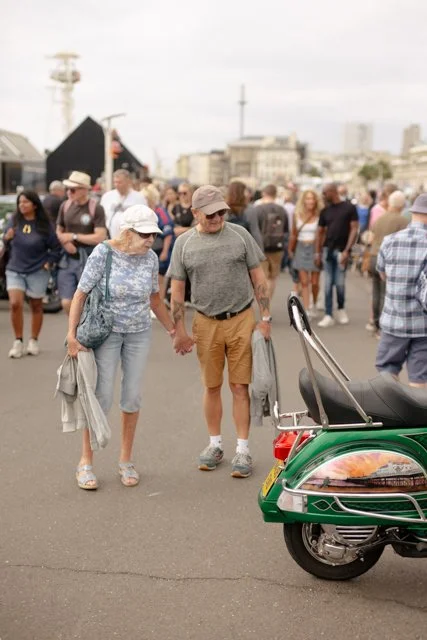
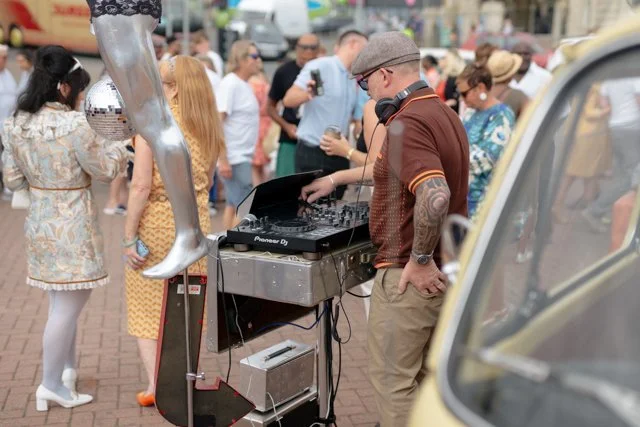
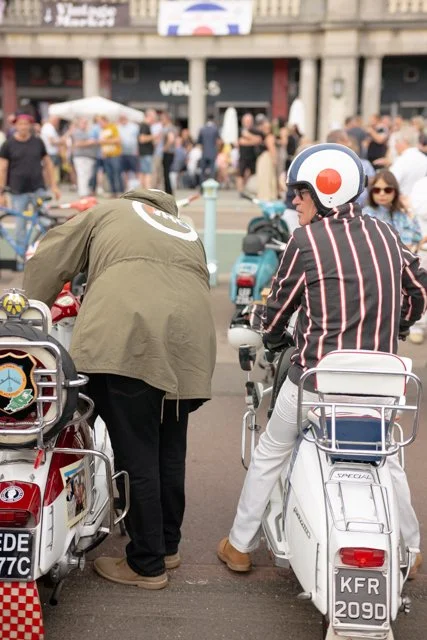
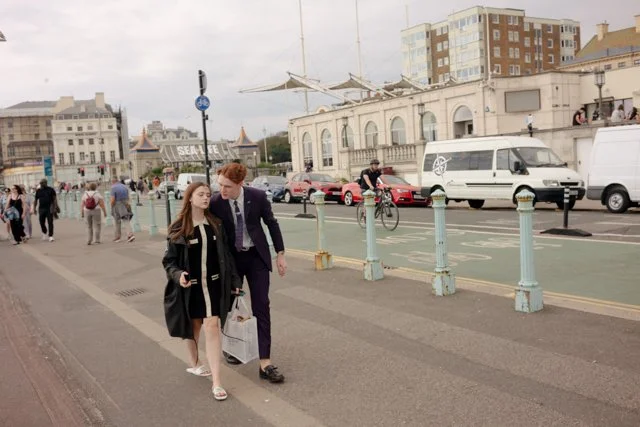
Every mod, whether they've traveled from across the UK or from continental Europe, parks their beloved scooter with pride, polishing chrome and showing off their bespoke customizations. The area around The Volks Bar becomes a central hub, a meeting point for old friends and new acquaintances. The atmosphere is electric, with onlookers and enthusiasts alike admiring the incredible machines and soaking in the cool, timeless vibe. It's a living, breathing exhibition, a tribute to the passion and dedication that defines the Mod scene.
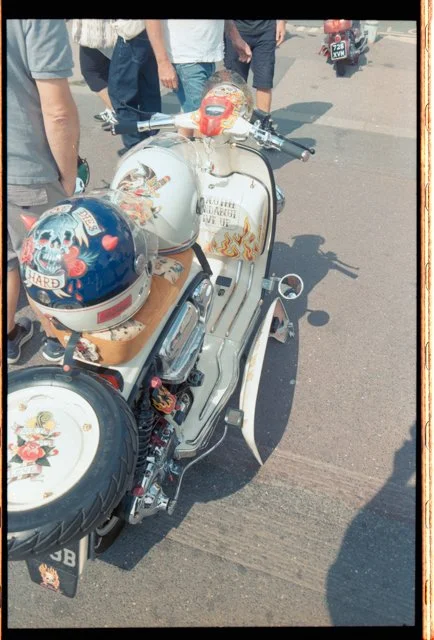
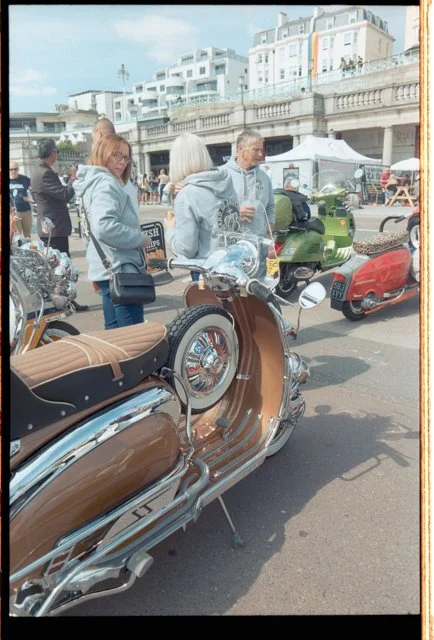
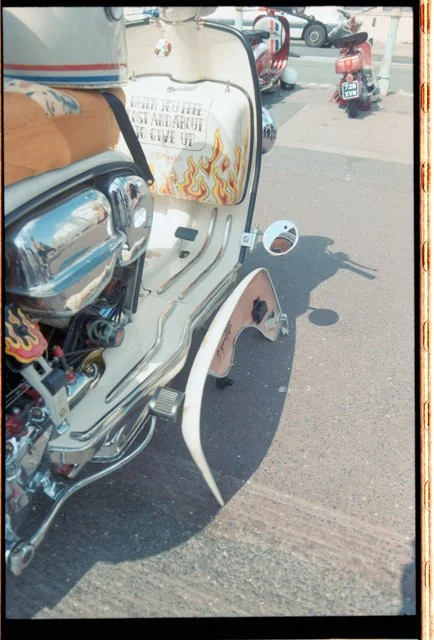
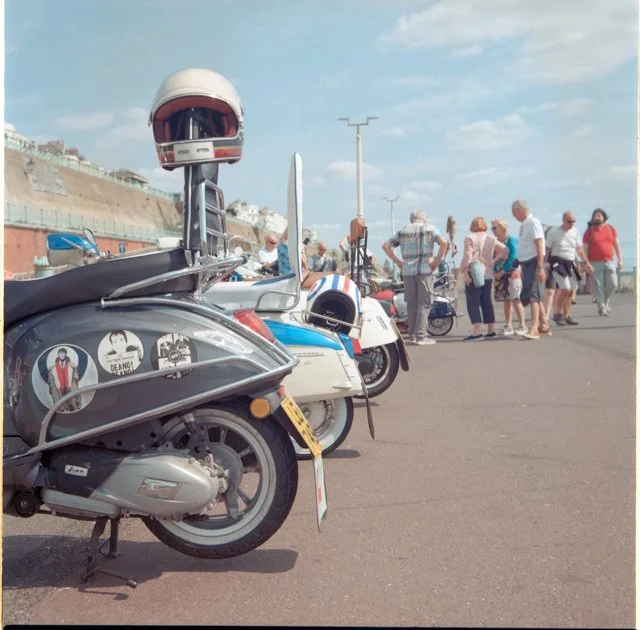
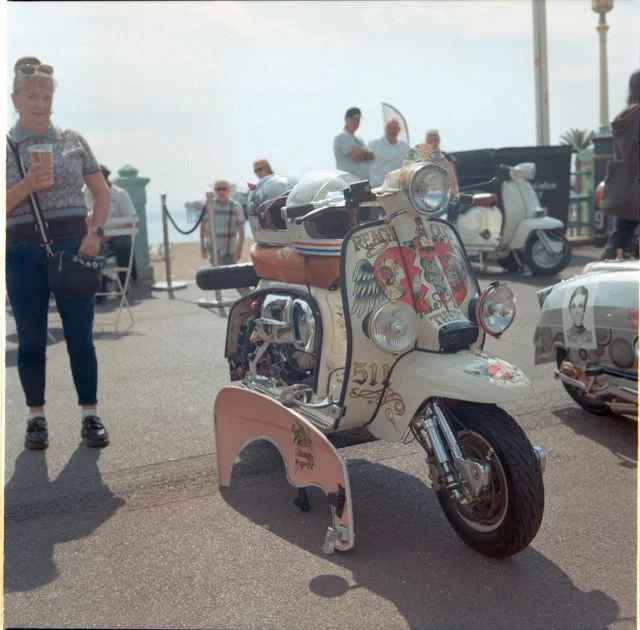
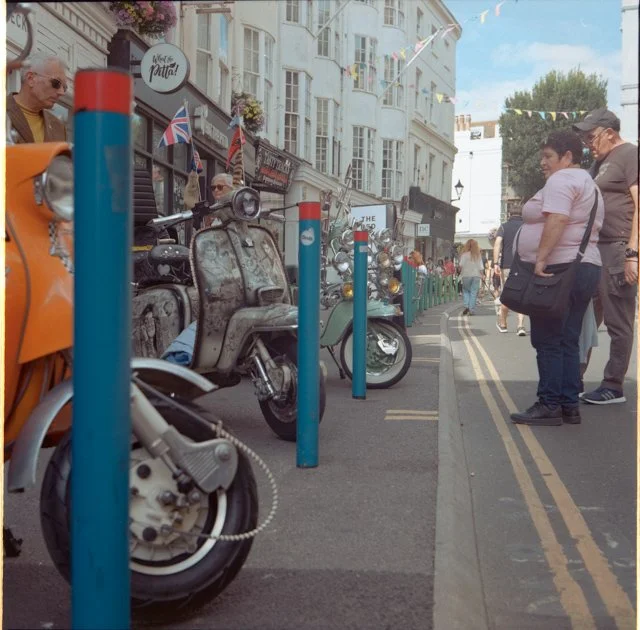
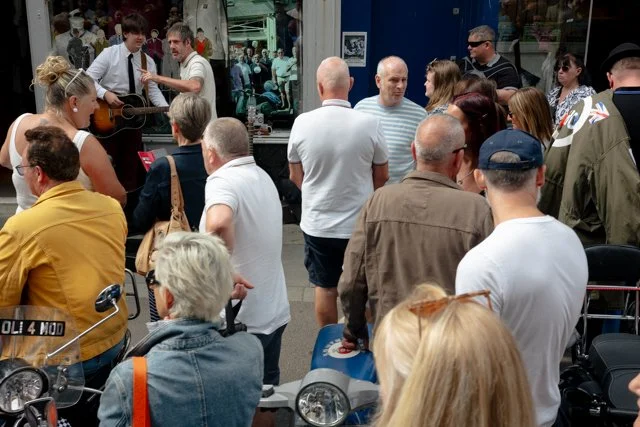
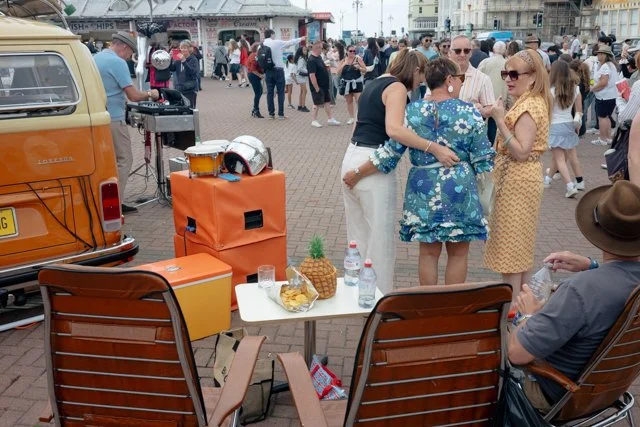
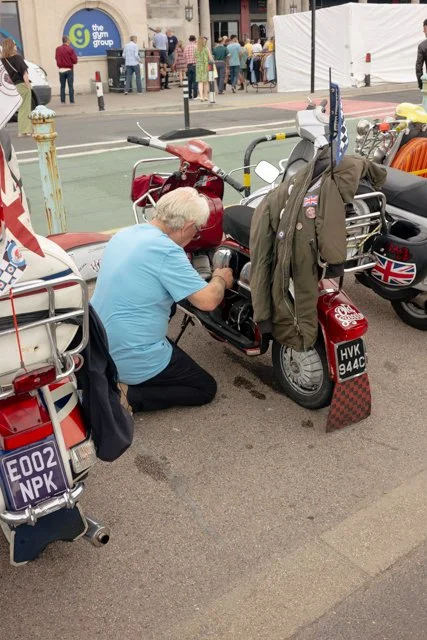
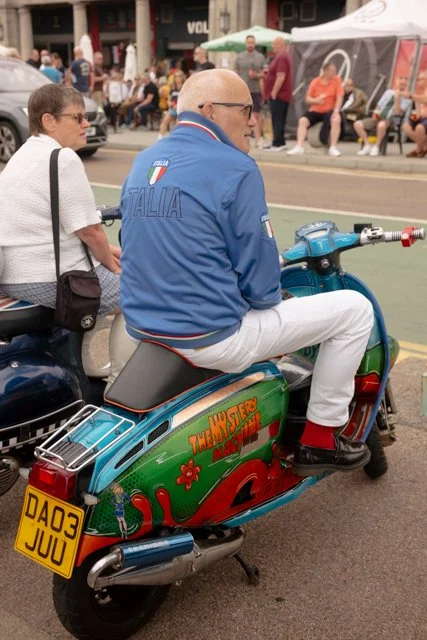
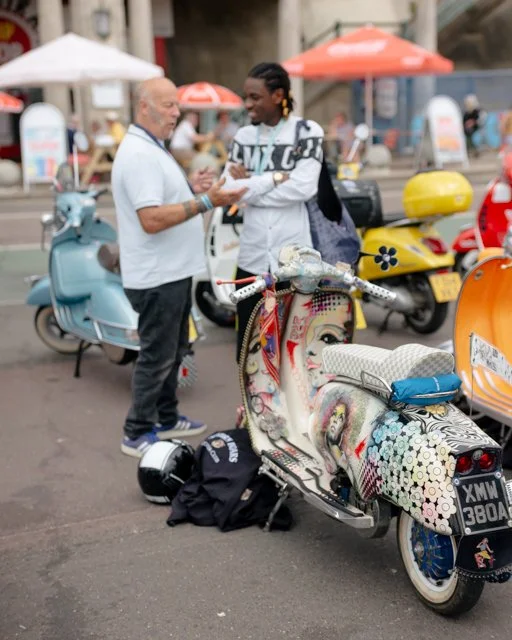
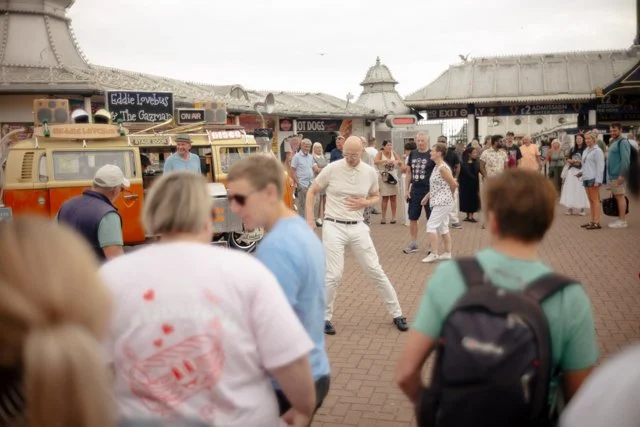
The Sunday scooter rideout was the cherry on top, as the convoy of scooters snaked its way along the coast, a modern-day echo of the legendary scenes from Quadrophenia. This year's event was a powerful reminder of how a subculture can endure and evolve, blending its rich heritage with an inclusive, forward-thinking spirit. If you were there, you'll know it was an unforgettable celebration. If you missed it, start planning for next year, because the Brighton Mod Weekender is an experience you won't want to miss.
Until next time, keep Modding.
GAS.....? no the easy life
A New Chapter: Embracing the Nikon F80
For years, my photographic journey has been linked to the tactile precision of the Leica system for both my M10 and M6. Zone focusing and manual exposure. I haven’t been one to embrace or use the Sunny 16 rule. The deliberate, fully manual approach of the rangefinder has been my constant companion, a testament to the joy of slowing down and truly making a photograph.

A New Chapter: Embracing the Nikon F80
For years, my photographic journey has been linked to the tactile precision of the Leica system for both my M10 and M6. Zone focusing and manual exposure. I haven’t been one to embrace or use the Sunny 16 rule. The deliberate, fully manual approach of the rangefinder has been my constant companion, a testament to the joy of slowing down and truly making a photograph.
Weirdly, I have found this to be an irritant on the M6 film camera, but something of a joy on the digital M10. I think this is more to do with the chimping effect, than anything else.
Since dropping my M6 and damaging the film winder (I can’t bring myself to write a blog post about it, but in essence I thought the cameara was attached to my wrist strap, let go of it and watched in slow motion as it hit the floor and bent the aluminium film winder), I’ve been using my Minolta X500 camera with a 28mm lens. I must say it’s been an absolute delight. Whilst zone focusing isn’t a direct comparison to the M6, it’s been okay.
I’ve had a rethink with my camera equipment and considered whether or not to dispose of some of my lesser used equipment. Whilst I loved my Chamonix 45N2 4x5 large format camera, I wasn’t using it at all and decided to sell it on eBay and to require some equipment that I would put to better use. I initially considered buying the Fuji GW670 medium format camera, - the Texas Leica - but couldn’t justify the £1,400+ price tag.
On consideration, I decided to look at acquiring a 35mm auto focus film SLR camera. Something that would be a lot more comfortable on the pocket, and also be put into far much more use than a 4x5 view camera.
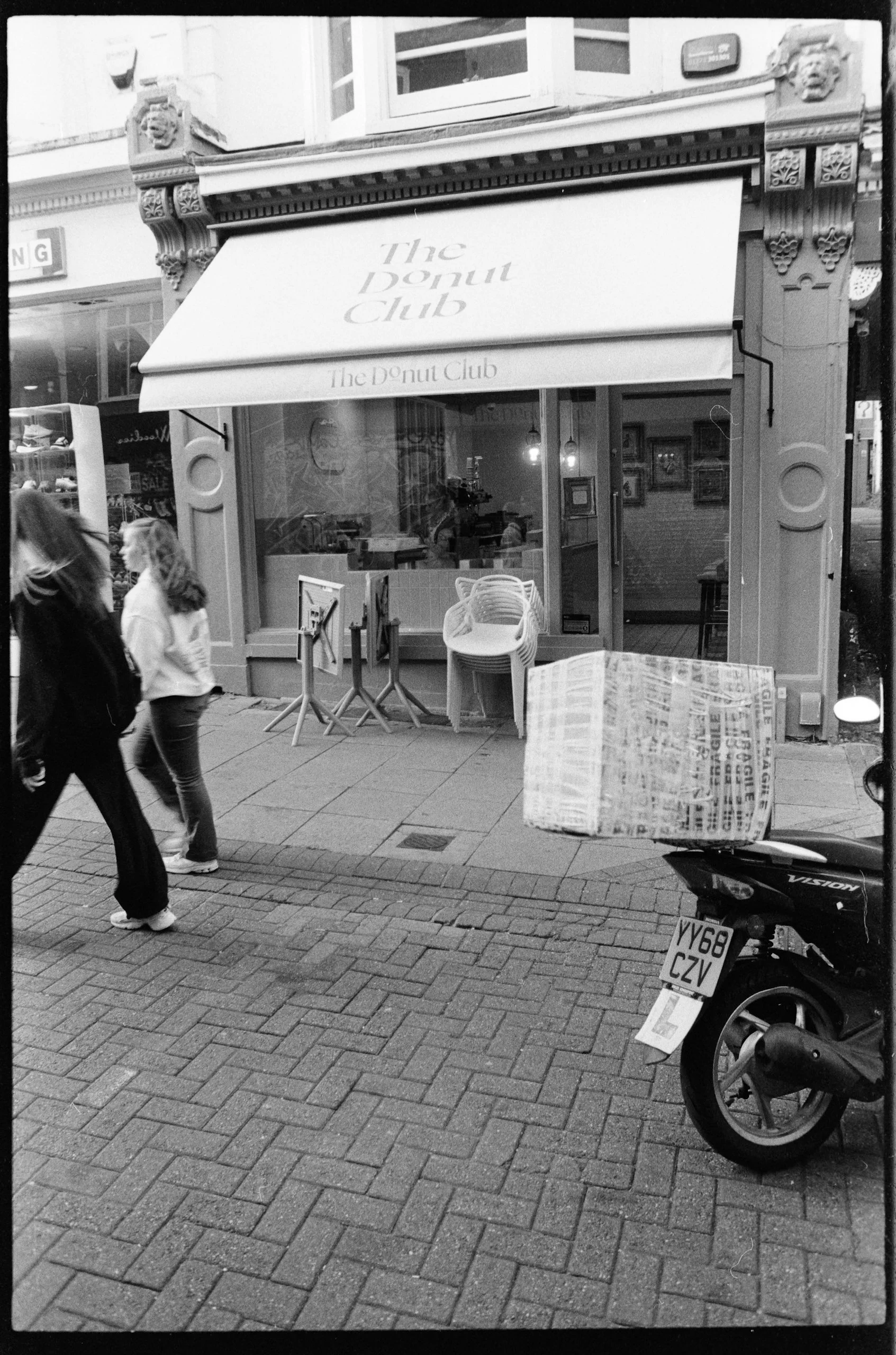
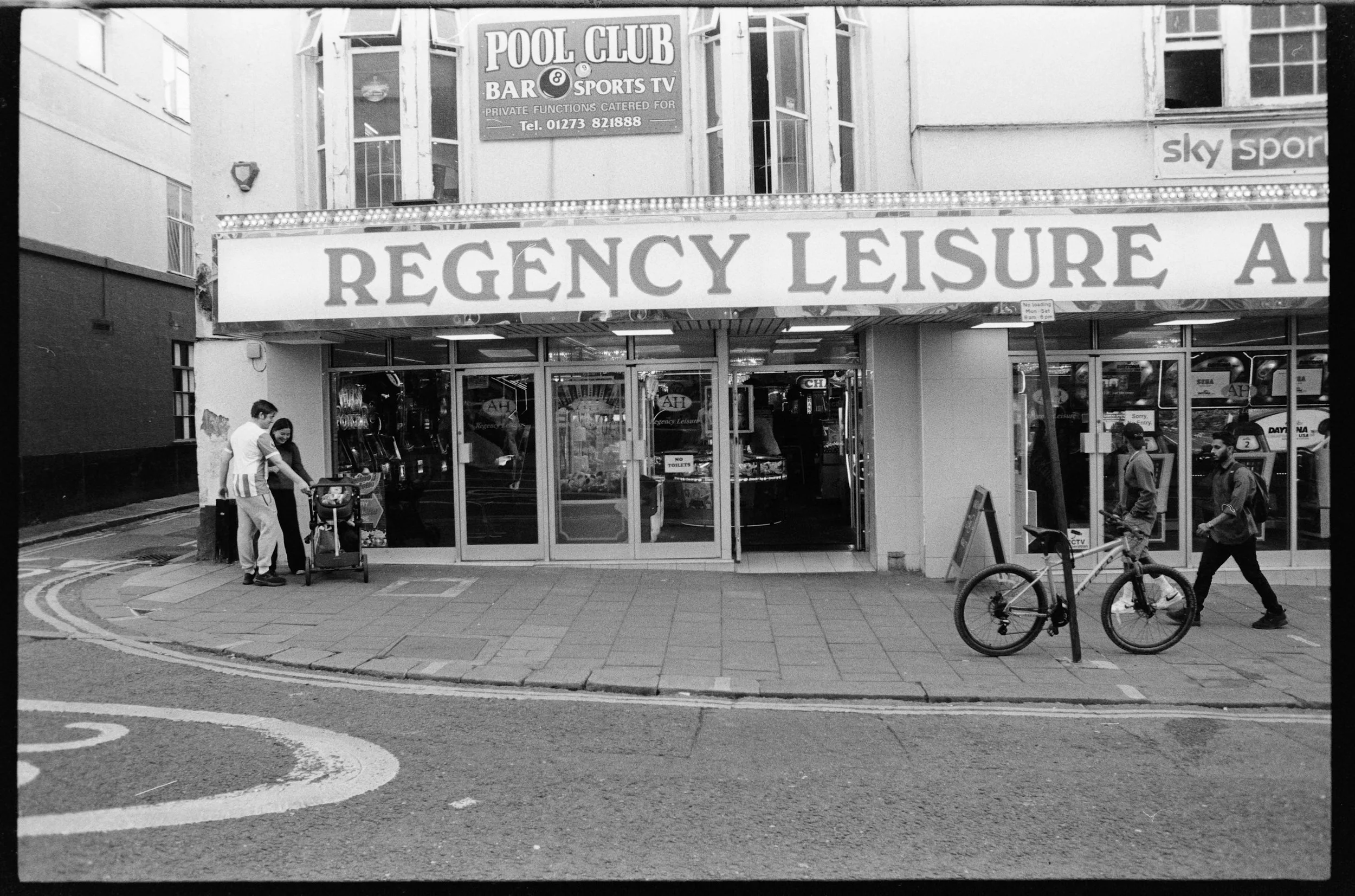
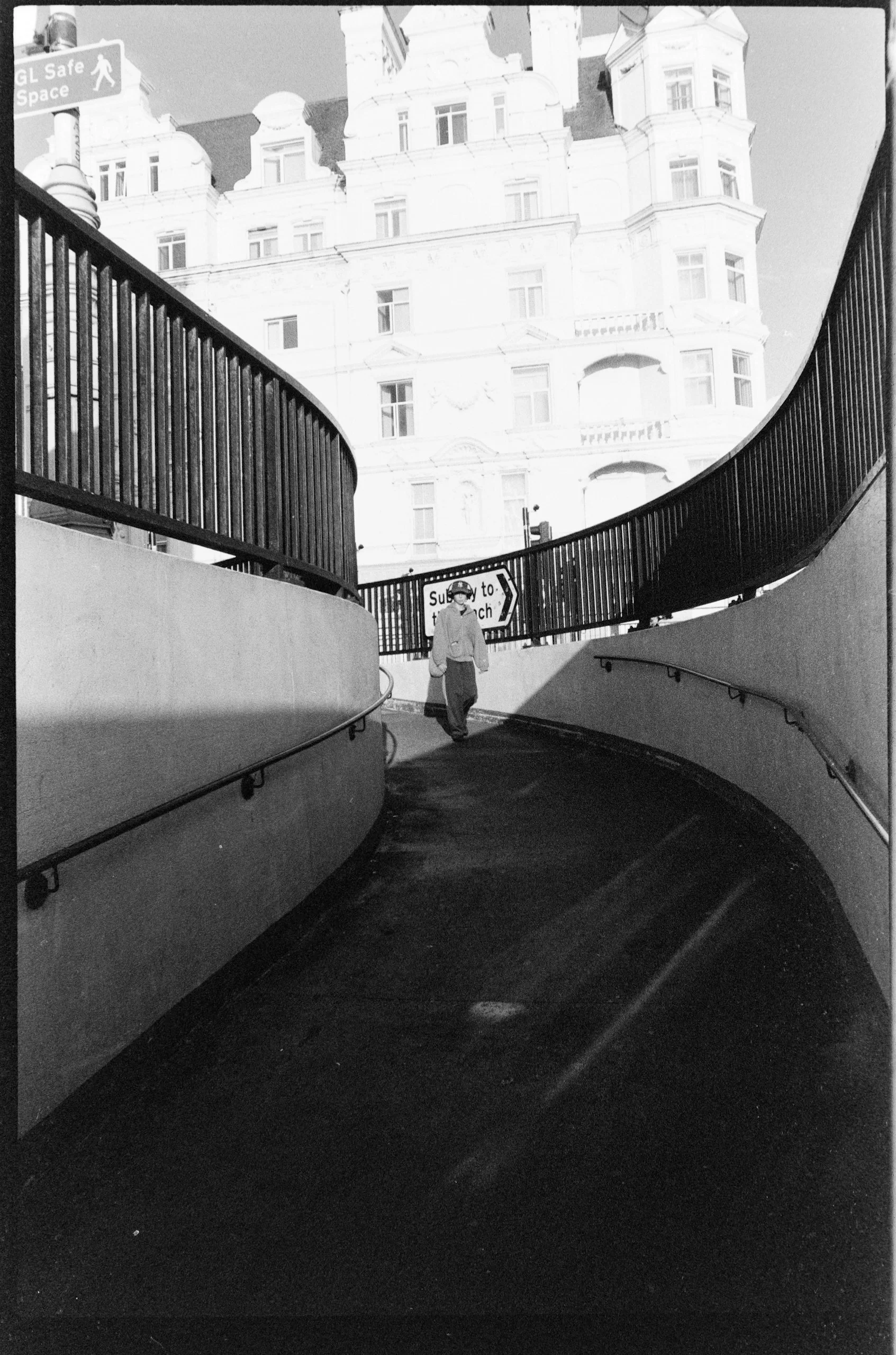
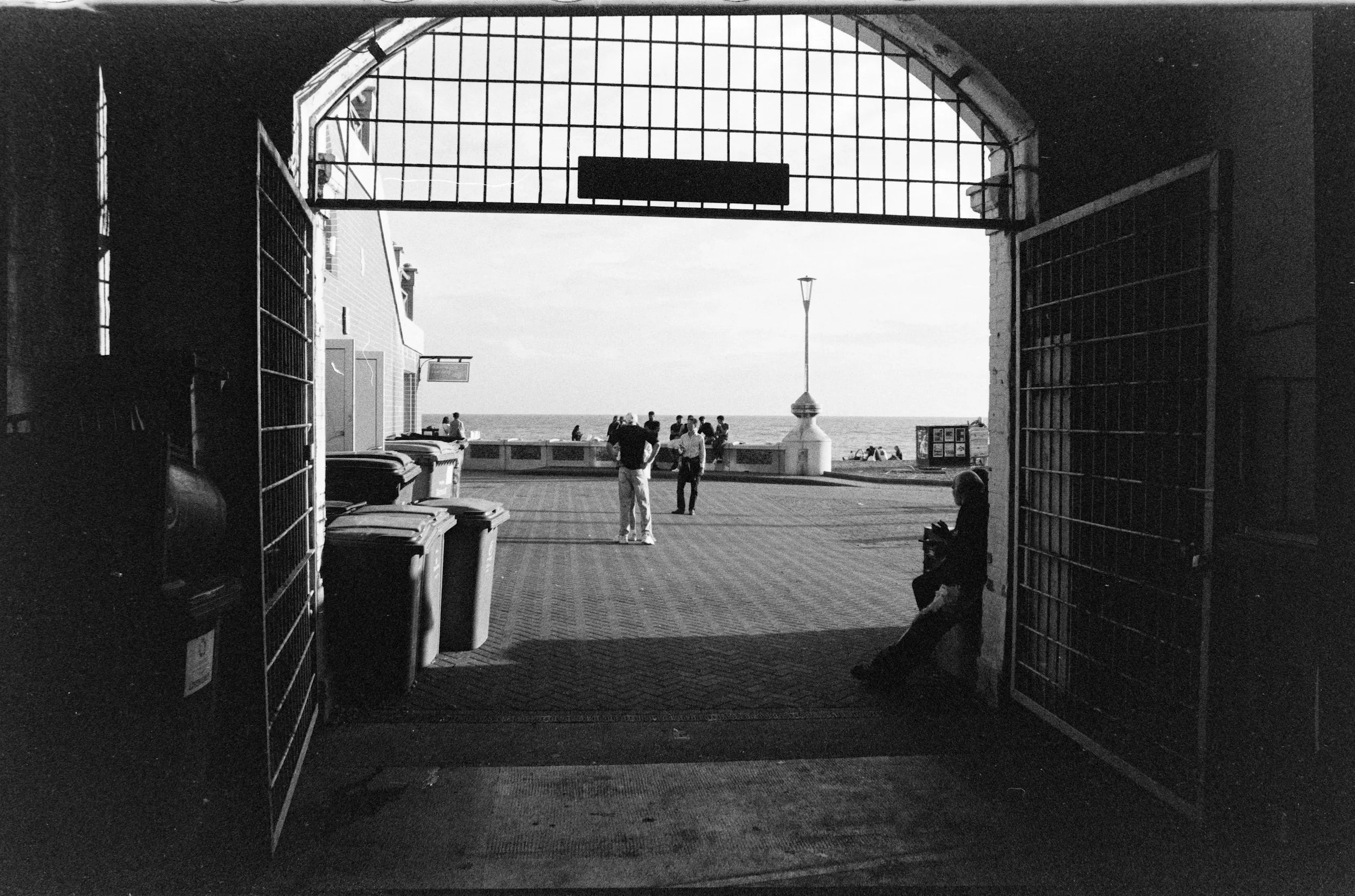
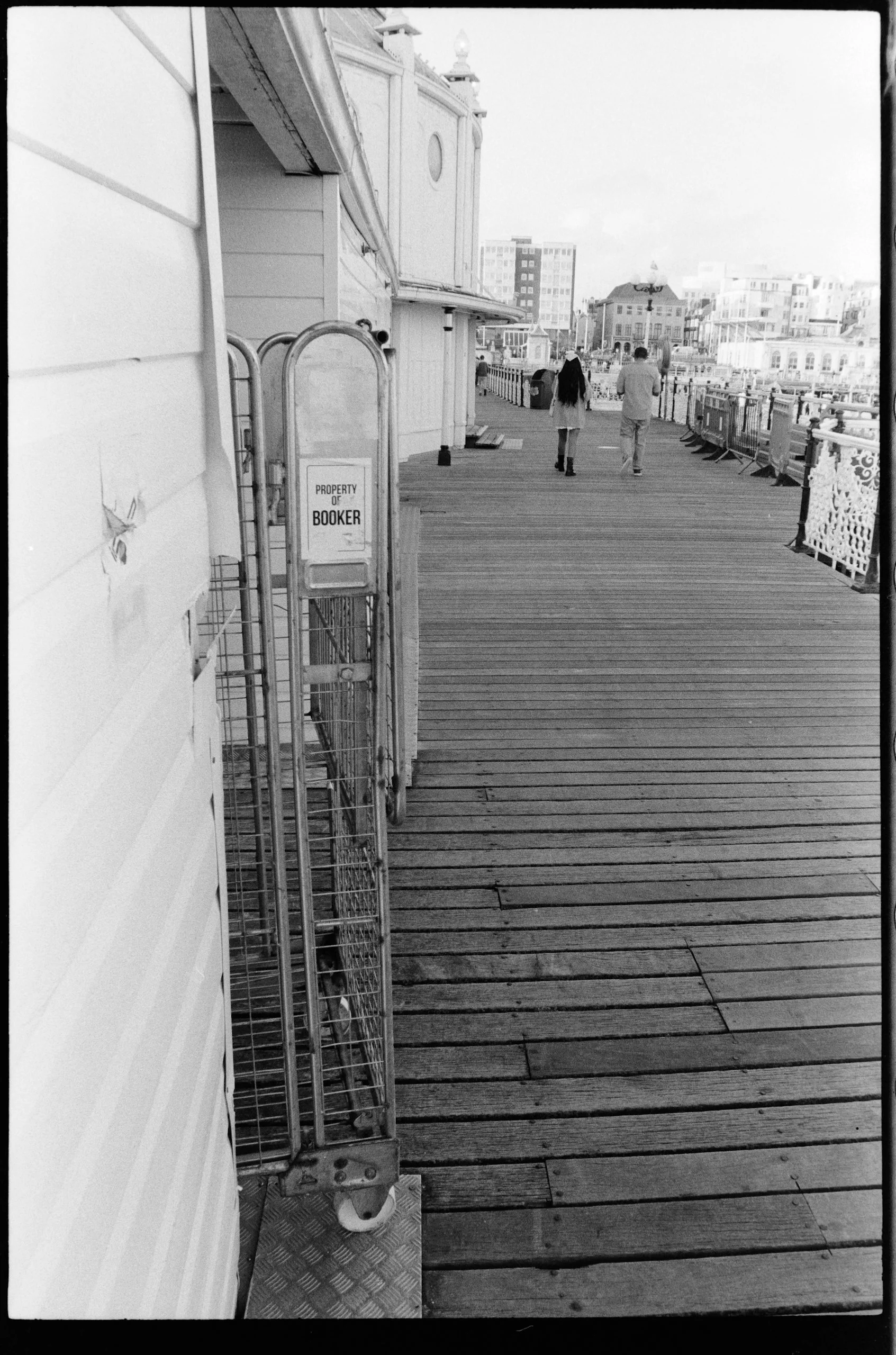
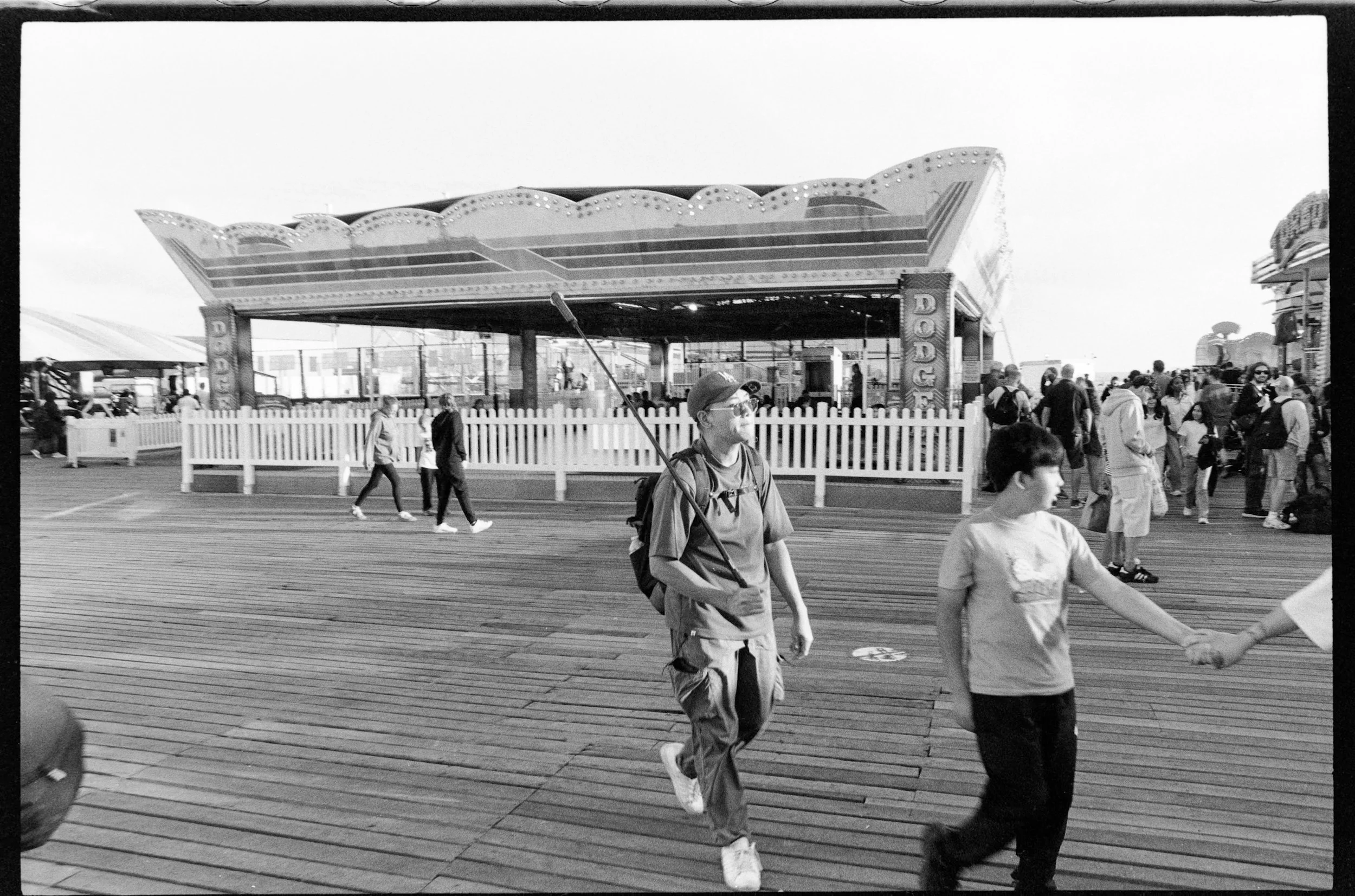
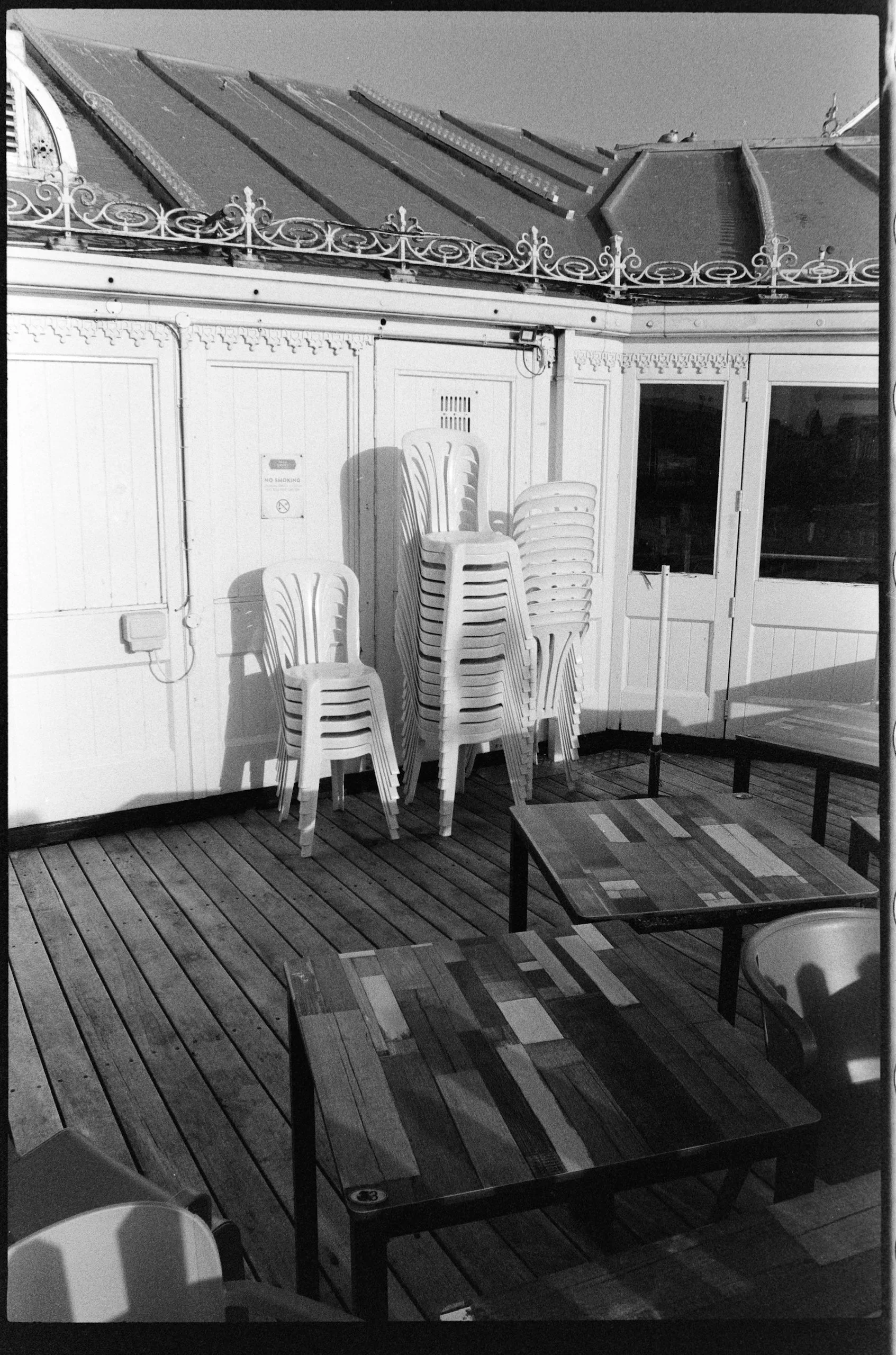
The decision to step away from the purely manual world of the M6 wasn't taken lightly, but the F80 offers a compelling proposition. It represents a bridge, a way to explore the capabilities of a more automated system while still retaining the soul and charm of film.
Autofocus - CHECK, auto film load - CHECK, Auto film rewind - CHECK.
The images in this blogpost, are from the first three rolls, I put through the camera yesterday on Kodak 5222 Double XX film.
The F80, known as the N80 in North America, was a remarkably advanced camera for its time, boasting features that many digital photographers take for granted today.
First impressions are key, and holding the F80, I'm struck by its ergonomic design. It feels substantial yet comfortable in the hand, a far cry from the dense, compact brick of the Leica. The controls are intuitively placed, promising a more fluid shooting experience. I'm particularly excited about the autofocus system. After years of meticulously splitting an image in the rangefinder, the idea of swift, accurate focusing is both liberating and a little daunting.
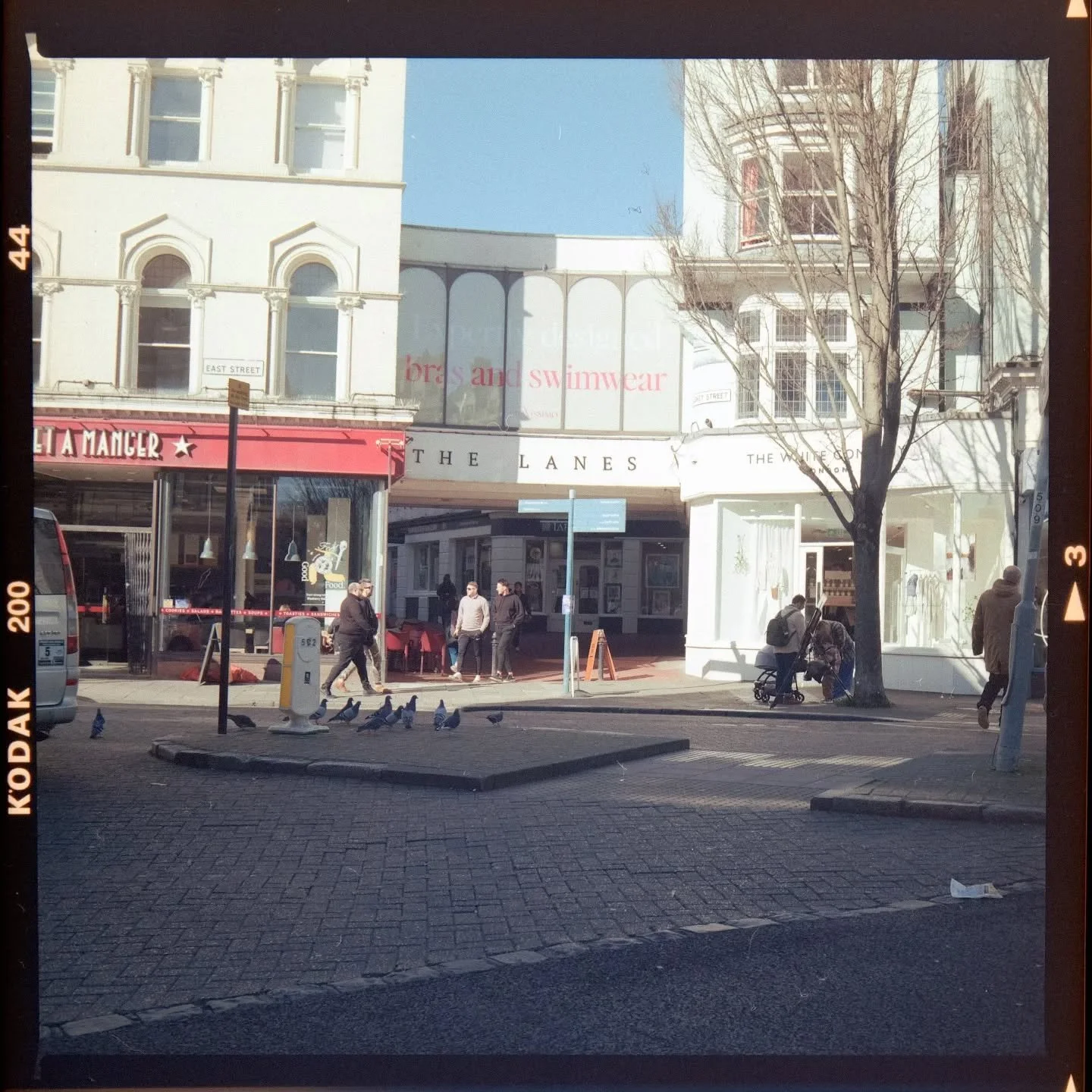
This isn't about abandoning the Leica; it's about expanding my toolkit. Imagine capturing the bustling Lanes of Brighton and Hove with the speed and precision the F80 offers, or perhaps experimenting with its multiple exposure mode to create ethereal street scenes. I'm eager to see how the matrix metering handles the challenging light often found on the Sussex coast, from the bright, open expanse of the beach to the shadowy alleyways.
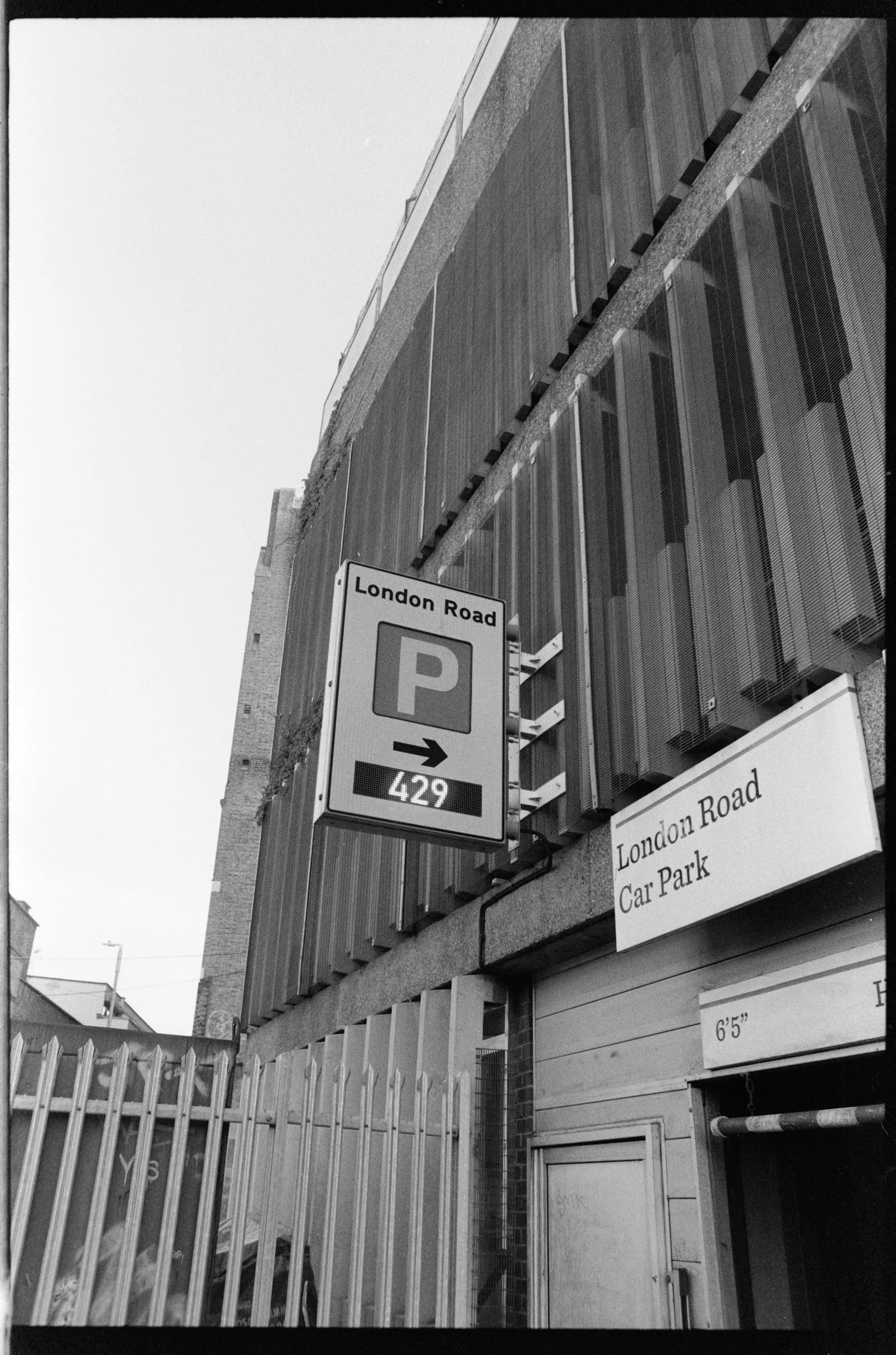
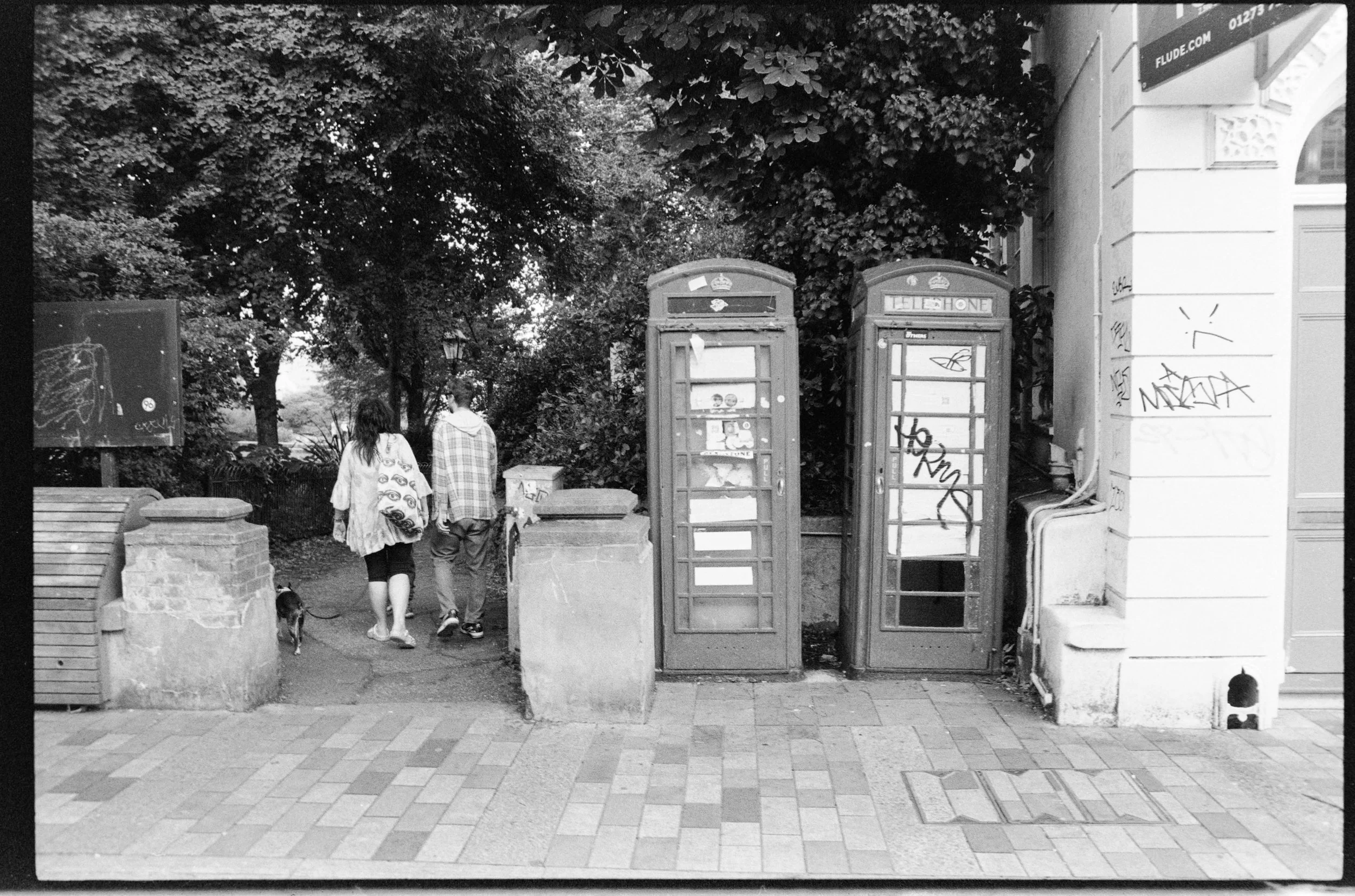
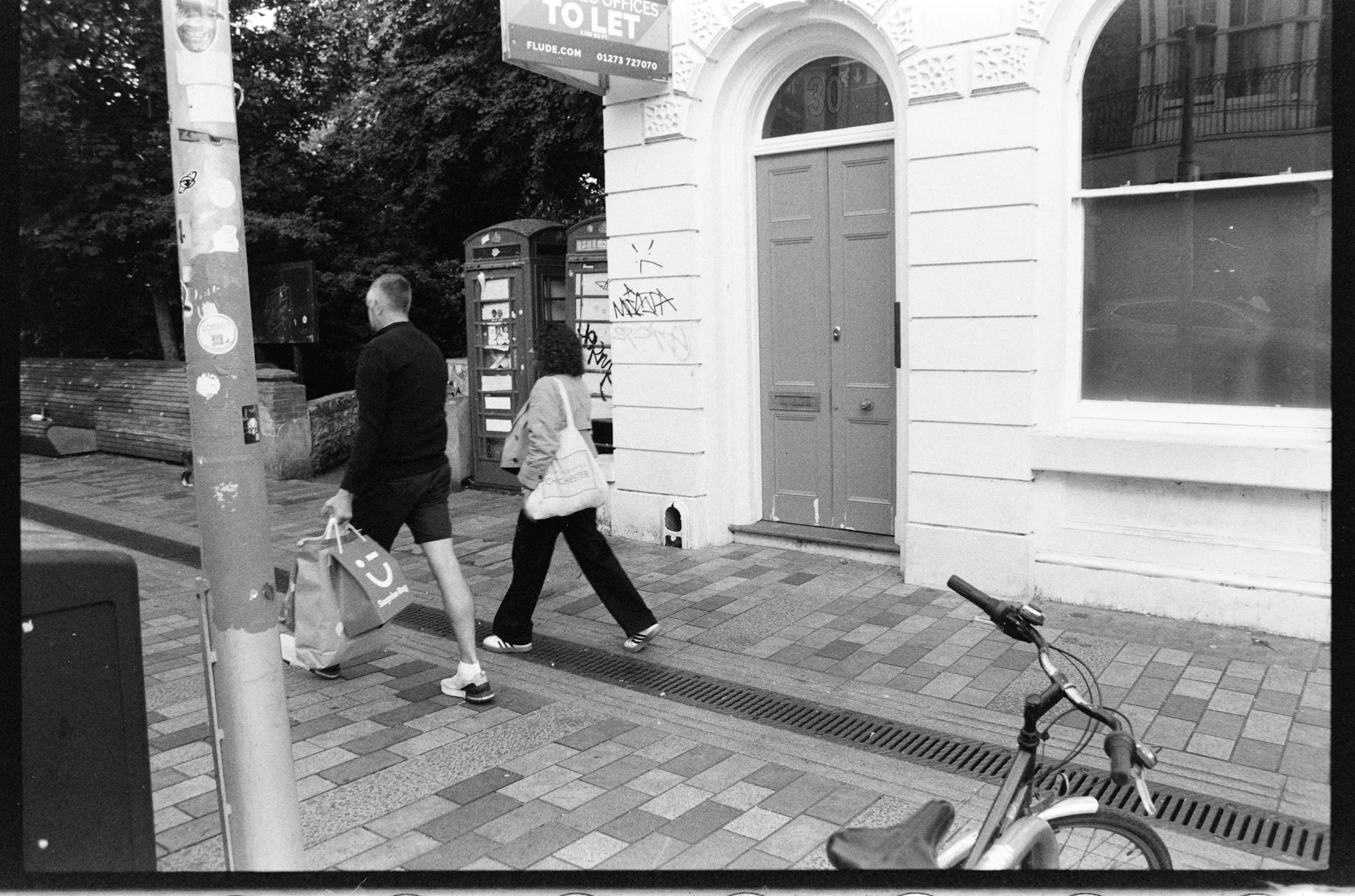
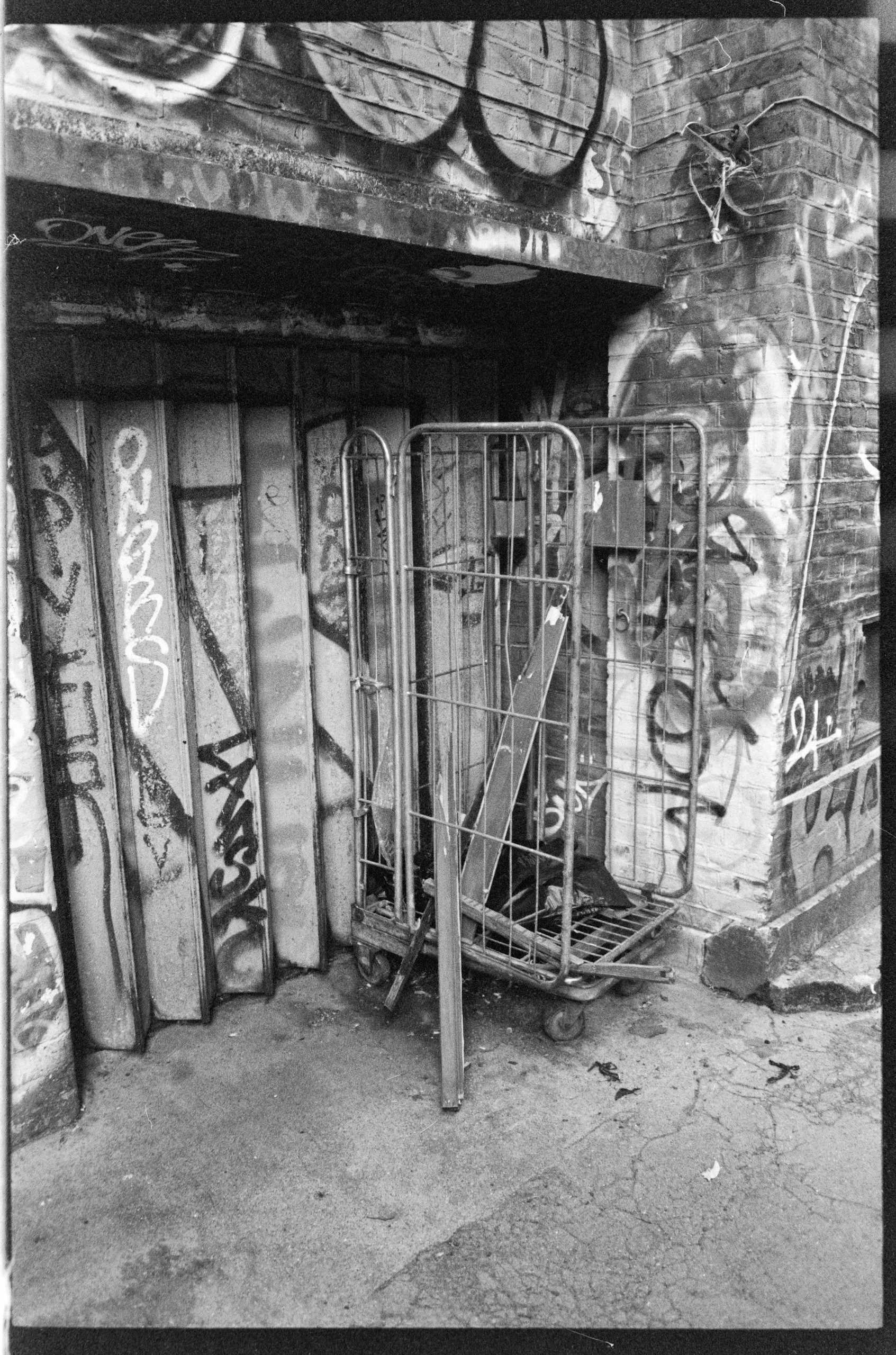
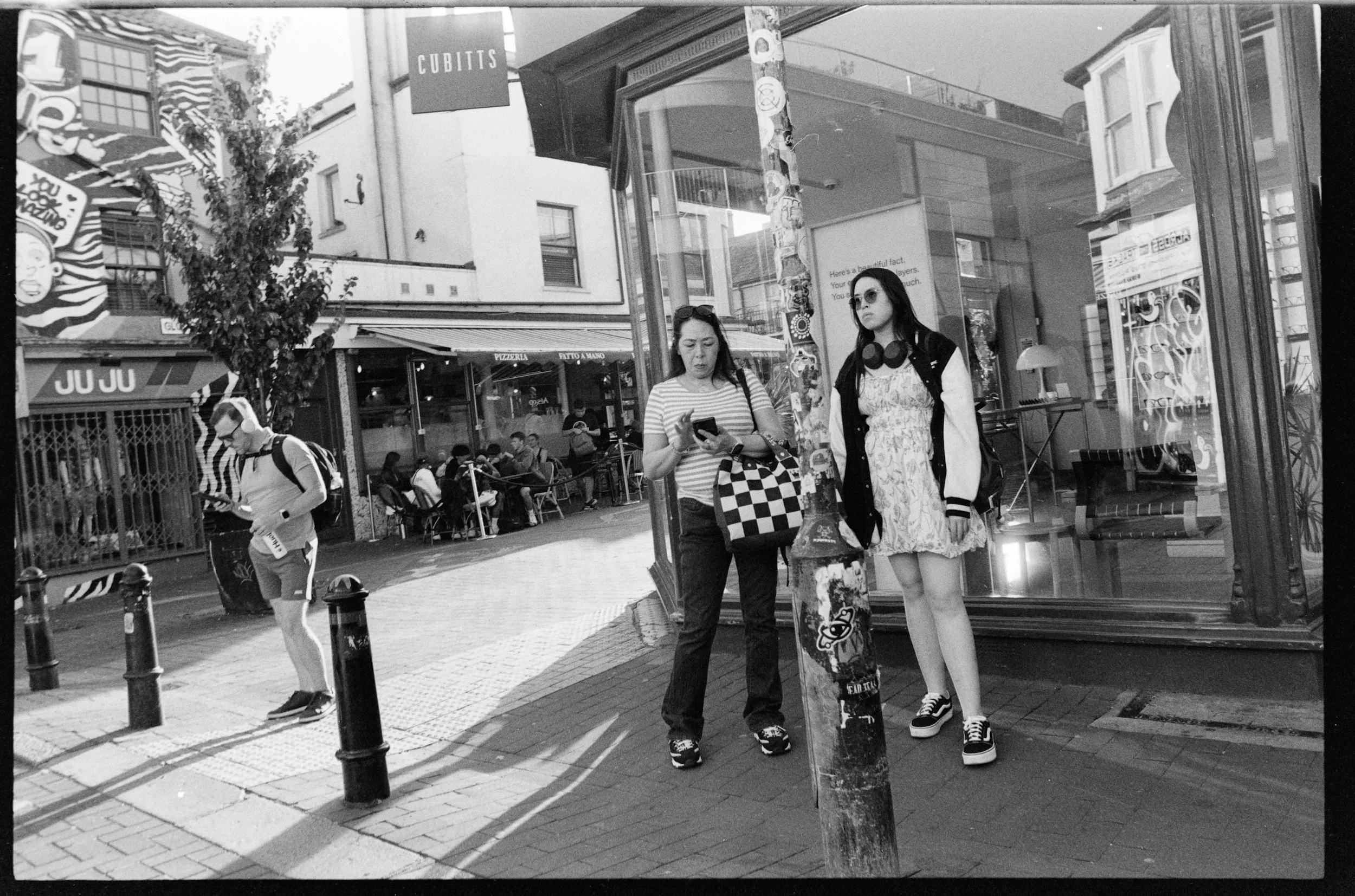
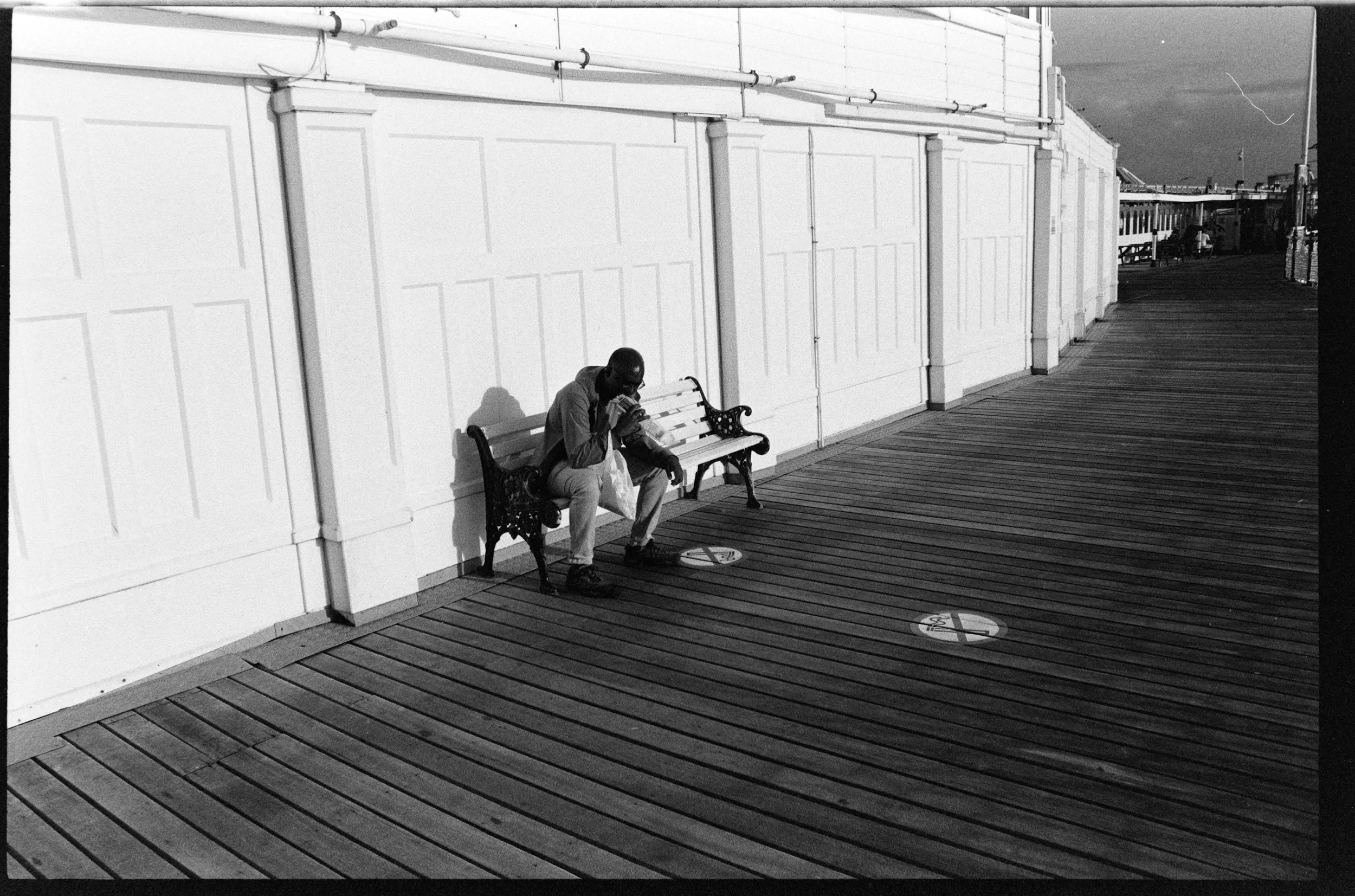
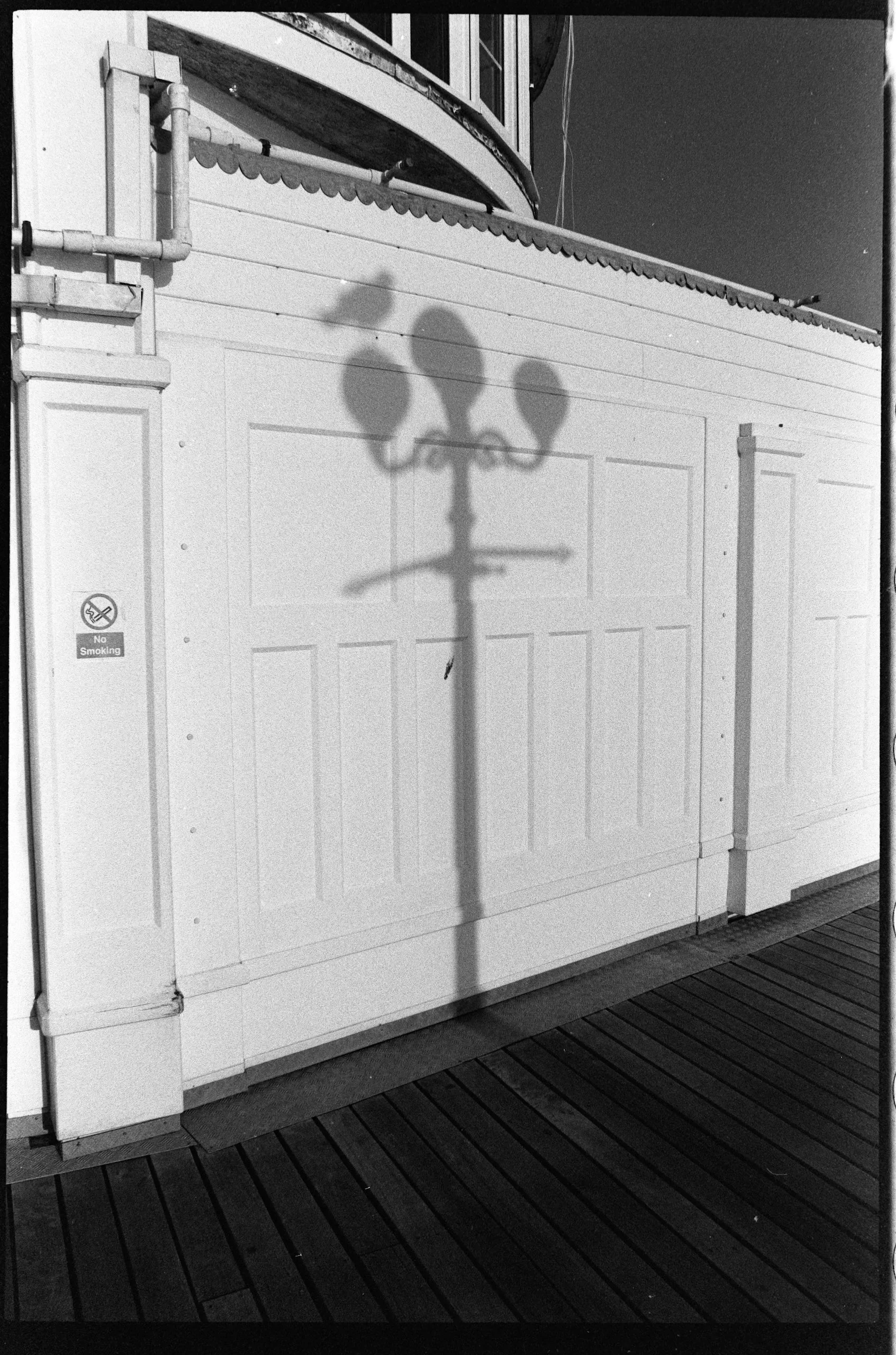
The F80 also opens up a world of Nikon lenses, and I'm looking forward to exploring different focal lengths and apertures that were less practical with my M6 setup. This camera feels like a doorway to new creative avenues, a chance to experiment with different photographic approaches without sacrificing the beautiful rendering of film.
My first roll has been a very pleasant surprise and I'm already envisioning the possibilities. This isn't just a camera; it's an invitation to learn, adapt, and grow as a photographer. Wish me luck as I navigate the exciting new terrain of the Nikon F80! I'll be sharing my initial results and thoughts soon.
Until next time, keep snapping.
Napoli, March 2025
A short video of my photowalk at Brighton Pride 2025 on Saturday 2nd August 2025.
Taken on my Leica M10.
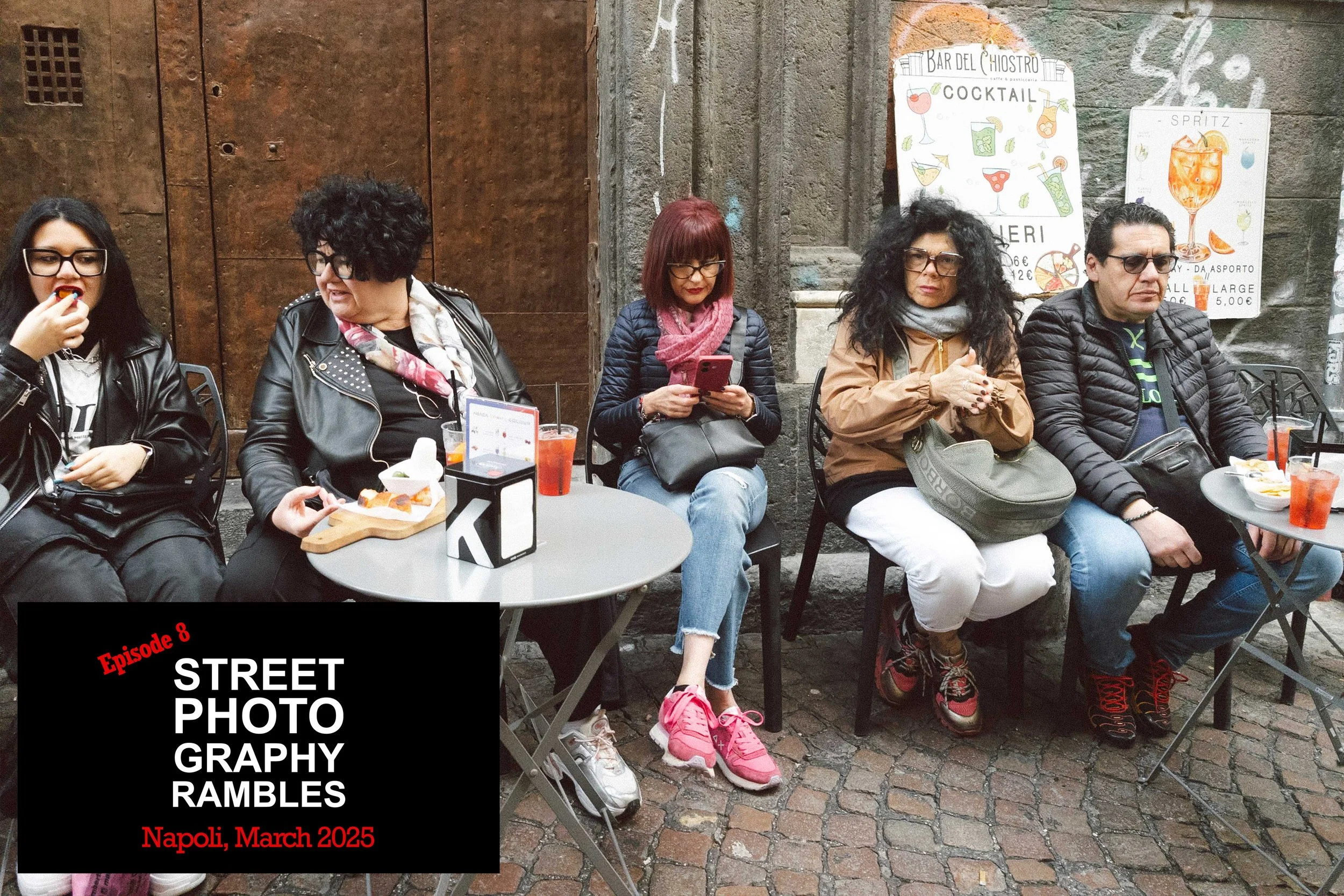
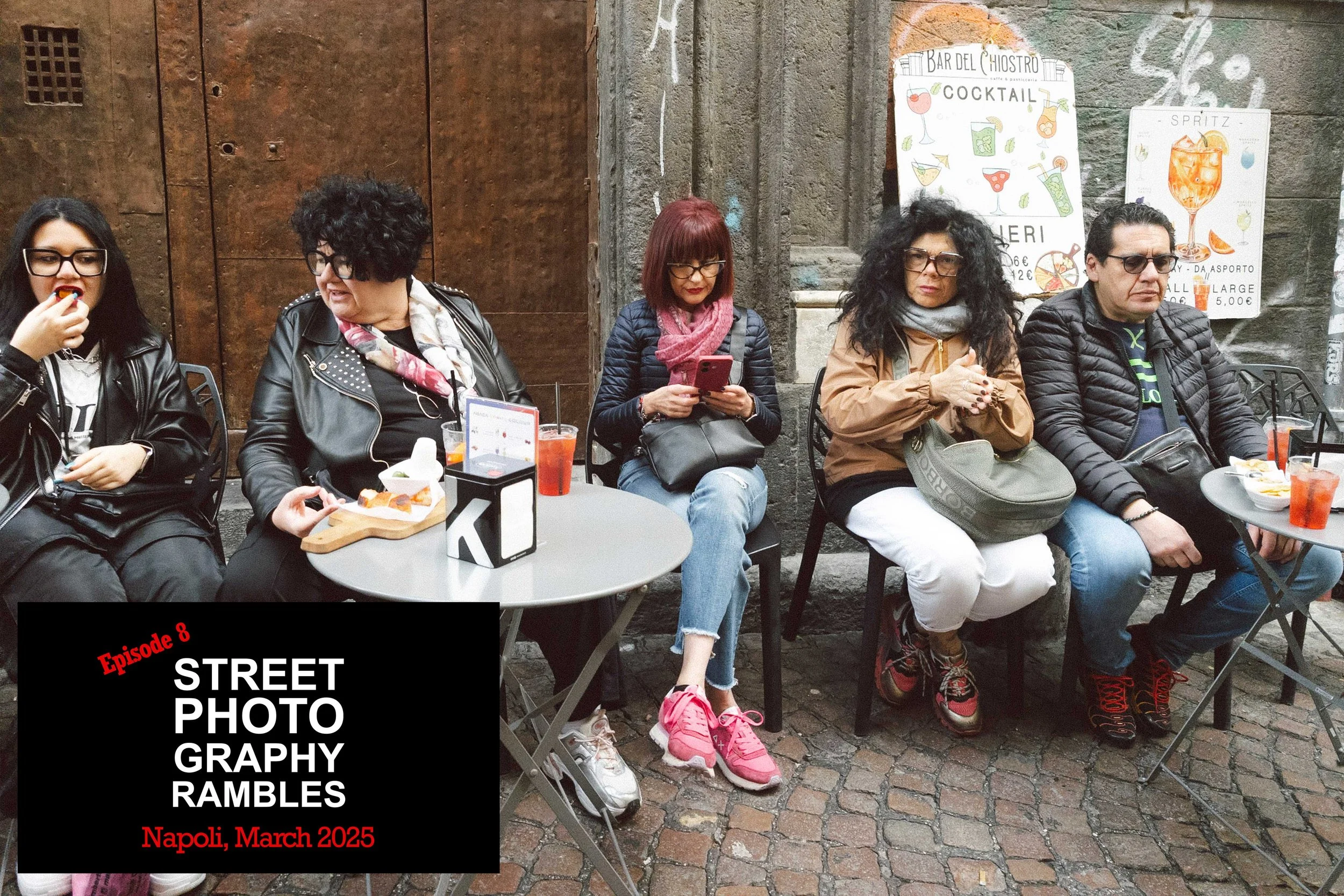
A short video of my March 2025 city break to Napoli, for some pizza, footy and streetphotography.
Taken on my Google Pixel 8 Pro smartphone.
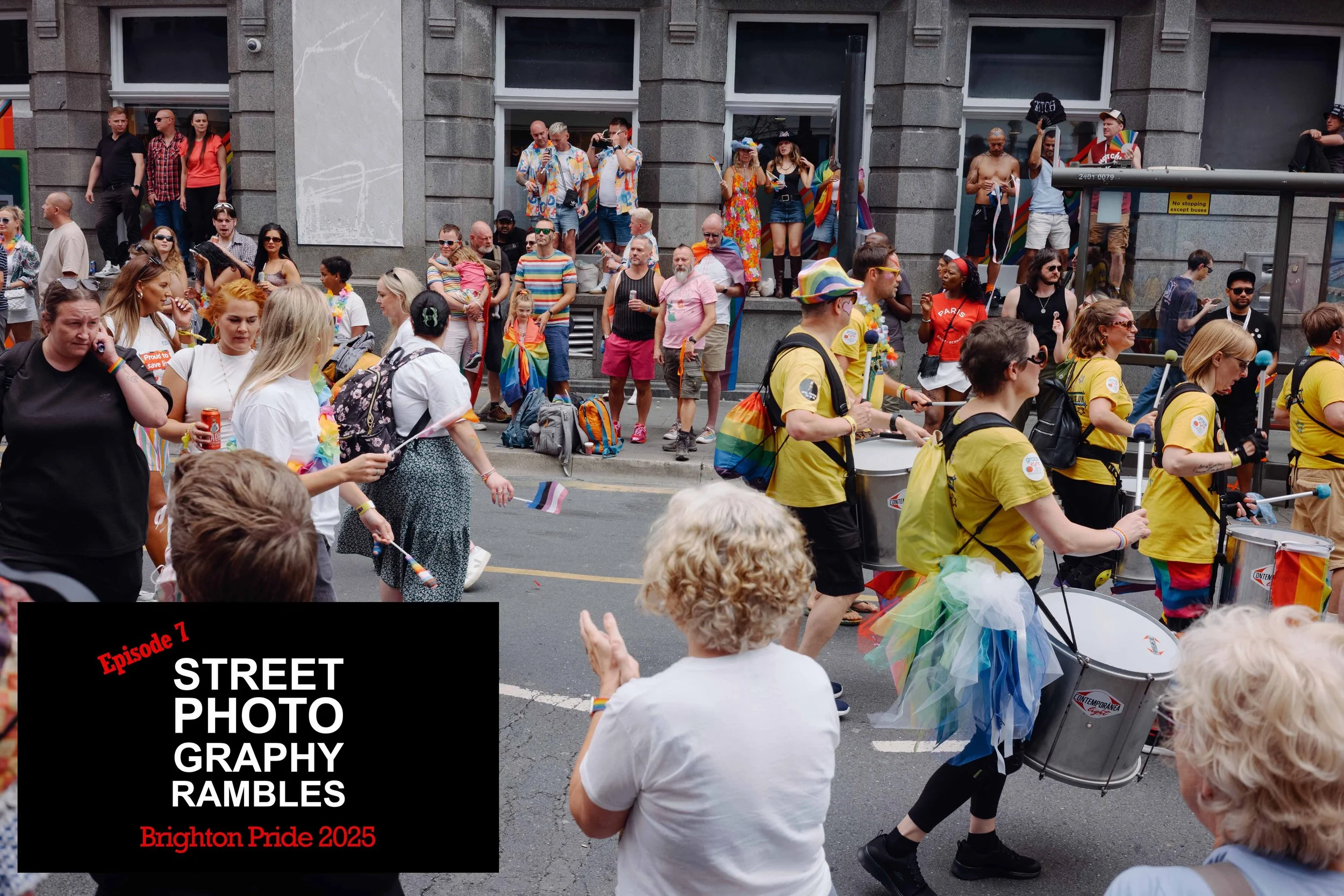
Brighton Pride 2025
A short video of my photowalk at Brighton Pride 2025 on Saturday 2nd August 2025.
Taken on my Leica M10.

A short video of my photowalk at Brighton Pride 2025 on Saturday 2nd August 2025.
Taken on my Leica M10.
Yes please, keep me posted when there’s a new blog
Instagram - Film