in the frame
An Extra Ray of Sunshine — Brighton Pride 2026
Flash on the Street: Daylight Portraits at Brighton Pride
Earlier this summer I was at Trans Pride Brighton in July — a chilled, community-led march through the city that felt, in the best possible way, like Brighton simply being Brighton.
You can read that post here. Pride on the 1st of August was something else entirely.
There is an annual moment, somewhere around late July, where I start getting excited about Brighton Pride. It is not just an event. It is a pilgrimage — a gathering that pulls in the four corners of Brighton, Sussex, and the UK, and beyond that, quite literally, the world.
This year I heard Spanish accents, Italian accents, Latin American accents. I stood in the middle of a street in Brighton, in the full heat of an August afternoon, surrounded by people who had come from everywhere to be here. That is what Pride does, and why it matters, and why I keep coming back with a camera.
Flash on the Street: Daylight Portraits at Brighton Pride
Earlier this summer I was at Trans Pride Brighton in July — a chilled, community-led march through the city that felt, in the best possible way, like Brighton simply being Brighton.
You can read that post here. Pride on the 1st of August was something else entirely.
There is an annual moment, somewhere around late July, where I start getting excited about Brighton Pride. It is not just an event. It is a pilgrimage — a gathering that pulls in the four corners of Brighton, Sussex, and the UK, and beyond that, quite literally, the world.
This year I heard Spanish accents, Italian accents, Latin American accents. I stood in the middle of a street in Brighton, in the full heat of an August afternoon, surrounded by people who had come from everywhere to be here. That is what Pride does, and why it matters, and why I keep coming back with a camera.
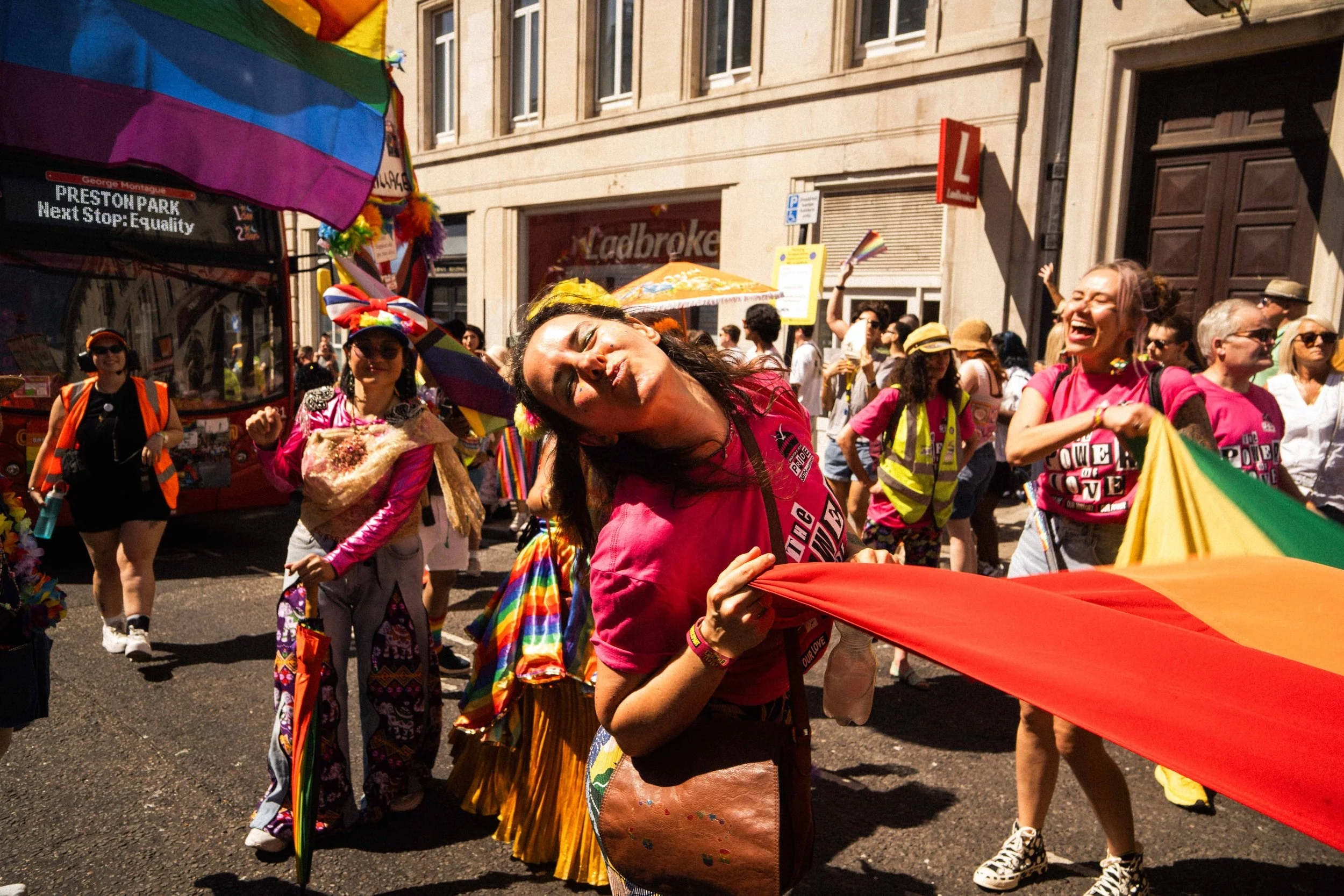
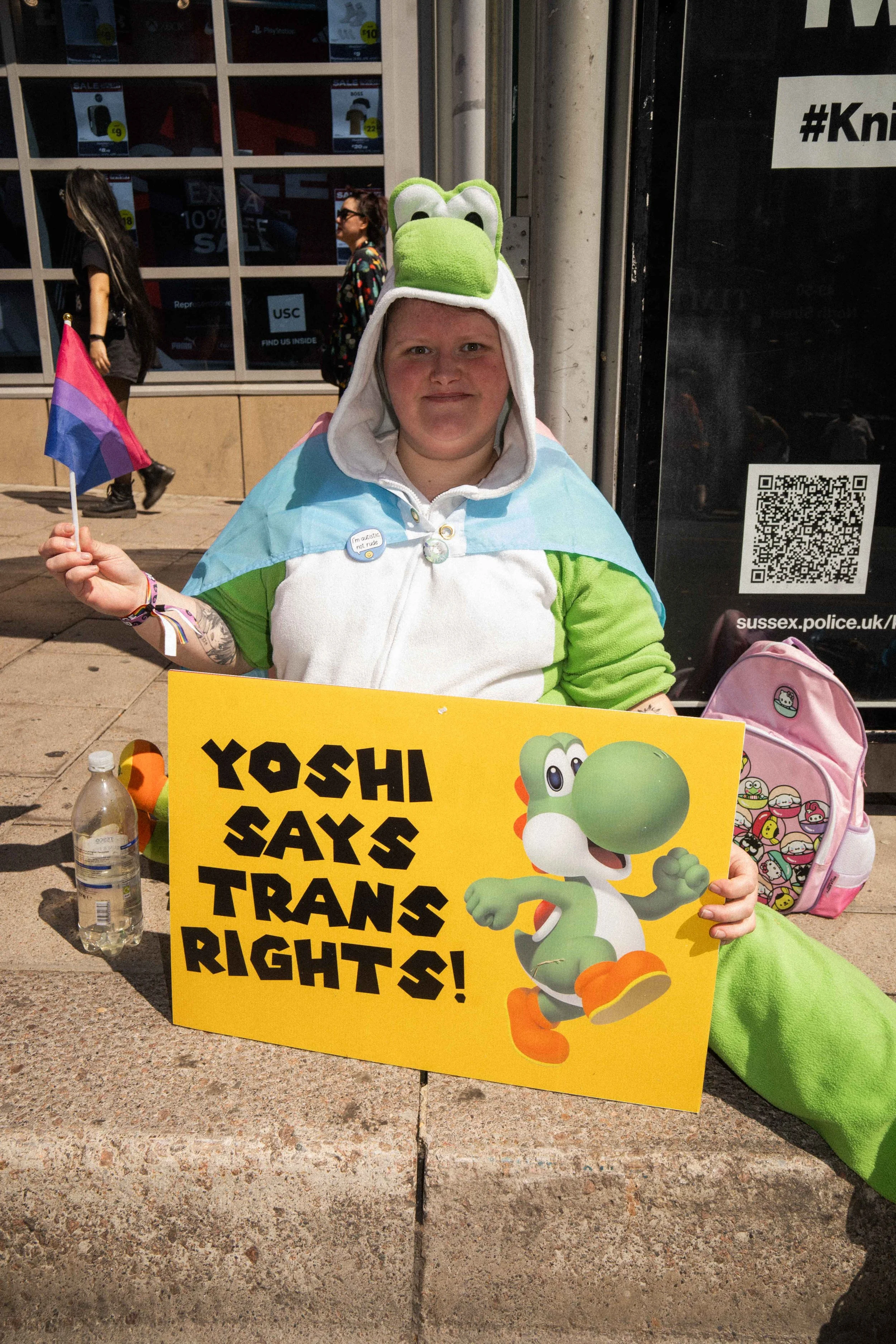
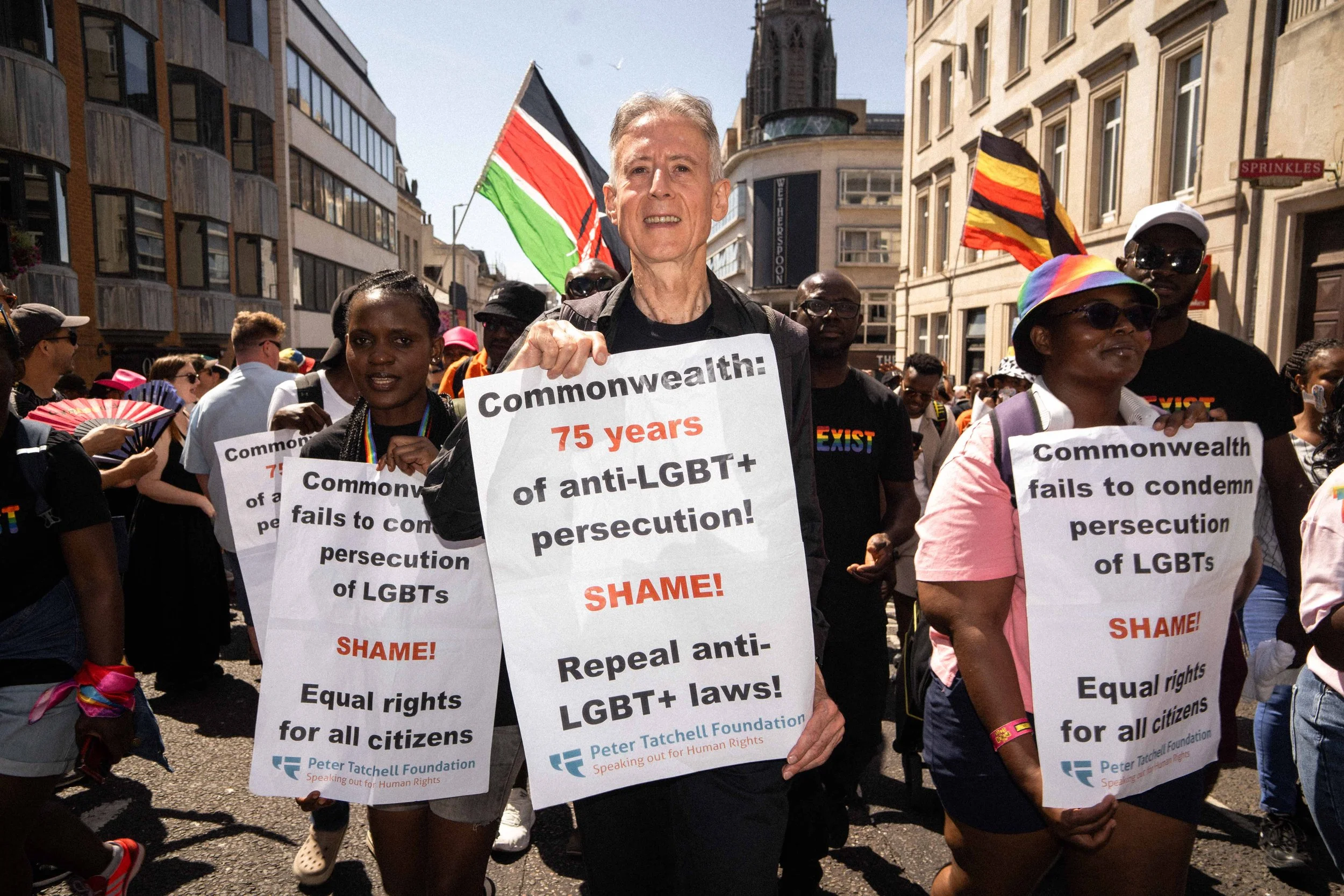
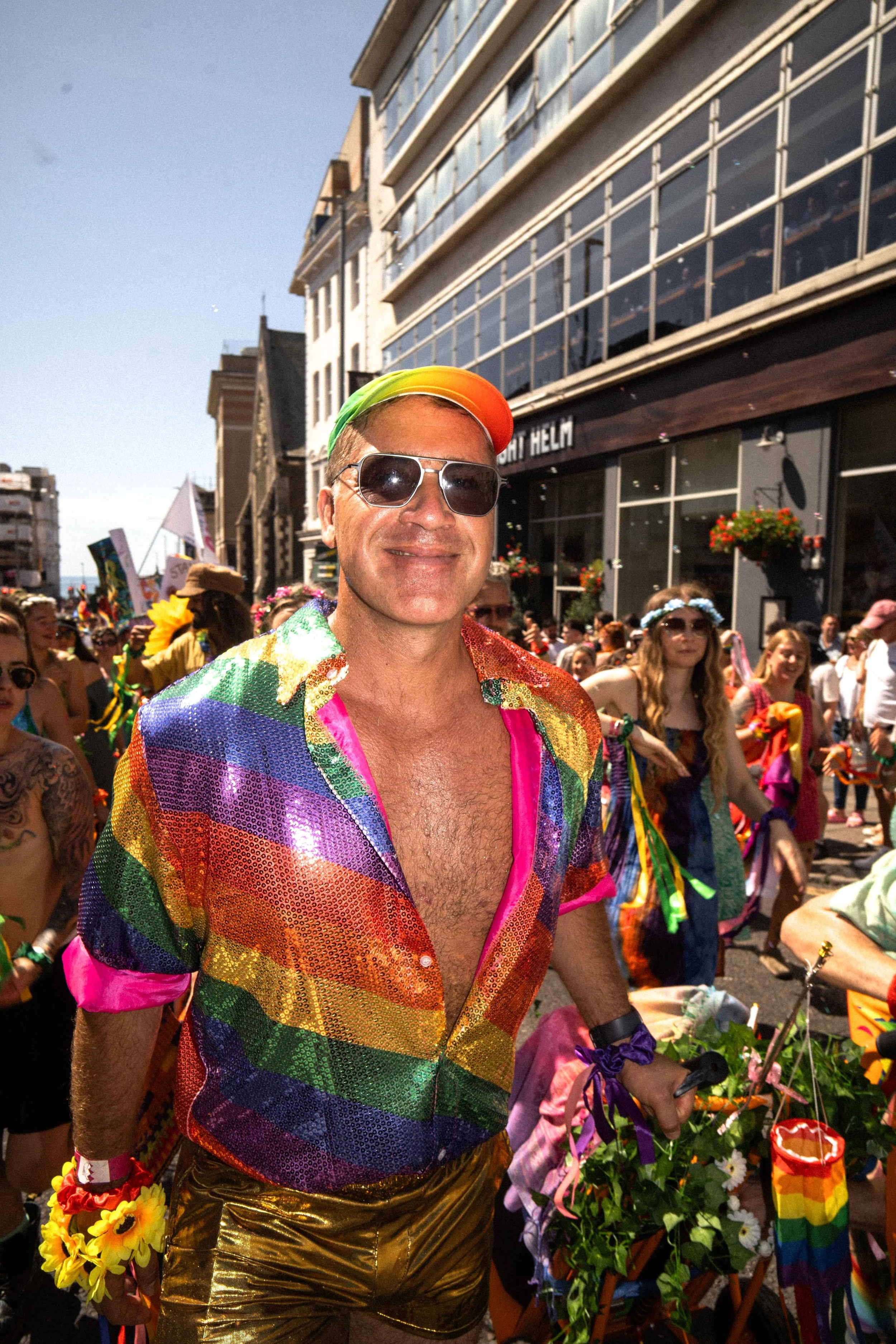
A Different Kind of Day
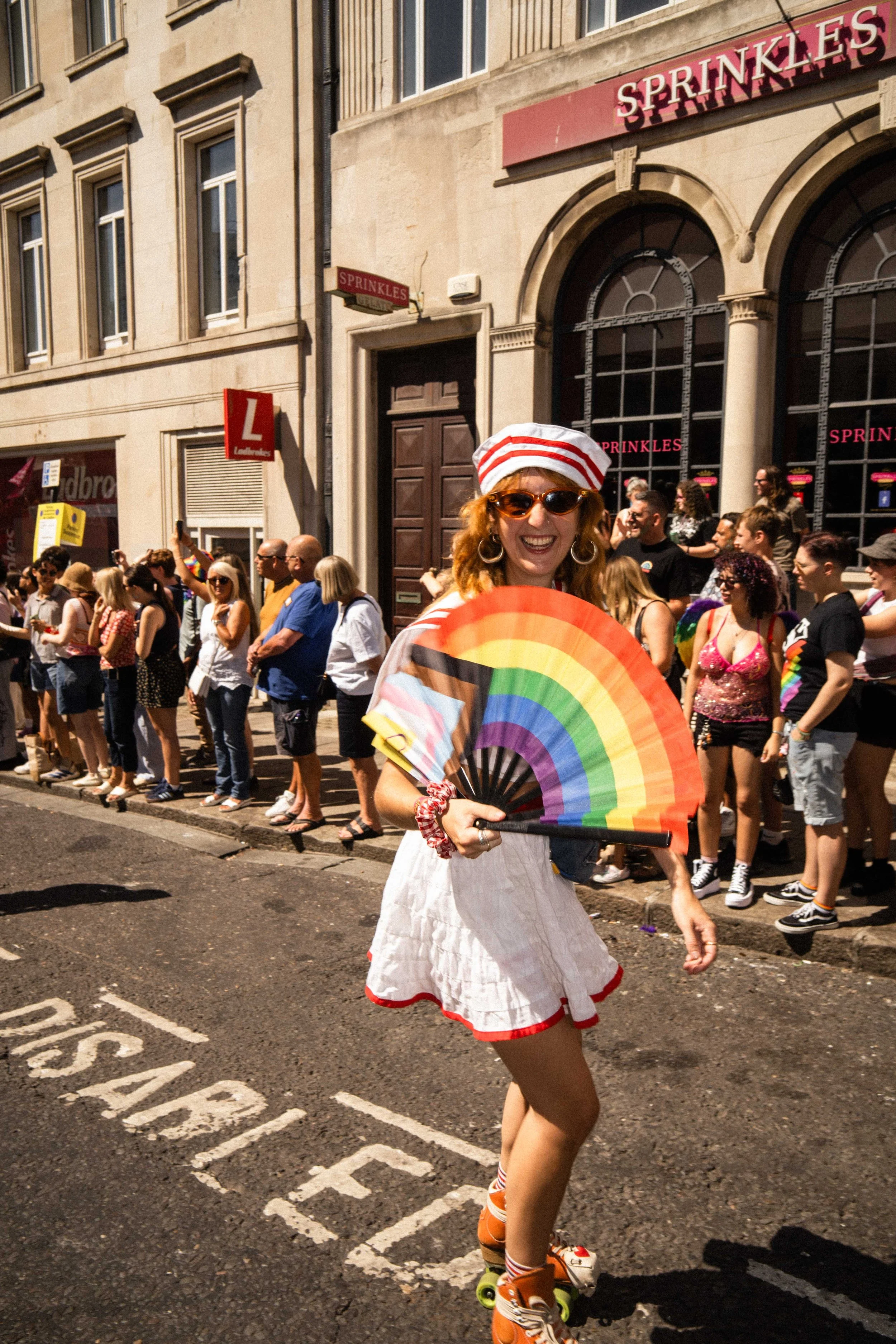
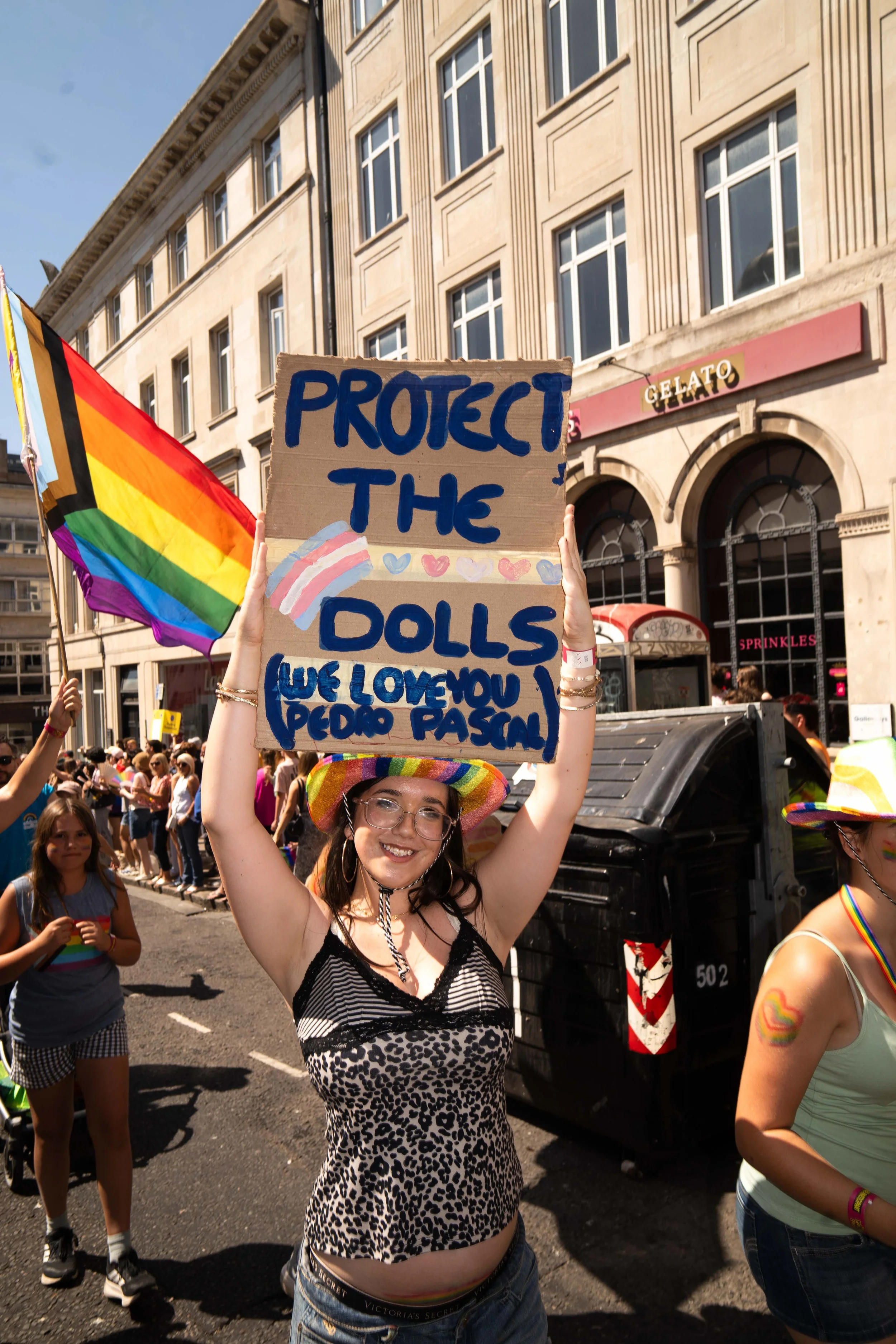
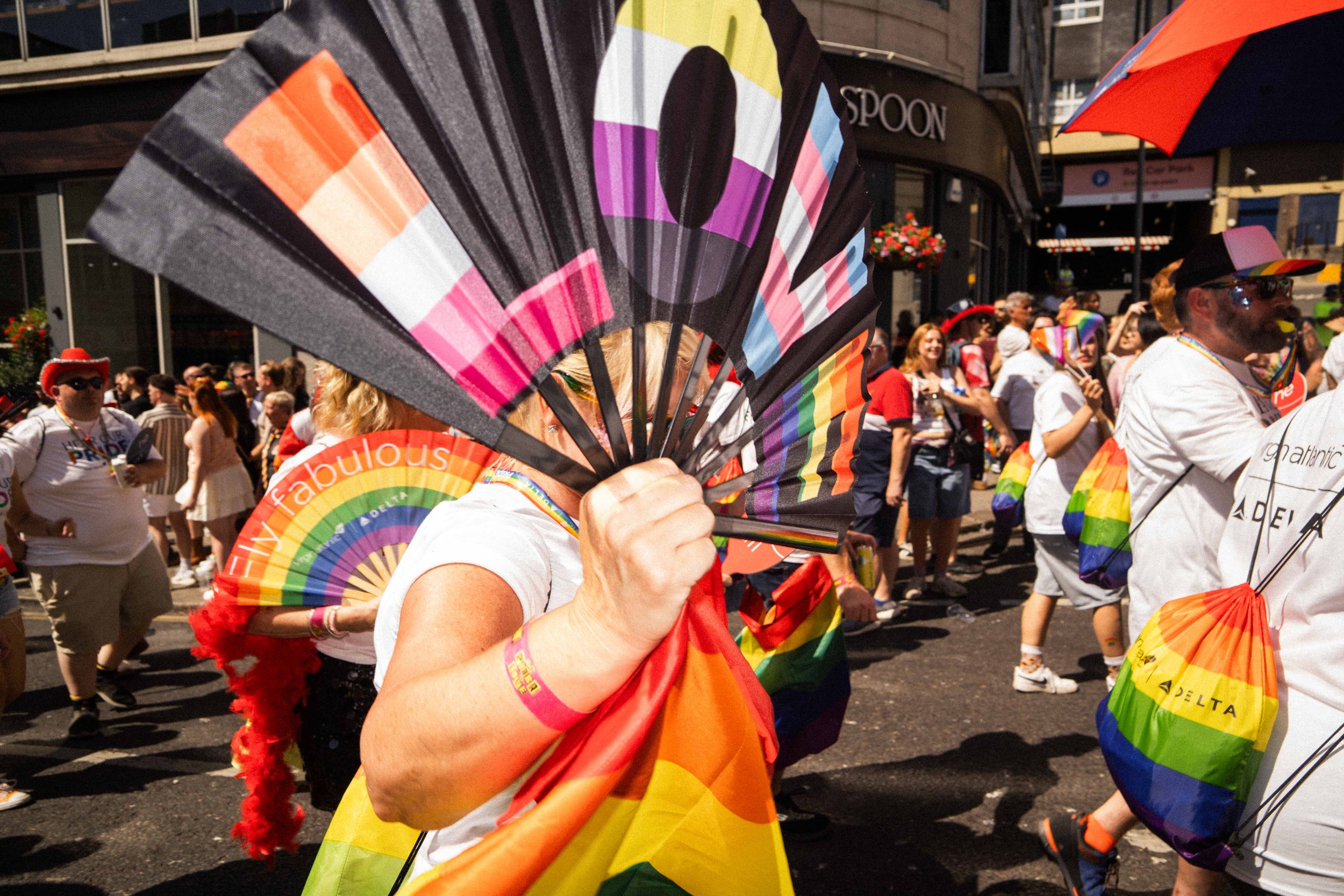
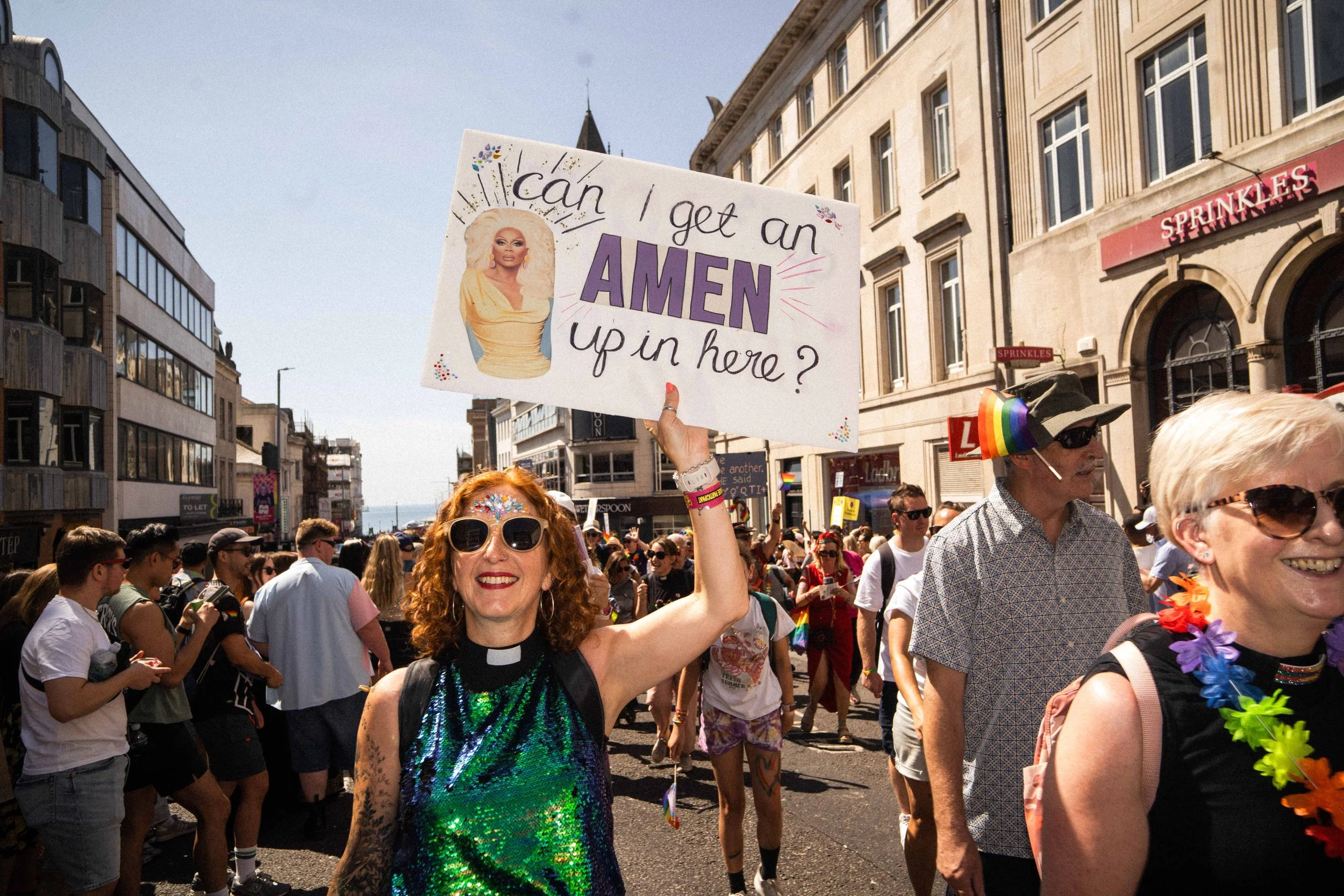
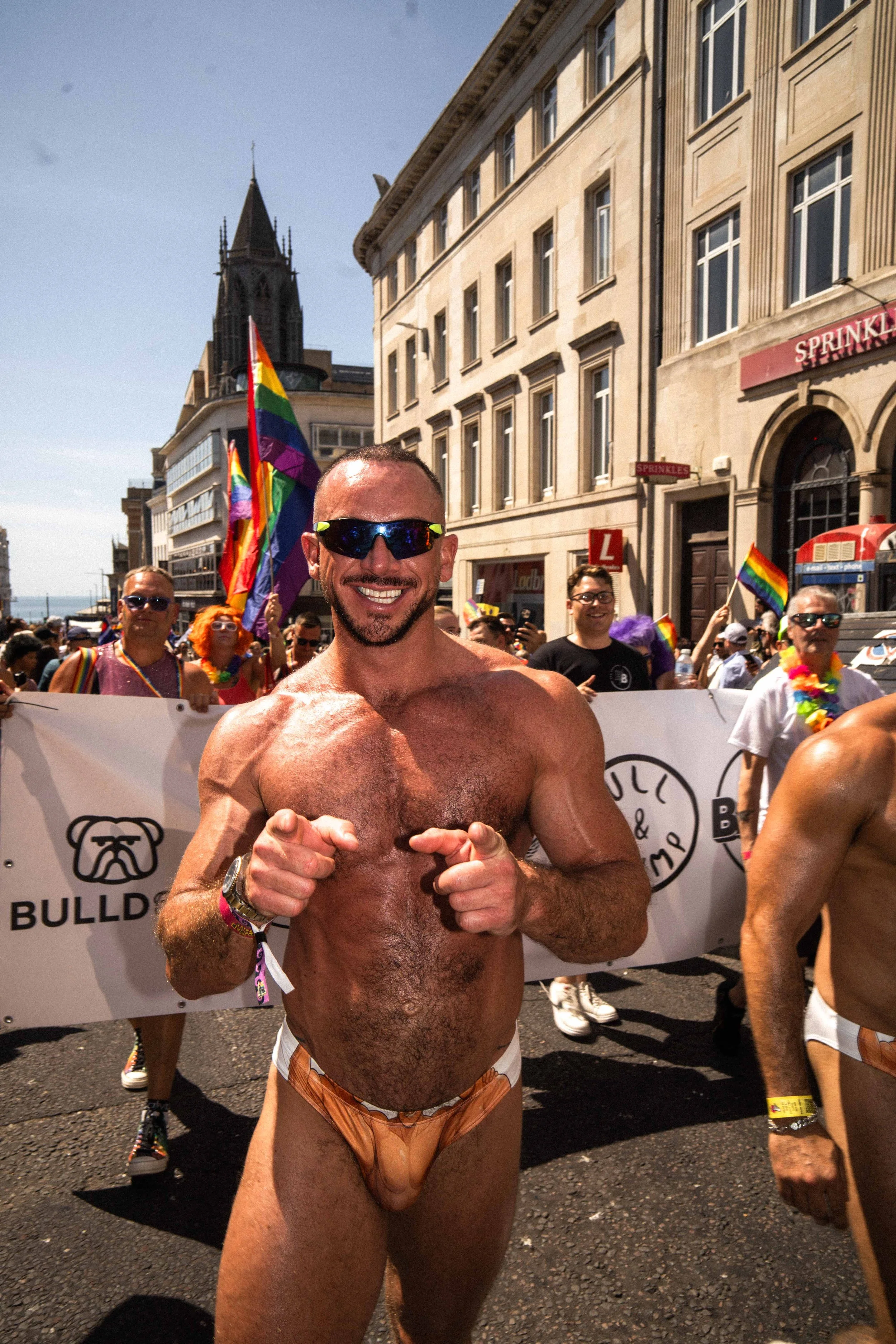
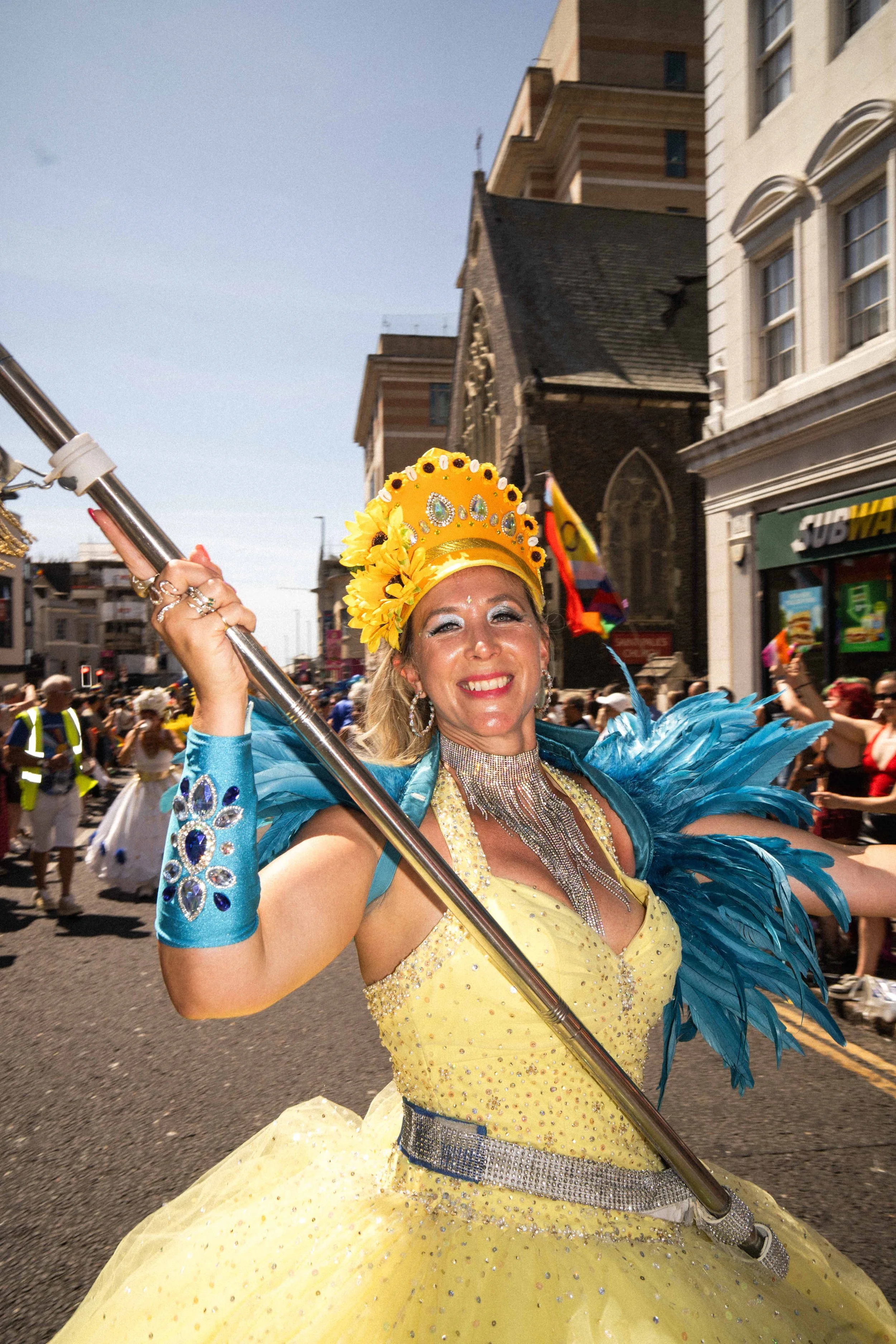
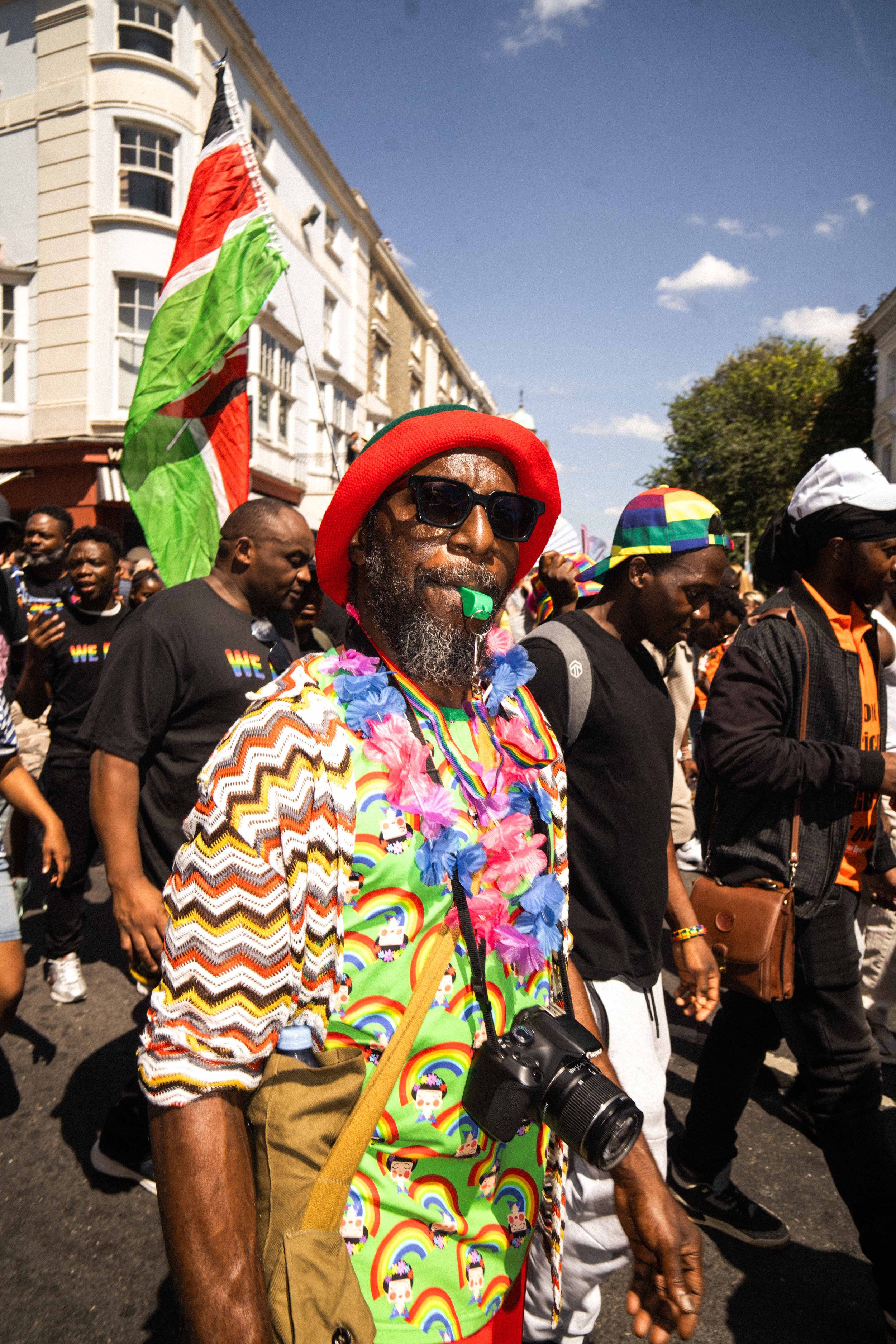
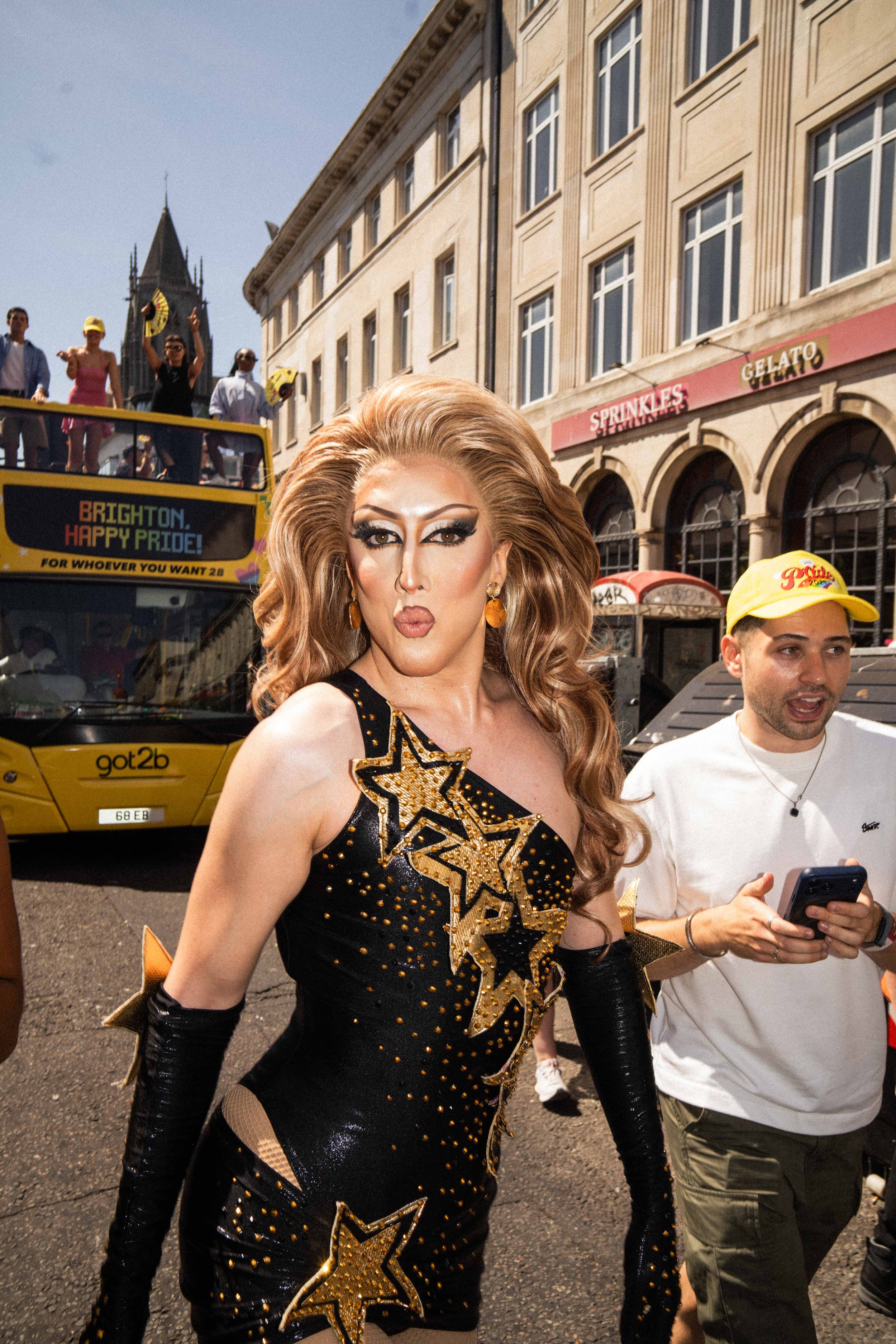
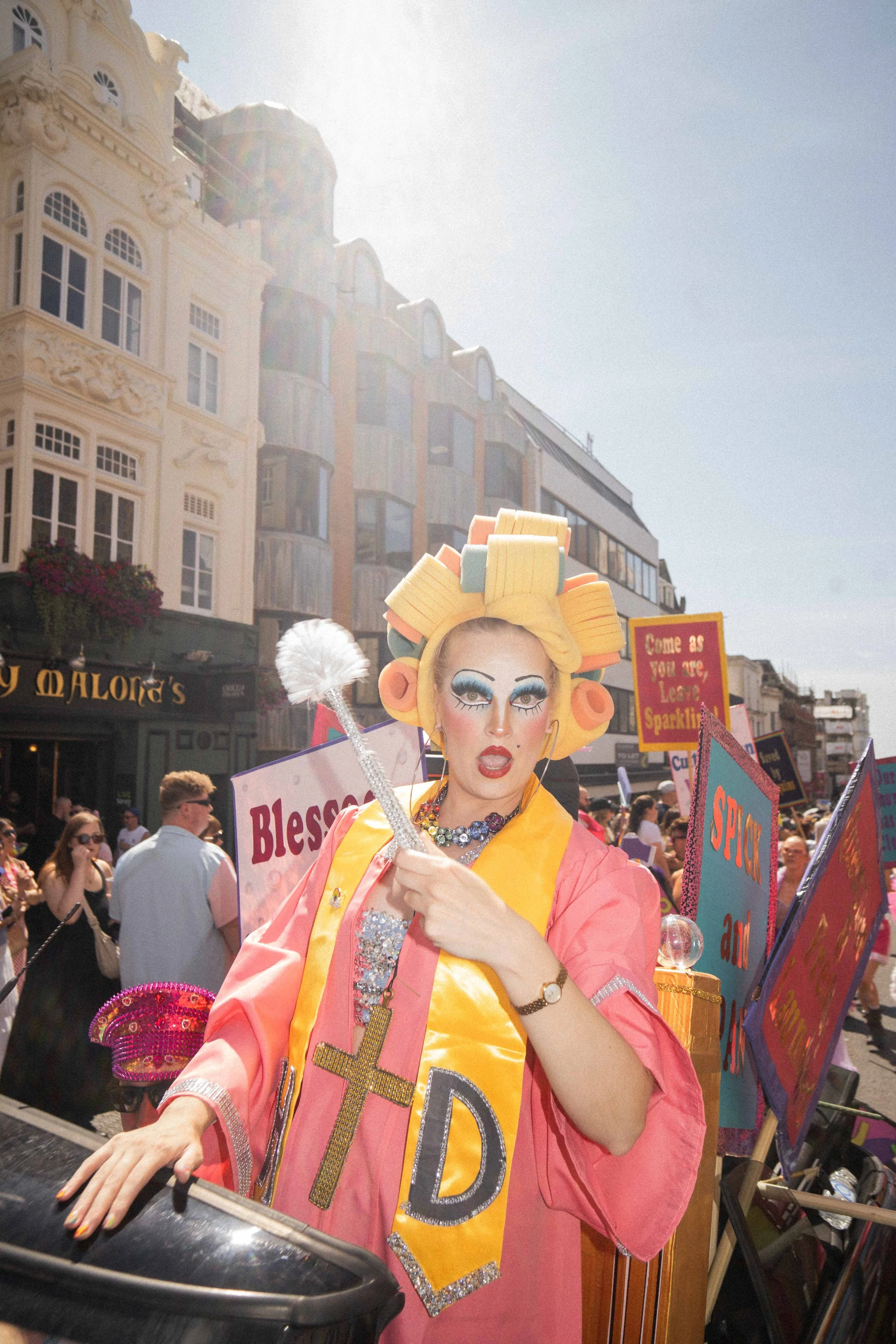
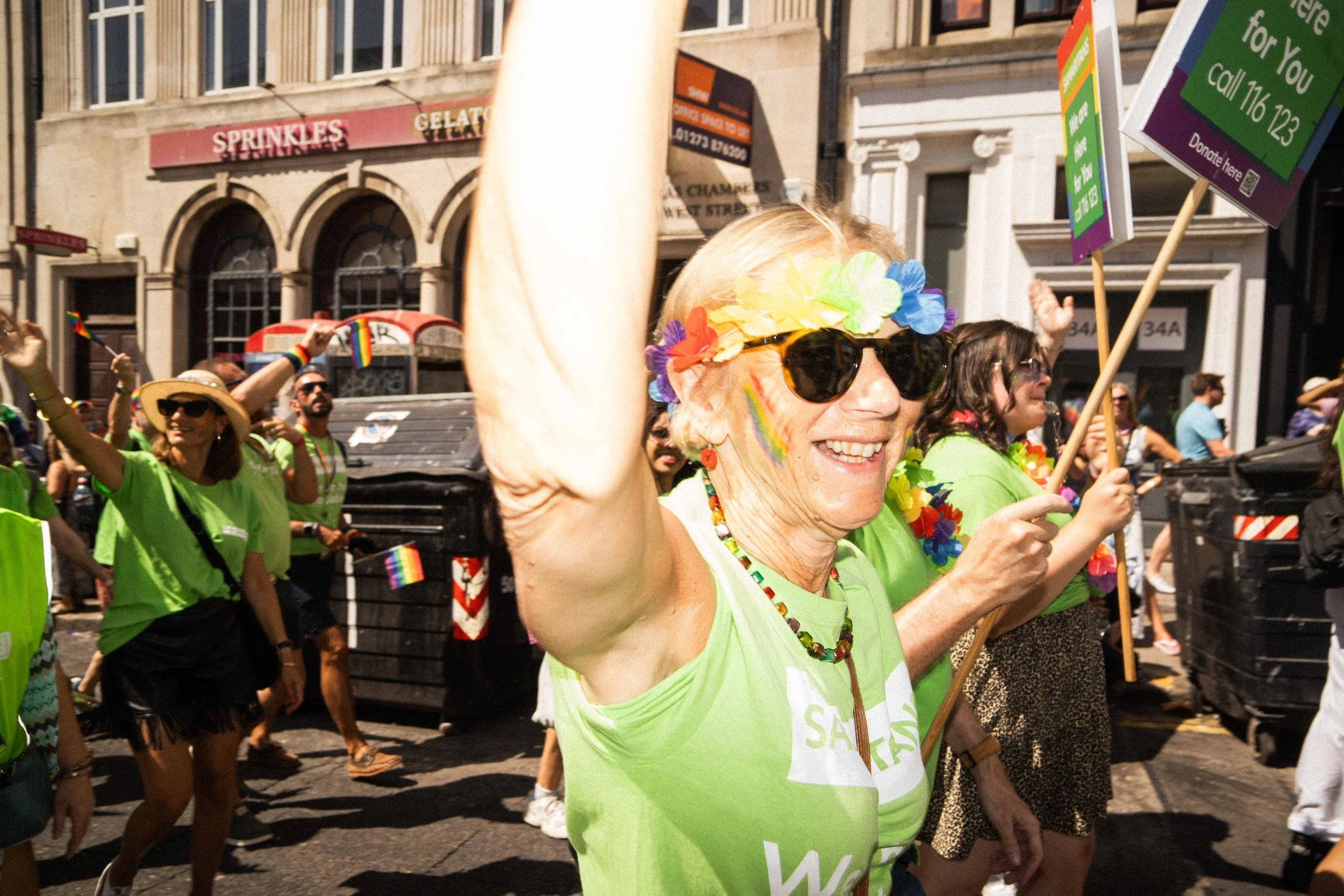
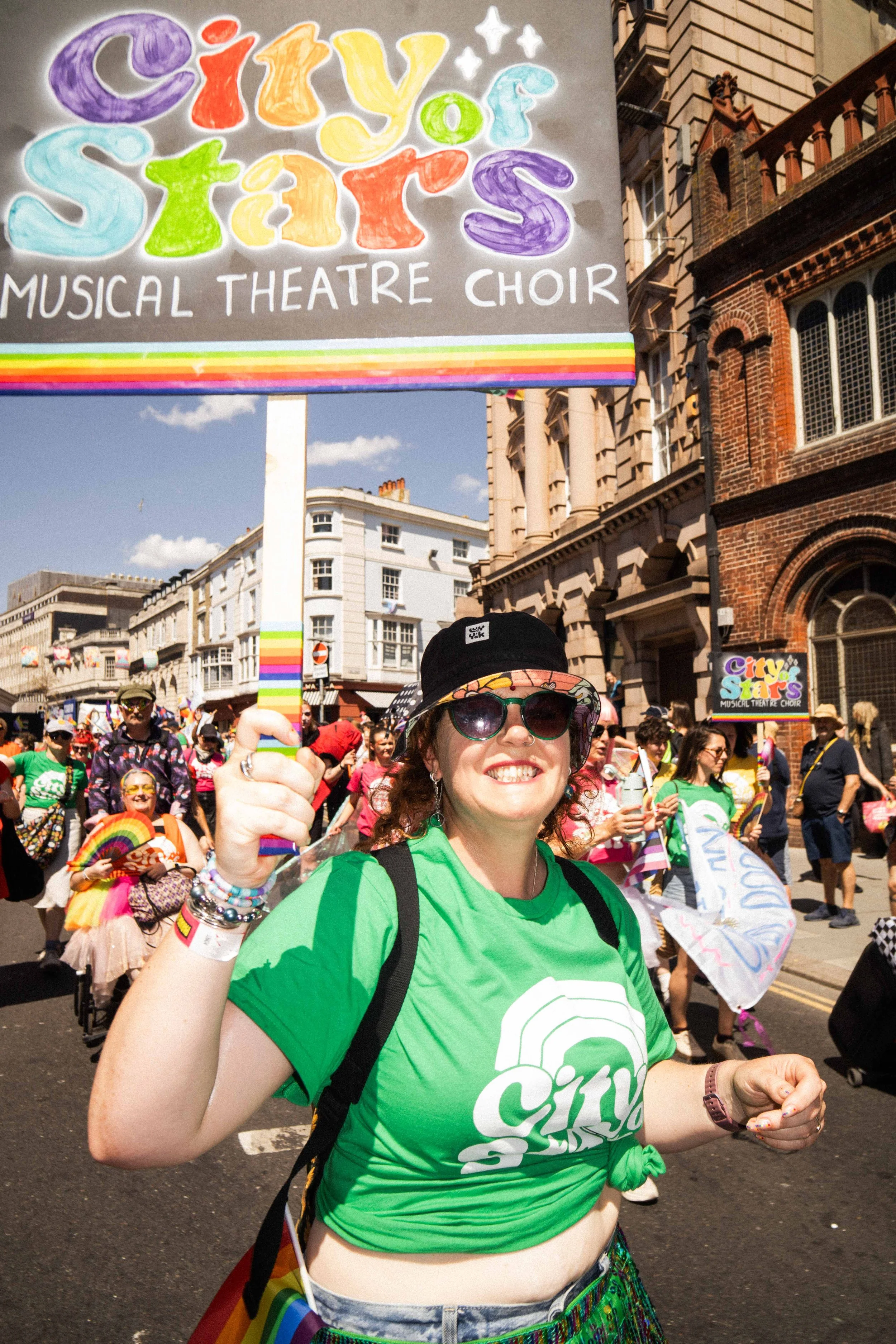
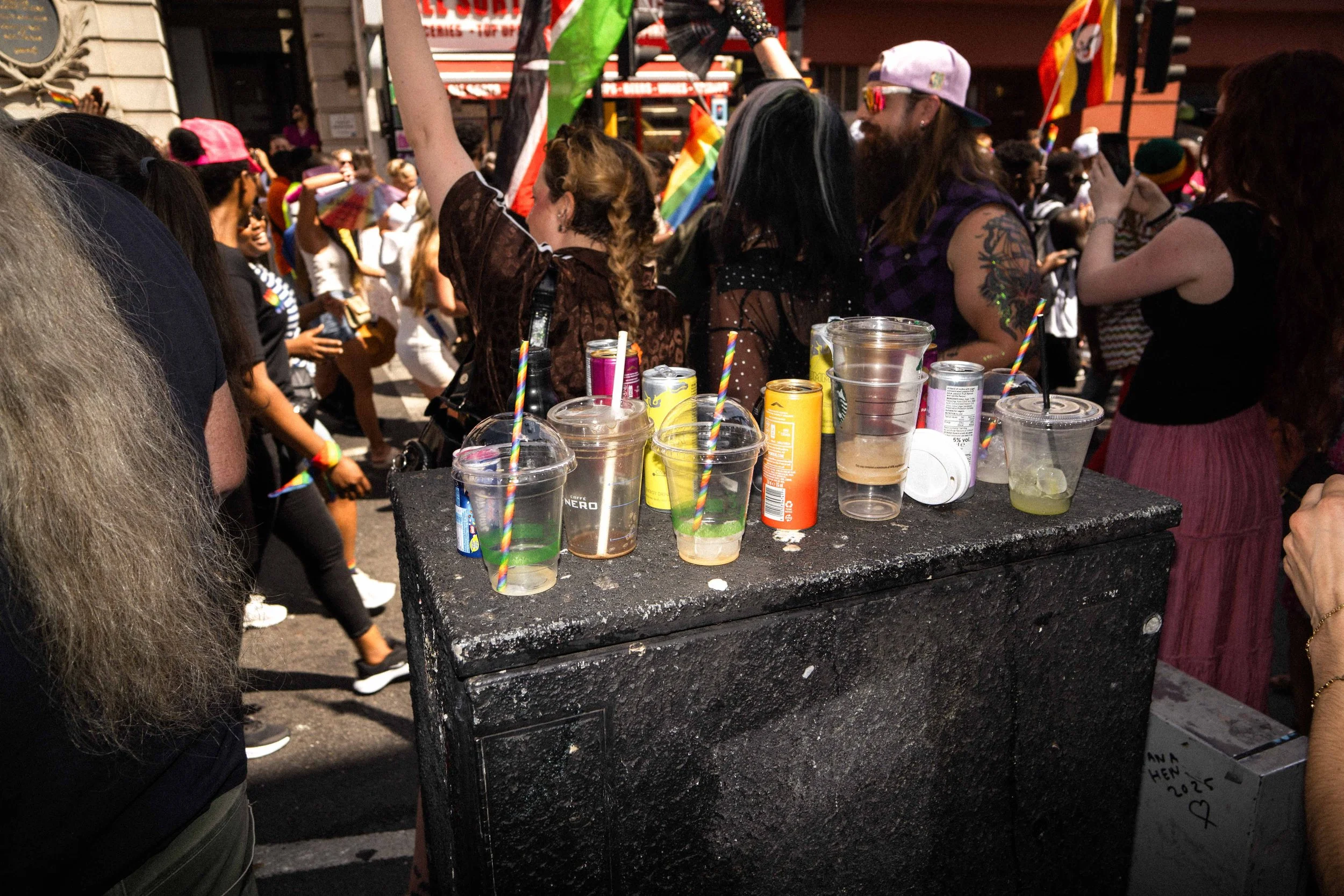
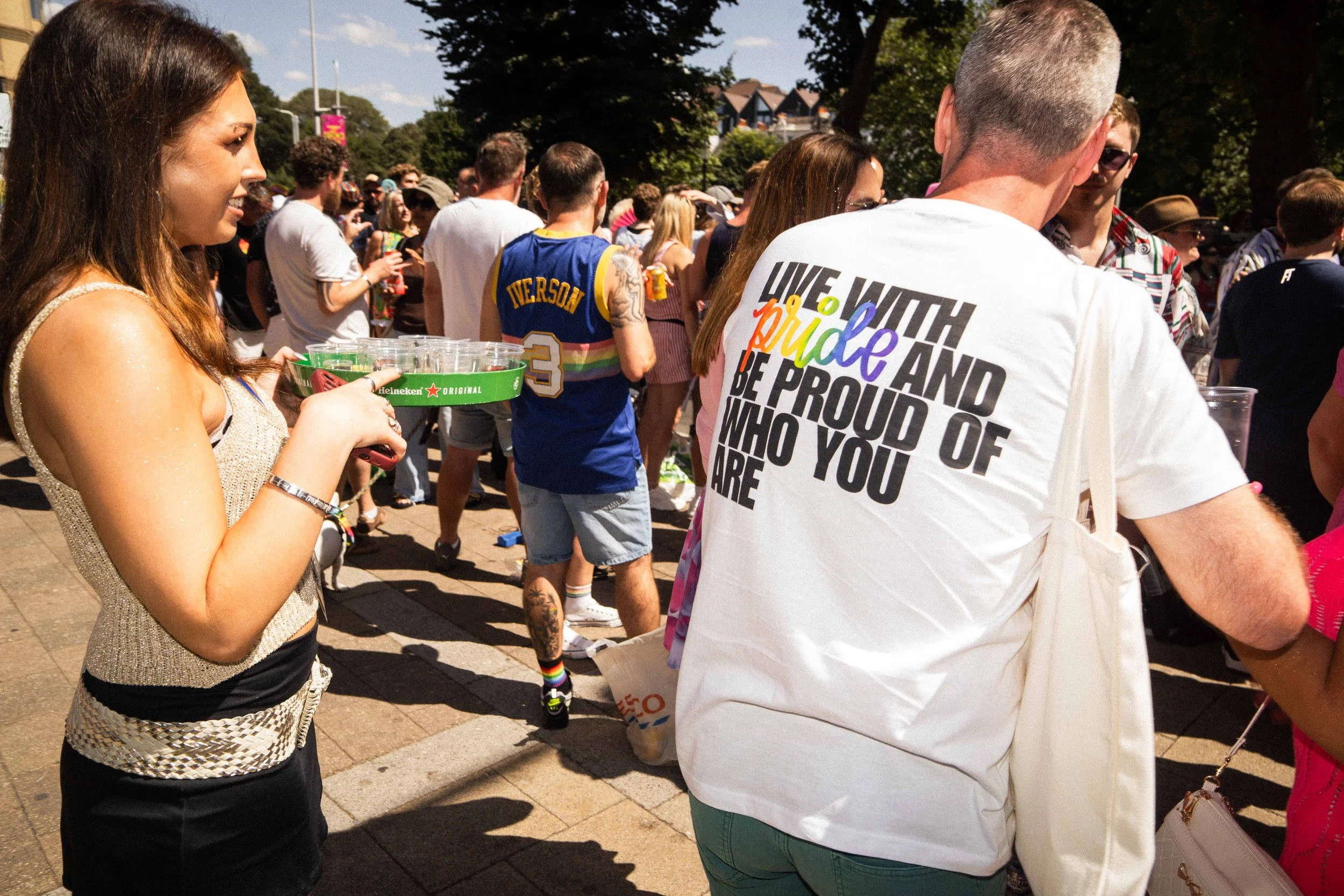
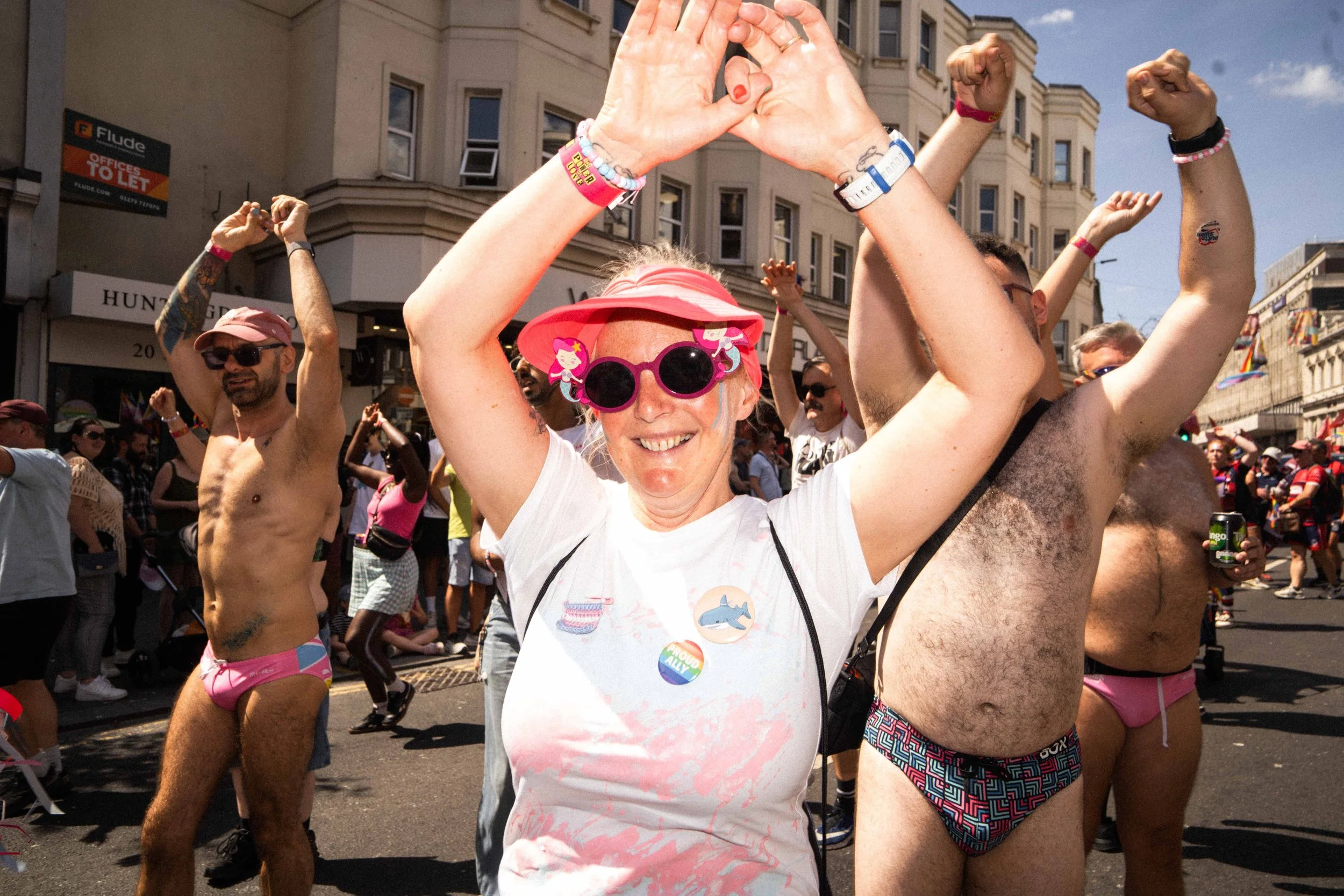
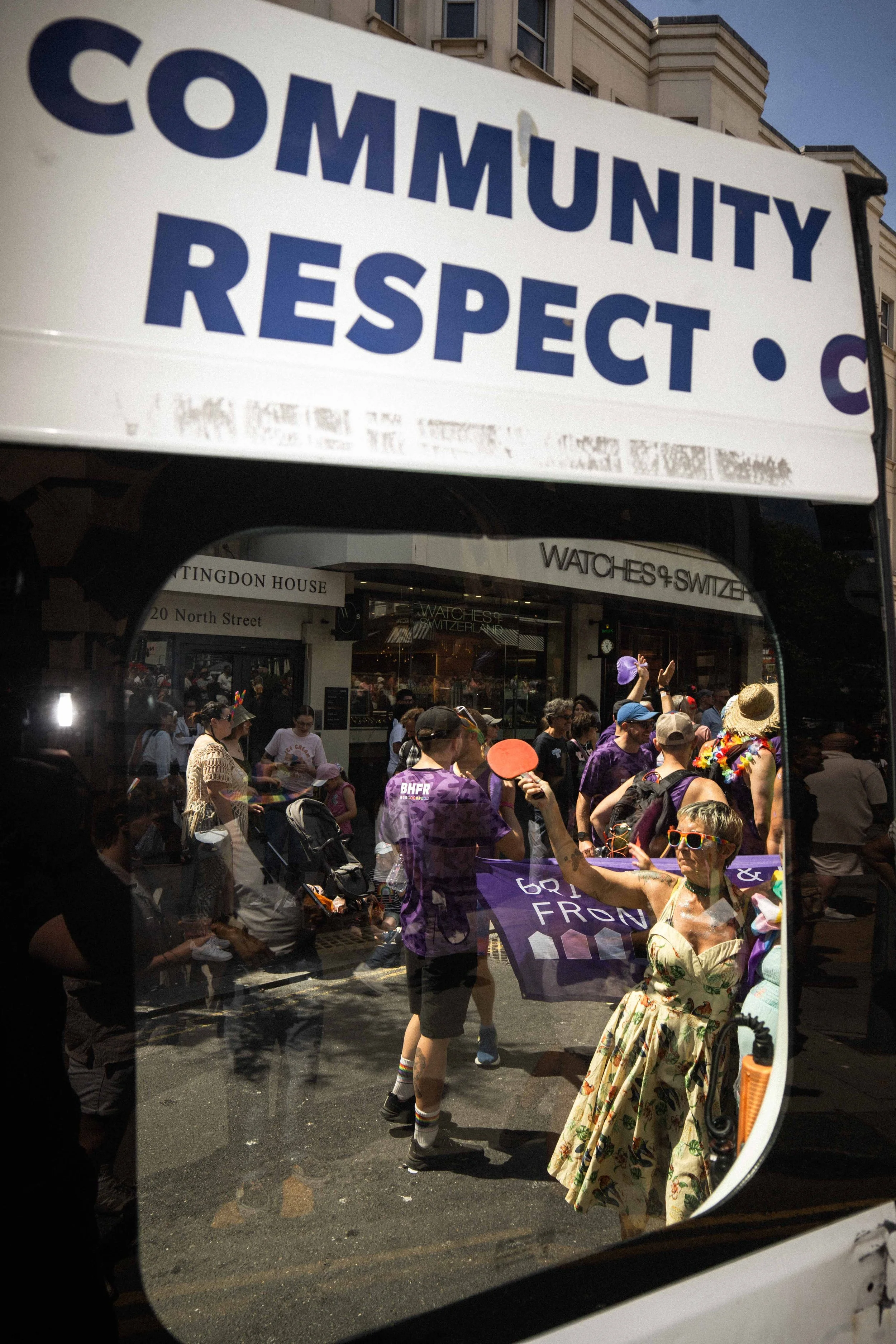
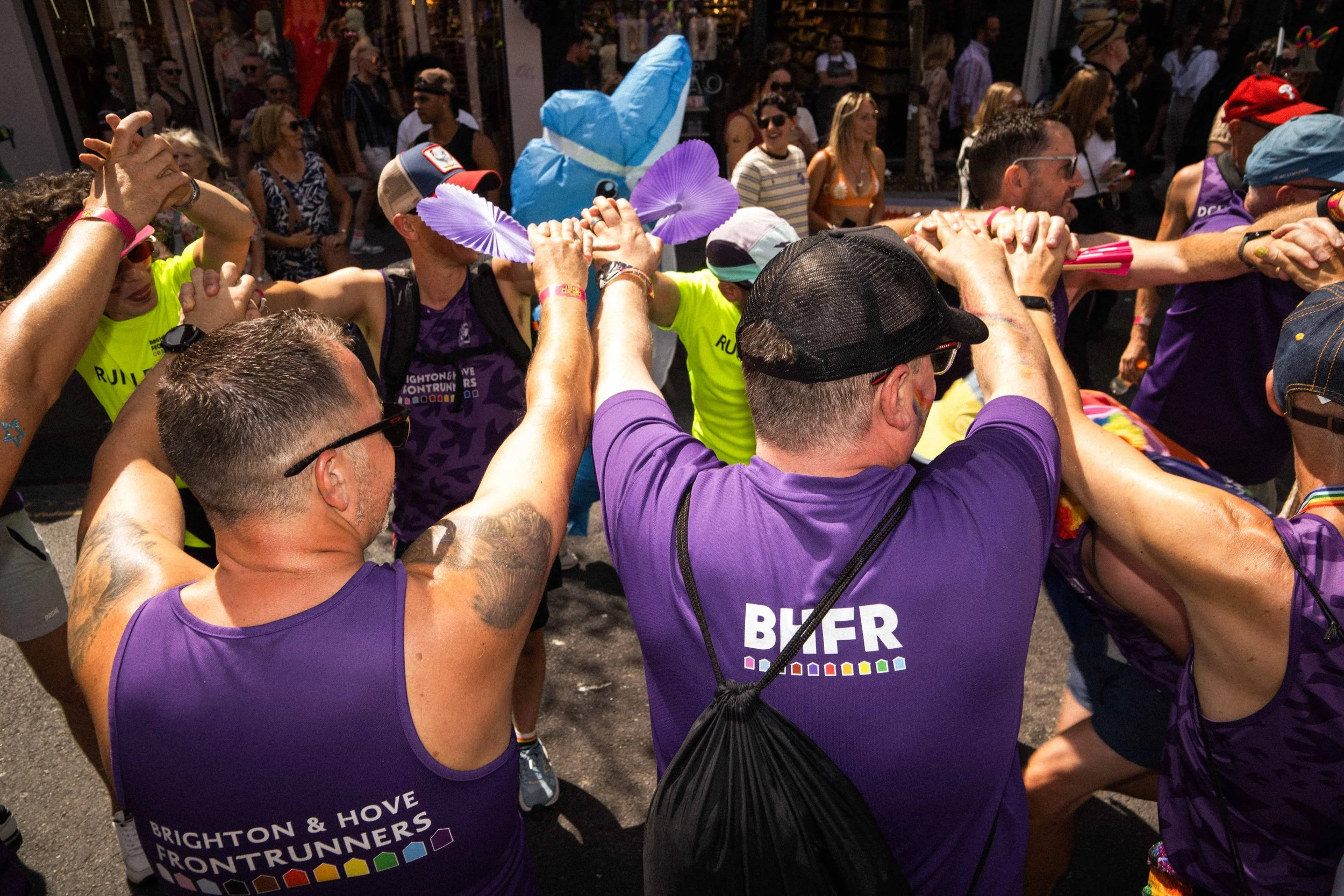
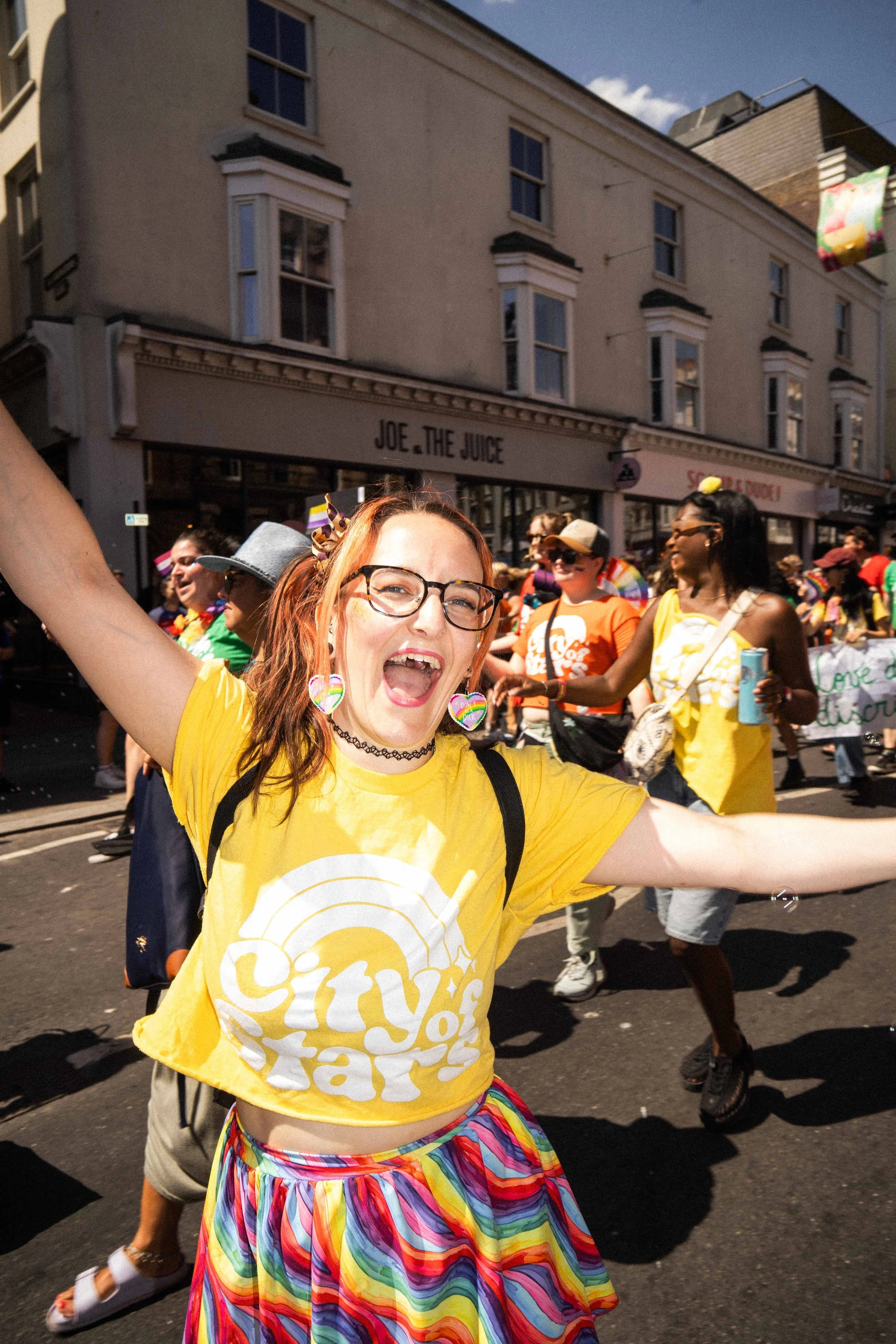
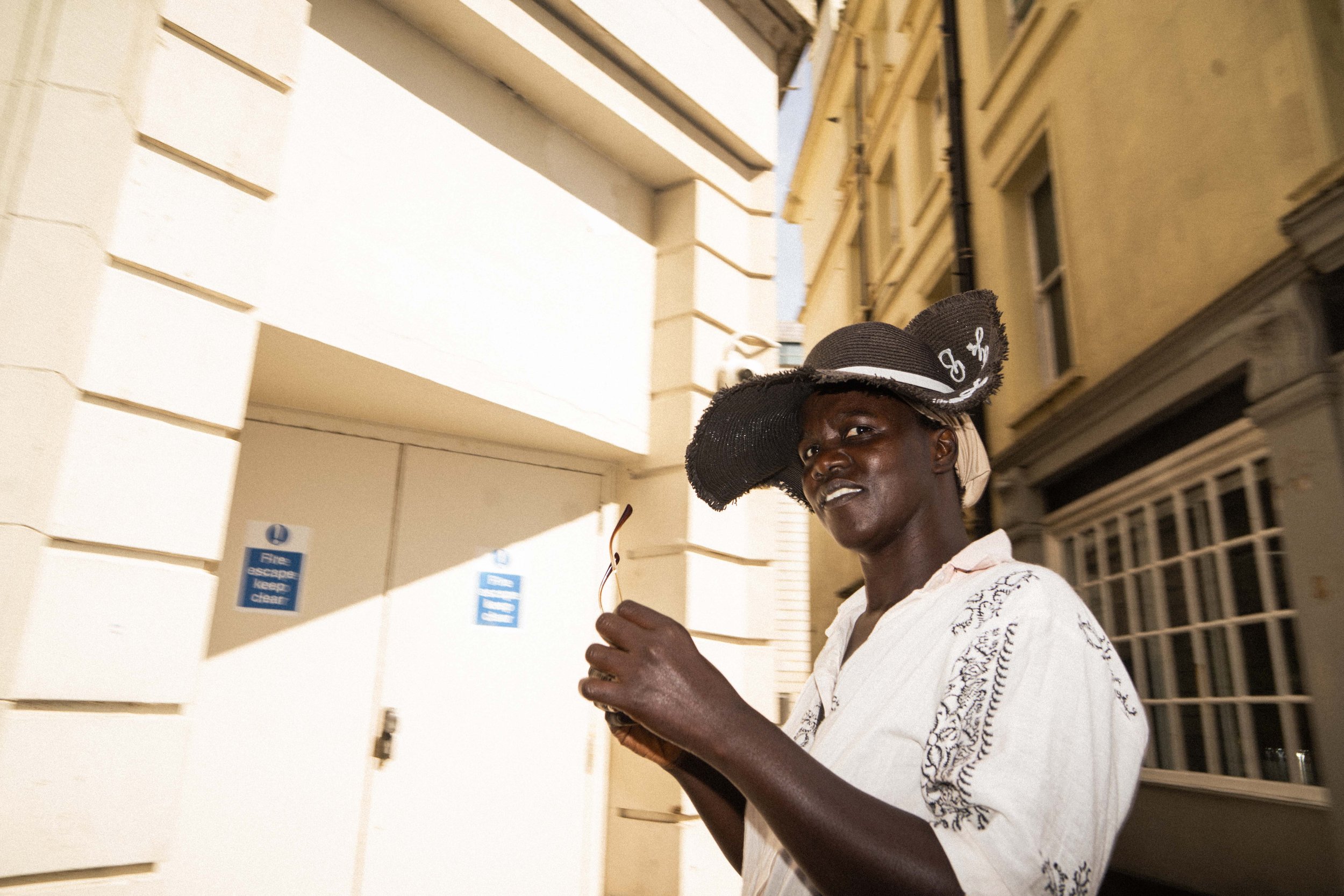
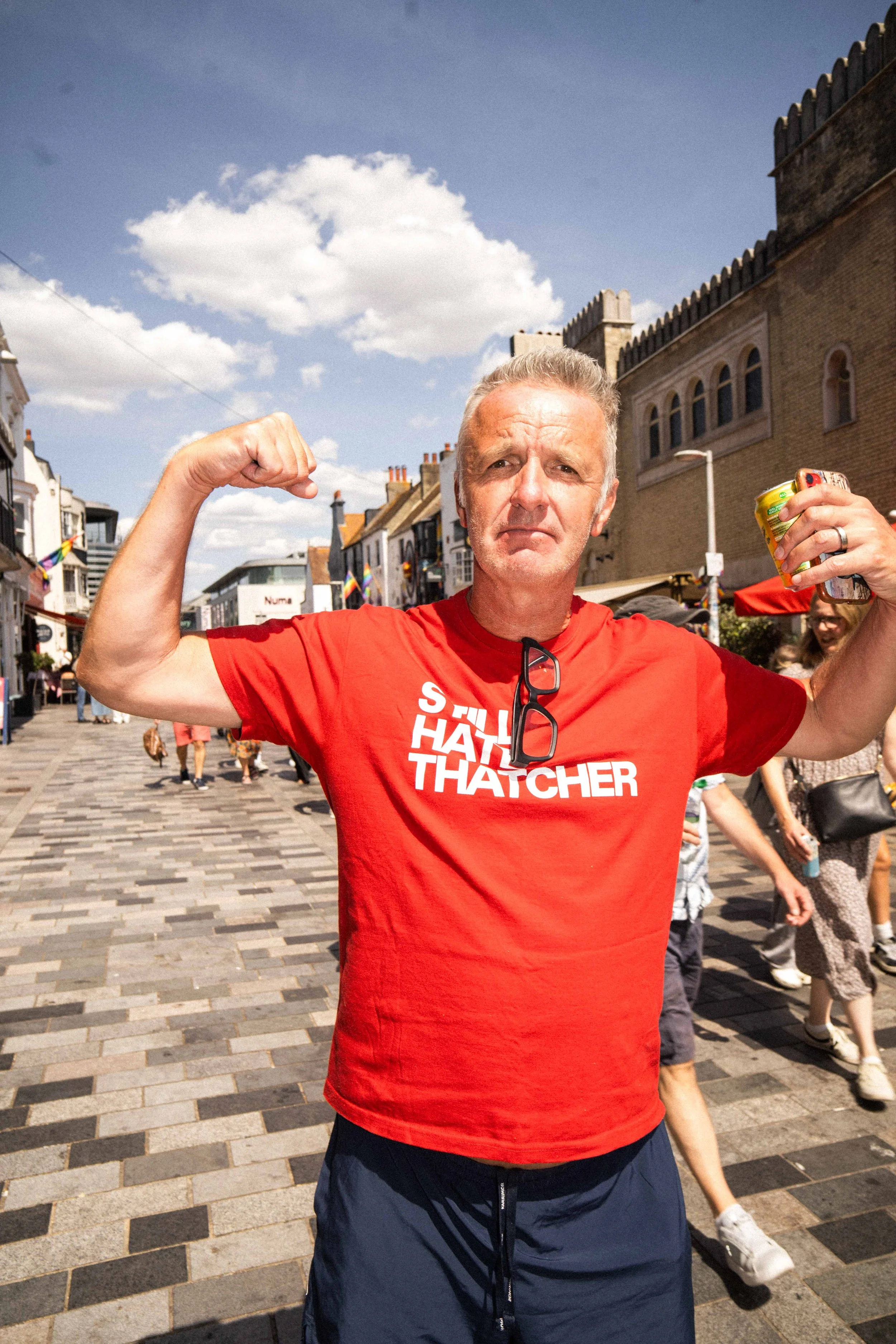
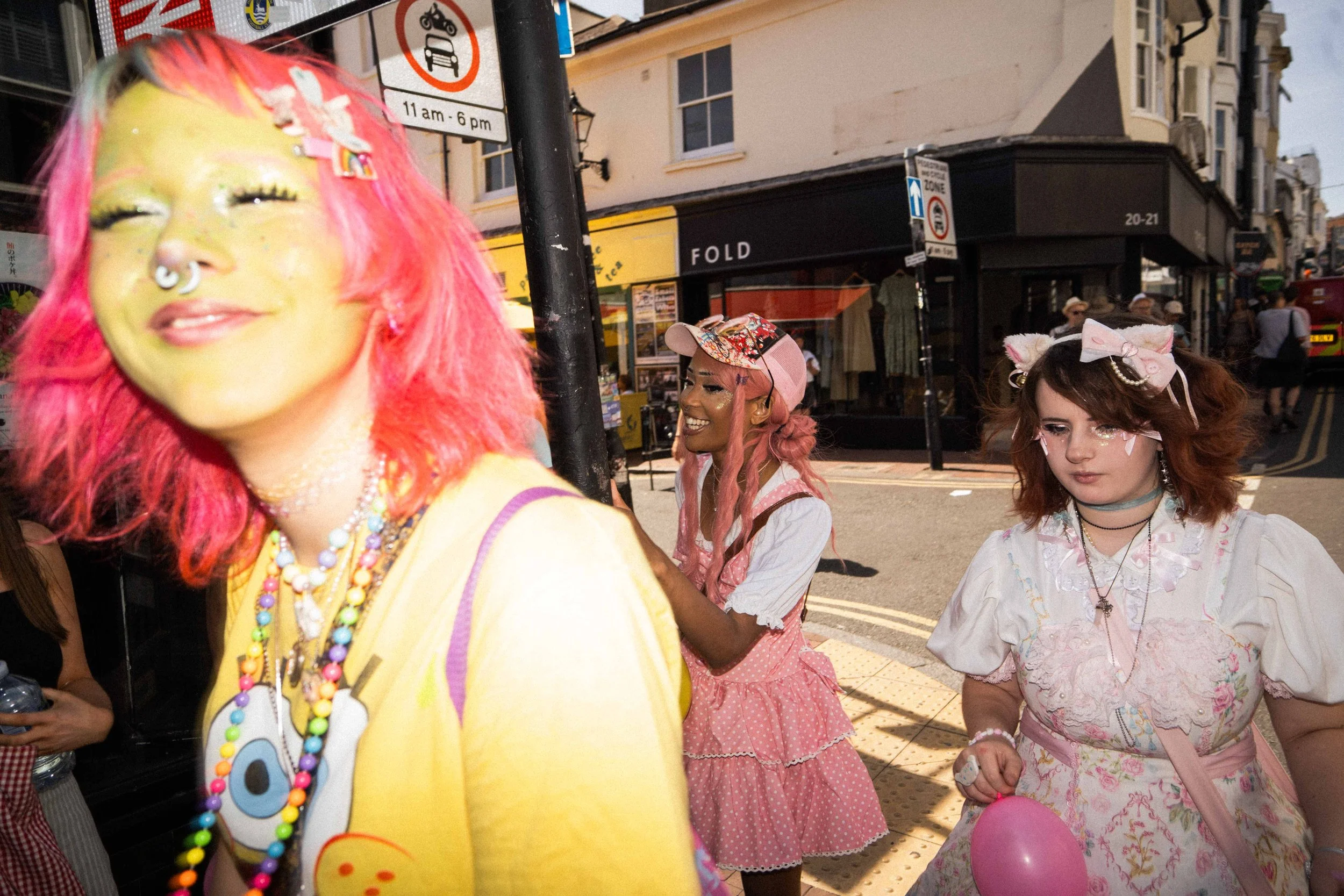
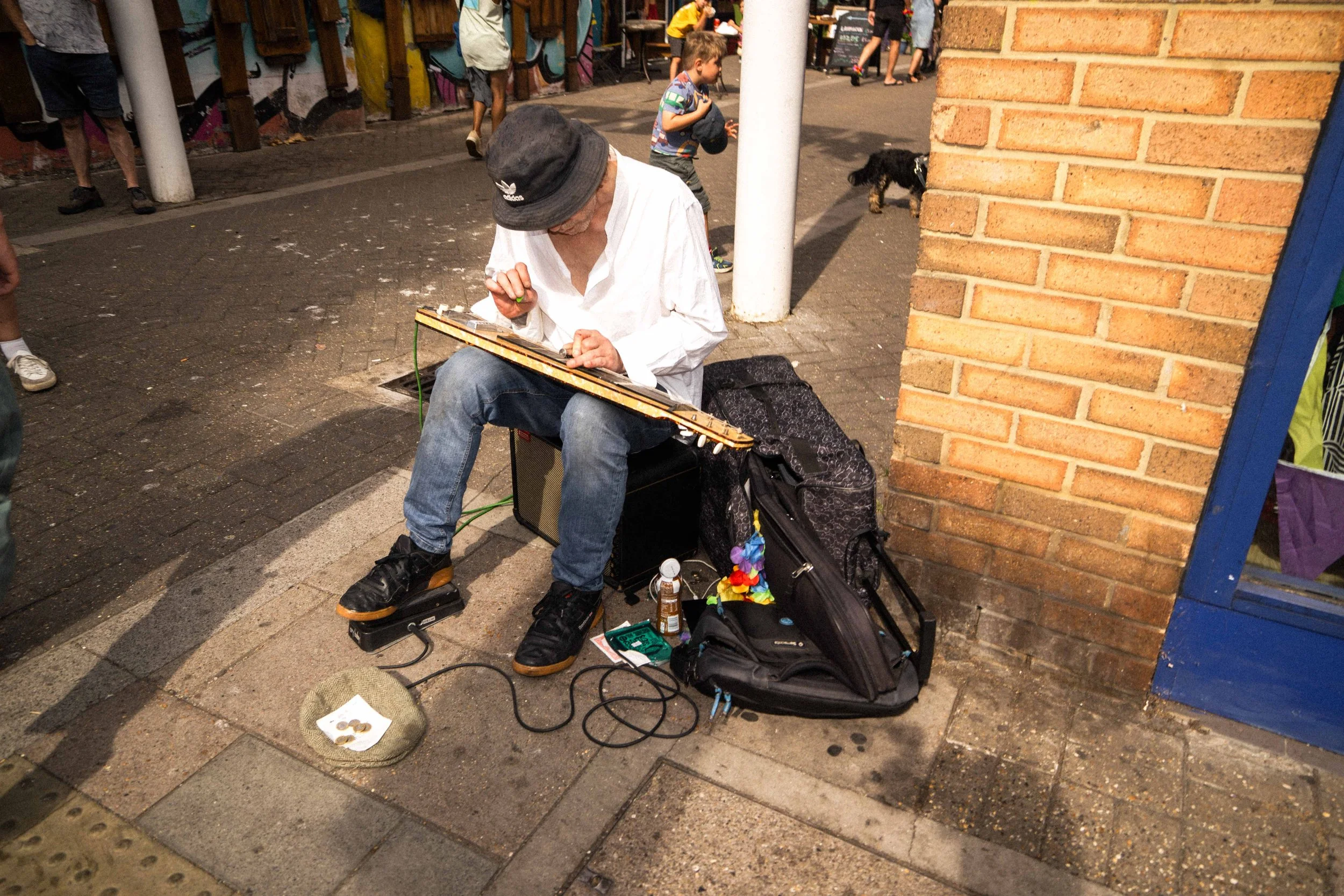
This year I came with something new in my bag: a Godox IM30 manual flash. First outing. The plan was to use it for daylight street portraits — shooting with my Sony A7 III and a 24mm lens — and the discipline it imposed was immediate and unforgiving. To get the flash working properly, I needed to be between six and nine feet from my subject. No hanging back. No safety of distance. Right in, close, direct.
It is, to put it plainly, quite an intimate way to photograph strangers.
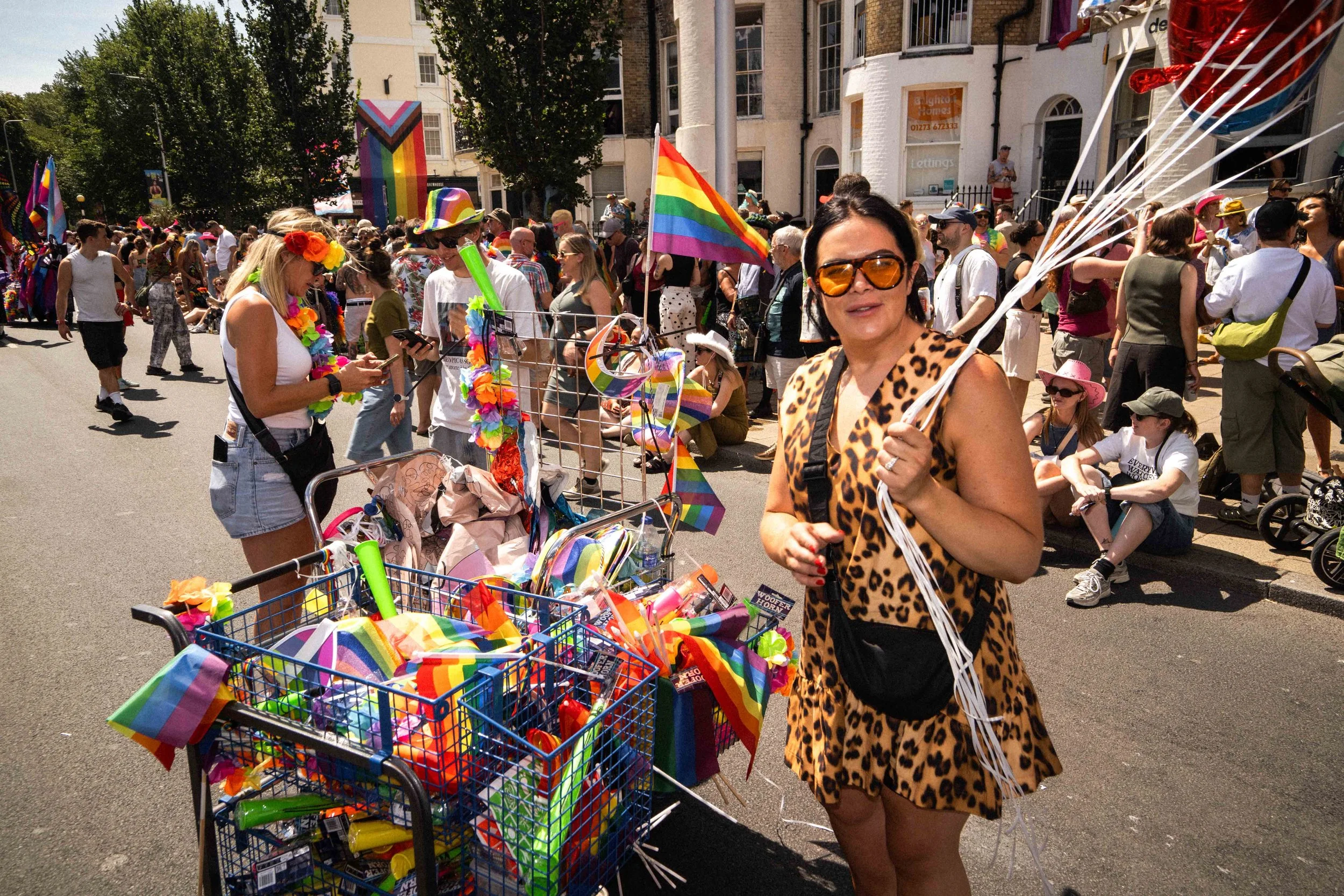
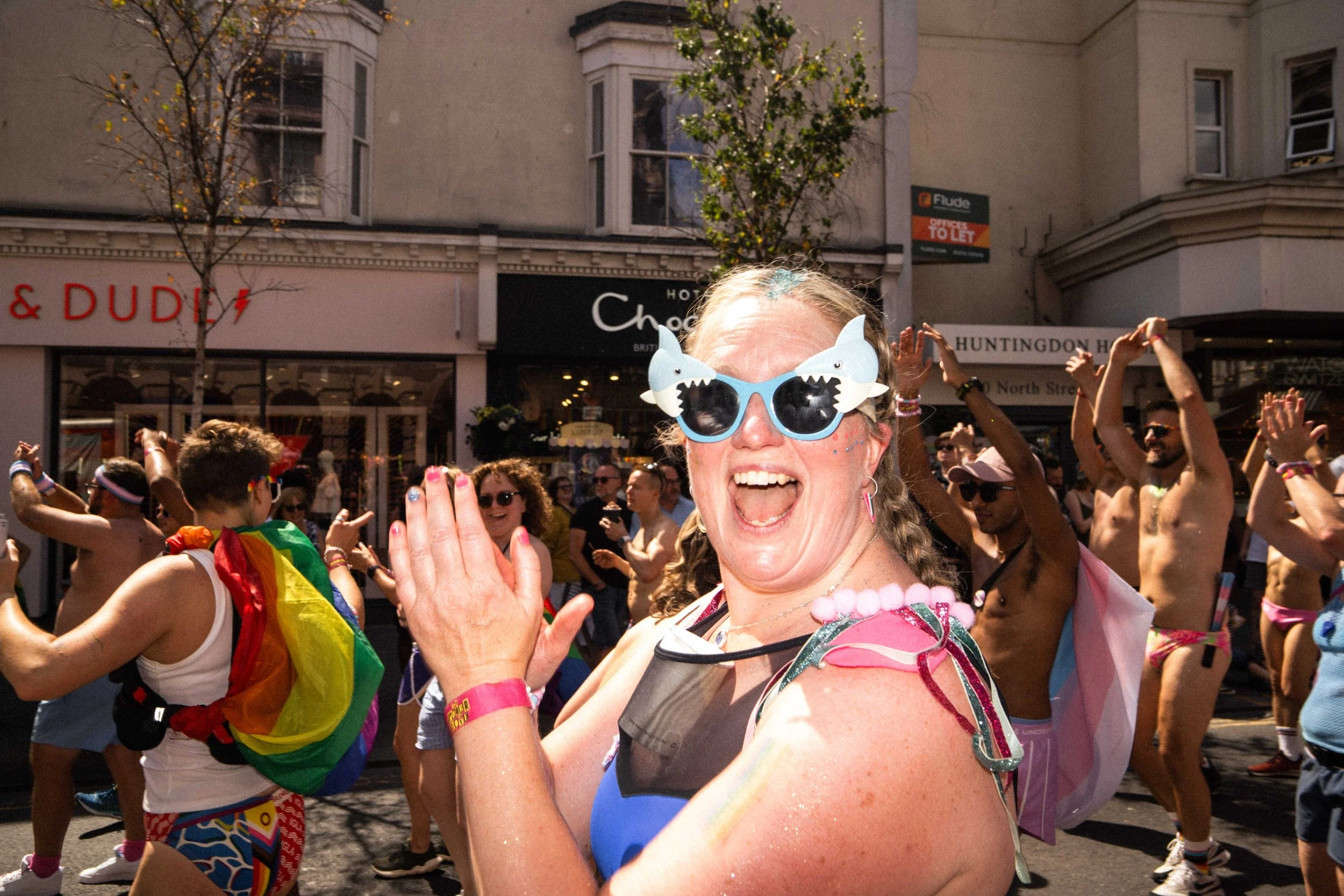
What surprised me was how it was received. At an event like Pride, where self-expression is the whole point, people understood the camera. They gave me their time. They gave me their faces. They stood still for a moment in the middle of a moving crowd and let the flash do its thing.
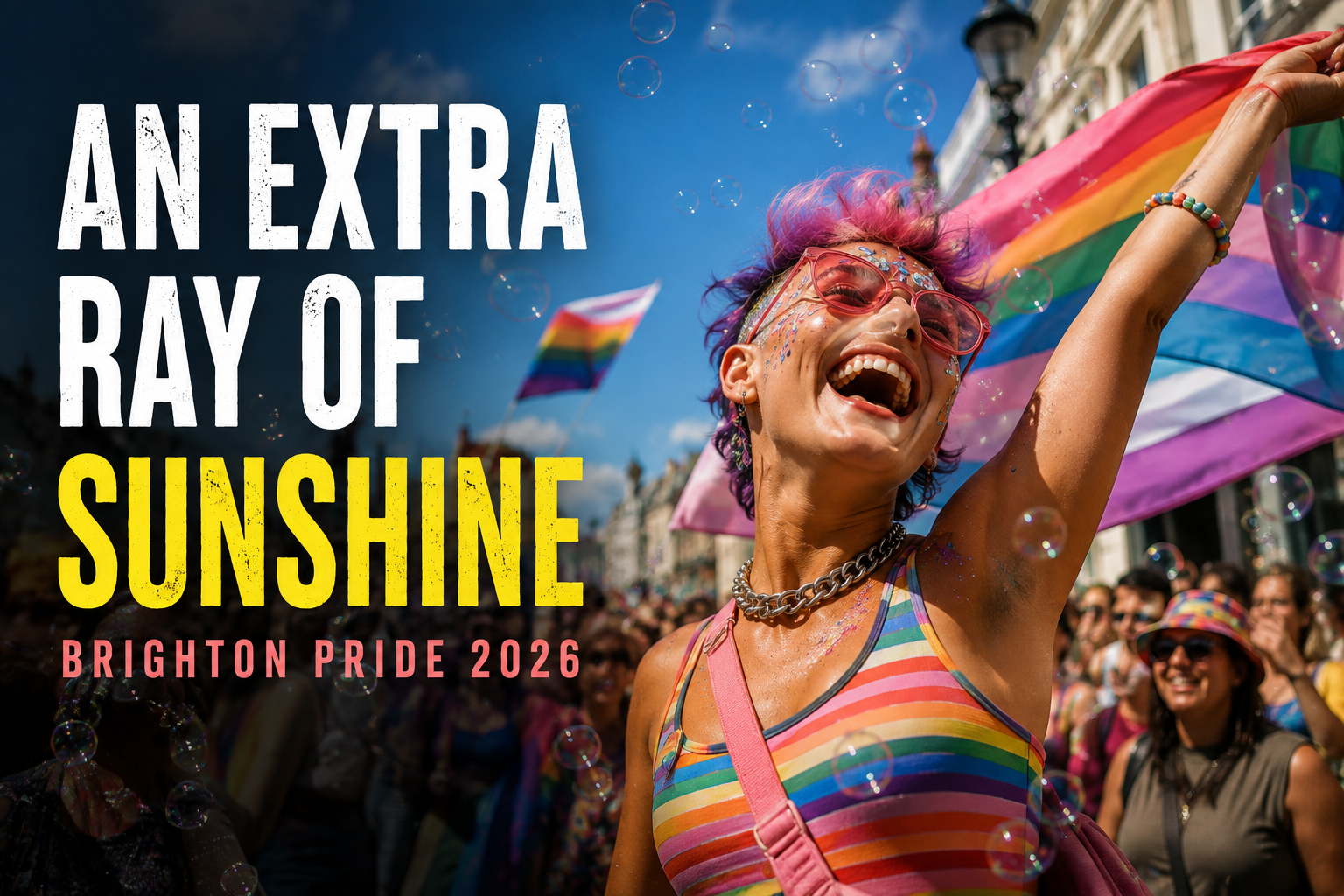
In my eyes, the flash added an extra ray of sunshine to what was already a glorious day.
The World Came to Brighton
This year's Pride carried a weight that last year's didn't. In the background — not spoken about loudly, but present — was the shadow of the terror attacks in Berlin. The police presence was visible and increased. Security was tighter. You noticed it if you were looking.
And yet the crowd filled the streets regardless. That is not naivety — it is something closer to defiance, or perhaps just determination. The people who come to Brighton Pride have usually decided, in one way or another, that they are not going to let fear dictate where they stand.
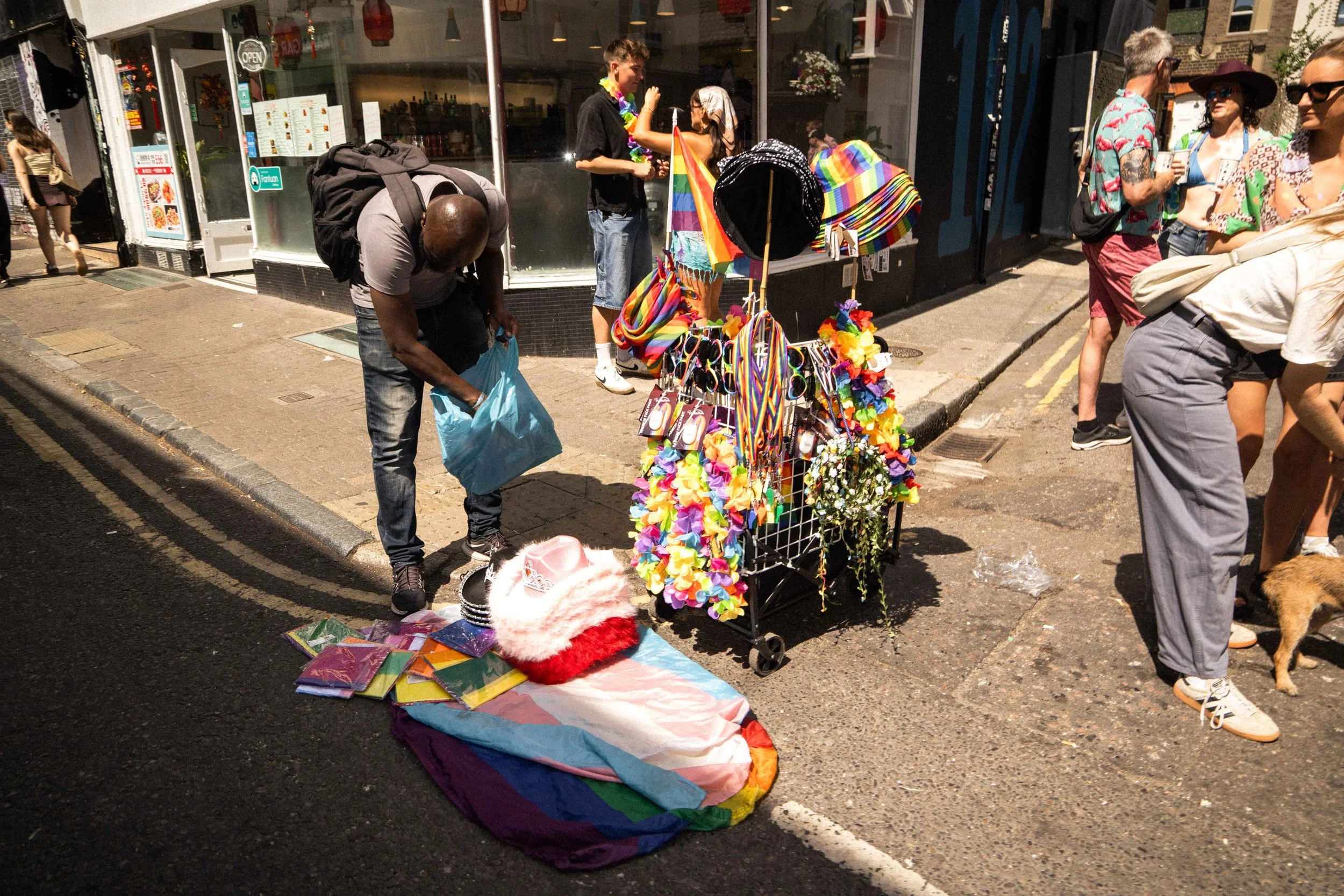
The sun helped. It is hard to feel anything but alive in that kind of heat, in that kind of crowd, with that much colour moving through the streets.
Brighton, After Twelve Years
I have lived in Brighton for twelve years. My children, who are now nineteen and twenty-three, grew up here. I have watched this city shape them in ways I couldn't have planned, and I remain grateful for it every time I walk these streets.
After the parade, my son and I had a wander. No agenda — just the two of us, a beer somewhere, a bite to eat. The kind of afternoon that doesn't photograph well but stays with you.
Brighton is a wonderful place to bring up children. It teaches them, early and without fuss, that the world contains more kinds of people than they will ever be able to count — and that this is not something to be afraid of. It is something to be curious about.
That is what I was doing on Saturday with the Godox IM30. Being curious. Getting close. Asking people, with a camera and a flash and six to nine feet of space between us, if they'd give me a moment.
Almost everyone said yes.
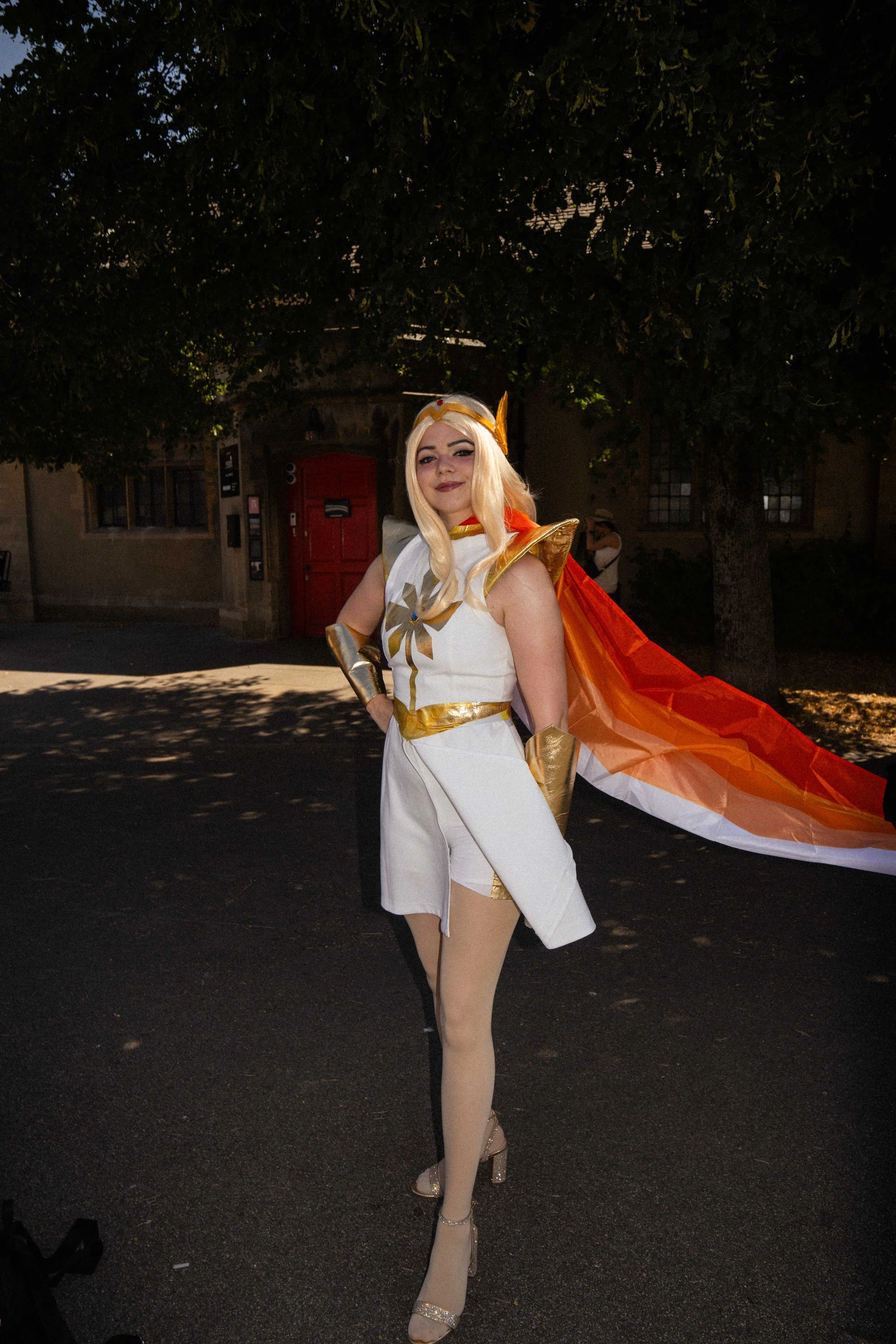
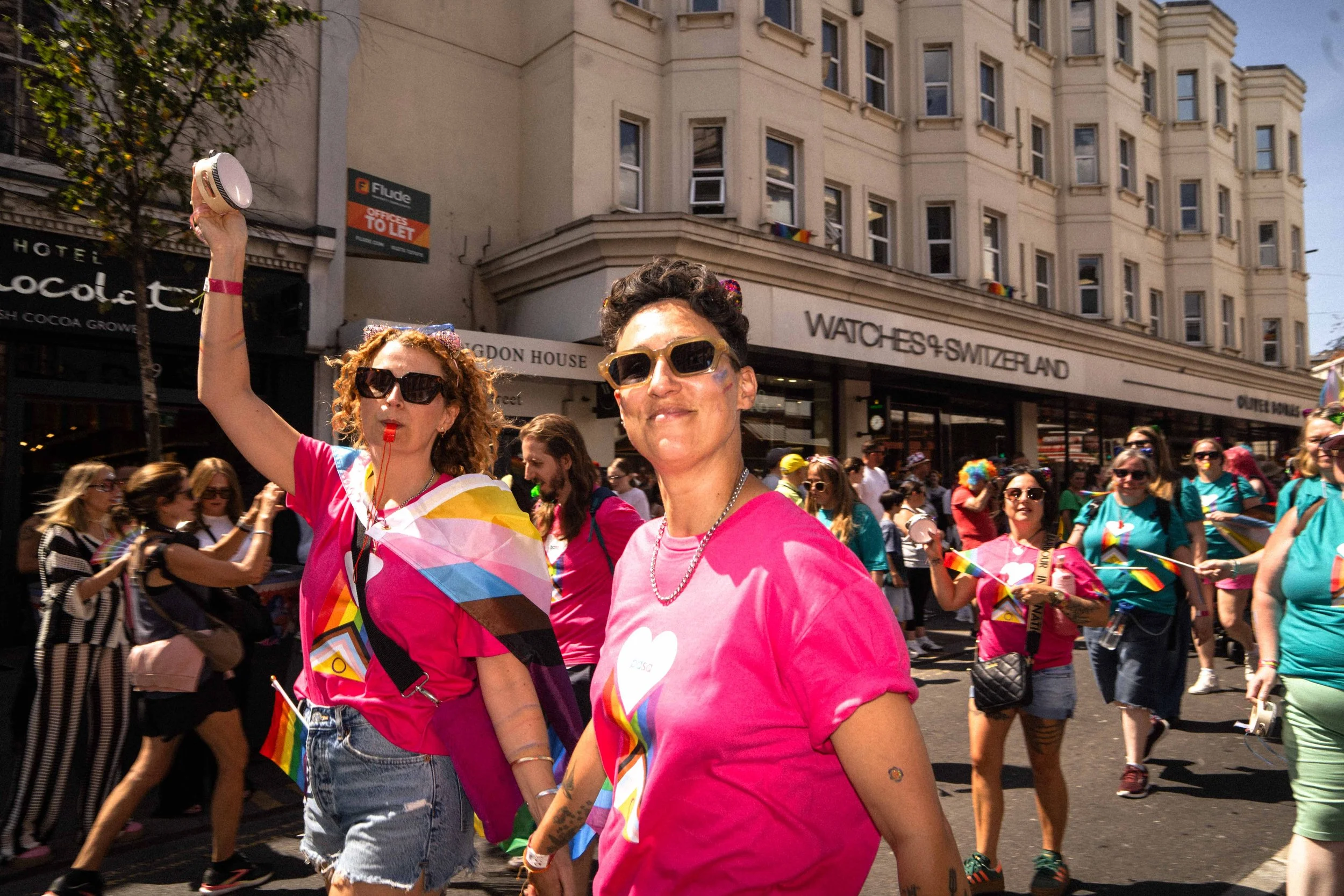
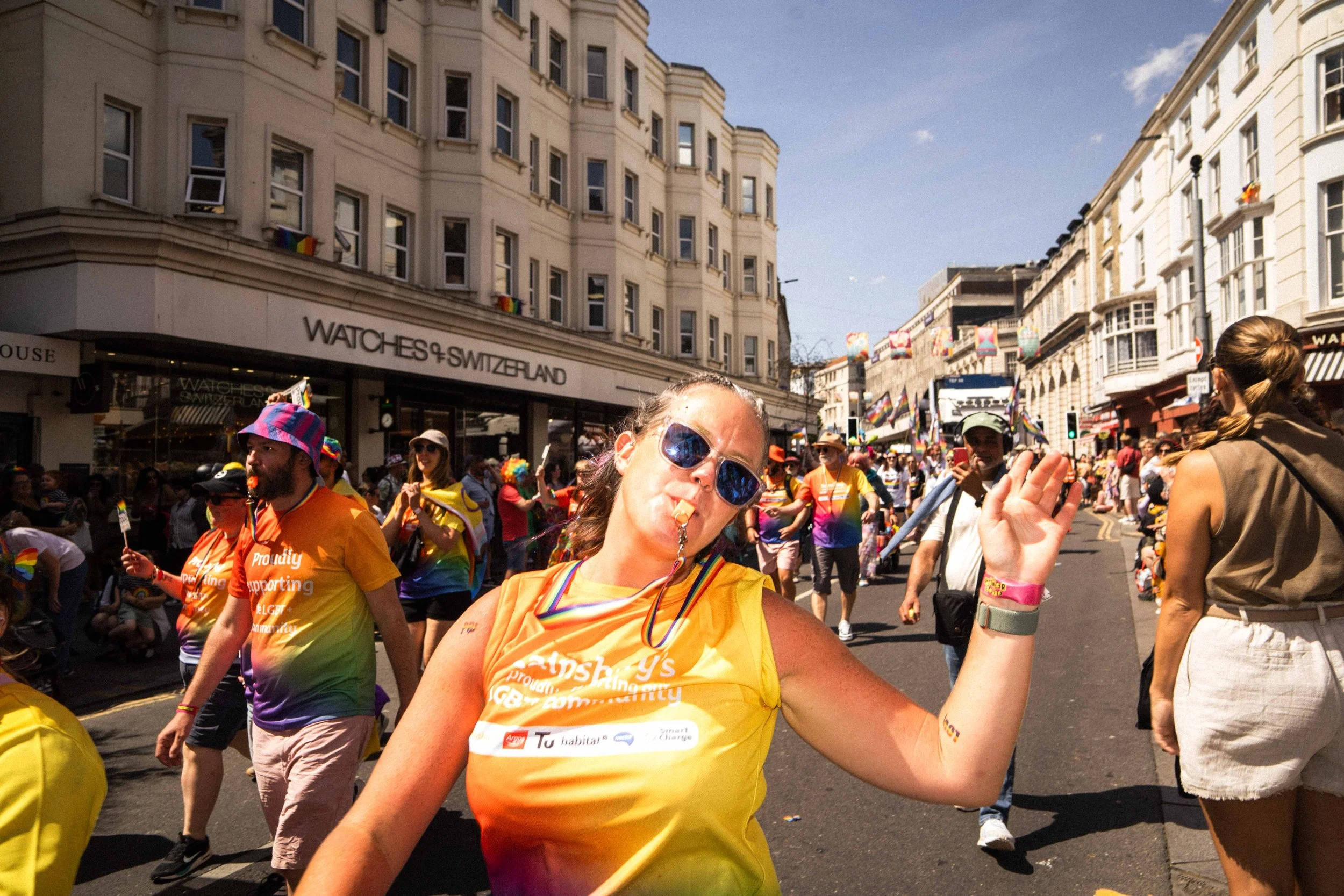
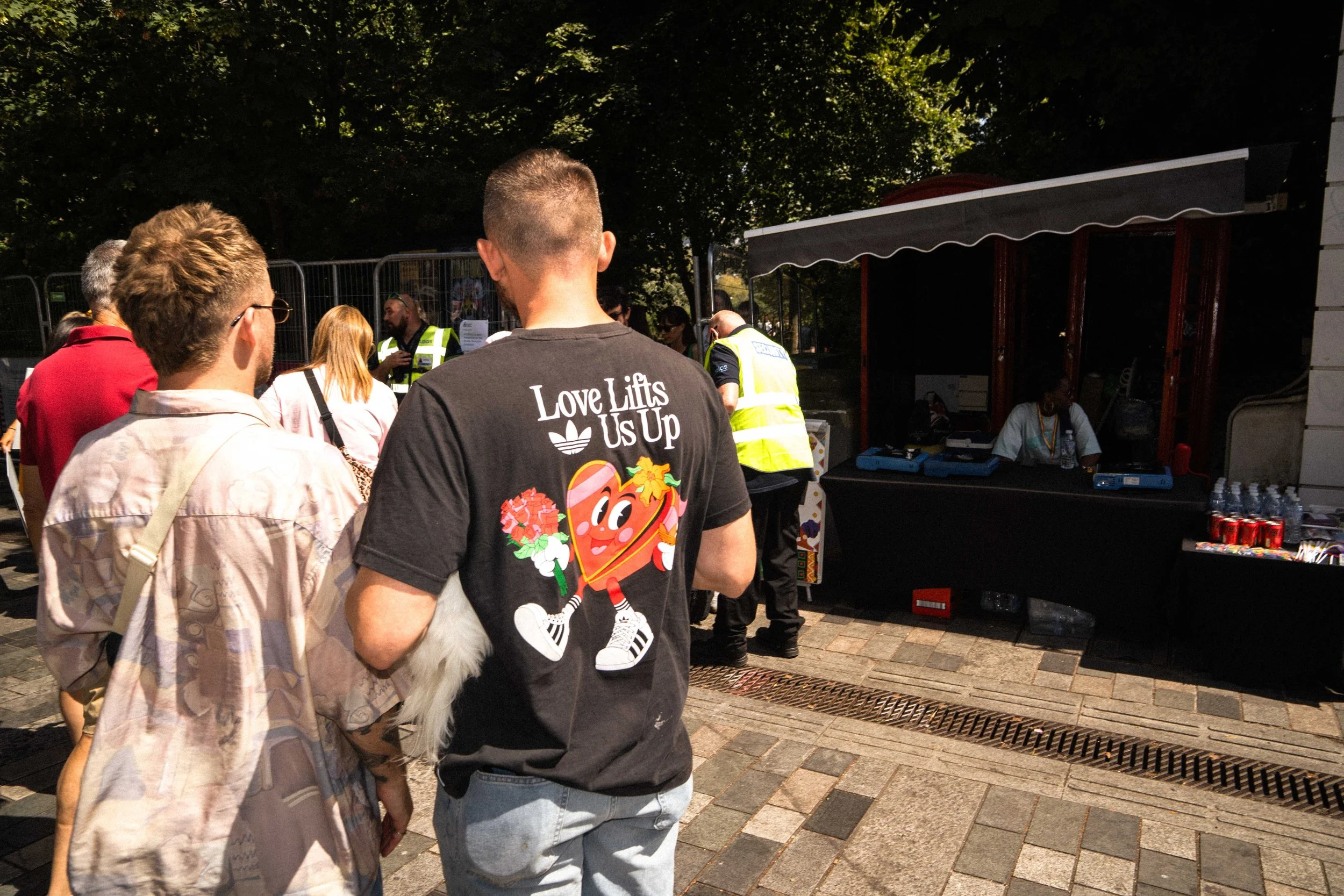
Until next time, keep snapping
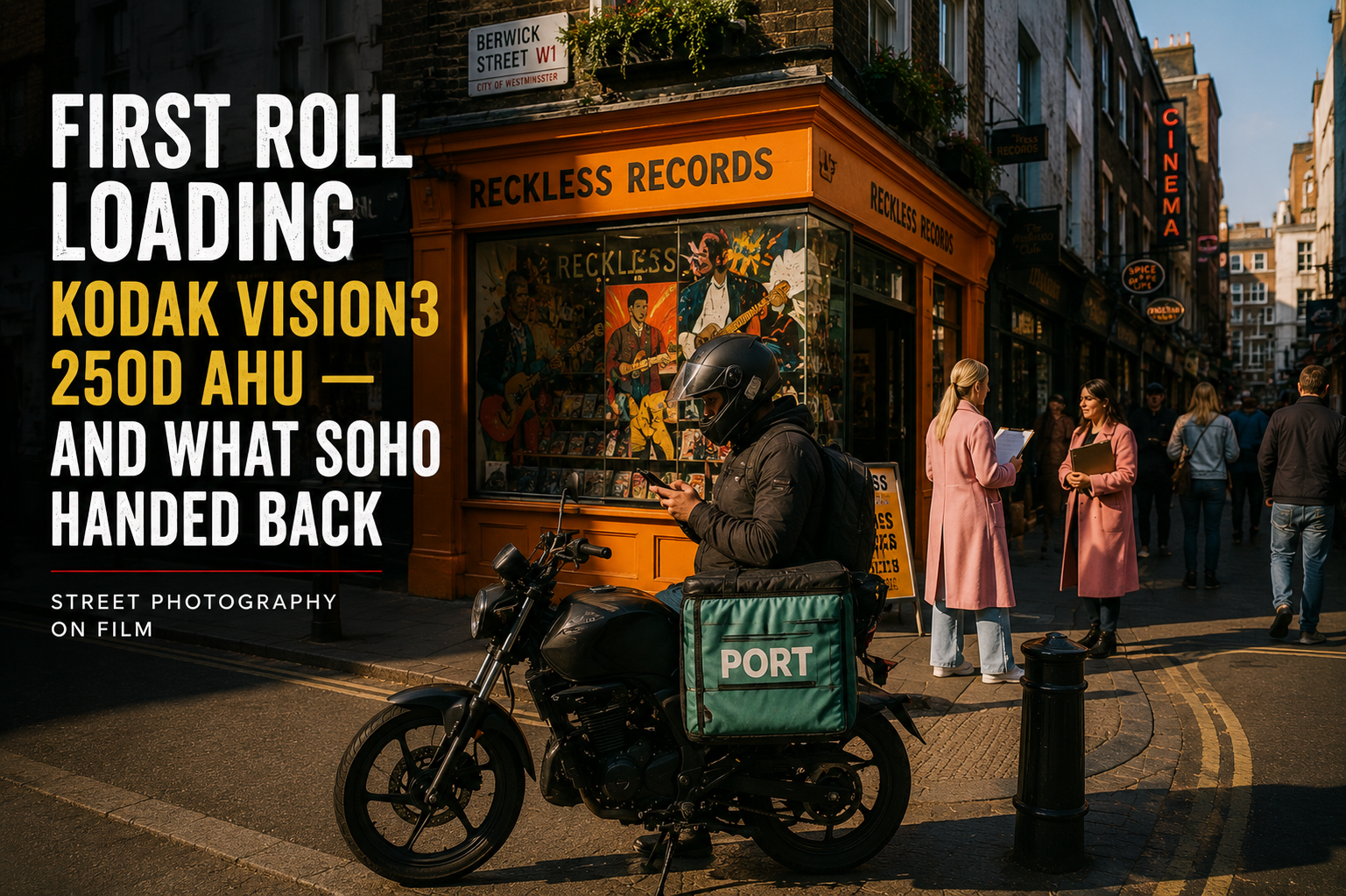
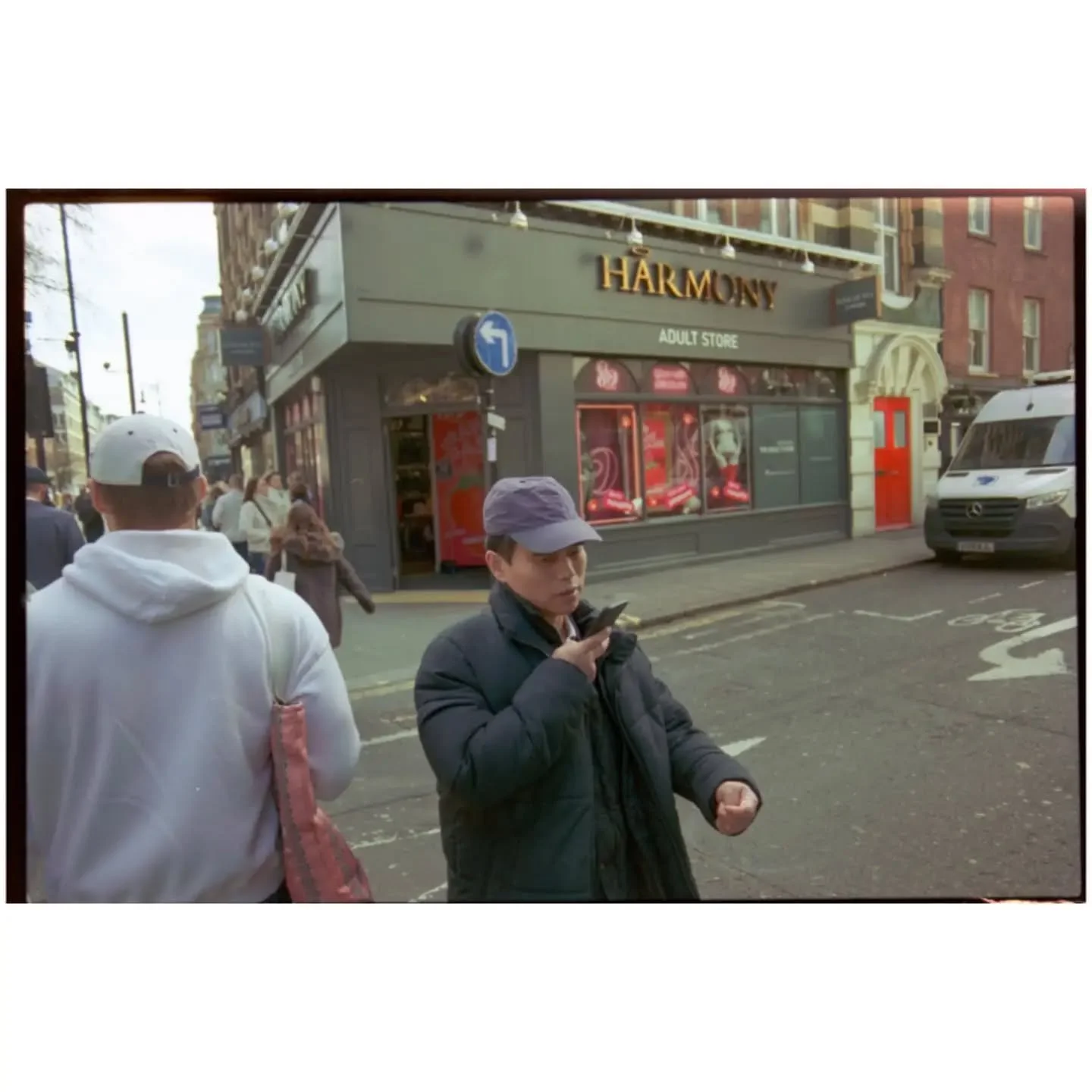
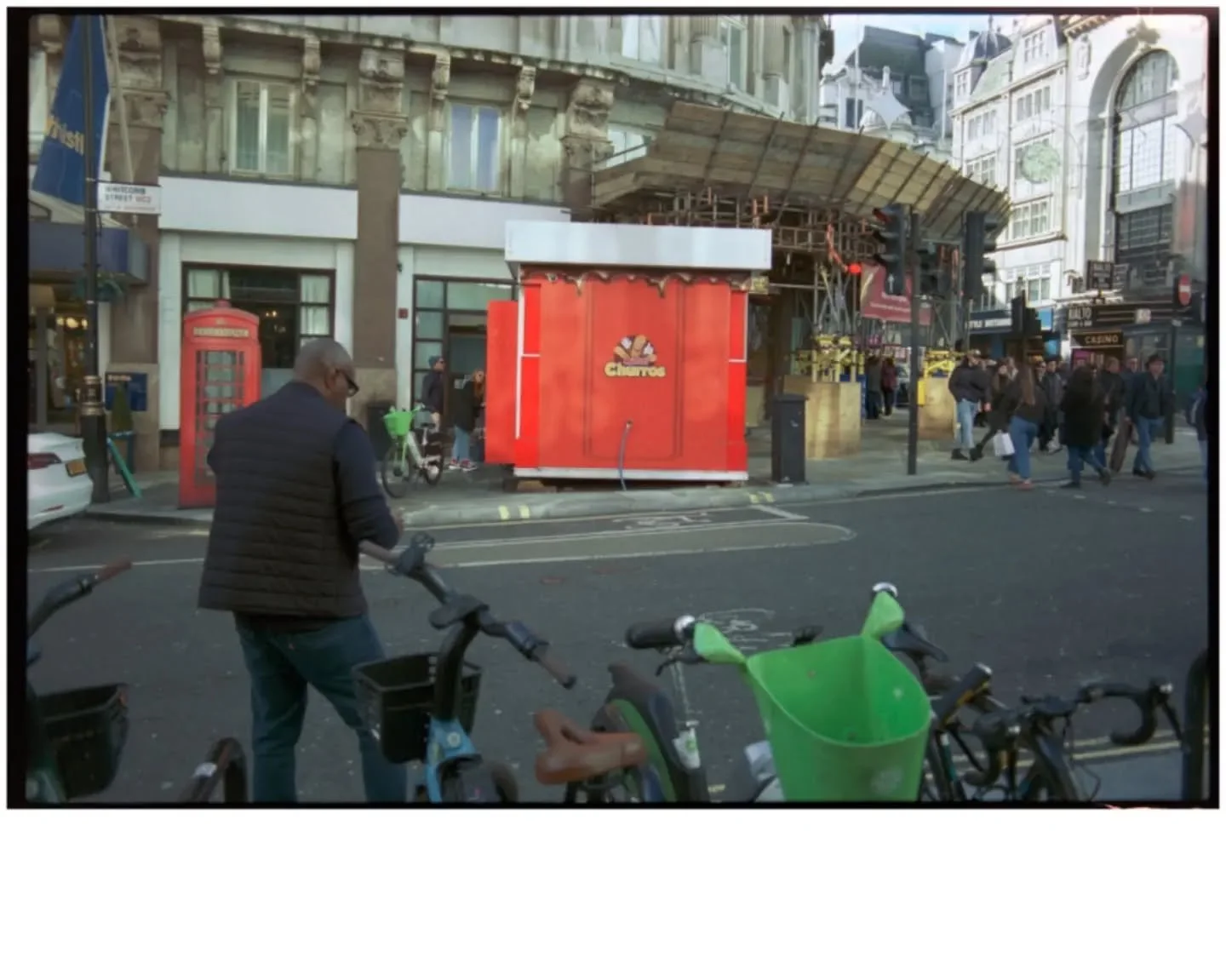
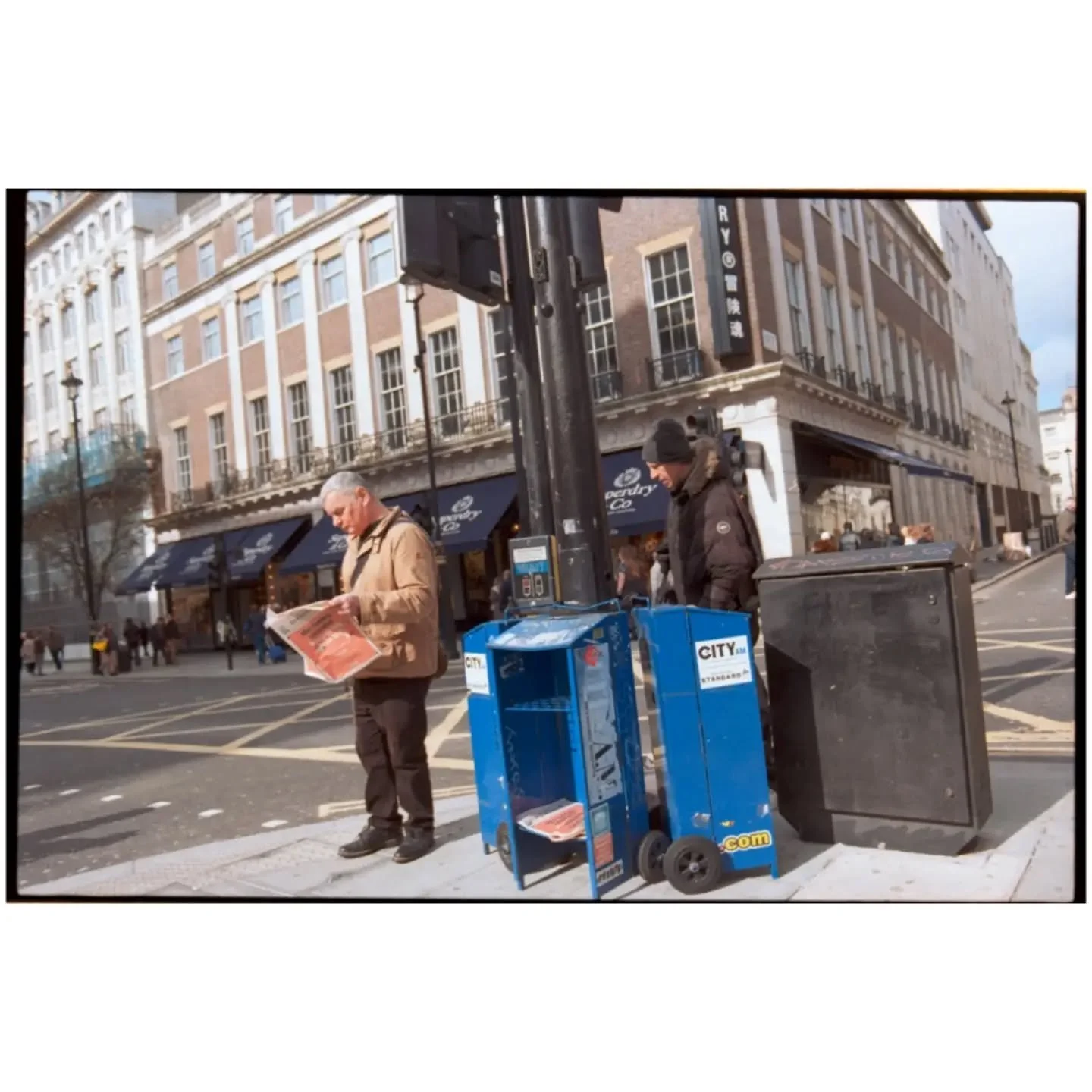
First Roll Loading Kodak Vision3 250D — and what Soho handed back
I've been shooting predominantly black and white for a period of time now of the 35mm film cameras. Years, really. Colour always felt like it needed a reason — a justification for the extra visual information it brings to a frame. Black and white strips a scene back to its essentials. Tone, texture, shadow, geometry. It's a clean way to work.
So loading up a roll of Kodak Vision3 250D AHU into the Nikon F80 felt like a deliberate step off familiar ground. This is a motion picture film stock — designed originally for cinema use in daylight conditions — and it's been building a serious following among still photographers. I'd read about it, seen other people's results, and kept putting it off. This time I just loaded it and went out.
I've been shooting predominantly black and white for a period of time now of the 35mm film cameras. Years, really. Colour always felt like it needed a reason — a justification for the extra visual information it brings to a frame. Black and white strips a scene back to its essentials. Tone, texture, shadow, geometry. It's a clean way to work.
So loading up a roll of Kodak Vision3 250D AHU into the Nikon F80 felt like a deliberate step off familiar ground. This is a motion picture film stock — designed originally for cinema use in daylight conditions — and it's been building a serious following among still photographers. I'd read about it, seen other people's results, and kept putting it off. This time I just loaded it and went out.
I headed into London a couple of weeks ago for an afternoon with no real plan beyond Soho and the West End. That's usually how the best days go. No agenda. Just walking, looking, reacting.
"I wasn't prepared for quite how warm it would be. Not warm in the pushed, processed way you can fake digitally — warm in the way afternoon light in London actually looks."
The film
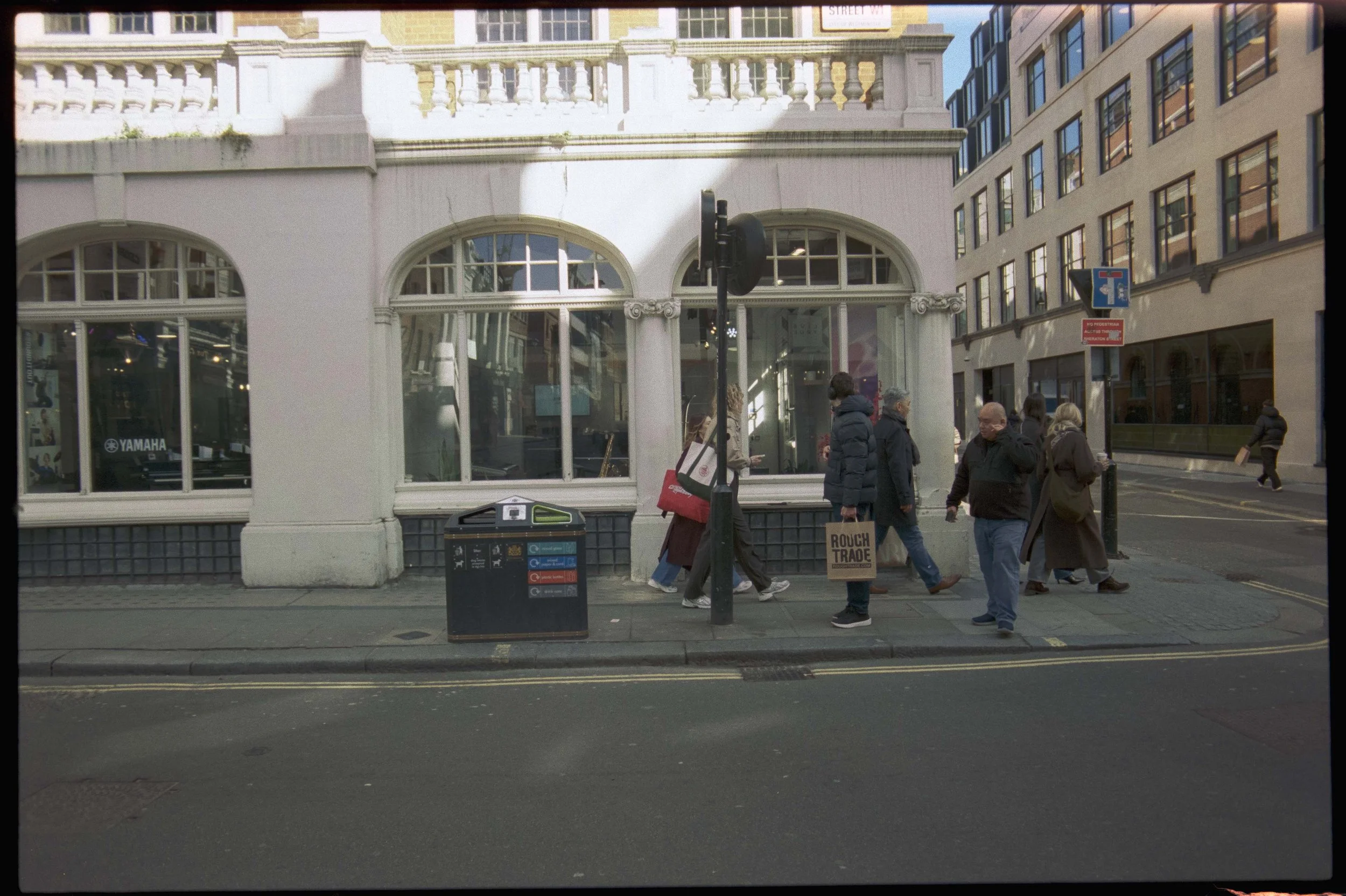
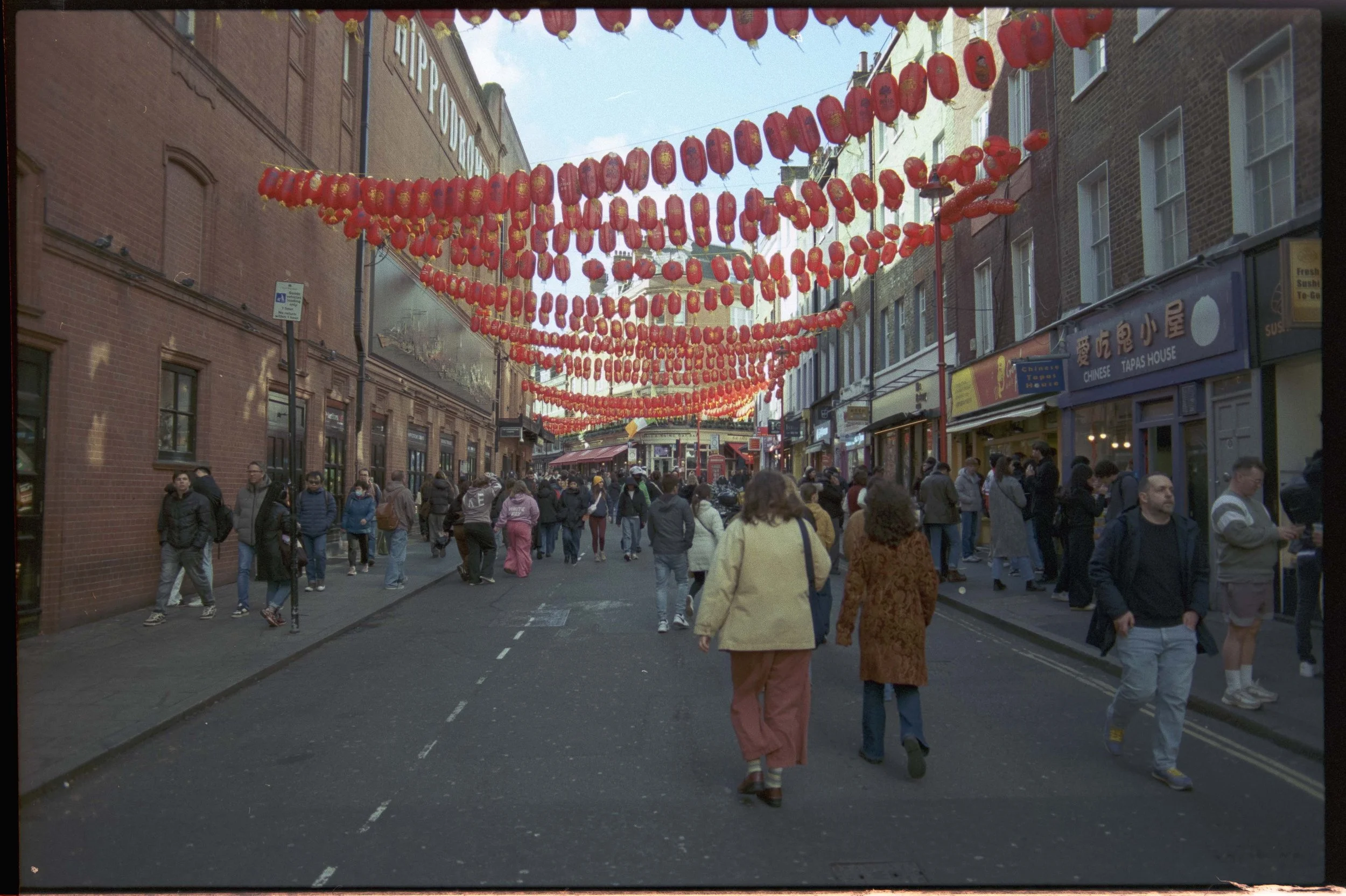
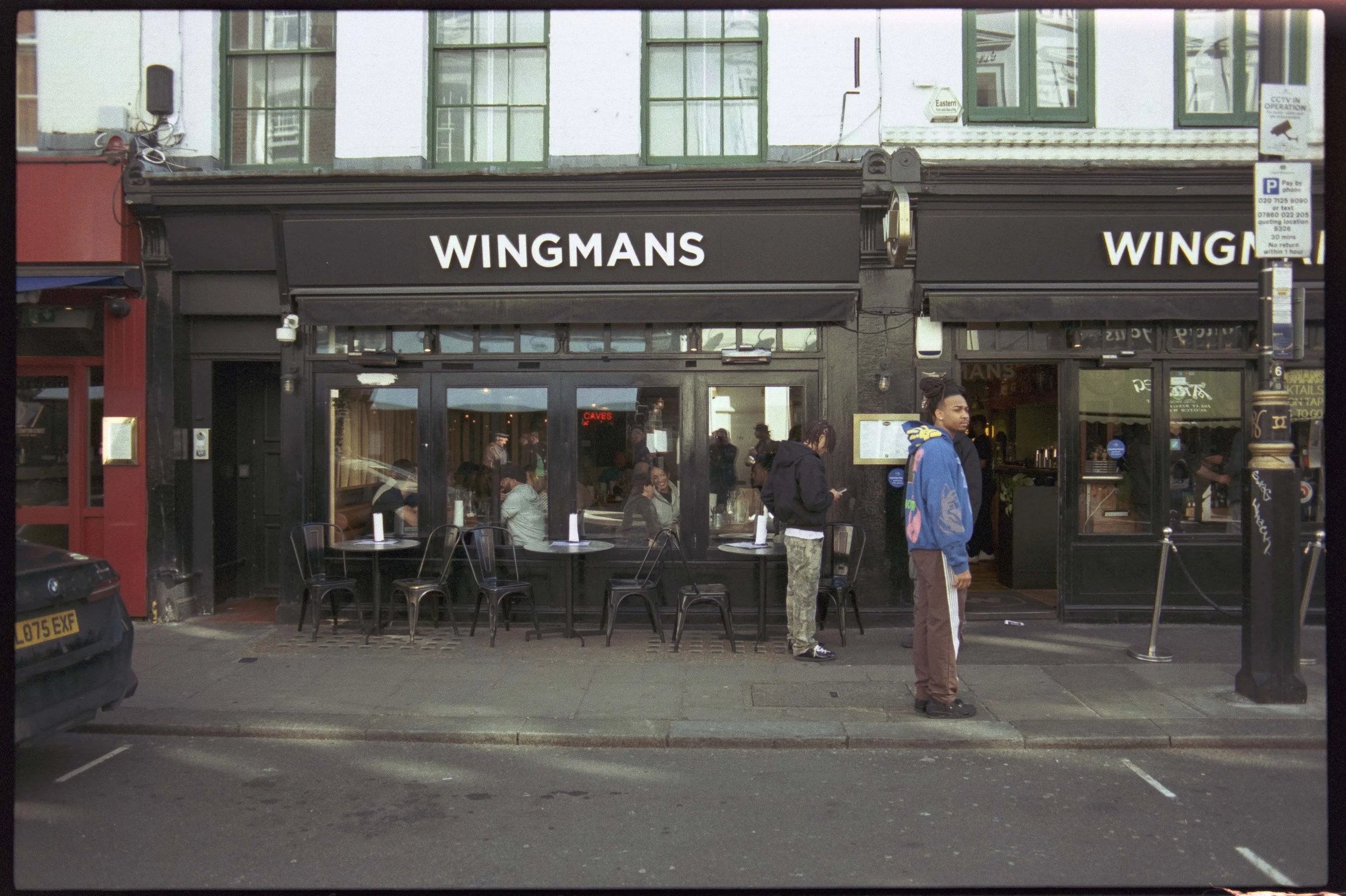
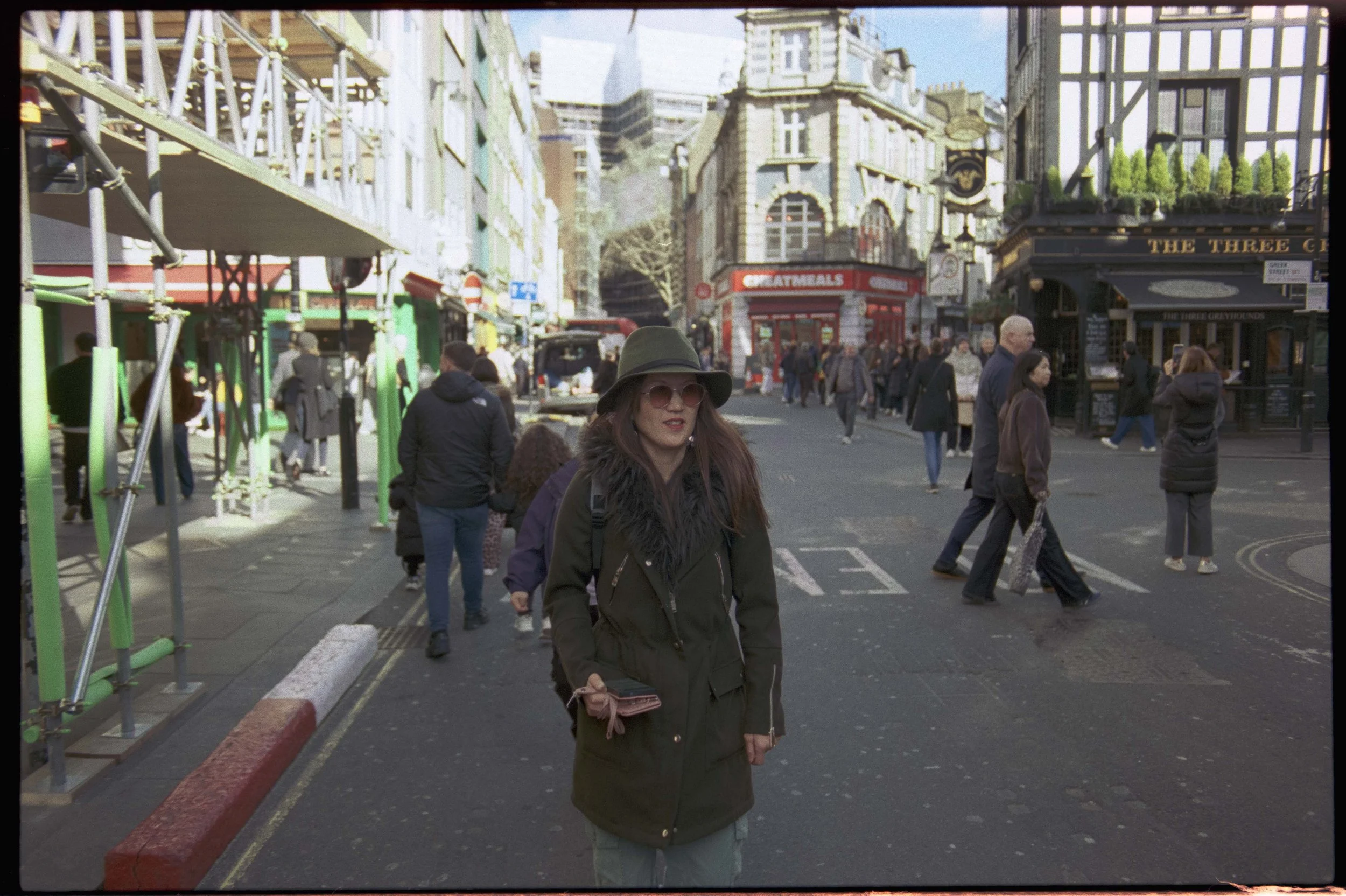
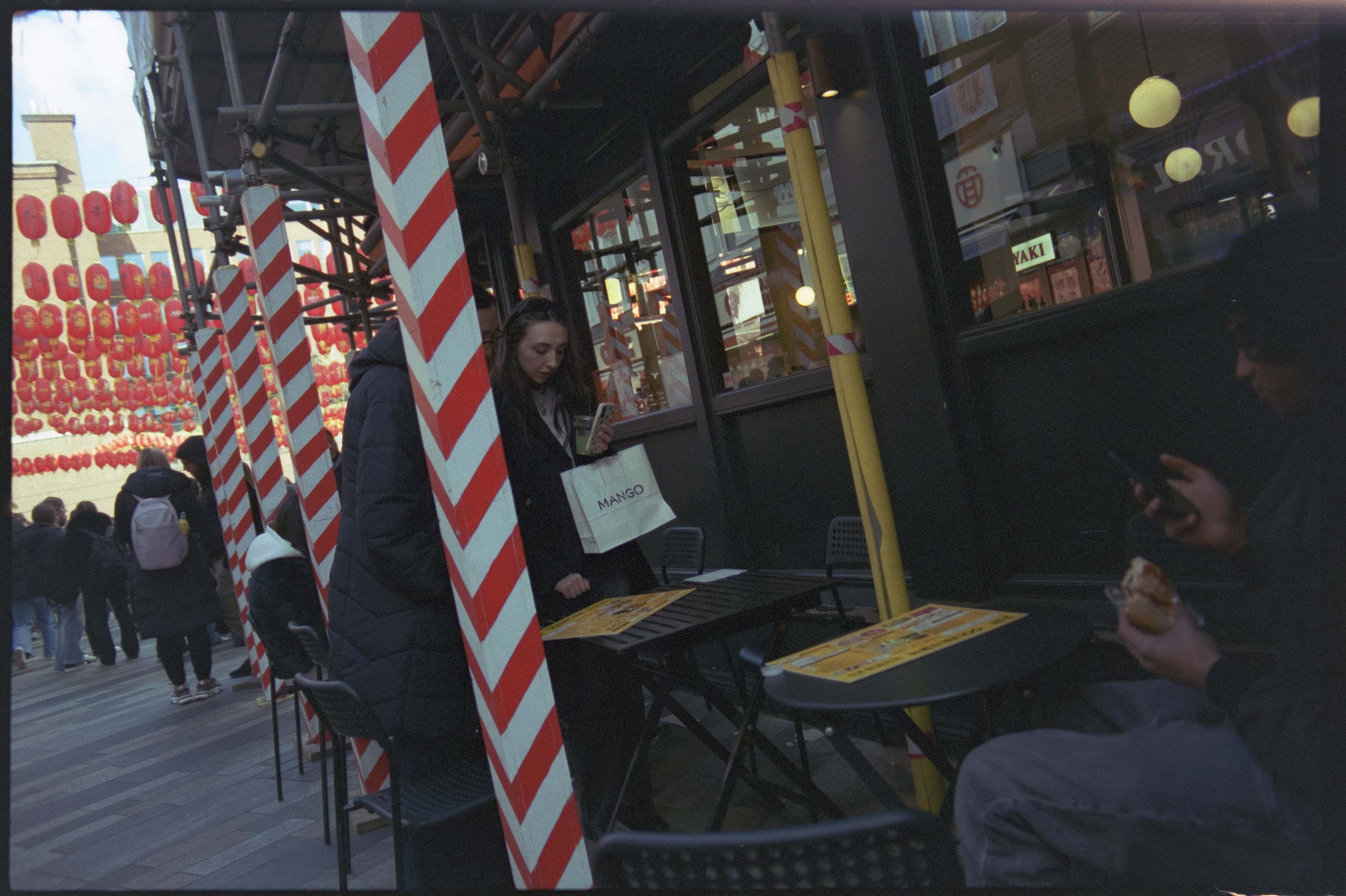
The warmth hit me the moment I got the processed film back. Vision3 250D AHU has a quality to its colour rendition that's difficult to articulate but immediately visible in the frames. It's not the oversaturated, high-contrast look of some colour negative stocks. It's quieter than that. More honest. The way light falls on a green café awning, or a pink coat, or an orange shopfront — it's rendered with a cinematic restraint that suits documentary street work perfectly.
The midtones are where it really earns its reputation. There's a richness in the middle of the tonal range that I haven't found in other stocks I've tried. Skin tones are warm without being ruddy. Shadows hold detail. Highlights — even in the direct afternoon sun I was shooting in — don't blow out catastrophically. For a daylight stock at ISO 250, it handles the contrast range of a busy London street remarkably well.
What Soho gave me
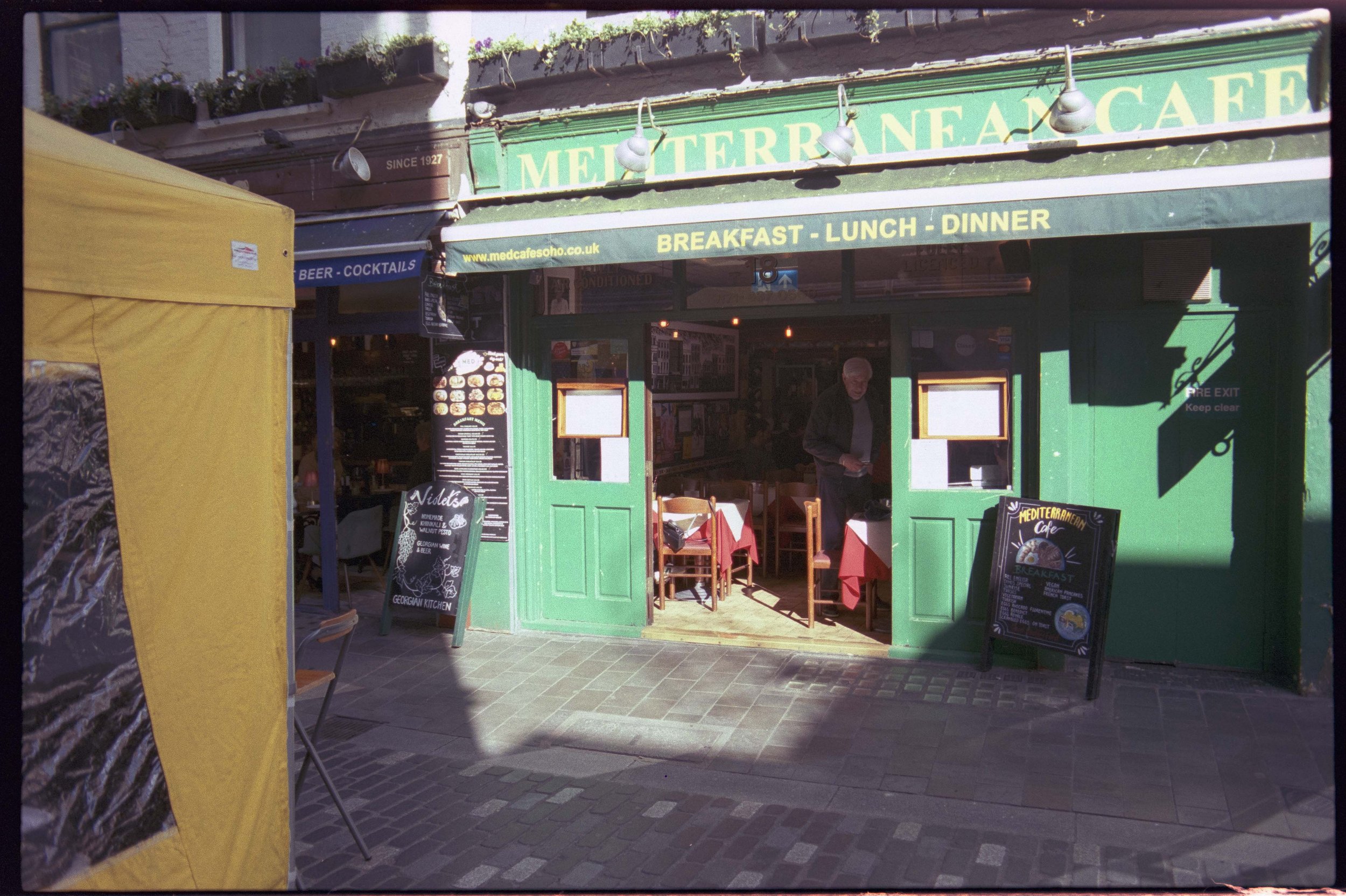
I started on the south end of Soho, working my way north through the afternoon. The Mediterranean Café on Old Compton Street stopped me almost immediately — a place that's been there since 1927, its deep green fascia catching the sun at an angle that Vision3 handled beautifully, the warm gold of the signage glowing against the paint. A man stood in the doorway, just watching the street. I got one frame and kept moving.
Around the corner, Reckless Records — that vivid orange shopfront with its illustrated window display of musicians — was being interrupted by a delivery driver in a hi-vis yellow jacket unloading boxes from a truck. The contrast of orange and yellow should have been too much. Vision3 made it work. That's one of its qualities: it handles colour density without letting things fight.
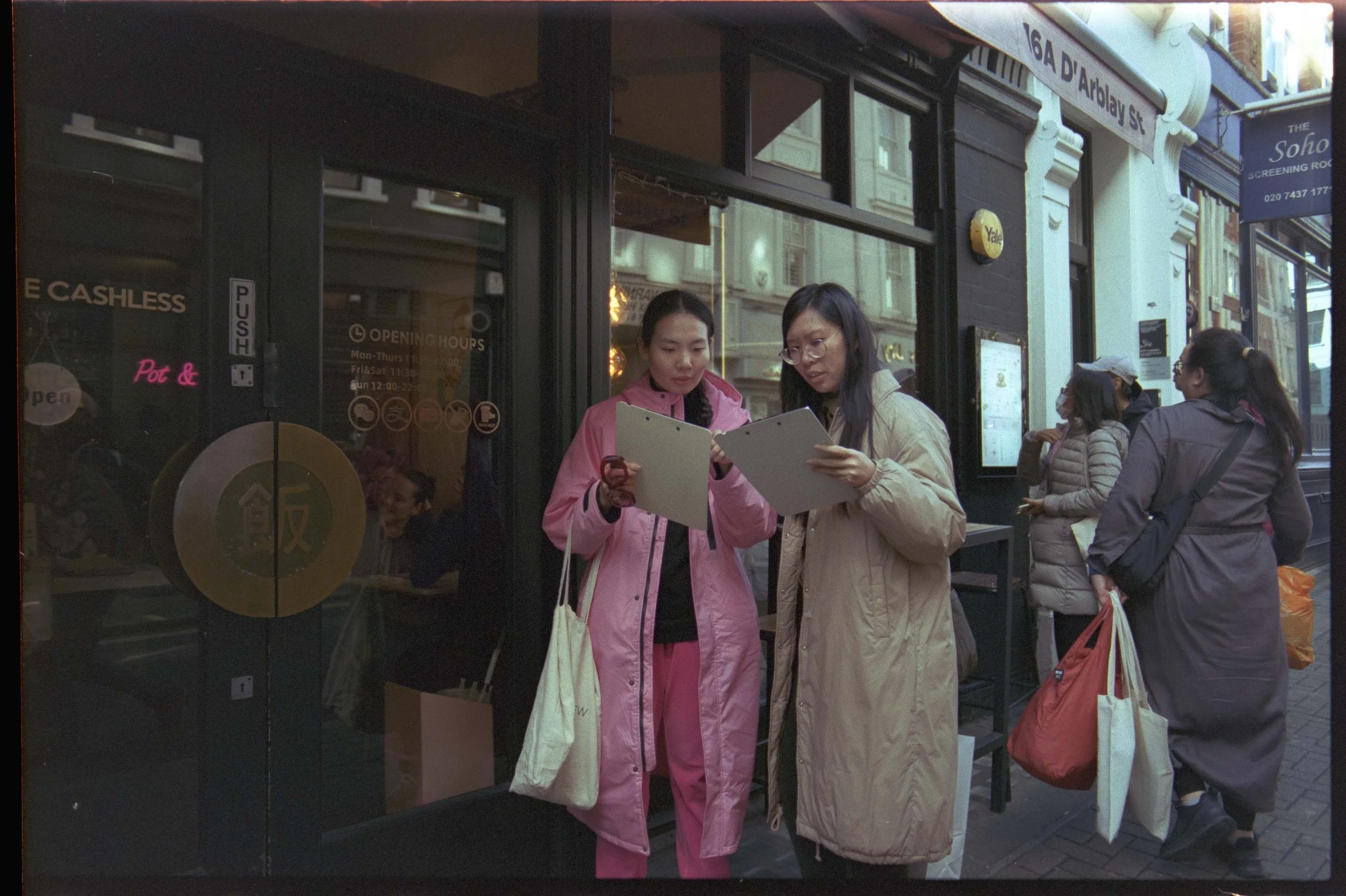
On D'Arblay Street I found two women in matching pink coats, both consulting clipboards outside a restaurant, deep in conversation. The warmth of those coats against the cooler tones of the street behind them is the kind of colour moment that simply doesn't exist in black and white. You don't get to choose that. The stock gives it to you.
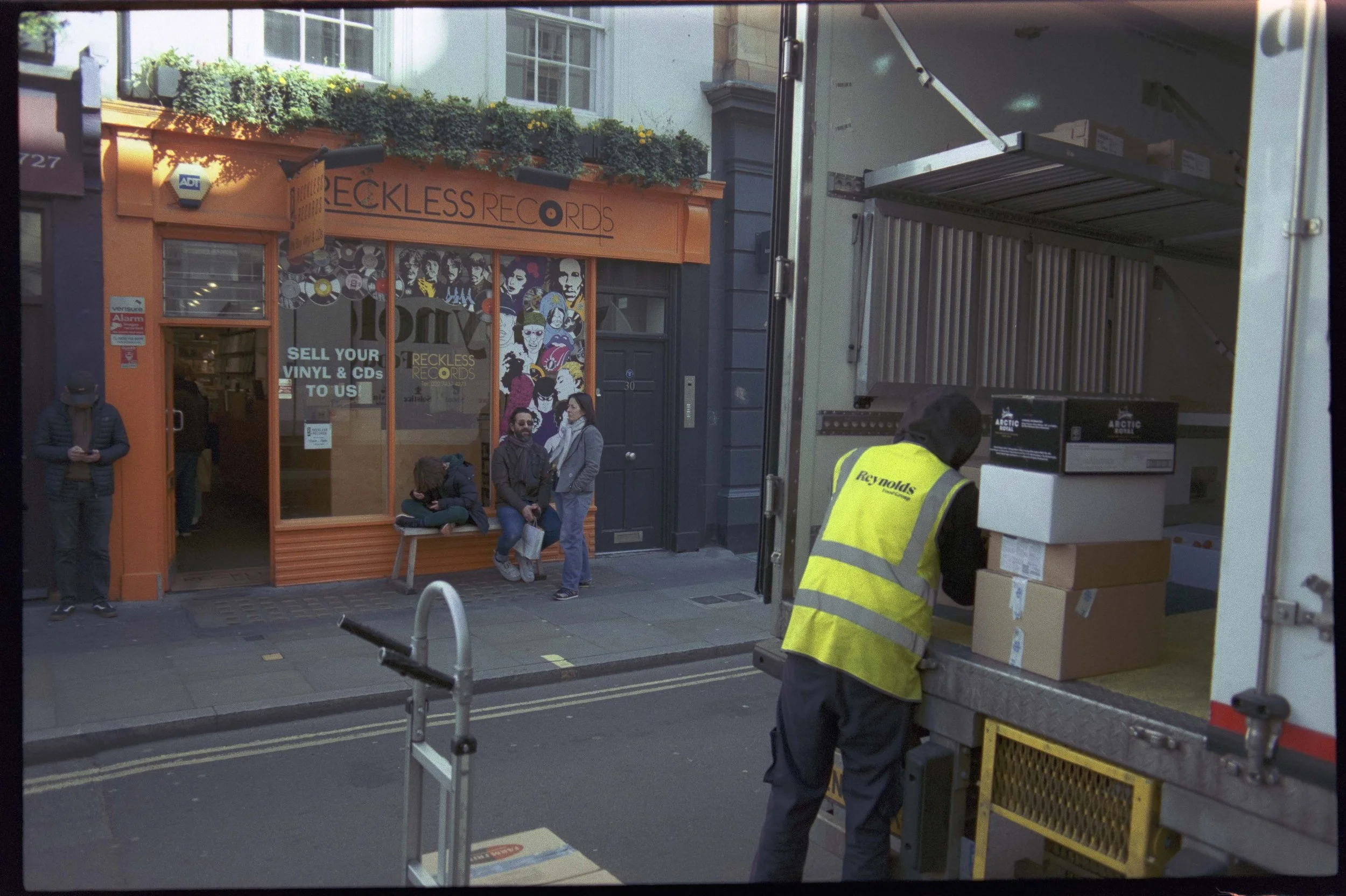
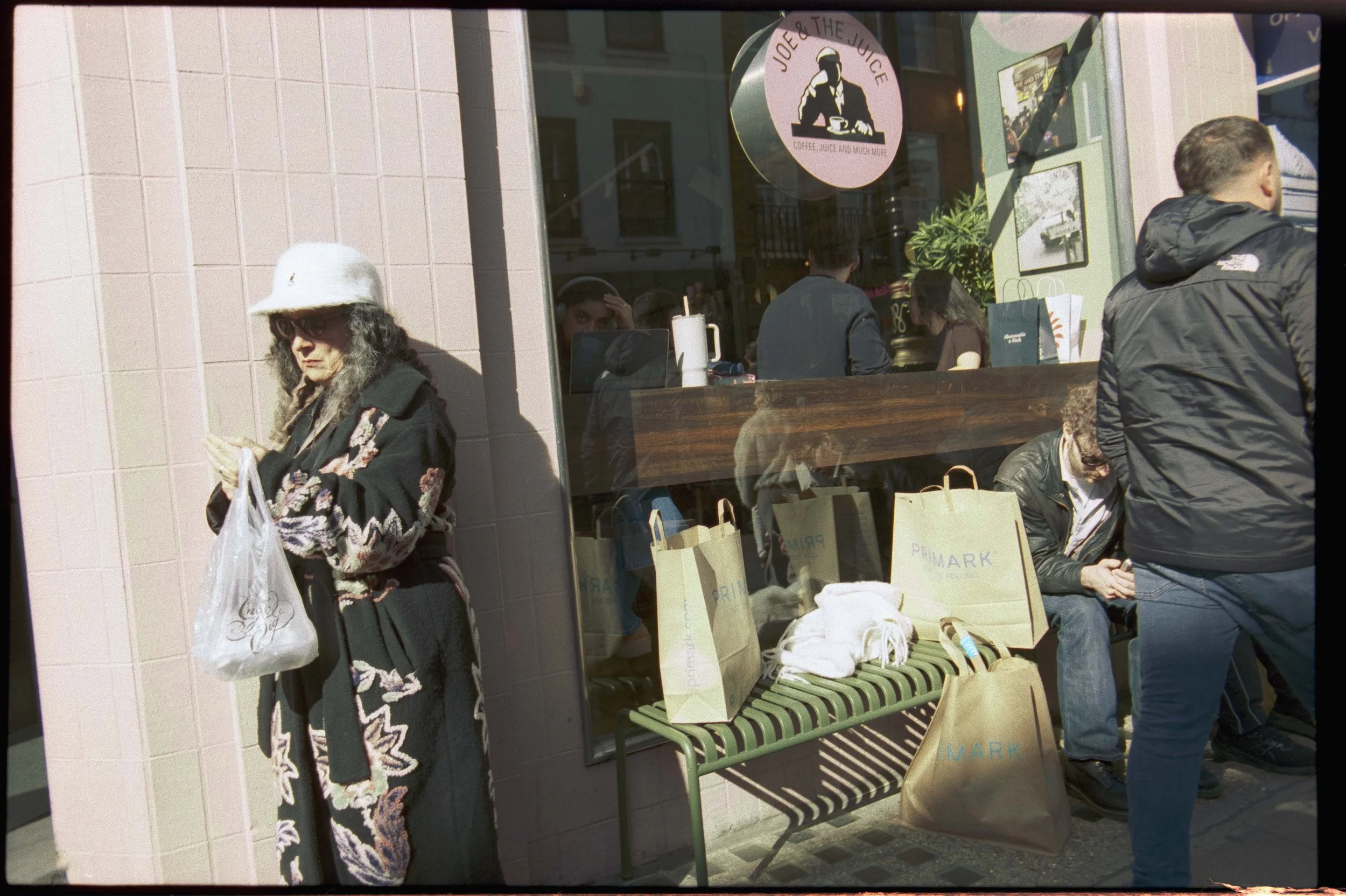
"Vision3 250D handles colour density without letting things fight. That's one of its qualities — and Soho tests it constantly."
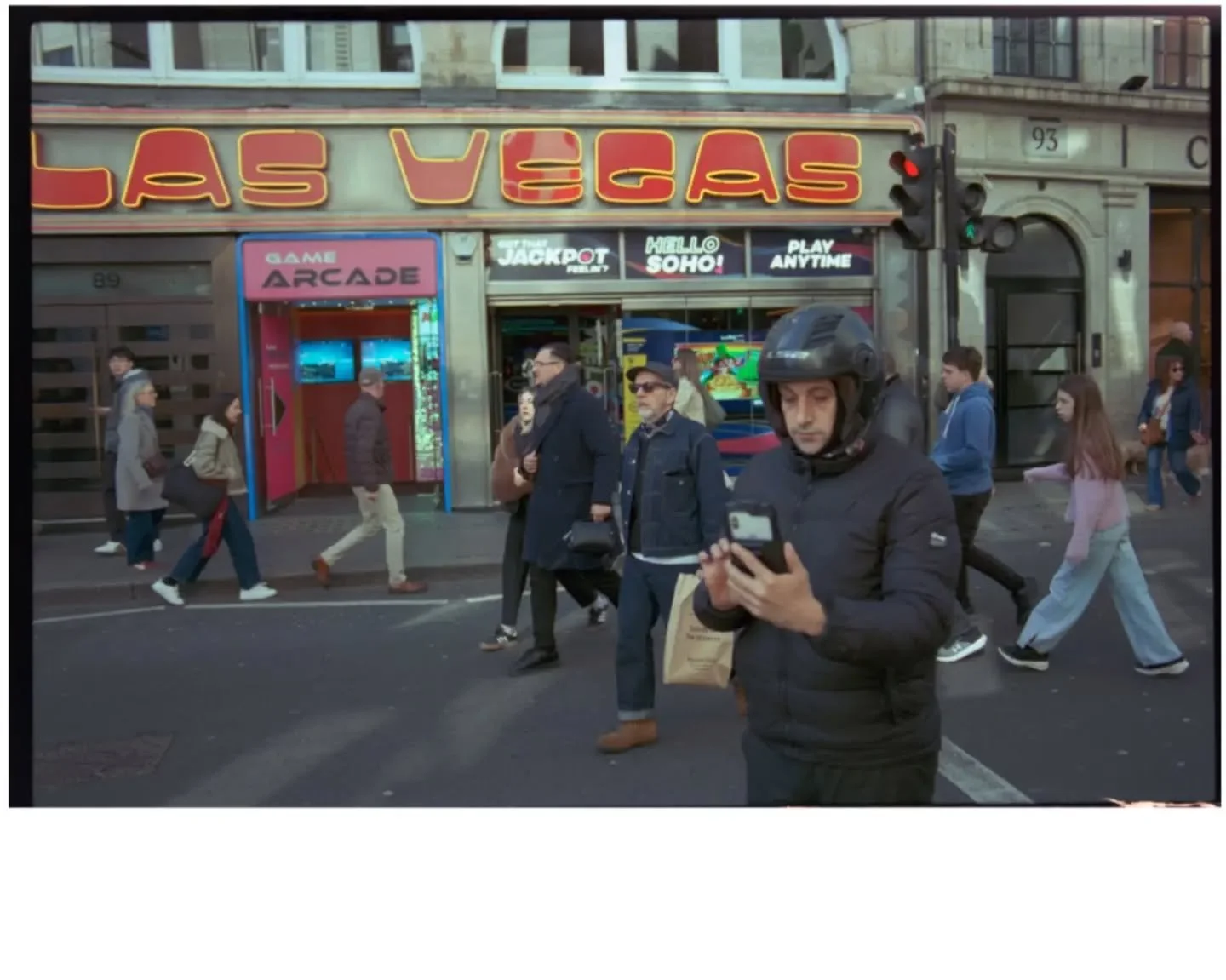
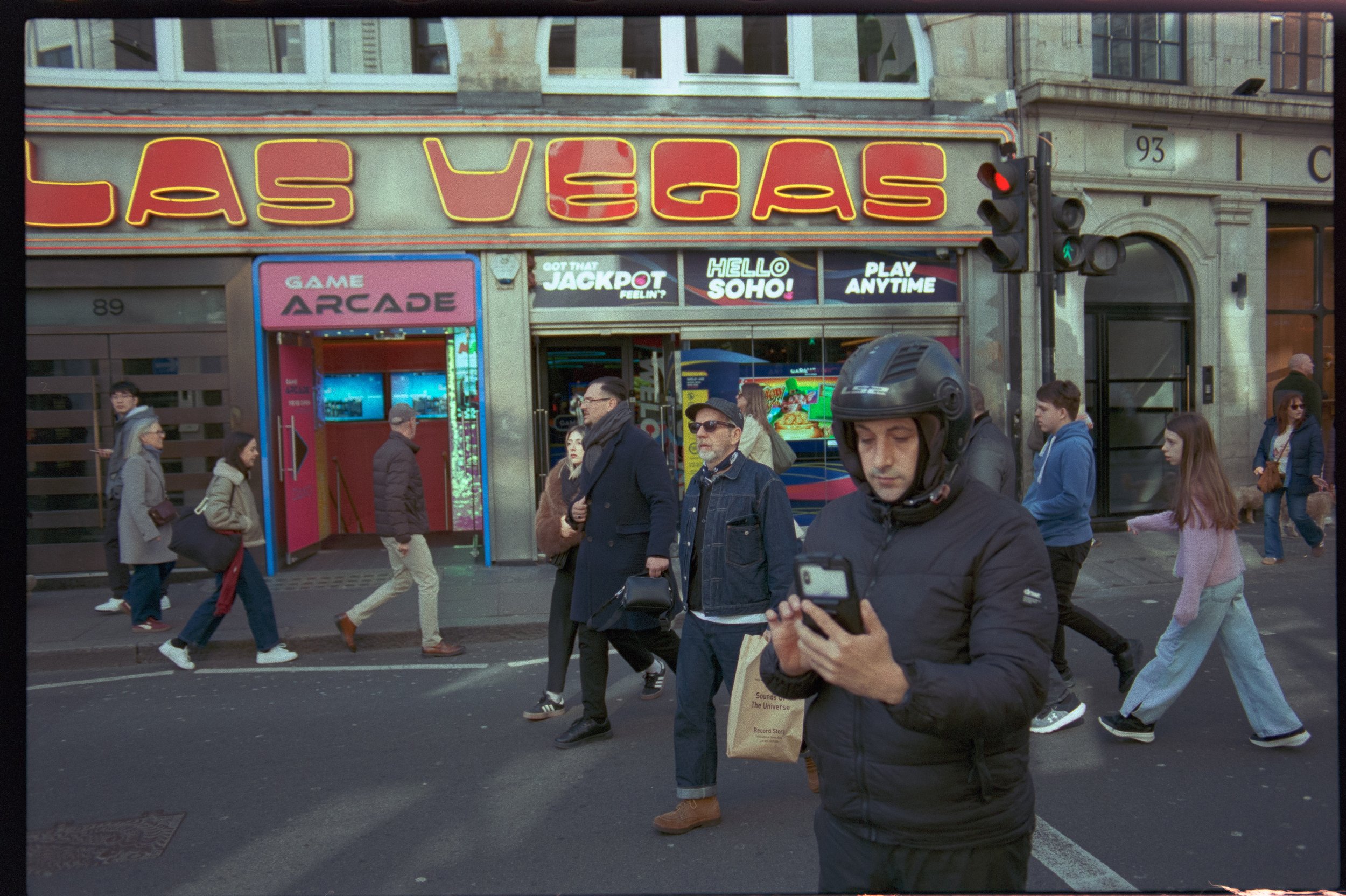
The Las Vegas arcade on what I think was Wardour Street gave me one of the more unexpected frames of the day — a motorcyclist in a full helmet standing at the crossing checking his phone, the enormous neon Las Vegas signage blazing behind him in red and gold, Hello Soho stencilled across the frontage. Vision3 renders neon brilliantly. The warmth of the sign, the cool blue of the afternoon sky in the upper corner of the frame — it's exactly what this stock was made for.
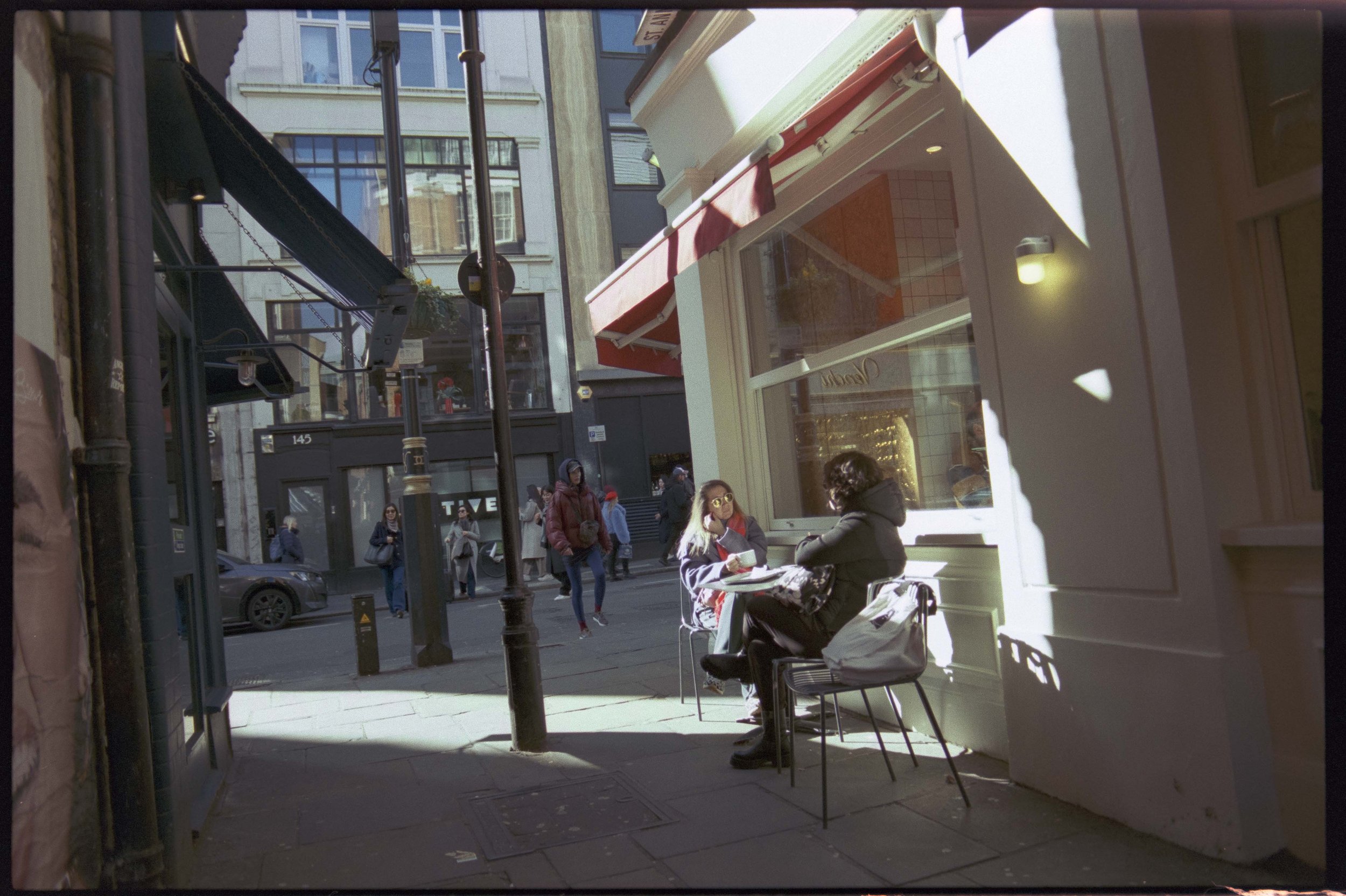
There was a quieter moment mid-roll that I keep coming back to: two women sitting outside a café in a narrow Soho alley, a red awning above them, dappled light falling across the table. No action. No joke. Just two people and an afternoon and the quality of light that Vision3 seems built to hold.
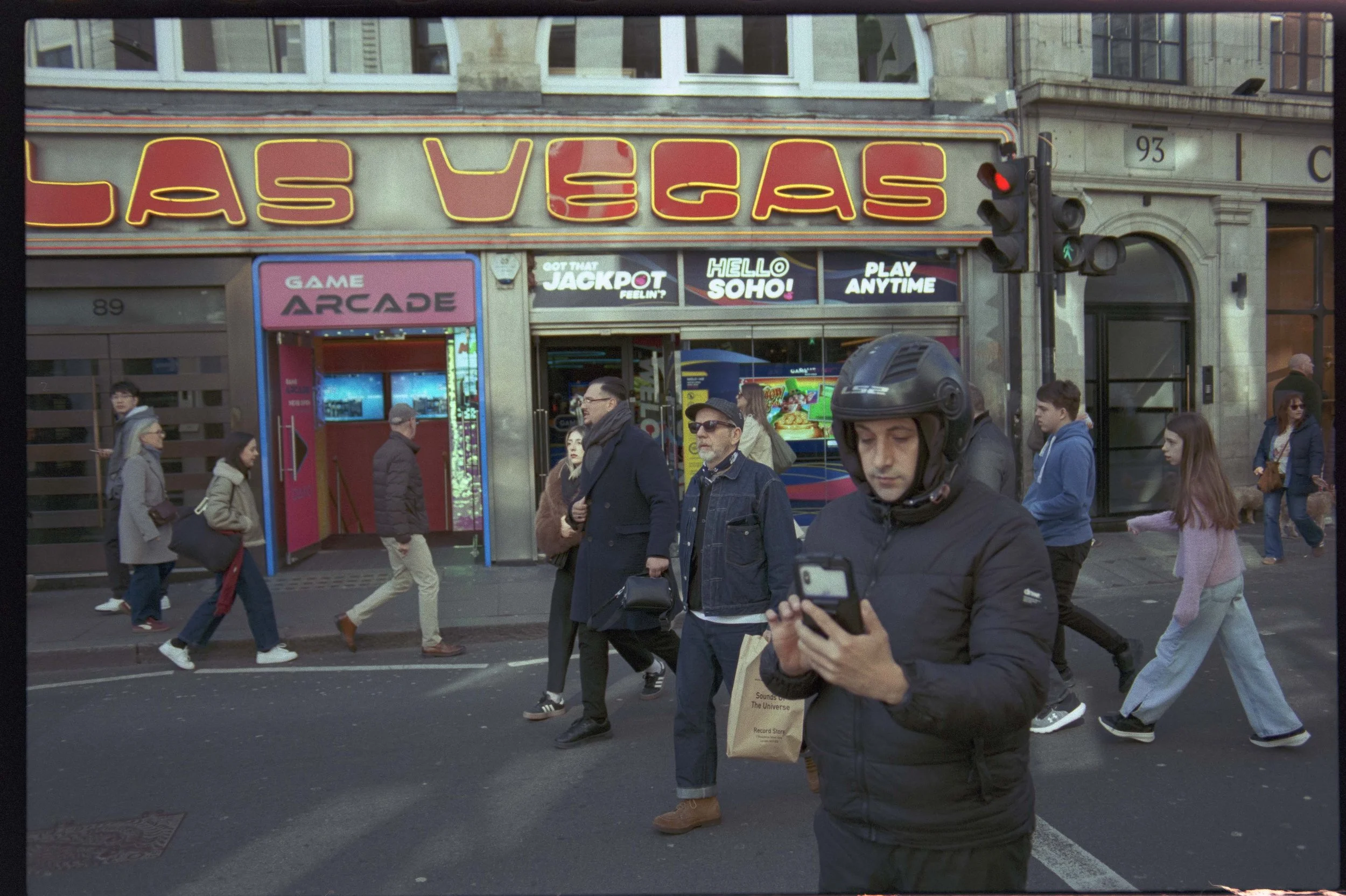
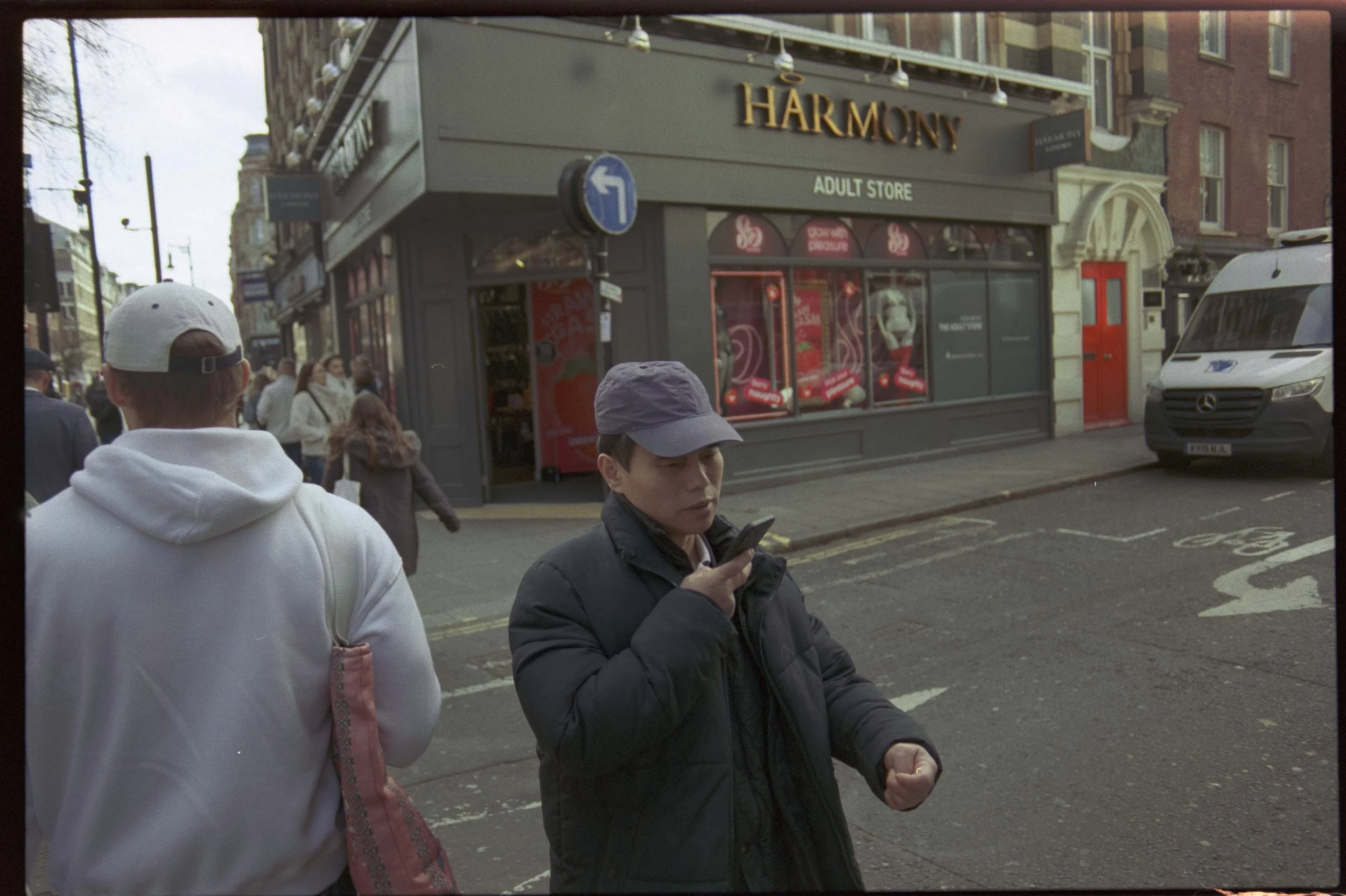
The three jokes
And then London started doing what London does.
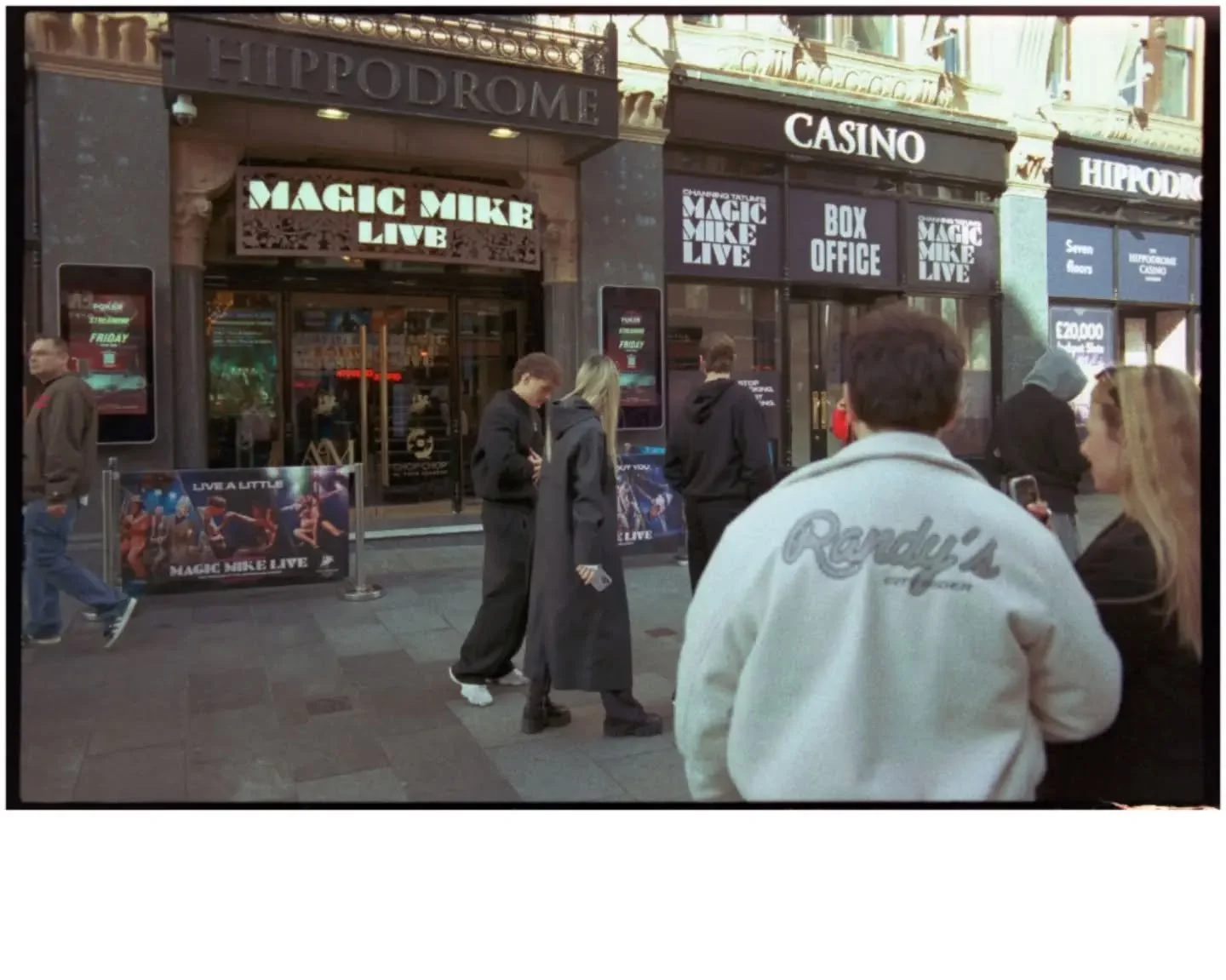
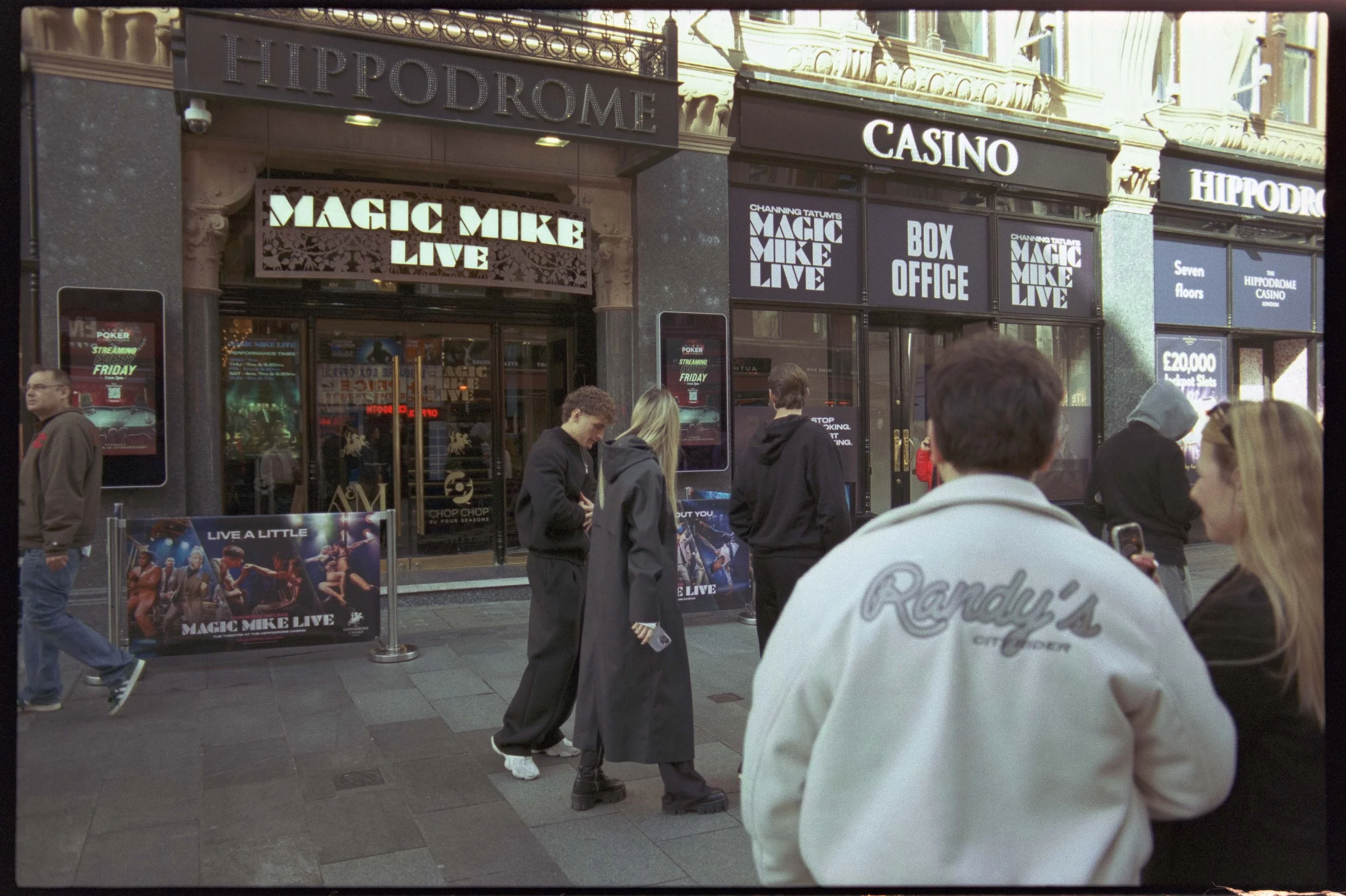
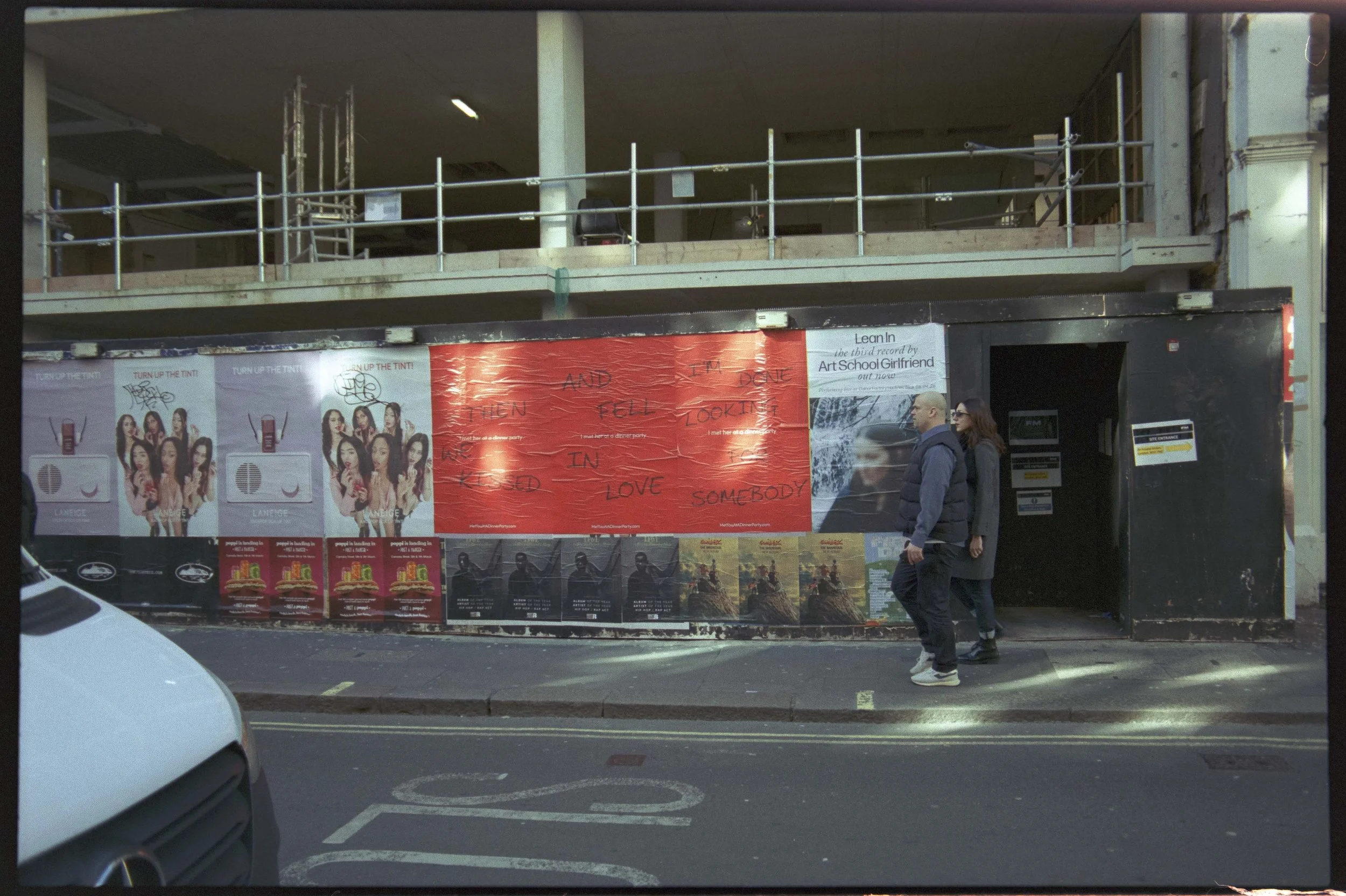
The first one I almost missed. I was walking past the Hippodrome on Cranbourn Street when I clocked it — a man standing on the pavement, back turned, the word Randy's written in large script across the back of his white jacket. Behind him, filling the entire frontage of the venue: Magic Mike Live. He had no idea. The street had assembled itself into a perfect joke and was waiting, with infinite patience, for someone to walk past with a camera.
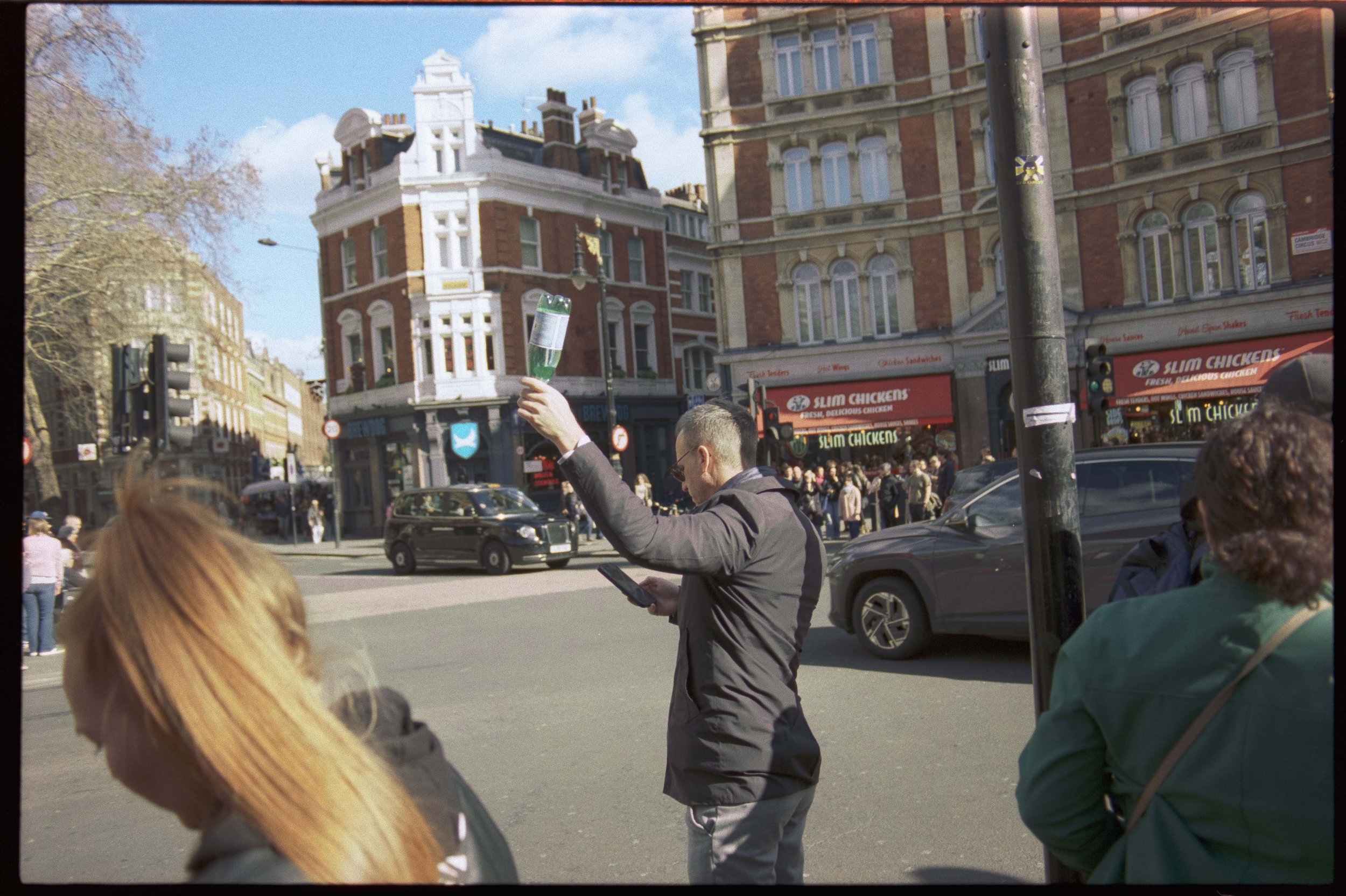
The second came at a crossing near the top of Charing Cross Road. A tour guide — grey hair, suit jacket, every inch the professional — was trying to marshal his group through the lunchtime traffic. His technique was to hold a green bottle above his head like a torch, a beacon for anyone who'd wandered off. He was checking his phone with the other hand. I pressed the shutter at the exact moment his arm went up. He was, without any doubt, leading them to the pub.
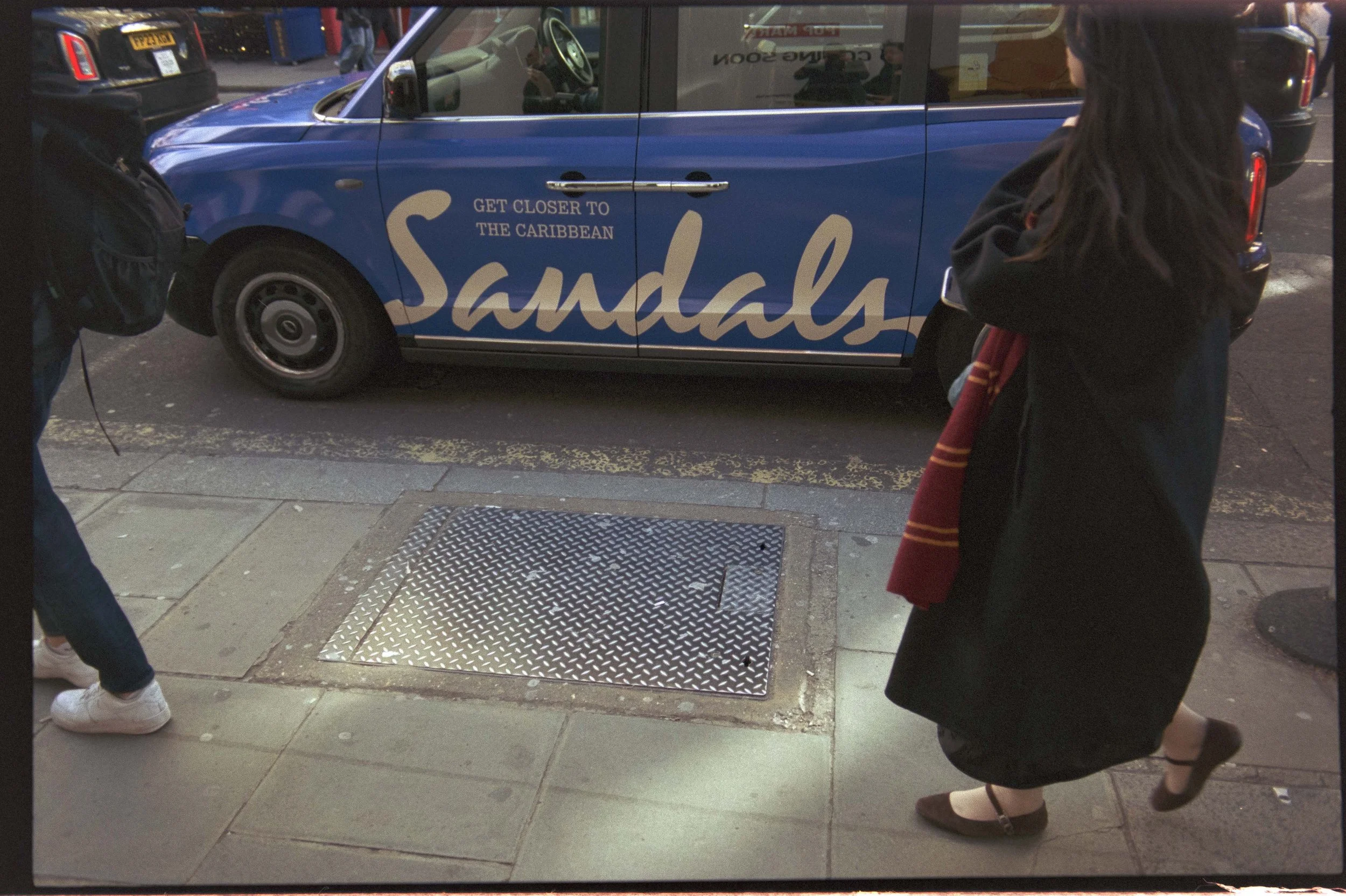
The third was the one I'm most pleased with. A London black cab, completely wrapped in the Sandals Caribbean holiday livery — blue bodywork, the Sandals script in cream, Get Closer to the Caribbean. Passing directly in front of it at that exact moment: a woman in a full Hogwarts Gryffindor robe, red and gold striped scarf trailing behind her. On her feet: sandals. She was heading somewhere else entirely, completely unbothered.
Three found jokes on one roll. Colour made all of them better. Black and white would have served the geometry. Vision3 gave you the blue cab and the red scarf and the warm pavement and the whole absurd London afternoon.
What comes next
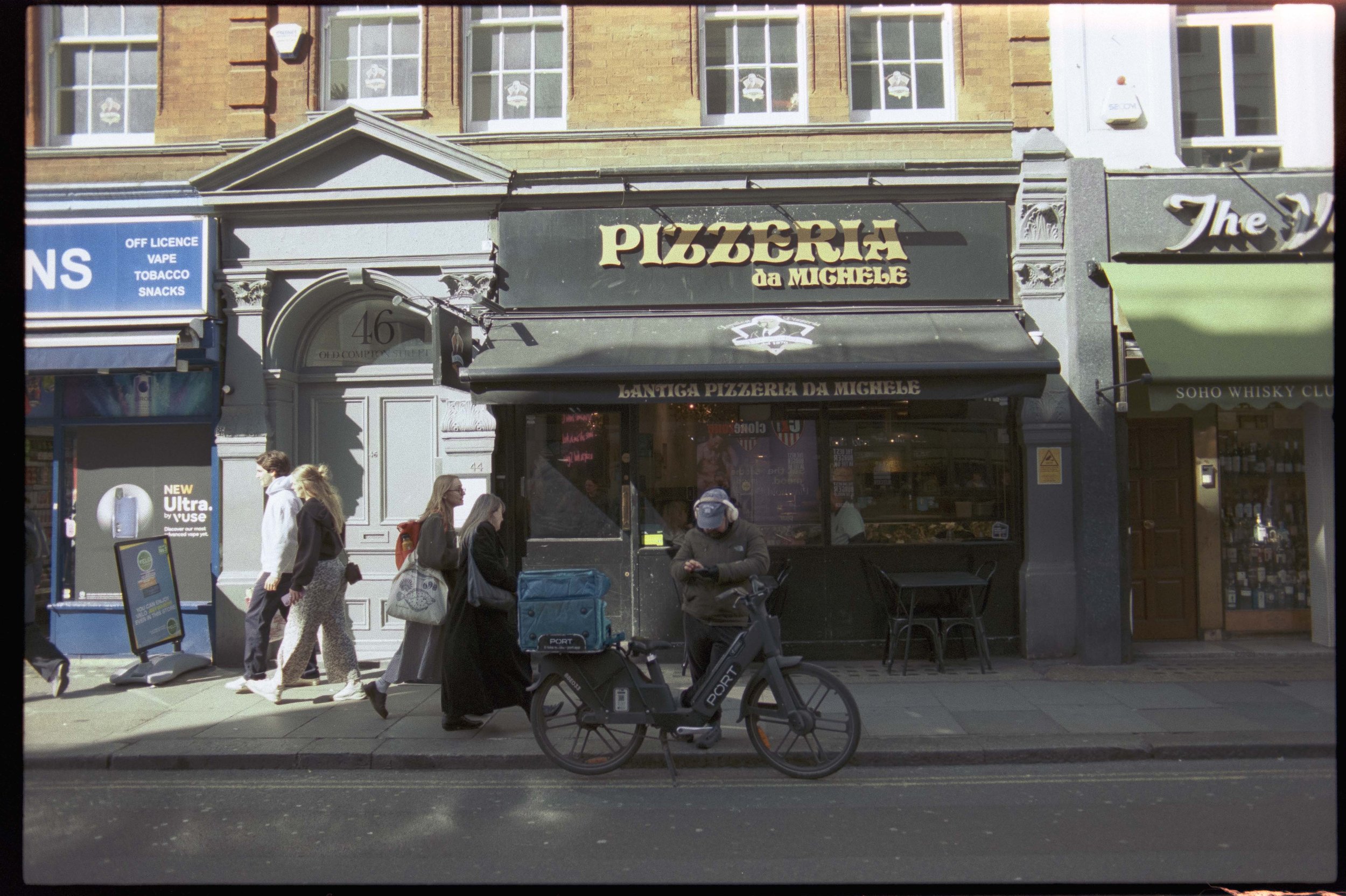
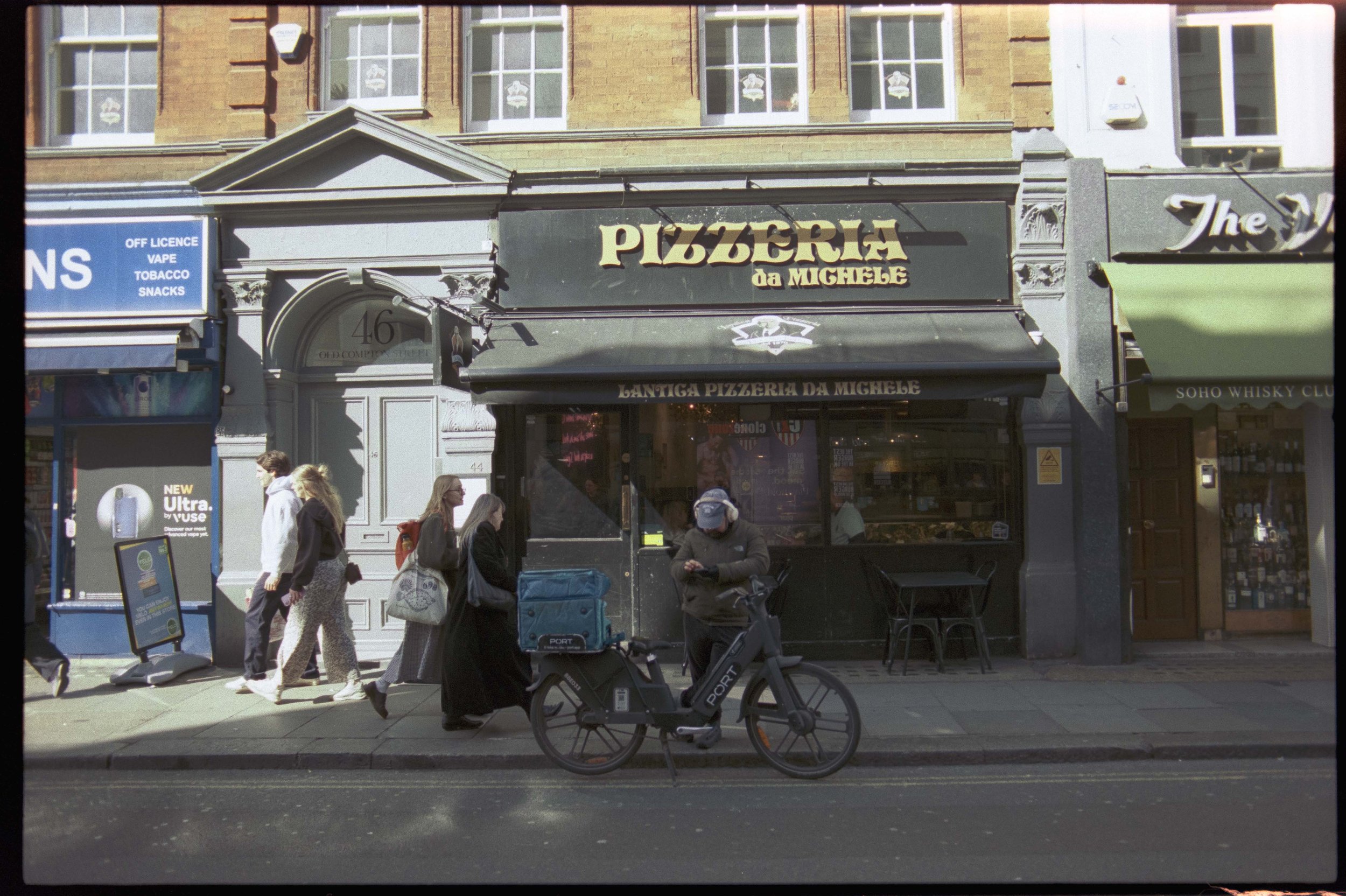
I finished the roll on Old Compton Street — a delivery rider on a PORT bike outside Pizzeria da Michele, checking his phone in the late afternoon light, the gold lettering of the restaurant sign warm above him. A good closer. Unhurried. The sort of frame that makes sense at the end of a day's shooting.
One roll is not enough to draw firm conclusions about a film stock. But it is enough to know whether you want to shoot another one, and the answer here is unambiguously yes. Vision3 250D asks you to work with colour rather than despite it — to look for the moments where the warmth of a late winter afternoon in London becomes part of the story rather than just the backdrop.
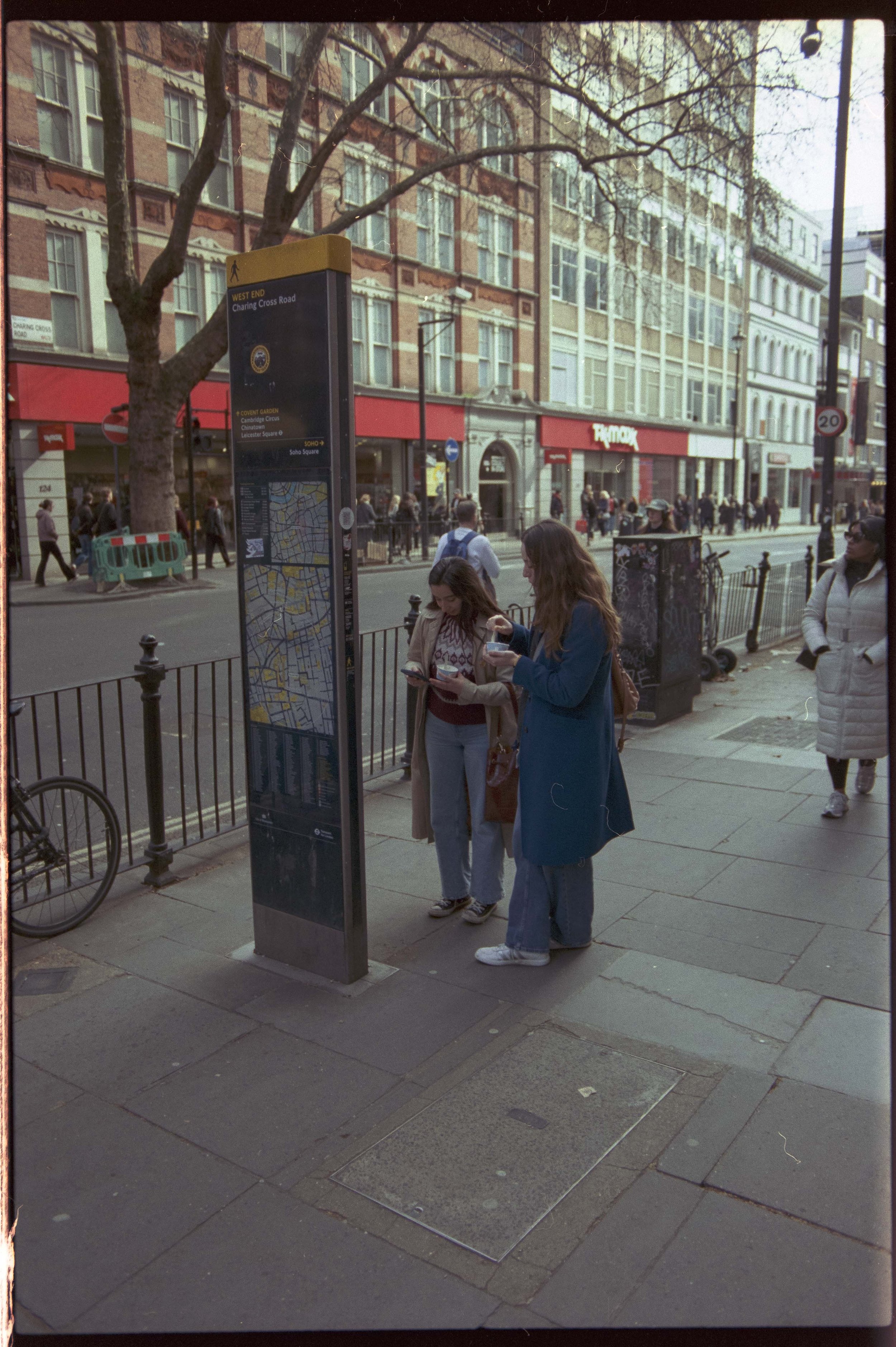
After years of reaching for black and white by default, that's a different kind of seeing. I'd been missing it without quite realising.
I've already ordered more rolls. Spring is coming, the light is getting longer, and the streets are filling up again. If the first outing with Vision3 250D is any indication, it's going to be a busy few months.
Black and white isn't going anywhere. But colour just made a very strong case for sharing the bag.
Until next time, keep snapping
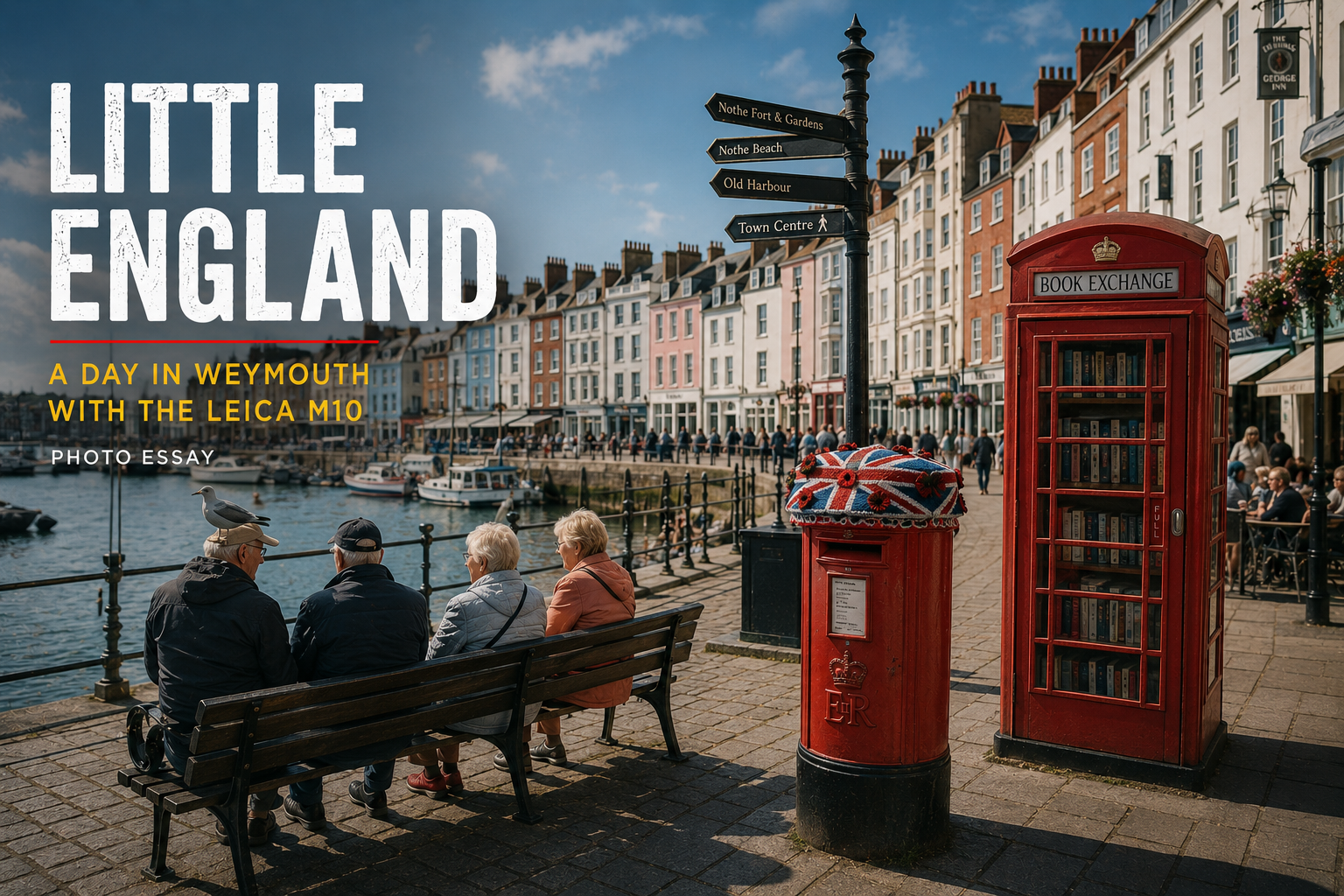
Little England - A day in Weymouth with the Leica M10
Originating from a small Midlands town and subsequently moving down south and now to the south coast in Brighton, there is a natural allure for me for the traditional British seaside town.
I actually remember going to Weymouth from the Midlands with the family when I was a wee lad.
There's a version of England that still exists in places like our seaside towns. Not the version that gets argued about online, or invoked on political platforms, or turned into a slogan. The quieter version. The one that just gets on with it.
Originating from a small Midlands town and subsequently moving down south and now to the south coast in Brighton, there is a natural allure for me for the traditional British seaside town.
I actually remember going to Weymouth from the Midlands with the family when I was a wee lad.
There's a version of England that still exists in places like our seaside towns. Not the version that gets argued about online, or invoked on political platforms, or turned into a slogan. The quieter version. The one that just gets on with it.
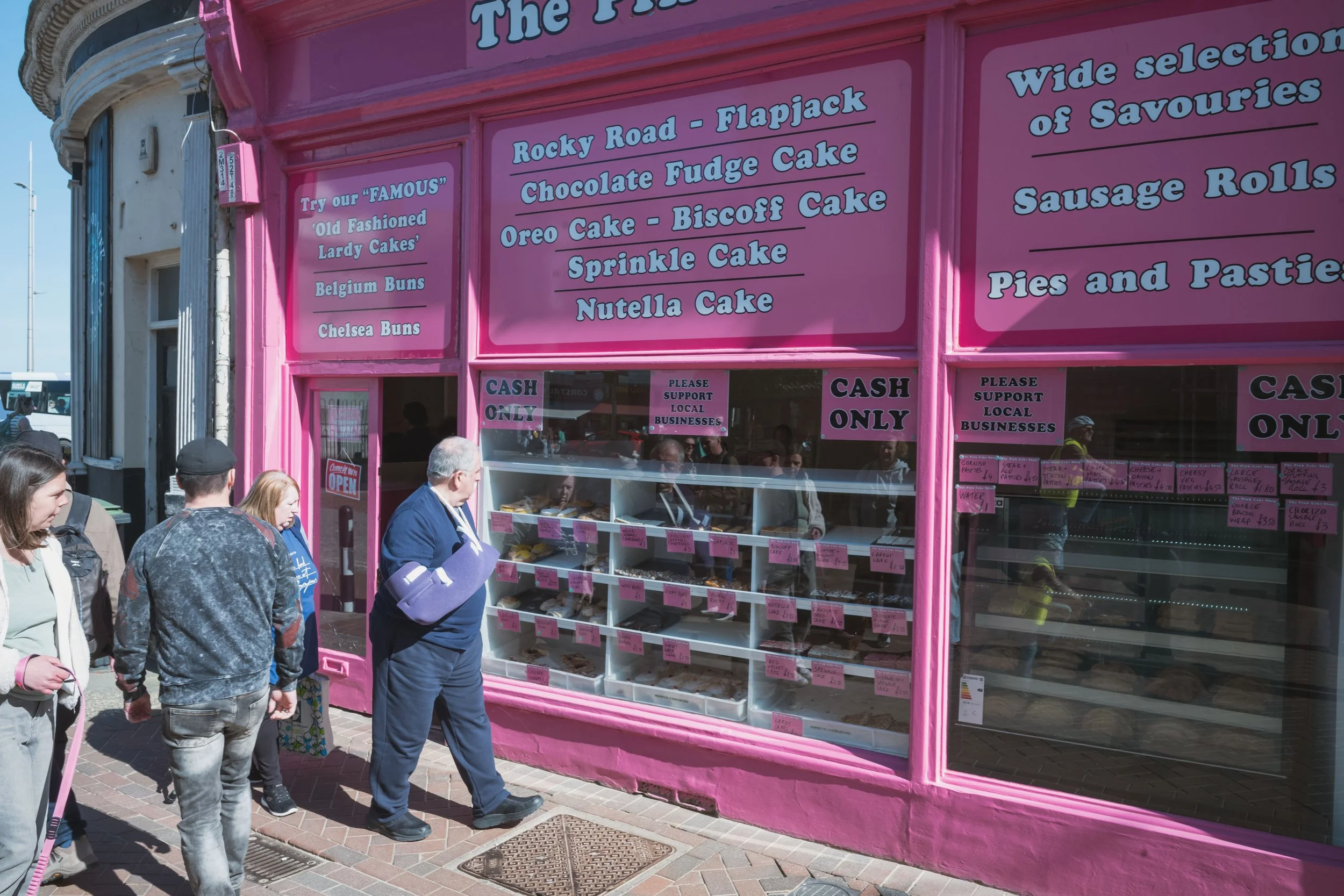
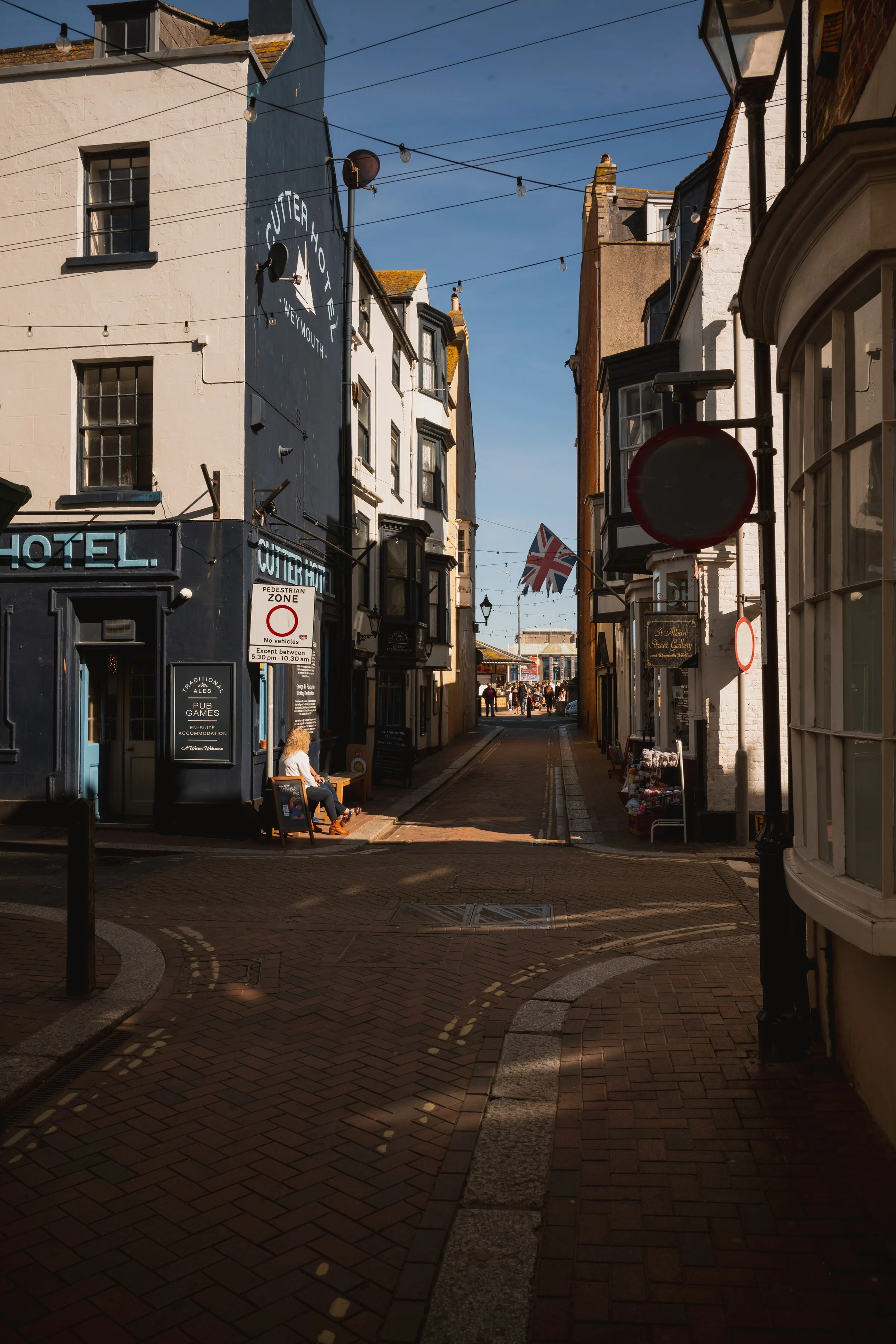
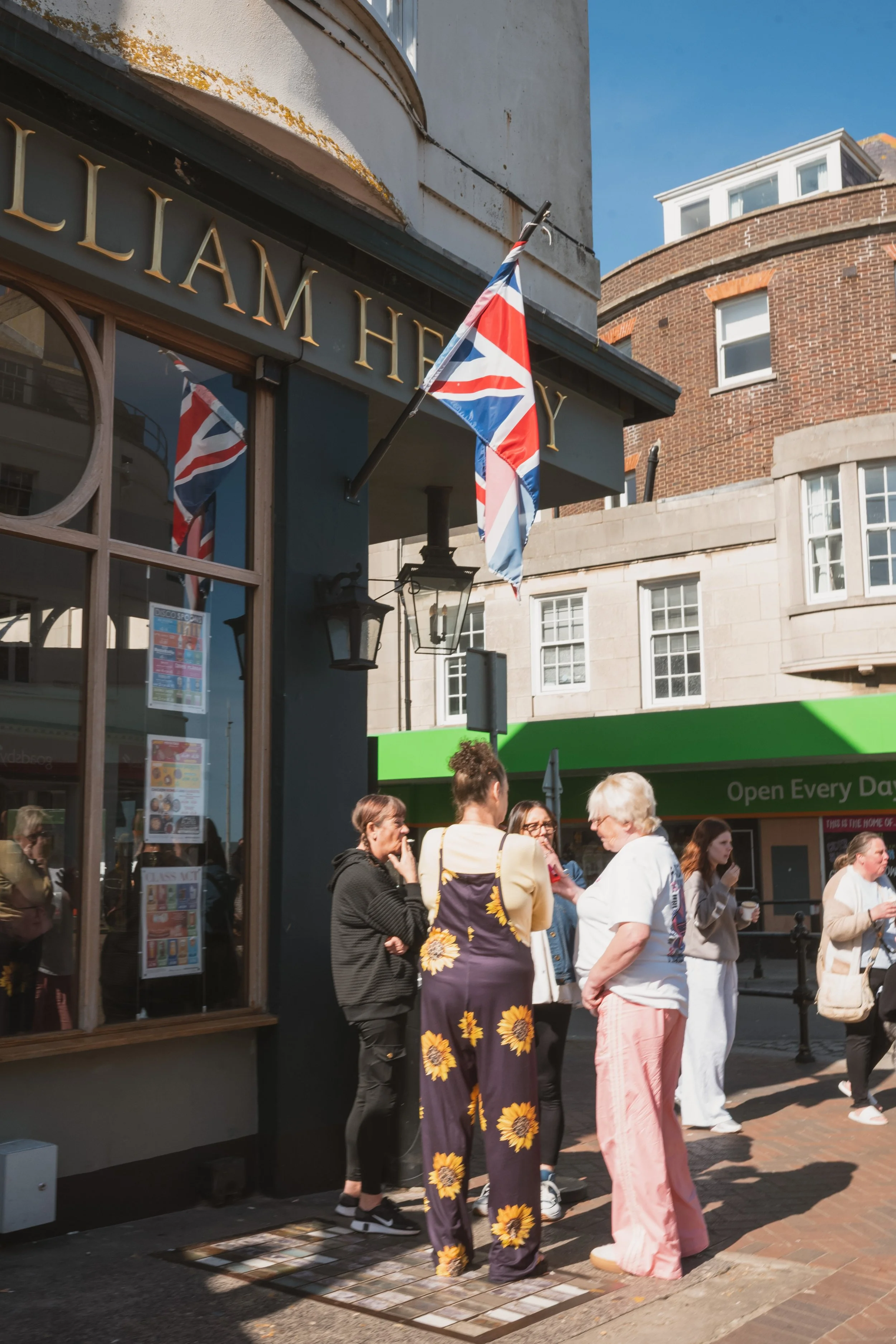
I drove down to Weymouth yesterday morning, with the Leica M10 and no real agenda beyond walking and seeing what the town had to say, as Spring 2026 has opened its eyes. Weymouth is a proper south coast seaside town — the kind with a working harbour, Georgian terraces starting to show their age, a pink cake shop that takes cash only, and Union Jacks outside the pub.
"This blog post isn't a political statement, it's an observation. The flags are just there — unremarkable to the people who live under them, which is precisely what makes them worth photographing."
I've been thinking about this project for a while. There's something I keep noticing in the English seaside towns I shoot — a particular kind of texture that's hard to name but immediately recognisable. Old shopfronts that haven't been rebranded. Red postboxes with knitted toppers. Phone boxes repurposed into book exchanges. Ghost signs on brick walls advertising things that no longer exist. All of it quietly persisting, not out of defiance, just out of habit.
Weymouth has it in abundance.
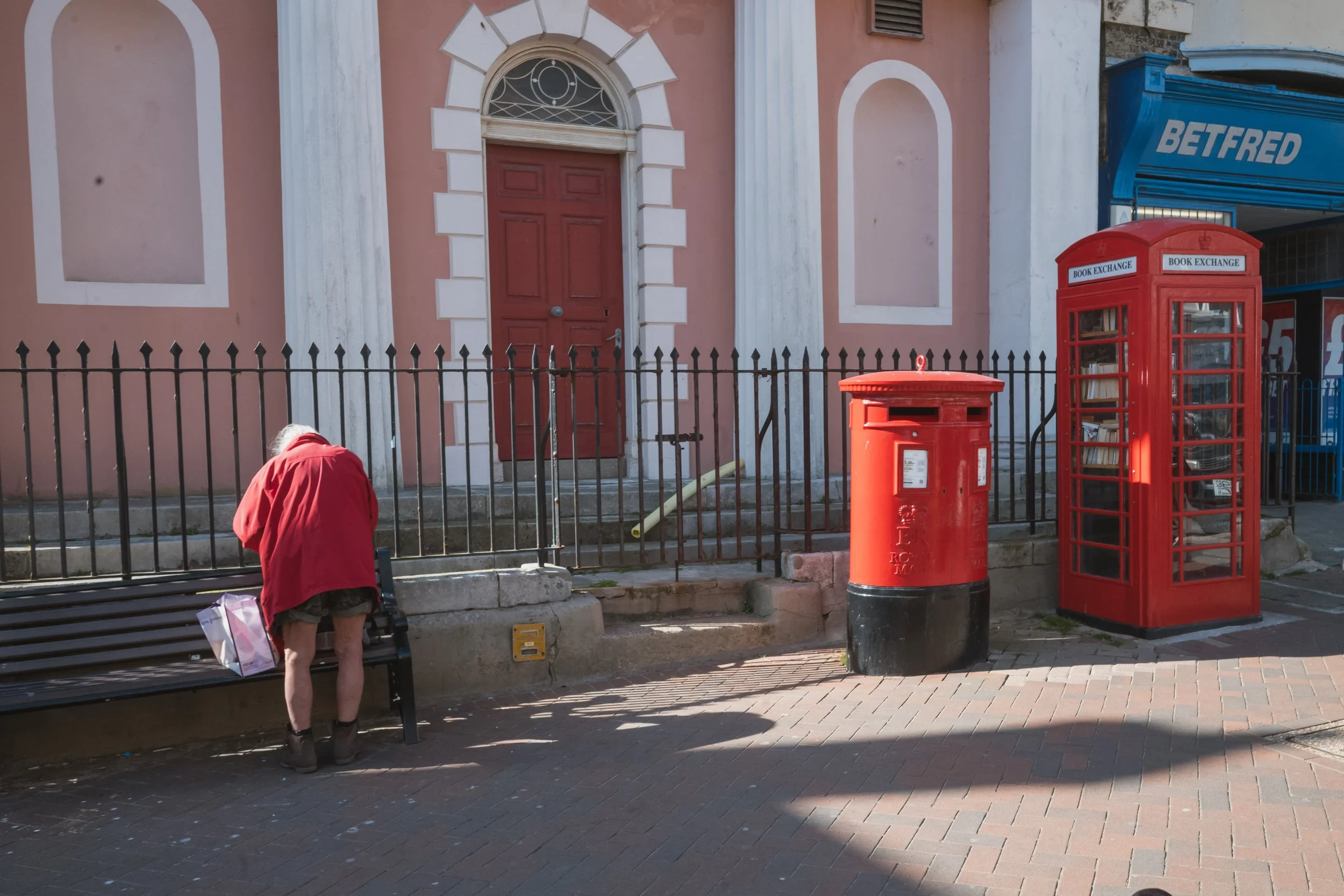
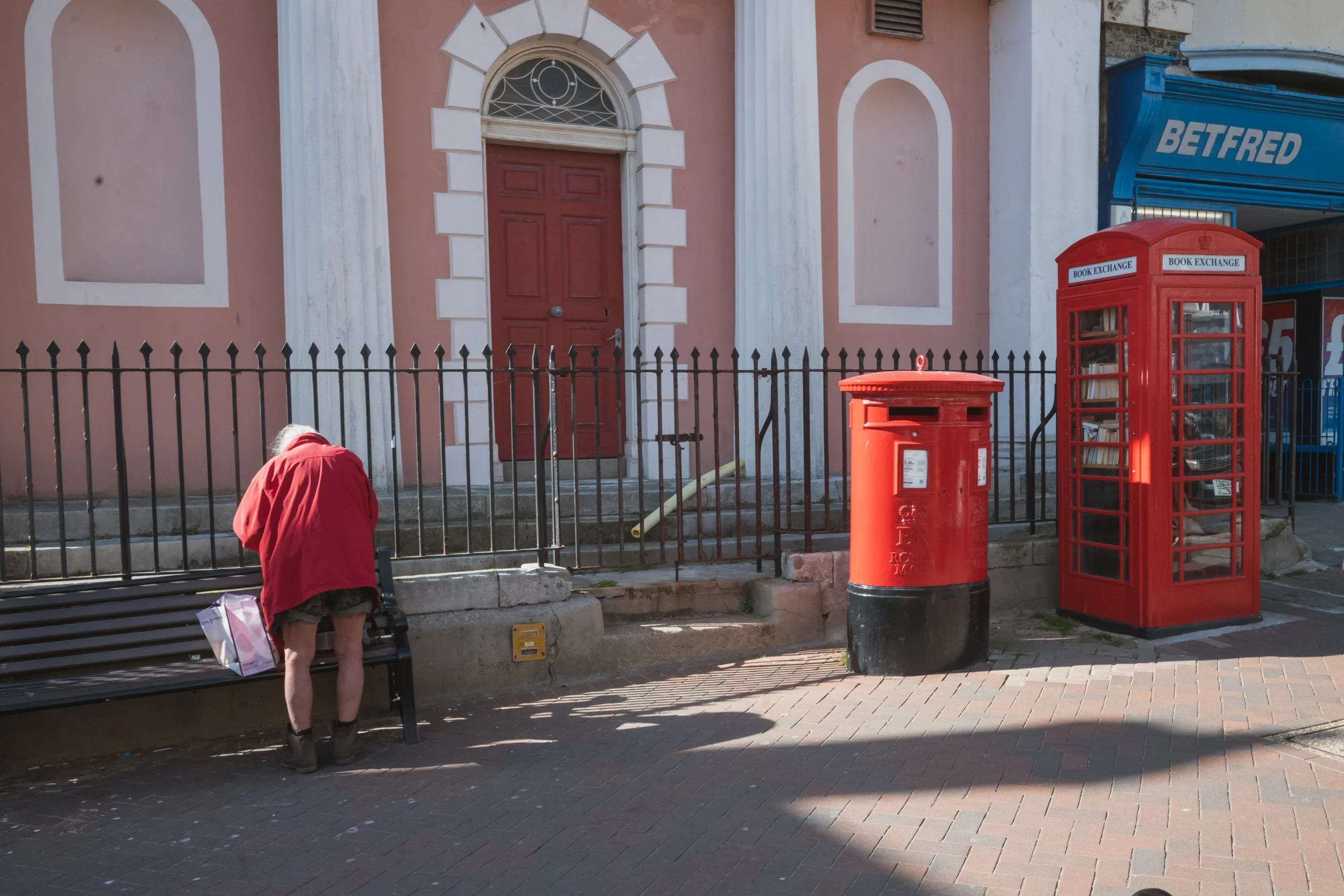
I started on the high street. The first image that stopped me was almost too on-the-nose: a red figure hunched on a bench beside a red postbox and a red phone box — now a book exchange — with Betfred blazing blue in the background. Three reds and a betting shop. England in a single frame.
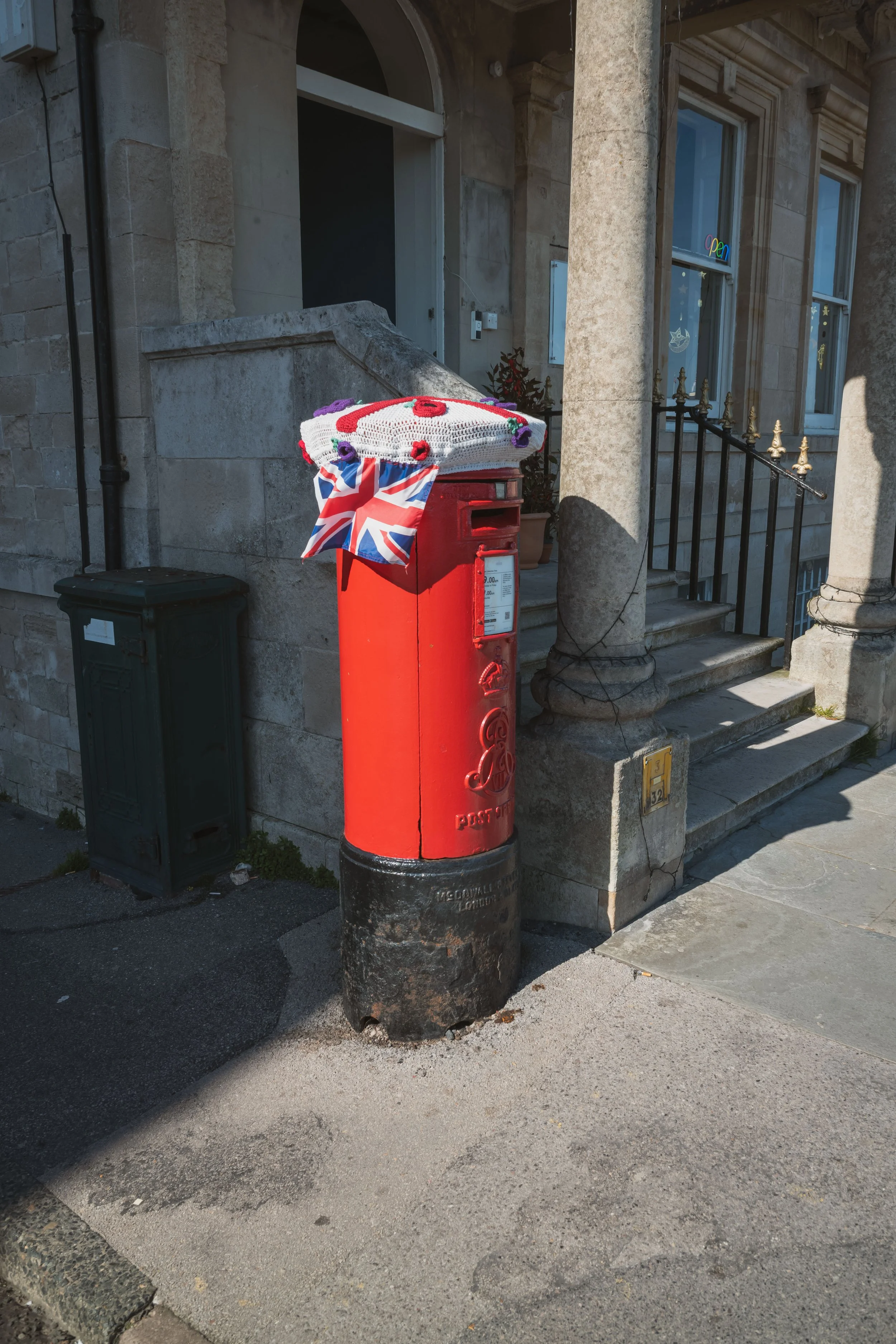
A few streets away I found the postbox with the knitted Union Jack draped over its top — someone had crocheted a topper decorated with poppies and the flag, placed it there quietly, and moved on. It was the most tender thing I photographed all day. There's a whole tradition of this in small British towns — anonymous acts of civic affection that never make the news and probably shouldn't.
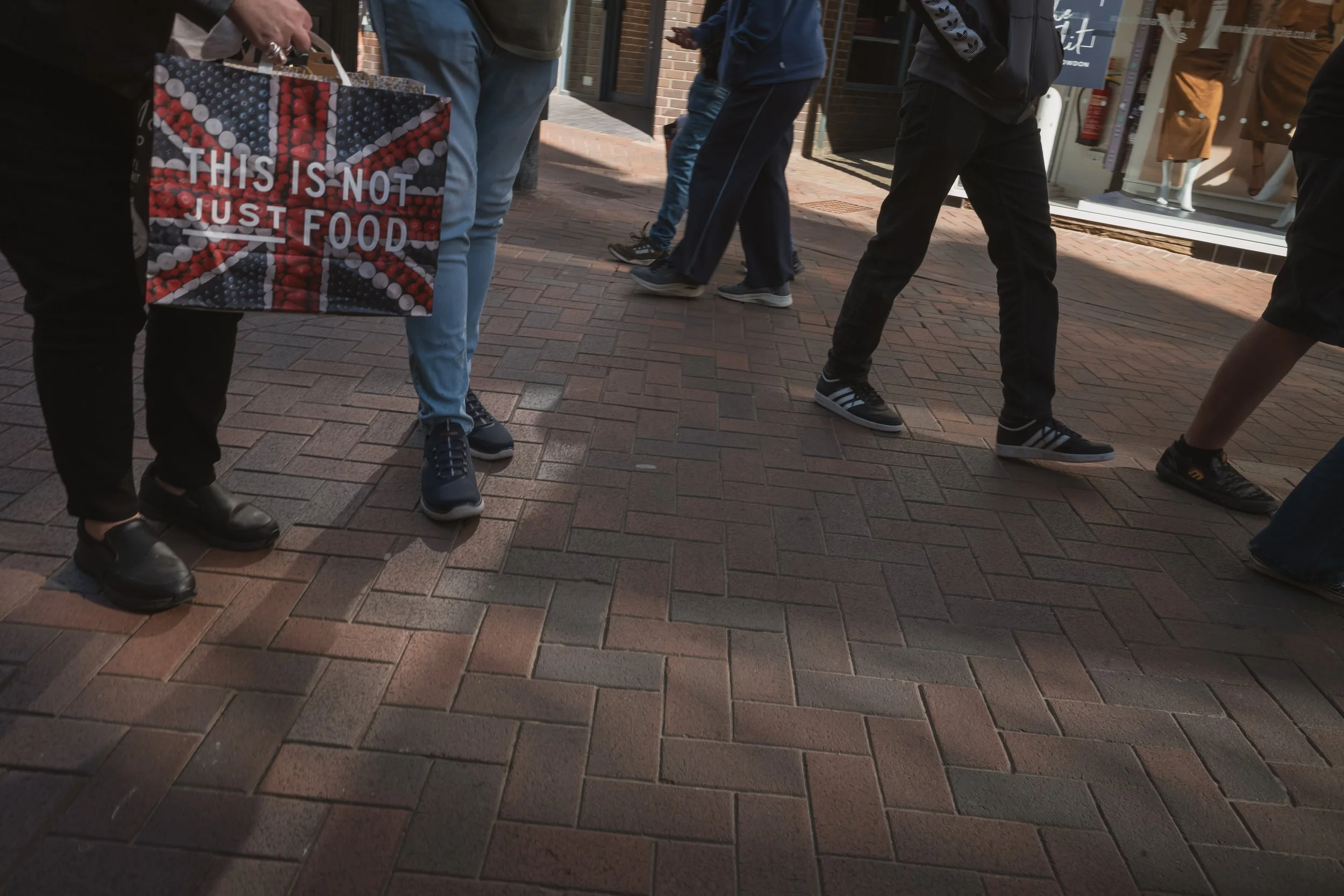
The cobbled lane down toward the harbour was one of those streets that photographs itself. Late morning light, deep shadows on one side, a Union Jack snapping at the far end where the sea opens up, a woman sitting alone outside the pub with a coffee. I stood at the top of it for a while before I pressed the shutter, waiting for it to settle into itself.
"There's a whole tradition of anonymous acts of civic affection in small British towns that never make the news and probably shouldn't."
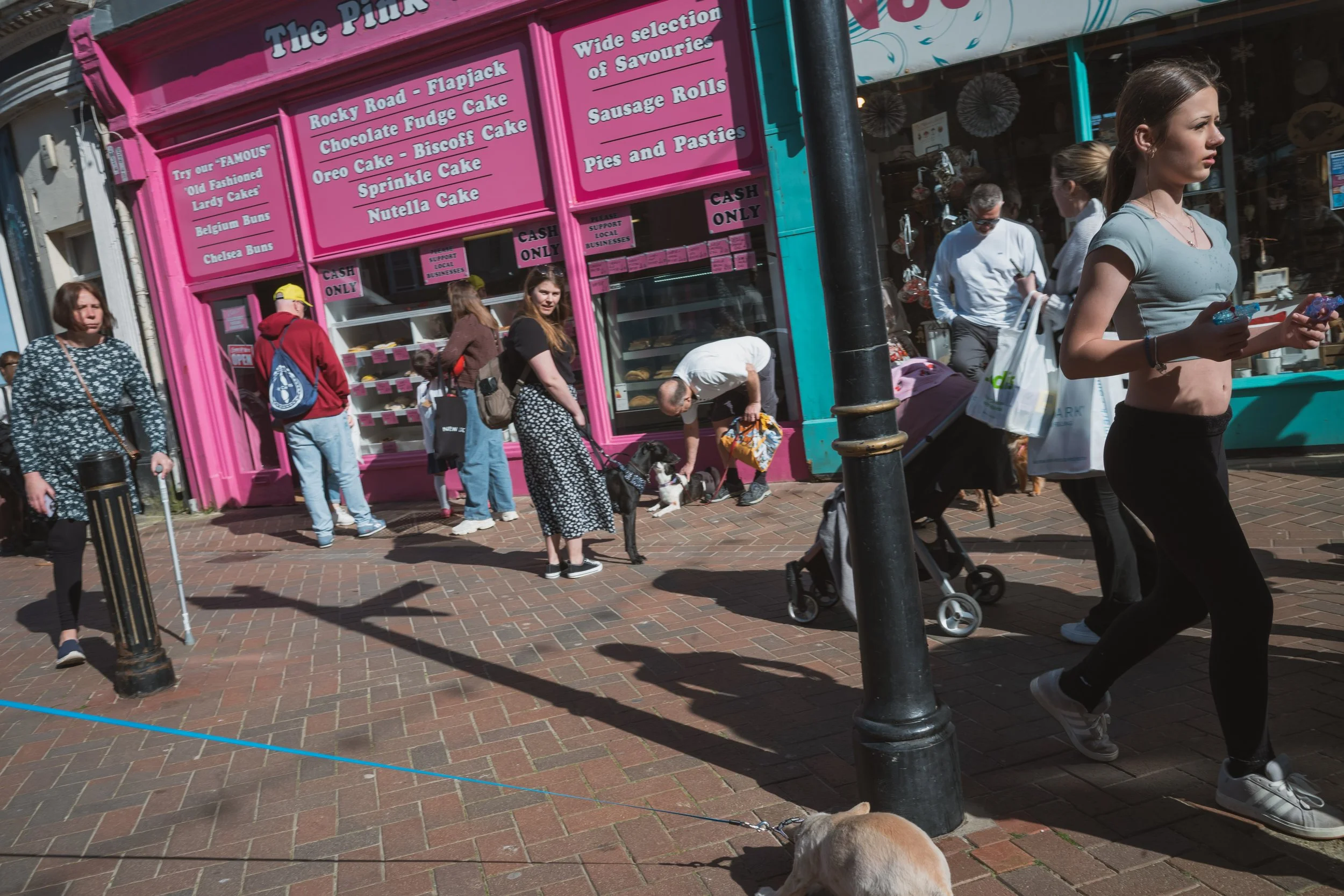
The pink cake shop — I later found out it's called The Pink — was doing serious business. Cash only, Lardy Cakes, Chelsea Buns, Flapjack, Pies and Pasties. The window was covered in handwritten labels. Outside, a small crowd had gathered. Dogs, prams, people craning to see the shelves. Beside it, a teal gift shop. The high street as pure, unapologetic colour.
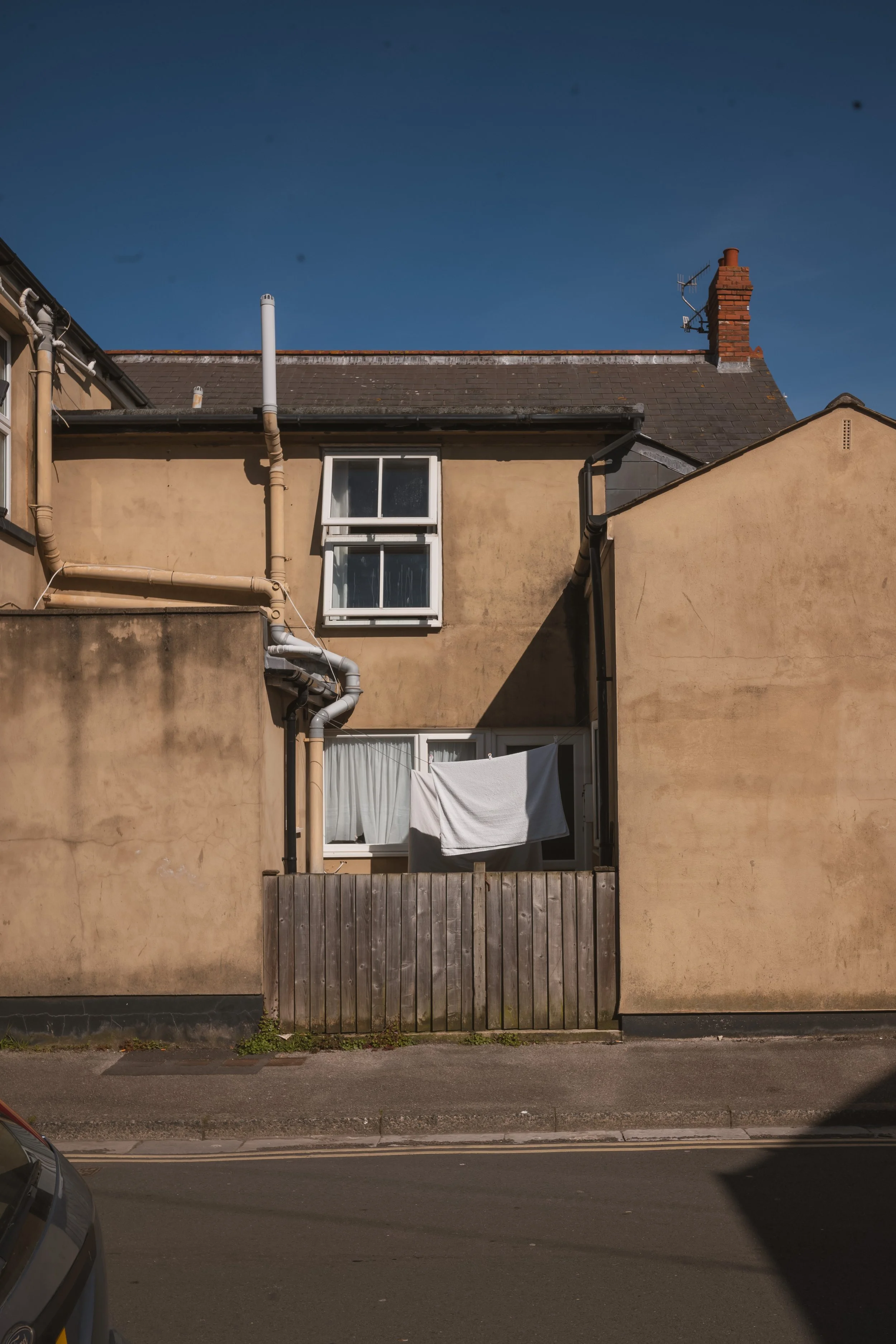
But for all the bunting and bakeries, Weymouth isn't performing anything. It's just getting on with being itself — which includes the parts that aren't picturesque.
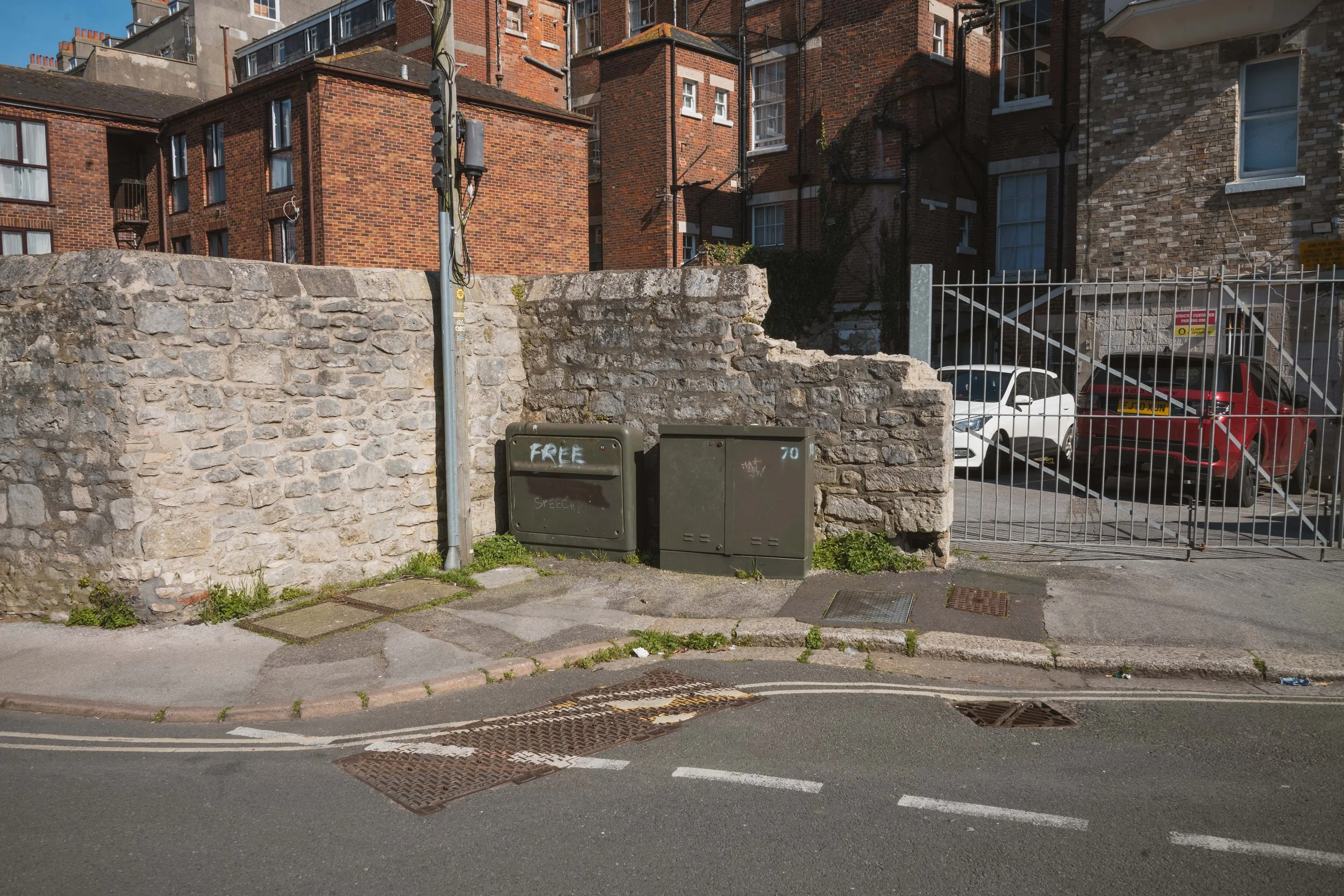
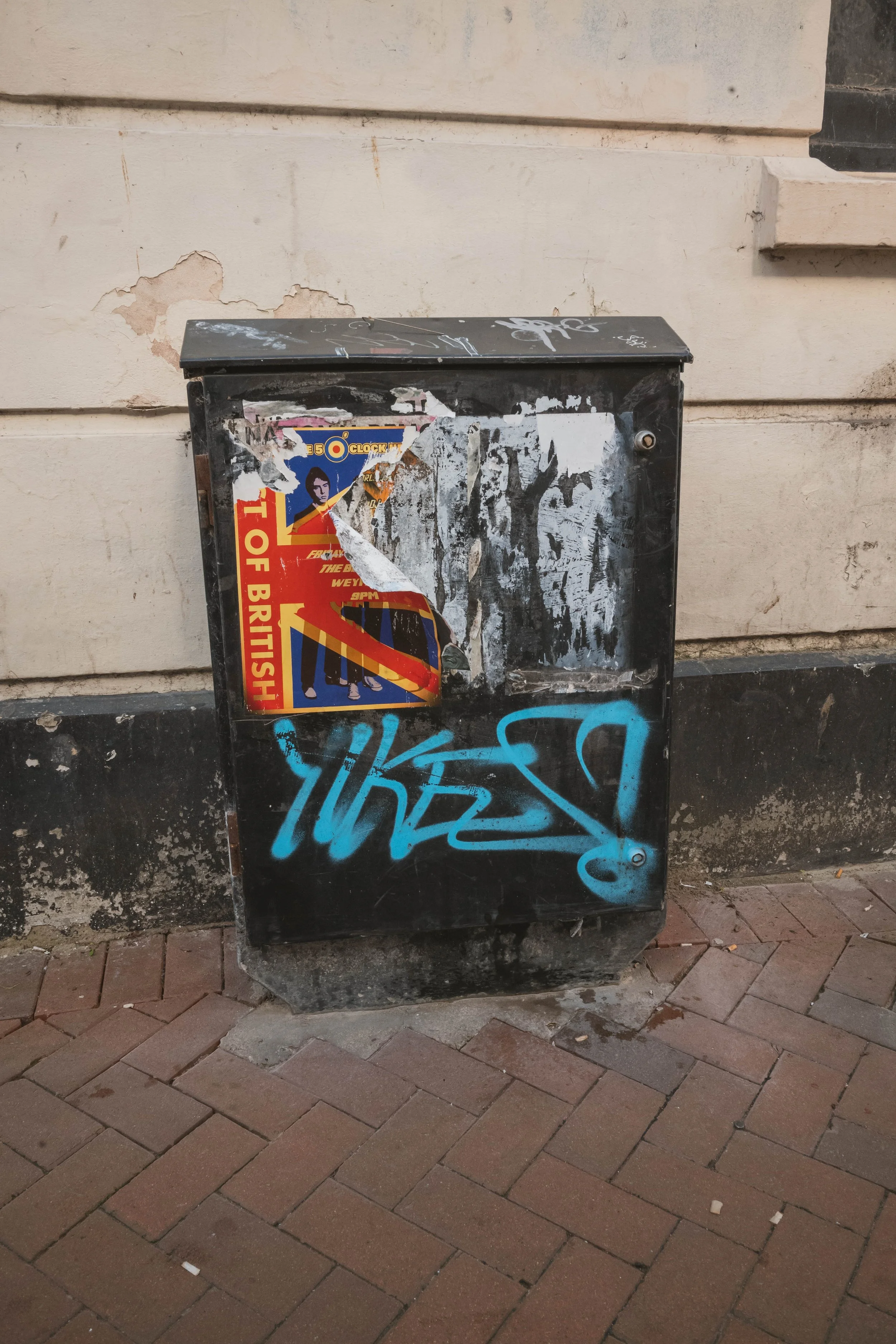
On a back street I found a junction box with FREE sprayed on it in white paint, set against a crumbling stone wall. Two streets over, a black utility box covered in peeling stickers, one of them a torn Union Jack with the words "of British" still legible. Whatever the full message was, only those two words remained. I stared at it for a long time.
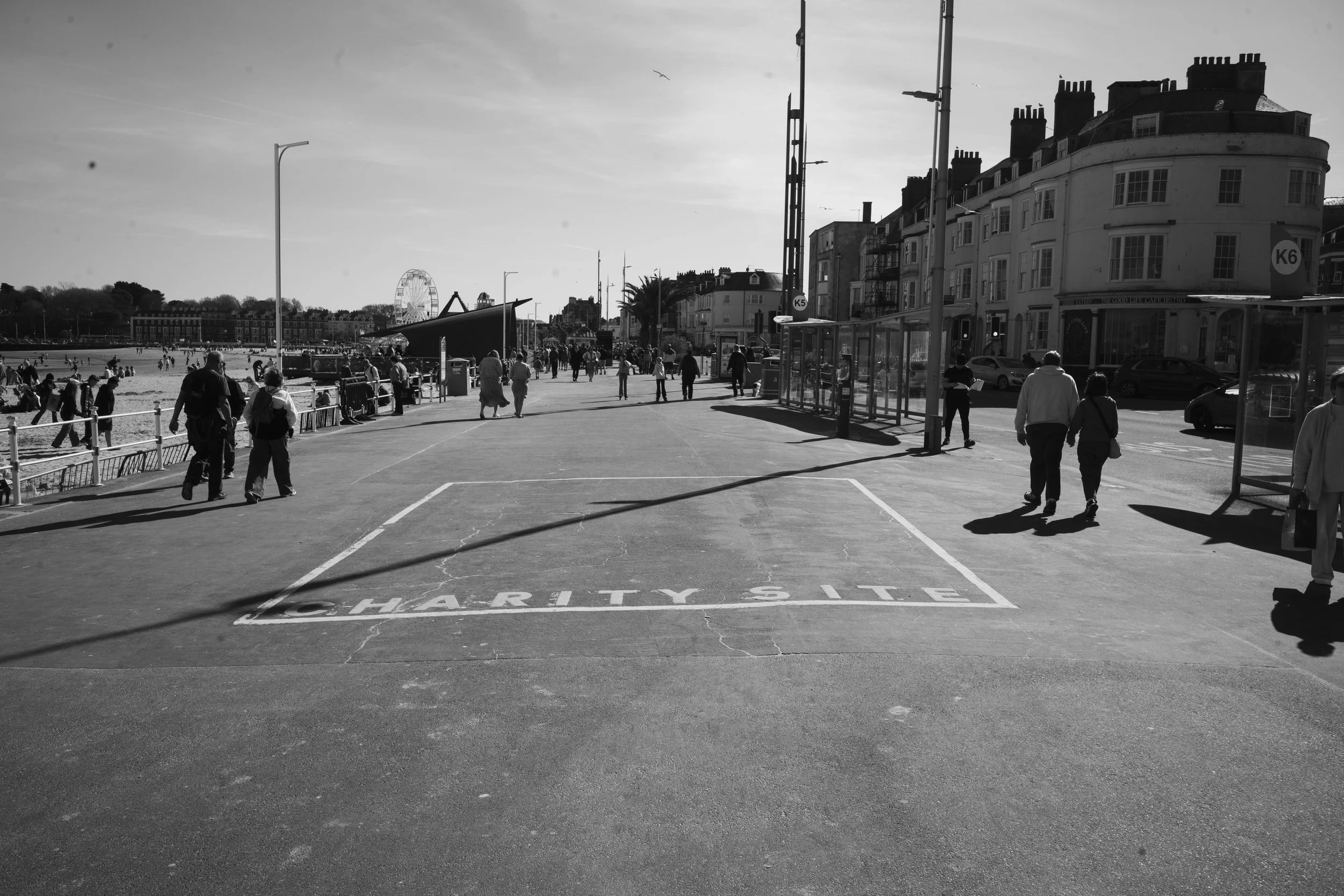
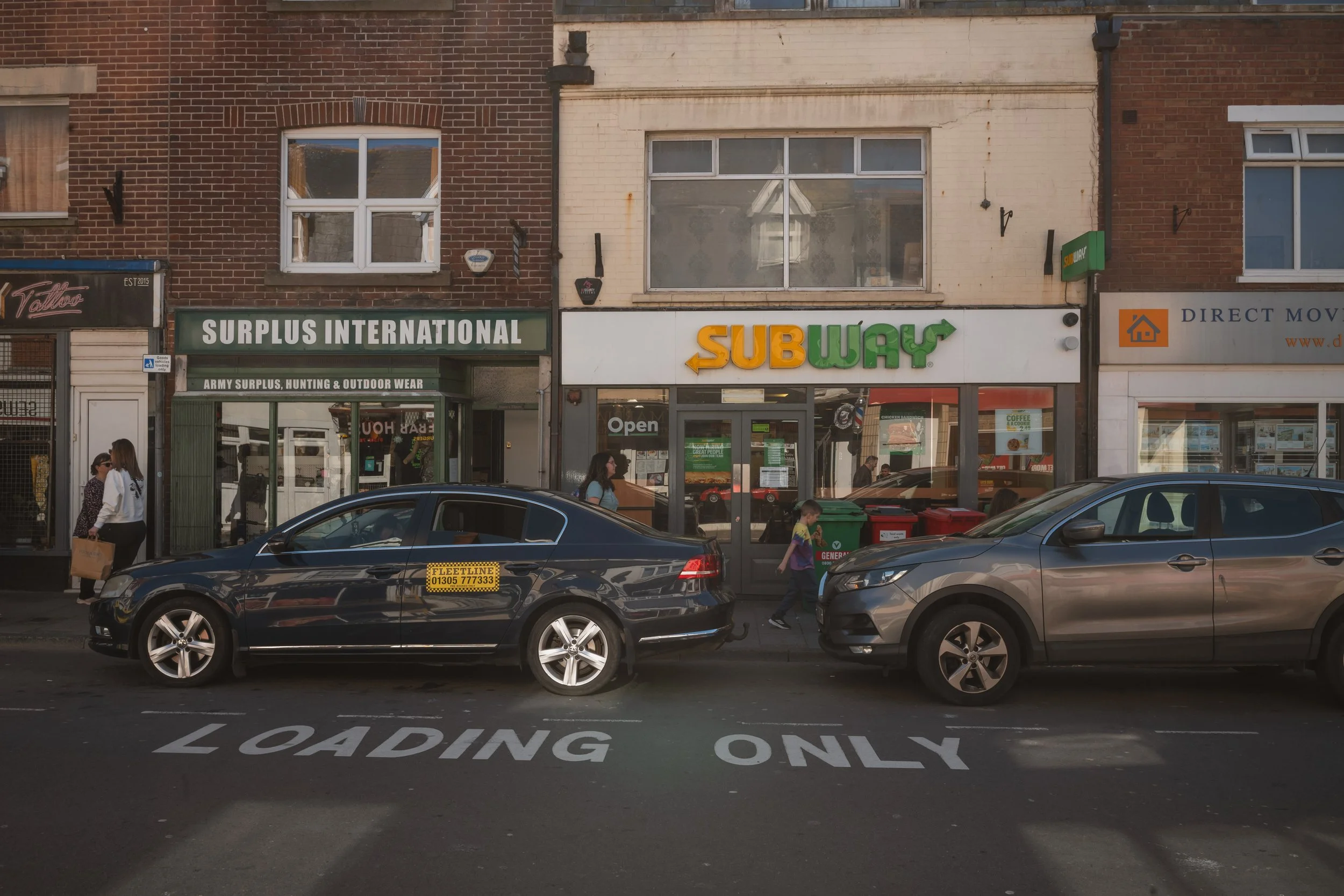
Surplus International next to Subway. A "Loading Only" bay that cars were parked in. Charity Site painted in white letters on the seafront tarmac, a Ferris wheel beyond it. The ordinary machinery of a British seaside town, indifferent to whether anyone's photographing it.
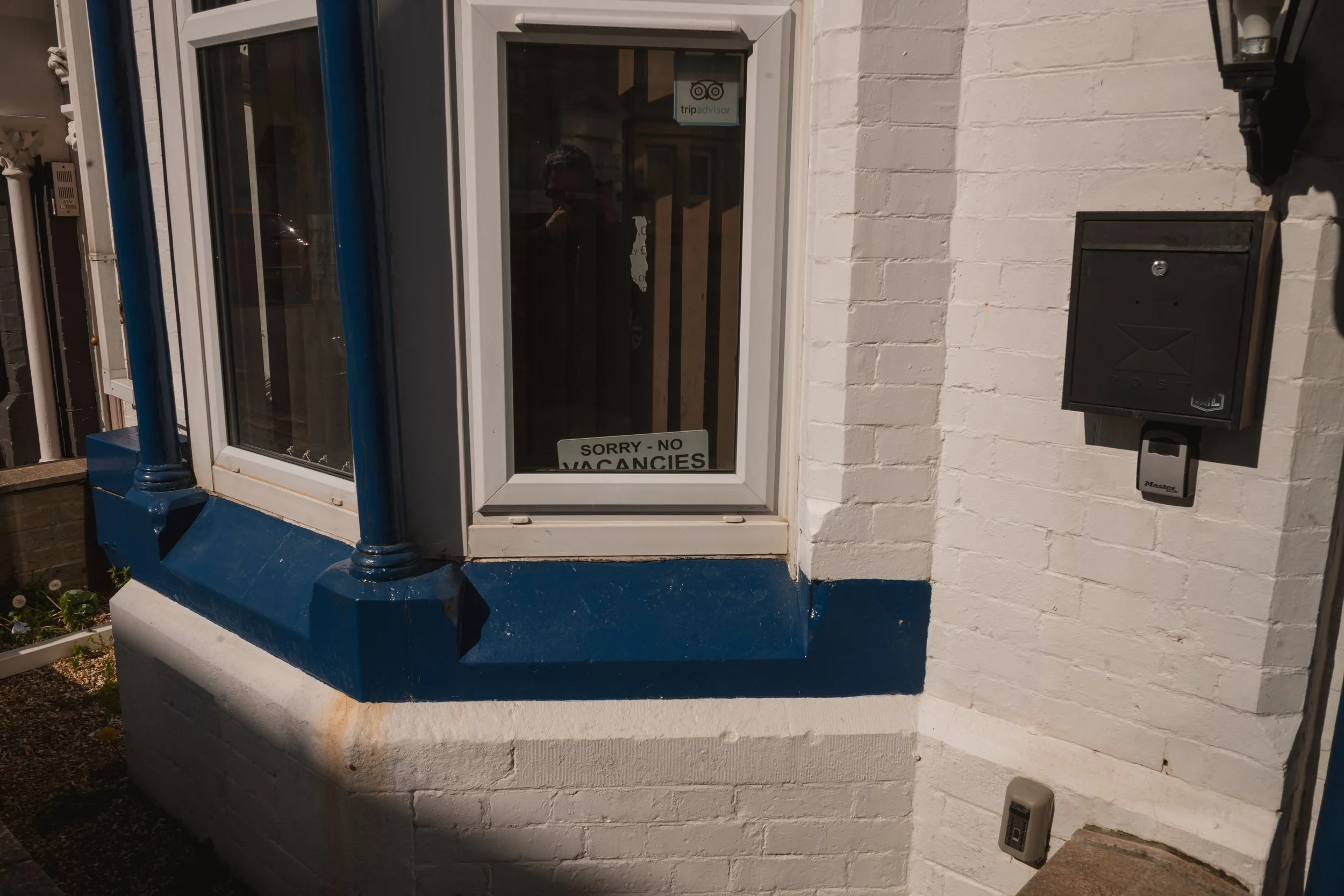
The B&B with "Sorry — No Vacancies" in the window stopped me partly for the message and partly because I could see my own reflection in the glass above the sign. That felt right. The photographer making himself part of the scene he's trying to document.
The human moments were the ones I kept coming back to when I reviewed the day's shoot.
A group of retirees on a bench by the waterfront sharing a box of chips in the sun, the coloured townhouses of the old harbour stacked behind them. A cluster of people in hats at an outdoor café, coffee cups and conversation, nobody looking at a phone. Two people eating 99 ice creams down a pedestrian lane, the King of Hearts gift shop sign above them, a pushchair between them.
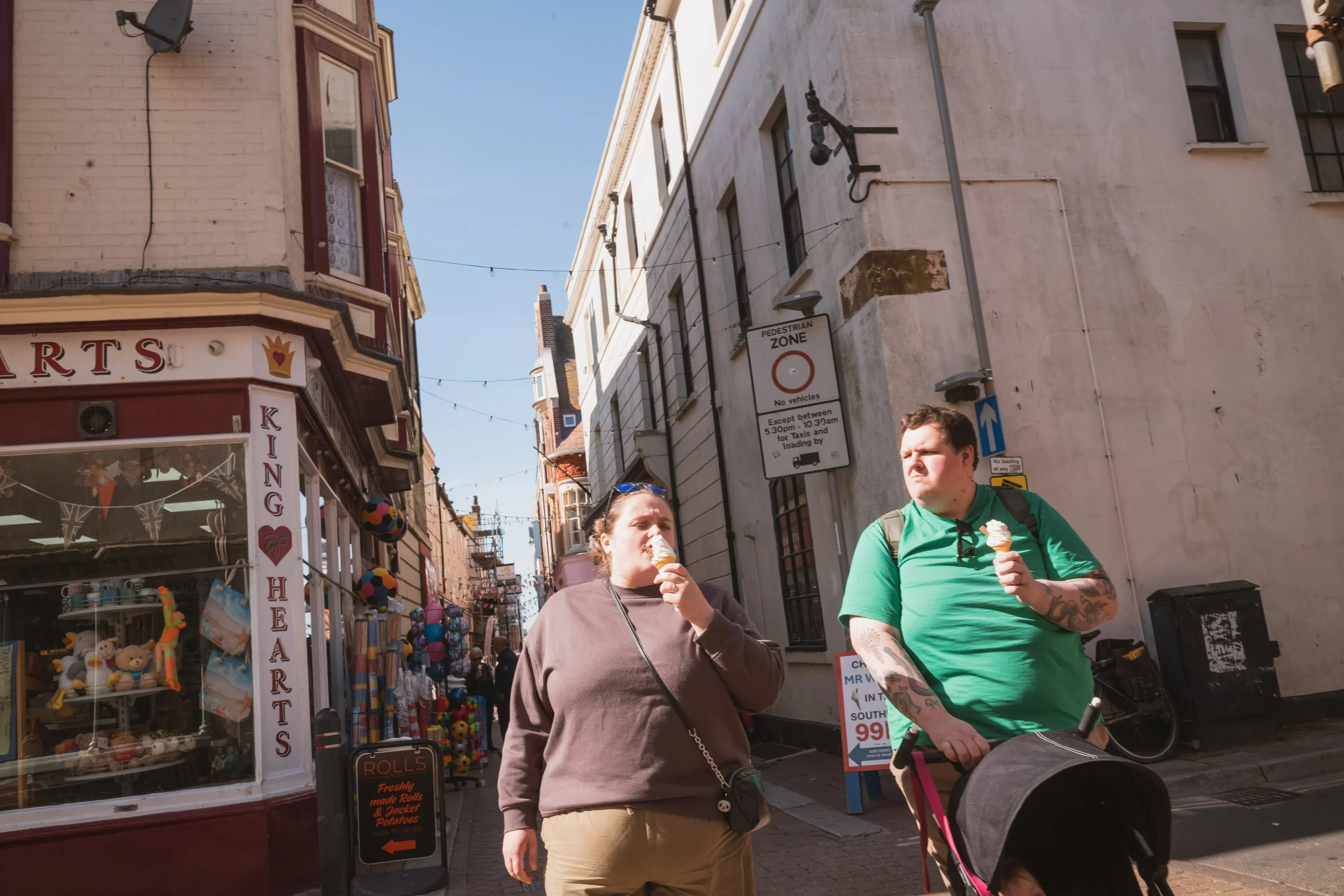
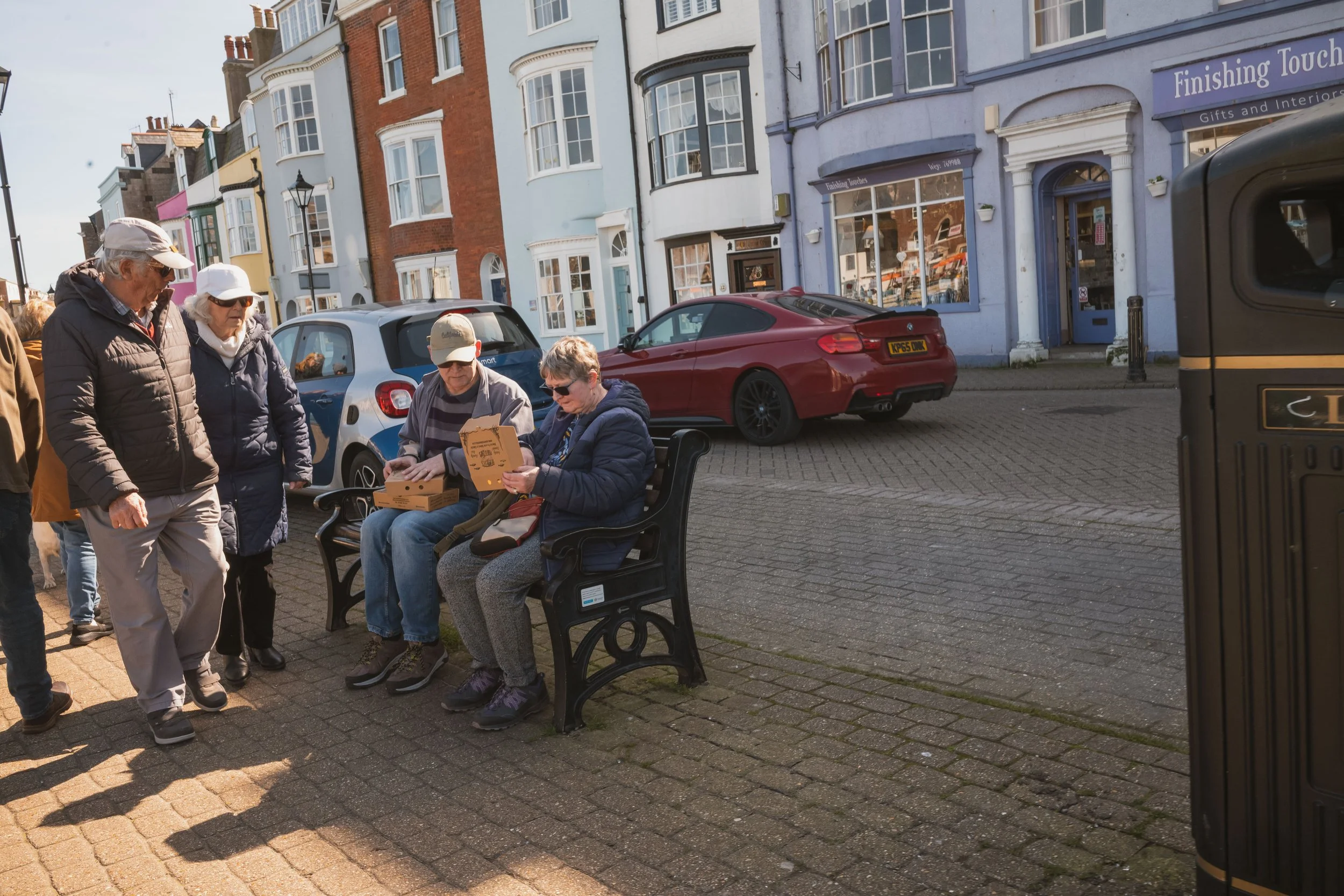
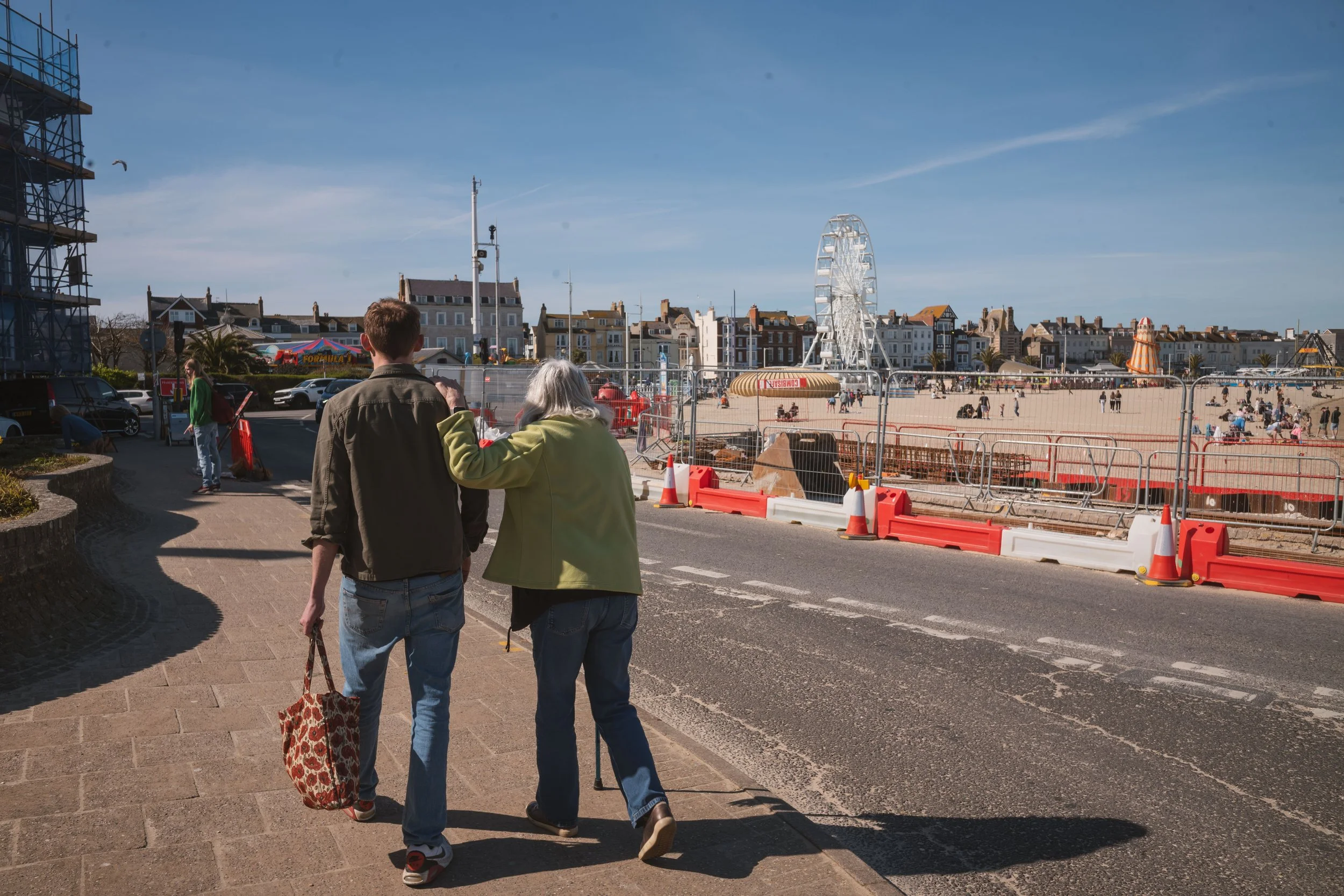
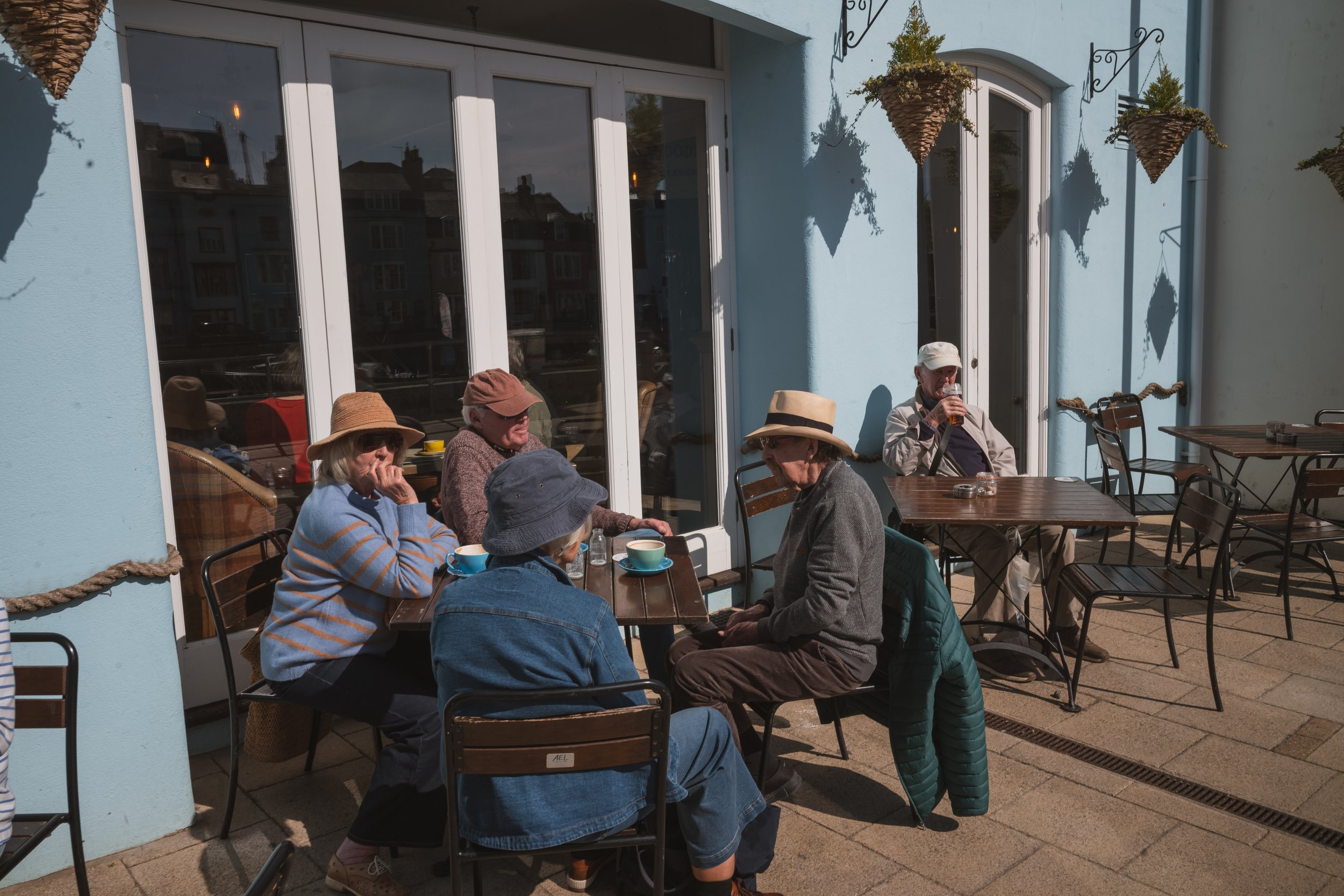
And then the closer. Walking back along the seafront toward the car, I saw a younger man and an older woman — son and mother, I think, though I don't know — walking arm in arm toward the beach. She had her hand through his elbow. He was carrying the bag. The Ferris wheel turned slowly in the distance. I raised the camera, got one frame, and kept walking.
"This is what Little England actually looks like when you put down the argument and just walk around with a camera."
I'm not sure whether places like Weymouth represent something to mourn or something to hold onto. Probably both — which is usually the honest answer. What I do know is that they're worth photographing carefully, without an agenda, while they still look like this.
The Leica M10 rendered the light beautifully all day — that particular quality of south coast light in early spring, where the sun is bright but thin, the shadows hard-edged, the colour palette running from Georgian cream to pub red to sea-blue. I shot everything at f/8, kept the ISO low, and let the camera do what it does.
More from this series to follow. I'll be returning to Weymouth, and to towns like it, throughout the year.
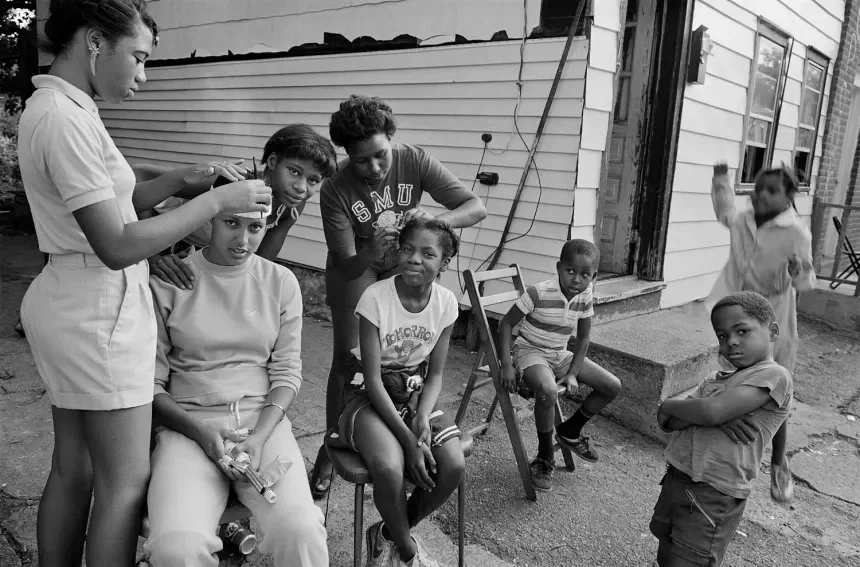
Modern Masters 3: Sage Sohier: The Quiet Observer Who Changed American Photography
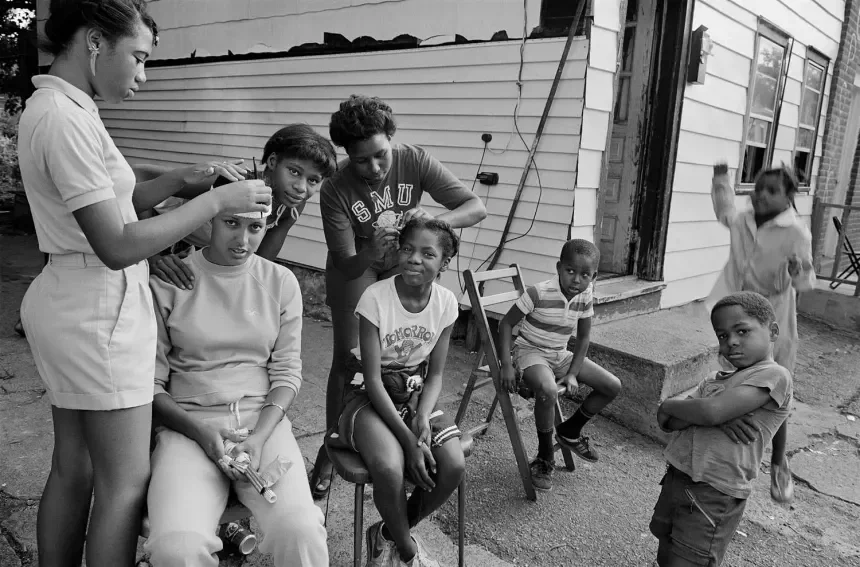
On this International Women's Day, we turn our Modern Masters lens onto one of the most quietly radical voices in American documentary photography — a woman who, armed with a wide-angle lens and a warm curiosity, captured the hidden heart of a nation.
A Woman with a Camera and a Question
There are photographers who shout, and there are those who whisper. Sage Sohier has always whispered — and yet her work echoes across decades. Born in Washington D.C. in 1954, Sohier spent the late 1970s and 1980s wandering the working-class neighbourhoods of America, knocking on strangers' doors, gaining their trust, and producing some of the most affecting environmental portraits ever made. She photographed gay couples at the height of the AIDS crisis. She photographed her fashion-model mother growing old. She photographed children playing in the street before the internet arrived to pull them indoors. Her work is, above all, an act of witness.
On this International Women's Day, we turn our Modern Masters lens onto one of the most quietly radical voices in American documentary photography — a woman who, armed with a wide-angle lens and a warm curiosity, captured the hidden heart of a nation.
A Woman with a Camera and a Question
There are photographers who shout, and there are those who whisper. Sage Sohier has always whispered — and yet her work echoes across decades. Born in Washington D.C. in 1954, Sohier spent the late 1970s and 1980s wandering the working-class neighbourhoods of America, knocking on strangers' doors, gaining their trust, and producing some of the most affecting environmental portraits ever made. She photographed gay couples at the height of the AIDS crisis. She photographed her fashion-model mother growing old. She photographed children playing in the street before the internet arrived to pull them indoors. Her work is, above all, an act of witness.
Today, on International Women's Day 2026, we celebrate Sage Sohier: a Harvard-educated, Guggenheim-awarded, MoMA-collected artist who never sought the spotlight — and who, perhaps for that reason, is finally getting the recognition she has long deserved.
Origins: Washington D.C. to Harvard Yard
Sage Sohier was born in Washington D.C. in 1954. Growing up, she was drawn to language and narrative — she arrived at Harvard University intending to major in English and, she has said, imagined she might become a writer. But she was restless, ill-suited to sitting alone in front of a typewriter for hours.
Everything changed in her sophomore year when she took her first photography class. As she later told The Photographers' Gallery in London:
"When I took my first photography class as a sophomore, I learned about fine art photography and realised that the medium had narrative possibilities as powerful as fiction writing. I was hooked."
Photography gave her what writing couldn't: a reason to be out in the world, in conversation with strangers, alive to the unexpected. She graduated from Harvard with her B.A. and never looked back.
The Big Break: Tod Papageorge and the East Coast Scene
If there was a single moment that set Sohier's course, it was meeting photographer Tod Papageorge, who visited Harvard as a senior-year artist-in-residence. The encounter was, by her own account, transformative:
"Tod was incredibly eloquent about the medium, and he somehow made me feel not only that I wanted to become a photographer, but also that it was possible for me."
Boston in the 1970s was a fertile environment for a young photographer. Sohier found herself moving in circles that included Nick Nixon, Lee Friedlander, and Garry Winogrand — giants of American documentary photography who would shape her eye and ambition. She was also deeply influenced by Diane Arbus, whose ability to produce psychologically acute portraits she spent years trying to understand, and by Chauncey Hare's book Interior America (Aperture, 1978), which showed her the documentary possibilities within ordinary domestic spaces.
Her early career blossomed quickly. She received a Massachusetts Artists Foundation photography fellowship in 1979, followed by a National Endowment for the Arts photography fellowship in 1980–81. The Guggenheim Fellowship came in 1984–85 — one of the most prestigious awards in American arts — cementing her reputation as a serious artistic voice.
Style: Close, Sharp, and Full of Life
Sohier's photographic style is immediately recognisable: wide-angle lenses, deep depth of field, everything rendered tack-sharp from foreground to background. She favoured apertures of f/11 or f/16, used on-camera flash frequently to fill her frames with even light even in low-light conditions, and shot primarily in black and white during her most celebrated early work. The effect is almost theatrical — a 'picture on a wall' quality, as one critic described it, where the entire stage of life is visible and in focus.
She has spoken candidly about her technique:
"Back in the 70s, most photographers still worked in black and white. I fell in love with wide-angle lenses — I liked how they made the foreground large and the background recede and how playing with scale created stories. I also liked to use on-camera flash, so that I could still shoot with apertures of f16 or f11 and render everything sharp even at dusk."
What makes Sohier's work distinctive is not just technical precision but the quality of presence she achieves. She was never a candid, covert photographer. She approached people directly, explained her project, asked permission, and stayed long enough for the self-consciousness to dissolve. Her subjects — working-class families, teenagers on stoops, gay couples in their living rooms — have a relaxed, unguarded quality that is the product of genuine human connection.
"Approaching people politely and with energy and enthusiasm is key. Intruding on people's personal space could feel awkward, and was never easy to do, but most of the time it seemed that my enthusiasm was contagious and people were able to relax and be themselves."
Later in her career she shifted away from the blunt on-camera flash aesthetic of her 1980s work:
"I don't shoot that way anymore, though I do still use flash a lot. I prefer more of a natural-light effect now."
Equipment: What She Used and What She Didn't
Sohier's technical choices were always in service of her vision. Her kit during the signature years of the 1980s was deliberately unglamorous:
Wide-angle lenses — her primary tool, giving her images their characteristic sense of depth and environment
Small apertures (f/11 and f/16) — ensuring everything in the frame was sharply rendered
On-camera flash — not for drama, but for control, allowing her to shoot in varied light conditions while maintaining sharpness
Medium format cameras — chosen for their exceptional detail and tonal range, which rewarded slow, deliberate composition
Black and white film — the standard of serious documentary work in that era, and a material she fell deeply in love with
What she avoided, by temperament if not always by rule, was anything that created distance between herself and her subjects. She was not a telephoto photographer. She did not hide. She was not interested in bokeh, in dreamy soft focus, in separating subject from environment. She once noted simply: "Back then I wanted everything to be sharp and visible."
She also kept her workflow deliberate and human-paced. The medium format camera required more time and intention than a 35mm point-and-shoot — and that slower rhythm, she has suggested, actually aided her relationships with subjects, giving conversations time to breathe before the shutter clicked.
The Major Series: A Body of Work Like No Other
Sohier has spent her career in long-form documentary projects, returning to the same themes — American identity, domestic life, the nature of love — across decades. Here are the series that define her legacy:
Americans Seen (late 1970s–1980s)
Her foundational body of work, shot across the American landscape from New England to Florida to the rural Midwest. Sohier would load her car and drive south in winter, seeking out strangers in working-class neighbourhoods and asking if she could photograph them. The resulting images — published by Nazraeli Press in 2017 and reissued in a remastered edition in 2024 — are among the finest environmental portraits in American photography. They document a pre-digital, pre-internet America with warmth, clarity, and wit.
At Home With Themselves: Same-Sex Couples in 1980s America (mid-1980s)
This project is arguably Sohier's most historically significant. Begun in 1986, at the height of the AIDS crisis, it was motivated in part by her desire to understand her father, who had left the family when she was a toddler and whom she later discovered was gay. She photographed committed gay and lesbian couples in their homes across America, creating intimate portraits that stood in deliberate contrast to the sensationalised media portrayal of gay life at the time. As she has said:
"I was interested in how, as a culture, we weren't used to looking at two men touching, and was struck by the visual novelty yet total ordinariness of these same-sex relationships."
The series was so culturally ahead of its time that it found no publisher for nearly 30 years. It was finally released by Spotted Books in 2014 — just before the Supreme Court's landmark Obergefell v. Hodges ruling on marriage equality — and was immediately recognised as an essential historical document.
Animals (1980s–1990s)
A black-and-white series depicting people with their pets — companion animals that reveal, Sohier believes, something uninhibited and true about their human owners:
"There is more spontaneity, less self-consciousness, and more chaos when humans and other animals coexist. Love is unconditional, grief is uncomplicated though deeply felt, and life is richer, more vivid, more comical."
Published by Stanley/Barker in 2019, the series became one of her most celebrated books.
Witness to Beauty (2016)
A deeply personal project in which Sohier trained her camera on her own mother — a former fashion model photographed by such legends as Irving Penn and Richard Avedon. Sohier describes herself as the 'foil' to her mother's beauty, always behind the camera rather than in front of it. The book, published by Kehrer Verlag, is a meditation on age, femininity, and the complexity of the mother-daughter relationship.
Passing Time (2023) and Easy Days (2025)
Revisiting her archive during the pandemic, Sohier uncovered a wealth of unpublished images from the late 1970s and early 1980s. Passing Time — awarded Best Book at Paris Photo Week 2023 by Vanity Fair — presents 57 images of young people at leisure in pre-digital America. Easy Days, published by Nazraeli Press in 2025, completes a trilogy of her 1980s work and was the subject of a major solo exhibition at the Center for Photographic Art in Carmel, California.
Iconic Images: Photographs to Look For
Sohier does not have single 'famous' images in the way Cartier-Bresson has his decisive moments — her power is cumulative, architectural, built across series and bodies of work.
Rise to Recognition: Long Overdue
Sohier's path to wide recognition was, by any measure, a long one. She spent the 1980s building her archive while simultaneously teaching — at Harvard (as Lecturer on Visual and Environmental Studies, 1991–2003), Wellesley College (as Assistant Professor, 1997–99), the Massachusetts College of Art, the Rhode Island School of Design, and the School of the Boston Museum of Fine Arts. She was, in many ways, a photographer's photographer: deeply respected within the field, with her work collected by MoMA, the Brooklyn Museum, the San Francisco Museum of Modern Art, the Cleveland Museum of Art, the Nelson-Atkins, and the Portland Art Museum — but not yet broadly famous.
The turning point came with a cluster of major publications and exhibitions from 2012 onward. About Face (Columbia College Chicago Press, 2012), At Home With Themselves (2014), Witness to Beauty (2016), and Americans Seen (2017) established her, finally, as a photographer of genuine historical importance. MoMA's 2010–11 group exhibition 'Pictures by Women: A History of Modern Photography' placed her work in its proper canonical context.
The second act — Passing Time's Paris Photo acclaim in 2023, the remastered Americans Seen in 2024, and Easy Days in 2025 — has introduced her work to a new generation of photographers who find in her images both a technical mastery and a humanity they aspire to.
"I fell in love with photography in college and knew that that's what I had to spend my life doing. It's a kind of addiction, and my life doesn't feel complete unless I have a project or two that I'm working on and excited about."
What Her Peers Say
The photography world has been increasingly vocal about Sohier's importance. Here is what those who know the field best have said:
Alex Webb and Rebecca Norris Webb selected Passing Time as one of their Best Photobooks of 2023 at Photobookstore.co.uk — a significant endorsement from two of the most celebrated names in contemporary colour photography.
Ed Templeton, the skateboarder turned photographer and cult photobook connoisseur, also named Passing Time among the best books of 2023 — a mark of the book's cross-generational appeal.
Vanity Fair designated Passing Time one of the Best Books at Paris Photo Week 2023, the world's most prestigious photography fair.
Shana Lopes, curator of photography at the San Francisco Museum of Modern Art (SFMOMA), appeared in conversation with Sohier at the Center for Photographic Art in 2025, a gesture of institutional validation from one of America's most important photography collections.
What Will You Remember, the photography criticism publication, wrote of At Home With Themselves: "Sohier's ability to amplify the nuance of each relationship is uncanny. Her triumph: encapsulating the touching universality and individuality of our human connections."
Lenscratch, one of the most influential photography platforms online, has described her as "indefatigable" — a photographer with a "long legacy of documenting the human (and animal) condition close to home and on the streets."
Photo Resources:
Use these links to source images for the blog post (always check licensing and credit requirements before embedding):
Sage Sohier's official website — full portfolios organised by series (Easy Days, Americans Seen, Animals, Peaceable Kingdom, At Home With Themselves, Witness to Beauty and more)
The Photographers' Gallery Print Sales — overview with images
YouTube Video Resources
Search for these on YouTube to find embeddable video content:
Essential Photobooks
Sohier has published nine monographs — a body of book work that is itself remarkable for its consistency and range. Here are the essential titles:
Easy Days (Nazraeli Press, 2025) — the final volume in her 1980s trilogy, completing a definitive document of pre-digital American life
Passing Time (Nazraeli Press, 2023) — voted Best Book at Paris Photo Week by Vanity Fair; 57 images of youth and leisure in 1979–85 America; printed on Japanese Kasadaka art paper
Peaceable Kingdom (Kehrer Verlag, 2021) — with an essay by writer Sy Montgomery; her most expansive exploration of the human-animal bond
Animals (Stanley/Barker, 2019) — black-and-white portraits of people with their pets; one of the most charming and psychologically astute books in her catalogue
Americans Seen (Nazraeli Press, 2017; remastered edition 2024) — the cornerstone of her reputation; environmental portraits of working-class America in the 1980s
Witness to Beauty (Kehrer Verlag, 2016) — her intimate, humorous, and moving portrait of her ex-fashion-model mother
At Home With Themselves: Same-Sex Couples in 1980s America (Spotted Books, 2014) — the groundbreaking document of gay domestic life that waited 30 years to find a publisher; now recognised as a civil rights landmark
About Face (Columbia College Chicago Press, 2012) — a study in portraiture and facial expression
Perfectible Worlds (Photolucida, 2007) — her earliest monograph; the beginning of a long conversation with the American domestic landscape
A Final Thought
Sage Sohier once described what drew her to people's lives:
"In my twenties, I began to see the world and understand more about people from a variety of different backgrounds. Meeting people (in order to photograph them) was thrilling, and it changed me. Being a photographer has been a wonderful excuse to wander and to be inquisitive about others' lives and experiences. I will always be grateful to the people pictured here — not just for allowing me to spend time making pictures of them — but also for how these interactions informed and enriched my life."
On International Women's Day 2026, we are grateful in turn to Sage Sohier — for her curiosity, her warmth, her courage to knock on strangers' doors, and her extraordinary eye. She has given us a portrait of America that feels, across every decade, like something essential and true.
Explore her full body of work at sagesohier.com.
Until next time, keep snapping
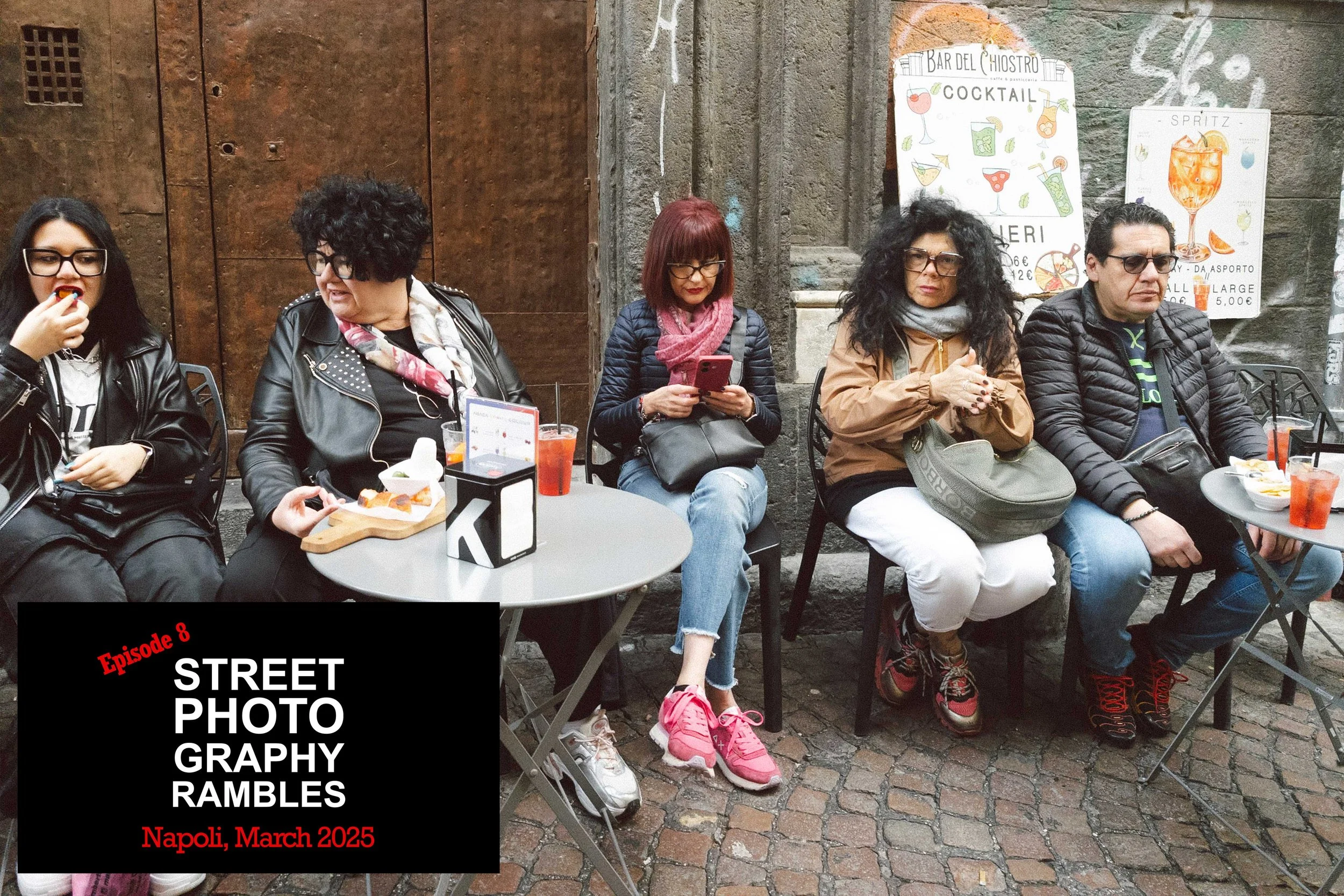
Barbican Estate on Leica M10
A short video of my photowalk around Barbicn Estate.
Taken on my Leica M10.
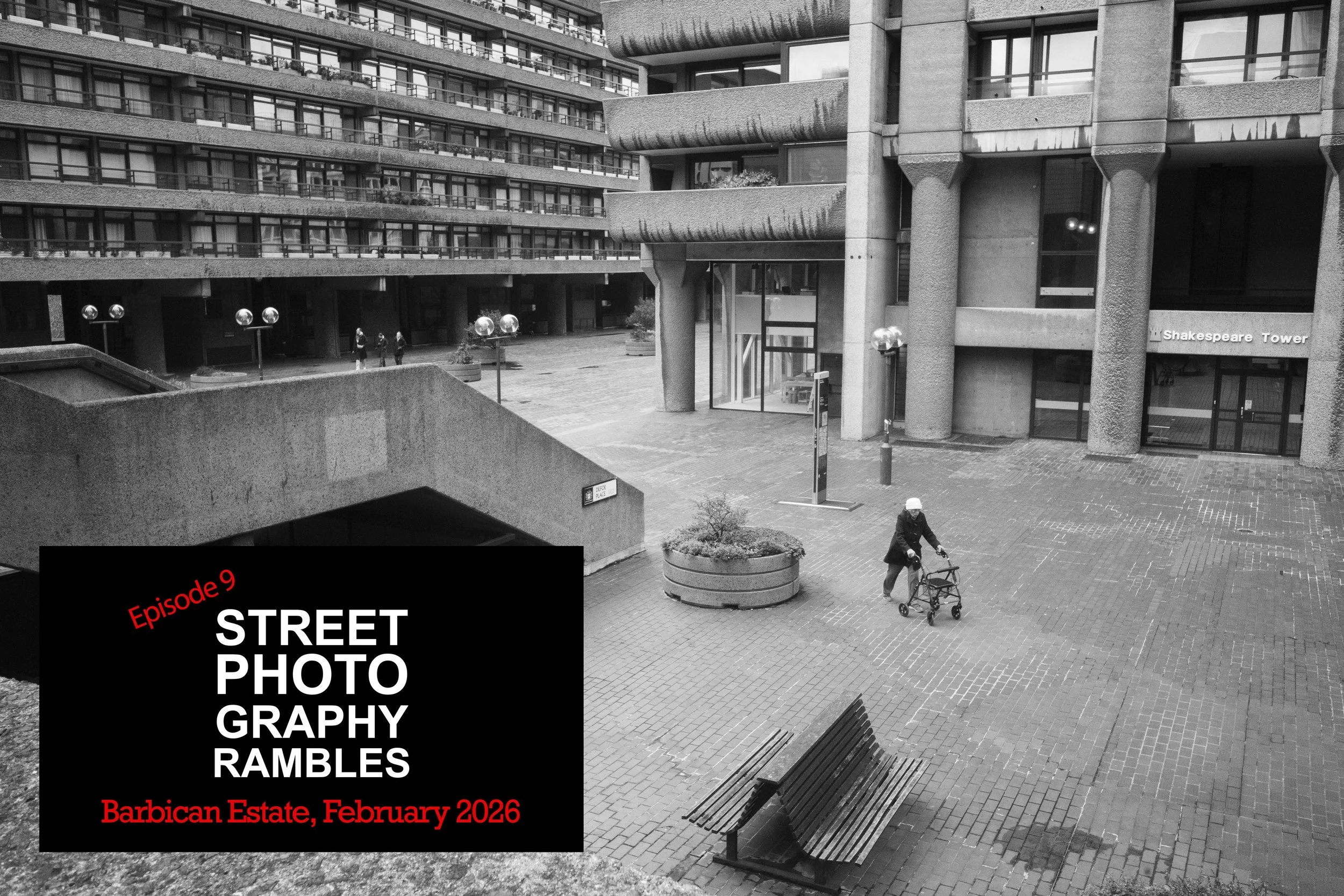
A short video of the Barbican Estate, shot on my Leica M10 with the exceptional TTartisan 28mm F5.6.
Modern Masters 2: Eduardo Ortiz – The Nomadic Color Poet of the Streets
In the vibrant, chaotic symphony of contemporary street photography, few voices resonate with the quiet confidence and cinematic depth of Eduardo Ortiz. A Chilean-born wanderer, Ortiz transforms everyday urban moments into visual poetry—layered, color-drenched compositions that feel both spontaneous and meticulously orchestrated. His work doesn't just capture the streets; it breathes life into them, inviting viewers to linger in the beauty of the ordinary. For our "Modern Masters" series, we dive into the world of this influential photographer whose rise from multi-talented nomad to global workshop leader exemplifies the power of passion, persistence, and an unerring eye for light and color.
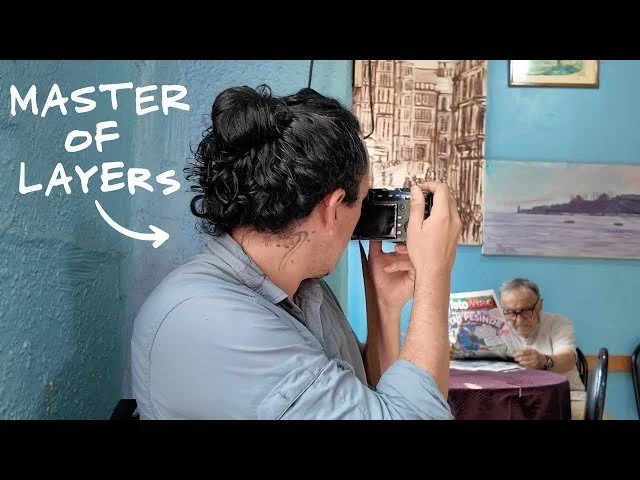
In the vibrant, chaotic symphony of contemporary street photography, few voices resonate with the quiet confidence and cinematic depth of Eduardo Ortiz. A Chilean-born wanderer, Ortiz transforms everyday urban moments into visual poetry—layered, color-drenched compositions that feel both spontaneous and meticulously orchestrated. His work doesn't just capture the streets; it breathes life into them, inviting viewers to linger in the beauty of the ordinary. For our "Modern Masters" series, we dive into the world of this influential photographer whose rise from multi-talented nomad to global workshop leader exemplifies the power of passion, persistence, and an unerring eye for light and color.
From Valparaíso's Shores to the World's Alleys: His History and Rise to Fame
Eduardo Ortiz was born in 1990 in Los Angeles, Chile, a small coastal city that belies his expansive artistic spirit. He spent his early years in nearby San Antonio before moving to the bohemian port city of Valparaíso, where his artistic roots truly took hold. There, he studied classical guitar, immersing himself in music and the vibrant cultural scene that drew artists from across Chile.
For years, Ortiz juggled life as a music teacher and professional cook, roles that honed his sensitivity to rhythm, texture, and human connection—qualities that would later define his photography. His nomadic journey began in earnest around 2016, as he traversed South America, Europe, and Asia, building a culinary portfolio while chasing new horizons. Photography entered the picture gradually; he started sharing travel snapshots with friends back home, fell in love with the medium, and by 2018 was hooked, studying composition, light, and the "rules" of the craft.
The COVID-19 pandemic proved a pivotal "big break" moment, albeit an unconventional one. While working as a cook in Sweden, he lost his job and visa sponsorship. With borders closing, he flew to Istanbul—one of the few places open for tourism at the time. What began as a temporary refuge blossomed into a profound love for the city and a full commitment to street photography. This period of upheaval fueled his obsession, turning travel into a creative imperative. Today, at just 35, Ortiz is a sought-after workshop instructor, Pro member of The Raw Society, and a fixture in street photography circles, with features in LensCulture, The Independent Photographer, and beyond. His "end of career"? Far from it—he's still very much in his prime, teaching worldwide and pushing boundaries as a perpetual nomad.
Major Influences: A Tapestry of Light, Cinema, and Masters
Ortiz draws from a rich well of inspirations that blend photography's greats with the worlds of painting and film. Key photographic influences include Henri Cartier-Bresson (for structure and the decisive moment), Ernst Haas and Alex Webb (for masterful color), Fan Ho and Saul Leiter (for poetic urban abstraction), Robert Frank, Fred Herzog, and more. In painting, he looks to Impressionists like Claude Monet and Joaquín Sorolla for their luminous handling of light and motion. Cinema—films like Fargo and Lawrence of Arabia—teaches him how composition isolates emotion and tells stories through space and pause.
These influences converge in Ortiz's work: a deep reverence for light as the ultimate storyteller, combined with a cinematic eye that elevates the mundane.
His Style: Cinematic Layers, Color as Language
Ortiz's photography is defined by its vibrant yet balanced color palette, intricate layering, and a calm precision that belies the chaos of the streets. He began in black and white—favoring it for texture, form, and surrealism, as in his Pamukkale series—but transitioned to color around his India work, viewing it as a new "language" to guide the eye and evoke mood. He studies color theory (complementary, analogous, triadic schemes) like a painter, using it to serve the narrative rather than overwhelm. His images feel cinematic: balanced, dynamic, and immersive.
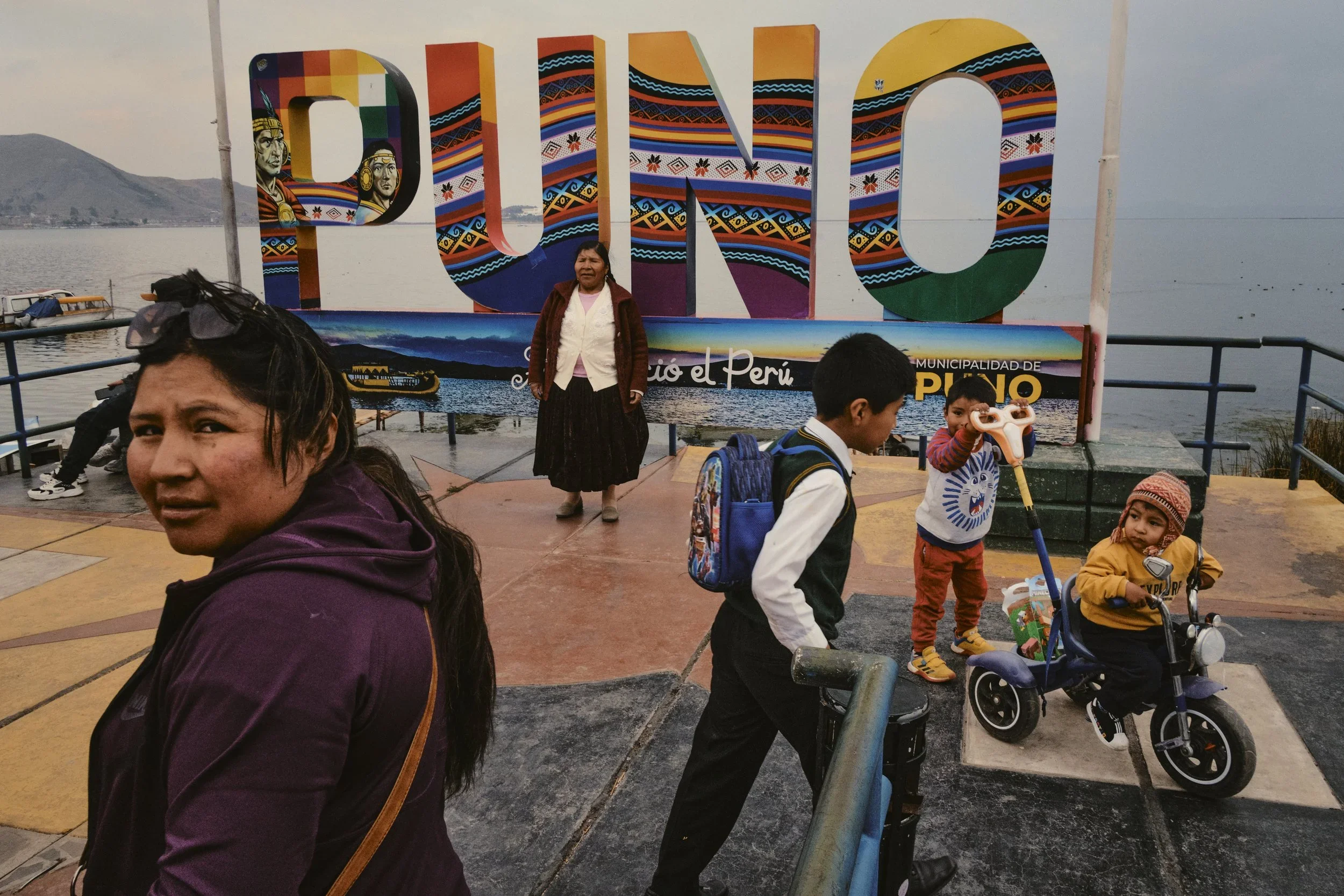
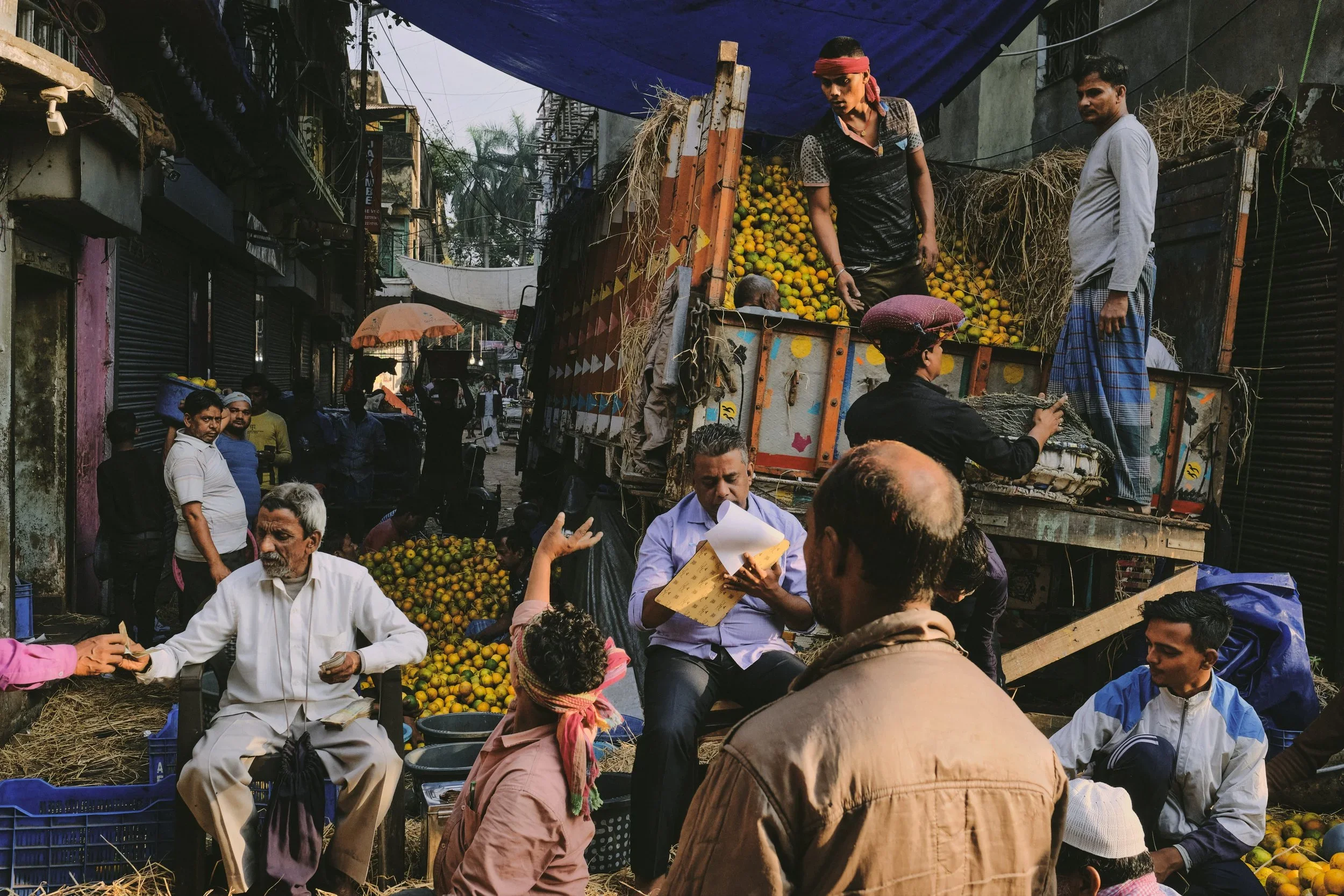
He works scenes patiently—from background to foreground—waiting for elements to align, often breaking "rules" like the rule of thirds for diagonals that inject energy. The result? Photos that pulse with life, where every detail contributes to the whole.
A standout comment on Ortiz's ability to fill the corners of the frame: He excels at this like few others. His compositions are never sparse or accidental; he masterfully populates the edges with meaningful elements—shadows, colors, figures—that add depth, rhythm, and narrative without clutter. This "full-frame" approach creates a sense of completeness and immersion, turning two-dimensional images into living, breathing scenes that reward close inspection. It's a hallmark of his confidence and compositional intelligence.
Famous Photos and Signature Works
Ortiz's portfolio brims with iconic moments:
Pamukkale series (Turkey): Surreal black-and-white landscapes of the "cotton castle" thermal pools, evoking dreamlike wonder.
India transition works: Vibrant market scenes and street life that document his shift to color.
La Boca, Buenos Aires: Layered playground shots in the colorful neighborhood, showcasing his patient scene-building.
Istanbul and La Paz ("Chukiyawu"): Magical realism in black and white, with dramatic flash and compressed layers highlighting cultural syncretism.
View his full portfolio and latest work here: eortizdelacruz.com and on Instagram @eortizfoto.
Equipment: Fujifilm Simplicity and What He Avoids
Ortiz is a devoted Fujifilm shooter, prizing their compact size, intuitive dials, and film-like rendering for discreet street work. His go-to setup includes:
Cameras: X-Pro2 (mainstay), X-E3, X-E2.
Lenses: 18mm (28mm equiv.), 23mm f/1.4, 35mm (50mm equiv.), and 90mm (135mm equiv.)—with 28mm equiv. as his favorite for its versatility.
He favors maximum depth of field for sharpness across the frame, softer aesthetics, and in-camera black-and-white simulations when shooting mono. Tools like the SunTracker app help him chase optimal light. He occasionally uses flash for drama in black-and-white work.
What doesn't he like? Rigid genre "boxes"—he embraces photography broadly, without pigeonholing. He avoids over-saturation, cluttered frames, and heavy post-processing, preferring decisions made in the moment. DSLRs feel too intrusive; he wants gear that disappears so the scene takes center stage.
Famous Quotes
Ortiz's words capture his philosophy beautifully:
"I photograph to feel part of the world, to frame life around me."
"While travelling I felt the need of sharing what I was seeing on my trips with my people back in Chile. Little by little I fell in love with the art of photography... Now it is the sort of photography that best suits my way to see and approach the world."
"I want people to remember that there is beauty everywhere."
On color: "It’s easy to make colour look nice, but it’s harder to make colour serve to tell your story."
Endorsements from Peers
Ortiz's collaborative spirit shines through his partnerships. He's co-led workshops with luminaries like Andreas Kamoutsis and Mark Fearnley, and worked with artists Matt Hall and Gareth Danks. Peers praise his confidence, layering mastery, and generous teaching—evident in videos where fellow photographers shadow him and emerge inspired. As a Pro at The Raw Society and frequent feature in outlets like Frames Magazine, his work earns quiet acclaim from the street photography community for its authenticity and depth.
Photo Books and Zines
While Ortiz is more prolific in projects and workshops than traditional tomes, his standout publication is:
Understanding Colour (self-published zine, available via his site): His debut, chronicling the shift from black and white to color through India images, complete with accessible color theory breakdowns. A must-read for aspiring color shooters.
He hints at more zines and long-term projects on his Substack and shop—keep an eye out.
YouTube Gems: Watch Ortiz in Action
Immerse yourself in his process:
A Day of Street Photography With Eduardo Ortiz – Follow him through Istanbul's layers and confidence.
An Honest Conversation with Street Photographer Eduardo Ortiz – Deep dive into his journey and philosophy.
How Eduardo Ortiz Gets Colour Right in Street Photography – Color masterclass.
His channel @eortizfoto for gear talks, POV walks, and more.
Eduardo Ortiz reminds us that street photography is less about gear or rules and more about presence, curiosity, and the courage to frame the world as you see it. In an era of fleeting scrolls, his work stands as a masterclass in slowing down to truly see. If you're inspired, grab your camera, hit the streets—and remember: beauty is everywhere.
What are your thoughts on Ortiz? Drop a comment below, and stay tuned for the next Modern Masters installment.
Until next time, keep snapping
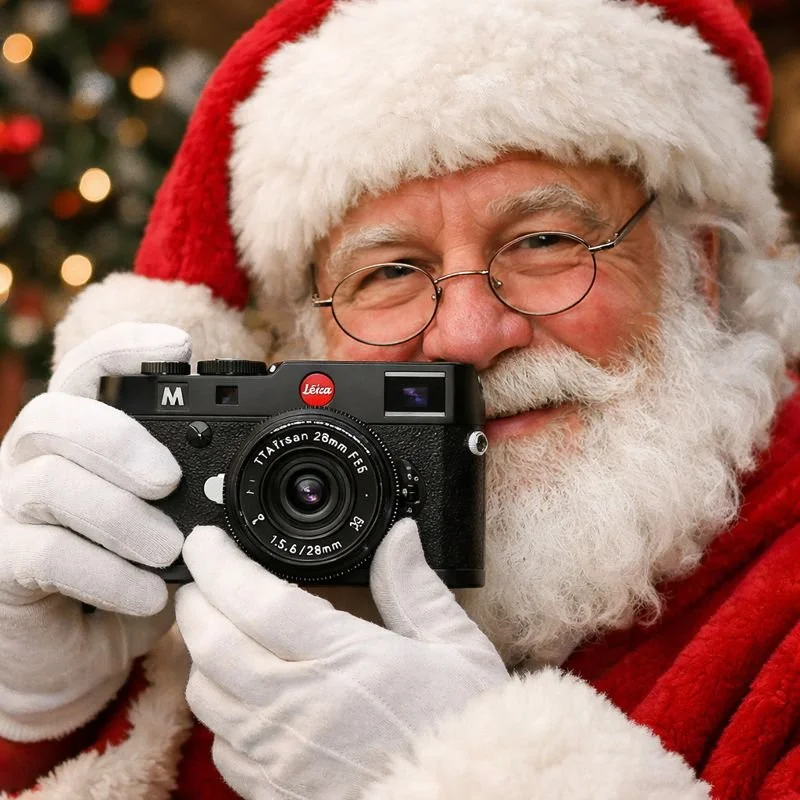
Camera Santa
Camera Santa was very kind to me this year, I was lucky to get a 28mm M mount lens for my Leica cameras.
The 28mm focal length is often called the "goldilocks" of street photography. It’s wide enough to capture the energy of a city street but tight enough to feel personal. Recently, I took my Leica M10 paired with the tiny TTArtisan 28mm f/5.6 for a spin through the heart of London to see how this modern "tribute" lens handles the grit and glamour of the capital.

Camera Santa was very kind to me this year, I was lucky to get a 28mm M mount lens for my Leica cameras.
The 28mm focal length is often called the "goldilocks" of street photography. It’s wide enough to capture the energy of a city street but tight enough to feel personal. Recently, I took my Leica M10 paired with the tiny TTArtisan 28mm f/5.6 for a spin through the heart of London to see how this modern "tribute" lens handles the grit and glamour of the capital.
I’ll be honest: 28mm is my absolute favorite focal length. I have loved this aspect since I bought the Ricoh GRII (second hand) a couple of years ago. Its also generally the focal length of smartphones, which was origins of my interest in street photography (whilst on my commute into the office, back in the day). Whilst I really enjoy both the 35mm and 50mm, there is a specific immersion you get with a 28mm that makes the viewer feel like they are standing right next to you on the pavement.
Standing on the Shoulders of Giants
Before diving into the photos, it’s worth noting that the 28mm has a legendary pedigree. Some of the most influential street photographers in history chose this perspective to document the world:
Garry Winogrand: The master of the 28mm. He used its wide field of view to pack his frames with "organized chaos," often tilting the camera to create a sense of frantic energy.
William Klein: Known for his raw, "in-your-face" style, Klein loved the 28mm because it forced him to get physically close to his subjects, creating a sense of intimacy that a longer lens just can't replicate.
Daido Moriyama: For his gritty, high-contrast snapshots of Tokyo, Moriyama famously utilized the fixed 28mm lens of the Ricoh GR series to capture the "are-bure-boke" (rough, blurred, and out-of-focus) aesthetic.
The Walk: From Embankment to the West End
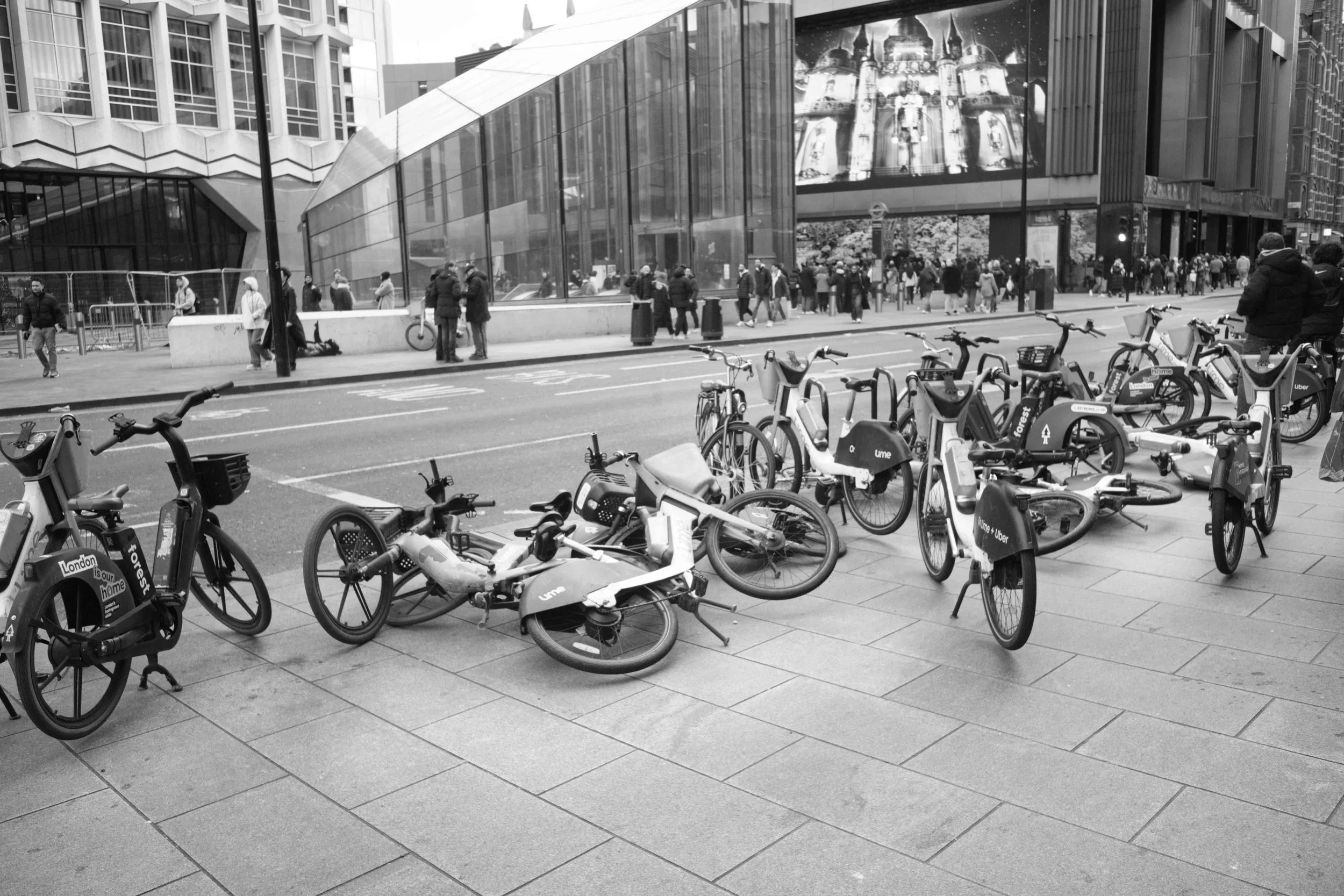
The TTArtisan 28mm f/5.6 is a "pancake" lens, making the M10 incredibly pocketable and discrete. Because the maximum aperture is a modest f/5.6, this lens is designed for zone focusing. It’s kind of counterintuitive to have a F2 28mm lens, when the basis of the lens is to shoot wide and deep. I set my aperture to f/8, my focus to between 2 / 3 meters, and let the depth of field do the work.
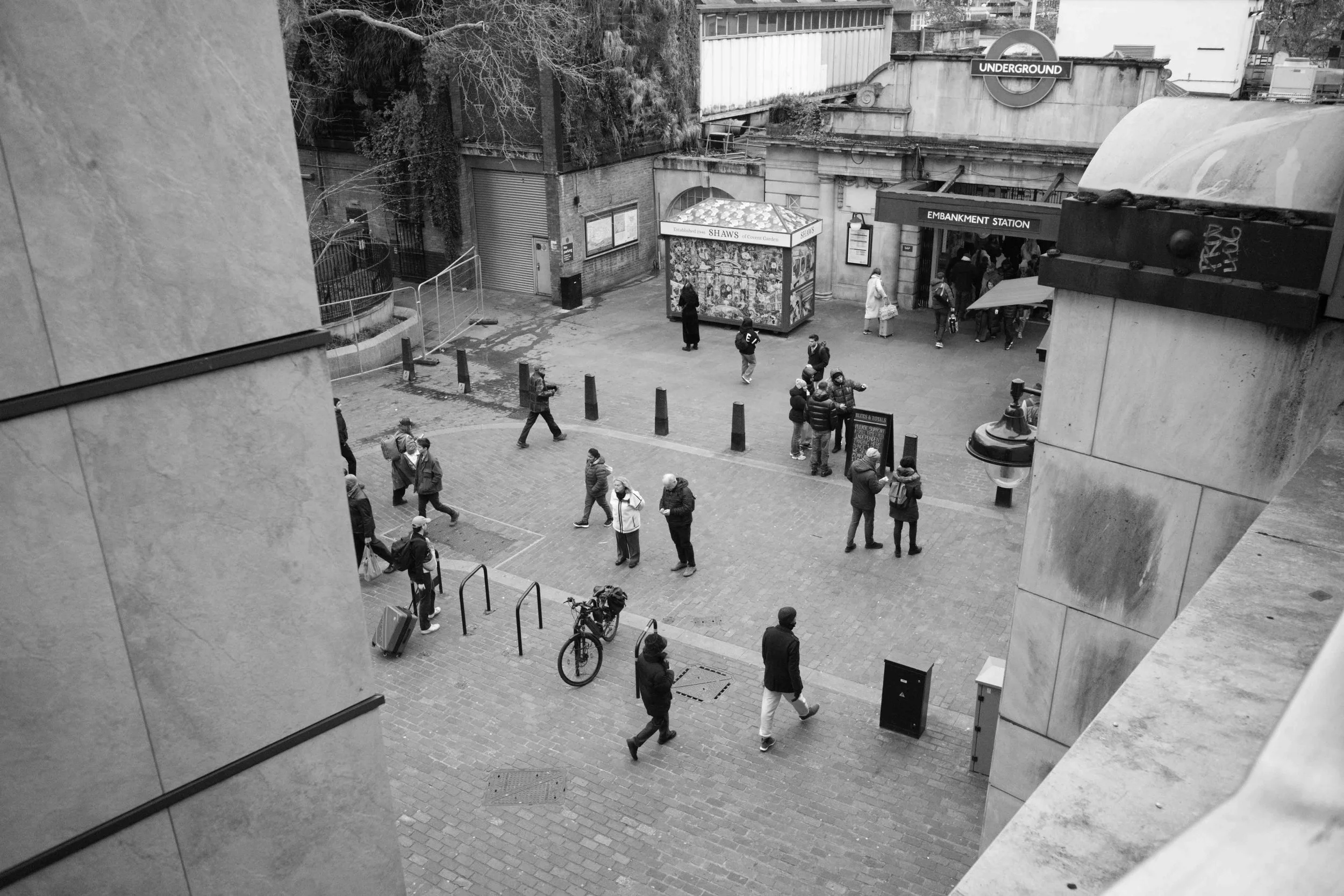
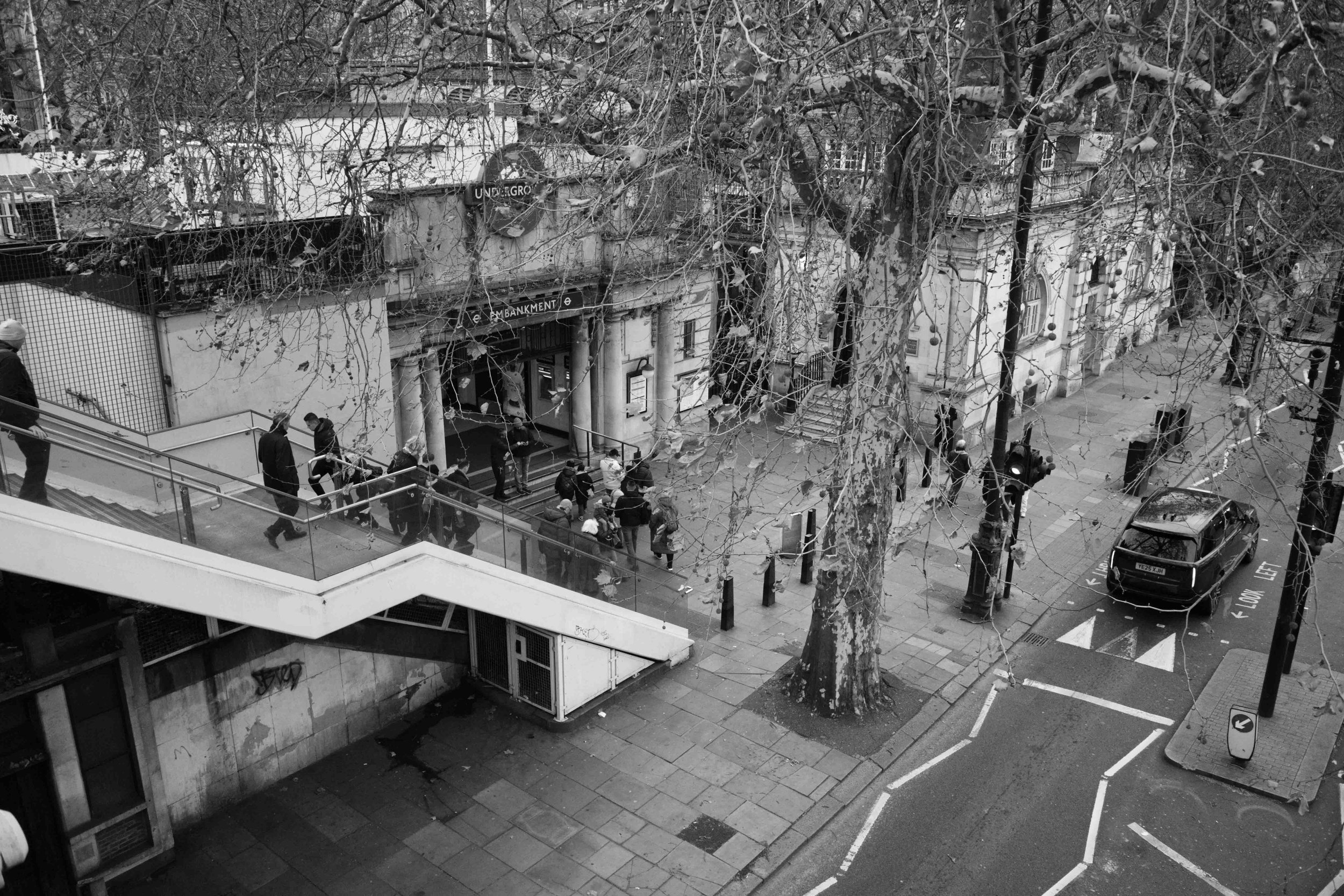
1. Embankment & Southbank
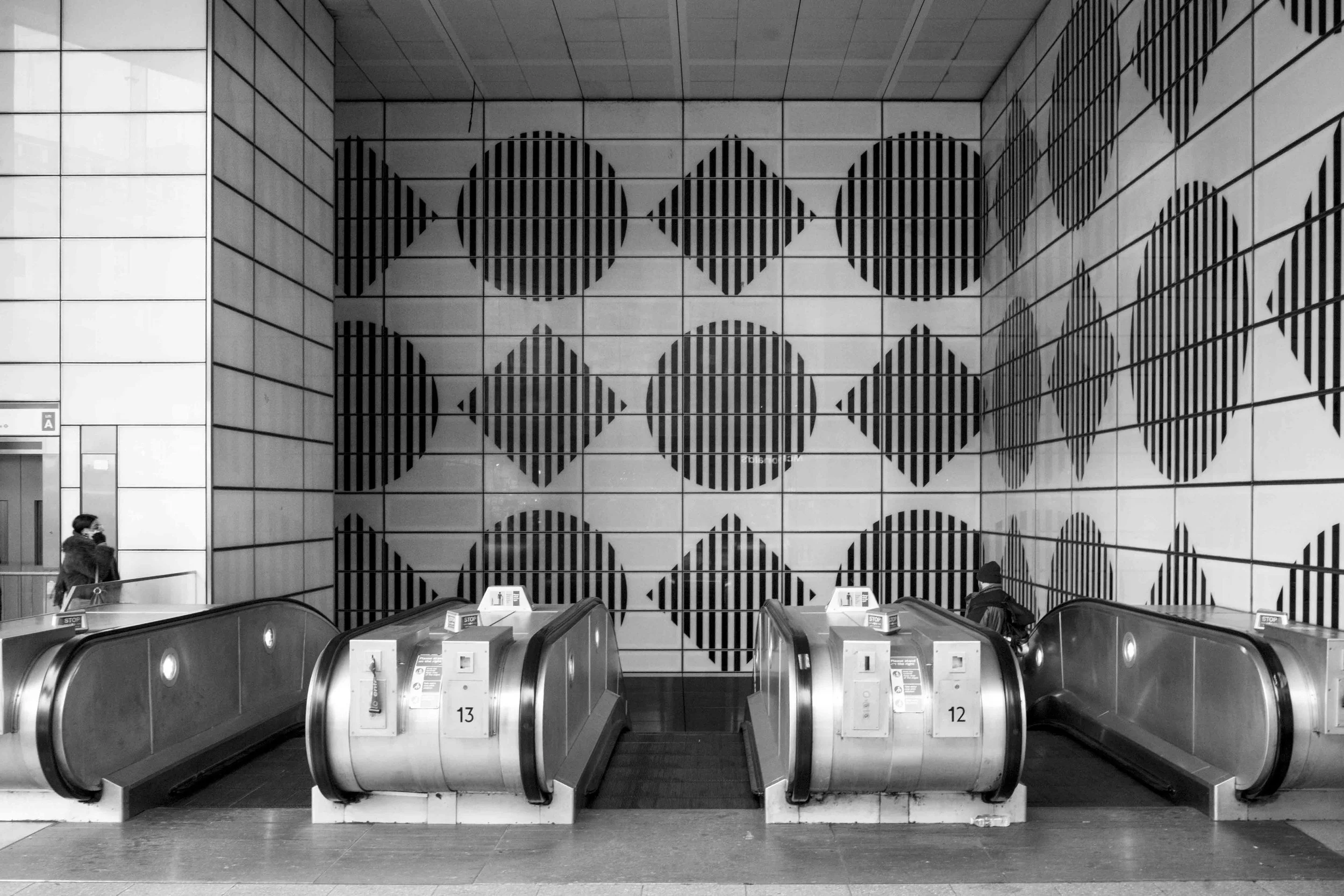
I started at Embankment. Looking down from the walkways, the 28mm allowed me to capture the geometry of the station entrance and the flow of commuters. The high-angle shots showcased how the lens handles architecture and human movement simultaneously.
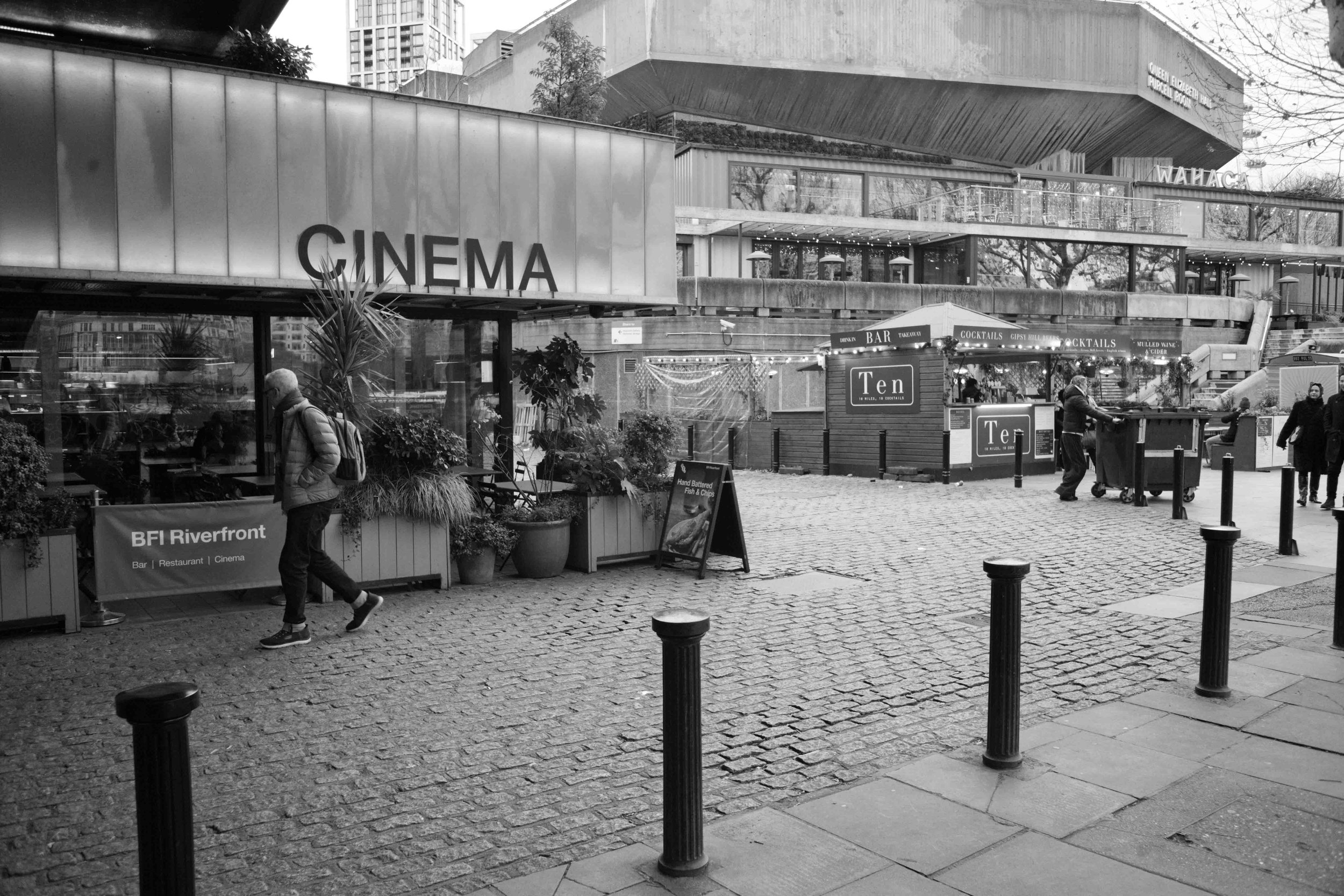
Crossing over to the BFI Riverfront, the "CINEMA" sign provided a classic London backdrop. The wide angle excels here; it lets you frame a large subject like a building while still catching the candid expressions of people walking past.
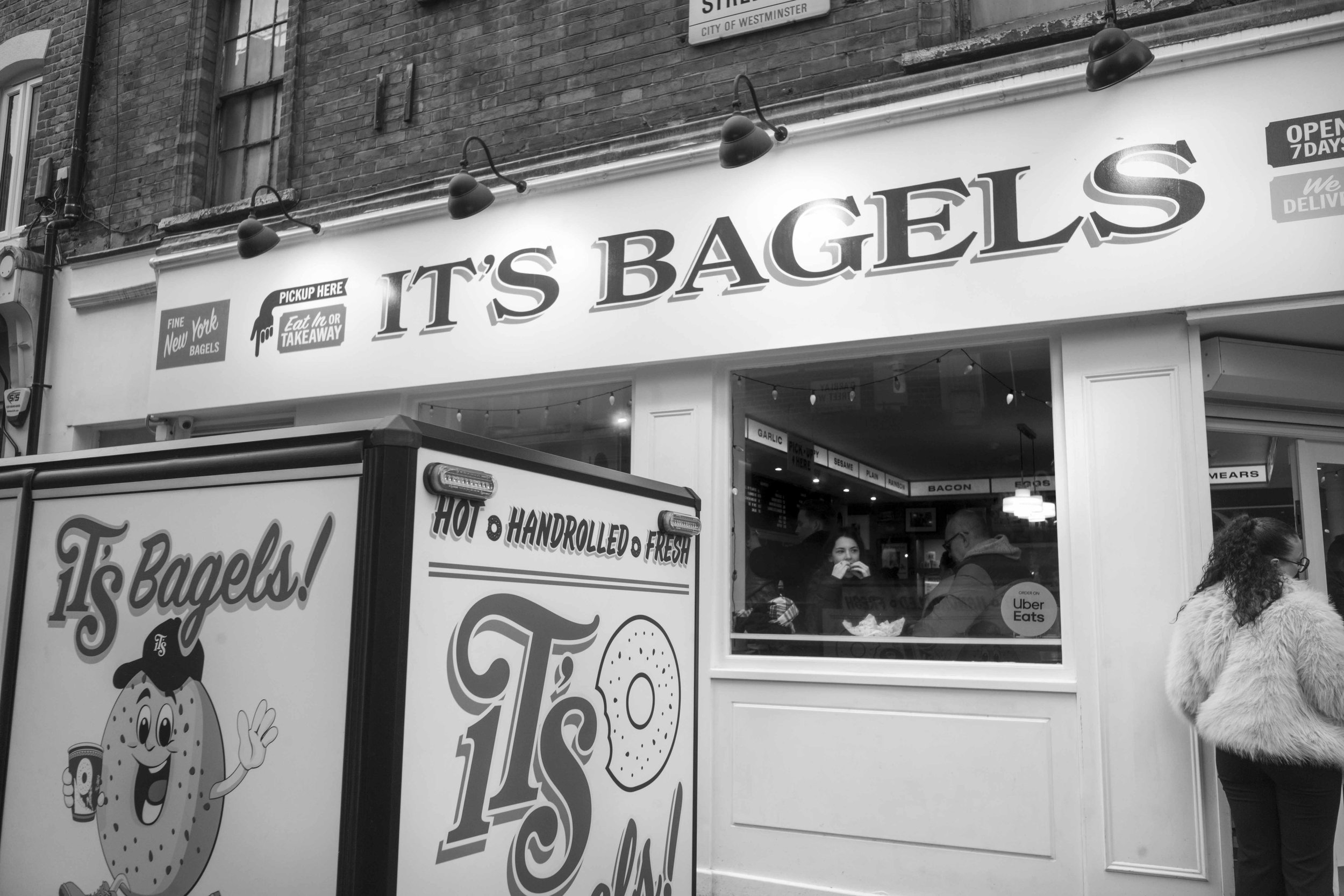
2. The Grit of Soho and Chinatown
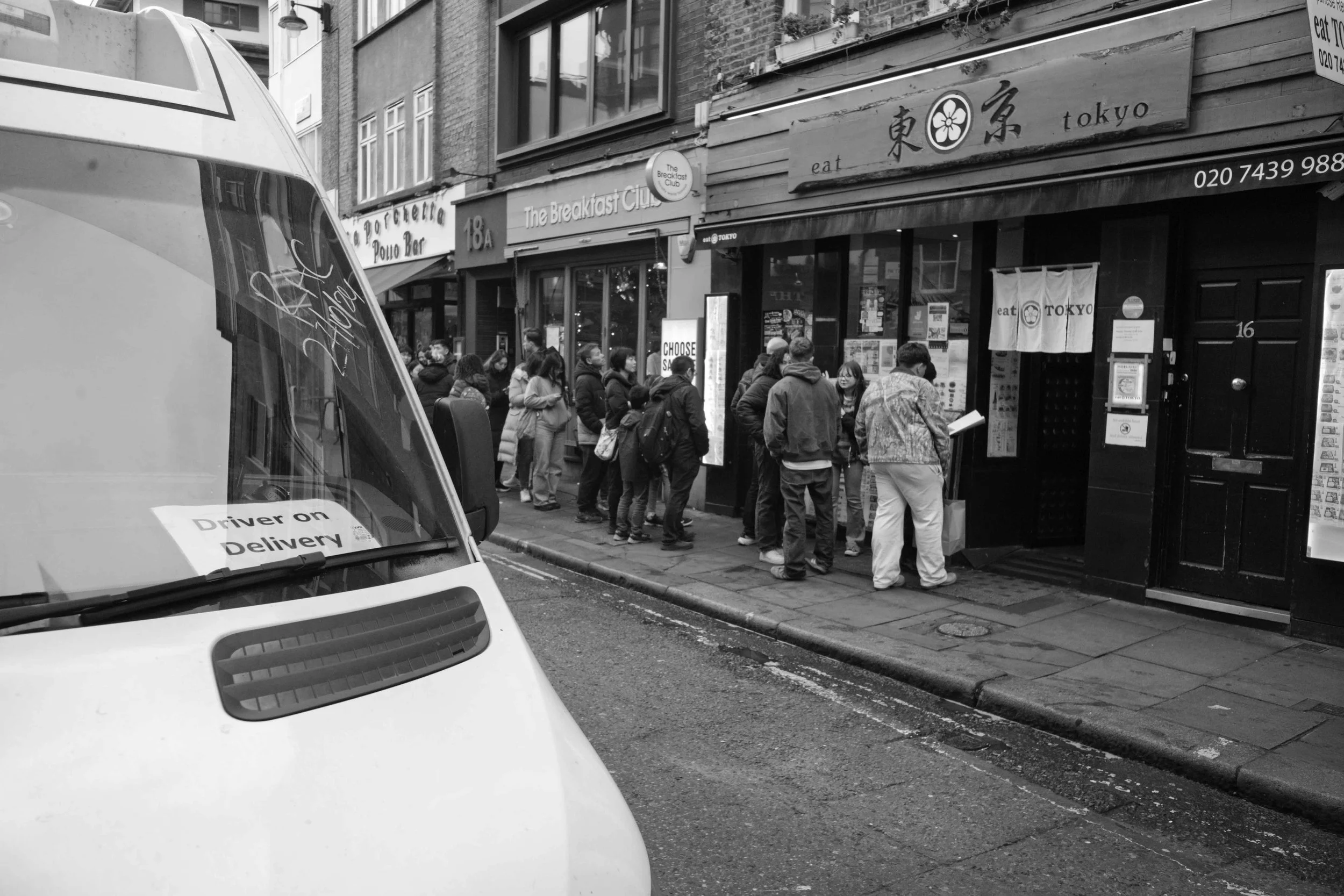
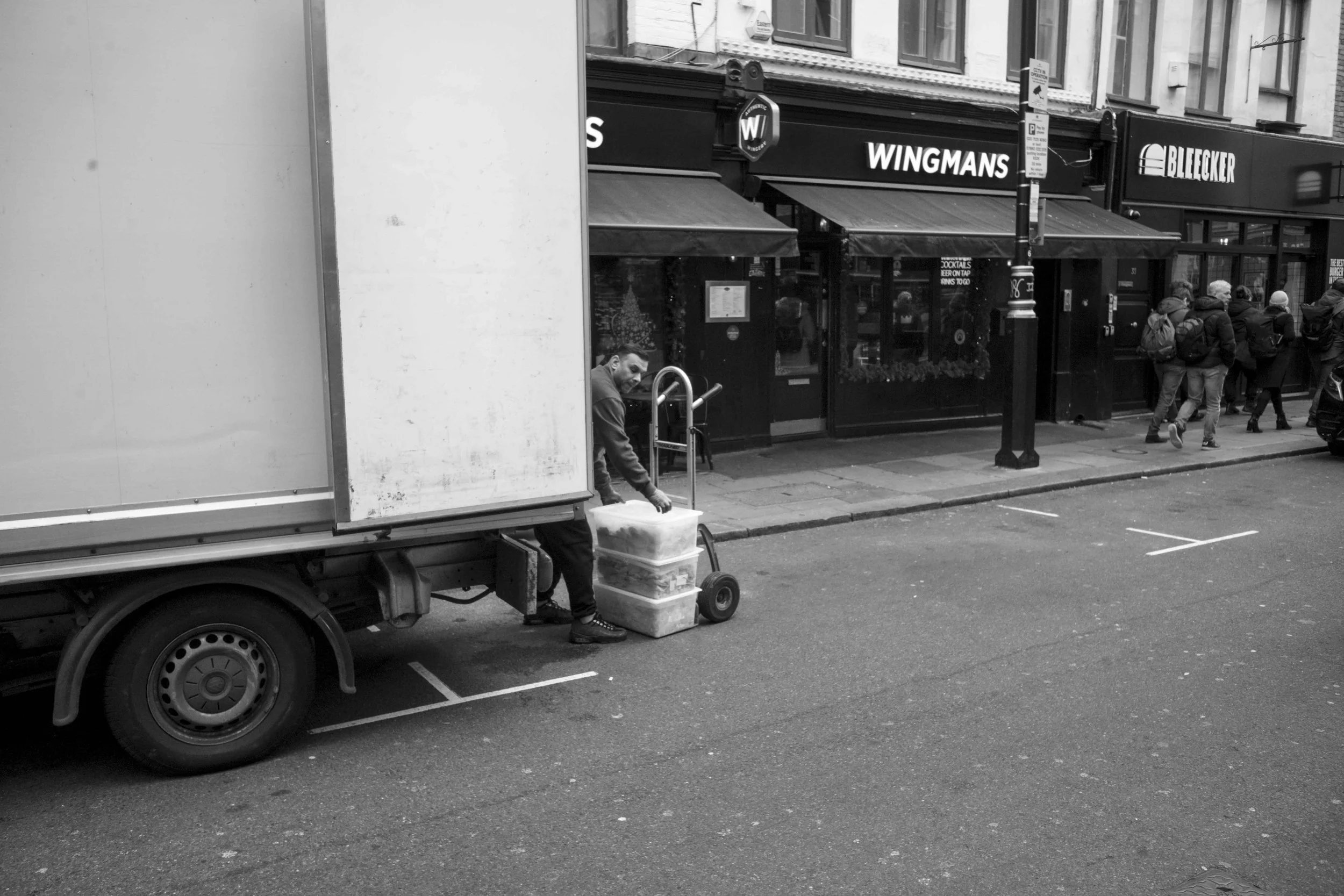
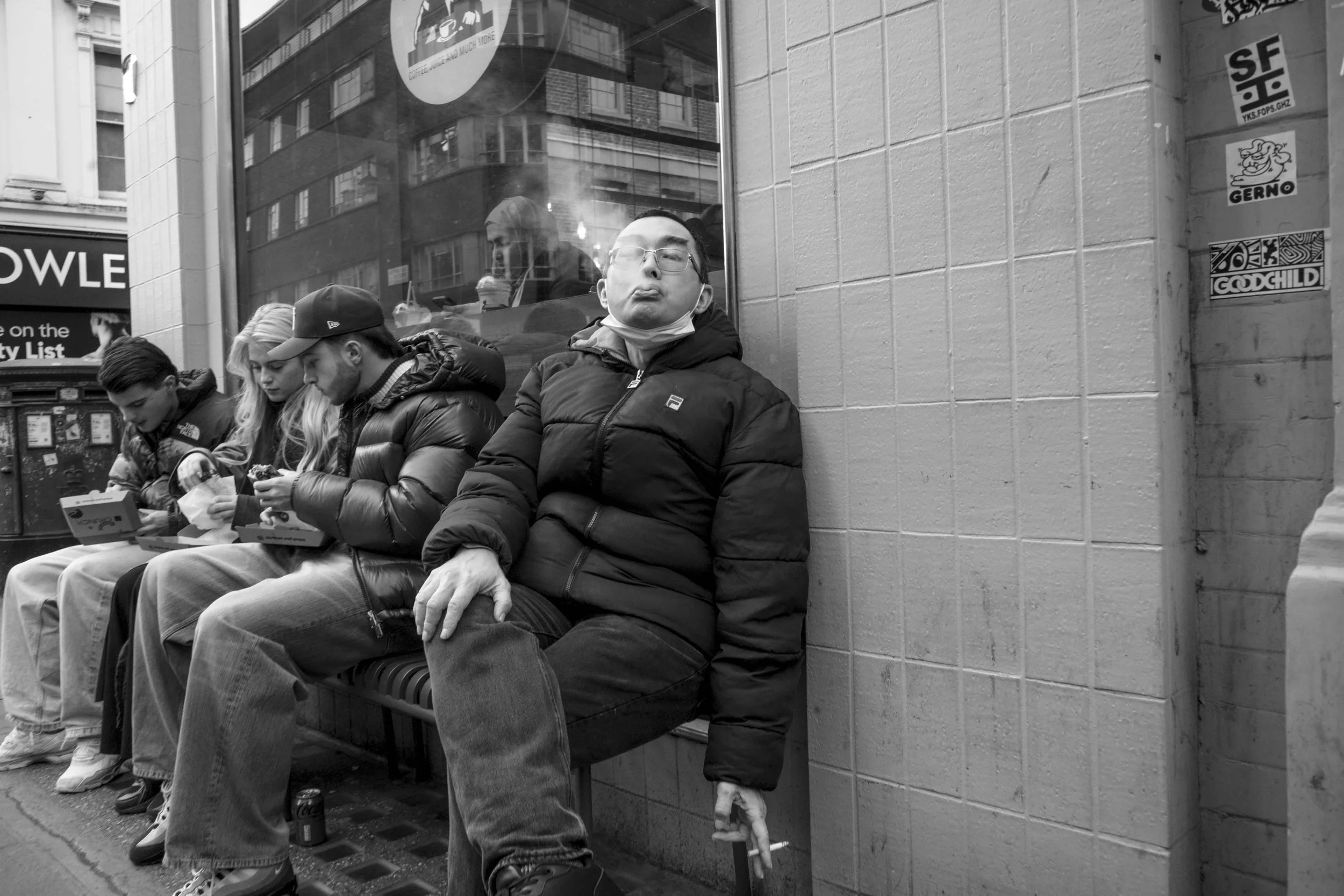
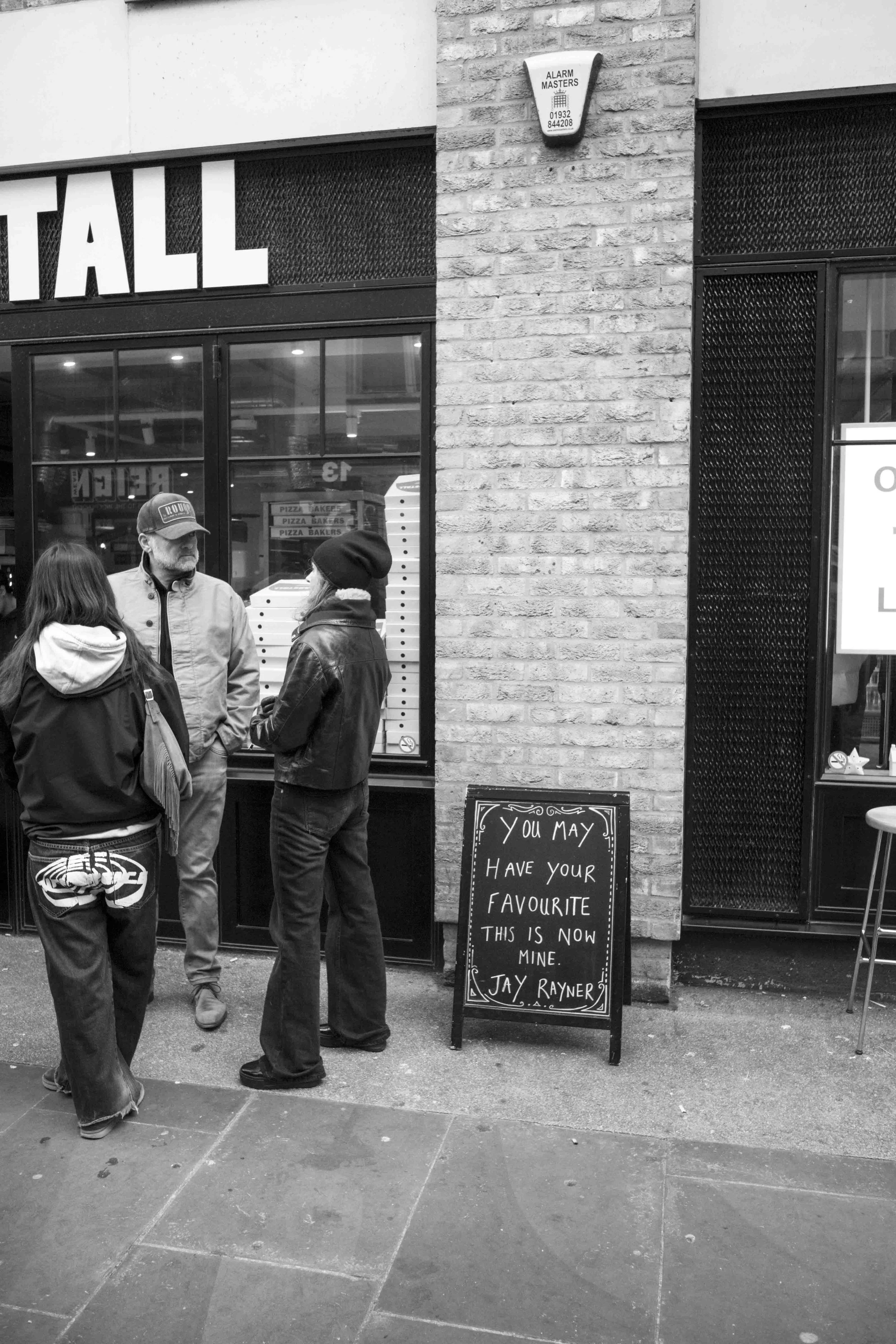
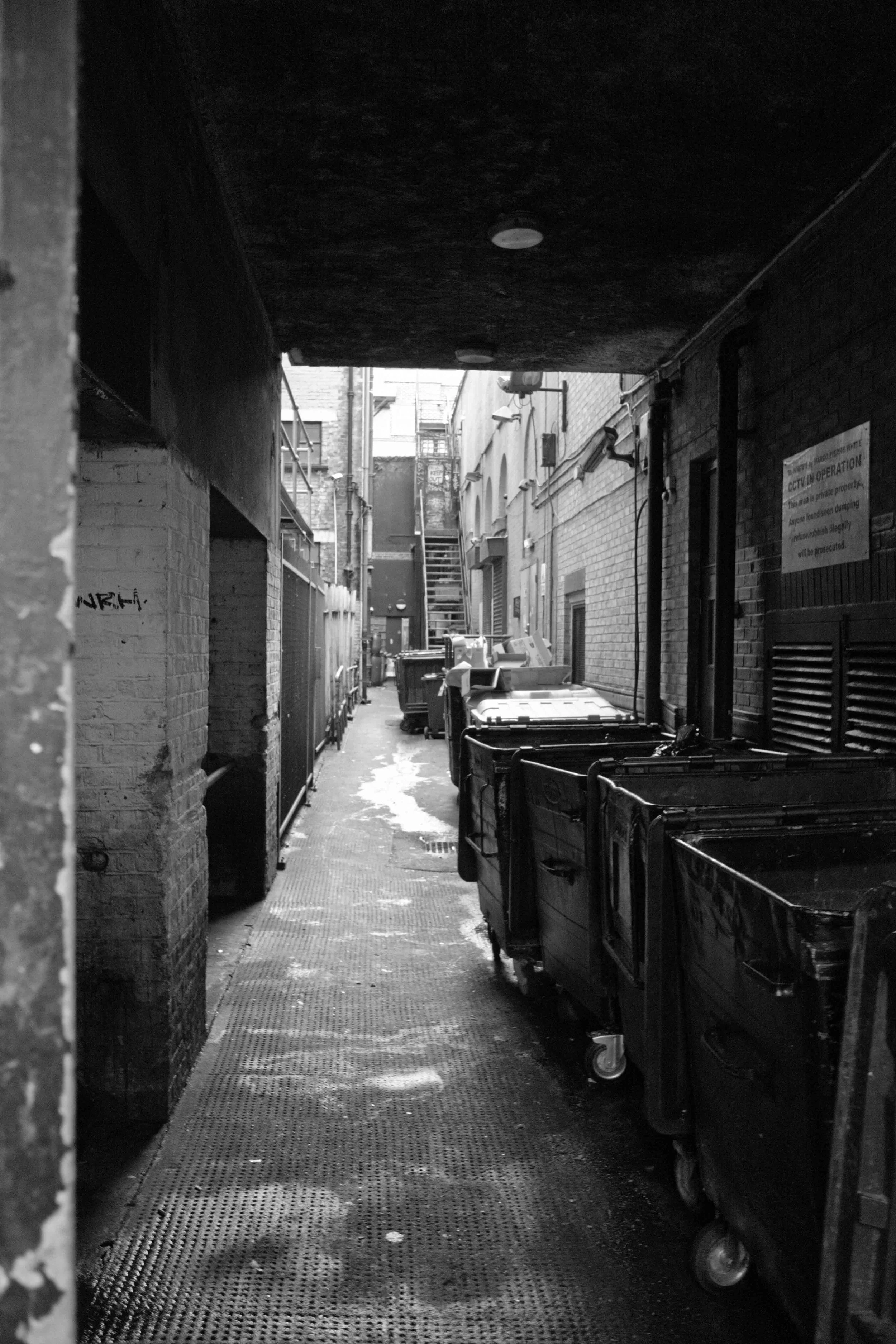
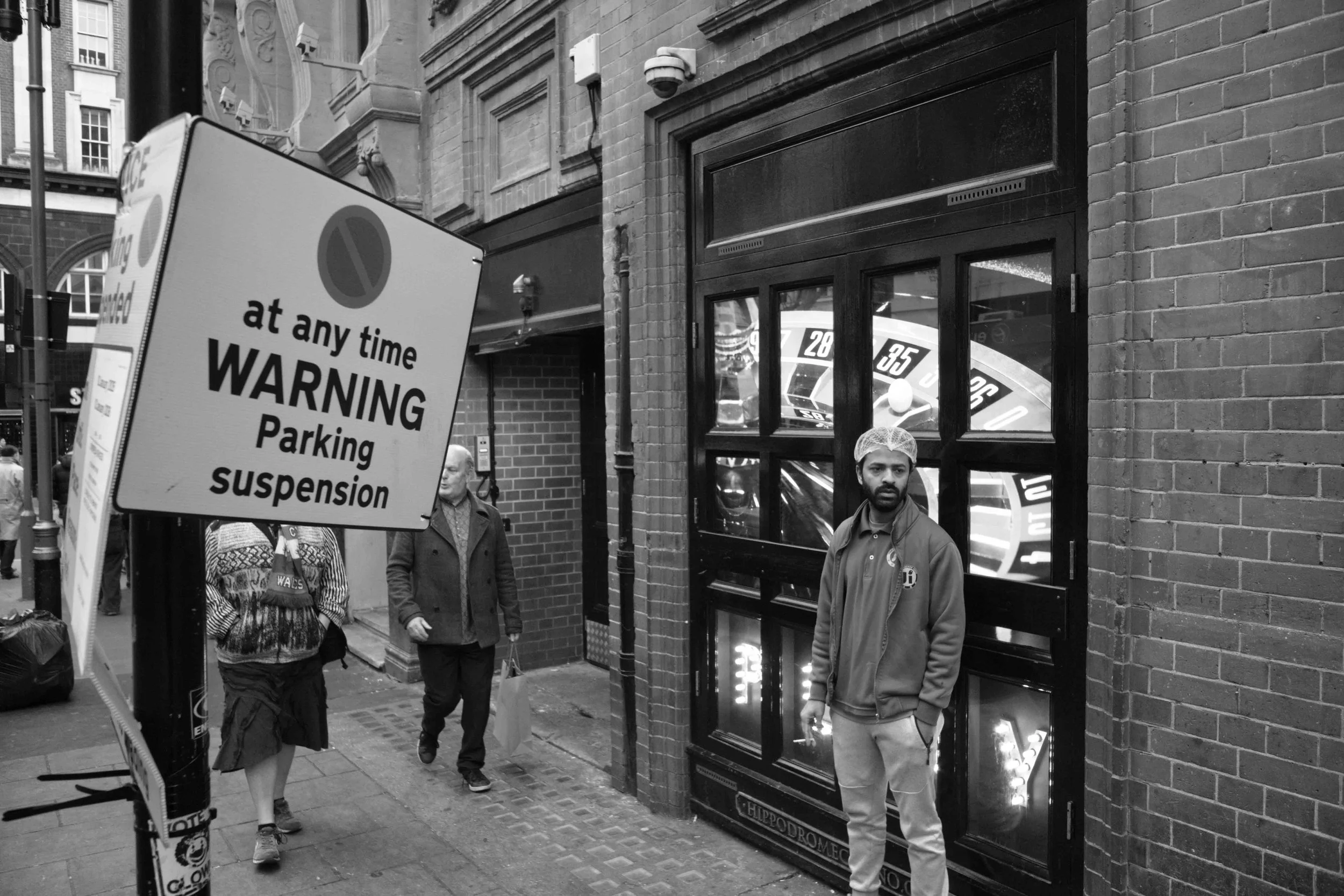
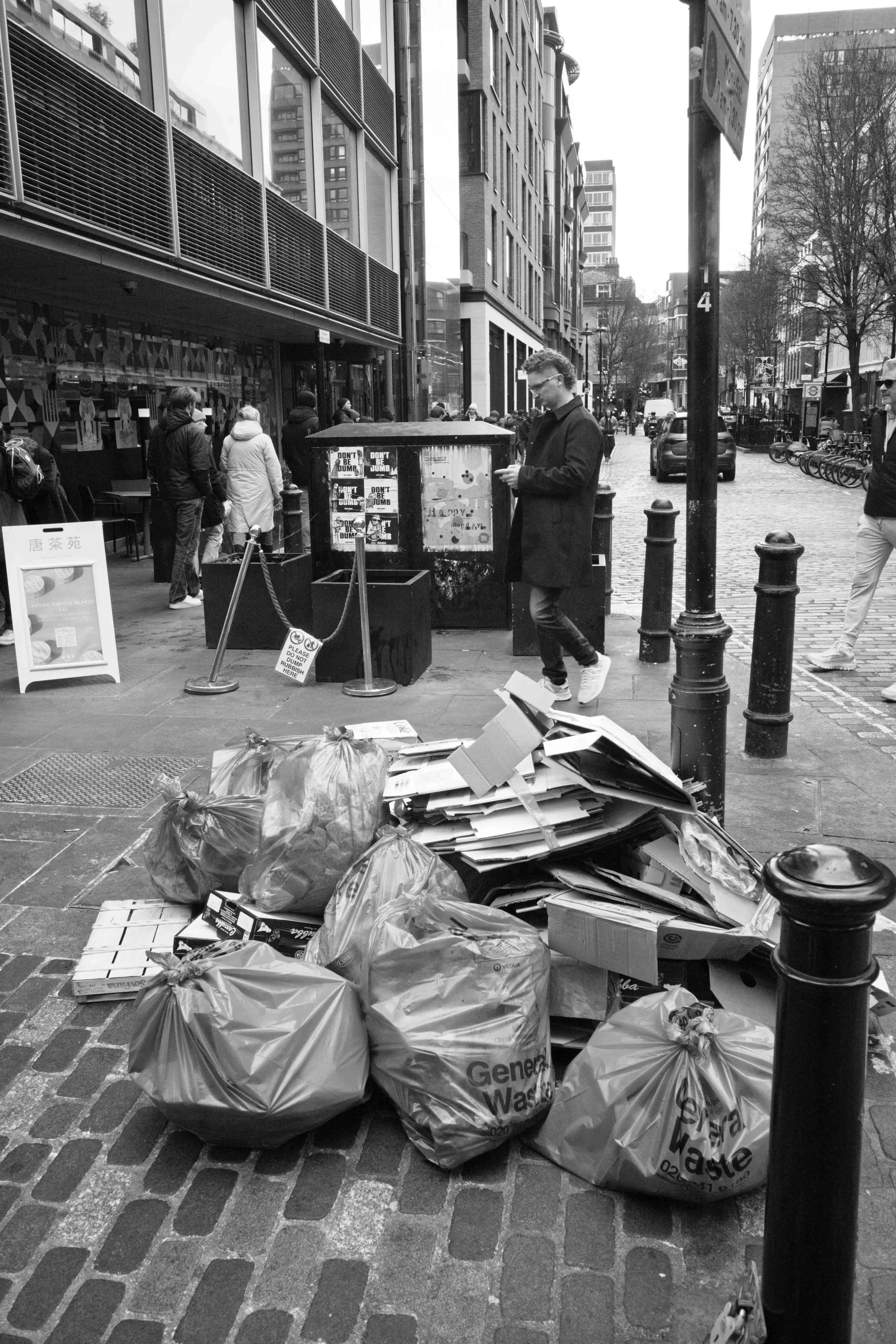
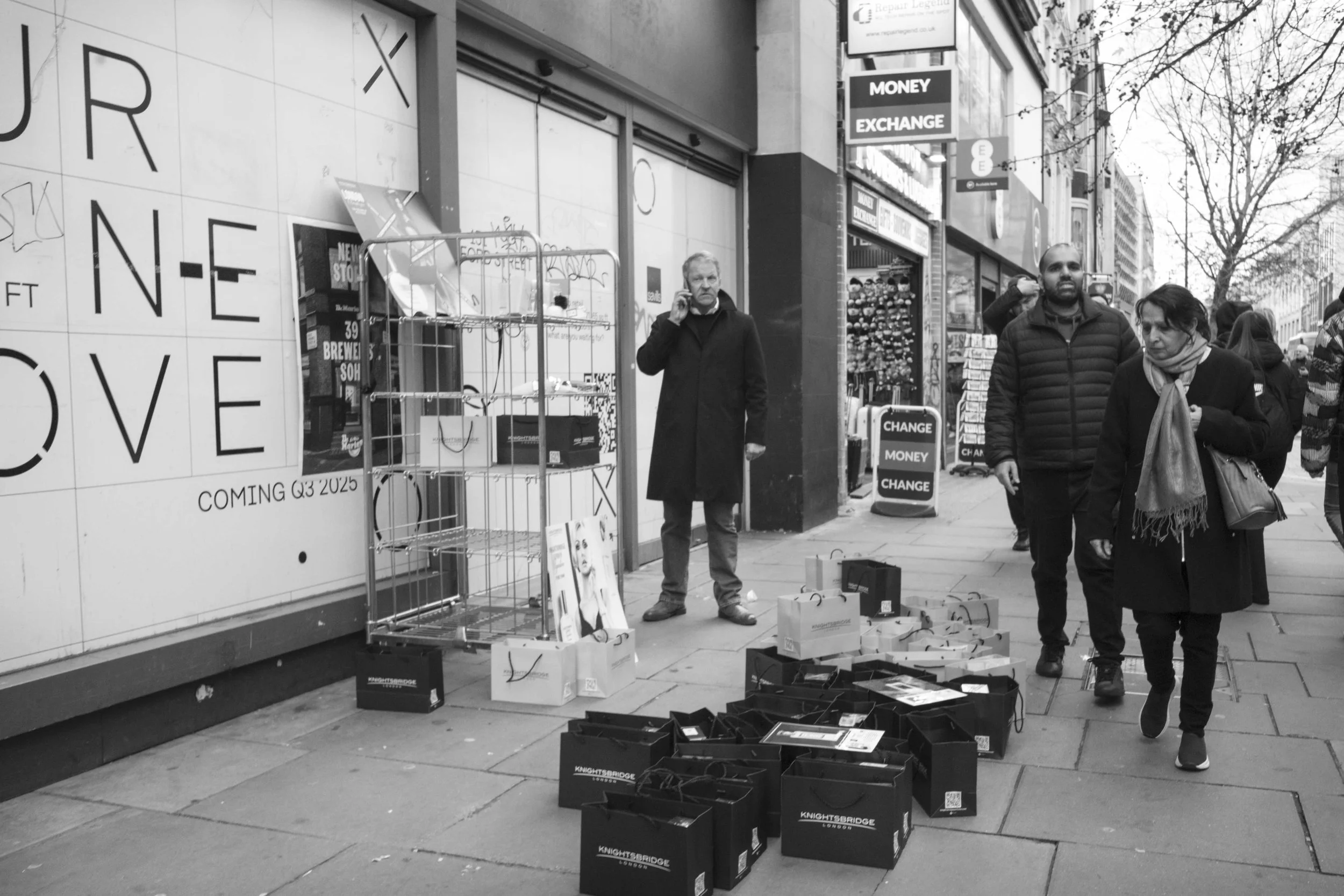
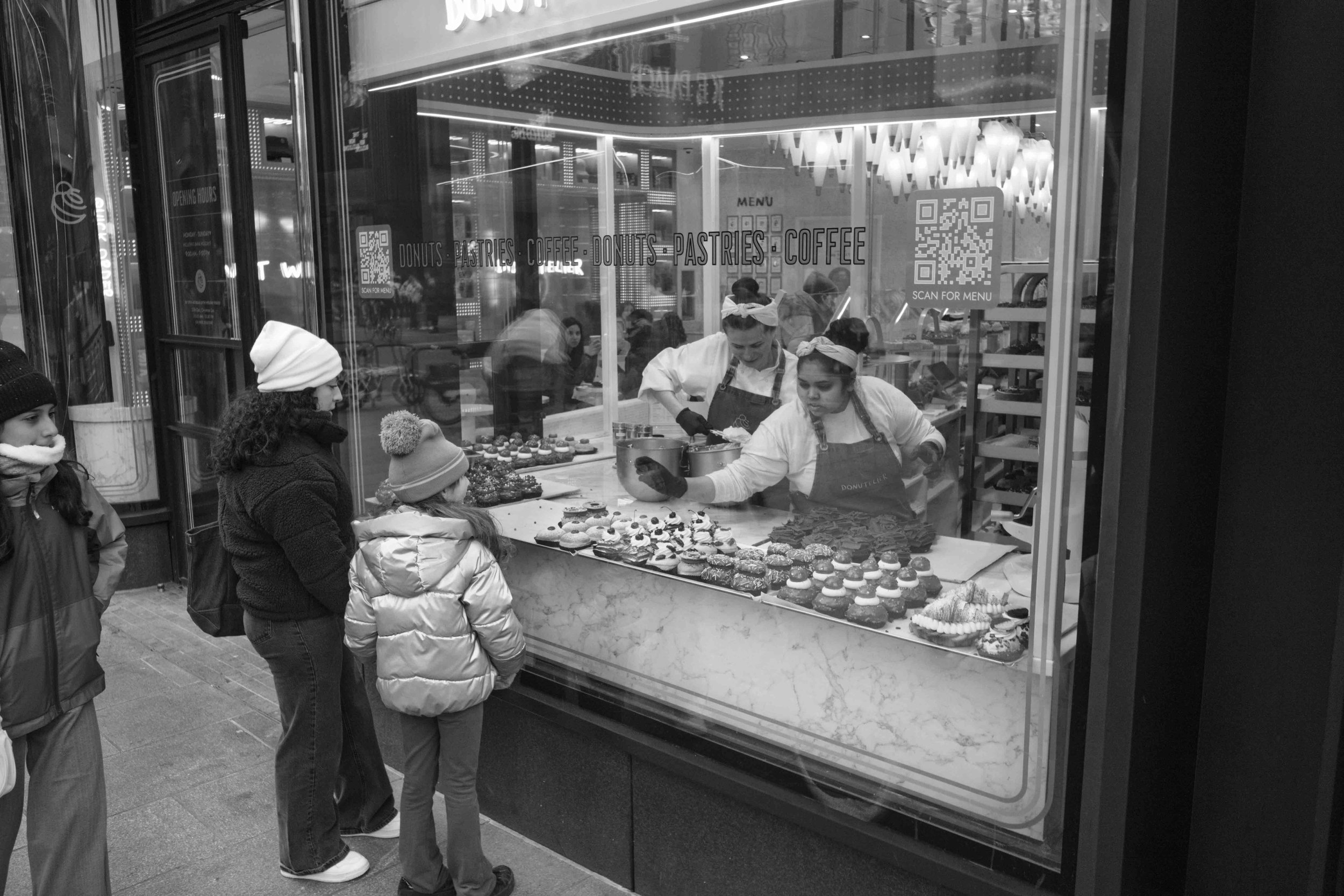
Street photography isn't always about the landmarks. Sometimes, it’s about a pile of trash bags on a busy corner or the narrow, bin-lined alleys behind Leicester Square. The 28mm is perfect for these tight spaces.
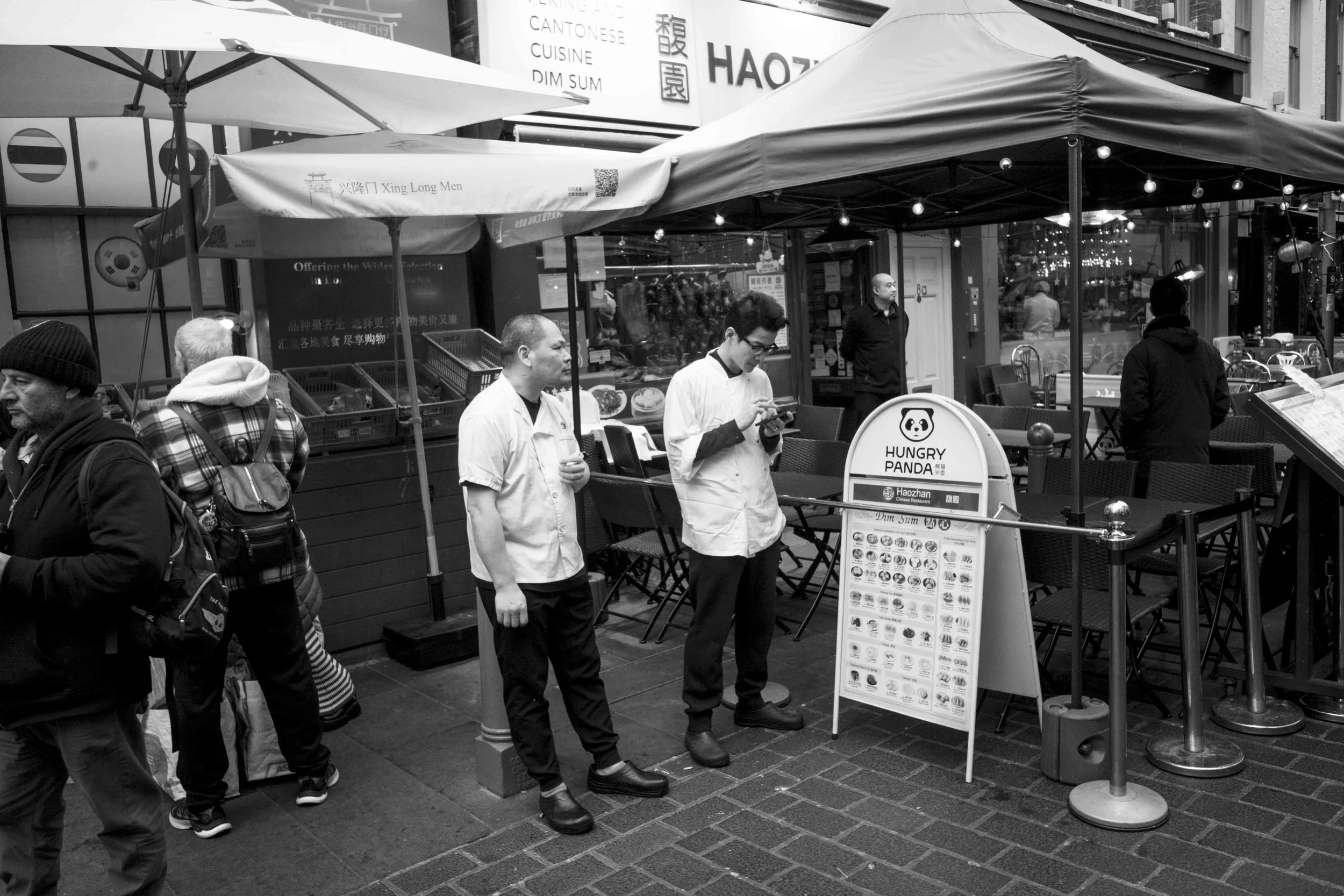
In Chinatown, I caught a great moment of the chefs taking a break outside "Hungry Panda." The lens is so small that they hardly noticed me, allowing for a truly candid slice-of-life shot.
4. Details and Characters
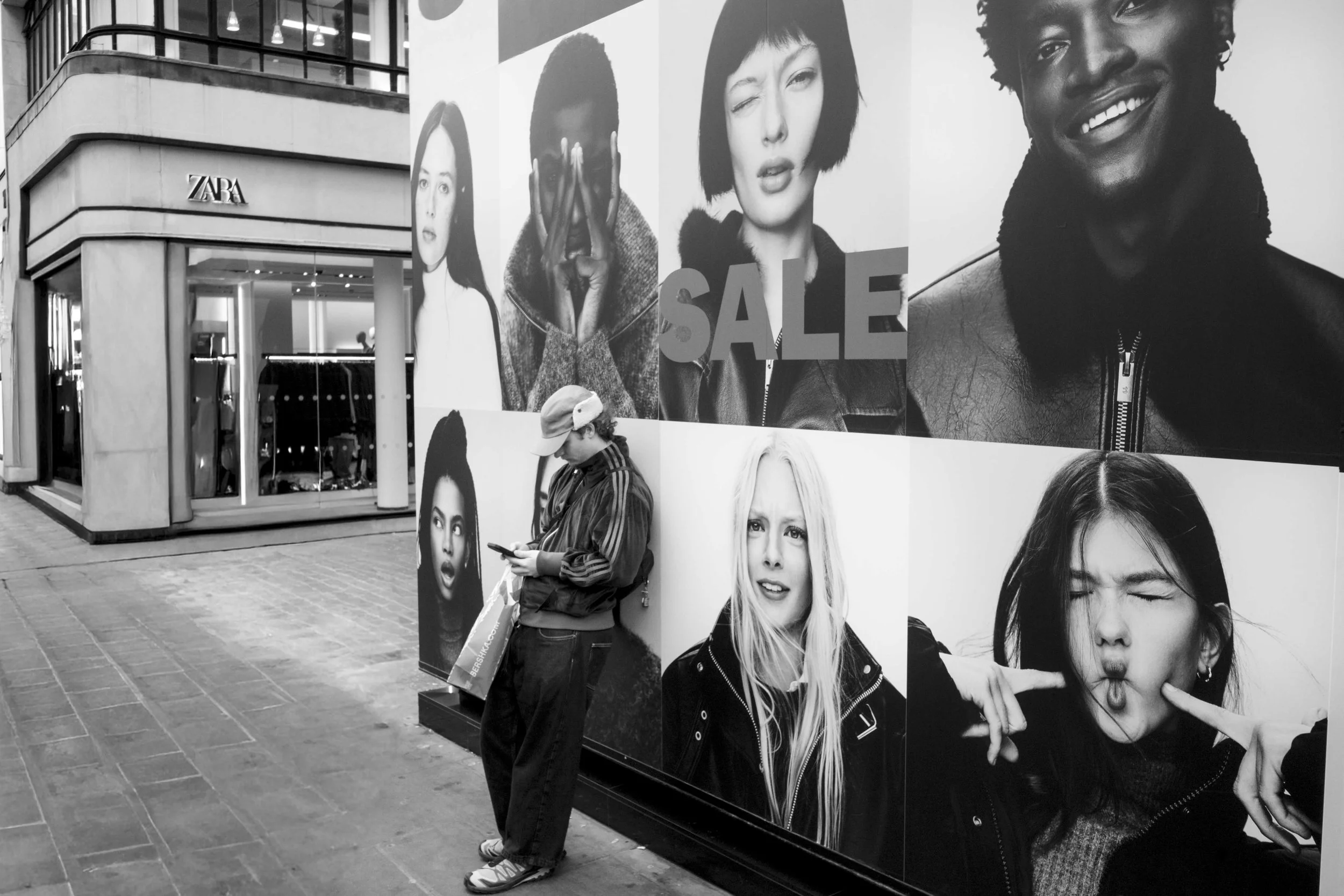
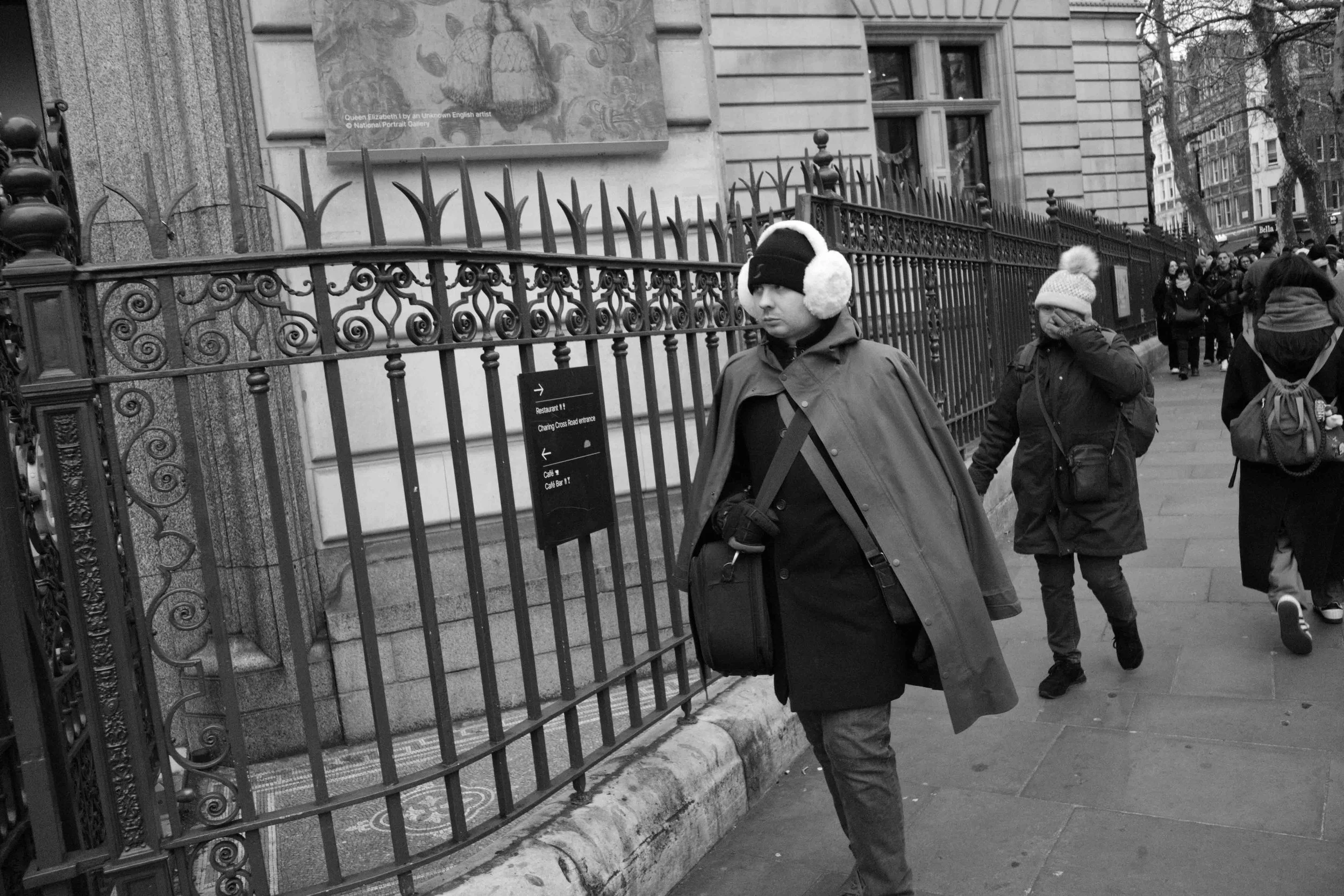
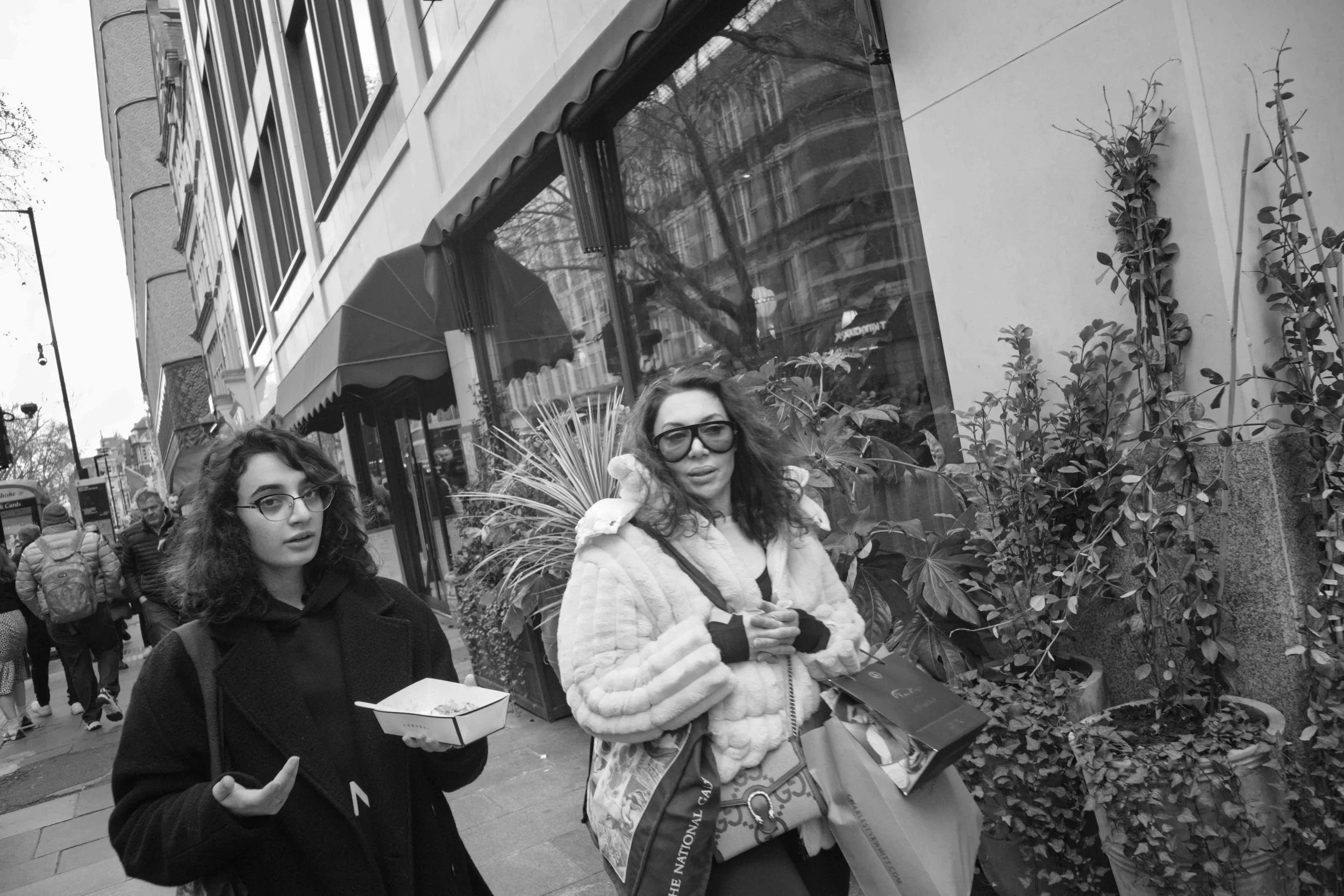
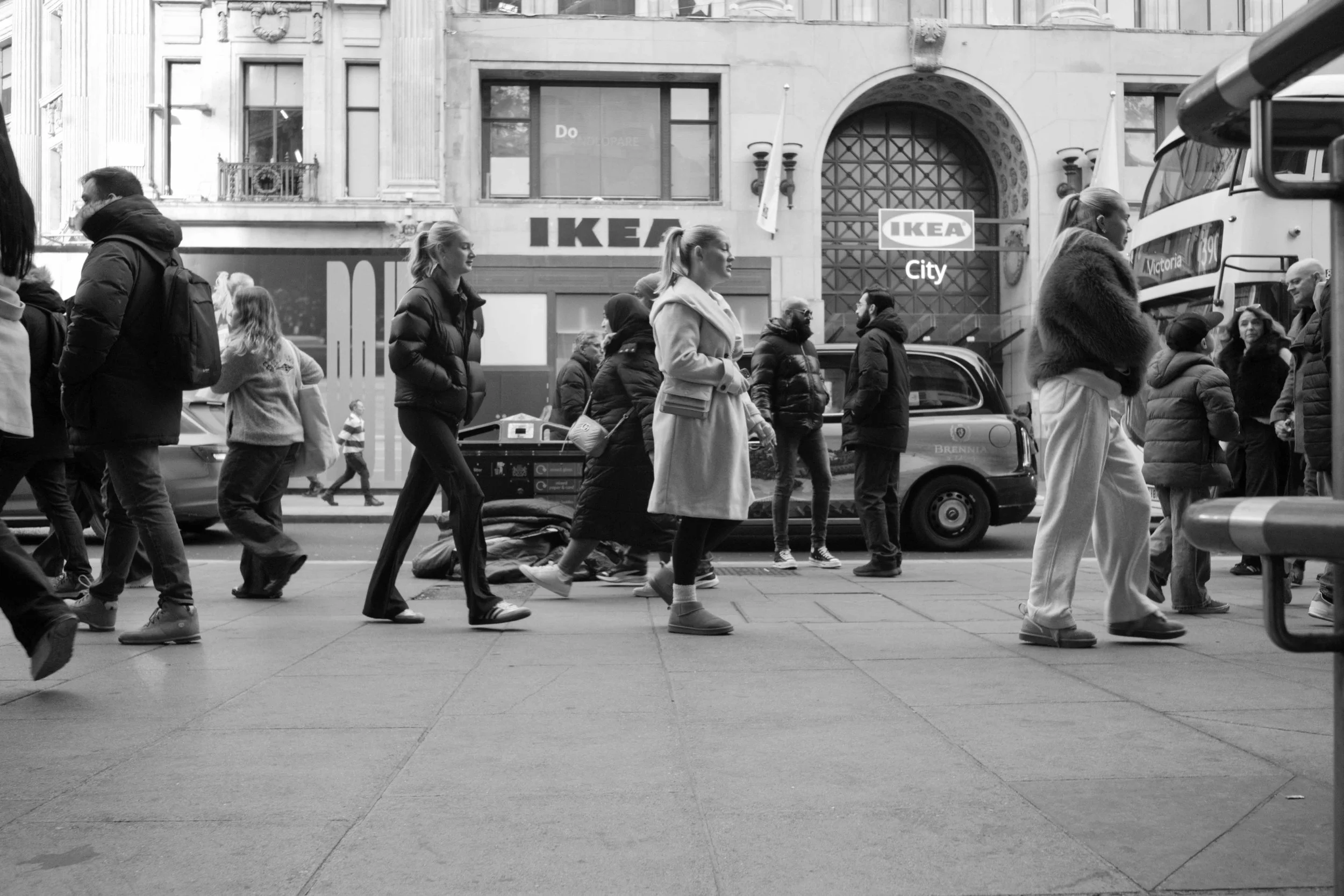
A jaunt upto London also warrants a stroll along Oxfrod Street and the like to photograph the shoppers. As I moved toward the National Portrait Gallery, I spotted a man in a heavy coat and earmuffs. The 28mm creates a unique "environmental portrait" where the subject is clear, but their surroundings—the ornate metal fences and London stone—tell the rest of the story.
Final Thoughts on the TTArtisan 28mm
For a fraction of the cost of the Leica Summaron, this lens delivers a lot of character. It’s sharp in the center, has a lovely vintage-style vignette, and the "clicky" aperture ring is a joy to use. Shooting digital, you are blessed with ‘fixing’ and fall off to the ourside of the frame in LRC.
Using a 28mm forces you to be a participant, not just an observer. You can’t hide in the shadows with a telephoto; you have to be in the thick of it, just like Winogrand.
Until next time, keep snapping.
Kodak Double X in Pompey: Searching for Middle England in a Great Port City
There’s a particular energy to photographing a port city—a sense of history anchored to the sea, mixed with the transient, hard-edged reality of a place that lives by trade and naval tradition.
Having originated from a small landlocked West Midlands town, I find the allure of a port / seaside location alluring when its outside of the ‘high season’.

There’s a particular energy to photographing a port city—a sense of history anchored to the sea, mixed with the transient, hard-edged reality of a place that lives by trade and naval tradition.
Having originated from a small landlocked West Midlands town, I find the allure of a port / seaside location alluring when its outside of the ‘high season’.
My latest few rolls of Kodak 5222 Double X, shot on the Nikon F80, took me to Portsmouth, a city whose identity is defined by the weight of its naval past. The classic black and white aesthetic of Double X, with its deep shadows and rich midtones, was the perfect medium to explore this contrast.
The photos capture a visual argument about what Portsmouth is today: a distinct entity shaped by maritime life, or merely a reflection of generic "Middle England."
The Weight of History and Local Commerce
Portsmouth's naval history isn't just a museum exhibit; it’s a living part of the city's commercial DNA. You see it subtly in the high street: the name of a local business like Admirals Fish & Chips, standing proudly next to an Acorn Cycles and a local bakery. This isn't the generic retail environment of an inland commuter town; it's a place where service and local trade are rooted in a community that has historically served the Navy.

Even the classic seaside fish and chips kiosk on the promenade speaks to this coastal identity, catering to both the local population and visitors drawn by the sea.

The architecture reinforces this feeling—a blend of sturdy, post-war residential blocks, modern civic centres, and a bustling central square that carries the echo of centuries of public life.


Flags, Identity, and the Political Subtext
The presence of overt national symbolism in cities like Portsmouth often invites political analysis. As observers, we look for visual evidence of strong national identity, and you can see a large Union Jack flag near the Citizens Advice building.

In a city defined by the Royal Navy, the flag functions primarily as a symbol of service, heritage, and deep-seated local pride. However, in contemporary political discourse, this kind of visible, declarative patriotism can sometimes be interpreted as a shorthand for the nationalism associated with the far-right.
My photographs, however, largely capture an ambiguous reality. They show people going about their daily lives—visiting the bike shop, queuing for fish and chips, or passing a spiritual message in the city centre. The overt displays of national pride appear less as a political statement of exclusion and more as a natural extension of an identity intrinsically linked to the history of the United Kingdom at sea.


Port City vs. Middle England
The question of whether Portsmouth reflects "Middle England" or a distinct "port city" is a matter of visual language.
"Middle England" often implies a certain suburban homogeneity, a focus on commuter rail links, and national chains. While Portsmouth does feature modern retail hoardings like the H&M re-opening and contemporary flats, these elements are always layered onto a grittier, more historically saturated urban core. This constrast viewpoint of a city is intriguing.


The pervasive maritime influence, the blend of hard, functional architecture, the visible working-class heritage, and the cultural specificity (like the "Admirals" shop name or the seafront kiosks) all mark Portsmouth as something unique. It's a city with a stronger, less diluted sense of place.
The Double X film stock beautifully highlights this gritty authenticity—the textures of the pavement, the worn brickwork, and the earnest faces of the people. Portsmouth is clearly a Port City, possessing a unique character forged by its relationship with the water, far removed from the softer, more generalized aesthetics of inland urban life. It is a visual challenge to the idea of a uniform national character, a vibrant, complex reality captured one frame at a time.
Until next time, keep snapping.
Yes please, keep me posted when there’s a new blog
Instagram - Film