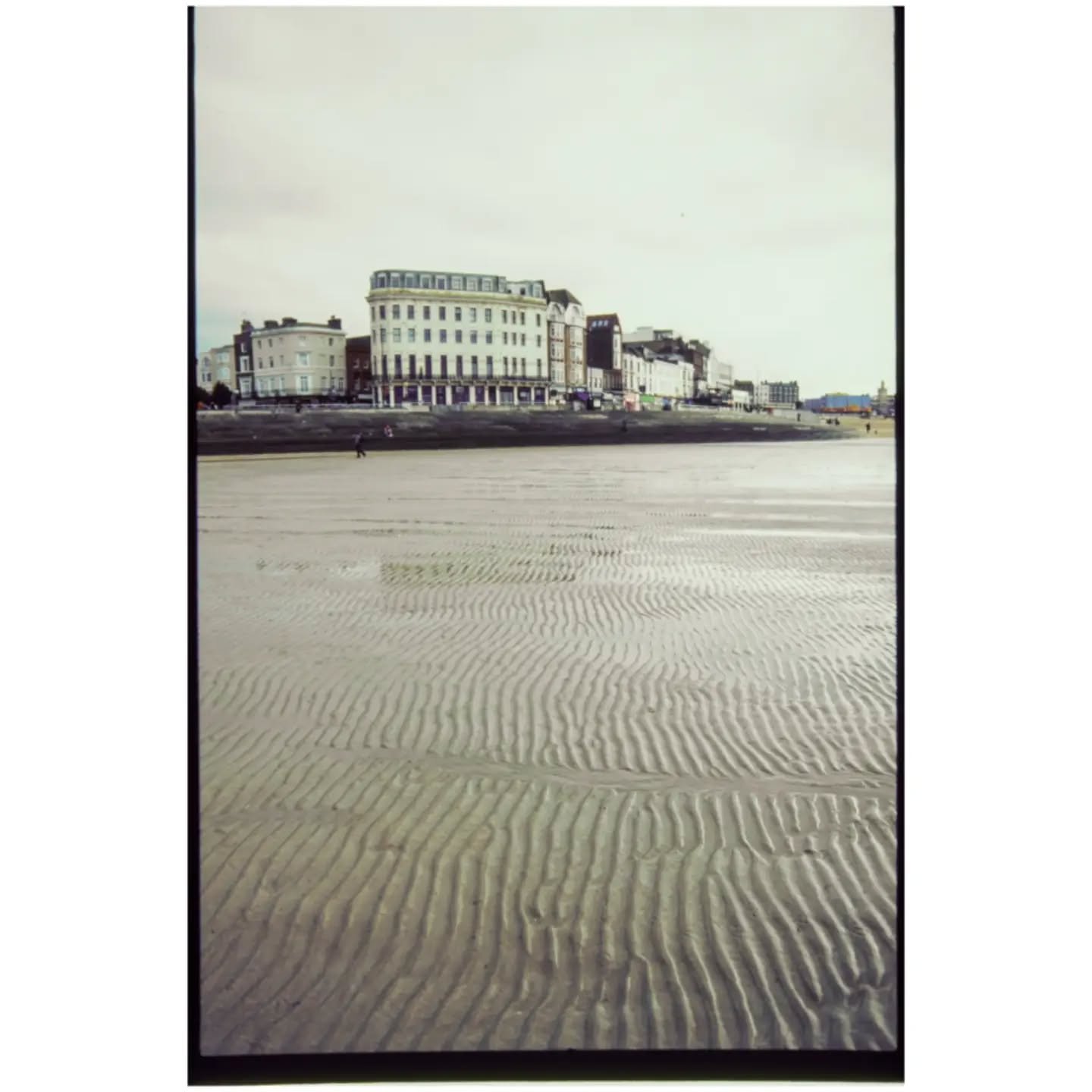
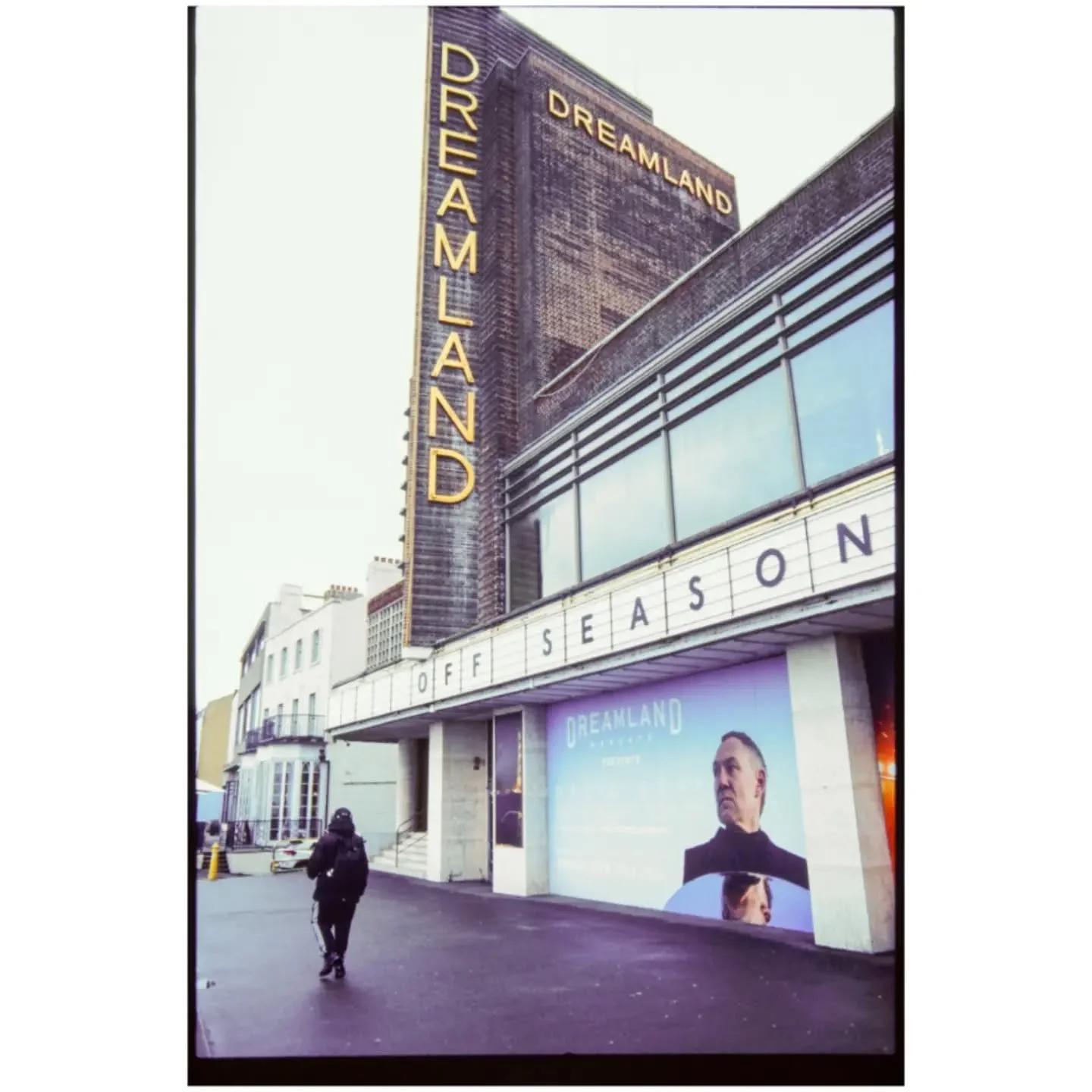
in the frame
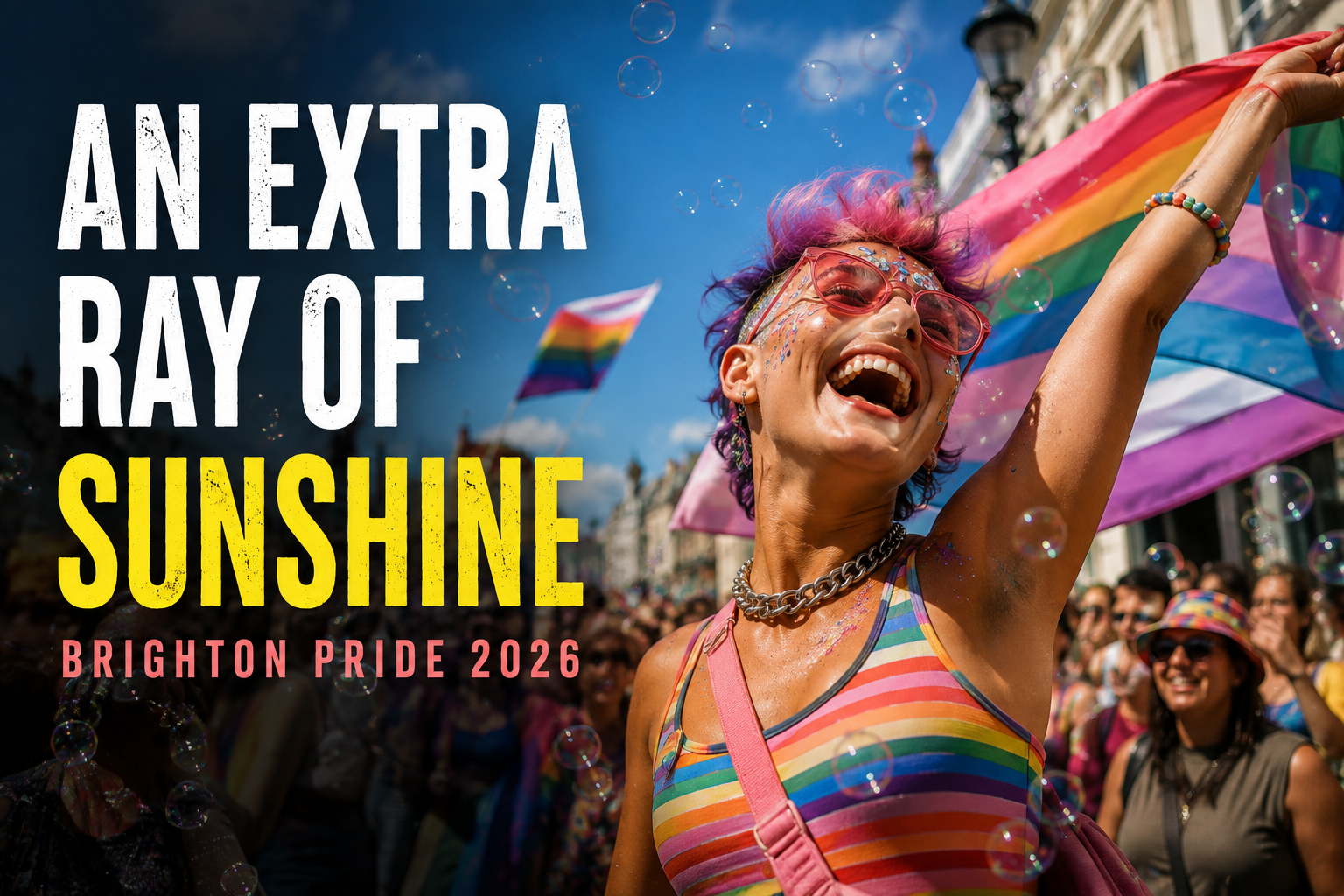
An Extra Ray of Sunshine — Brighton Pride 2026
Flash on the Street: Daylight Portraits at Brighton Pride
Earlier this summer I was at Trans Pride Brighton in July — a chilled, community-led march through the city that felt, in the best possible way, like Brighton simply being Brighton.
You can read that post here. Pride on the 1st of August was something else entirely.
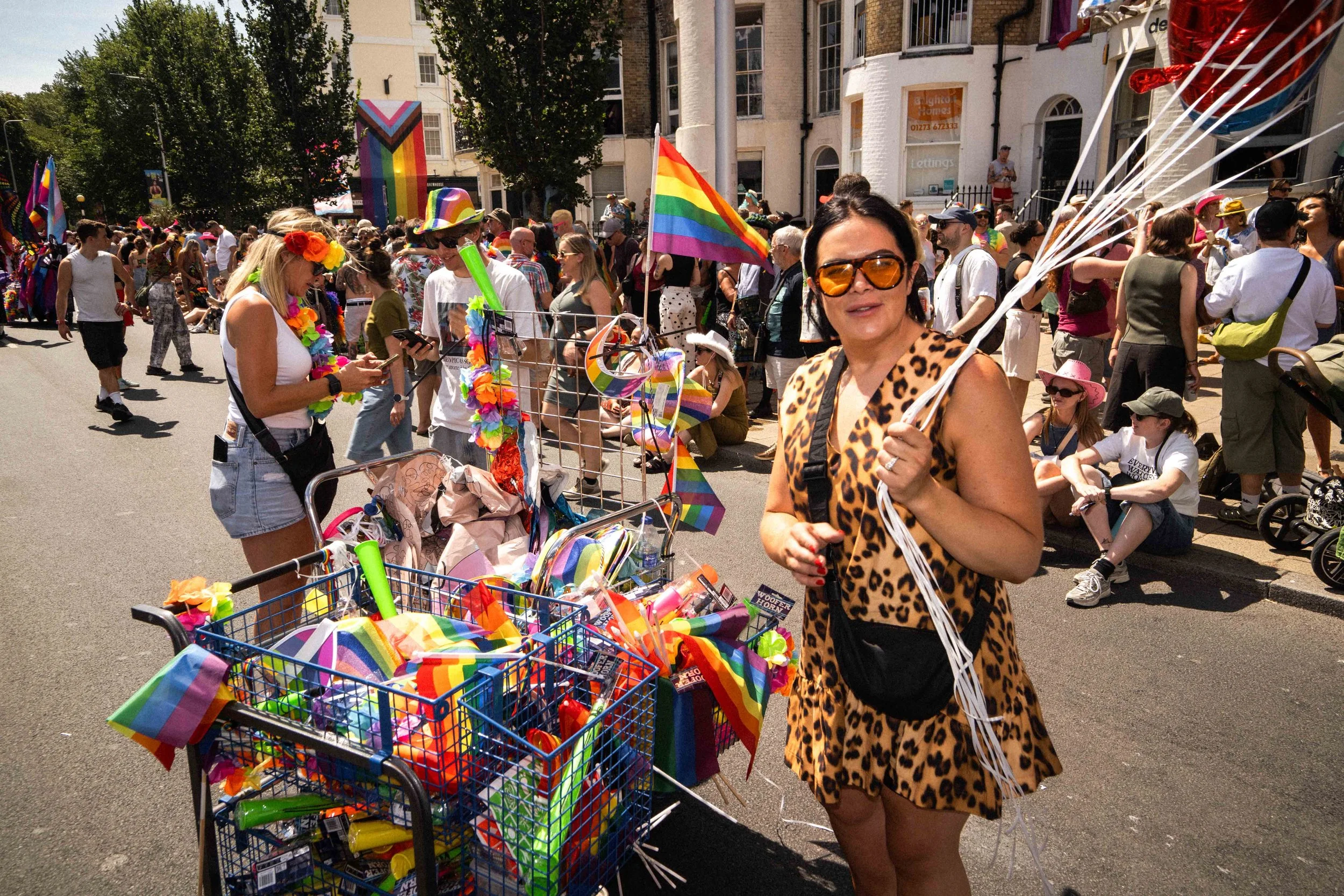
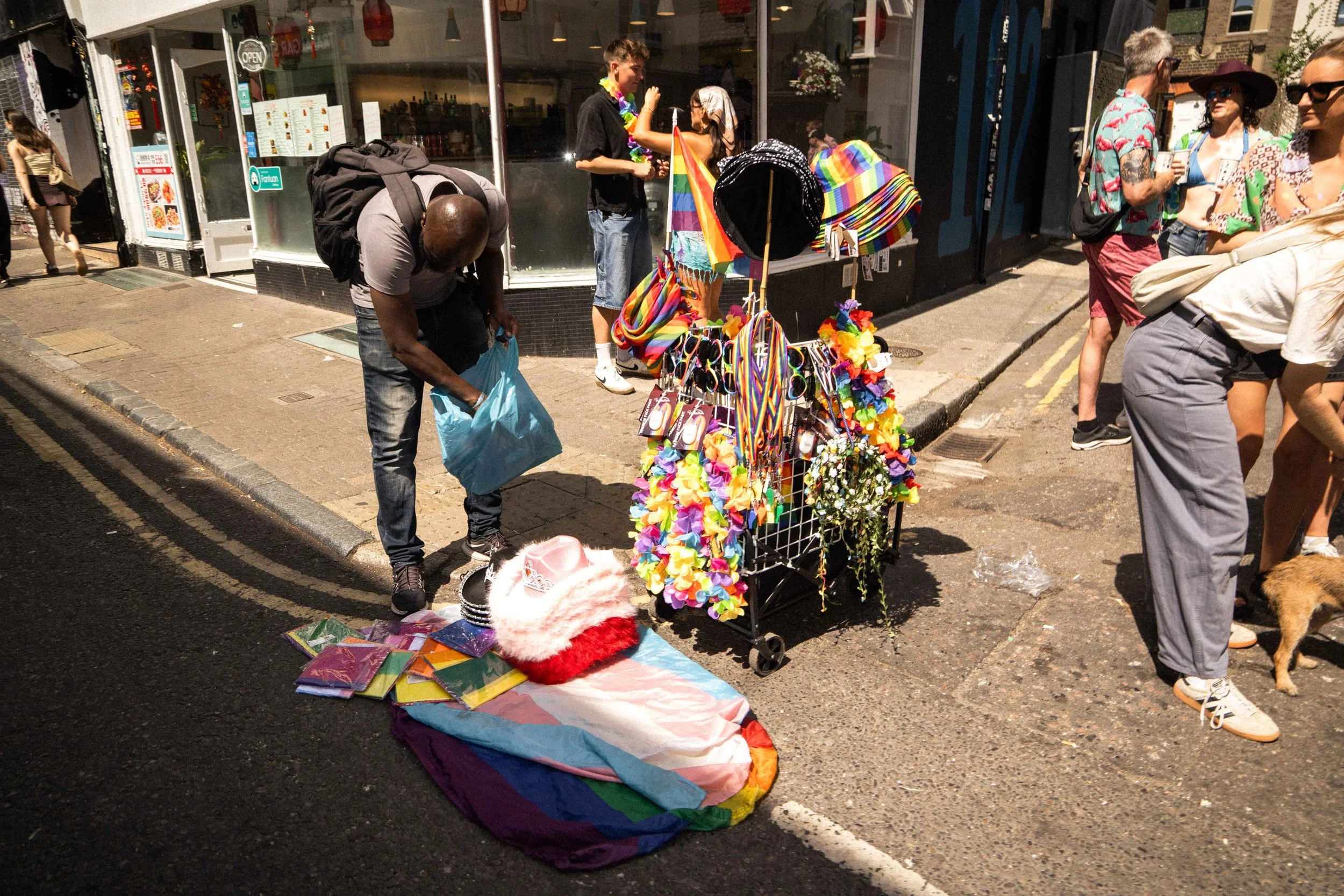
There is an annual moment, somewhere around late July, where I start getting excited about Brighton Pride. It is not just an event. It is a pilgrimage — a gathering that pulls in the four corners of Brighton, Sussex, and the UK, and beyond that, quite literally, the world.
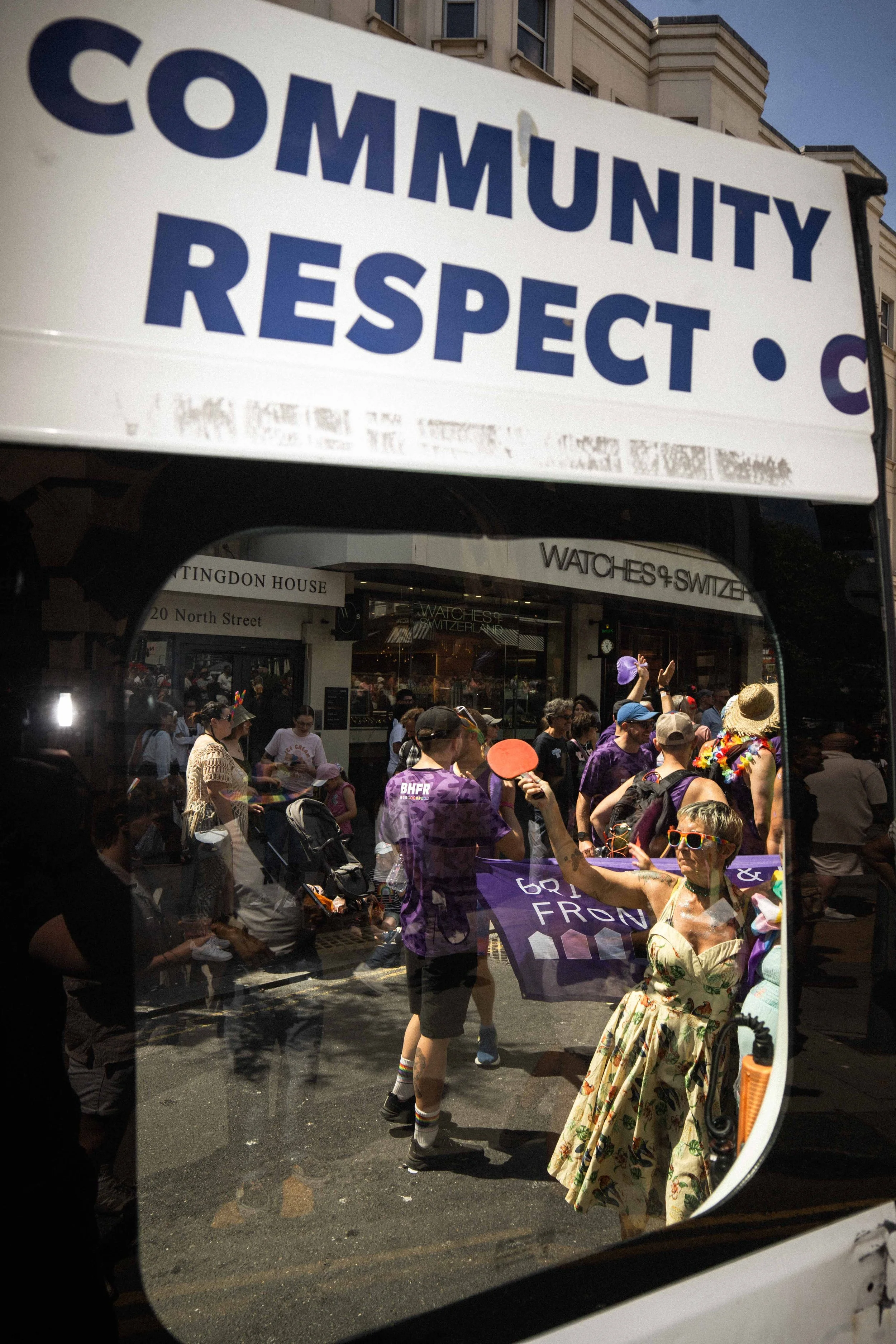
This year I heard Spanish accents, Italian accents, Latin American accents. I stood in the middle of a street in Brighton, in the full heat of an August afternoon, surrounded by people who had come from everywhere to be here. That is what Pride does, and why it matters, and why I keep coming back with a camera.
Flash on the Street: Daylight Portraits at Brighton Pride
Earlier this summer I was at Trans Pride Brighton in July — a chilled, community-led march through the city that felt, in the best possible way, like Brighton simply being Brighton.
You can read that post here. Pride on the 1st of August was something else entirely.
There is an annual moment, somewhere around late July, where I start getting excited about Brighton Pride. It is not just an event. It is a pilgrimage — a gathering that pulls in the four corners of Brighton, Sussex, and the UK, and beyond that, quite literally, the world.
This year I heard Spanish accents, Italian accents, Latin American accents. I stood in the middle of a street in Brighton, in the full heat of an August afternoon, surrounded by people who had come from everywhere to be here. That is what Pride does, and why it matters, and why I keep coming back with a camera.
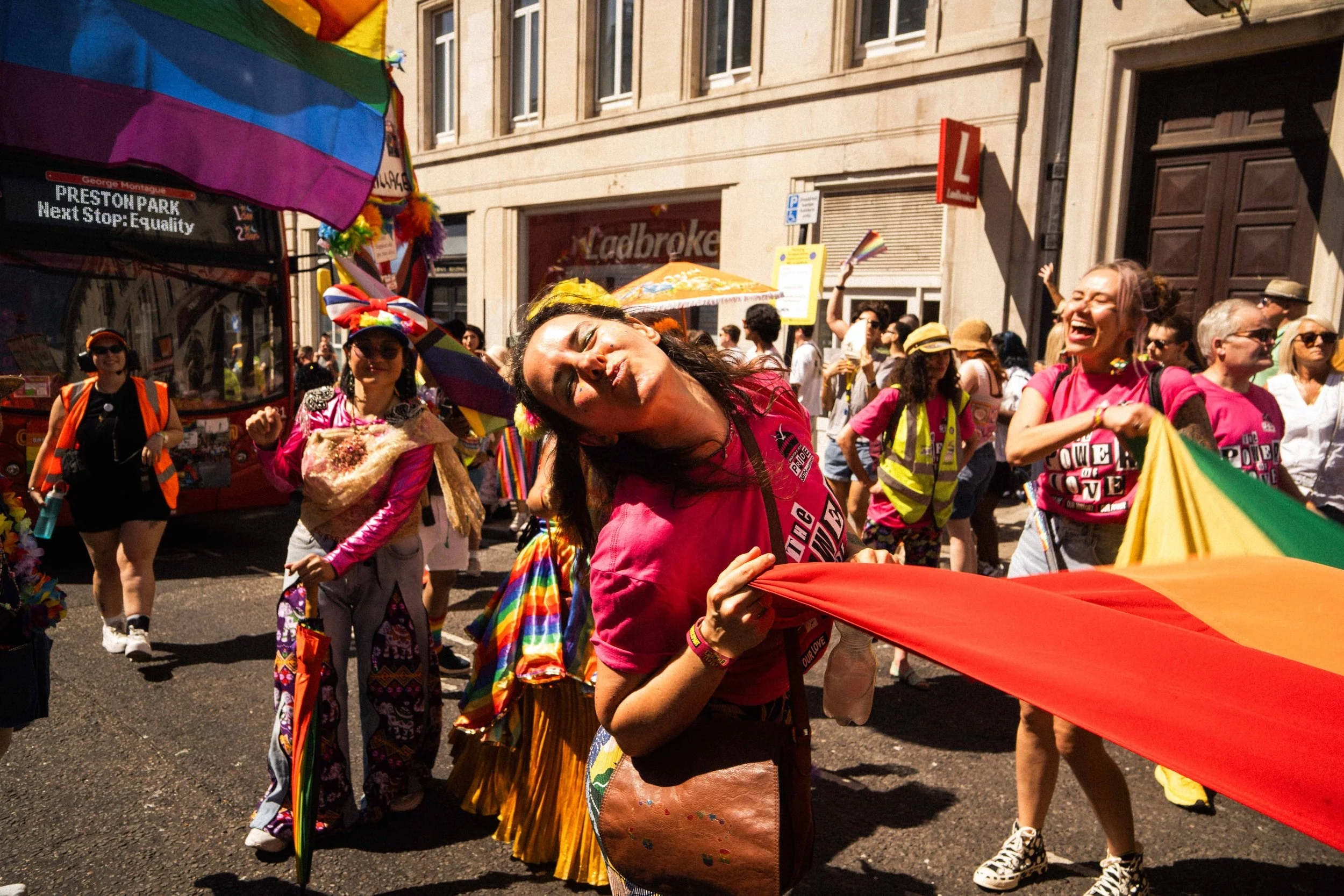
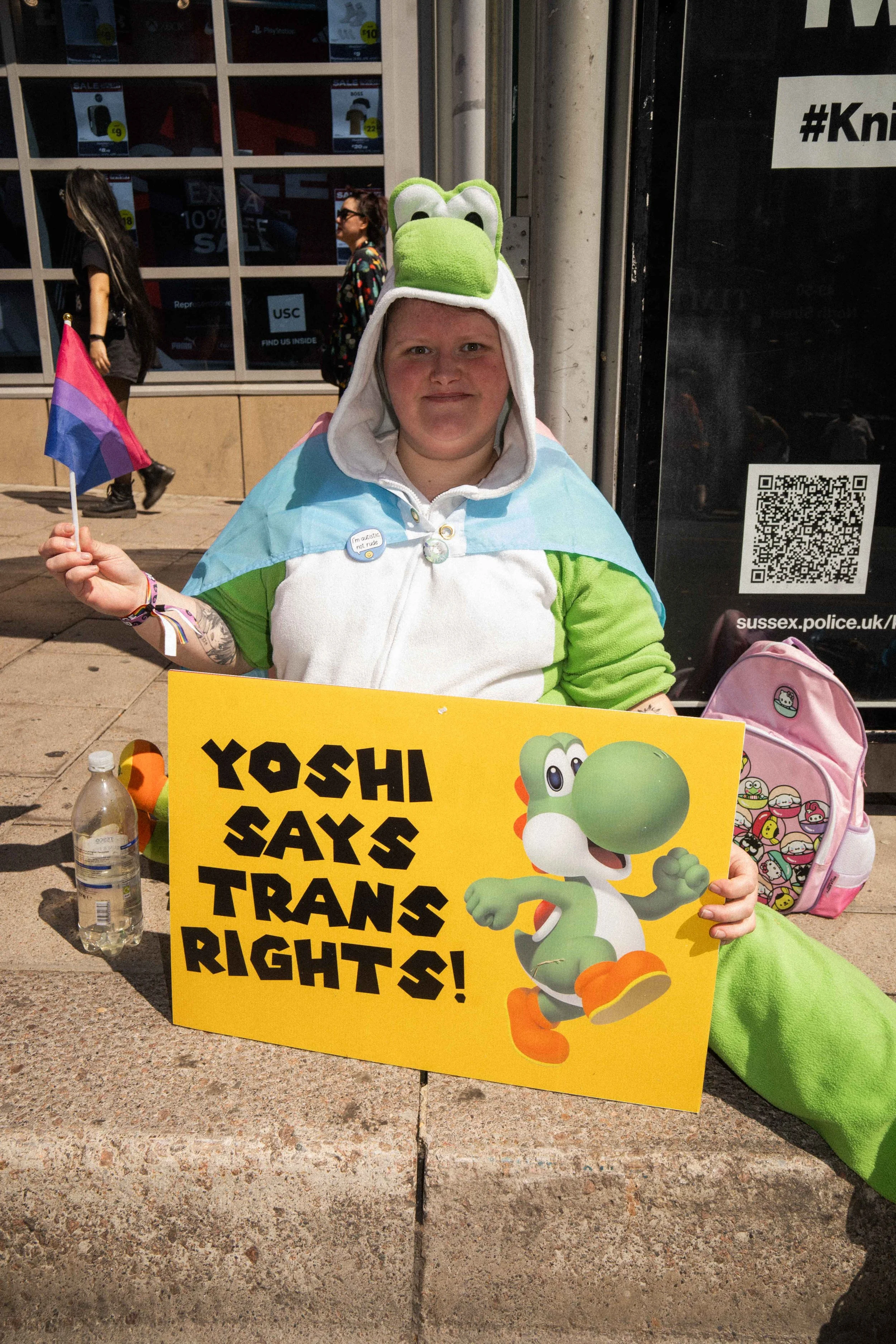
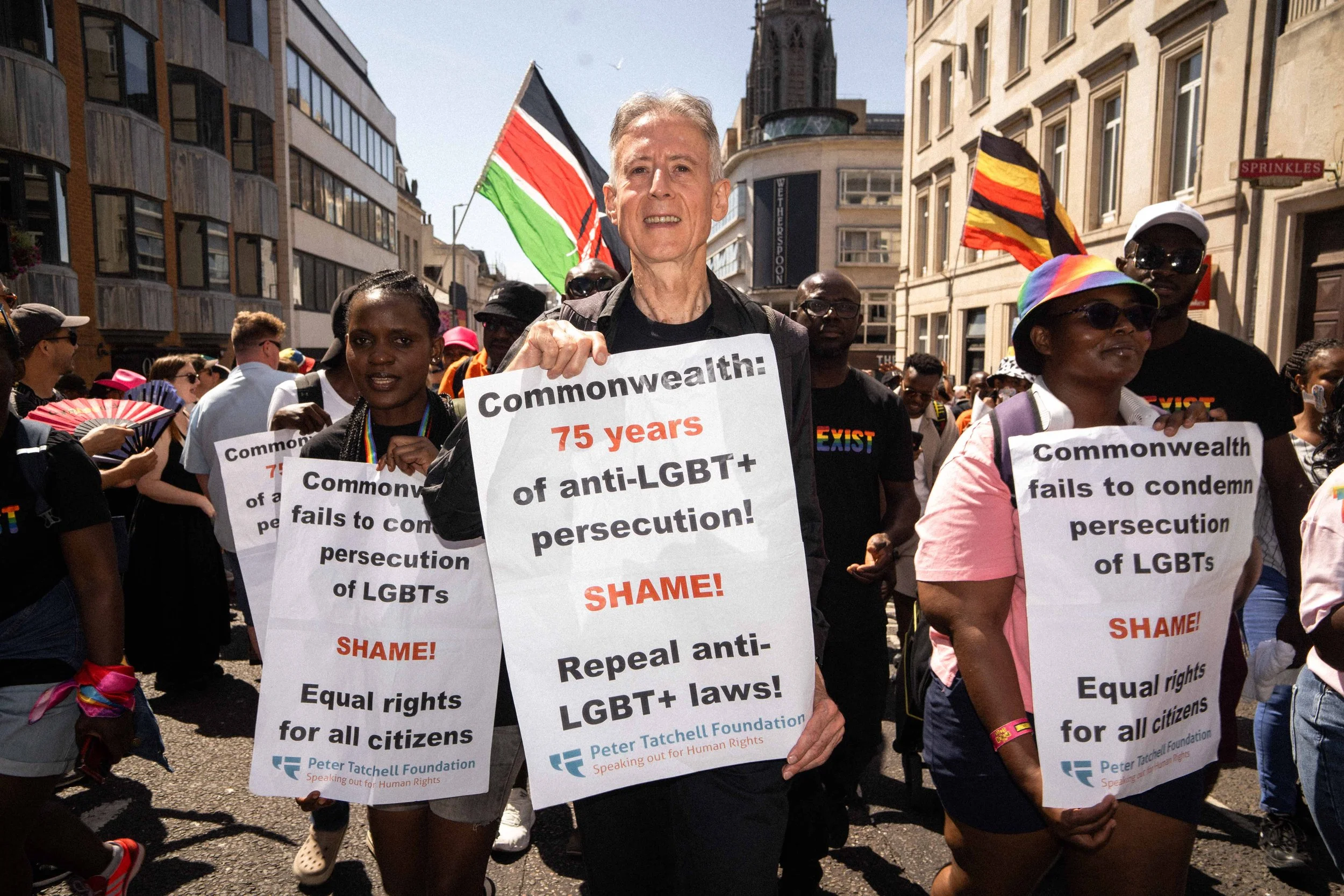
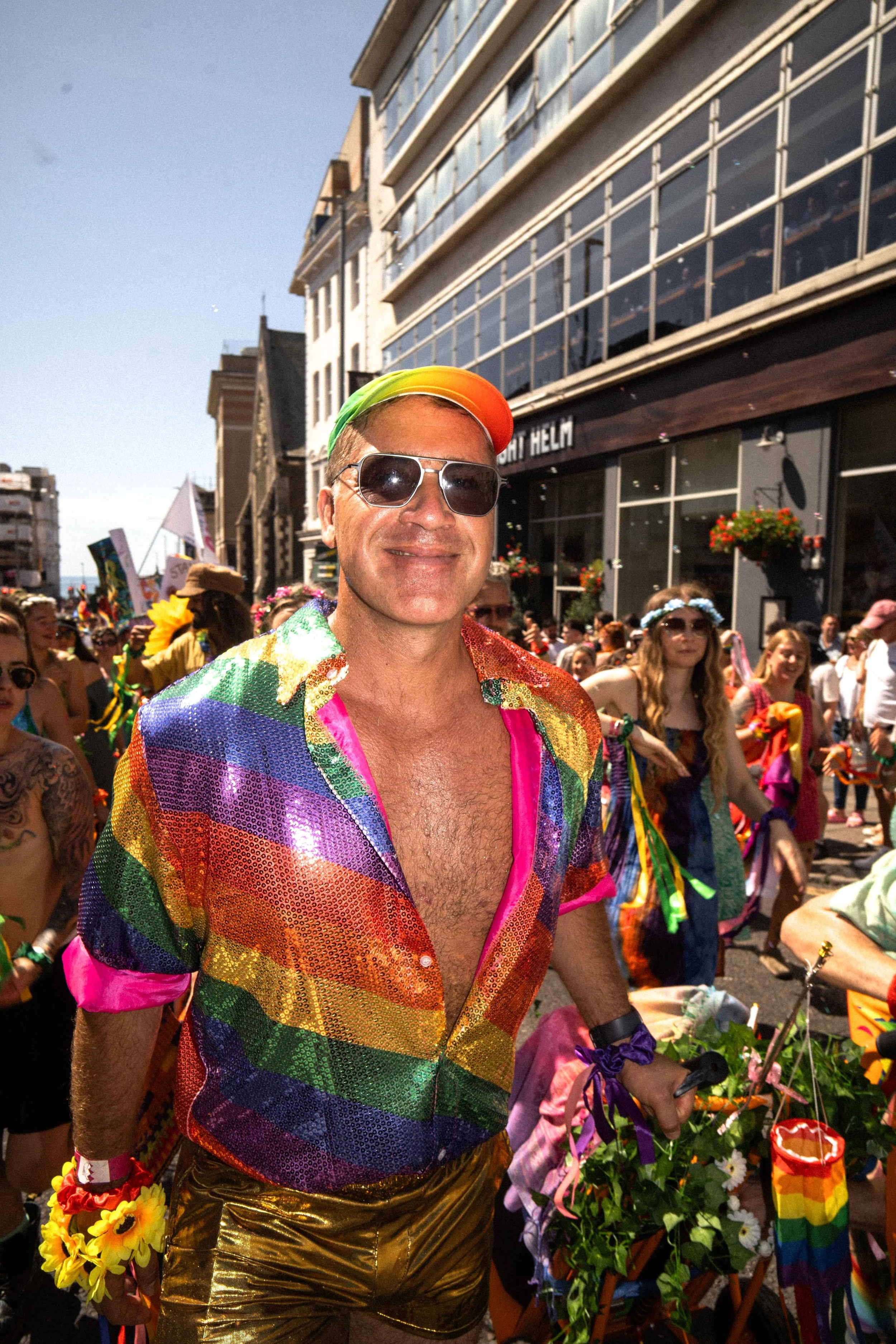
A Different Kind of Day
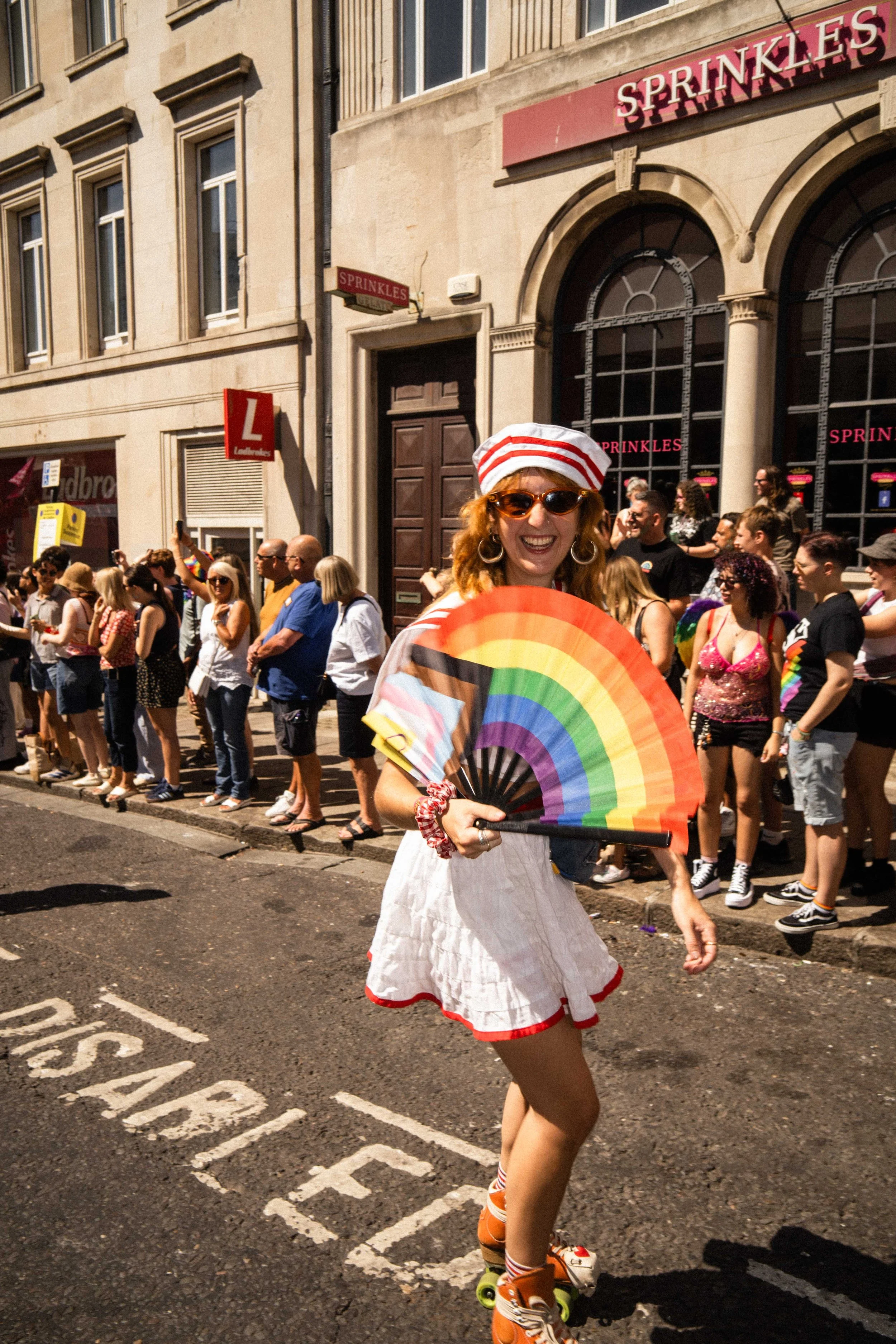
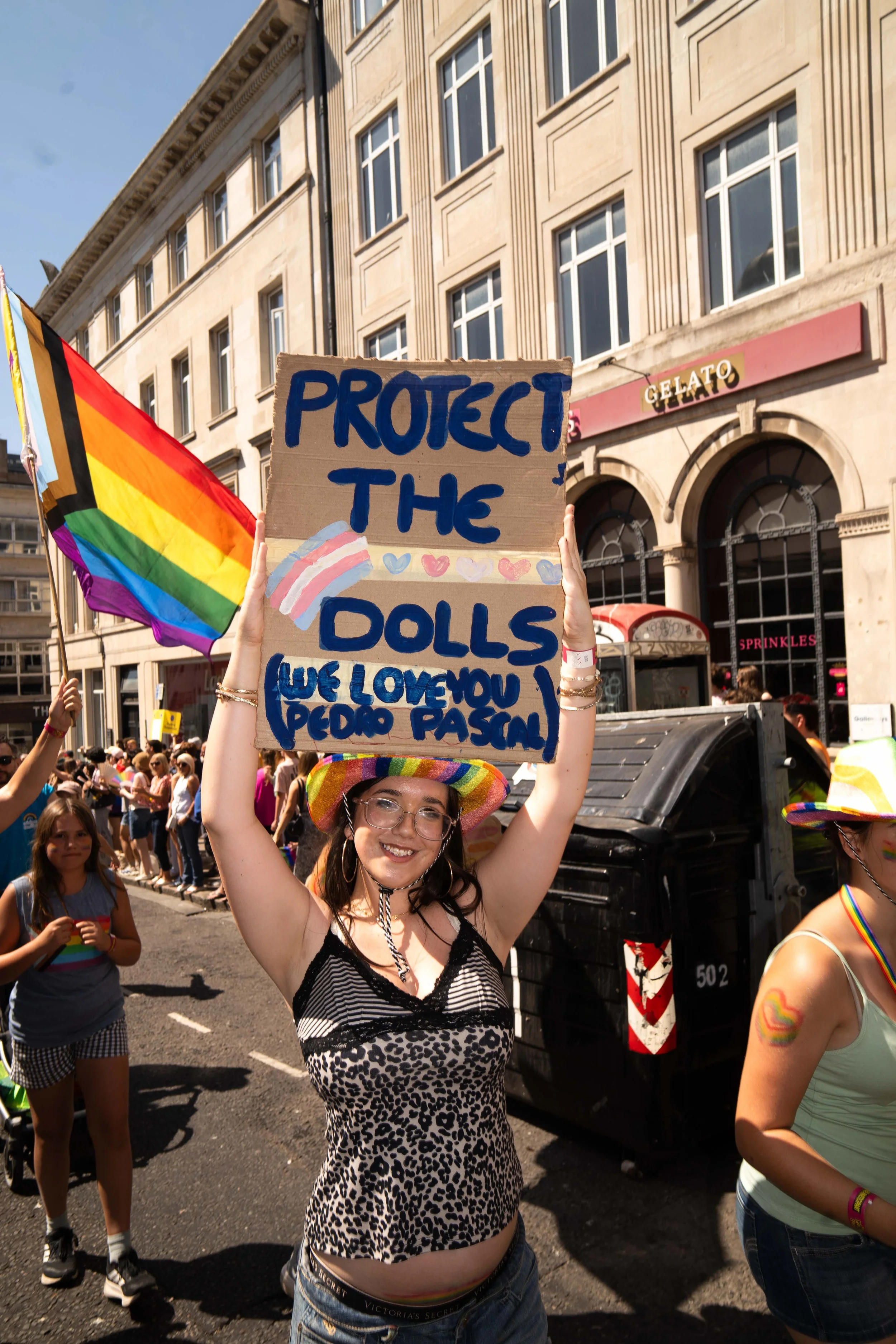
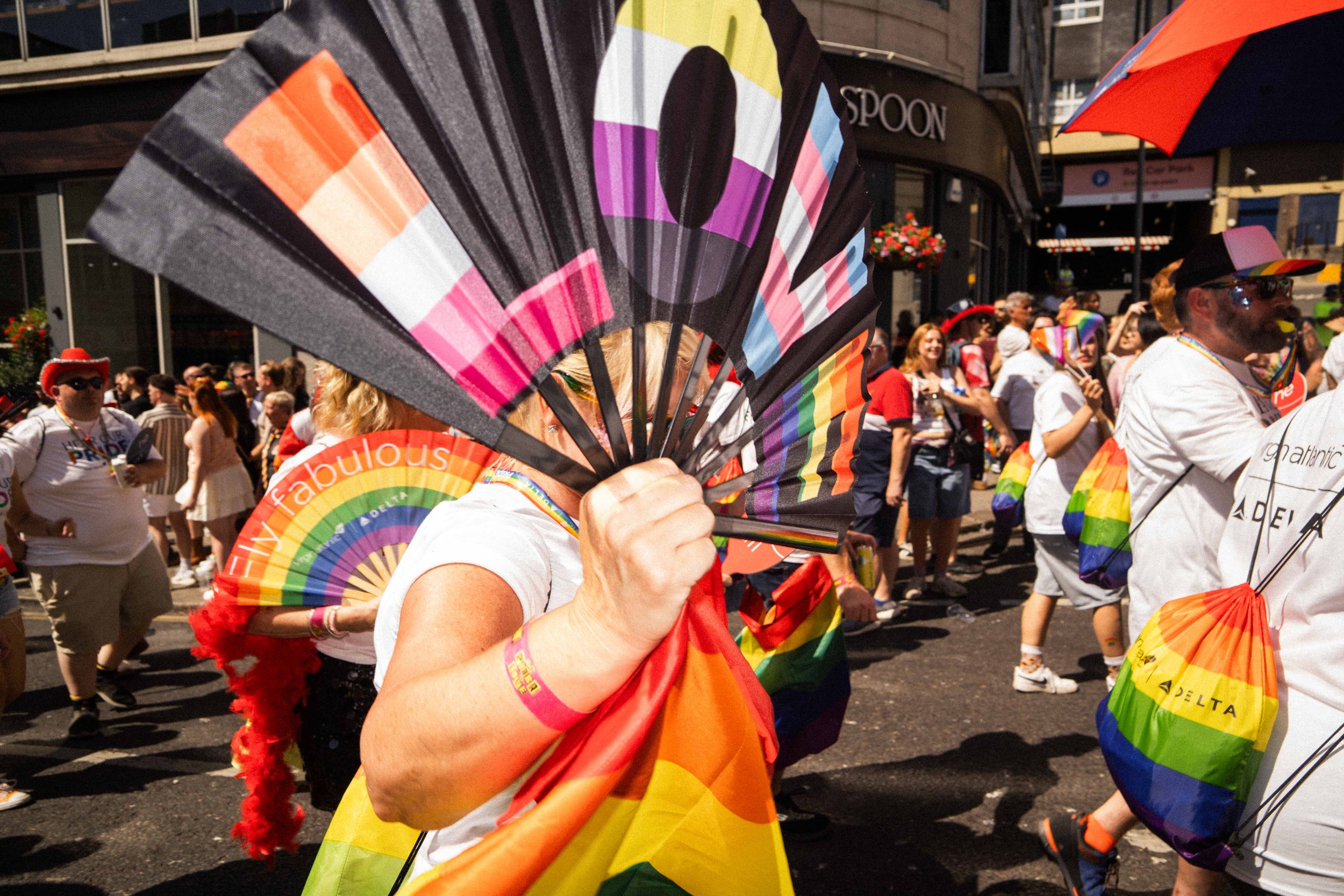
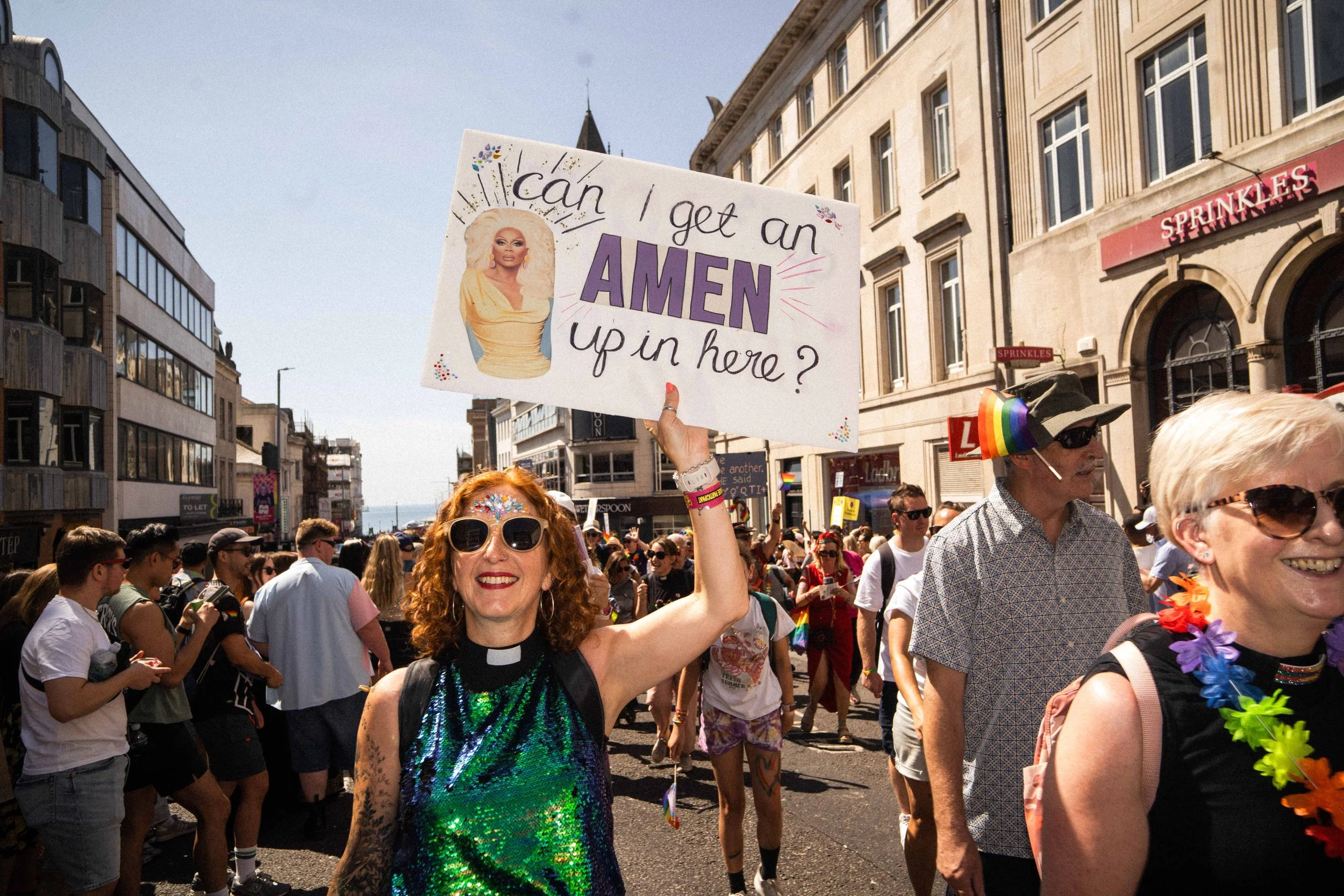
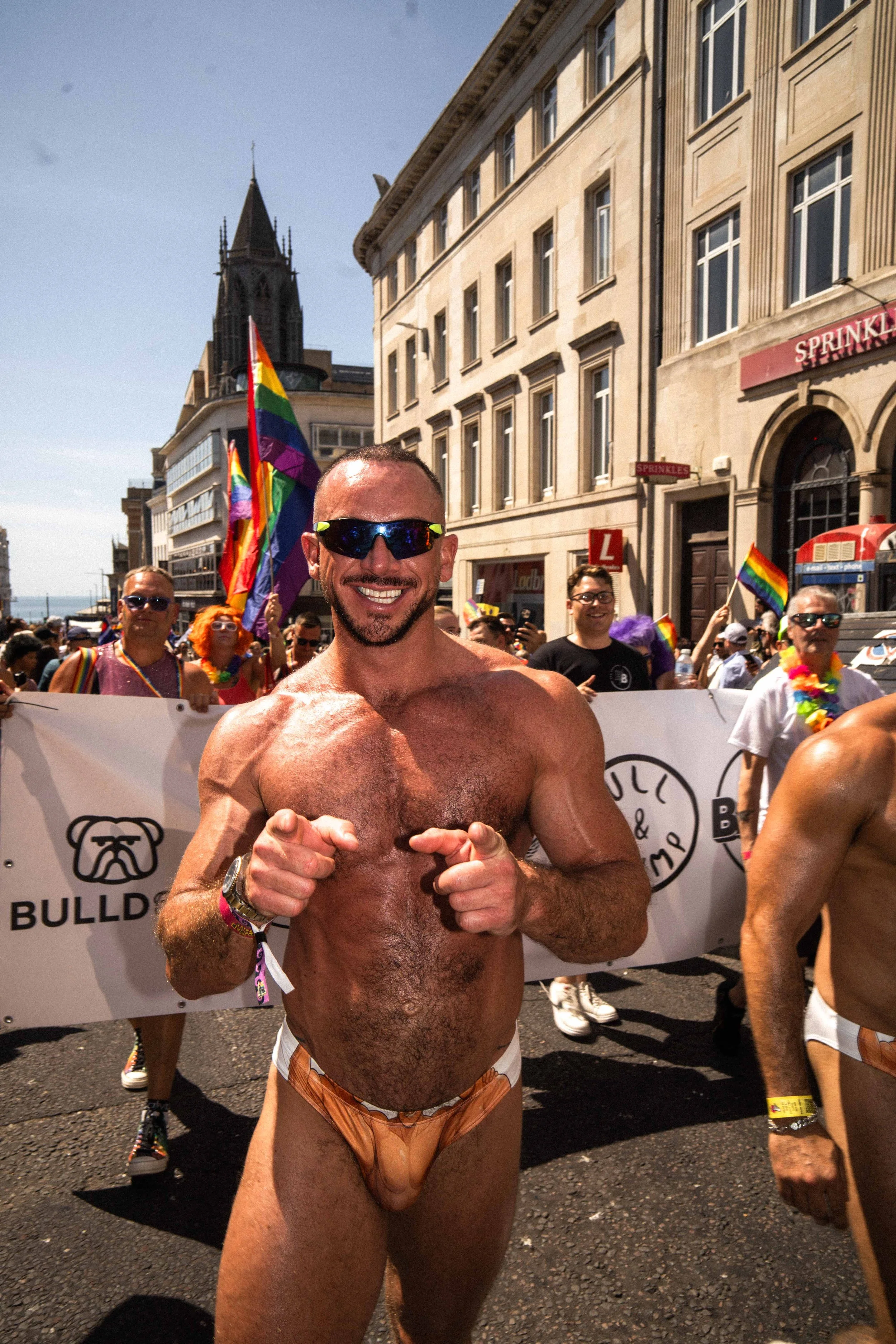
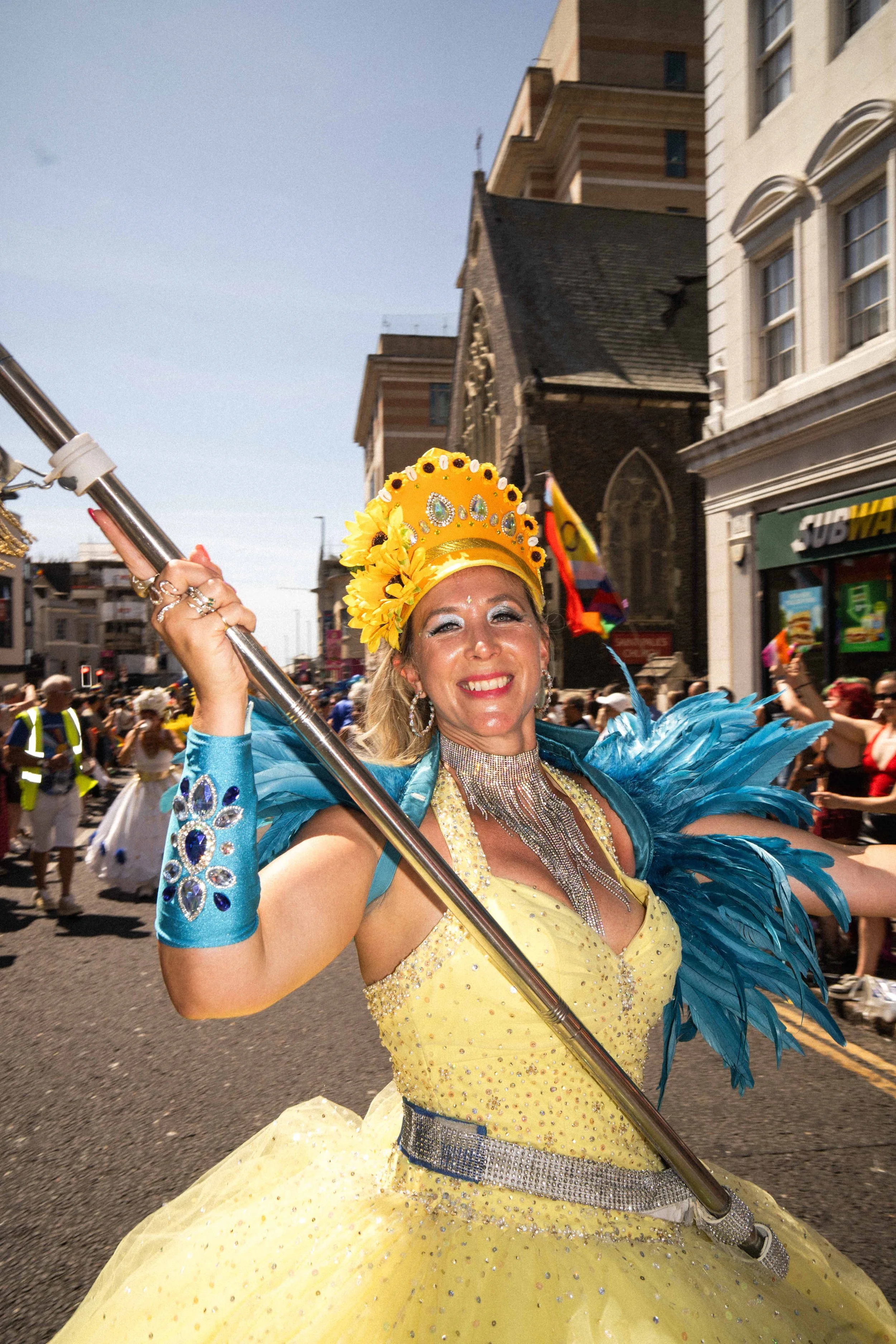
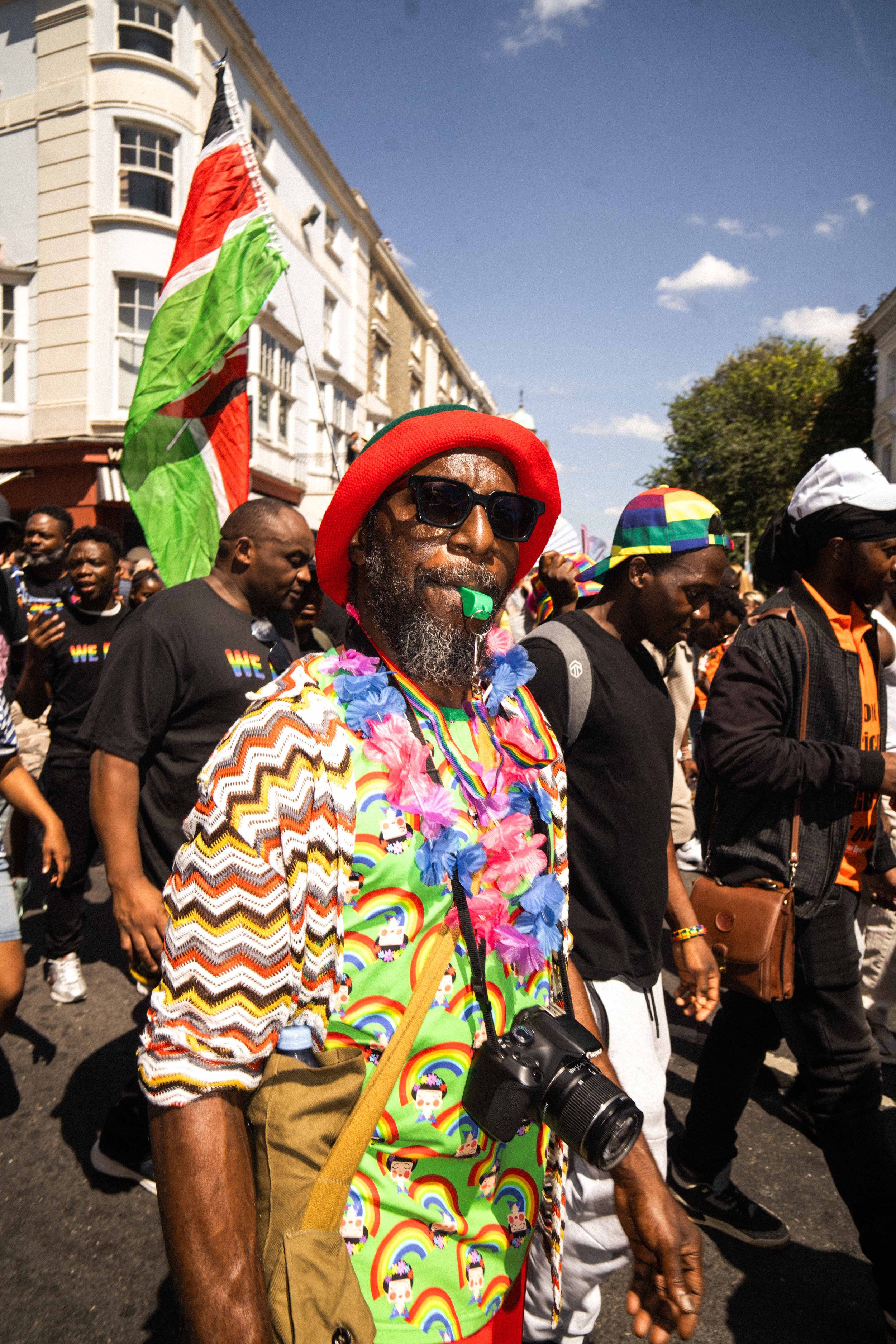
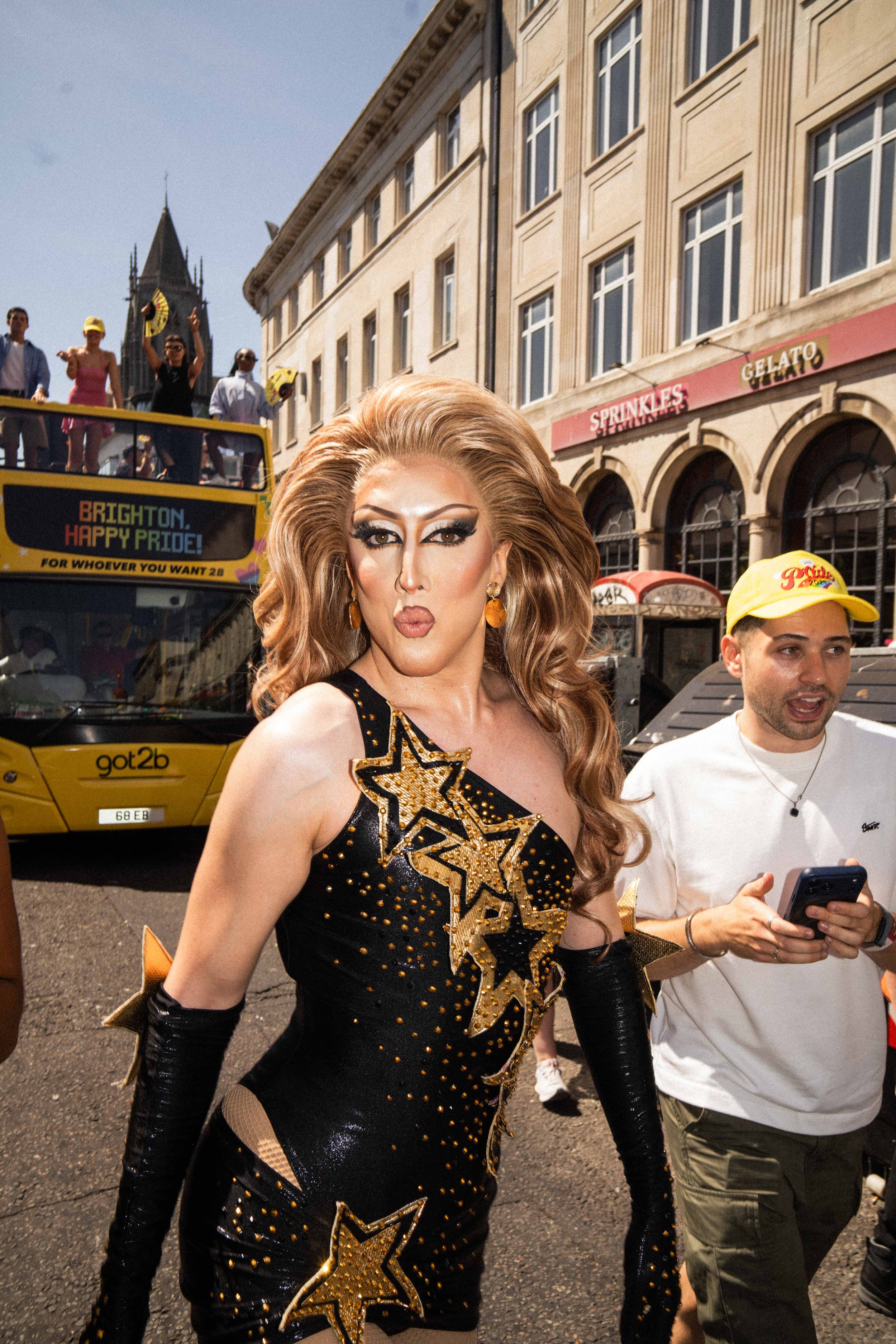
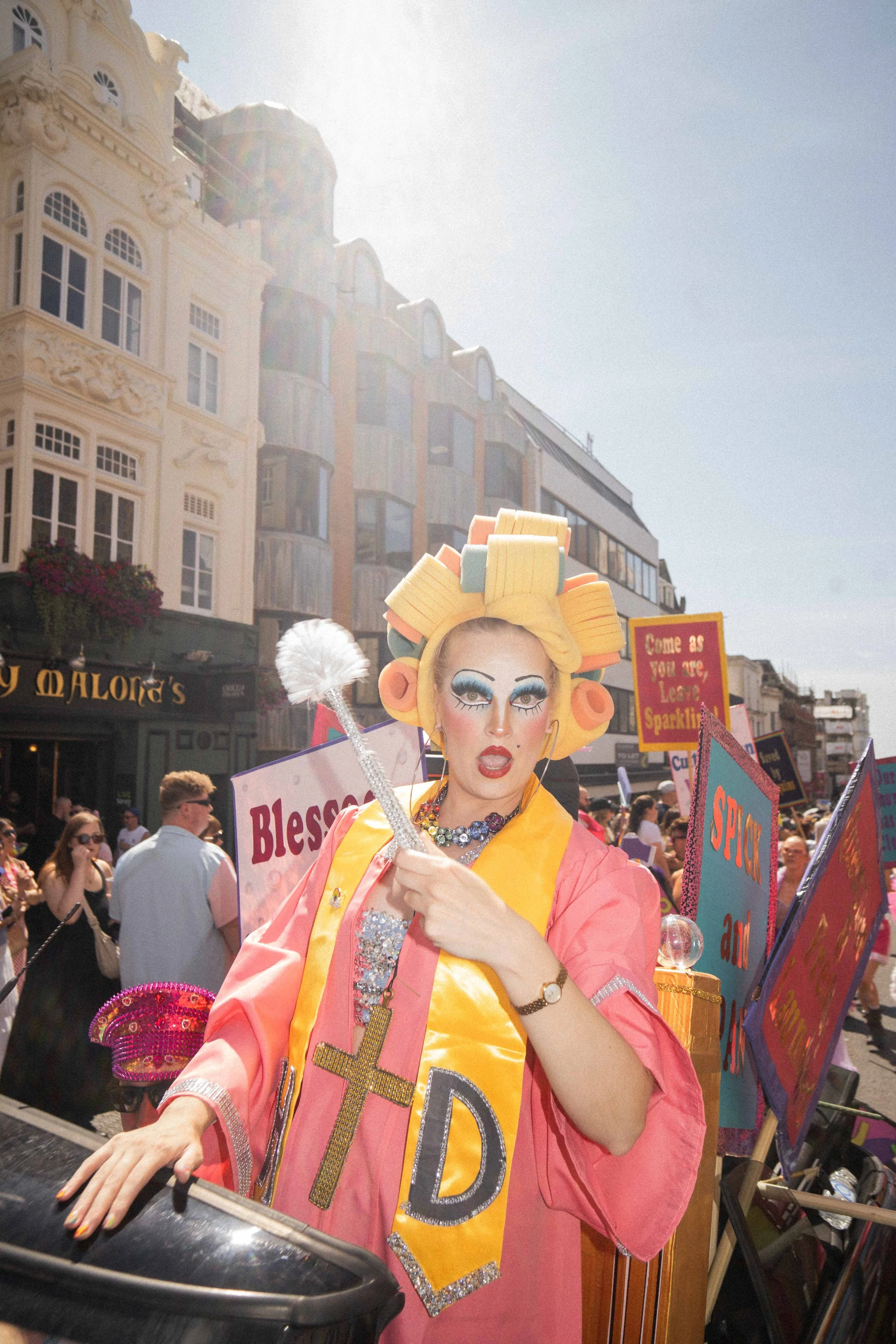
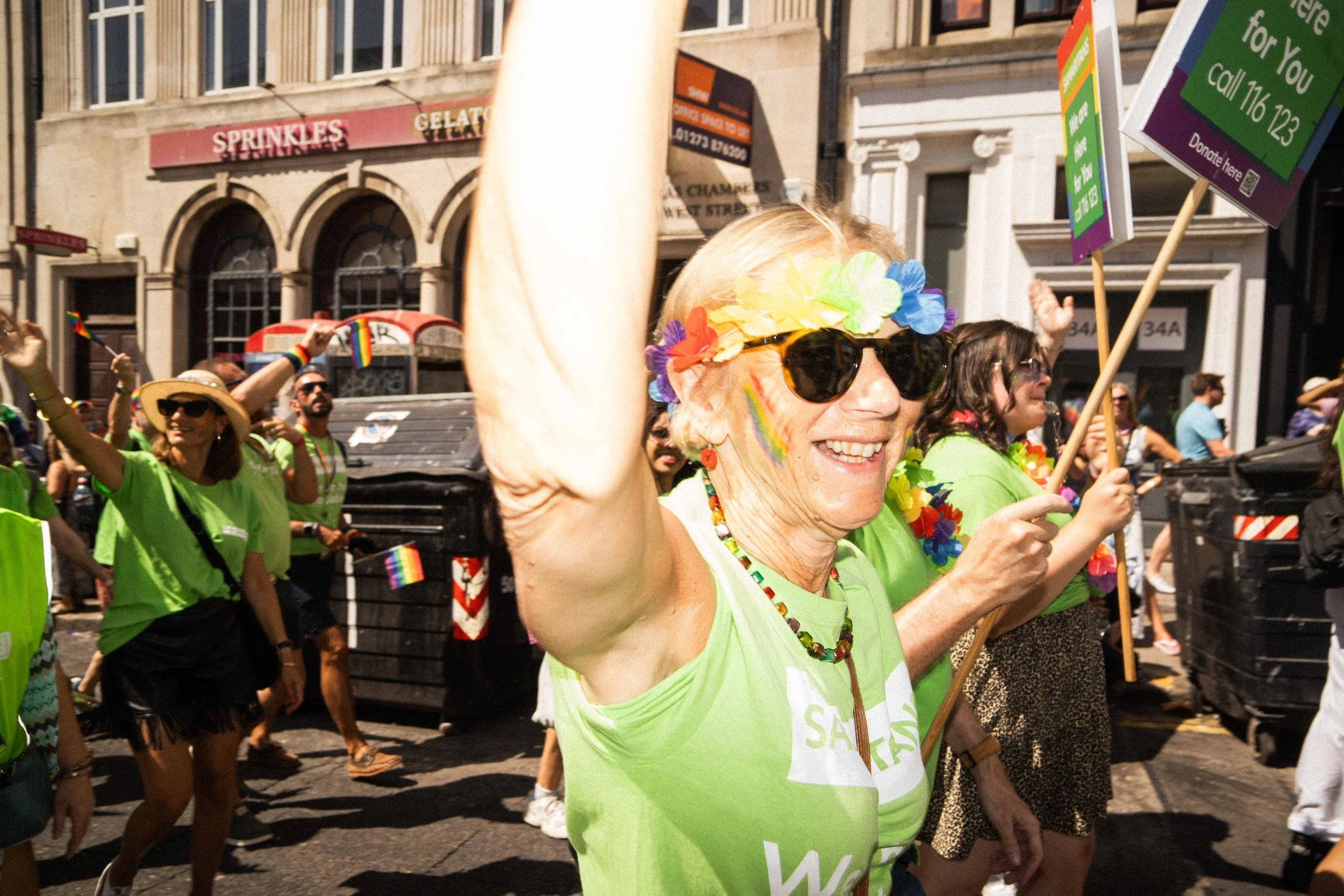
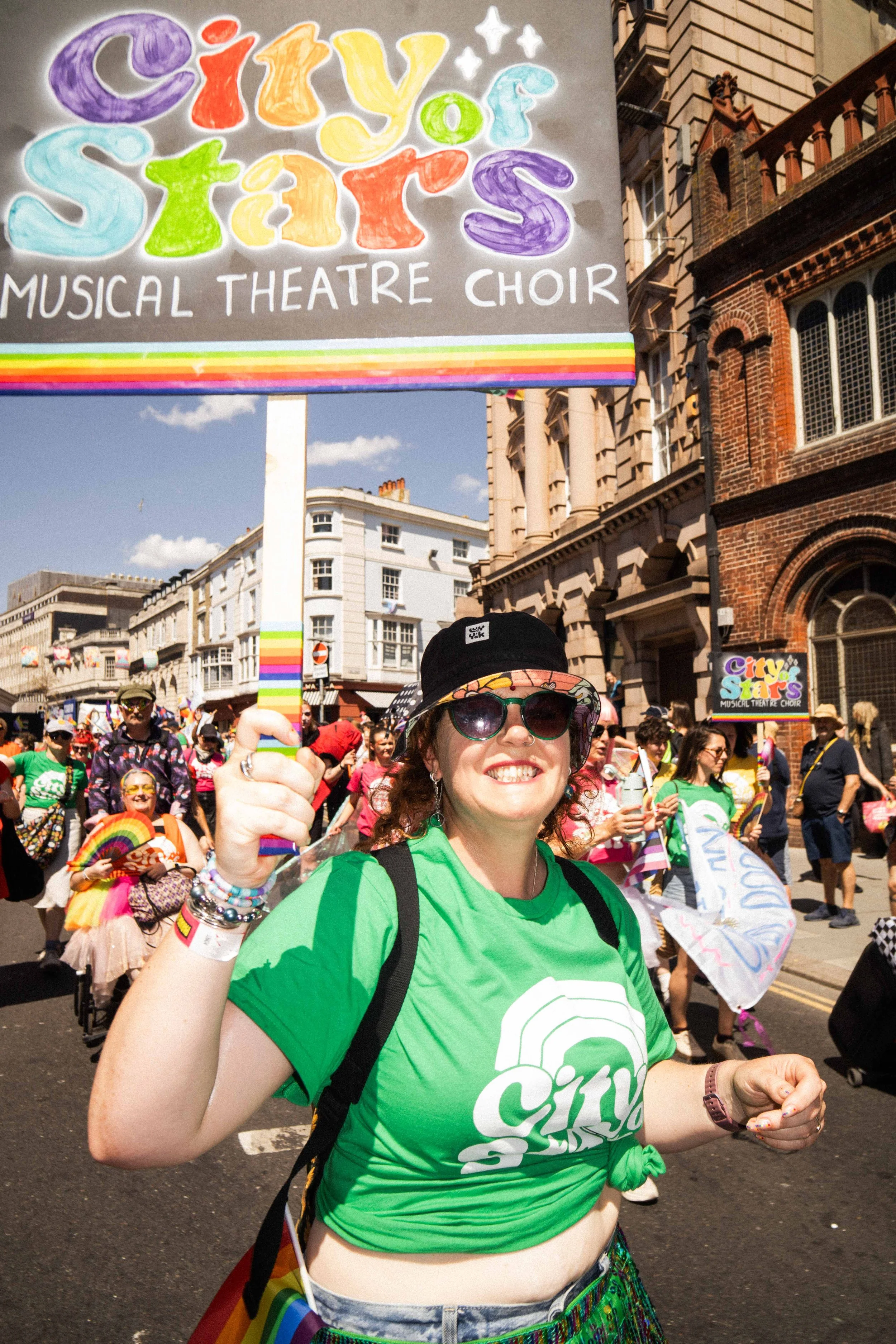
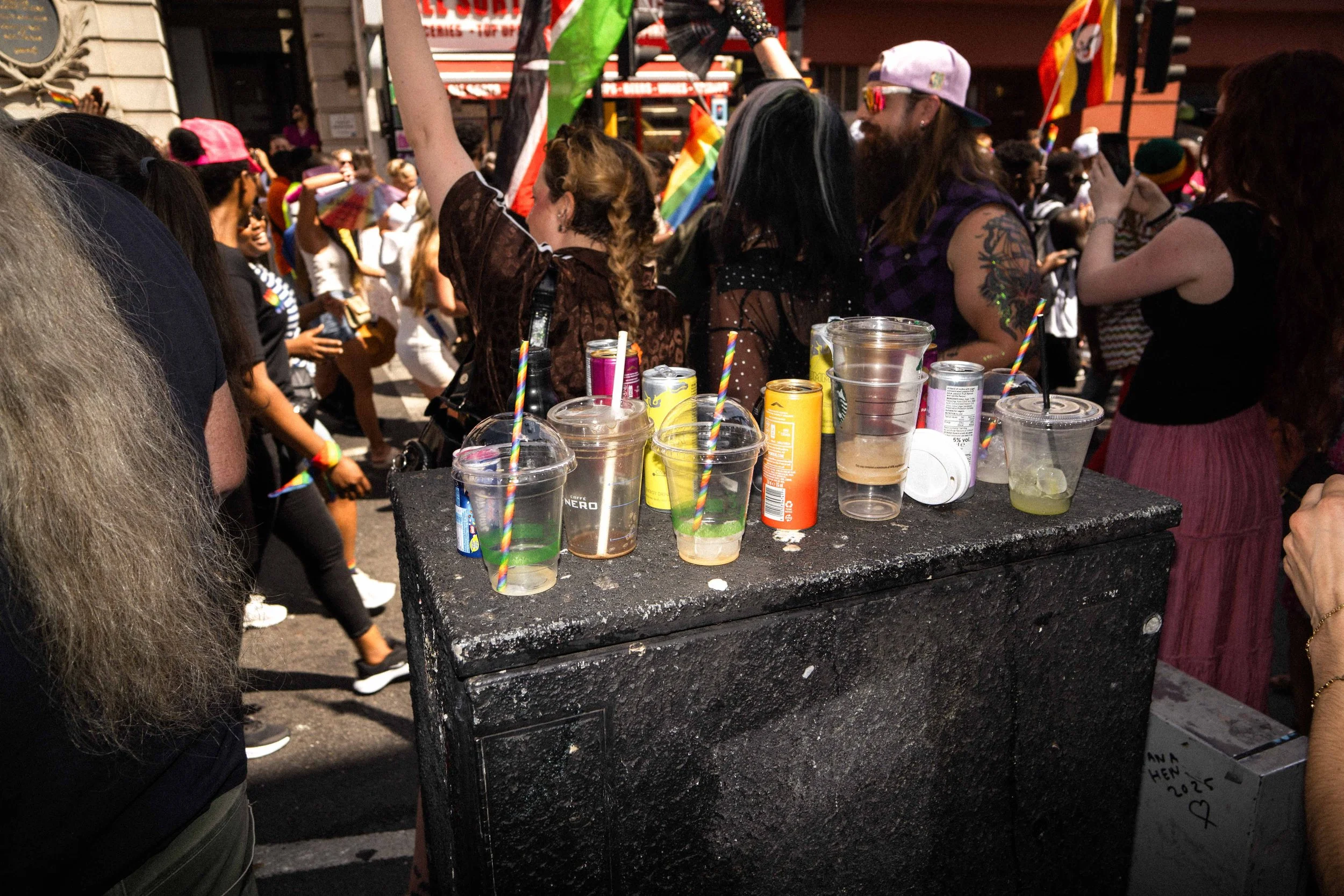
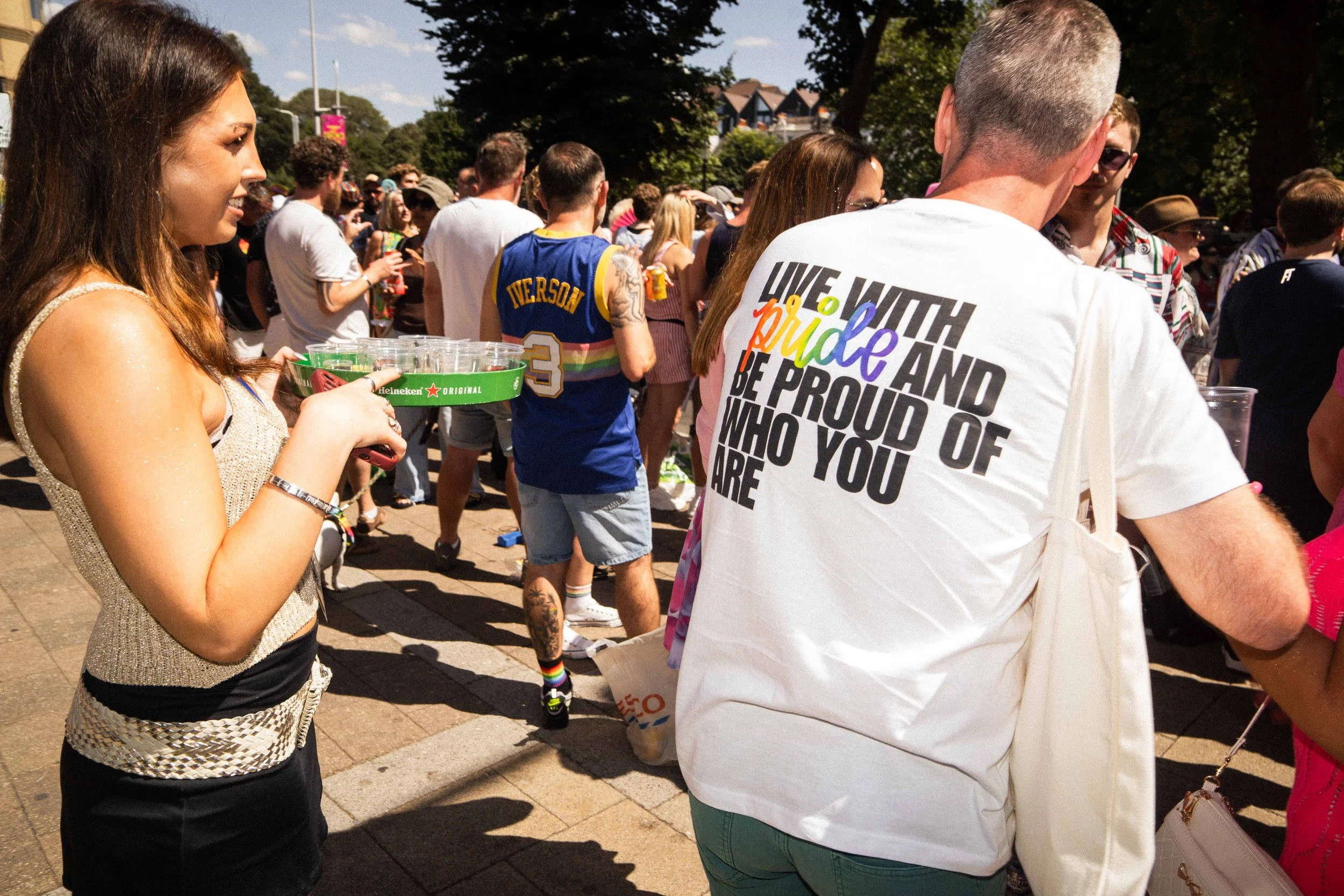
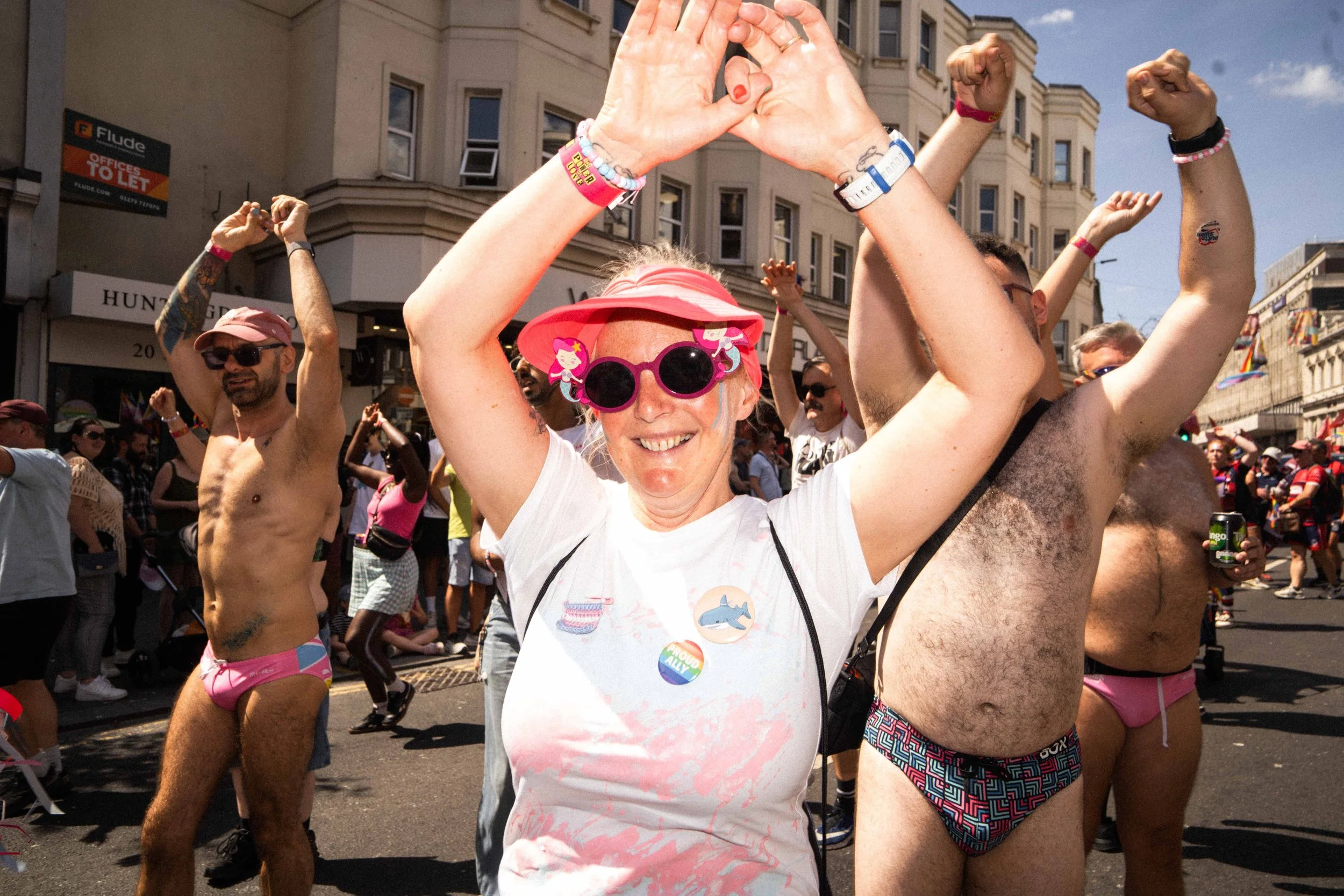
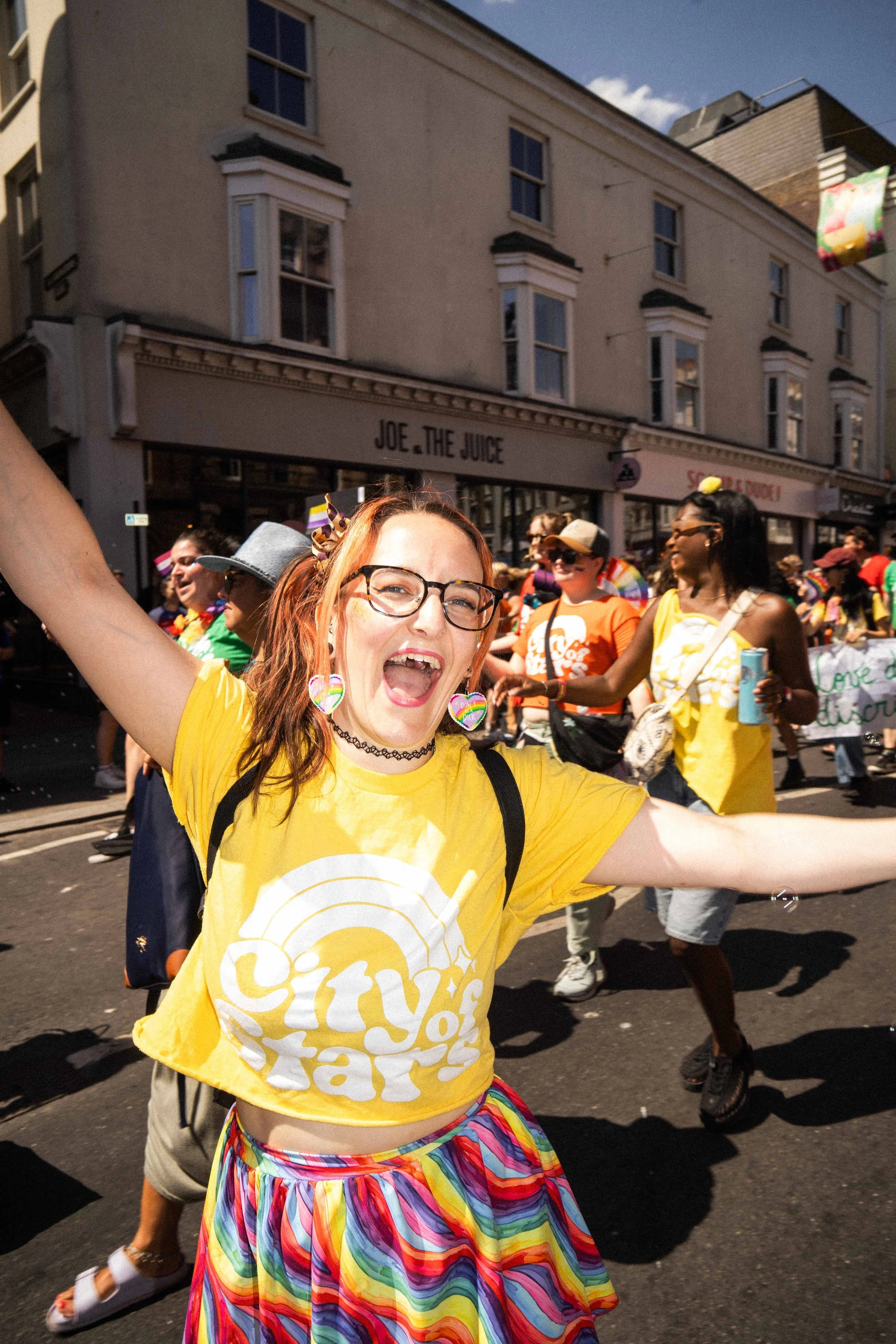
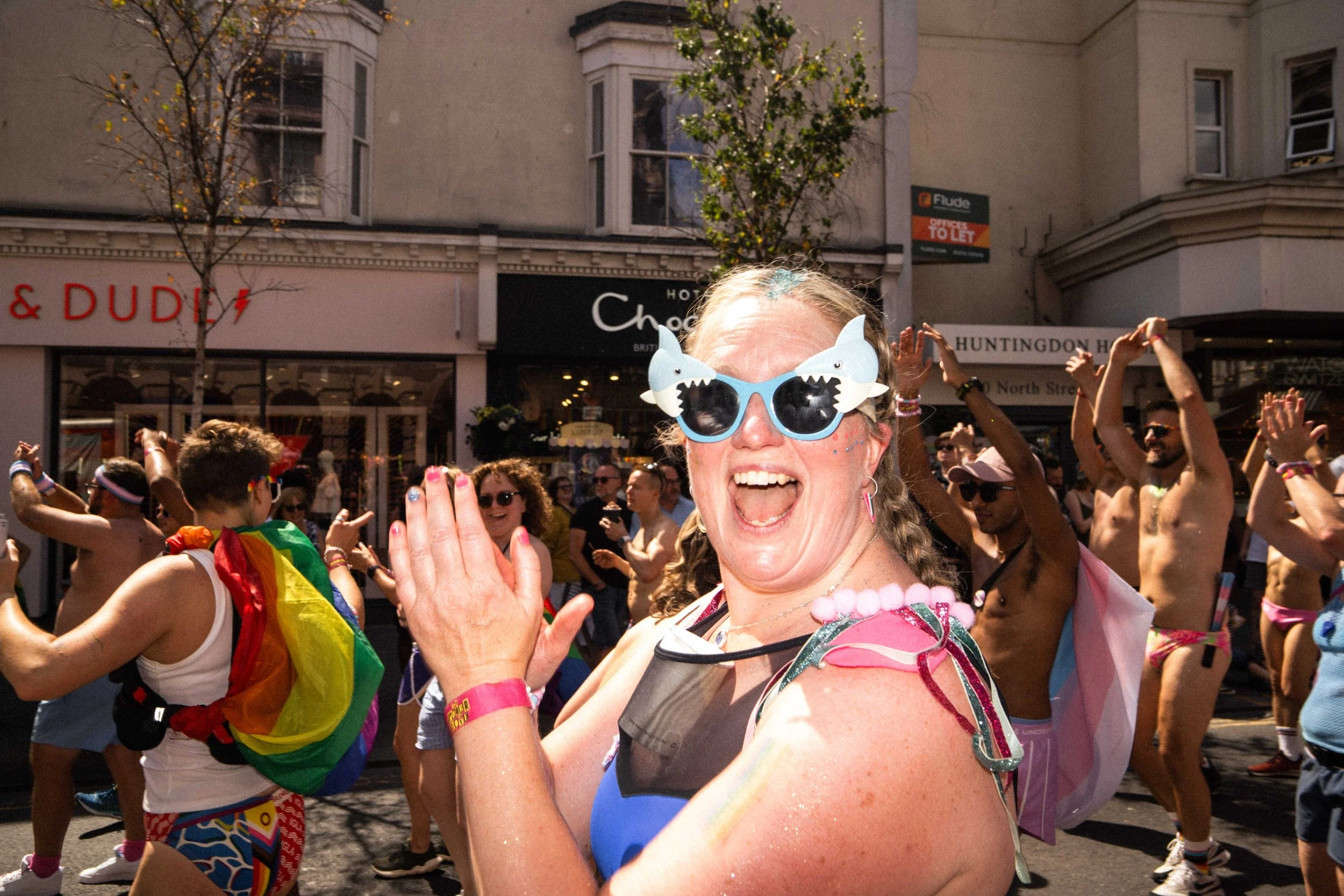
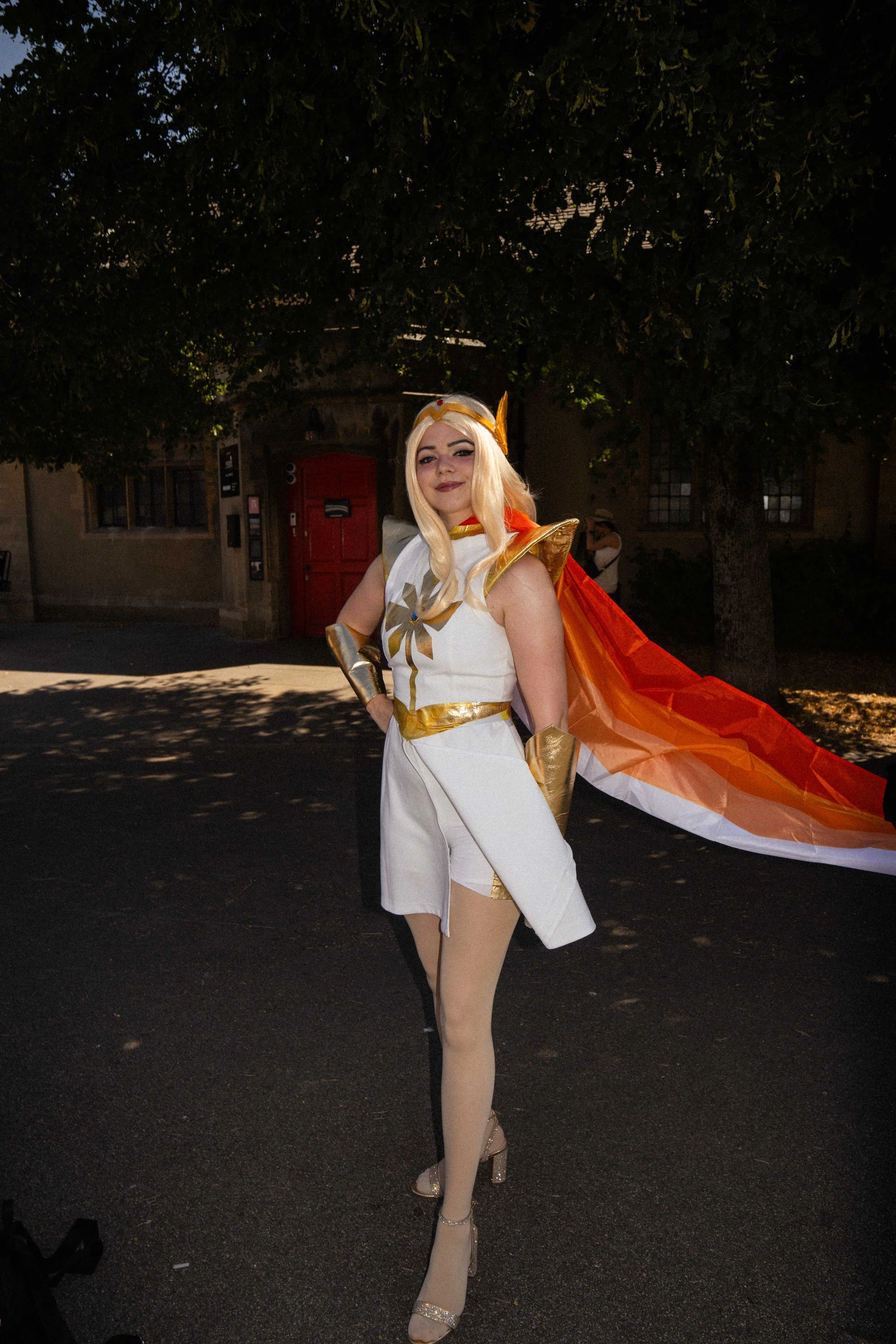
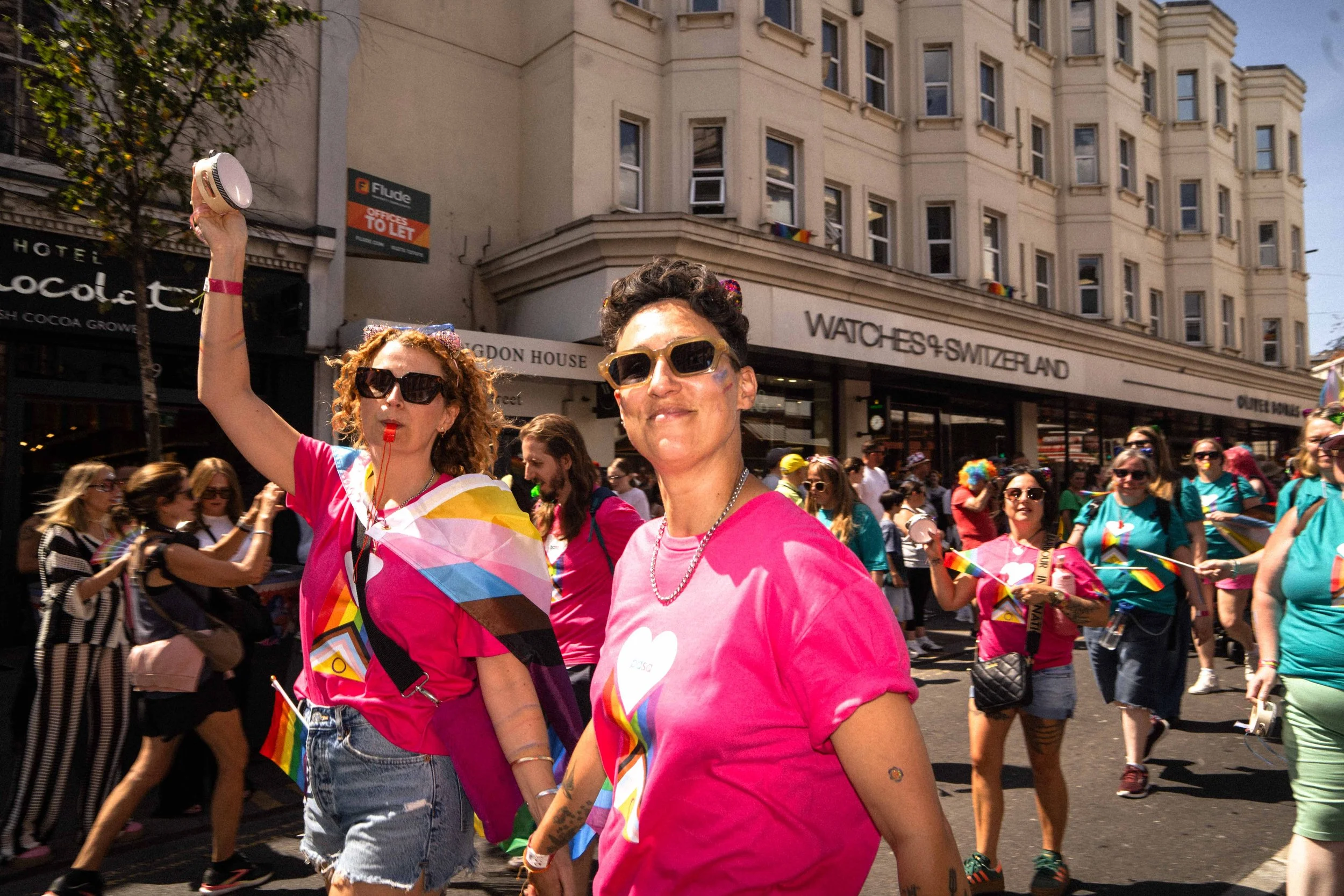
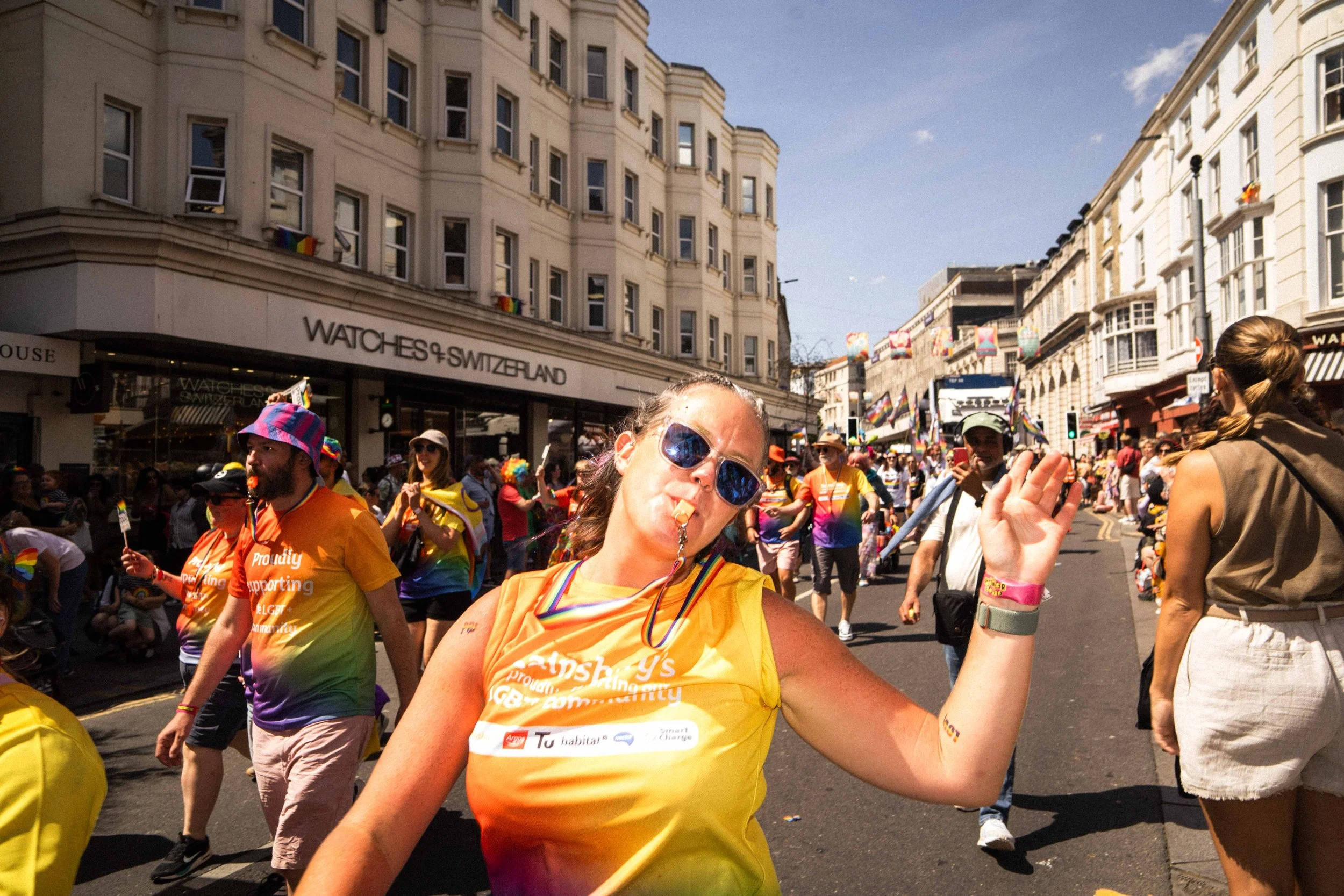
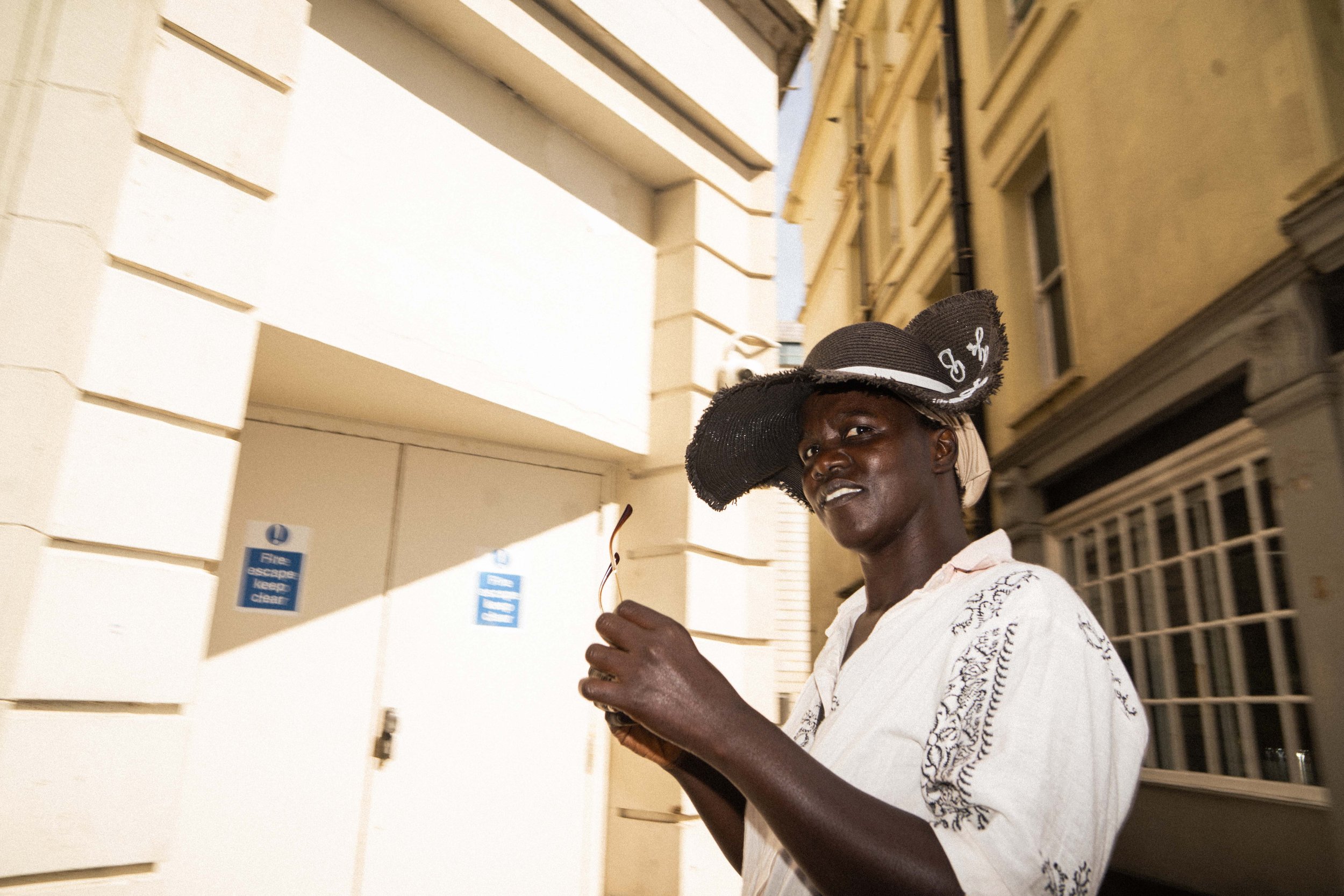
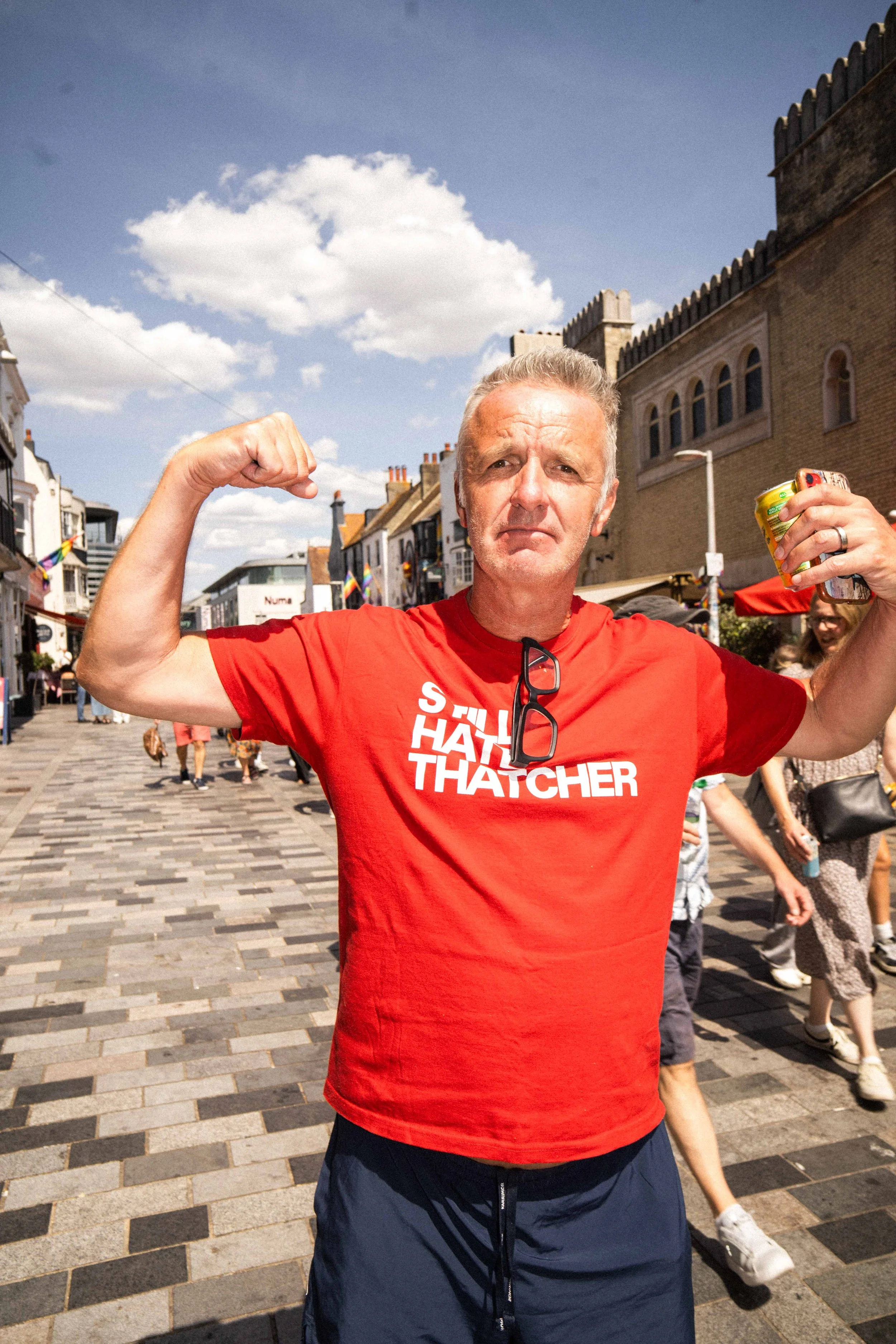
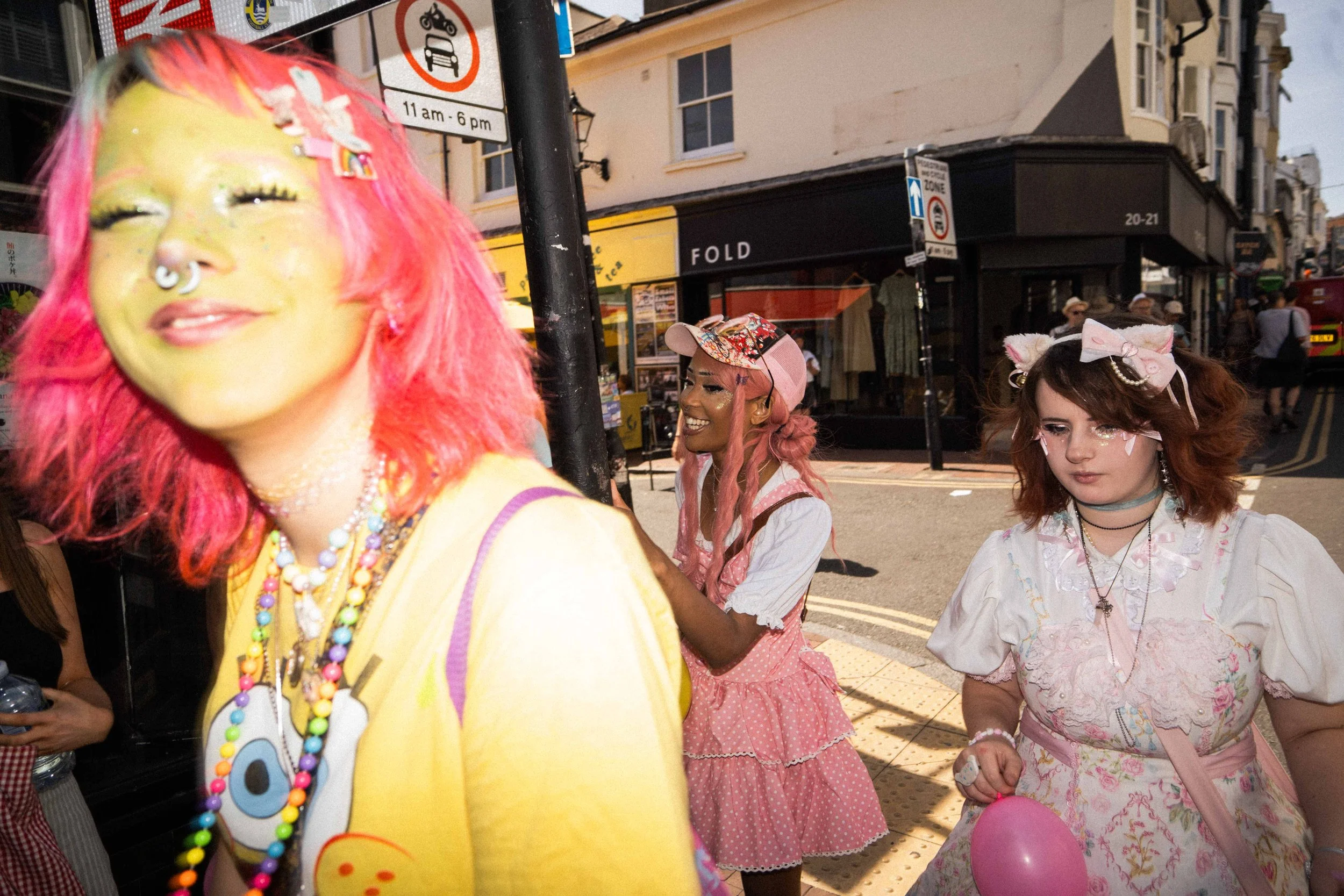
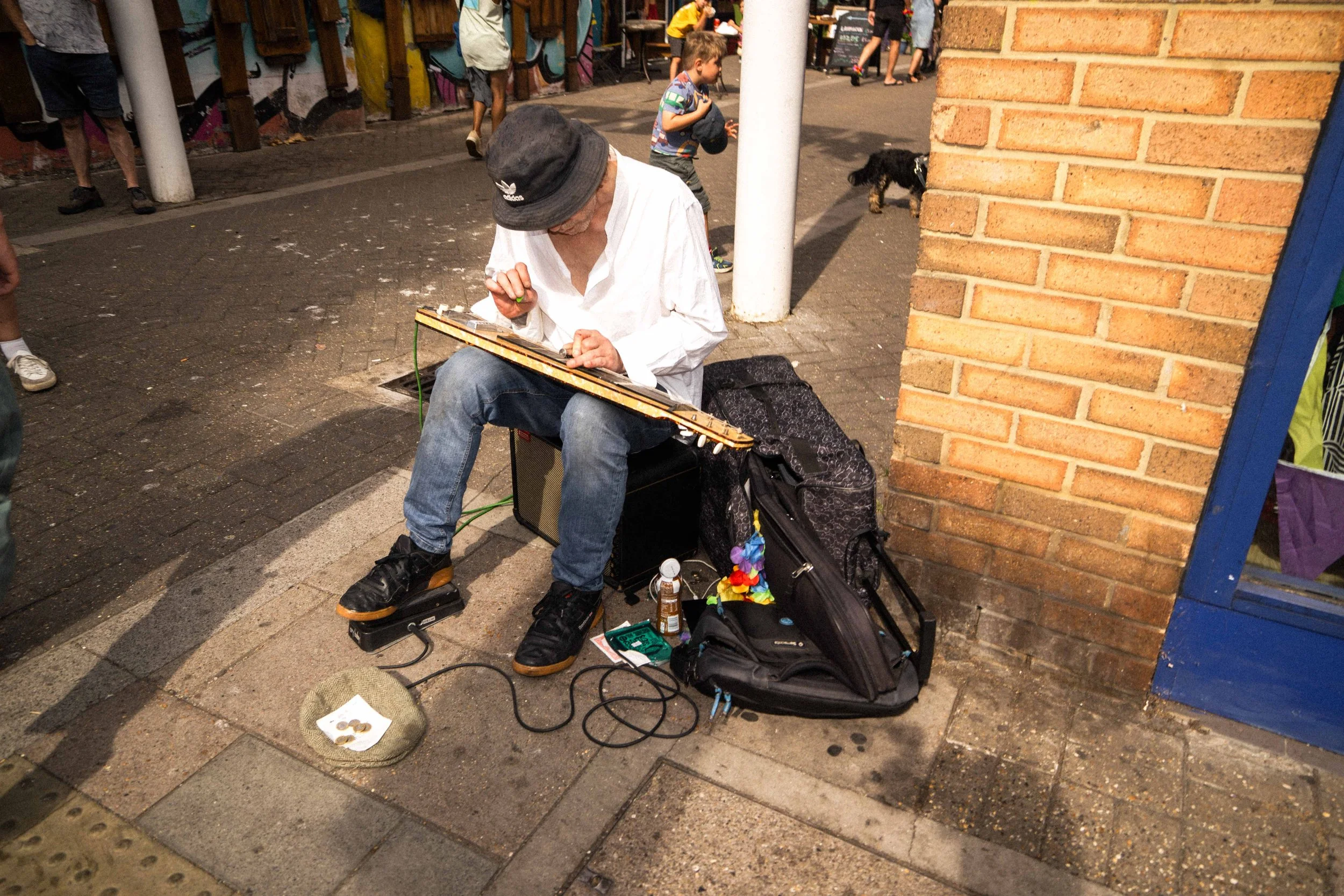
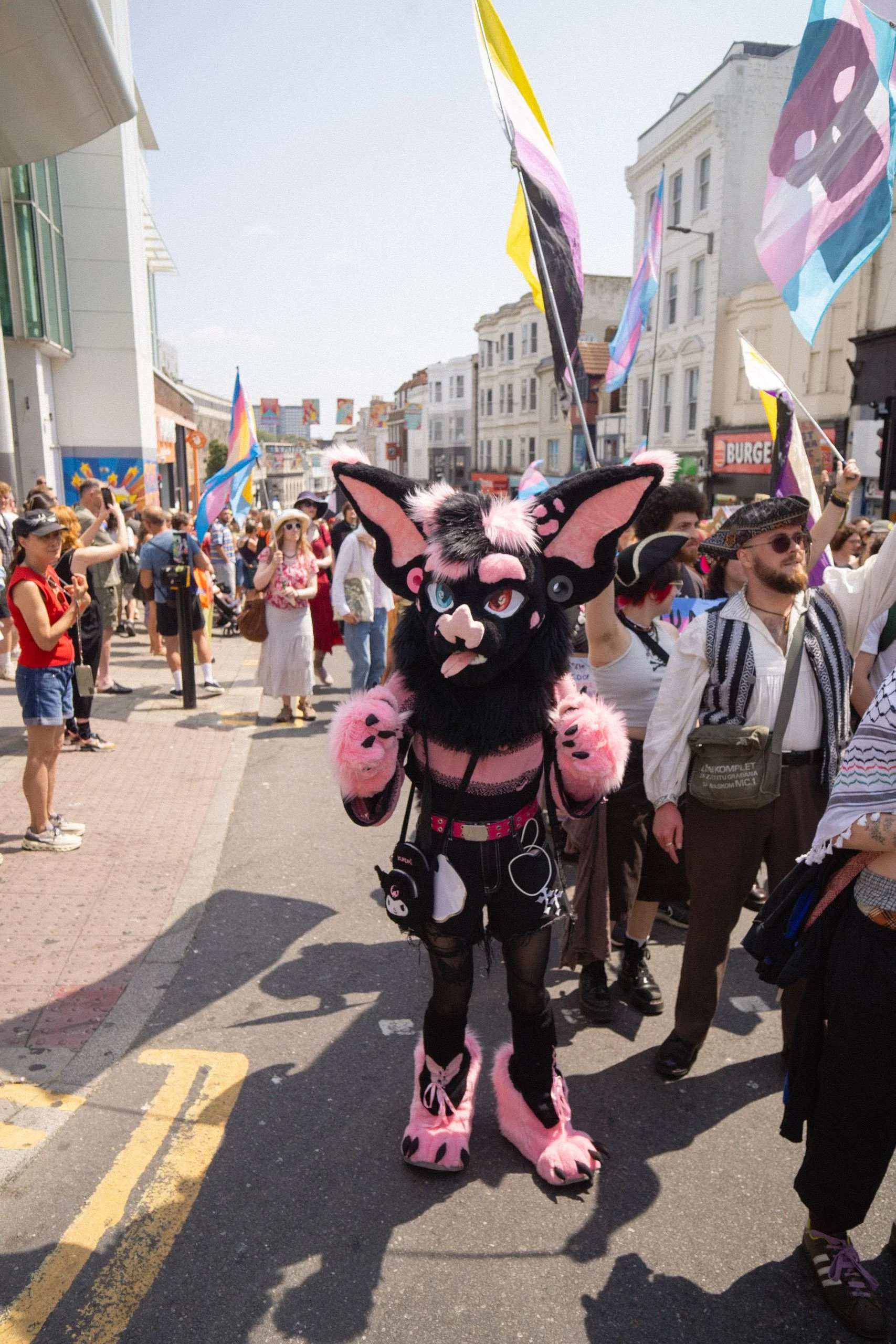
This year I came with something new in my bag: a Godox IM30 manual flash. First outing. The plan was to use it for daylight street portraits — shooting with my Sony A7 III and a 24mm lens — and the discipline it imposed was immediate and unforgiving. To get the flash working properly, I needed to be between six and nine feet from my subject. No hanging back. No safety of distance. Right in, close, direct.
It is, to put it plainly, quite an intimate way to photograph strangers.
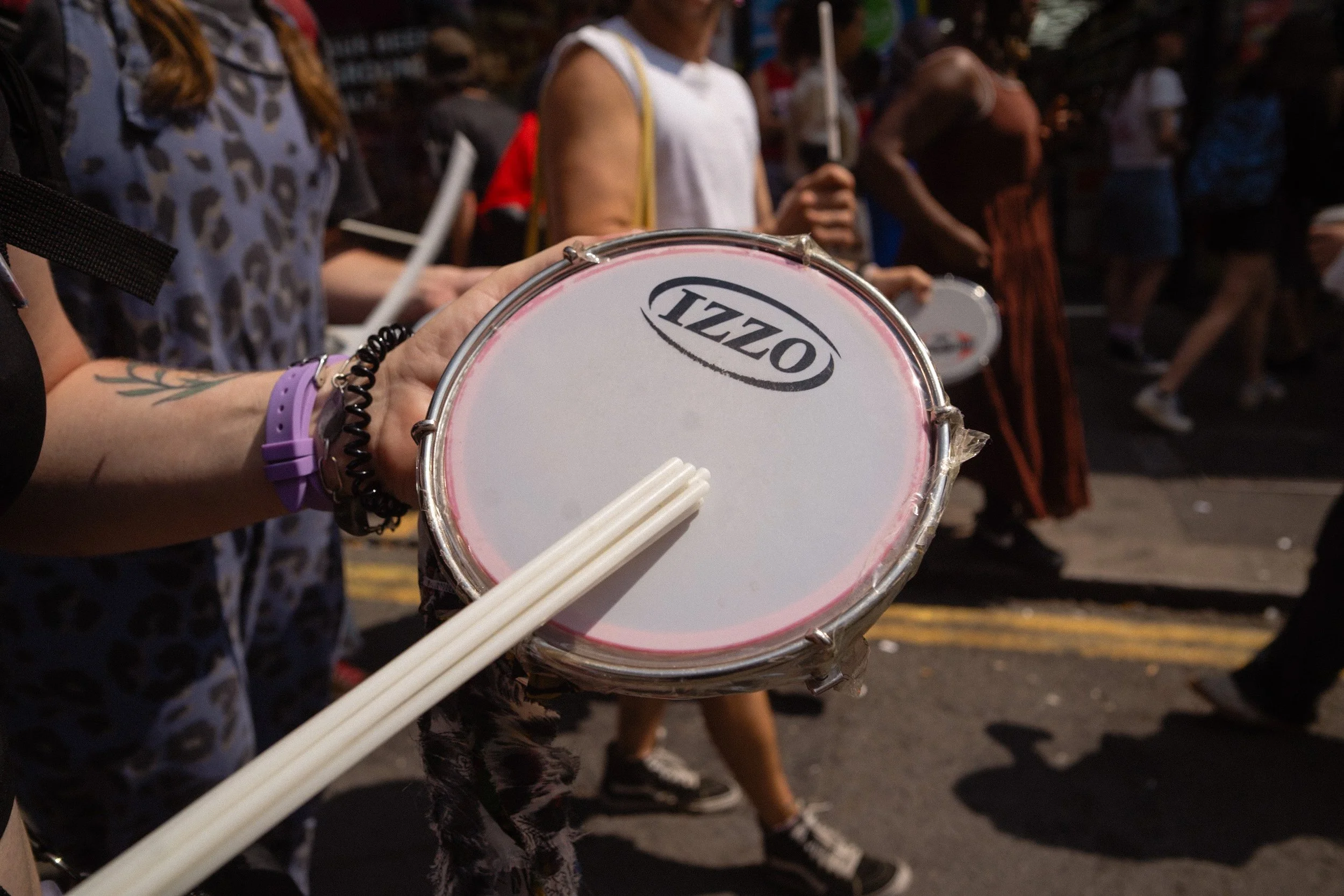
What surprised me was how it was received. At an event like Pride, where self-expression is the whole point, people understood the camera. They gave me their time. They gave me their faces. They stood still for a moment in the middle of a moving crowd and let the flash do its thing.
In my eyes, the flash added an extra ray of sunshine to what was already a glorious day.
The World Came to Brighton
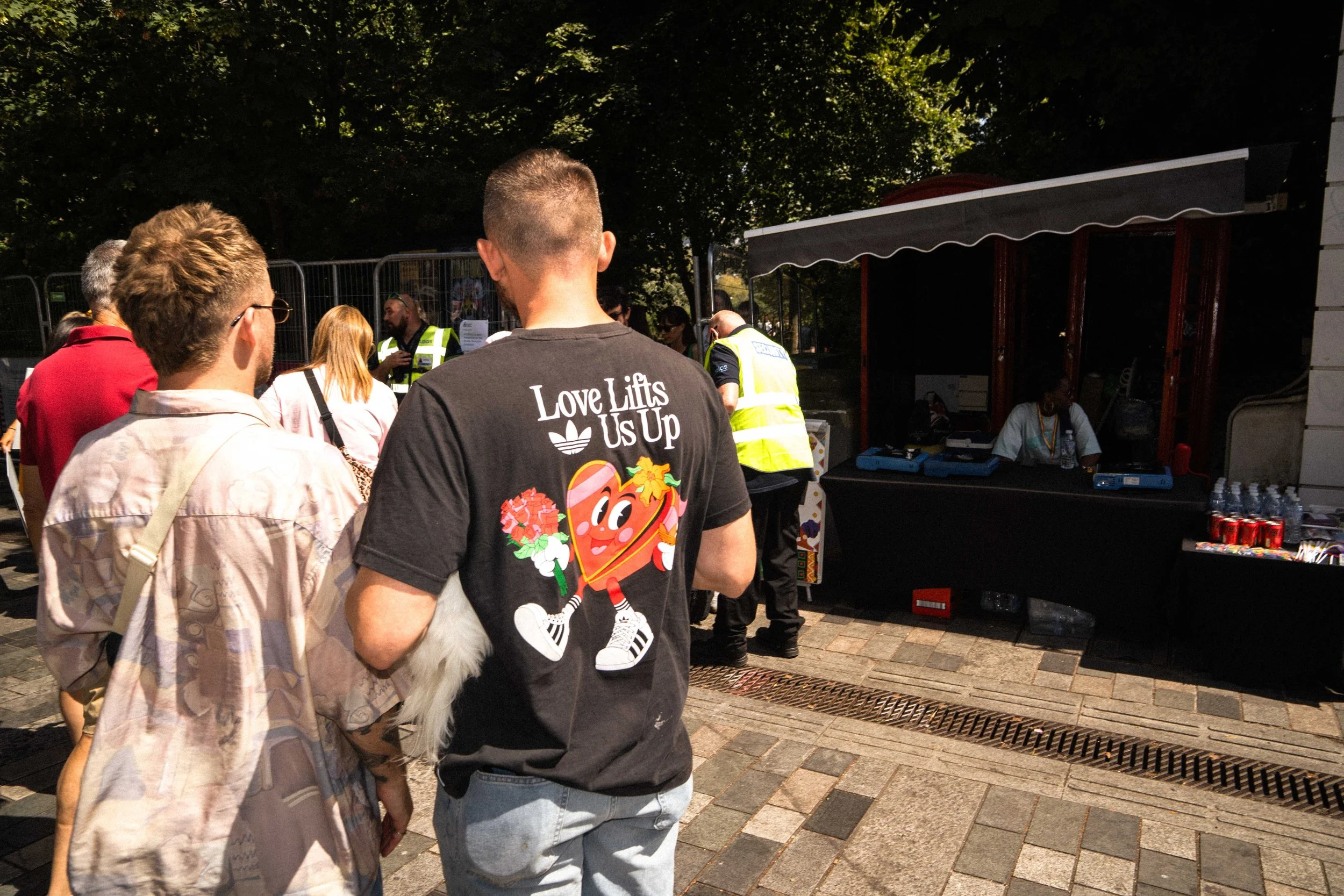
This year's Pride carried a weight that last year's didn't. In the background — not spoken about loudly, but present — was the shadow of the terror attacks in Berlin. The police presence was visible and increased. Security was tighter. You noticed it if you were looking.
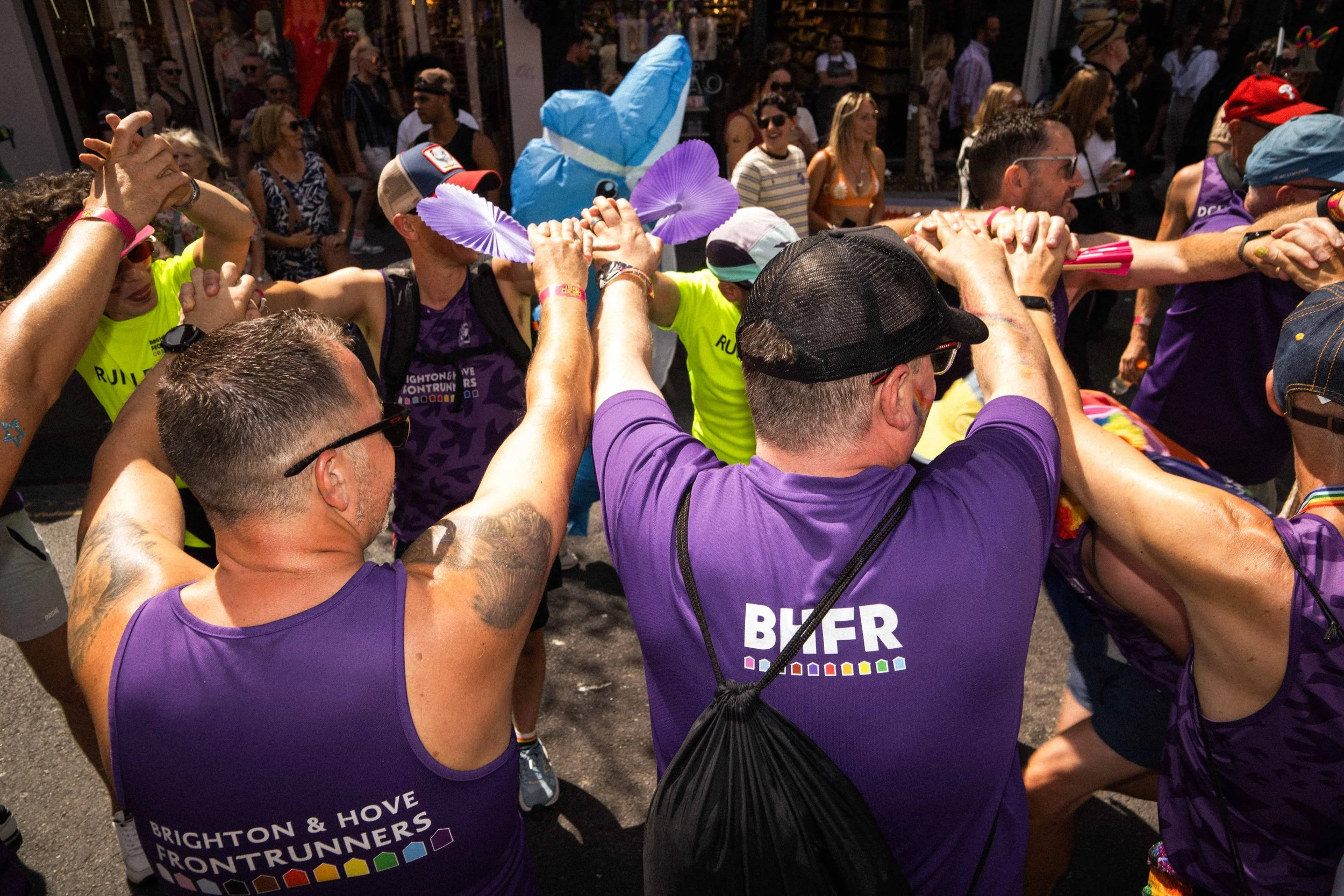
And yet the crowd filled the streets regardless. That is not naivety — it is something closer to defiance, or perhaps just determination. The people who come to Brighton Pride have usually decided, in one way or another, that they are not going to let fear dictate where they stand.
The sun helped. It is hard to feel anything but alive in that kind of heat, in that kind of crowd, with that much colour moving through the streets.
Brighton, After Twelve Years
I have lived in Brighton for twelve years. My children, who are now nineteen and twenty-three, grew up here. I have watched this city shape them in ways I couldn't have planned, and I remain grateful for it every time I walk these streets.
After the parade, my son and I had a wander. No agenda — just the two of us, a beer somewhere, a bite to eat. The kind of afternoon that doesn't photograph well but stays with you.
Brighton is a wonderful place to bring up children. It teaches them, early and without fuss, that the world contains more kinds of people than they will ever be able to count — and that this is not something to be afraid of. It is something to be curious about.
That is what I was doing on Saturday with the Godox IM30. Being curious. Getting close. Asking people, with a camera and a flash and six to nine feet of space between us, if they'd give me a moment.
Almost everyone said yes.
Until next time, keep snapping
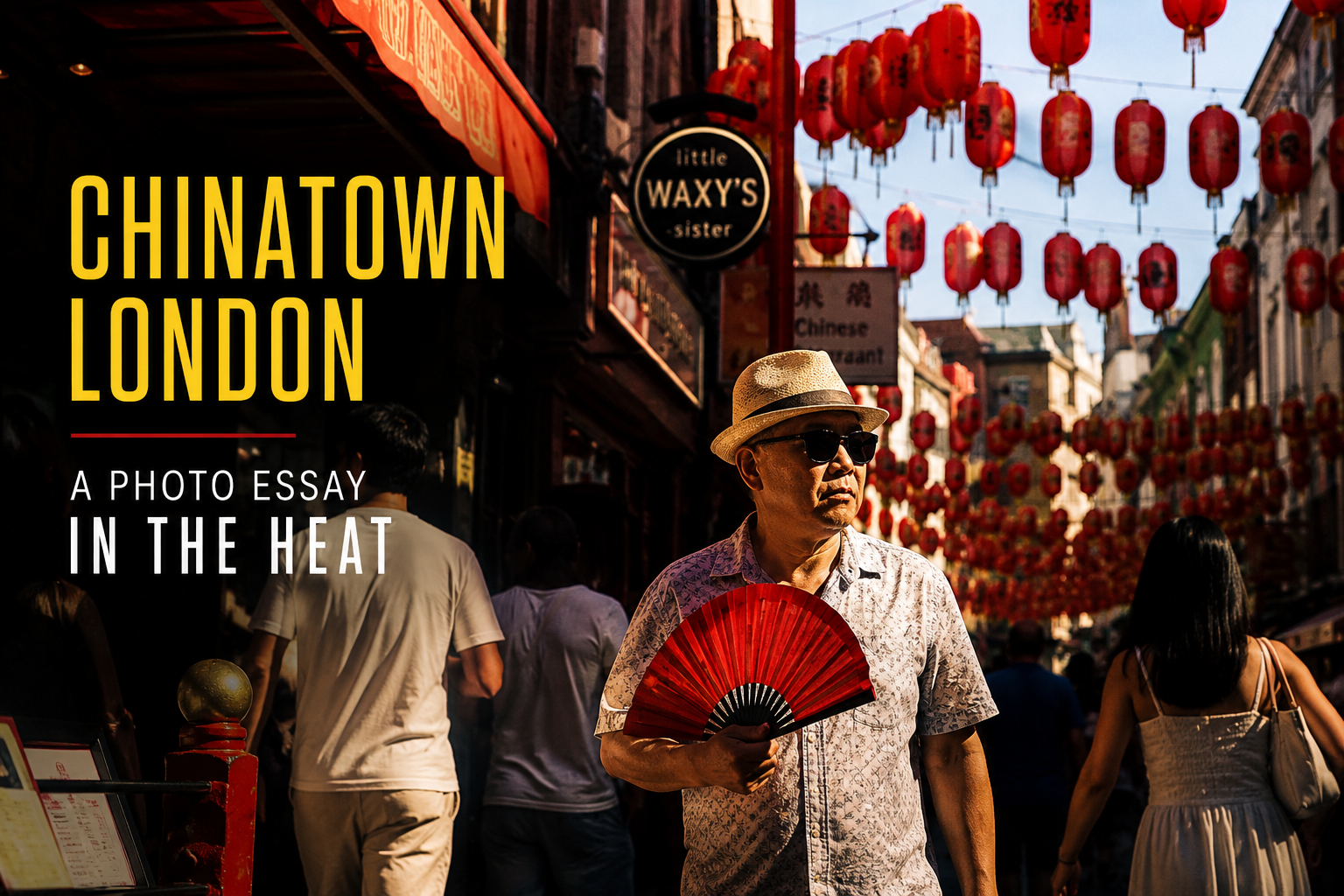
Chinatown, London - A photo essay in the heat.
We weren't in London for photography. We were there for a passport office.
My son's emergency passport appointment had us waiting around central London yesterday, in the kind of heat that makes the pavement shimmer. With time to kill and nowhere in particular to be, we drifted into Chinatown. No plan, no theme — just a Leica M10 round my neck and a DJI Nano tucked in my pocket for something faster and looser, a short-form POV video to go alongside the stills.
A Different Kind of Errand
There's a particular restlessness to killing time in a city. You're not shooting a project, you're just present, camera in hand, waiting to see what the street hands you. Chinatown handed us plenty.
We weren't in London for photography. We were there for a passport office.
My son's emergency passport appointment had us waiting around central London yesterday, in the kind of heat that makes the pavement shimmer. With time to kill and nowhere in particular to be, we drifted into Chinatown. No plan, no theme — just a Leica M10 round my neck and a DJI Nano tucked in my pocket for something faster and looser, a short-form POV video to go alongside the stills.
A Different Kind of Errand
There's a particular restlessness to killing time in a city. You're not shooting a project, you're just present, camera in hand, waiting to see what the street hands you. Chinatown handed us plenty.
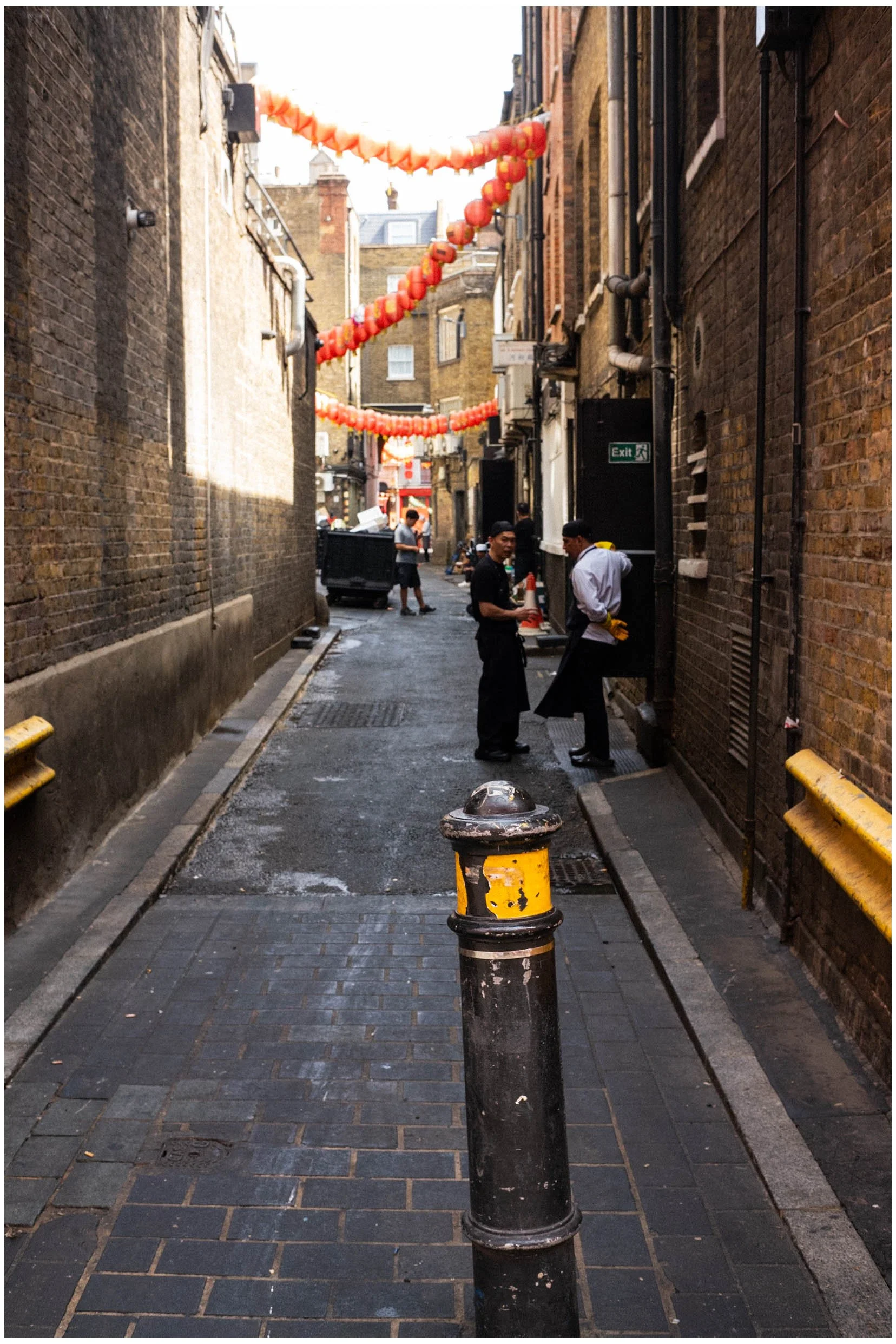
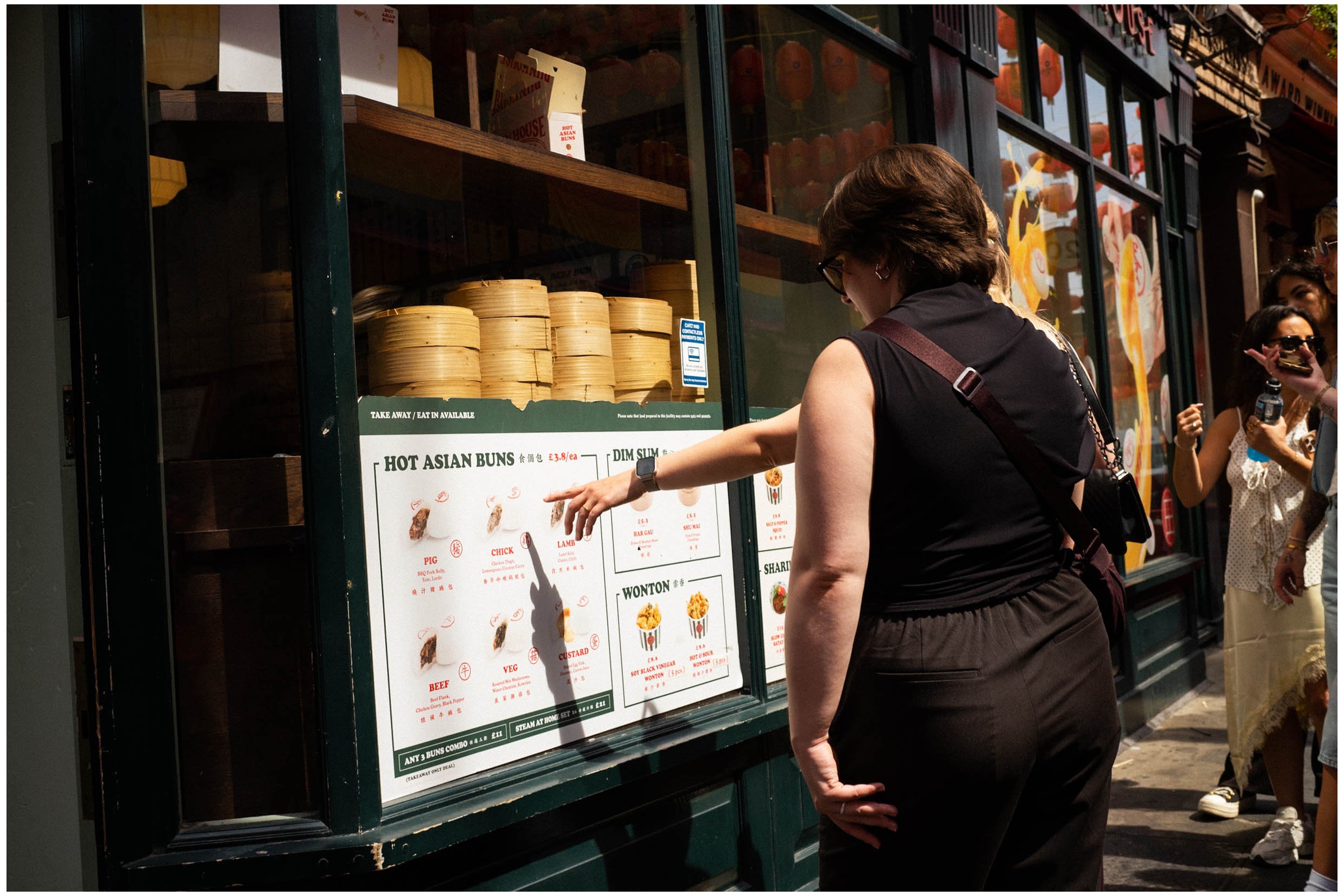
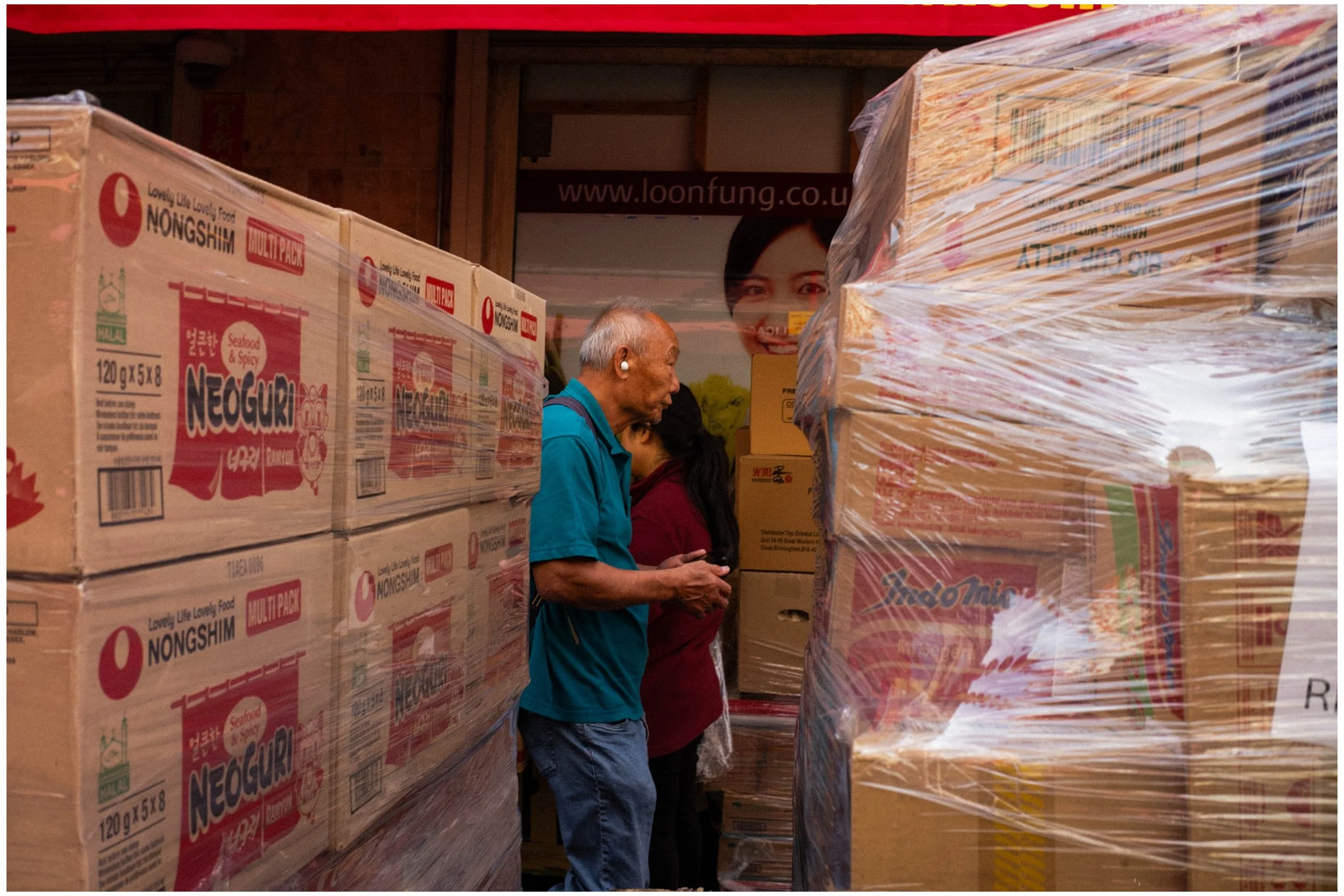
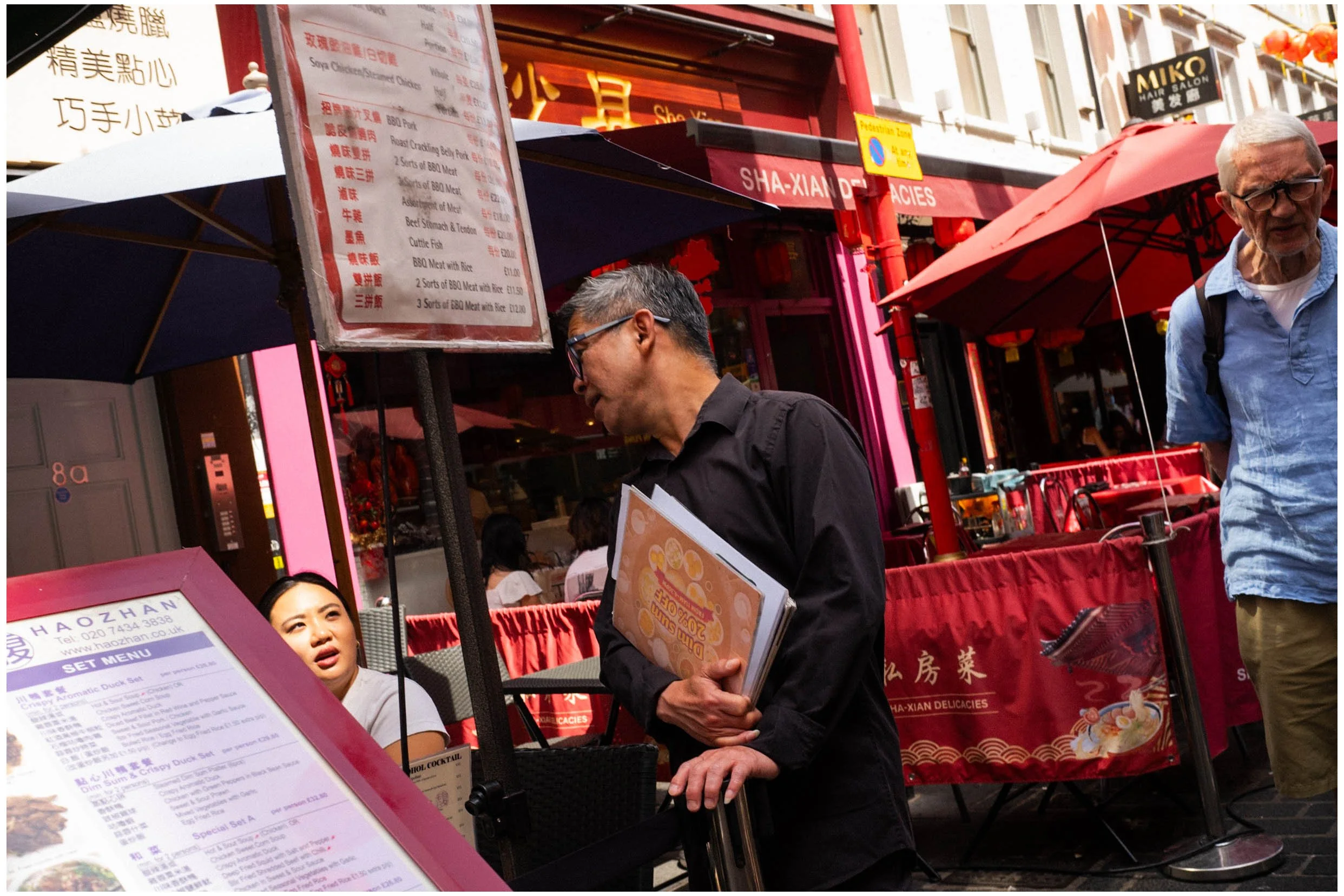
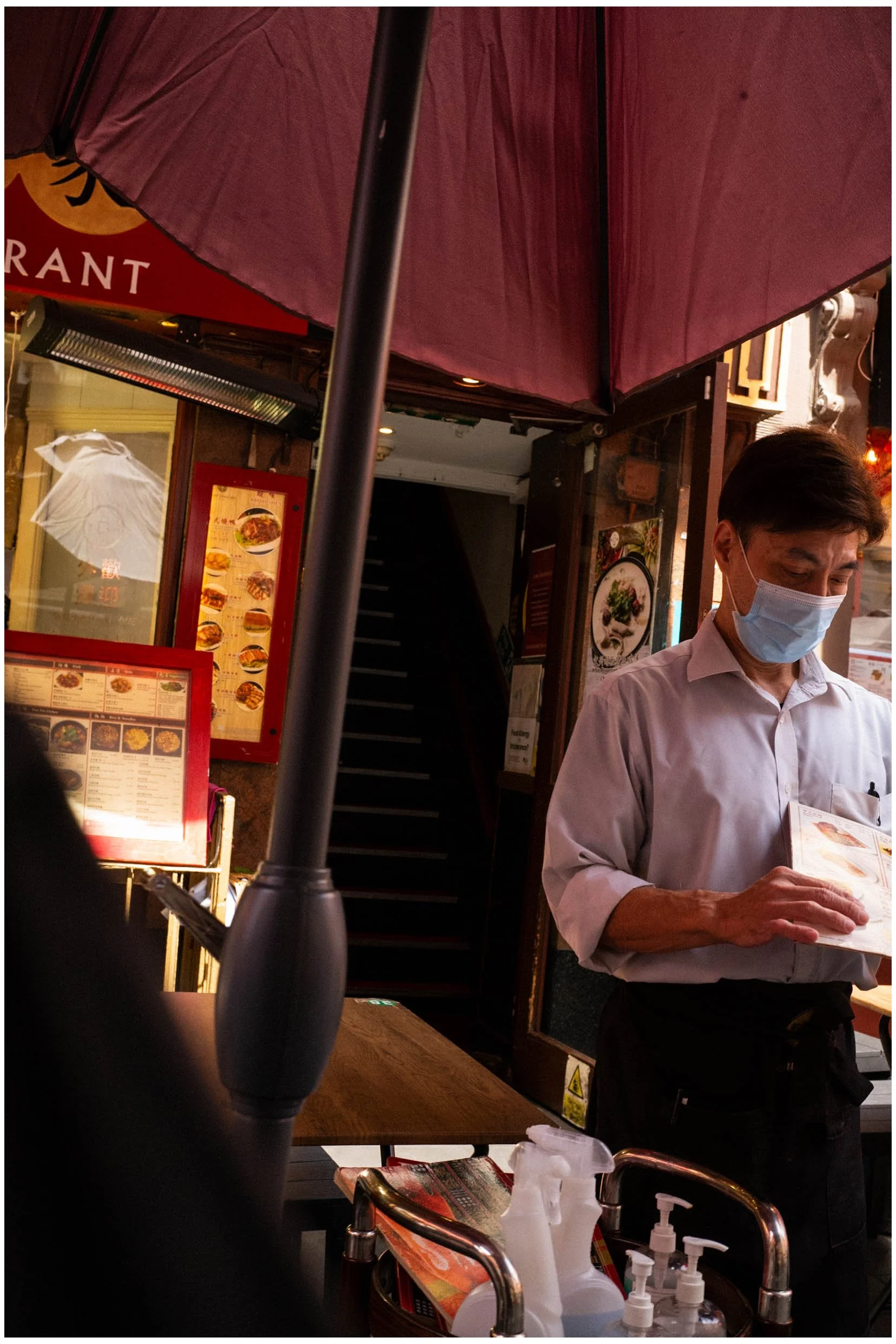
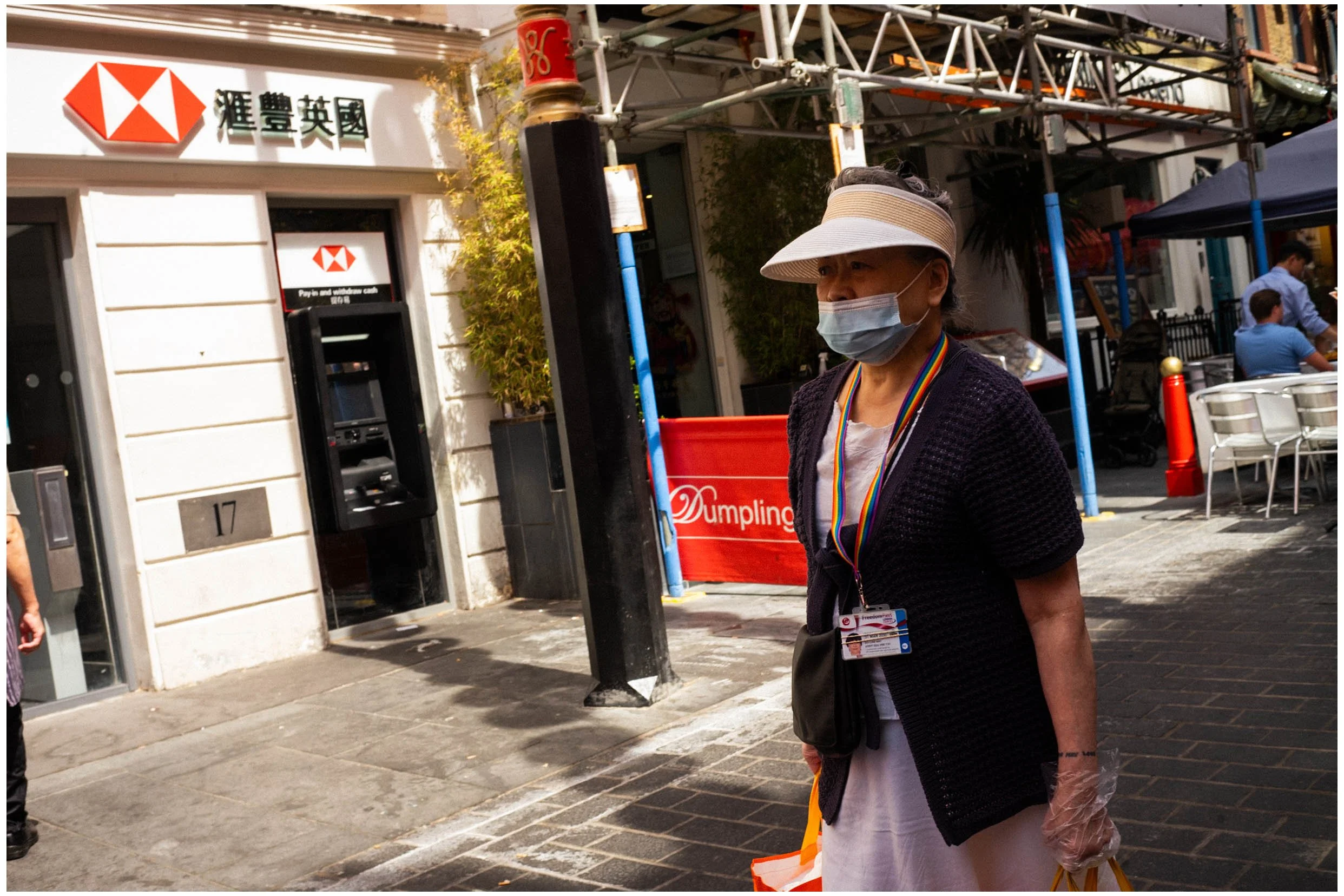
The heat had a way of slowing everyone down and speeding the street up at the same time — lanterns hanging still in windless air, awnings throwing hard shadows across the pavement, and underneath it all the usual London churn: delivery bikes, market stalls, tourists, locals, everyone moving through the same few hundred metres of Gerrard Street for entirely different reasons.
It was a hive of activity, and every corner of the world seemed to be represented in it.
Four Corners, One Street
That's really what stayed with me. Chinatown isn't just Chinese — it's a compression of the whole city into a handful of streets. Cantonese and Mandarin over the counters, but also Spanish, Italian, Japanese, half a dozen accents I couldn't place, all folding into each other in the queue for bubble tea or the doorway of a dim sum spot. Nobody there was performing London. They were just living in it, in whatever language and however they'd carried it with them.
That's the bit of this country I never stop being grateful for. You don't have to go looking for the world — in a place like this, it comes to you, and it does so without ceremony.
Shooting Loose
The M10 did what it always does — quiet, quick, unobtrusive, good in the kind of scattered light you get under those red arches. But the Nano was the more interesting exercise. Shooting POV, low and close, running alongside the stills rather than instead of them, gave a different texture entirely — less considered, more immediate, closer to how the afternoon actually felt than any single frame could manage on its own.
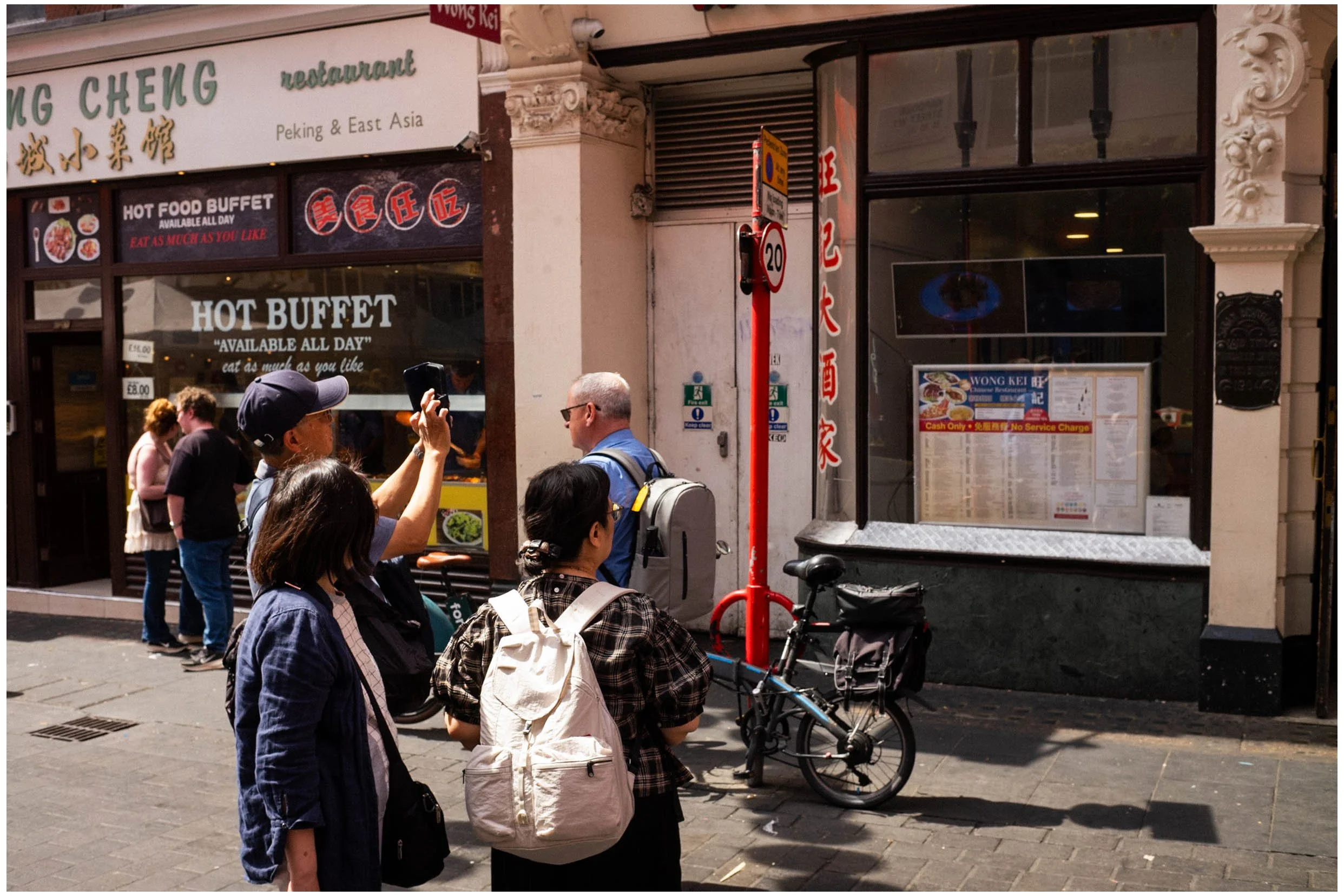
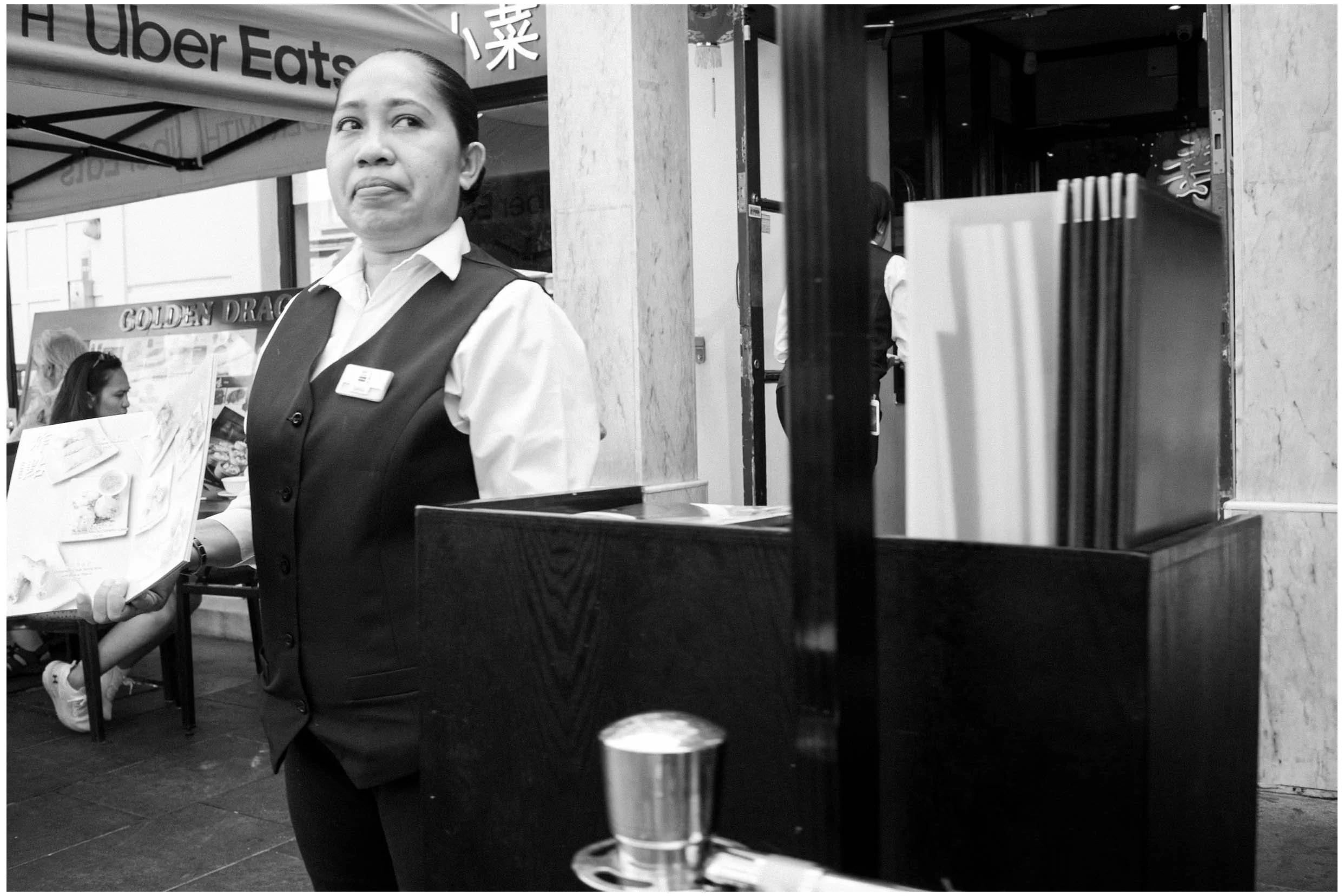
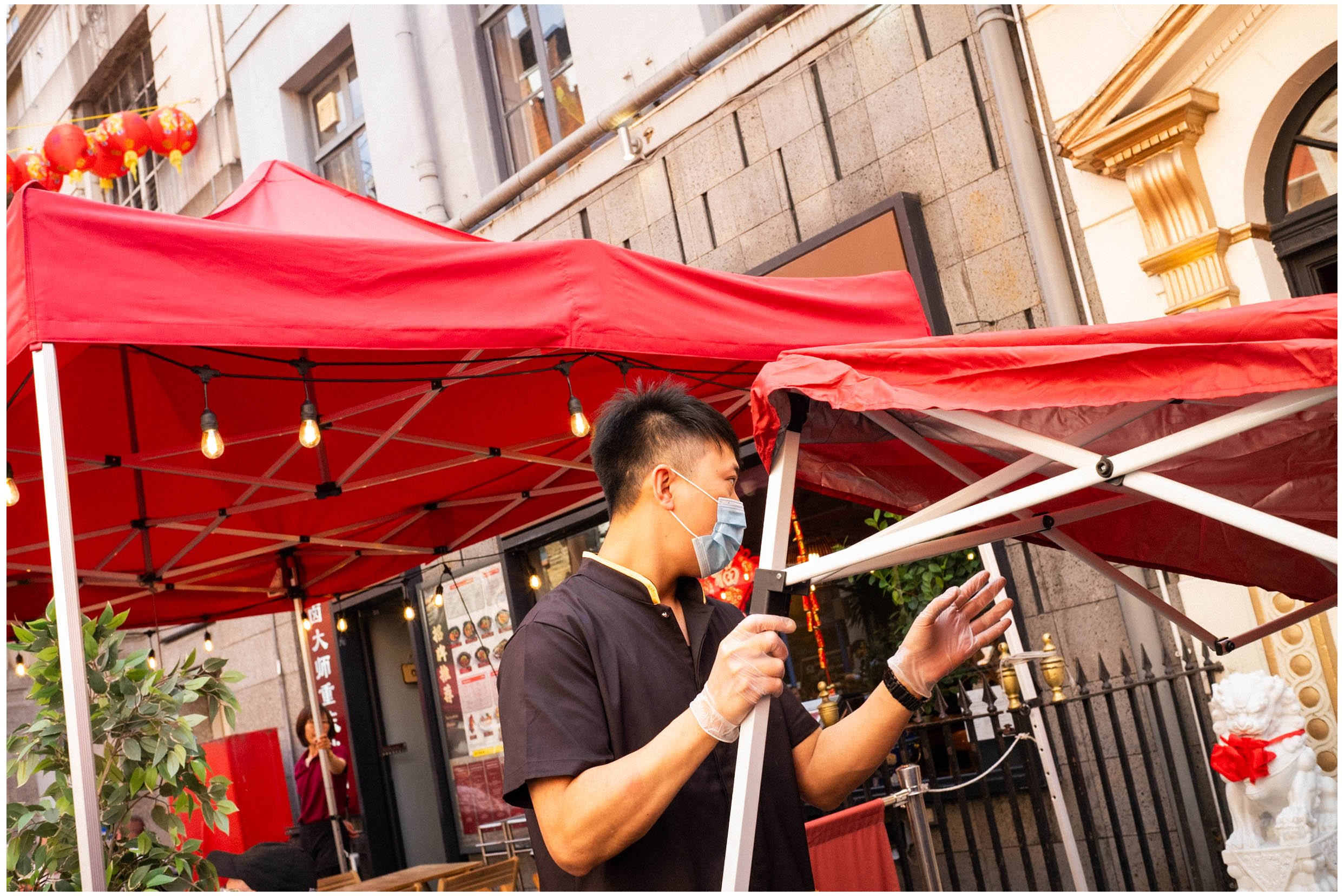
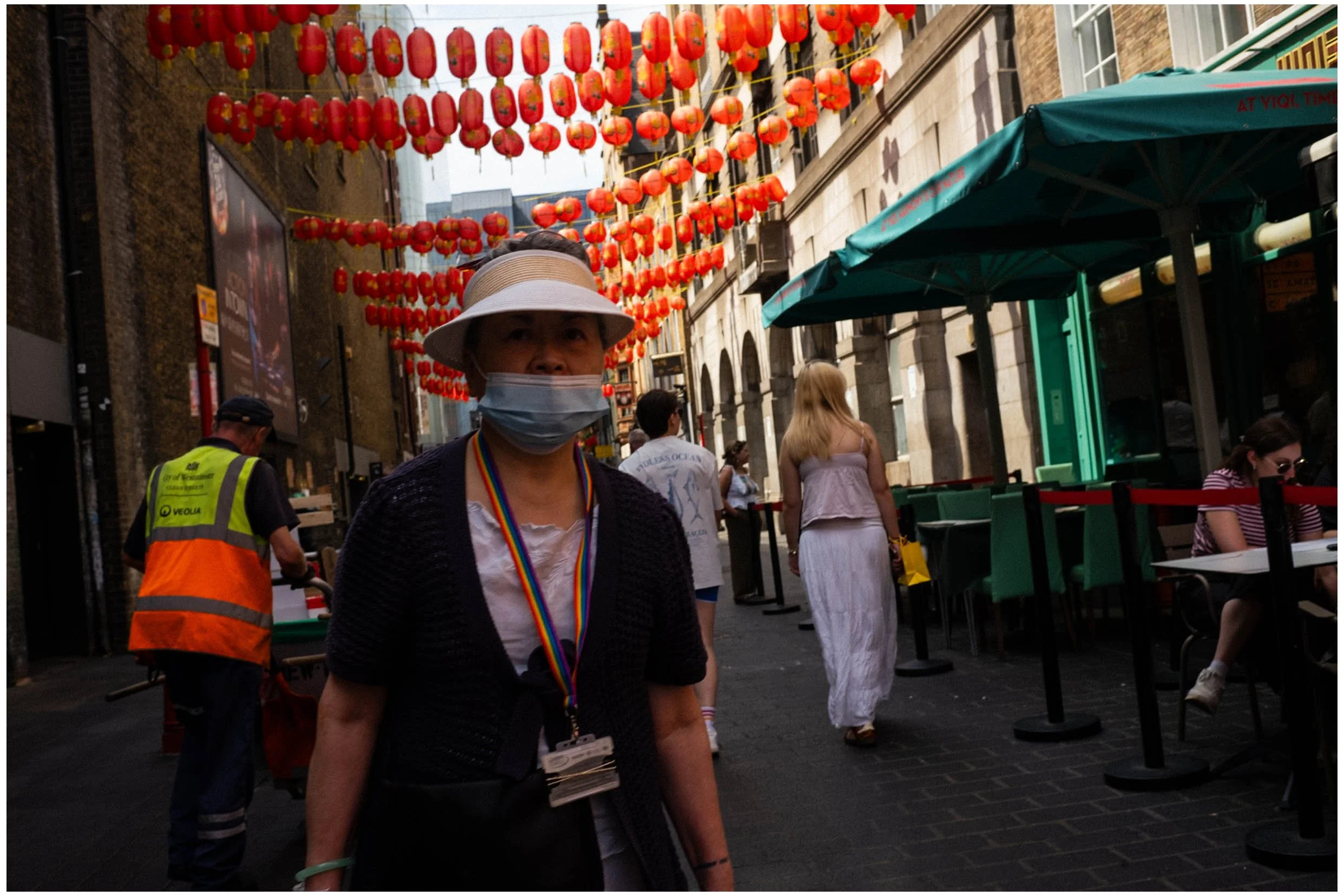
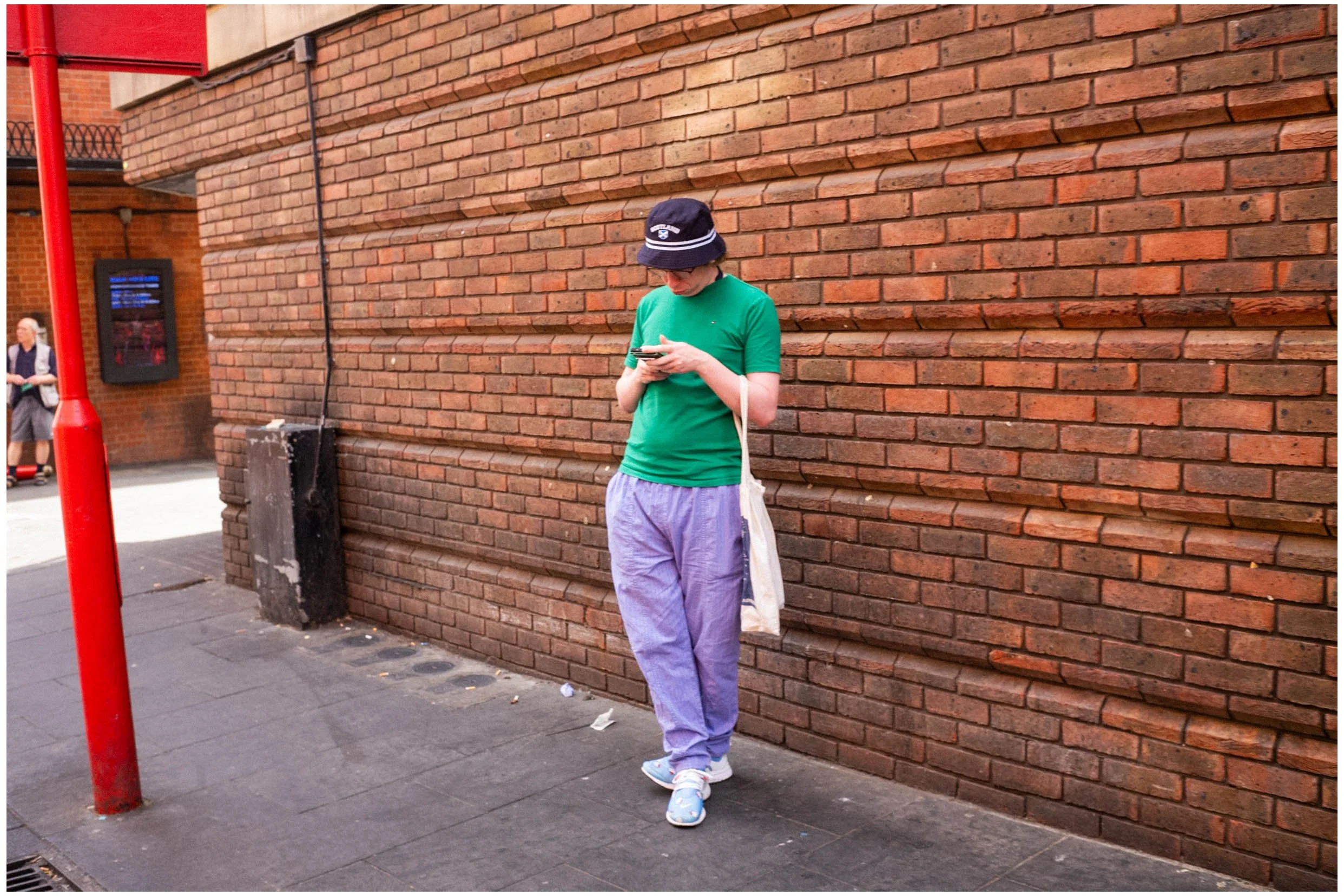
No theme, no brief, no real intention beyond paying attention. Sometimes that's the whole job.
Until next time, keep snapping.
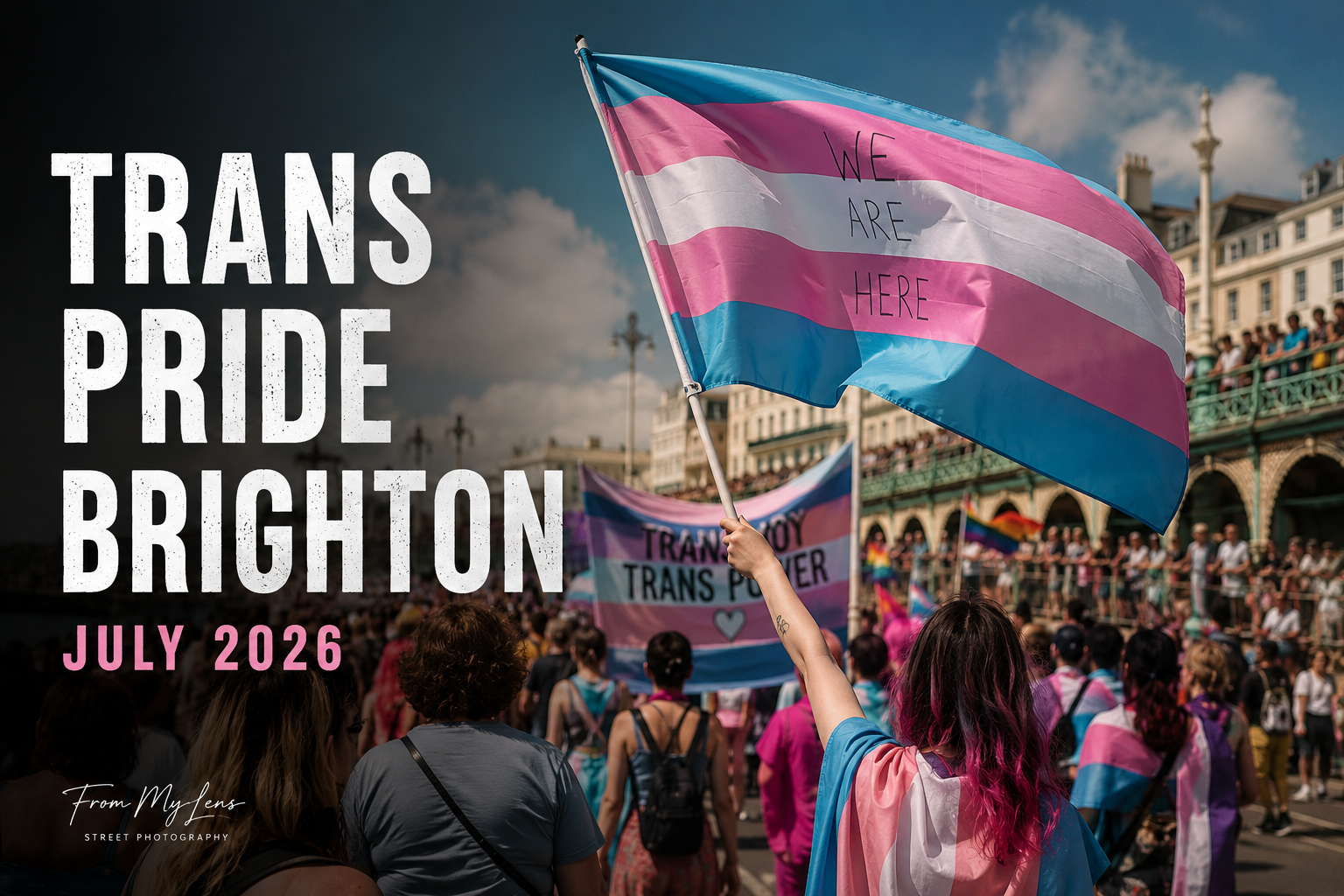
Trans Pride Brighton, July 2026
A Chilled Day. An Unchilled Moment.
Why Brighton
There are cities that tolerate difference and cities that are built from it. Brighton is the latter.
It has been a refuge and a gathering point for LGBTQ+ communities for decades — longer than most of the legislation designed to protect them. The Kemptown scene, the annual Pride in August, the sheer density of queer life woven into the fabric of the place. Brighton doesn't perform acceptance. It simply gets on with it.
A Chilled Day. An Unchilled Moment.
Why Brighton
There are cities that tolerate difference and cities that are built from it. Brighton is the latter.
It has been a refuge and a gathering point for LGBTQ+ communities for decades — longer than most of the legislation designed to protect them. The Kemptown scene, the annual Pride in August, the sheer density of queer life woven into the fabric of the place. Brighton doesn't perform acceptance. It simply gets on with it.
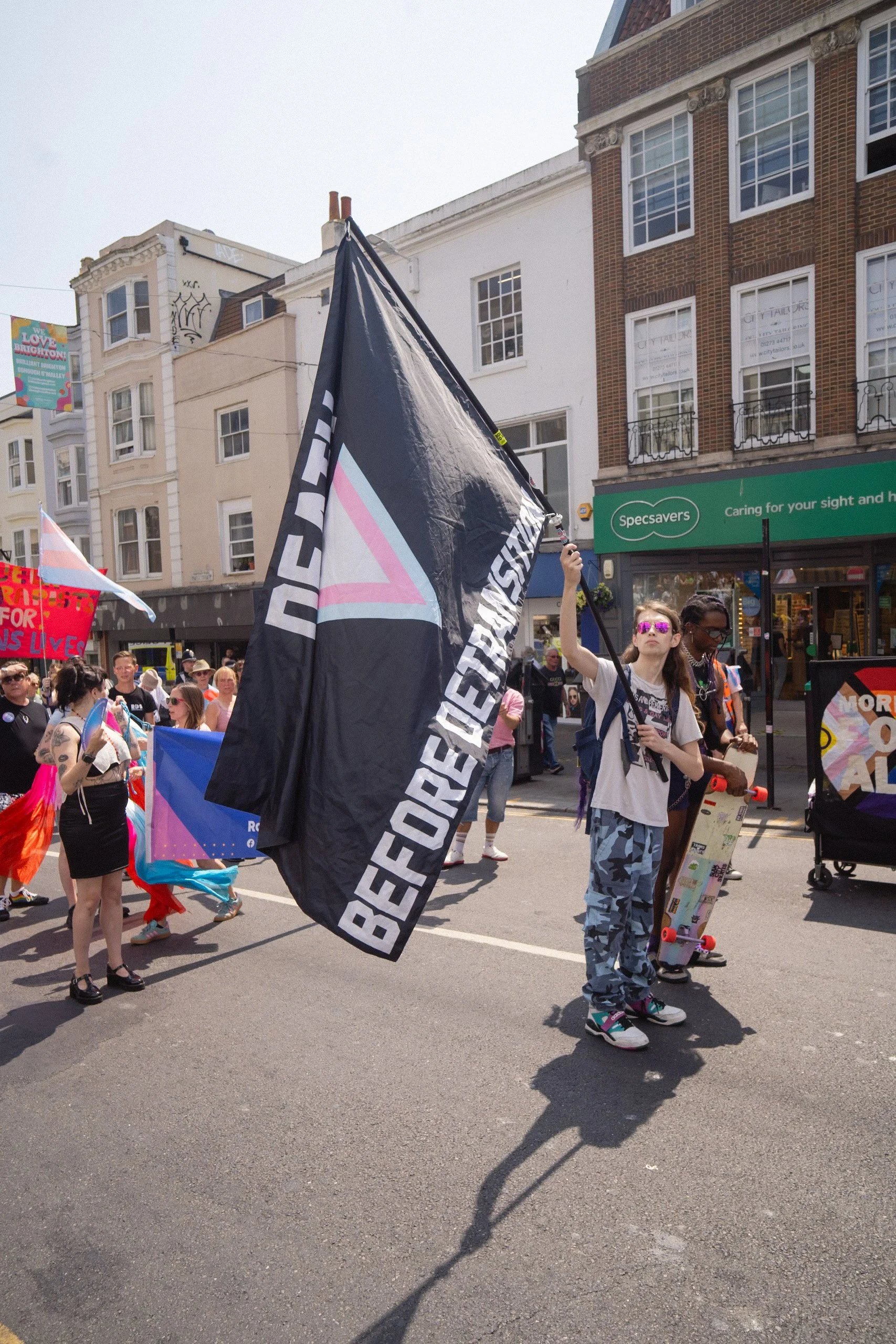
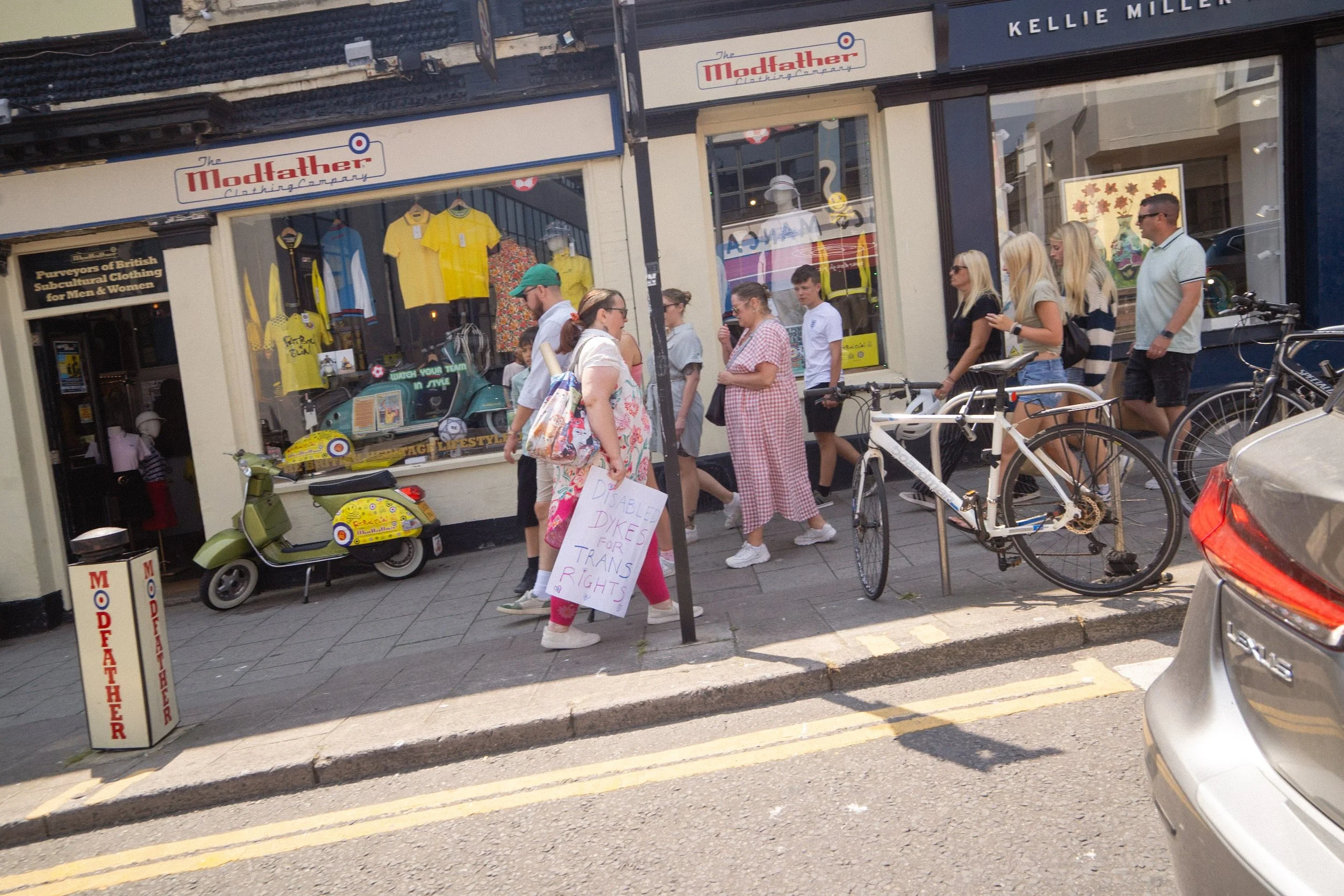
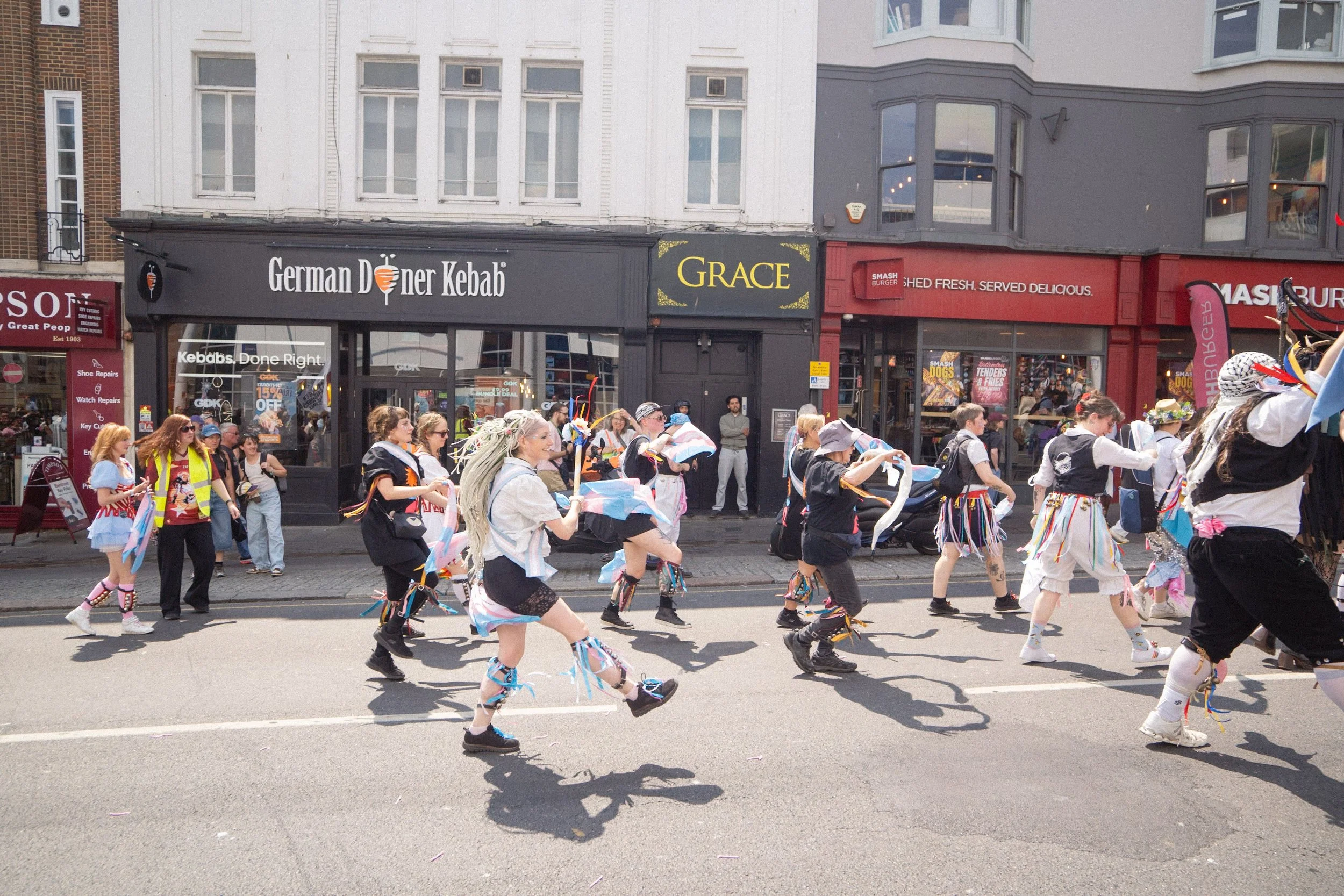
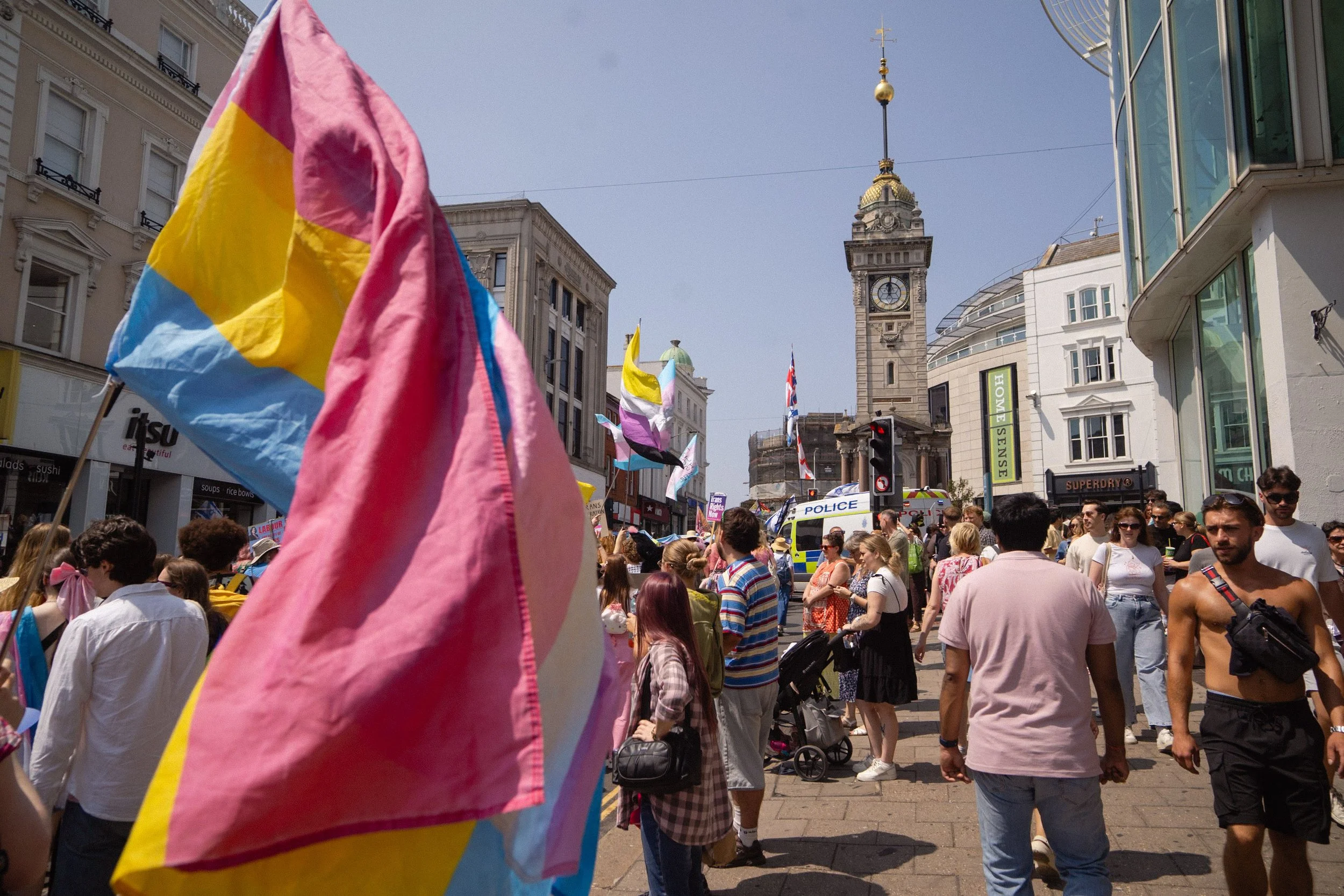
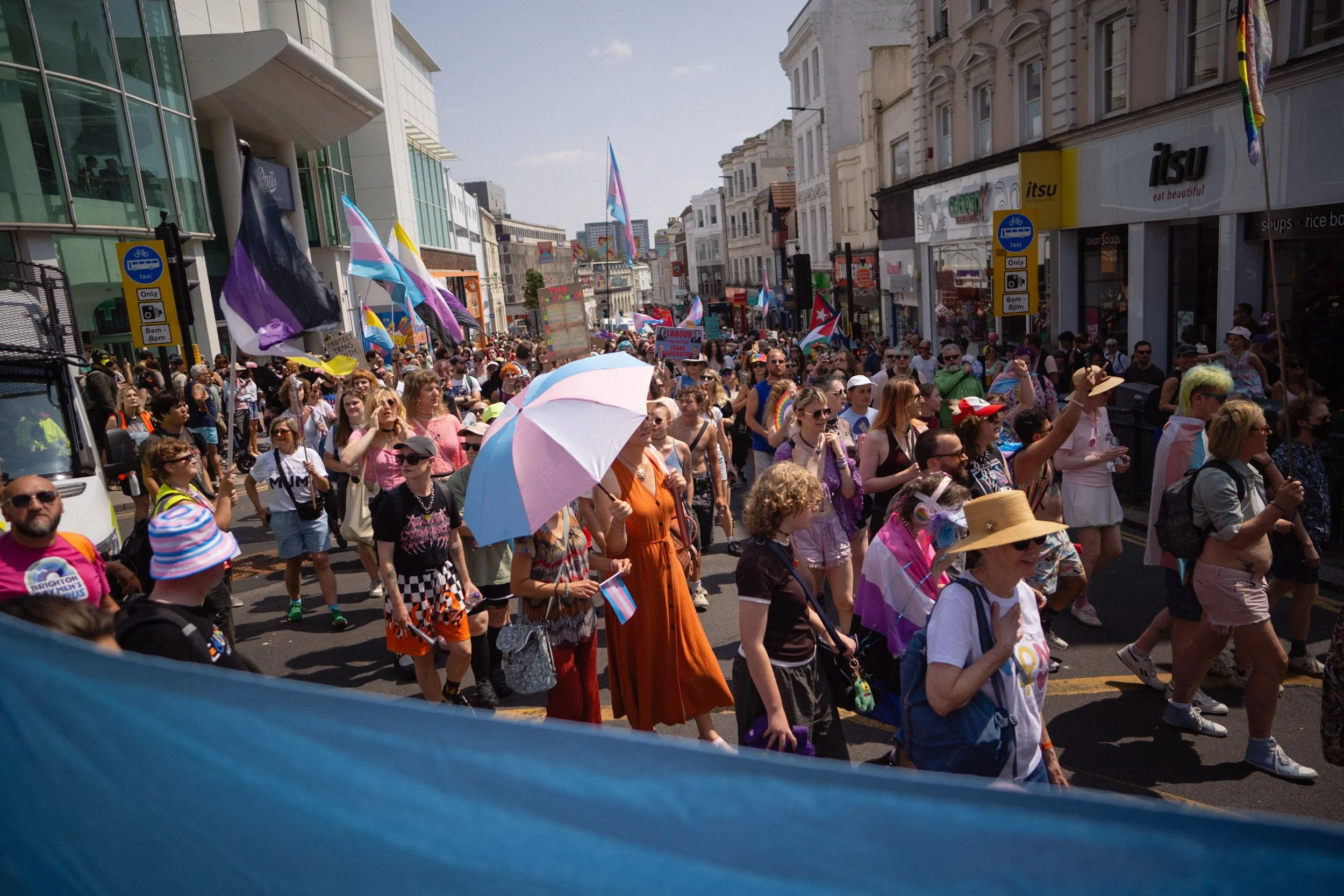
Trans Pride Brighton has been part of that fabric since 2013, when a small group of organisers decided that trans people deserved a dedicated space within the broader Pride calendar — not a footnote, not a float, but a march of their own. It was one of the first events of its kind in the UK, and it has grown every year since.
What has also grown, in the years since, is the noise around trans rights in Britain. The political temperature, the media coverage, the Supreme Court rulings, the parliamentary debates. The bathroom signs. The wee.
Against that backdrop, a chilled day in Brighton is a political act whether it intends to be or not.
Open as Usual
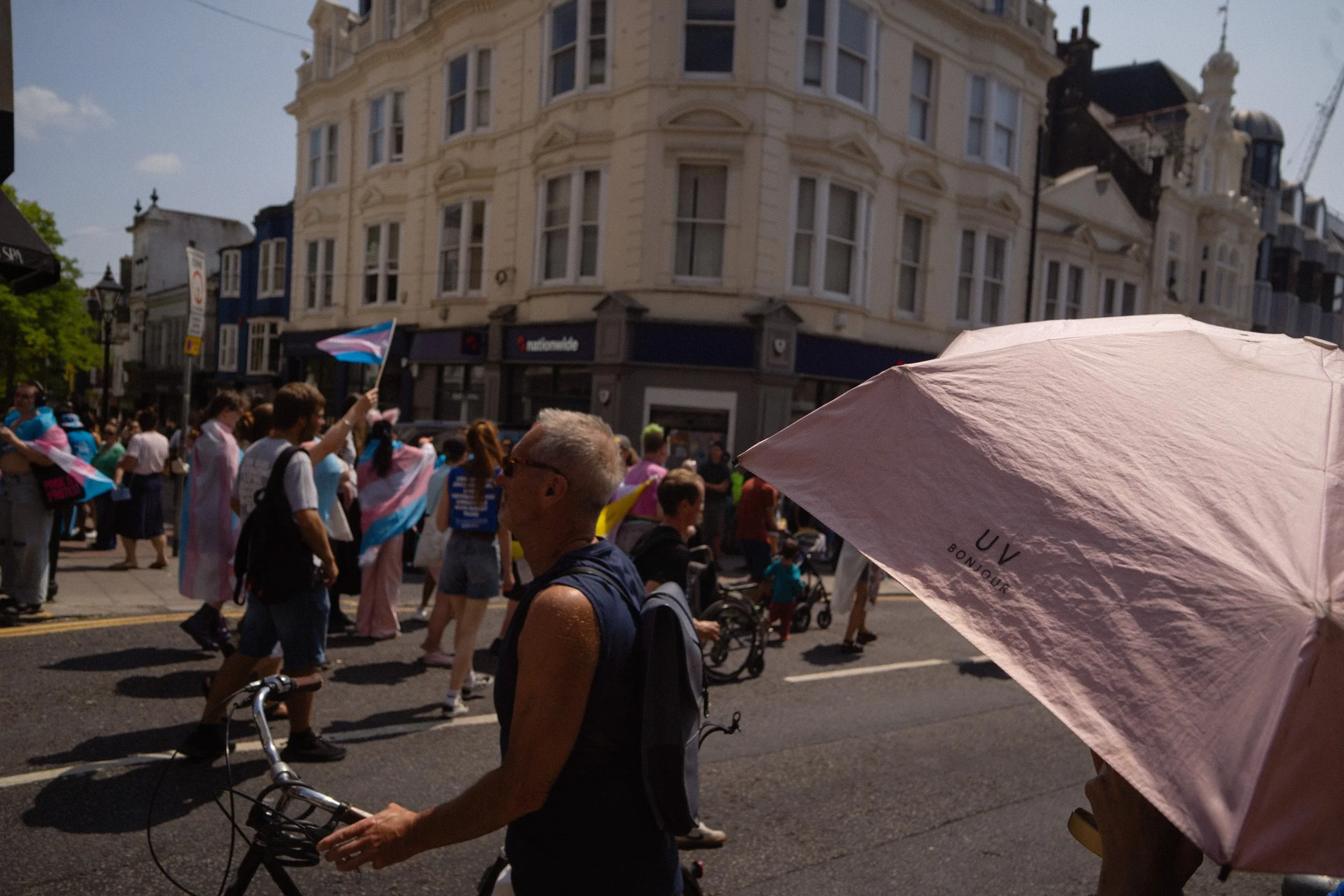
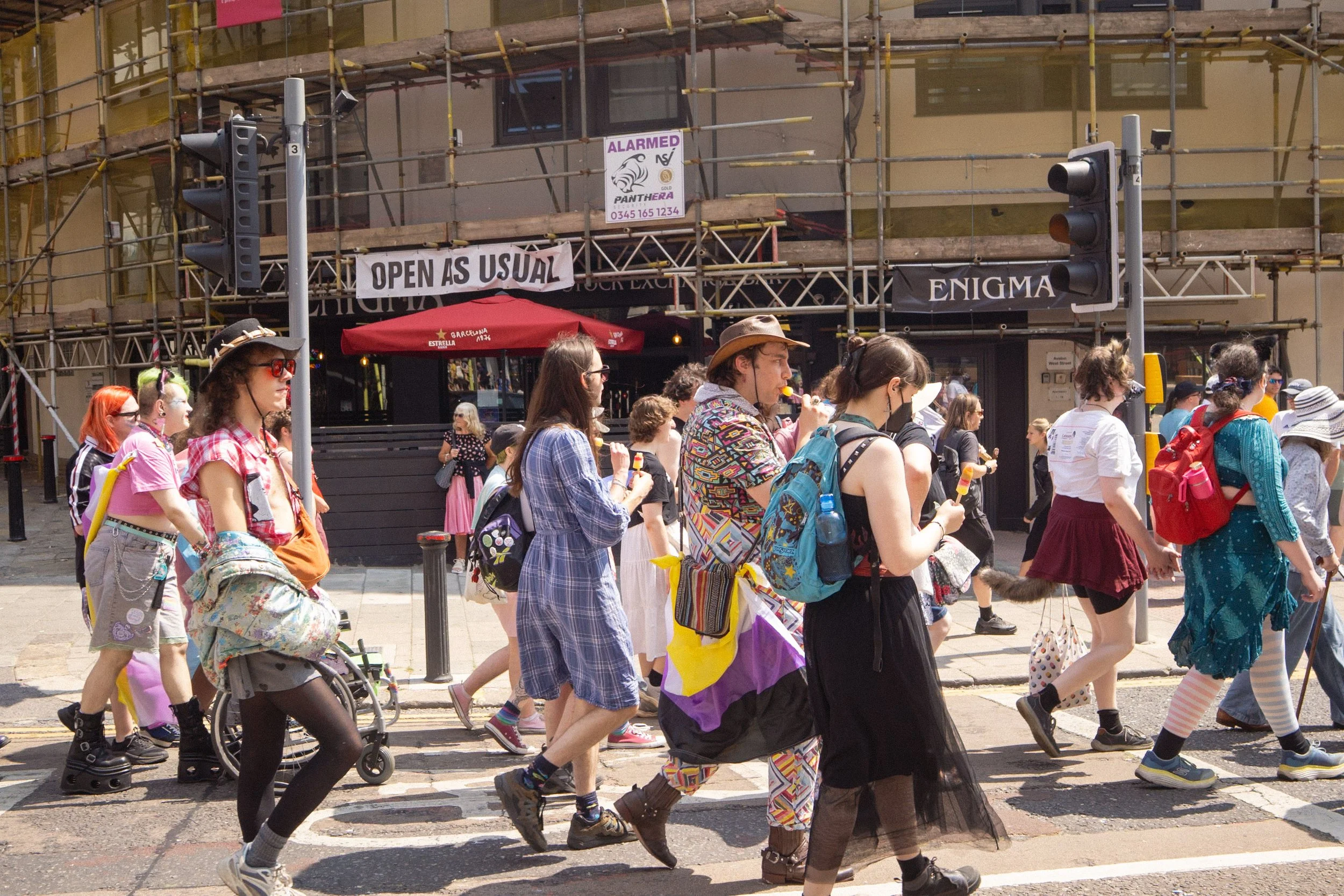
What struck me on the day was how relaxed it was. Not passive — the signs were sharp, the flags were flying, the drum lines were going — but there was no tension in the crowd. People were dancing. People were eating ice lollies in the July heat. People were dressed exactly as they wanted to be dressed, moving through the city centre as though it belonged to them.
Because, for the afternoon, it did.
The city largely carried on around the edges of it. Bars stayed open. Shoppers paused to watch from the pavements. One banner above a pub doorway read Open as Usual — not a protest sign, just a pub doing what pubs do — but it landed as something else entirely. Business as usual. Life as usual. That's all anyone was asking for.
"Be careful what you hate. It might be someone you love."
That sign, hand-painted and carried through the street, is both a plea and a warning. It also happens to be accurate.
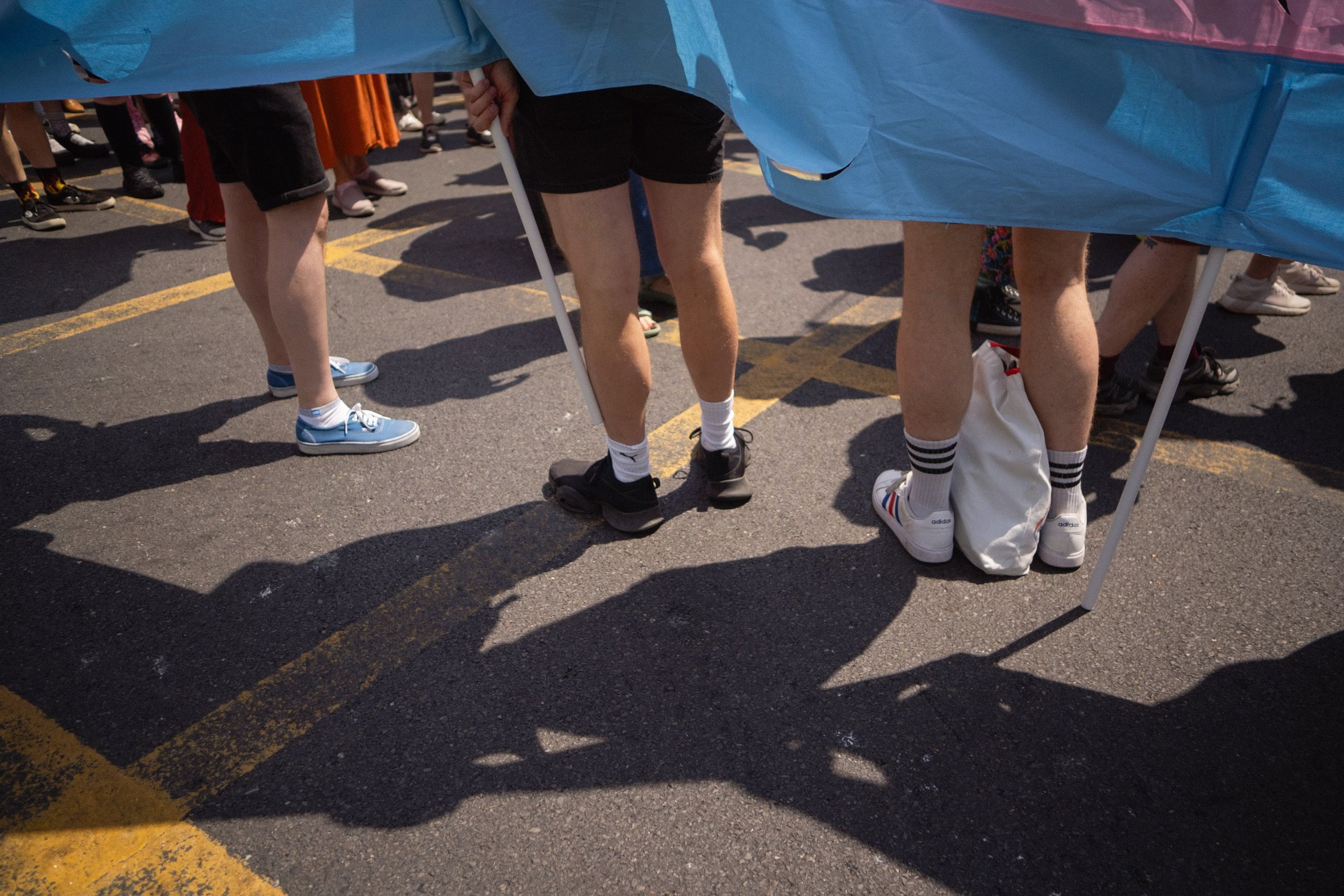
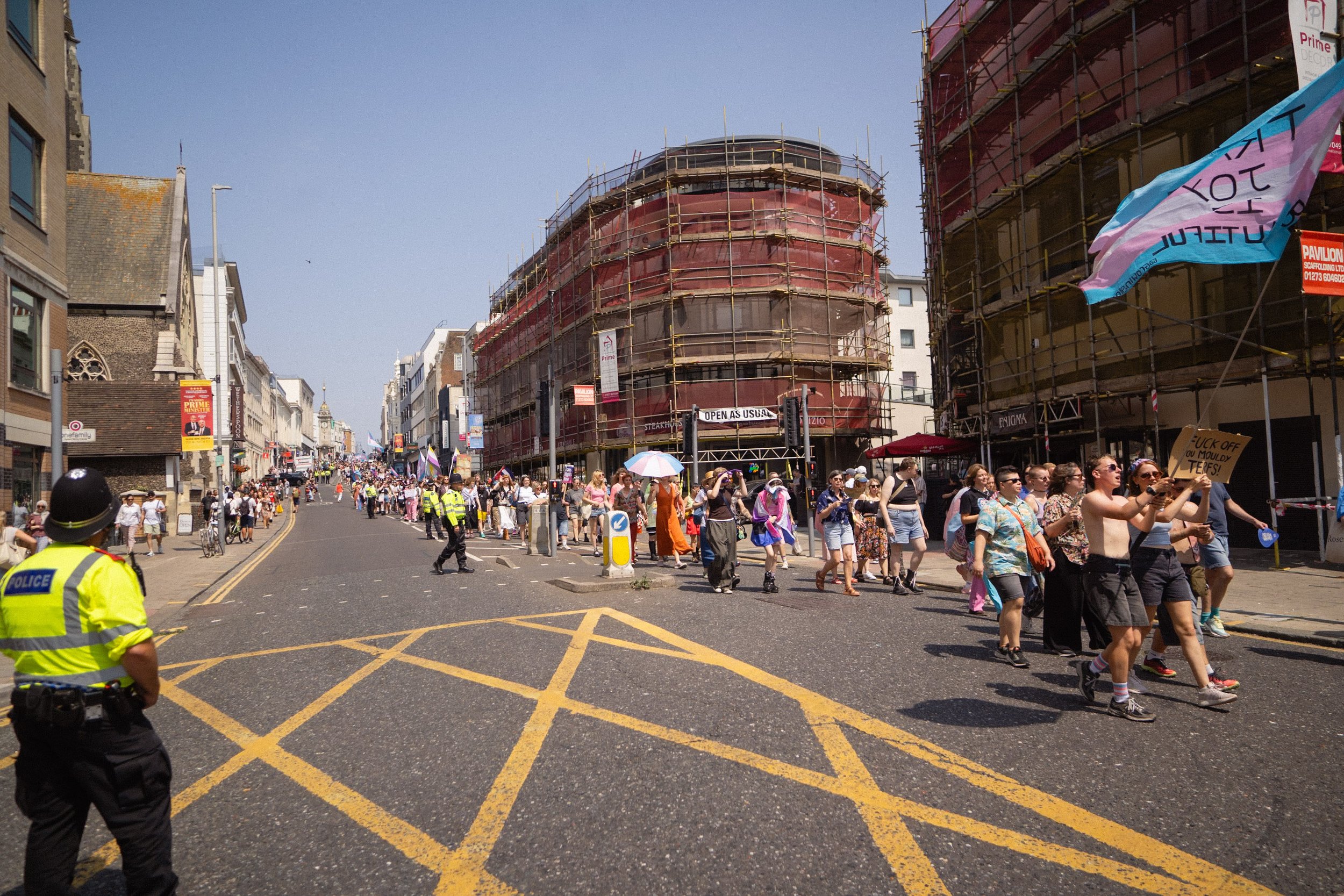
The Signs
Street photography at a march is its own discipline. You're not making the event; you're reading it. And what a march says through its placards and banners is often more revealing than anything a speech could manage.
"Dead Before Detransition." A large black flag, carried by a young person in camo trousers and coloured trainers, held high above the crowd. The weight of that phrase is considerable. It is not hyperbole — it is testimony. And it landed.
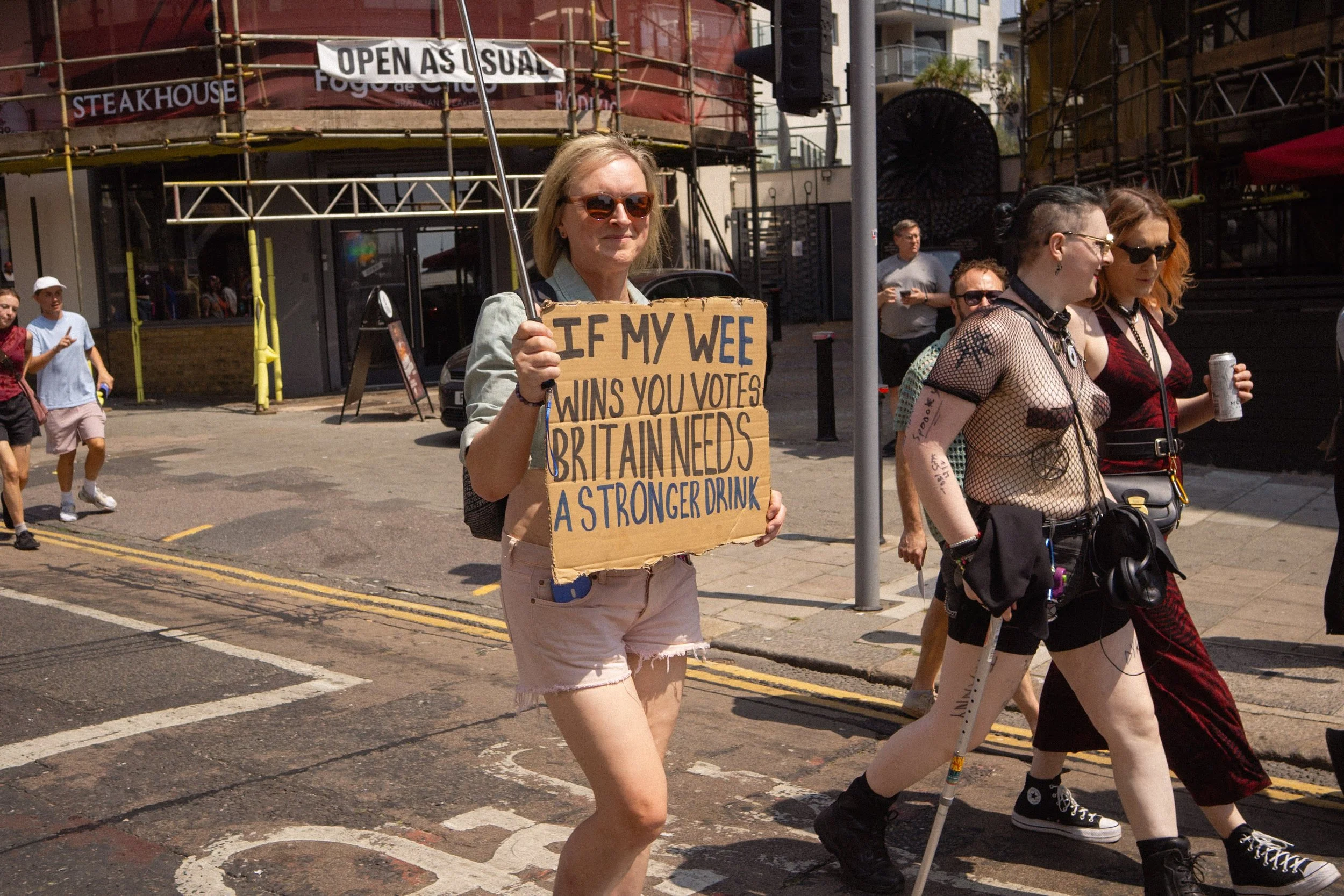
"If my wee wins you votes, Britain needs a stronger drink." Cardboard, marker pen, absolute precision. The bathroom debate — the idea that trans people's use of public toilets represents some kind of threat — has been deployed by politicians across the spectrum as a wedge issue. This sign answered it in eleven words. Brighton laughed. Brighton usually does.
The Pedigree
Trans Pride Brighton is free to attend. It is community-organised. It has no corporate sponsors headlining the stage, no VIP enclosures, no branded lanyards. It is, in that sense, closer to what Pride was originally — a march, a gathering, a refusal to be invisible.
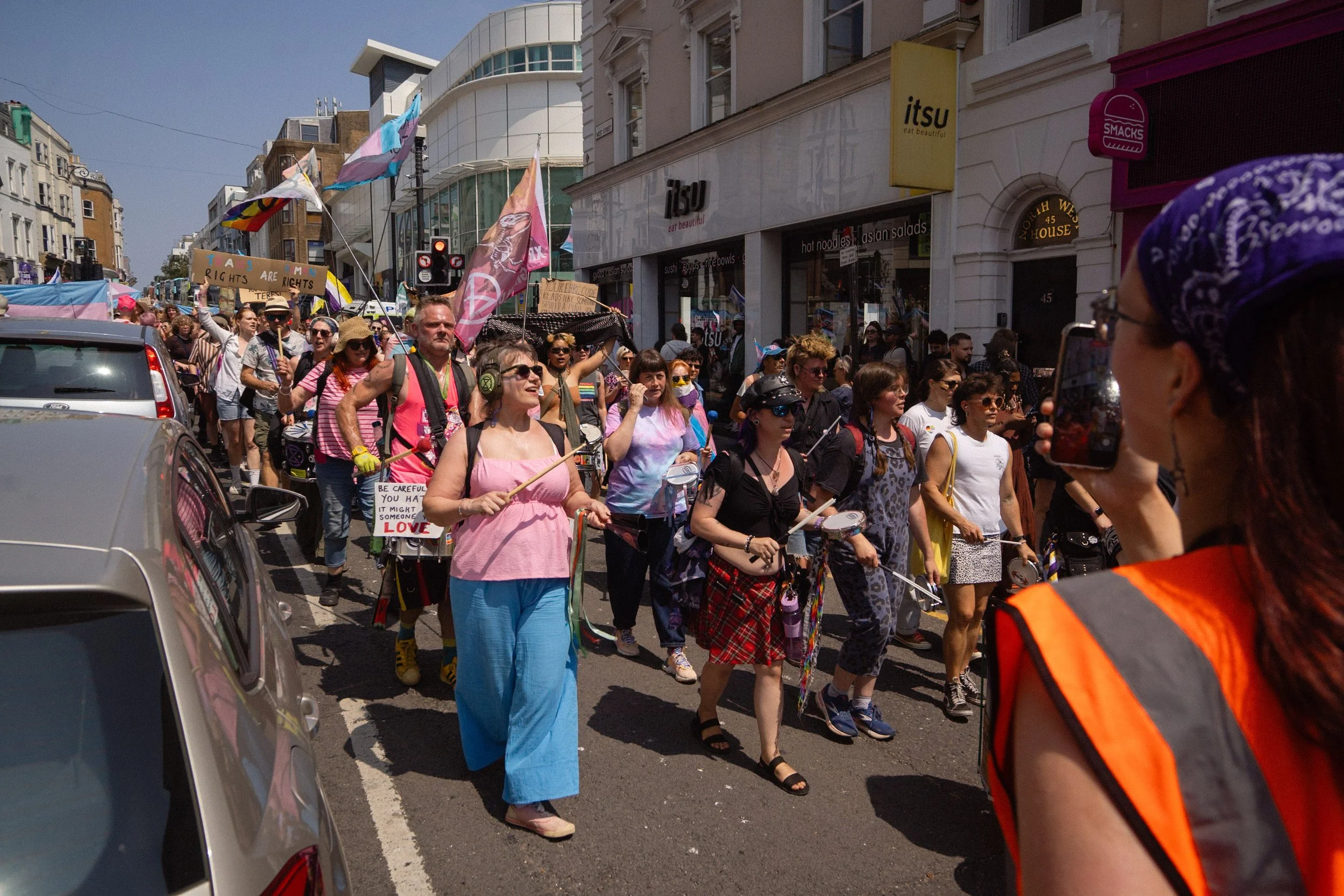
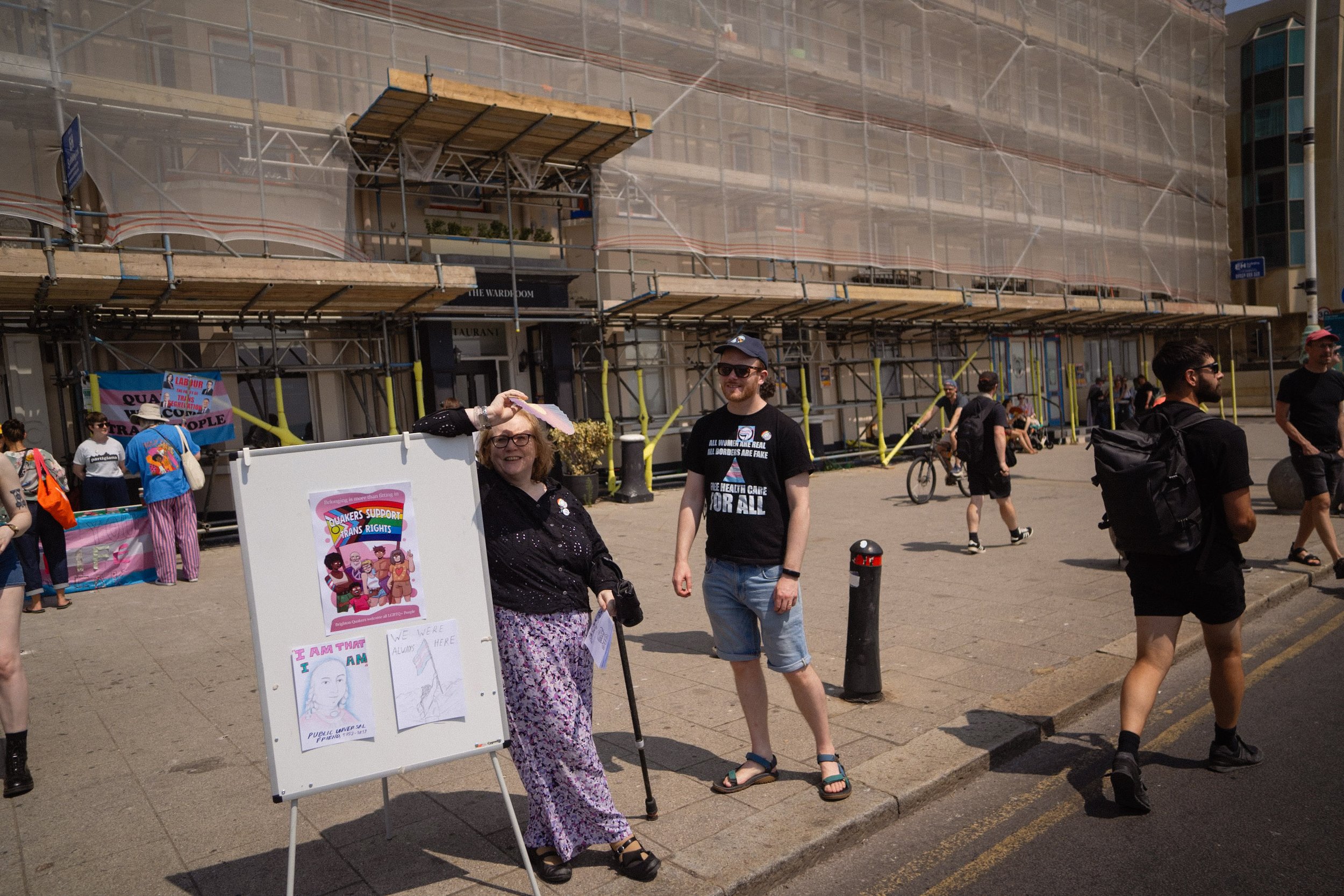
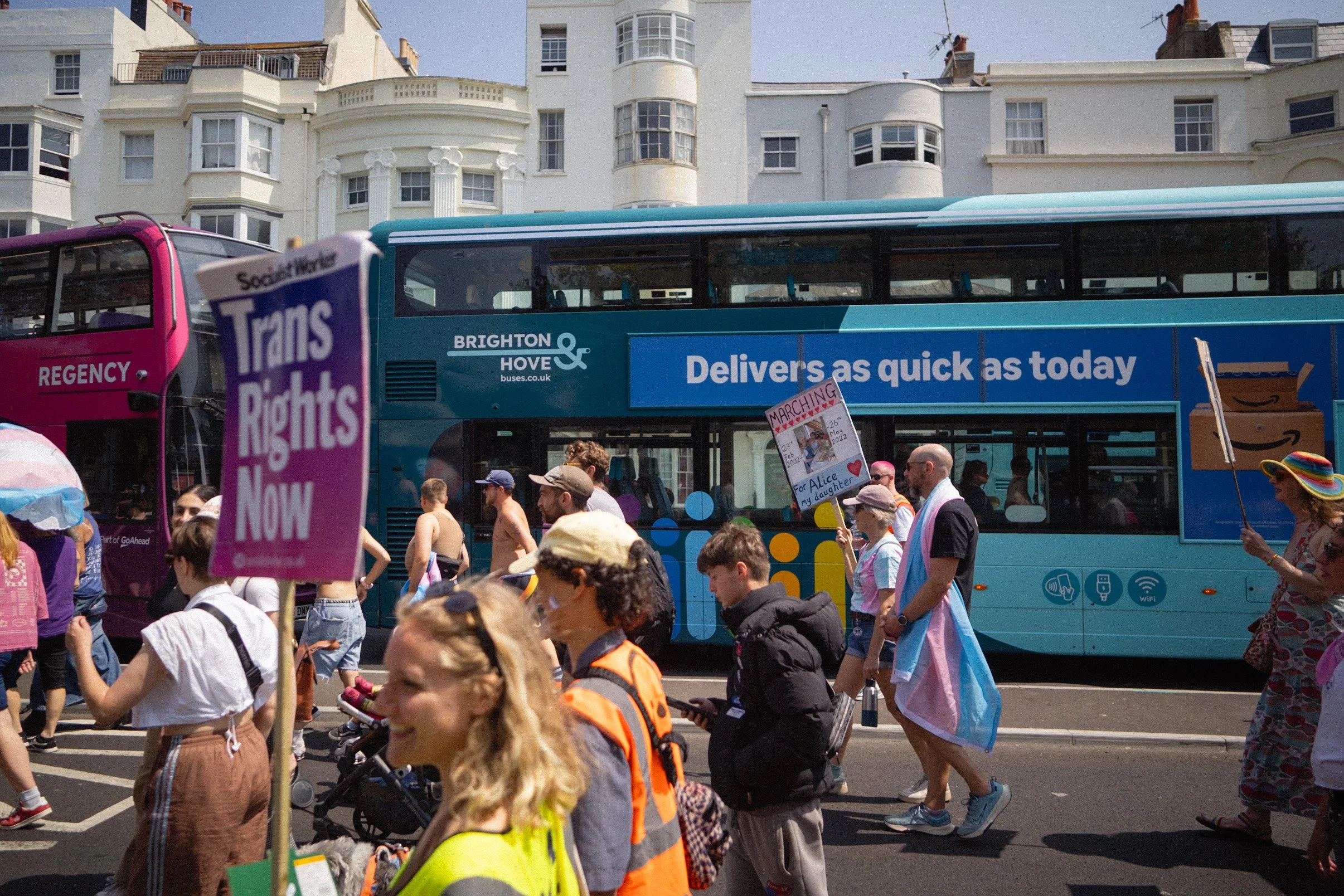
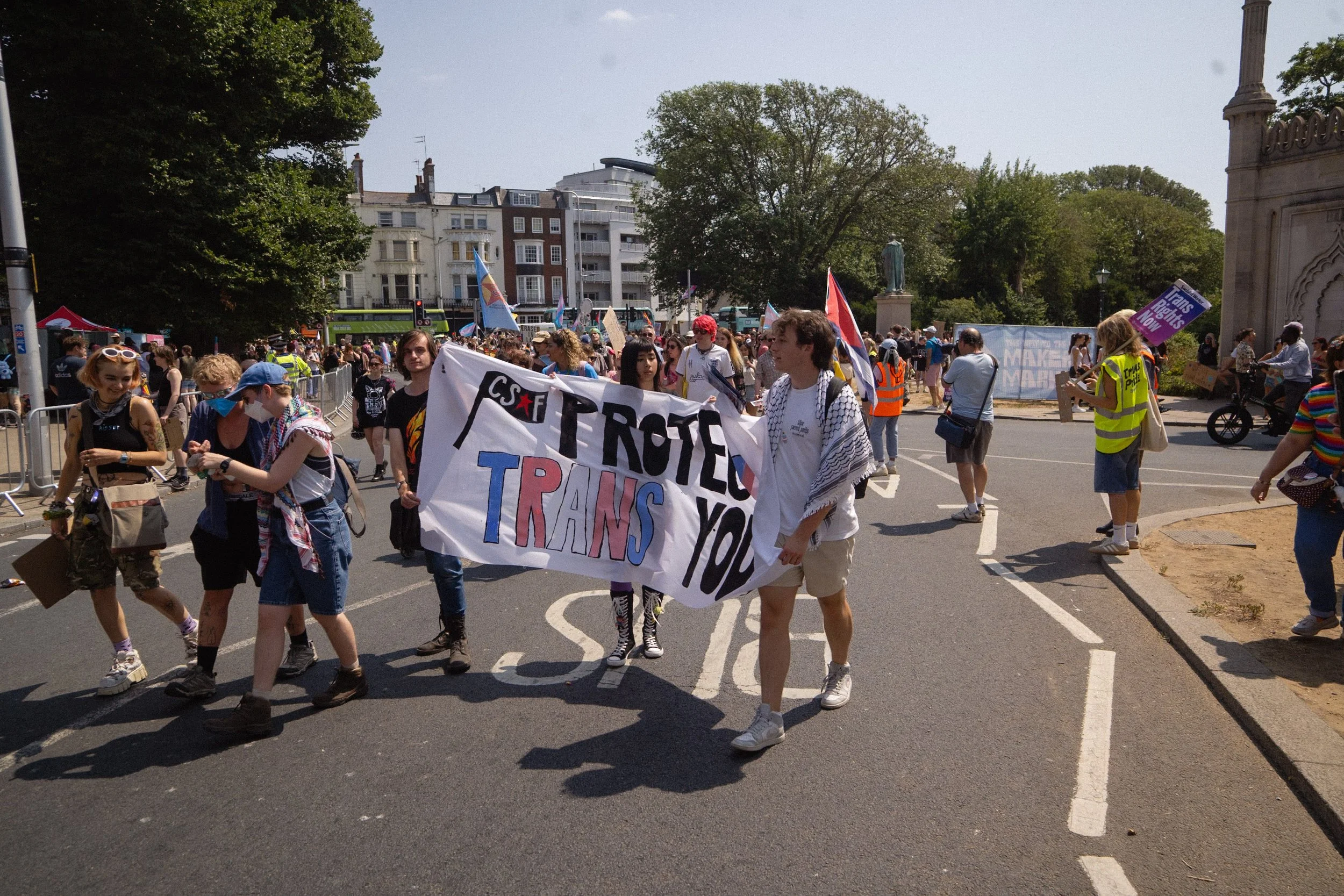
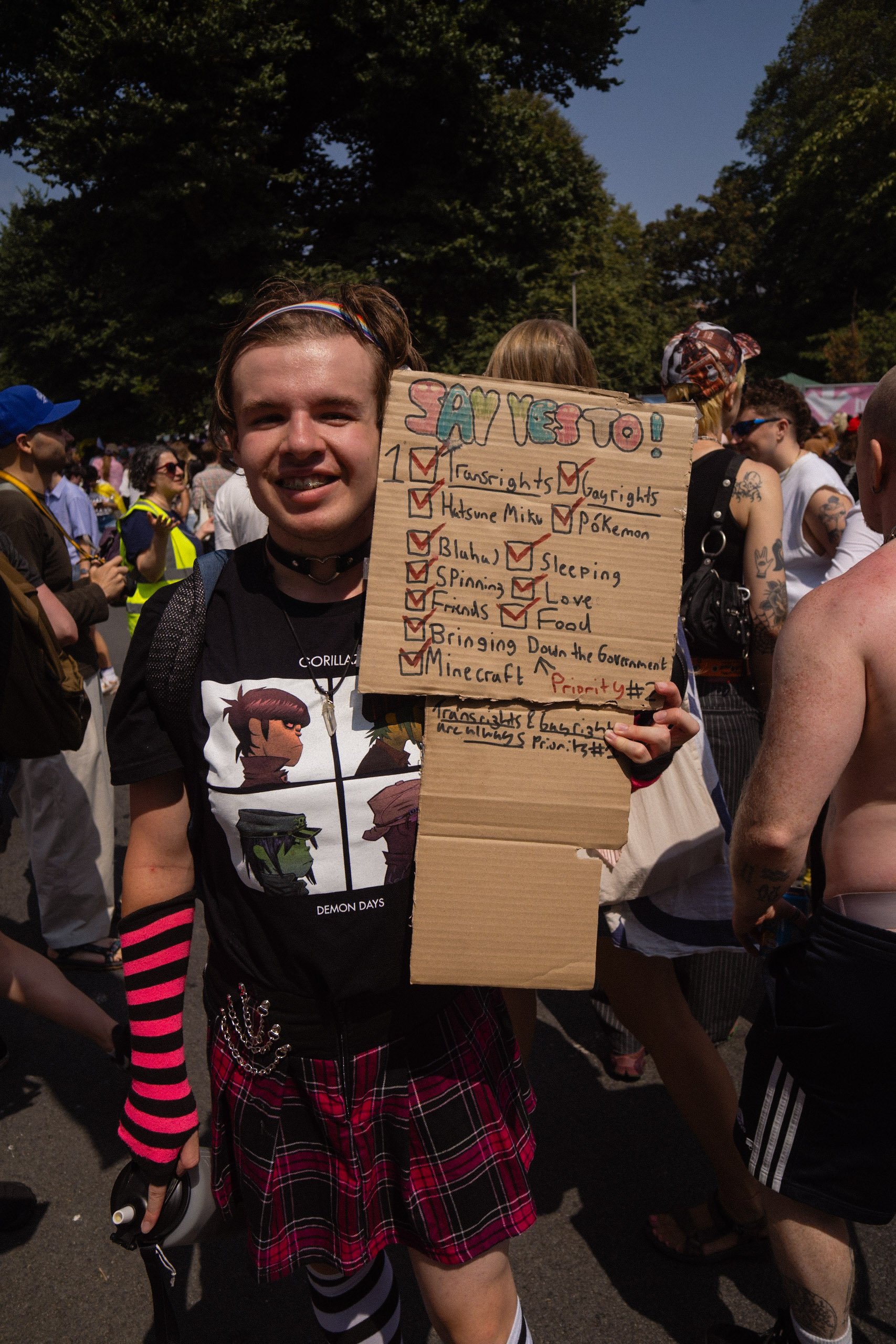
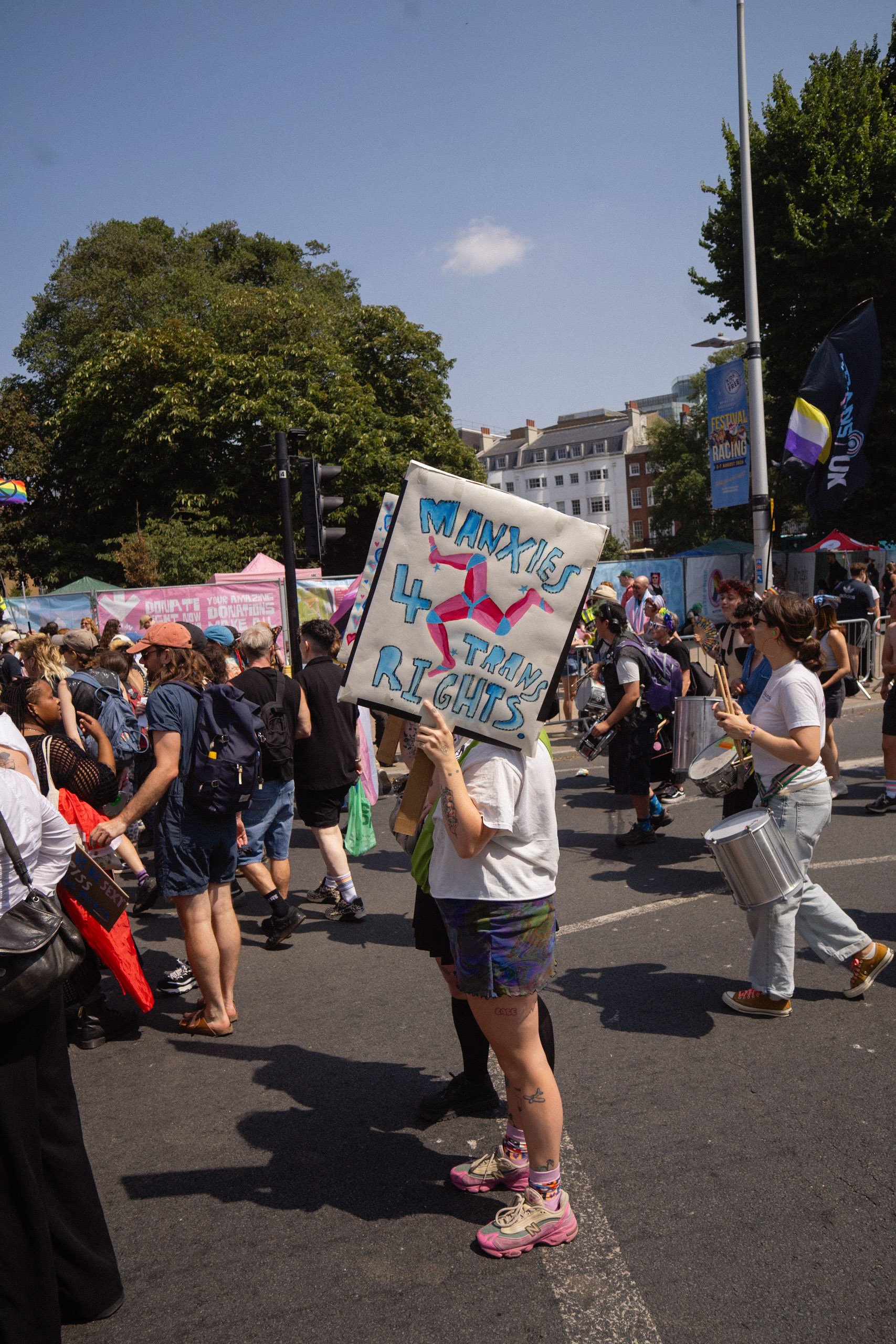
That it takes place in Brighton is appropriate. The city has always understood that visibility is not vanity. It is survival.
The people who turned out on the 18th of July were not making a statement at anyone. They were living their lives on a sunny Friday afternoon, in a city that has always made room for exactly that.
The camera just happened to be there.
Until next time, keep marching
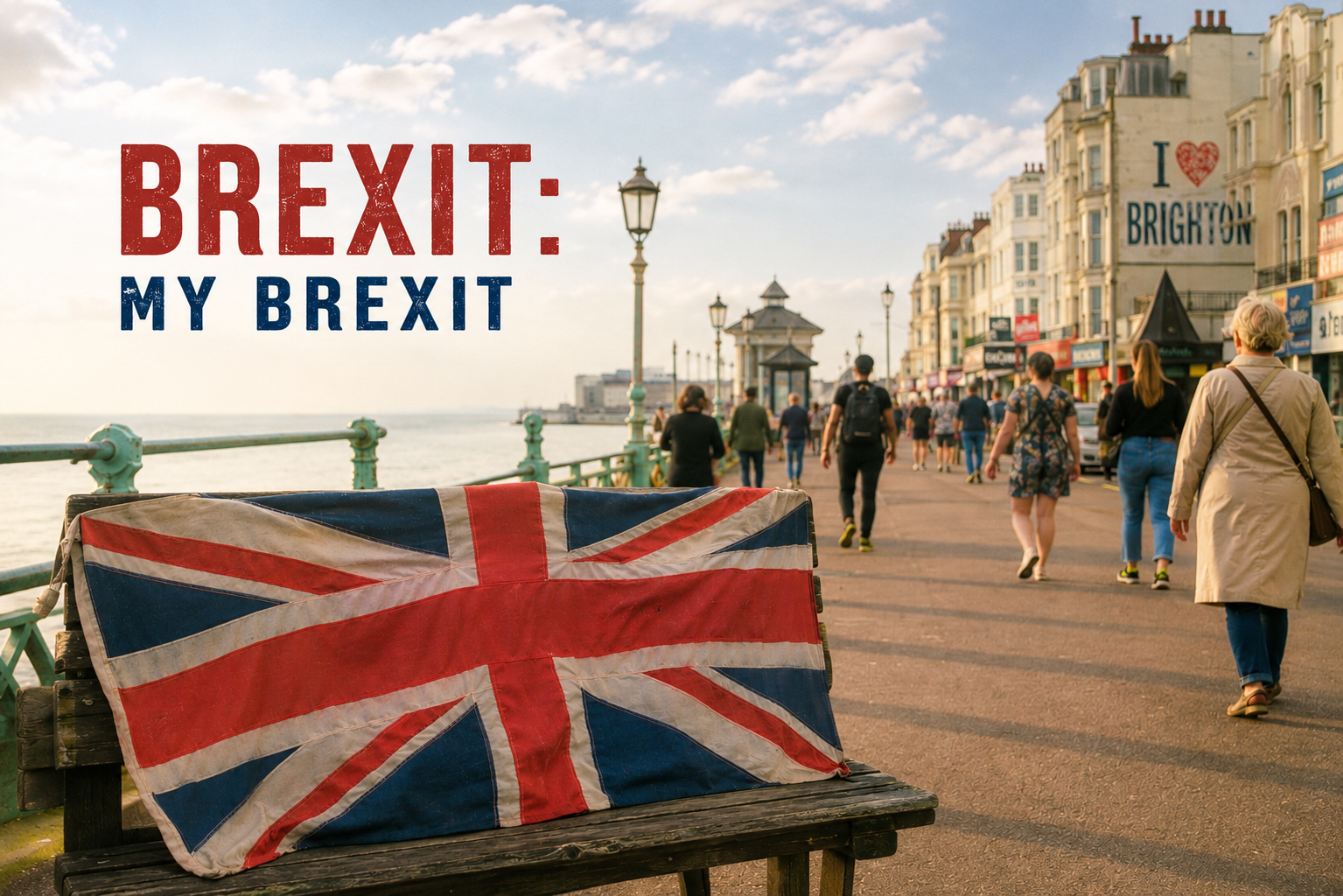
Brexit, my Brexit
O Captain, my Captain — our fearful trip is done.
Except it isn't done. That's the problem. We don't know where we're going.
Ten years ago this month, Britain pressed a button it couldn't un-press. Twenty-third of June, 2016. The margin was thin — 52 to 48 — but the consequences were not. A decision made in the space of a single day has been ricocheting ever since, a butterfly flapping its wings somewhere over a polling booth in Sunderland, and a decade later the storm has not arrived, but something is building on the horizon that we cannot quite name.
"The unknown sent us on a trajectory into the unknown."
That is Brexit's defining condition. Not the trade deals or the queues at Dover or the strawberries rotting unpicked in Kent. It is the shapelessness of what comes next. We voted to leave something. We never agreed on what we were arriving at.
O Captain, my Captain — our fearful trip is done.
Except it isn't done. That's the problem. We don't know where we're going.
Ten years ago this month, Britain pressed a button it couldn't un-press. Twenty-third of June, 2016. The margin was thin — 52 to 48 — but the consequences were not. A decision made in the space of a single day has been ricocheting ever since, a butterfly flapping its wings somewhere over a polling booth in Sunderland, and a decade later the storm has not arrived, but something is building on the horizon that we cannot quite name.
"The unknown sent us on a trajectory into the unknown."
That is Brexit's defining condition. Not the trade deals or the queues at Dover or the strawberries rotting unpicked in Kent. It is the shapelessness of what comes next. We voted to leave something. We never agreed on what we were arriving at.
An Englishman's Home Is His Kebab Shop
There is an old saying — An Englishman's home is his castle — and it contains within it everything you need to understand the Leave vote. The drawbridge. The moat. The idea that Englishness is a thing to be defended rather than shared, inherited rather than made.
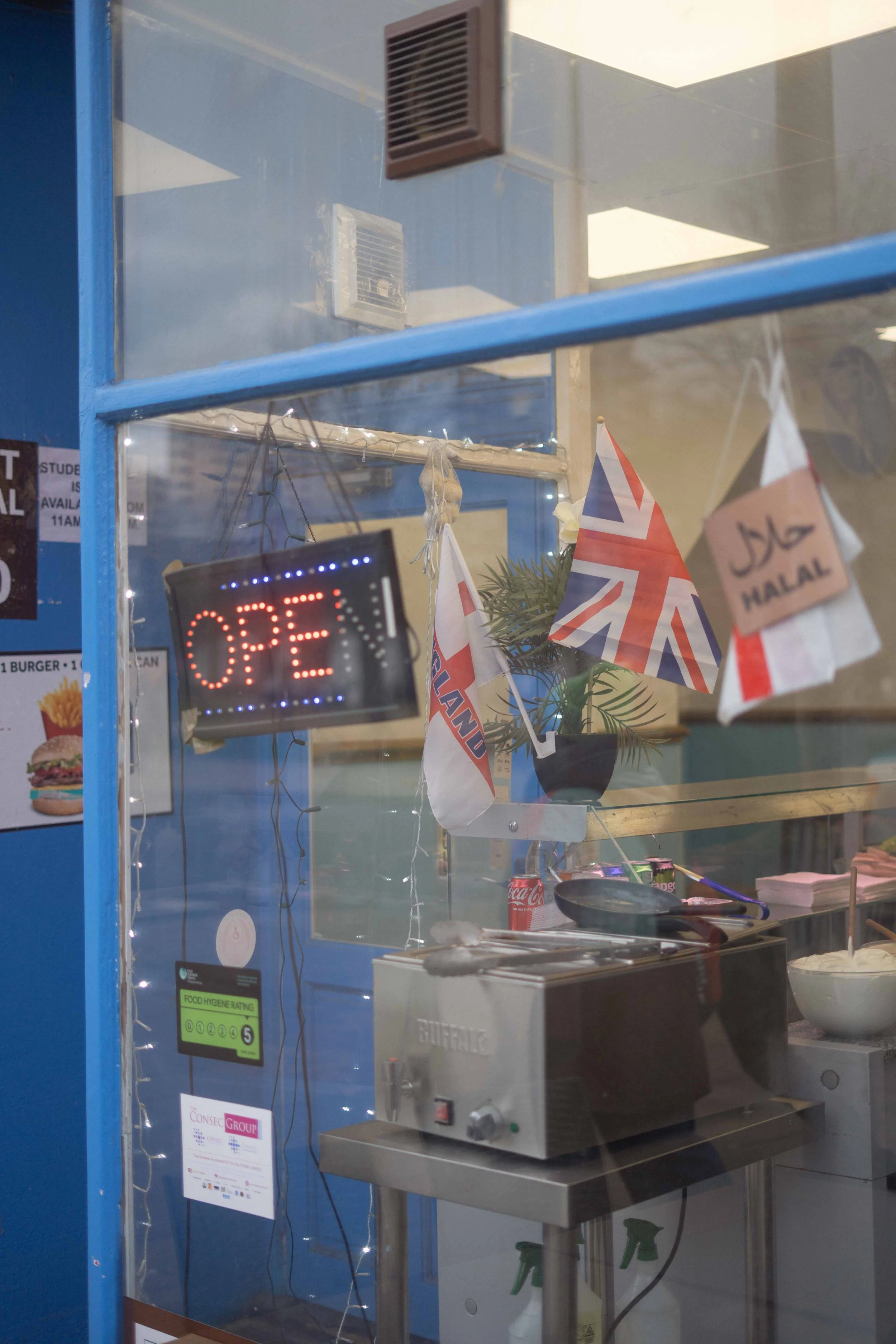
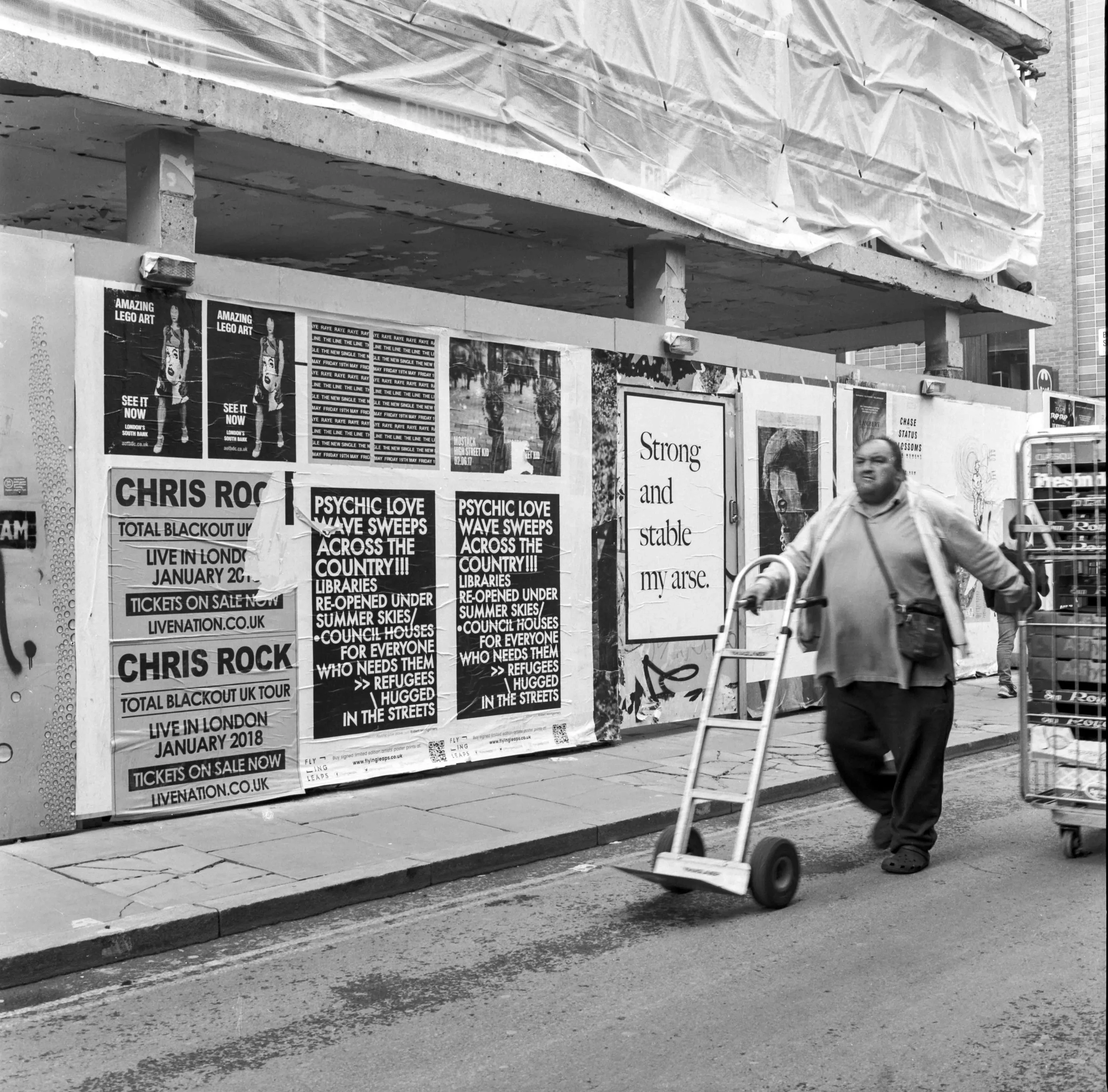
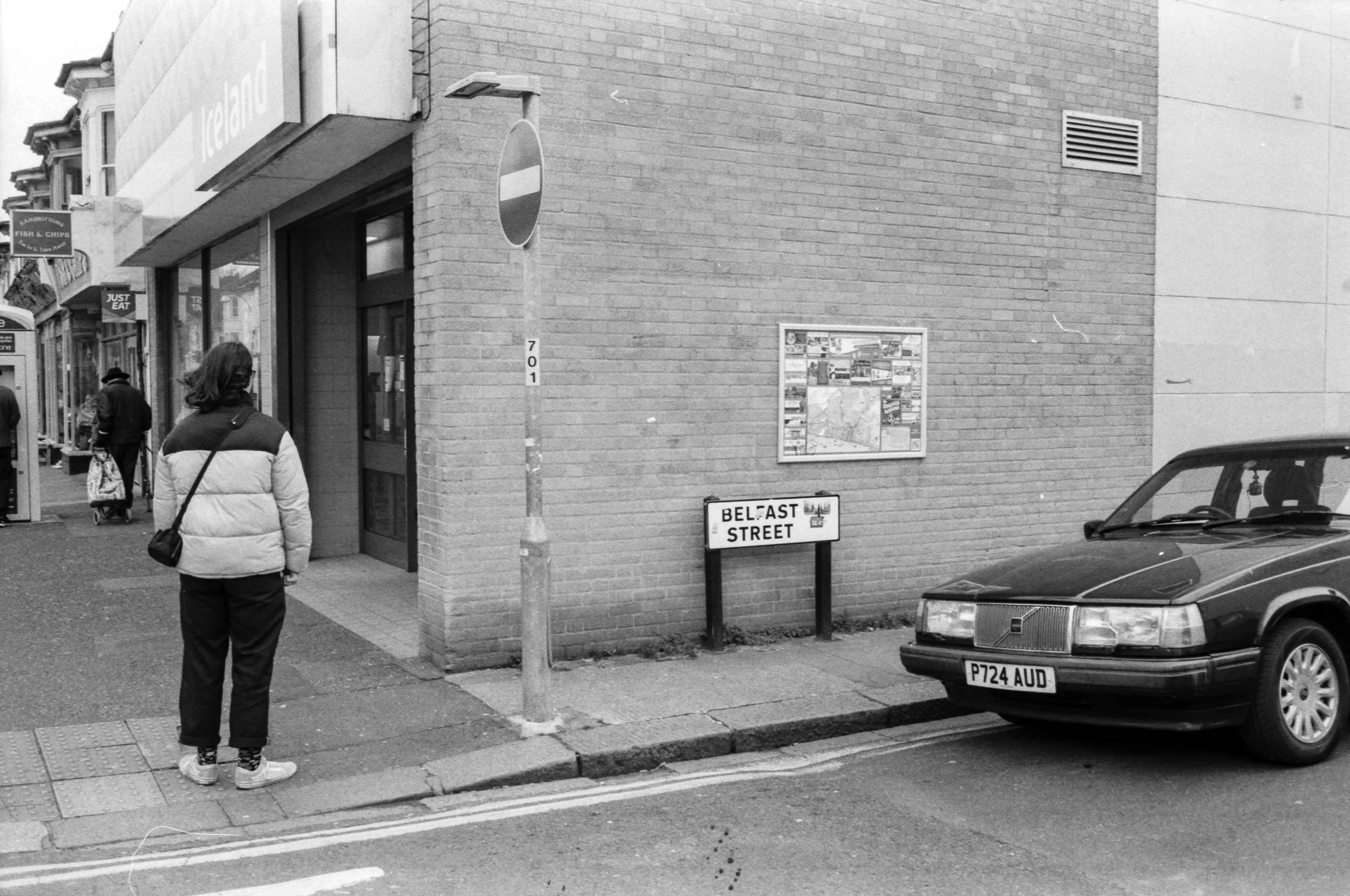
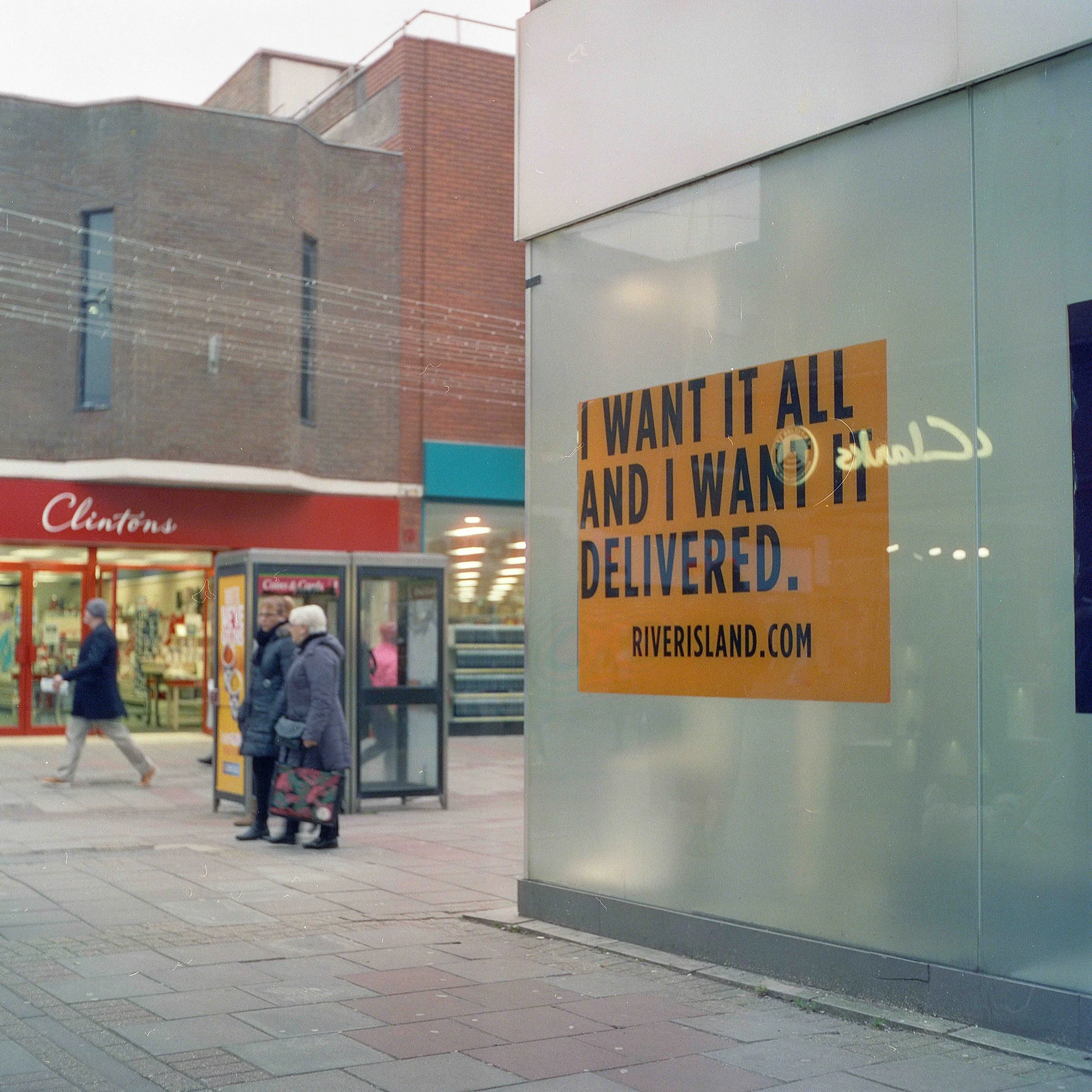
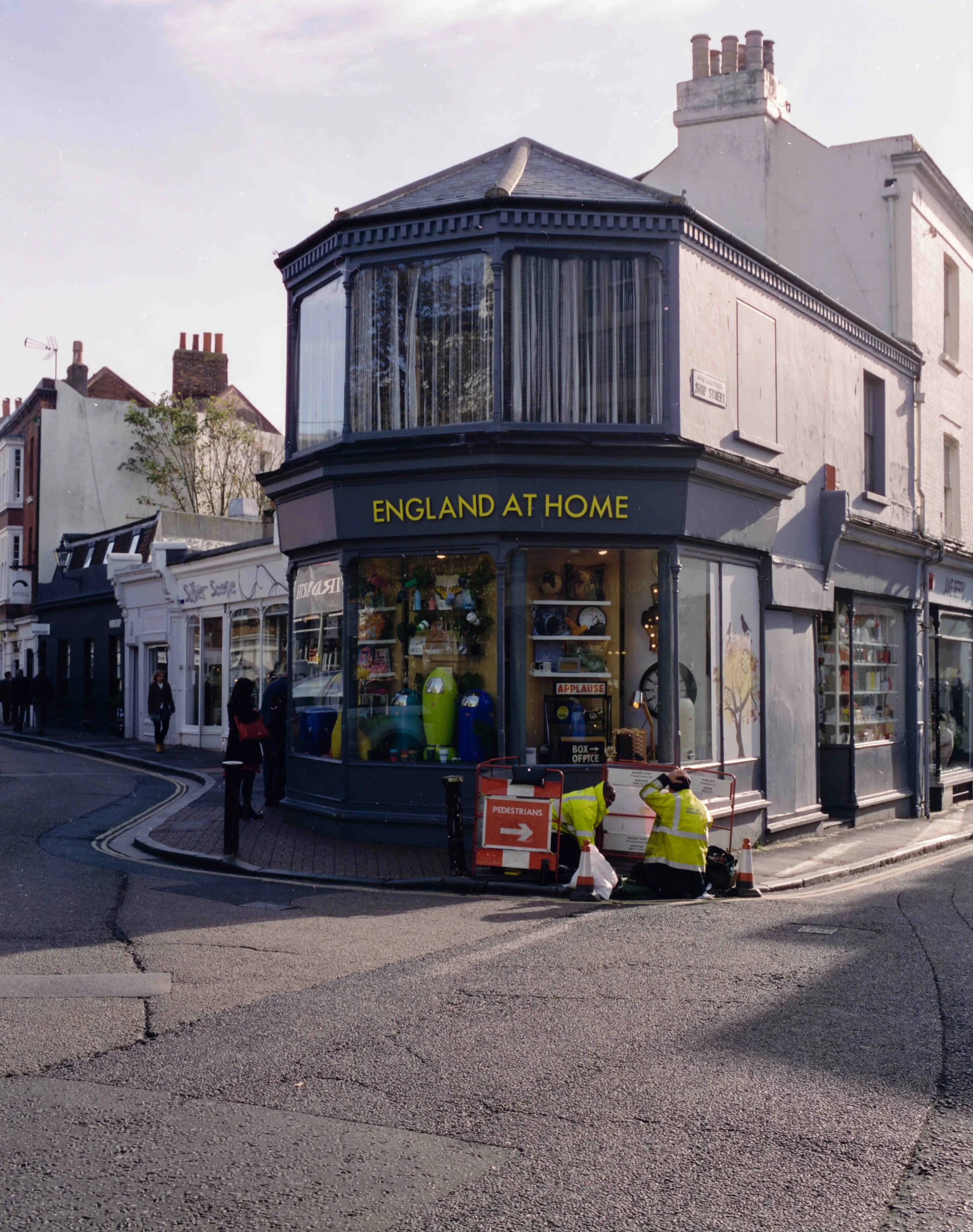
Walk the streets of any English town and ask it what England actually looks like. The answer is not the castle. It is the kebab shop: Union Jack in the window, halal sign alongside it, England flag between the two, the OPEN sign glowing red. It is the most English thing imaginable and the most unEnglish thing imaginable, simultaneously. It is the country that voted to close the door, feeding itself every night through the gap underneath it.
This is not irony. It is identity. Britain has always been a country of contradictions held in uneasy balance. Brexit did not create the tension — it detonated it.
The Spell Cast in June
Spells & Charms. Harry Potter. Lord of the Rings. The Hobbit. Game of Thrones. Britain sells its mythology to the world by the container-load and cannot understand why the world keeps arriving to live inside it.
The referendum was a spell cast by people who wanted their country back. What they got was a country more contested, more divided, and more uncertain of itself than at any point in living memory. The spell worked. Just not the way they intended.
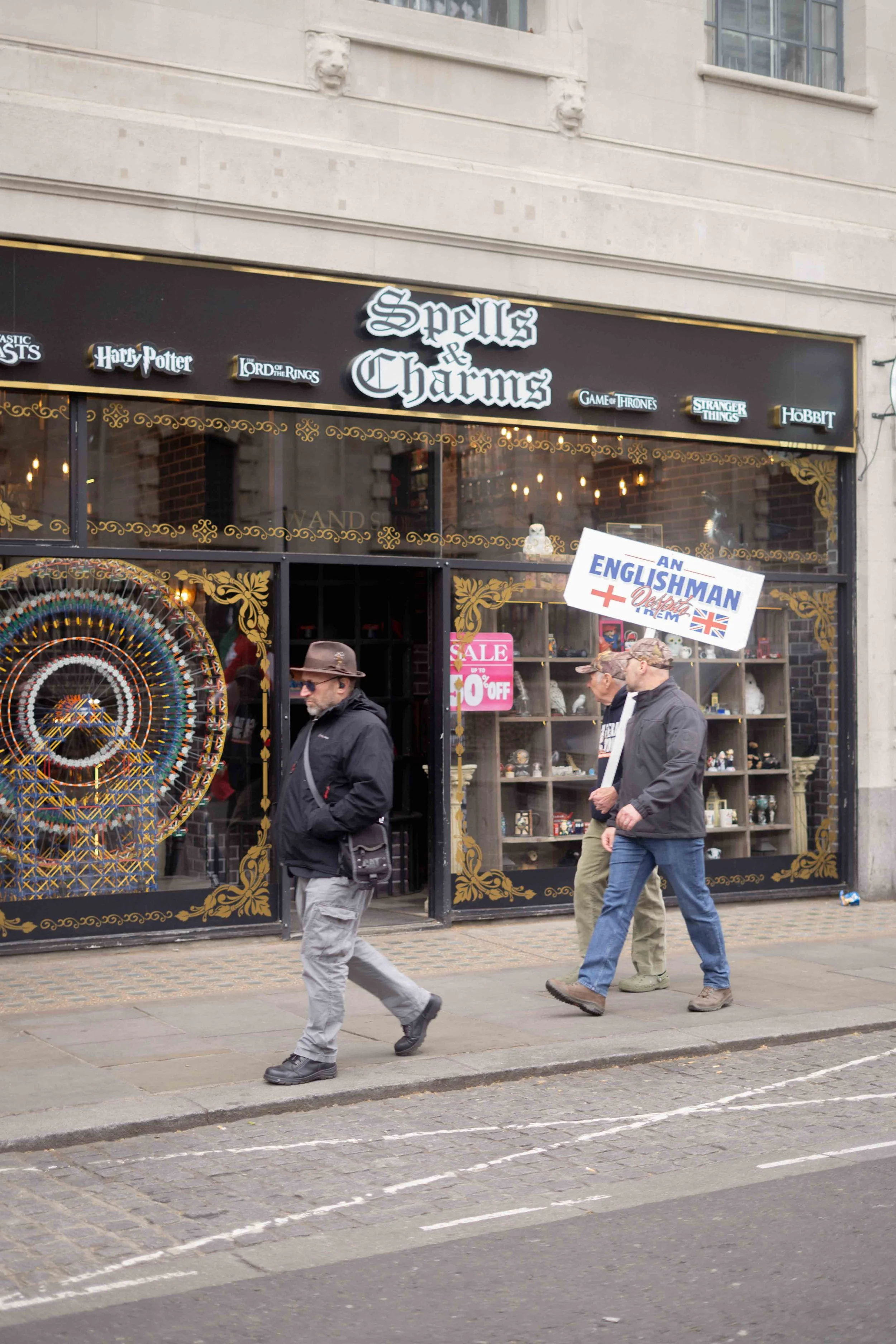
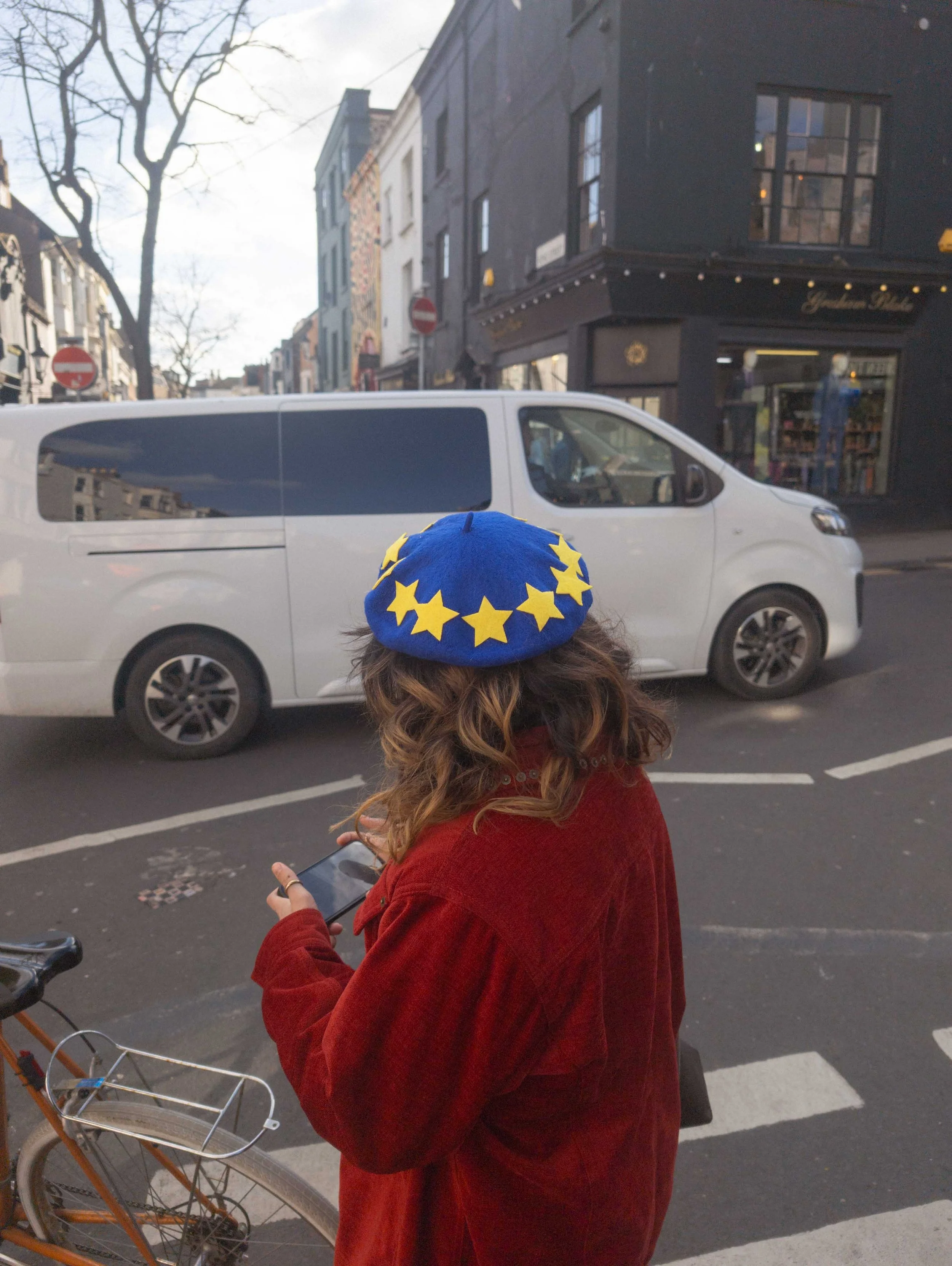
You can still see the believers and the bereaved on the same streets, sometimes passing within feet of each other without acknowledgement. A woman in a blue beret ringed with yellow stars, scrolling her phone at a Brighton crossroads. Men carrying placards through the old city. Neither speaking to the other. Both certain they are right.
The Era of Salvage
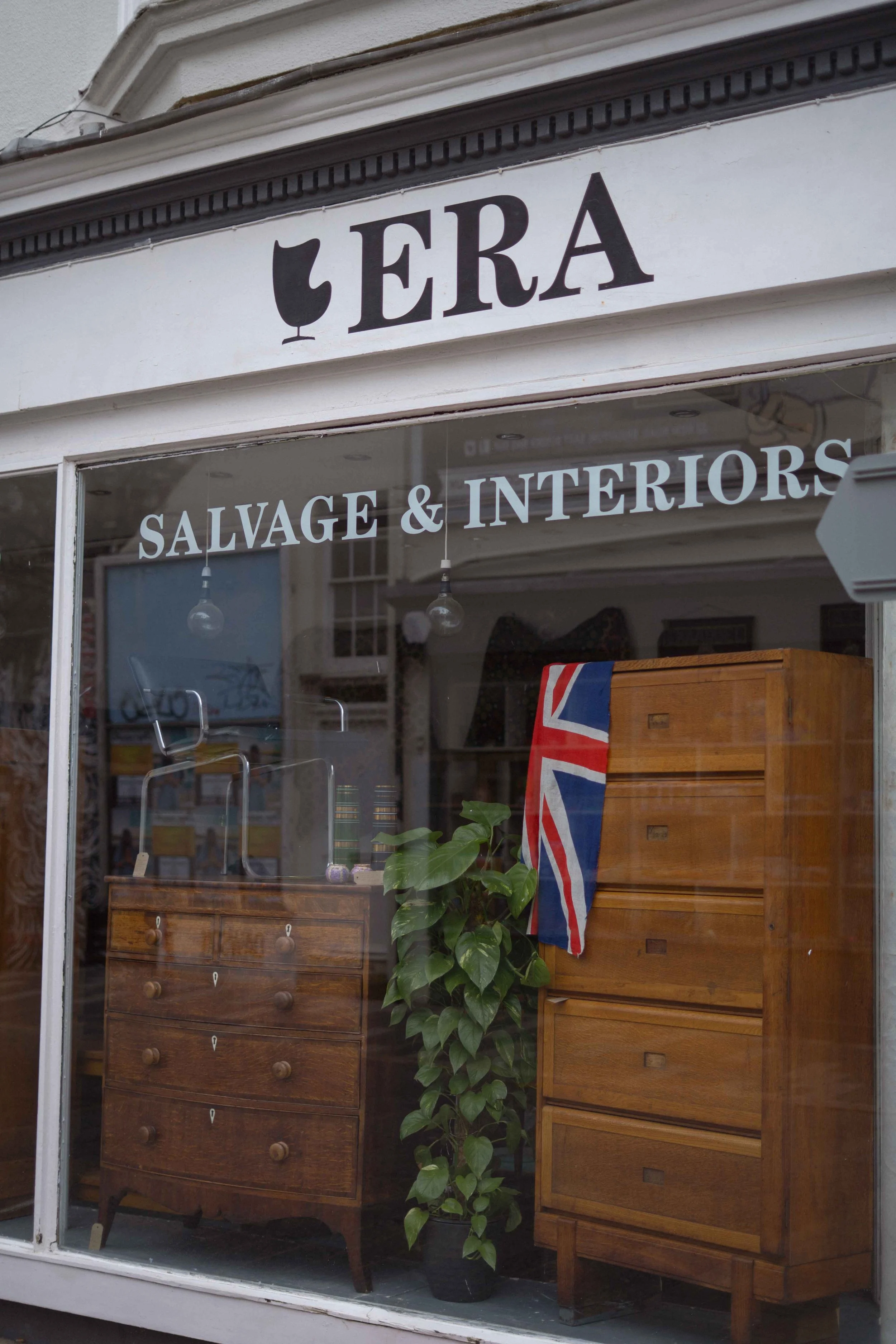
ERA — Salvage & Interiors. A Union Jack draped between two wooden chests of drawers in a shop window, half-decorative, half-forgotten. There is something in that image that captures the post-Brexit condition perfectly: a national symbol repurposed as furniture dressing, displayed alongside things that belonged to another time, offered for sale at an uncertain price.
Britain has been in the salvage business since 2016. Salvaging its reputation. Salvaging its institutions. Salvaging its sense of itself. The interiors have been rearranged; nobody is entirely sure they prefer the new layout.
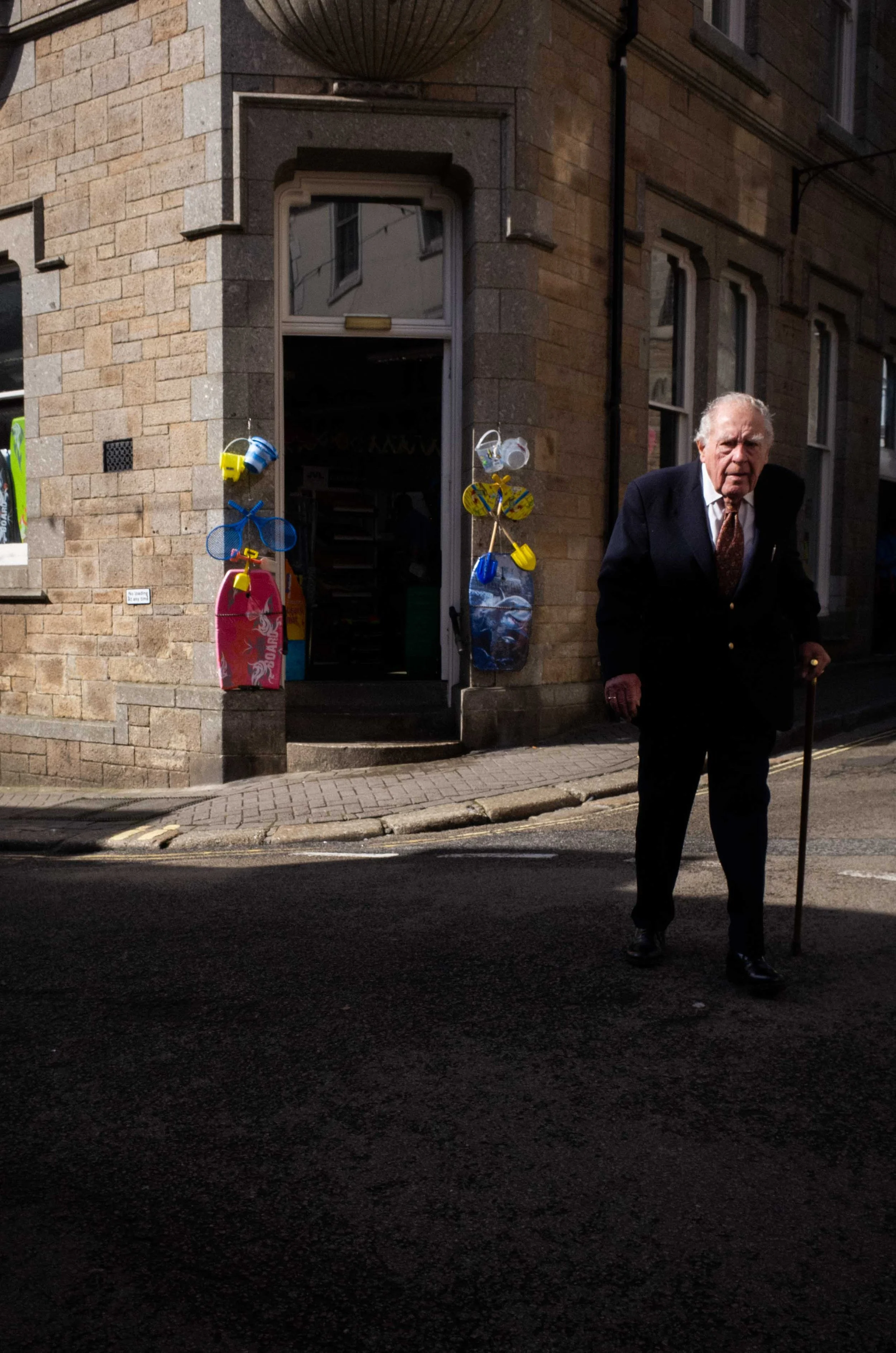
The elderly man walking the seafront town in his dark suit, cane in hand, dressed for a formality that the street no longer requires — he carries himself with the bearing of a country that remembers itself differently. Whether that memory is accurate is another question.
Little Britain, Under Construction
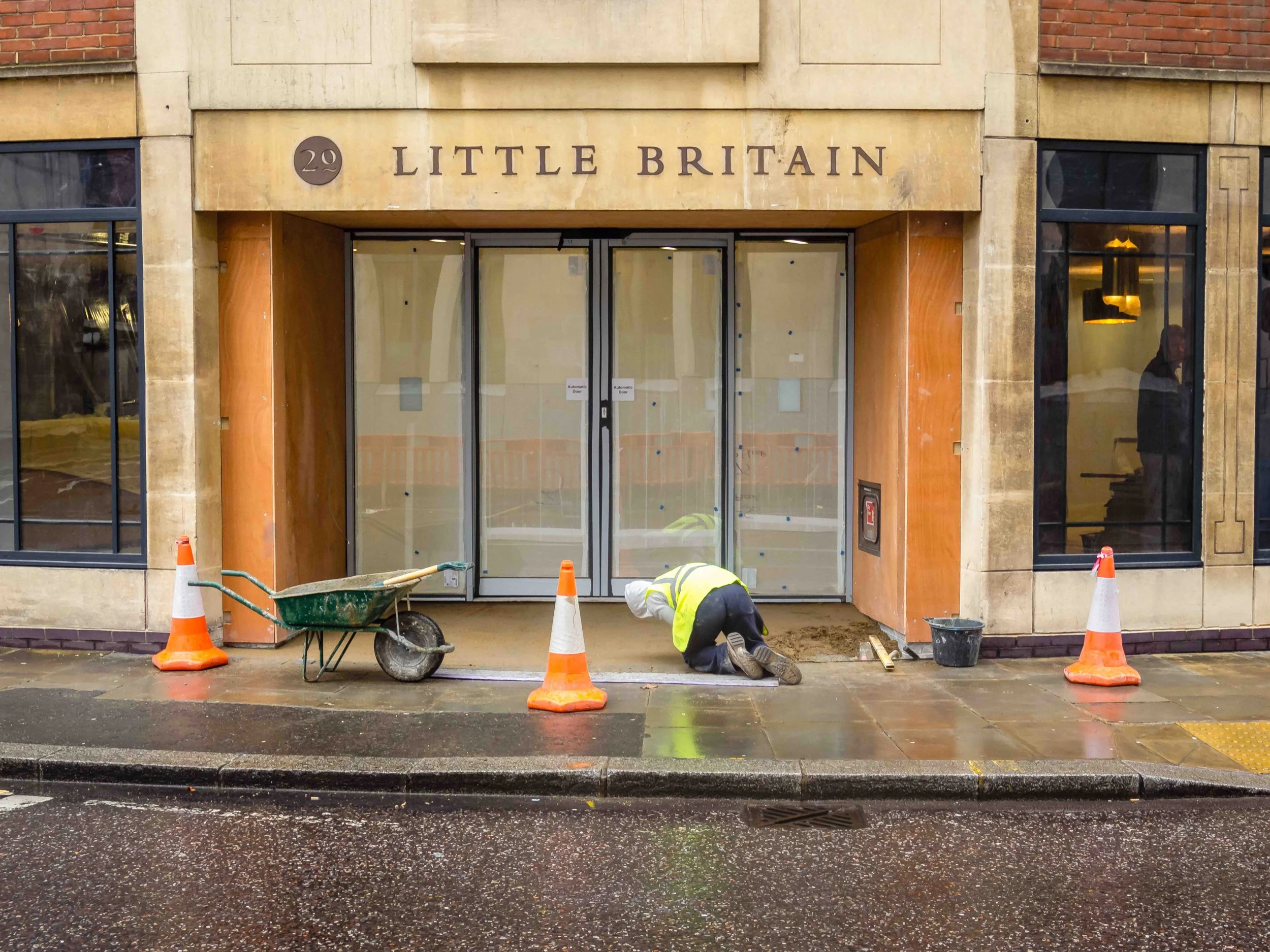
There is a building in London called Little Britain. Outside it, a worker in a hi-vis jacket kneels on the wet pavement, head down, working at something in the ground. The entrance behind him is boarded up. Cones everywhere.
It could be a photograph taken on the morning of 24th June 2016.
The vision of Little Britain — sovereign, self-sufficient, free from the bureaucratic grip of Brussels — has spent a decade under construction and remains, in important ways, boarded up. The project is not abandoned. But the entrance is not yet open.
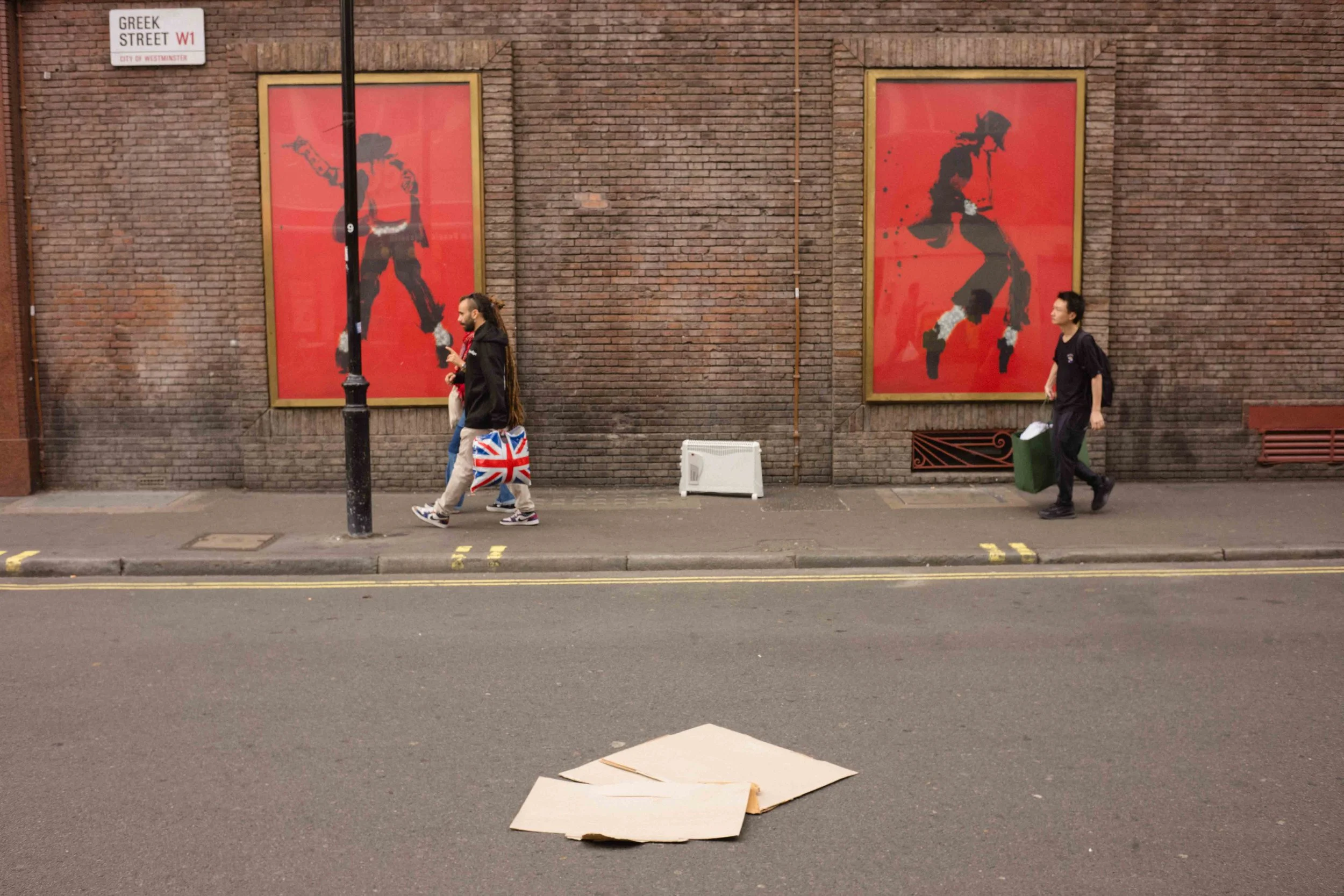
Meanwhile, the street outside carries on regardless. Multicultural, busy, indifferent to the political weather. On Greek Street, a man with long dreadlocks carries a Union Jack bag past a Chinese man heading the other way, both of them moving in front of twin red posters of Michael Jackson mid-dance. This is what London looks like. This is what Britain looks like, whether the dreamers of Little Britain want it or not.
The Trajectory
Here is what concerns me. Brexit did not emerge from nothing. It was the product of decades of austerity, deindustrialisation, and a political class that had stopped listening. The Leave vote was, in part, a howl from communities that had been told for thirty years that globalisation was working for them when they could see with their own eyes that it was not.
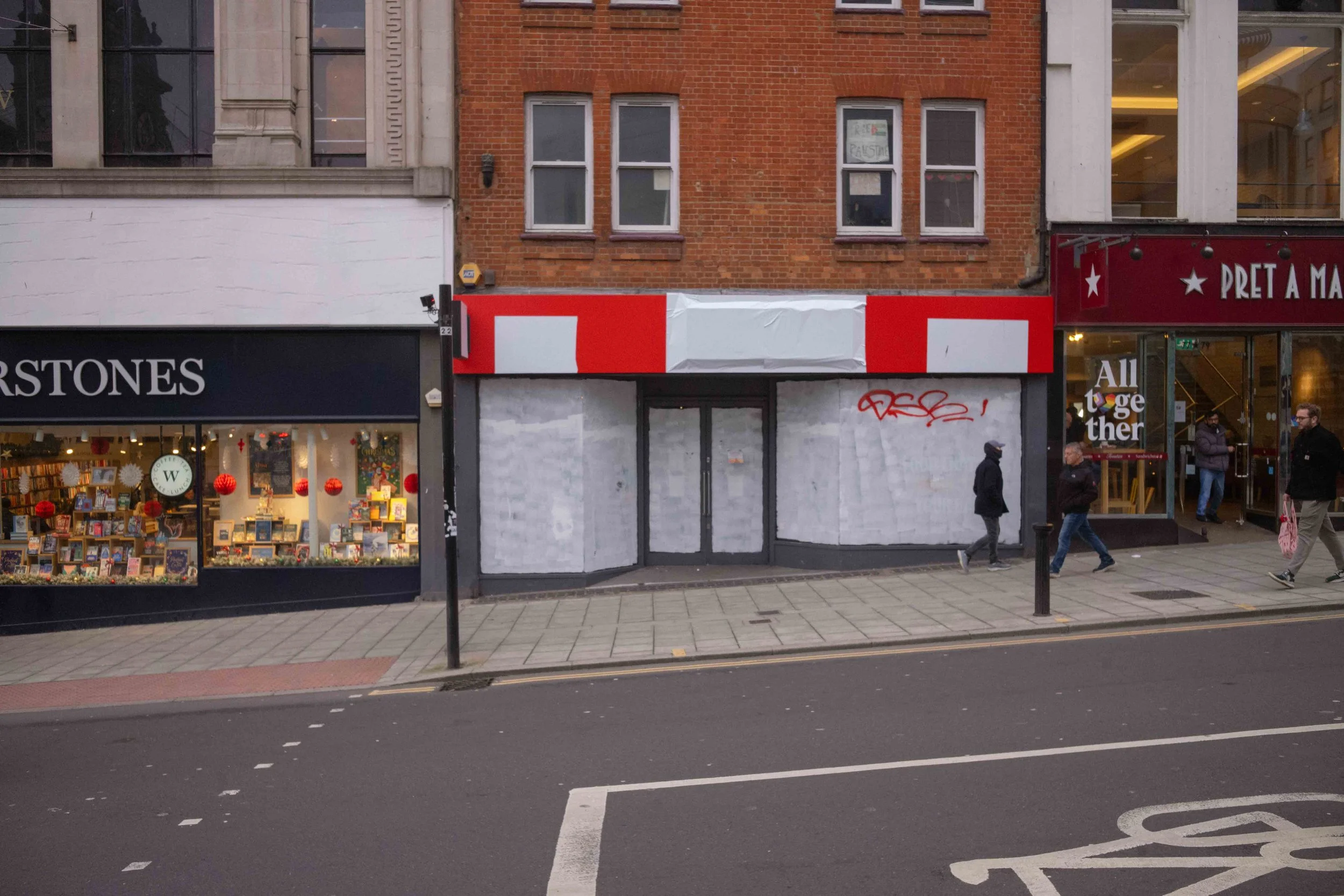
That howl found its expression in Brexit. But Brexit did not fix the thing that generated the howl. The shops are still boarded up — not just in London, but in every high street that Waterstones and Pret a Manger and "All Together" slogans cannot paper over. The anger did not dissipate. It continued downstream.
"The butterfly flaps its wings. Ten years later, the storm has not yet broken. But the sky has a particular colour."
The far right did not invent British disillusionment. It found it, already there, and offered it a shape. That is the butterfly effect of June 2016 that nobody in the campaign — Leave or Remain — wanted to acknowledge. When you destabilise a consensus without offering a replacement, you do not create a vacuum. You create a space that something else will fill.
We have not arrived there yet. That is the honest answer. We are in the ten-year corridor between the decision and its final destination, and neither door at either end is fully in view.
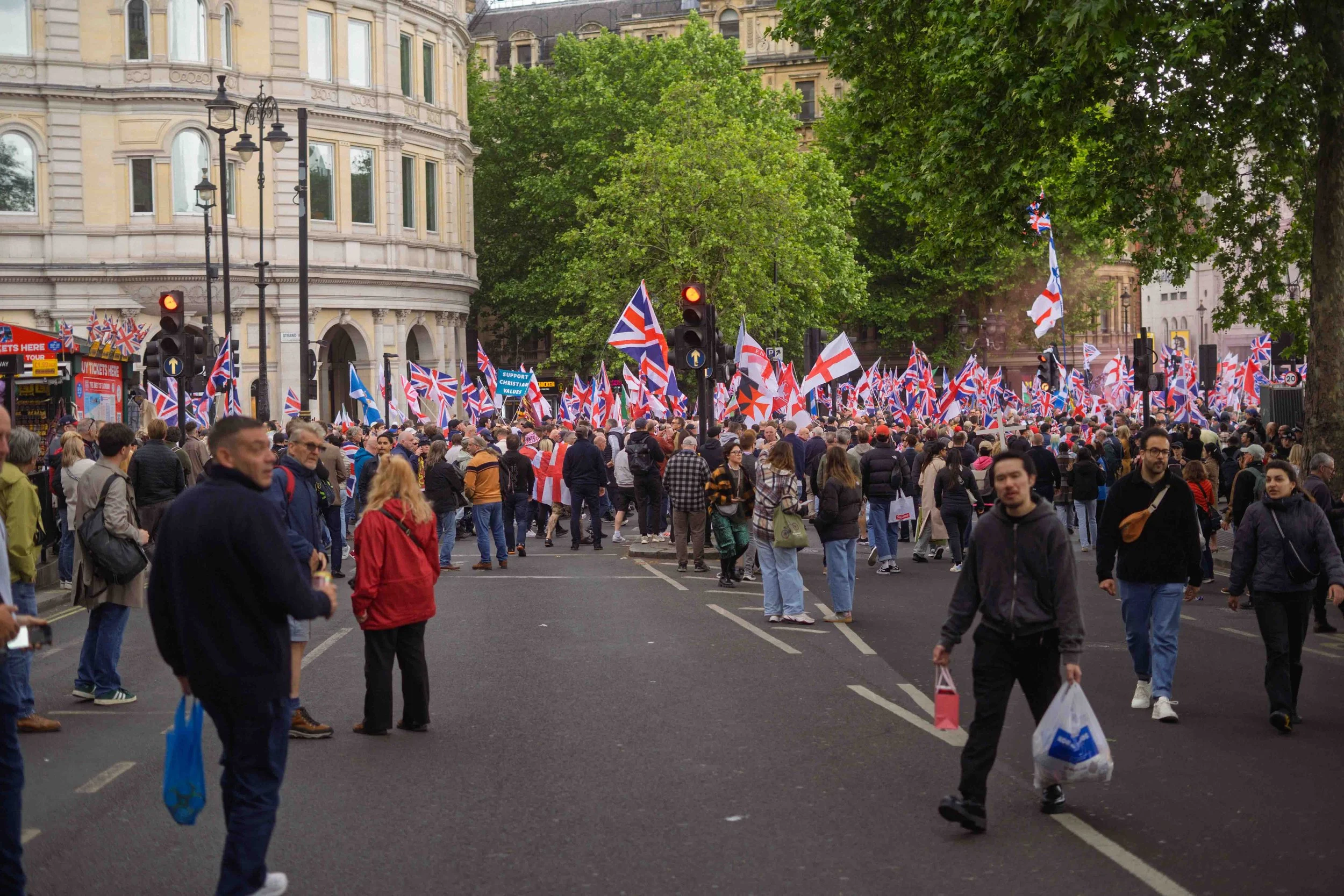
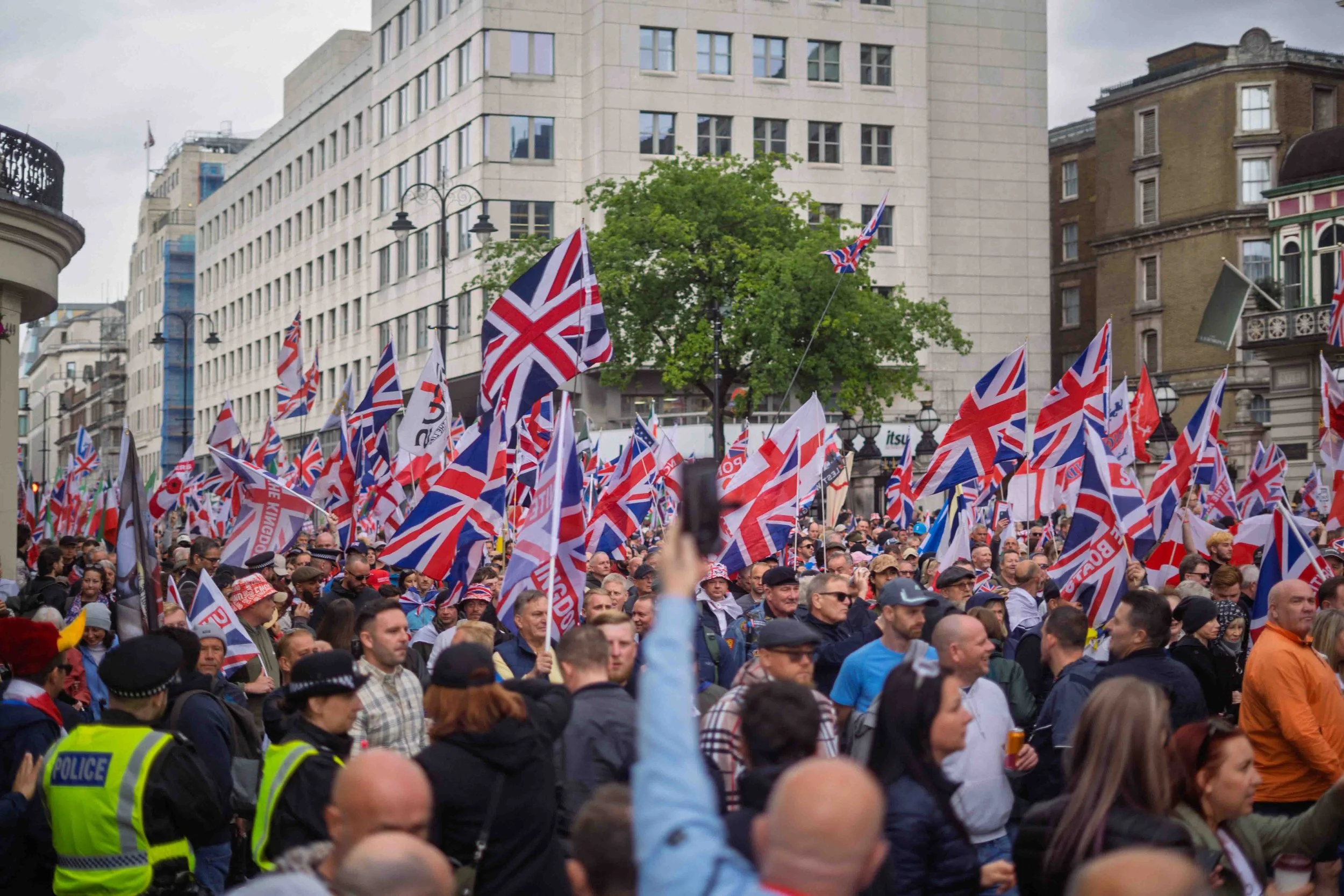
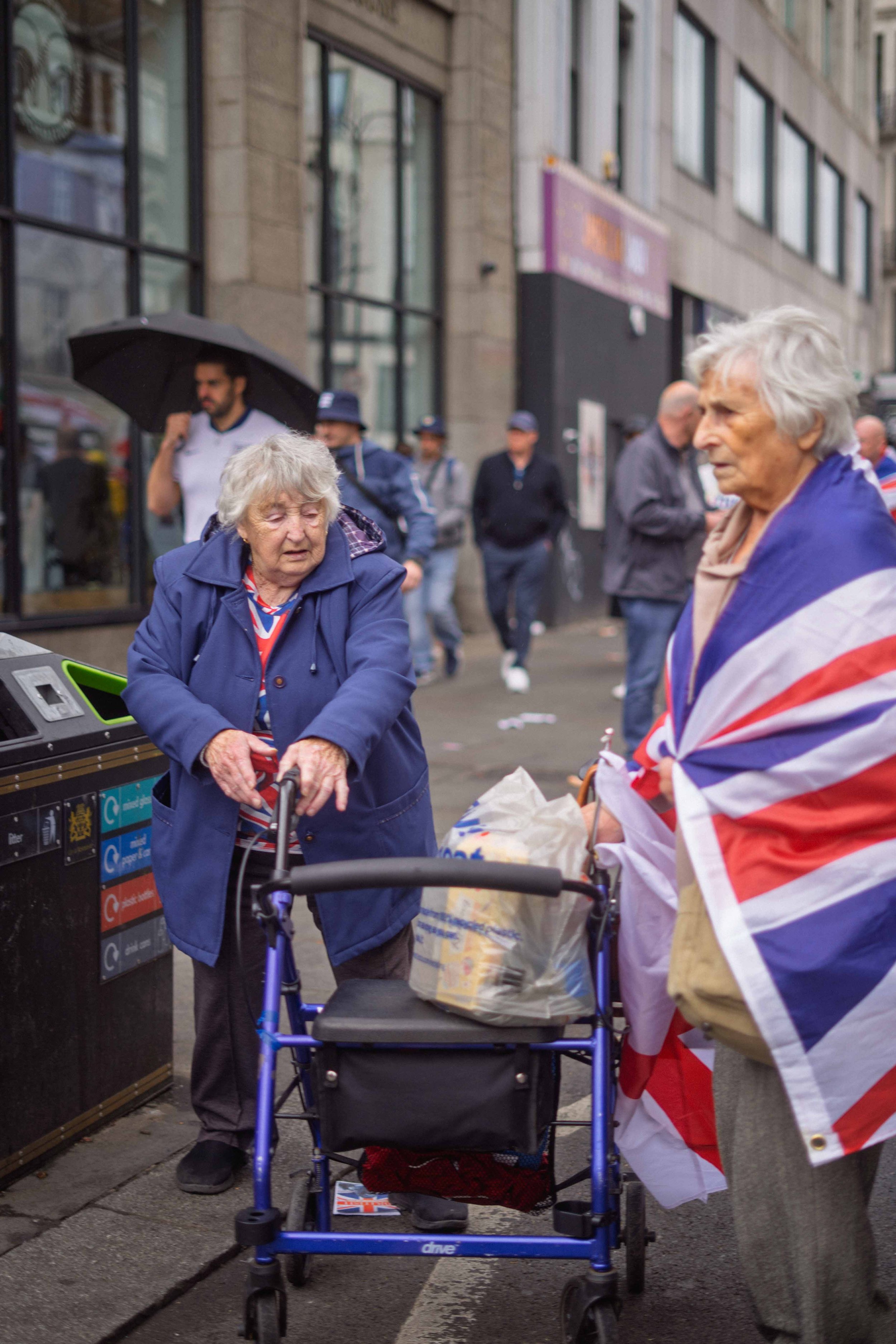
What England Is
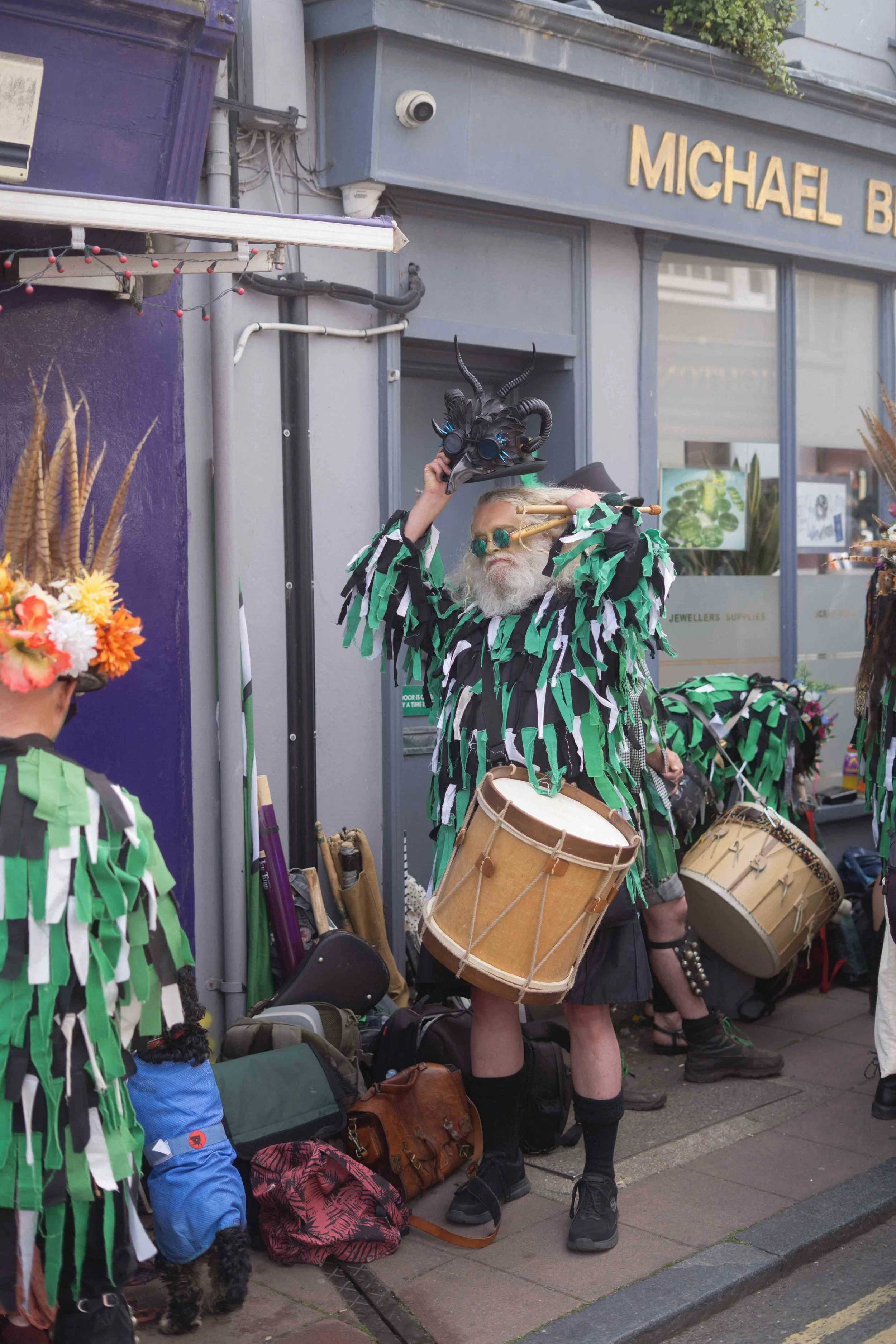
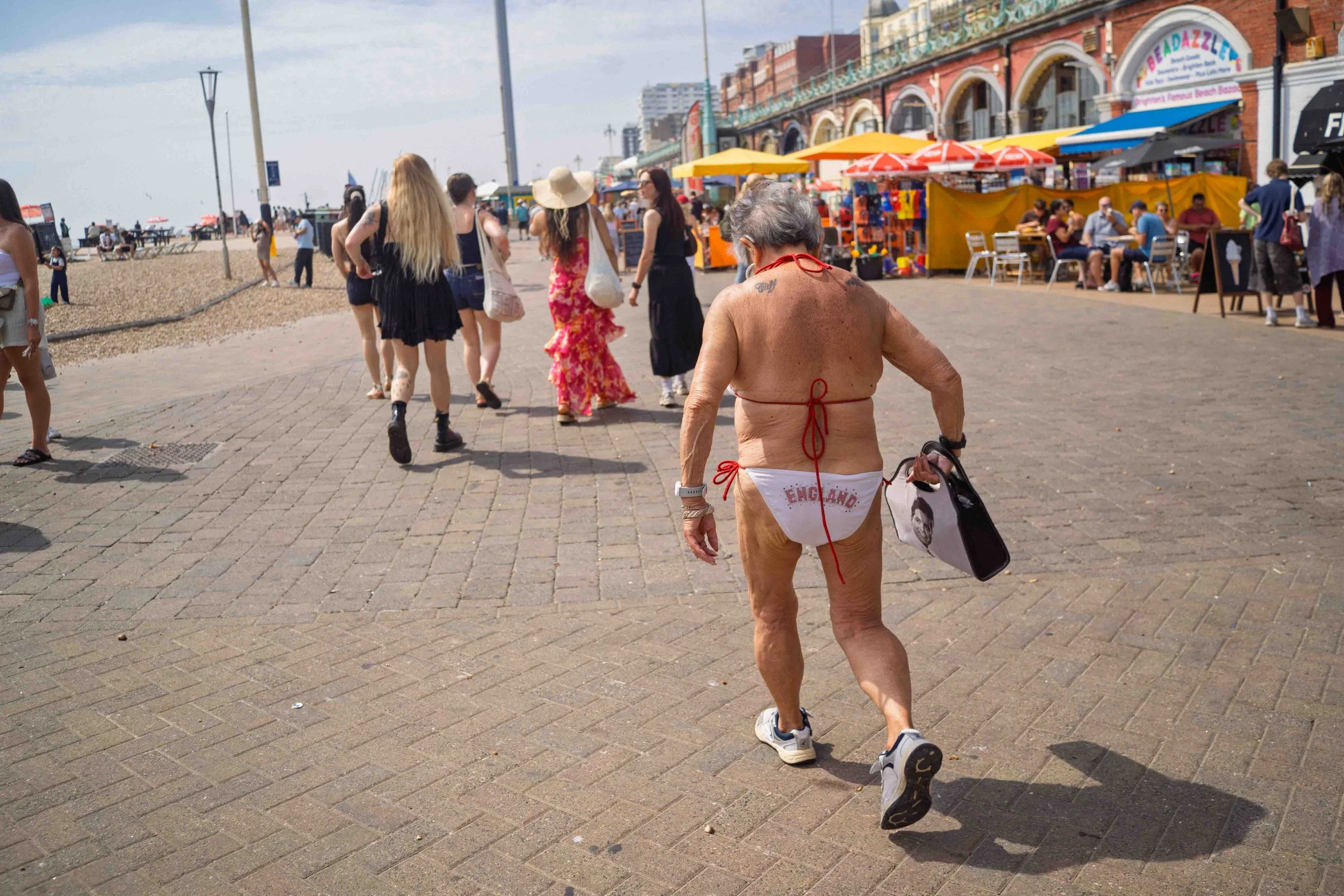
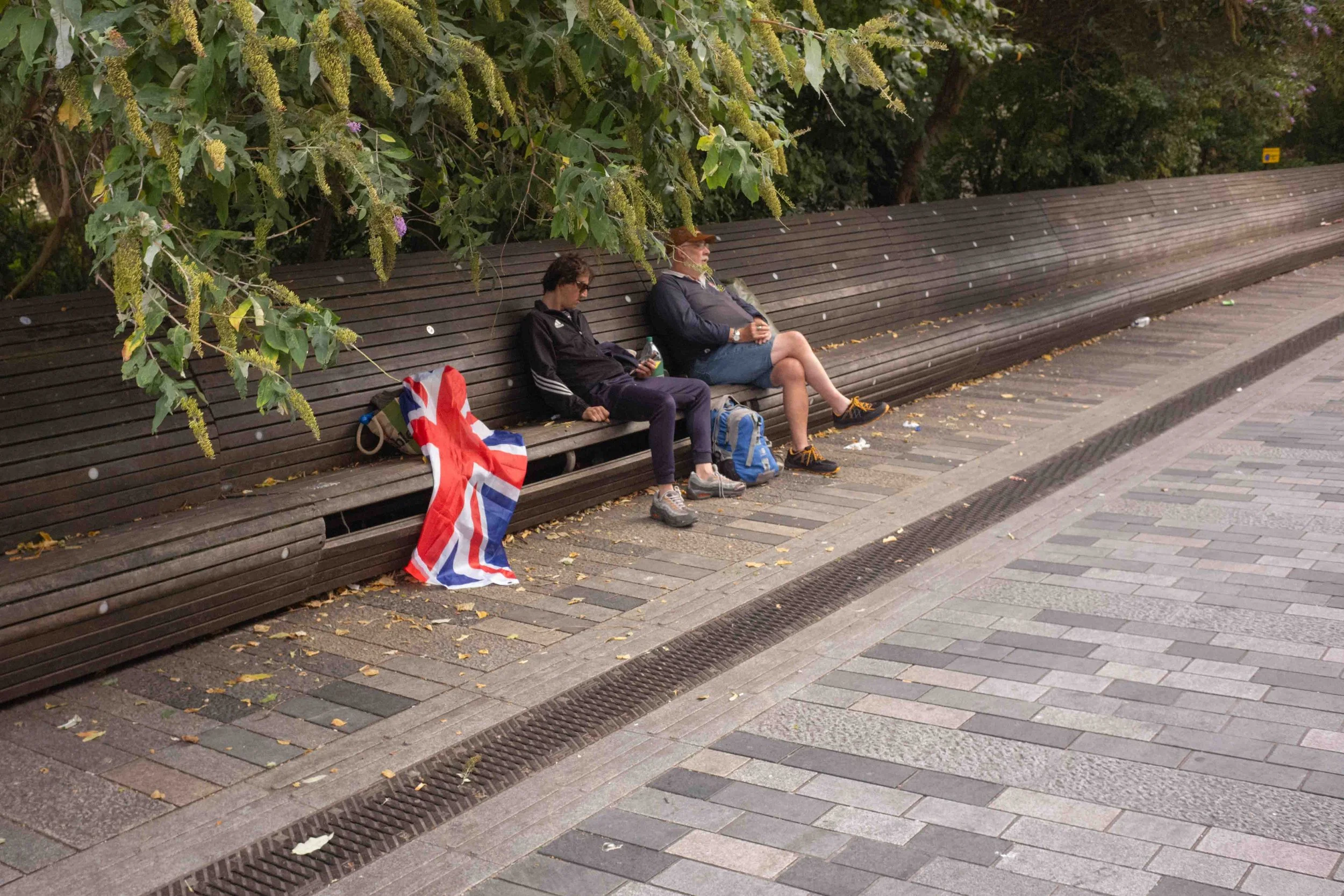
England, this summer, is an older man on a Brighton promenade in an England bikini, walking in the full sun without apology. It is Morris dancers in horned hats and shredded green coats keeping something old alive in a Brighton side street, whatever that old thing is. It is a Union Jack left on a park bench like something forgotten, or discarded, or simply put down for a moment's rest.
It is loud and quiet, proud and deflated, certain and entirely lost, all at once.
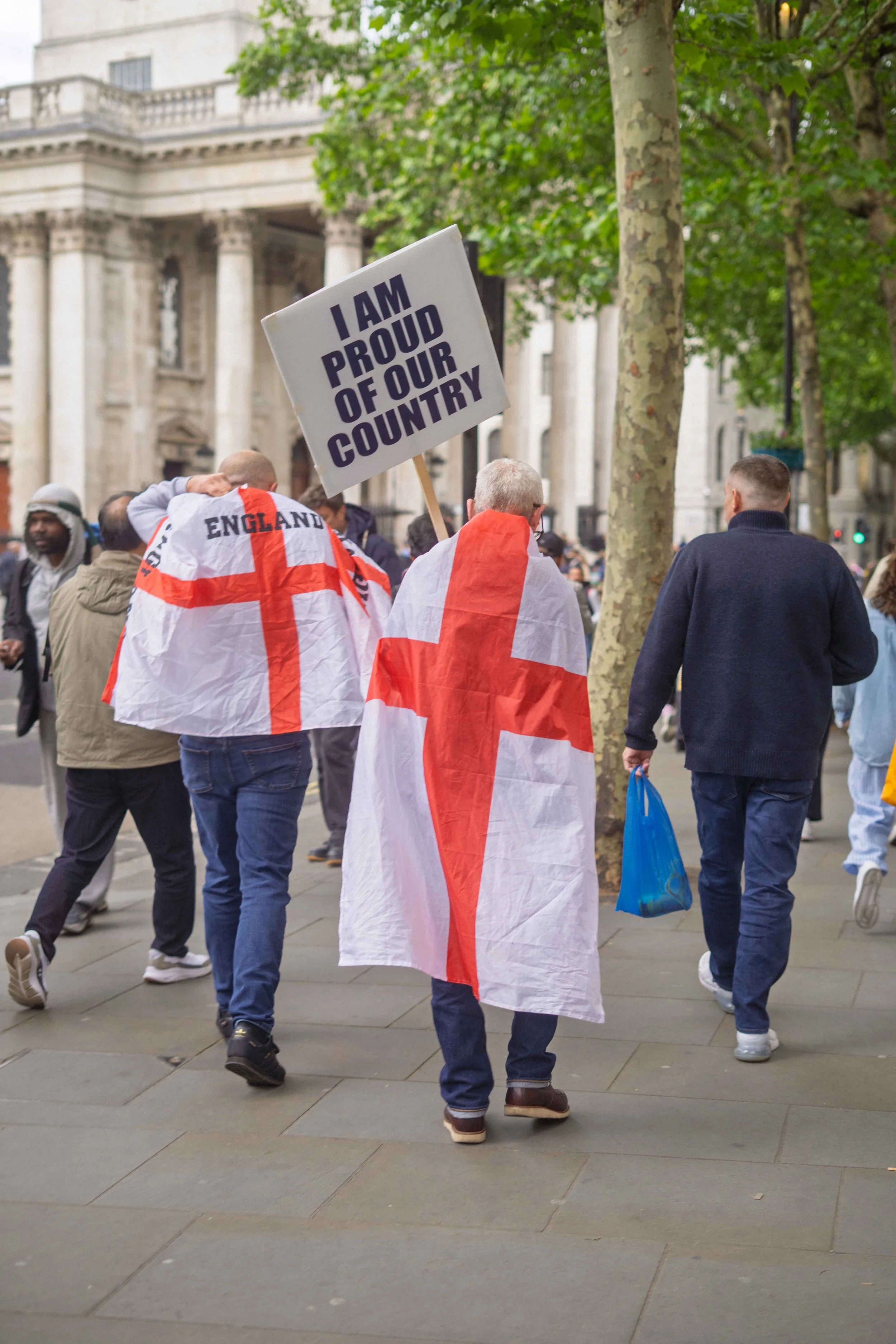
The kebab shop is open. The England flags are in the window. The halal sign is next to them. Whatever Britain thought it was voting for in June 2016, this is what it got: itself, unresolved.
The unknown sent us into the unknown. We haven't arrived yet. The question is where we're heading.
Until next time, keep snapping
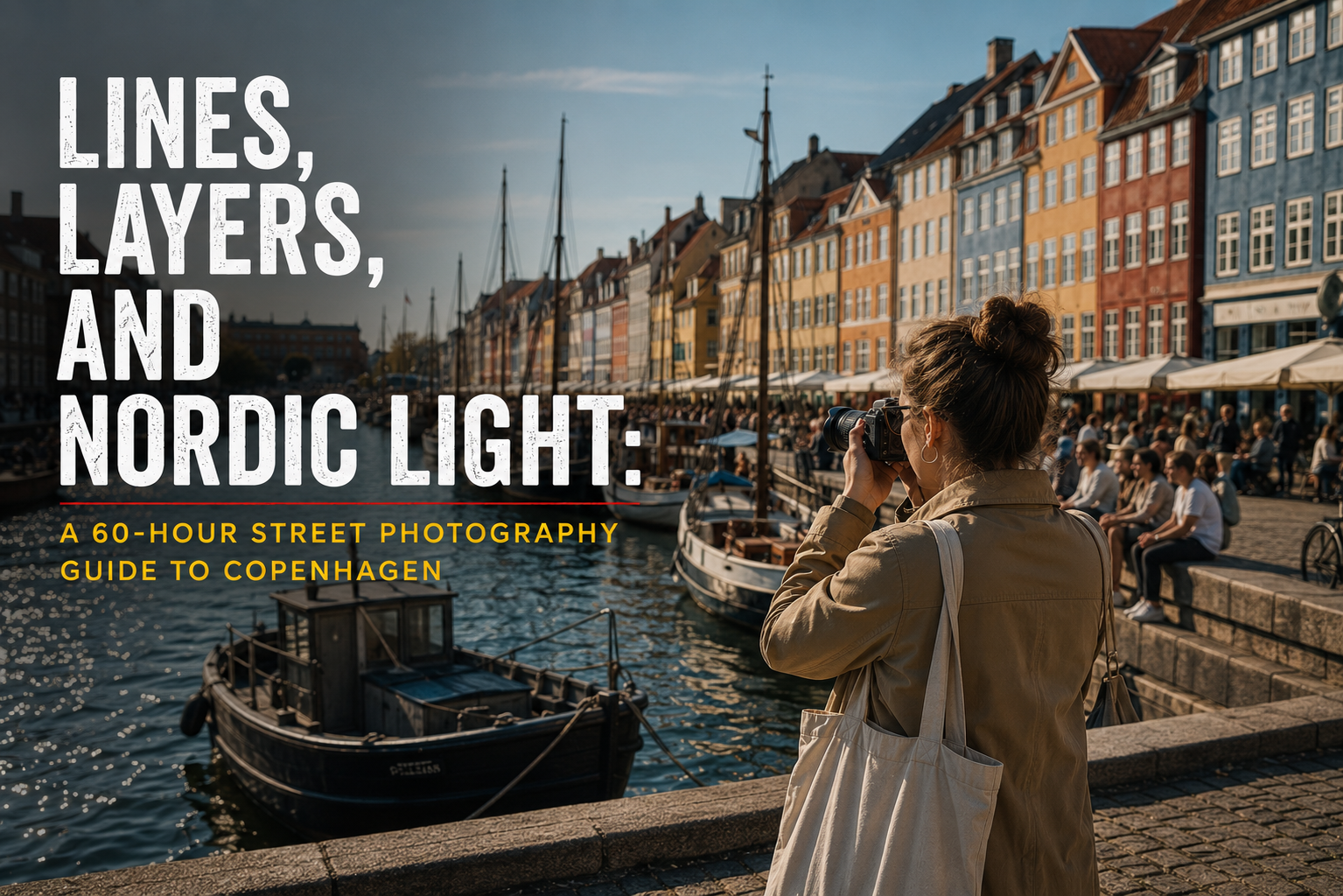
Lines, Layers, and Nordic Light: A 60 - Hour Street Photography Guide to Copenhagen
There is a strange irony in modern travel.
Three times a week, I spend three hours a day commuting just to get to work and back. Yet, in just 90 minutes from London Gatwick, I found myself stepping off a plane and into a completely different visual universe. It’s a powerful reminder that sometimes the best inspiration isn't found in a longer journey, but a smarter one.
There is a strange irony in modern travel.
Three times a week, I spend three hours a day commuting just to get to work and back. Yet, in just 90 minutes from London Gatwick, I found myself stepping off a plane and into a completely different visual universe. It’s a powerful reminder that sometimes the best inspiration isn't found in a longer journey, but a smarter one.
For this trip, I traveled solo, and I’ll be honest: I arrived with a touch of trepidation. As a street photographer, being alone in a foreign city can sometimes feel isolating, and I was initially concerned about how a solo traveler with a camera would be received. However, those worries evaporated the moment I hit the pavement. The famous openness of the Danes and the deep-rooted culture of Hygge welcomed me with open arms. I didn't feel like an outsider looking in; I felt like a guest invited to witness the rhythm of the city.
To understand the "why" behind the photos, you have to understand the city's bones. Copenhagen (or København—"Merchants' Harbor") has spent 800 years evolving from a tiny fishing village into a powerhouse of design. You see it in the architecture: the 17th-century Dutch Baroque houses of Christianshavn weren't just built for aesthetics; they were built as a fortified naval statement by King Christian IV. When you're walking through Nyboder — those iconic yellow naval barracks—you aren't just looking at a "pretty street." You’re looking at some of the world's first planned social housing, dating back to 1631. This history of care and community leads directly into the modern mindset of Hygge. We often think of it as a winter concept—candles and wool socks—but in the spring, it manifests as a communal openness.
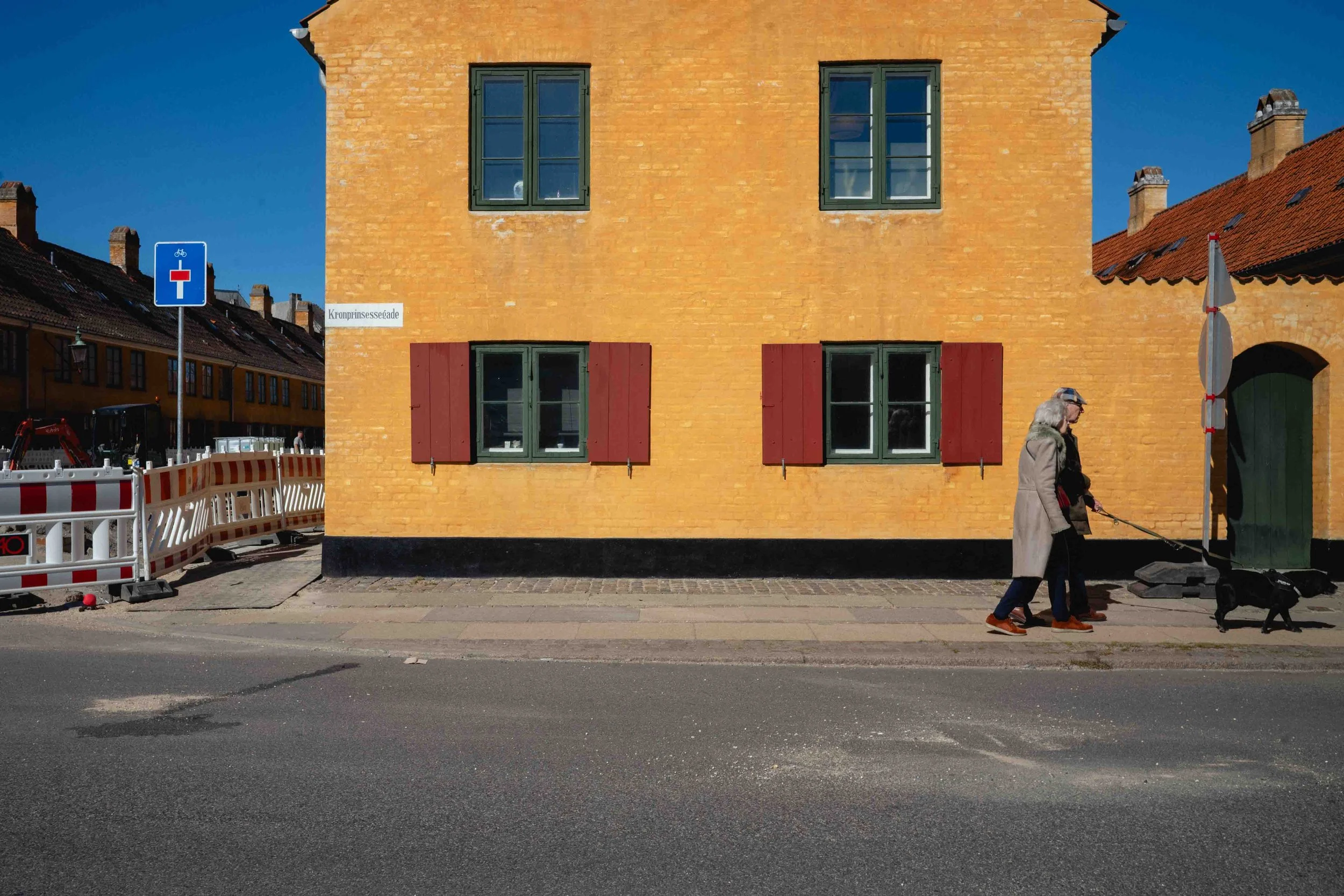
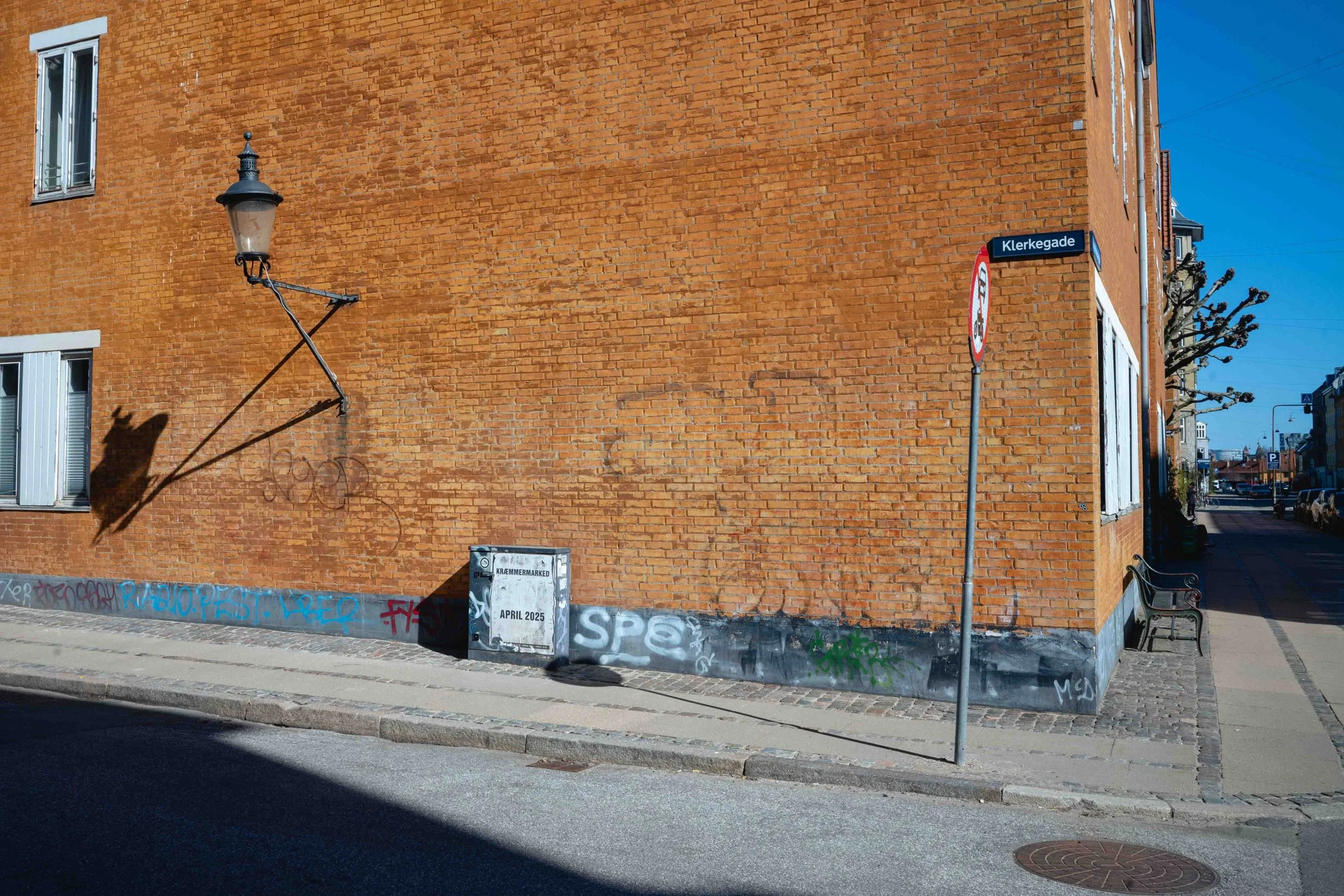
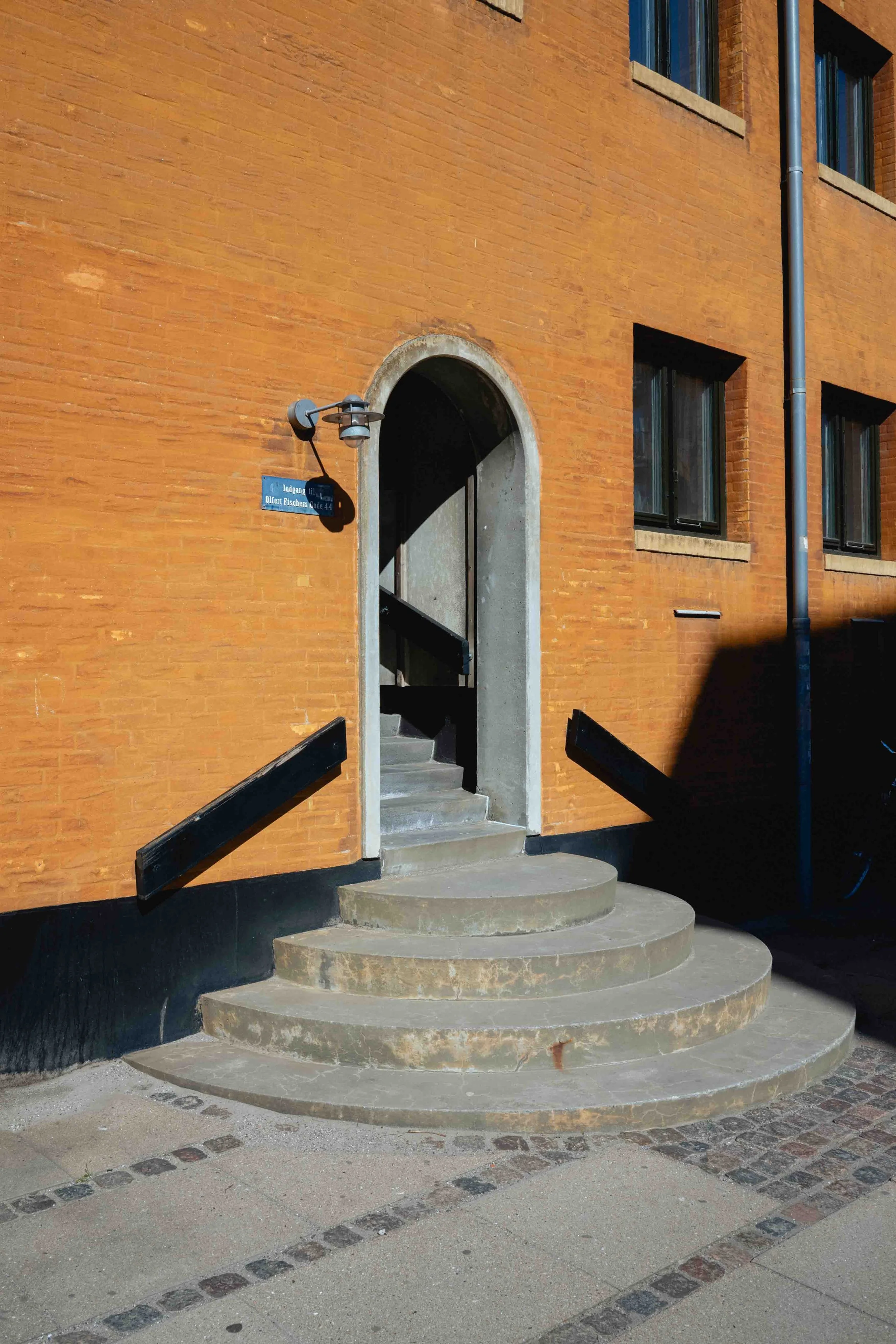
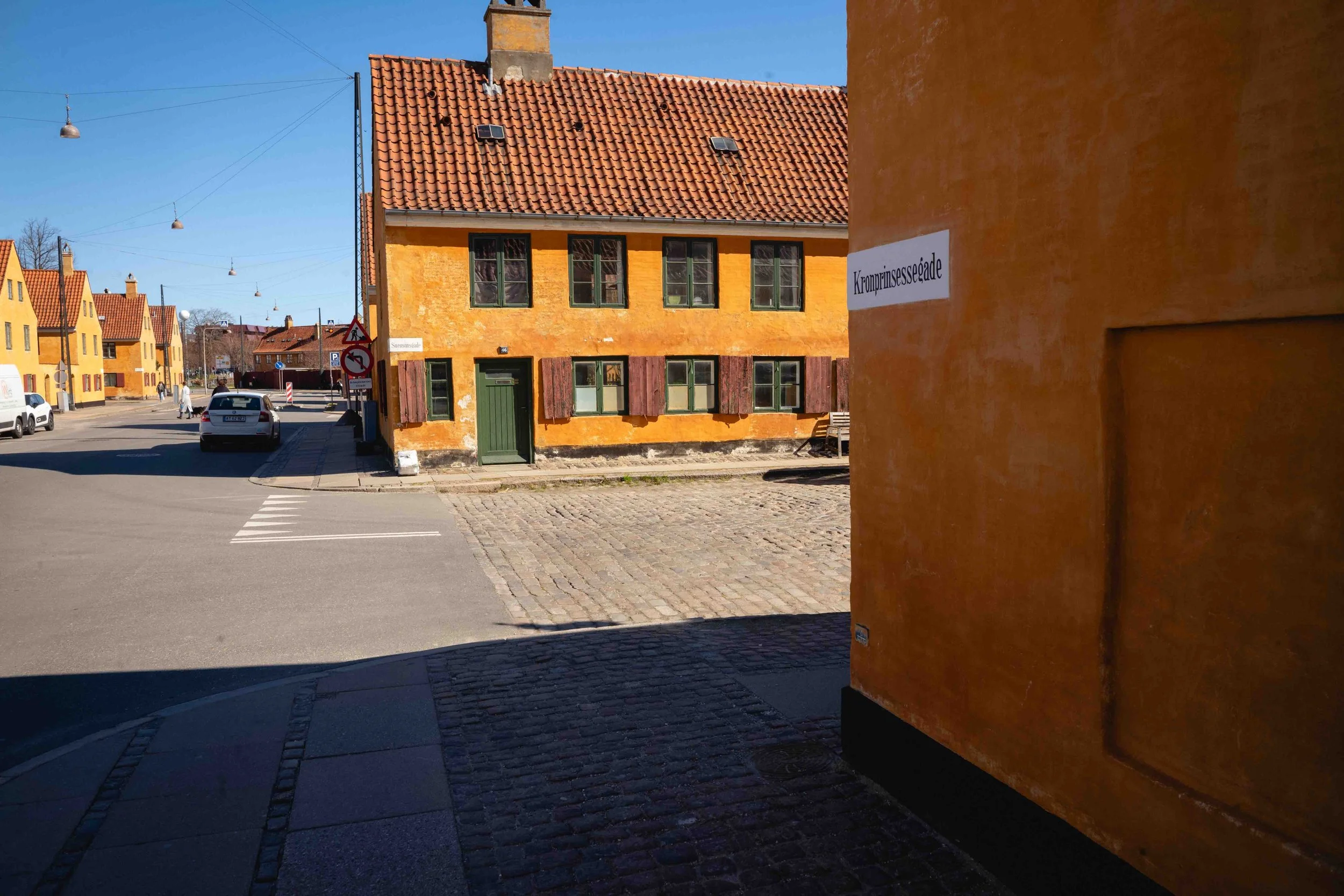
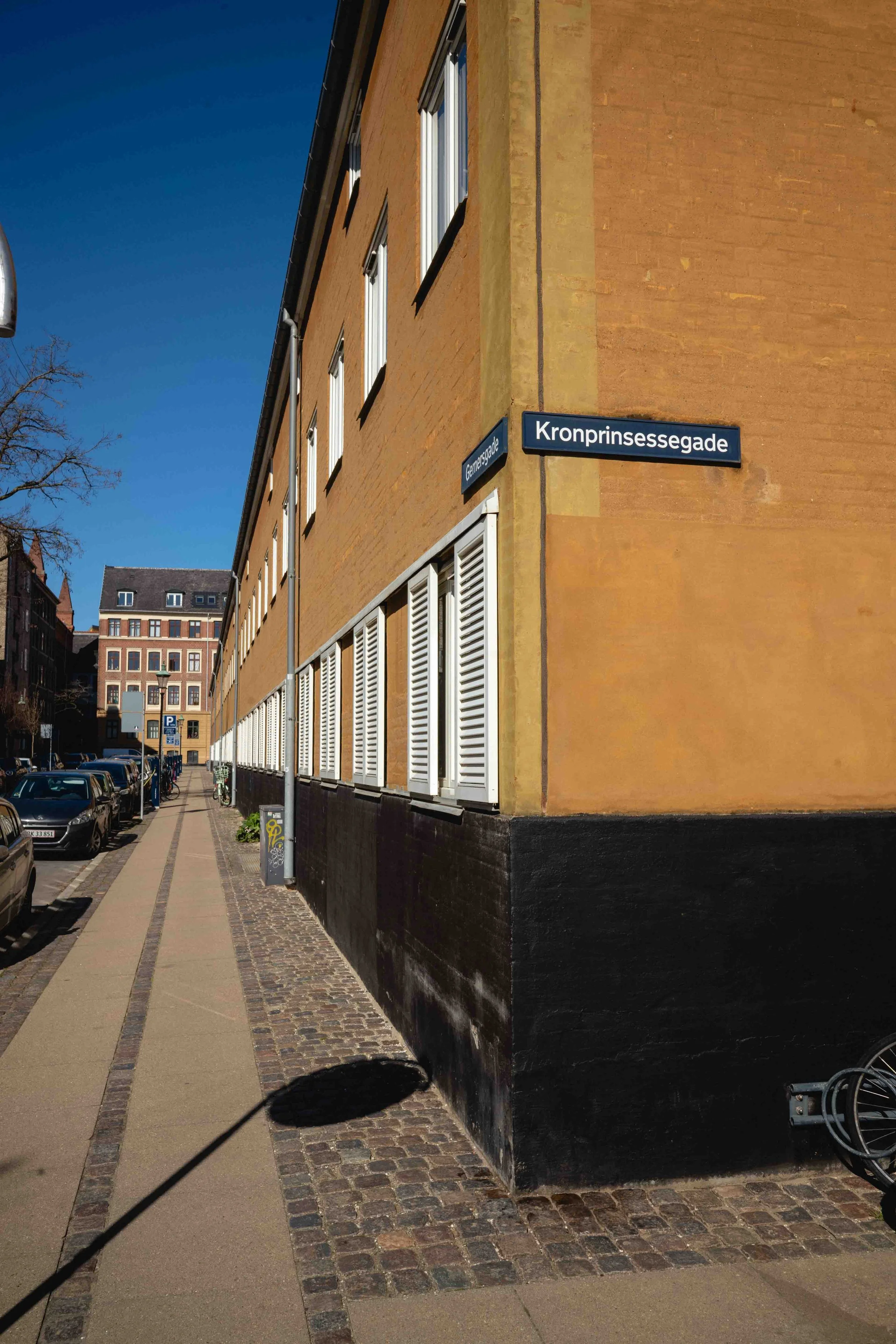
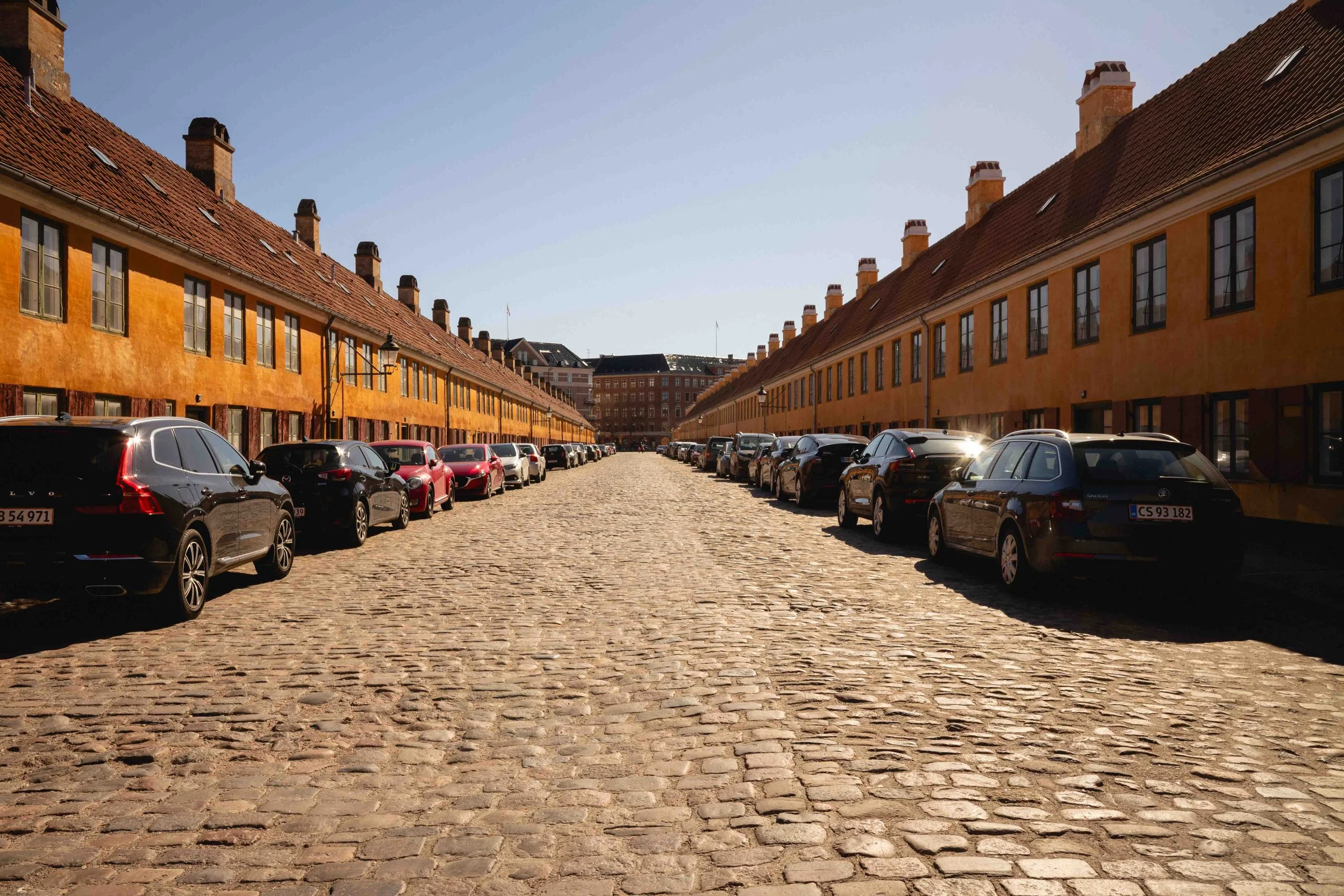
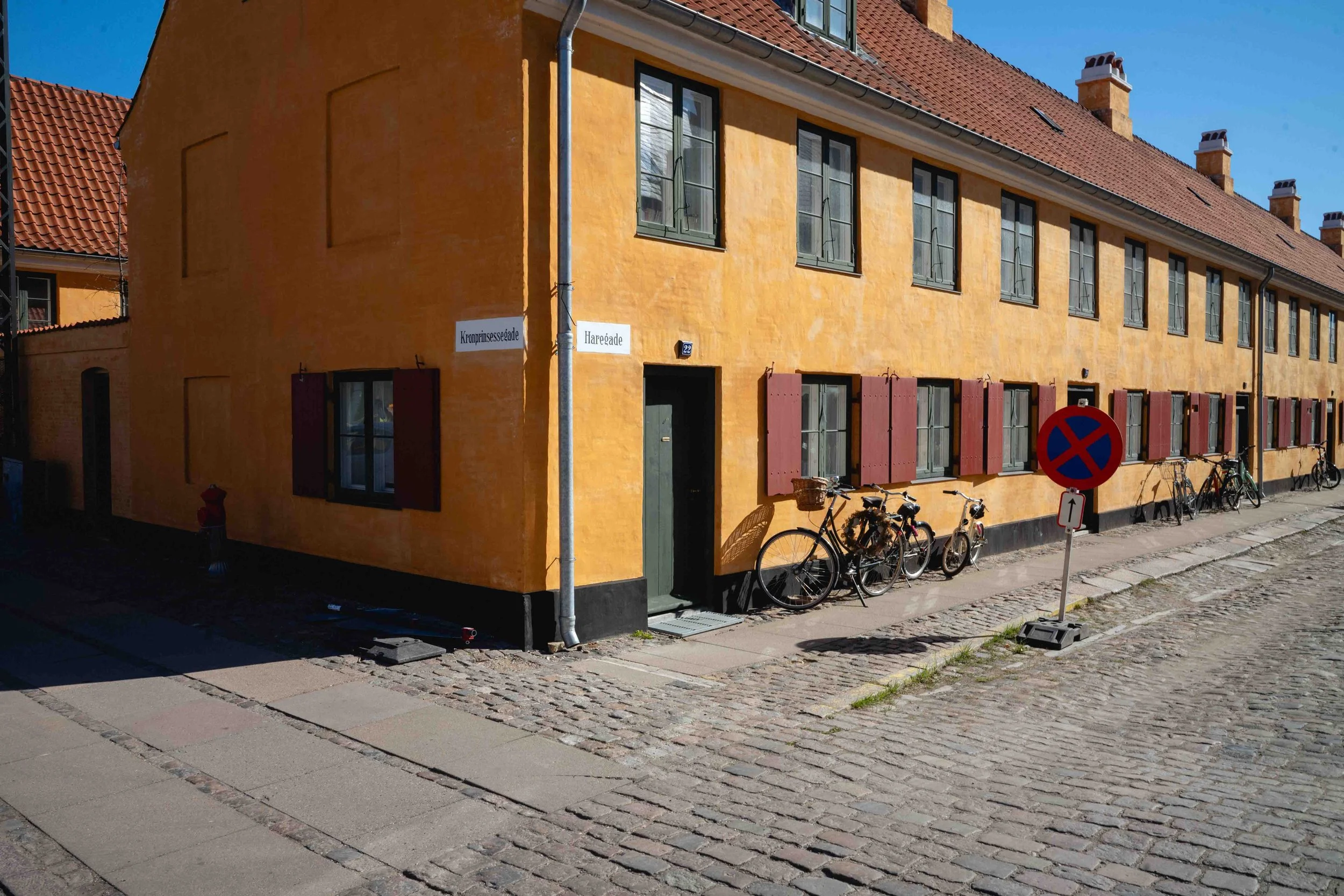
It’s the "urban hygge" of people sharing a coffee on the curbside in Jægersborggade or a craft beer in the Meatpacking District. As a solo photographer, this mindset is a gift. There is a sense of trust and "live and let live" here that makes you feel incredibly safe. The locals are remarkably open to being part of a frame; as long as you are respectful, the city feels like a collaborative studio. The light plays its part, too. The Northern latitude in April provides a "blue hour" that feels like it lasts for three, and a soft, diffused sun that makes even the grittiest alleyway in Nørrebro look cinematic.
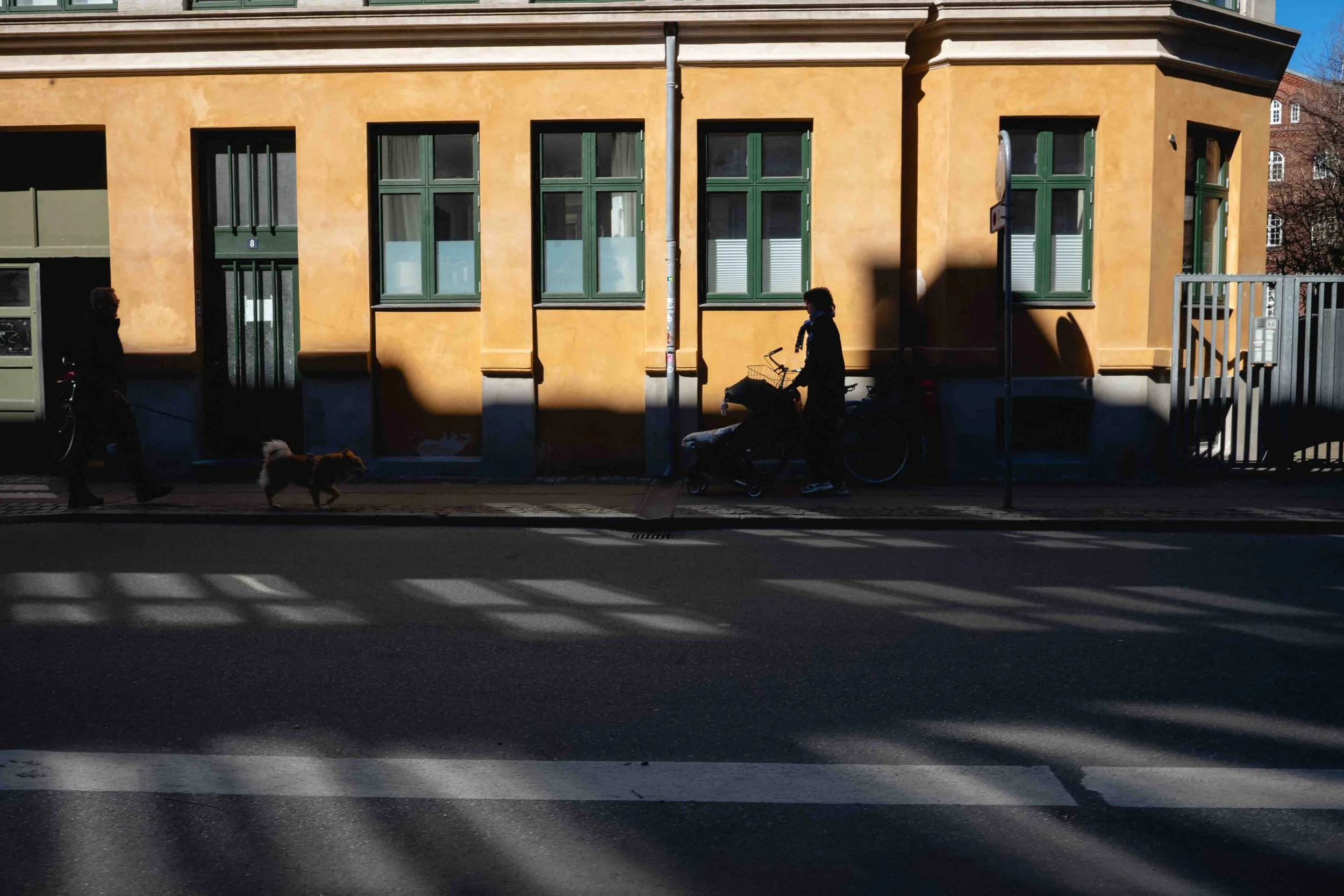
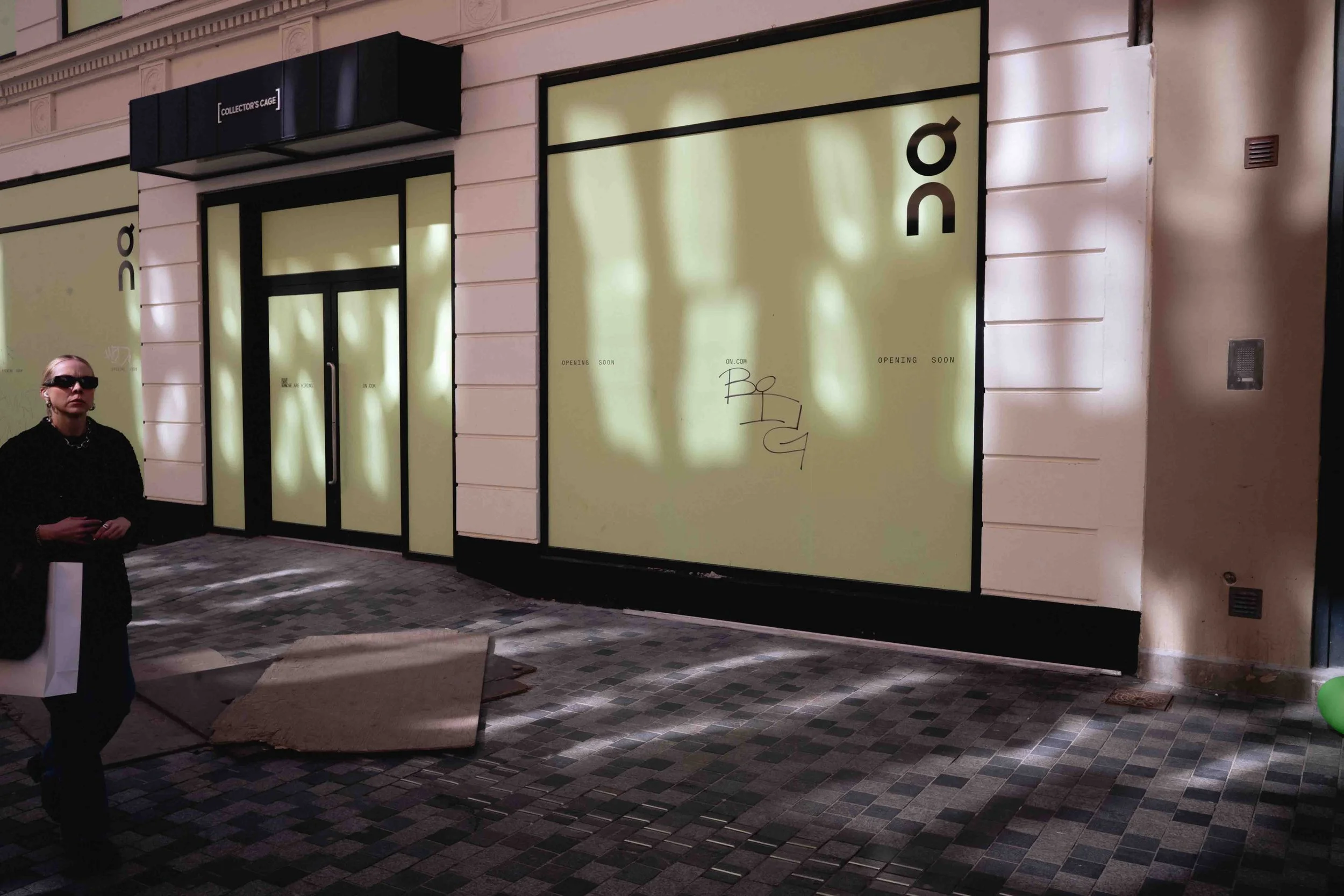
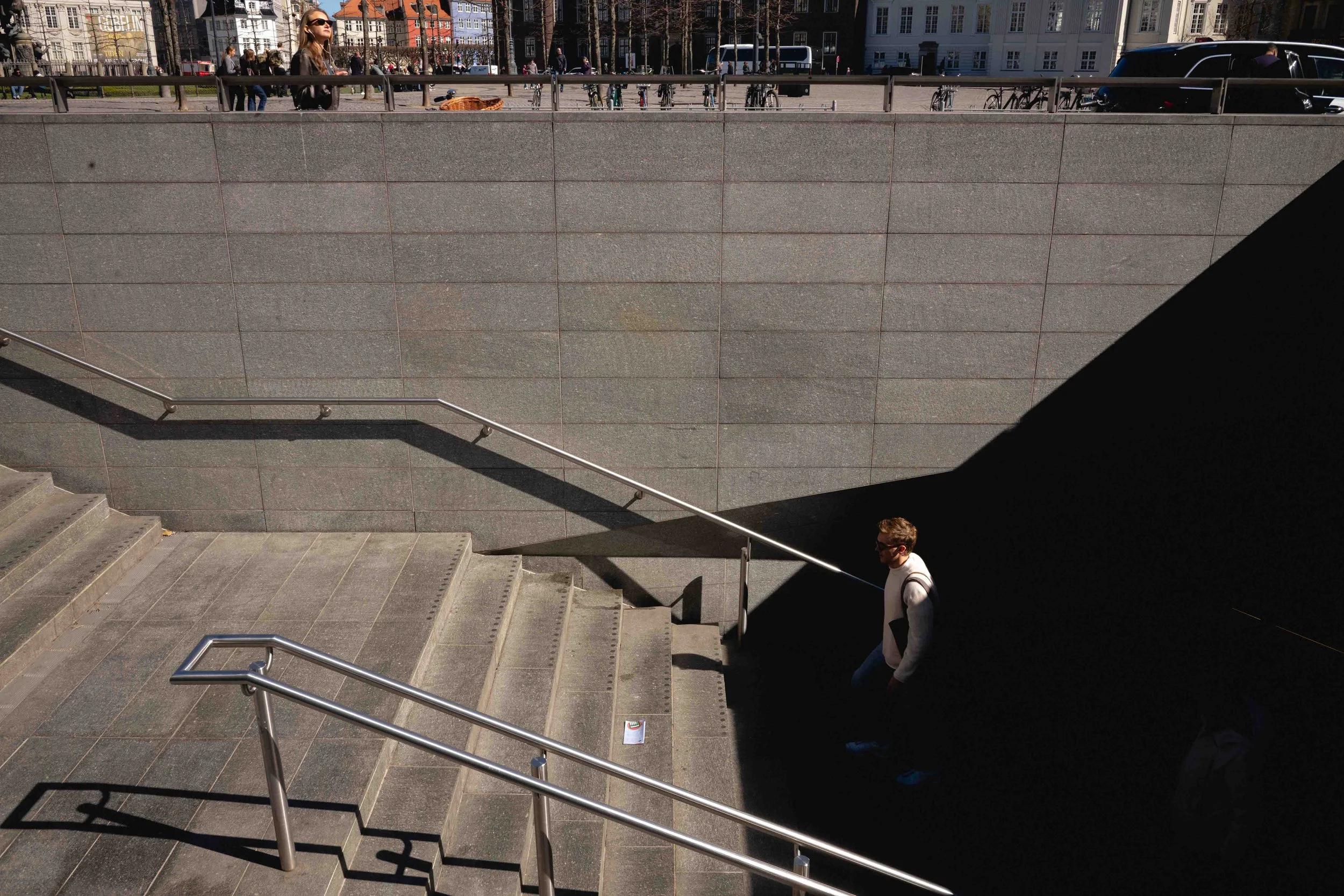
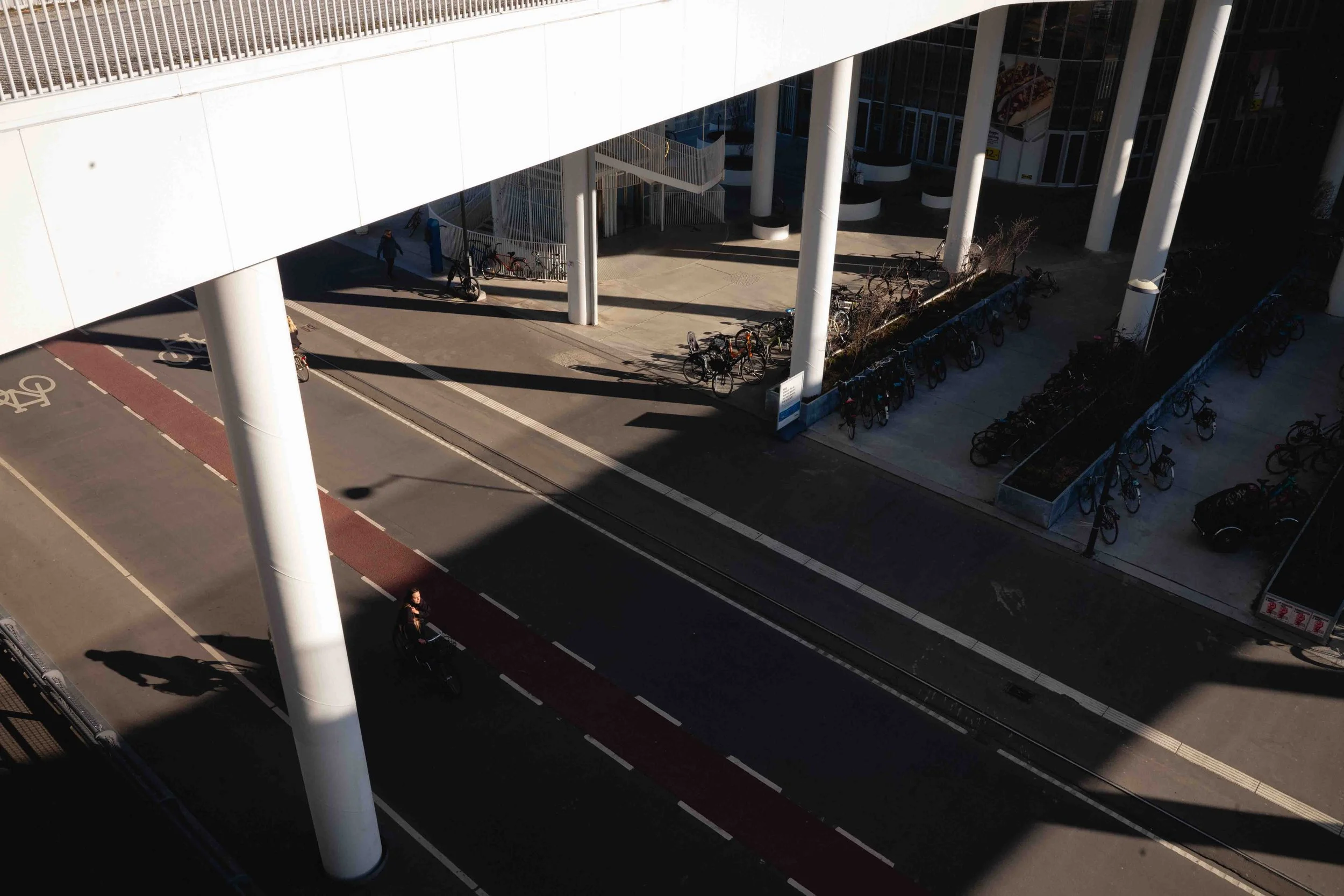
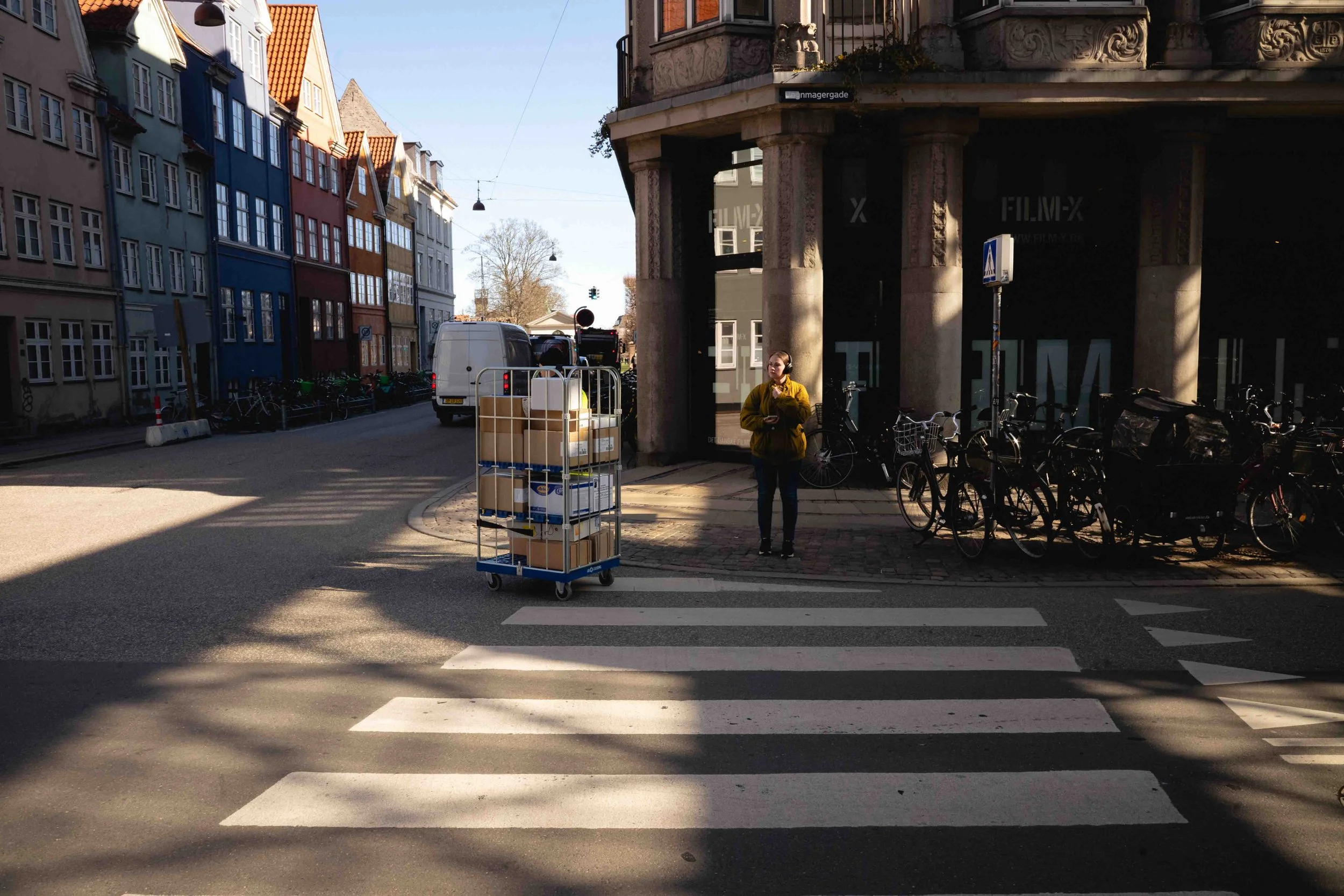
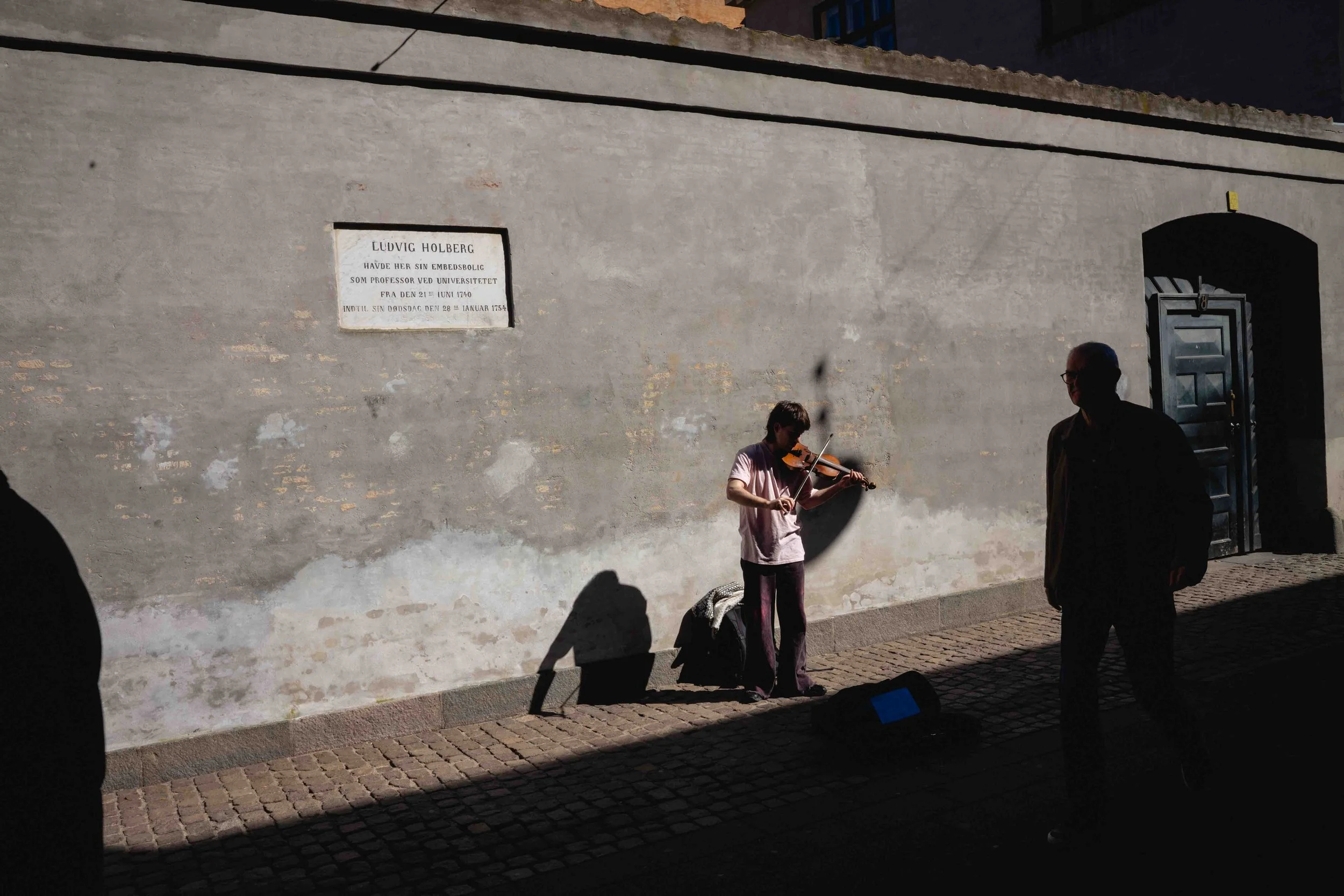
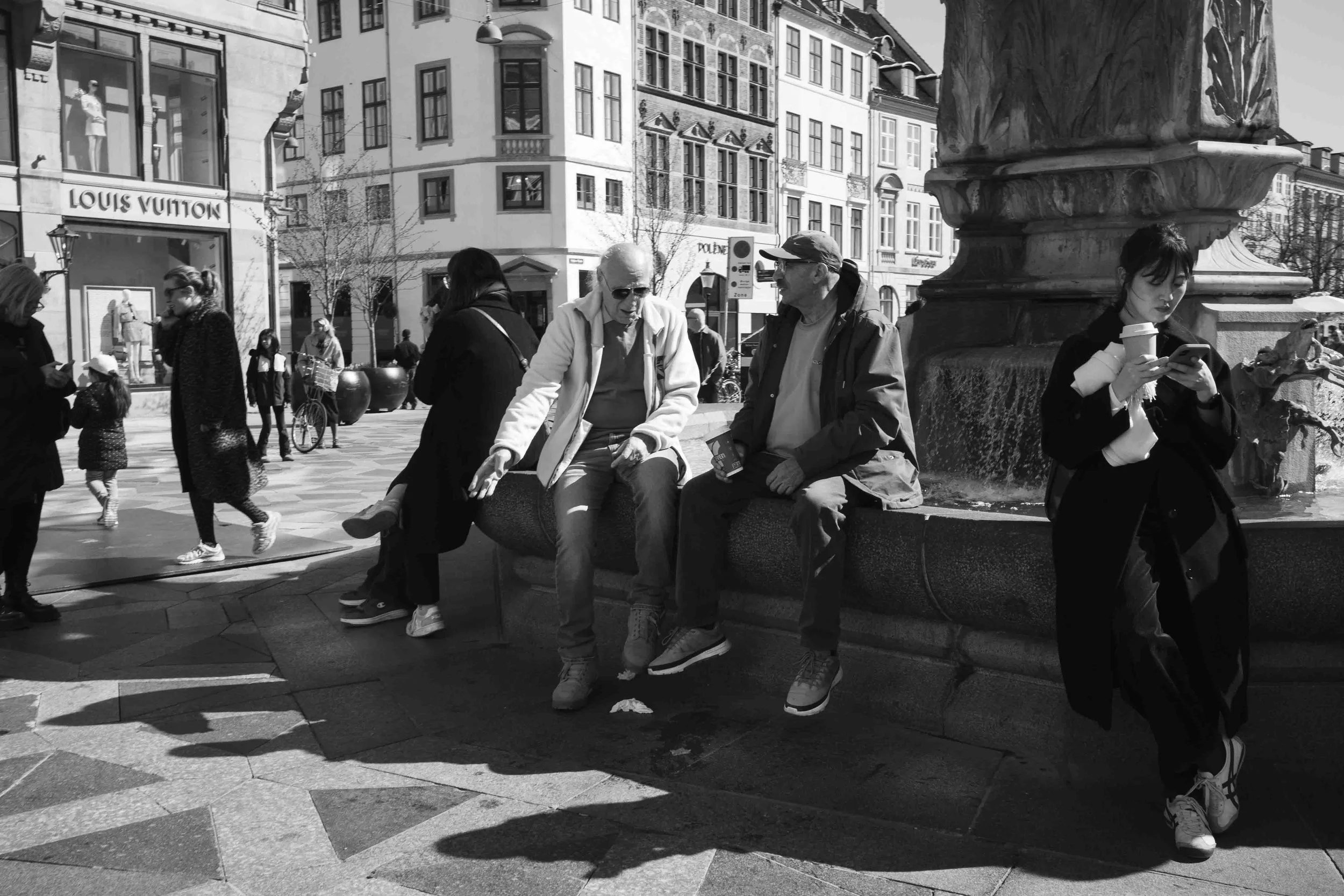
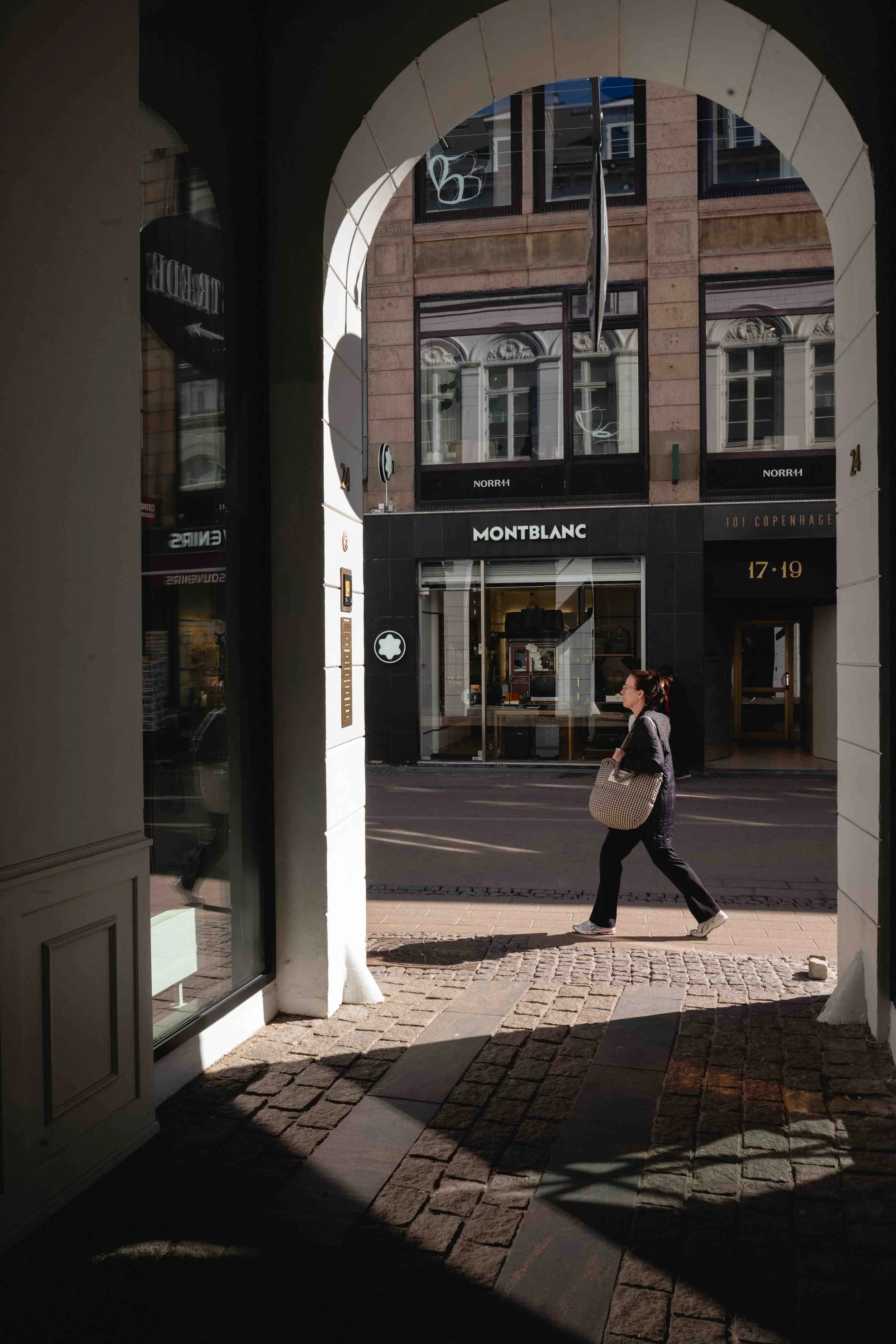
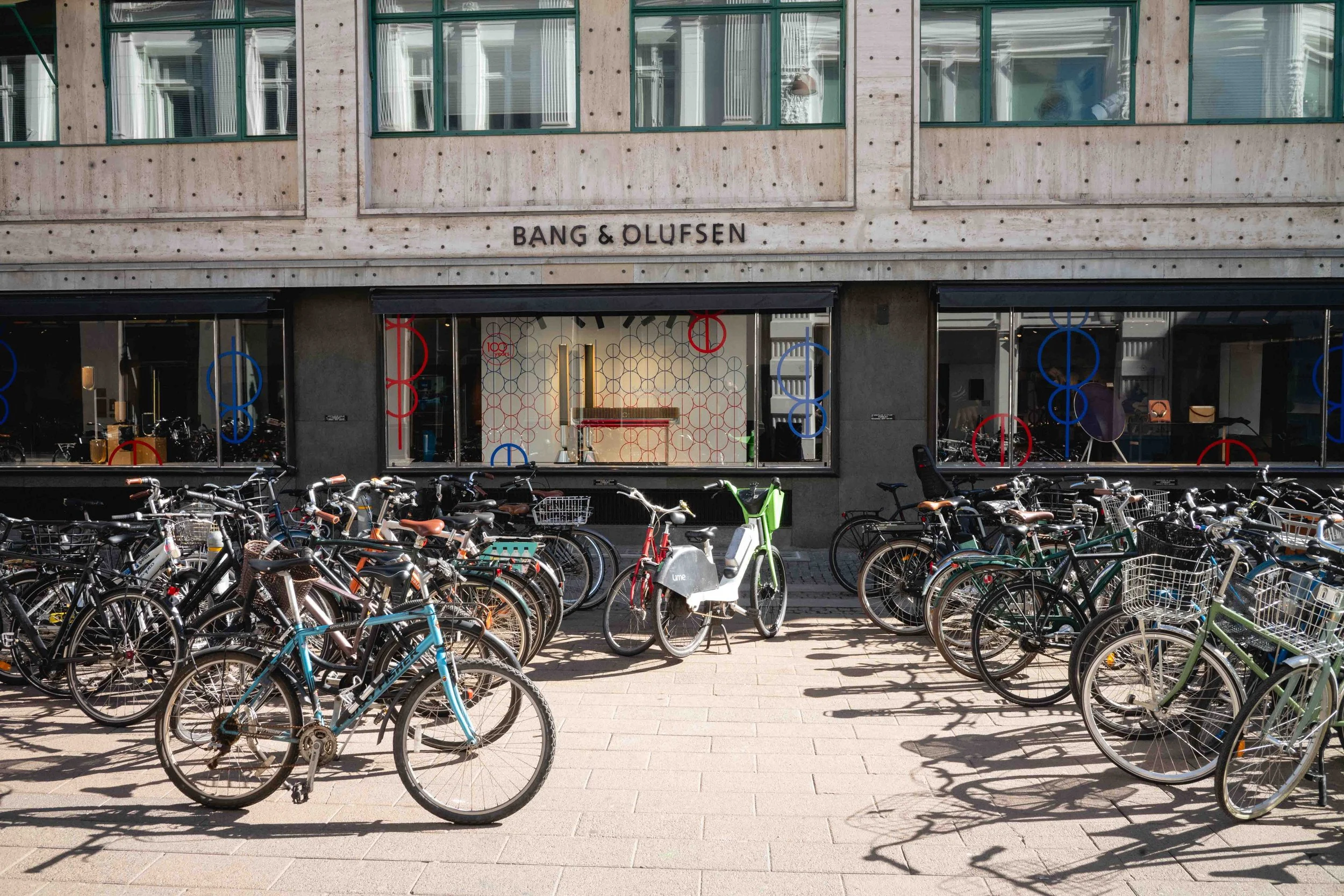
When it comes to navigating this photographer's playground, you generally have three options: walking, the seamless Metro, or joining the local masses with a bike hire. I elected mainly to walk, covering 22 miles of pavement on foot over two days. While biking is the Danish way, walking gives you the unique ability to see the "underbelly" of the city—the peeling posters in a Nørrebro side street or the way the light hits a specific doorway that you’d miss if you were whizzing past on two wheels. That said, accessibility is effortless here. I found the City Pass Small to be an excellent investment; it covers the Metro, buses, and harbor scouts perfectly, making the transit to and from the airport a total breeze.
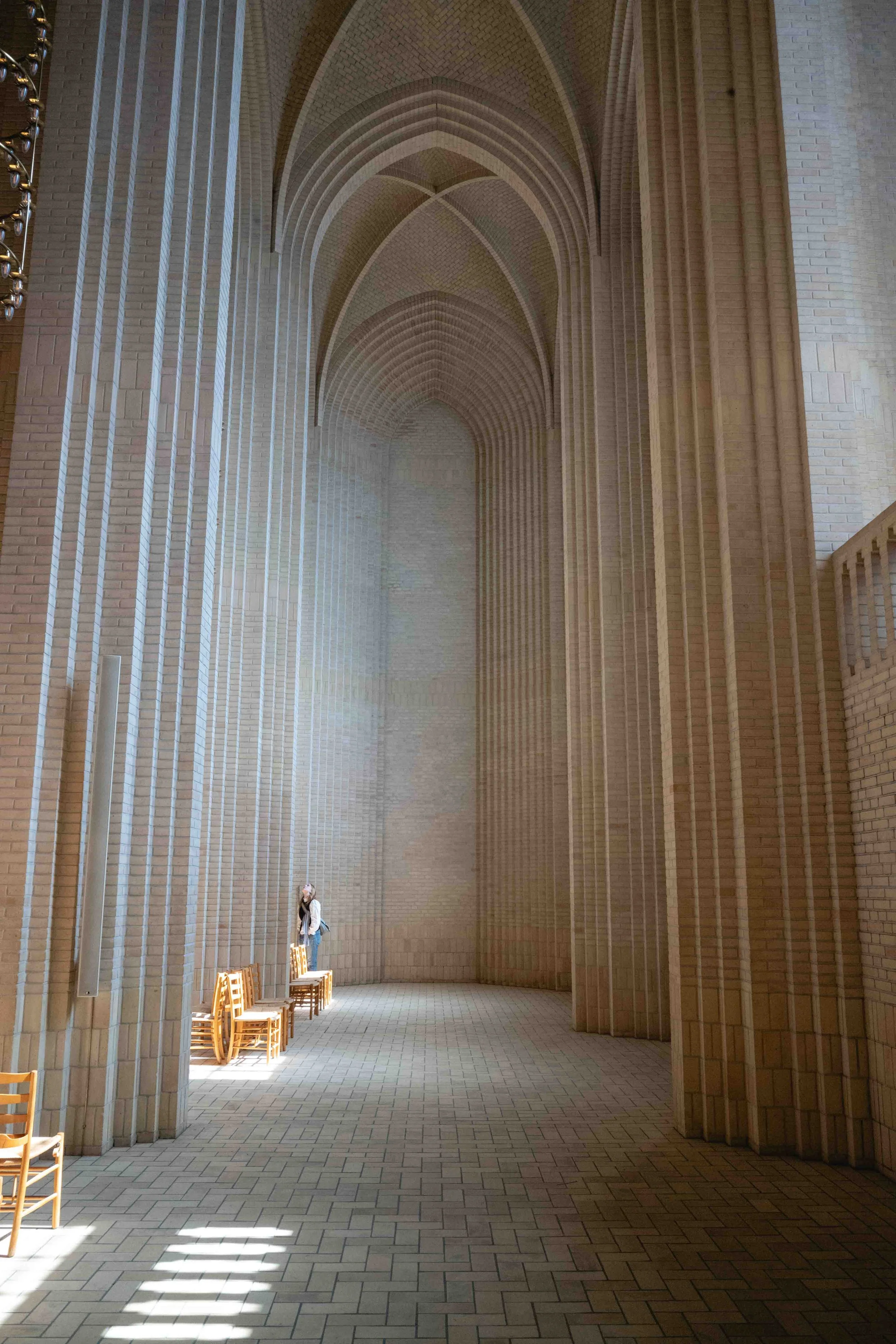
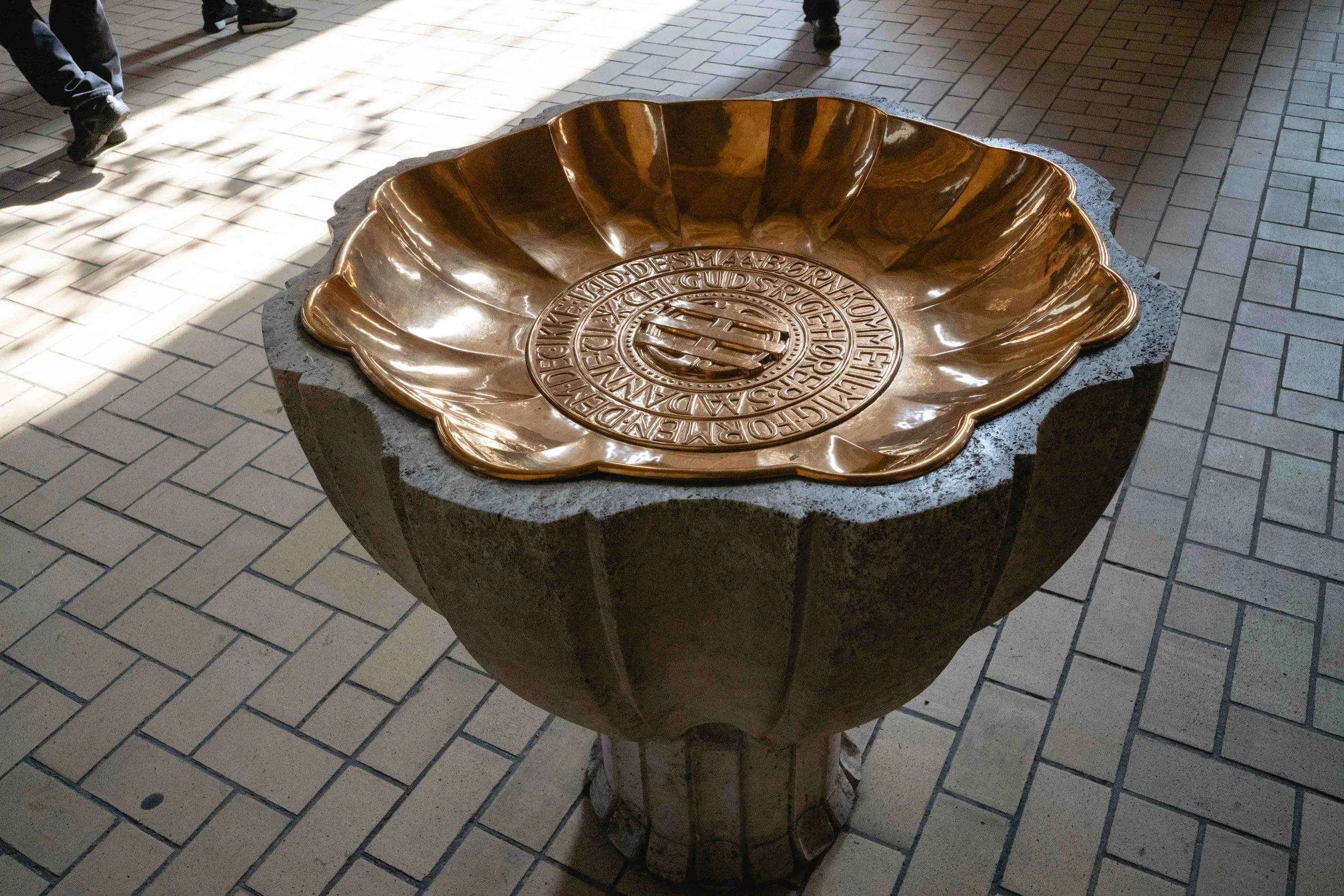
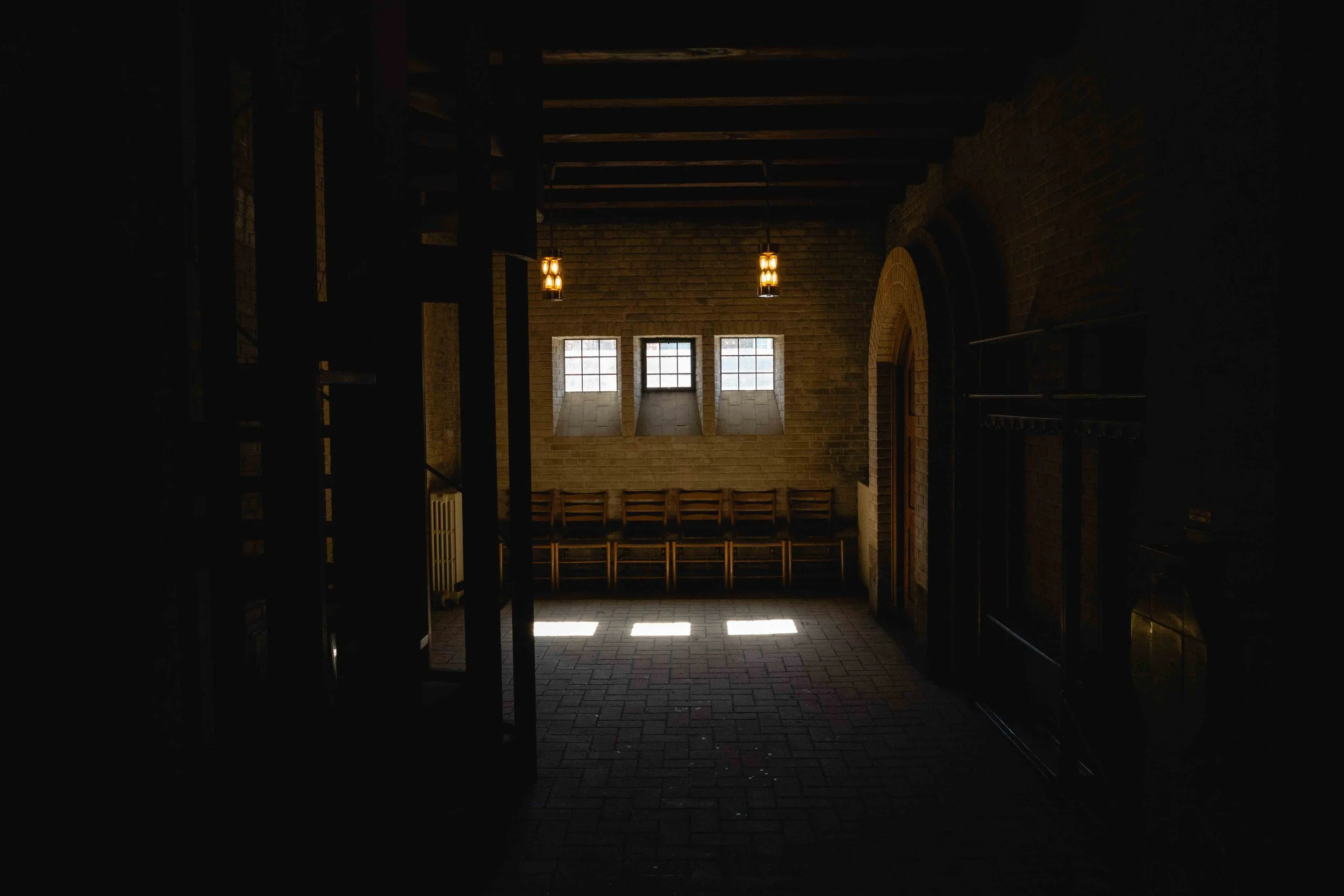
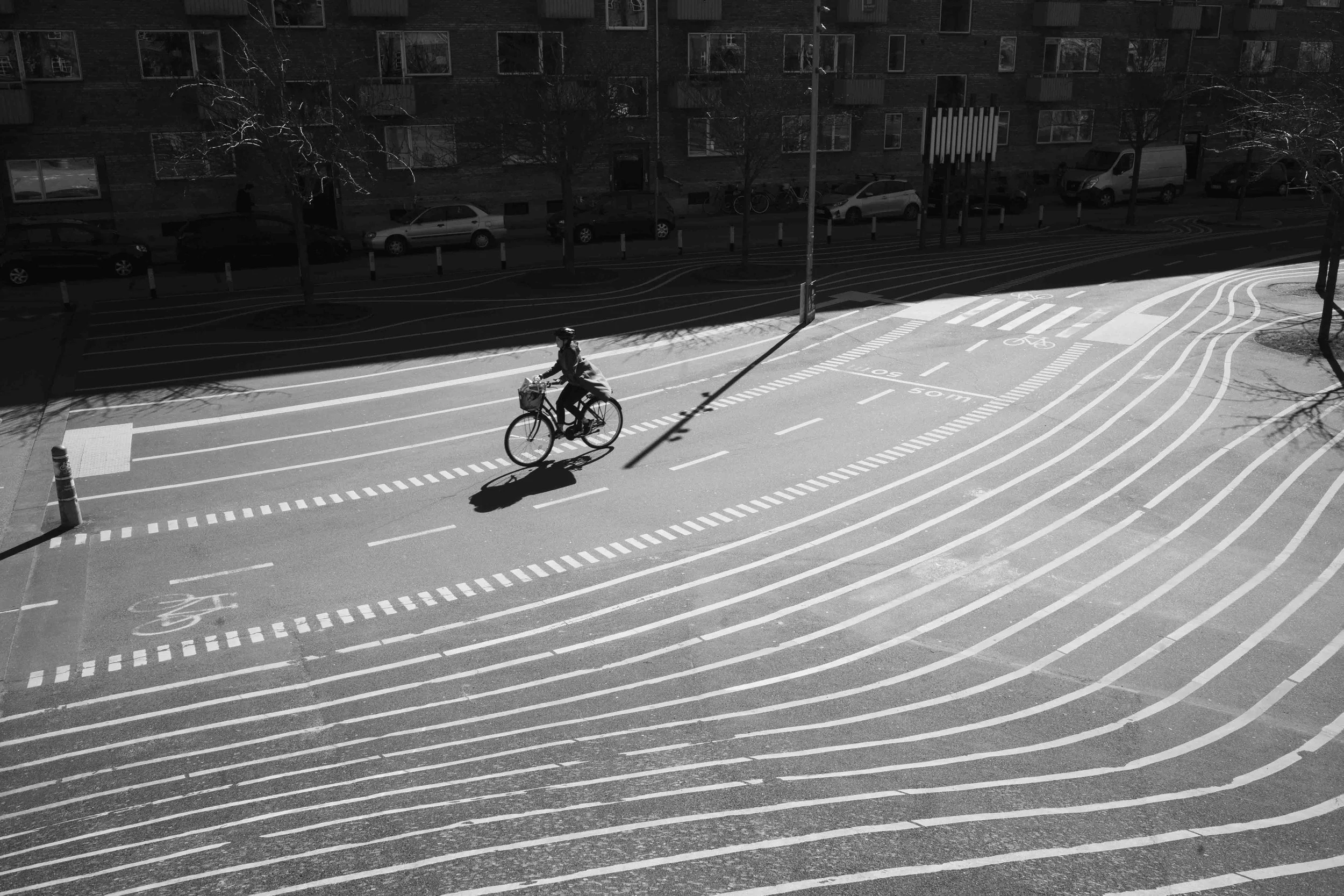
My first day focused on the transition from Nørrebro’s graphic textures to the harbor's edge. I started at Grundtvig’s Kirke, a masterclass in symmetry. Its towering yellow brickwork is a rare example of Expressionist architecture, feeling more like a giant pipe organ than a traditional church. From there, I transitioned into the vibrant, striped chaos of Superkilen Park, where the white "zebra" asphalt lines are a playground for composition. I spent the afternoon weaving through the quiet, dappled light of Assistens Cemetery (the final resting place of Hans Christian Andersen) and the boutique-heavy streets of Elmegade and Ravnsborggade. After grabbing some incredible street food at Hanoi Alley, I hit TorvehallerneKBH for some candid shots of the local food scene. I ended the daylight hours by climbing The Round Tower for a rooftop sprawl, before catching the dusk glow at Nyhavn and crossing the Inderhavnsbroen toward the Danish Architecture Center.
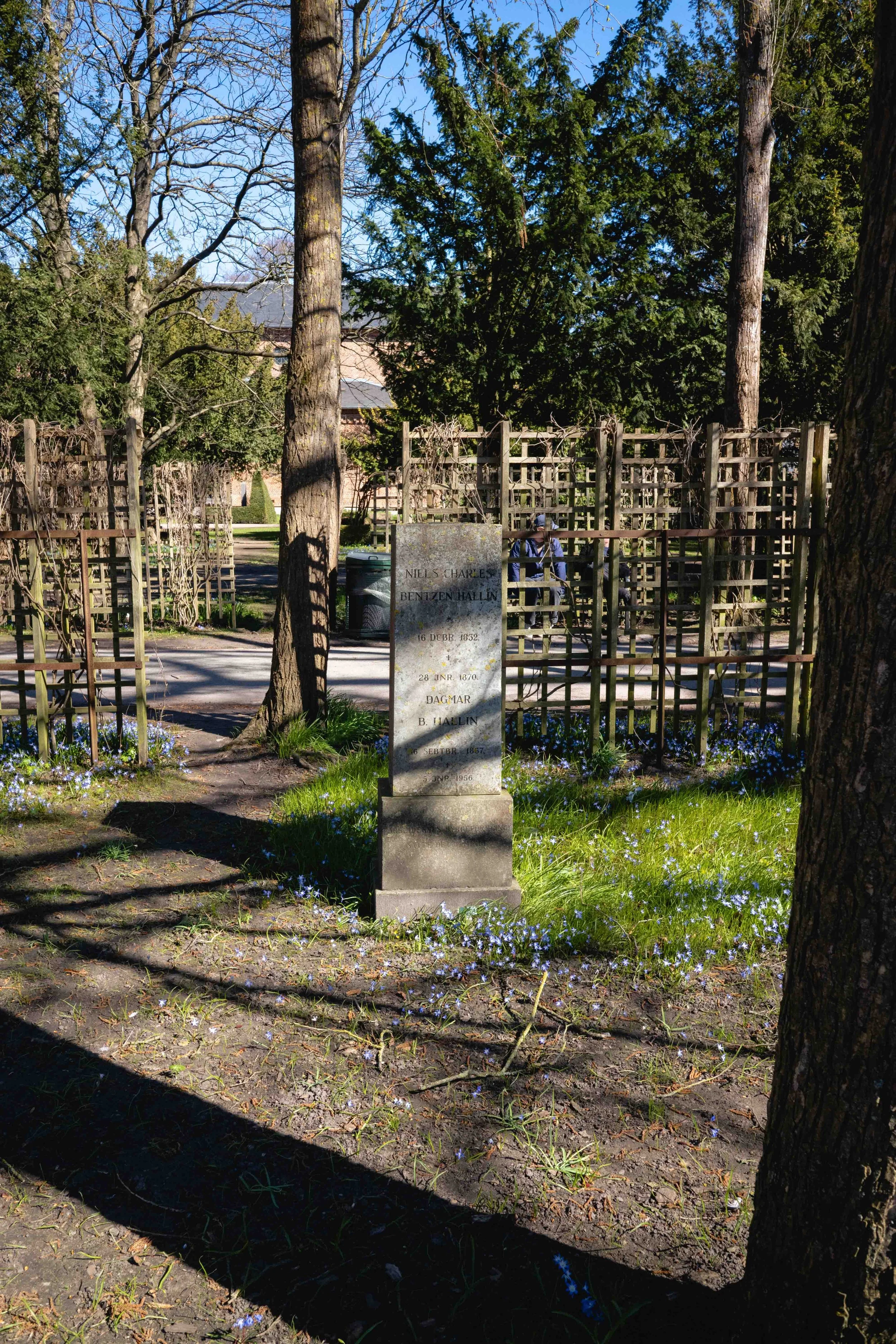
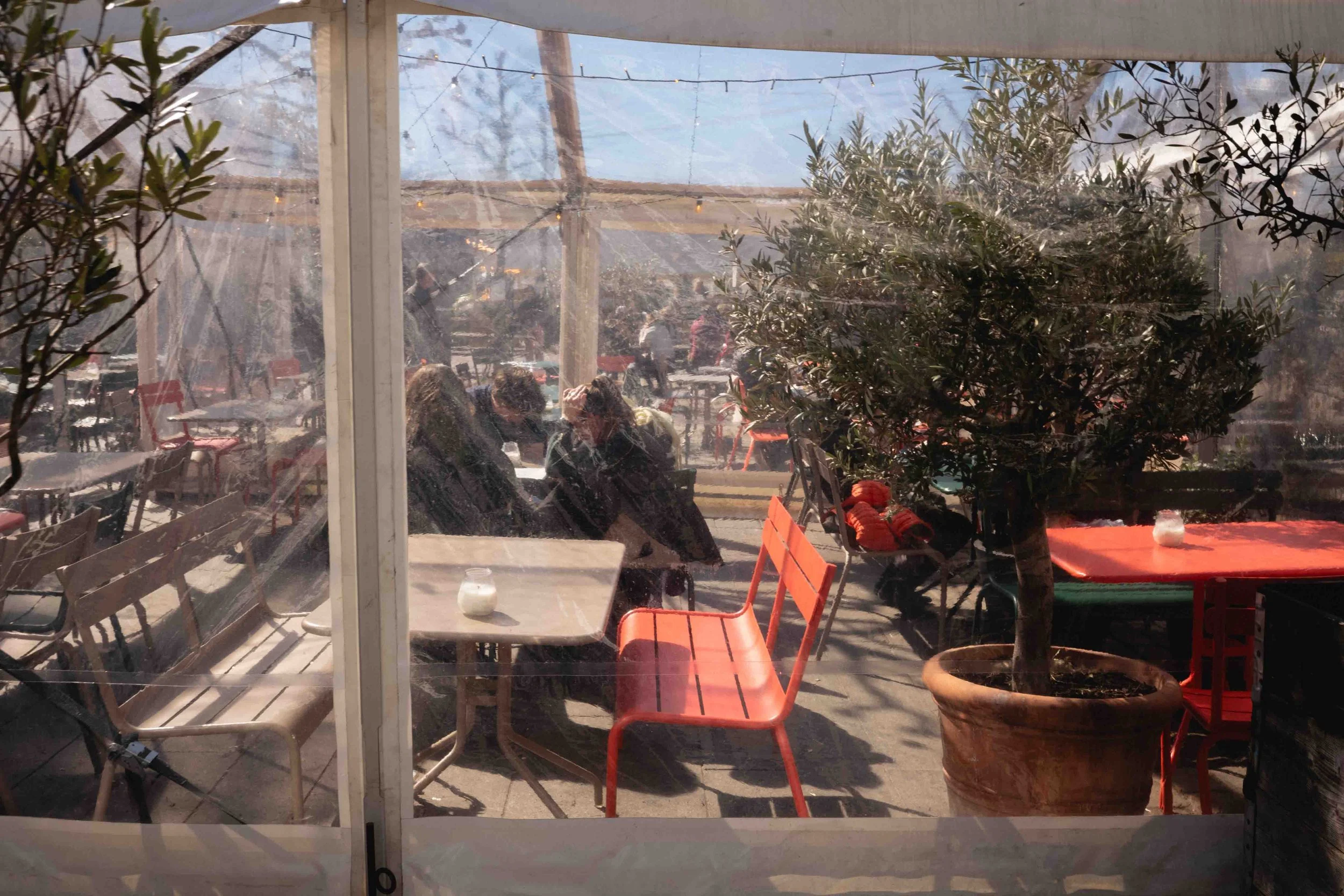
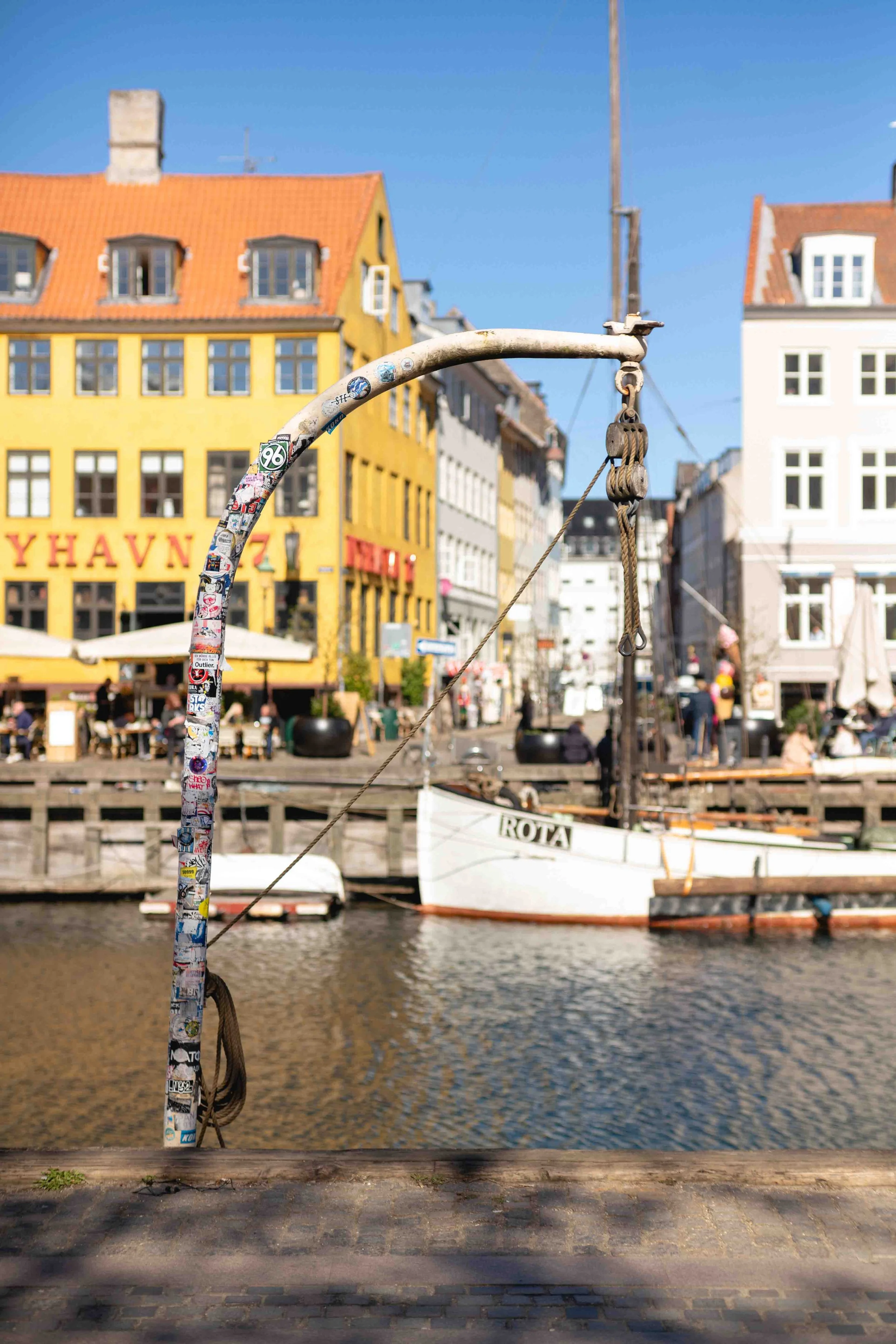
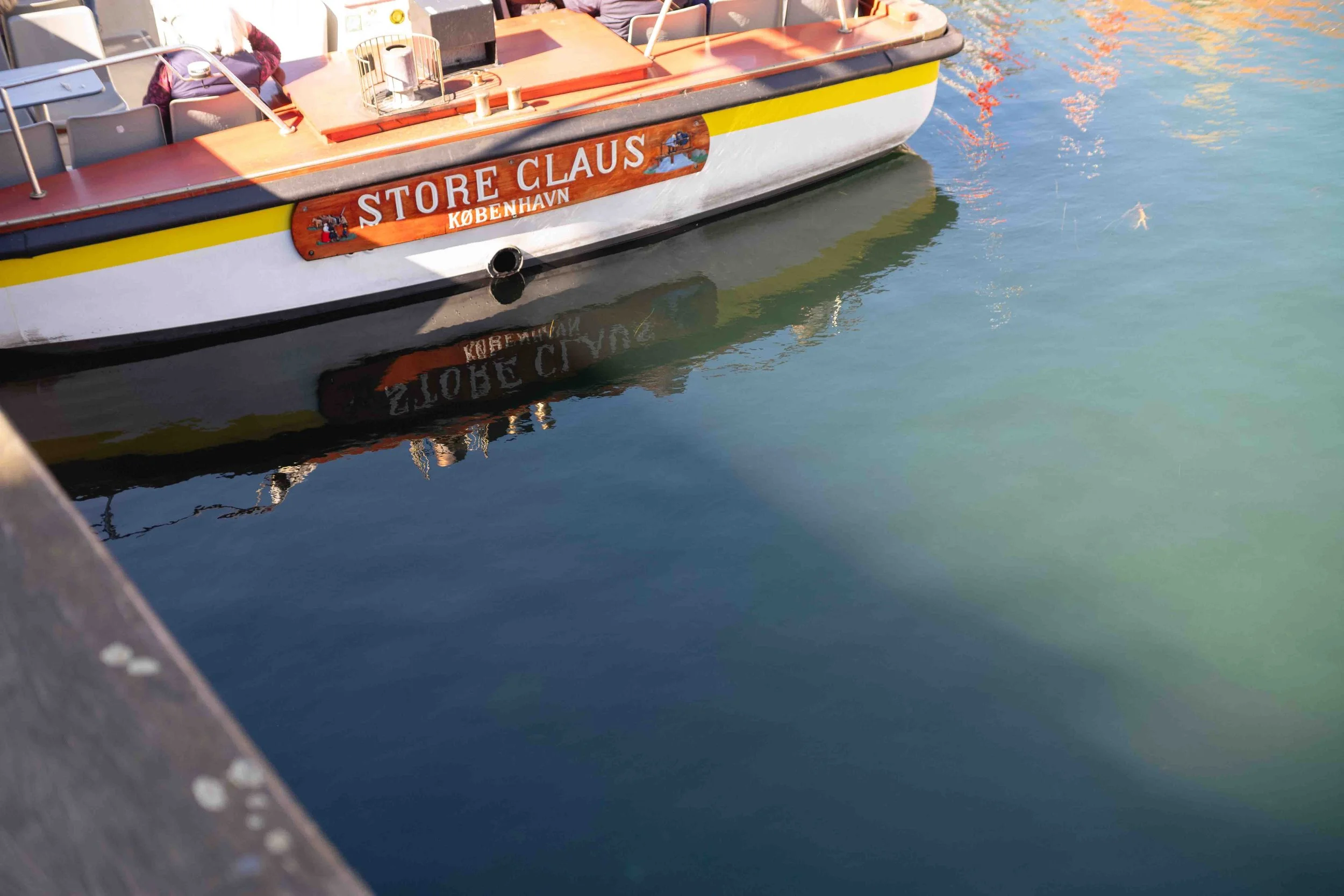
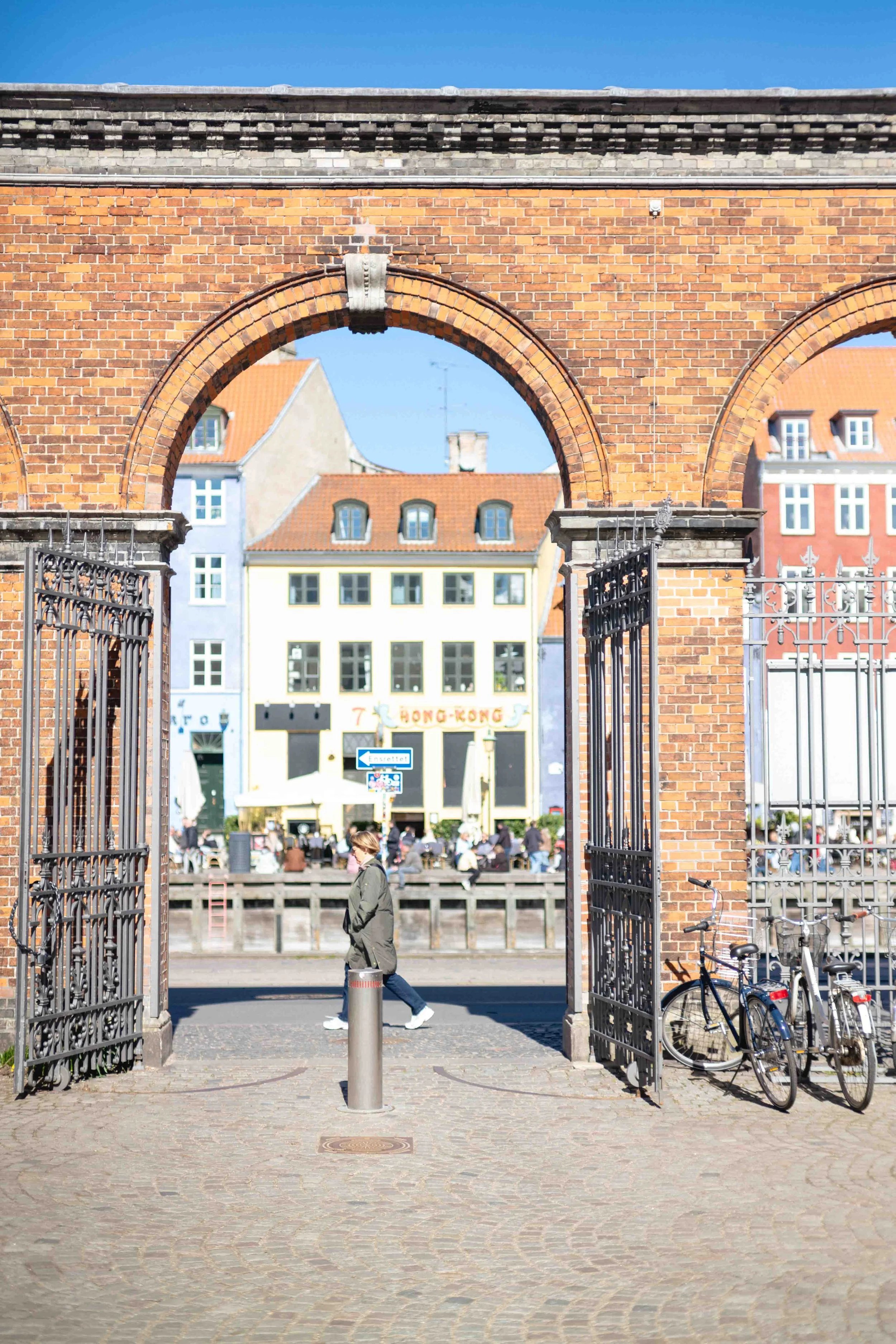
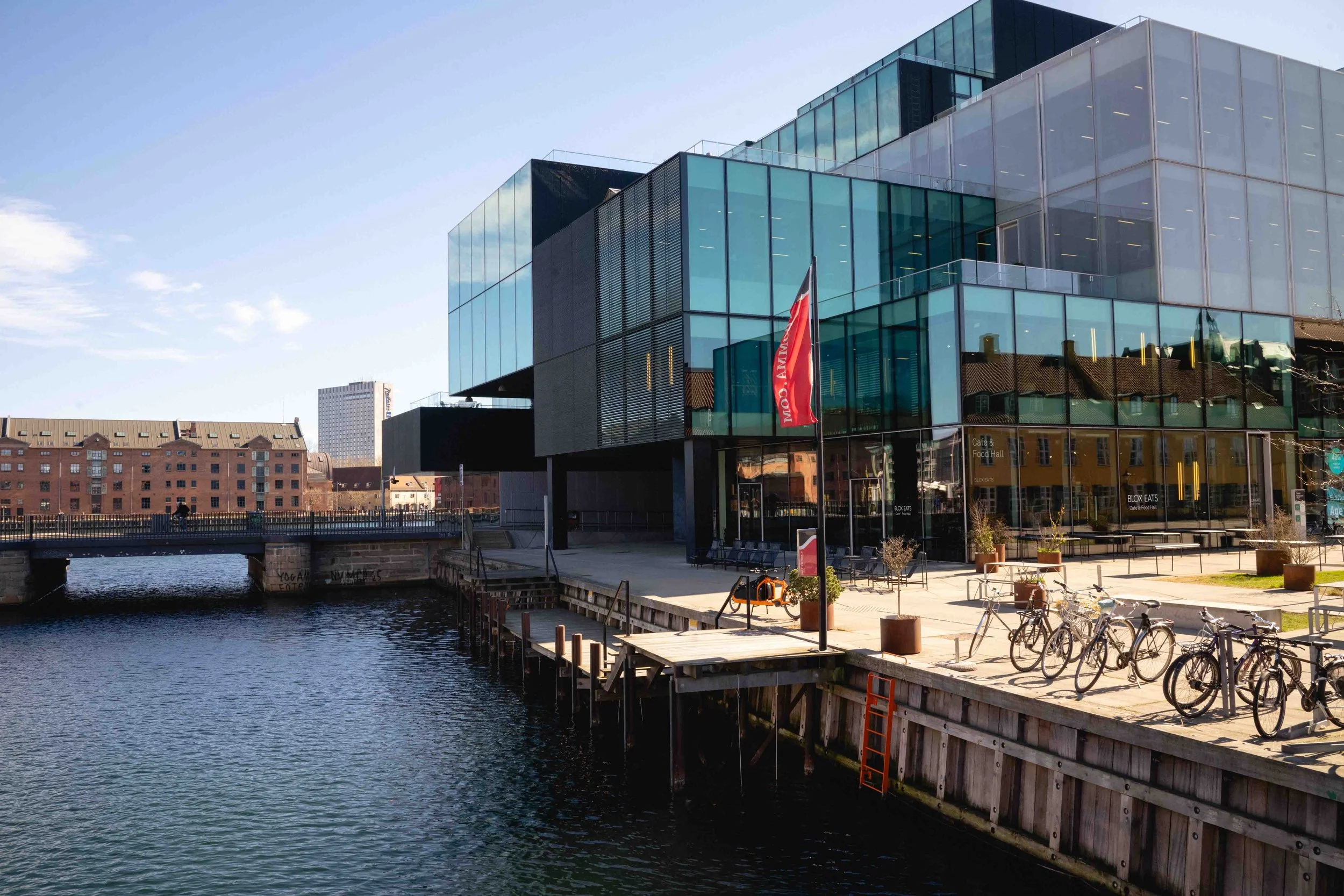
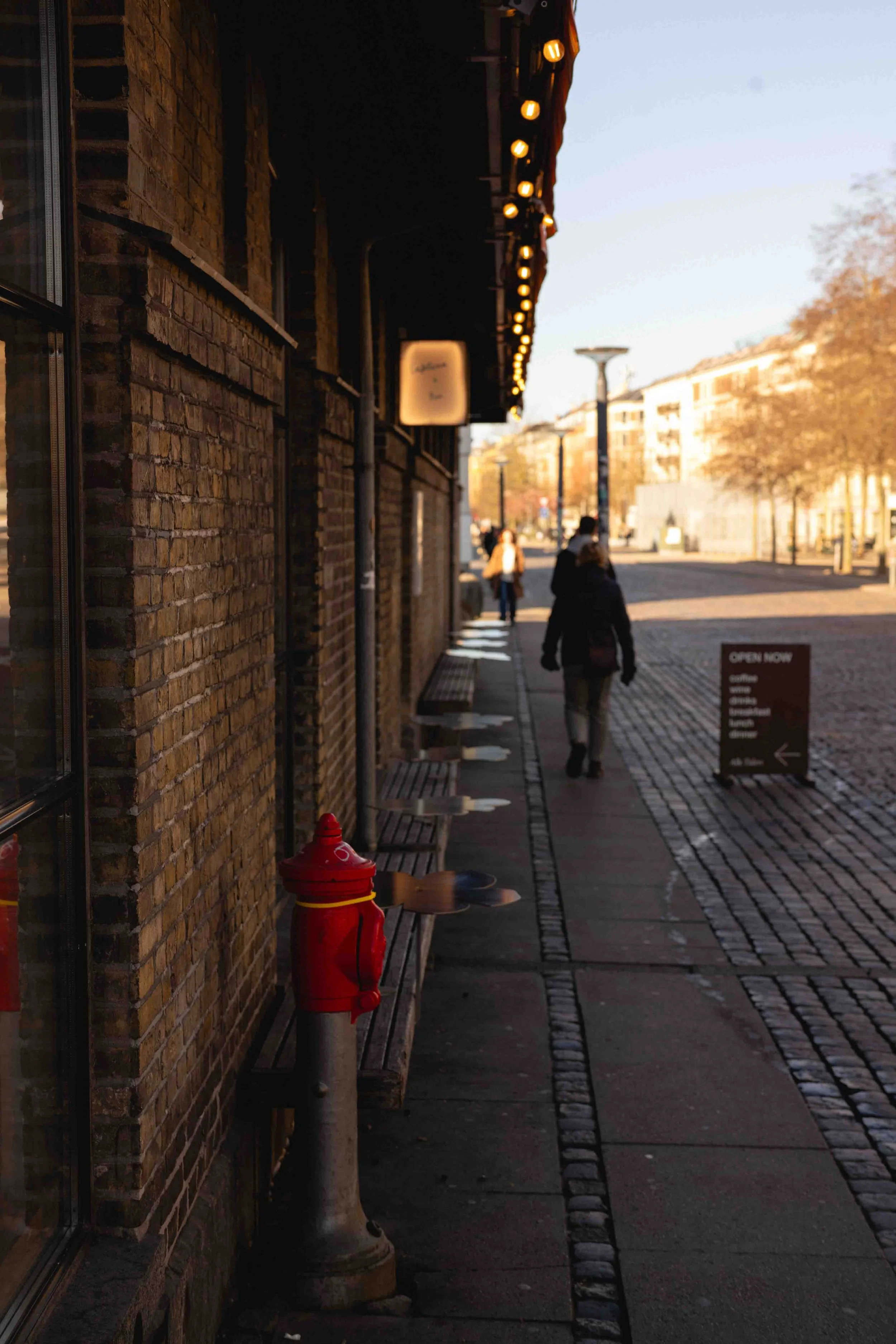
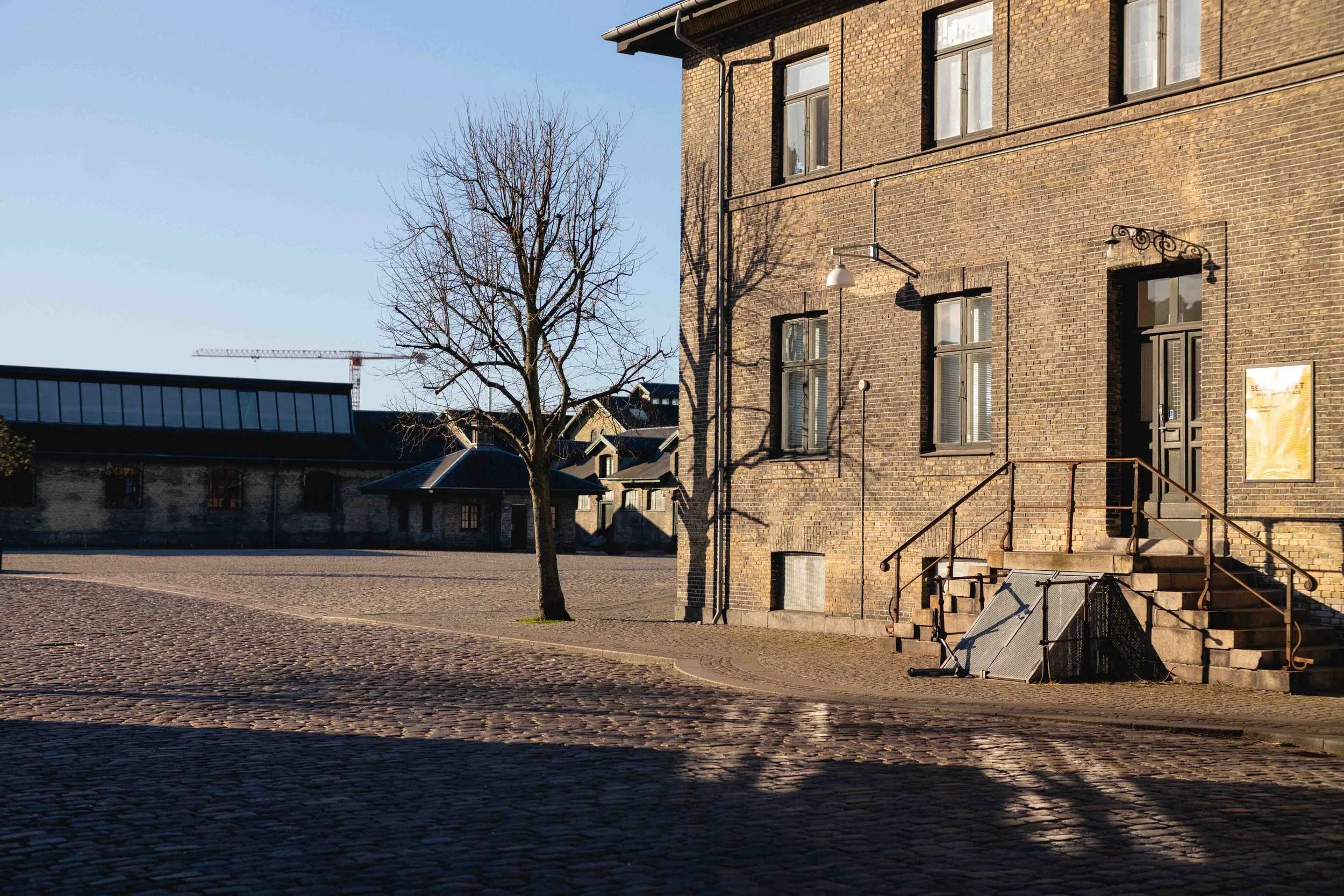
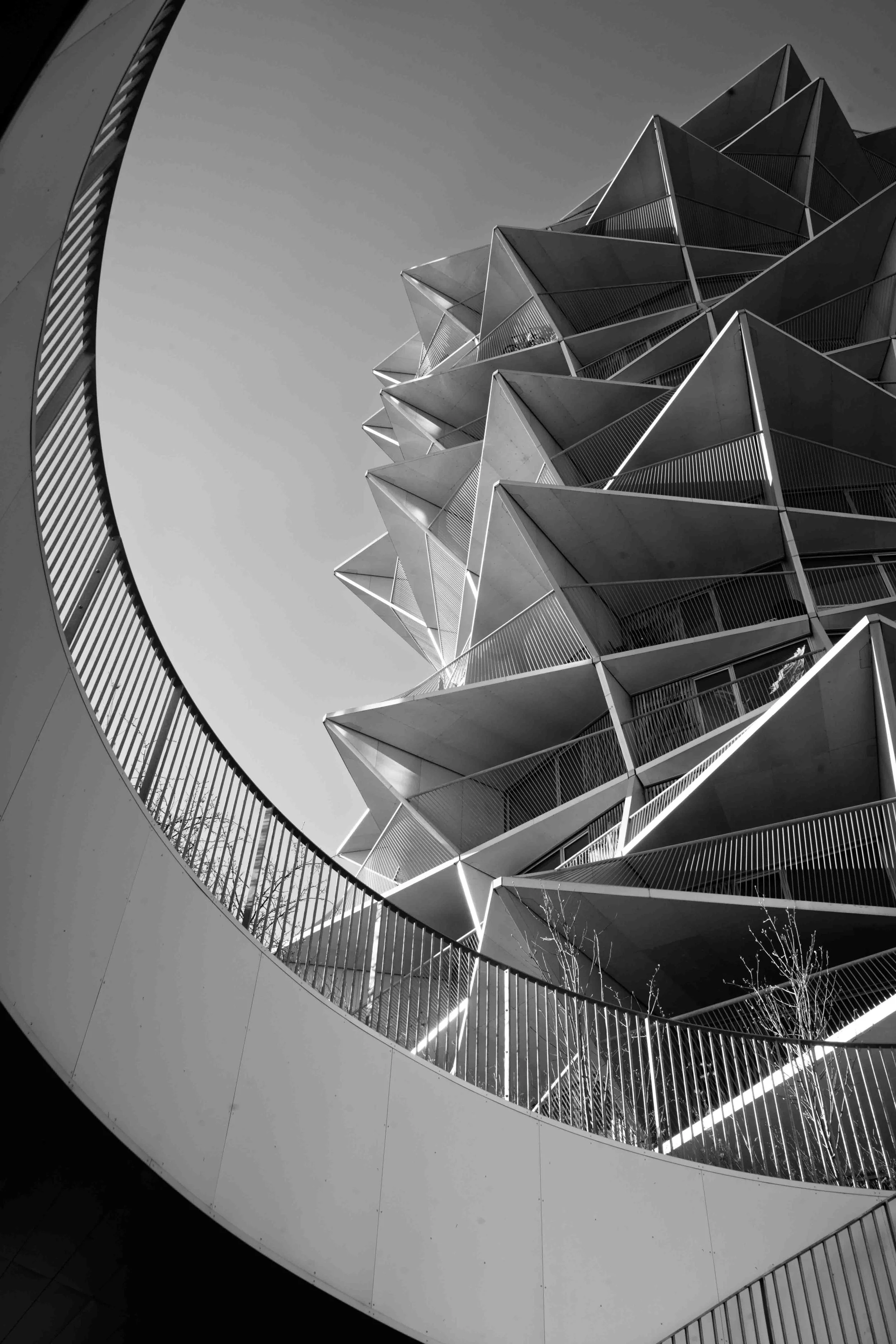
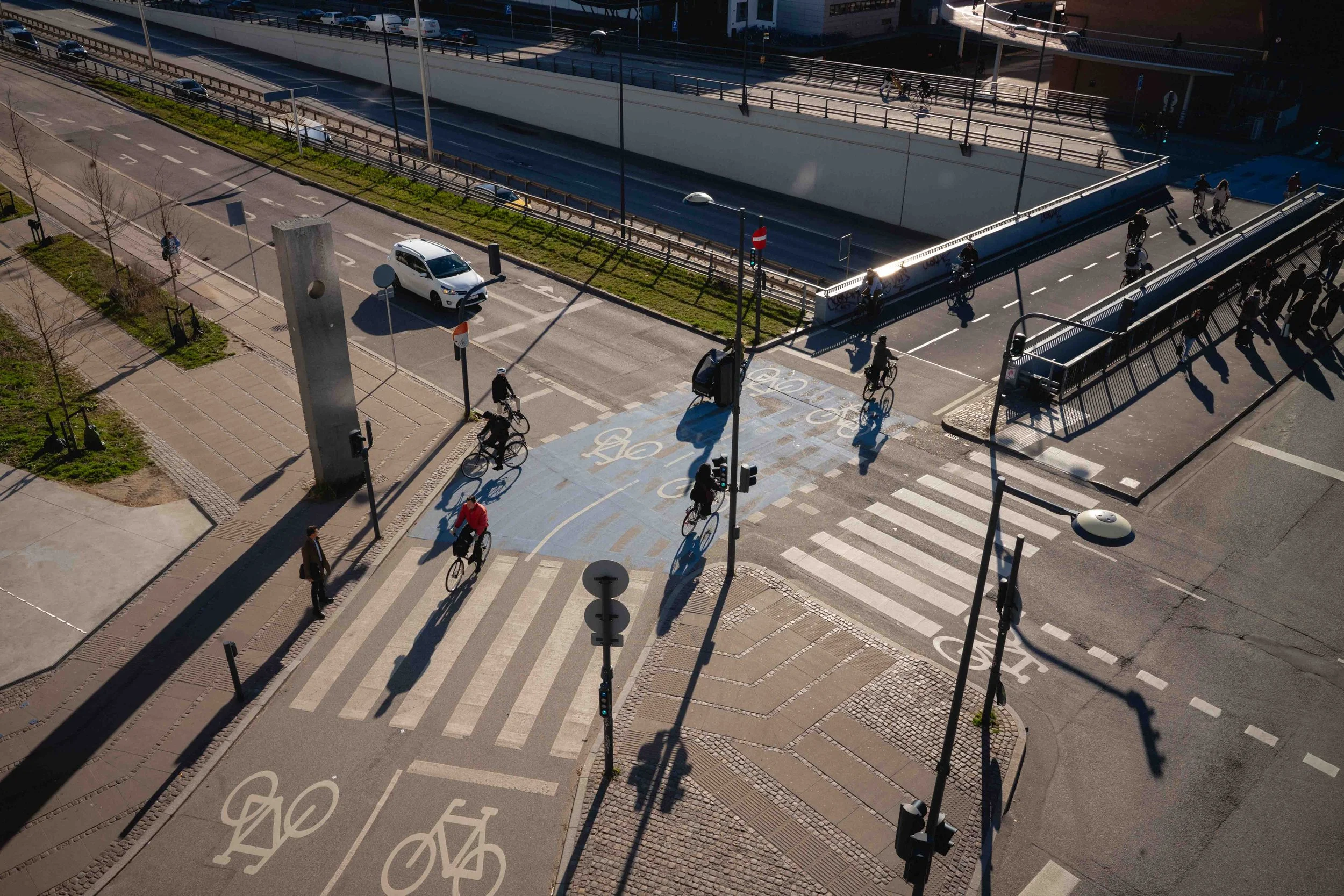
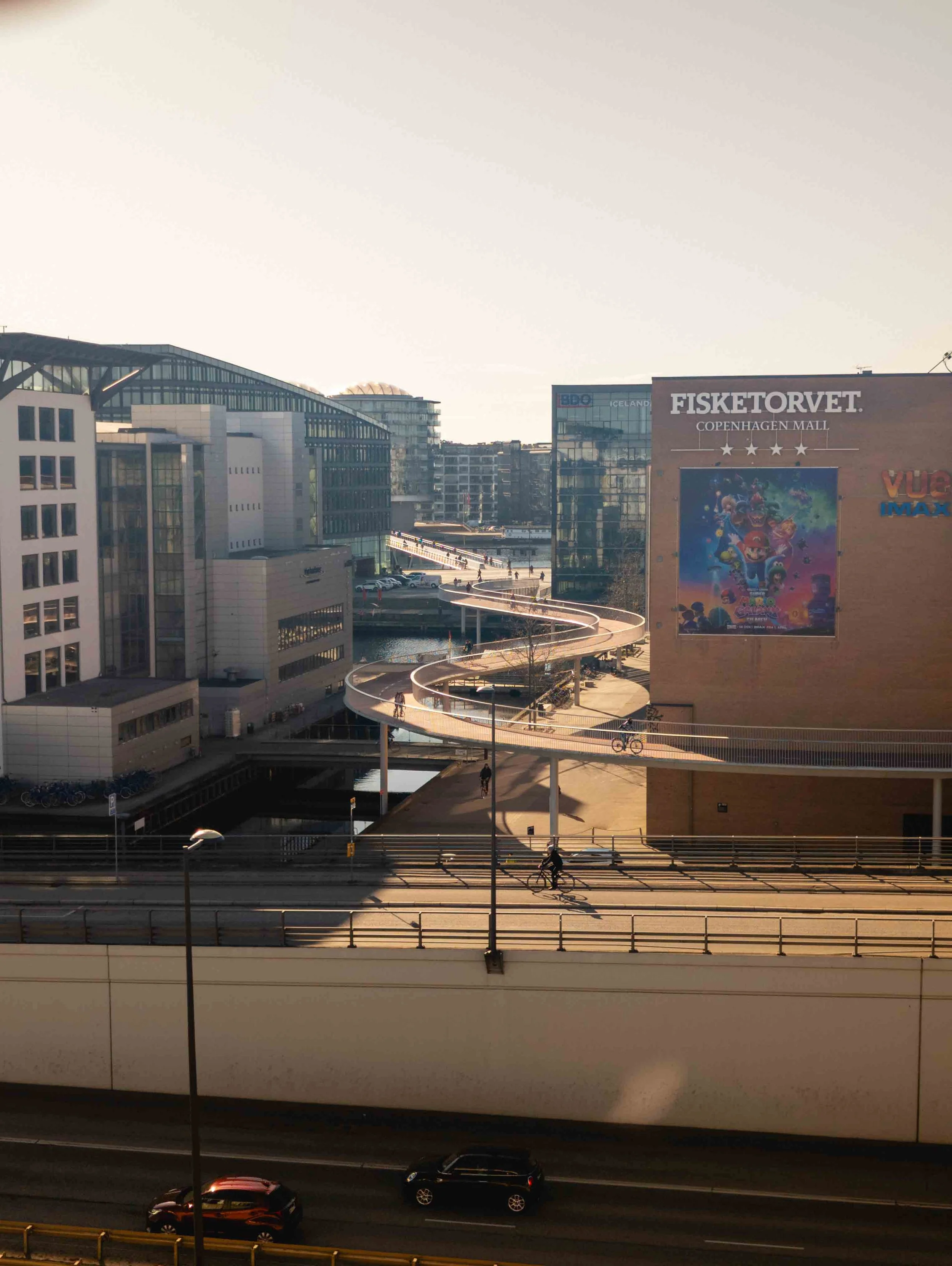
Day two was all about the evolution of the city. I kicked off in the Meatpacking District (Kødbyen), where the white industrial buildings and teal window frames offer a stark, minimalist aesthetic. The route then became a "greatest hits" of modern geometry: the jagged, brutalist balconies of the Kaktus Towers, the iconic orange-bottomed Cykelslangen (The Bicycle Snake) path. I rounded out the trip back in Christianshavn, climbing the corkscrew spire of the Church of Our Saviour for a 360-degree view, followed by a walk through the raw, DIY textures of Freetown Christiania, and finally the historic, rhythmic lines of the Nyboder district.
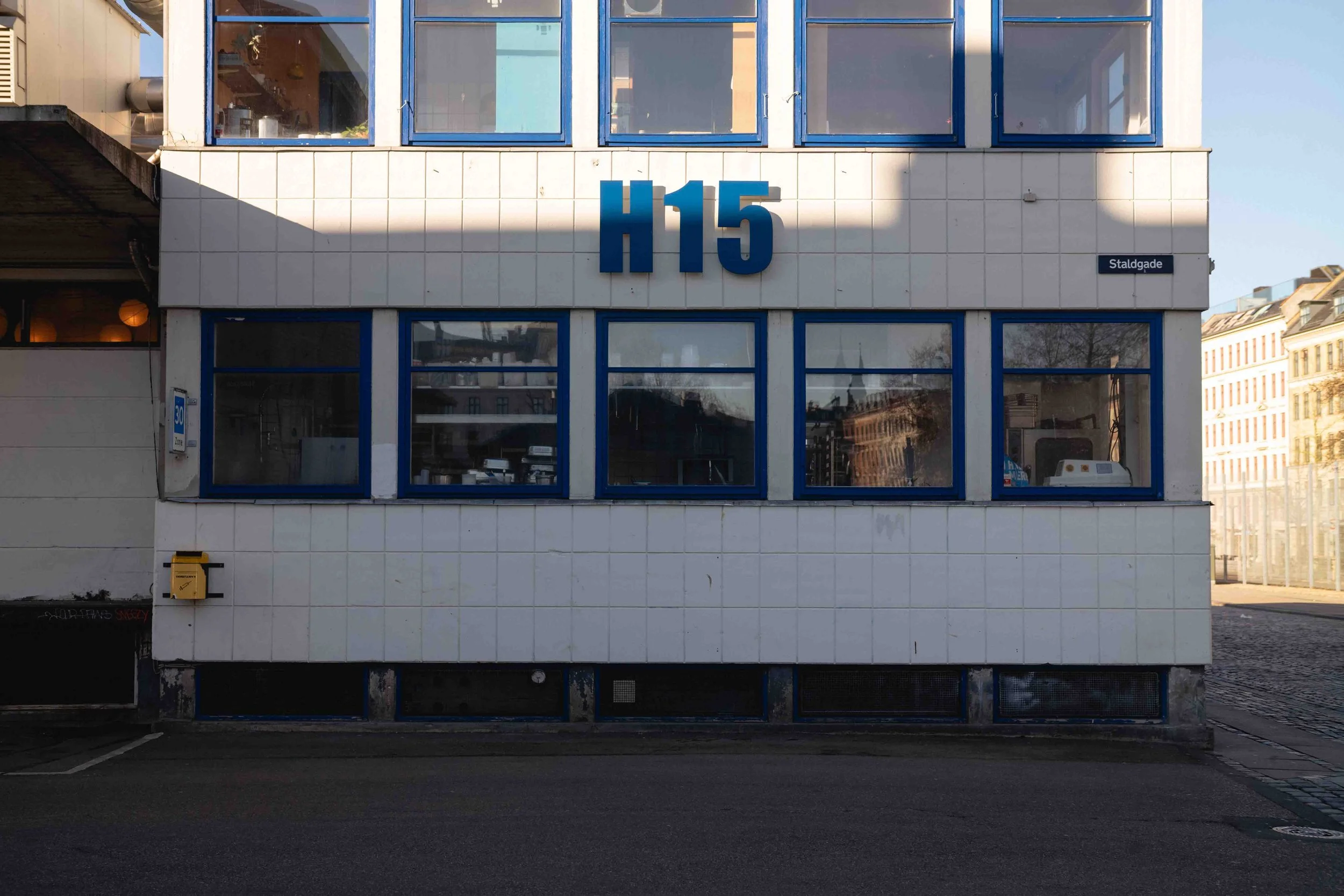
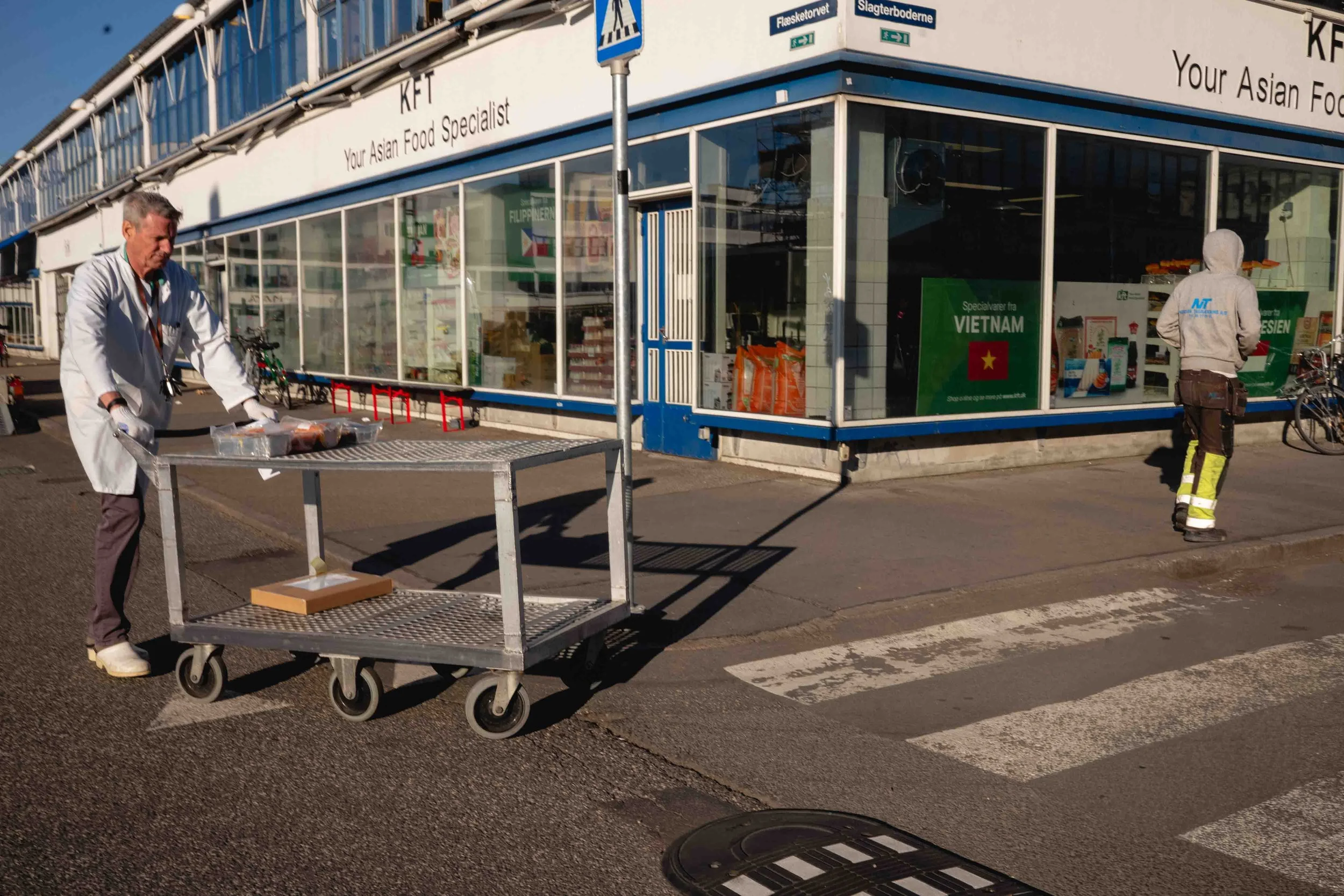
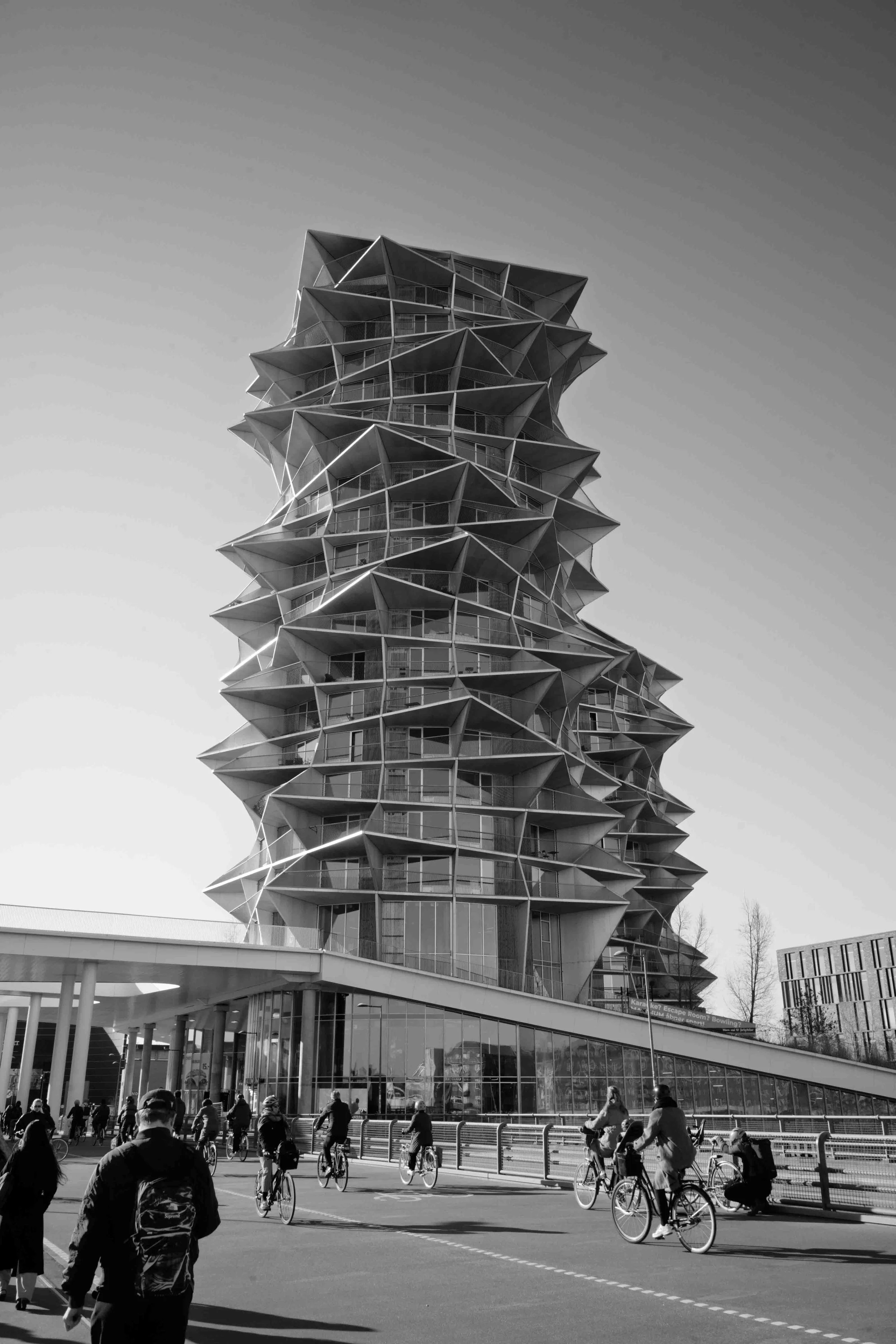
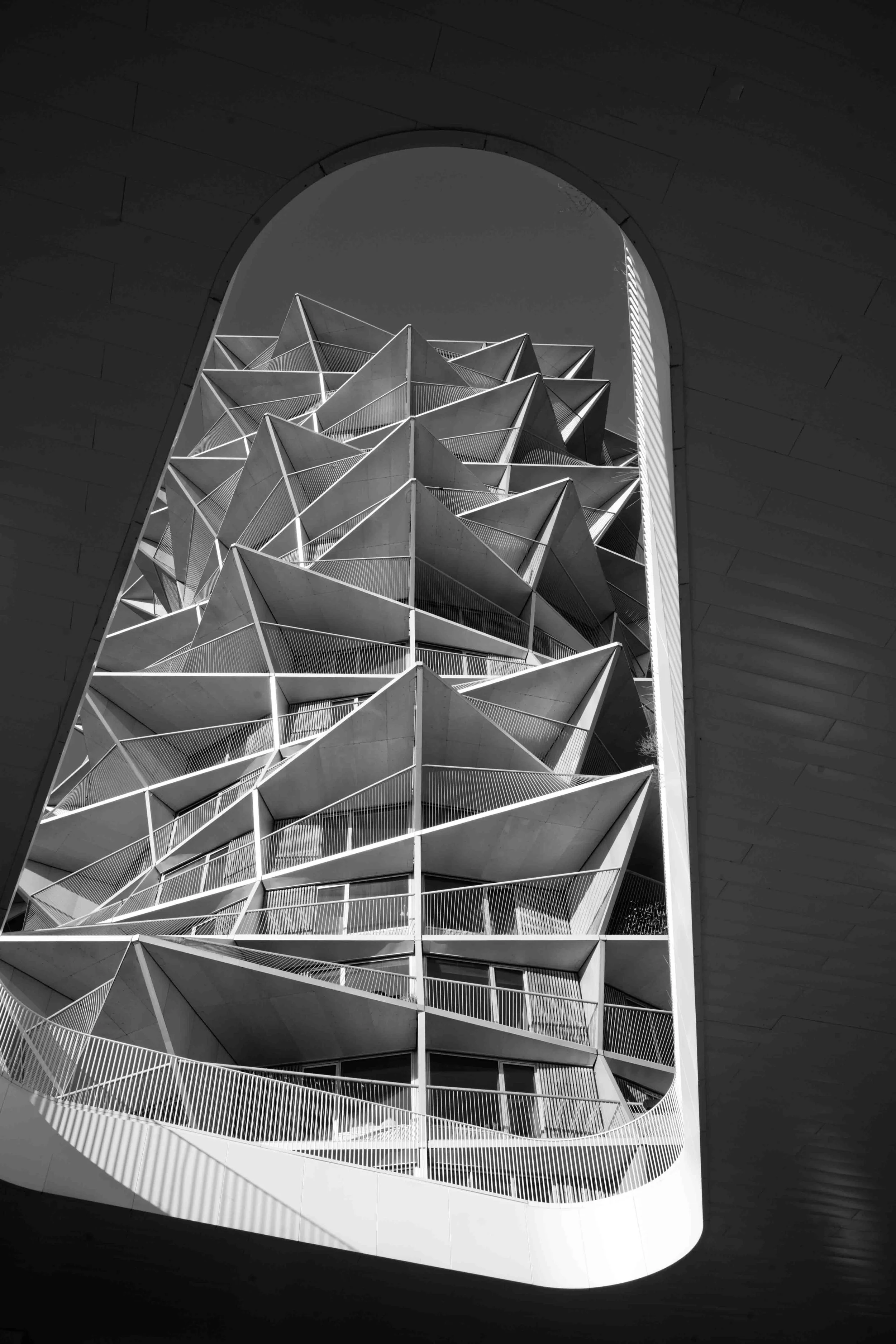
Before I went, everyone warned me about the cost. "Bring a second mortgage for a coffee," they said.
Honestly? It’s a myth. While you can spend a fortune in Michelin-starred spots, I found that if you eat like a local—hitting up spots like Hanoi Alley or grabbing a smørrebrød from a local deli—it’s no more expensive than a weekend in London or New York. In fact, because the city is so walkable and the public transport is flawless, I spent far less on "getting around" than I do on my daily three-hour commute back home. Copenhagen doesn't just ask to be photographed; it demands it. It’s a city that values the "small things"—and as photographers, that’s exactly what we’re looking for.
Want to see the full high-res set? Check out my latest prints in the shop or follow the journey on Instagram @frommylensphoto.
Until next time, keep snapping.
First Roll Loading Kodak Vision3 250D — and what Soho handed back
I've been shooting predominantly black and white for a period of time now of the 35mm film cameras. Years, really. Colour always felt like it needed a reason — a justification for the extra visual information it brings to a frame. Black and white strips a scene back to its essentials. Tone, texture, shadow, geometry. It's a clean way to work.
So loading up a roll of Kodak Vision3 250D AHU into the Nikon F80 felt like a deliberate step off familiar ground. This is a motion picture film stock — designed originally for cinema use in daylight conditions — and it's been building a serious following among still photographers. I'd read about it, seen other people's results, and kept putting it off. This time I just loaded it and went out.
I've been shooting predominantly black and white for a period of time now of the 35mm film cameras. Years, really. Colour always felt like it needed a reason — a justification for the extra visual information it brings to a frame. Black and white strips a scene back to its essentials. Tone, texture, shadow, geometry. It's a clean way to work.
So loading up a roll of Kodak Vision3 250D AHU into the Nikon F80 felt like a deliberate step off familiar ground. This is a motion picture film stock — designed originally for cinema use in daylight conditions — and it's been building a serious following among still photographers. I'd read about it, seen other people's results, and kept putting it off. This time I just loaded it and went out.
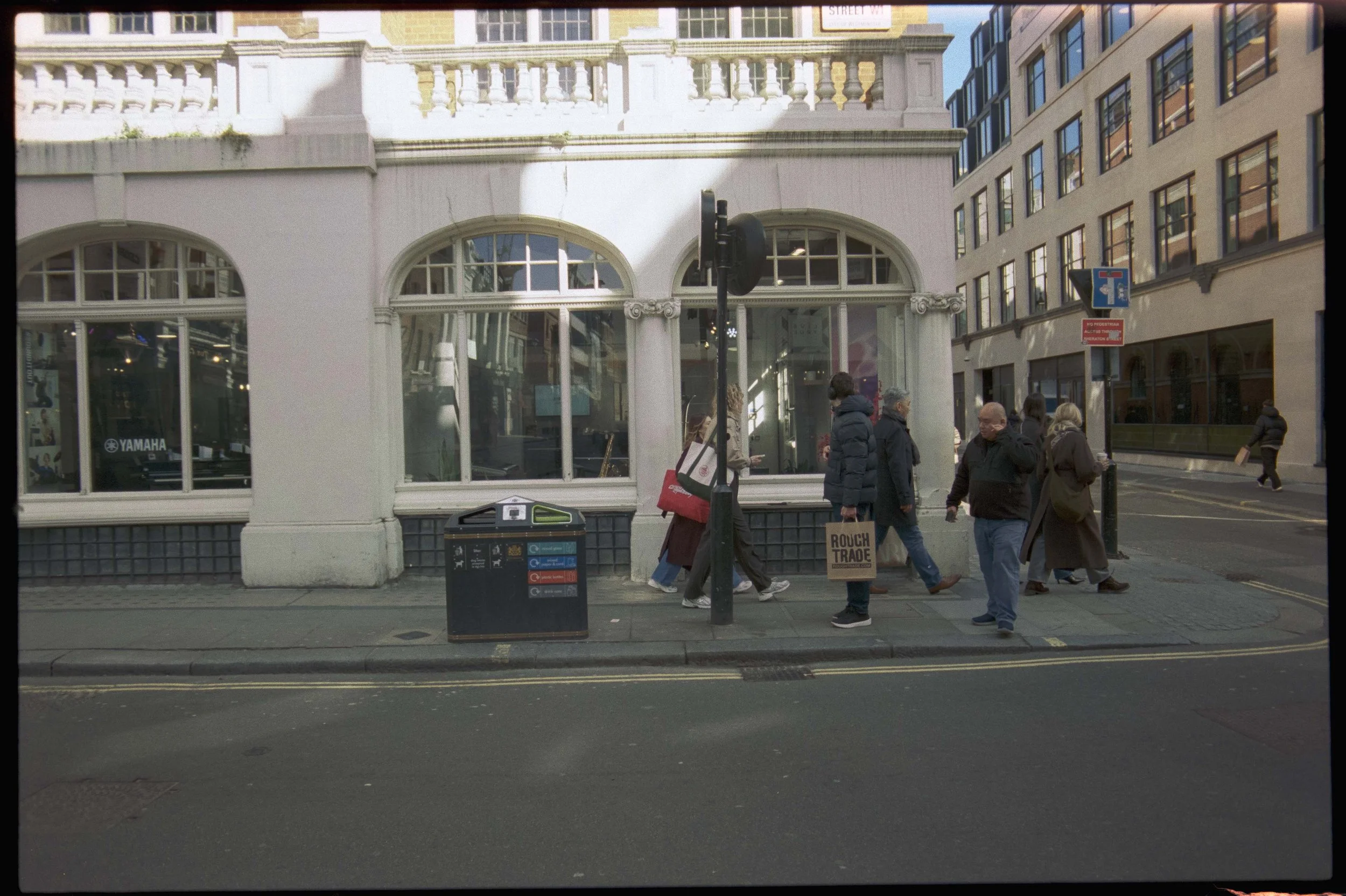
I headed into London a couple of weeks ago for an afternoon with no real plan beyond Soho and the West End. That's usually how the best days go. No agenda. Just walking, looking, reacting.
"I wasn't prepared for quite how warm it would be. Not warm in the pushed, processed way you can fake digitally — warm in the way afternoon light in London actually looks."
The film
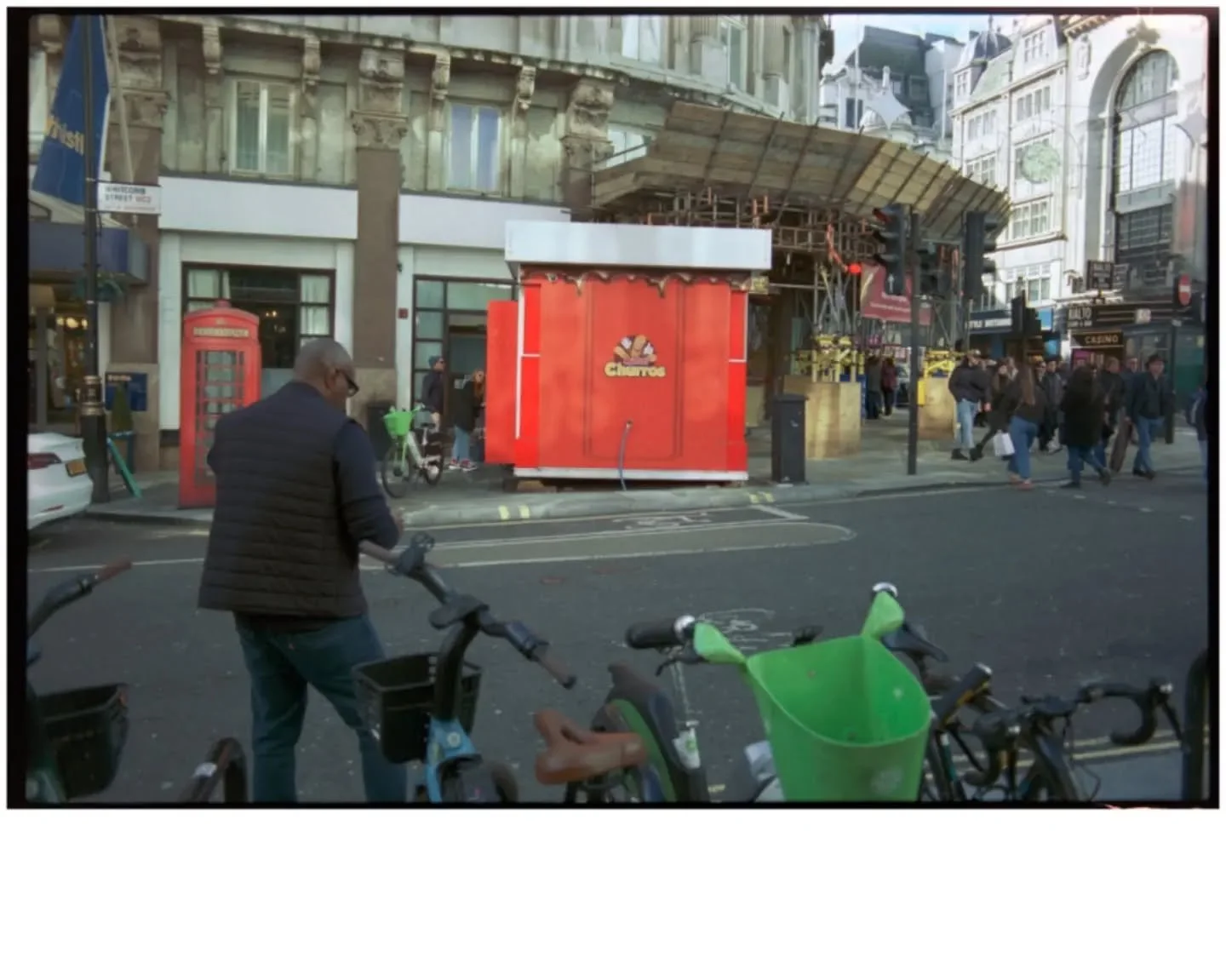
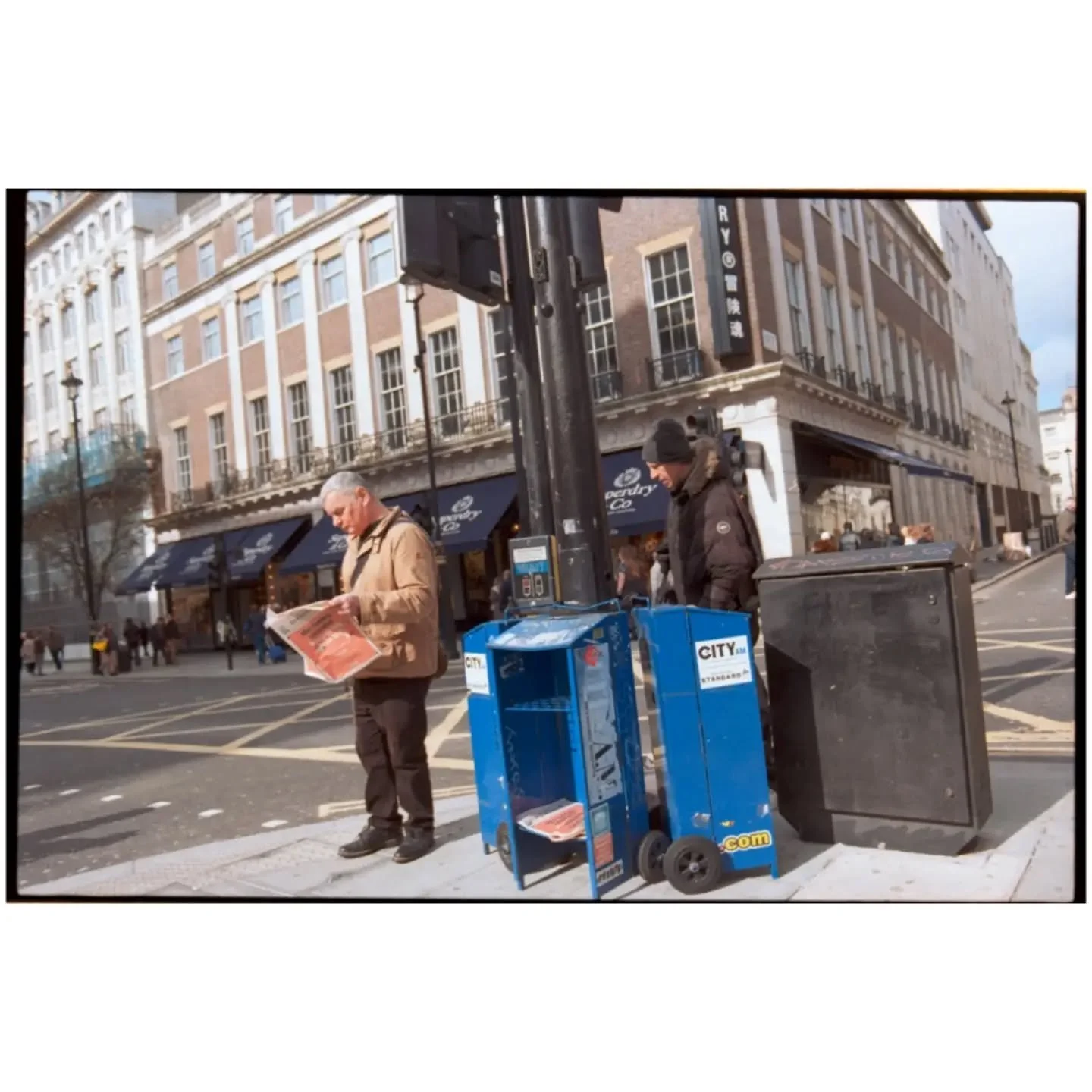
The warmth hit me the moment I got the processed film back. Vision3 250D AHU has a quality to its colour rendition that's difficult to articulate but immediately visible in the frames. It's not the oversaturated, high-contrast look of some colour negative stocks. It's quieter than that. More honest. The way light falls on a green café awning, or a pink coat, or an orange shopfront — it's rendered with a cinematic restraint that suits documentary street work perfectly.
The midtones are where it really earns its reputation. There's a richness in the middle of the tonal range that I haven't found in other stocks I've tried. Skin tones are warm without being ruddy. Shadows hold detail. Highlights — even in the direct afternoon sun I was shooting in — don't blow out catastrophically. For a daylight stock at ISO 250, it handles the contrast range of a busy London street remarkably well.
What Soho gave me
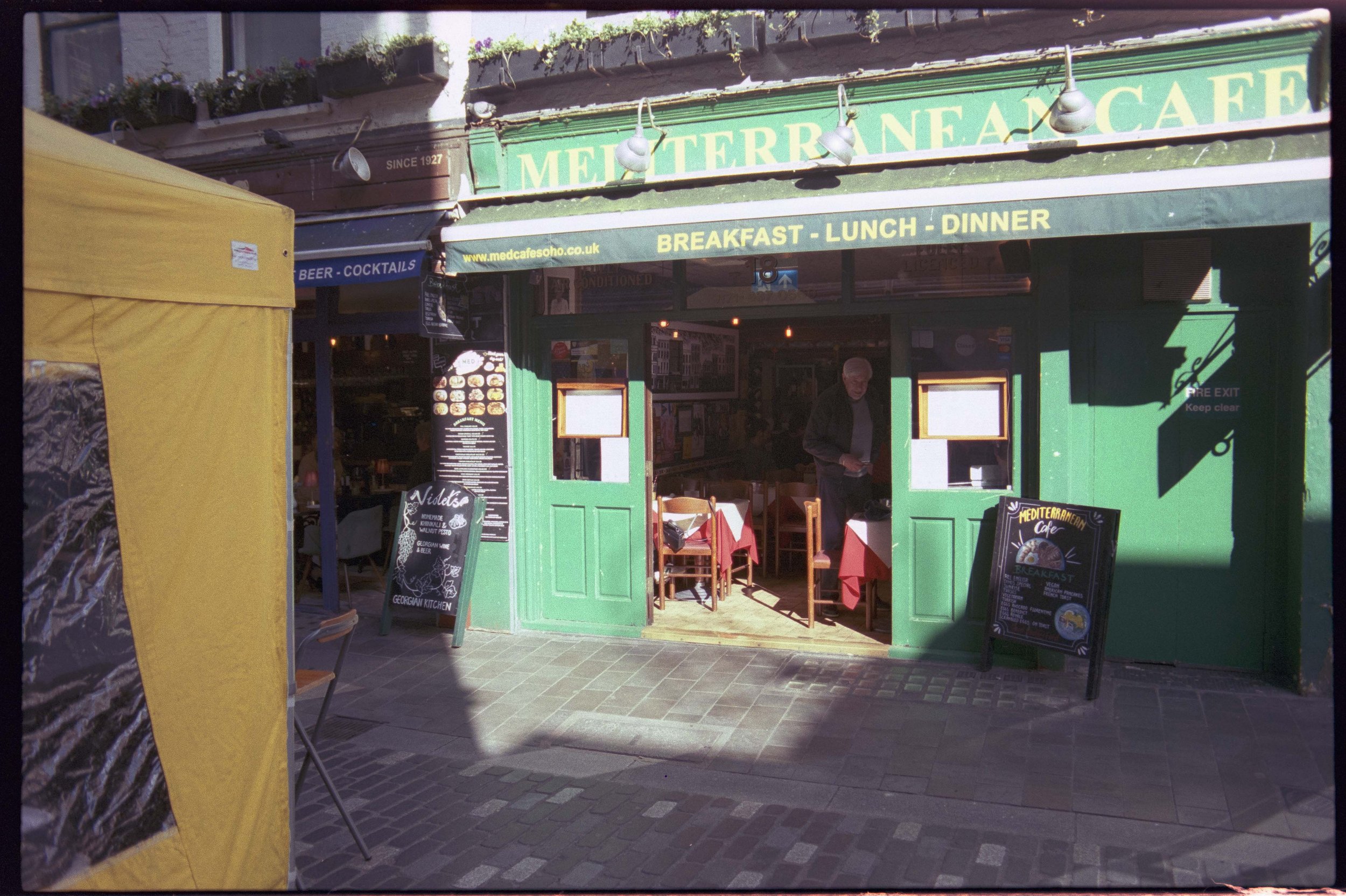
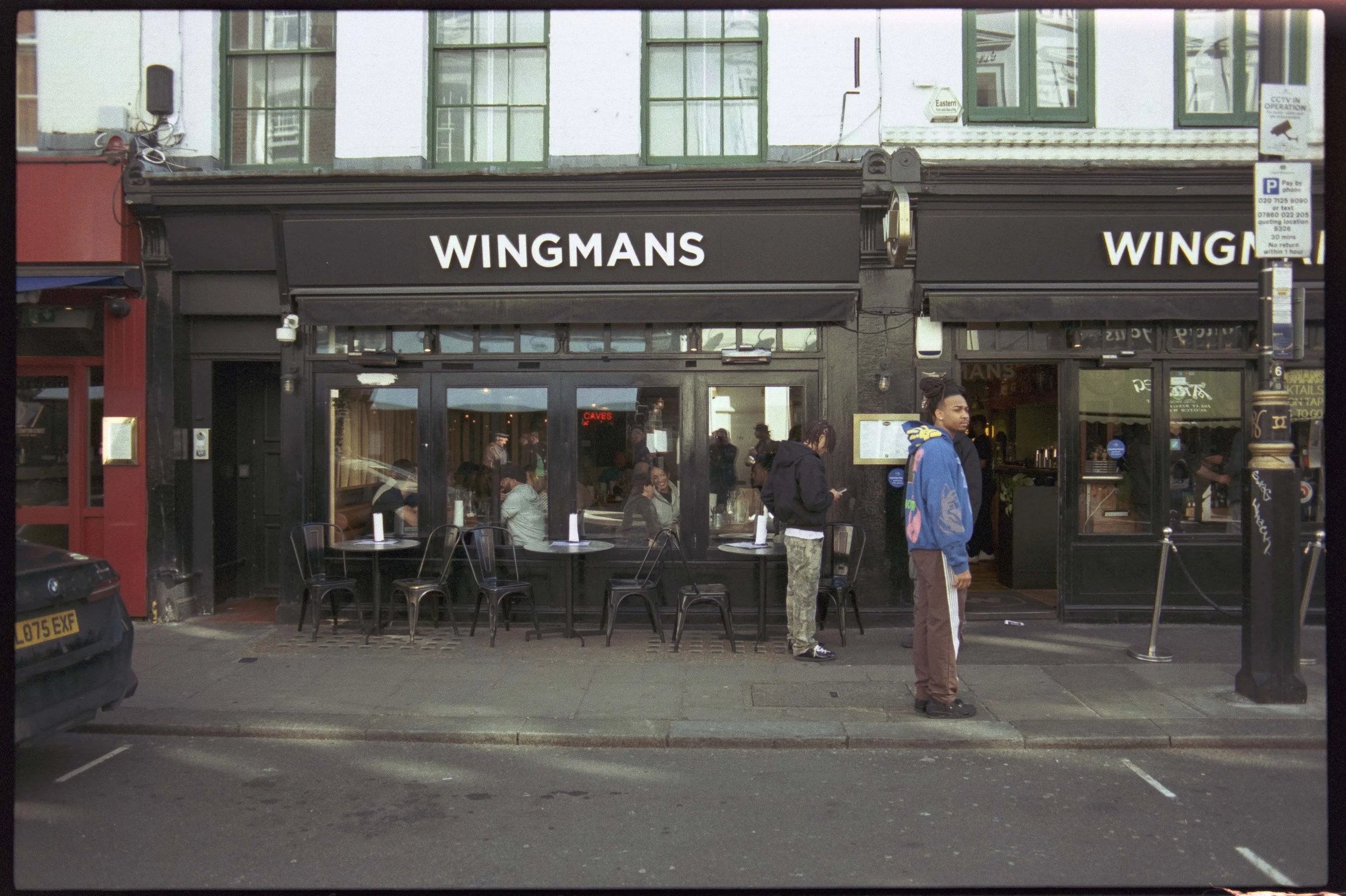
I started on the south end of Soho, working my way north through the afternoon. The Mediterranean Café on Old Compton Street stopped me almost immediately — a place that's been there since 1927, its deep green fascia catching the sun at an angle that Vision3 handled beautifully, the warm gold of the signage glowing against the paint. A man stood in the doorway, just watching the street. I got one frame and kept moving.
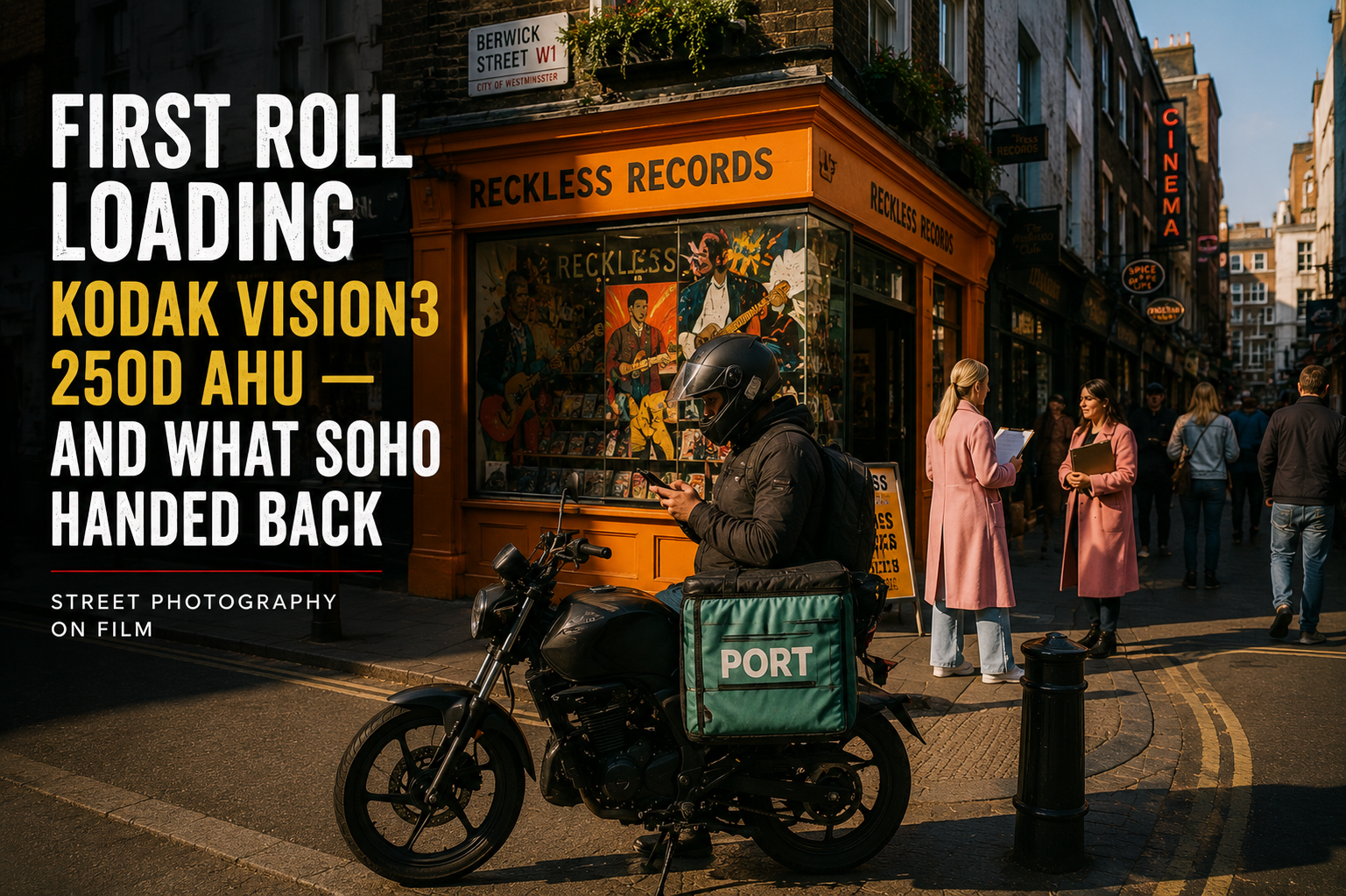
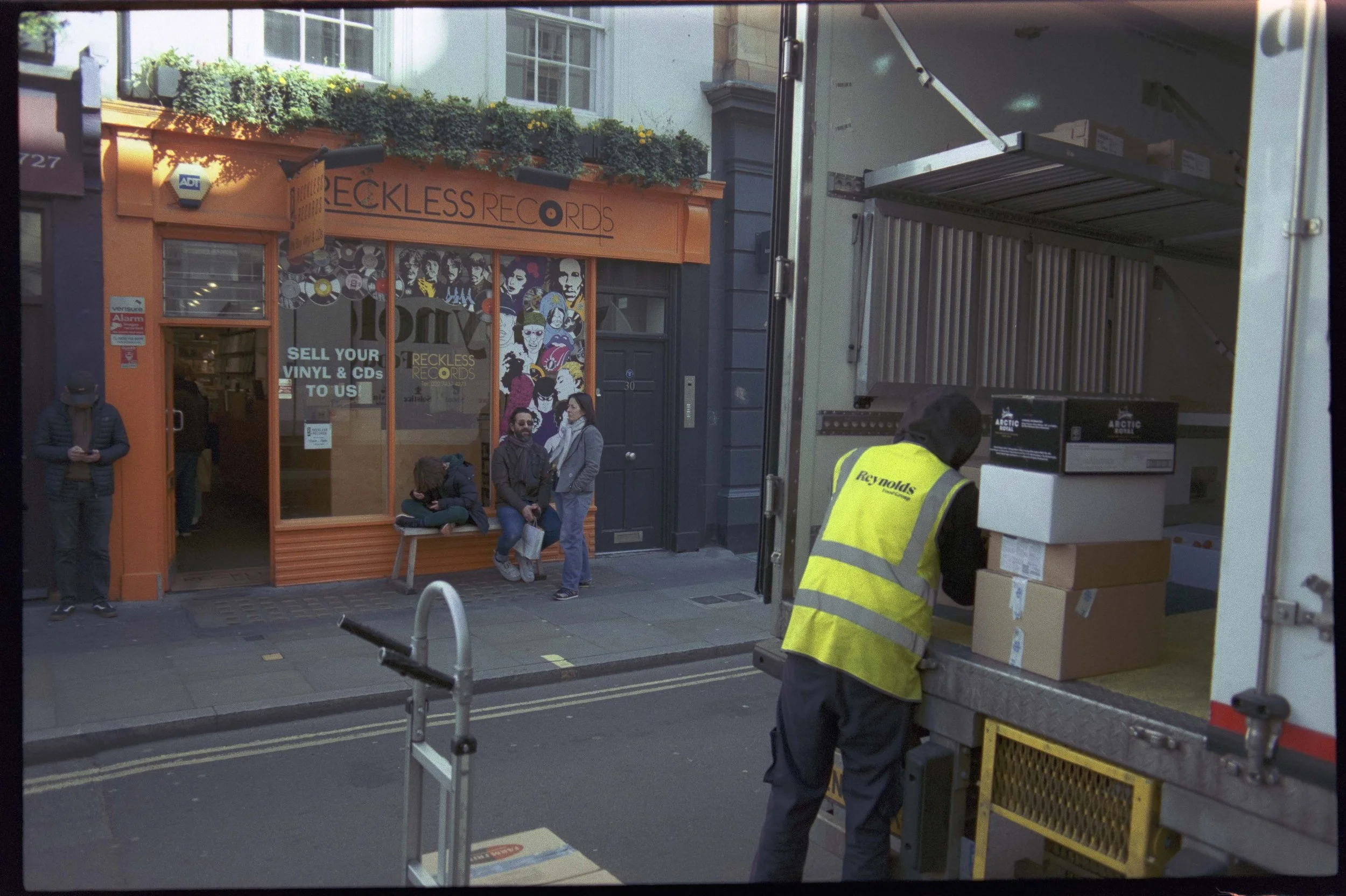
Around the corner, Reckless Records — that vivid orange shopfront with its illustrated window display of musicians — was being interrupted by a delivery driver in a hi-vis yellow jacket unloading boxes from a truck. The contrast of orange and yellow should have been too much. Vision3 made it work. That's one of its qualities: it handles colour density without letting things fight.
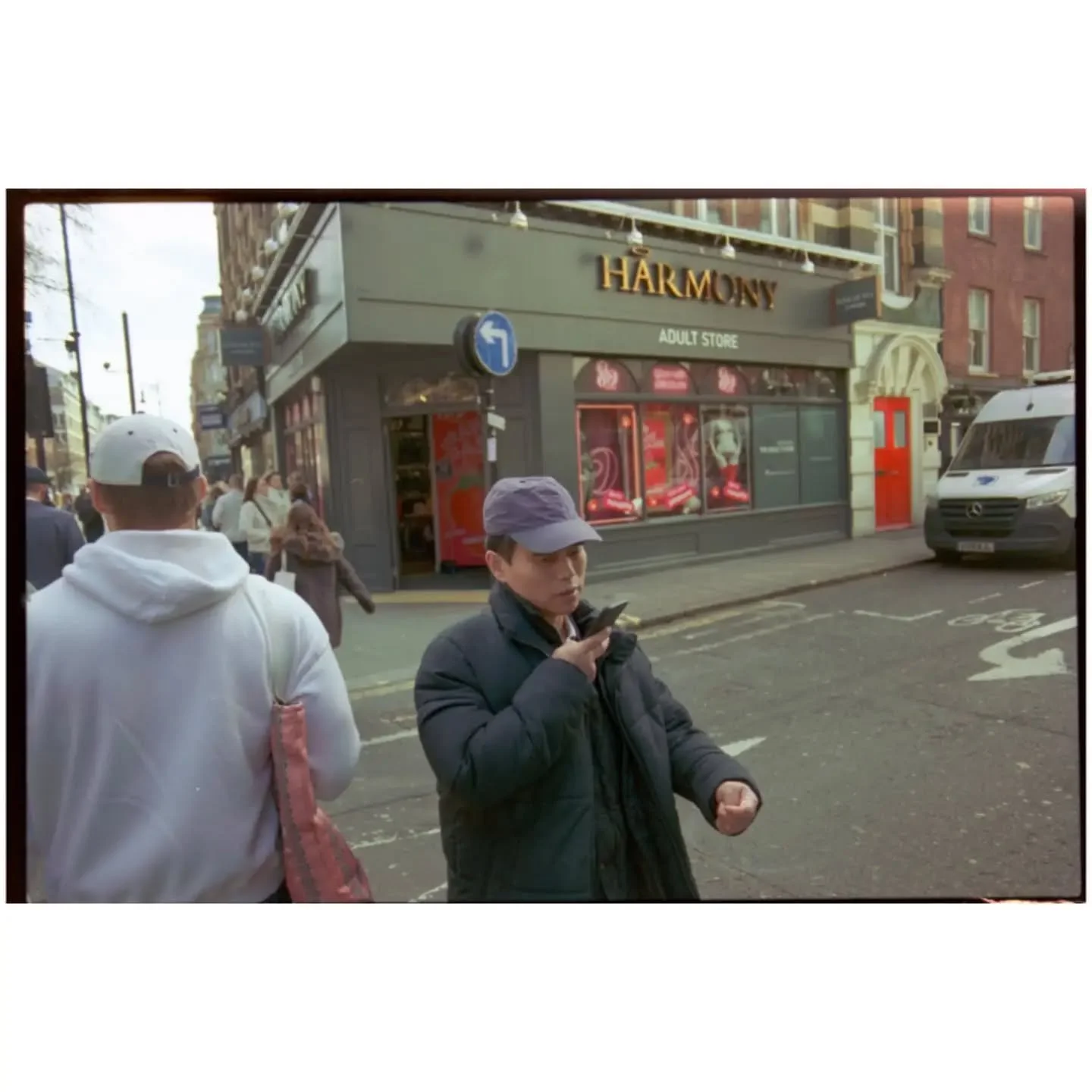
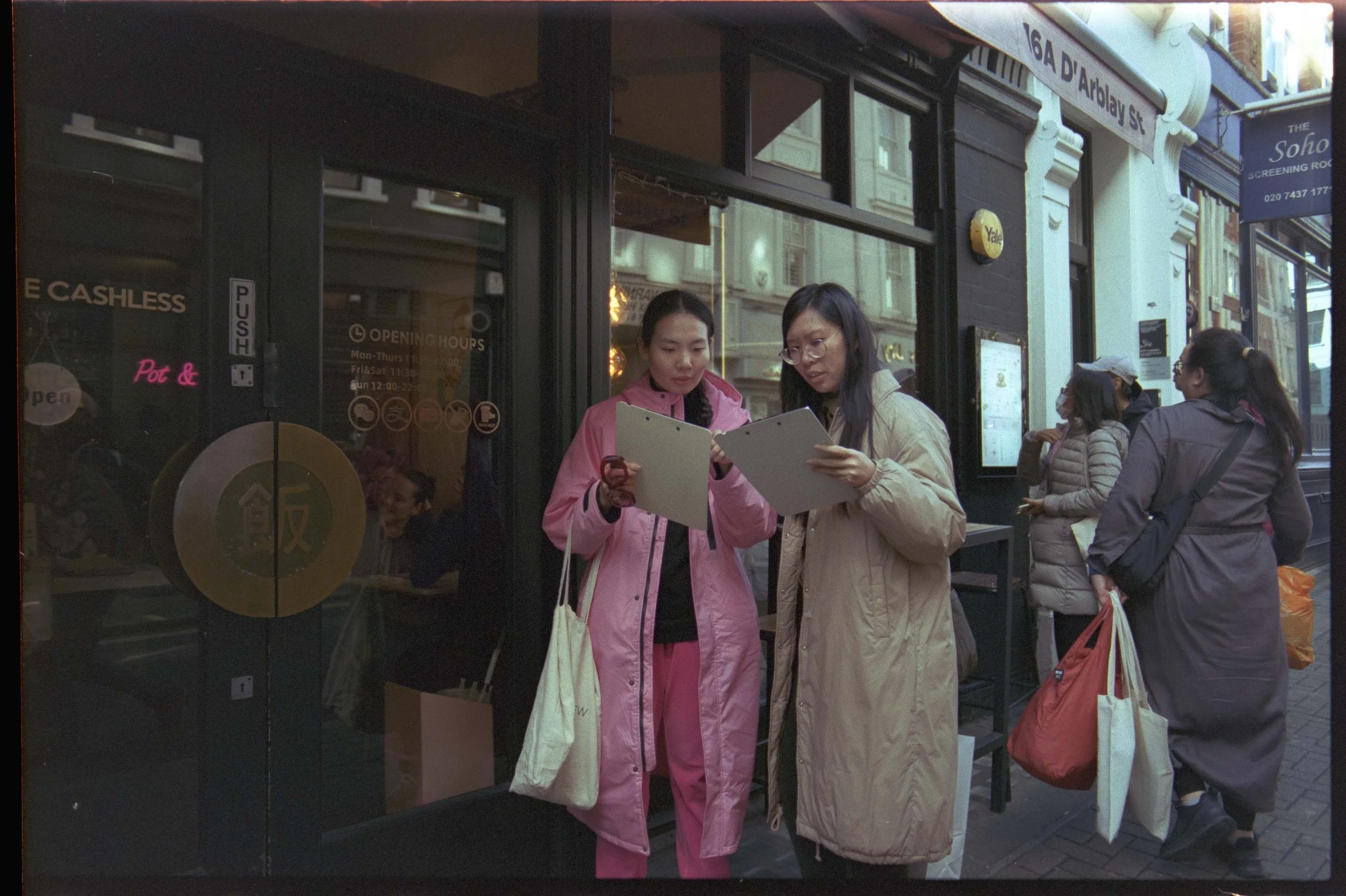
On D'Arblay Street I found two women in matching pink coats, both consulting clipboards outside a restaurant, deep in conversation. The warmth of those coats against the cooler tones of the street behind them is the kind of colour moment that simply doesn't exist in black and white. You don't get to choose that. The stock gives it to you.
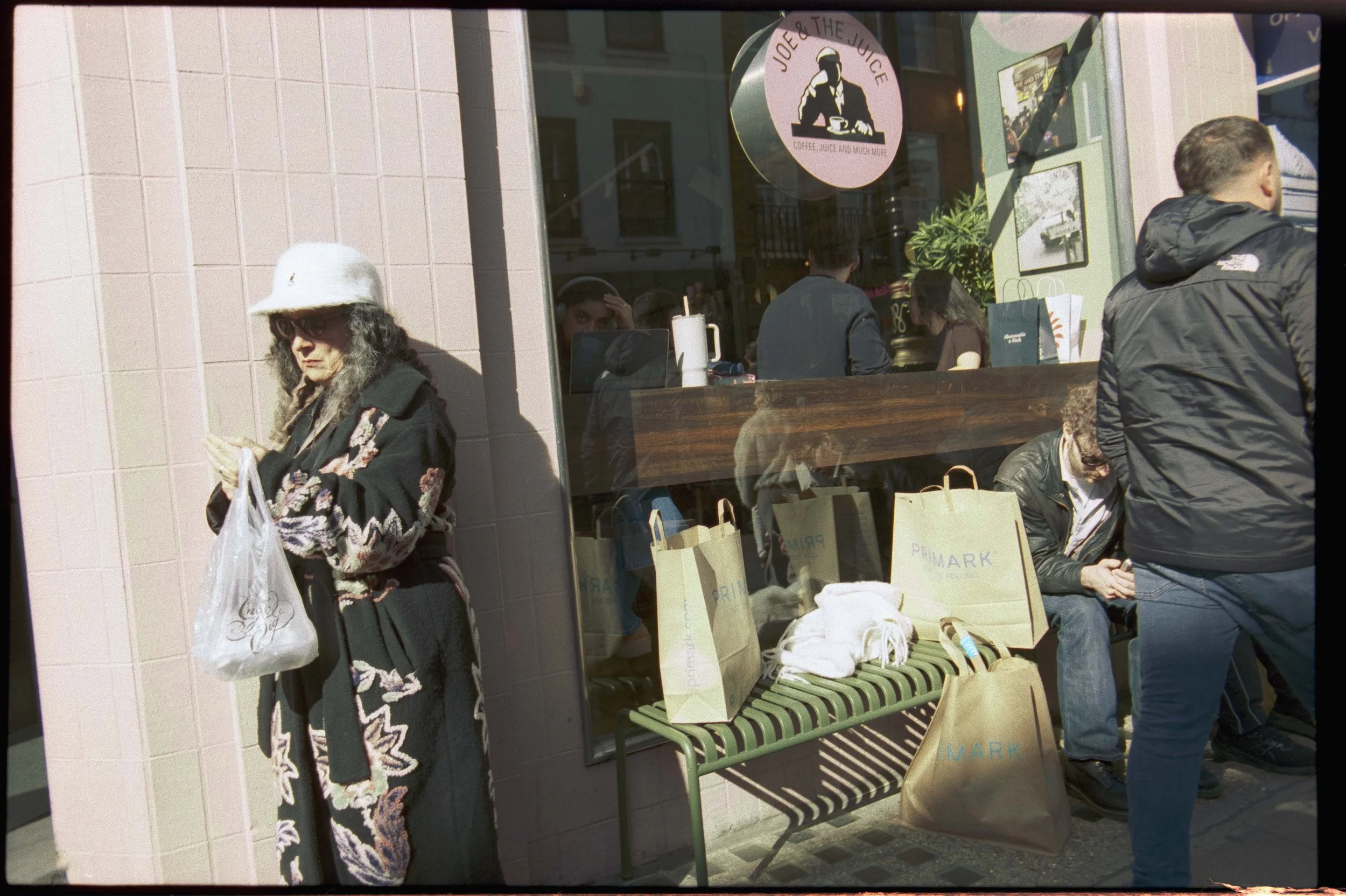
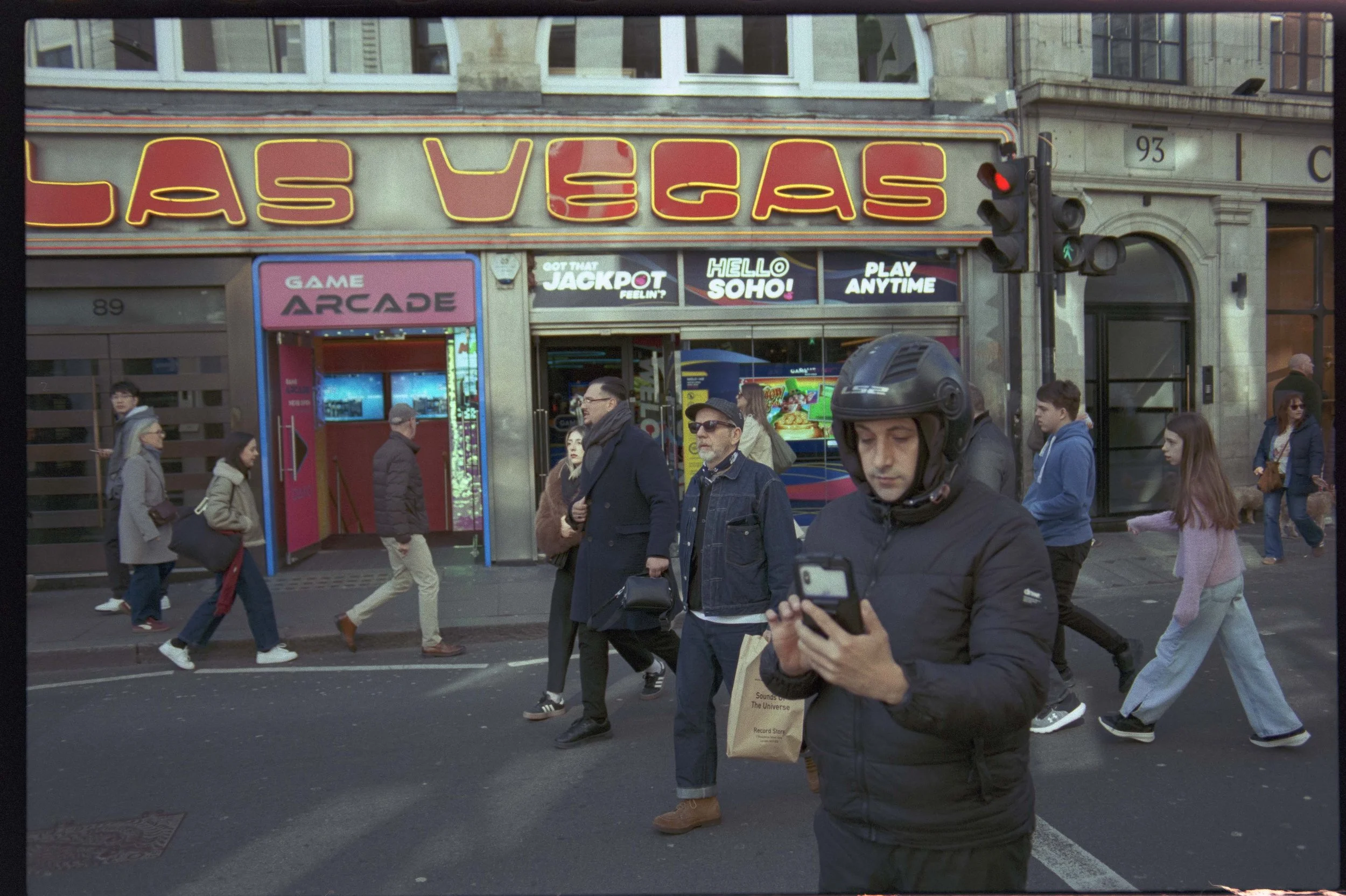
"Vision3 250D handles colour density without letting things fight. That's one of its qualities — and Soho tests it constantly."
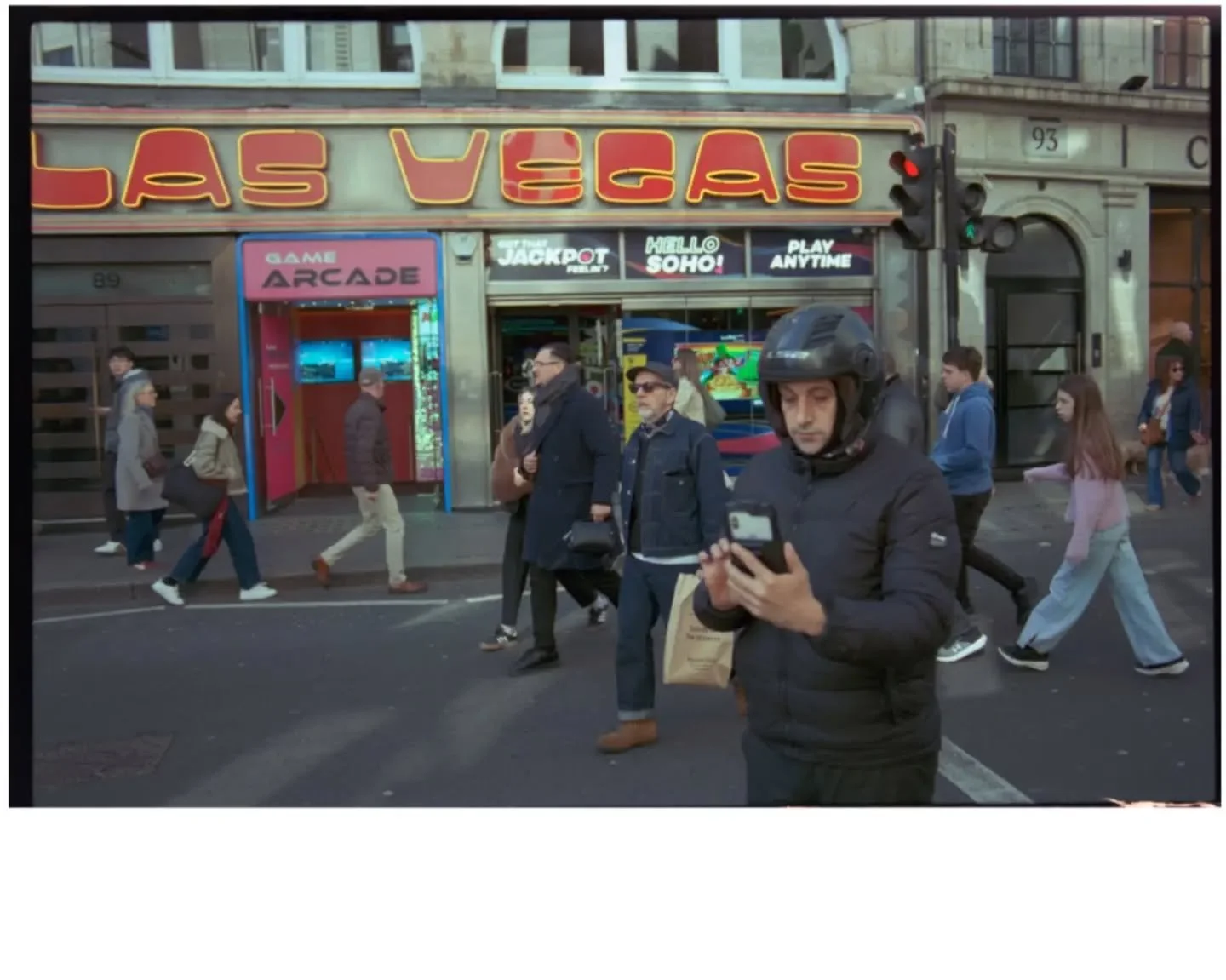
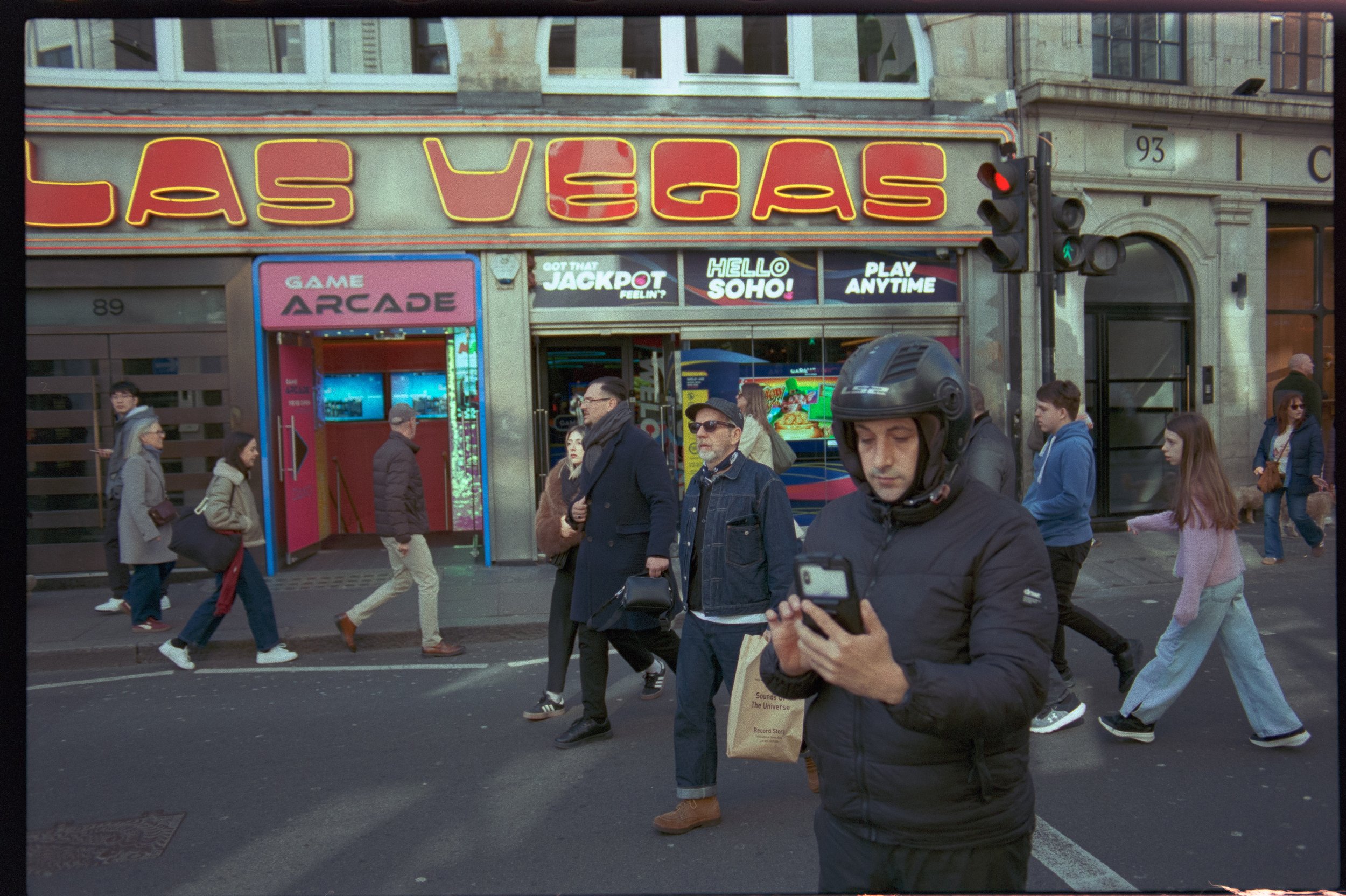
The Las Vegas arcade on what I think was Wardour Street gave me one of the more unexpected frames of the day — a motorcyclist in a full helmet standing at the crossing checking his phone, the enormous neon Las Vegas signage blazing behind him in red and gold, Hello Soho stencilled across the frontage. Vision3 renders neon brilliantly. The warmth of the sign, the cool blue of the afternoon sky in the upper corner of the frame — it's exactly what this stock was made for.
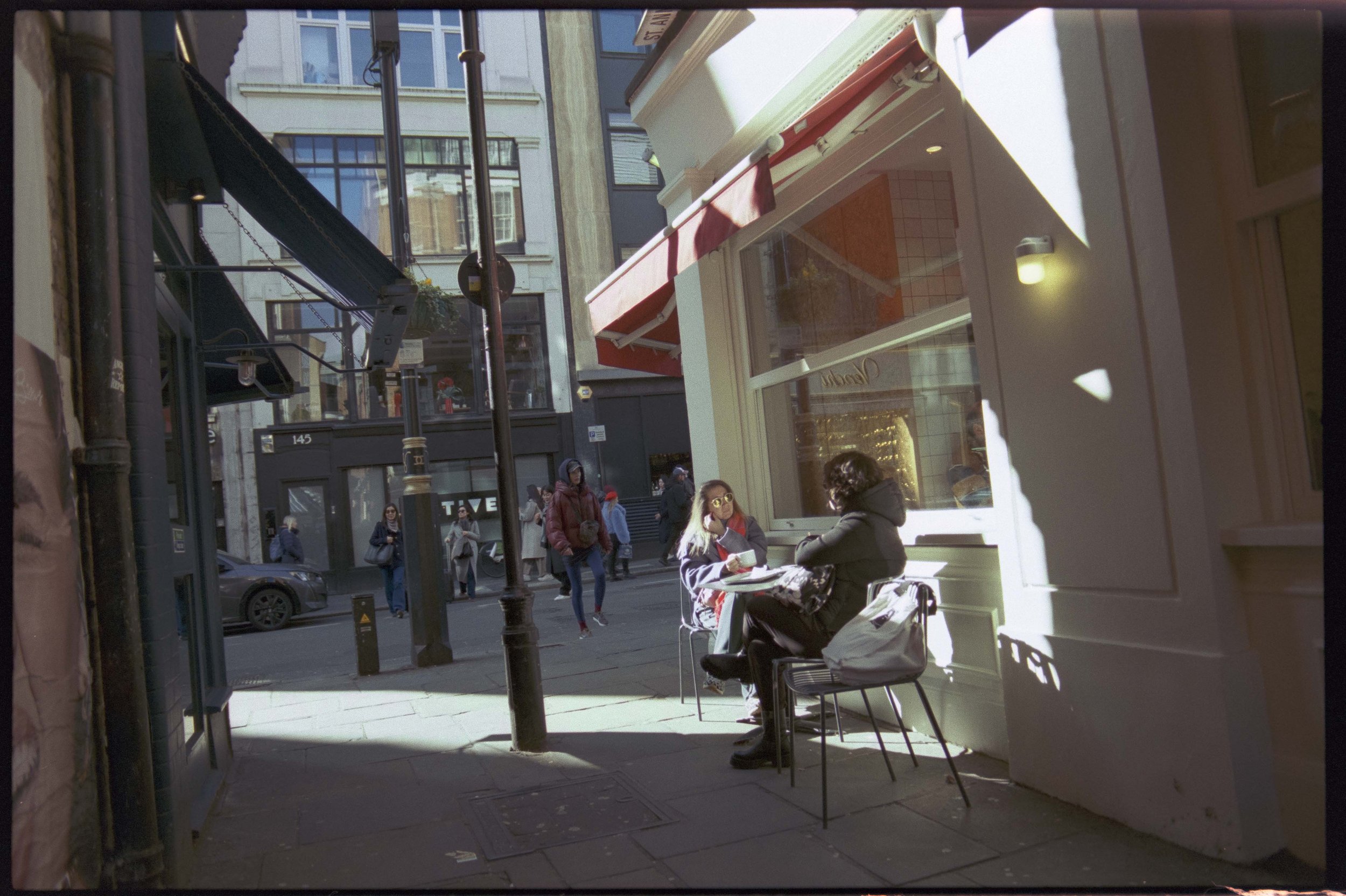
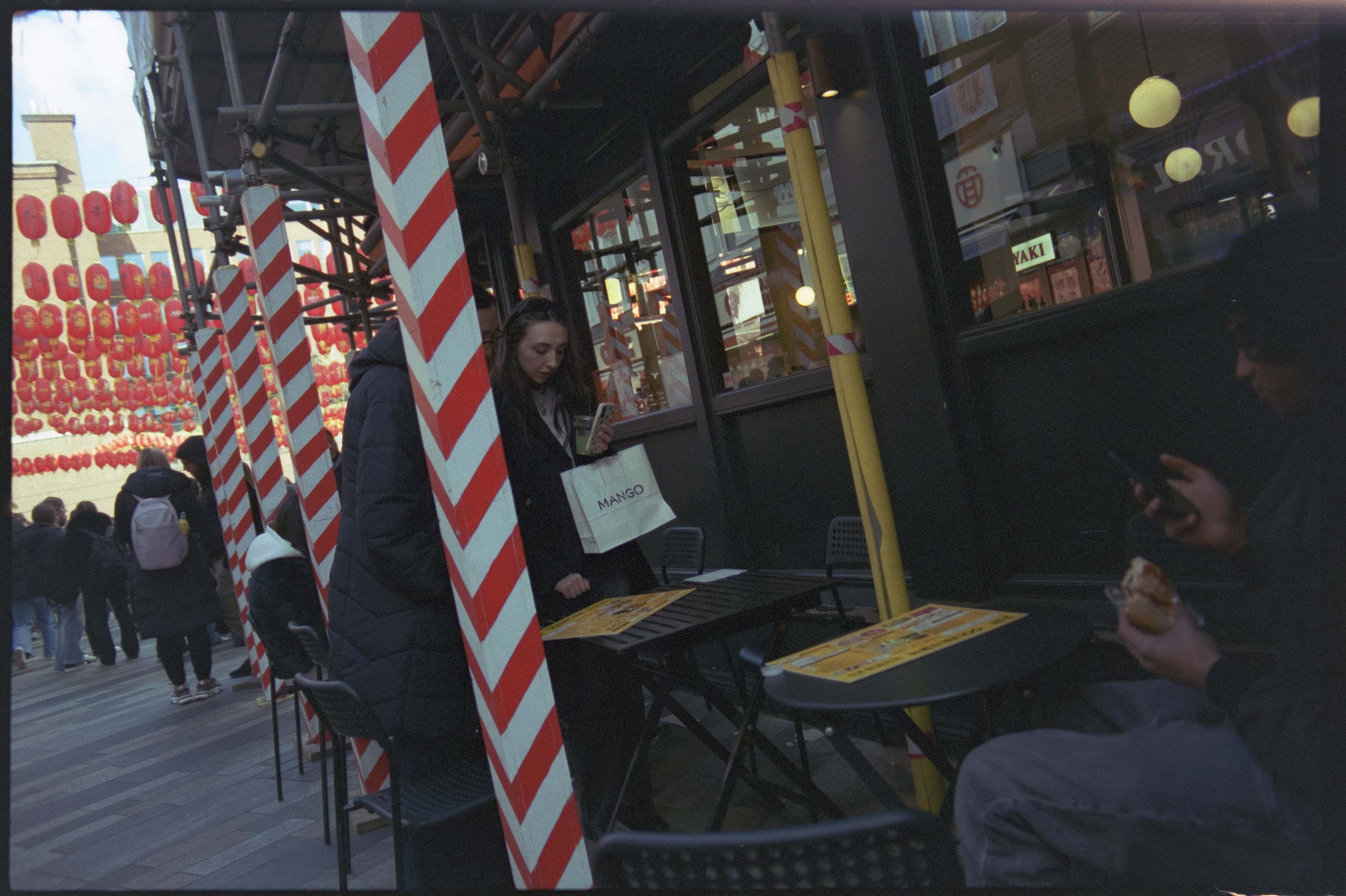
There was a quieter moment mid-roll that I keep coming back to: two women sitting outside a café in a narrow Soho alley, a red awning above them, dappled light falling across the table. No action. No joke. Just two people and an afternoon and the quality of light that Vision3 seems built to hold.
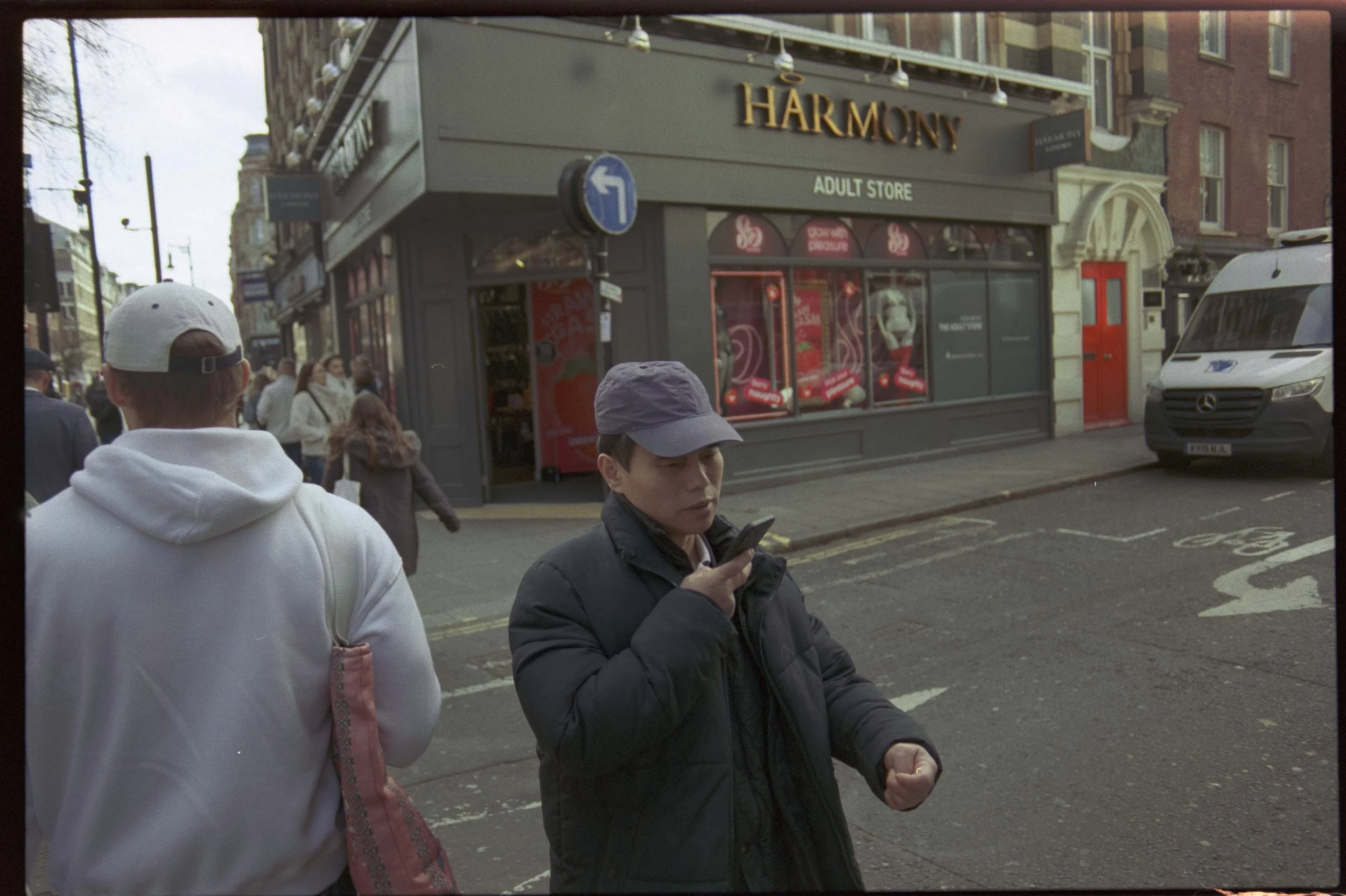
The three jokes
And then London started doing what London does.
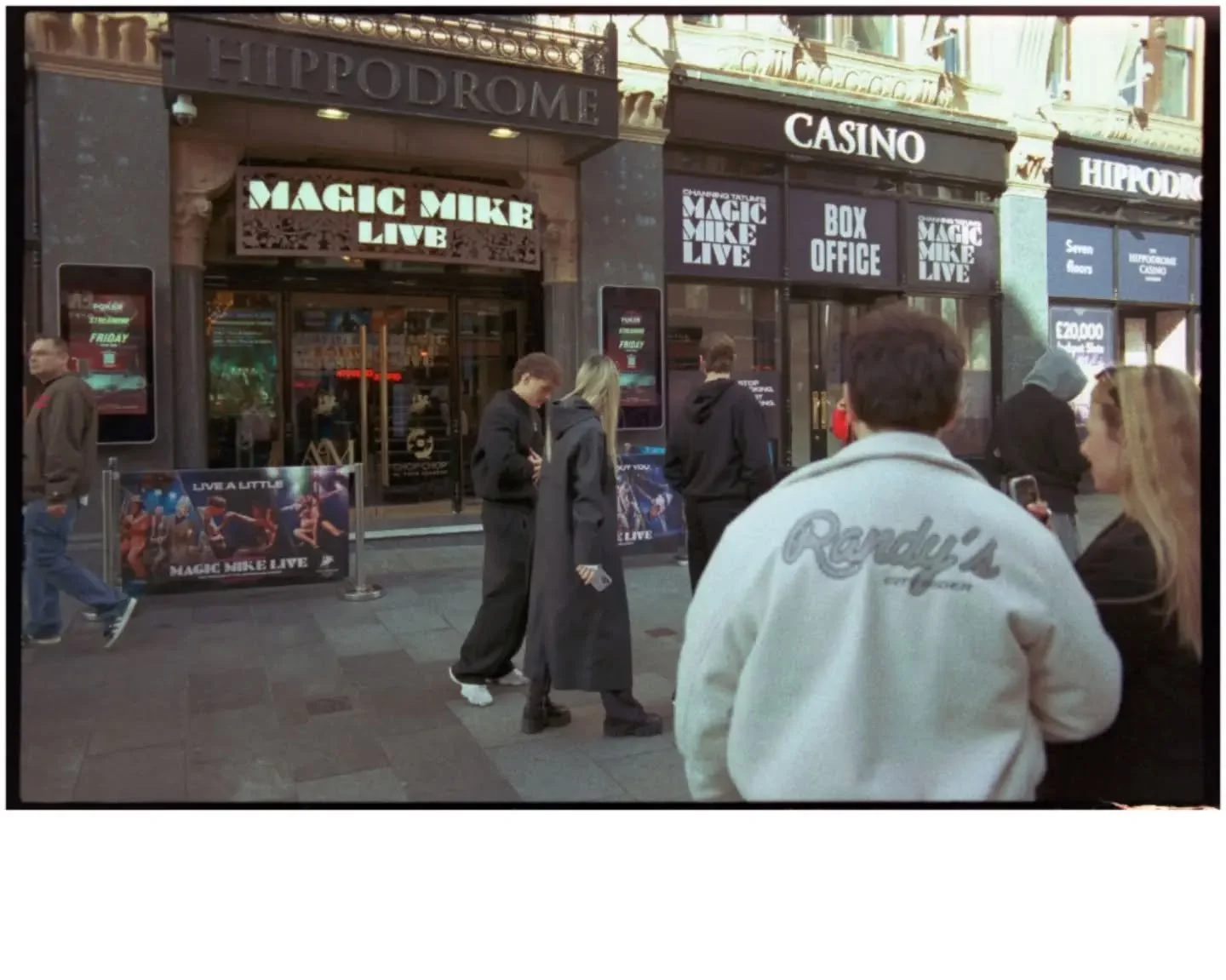
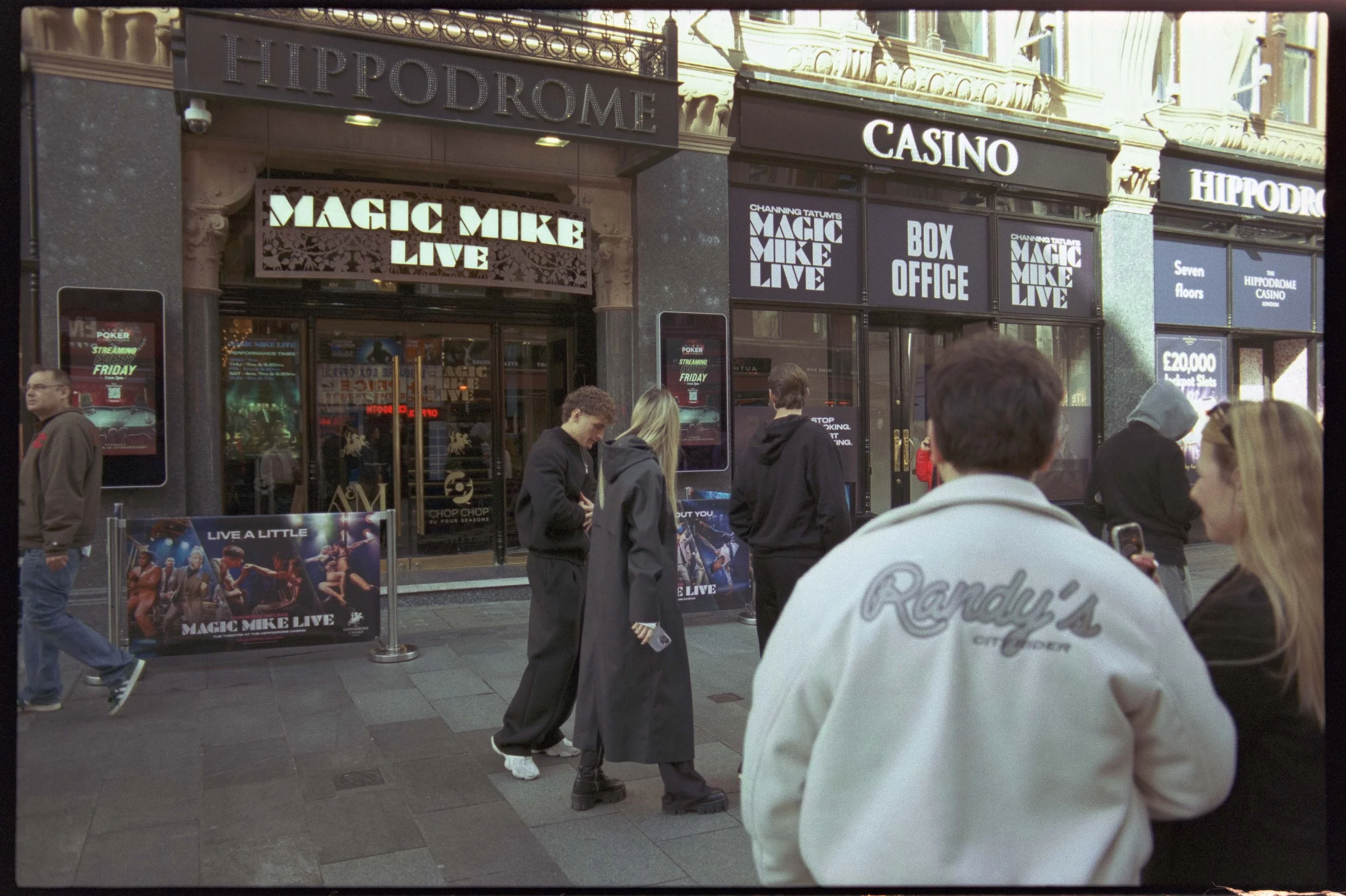
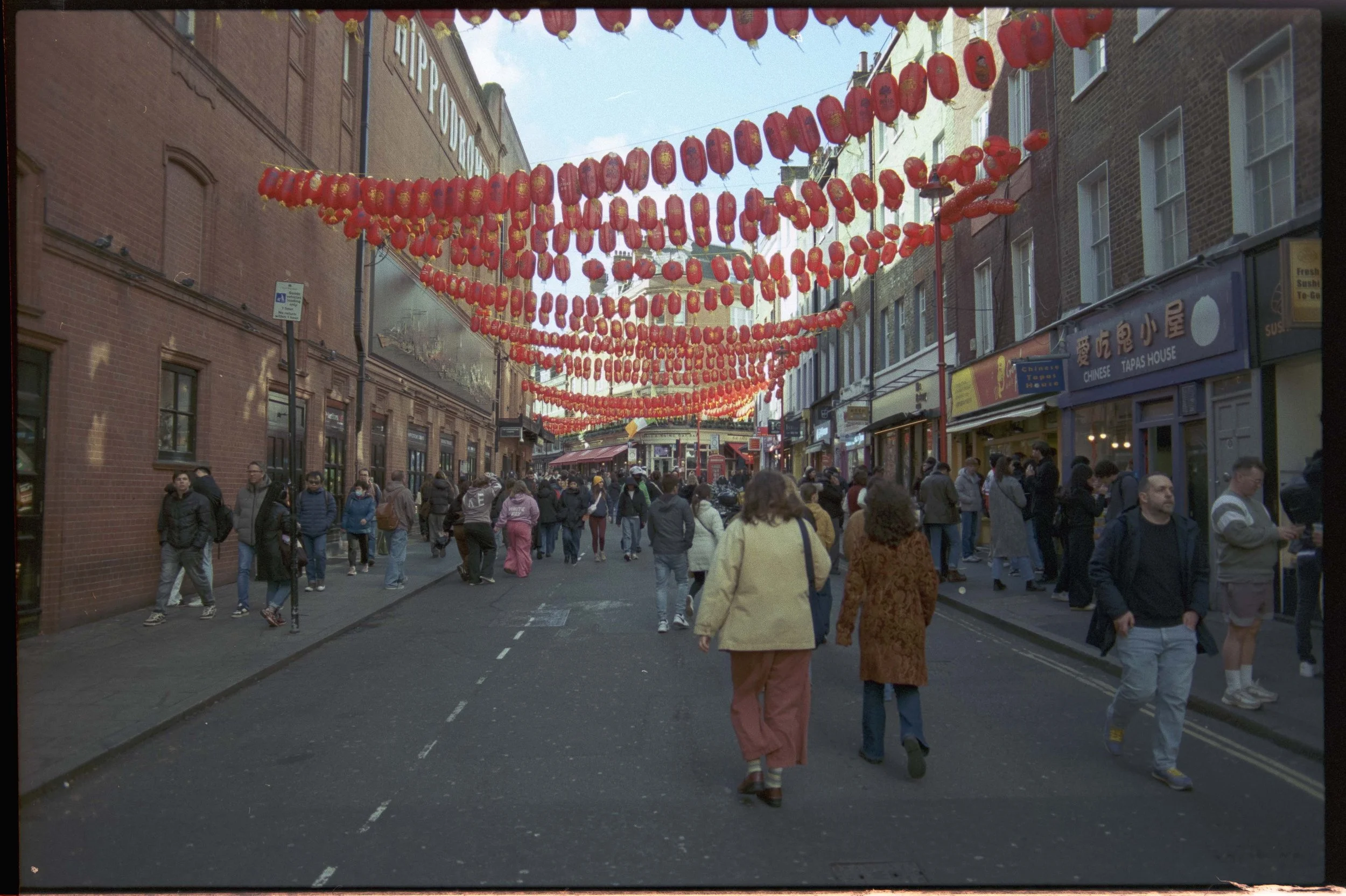
The first one I almost missed. I was walking past the Hippodrome on Cranbourn Street when I clocked it — a man standing on the pavement, back turned, the word Randy's written in large script across the back of his white jacket. Behind him, filling the entire frontage of the venue: Magic Mike Live. He had no idea. The street had assembled itself into a perfect joke and was waiting, with infinite patience, for someone to walk past with a camera.
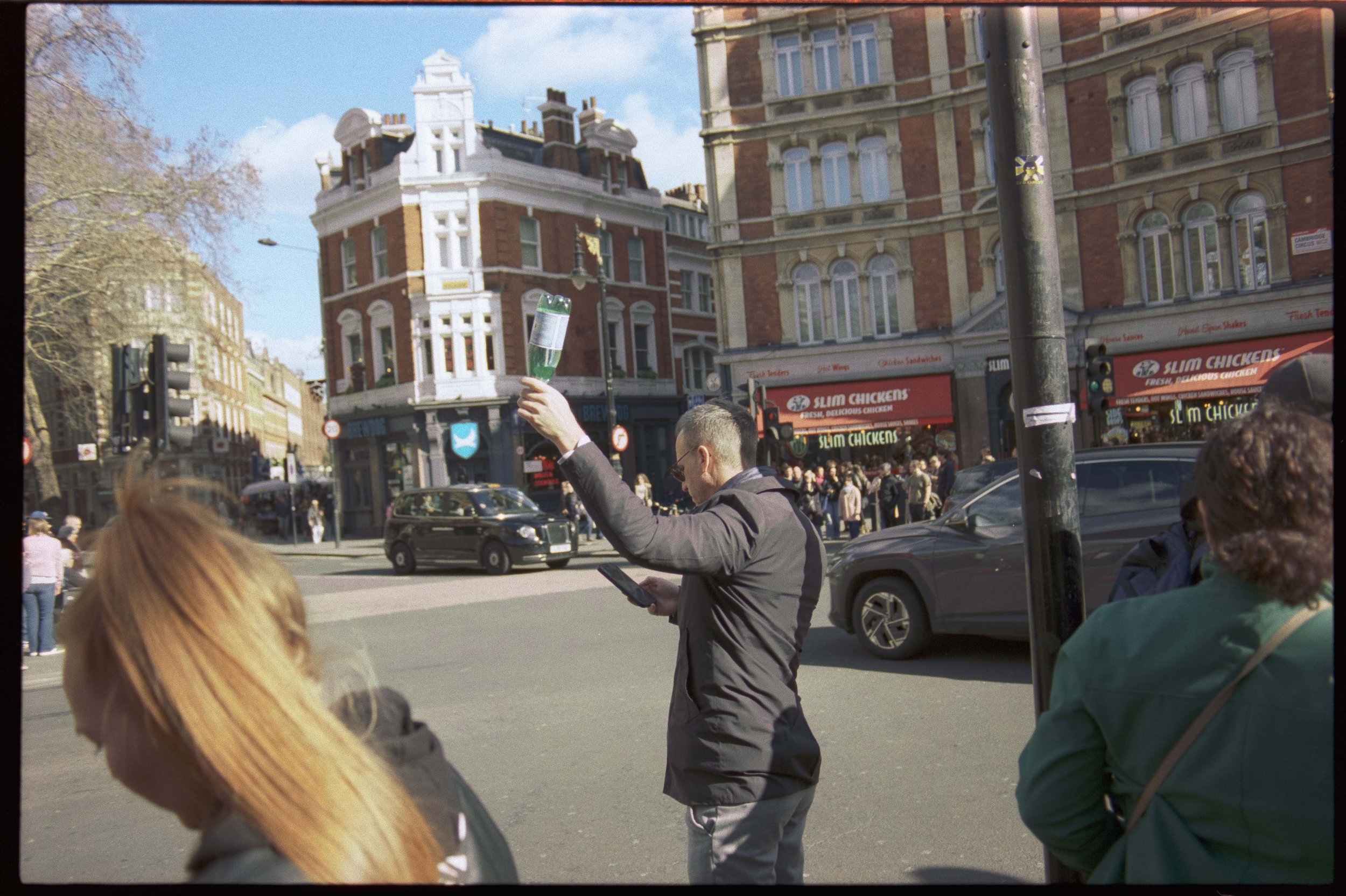
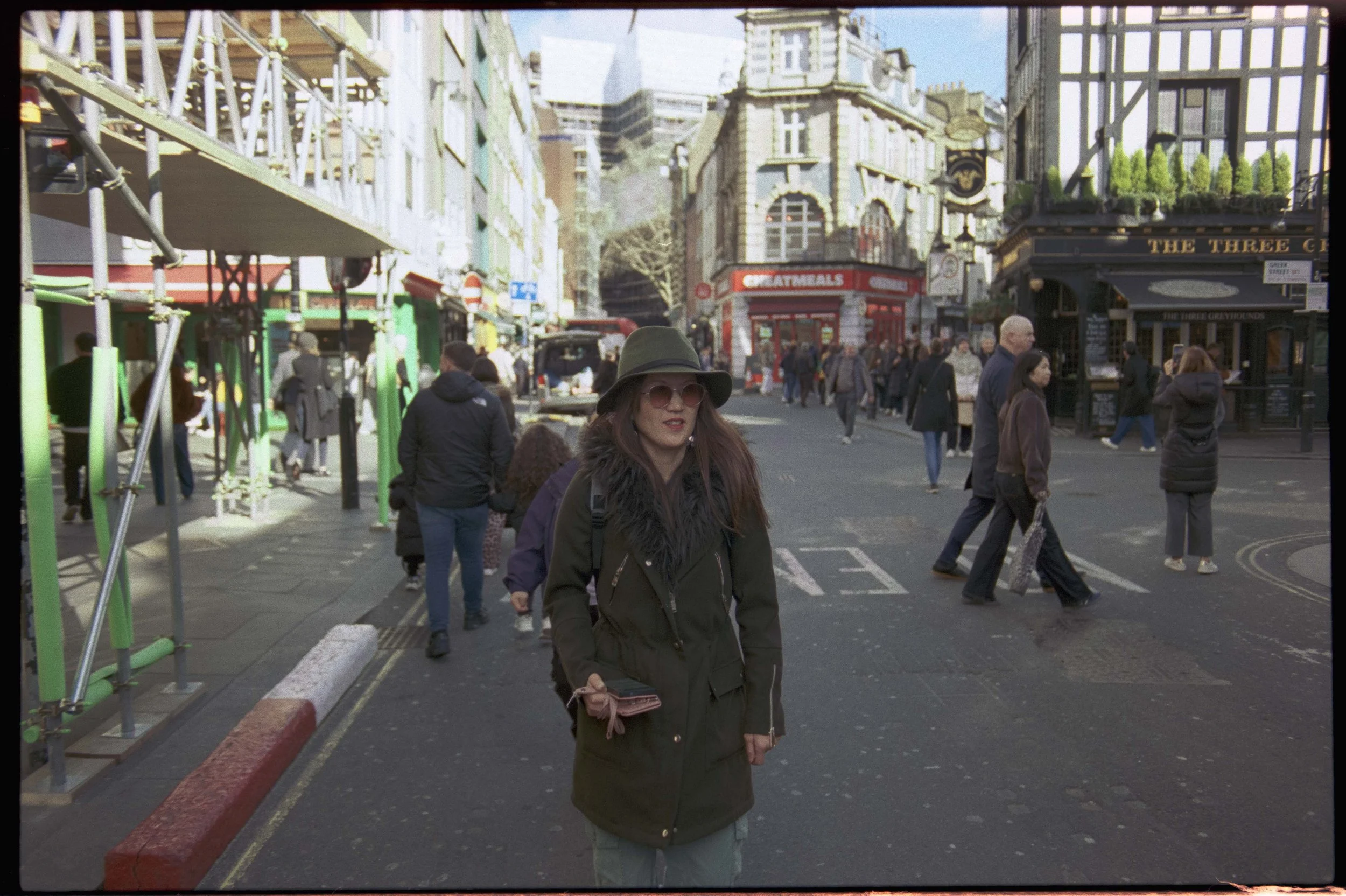
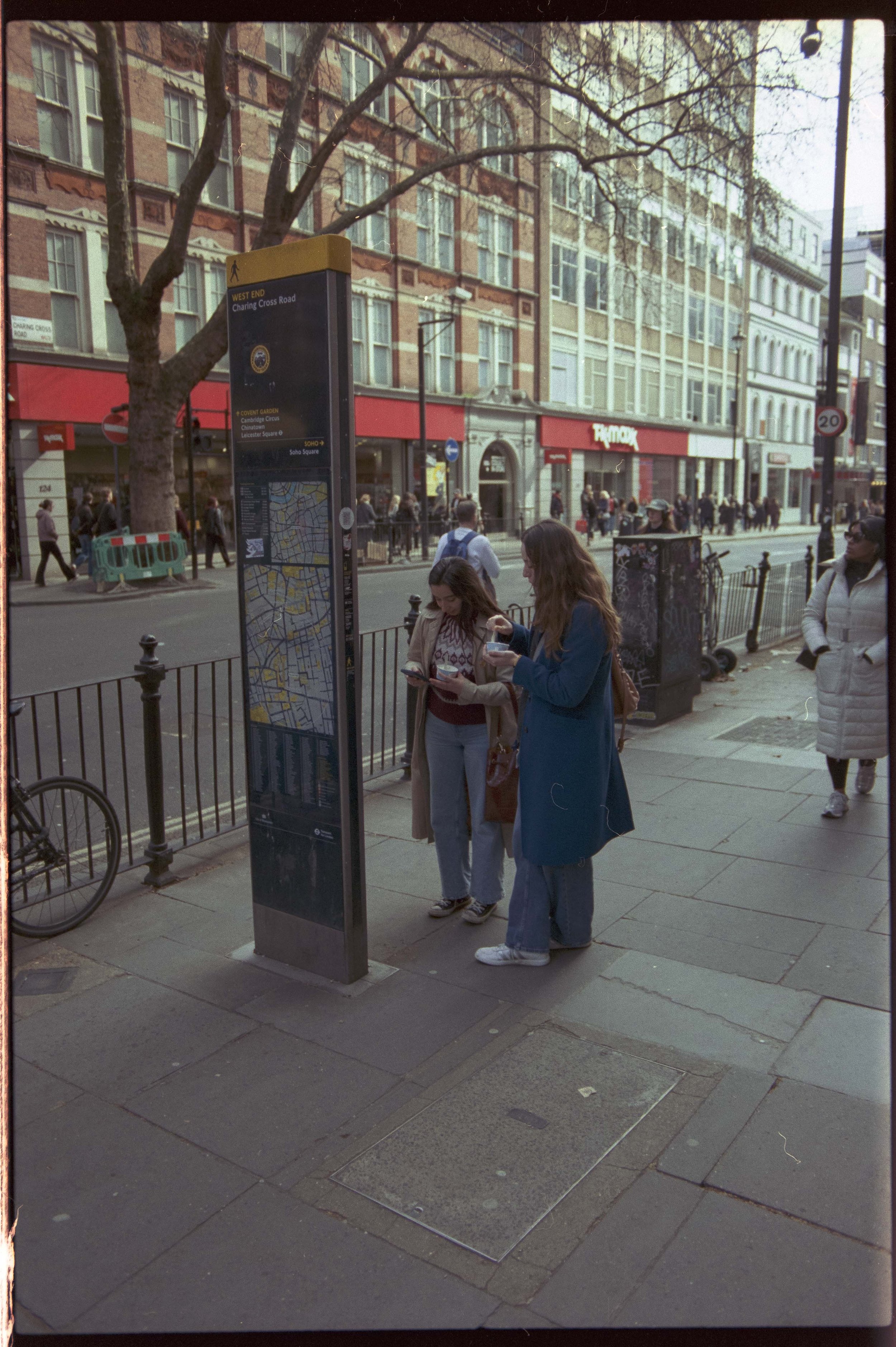
The second came at a crossing near the top of Charing Cross Road. A tour guide — grey hair, suit jacket, every inch the professional — was trying to marshal his group through the lunchtime traffic. His technique was to hold a green bottle above his head like a torch, a beacon for anyone who'd wandered off. He was checking his phone with the other hand. I pressed the shutter at the exact moment his arm went up. He was, without any doubt, leading them to the pub.
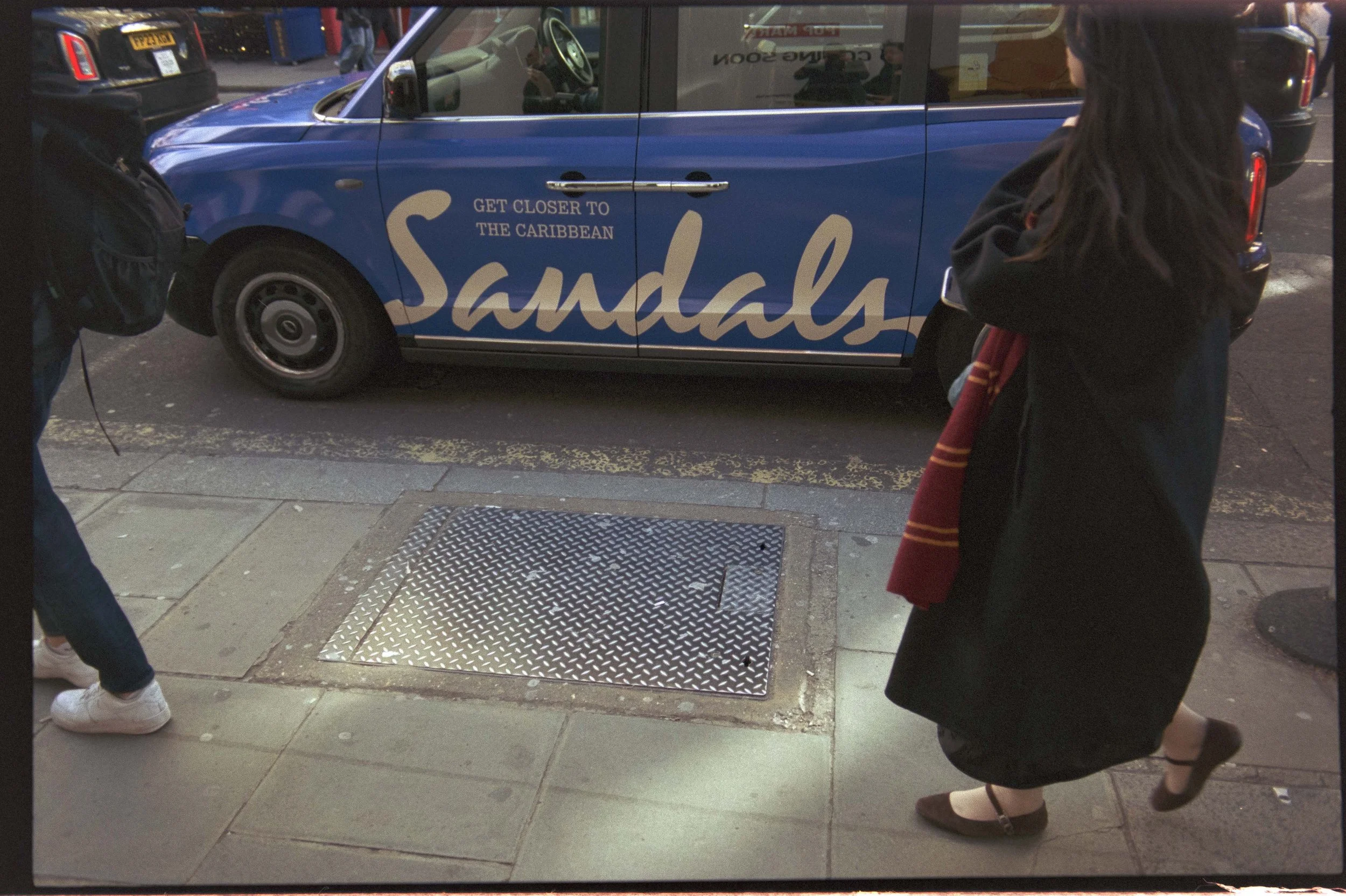
The third was the one I'm most pleased with. A London black cab, completely wrapped in the Sandals Caribbean holiday livery — blue bodywork, the Sandals script in cream, Get Closer to the Caribbean. Passing directly in front of it at that exact moment: a woman in a full Hogwarts Gryffindor robe, red and gold striped scarf trailing behind her. On her feet: sandals. She was heading somewhere else entirely, completely unbothered.
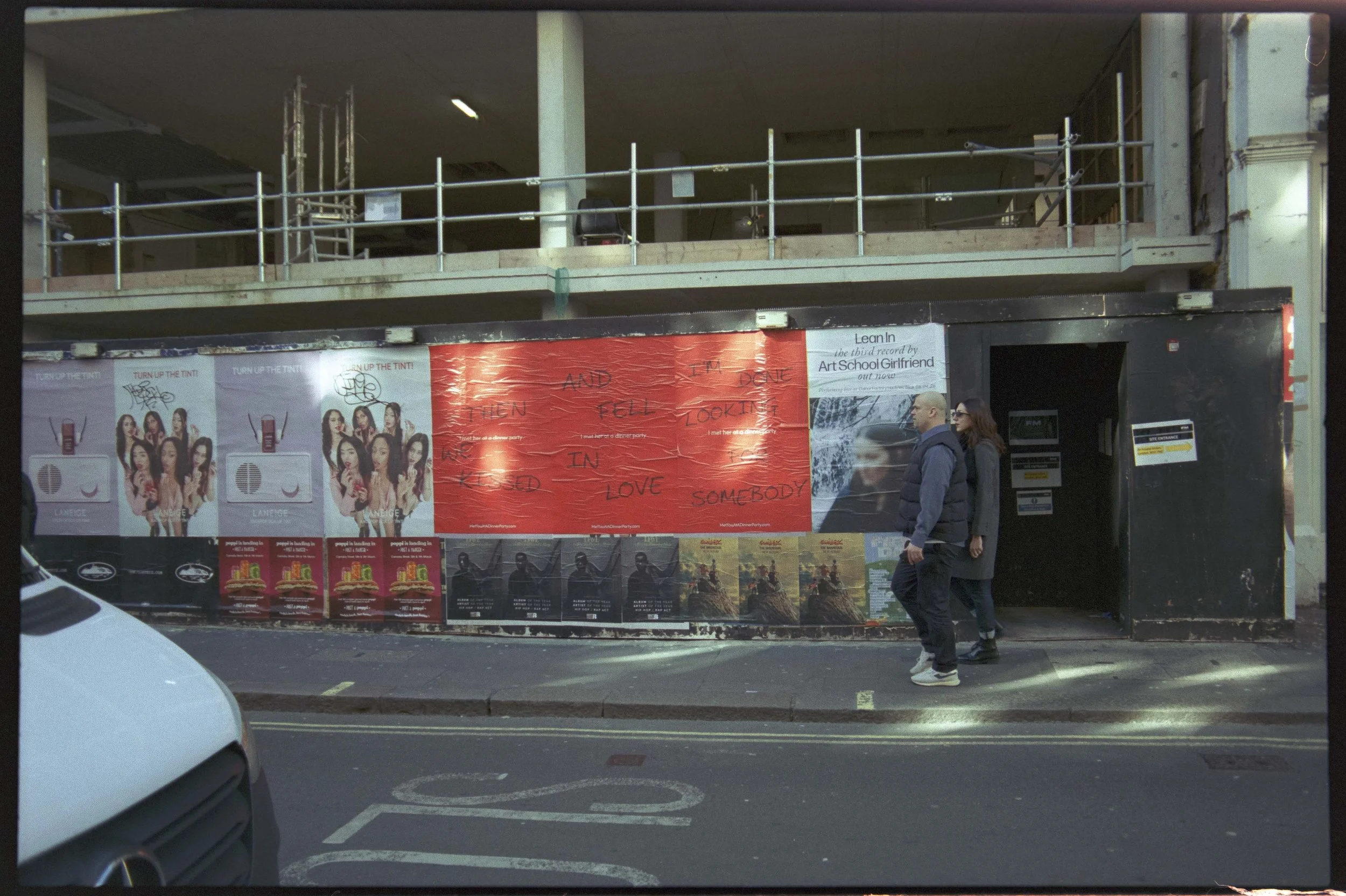
Three found jokes on one roll. Colour made all of them better. Black and white would have served the geometry. Vision3 gave you the blue cab and the red scarf and the warm pavement and the whole absurd London afternoon.
What comes next
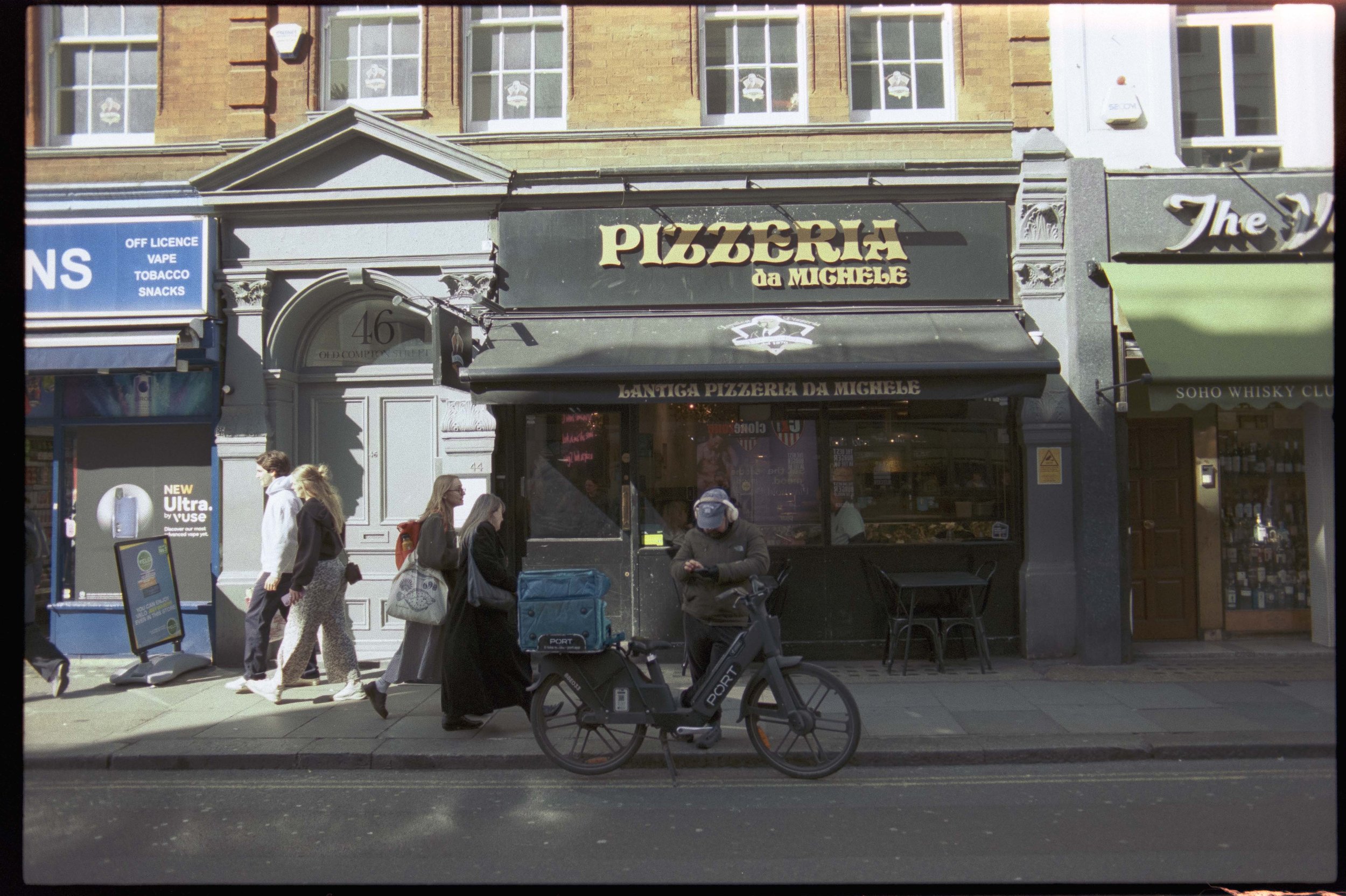
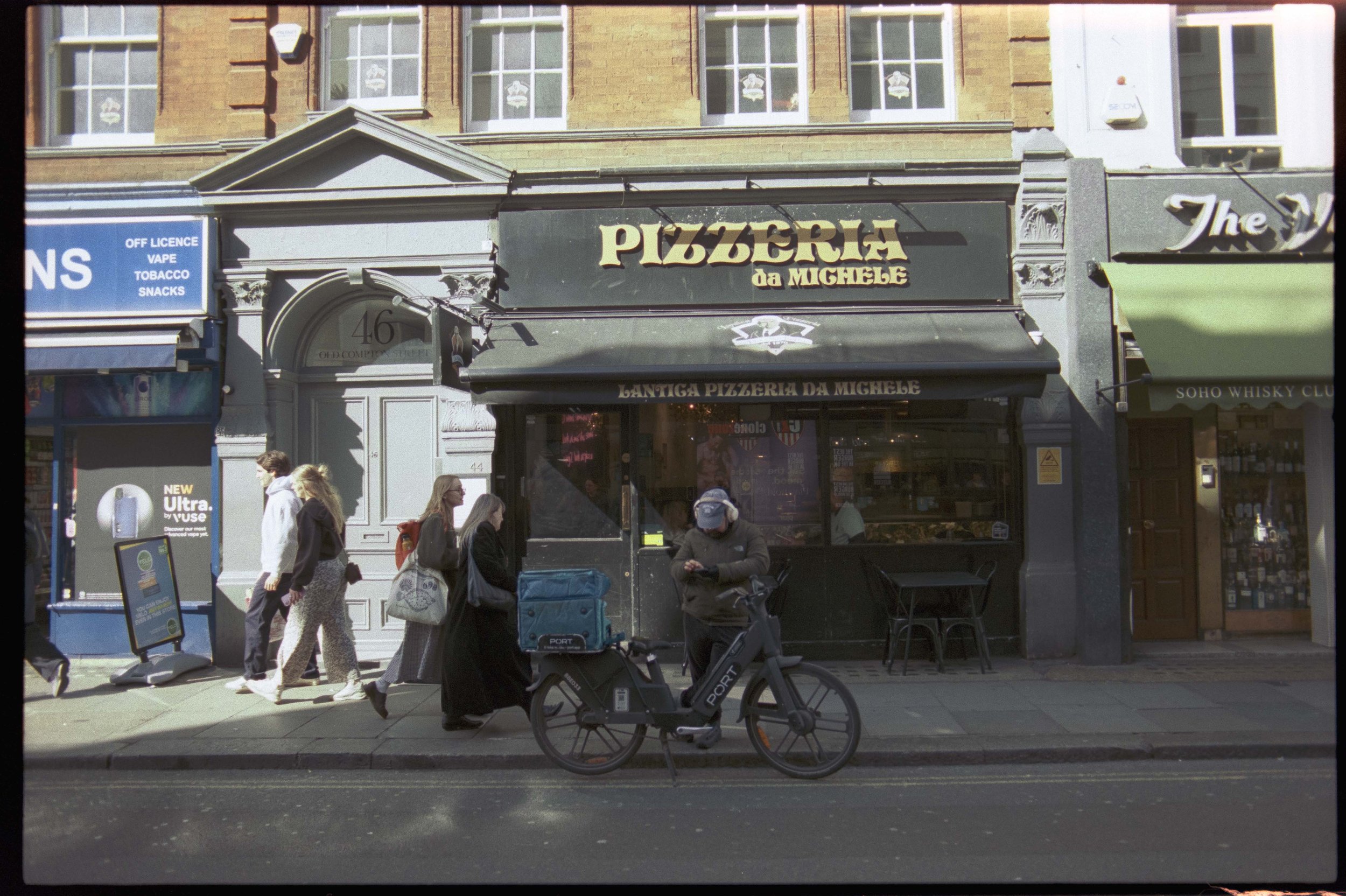
I finished the roll on Old Compton Street — a delivery rider on a PORT bike outside Pizzeria da Michele, checking his phone in the late afternoon light, the gold lettering of the restaurant sign warm above him. A good closer. Unhurried. The sort of frame that makes sense at the end of a day's shooting.
One roll is not enough to draw firm conclusions about a film stock. But it is enough to know whether you want to shoot another one, and the answer here is unambiguously yes. Vision3 250D asks you to work with colour rather than despite it — to look for the moments where the warmth of a late winter afternoon in London becomes part of the story rather than just the backdrop.
After years of reaching for black and white by default, that's a different kind of seeing. I'd been missing it without quite realising.
I've already ordered more rolls. Spring is coming, the light is getting longer, and the streets are filling up again. If the first outing with Vision3 250D is any indication, it's going to be a busy few months.
Black and white isn't going anywhere. But colour just made a very strong case for sharing the bag.
Until next time, keep snapping
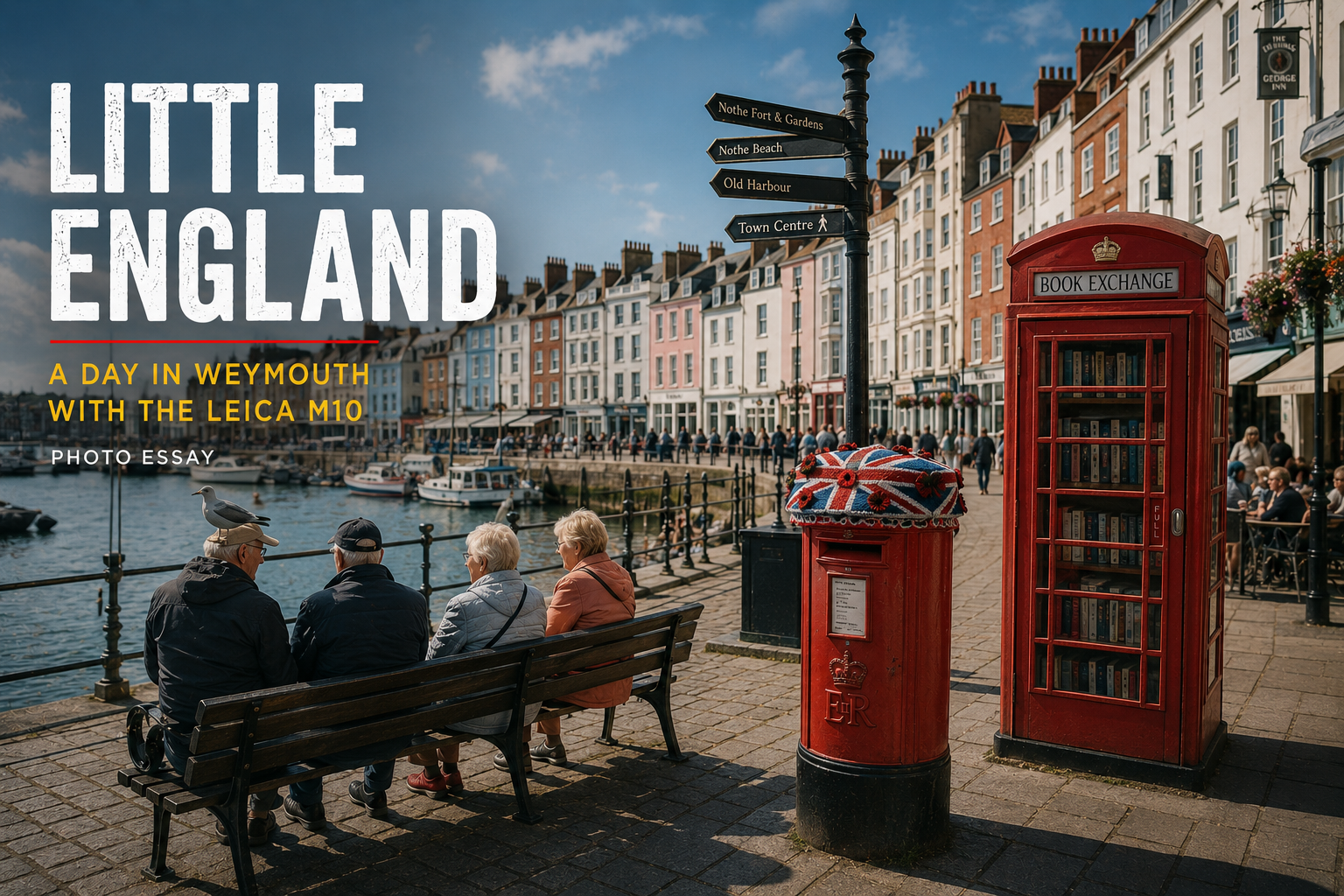
Little England - A day in Weymouth with the Leica M10
Originating from a small Midlands town and subsequently moving down south and now to the south coast in Brighton, there is a natural allure for me for the traditional British seaside town.
I actually remember going to Weymouth from the Midlands with the family when I was a wee lad.
There's a version of England that still exists in places like our seaside towns. Not the version that gets argued about online, or invoked on political platforms, or turned into a slogan. The quieter version. The one that just gets on with it.
Originating from a small Midlands town and subsequently moving down south and now to the south coast in Brighton, there is a natural allure for me for the traditional British seaside town.
I actually remember going to Weymouth from the Midlands with the family when I was a wee lad.
There's a version of England that still exists in places like our seaside towns. Not the version that gets argued about online, or invoked on political platforms, or turned into a slogan. The quieter version. The one that just gets on with it.
I drove down to Weymouth yesterday morning, with the Leica M10 and no real agenda beyond walking and seeing what the town had to say, as Spring 2026 has opened its eyes. Weymouth is a proper south coast seaside town — the kind with a working harbour, Georgian terraces starting to show their age, a pink cake shop that takes cash only, and Union Jacks outside the pub.
"This blog post isn't a political statement, it's an observation. The flags are just there — unremarkable to the people who live under them, which is precisely what makes them worth photographing."
I've been thinking about this project for a while. There's something I keep noticing in the English seaside towns I shoot — a particular kind of texture that's hard to name but immediately recognisable. Old shopfronts that haven't been rebranded. Red postboxes with knitted toppers. Phone boxes repurposed into book exchanges. Ghost signs on brick walls advertising things that no longer exist. All of it quietly persisting, not out of defiance, just out of habit.
Weymouth has it in abundance.
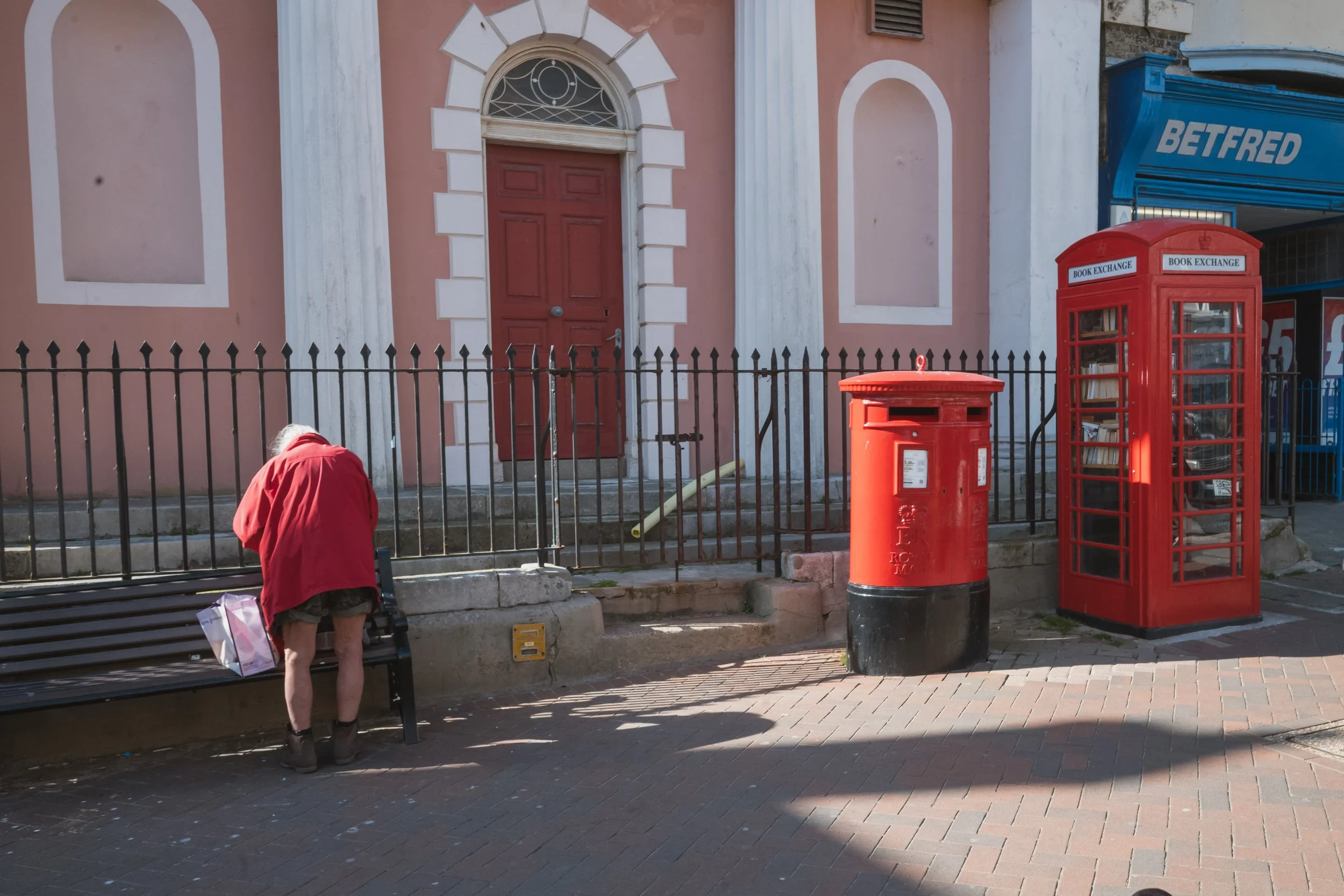
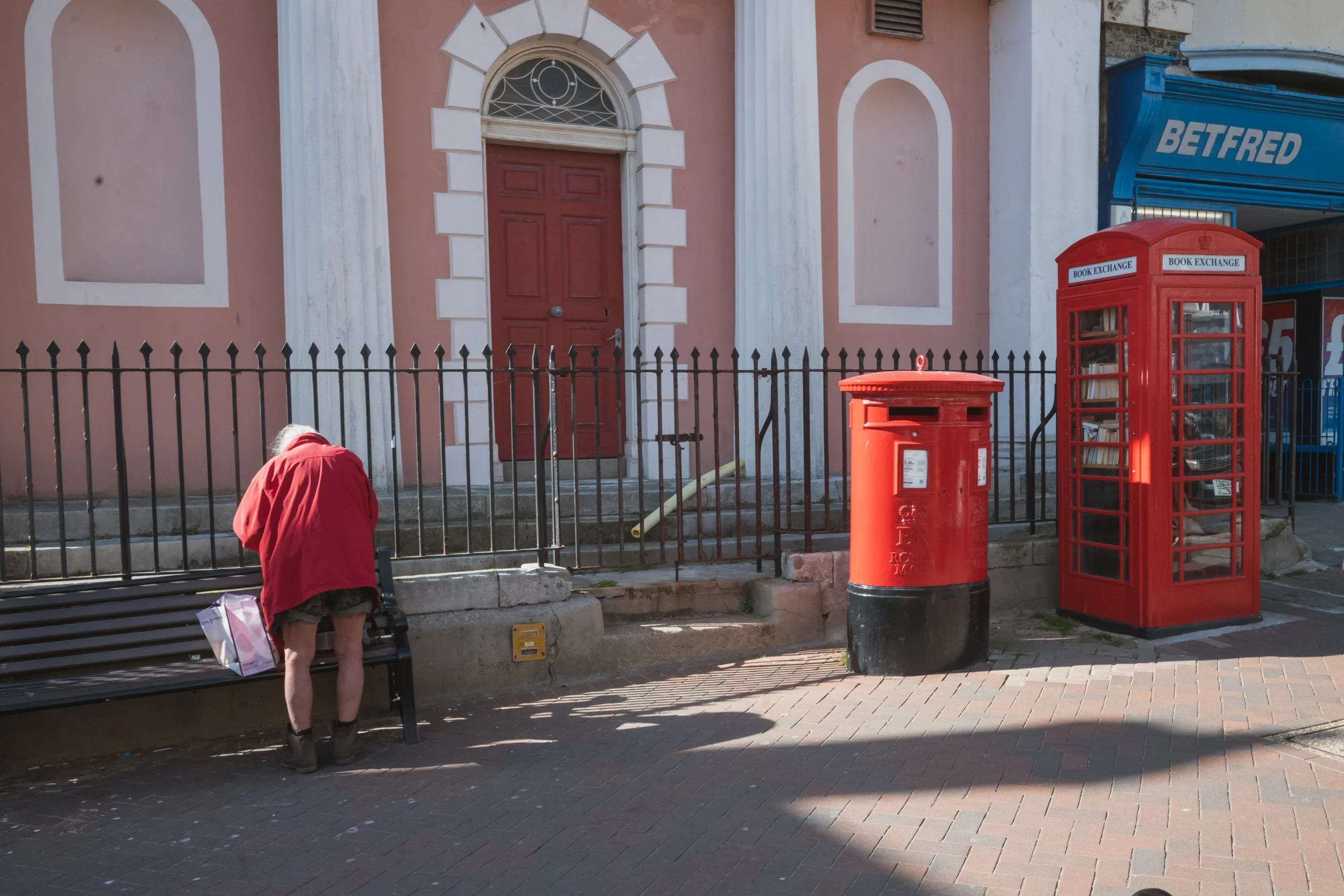
I started on the high street. The first image that stopped me was almost too on-the-nose: a red figure hunched on a bench beside a red postbox and a red phone box — now a book exchange — with Betfred blazing blue in the background. Three reds and a betting shop. England in a single frame.
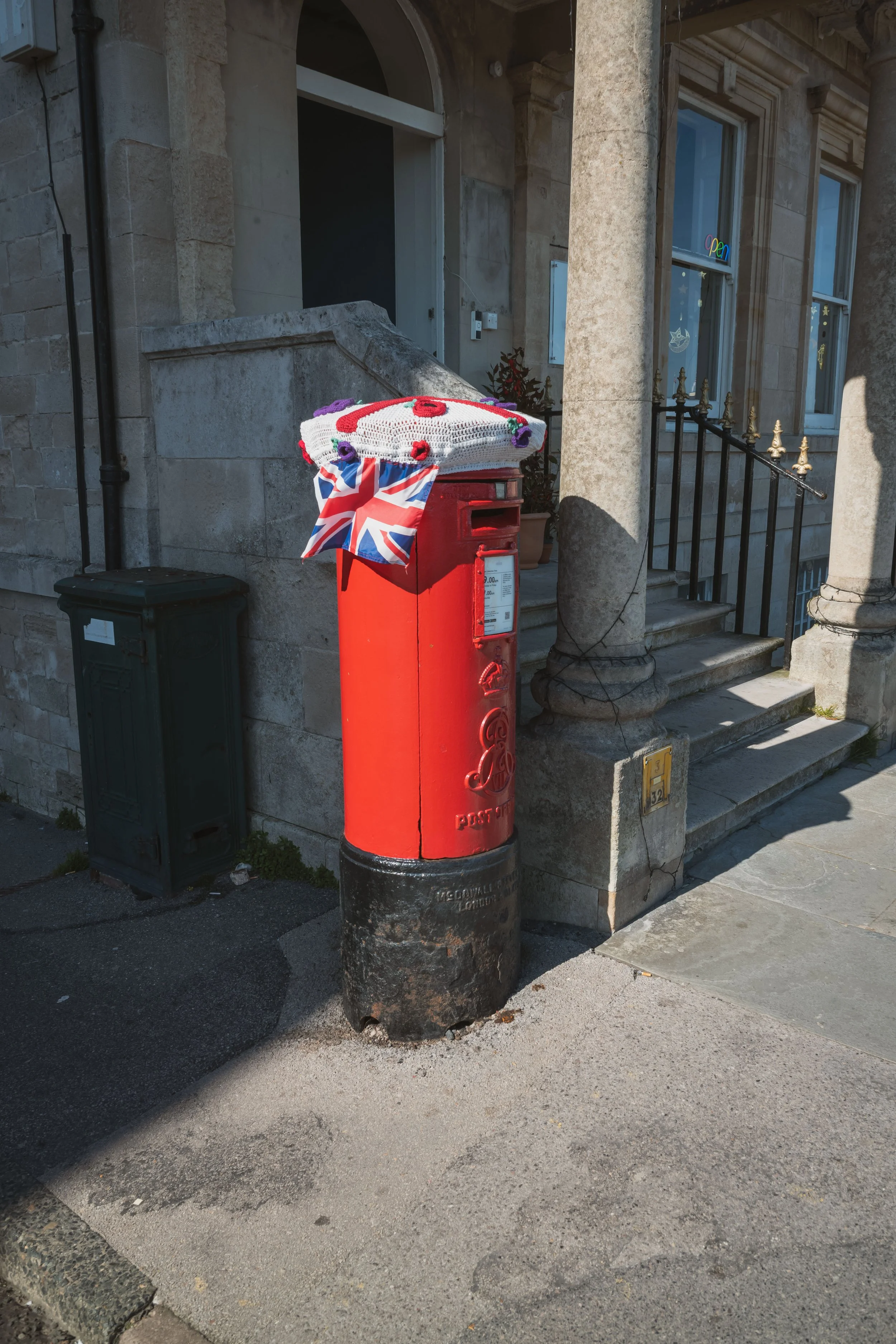
A few streets away I found the postbox with the knitted Union Jack draped over its top — someone had crocheted a topper decorated with poppies and the flag, placed it there quietly, and moved on. It was the most tender thing I photographed all day. There's a whole tradition of this in small British towns — anonymous acts of civic affection that never make the news and probably shouldn't.
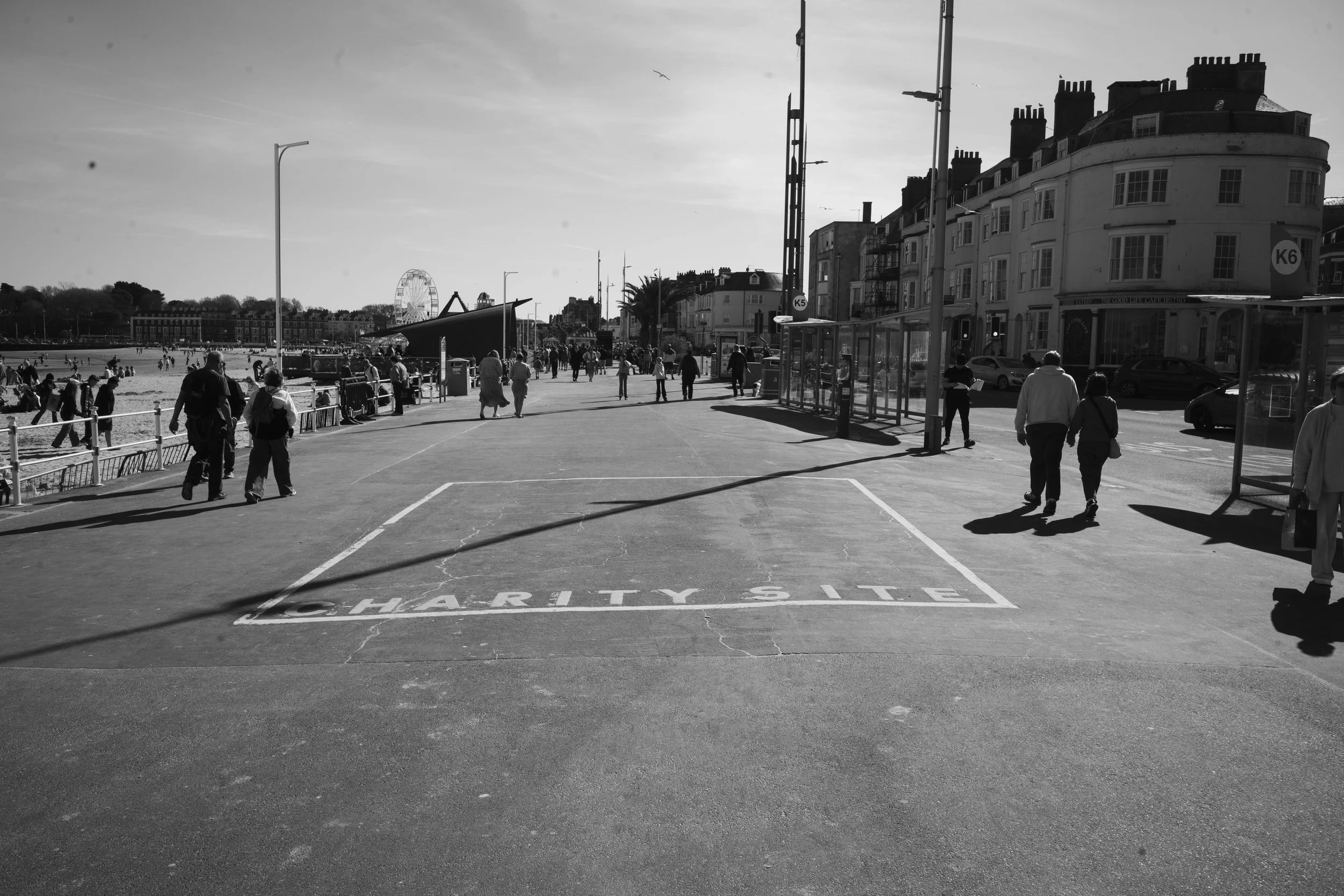
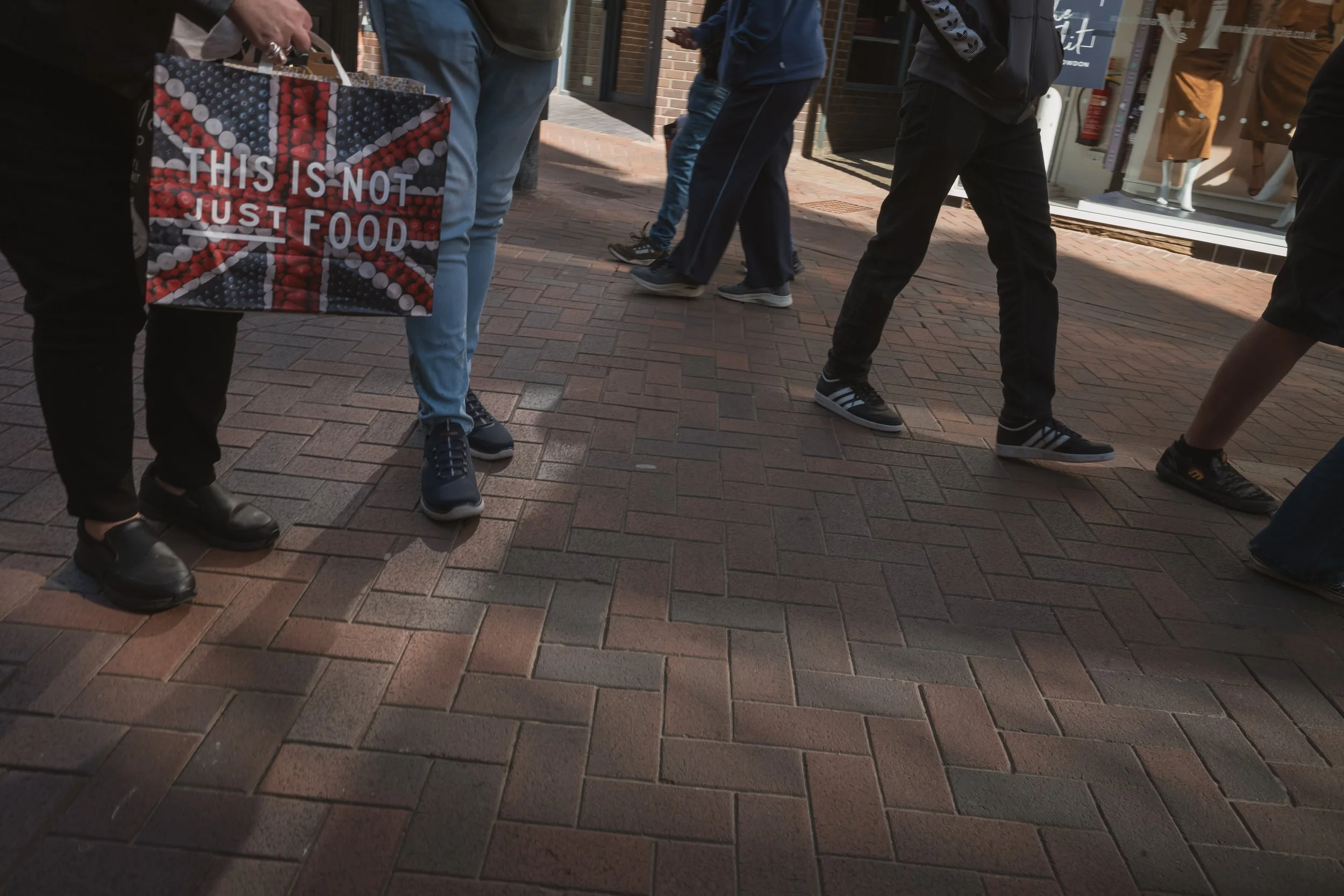
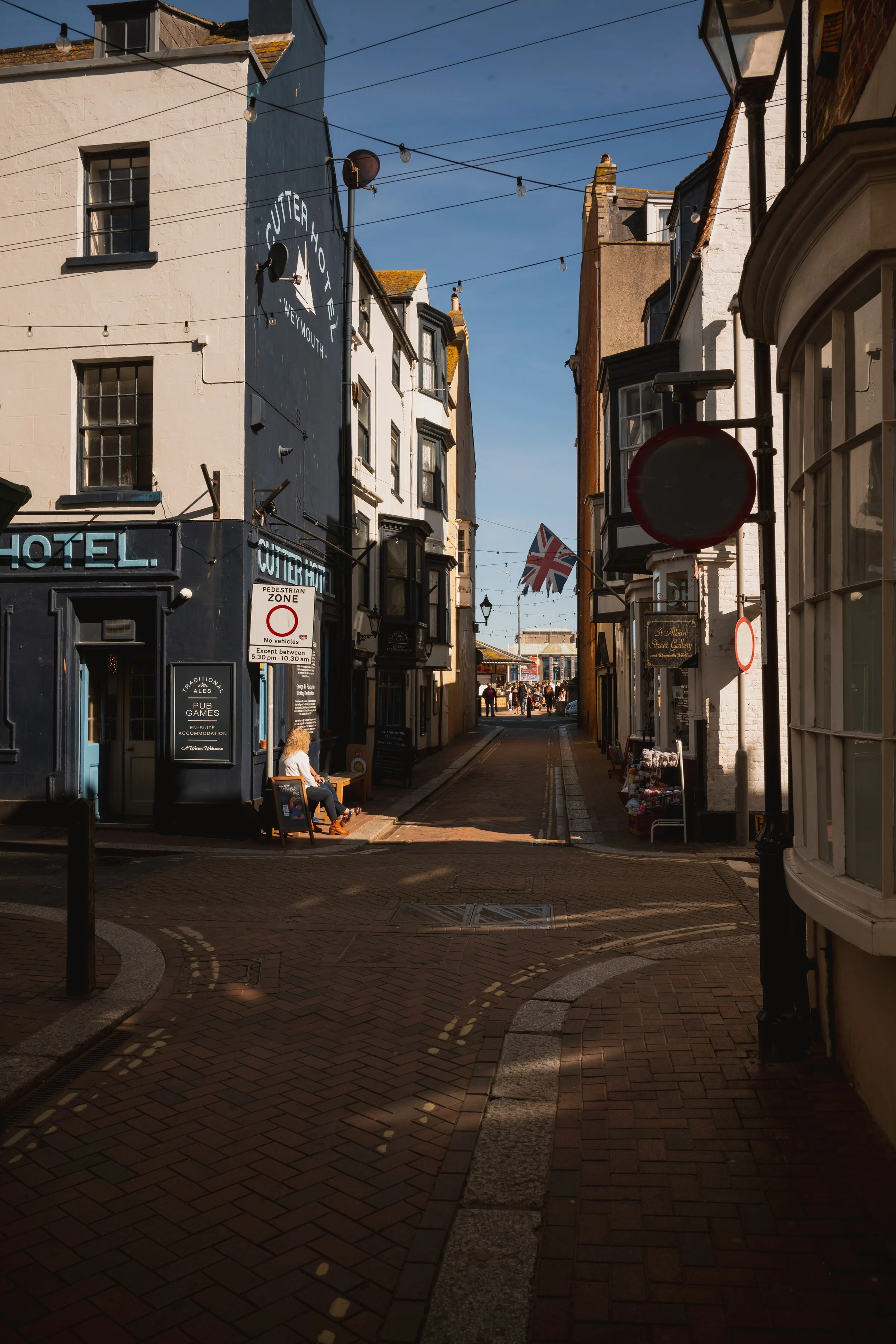
The cobbled lane down toward the harbour was one of those streets that photographs itself. Late morning light, deep shadows on one side, a Union Jack snapping at the far end where the sea opens up, a woman sitting alone outside the pub with a coffee. I stood at the top of it for a while before I pressed the shutter, waiting for it to settle into itself.
"There's a whole tradition of anonymous acts of civic affection in small British towns that never make the news and probably shouldn't."
The pink cake shop — I later found out it's called The Pink — was doing serious business. Cash only, Lardy Cakes, Chelsea Buns, Flapjack, Pies and Pasties. The window was covered in handwritten labels. Outside, a small crowd had gathered. Dogs, prams, people craning to see the shelves. Beside it, a teal gift shop. The high street as pure, unapologetic colour.
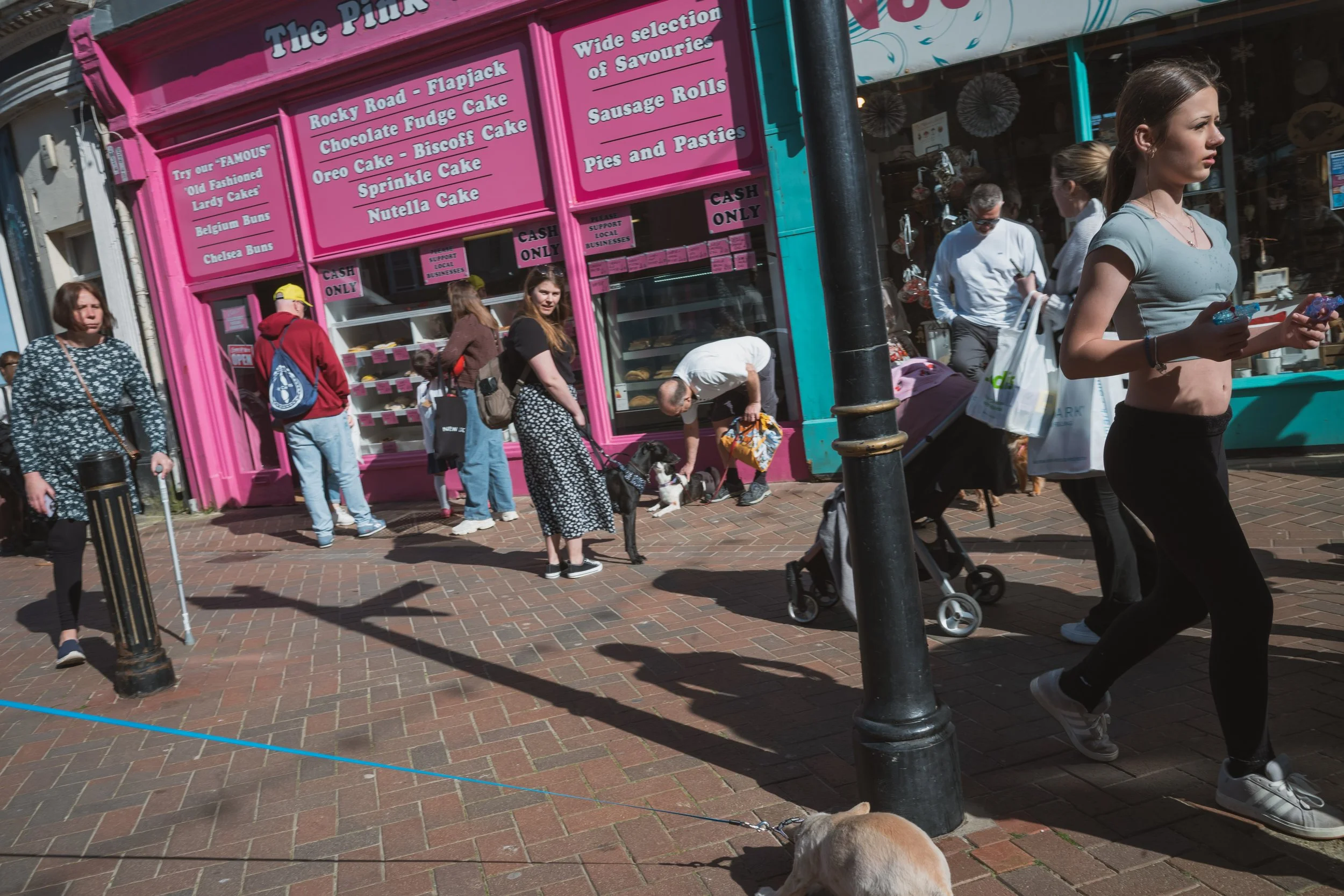
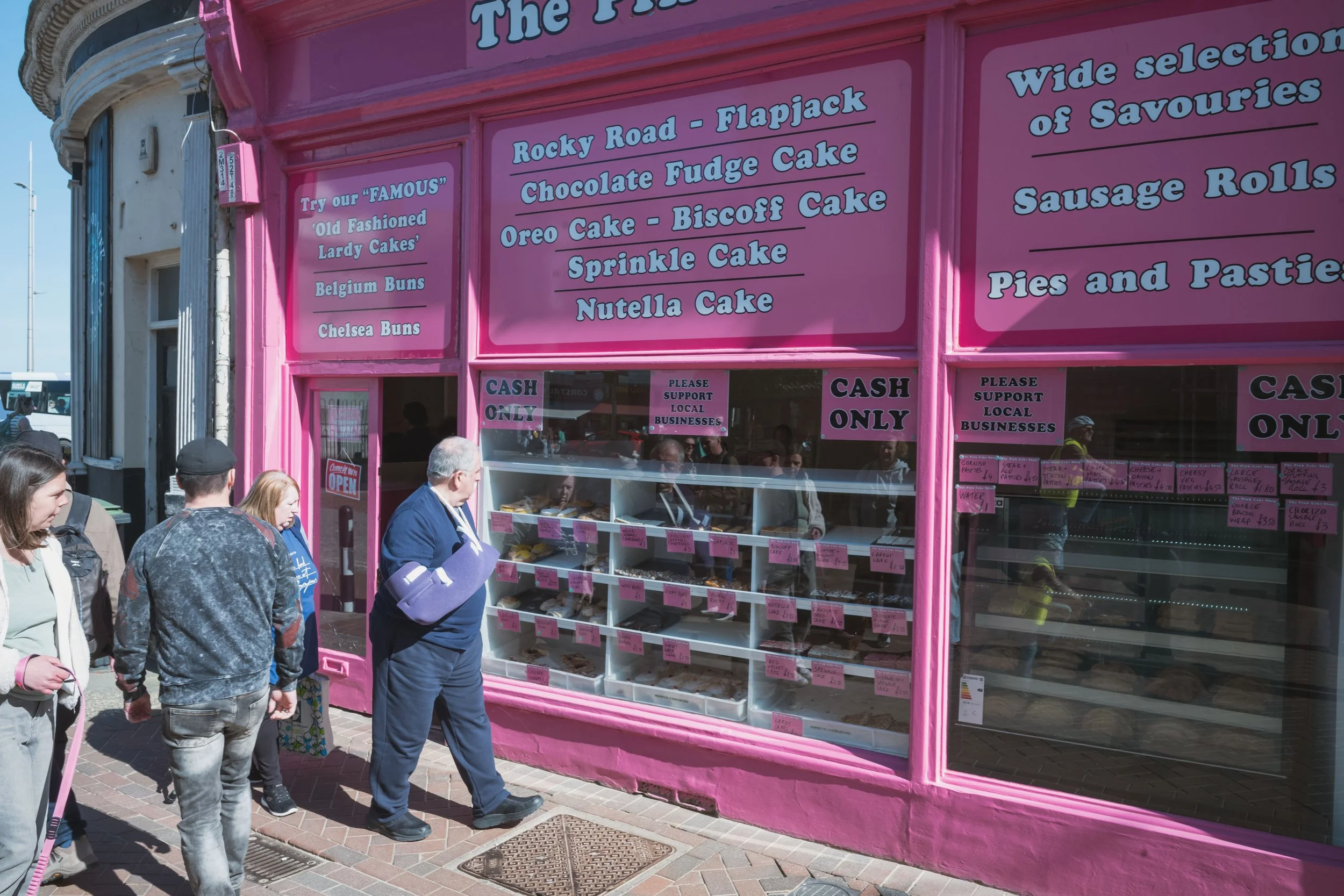
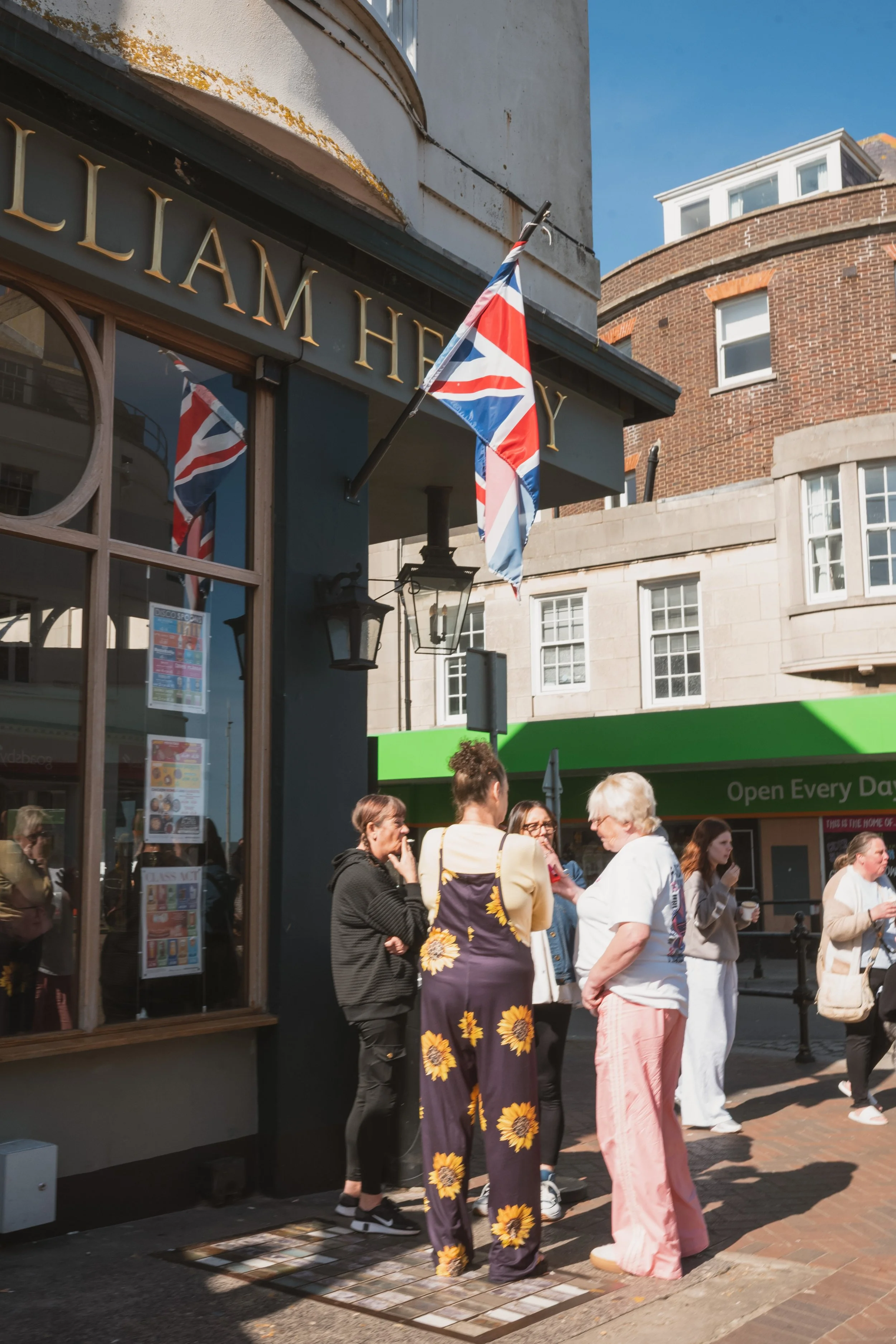
But for all the bunting and bakeries, Weymouth isn't performing anything. It's just getting on with being itself — which includes the parts that aren't picturesque.
On a back street I found a junction box with FREE sprayed on it in white paint, set against a crumbling stone wall. Two streets over, a black utility box covered in peeling stickers, one of them a torn Union Jack with the words "of British" still legible. Whatever the full message was, only those two words remained. I stared at it for a long time.
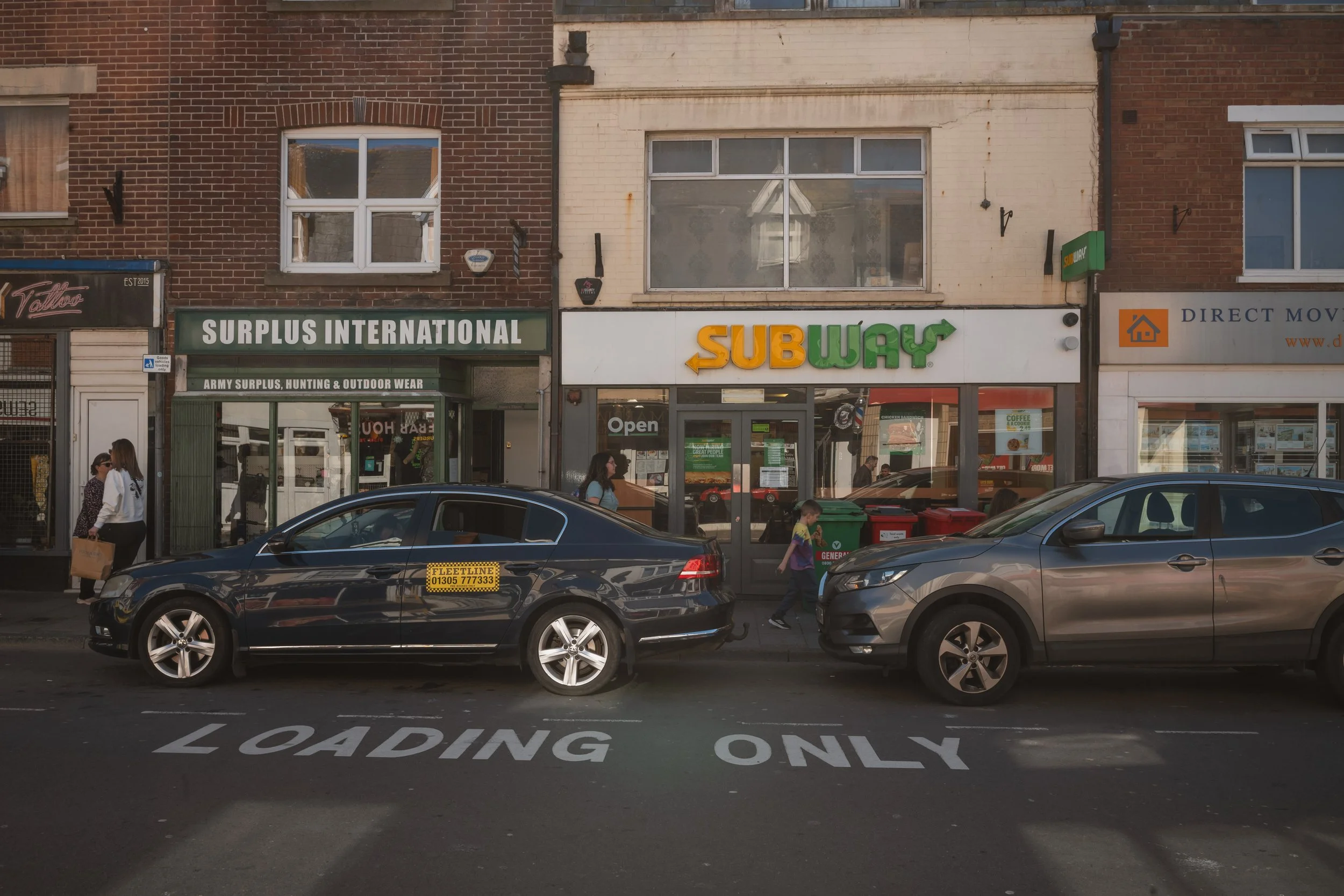
Surplus International next to Subway. A "Loading Only" bay that cars were parked in. Charity Site painted in white letters on the seafront tarmac, a Ferris wheel beyond it. The ordinary machinery of a British seaside town, indifferent to whether anyone's photographing it.
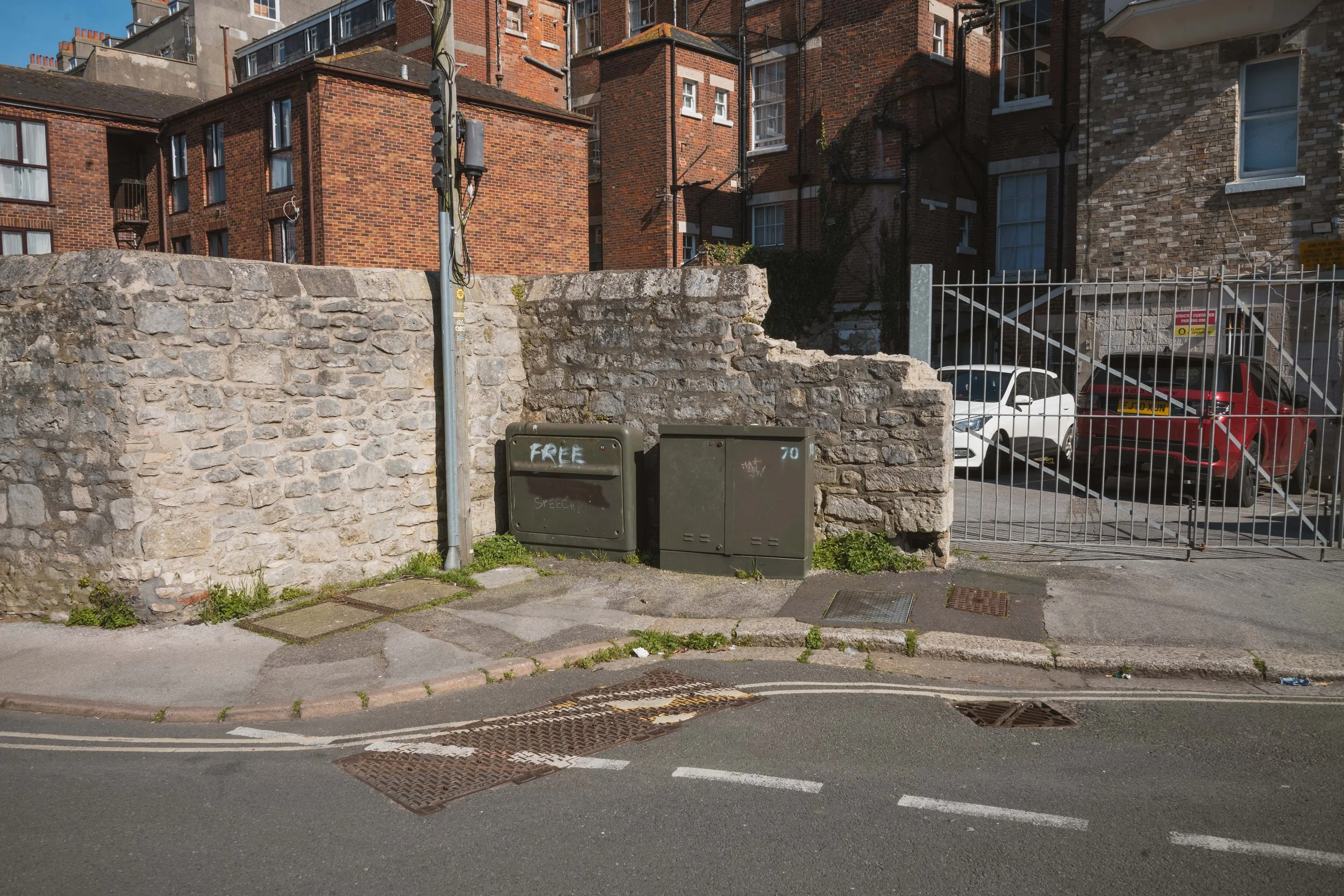
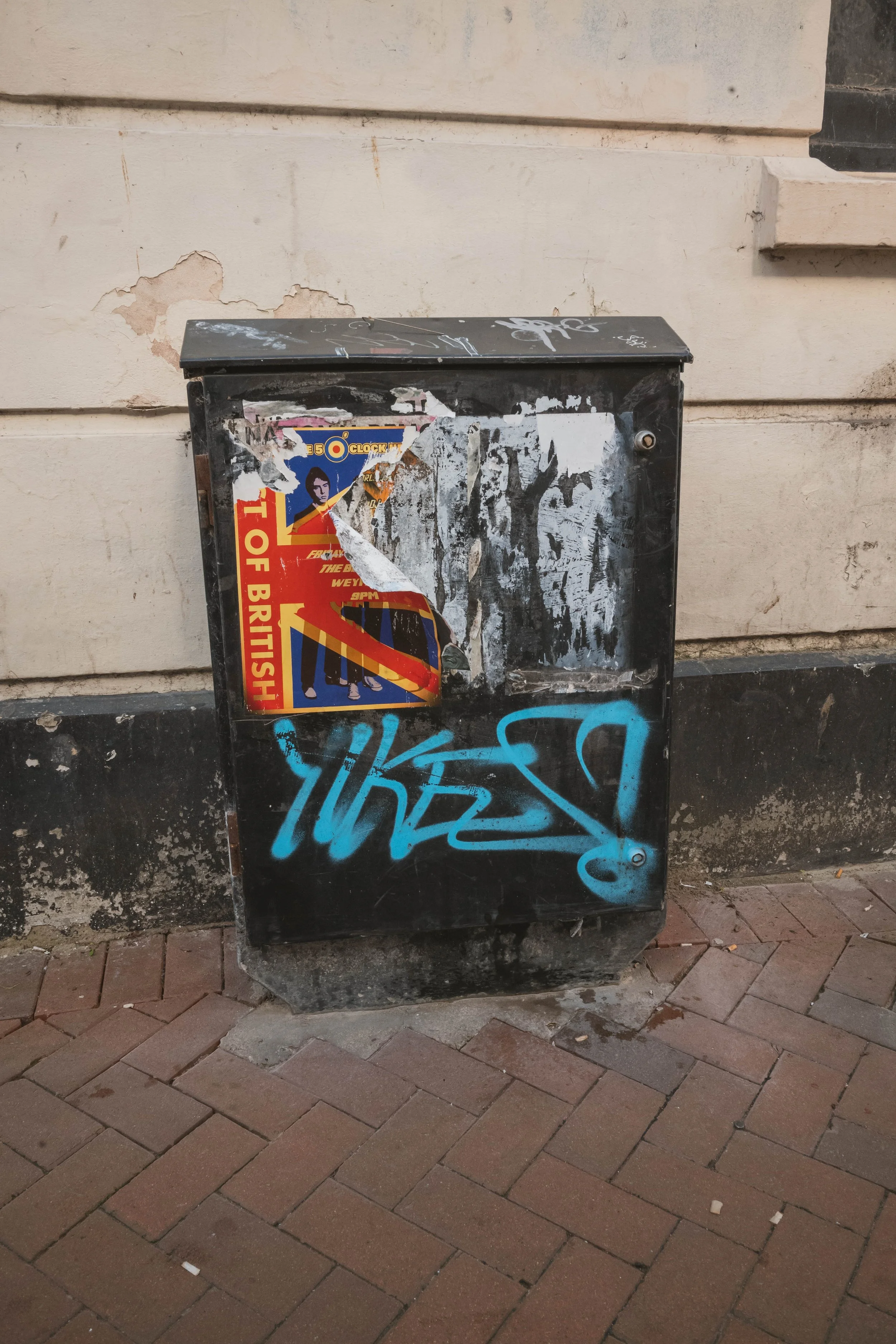
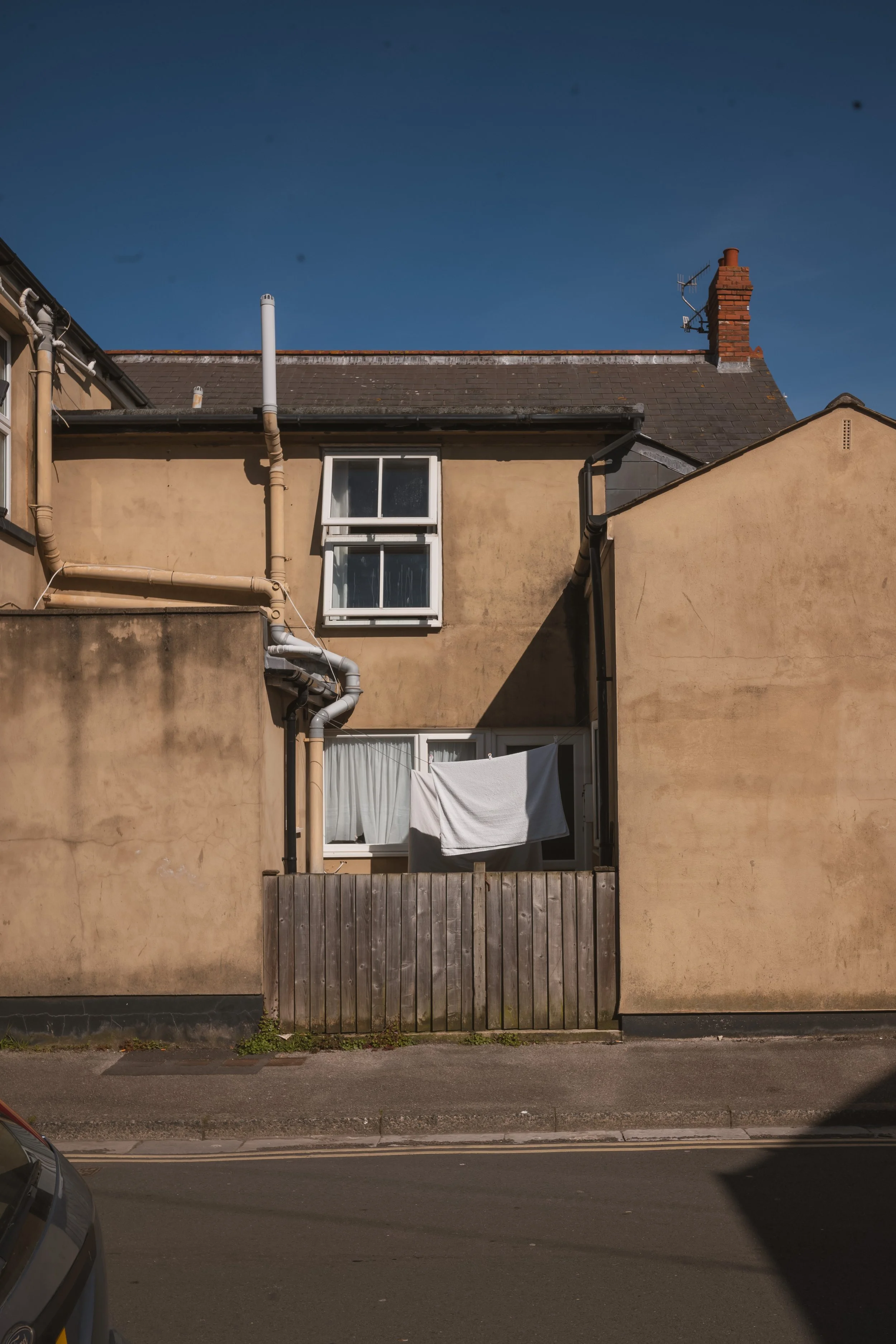
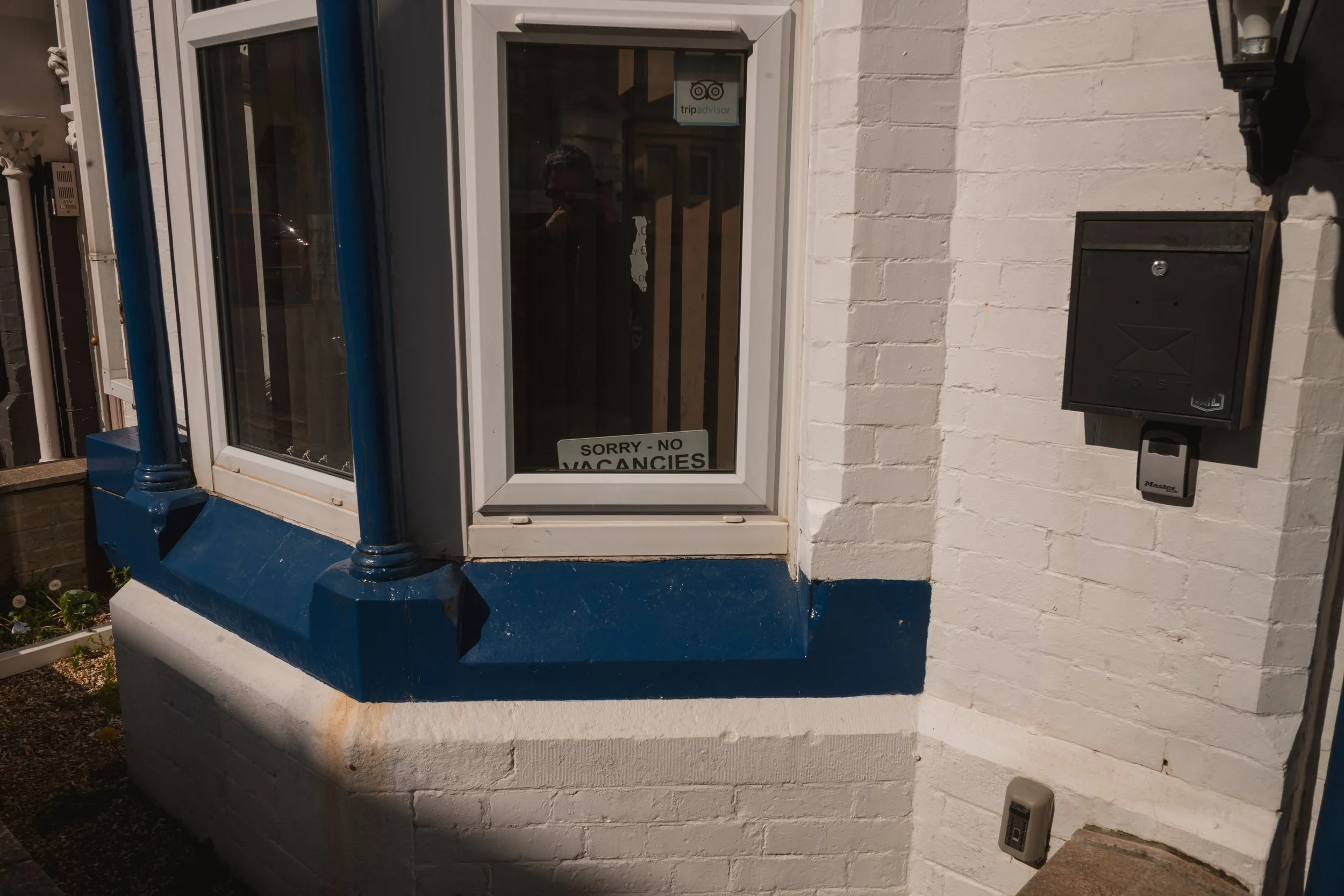
The B&B with "Sorry — No Vacancies" in the window stopped me partly for the message and partly because I could see my own reflection in the glass above the sign. That felt right. The photographer making himself part of the scene he's trying to document.
The human moments were the ones I kept coming back to when I reviewed the day's shoot.
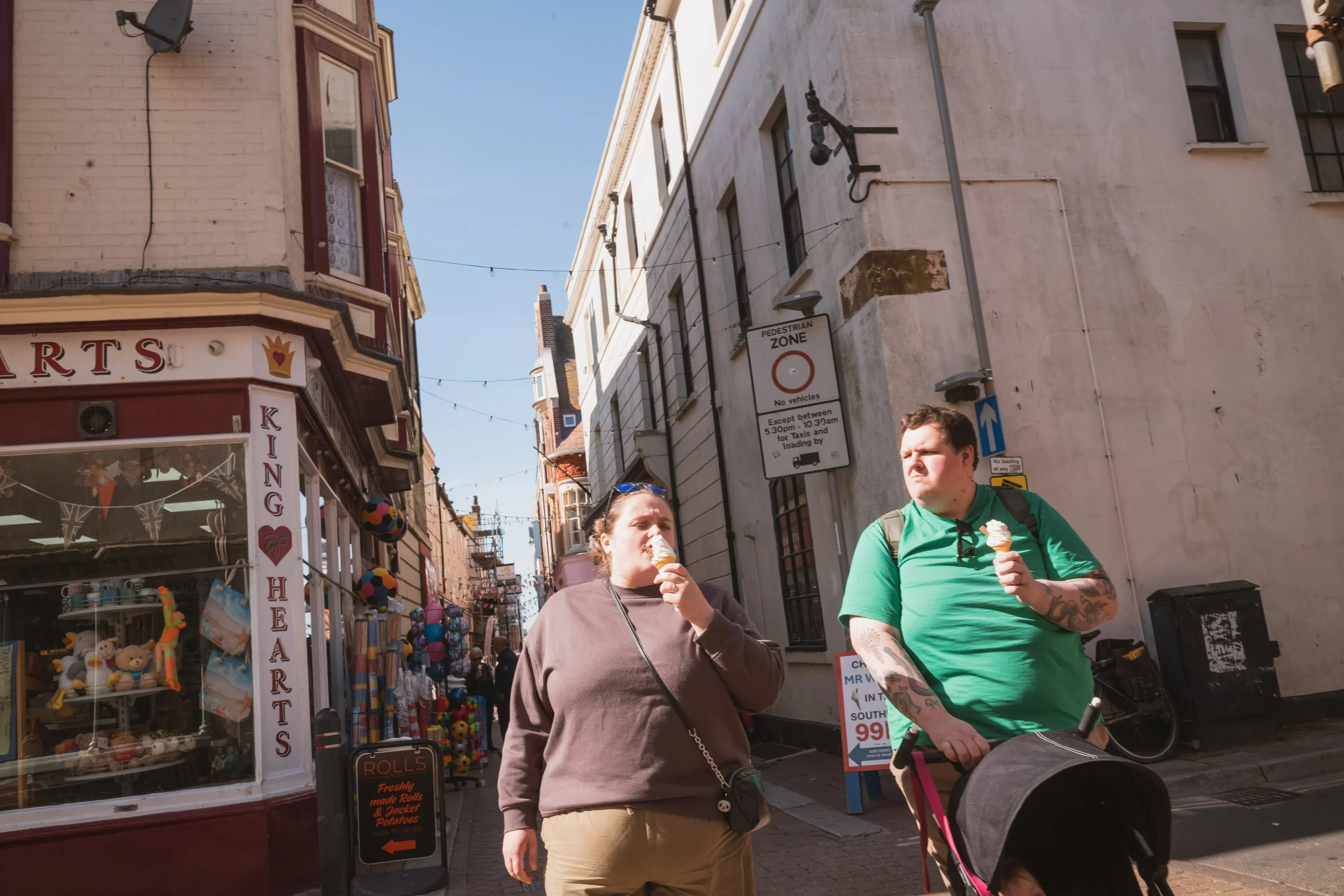
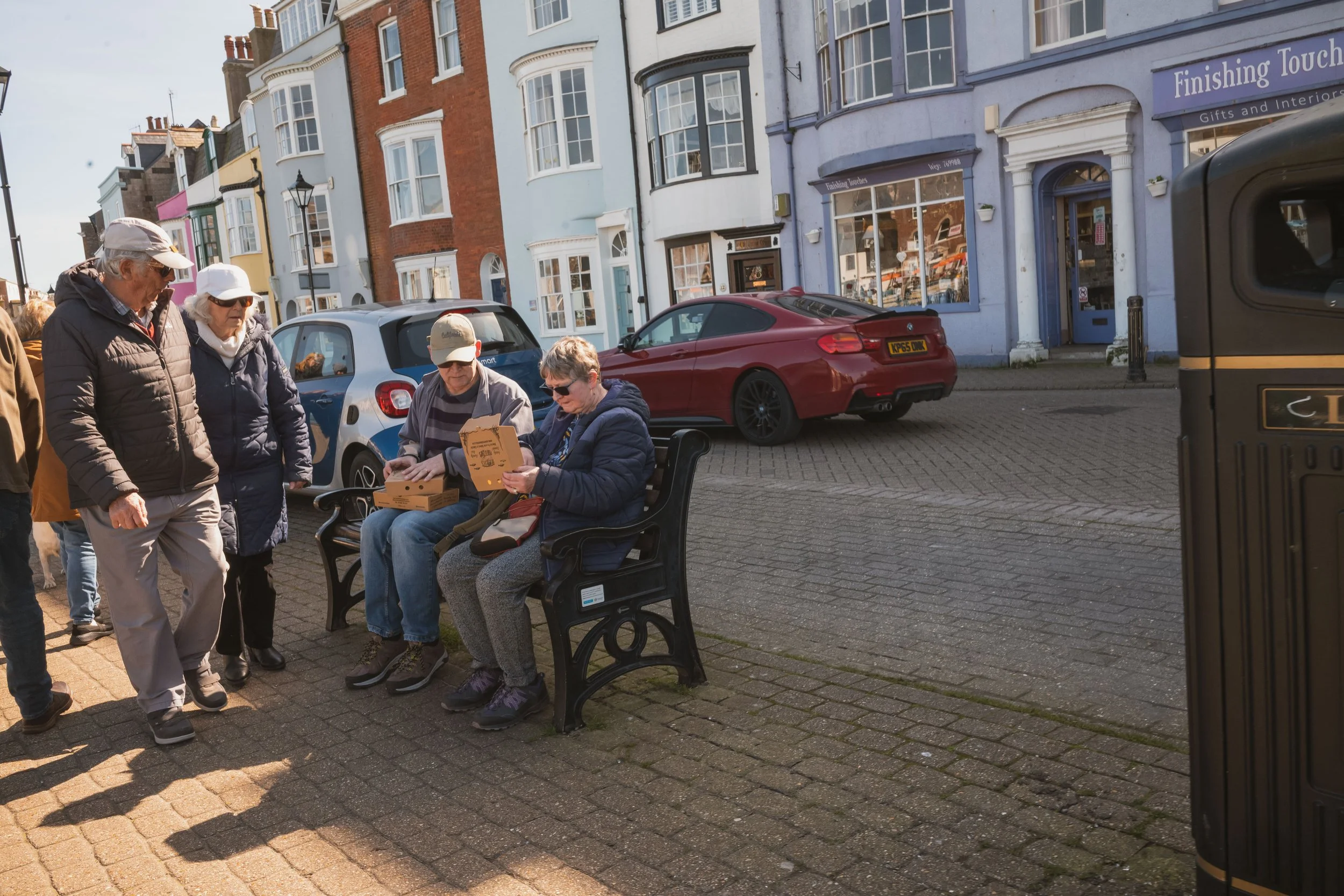
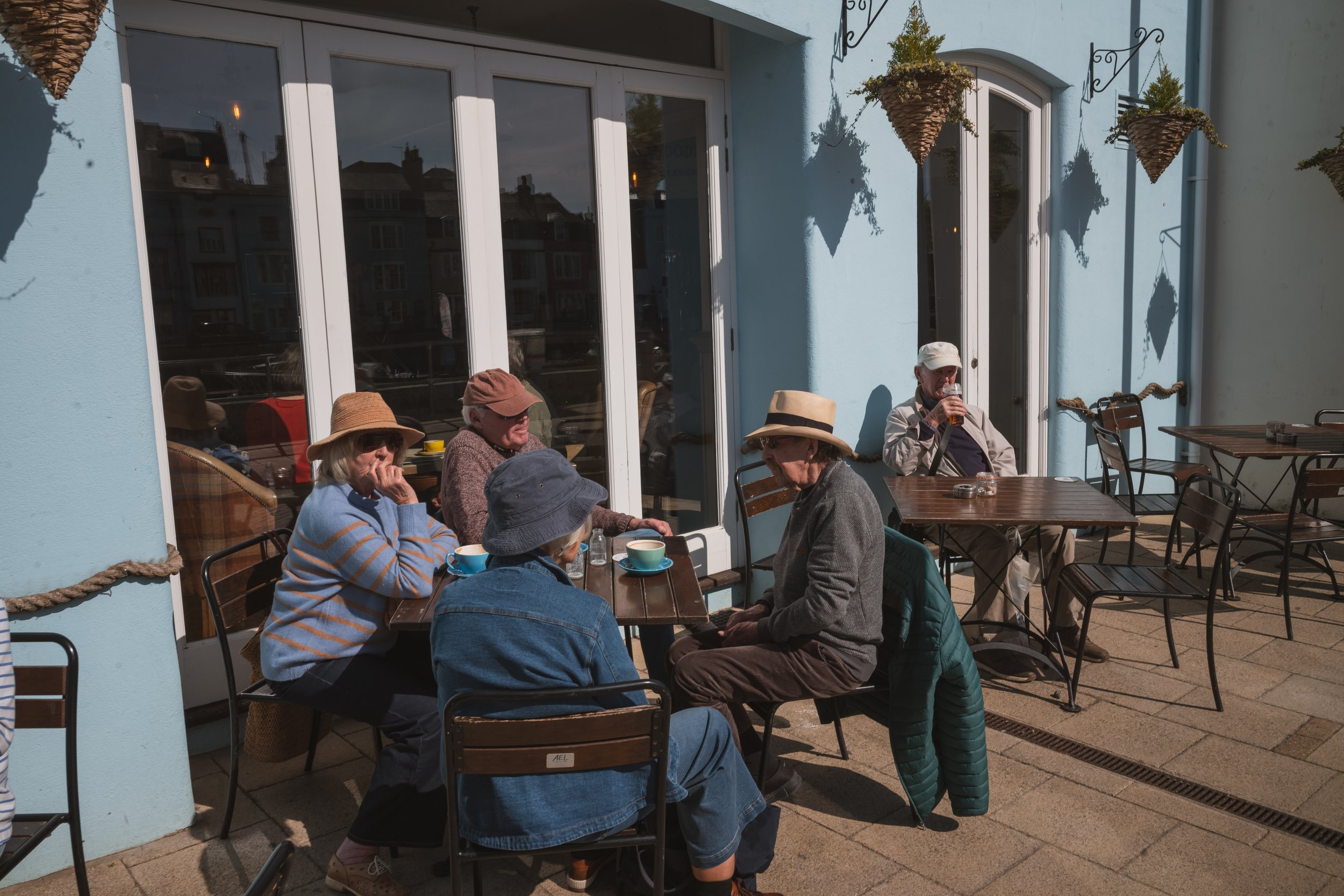
A group of retirees on a bench by the waterfront sharing a box of chips in the sun, the coloured townhouses of the old harbour stacked behind them. A cluster of people in hats at an outdoor café, coffee cups and conversation, nobody looking at a phone. Two people eating 99 ice creams down a pedestrian lane, the King of Hearts gift shop sign above them, a pushchair between them.
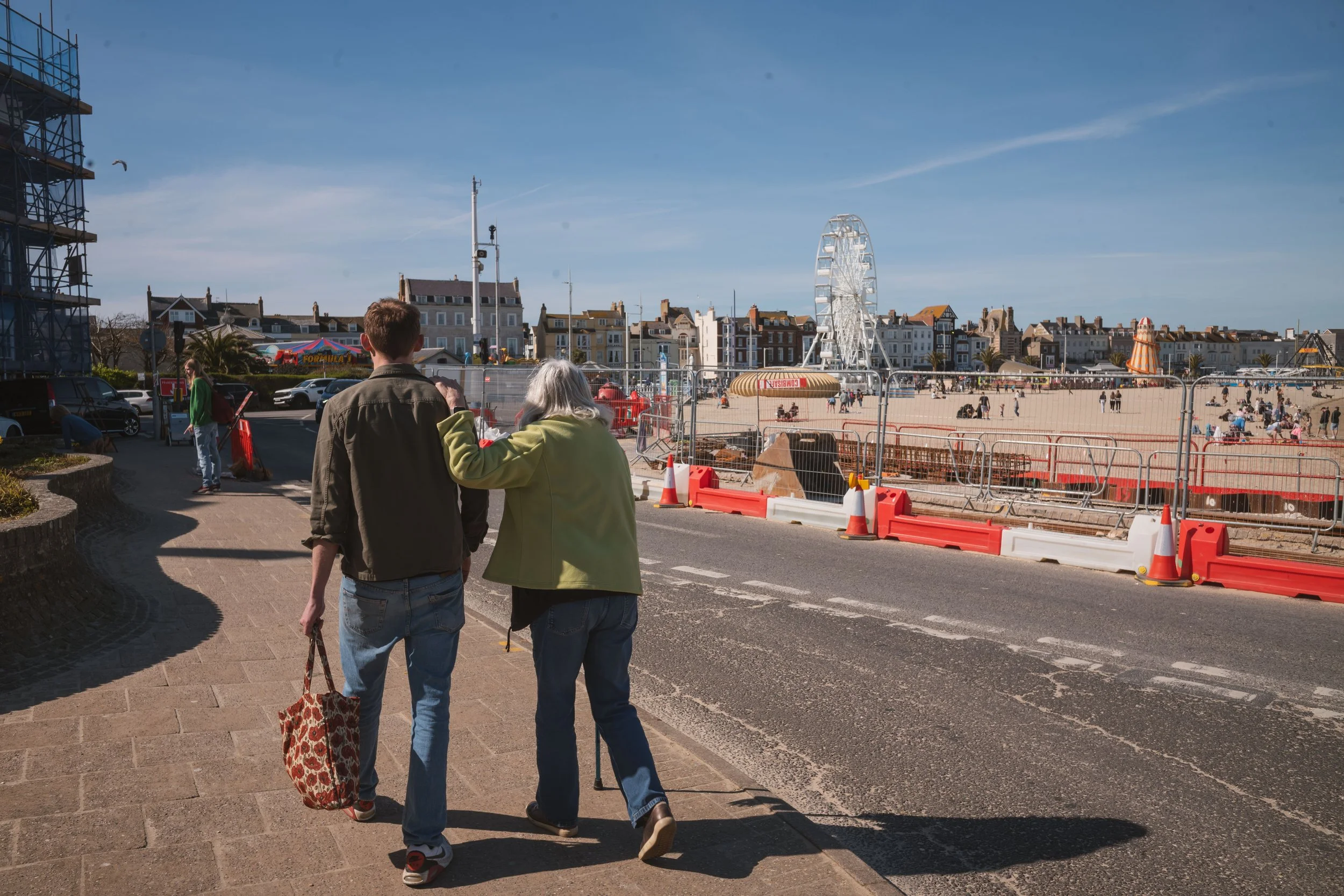
And then the closer. Walking back along the seafront toward the car, I saw a younger man and an older woman — son and mother, I think, though I don't know — walking arm in arm toward the beach. She had her hand through his elbow. He was carrying the bag. The Ferris wheel turned slowly in the distance. I raised the camera, got one frame, and kept walking.
"This is what Little England actually looks like when you put down the argument and just walk around with a camera."
I'm not sure whether places like Weymouth represent something to mourn or something to hold onto. Probably both — which is usually the honest answer. What I do know is that they're worth photographing carefully, without an agenda, while they still look like this.
The Leica M10 rendered the light beautifully all day — that particular quality of south coast light in early spring, where the sun is bright but thin, the shadows hard-edged, the colour palette running from Georgian cream to pub red to sea-blue. I shot everything at f/8, kept the ISO low, and let the camera do what it does.
More from this series to follow. I'll be returning to Weymouth, and to towns like it, throughout the year.
Barbican Brutal: Concrete Dreams in the Heart of the City
If my previous post on the soaring vertical drama of Trellick Tower and the sinuous, wave-like flow of the Alexandra & Ainsworth Estate captured West London's brutalist spirit, then this one takes us straight into the City for the sequel: the Barbican Estate.
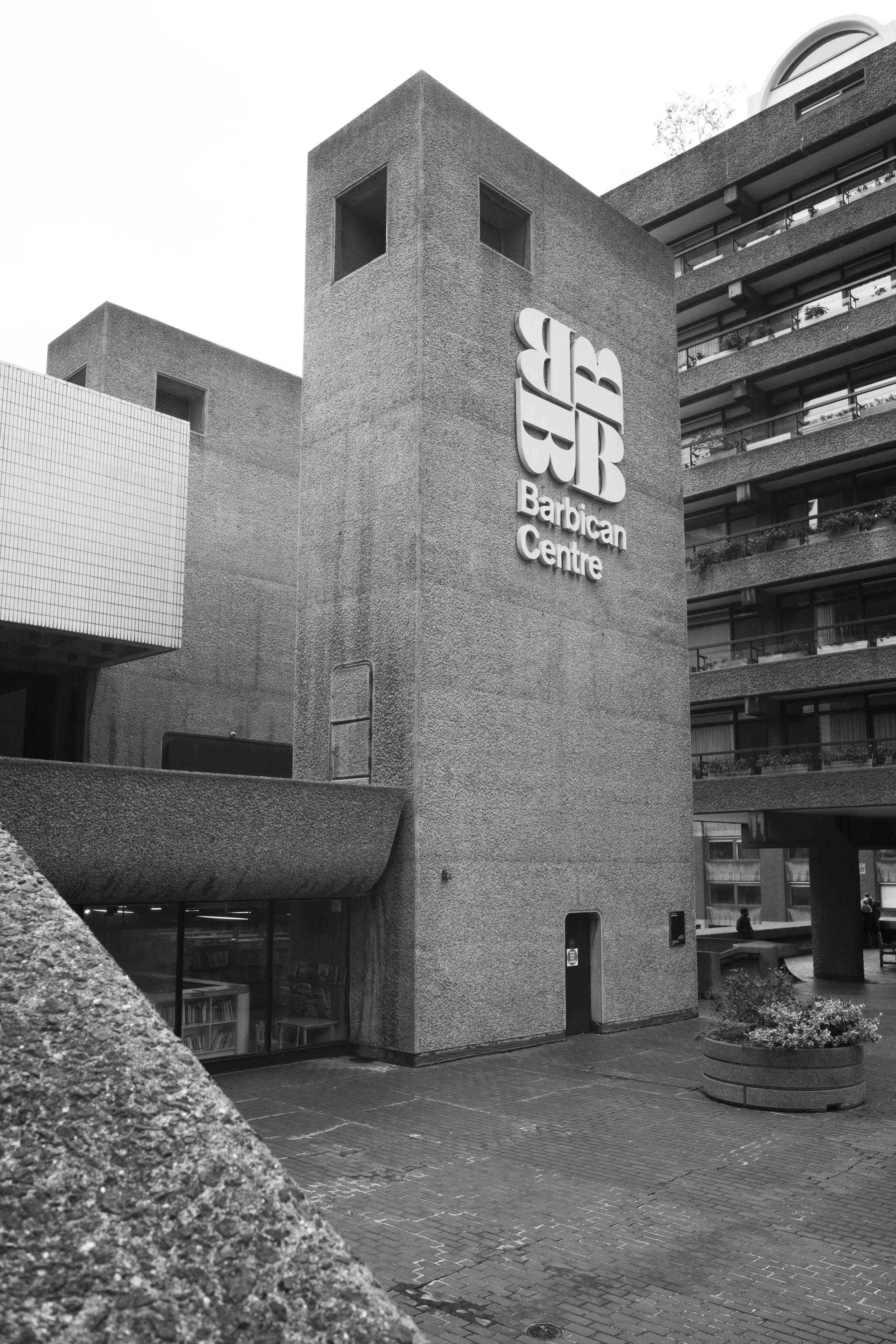
If my previous post on the soaring vertical drama of Trellick Tower and the sinuous, wave-like flow of the Alexandra & Ainsworth Estate captured West London's brutalist spirit, then this one takes us straight into the City for the sequel: the Barbican Estate.
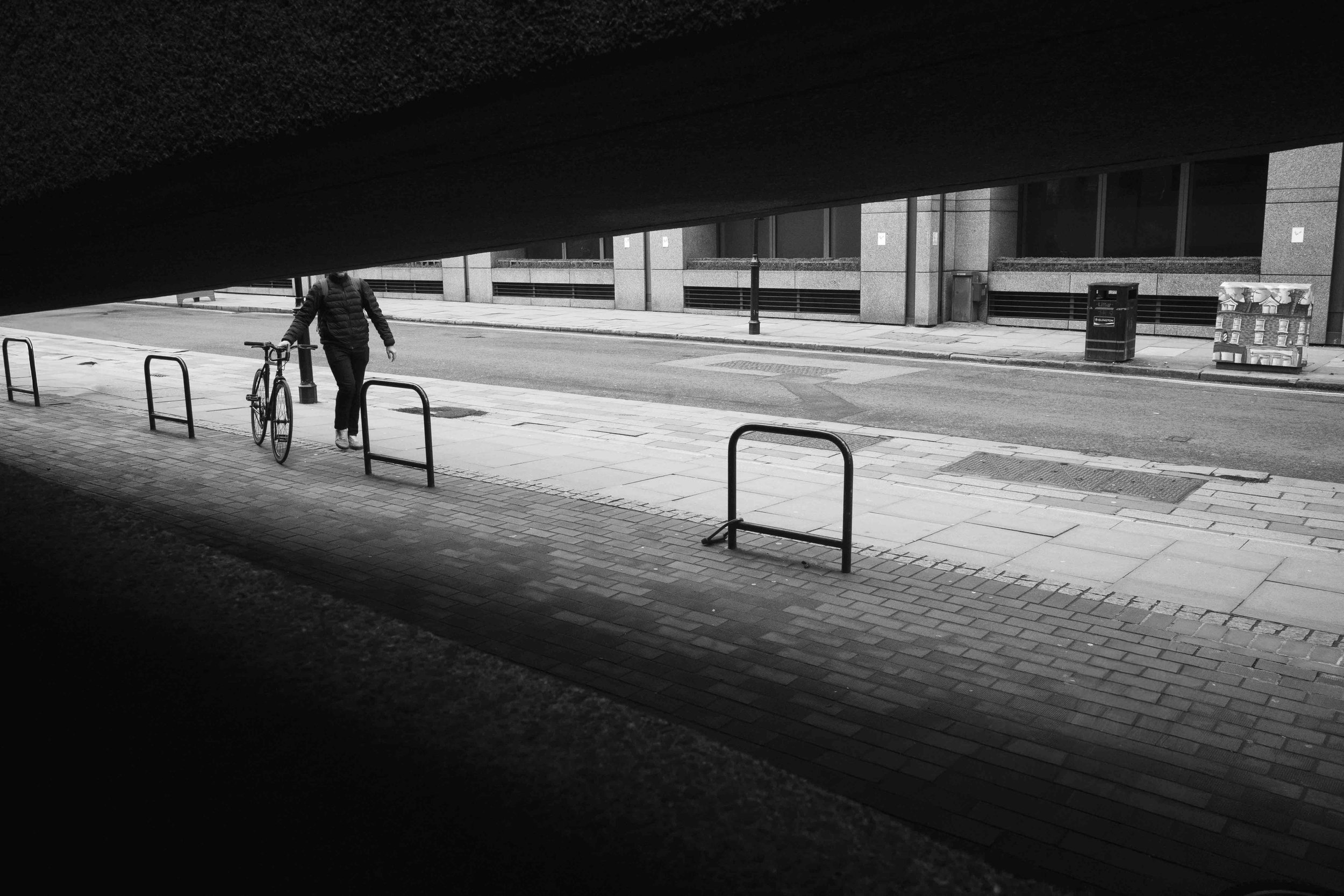
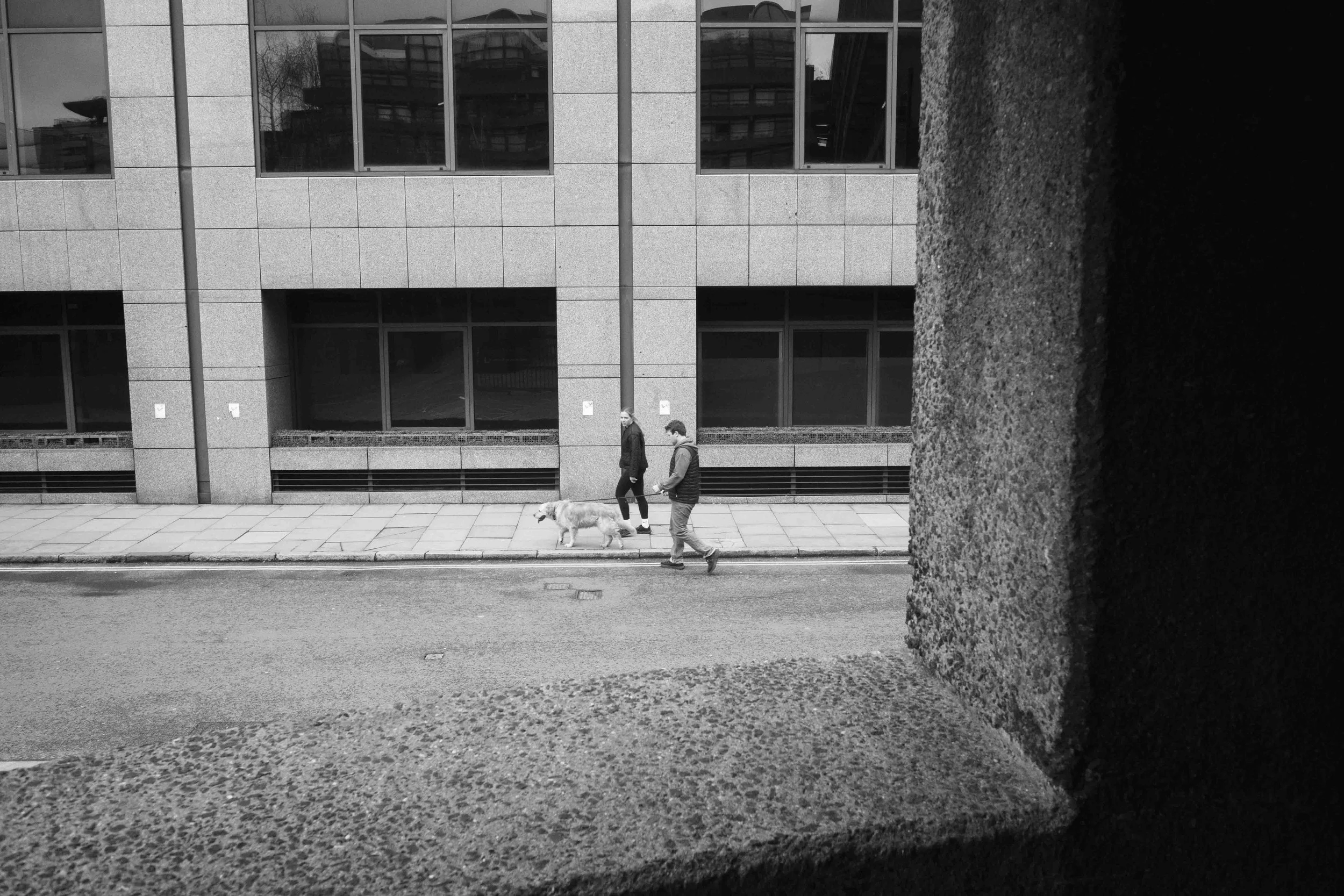
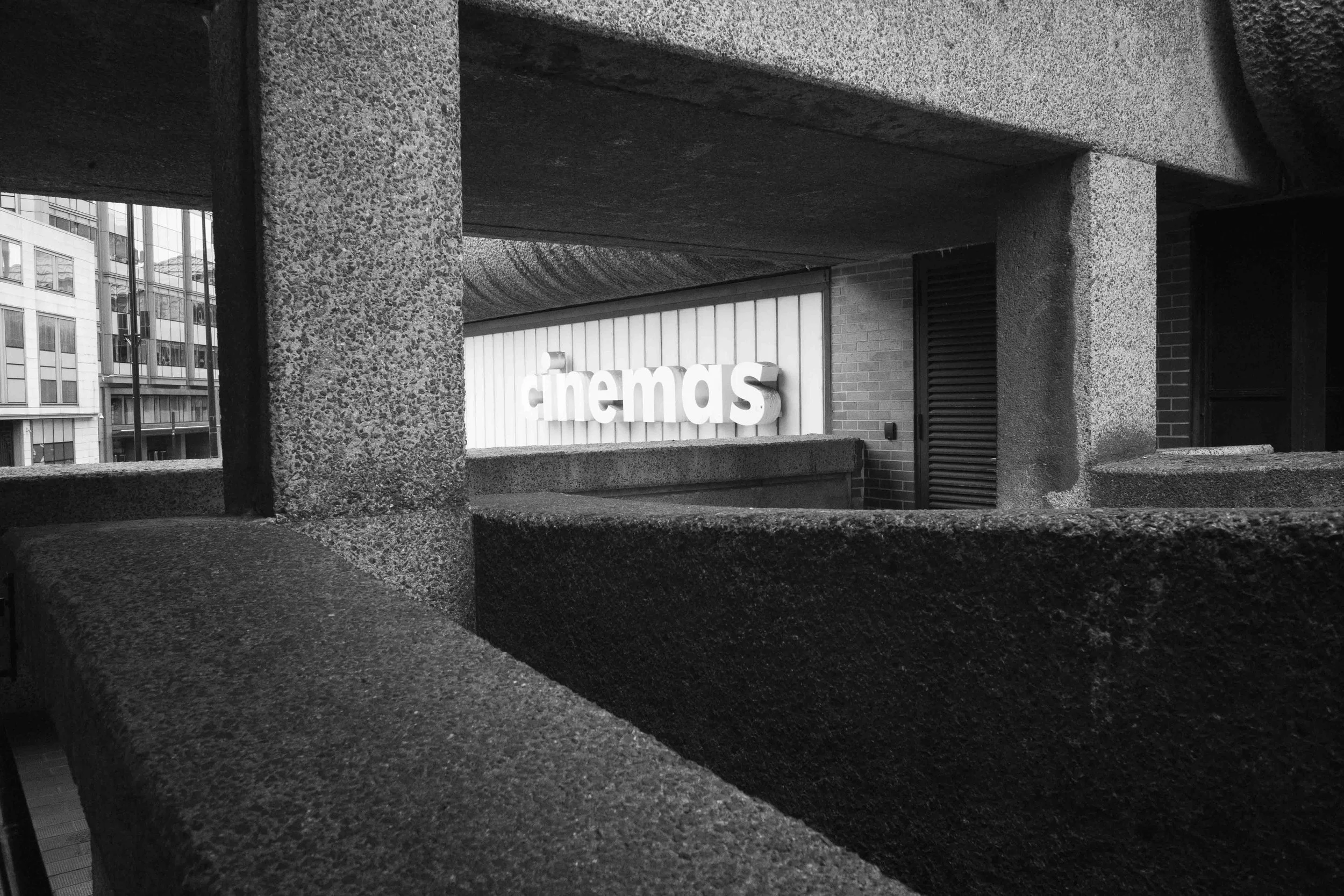
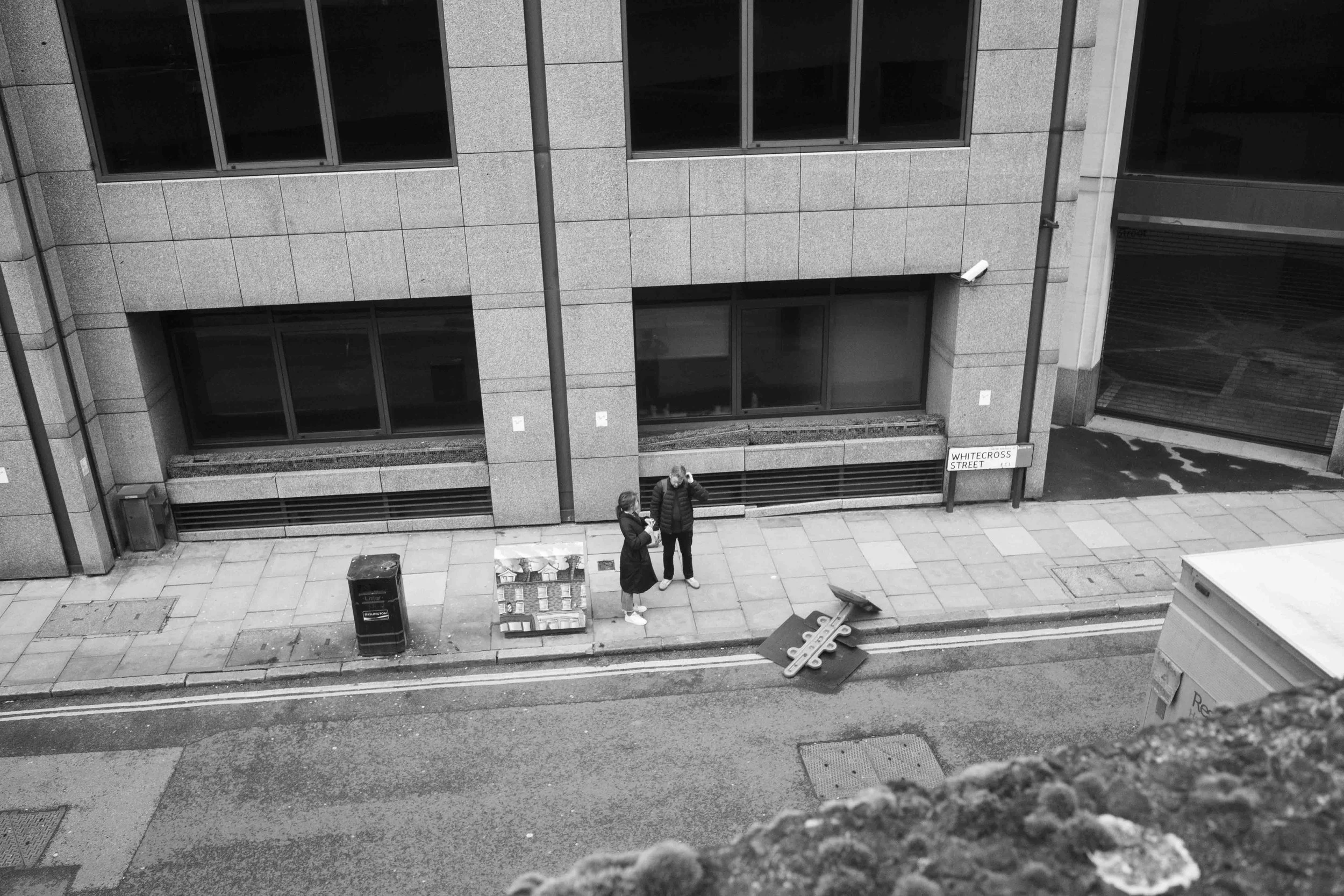
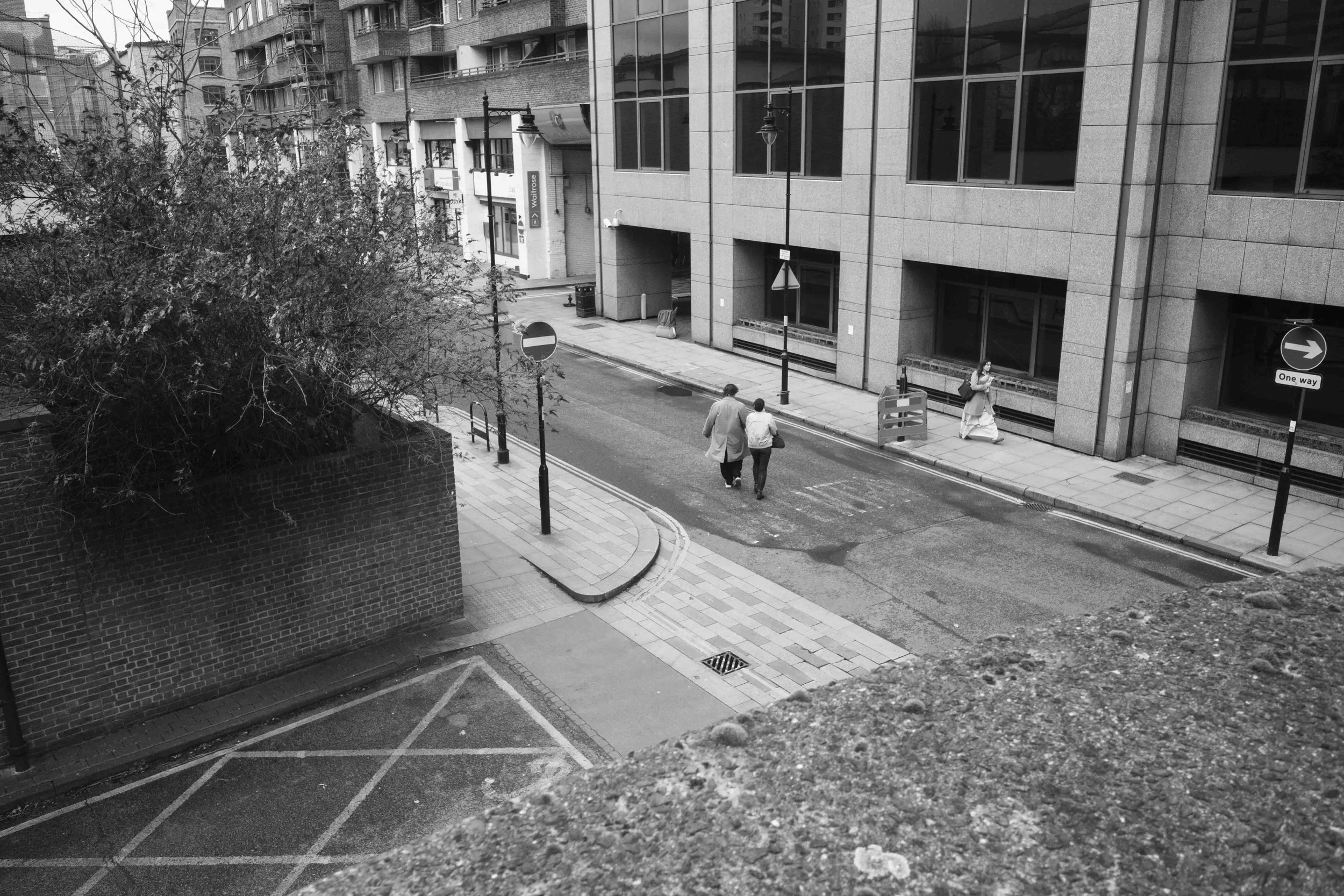
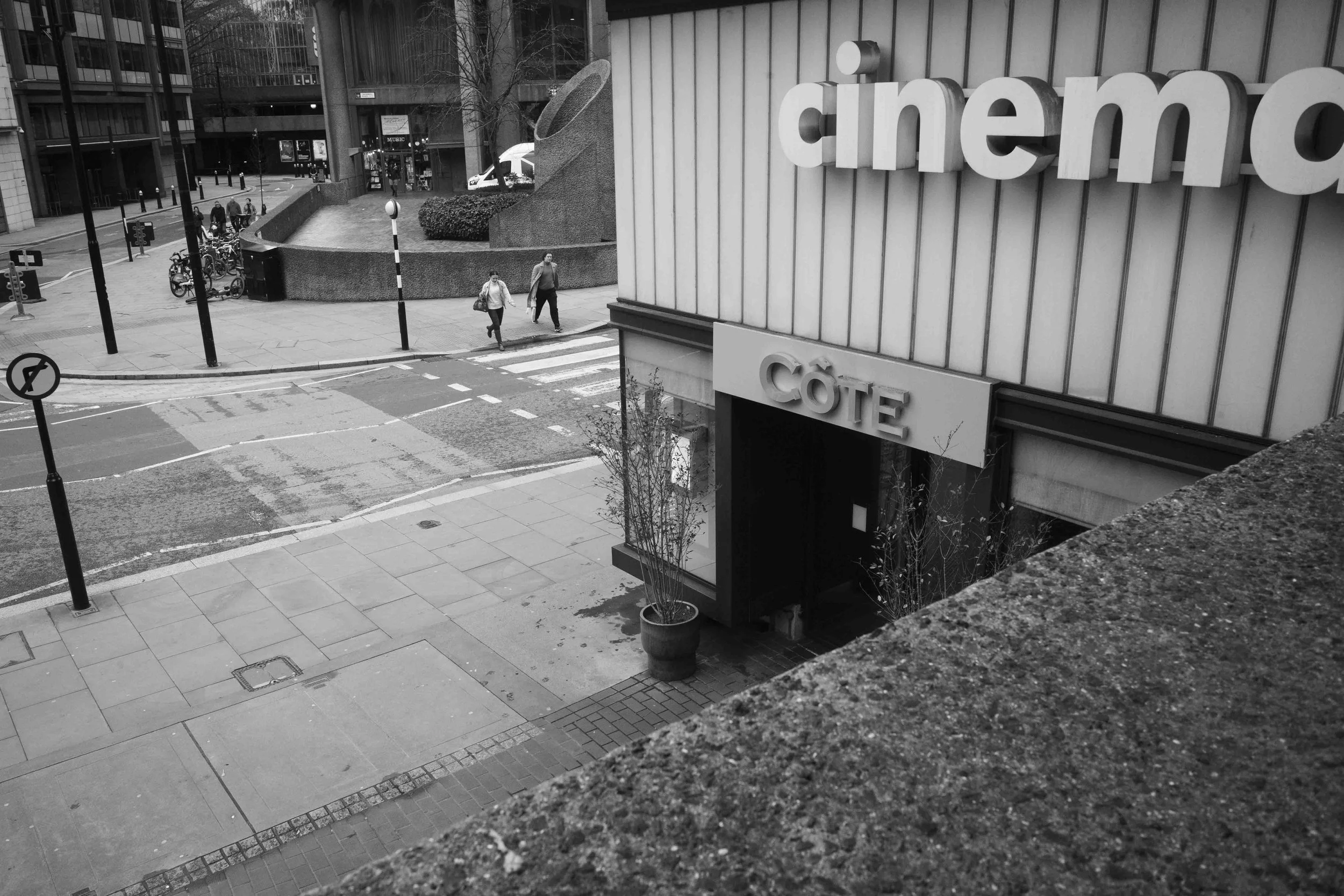
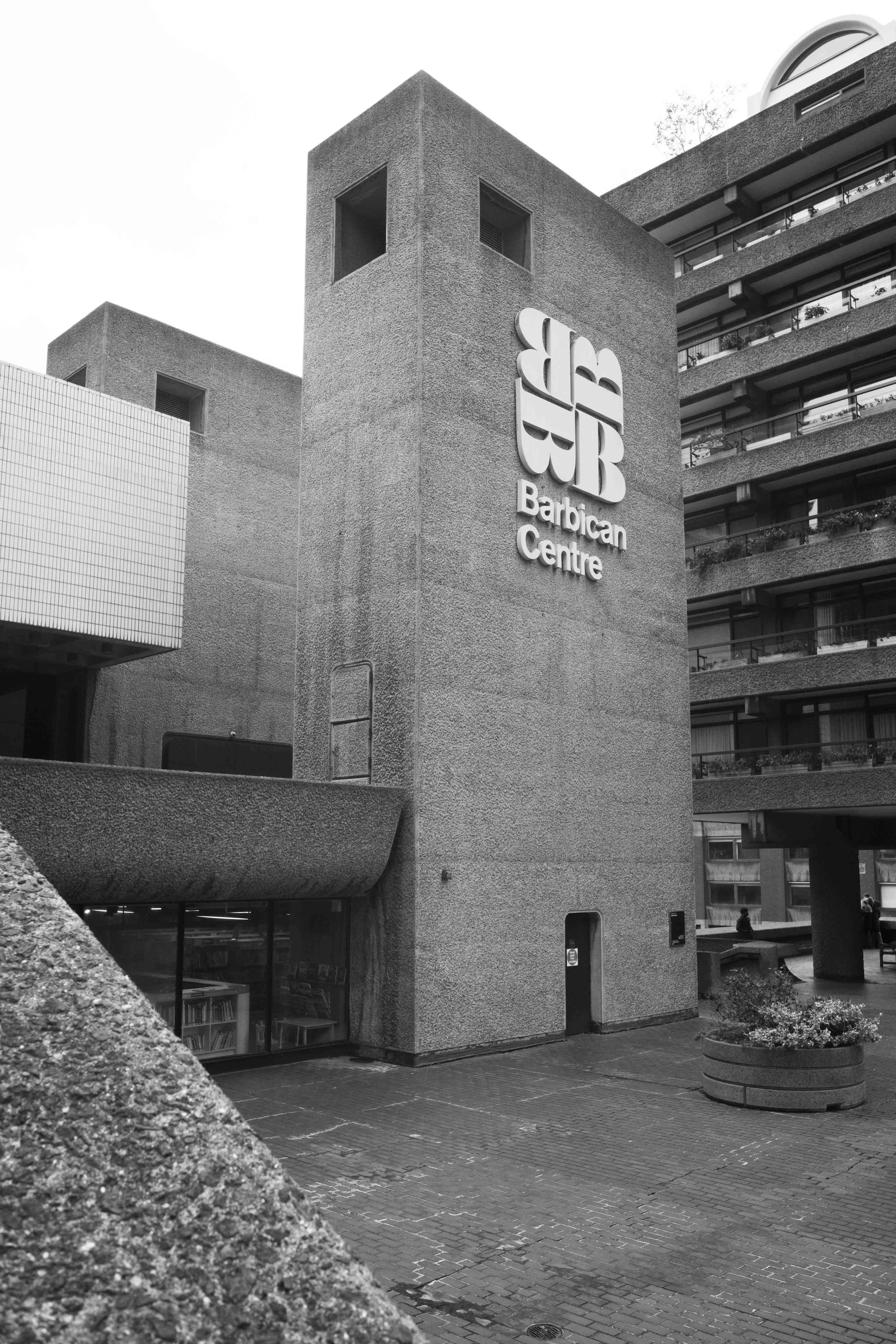
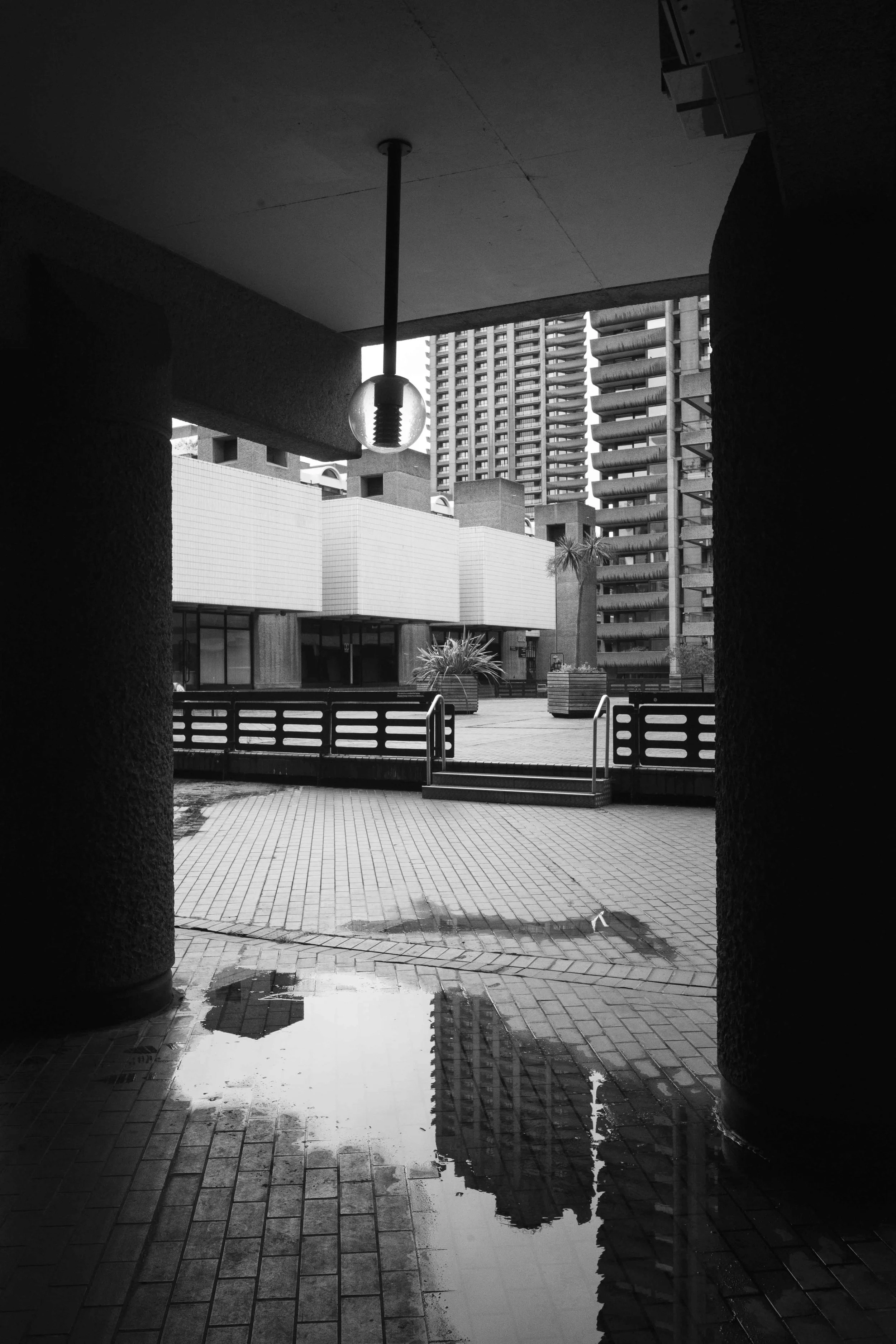
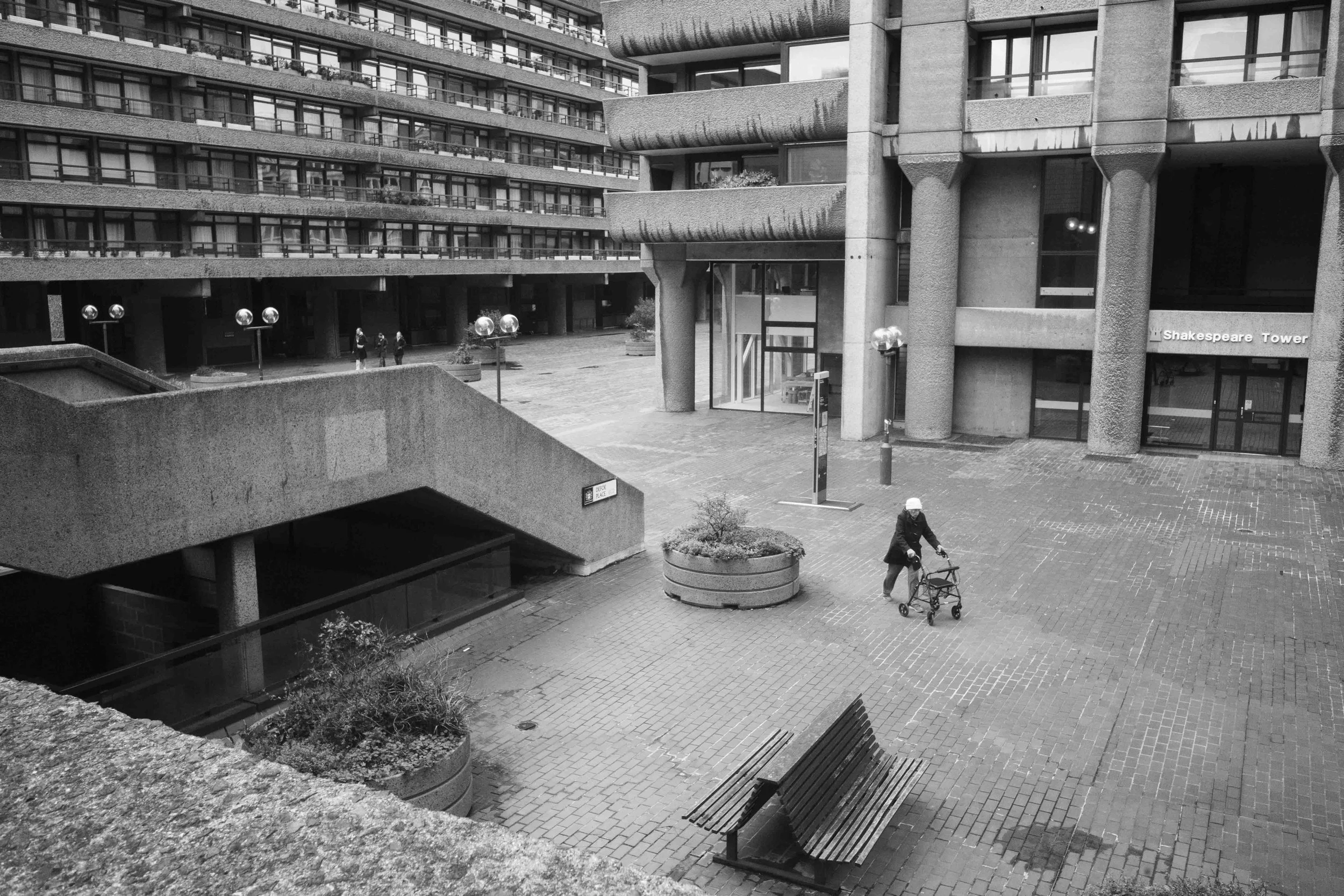
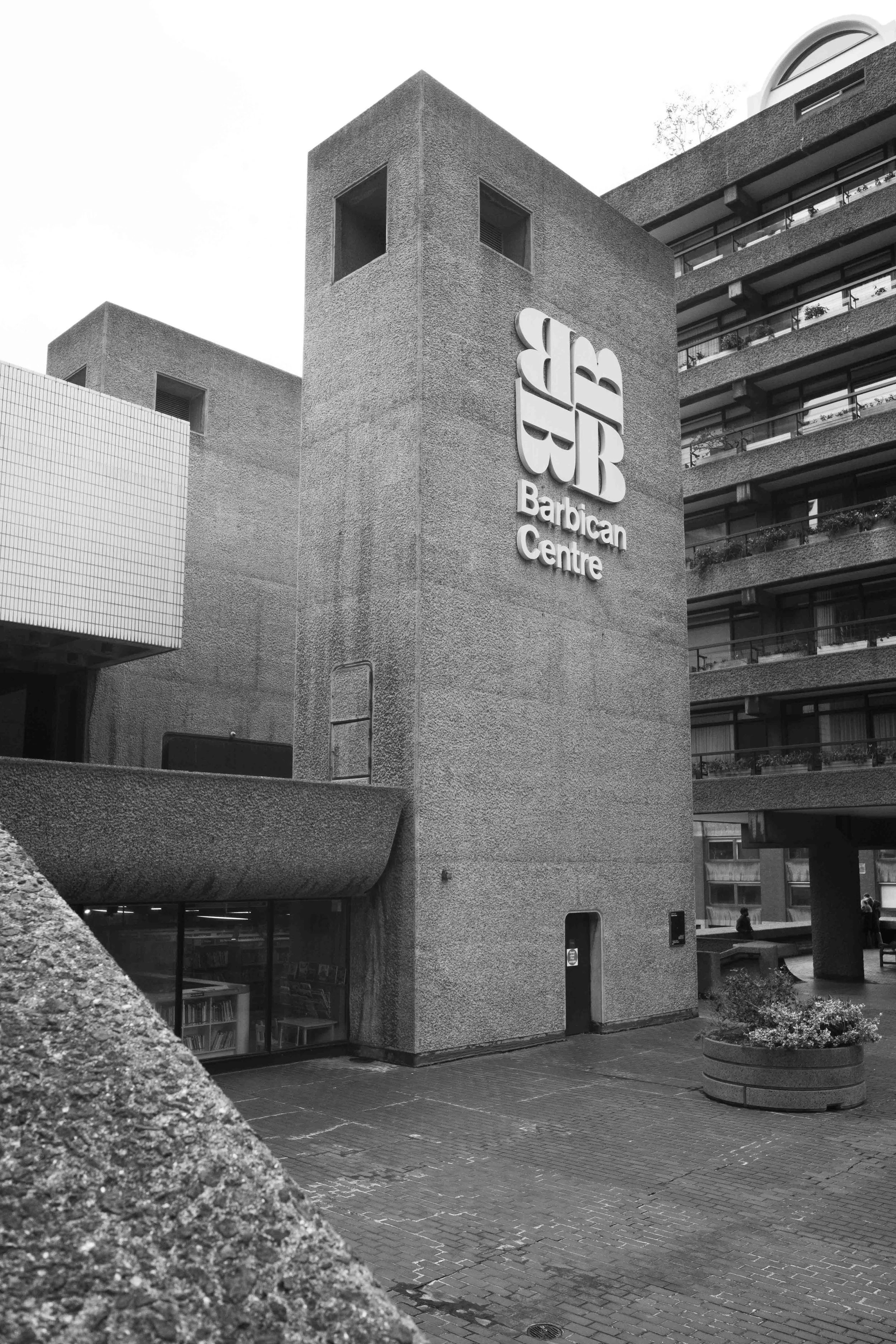
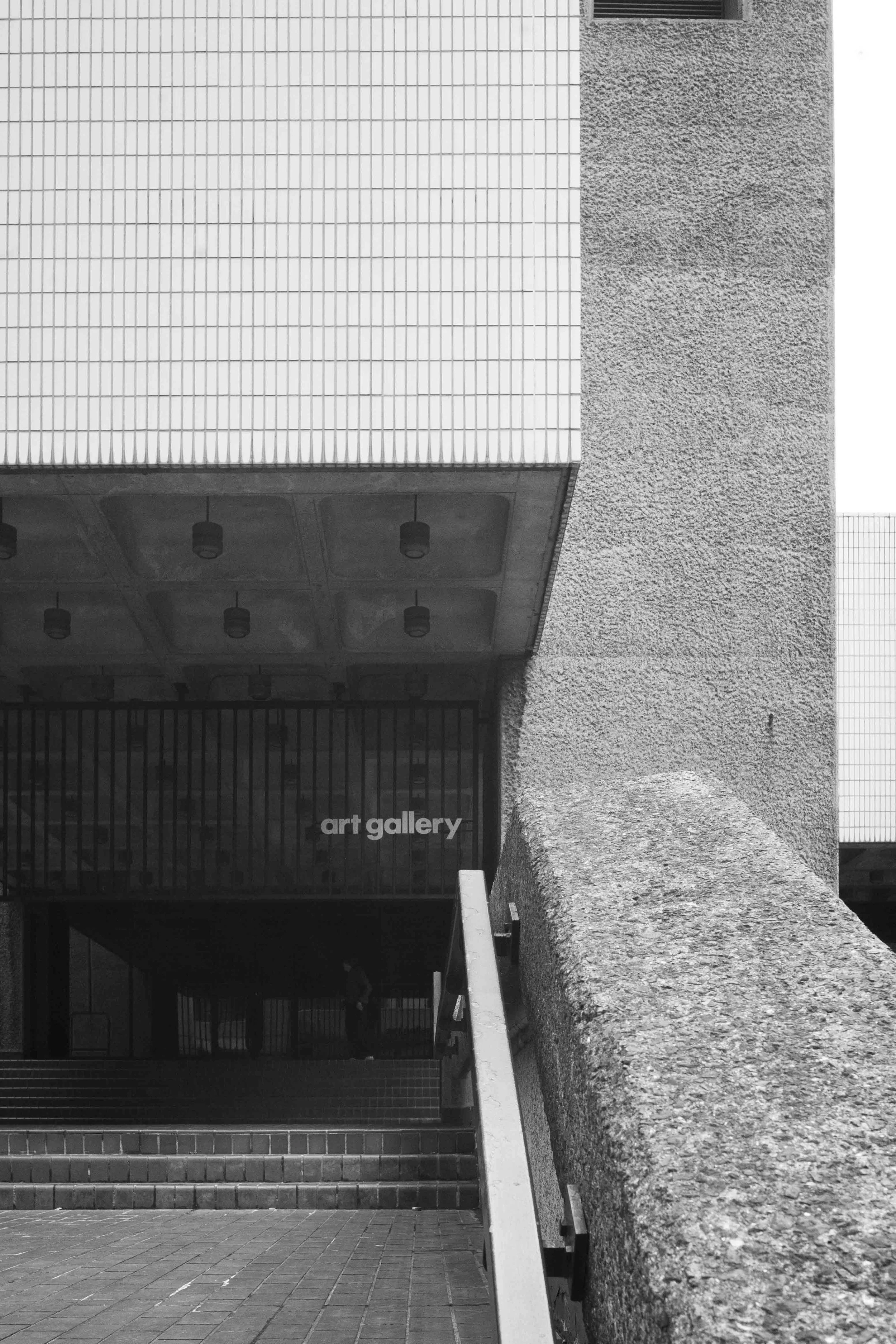
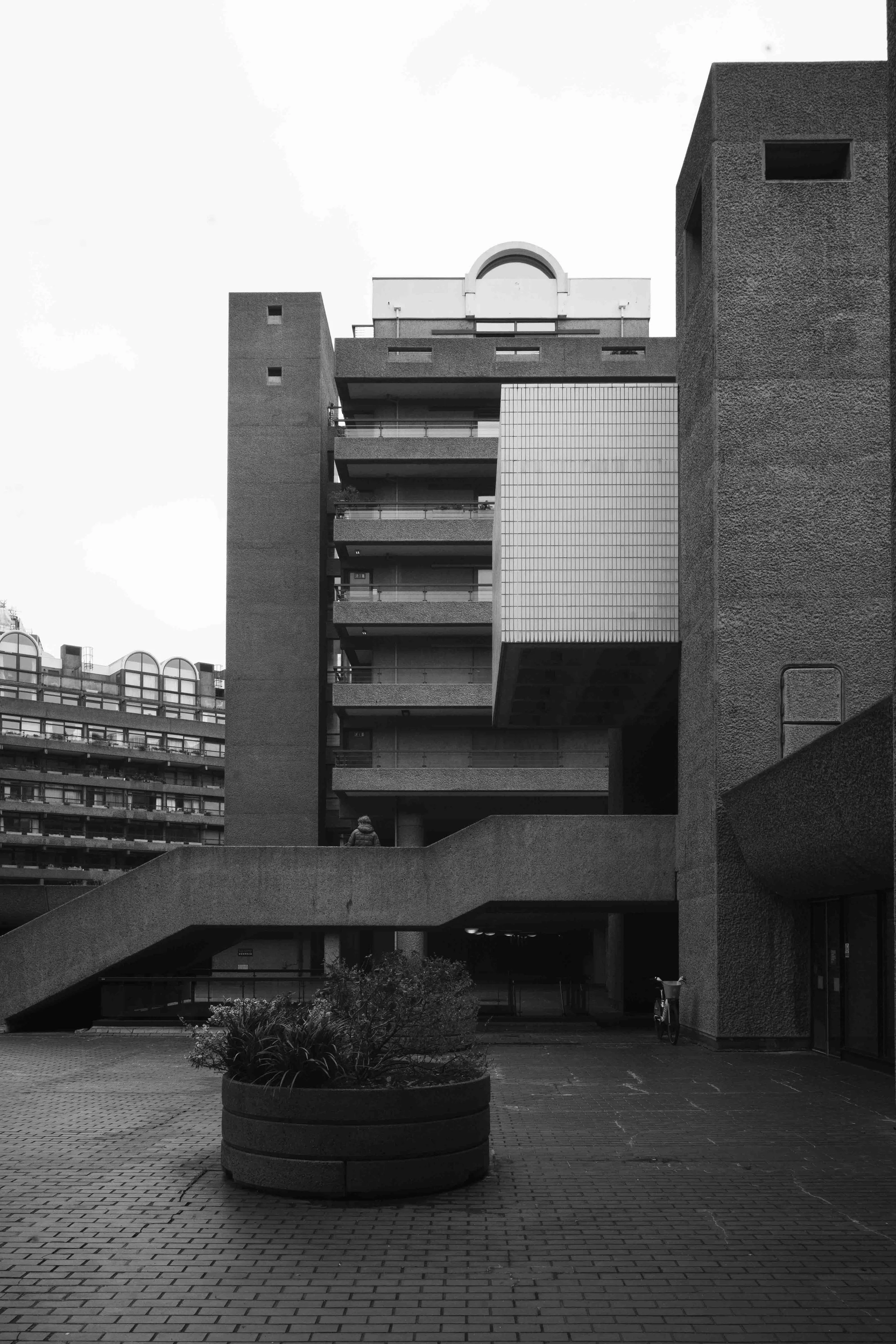
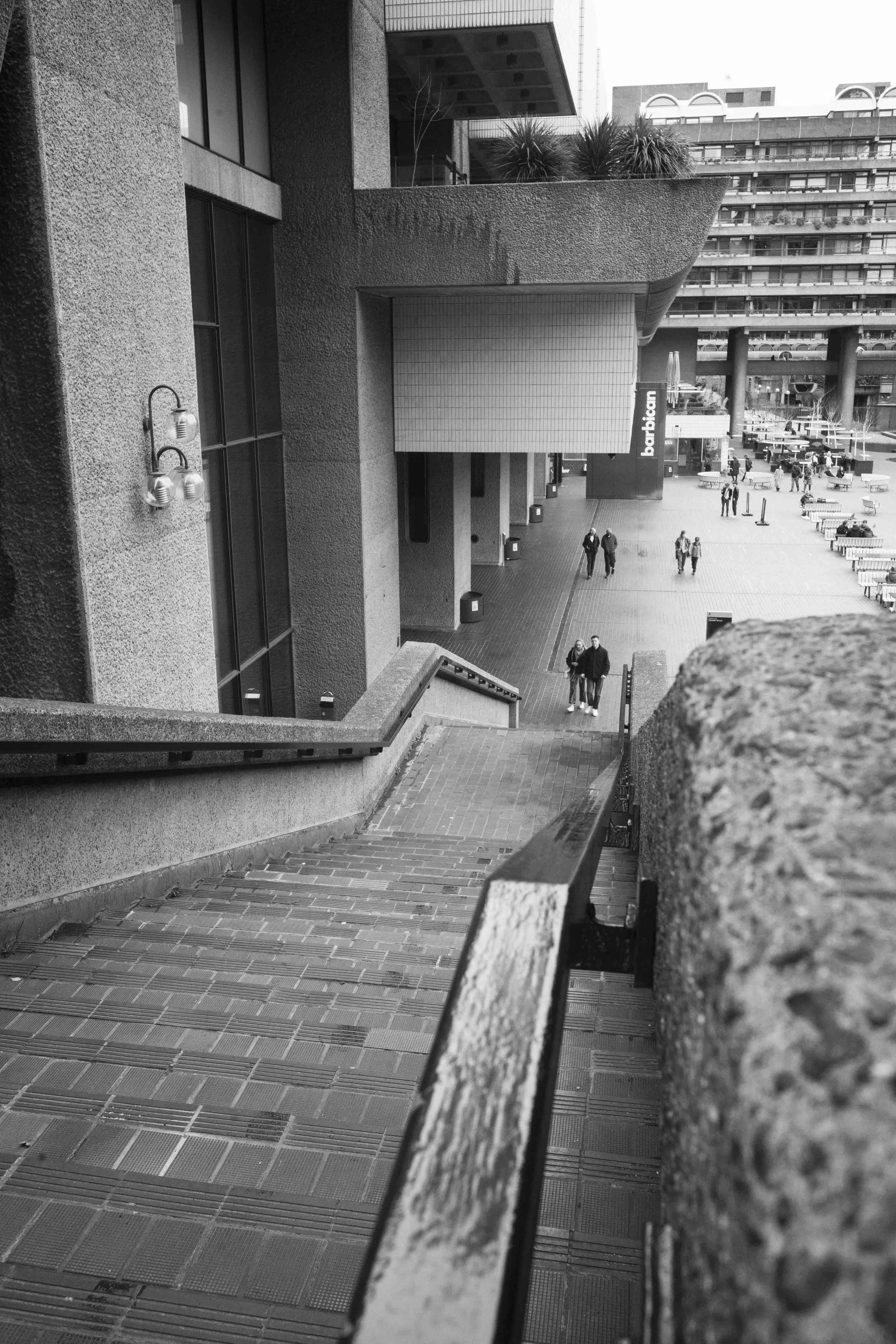
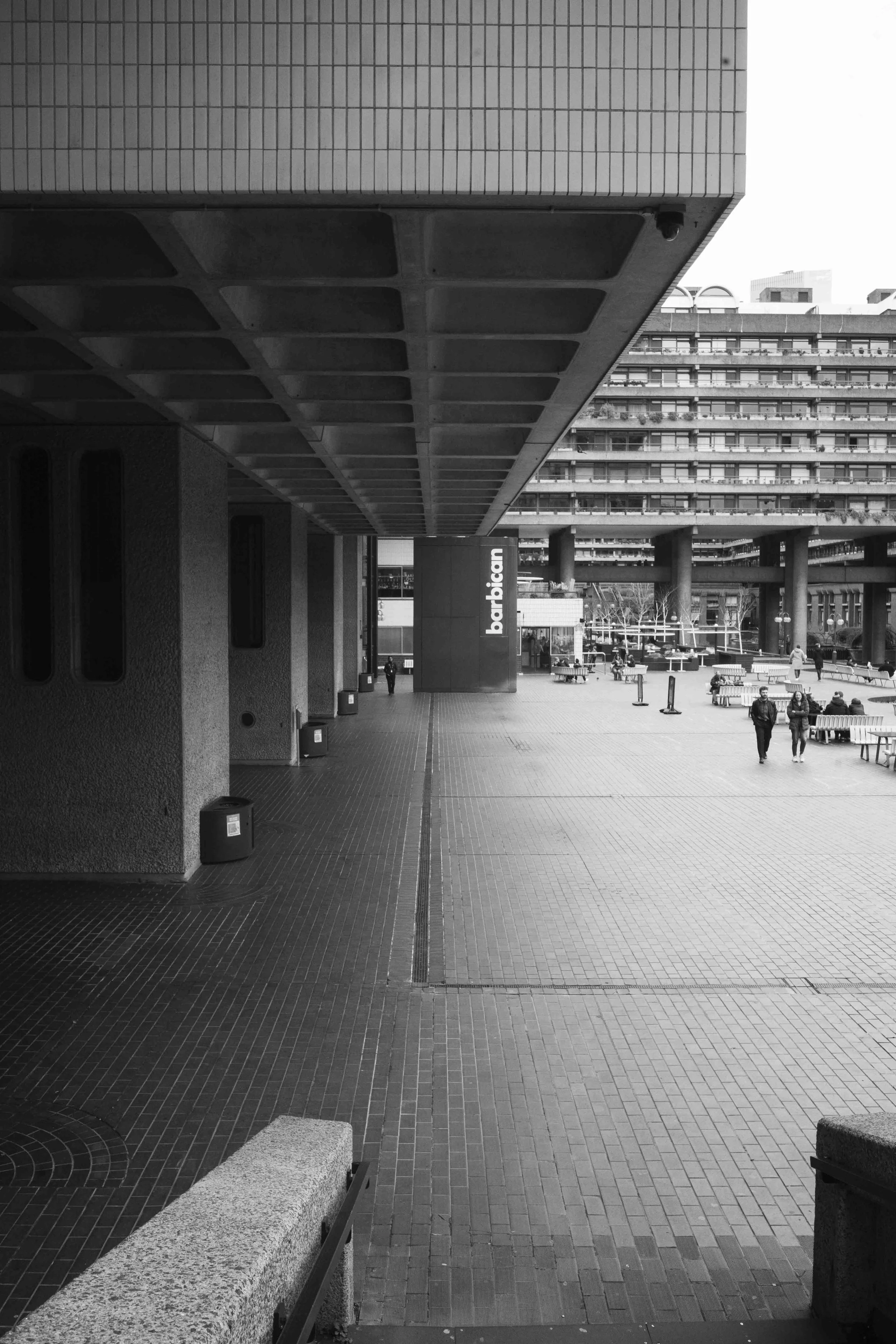
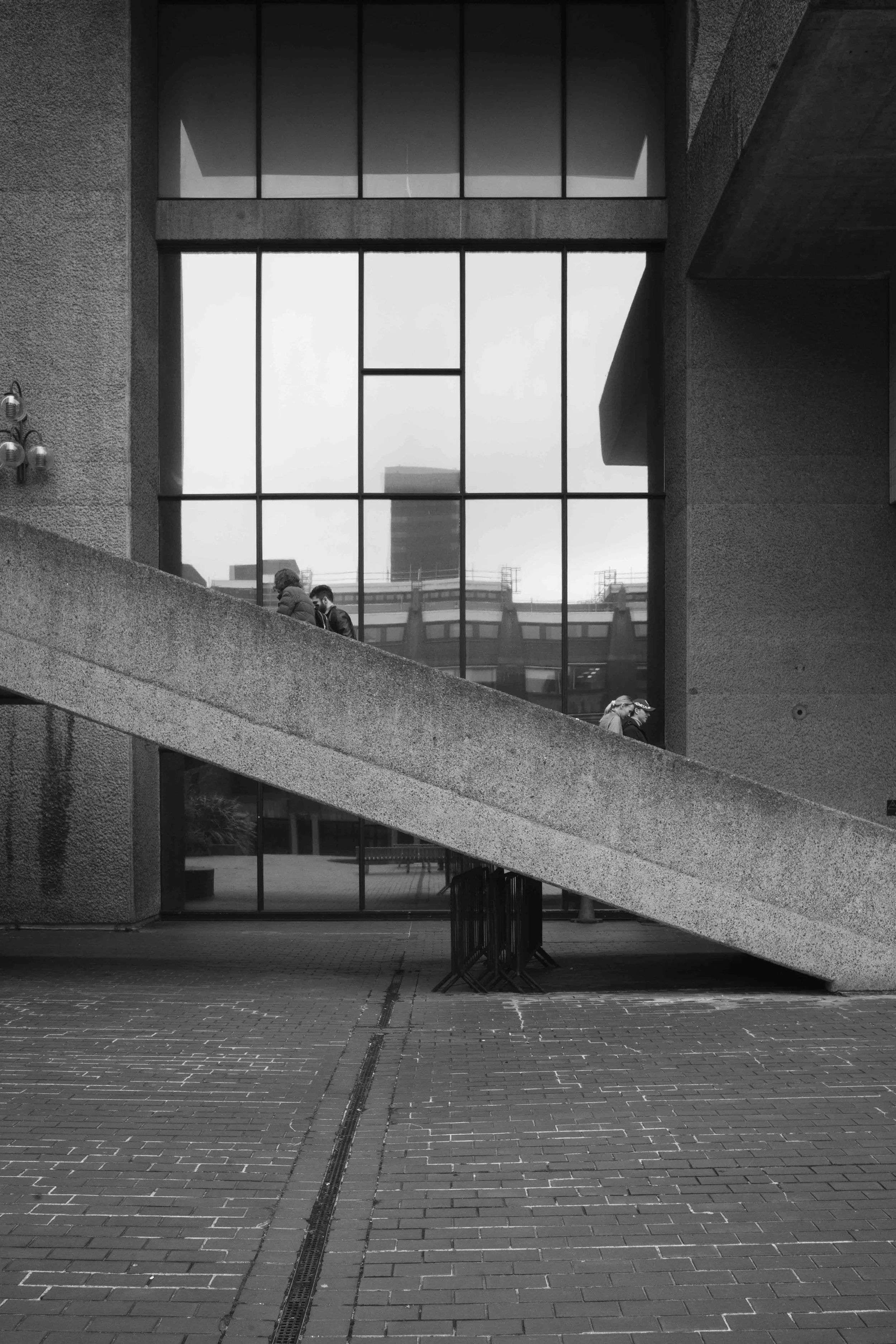
Few places embody London's post-war architectural ambition quite like the Barbican. Designed by Chamberlin, Powell and Bon and built between the mid-1960s and early 1980s on a 40-acre bomb-site flattened during the Blitz, this Grade II-listed complex isn't just a housing estate—it's a self-contained "city within a city." Three dramatic 40+ storey towers (Cromwell, Shakespeare, and Lauderdale), cascading low-rise terraces, elevated "streets in the sky" walkways, sunken lakes, private gardens, and the world-renowned Barbican Centre arts venue all fused into one monumental, multi-level labyrinth of bush-hammered concrete.
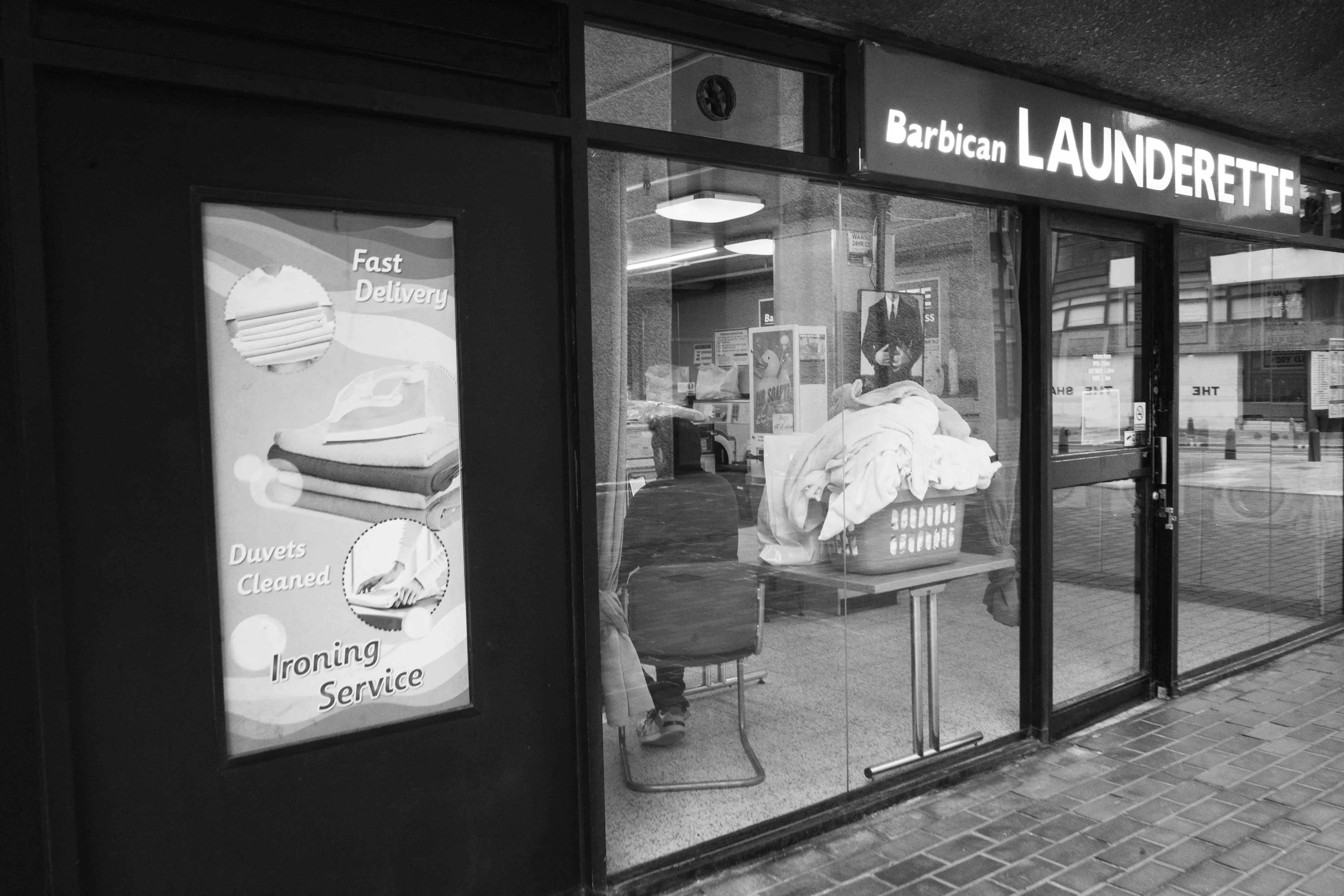
Brutalism here feels less austere and more utopian: raw béton brut textures meet thoughtful landscaping, sculptural forms, and a deliberate separation of pedestrians from traffic. It's divisive—some see fortress-like severity, others see bold optimism—but for street and architectural photography, it's endlessly compelling. The geometry is sharp, the scale immense, yet human moments (a dog walk, a laundry basket, a quiet bench) constantly soften the edges.
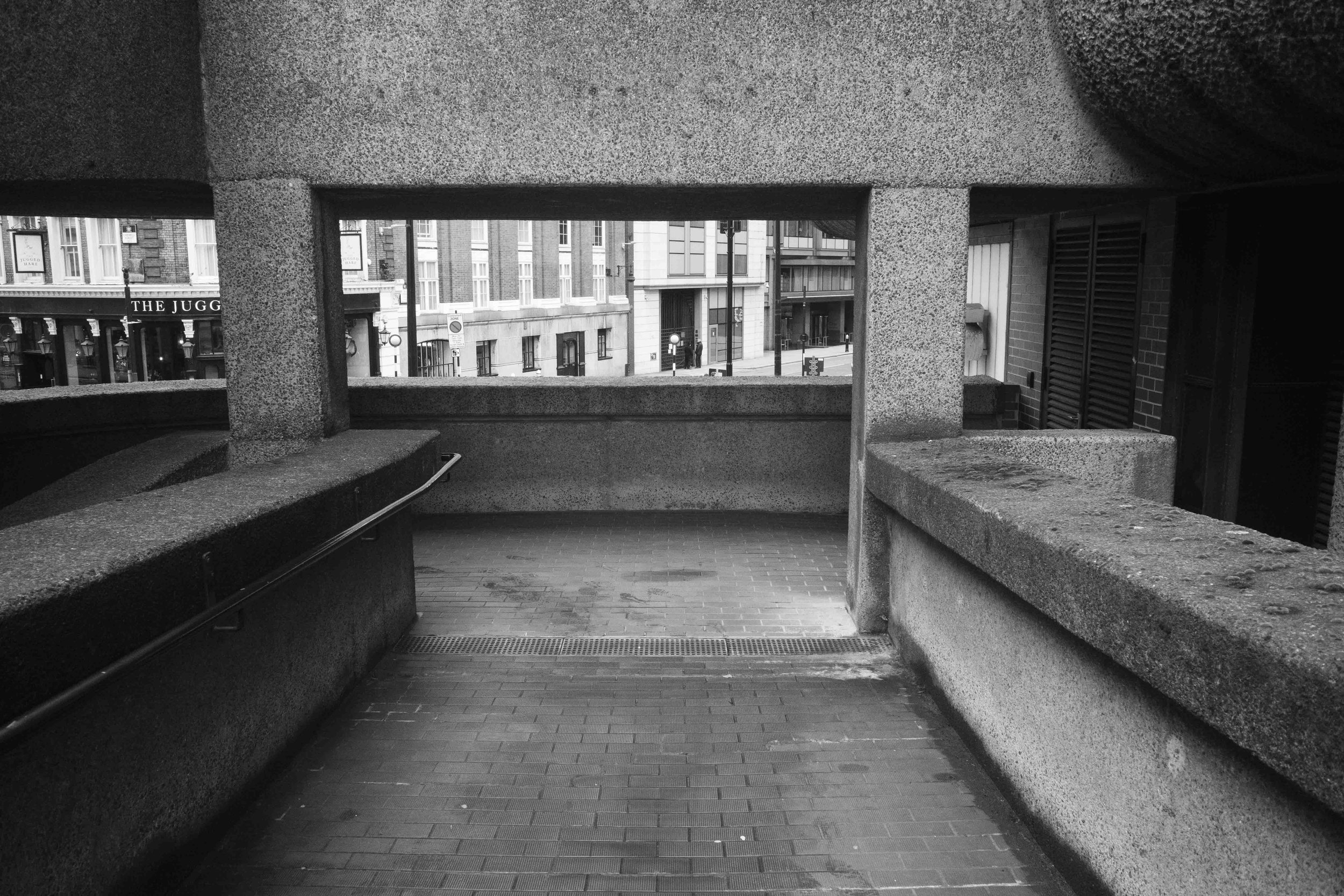
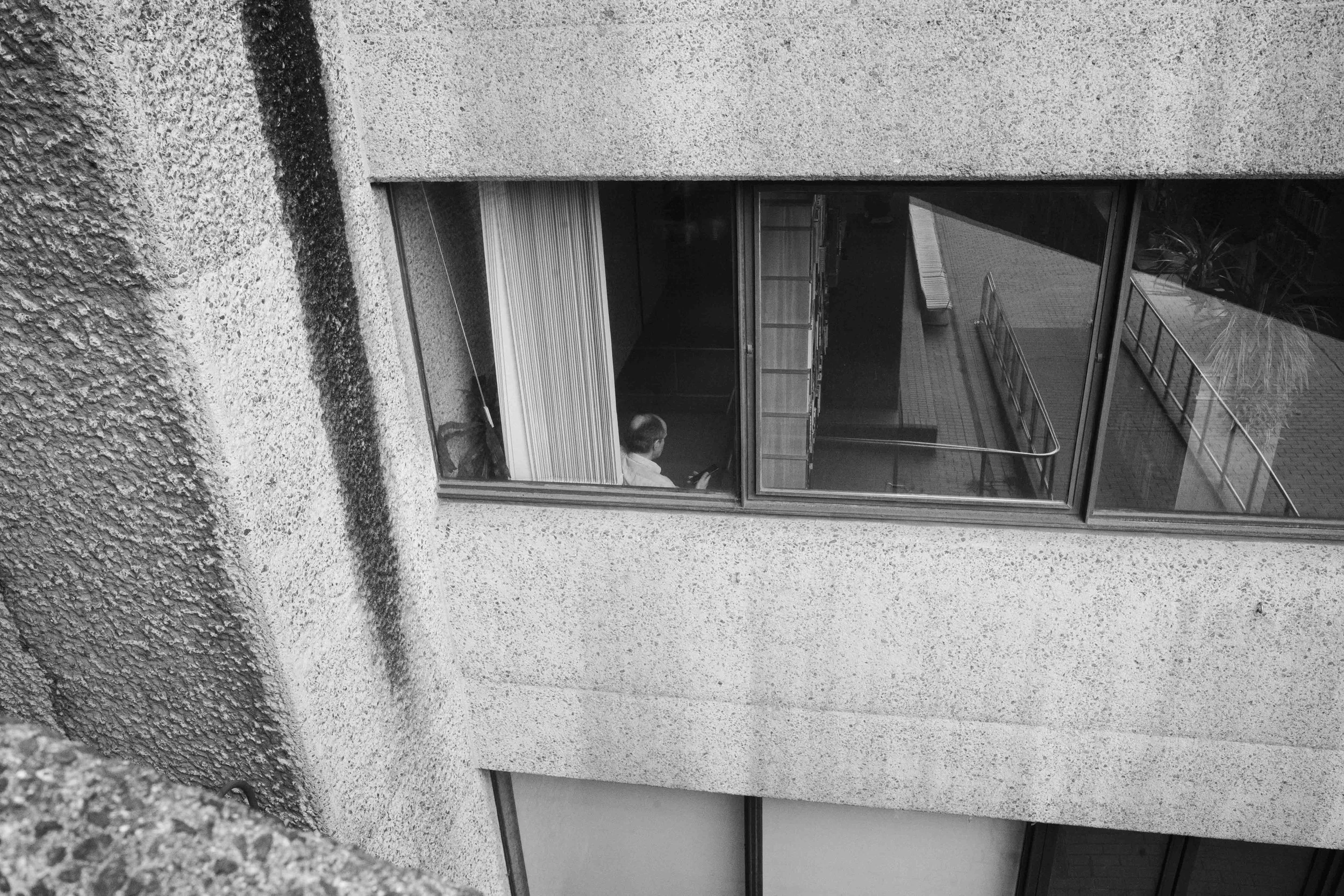
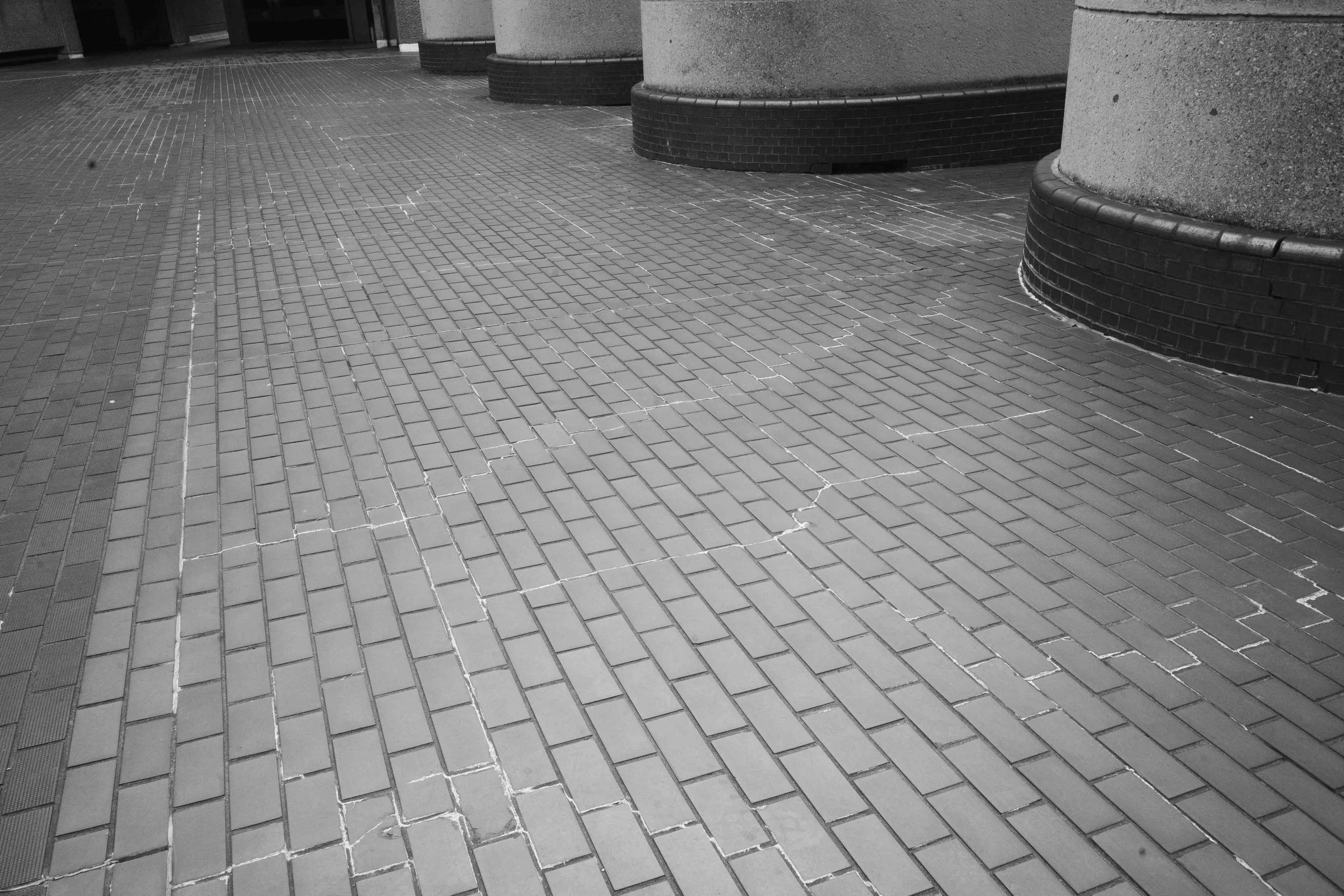
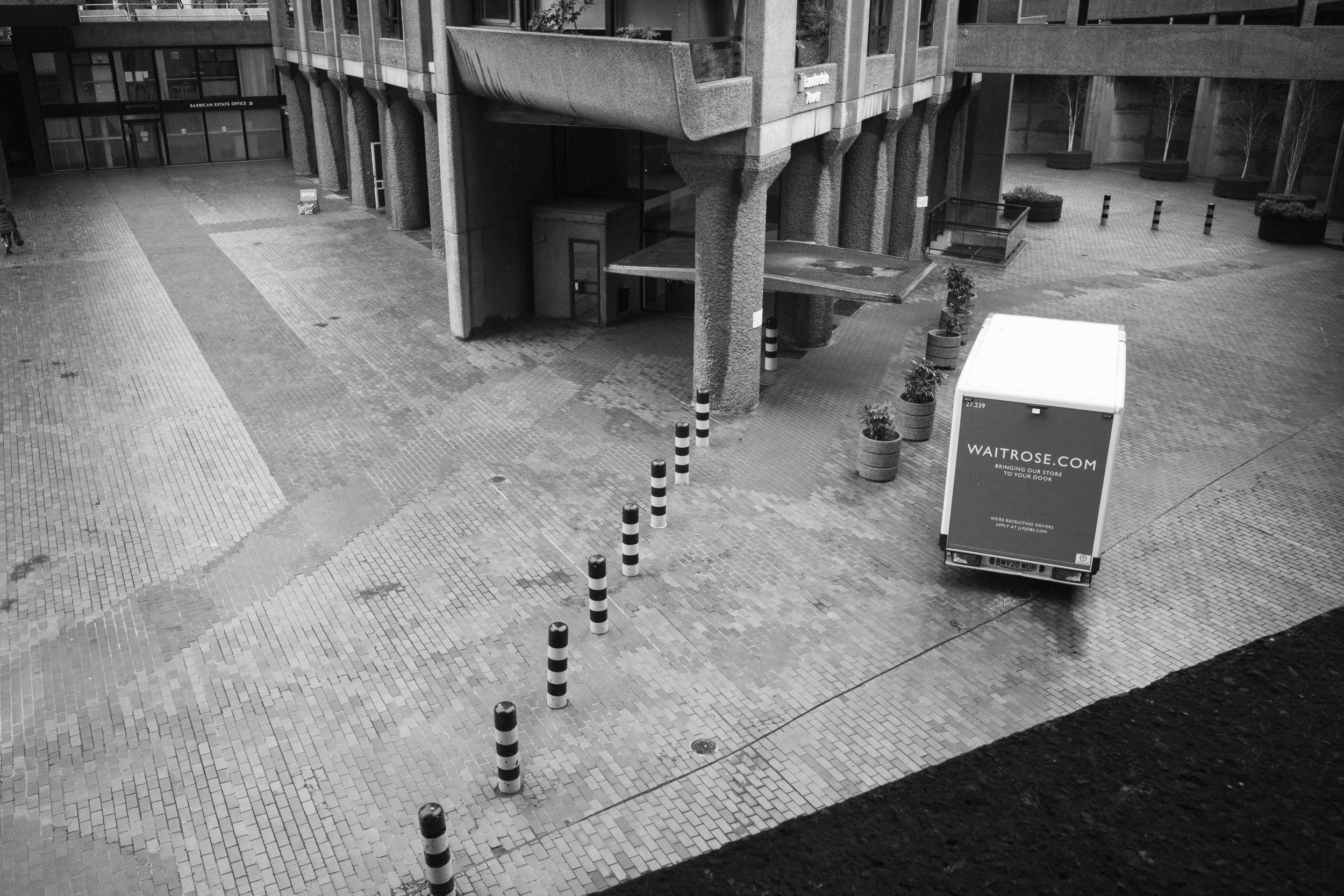
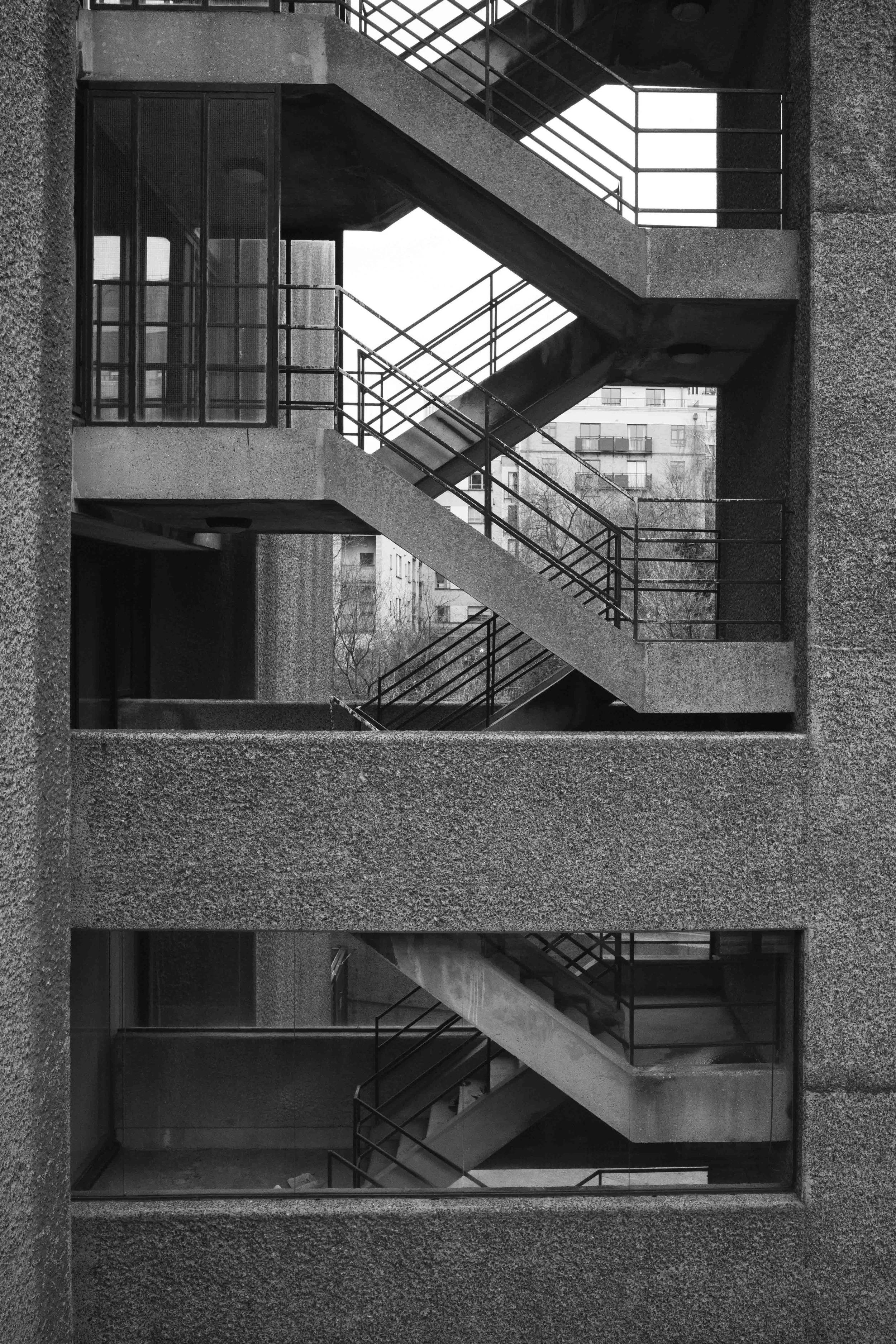
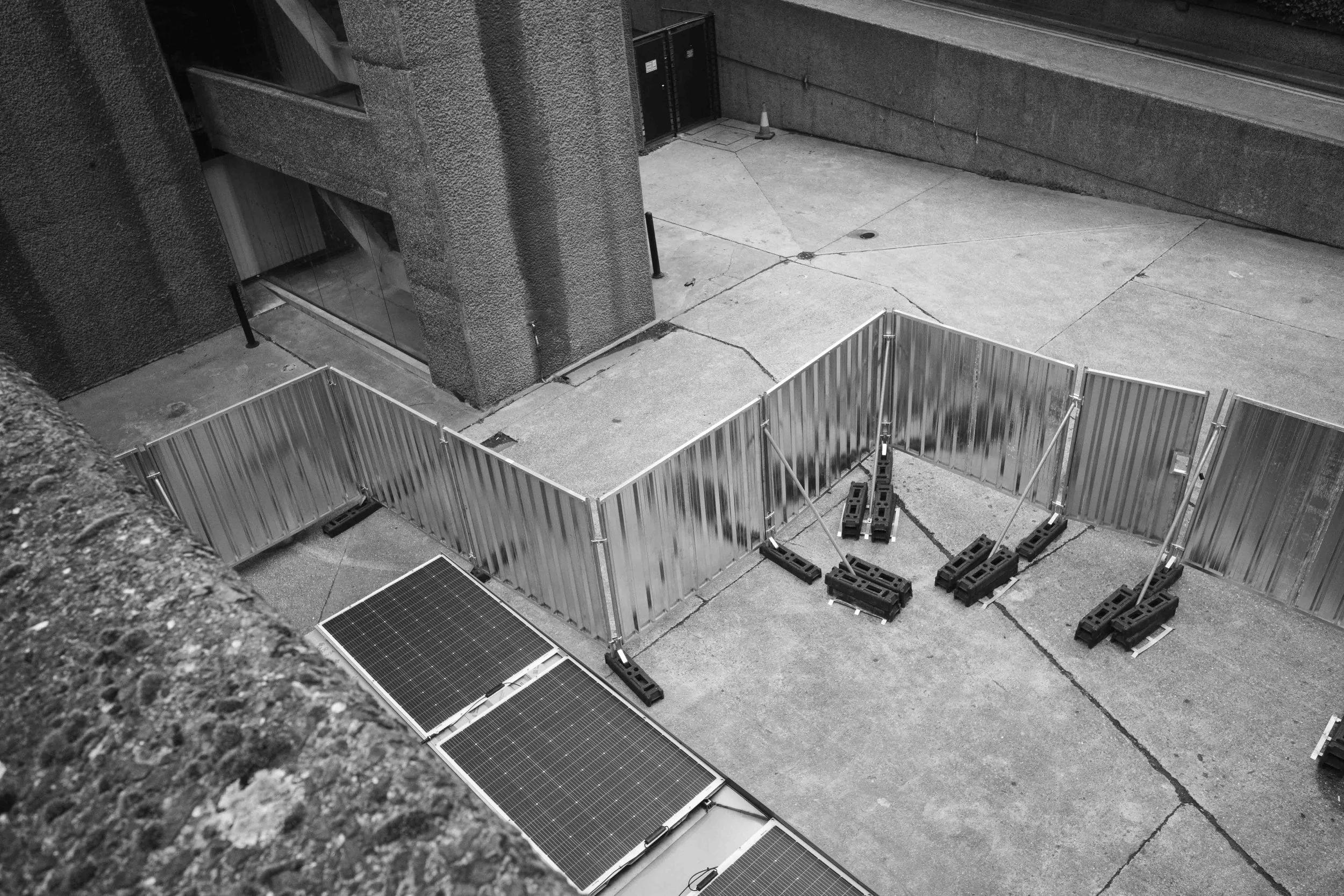
The Nerdy Bit: These black-and-white images, shot on a drizzly winter day, strip away colour distractions to emphasize form, texture, light, and shadow. The TTartisan 28mm F5.6 lens and my Leica M10. renders the concrete with incredible depth—every hammer mark, every puddle reflection pops. Processed lightly in Lightroom for contrast and grain, the series aims to let the architecture speak while highlighting how people inhabit it daily. This lens is magnificent, no horrible digital cliinical sharpness. for <£300.
The Barbican isn't just concrete—it's a bold experiment in high-density living that still feels radical. Love it or loathe it, photographing here is addictive. If Alexandra & Ainsworth was West London's poetic brutalism, the Barbican is the City's dense, layered epic.
Thanks for reading. Drop a comment if you've wandered these walkways yourself—what's your favourite brutalist spot in London?
Yes please, keep me posted when there’s a new blog
Instagram - Film