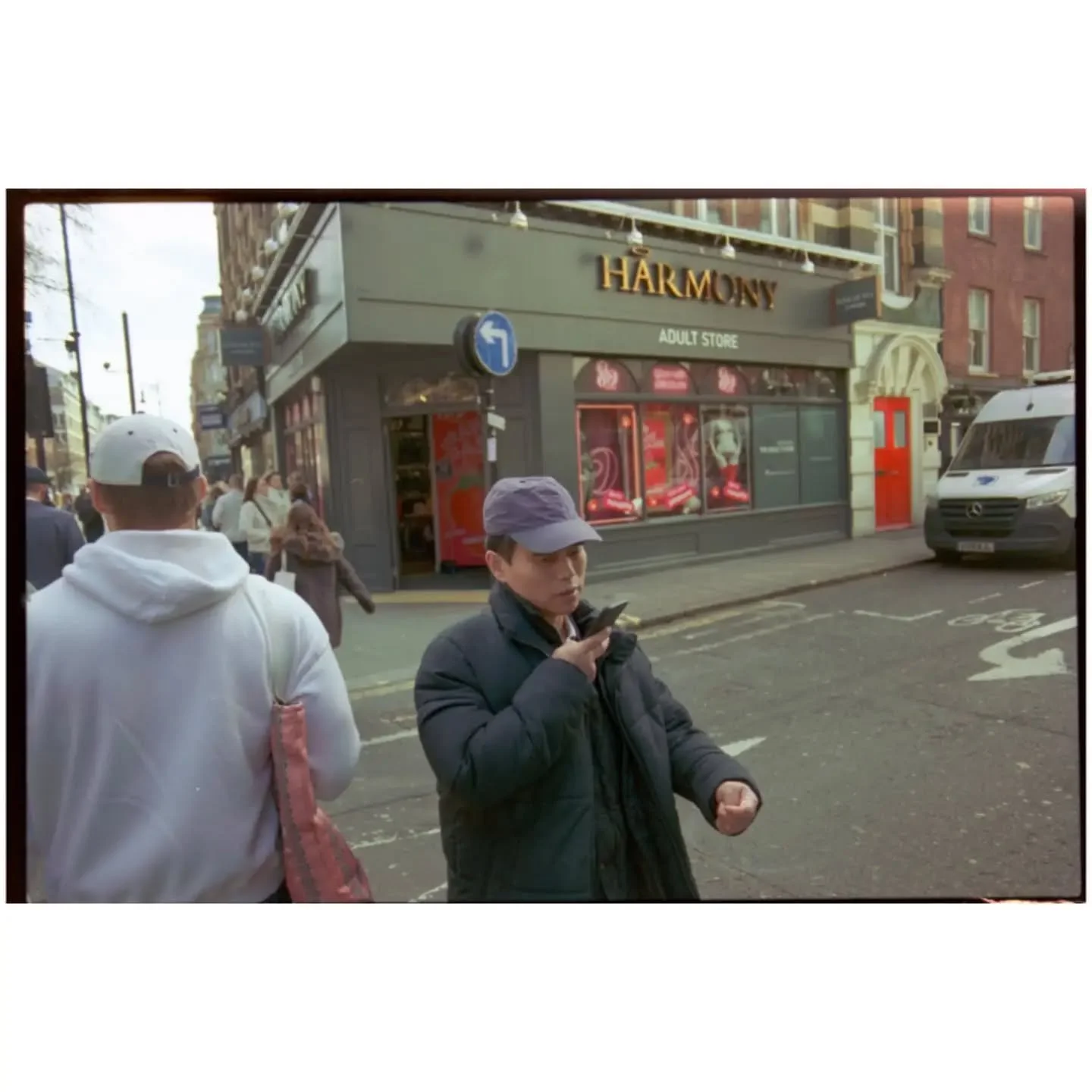
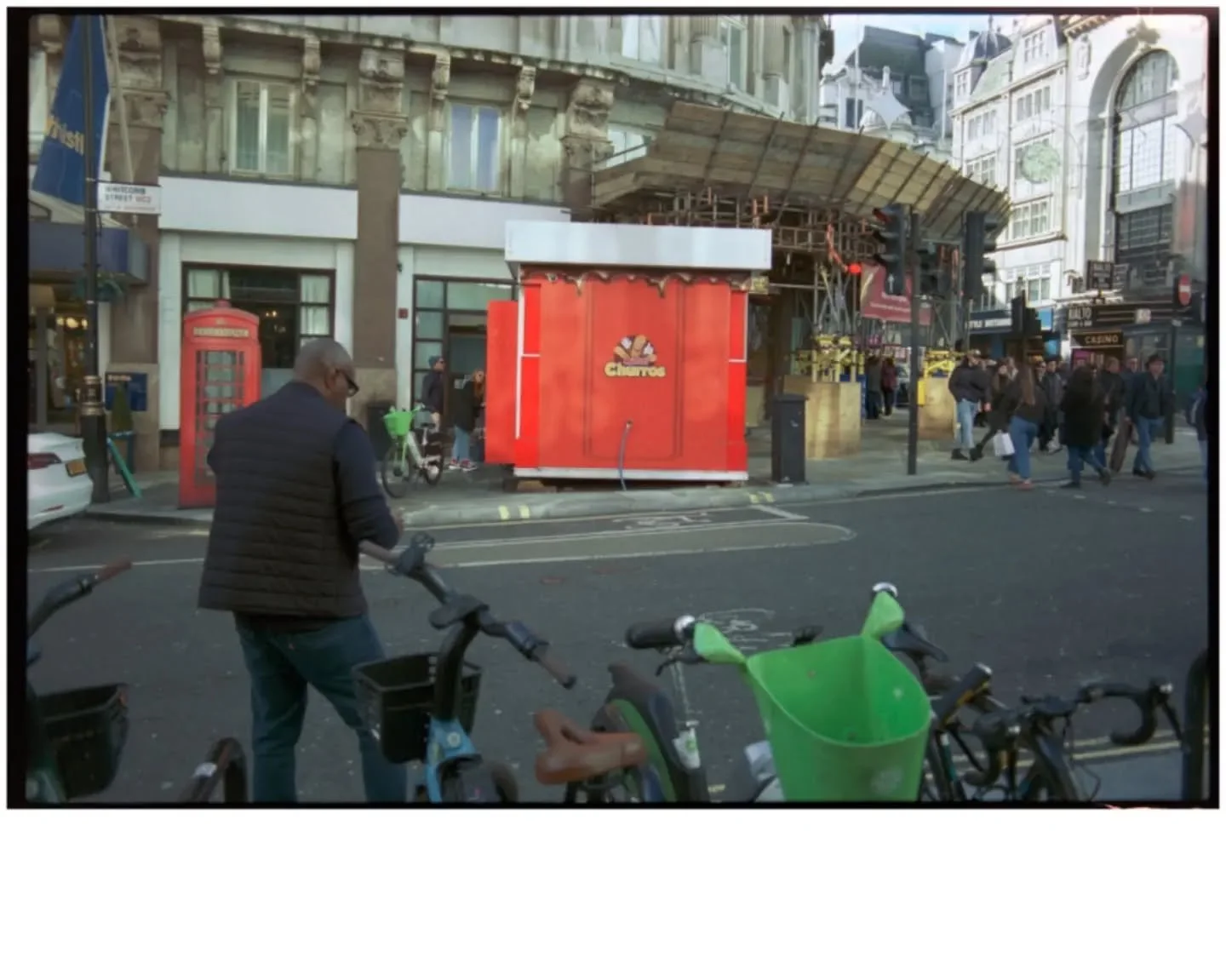
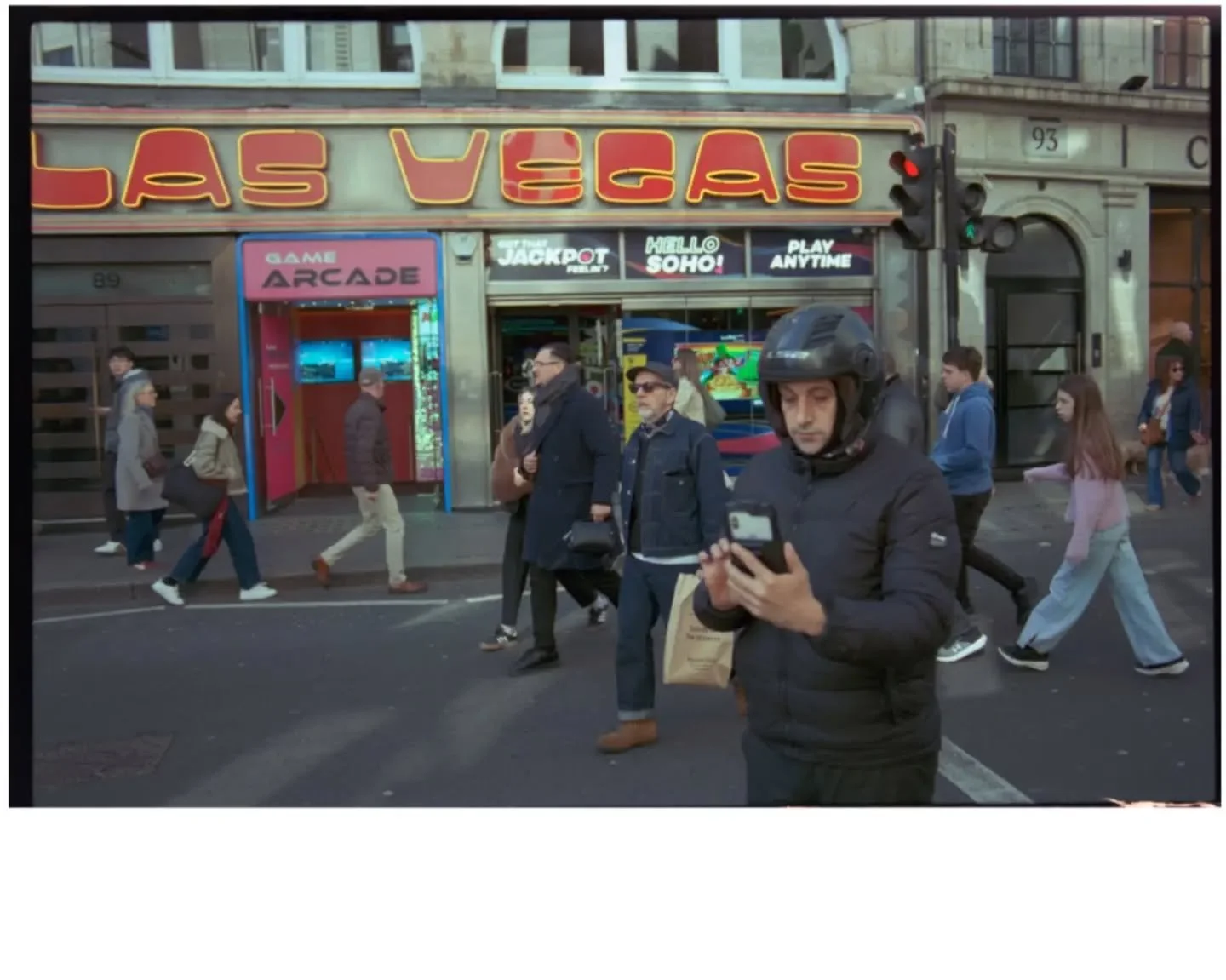
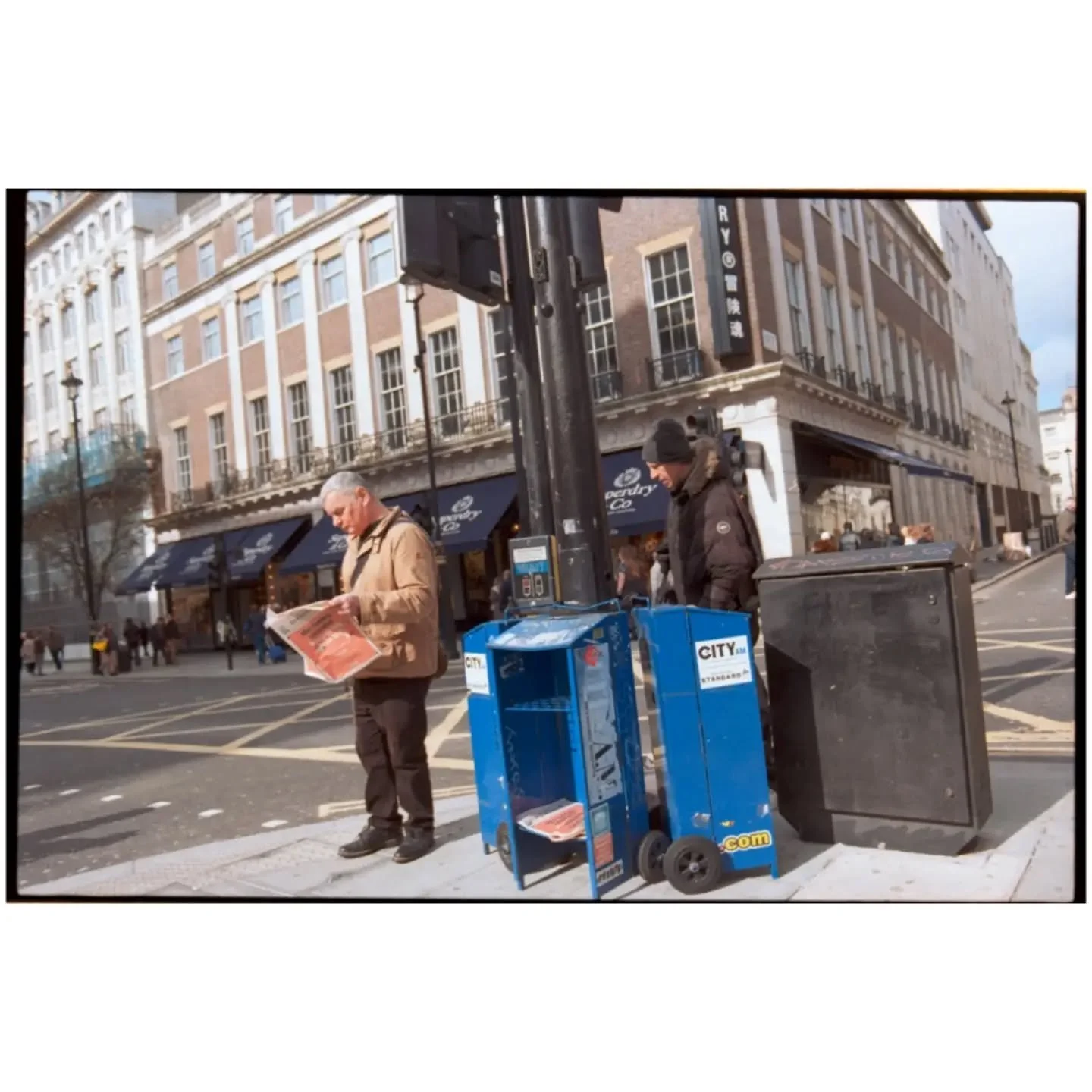
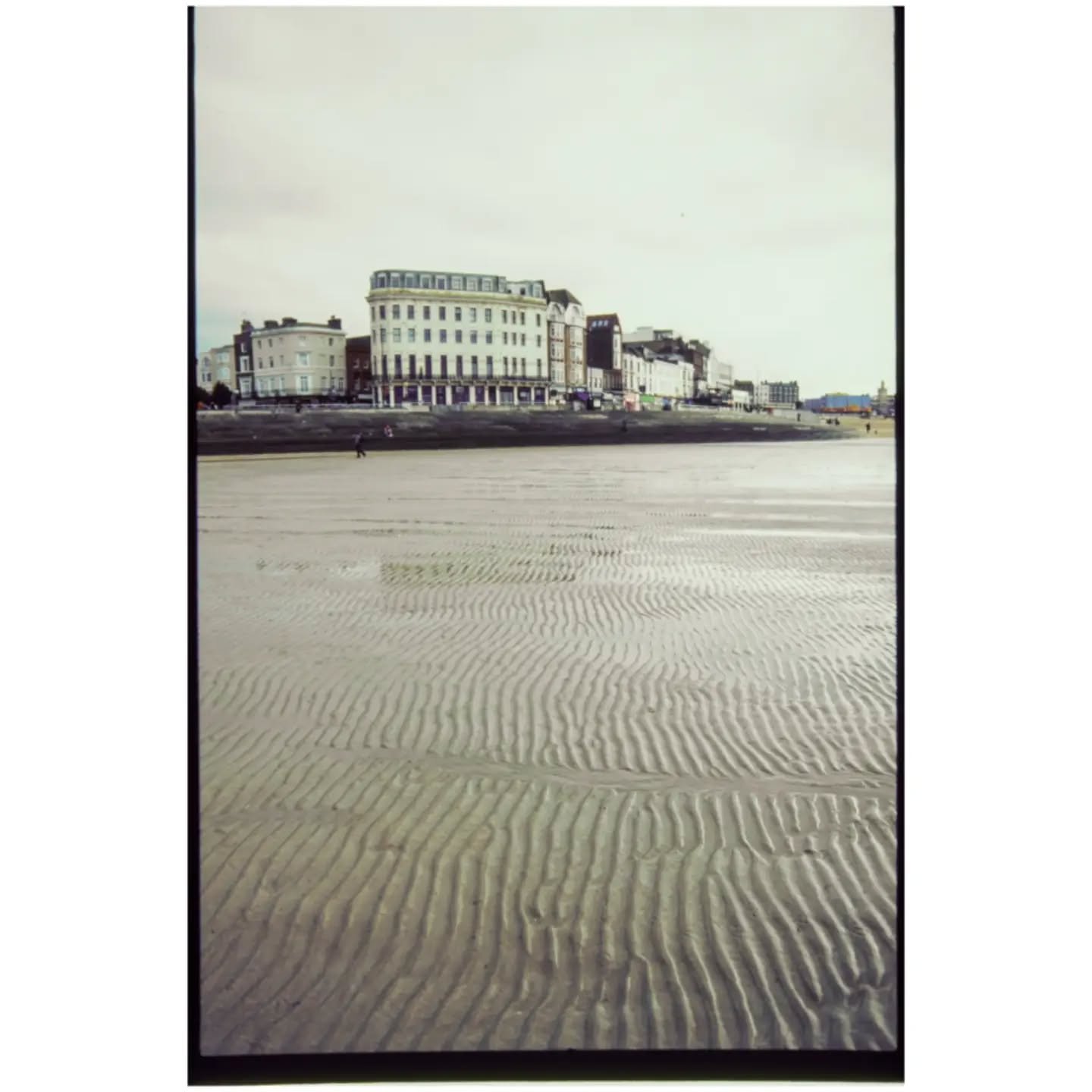
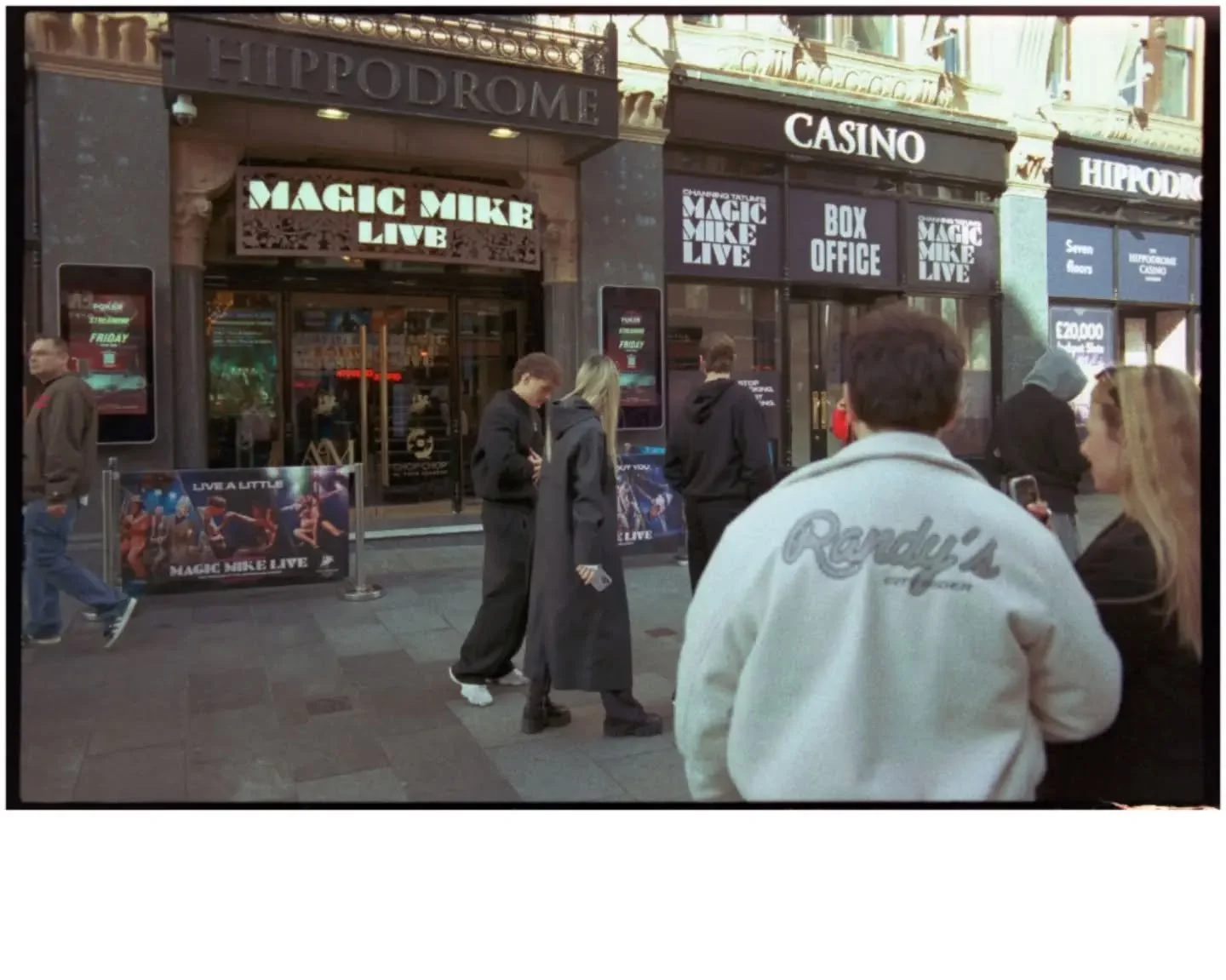
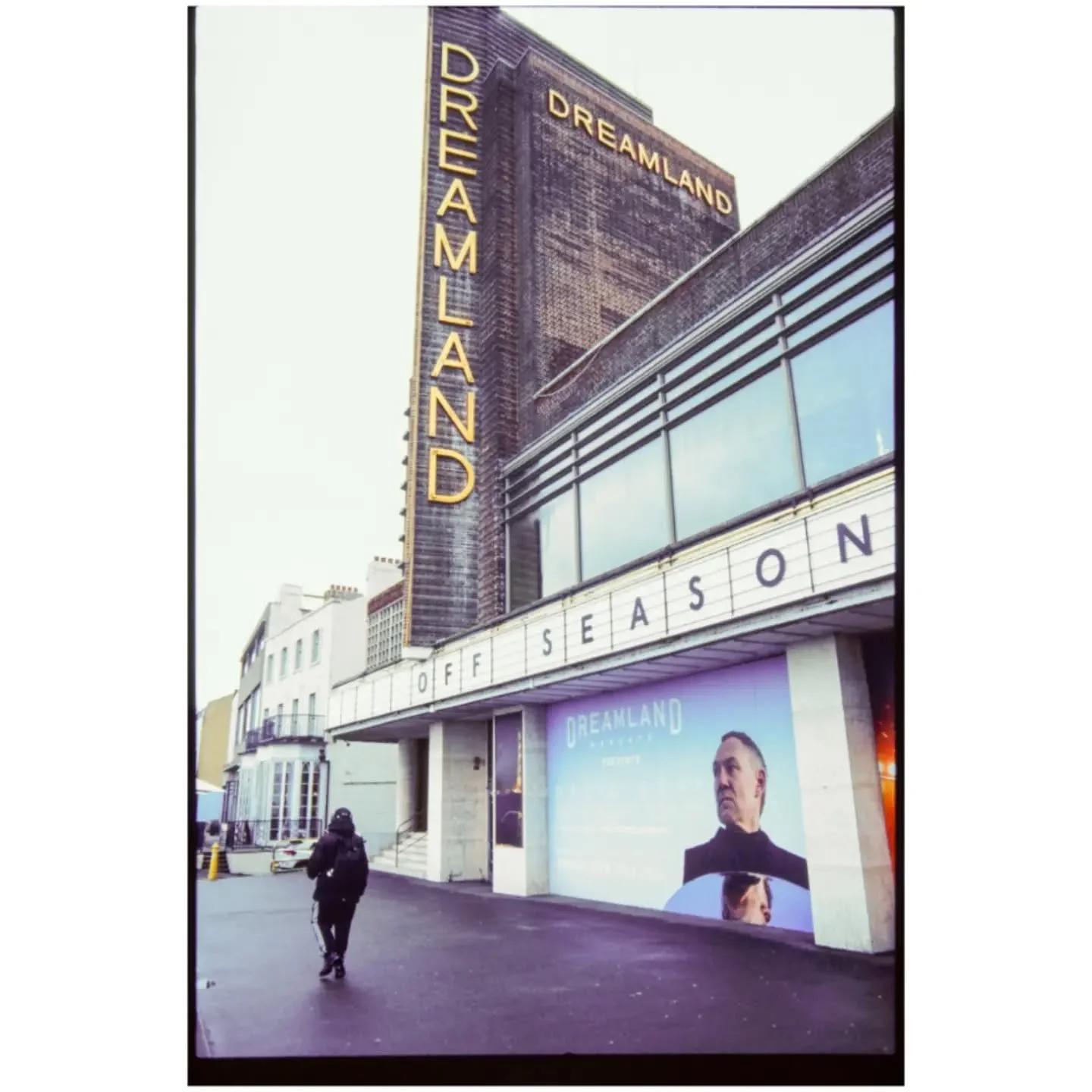
in the frame
<del>U Should Not be doing that<del>, Oh yes you should.
I haven’t been been out for quite some time, have been a bit busy at work and it’s nice to just chill and relax in the house, now that the builders have all left. But today I decided to pop out into town to shoot some film.
Classic indecision, meant that I was packed up like a Sherpa going up Mount Everest, carrying the Pentax 67, FujicaGS645s I’m the delightful Minolta X500.
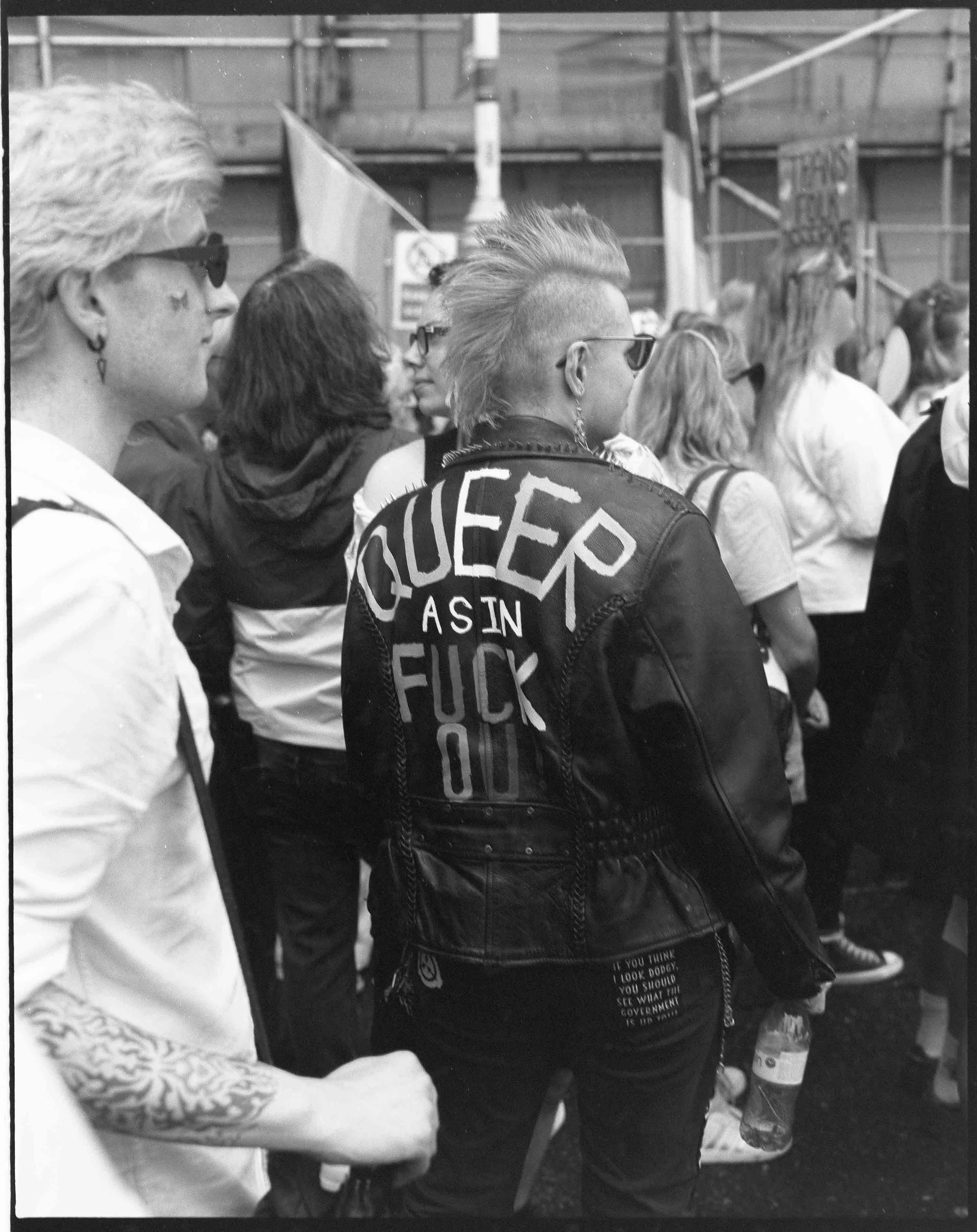
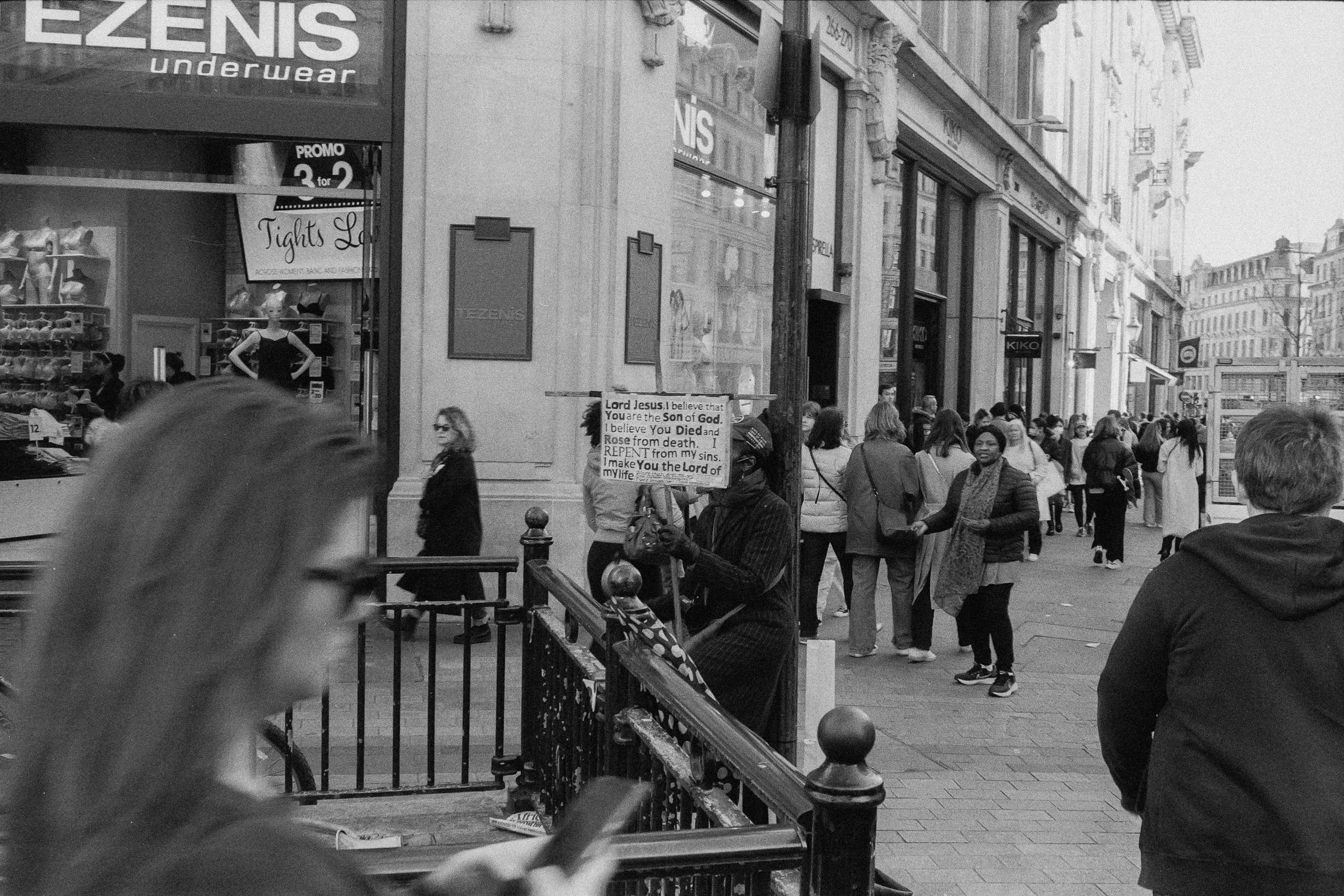
Happenstance delivered today where I stumbled across a Transgender March. As I wasn’t too tired, I was quite active getting some street portraits, approaching folk. But the photo used at the top of this blog post. The person on the left. Thought I may have been a Daily Mail photographer.
FFS.
I did have a chuckle to myself and think: 1) I’m a 53-year-old dad of two, I think I need to modernise some of my wardrobe, 2) am I near the autumn of the street photography journey that I’m on? I don’t fancy much being pointed out as a right wing broadsheet tabloid photographer, as the hair turns a bit more grey?

I haven’t been been out for quite some time, have been a bit busy at work and it’s nice to just chill and relax in the house, now that the builders have all left. But today I decided to pop out into town to shoot some film.
Classic indecision, meant that I was packed up like a Sherpa going up Mount Everest, carrying the Pentax 67, FujicaGS645s and the delightful Minolta X500.
Happenstance delivered today where I stumbled across a Transgender March. As I wasn’t too tired, I was quite active getting some street portraits, approaching folk. But the photo used at the top of this blog post. The person on the left. Thought I may have been a Daily Mail photographer.
FFS.
I did have a chuckle to myself and think: 1) I’m a 53-year-old dad of two, I think I need to modernise some of my wardrobe, 2) am I near the autumn of the street photography journey that I’m on? I don’t fancy much being pointed out as a right wing broadsheet tabloid photographer, as the hair turns a bit more grey?
But in all fairness, the person on the left of that first photograph was quite disturbed. They were photographed at a previous March (they didn’t tell me if it was London or Brighton) and they did indeed turn upon the Daily Mail website. I did offer to not take the photograph but the pair of them and I’m sure their mum were actually really sweet and they allowed me to take it. I think it’s a lovely photograph, which captures the loving bond between two siblings.
Brighton, a city long celebrated for its vibrant and diverse LGBTQ+ community, once again lived up to its reputation today, July 19, 2025, as thousands gathered for a powerful and deeply significant Transgender March. The air was thick with a mix of defiance, solidarity, and joy as trans individuals, their allies, friends, and family poured into the streets, demanding recognition, respect, and fundamental rights. I can’t help but feel really proud of the youth coming through a very politically attuned, whether it’s the transgender match today or the free Palestine collective I witnessed at the KneeCap Supporting act at Finsbury Park for Fontaines DC (check out my previous blog post).


The march, organised by Trans Pride Brighton, began at Victoria Gardens, a sea of trans flags, banners emblazoned with messages of hope and anger, and faces determined to be seen and heard. Speeches ignited the crowd before the procession moved towards the seafront, transforming the familiar Brighton lanes into a vivid river of protest and pride. It wasn't just a march; it was a visible manifestation of a community asserting its existence and demanding its rightful place in society.
This year's march felt particularly poignant given the ongoing national discourse around trans rights. Recent months have seen intensified debates, often fuelled by misinformation, and a tightening of policy that has caused significant concern within the trans community.


The echoes of the past also resonated strongly through today's march. Many participants and observers drew parallels to the infamous Section 28 of the Local Government Act 1988. For 15 years, until its repeal in England and Wales in 2003 (and Scotland in 2000), Section 28 prohibited local authorities from "intentionally promoting homosexuality" or "promoting the teaching in any maintained school of the acceptability of homosexuality as a pretended family relationship."3 While not directly about trans identities, the spirit of Section 28 fostered an atmosphere of fear, silence, and discrimination, particularly in schools. It told an entire generation that their identities were "pretended" or unacceptable. Today, as trans people face renewed challenges to their identities and access to healthcare, the fear of a return to such repressive attitudes is very real. The Brighton march was a powerful reminder that history must not repeat itself.


Brighton has long been a beacon for LGBTQ+ rights, and today's Transgender March reinforced that commitment. It was a loud, clear, and unyielding message to politicians and society at large: trans rights are human rights, and the fight for full liberation will continue, no matter the political climate. The energy on the streets of Brighton today was a powerful reminder of the strength found in unity and the unwavering demand for a future where all trans people can live authentically, with dignity, safety, and respect.
The LGBTQ+ Flags cast a little colour on what was mainly a very overcast day spoiling for a thunderstorm, which thankfully didn’t surface.
Black-and-white film isn’t the right choice of film to shoot a transgender March, I should’ve brought some colour film, but I think it’s a nice contrast.
Until next time, keep snapping (and marching).

Take a stand - Bulk up
March 2022 provided an update for a couple of bits in my photography stable, which were long overdue.
Namely my new approach to sourcing colour film and how I develop it. Also my new process for scanning all my film.
I thought I would write this blog post, as I am sure there are a couple of take aways for other film photographers, or points to consider.

March 2022 provided an update for a couple of bits in my photography stable, which were long overdue.
Namely, my new approach to sourcing colour film and how I develop it. Also my new process for scanning all my film.
I thought I would write this blog post, as I am sure there are a couple of take aways for other film photographers, or points to consider.
As we enter into the spring and summer season here in the UK, I’m always keen to shoot some colour film, for the limited time that the summer light cascades our island.
I’m not one to shoot premium black and white film, my normal go to is Fomapan 400, which in 100ft, costs £40. I bulk load at home and the quality, tonal range and price, suits me down to the ground.




Colour film at present is evidencing crazy price hikes here in the UK. So in March 2022, I decided to invest in a 400 ft bulk roll of Kodak Vision 3 250d from the folks at Frame 24, to go down the bulk loading route workflow I have for B&W. At £180 + VAT + Shipping, this was quite a significant investment, but the maths dictated that for 90+ x 30 exposure rolls, this works out at c. £2.50 a roll.


My only problem was how to spool 400ft into 100ft reels for the AP Loader??
I saw advice on Reddit, that you could spool the film around the cardboard roll from the centre of a toilet roll, inside of a changing bag. For me, this didn’t work, as I found it too labour intensive, my hands got too hot and left too much sweaty residue on the unexposed film, as outlined in the photos below:


After further research, this lead to the world of 3d printing and a Creative Commons license for the following print schematics. A better video working example, can be found here. I have spoken in the past about the excellent community spirit of the film community, which is demonstrated fully by the designer offering his design for free.
A further search, sourced a 3d printing house in Nottingham, who fulfilled the order for £43.
Next up is the (not so) daunting stage of removing the remjet layer from Vision3 film. (an explanation of what remjet is, is here).
Its essential that commercial film developing labs are not sent Vision 3 film to develop, as this will ruin their machines.
This isn't too cumbersome, I found this video on YouTube. In essence, I pre-soak the film for 5 minutes at 38.5 degrees, then pour in the bicarbonate of soda solution for the 2 1/2 agitation, as outlined in the video.
The colour film is then put through the development and blix stage of the development.
Next is the removal of the remaining remjet, for this the secret weapon is a microfibre sponge, I sourced from a local poundshop. This means that you do not touch the film at this stage of the process. For this, I take the film out of the developing reel and hang in the drying clips, I then wipe (and rinse with the sponge) X 3 on both sides of the film, to remove the residual remjet.
I then put the film back on the reel, to complete the stabiliser final stage of development.
Because of the faffing about with the above, I personally add a photoflo rinse stage after stabilising, which removes any remaining stains on the film.


Home scanning has and will always be the bain of the film enthusiast. It's the one process of film that's as close to ‘polishing a turd / editing digital images' in lightroom, it's something that I look to keep as simple as possible, with a rigid and tested workflow.
My introduction to film and in my pursuit to try and manage what some would call the unjust cost in film photography - and also as part of my approach to maintaining a more level of control over the process - I originally invested in a Epson V600 scanner at the beginning of my film journey in 2016, to allow me a ‘one size fits all’ approach to scanning the film that I have been developing at home.
Whilst this journey has been littered with challenges, a steep learning curve, many rolls of ‘spoilt film’ its been a very rewarding one, which I wouldnt change at all.
I think that I have now finally turned a corner and if I can say (with trepidation), is the start of my refined workflow.
Whilst the V600 is a decent beginners bit of kit for 120 / medium format and large format / 4x5, the outputs for 35mm are little more than sub par acceptable, with the ability in getting decent colour scans being somewhat of a lottery. Bearing in mind beginners do not look to expand in to the 120 or 4x5 arena, until a number of years, would deem this bit of kit obsolete?
I had originally given up on using Negative Lab Pro with the V600 as I just couldnt resolve the colour cast that was yielded from my V600 in colour scanning, but I have now discovered that this appears to be entirely the route cause of a cheap amazon light box (read buy cheap by twice).
Until recently, things changed. I was able to ‘invest’ in the Complete Basic Kit for 35mm and 120 Film Scanning by Negative Supply. What a sublime piece of kit.

The copy stand is milled from aluminium and the film holders are produced in plastic (fair cheaper than the original aluminium ones). Its compact and can be set up in seconds.
Where this kits excels is the quality of the lightbox. I elected for the dearer version, producing 99 nits of light.
The speed of this process is night and day compared to the V600 and silverfast software.
The negative supply setup can scan a roll of film in 90 secs, compared to 5-10 minutes on the V600.
I use my mark 1 Olympus OMD EM5 micro four thirds camera for scanning, and convert the .orf raw file into a tiff file in Photoshop. As this is a 8bit file, I import these files into Negative Lab Pro in lightroom and select the ‘tiff prep' option.
This is a part of the NLP that's essential to remove the colour cast on images. I then run the software with standard settings, but I prefer the noritsu to frontier scanner.
I then save the image as a copy and then delete the original positive image of the film negative.
Thats it.
On review some folk send their film to labs, as they do not have the time and/or inclination to develop at home, me I am too much of a spend thrift , but more importantly, want the broader engagement with the entire process.
The above whilst post investment is an excellent workflow to save a few quid, this is probably best fulfilled if undertaken within a group to share the investment costs.
400 ft of Vision 3 250d is £222 for 92 rolls of film or £2.40 per roll, so shared with a group of 5 or 10 folk is very reasonable, compared to the current price of portra 160, 400 or 800 at £15+ or colorplus and gold consumer film now nearing £10 a roll.
Something to consider. Until next time, keep snapping.
Film Photography aka #Slowphotography
As we head into lockdown 2.0, this is inevitably going to polarise the population about the illogical stance of the government in dealing with the shit storm that is COVID19.
Since the backend of the summer and leading up to the present time, I have been busy getting out and about building up a backlog of images to keyword, log and edit.

As we head into lockdown 2.0, this is inevitably going to polarise the population about the illogical stance of the government in dealing with the shit storm that is COVID19.
Since the back end of the summer and leading up to the present time, I have been busy getting out and about building up a backlog of images to keyword, log and edit.
That coupled with the sheer madness that is the American presidential election results, or at least how someone hasn’t conceded, has provided the heightened need for a little respite.
The one common theme I have noticed during this period, is the sense of folk ‘getting on with it’.
Leading up to lockdown 2.0, there has been the introduction of the 3 tier system in the UK, with the North, initially being hit very hard. Only time will tell if this will be managed well or simply a nightmare.
What I see within the content of instagram, is folk appreciating their predicament, what they have and being close to their loved ones.


Last week, I decided to have a look at some of my old film negatives, I shot film between 2016-2019, as a medium to improve my photography. People have different positive and negatives regarding film, my take away has been that it slowed me down, provided me with a medium to be more considered, but also I enjoy the start to finish process. I.e. from taking the photo, developing the film, scanning and digitally editing in Lightroom.
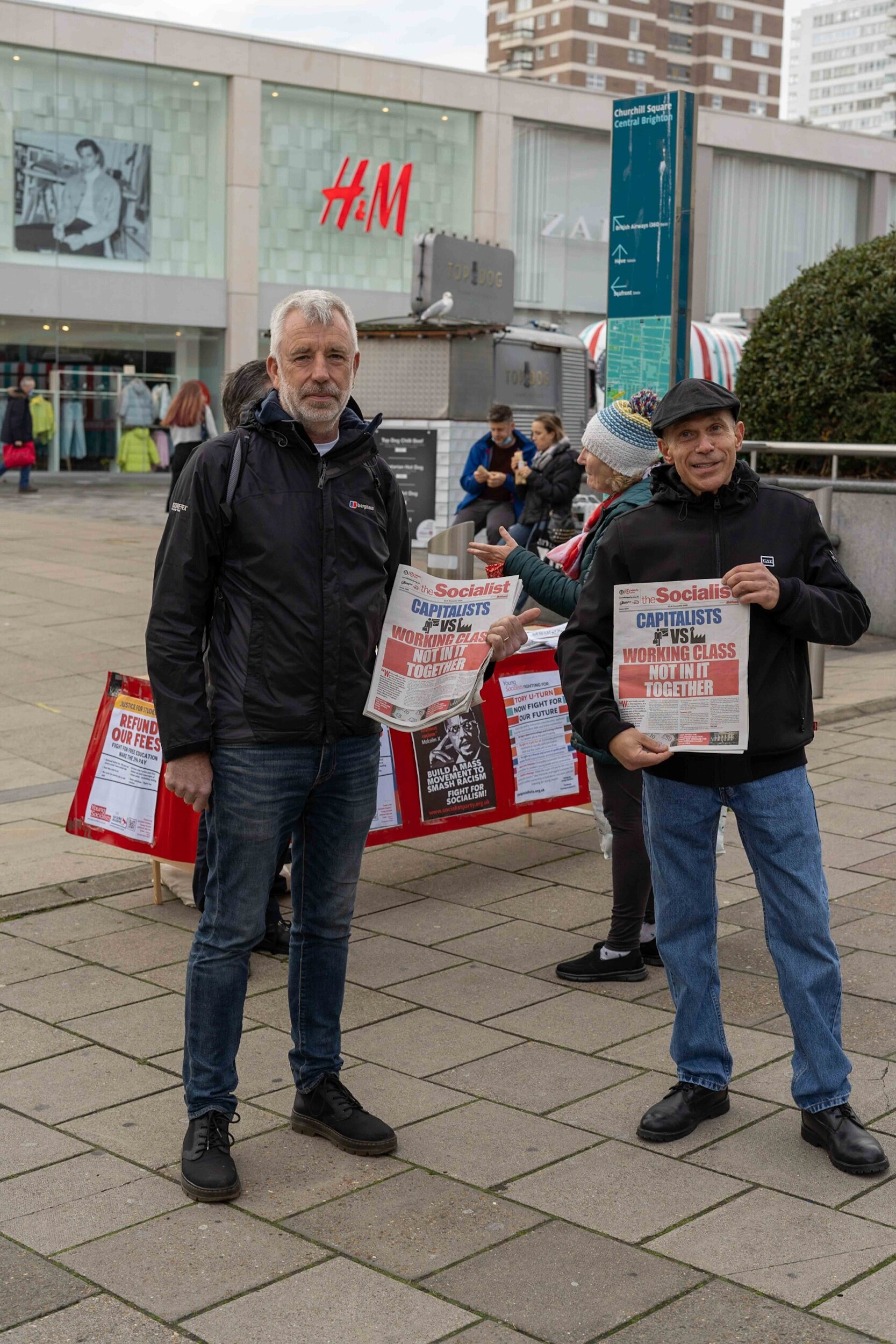
I took the below images of two Socialist Worker Party Volunteers. The black and white image was taken on my Yashica Mat 124g TLR medium format camera, with Ilford HP5 @ ei 200. The colour was taken on my Sony A7iii with 50mm F1.8. Both images offering something different, not better.

I use an Epson V600 flat bed scanner with Silverfast software. Whilst this is good at scanning medium format film negatives, using this for 35mm is somewhat mixed. Especially where using different colour film emulsions.
The current trend for scanning film negatives, is using a DSLR camera with the Negative Lab Pro Lightroom plug in. Whilst I have been getting some decent scans through this method, I concluded that this was more out of eyeballed guess work than a consistent workflow.
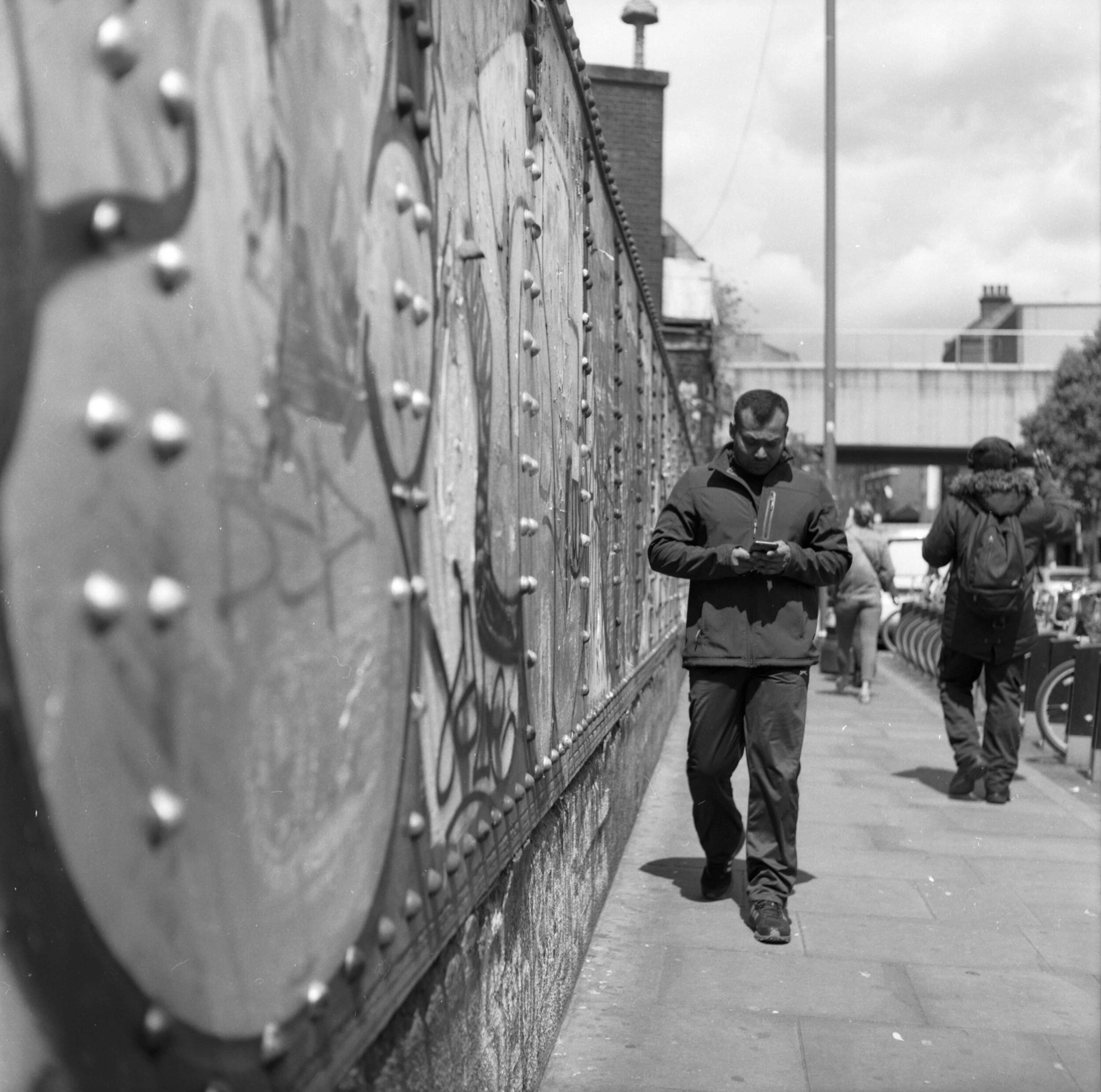

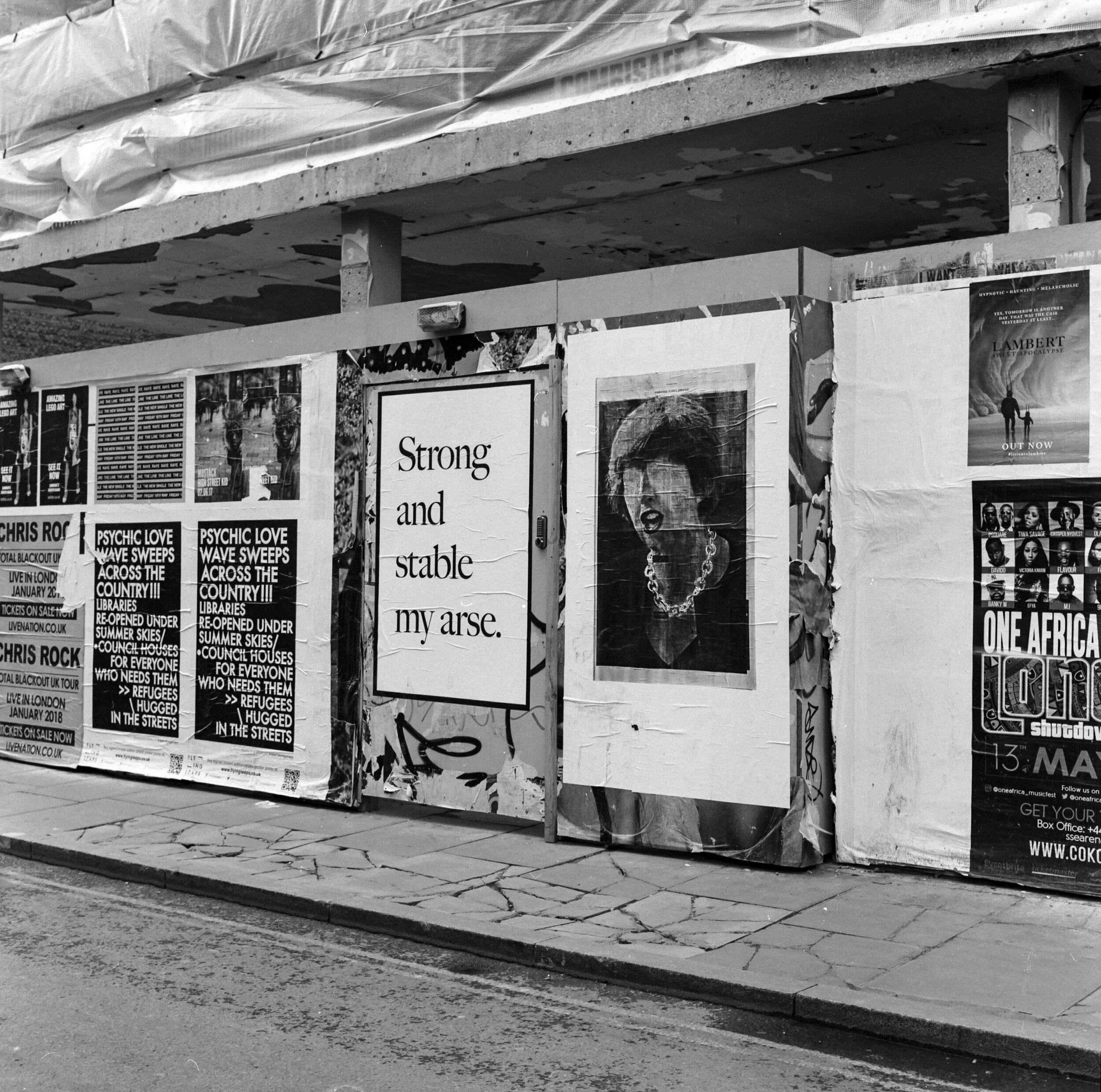
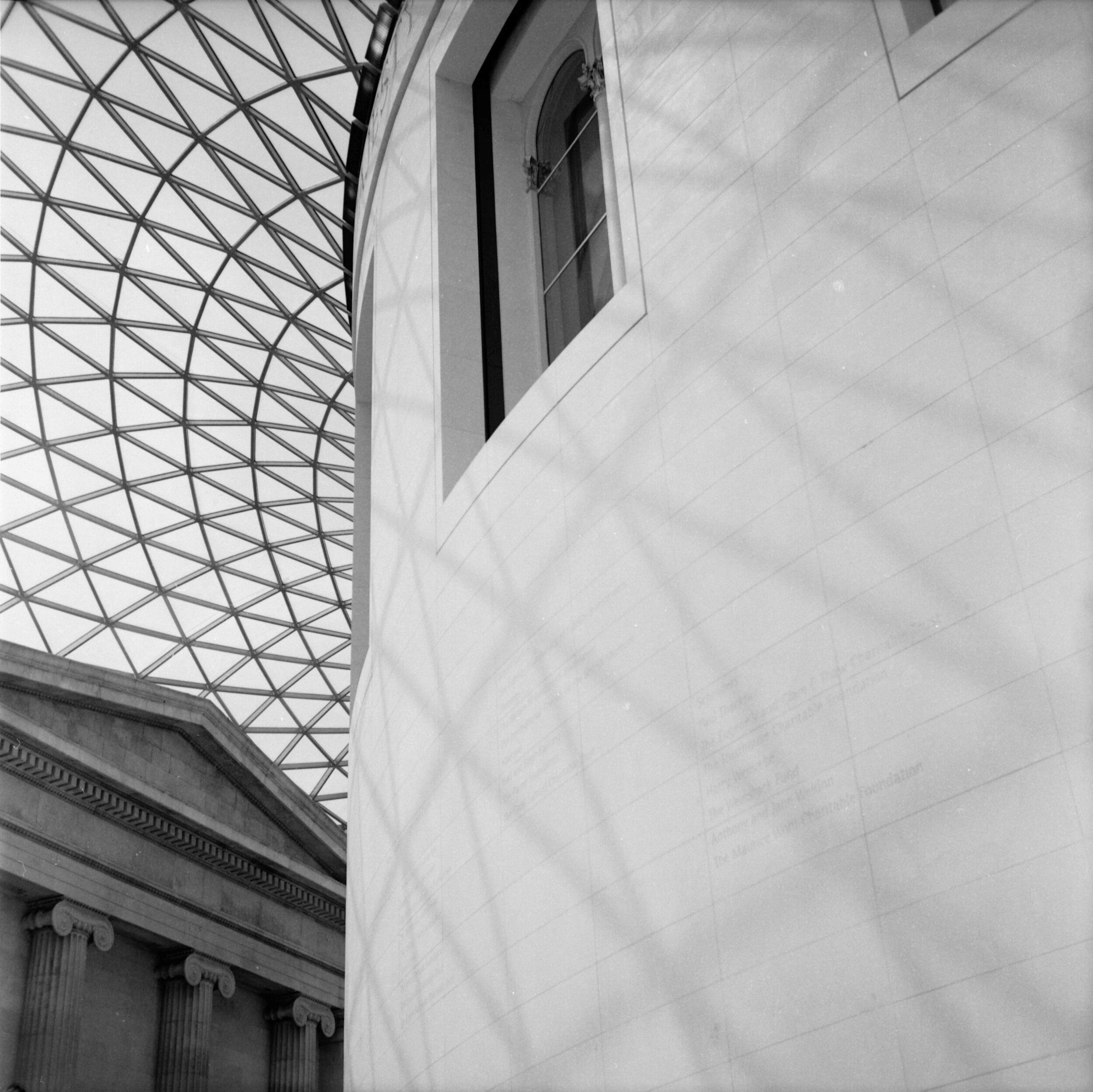


So, now that I am fully re-engaged with film photography, I going to spend the winter months reviewing the archive and also covering the events in Brighton.
Until next time, keep snapping.
A selection of the images within this article are available for sale on the Website or Etsy Store, if you would like to enquire about something else, please click the email icon at the foot of this page.
Yes please, keep me posted when there’s a new blog
Instagram - Film