in the frame
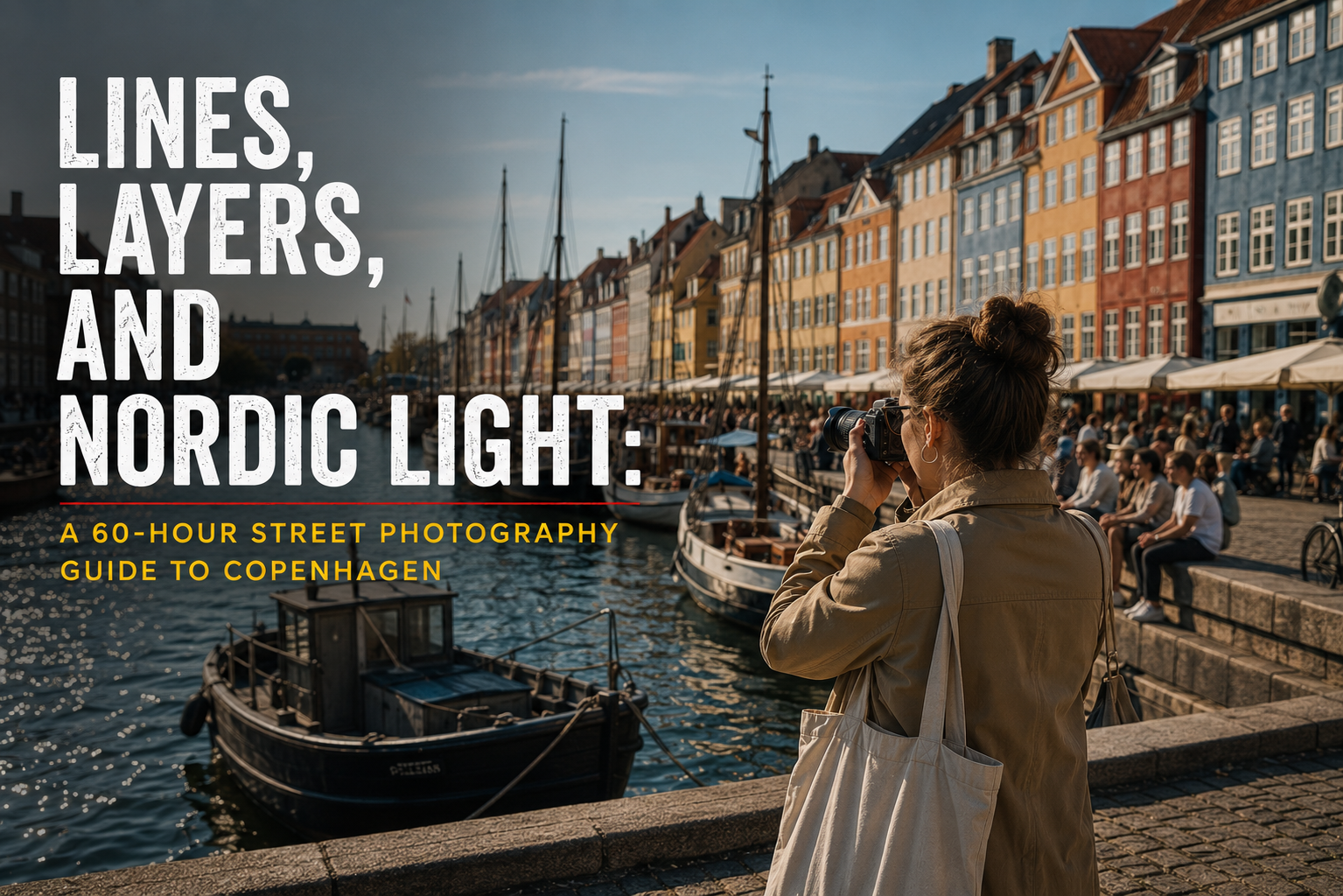
Lines, Layers, and Nordic Light: A 60 - Hour Street Photography Guide to Copenhagen
There is a strange irony in modern travel.
Three times a week, I spend three hours a day commuting just to get to work and back. Yet, in just 90 minutes from London Gatwick, I found myself stepping off a plane and into a completely different visual universe. It’s a powerful reminder that sometimes the best inspiration isn't found in a longer journey, but a smarter one.
There is a strange irony in modern travel.
Three times a week, I spend three hours a day commuting just to get to work and back. Yet, in just 90 minutes from London Gatwick, I found myself stepping off a plane and into a completely different visual universe. It’s a powerful reminder that sometimes the best inspiration isn't found in a longer journey, but a smarter one.
For this trip, I traveled solo, and I’ll be honest: I arrived with a touch of trepidation. As a street photographer, being alone in a foreign city can sometimes feel isolating, and I was initially concerned about how a solo traveler with a camera would be received. However, those worries evaporated the moment I hit the pavement. The famous openness of the Danes and the deep-rooted culture of Hygge welcomed me with open arms. I didn't feel like an outsider looking in; I felt like a guest invited to witness the rhythm of the city.
To understand the "why" behind the photos, you have to understand the city's bones. Copenhagen (or København—"Merchants' Harbor") has spent 800 years evolving from a tiny fishing village into a powerhouse of design. You see it in the architecture: the 17th-century Dutch Baroque houses of Christianshavn weren't just built for aesthetics; they were built as a fortified naval statement by King Christian IV. When you're walking through Nyboder — those iconic yellow naval barracks—you aren't just looking at a "pretty street." You’re looking at some of the world's first planned social housing, dating back to 1631. This history of care and community leads directly into the modern mindset of Hygge. We often think of it as a winter concept—candles and wool socks—but in the spring, it manifests as a communal openness.
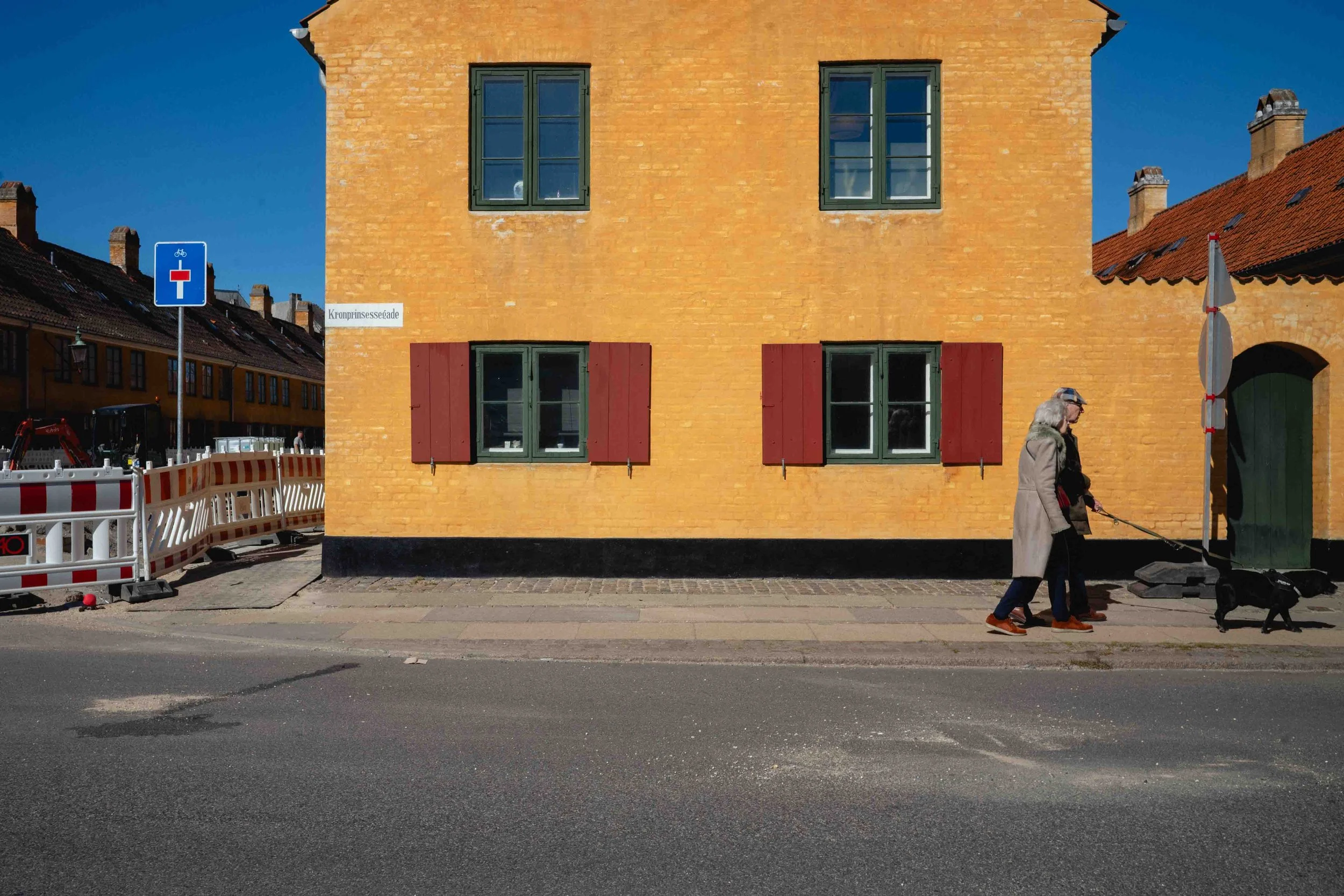
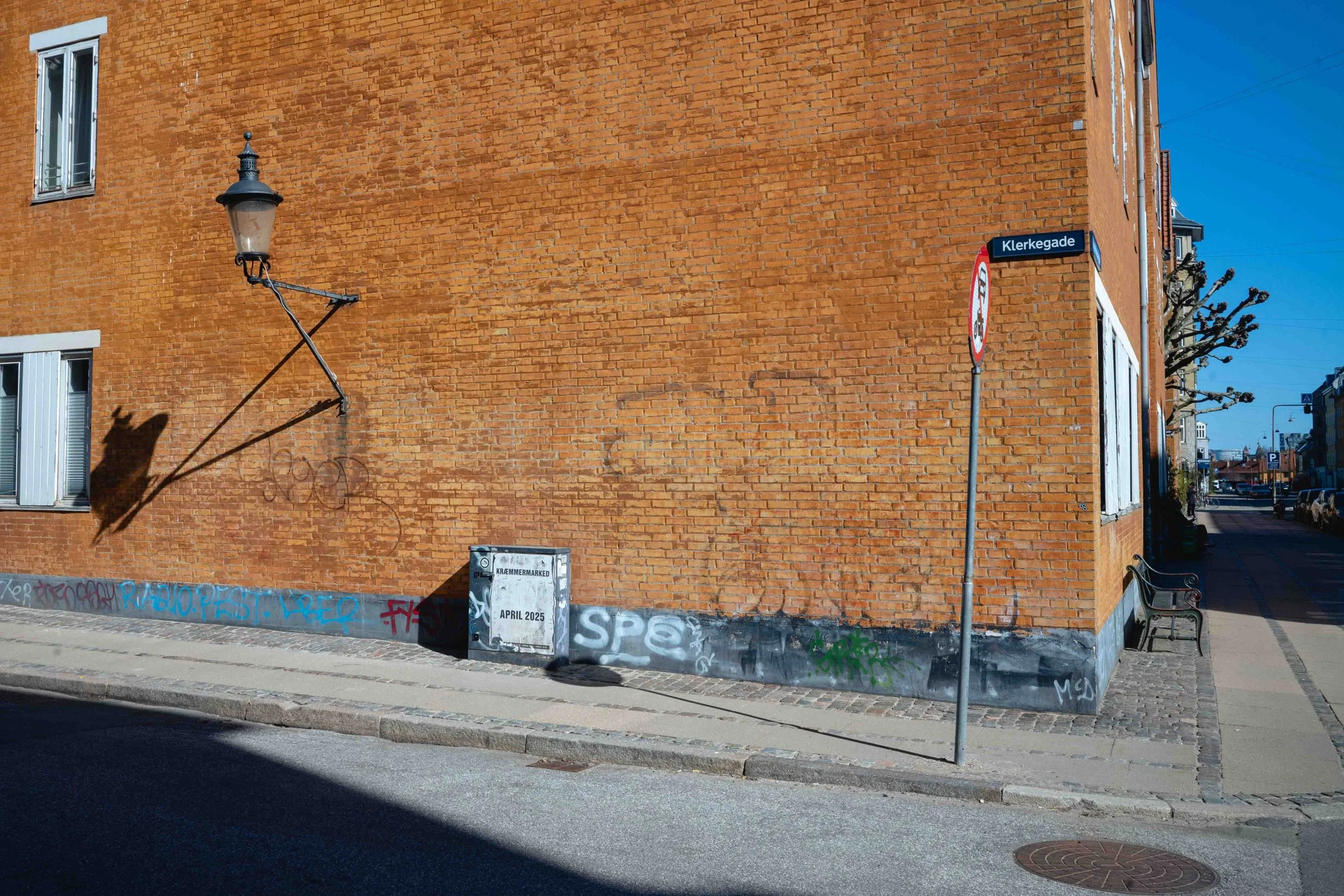
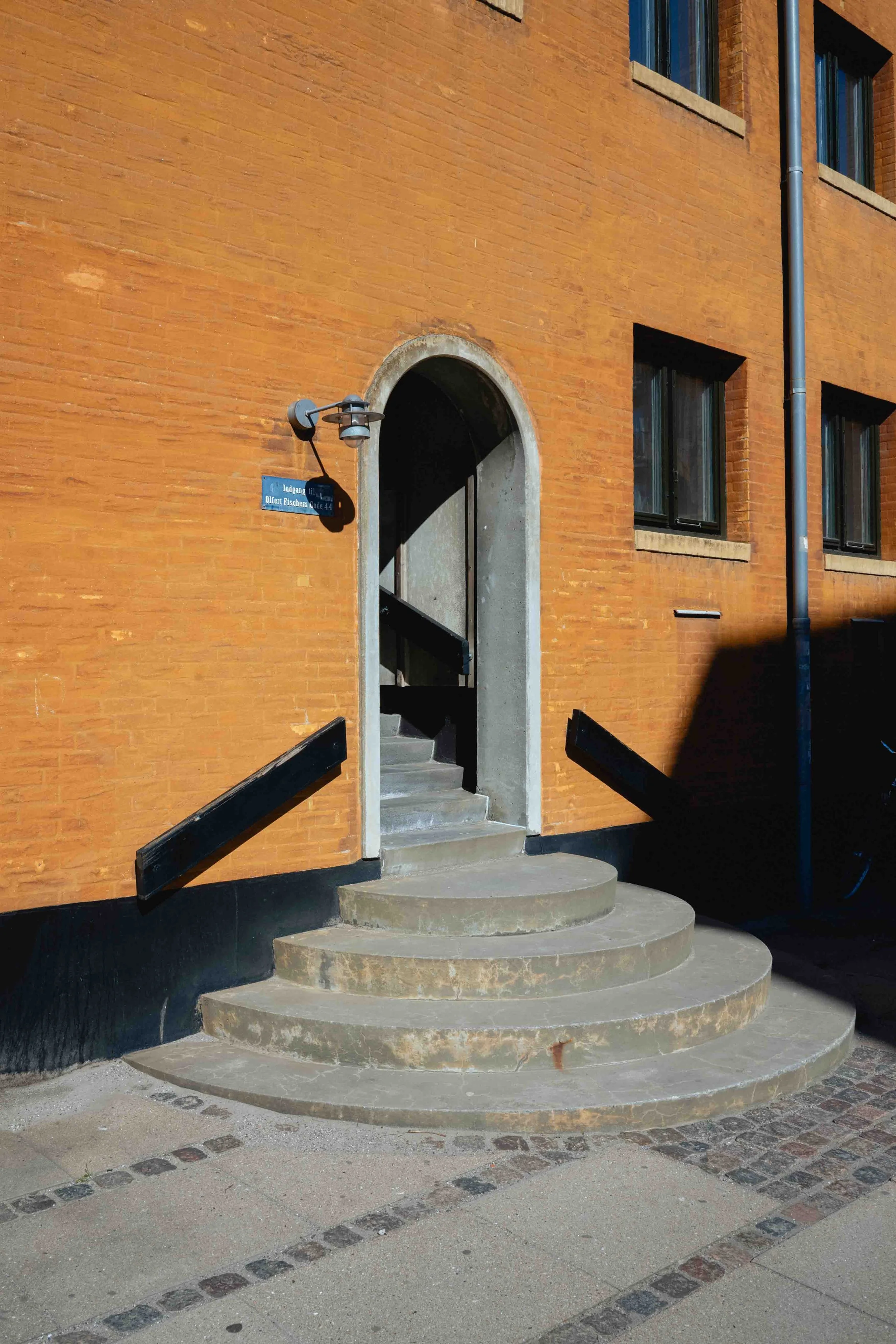
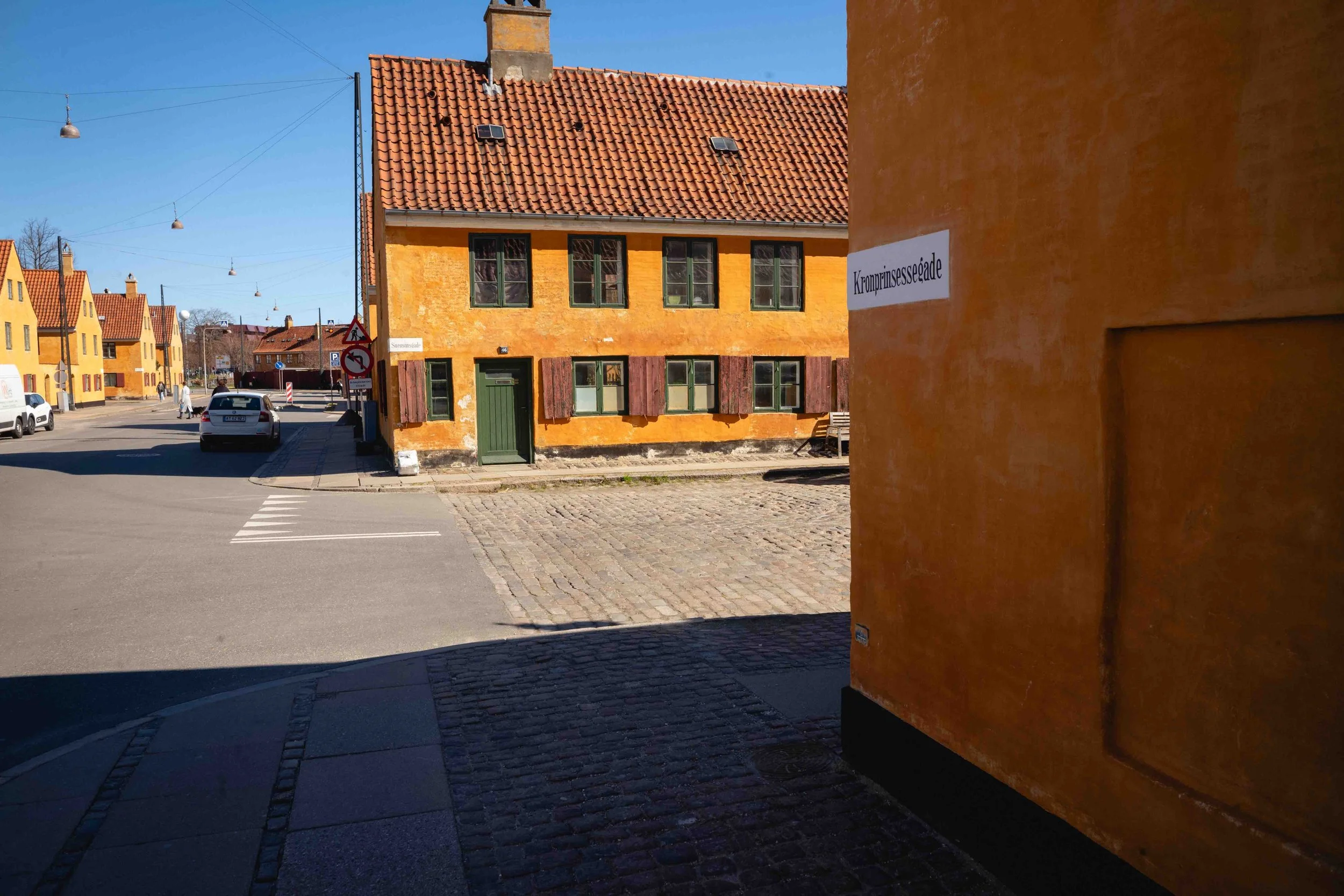
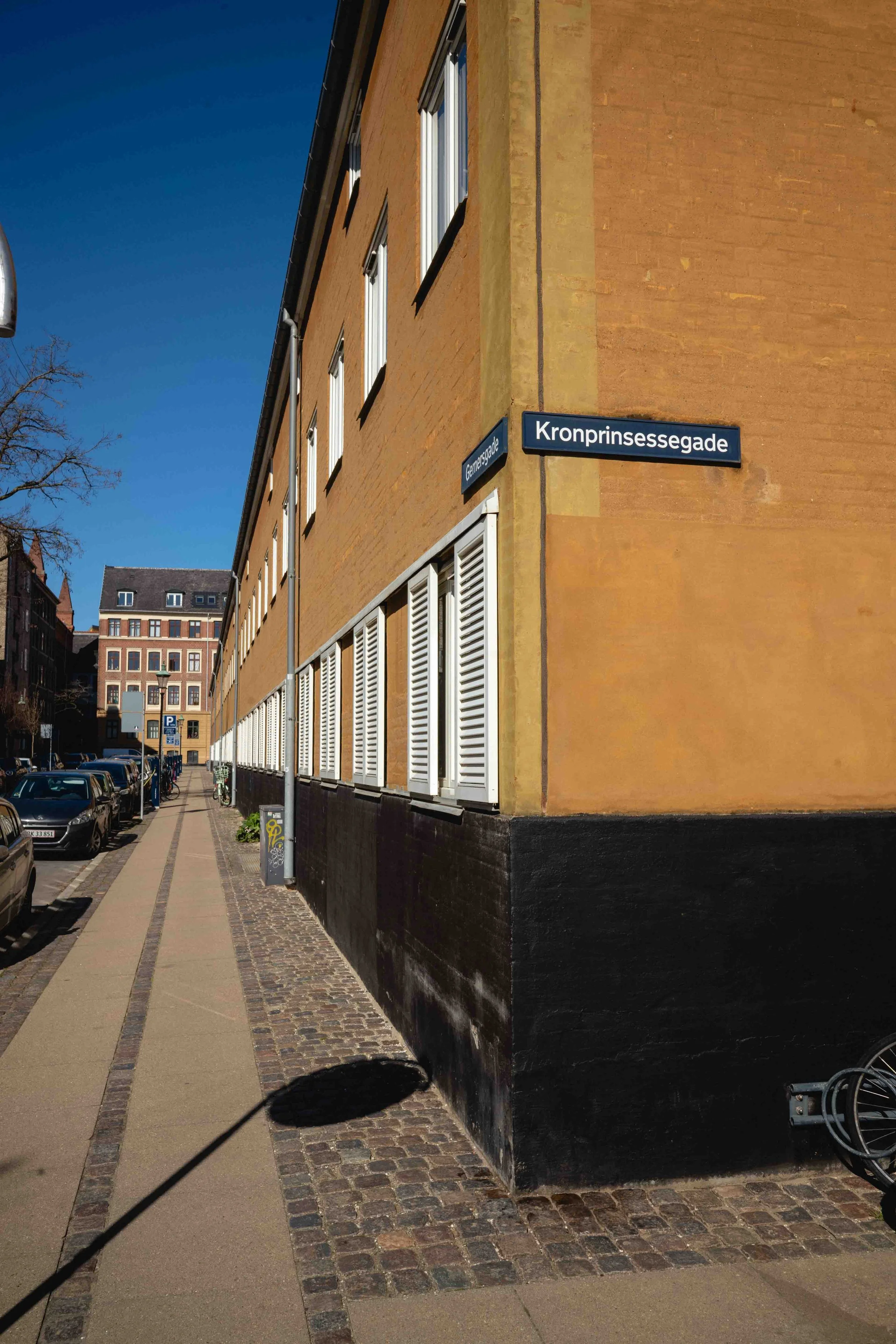
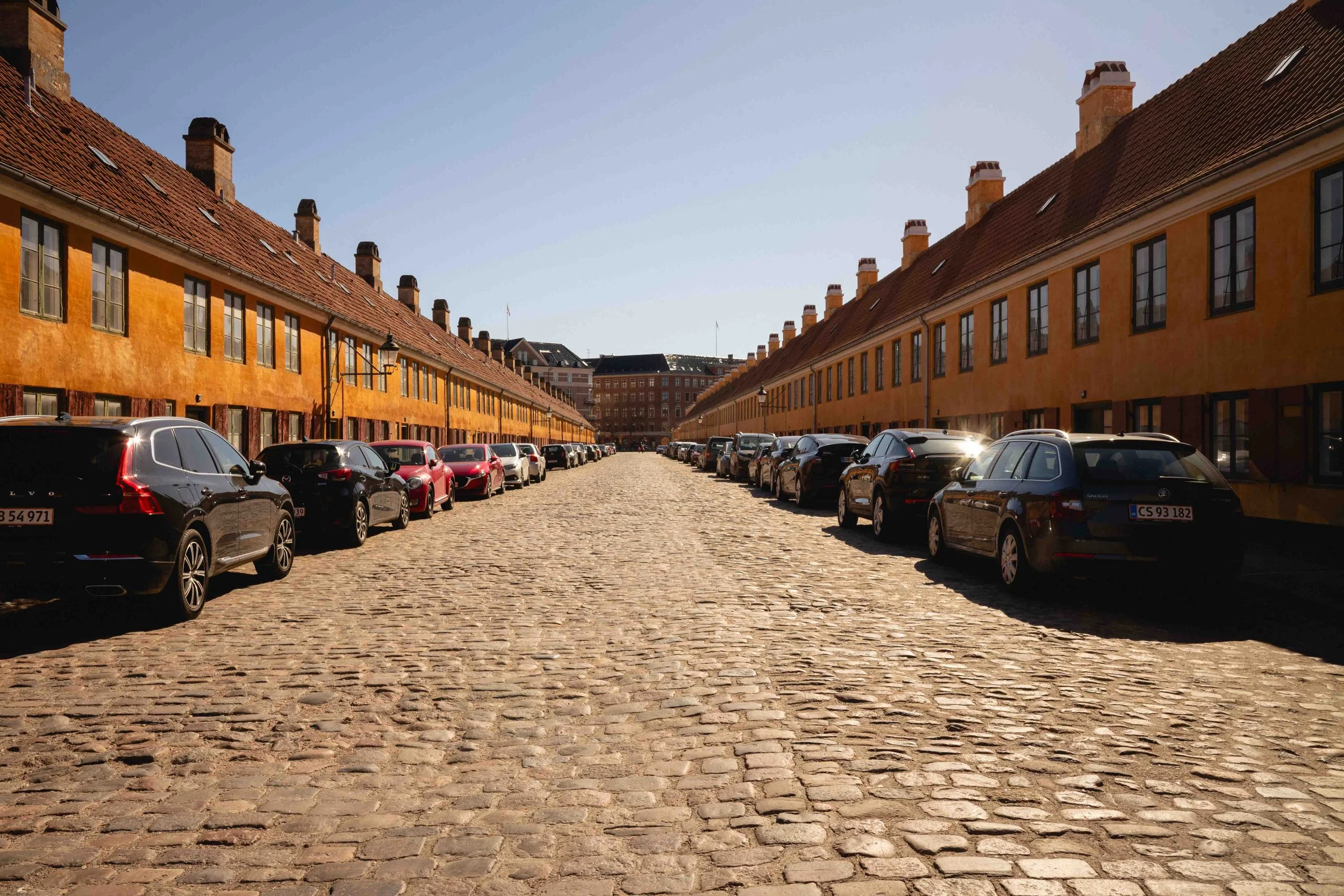
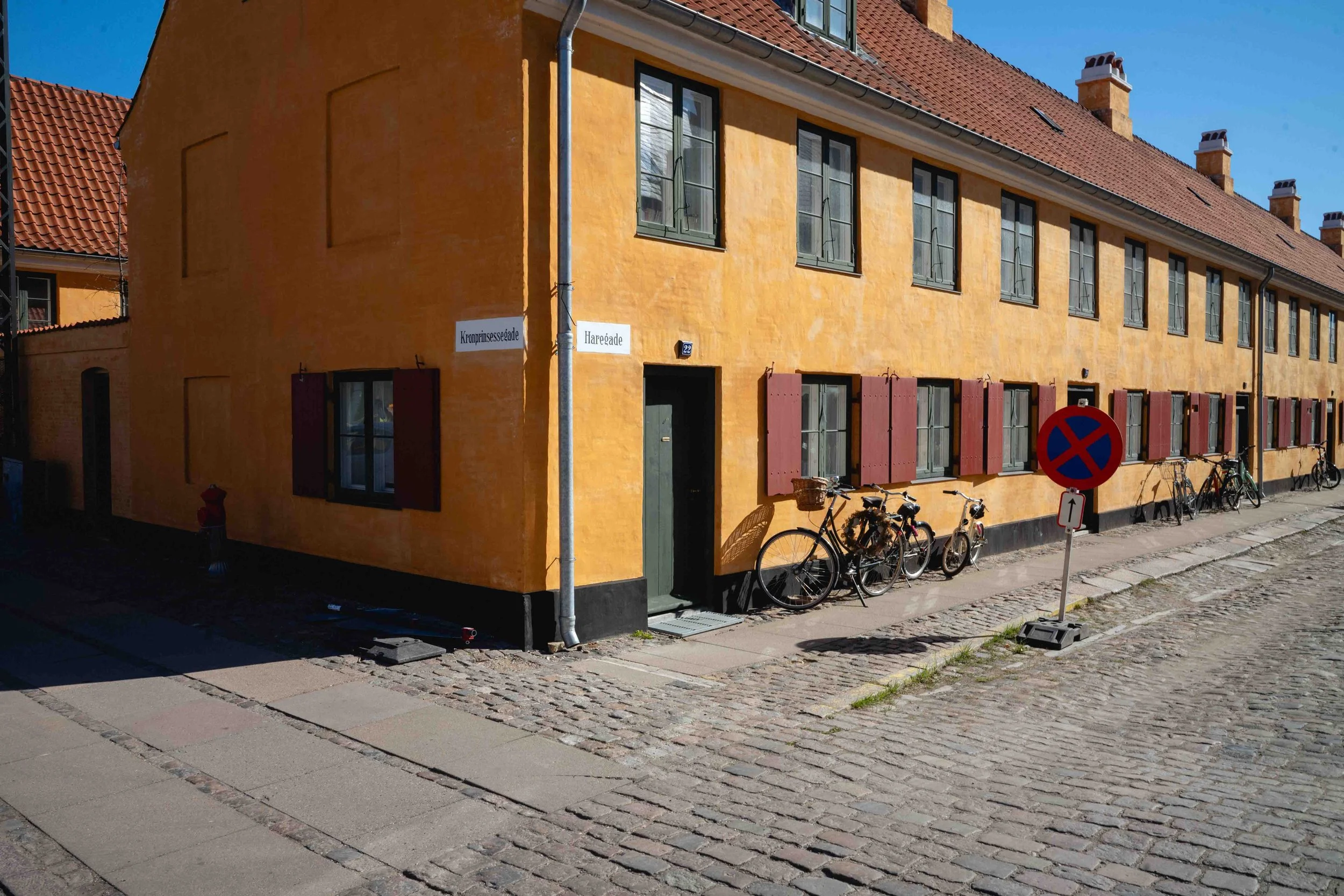
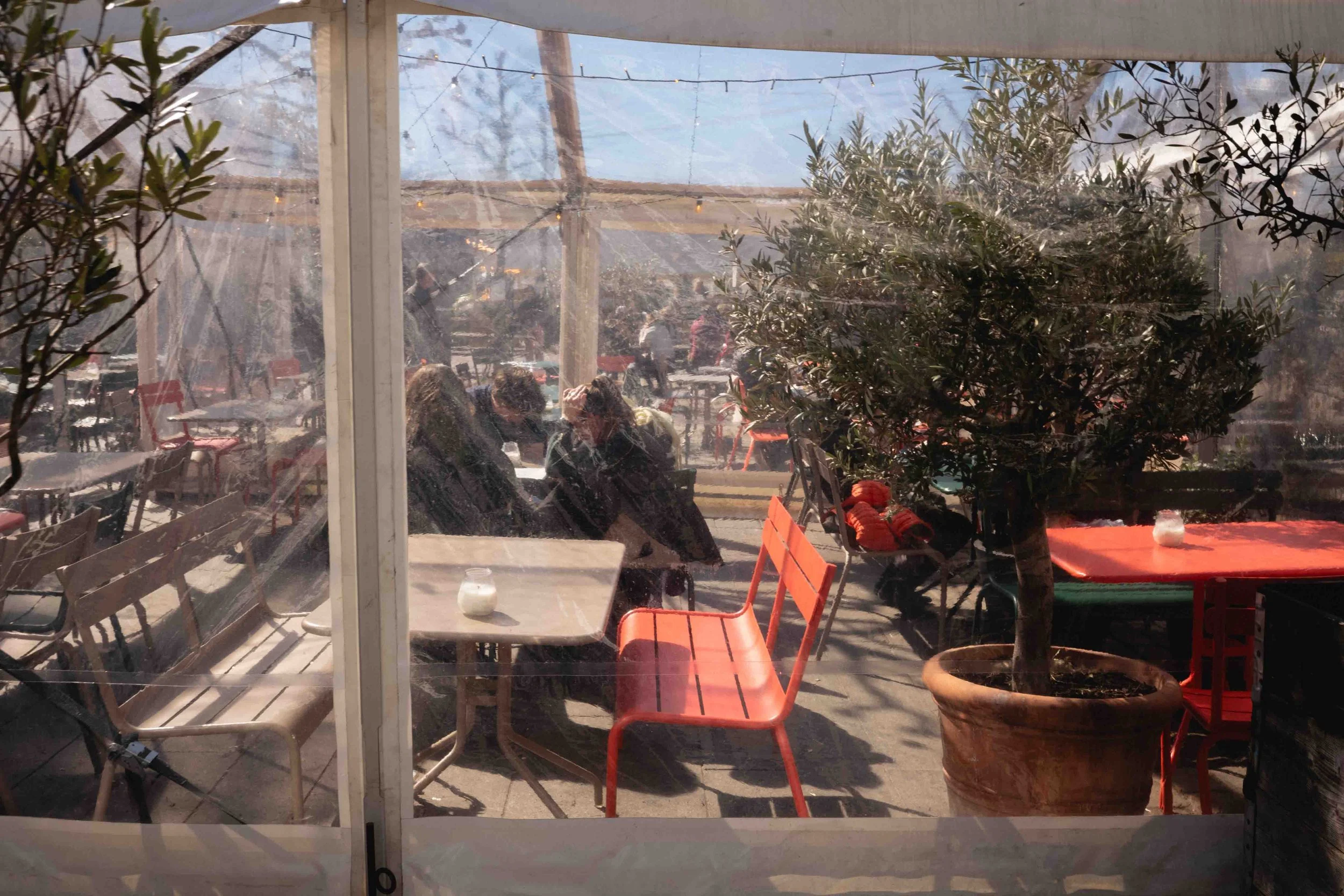
It’s the "urban hygge" of people sharing a coffee on the curbside in Jægersborggade or a craft beer in the Meatpacking District. As a solo photographer, this mindset is a gift. There is a sense of trust and "live and let live" here that makes you feel incredibly safe. The locals are remarkably open to being part of a frame; as long as you are respectful, the city feels like a collaborative studio. The light plays its part, too. The Northern latitude in April provides a "blue hour" that feels like it lasts for three, and a soft, diffused sun that makes even the grittiest alleyway in Nørrebro look cinematic.
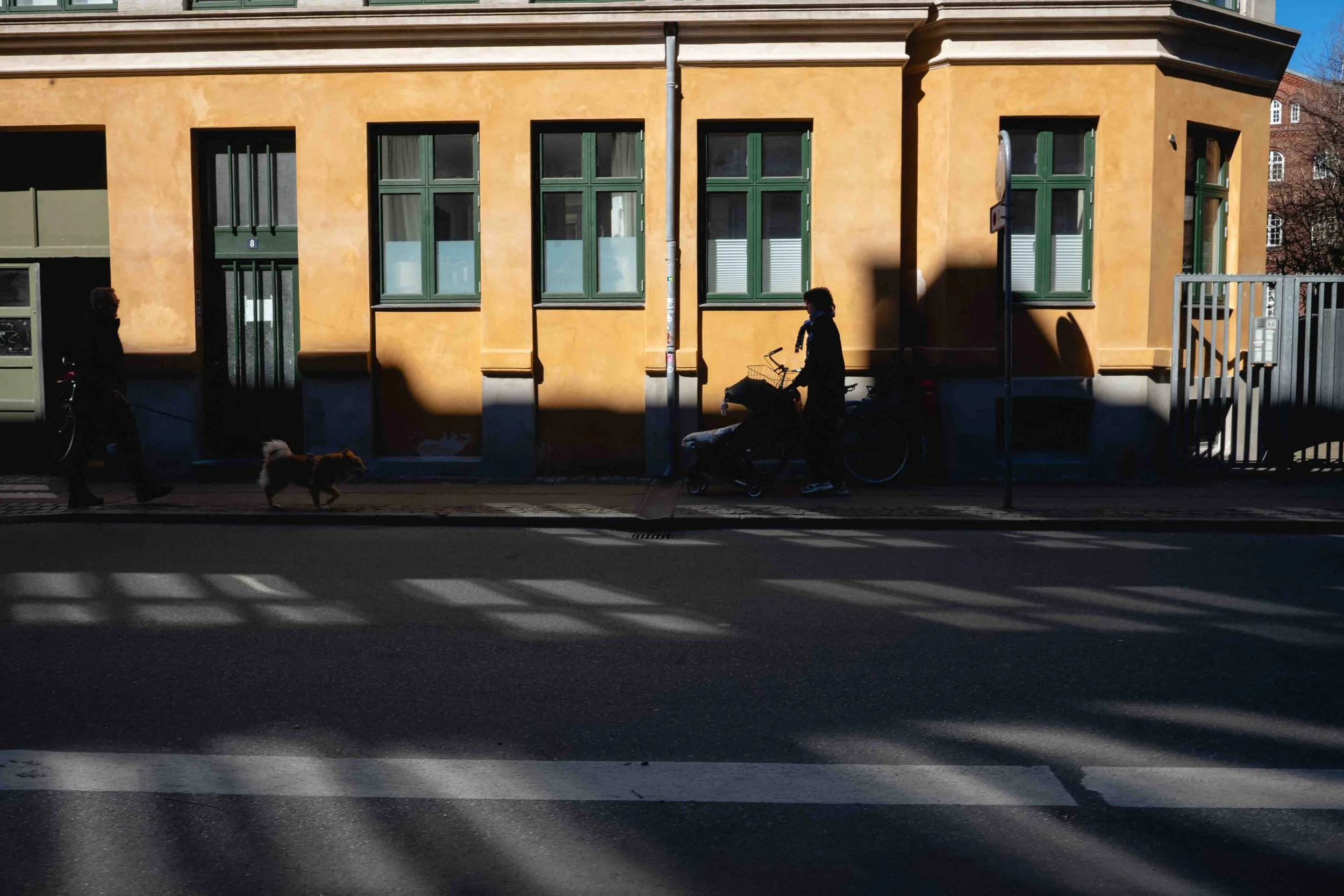
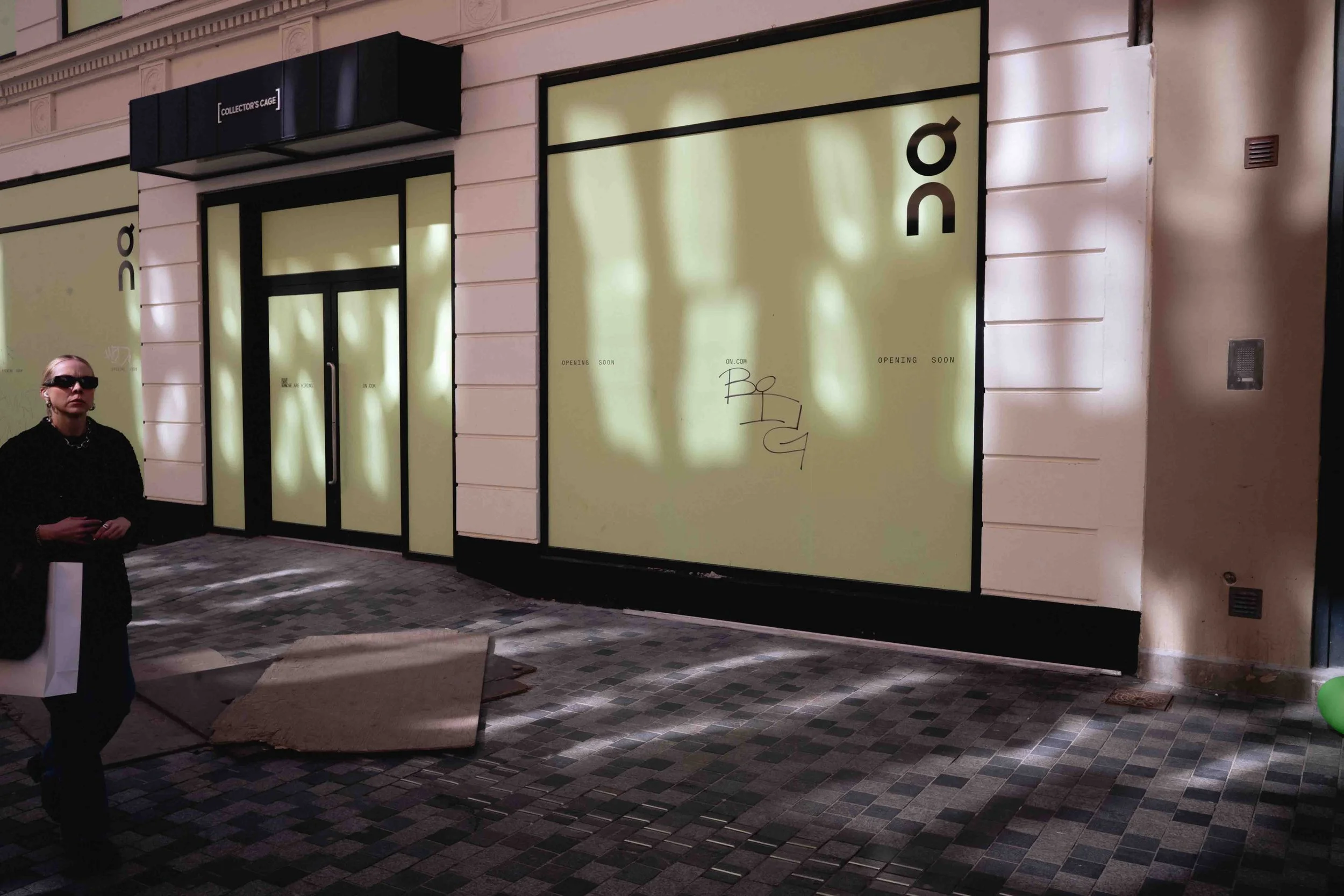
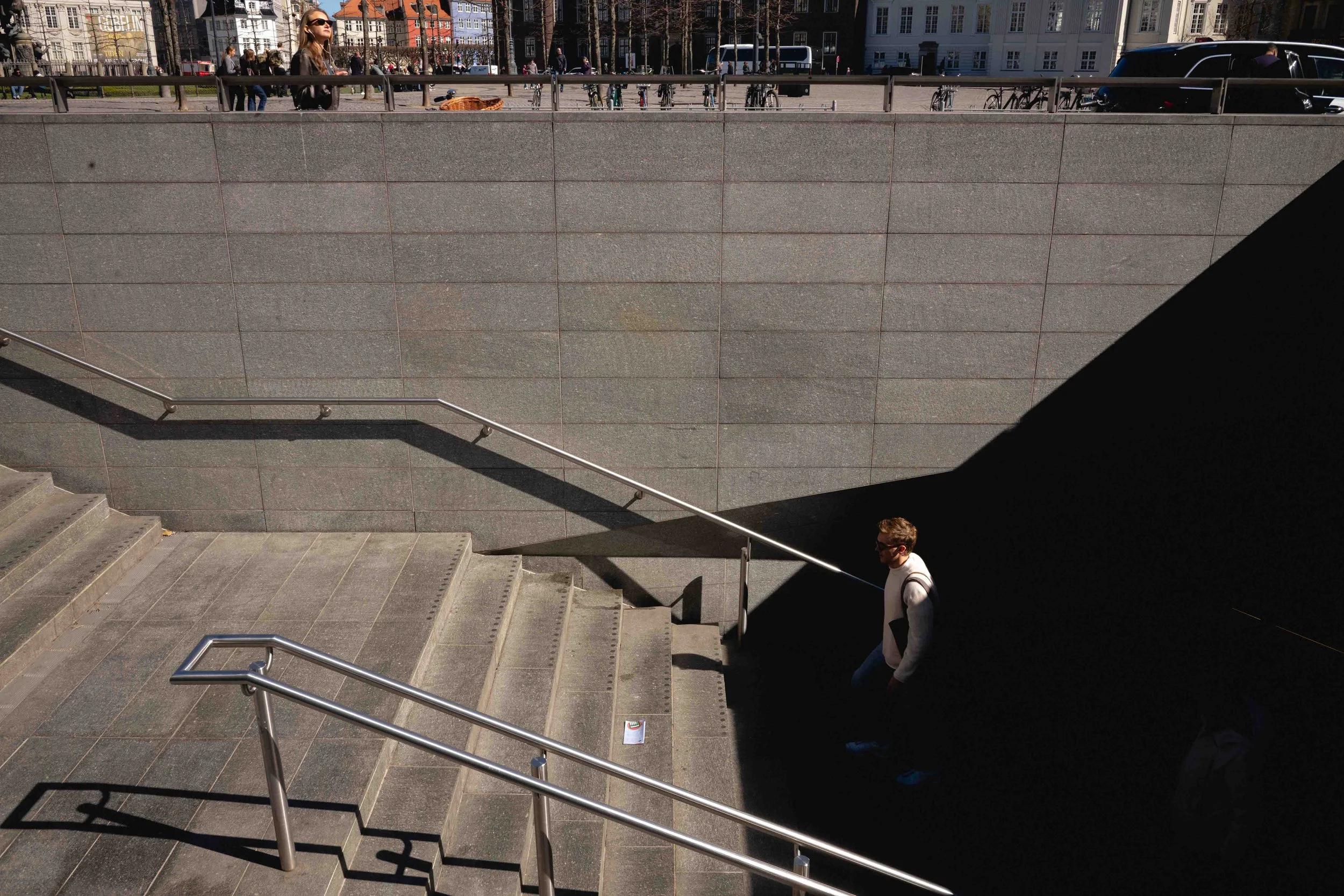
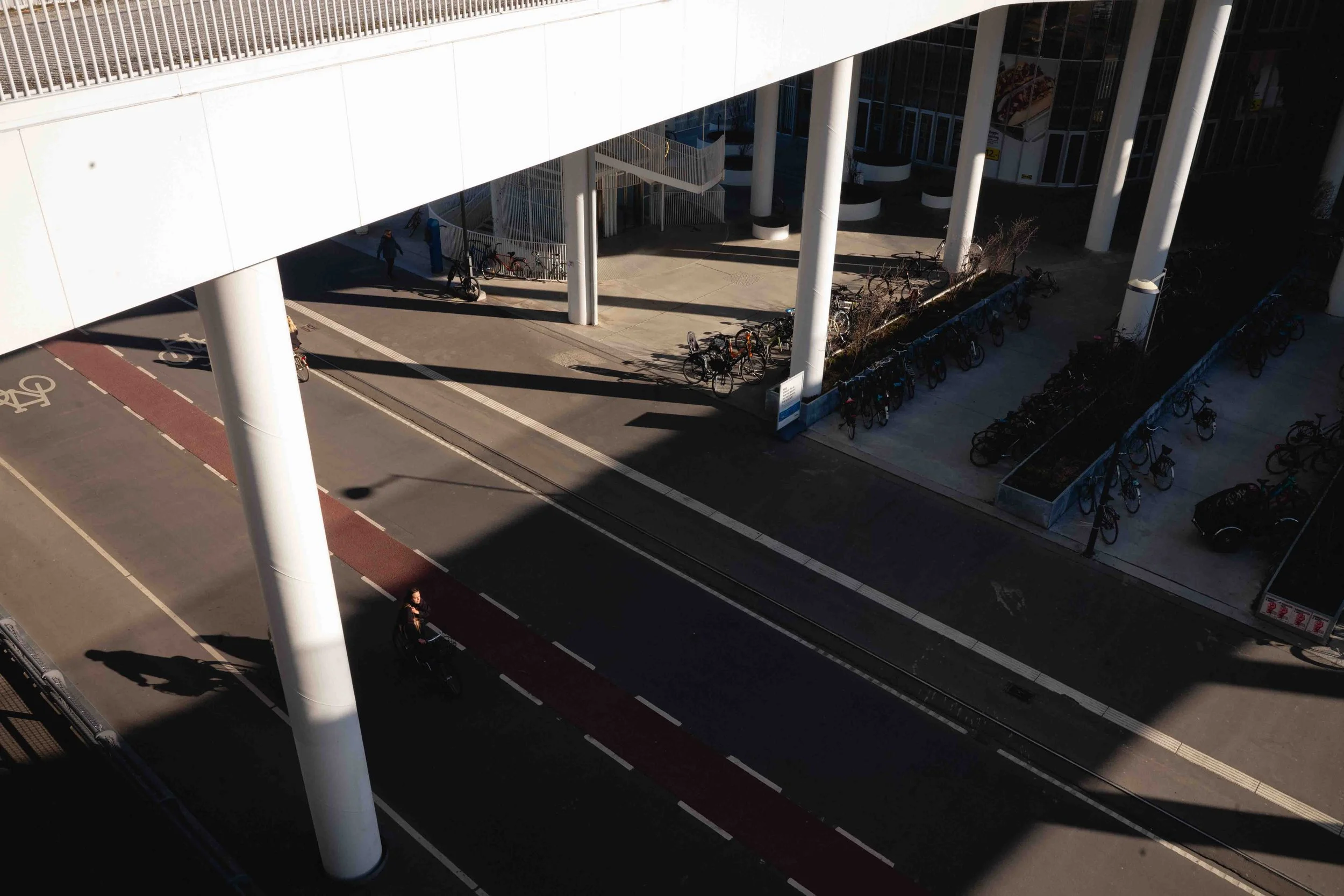
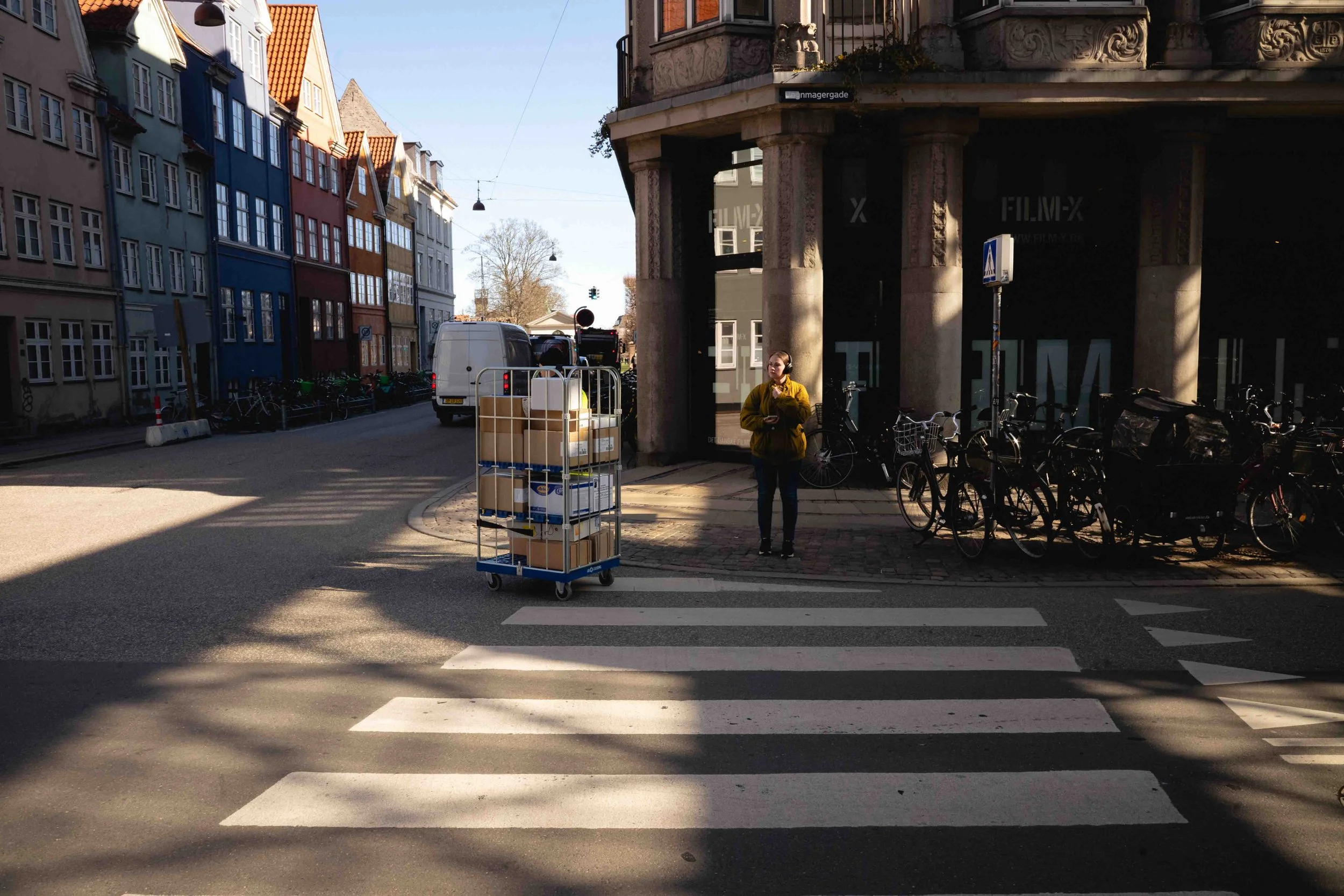
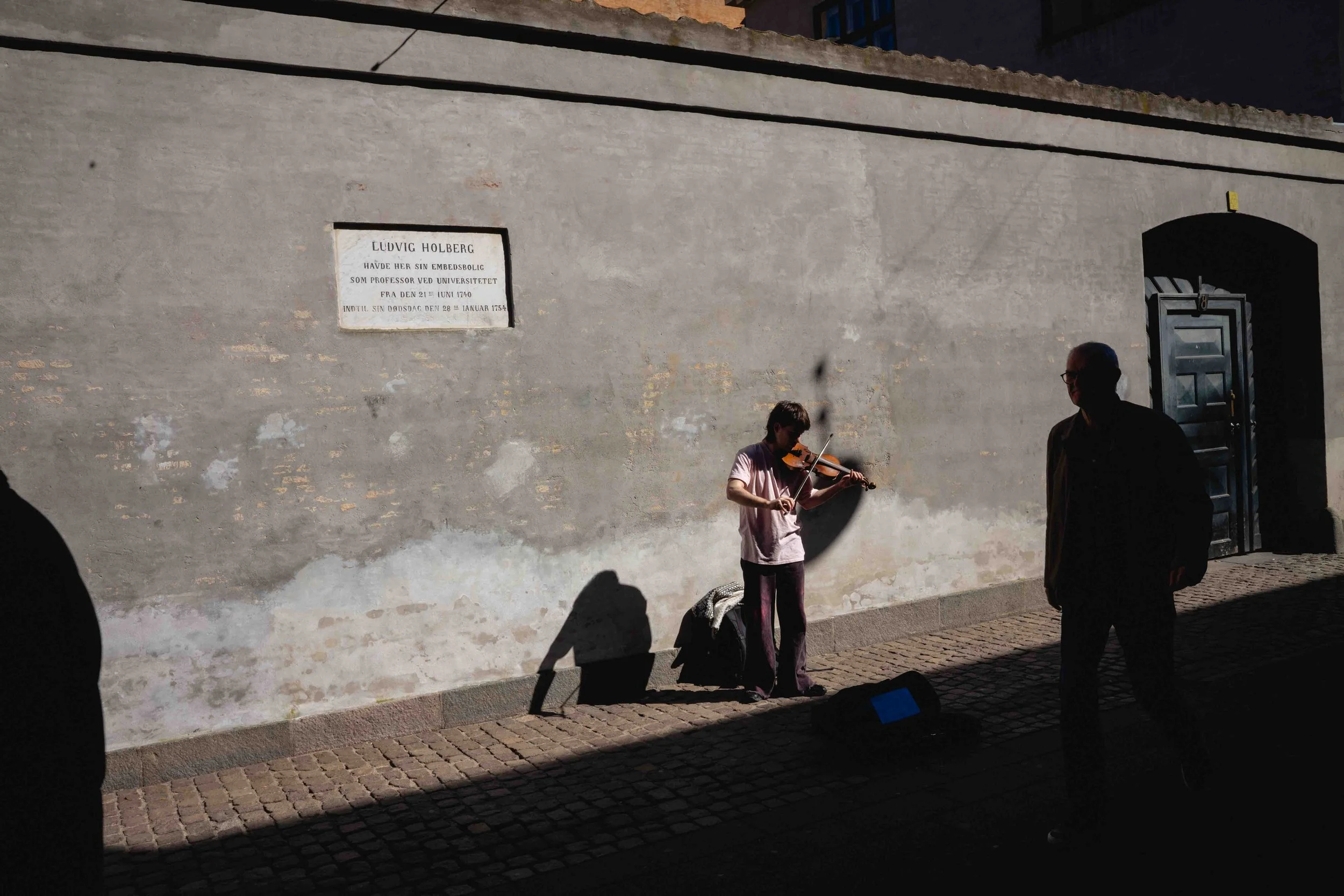
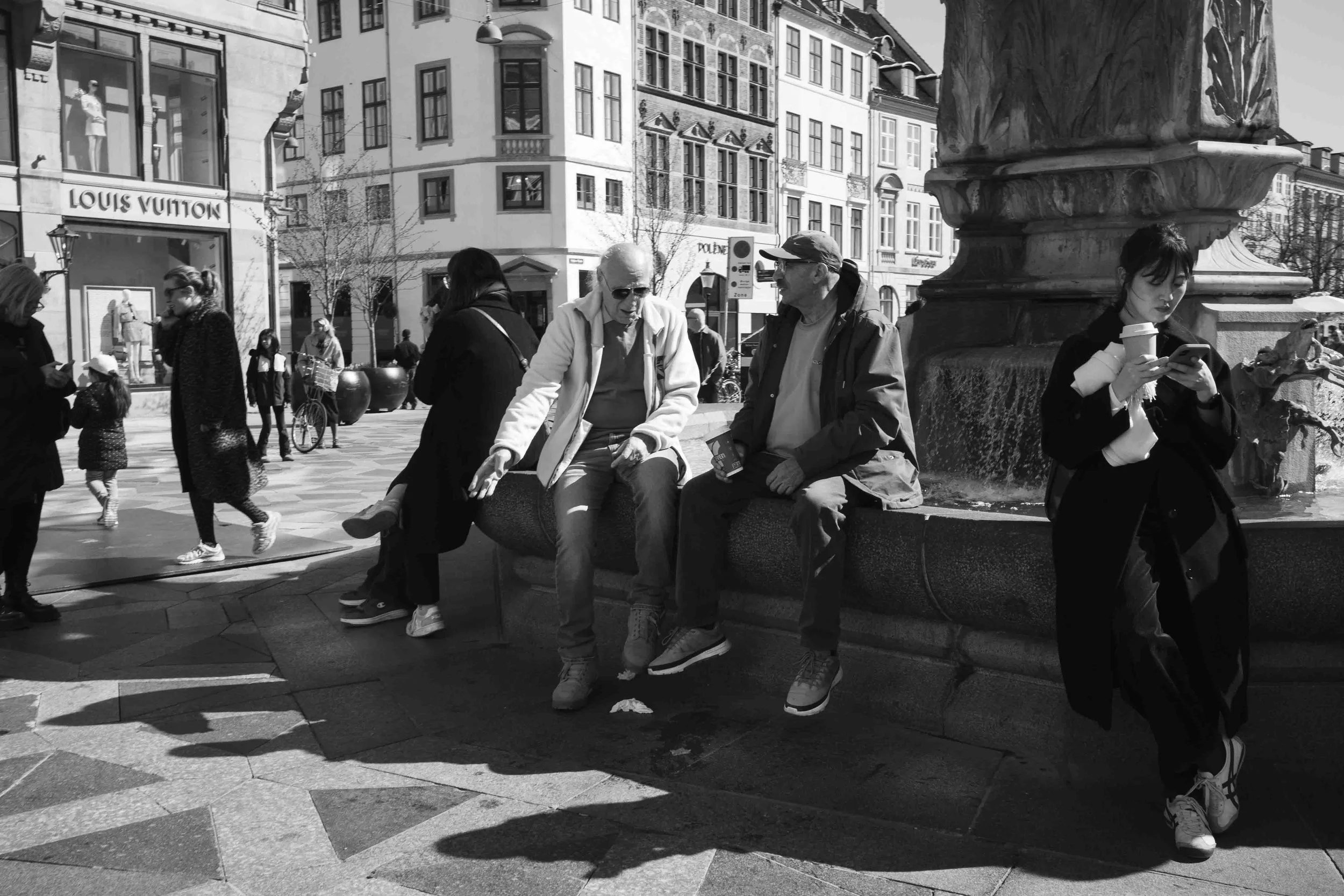
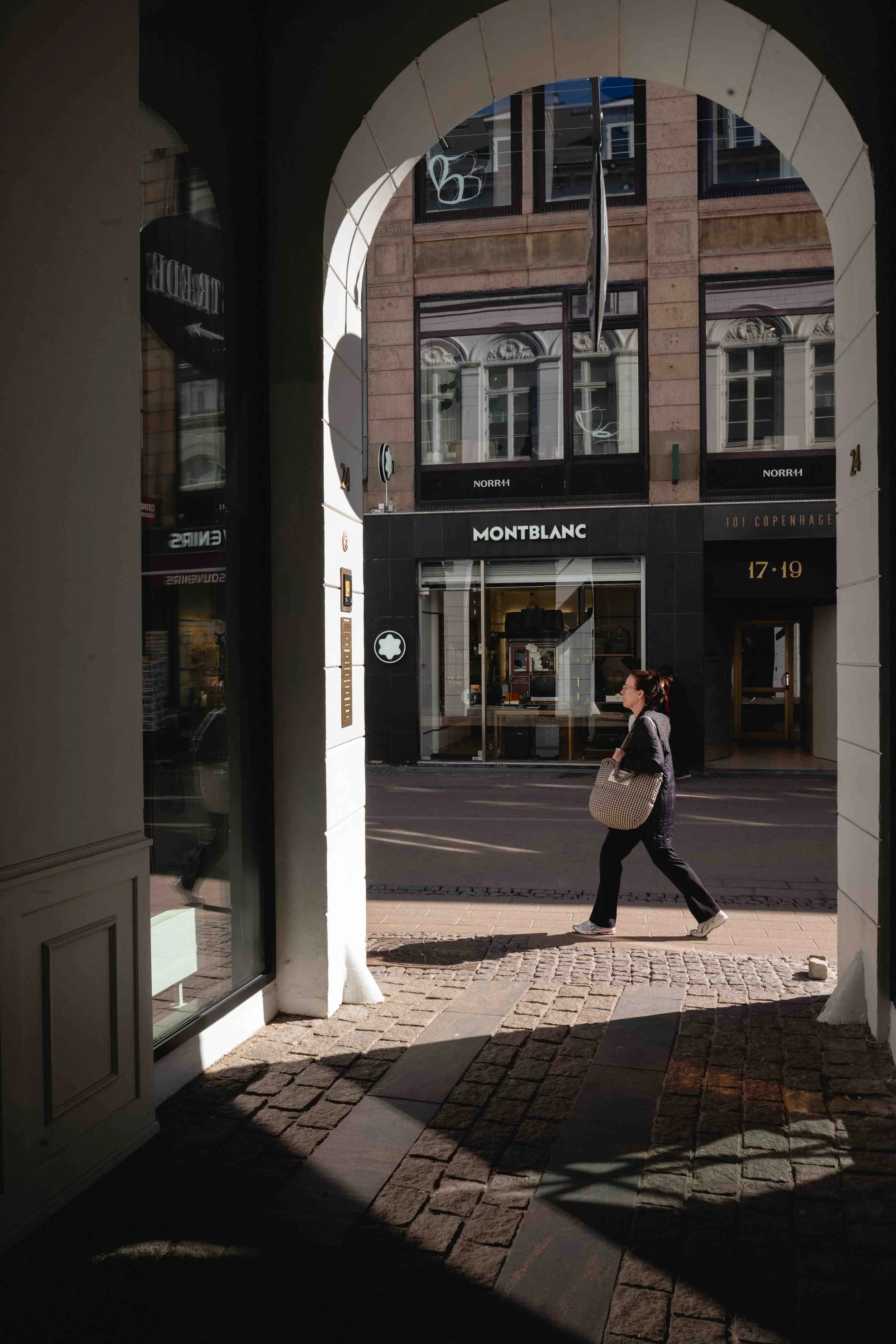
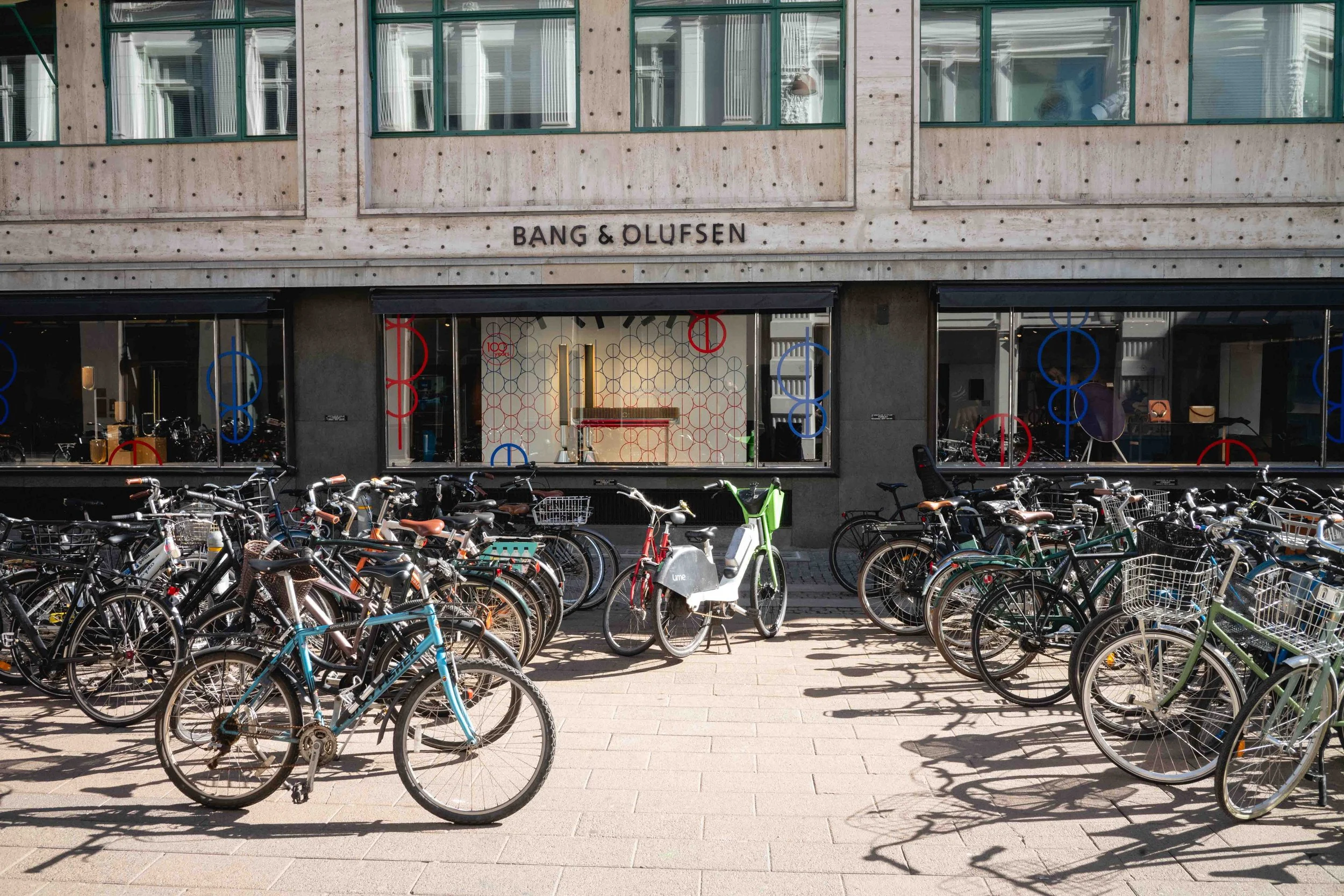
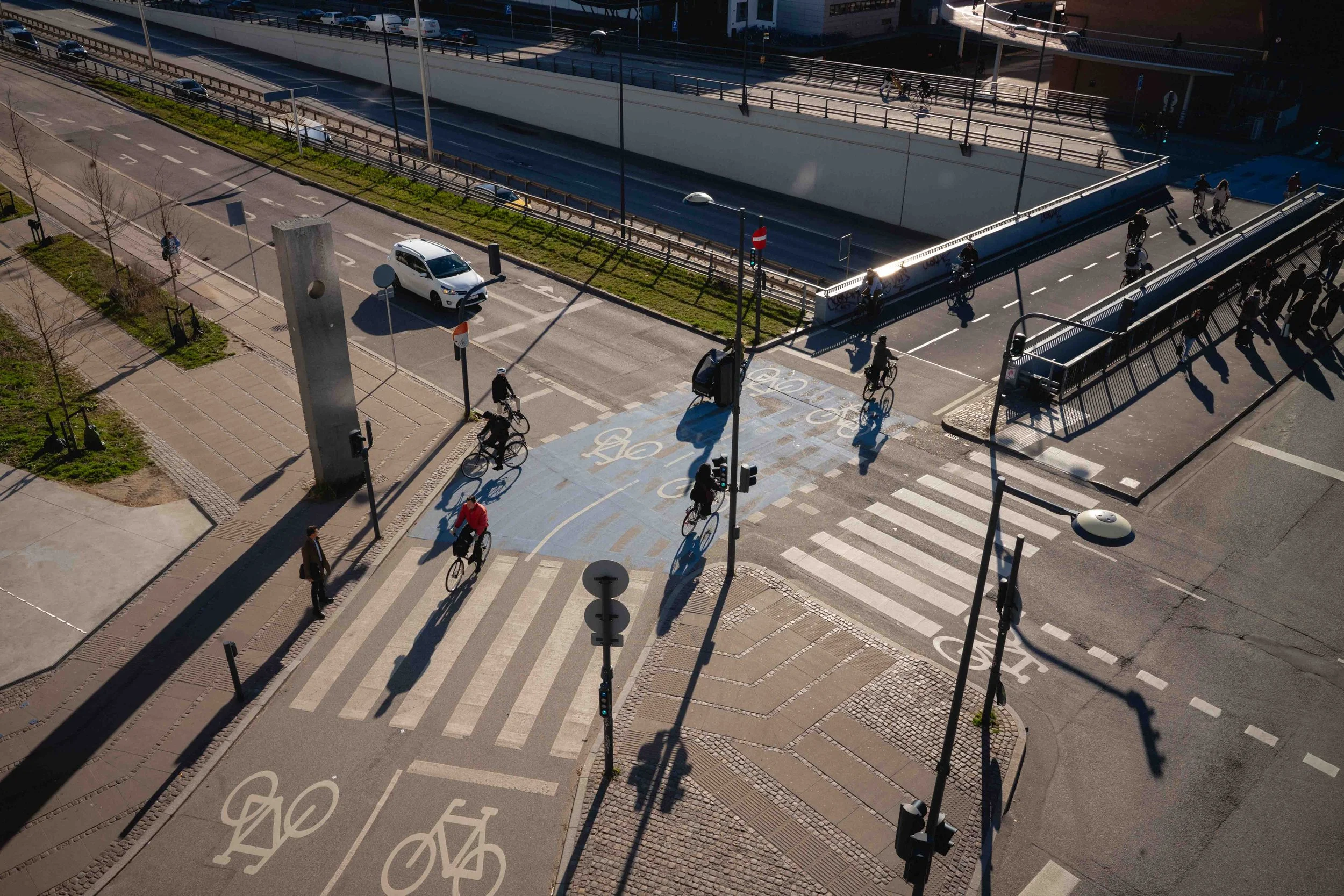
When it comes to navigating this photographer's playground, you generally have three options: walking, the seamless Metro, or joining the local masses with a bike hire. I elected mainly to walk, covering 22 miles of pavement on foot over two days. While biking is the Danish way, walking gives you the unique ability to see the "underbelly" of the city—the peeling posters in a Nørrebro side street or the way the light hits a specific doorway that you’d miss if you were whizzing past on two wheels. That said, accessibility is effortless here. I found the City Pass Small to be an excellent investment; it covers the Metro, buses, and harbor scouts perfectly, making the transit to and from the airport a total breeze.
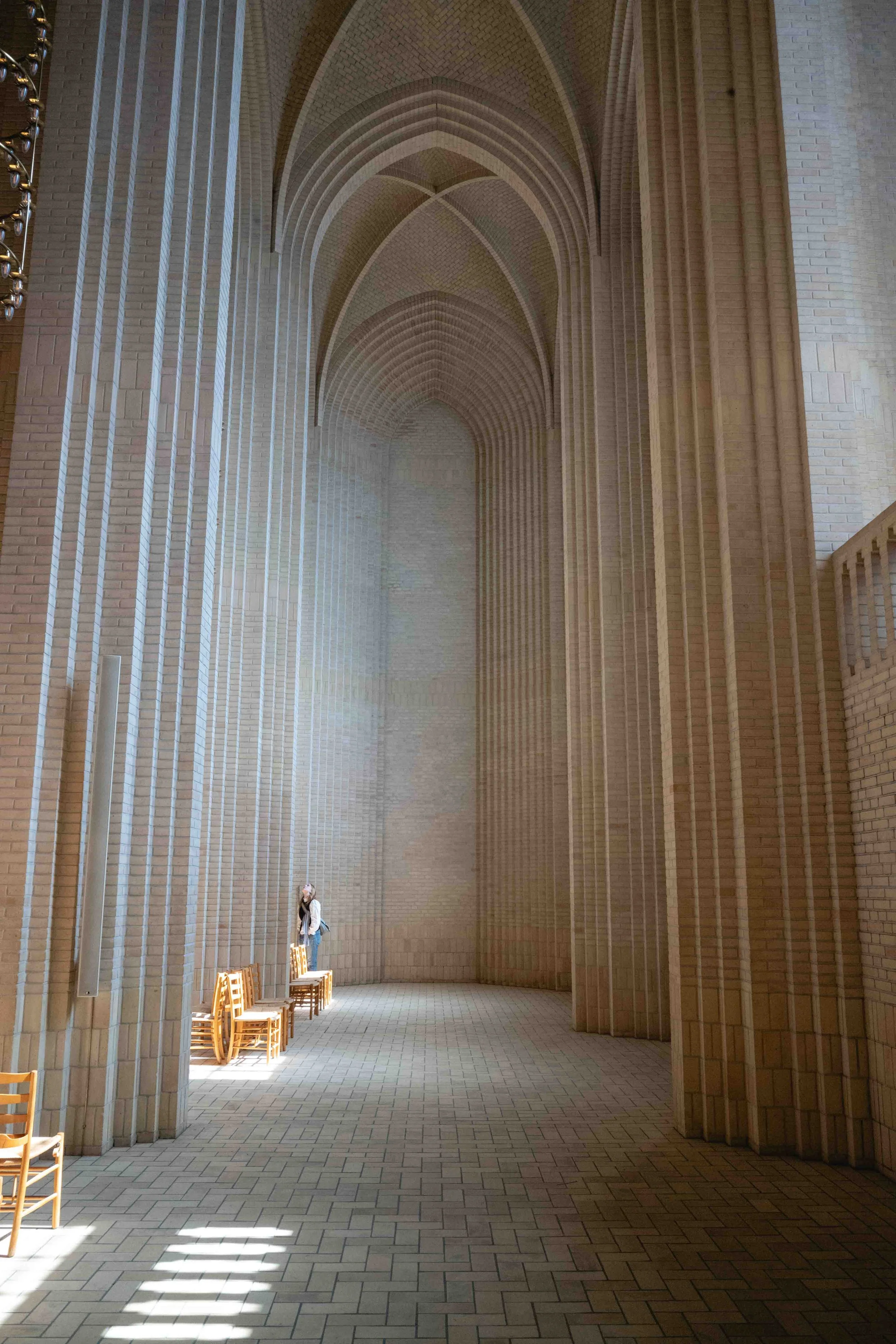
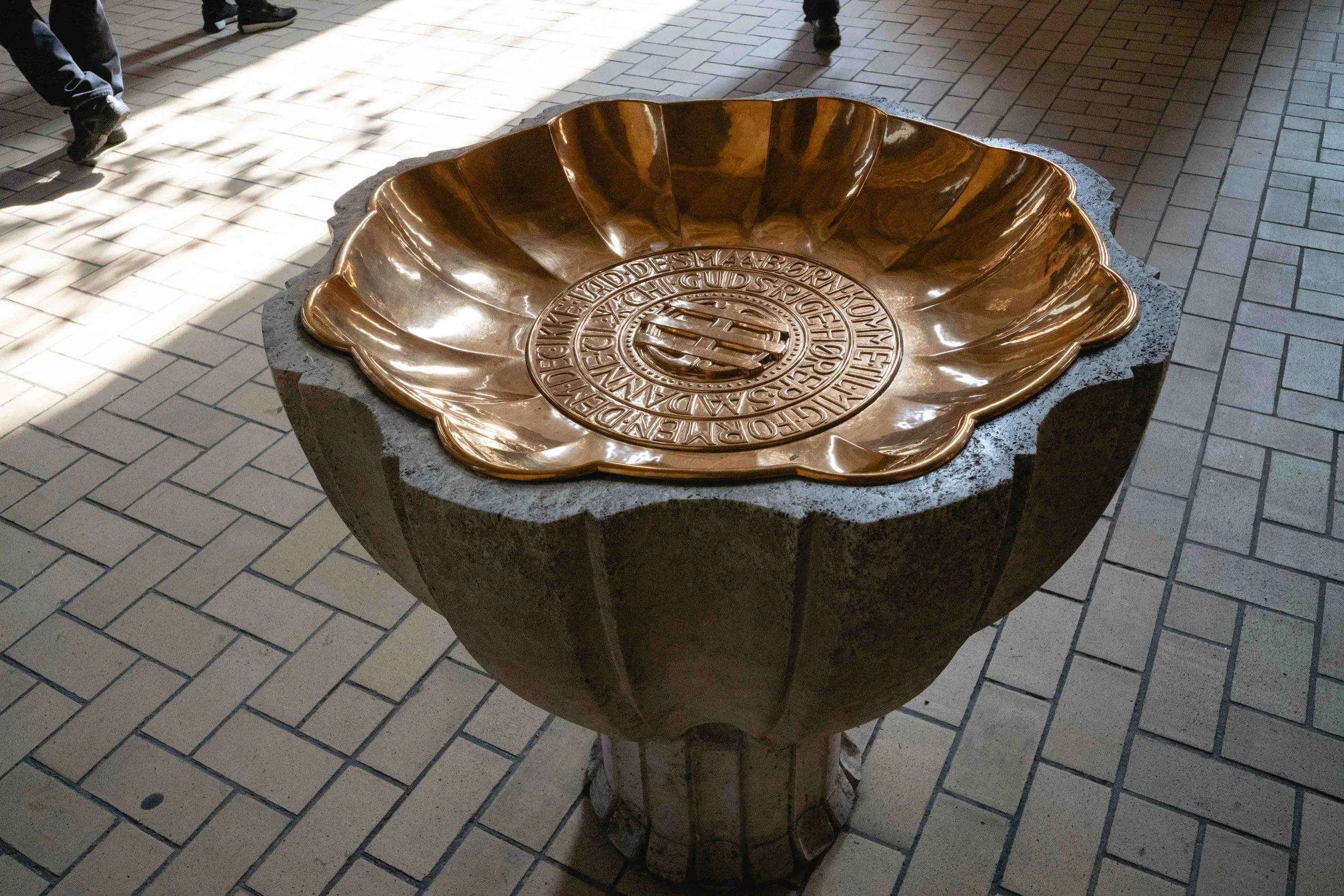
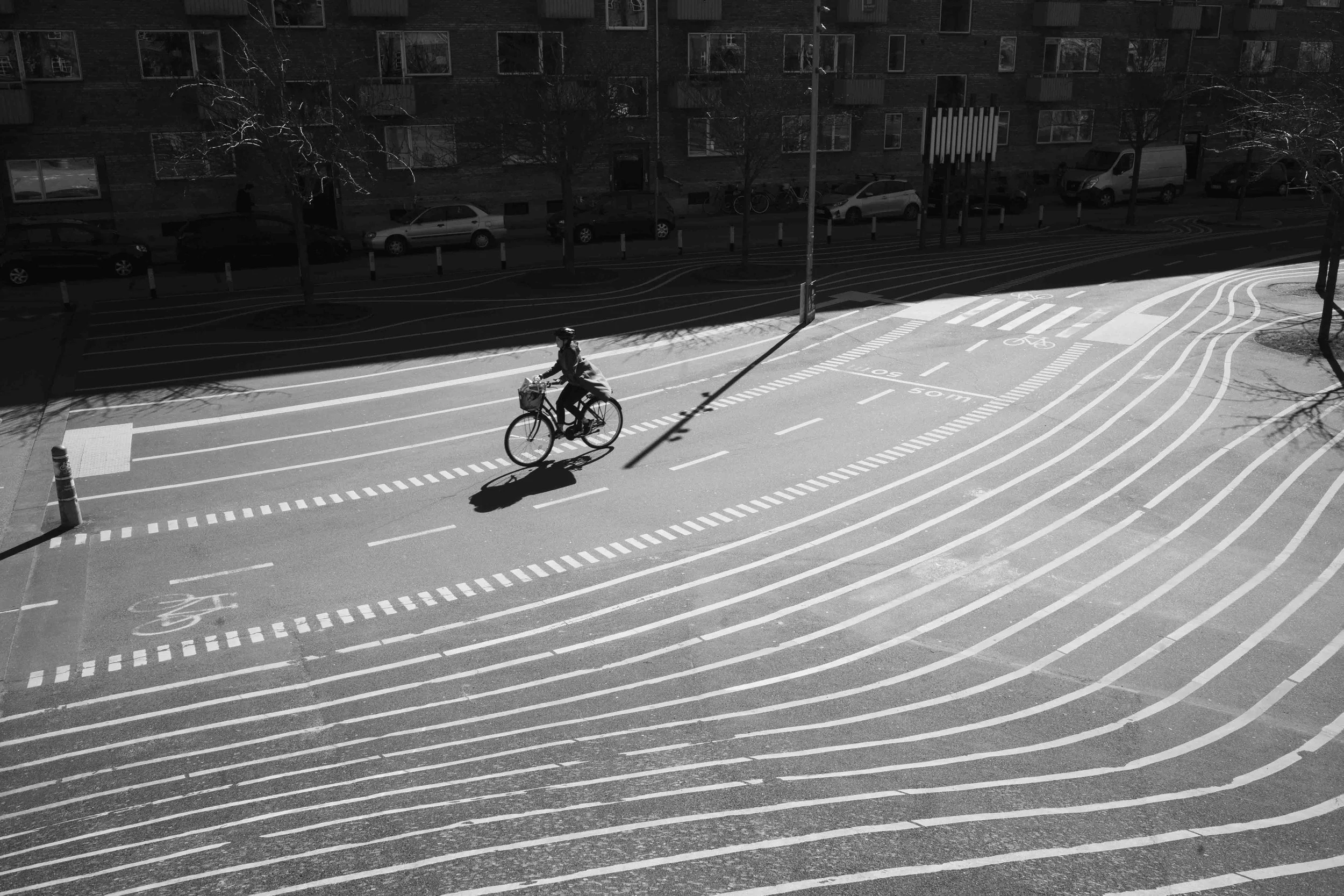
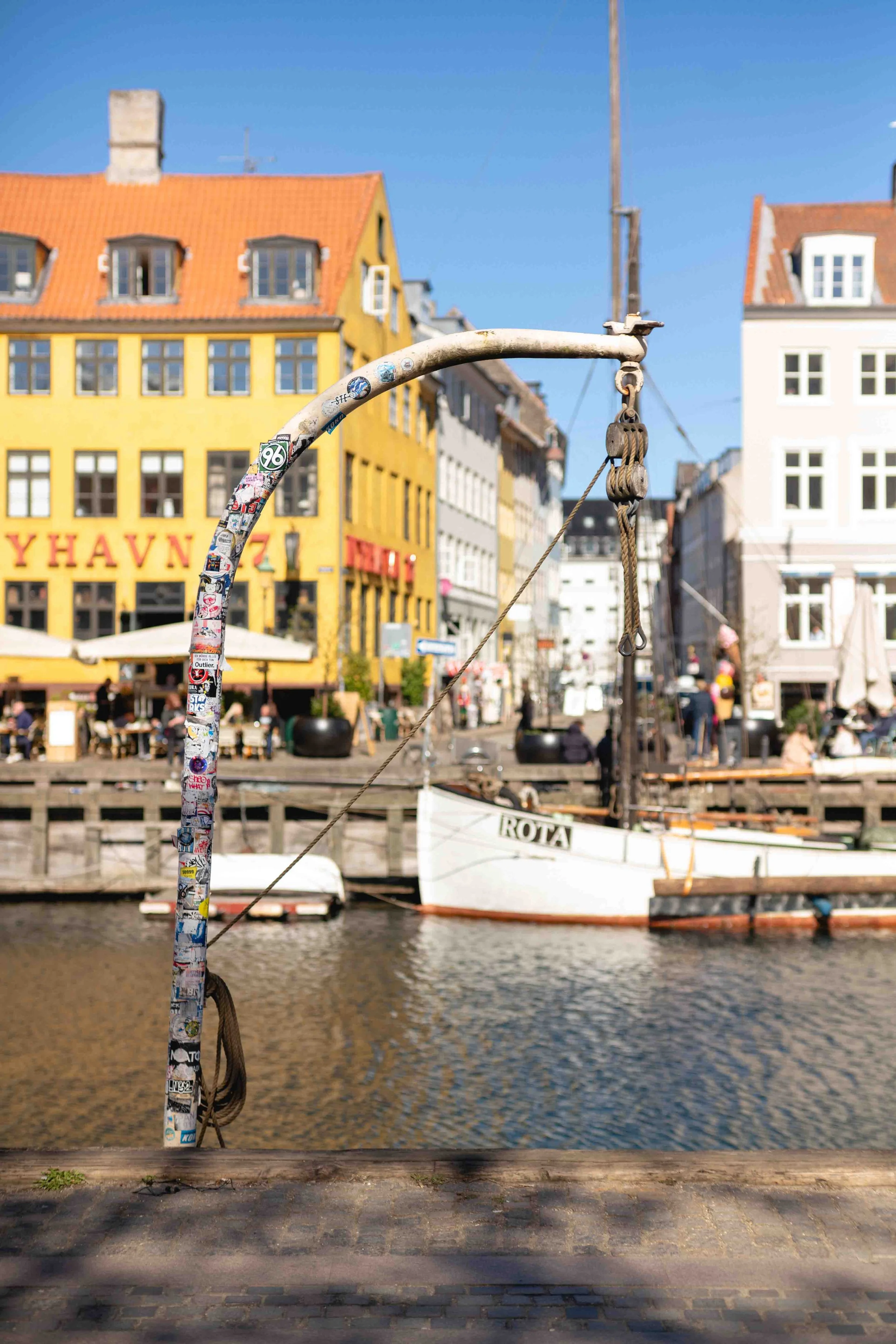
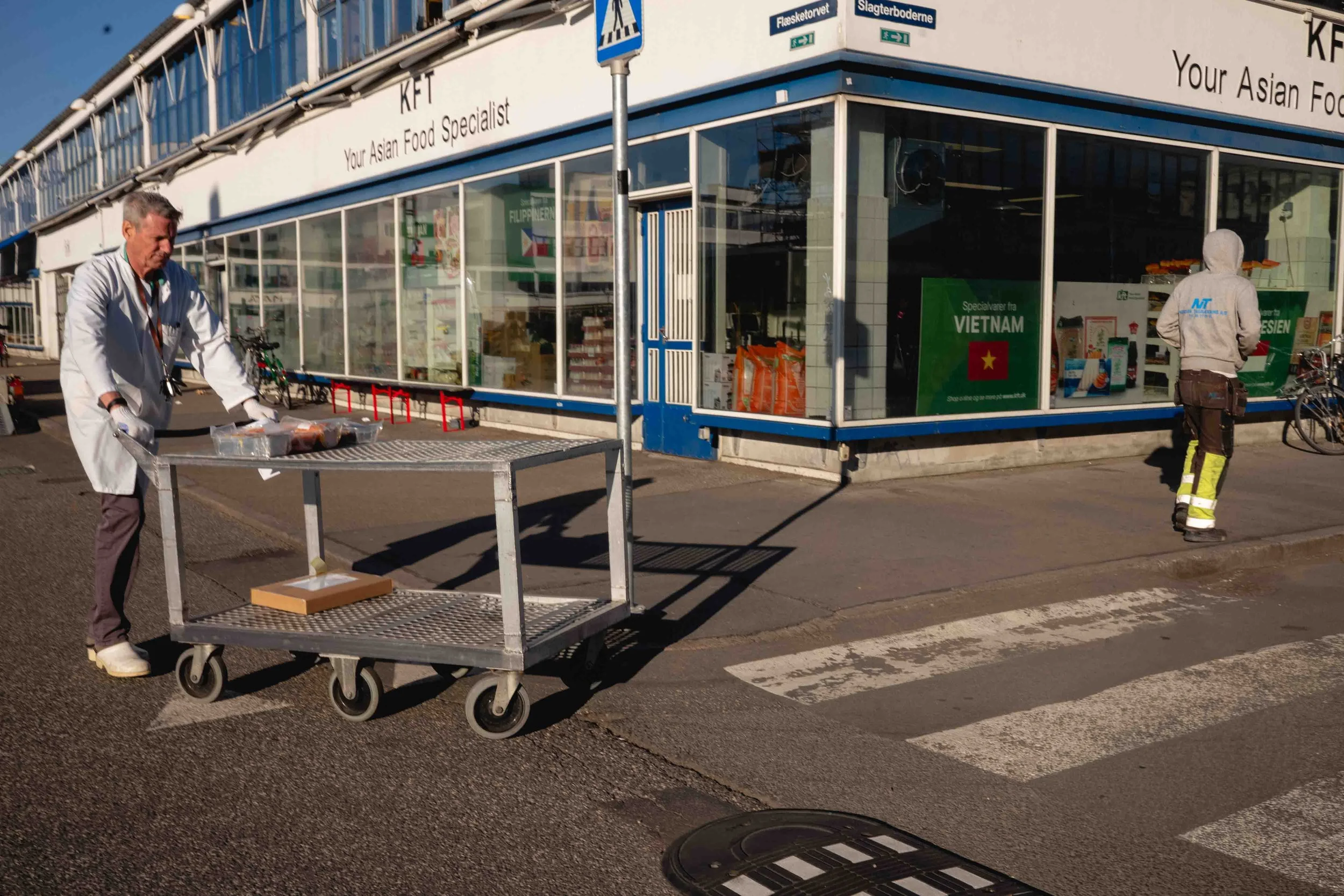
My first day focused on the transition from Nørrebro’s graphic textures to the harbor's edge. I started at Grundtvig’s Kirke, a masterclass in symmetry. Its towering yellow brickwork is a rare example of Expressionist architecture, feeling more like a giant pipe organ than a traditional church. From there, I transitioned into the vibrant, striped chaos of Superkilen Park, where the white "zebra" asphalt lines are a playground for composition. I spent the afternoon weaving through the quiet, dappled light of Assistens Cemetery (the final resting place of Hans Christian Andersen) and the boutique-heavy streets of Elmegade and Ravnsborggade. After grabbing some incredible street food at Hanoi Alley, I hit TorvehallerneKBH for some candid shots of the local food scene. I ended the daylight hours by climbing The Round Tower for a rooftop sprawl, before catching the dusk glow at Nyhavn and crossing the Inderhavnsbroen toward the Danish Architecture Center.
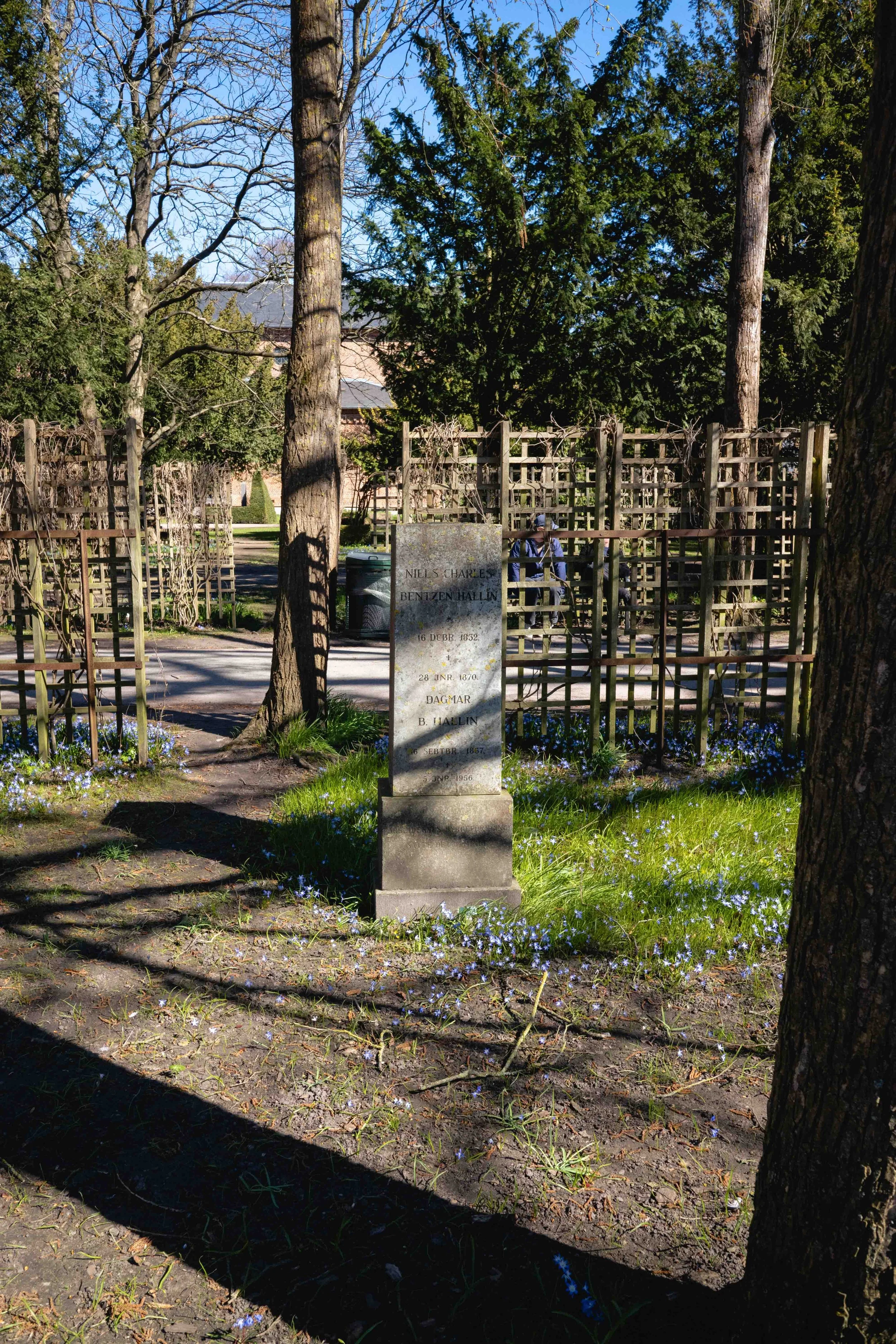
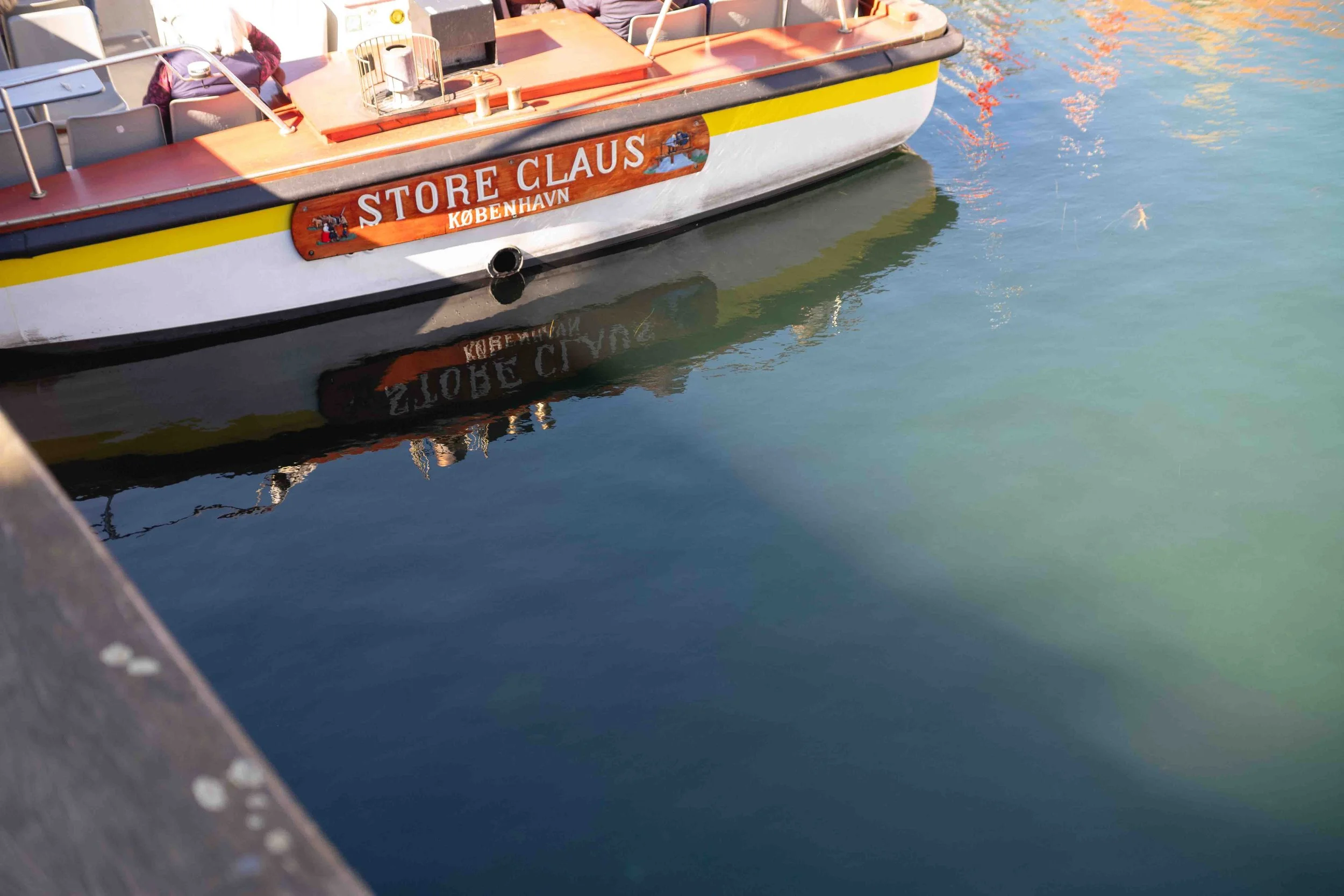
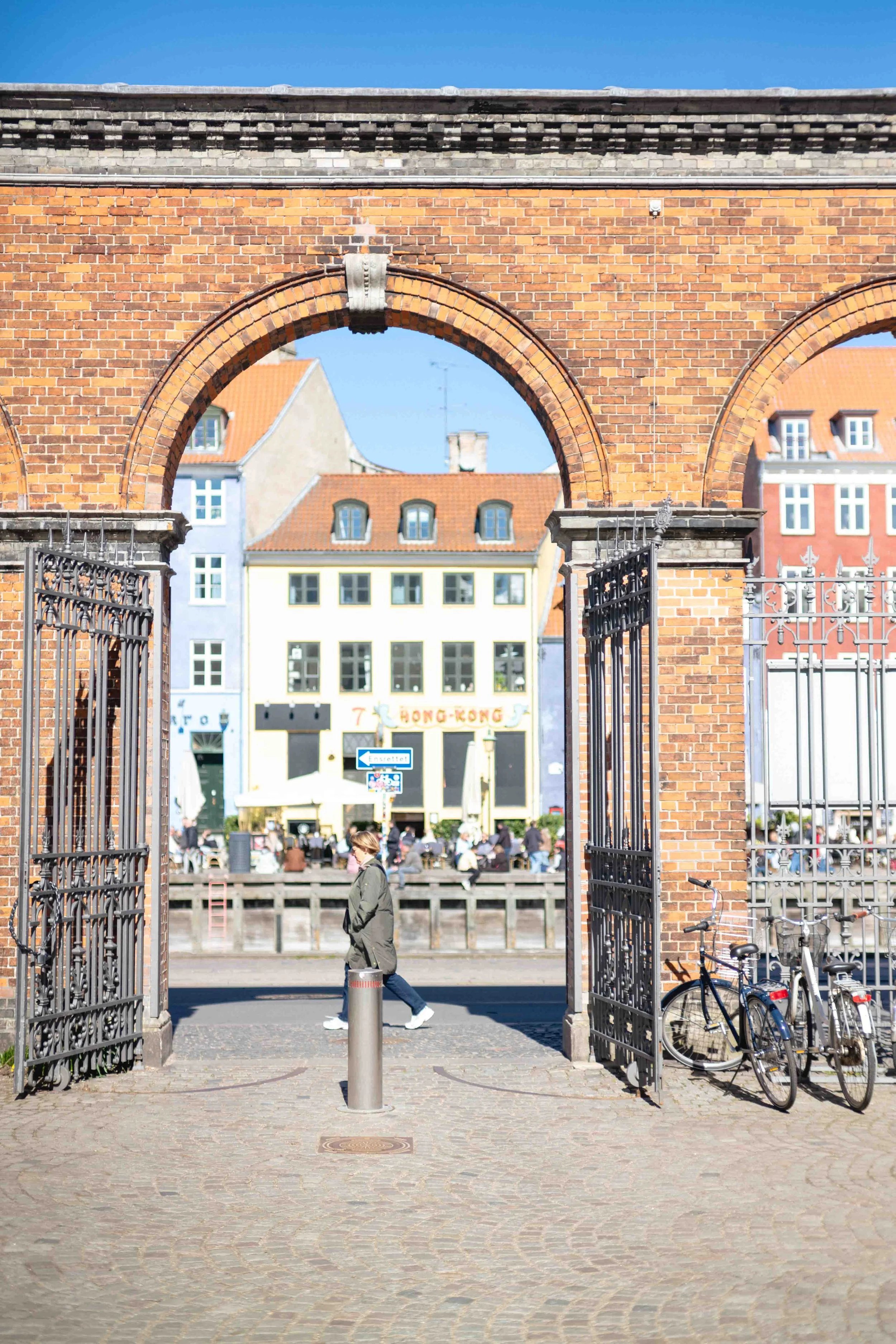
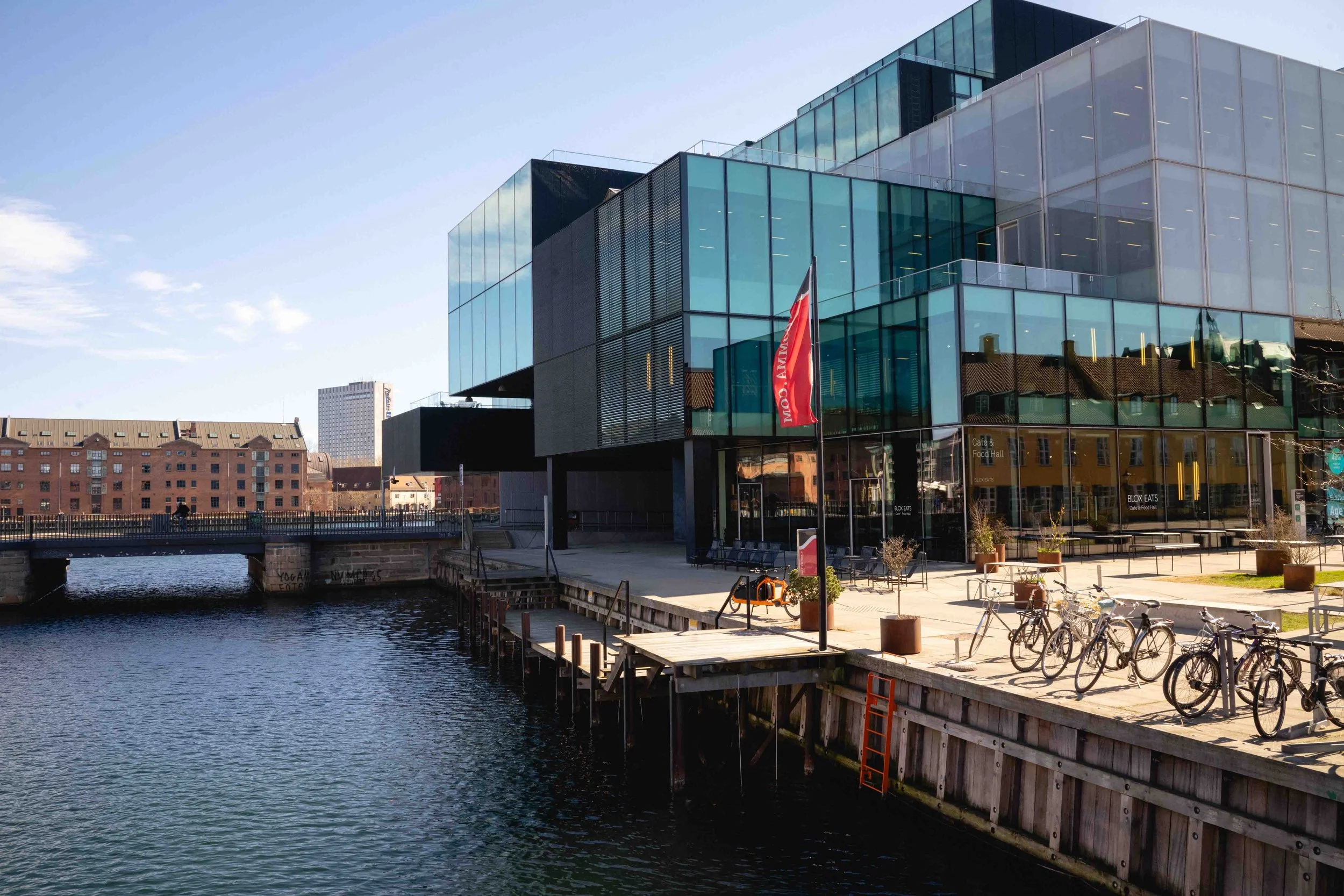
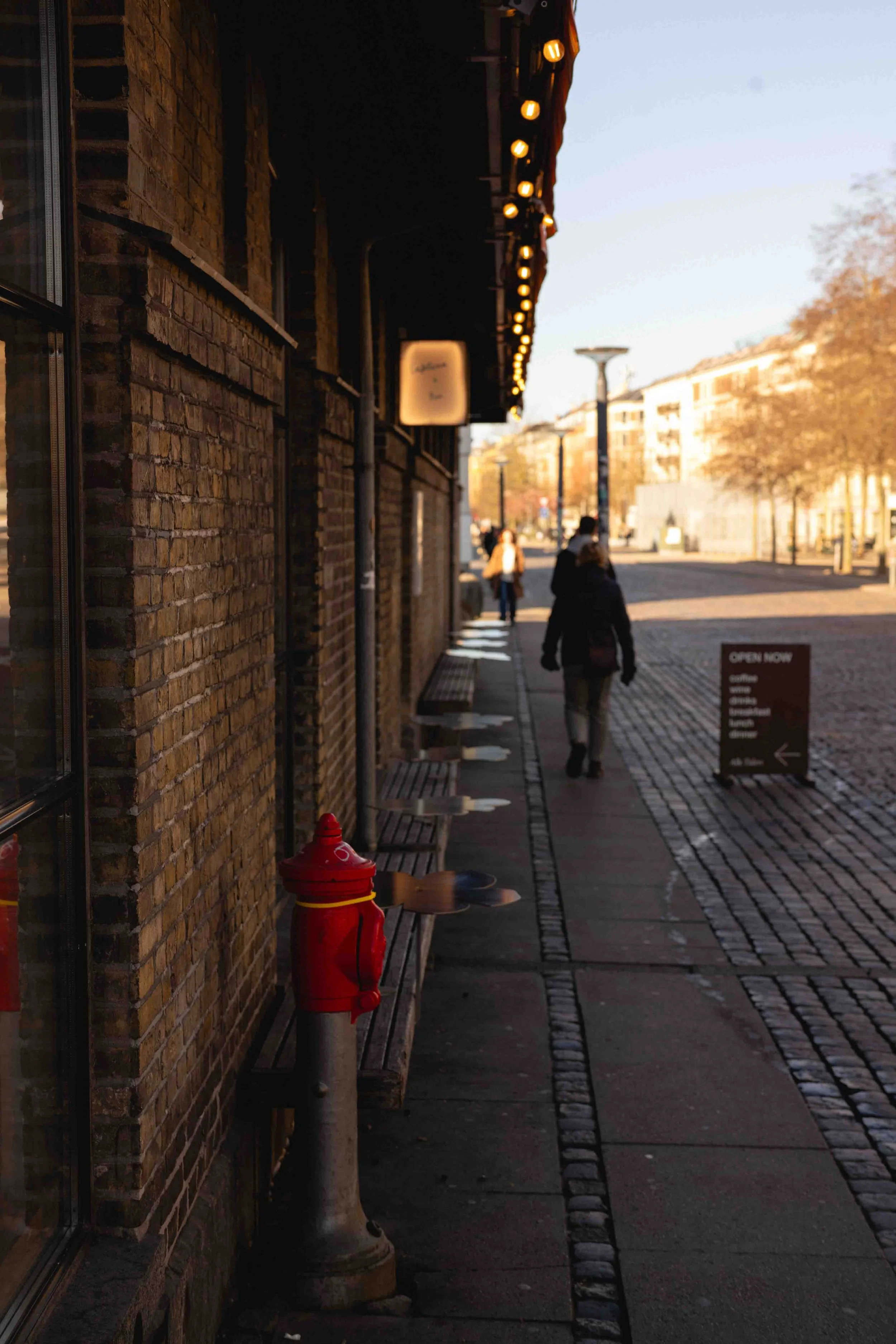
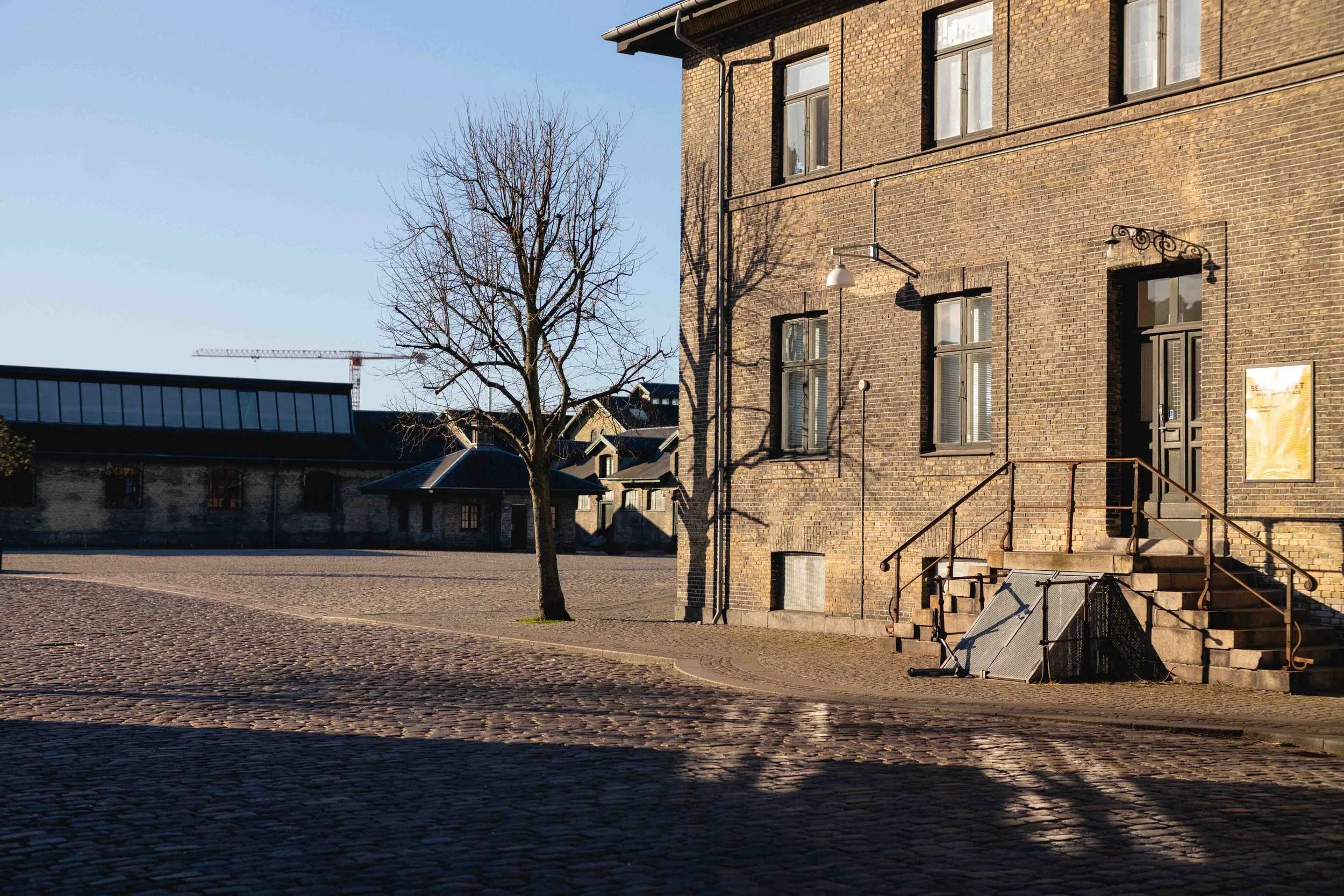
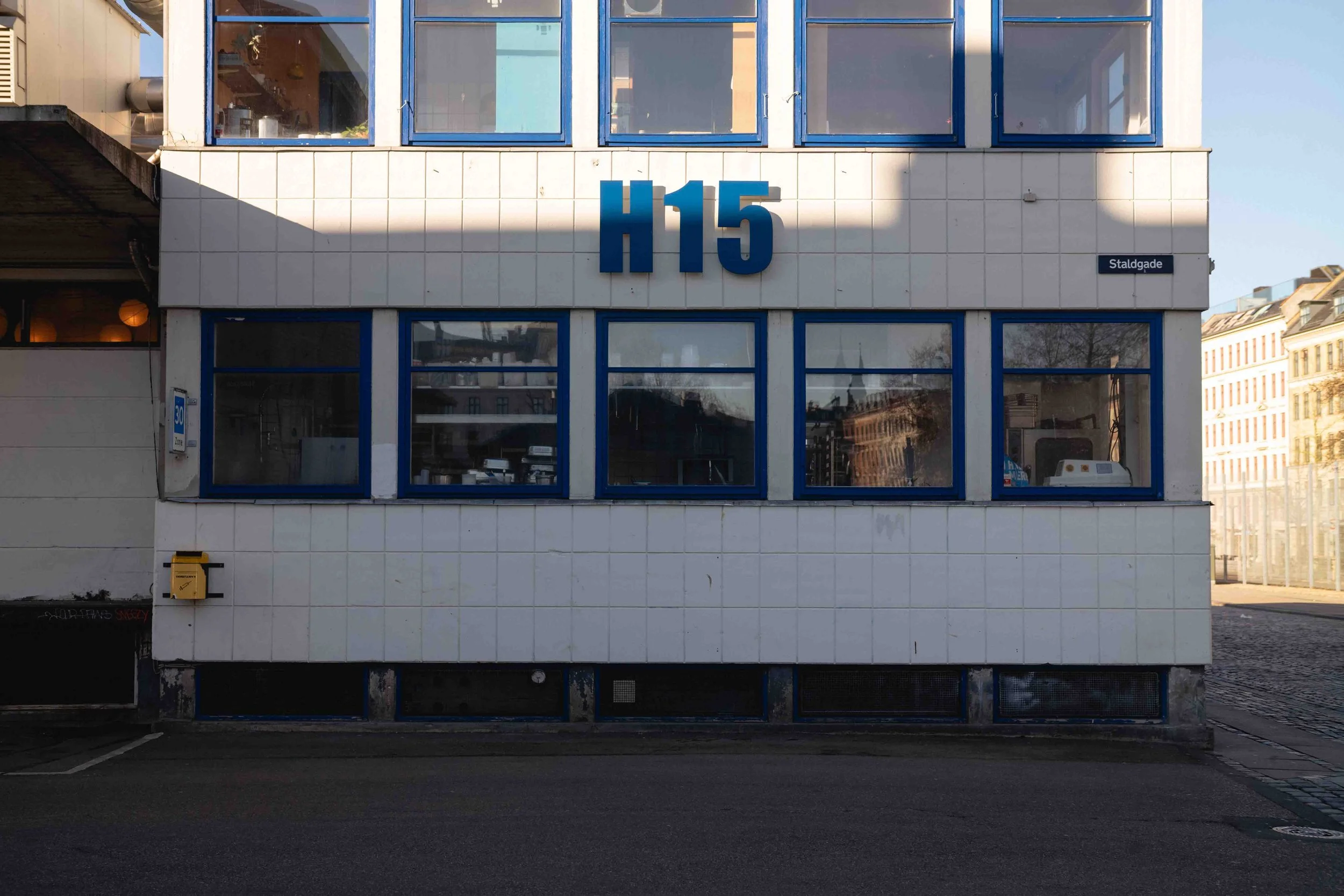
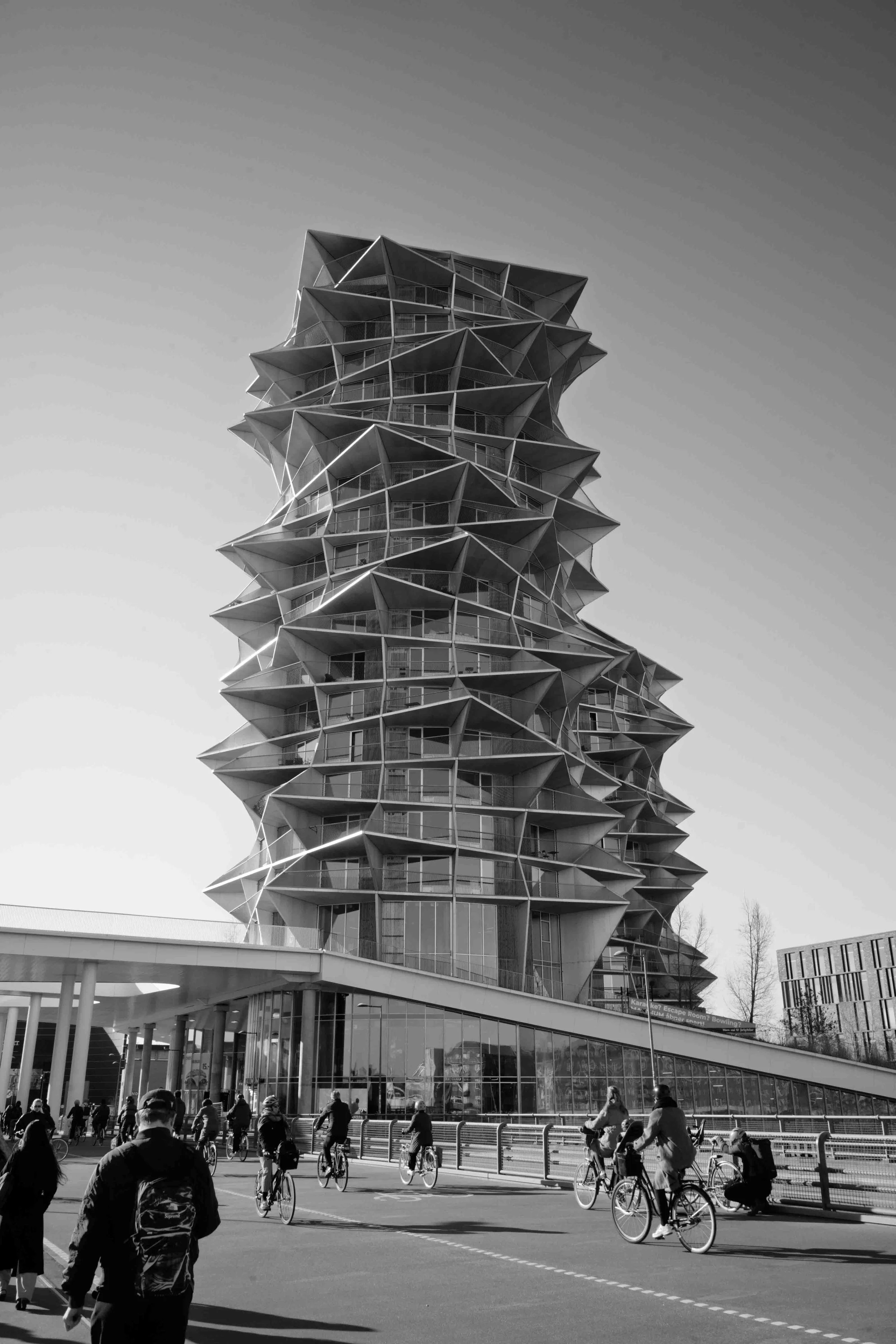
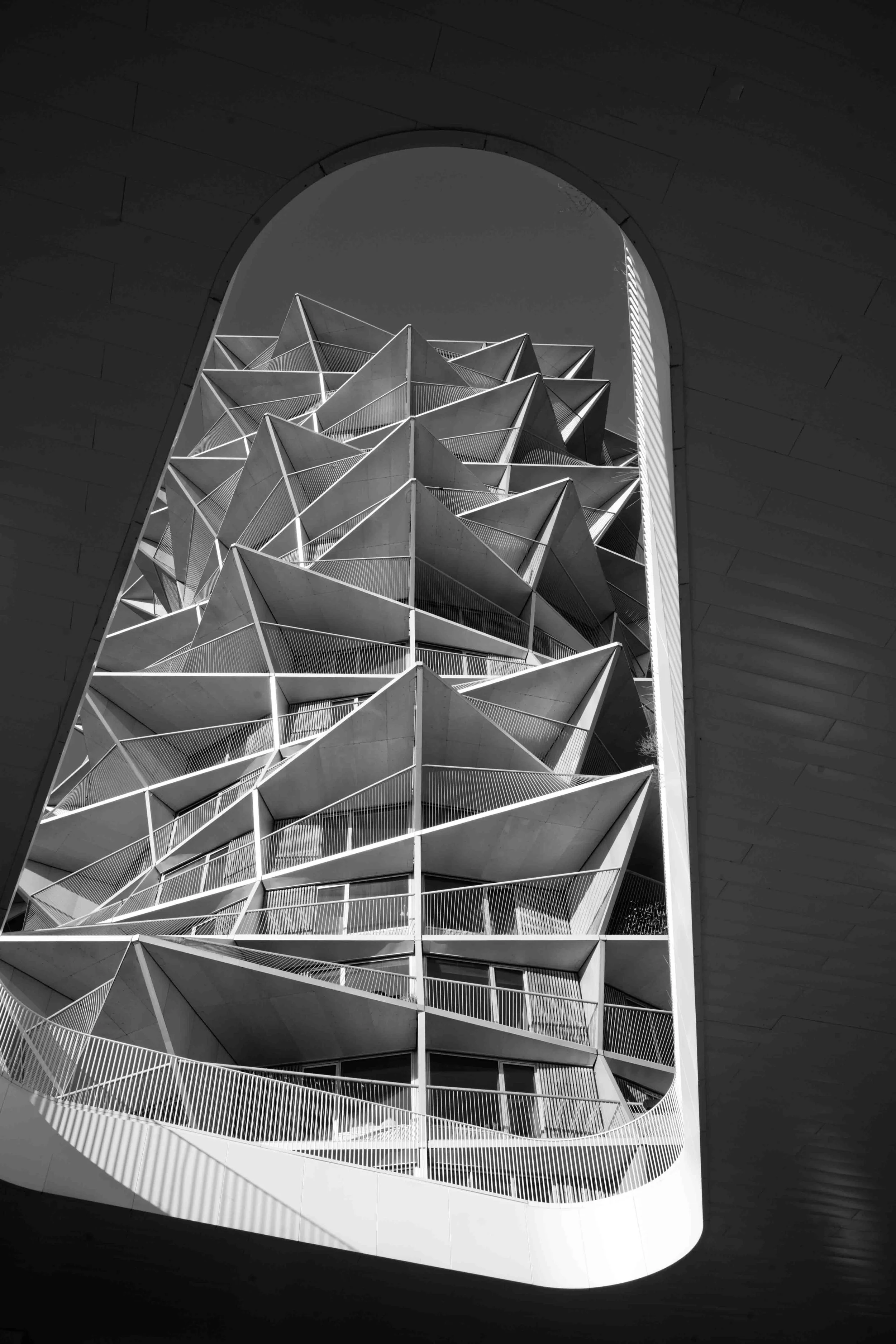
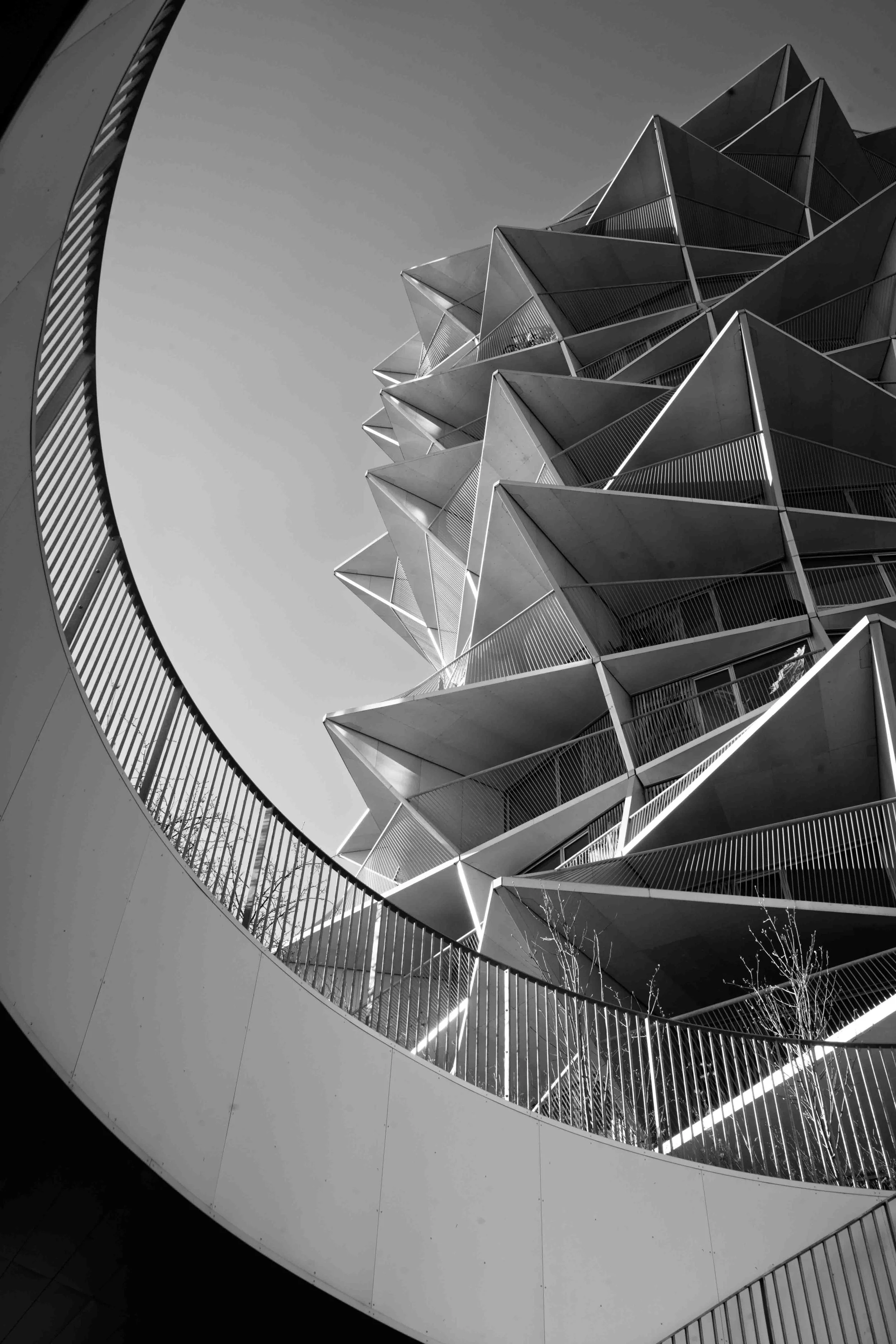
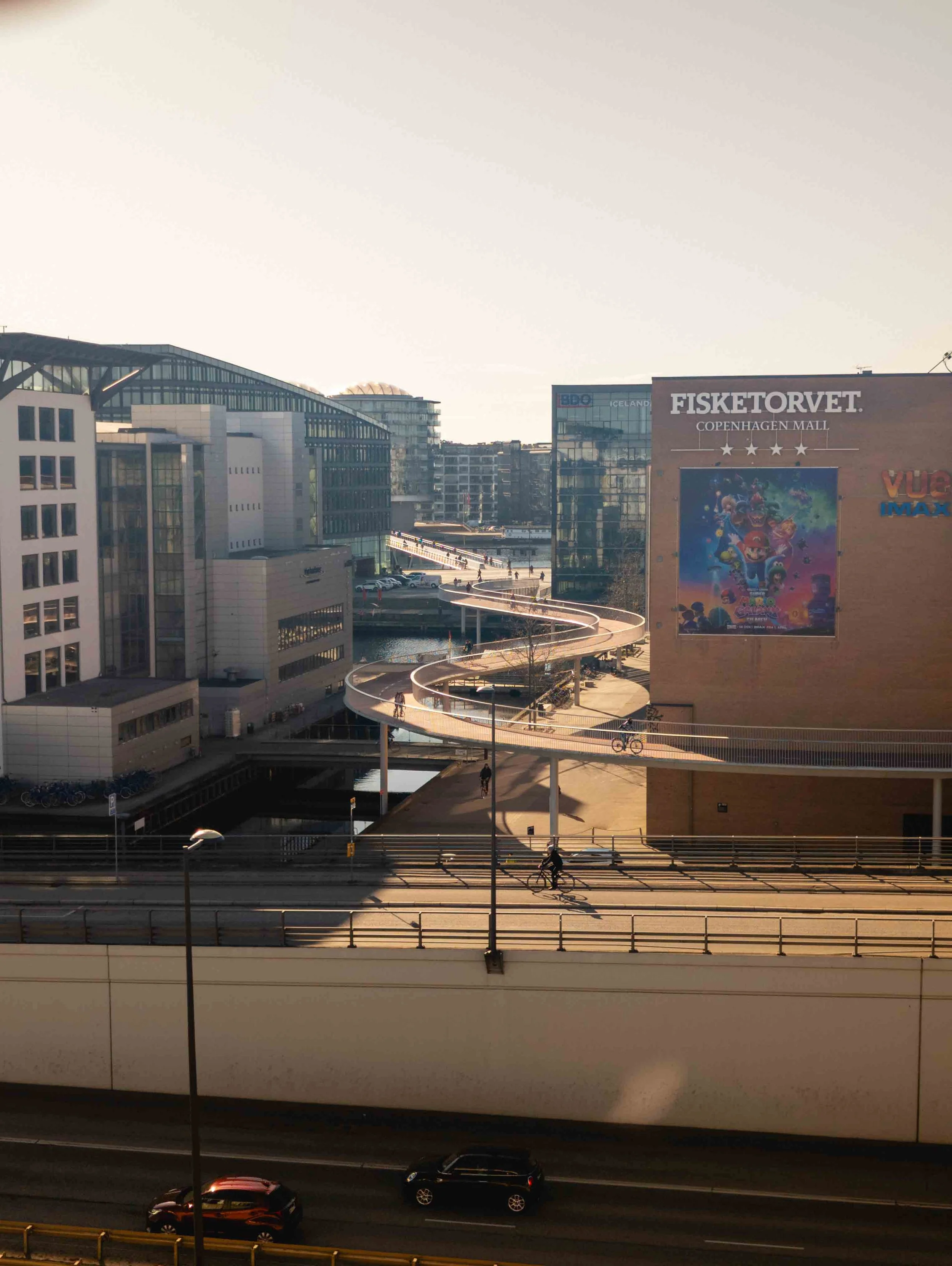
Day two was all about the evolution of the city. I kicked off in the Meatpacking District (Kødbyen), where the white industrial buildings and teal window frames offer a stark, minimalist aesthetic. The route then became a "greatest hits" of modern geometry: the jagged, brutalist balconies of the Kaktus Towers, the iconic orange-bottomed Cykelslangen (The Bicycle Snake) path. I rounded out the trip back in Christianshavn, climbing the corkscrew spire of the Church of Our Saviour for a 360-degree view, followed by a walk through the raw, DIY textures of Freetown Christiania, and finally the historic, rhythmic lines of the Nyboder district.
Before I went, everyone warned me about the cost. "Bring a second mortgage for a coffee," they said.
Honestly? It’s a myth. While you can spend a fortune in Michelin-starred spots, I found that if you eat like a local—hitting up spots like Hanoi Alley or grabbing a smørrebrød from a local deli—it’s no more expensive than a weekend in London or New York. In fact, because the city is so walkable and the public transport is flawless, I spent far less on "getting around" than I do on my daily three-hour commute back home. Copenhagen doesn't just ask to be photographed; it demands it. It’s a city that values the "small things"—and as photographers, that’s exactly what we’re looking for.
Want to see the full high-res set? Check out my latest prints in the shop or follow the journey on Instagram @frommylensphoto.
Until next time, keep snapping.
Little England - A day in Weymouth with the Leica M10
Originating from a small Midlands town and subsequently moving down south and now to the south coast in Brighton, there is a natural allure for me for the traditional British seaside town.
I actually remember going to Weymouth from the Midlands with the family when I was a wee lad.
There's a version of England that still exists in places like our seaside towns. Not the version that gets argued about online, or invoked on political platforms, or turned into a slogan. The quieter version. The one that just gets on with it.
Originating from a small Midlands town and subsequently moving down south and now to the south coast in Brighton, there is a natural allure for me for the traditional British seaside town.
I actually remember going to Weymouth from the Midlands with the family when I was a wee lad.
There's a version of England that still exists in places like our seaside towns. Not the version that gets argued about online, or invoked on political platforms, or turned into a slogan. The quieter version. The one that just gets on with it.
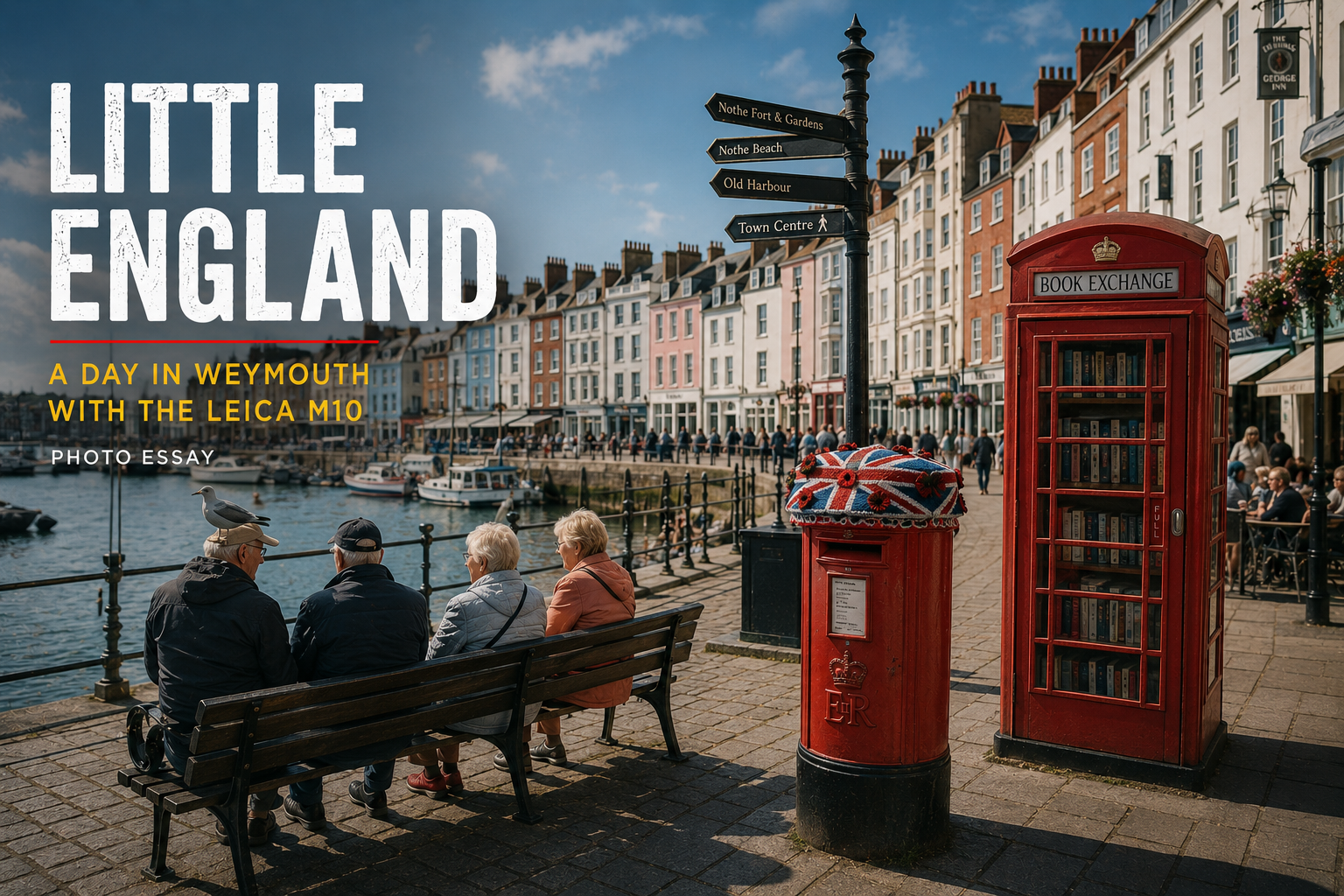
I drove down to Weymouth yesterday morning, with the Leica M10 and no real agenda beyond walking and seeing what the town had to say, as Spring 2026 has opened its eyes. Weymouth is a proper south coast seaside town — the kind with a working harbour, Georgian terraces starting to show their age, a pink cake shop that takes cash only, and Union Jacks outside the pub.
"This blog post isn't a political statement, it's an observation. The flags are just there — unremarkable to the people who live under them, which is precisely what makes them worth photographing."
I've been thinking about this project for a while. There's something I keep noticing in the English seaside towns I shoot — a particular kind of texture that's hard to name but immediately recognisable. Old shopfronts that haven't been rebranded. Red postboxes with knitted toppers. Phone boxes repurposed into book exchanges. Ghost signs on brick walls advertising things that no longer exist. All of it quietly persisting, not out of defiance, just out of habit.
Weymouth has it in abundance.
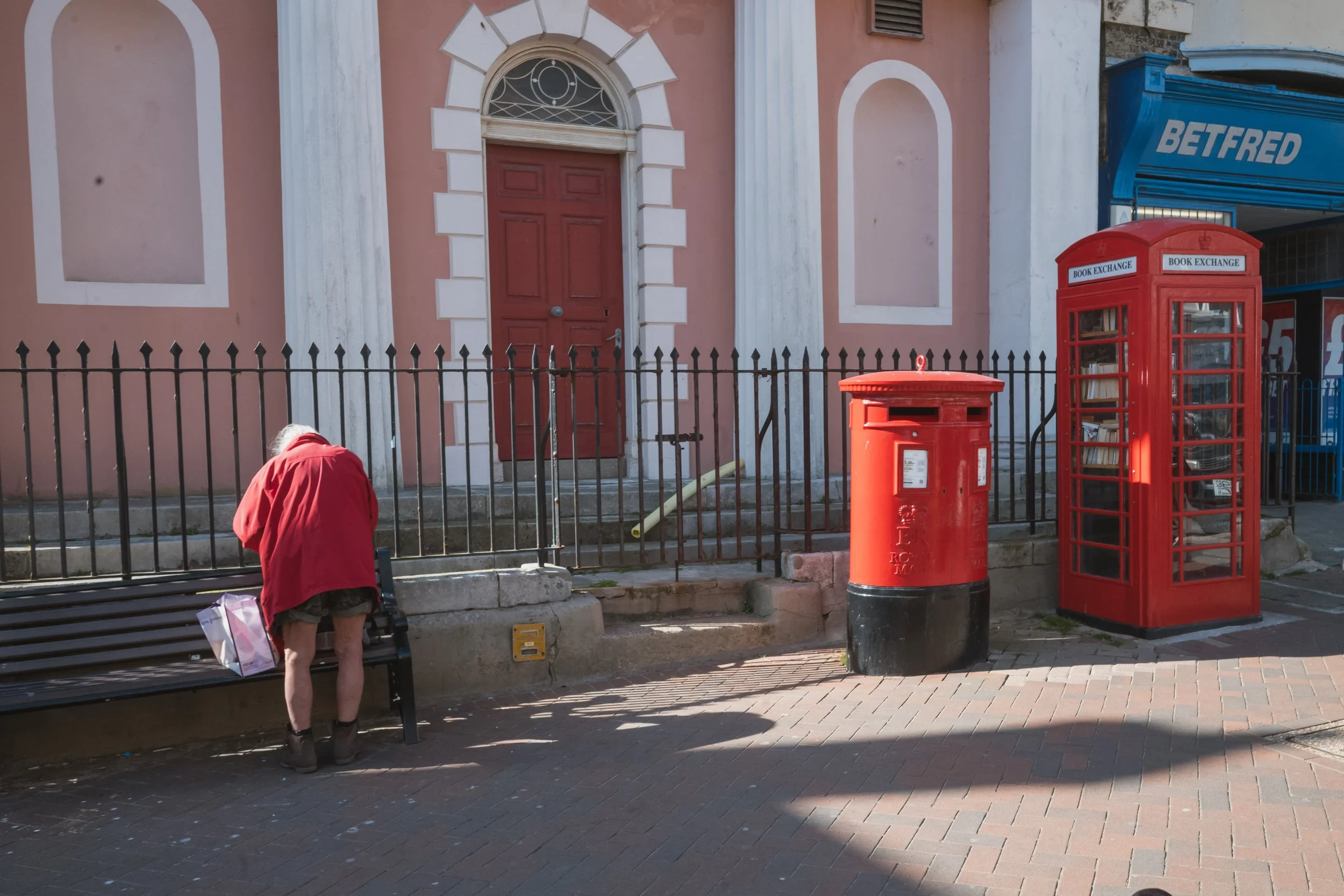
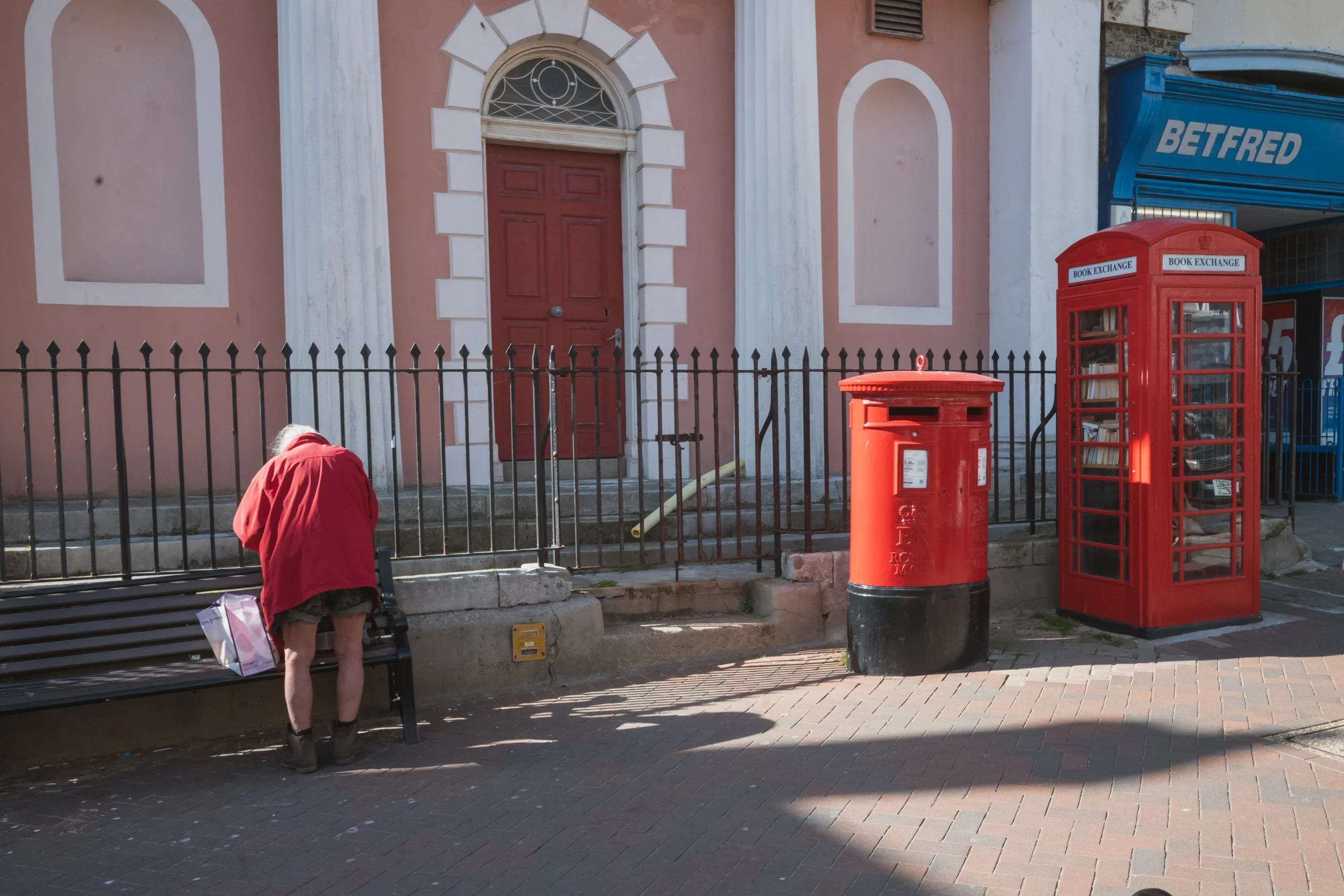
I started on the high street. The first image that stopped me was almost too on-the-nose: a red figure hunched on a bench beside a red postbox and a red phone box — now a book exchange — with Betfred blazing blue in the background. Three reds and a betting shop. England in a single frame.
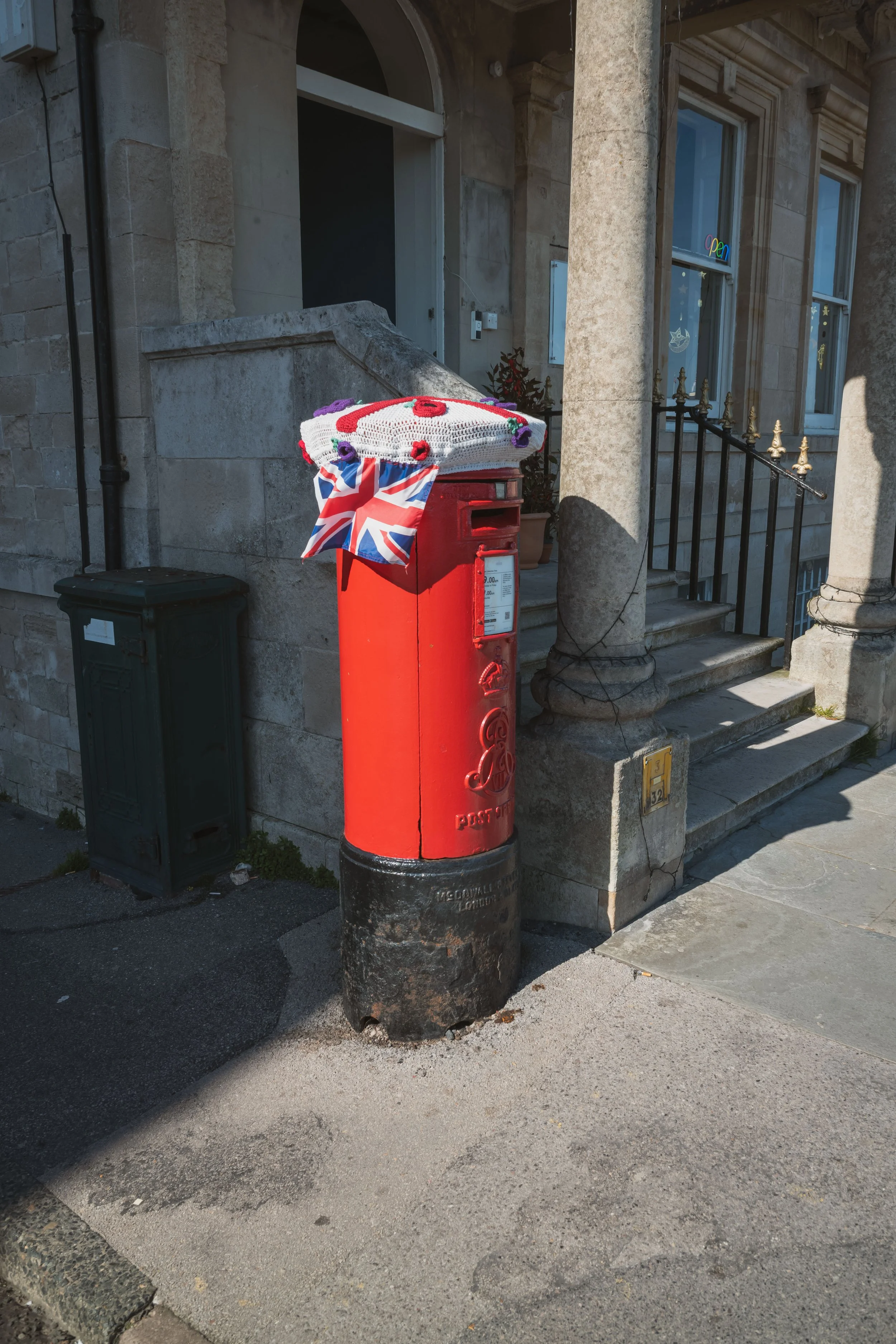
A few streets away I found the postbox with the knitted Union Jack draped over its top — someone had crocheted a topper decorated with poppies and the flag, placed it there quietly, and moved on. It was the most tender thing I photographed all day. There's a whole tradition of this in small British towns — anonymous acts of civic affection that never make the news and probably shouldn't.
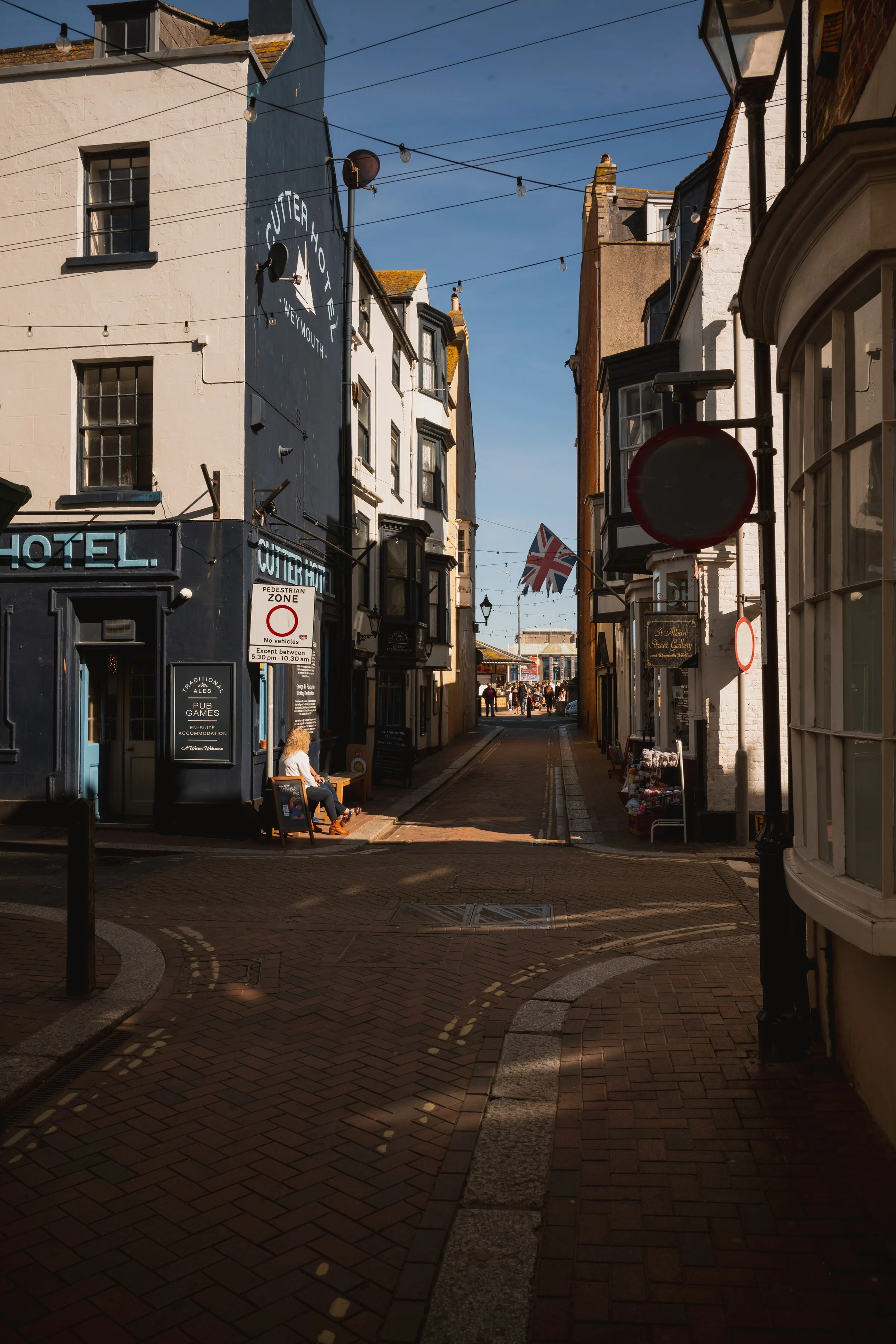
The cobbled lane down toward the harbour was one of those streets that photographs itself. Late morning light, deep shadows on one side, a Union Jack snapping at the far end where the sea opens up, a woman sitting alone outside the pub with a coffee. I stood at the top of it for a while before I pressed the shutter, waiting for it to settle into itself.
"There's a whole tradition of anonymous acts of civic affection in small British towns that never make the news and probably shouldn't."
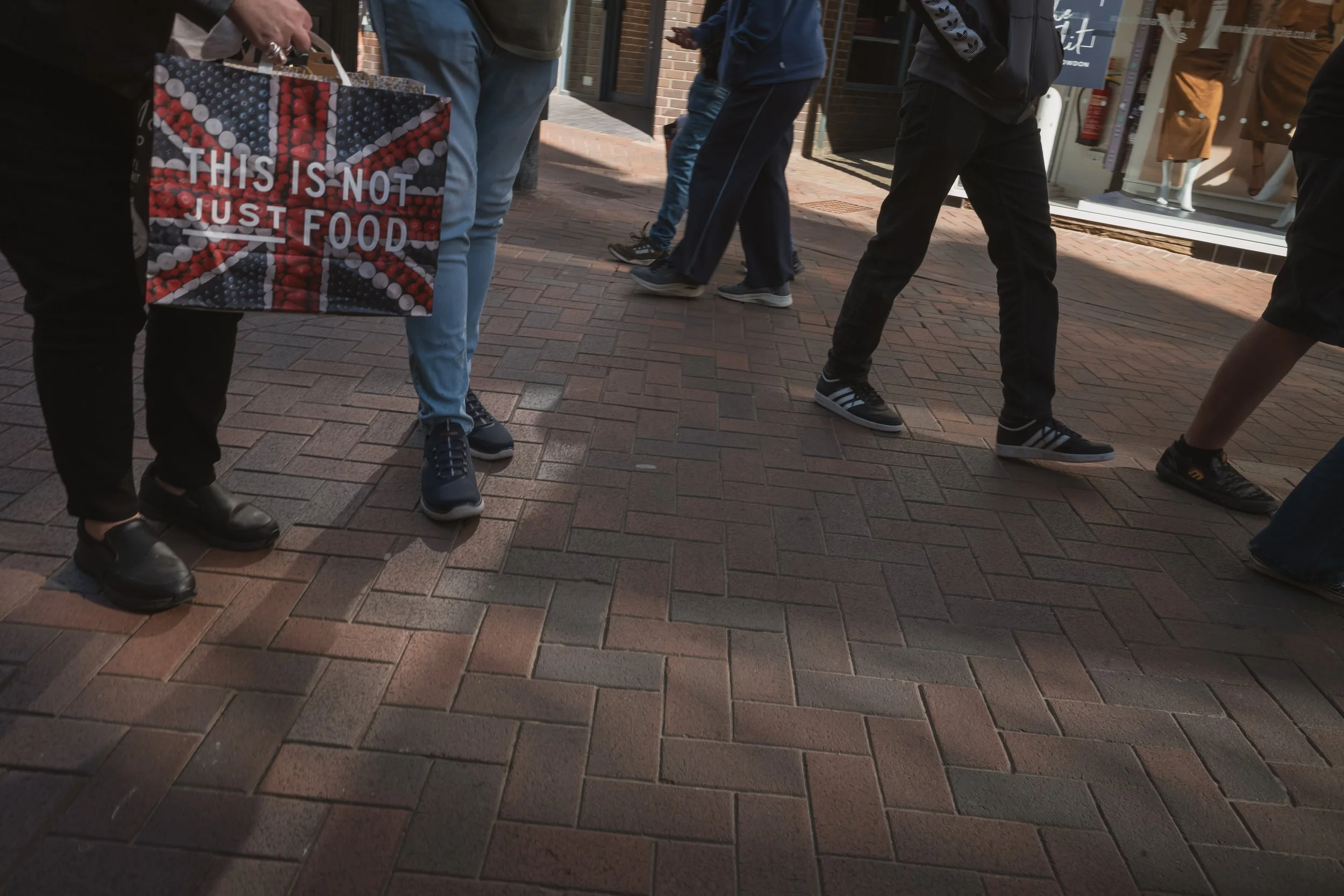
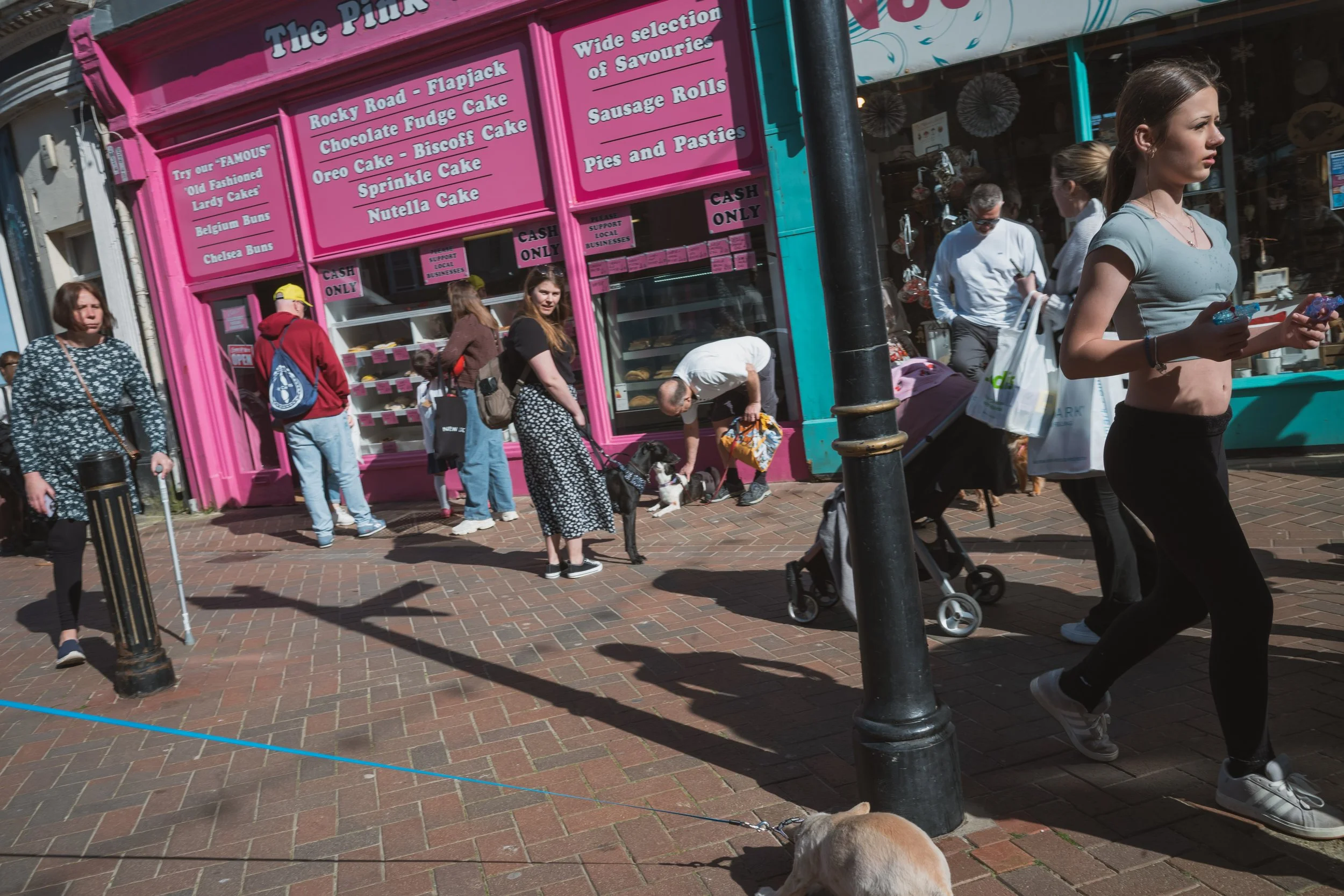
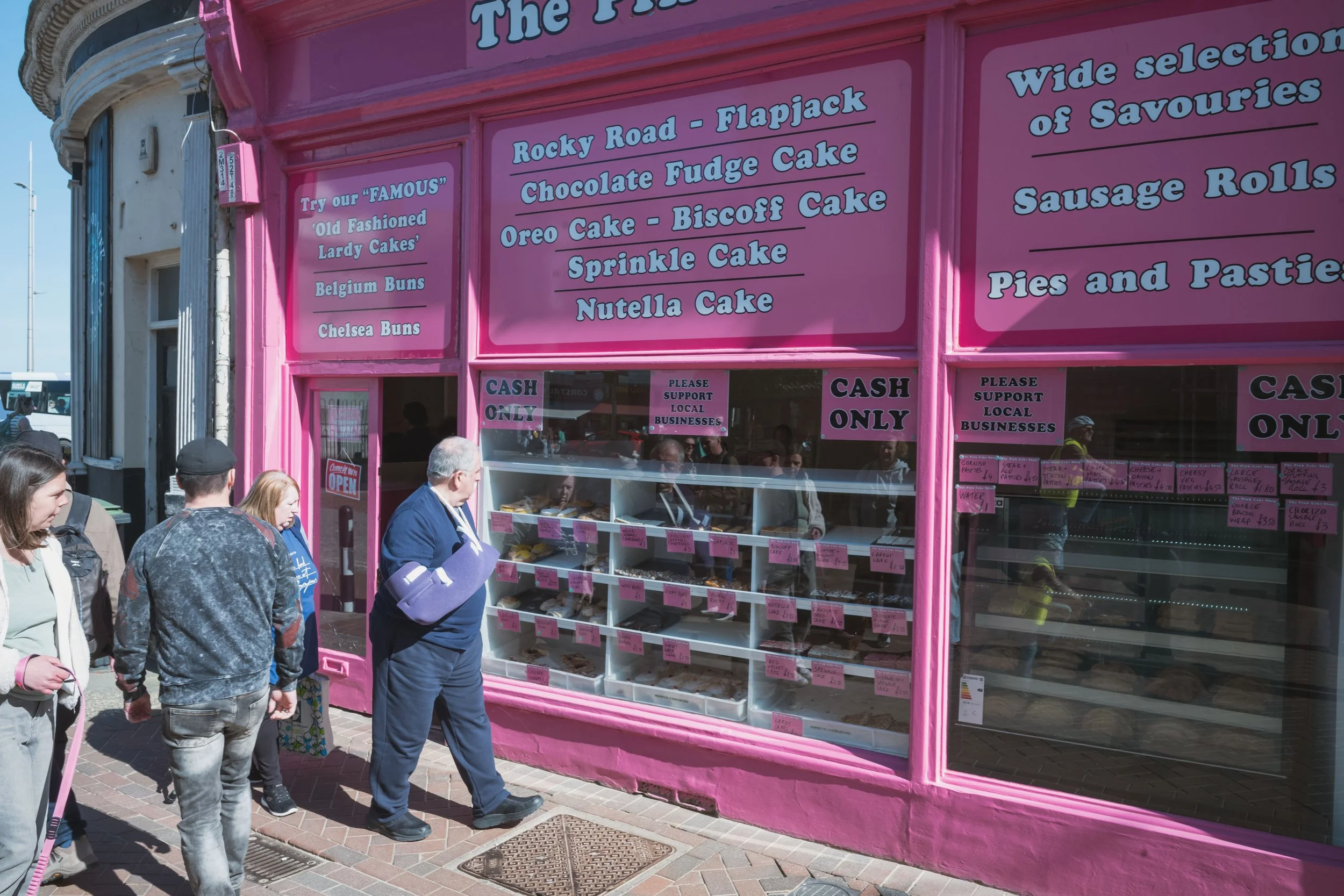
The pink cake shop — I later found out it's called The Pink — was doing serious business. Cash only, Lardy Cakes, Chelsea Buns, Flapjack, Pies and Pasties. The window was covered in handwritten labels. Outside, a small crowd had gathered. Dogs, prams, people craning to see the shelves. Beside it, a teal gift shop. The high street as pure, unapologetic colour.
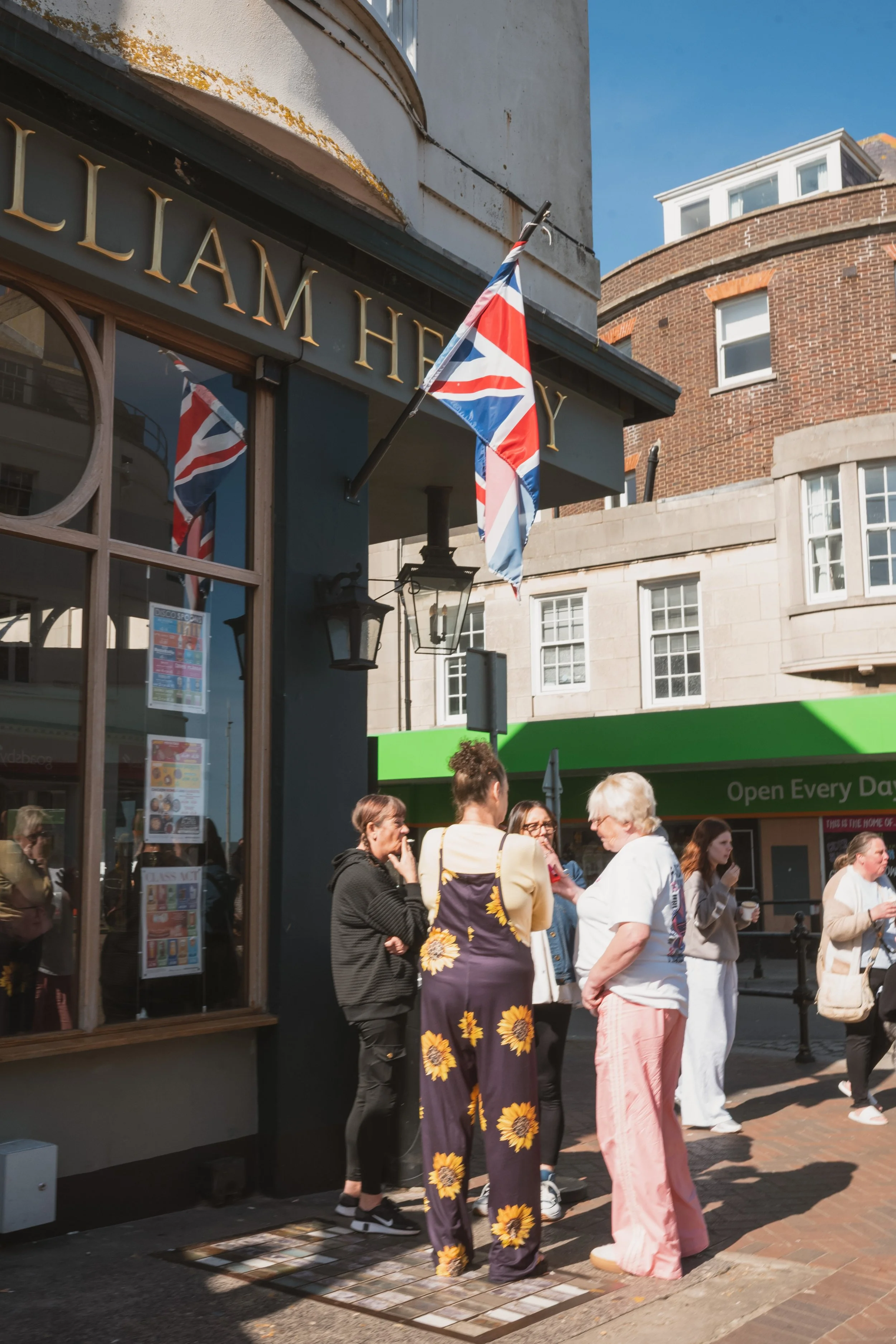
But for all the bunting and bakeries, Weymouth isn't performing anything. It's just getting on with being itself — which includes the parts that aren't picturesque.
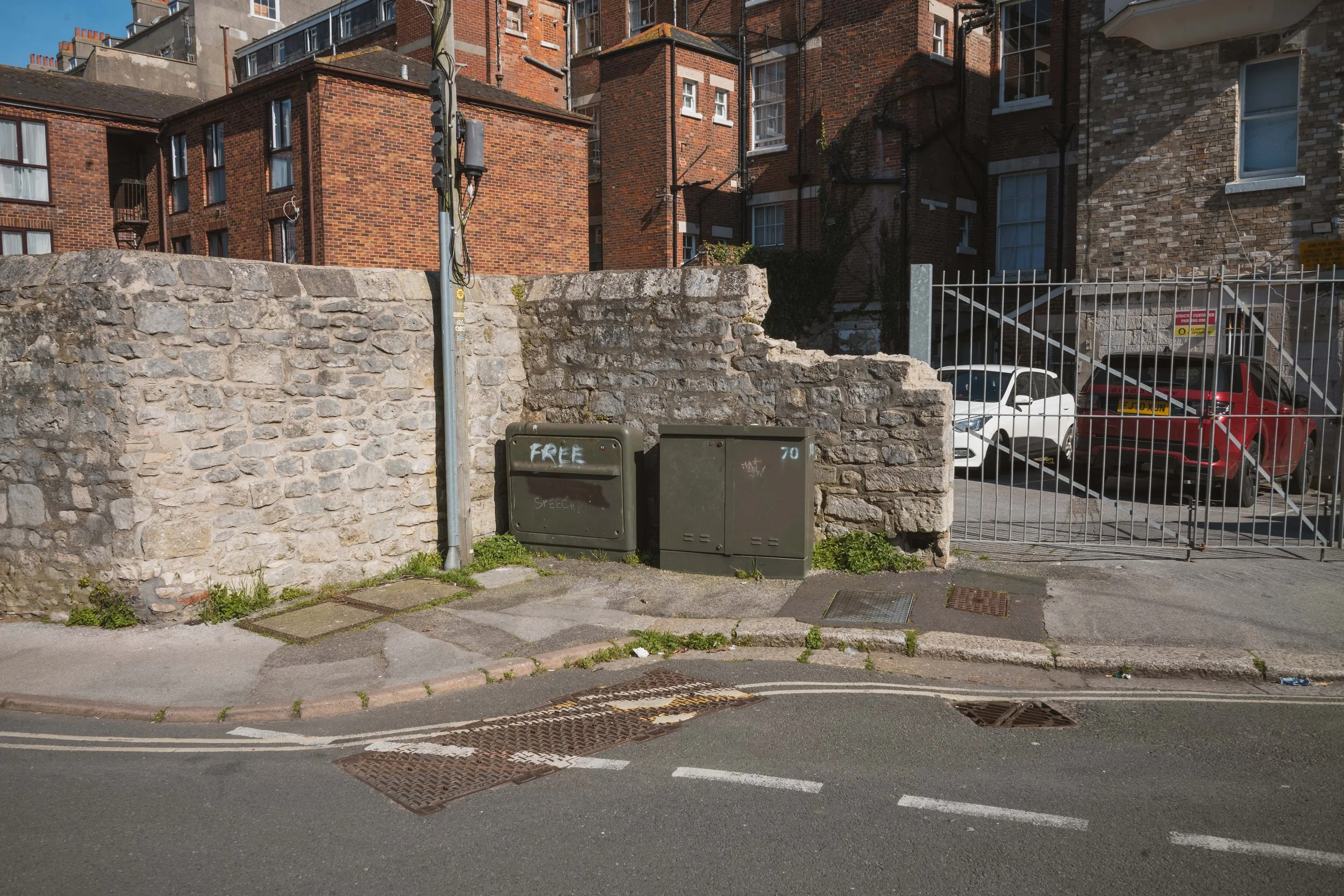
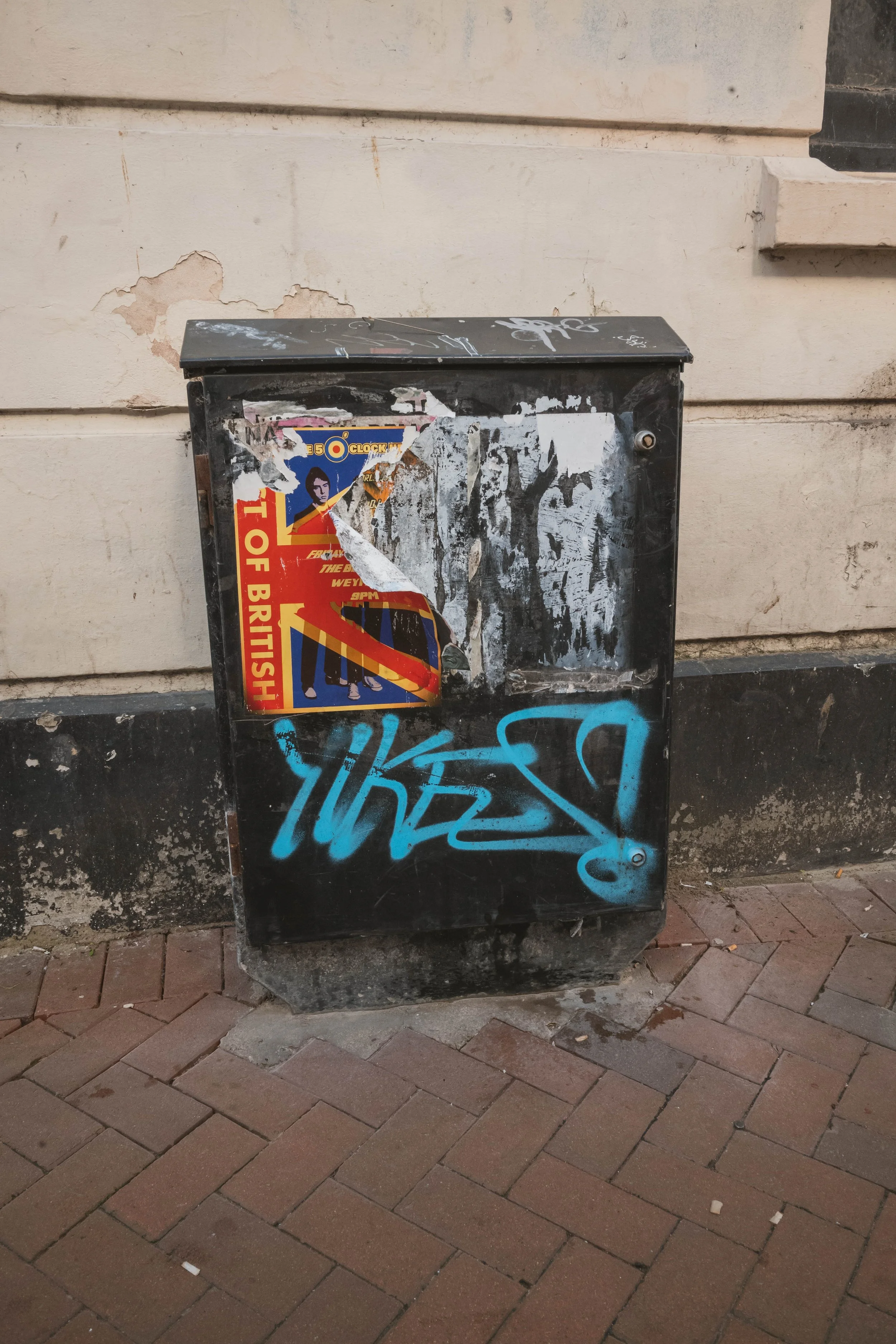
On a back street I found a junction box with FREE sprayed on it in white paint, set against a crumbling stone wall. Two streets over, a black utility box covered in peeling stickers, one of them a torn Union Jack with the words "of British" still legible. Whatever the full message was, only those two words remained. I stared at it for a long time.
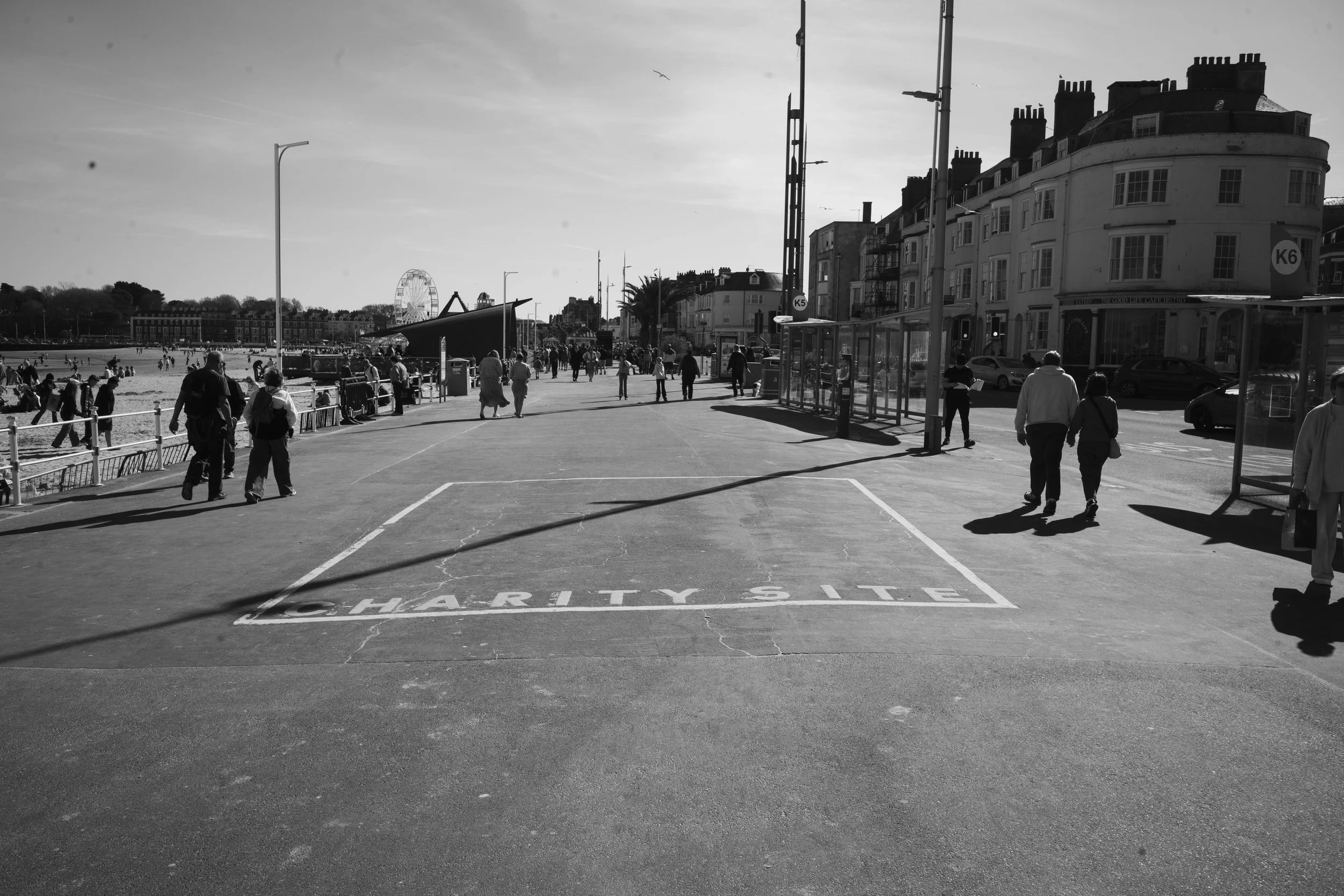
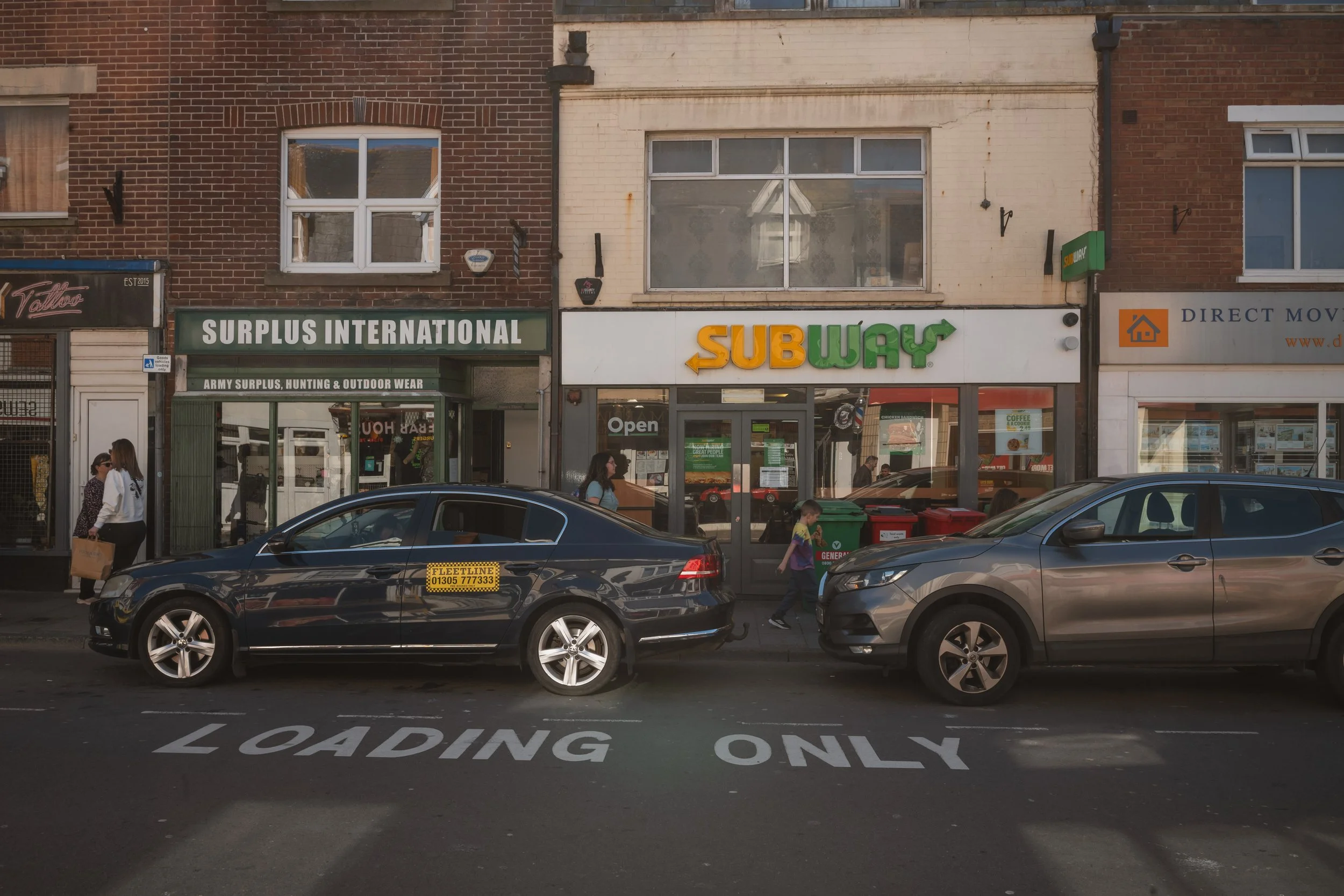
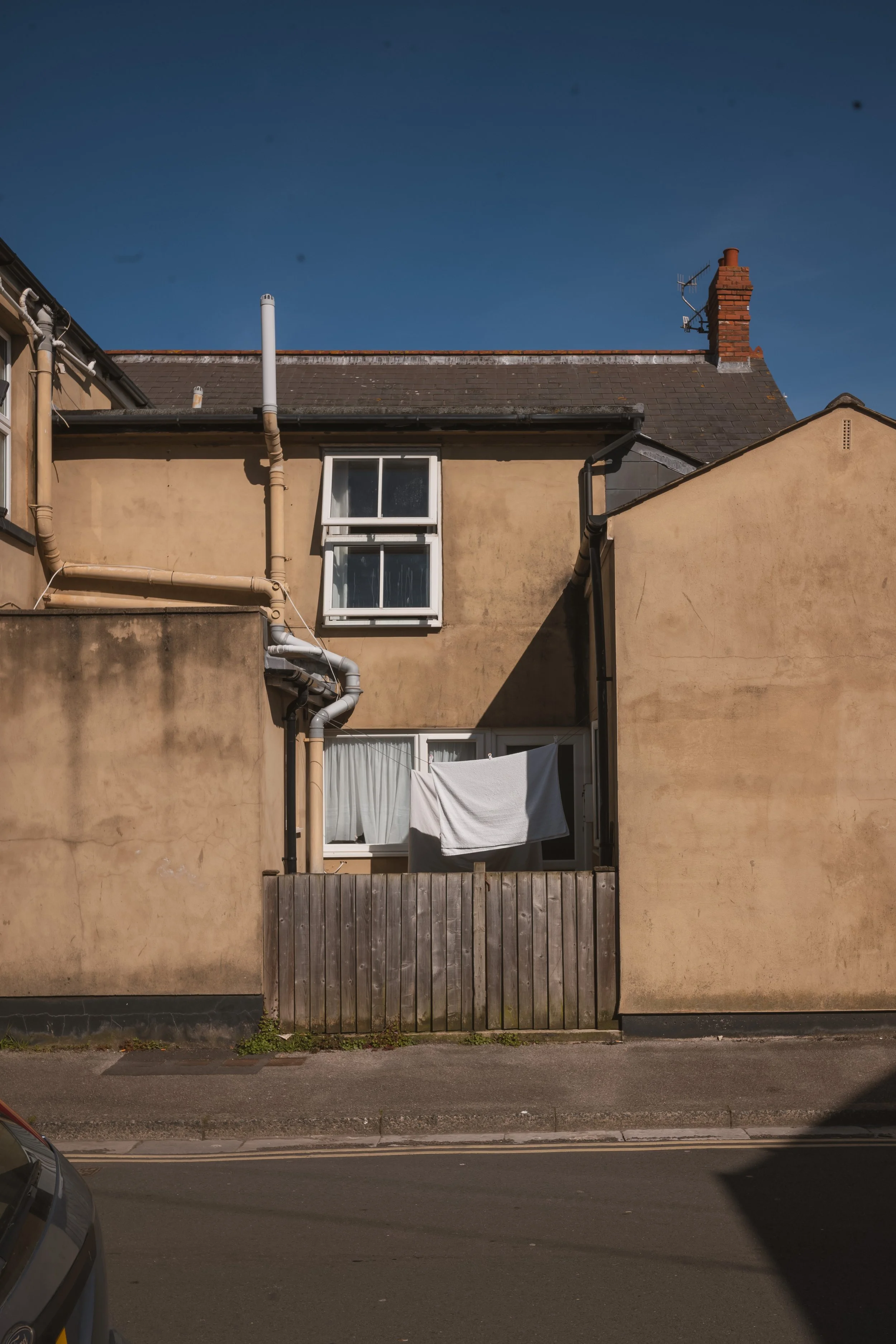
Surplus International next to Subway. A "Loading Only" bay that cars were parked in. Charity Site painted in white letters on the seafront tarmac, a Ferris wheel beyond it. The ordinary machinery of a British seaside town, indifferent to whether anyone's photographing it.
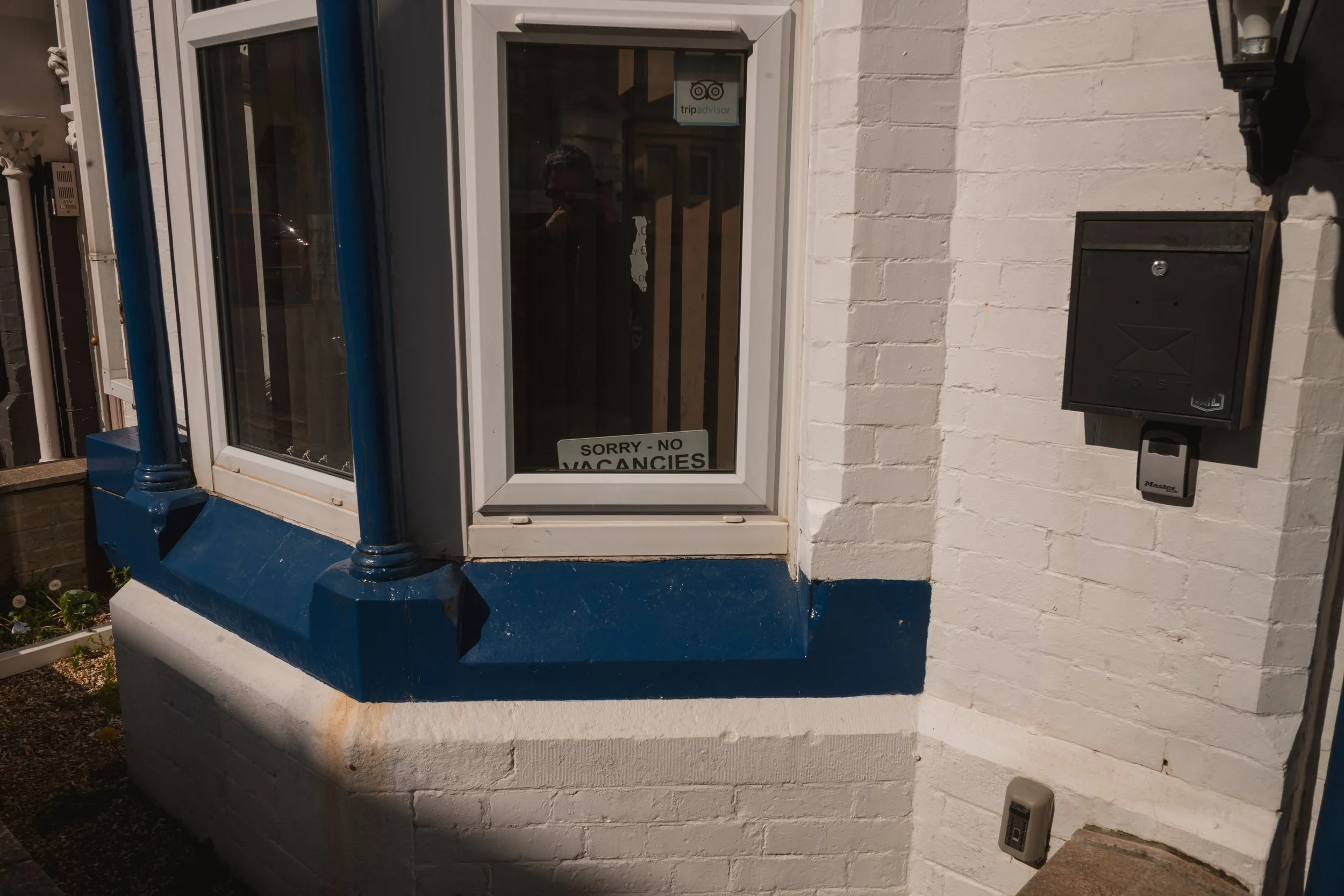
The B&B with "Sorry — No Vacancies" in the window stopped me partly for the message and partly because I could see my own reflection in the glass above the sign. That felt right. The photographer making himself part of the scene he's trying to document.
The human moments were the ones I kept coming back to when I reviewed the day's shoot.
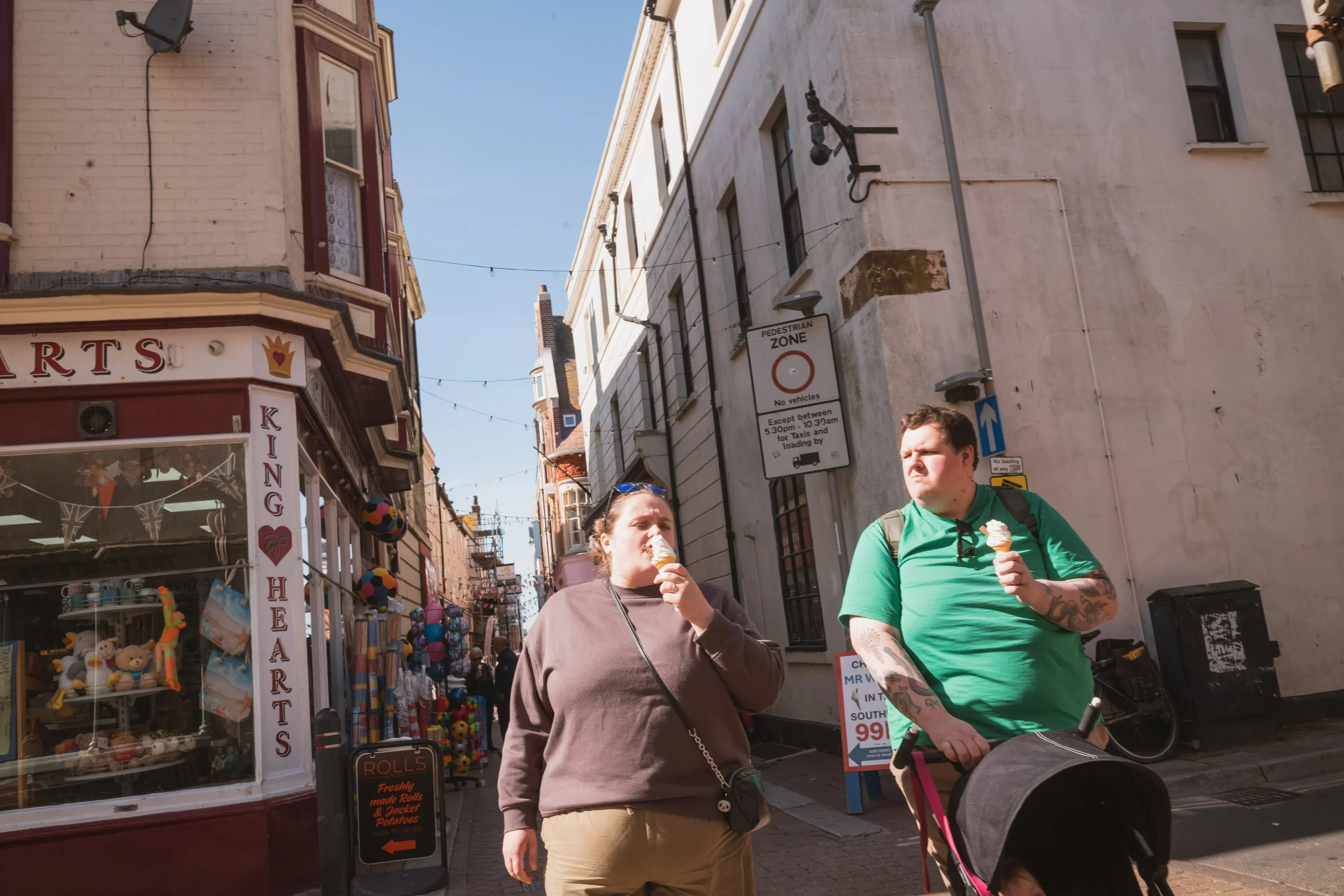
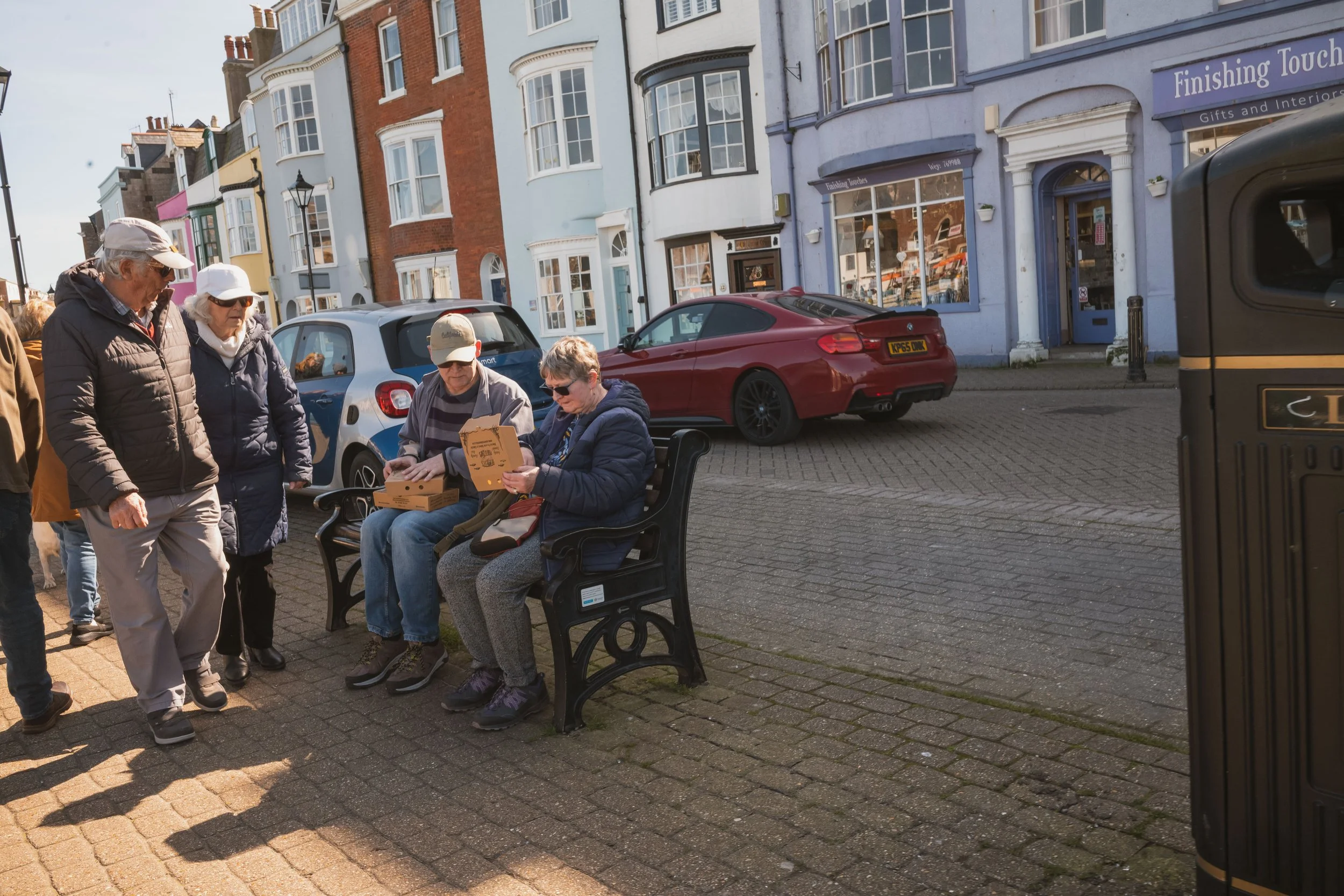
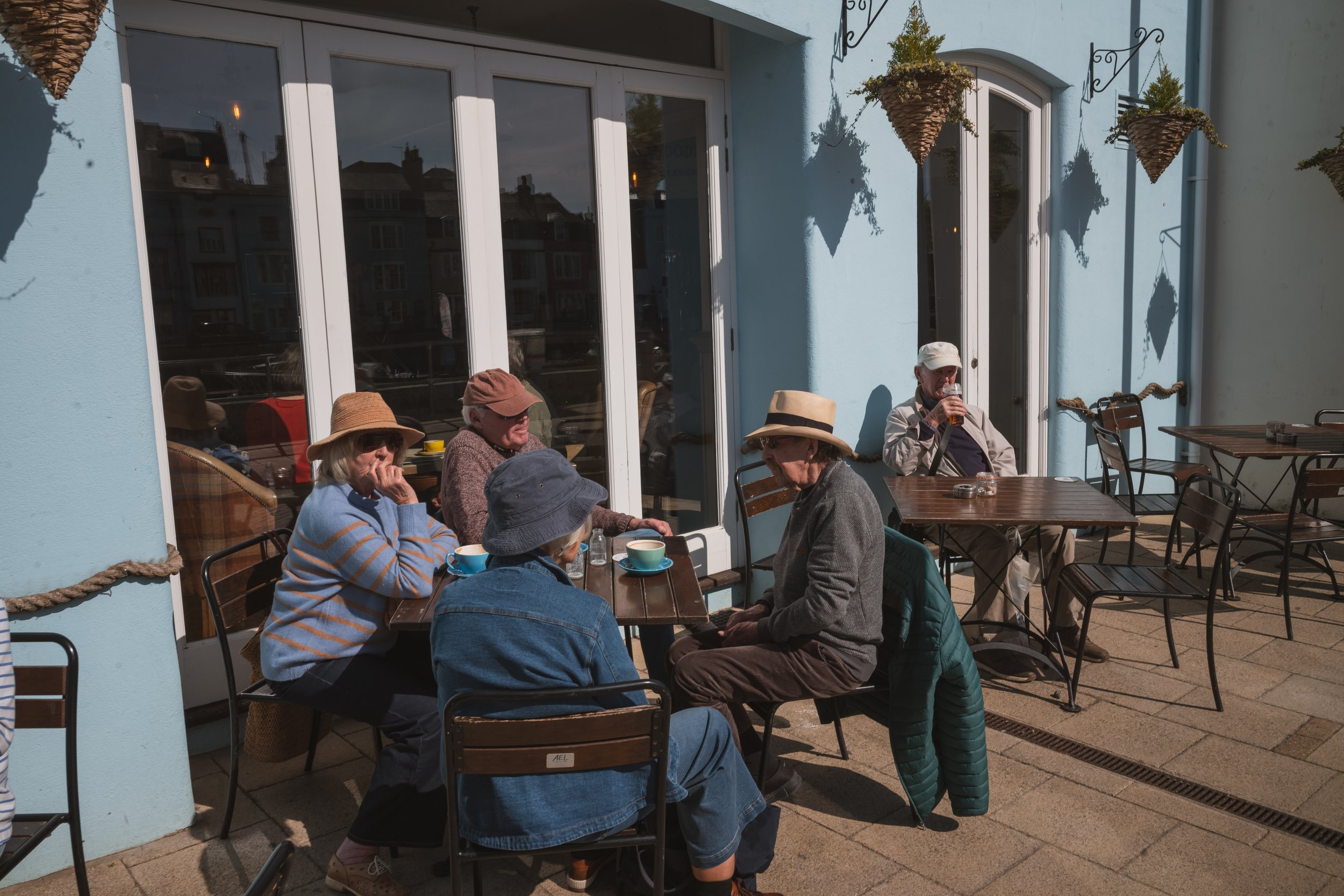
A group of retirees on a bench by the waterfront sharing a box of chips in the sun, the coloured townhouses of the old harbour stacked behind them. A cluster of people in hats at an outdoor café, coffee cups and conversation, nobody looking at a phone. Two people eating 99 ice creams down a pedestrian lane, the King of Hearts gift shop sign above them, a pushchair between them.
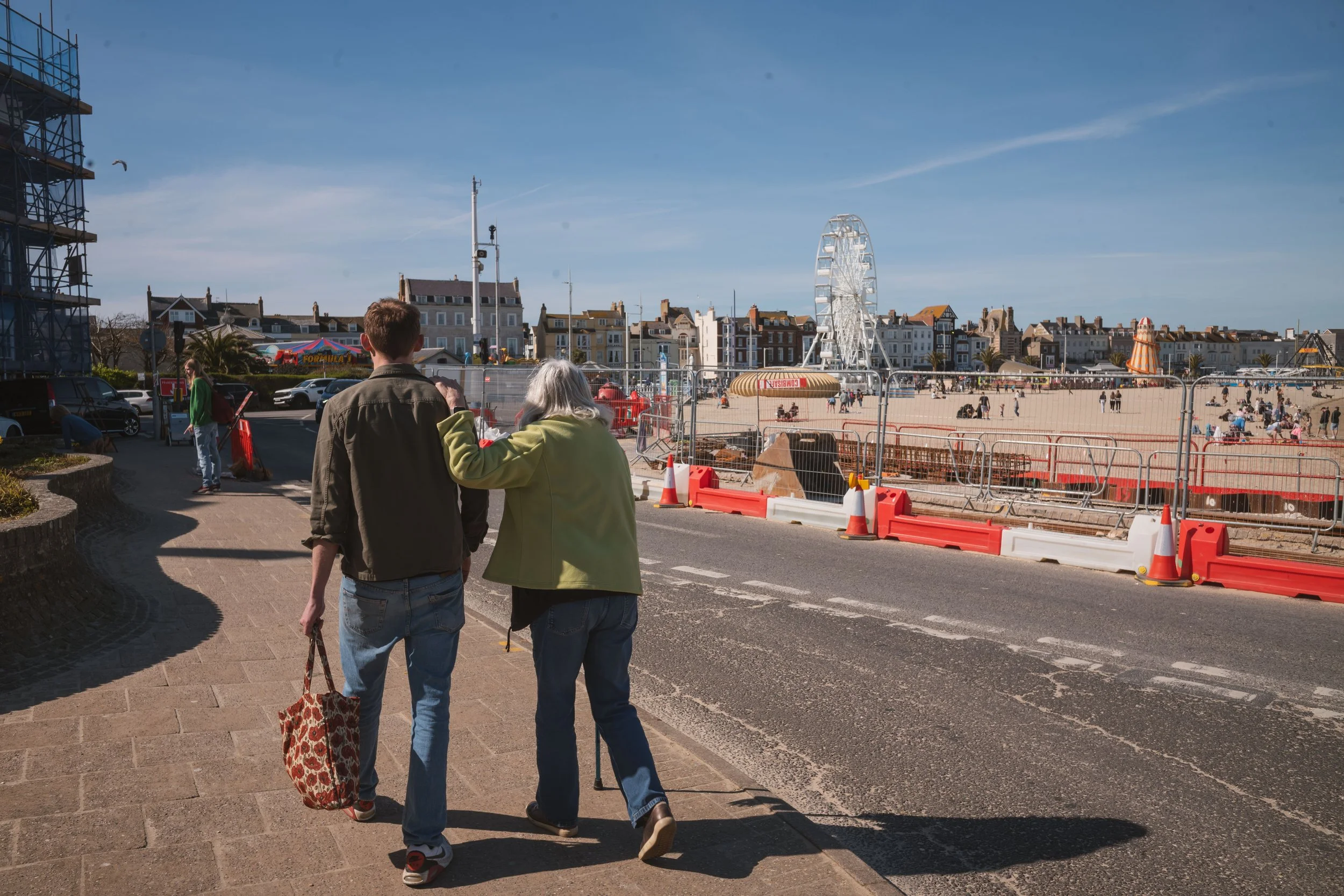
And then the closer. Walking back along the seafront toward the car, I saw a younger man and an older woman — son and mother, I think, though I don't know — walking arm in arm toward the beach. She had her hand through his elbow. He was carrying the bag. The Ferris wheel turned slowly in the distance. I raised the camera, got one frame, and kept walking.
"This is what Little England actually looks like when you put down the argument and just walk around with a camera."
I'm not sure whether places like Weymouth represent something to mourn or something to hold onto. Probably both — which is usually the honest answer. What I do know is that they're worth photographing carefully, without an agenda, while they still look like this.
The Leica M10 rendered the light beautifully all day — that particular quality of south coast light in early spring, where the sun is bright but thin, the shadows hard-edged, the colour palette running from Georgian cream to pub red to sea-blue. I shot everything at f/8, kept the ISO low, and let the camera do what it does.
More from this series to follow. I'll be returning to Weymouth, and to towns like it, throughout the year.
Yes please, keep me posted when there’s a new blog
Instagram - Film