in the frame
Oh, I Do Like to Be Beside the Seaside
Brighton doesn't do things quietly. That's partly why I moved here.
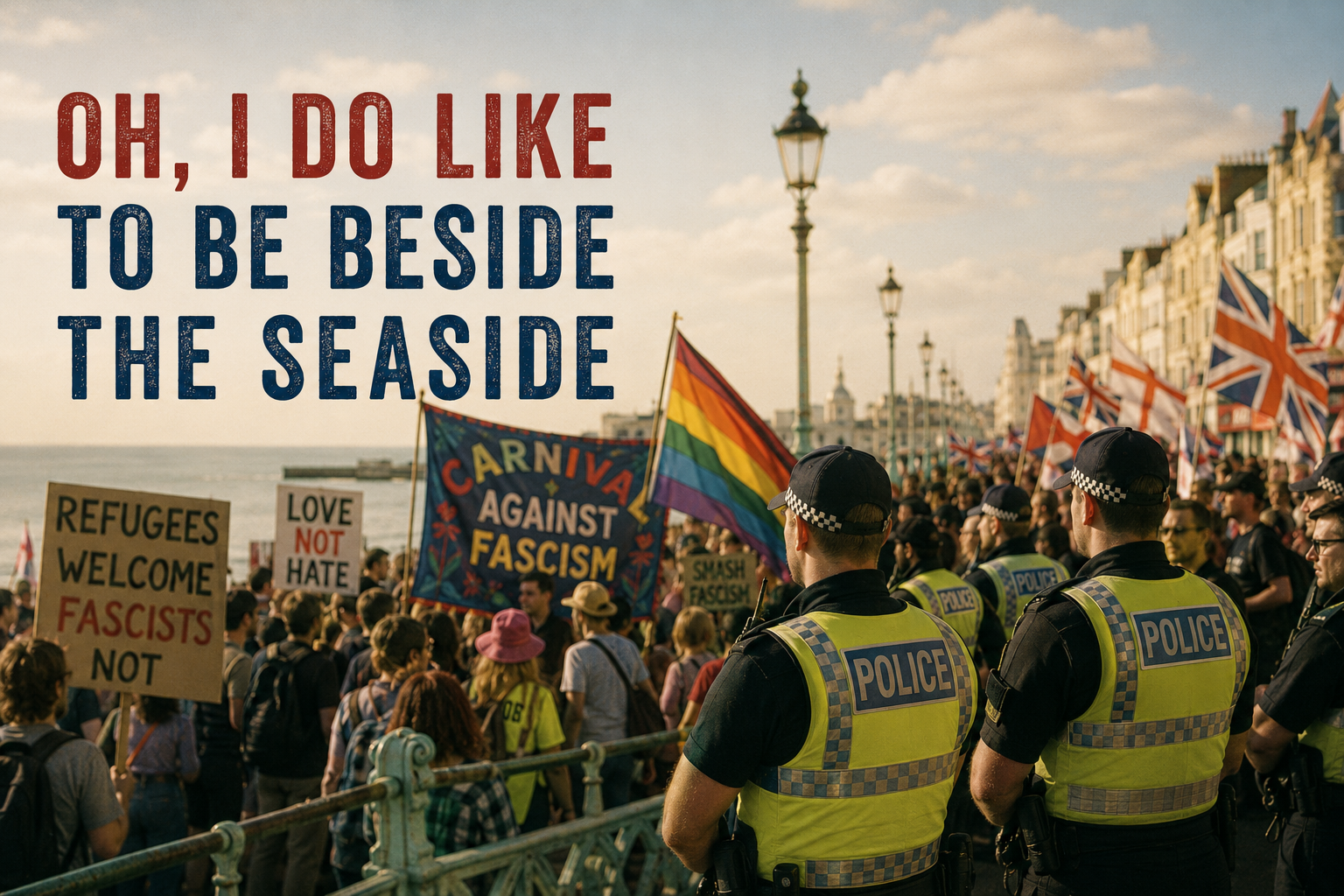
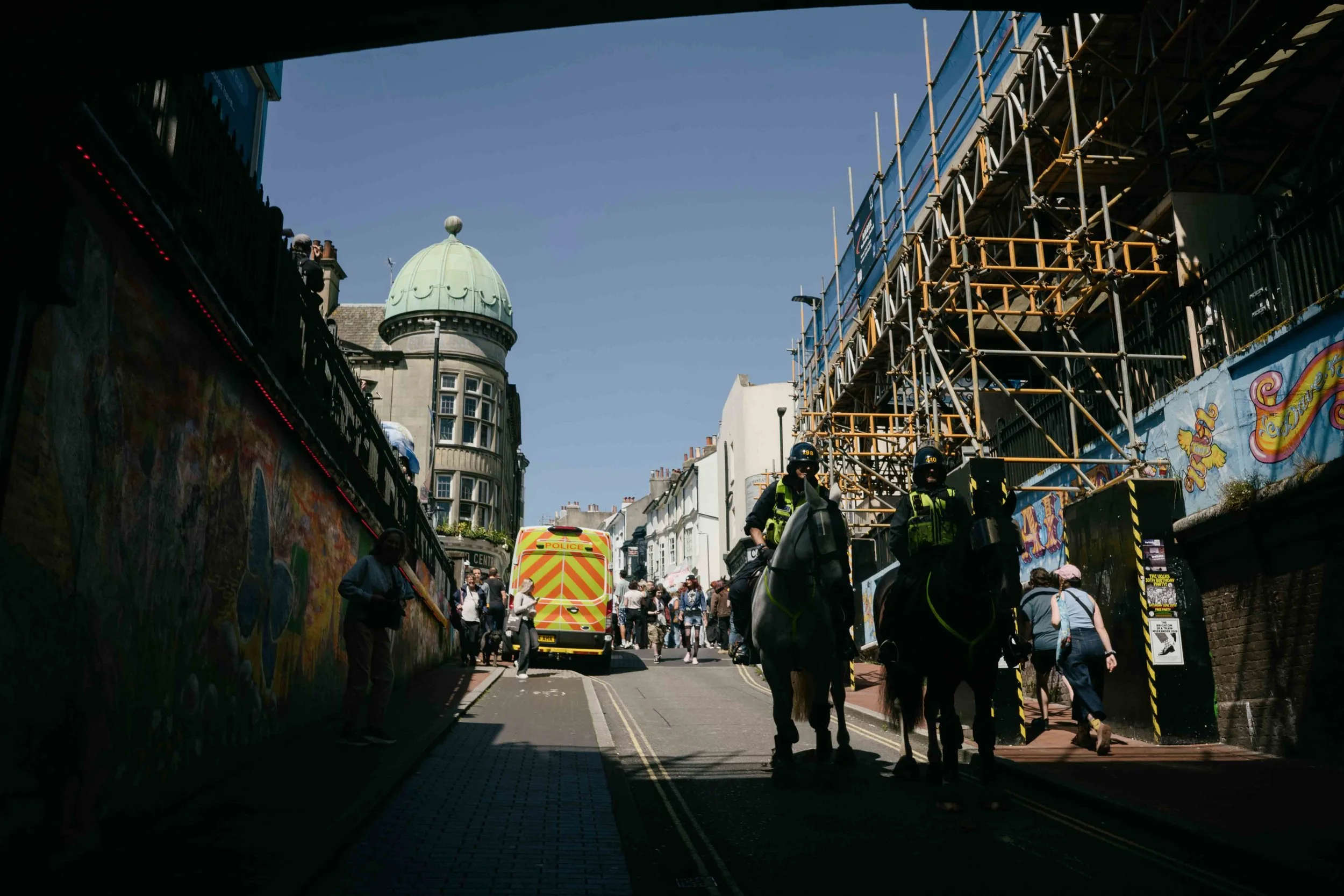
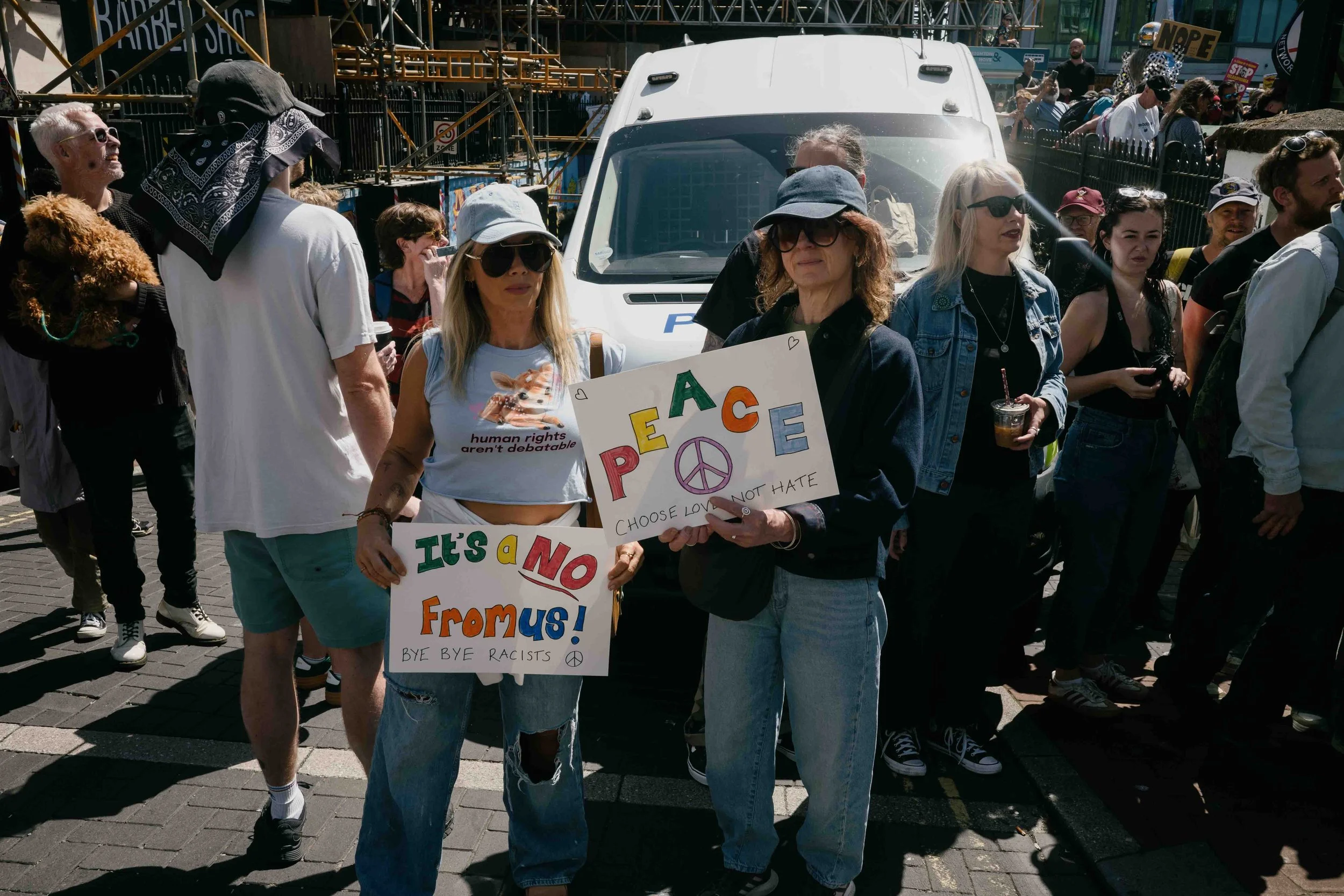
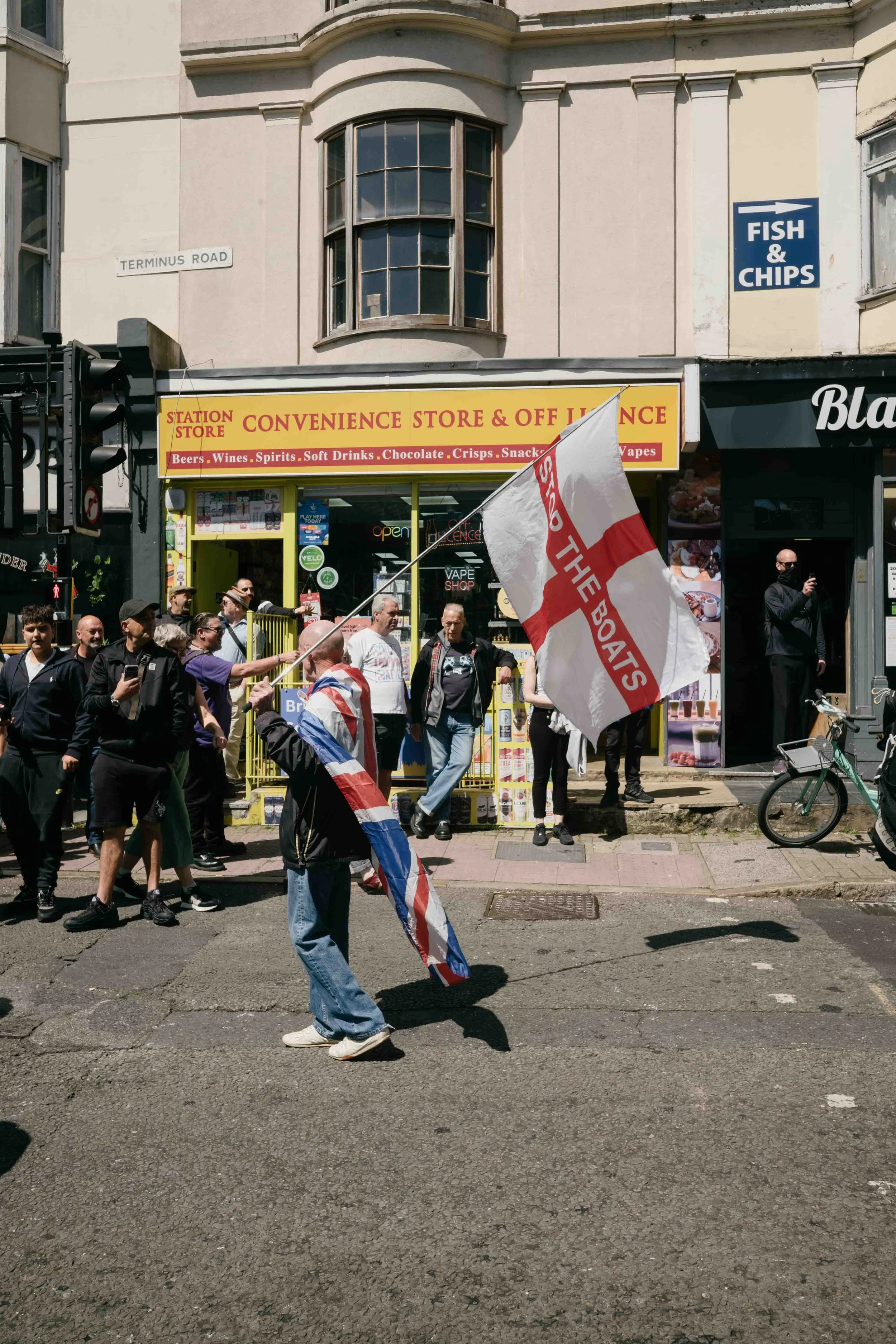
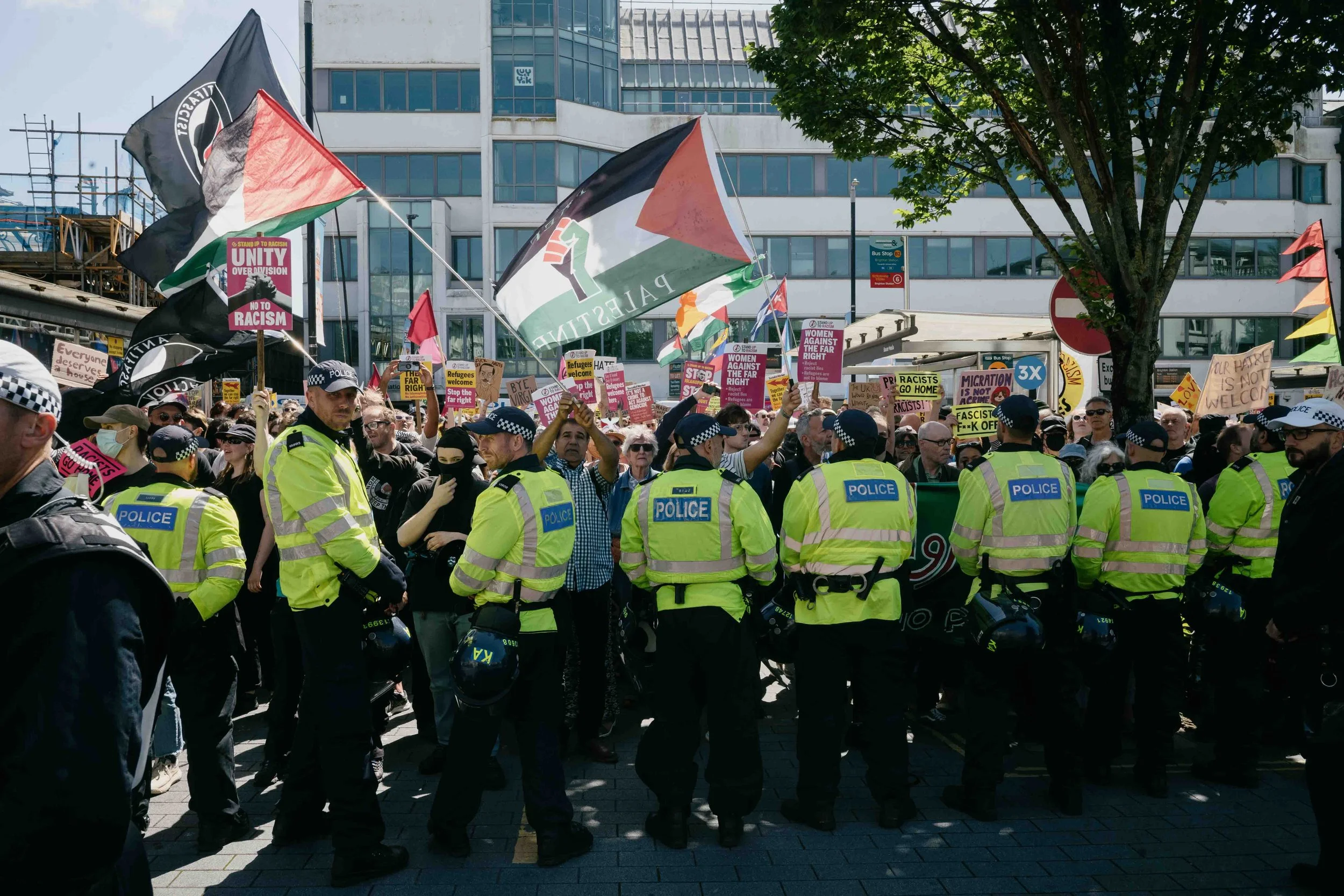
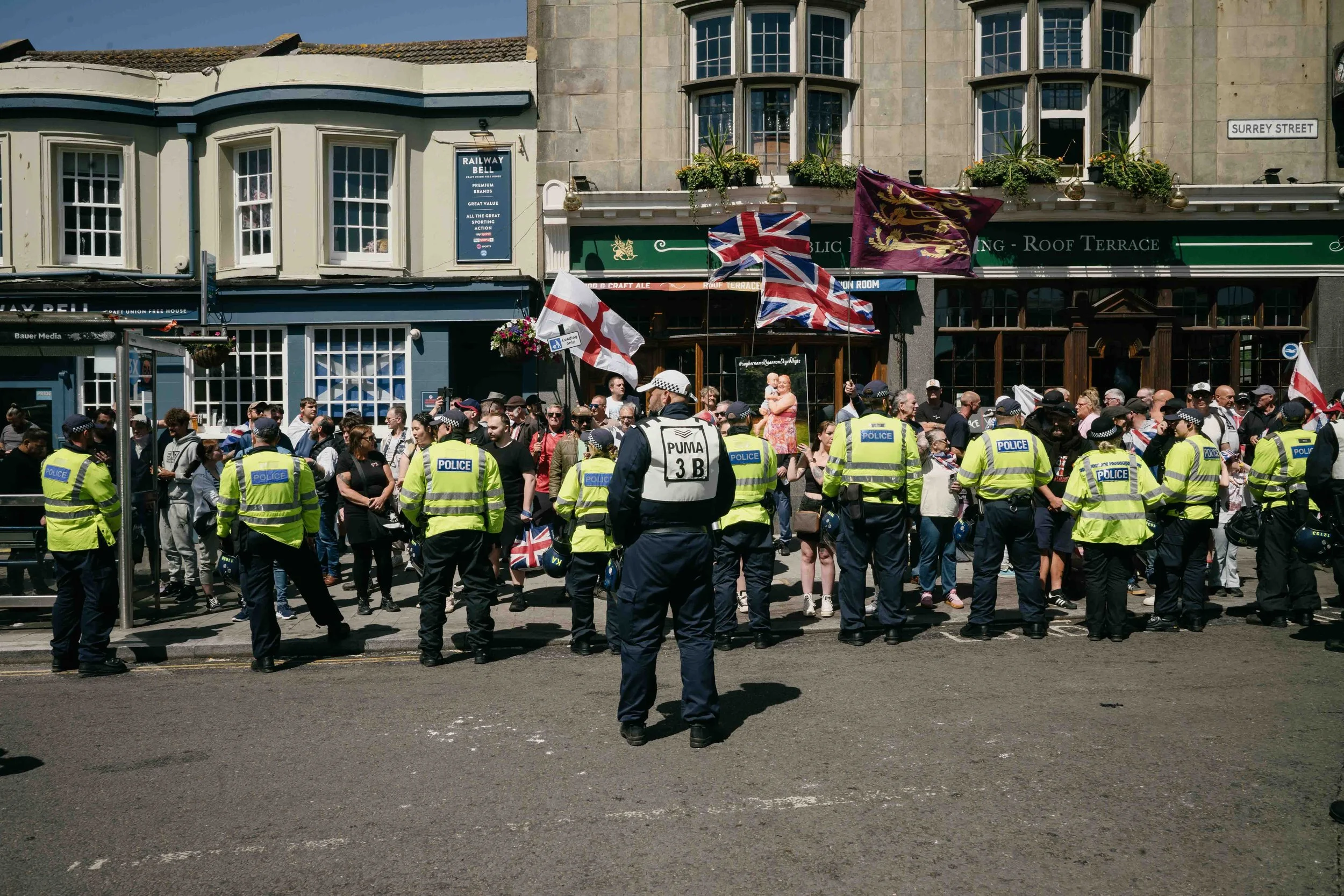
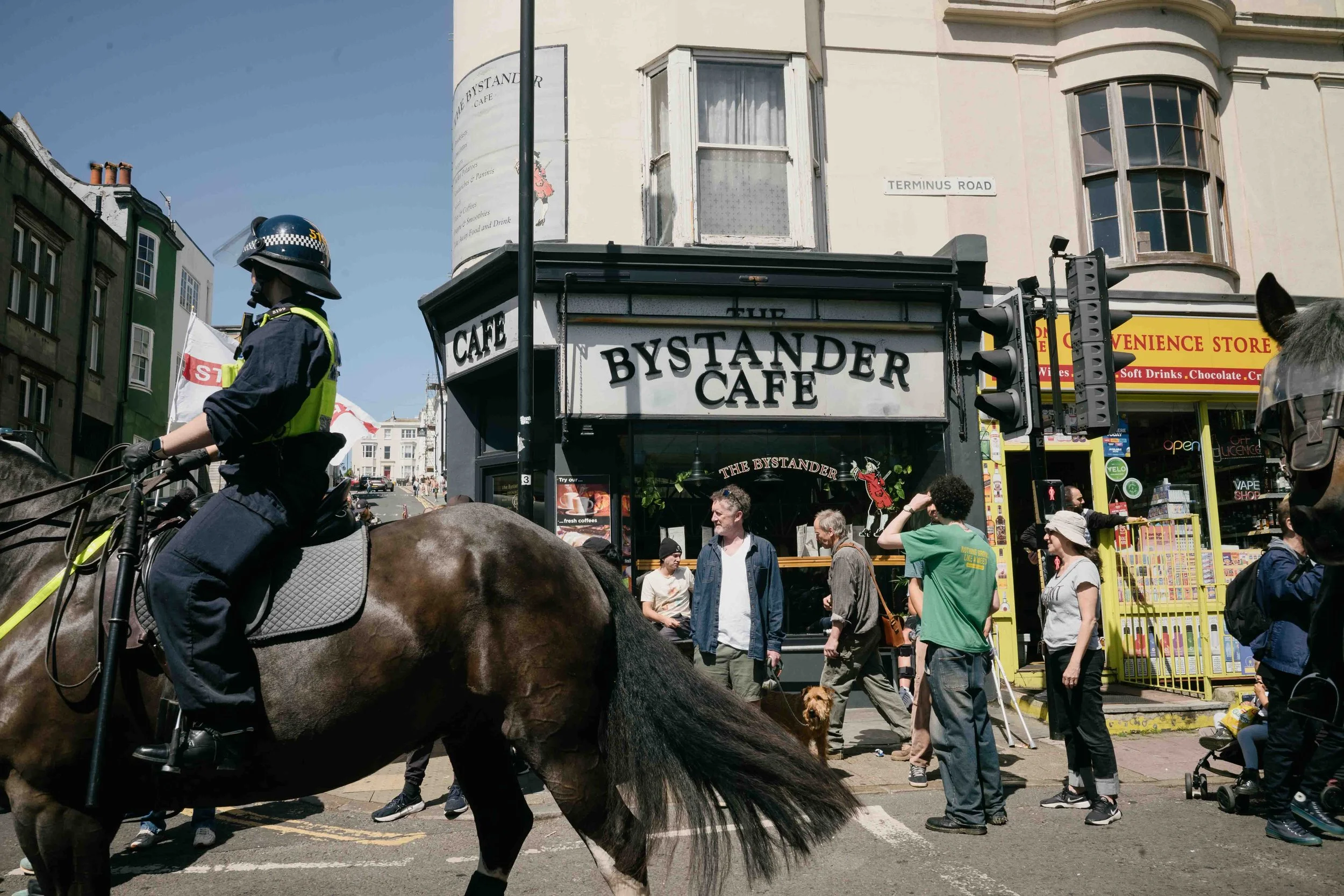
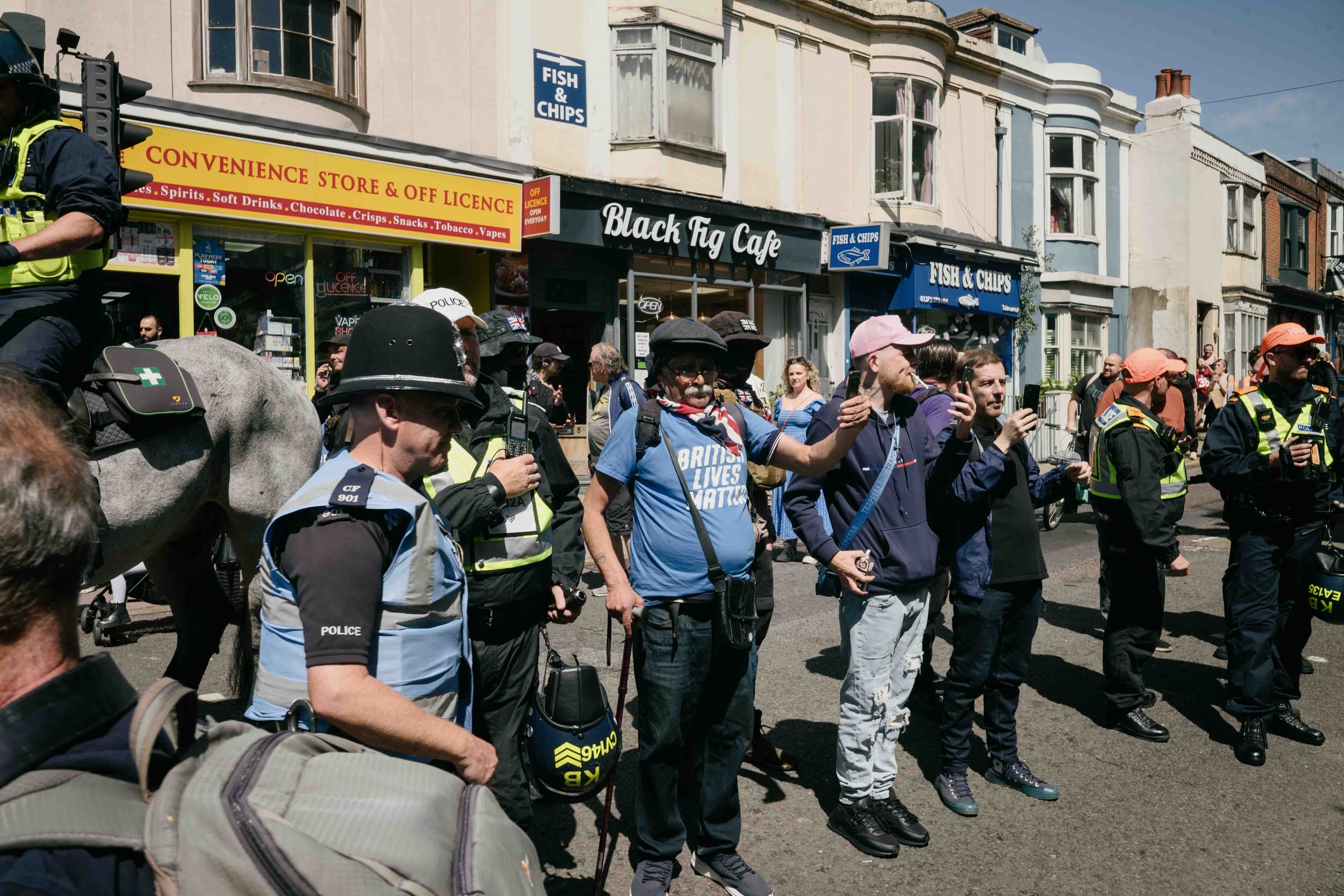
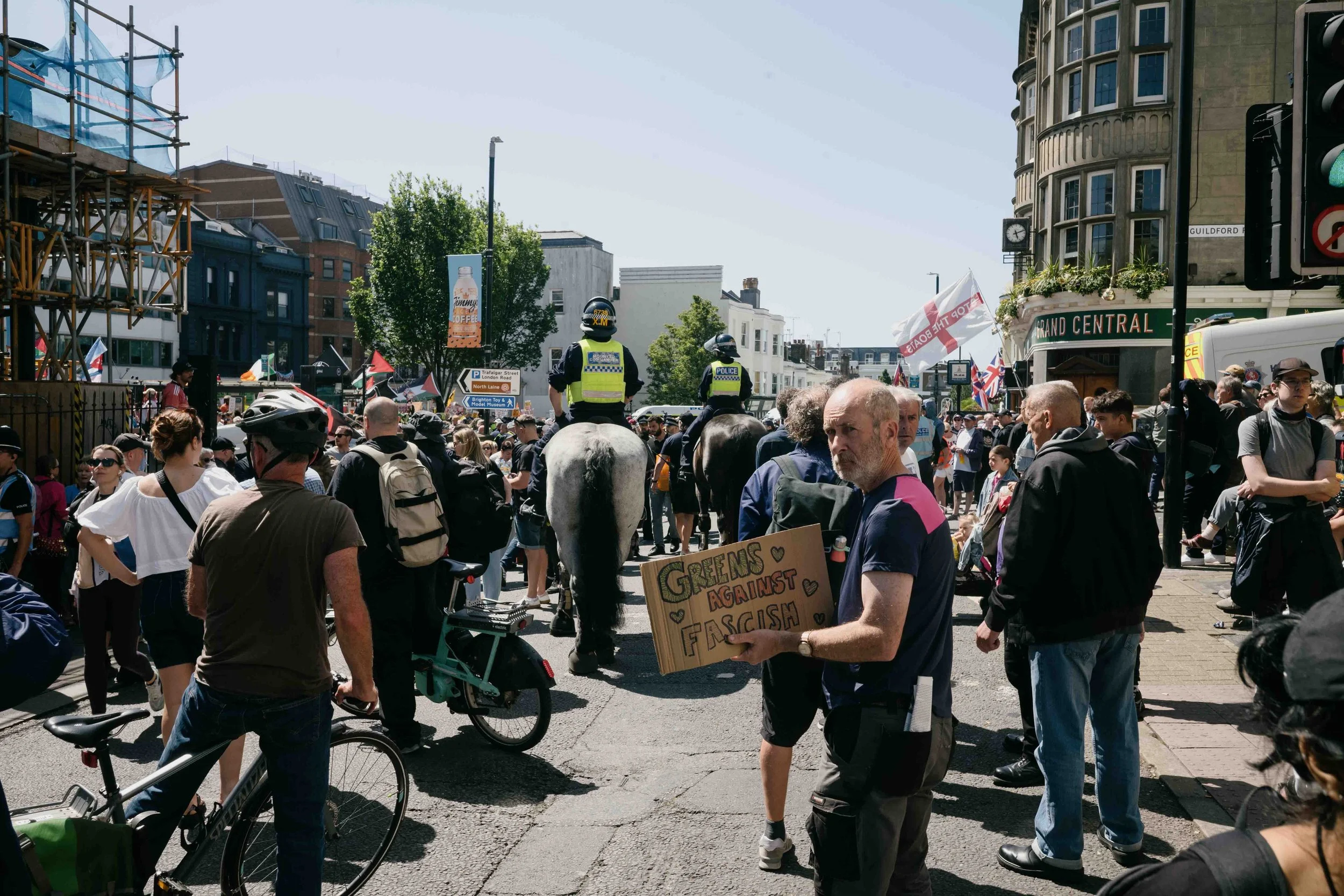
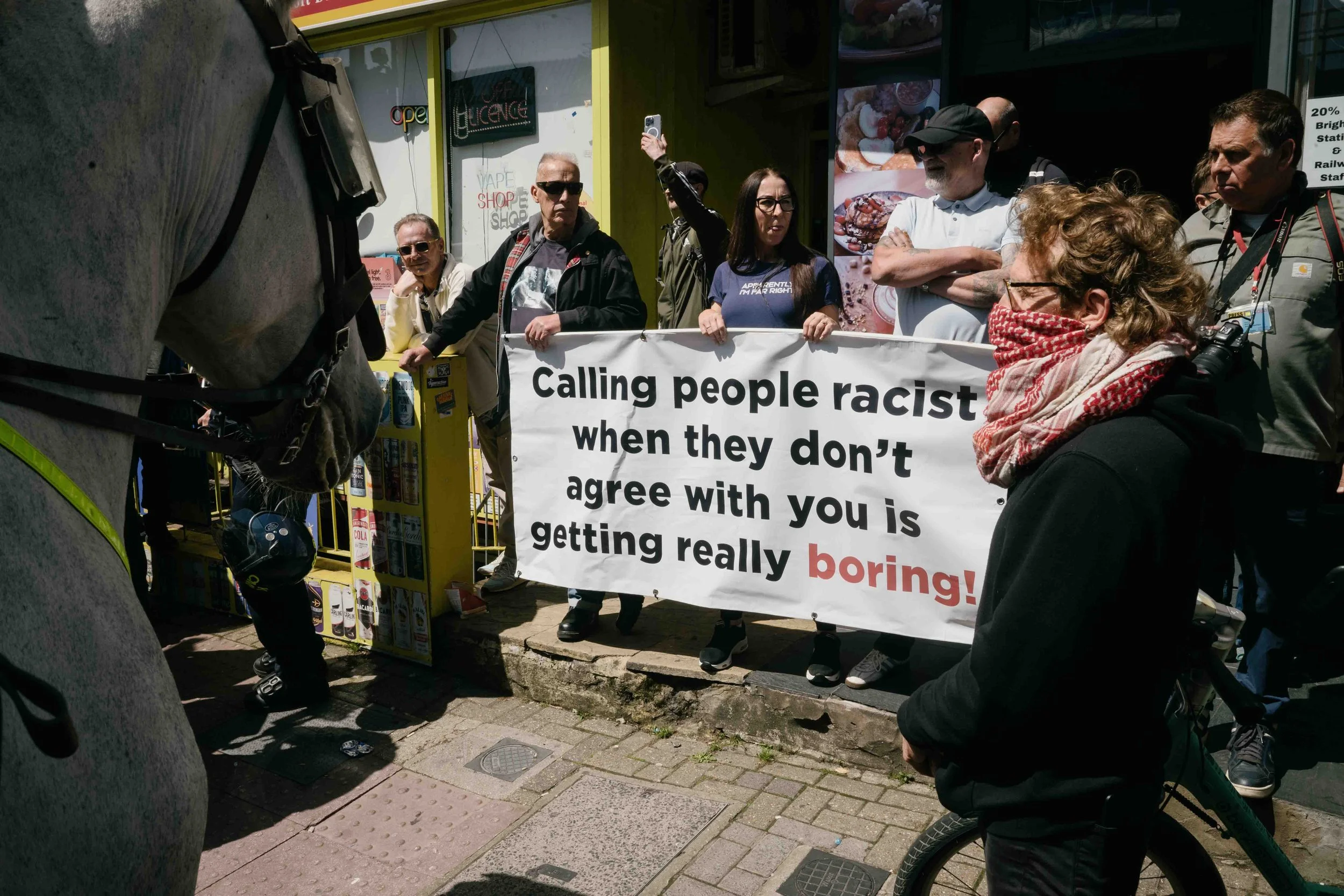
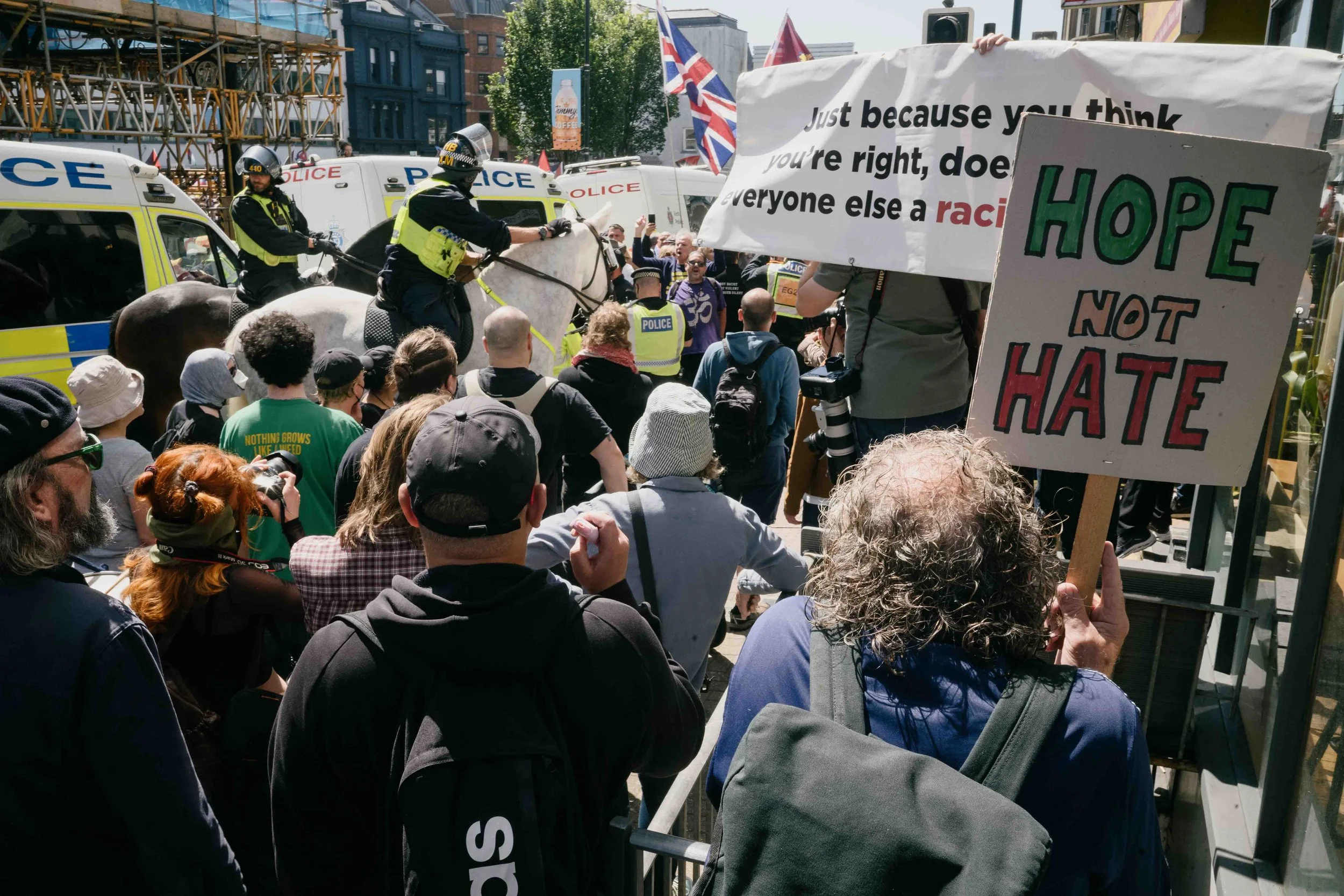
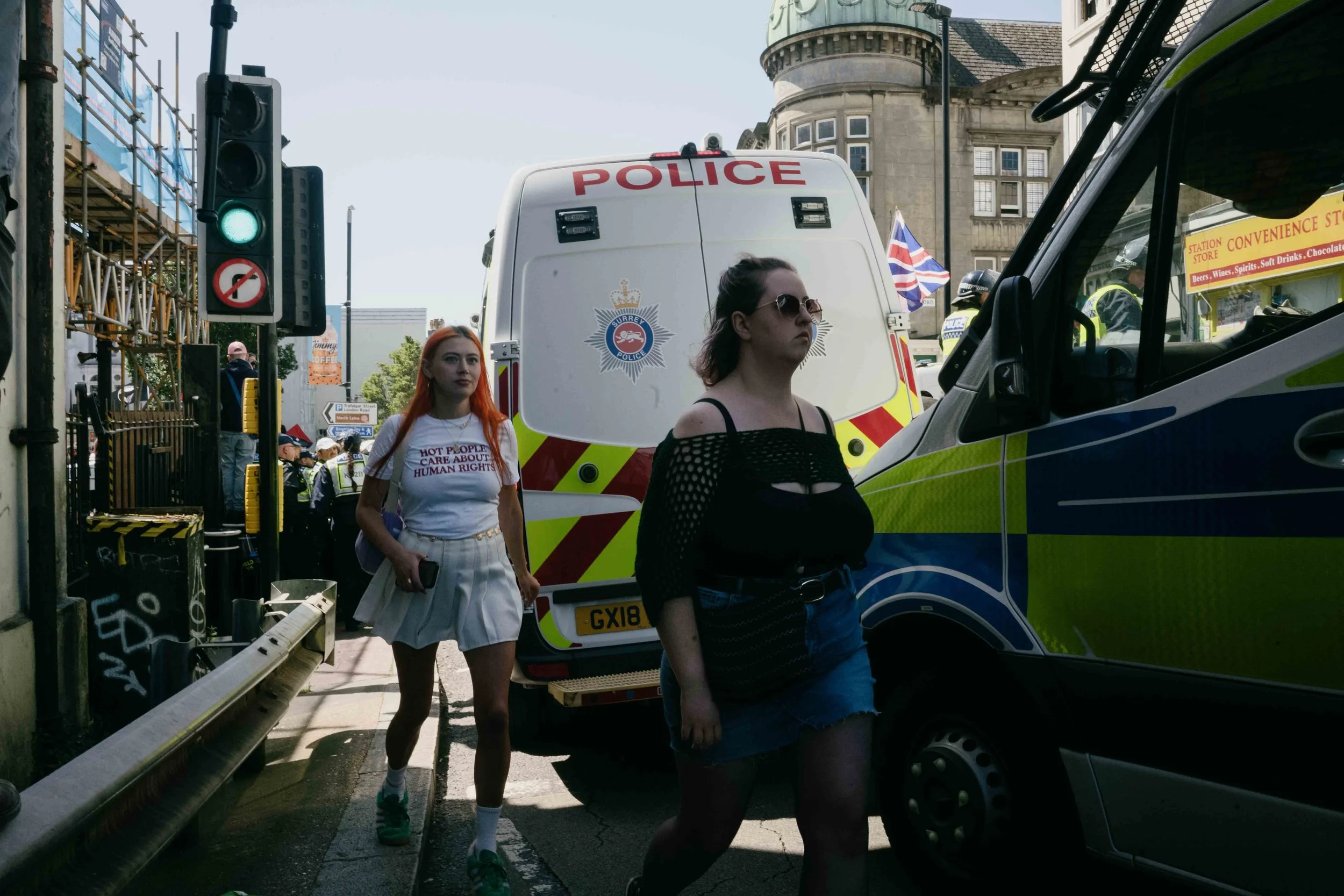
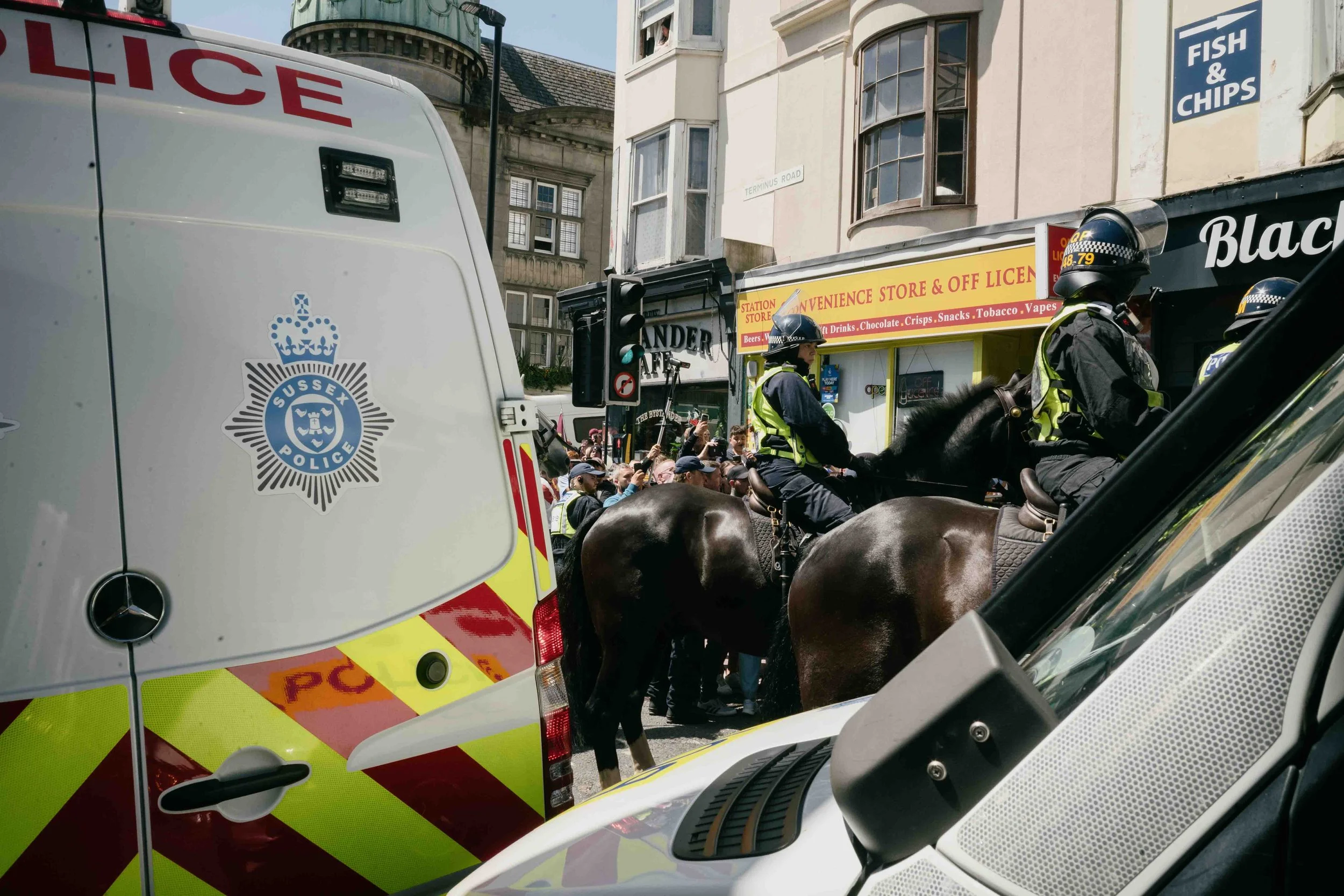
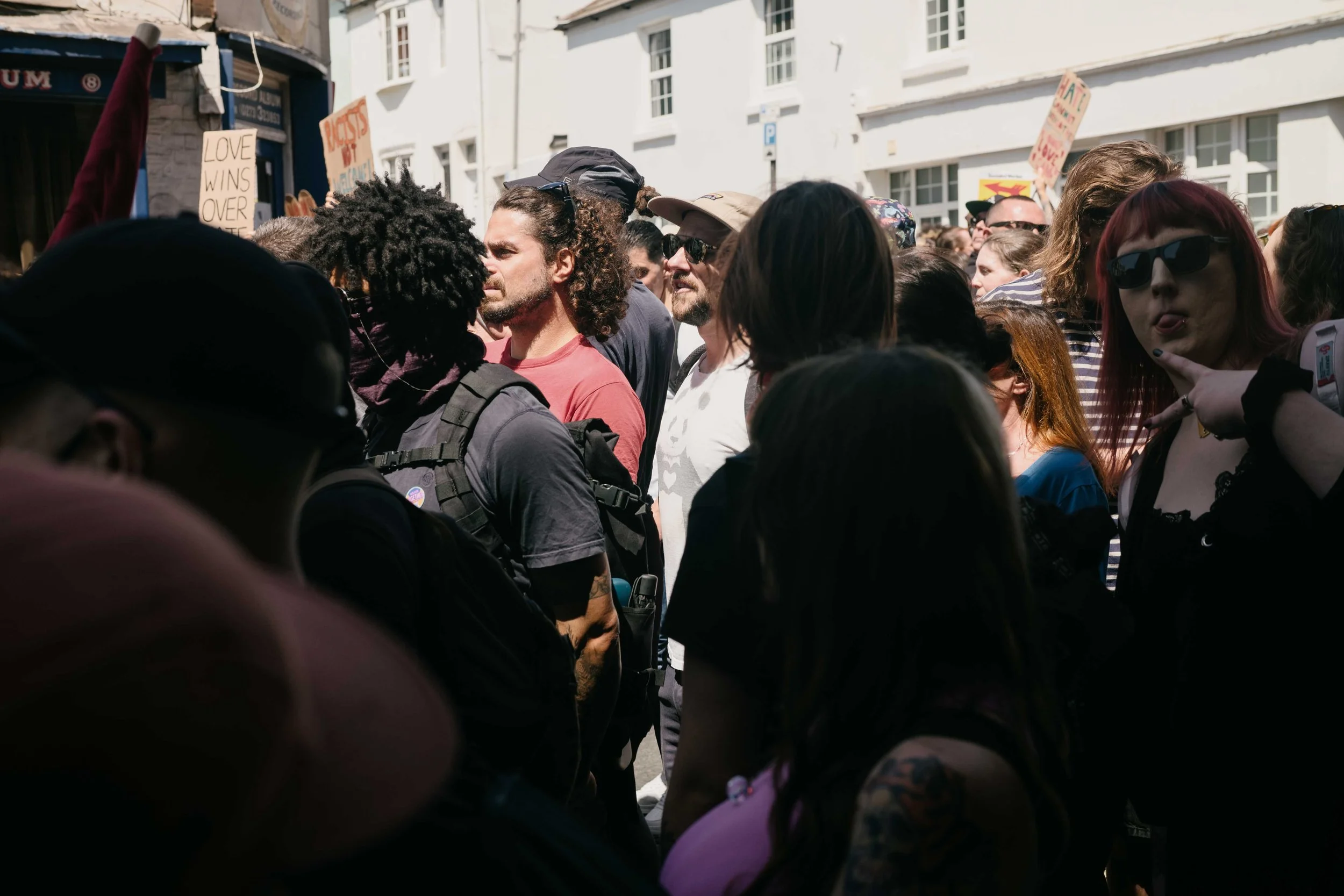
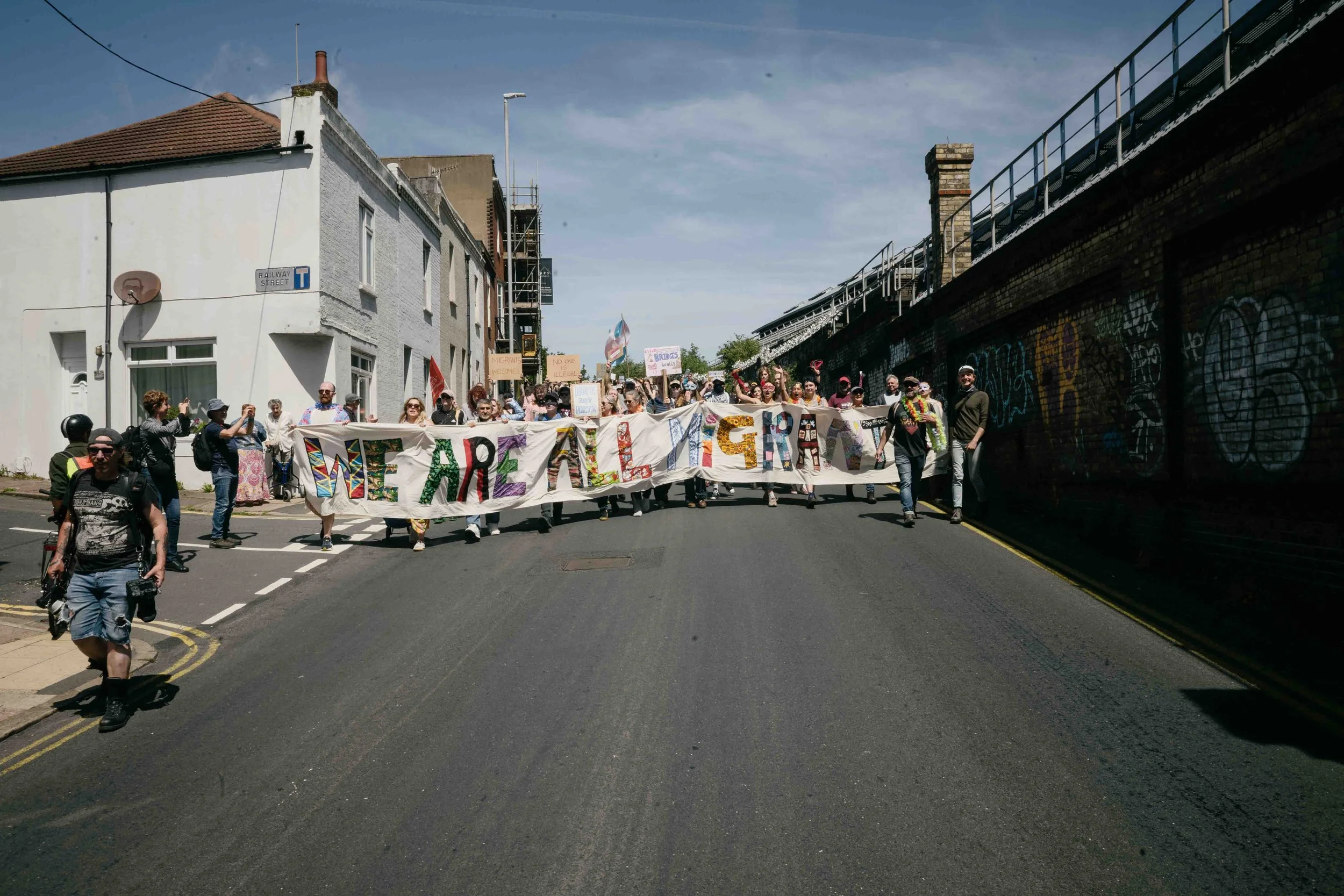
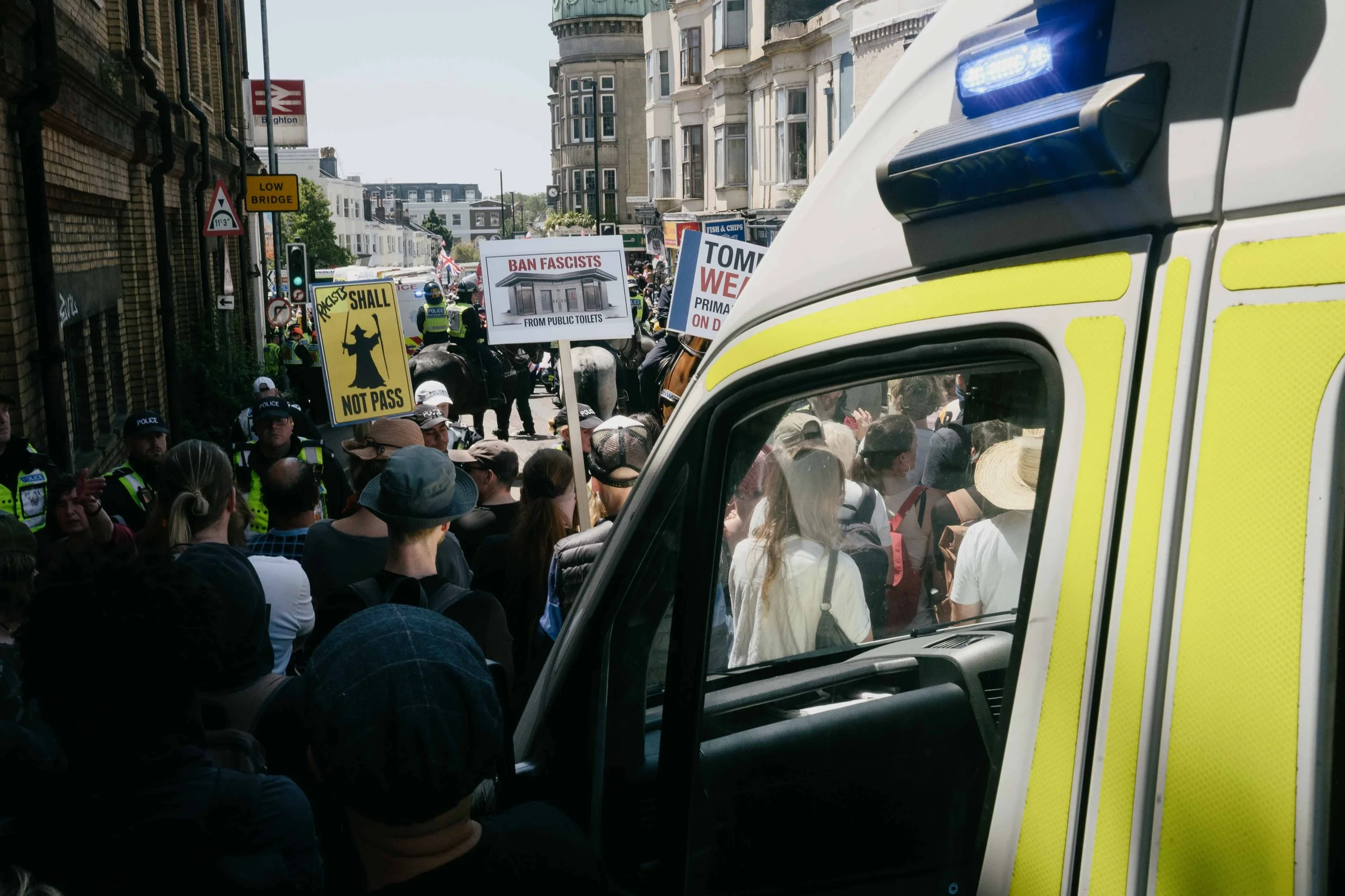
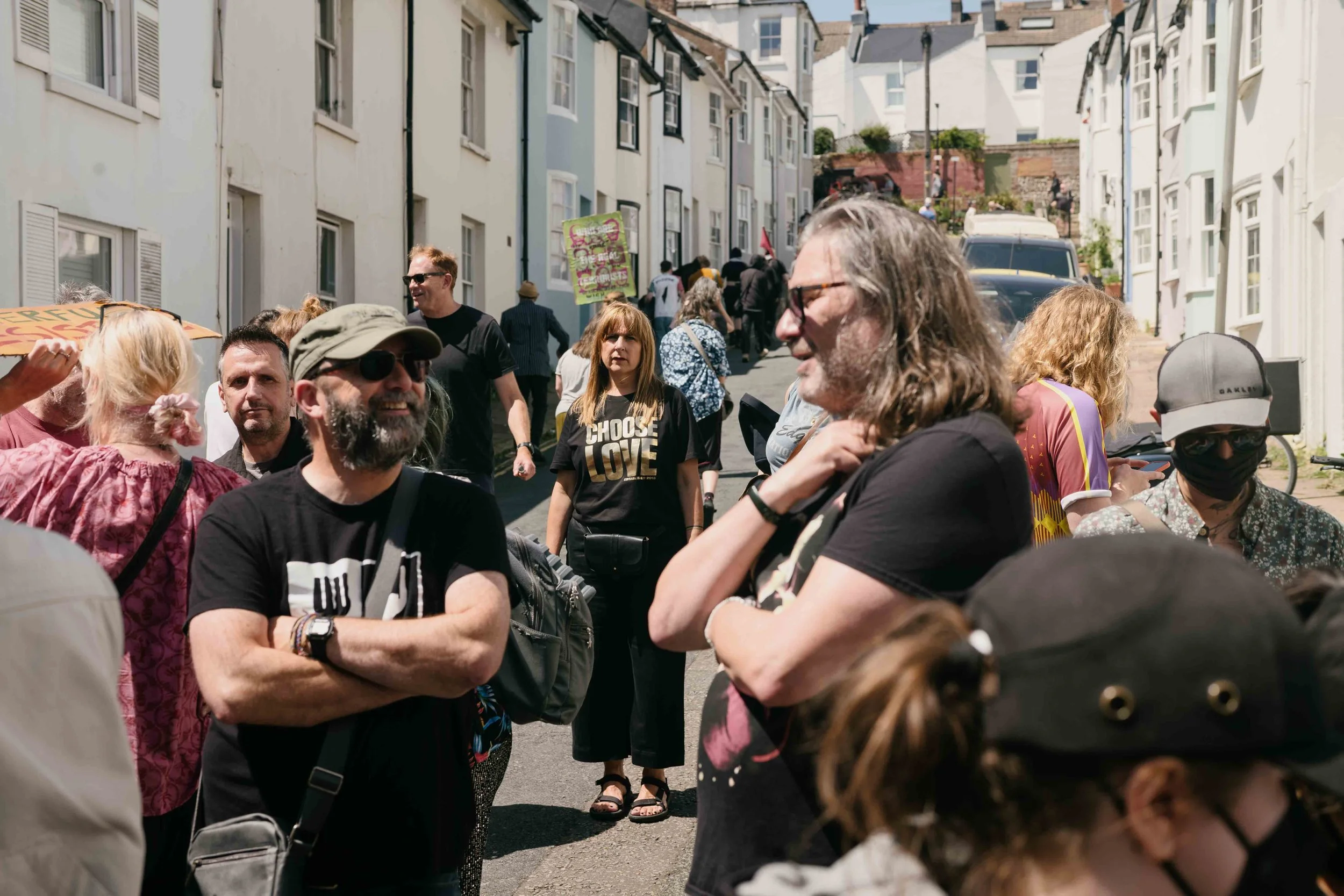
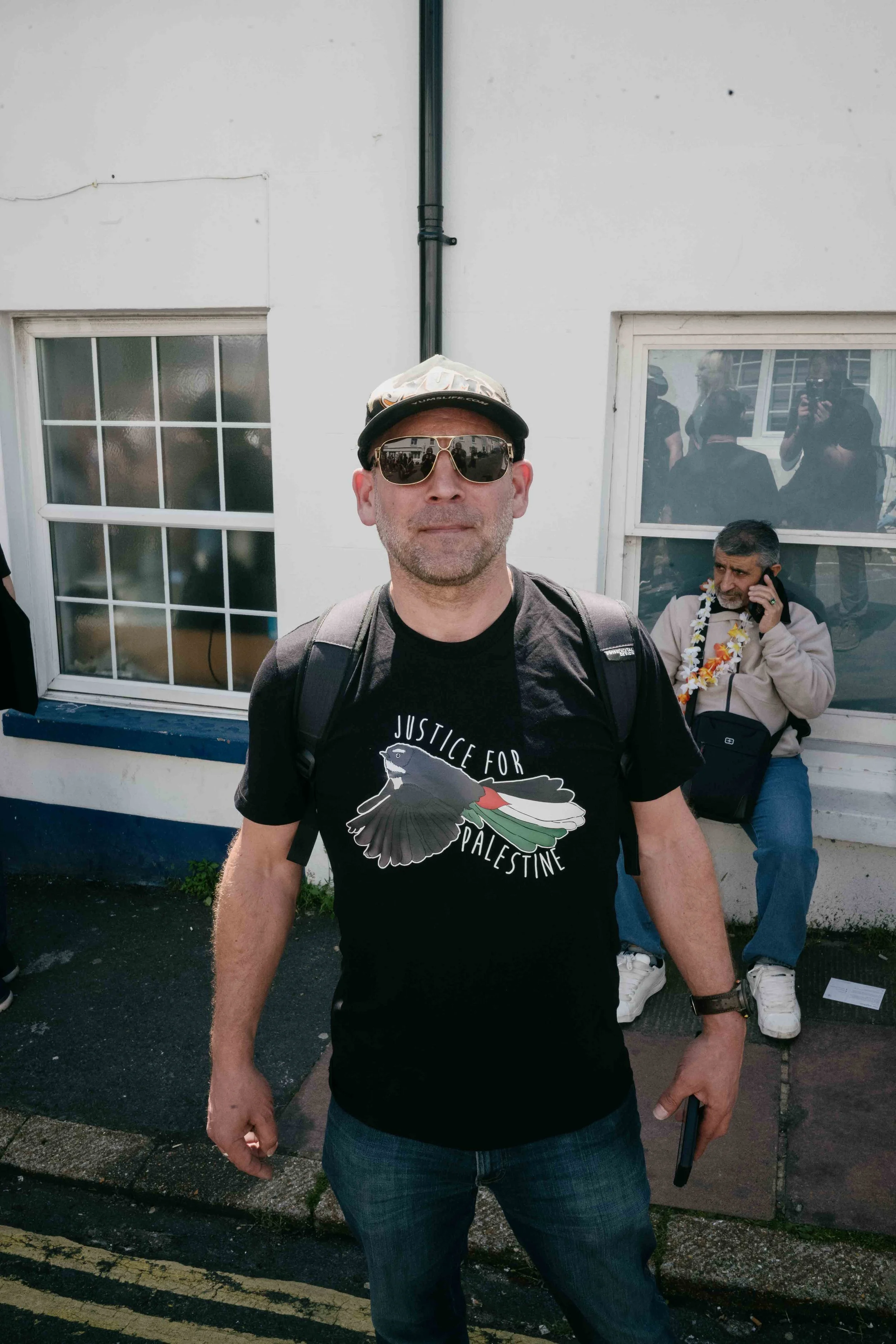
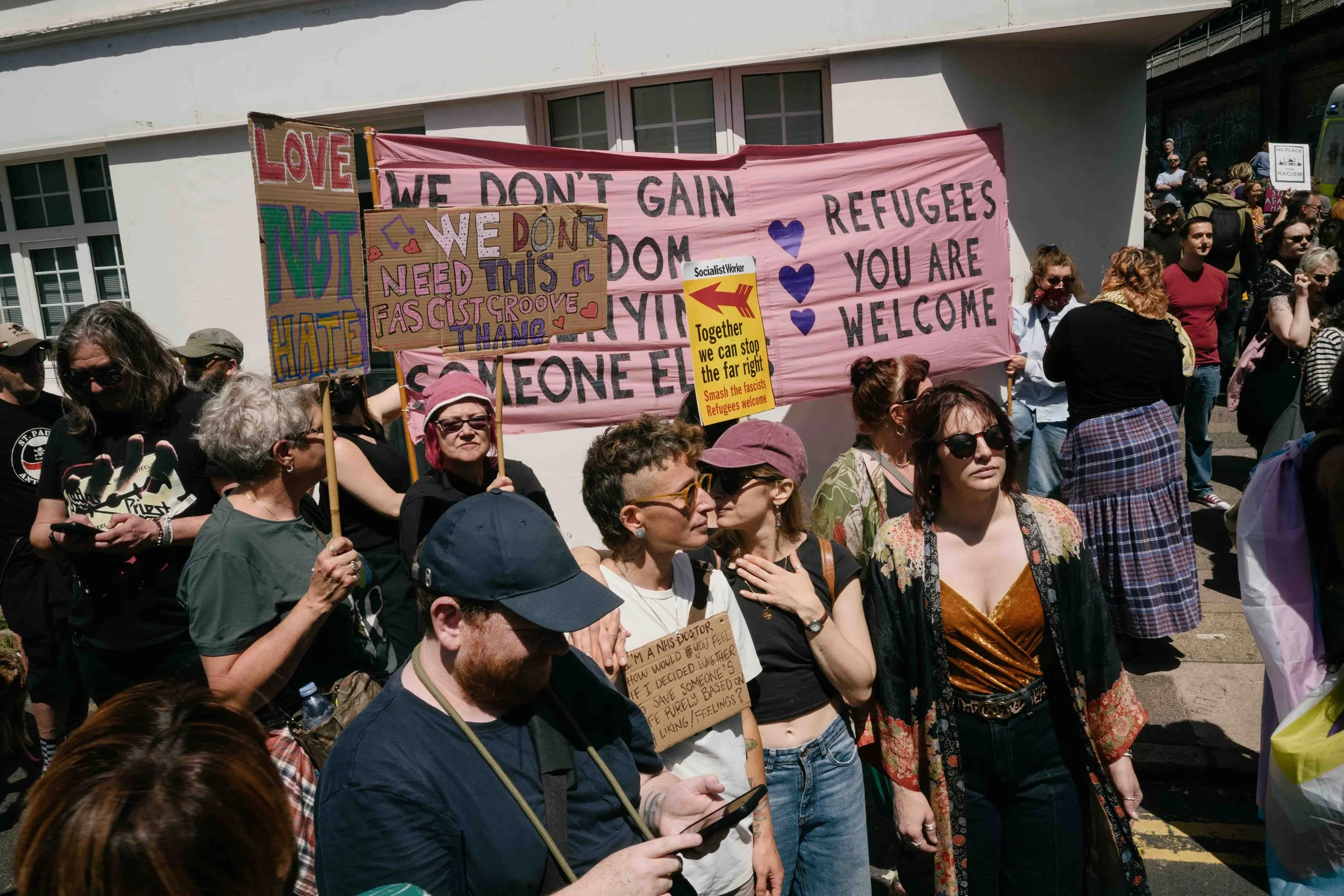
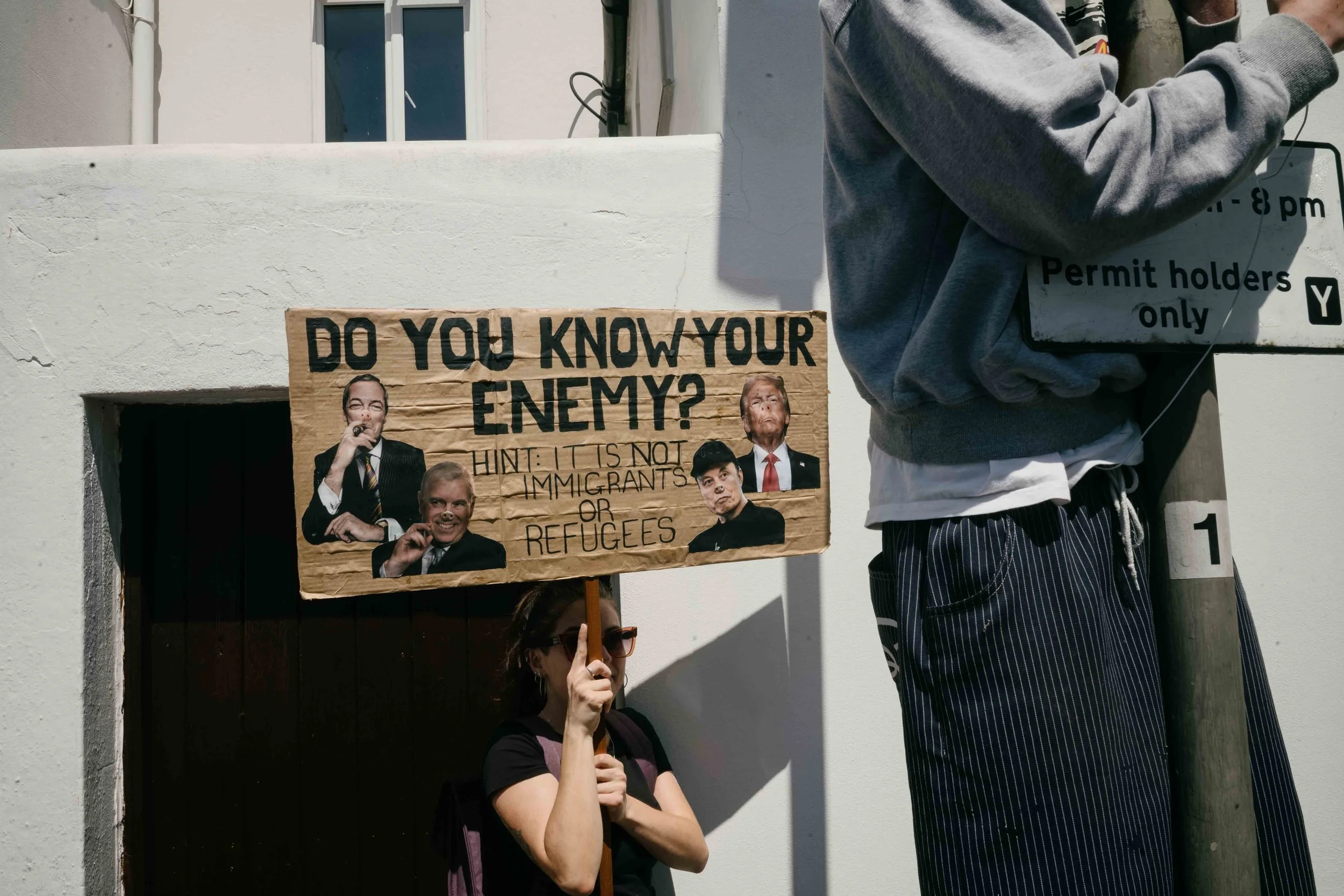
Today the city had two sets of visitors — the Carnival Against Fascism and the South East Patriots — and for a few hours the streets held both of them, pressed together by police lines and competing chants, while the rest of us tried to work out what we were watching.
Brighton doesn't do things quietly. That's partly why I moved here.
Today the city had two sets of visitors — the Carnival Against Fascism and the South East Patriots — and for a few hours the streets held both of them, pressed together by police lines and competing chants, while the rest of us tried to work out what we were watching.
Not a Brightonian by Birth
I've lived here since 2014. Long enough to feel like home, not long enough to claim it as mine by right. I came for the community, for the sea, for the kind of place I wanted to bring my children up in. Brighton gave me all of that.
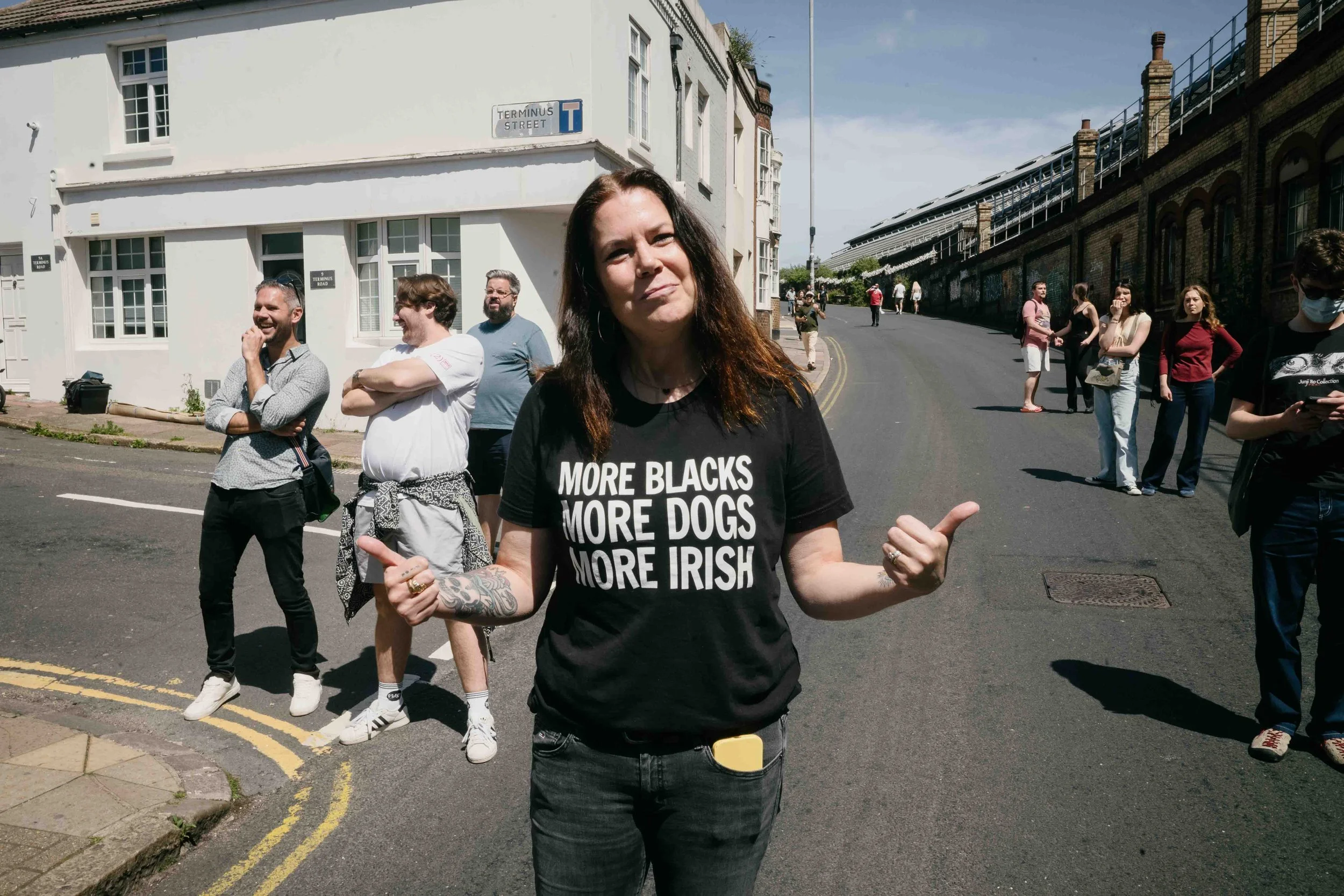
It hasn't always been the most multicultural city — I say that honestly, not as criticism. But it's changing, and the change is good. New food, new voices, new texture. A city finding more of itself.
"It's great for the community, great for cuisine, and great for culture."
I mean that. So when I saw far-right flags moving through these streets, something in me reacted. Not just politically — personally.
Heart is where the home is.
My dad was Yugoslav and my mum was Catholic Northern Irish. They met in Australia and settled in the Midlands, which meant I grew up knowing all corners of a community — accents, faiths, kitchens, stories. That background didn't make me tolerant in some abstract, theoretical way. It made me know people. Knowing people makes abstraction harder.
I'm immigrant stock. When I see flags that say otherwise, I don't see politics. I see a mirror held up the wrong way.
The Man on the Pavement
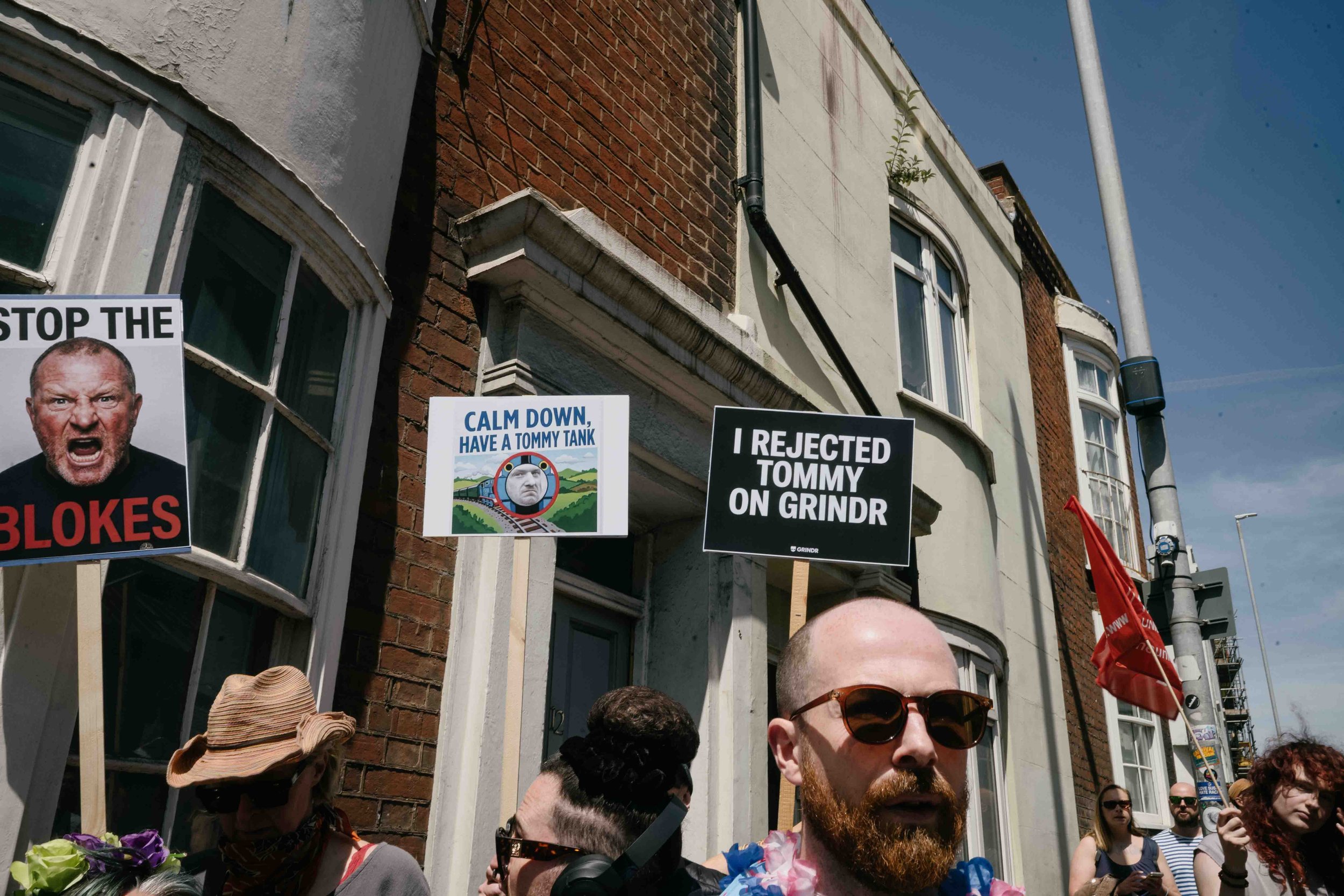
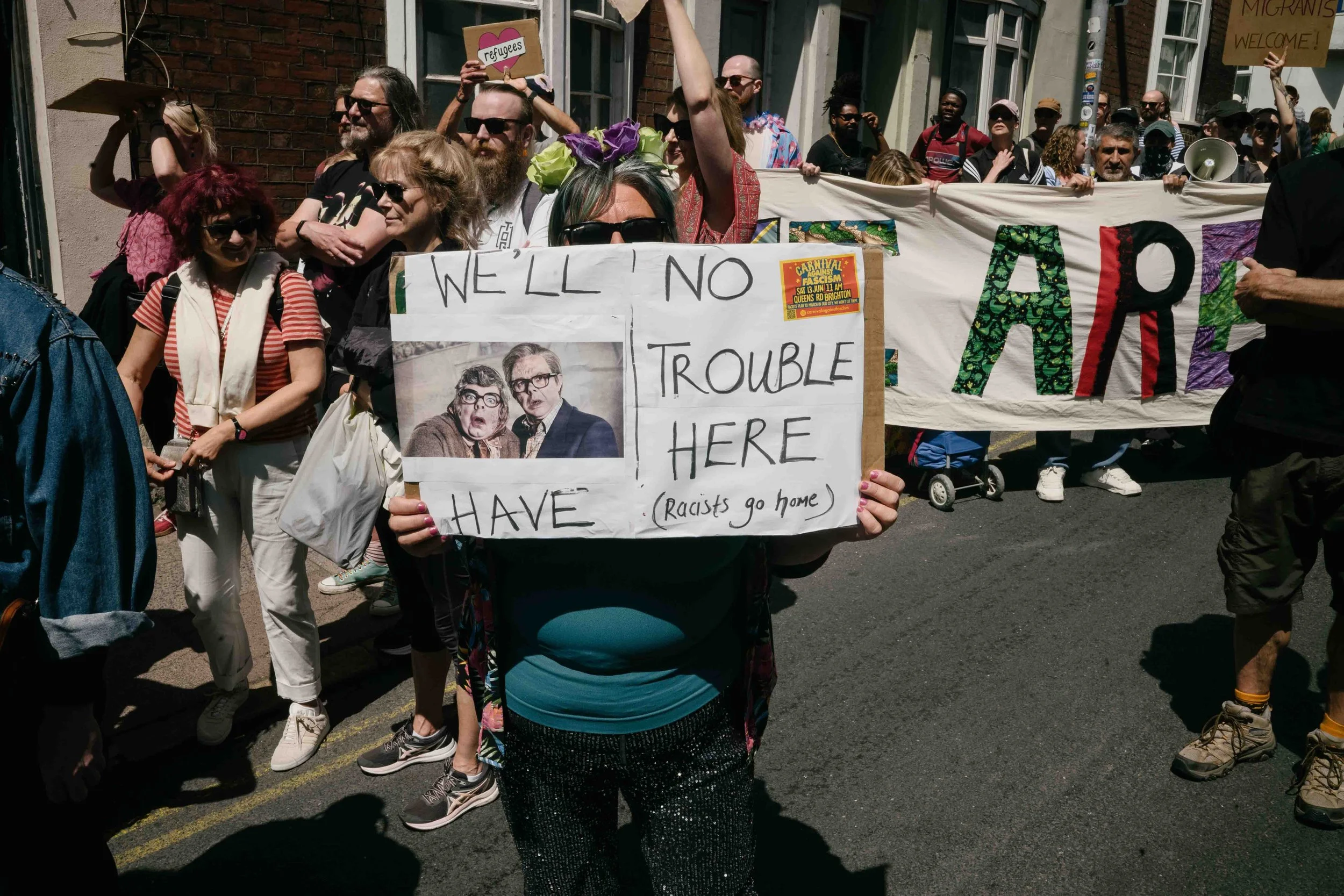
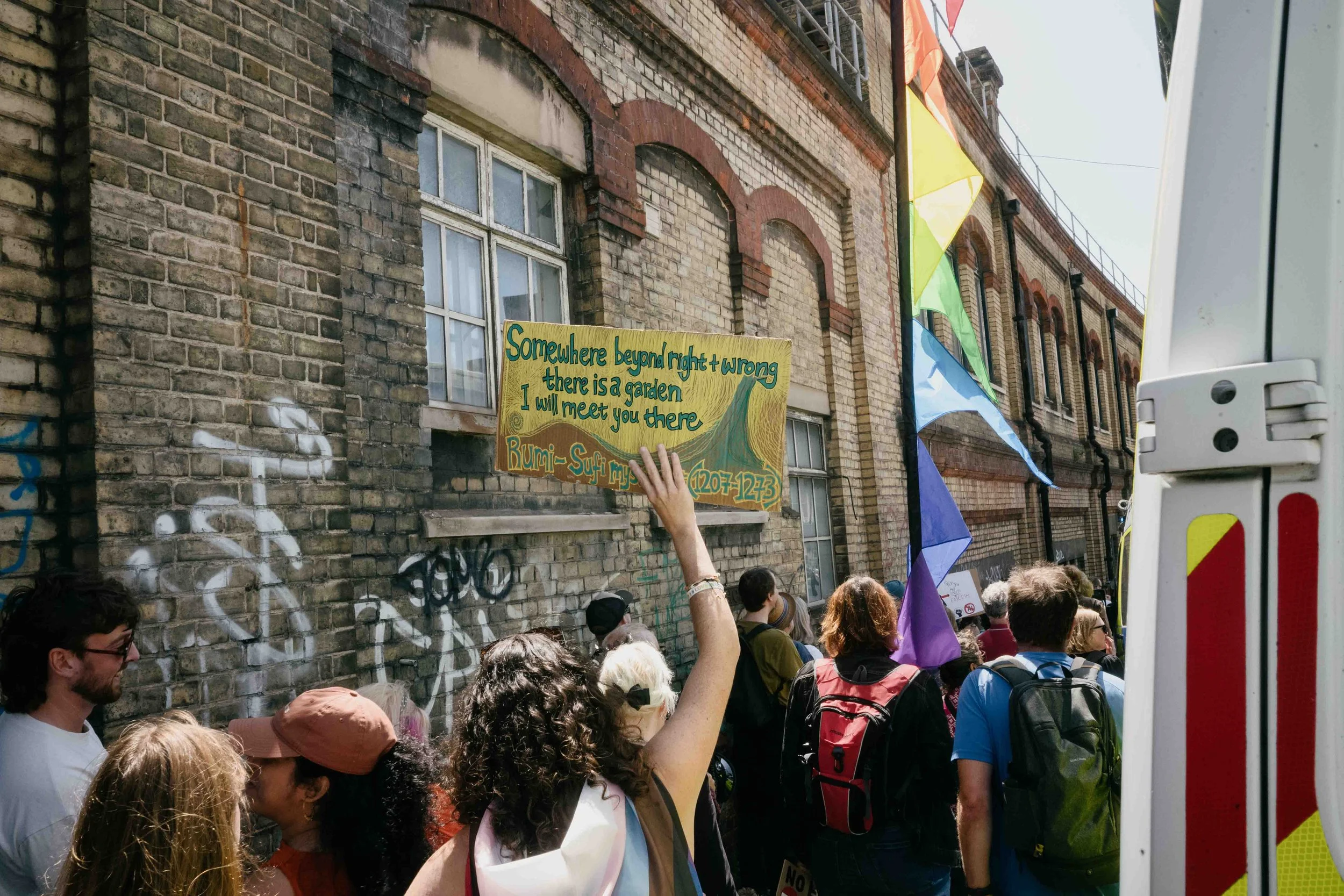
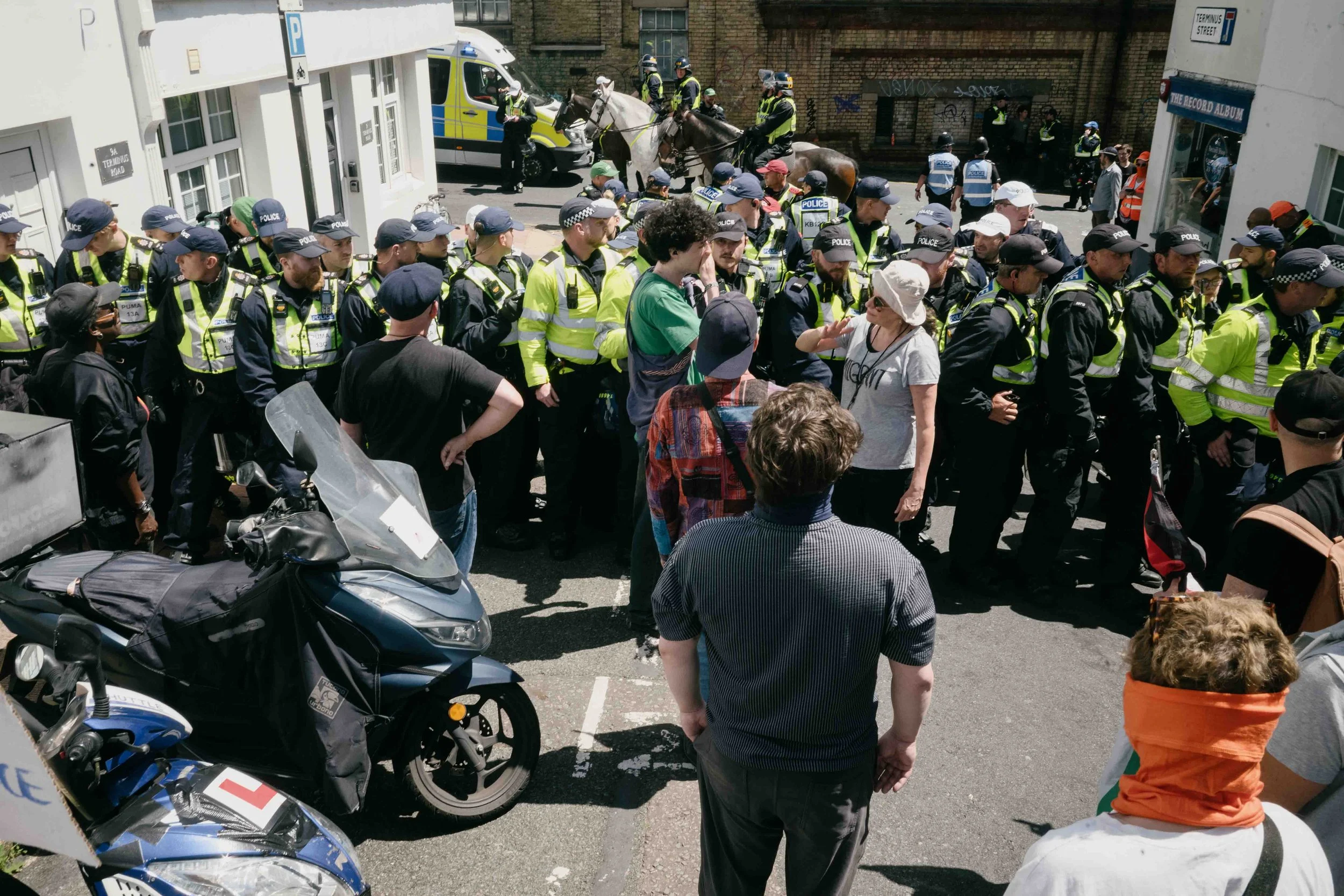
I was genuinely unsettled seeing those flags here. Brighton felt like it shouldn't be on that particular map.
Then a local stopped and talked to me. Born and bred Brightonian. He'd seen it before — thirty years of it, he said.
"They've been coming here for thirty years. The only reason they come to Brighton is to stir up the local community. And it hasn't changed in the twelve years you've been here. I can assure you it hasn't changed in the twenty years before that either."
It should have been deflating. Instead it was clarifying. This wasn't an incursion. It was a pattern, and Brighton had been absorbing it, unchanged, for decades. The city knew what it was. The city had already decided.
That conversation was worth more than anything I photographed.
The Police
I was at the far-left / far-right march in London not long ago, so I had a comparison to make.
Brighton's police today were also exceptional.
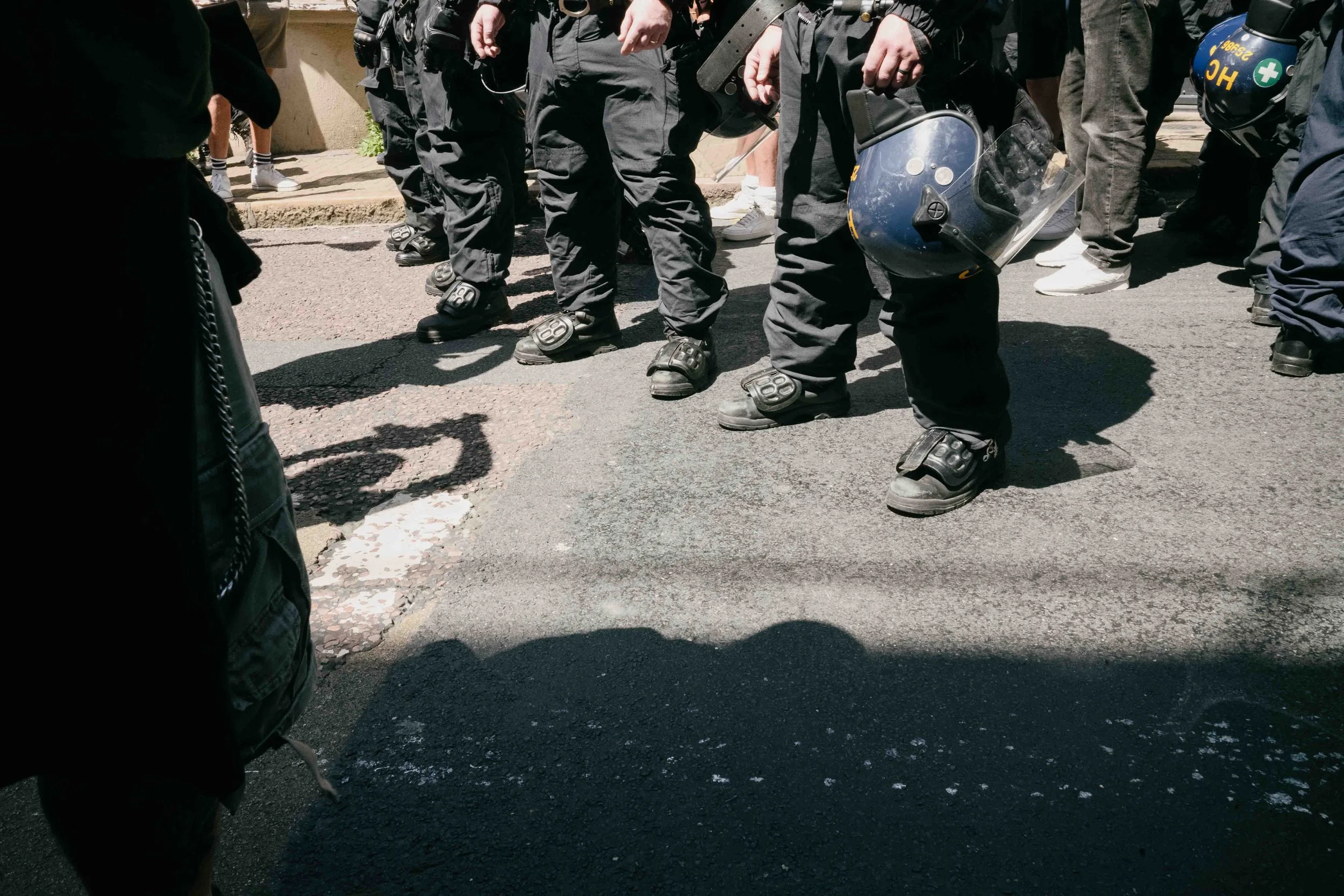
Young officers — some looked barely into their twenties — holding a difficult line between two groups that weren't there to listen to each other. A handful of people tried to goad them, to find the edge that would make them react. They didn't find it. The officers I watched were calm, present, and professional in a way that the situation didn't make easy.
It matters. It doesn't always go that way.
What I Brought Home
A camera gets you close to things. Sometimes that's a privilege, sometimes it's a responsibility, and occasionally it's both at once.
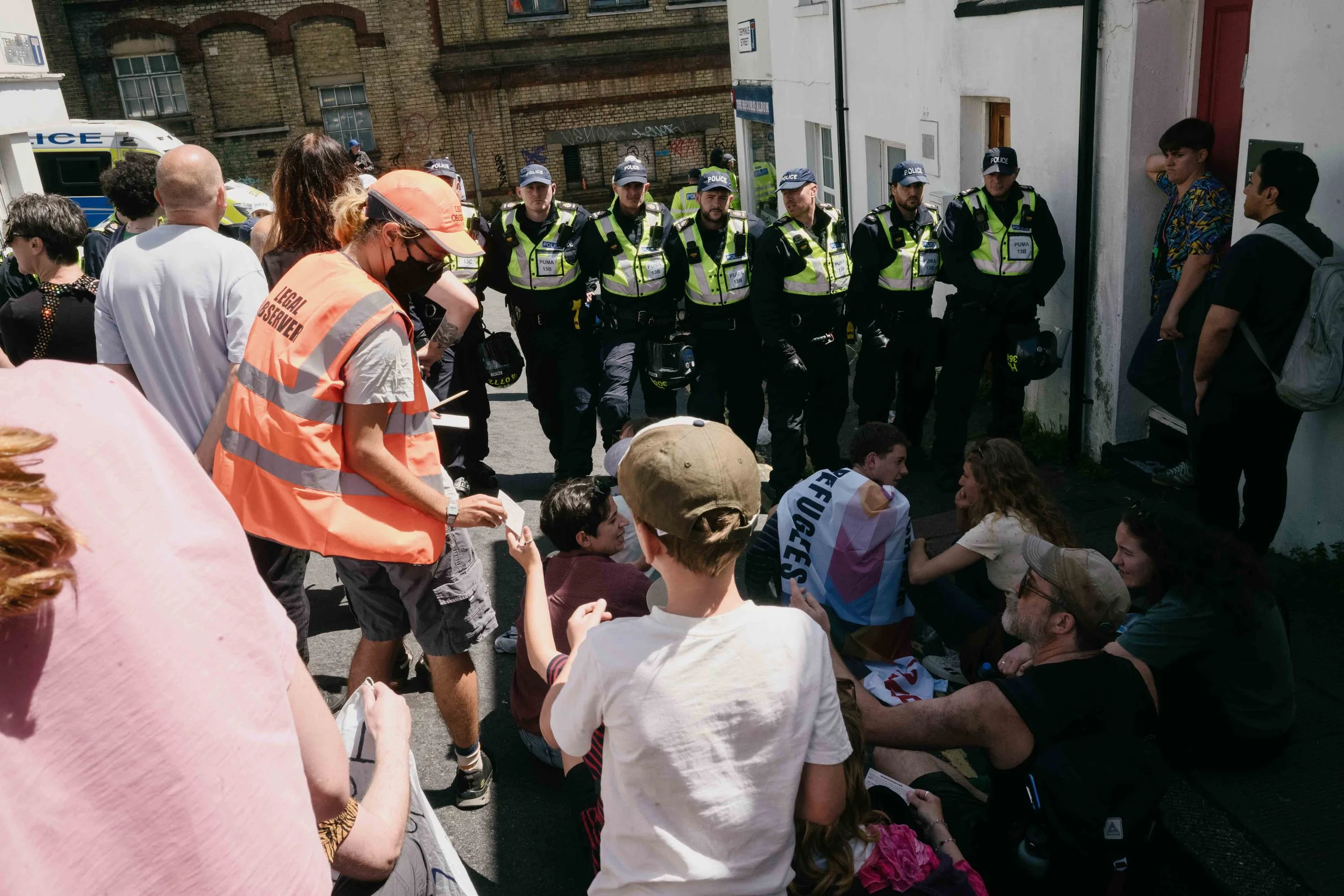
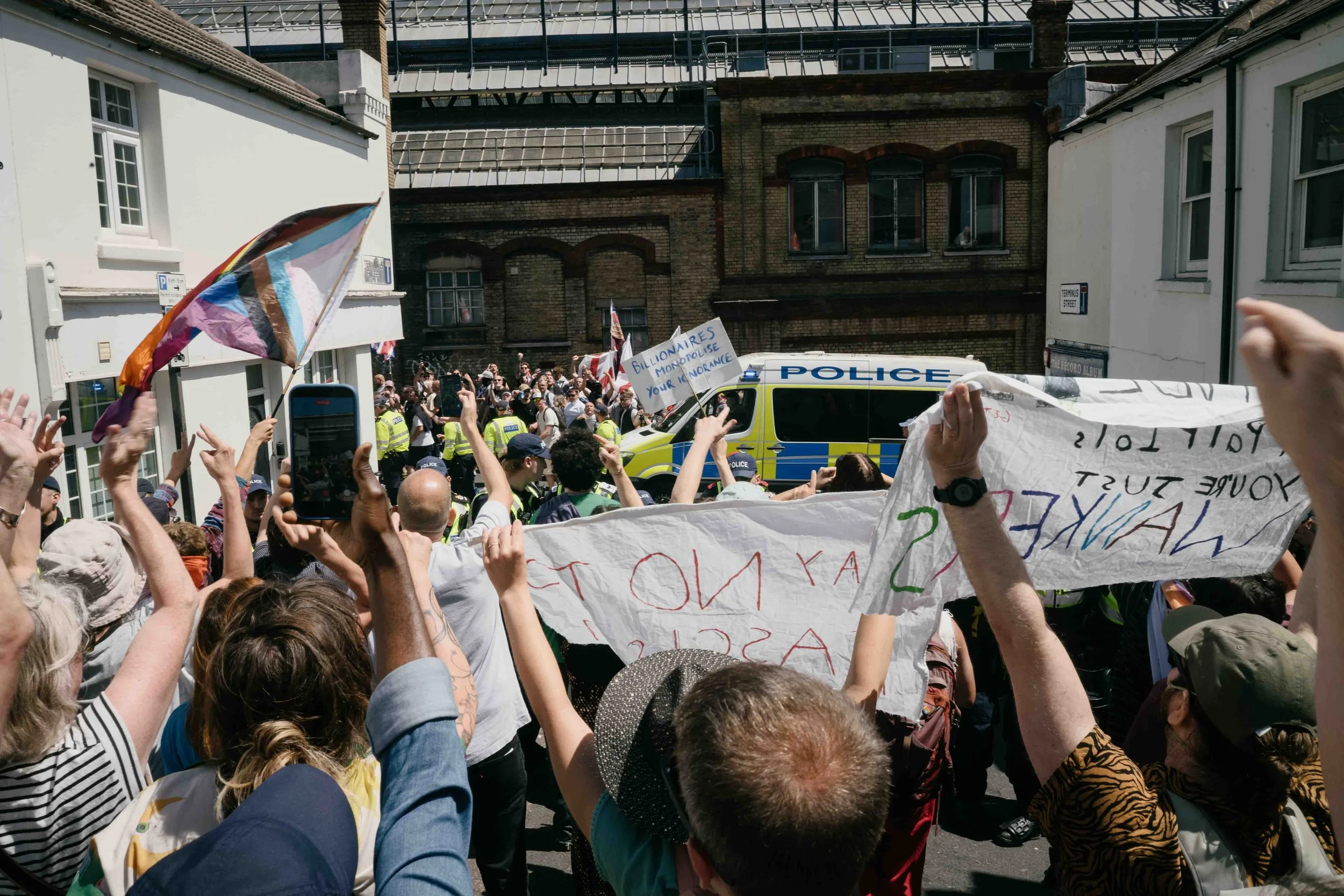
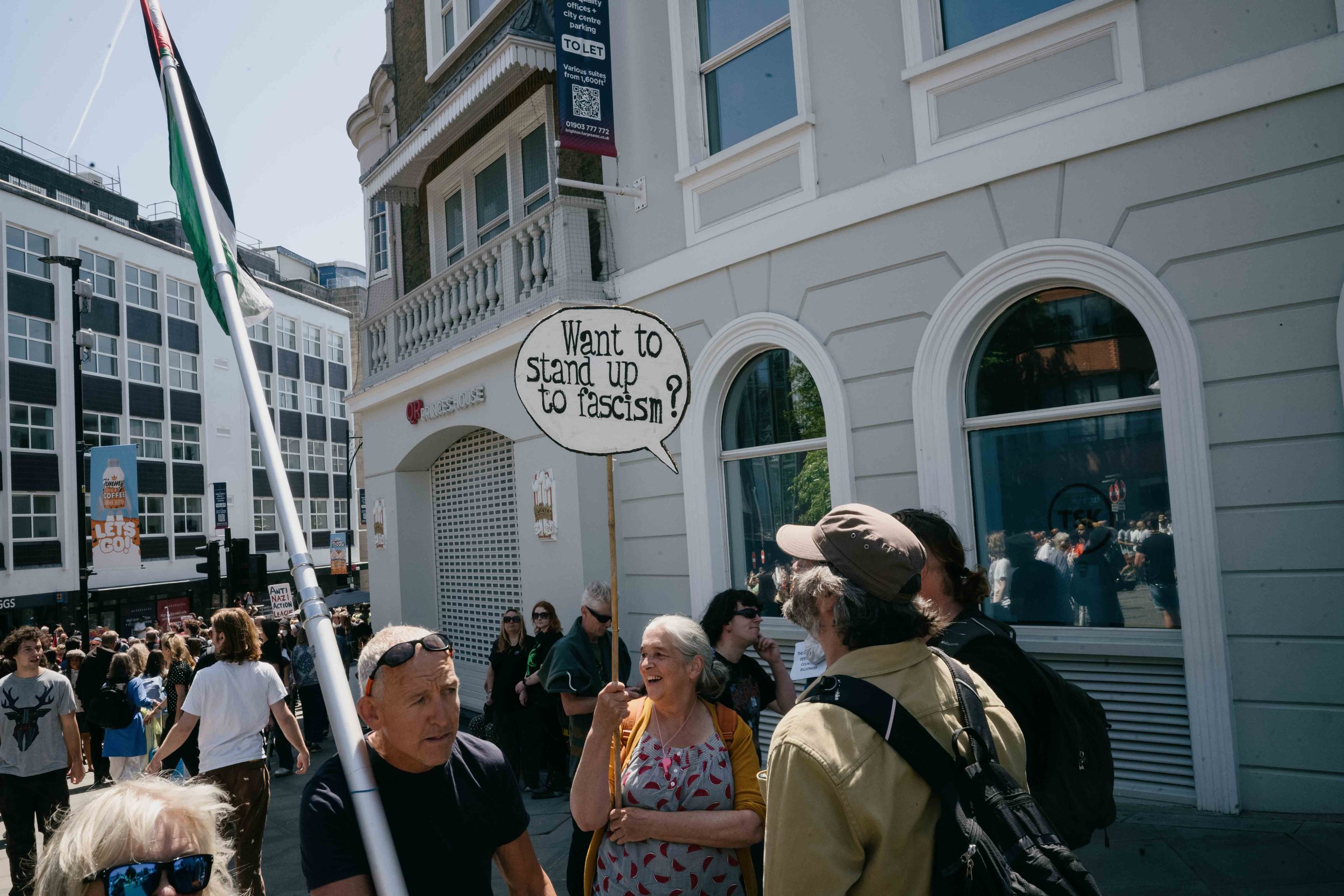
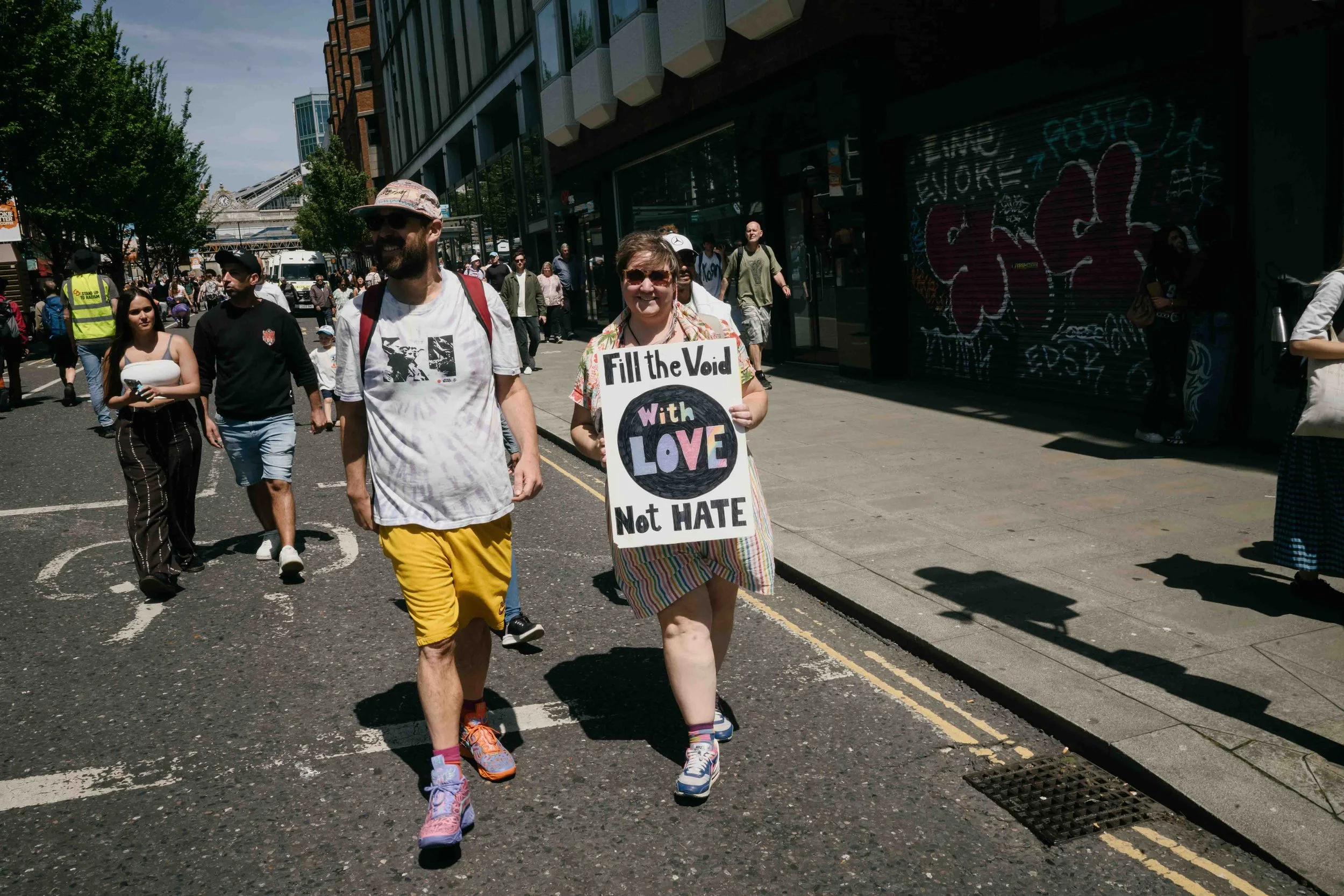
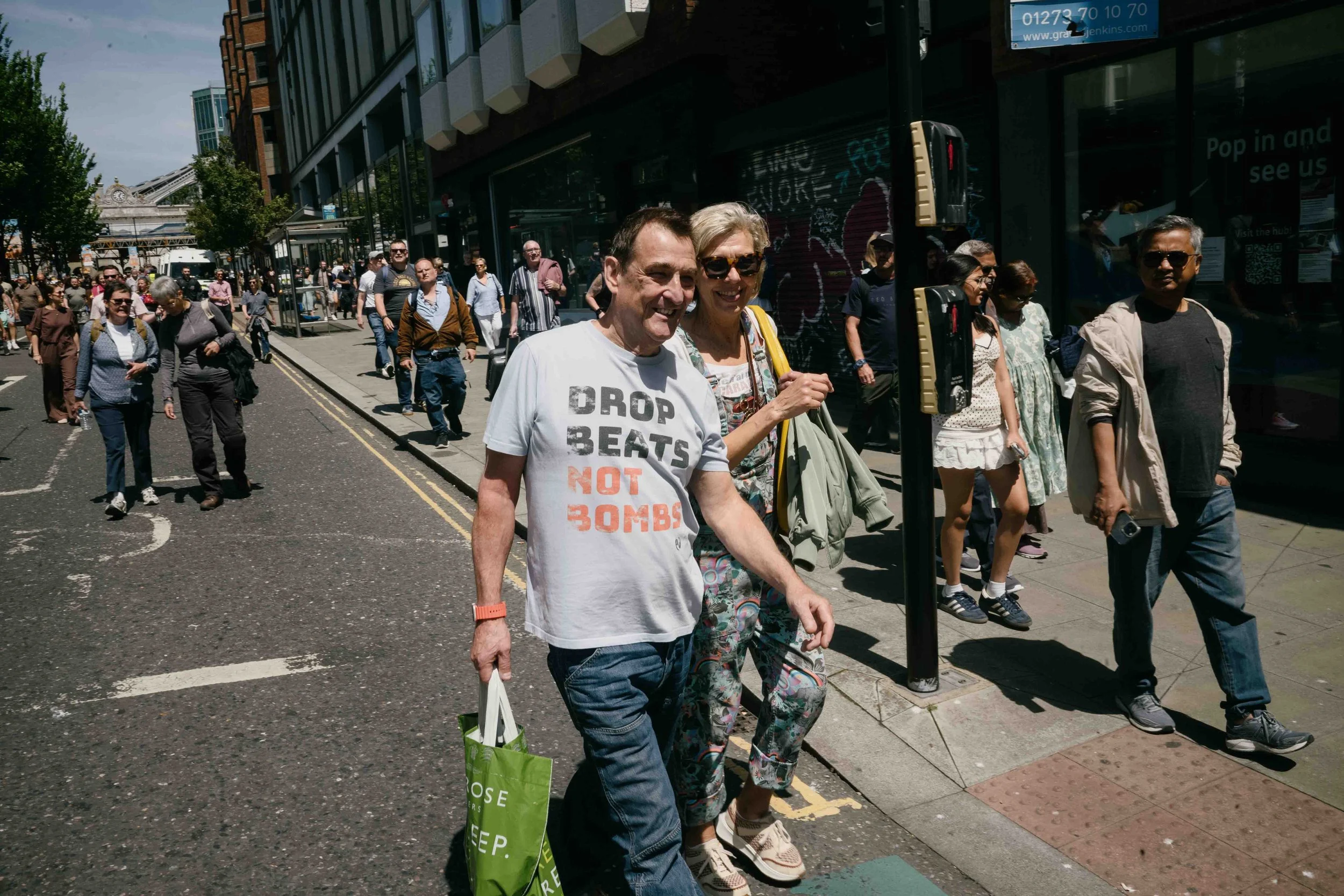
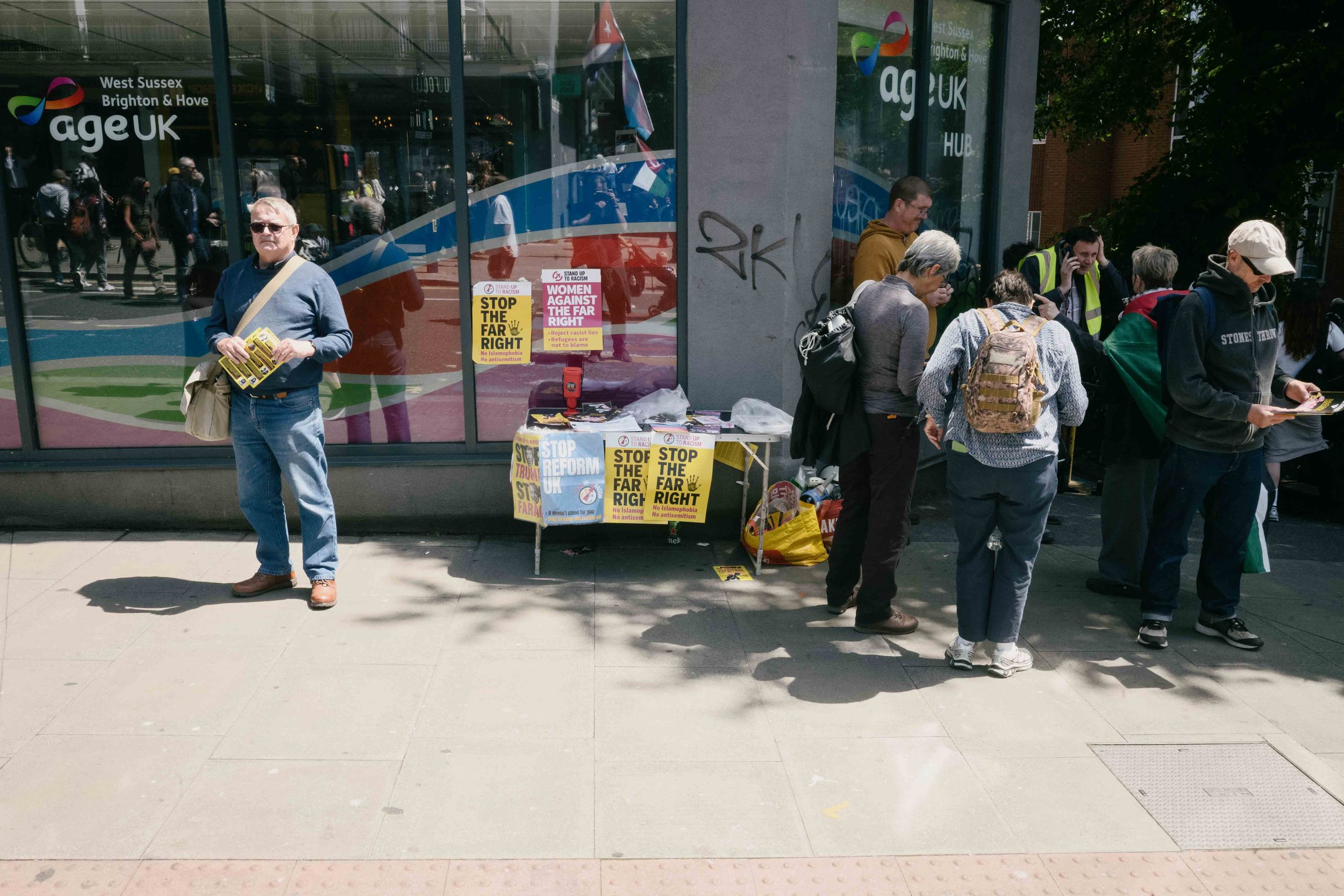
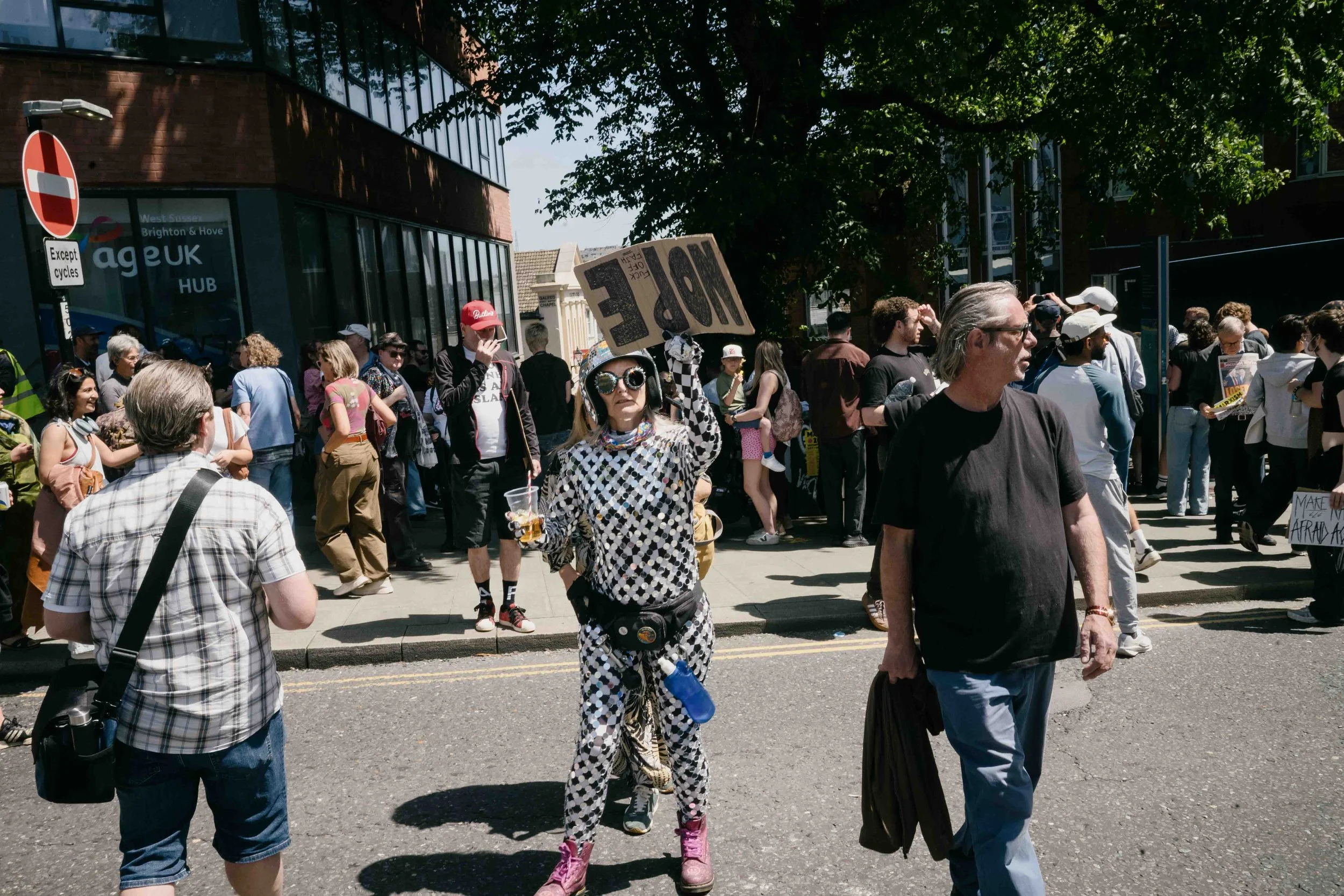
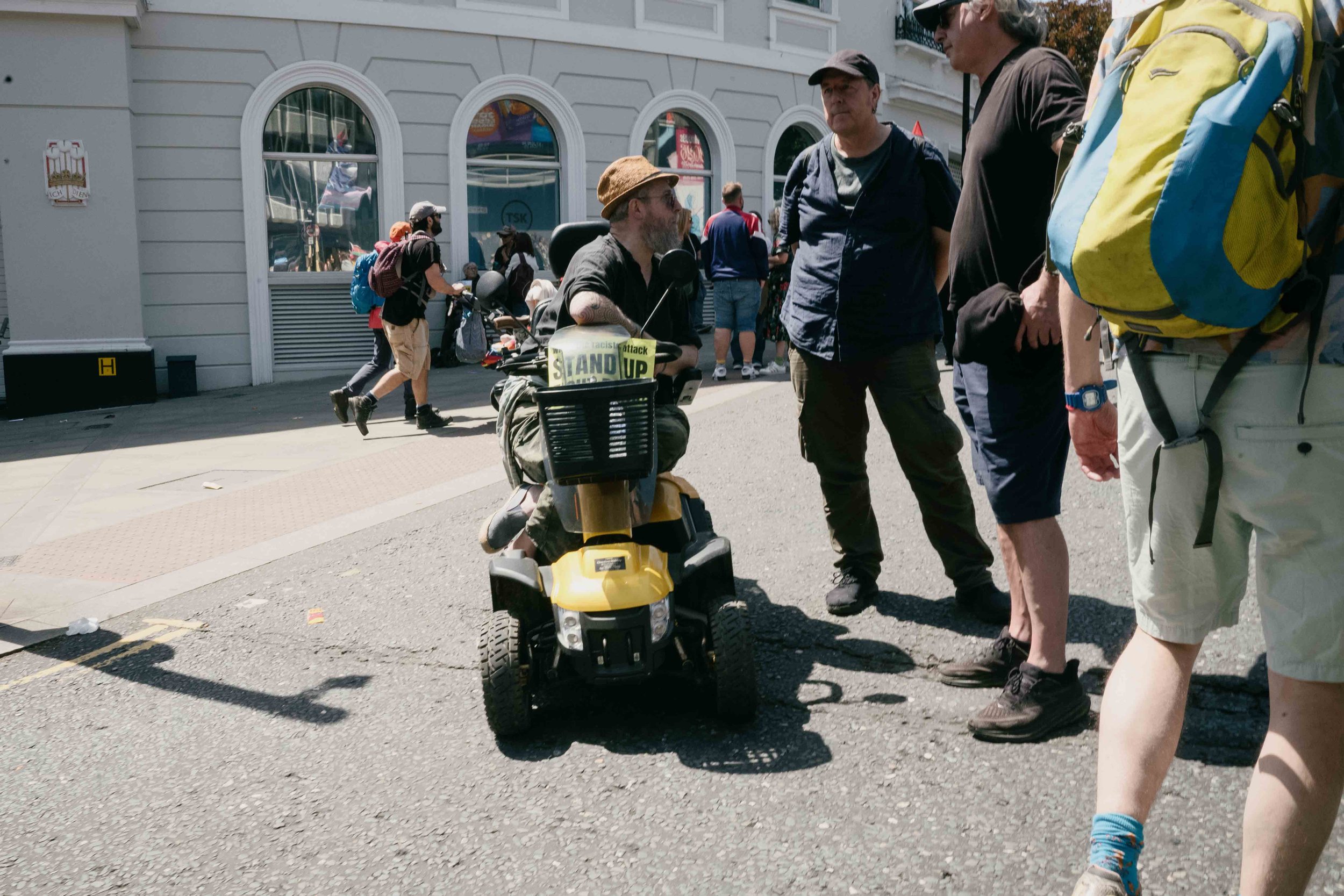
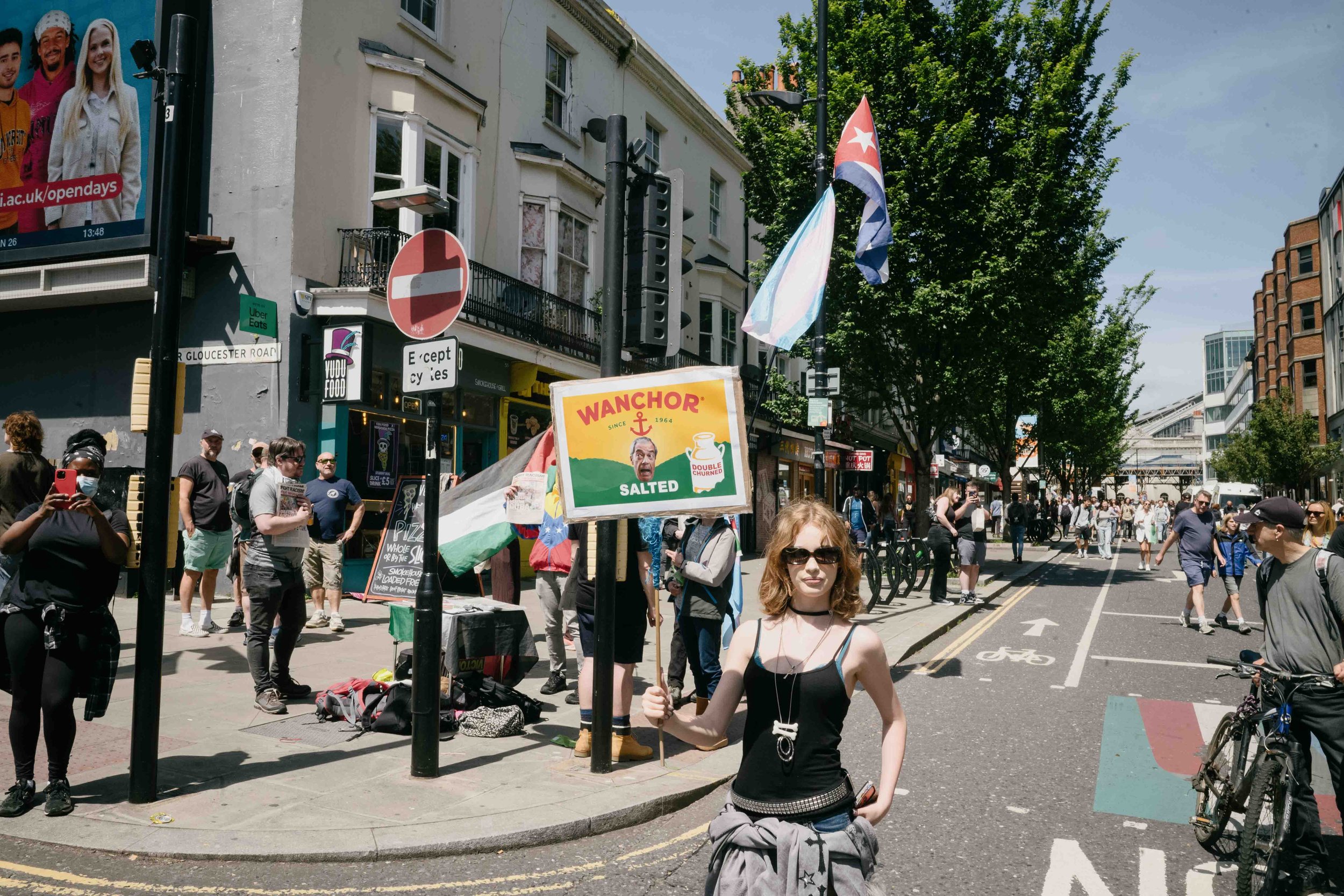
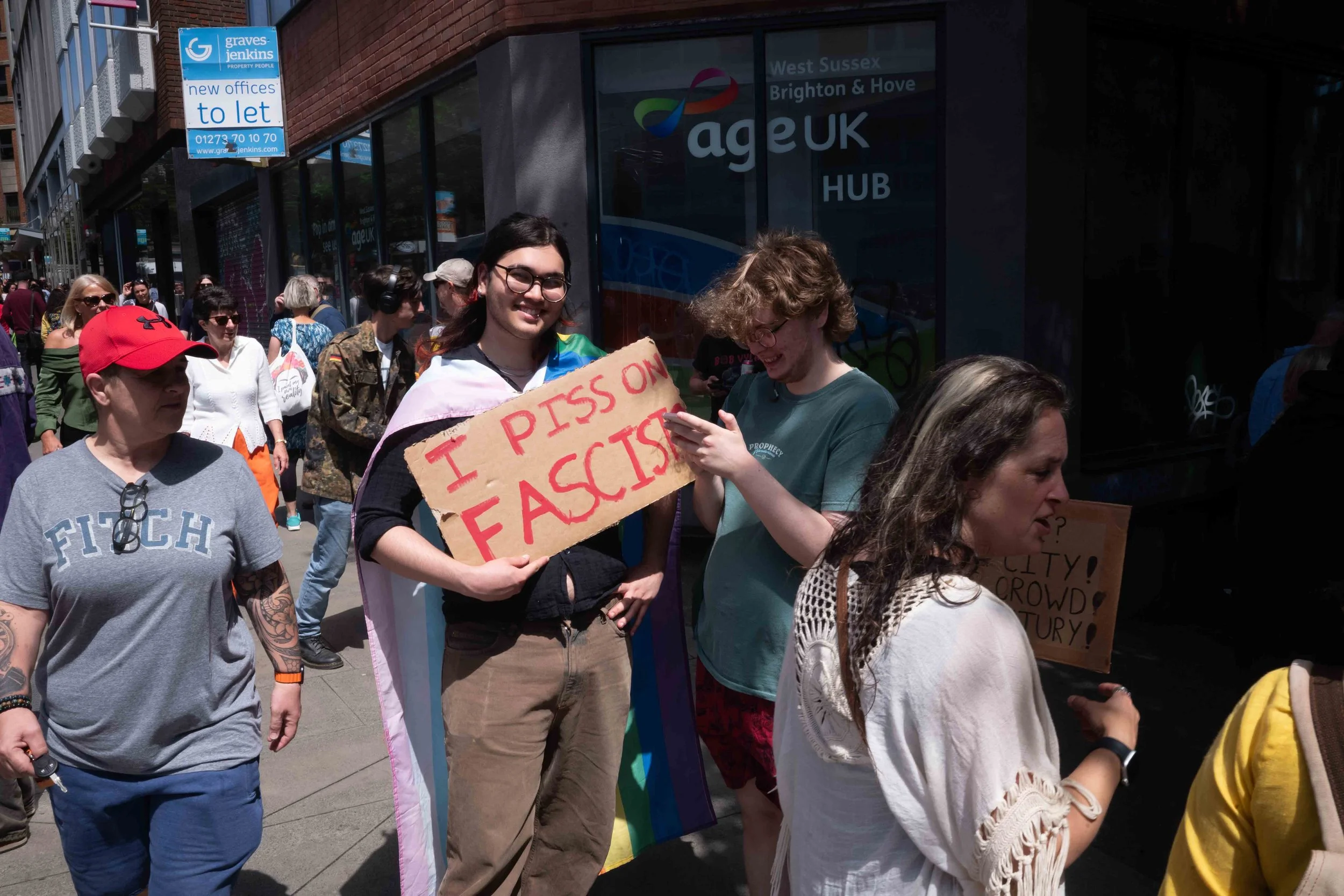
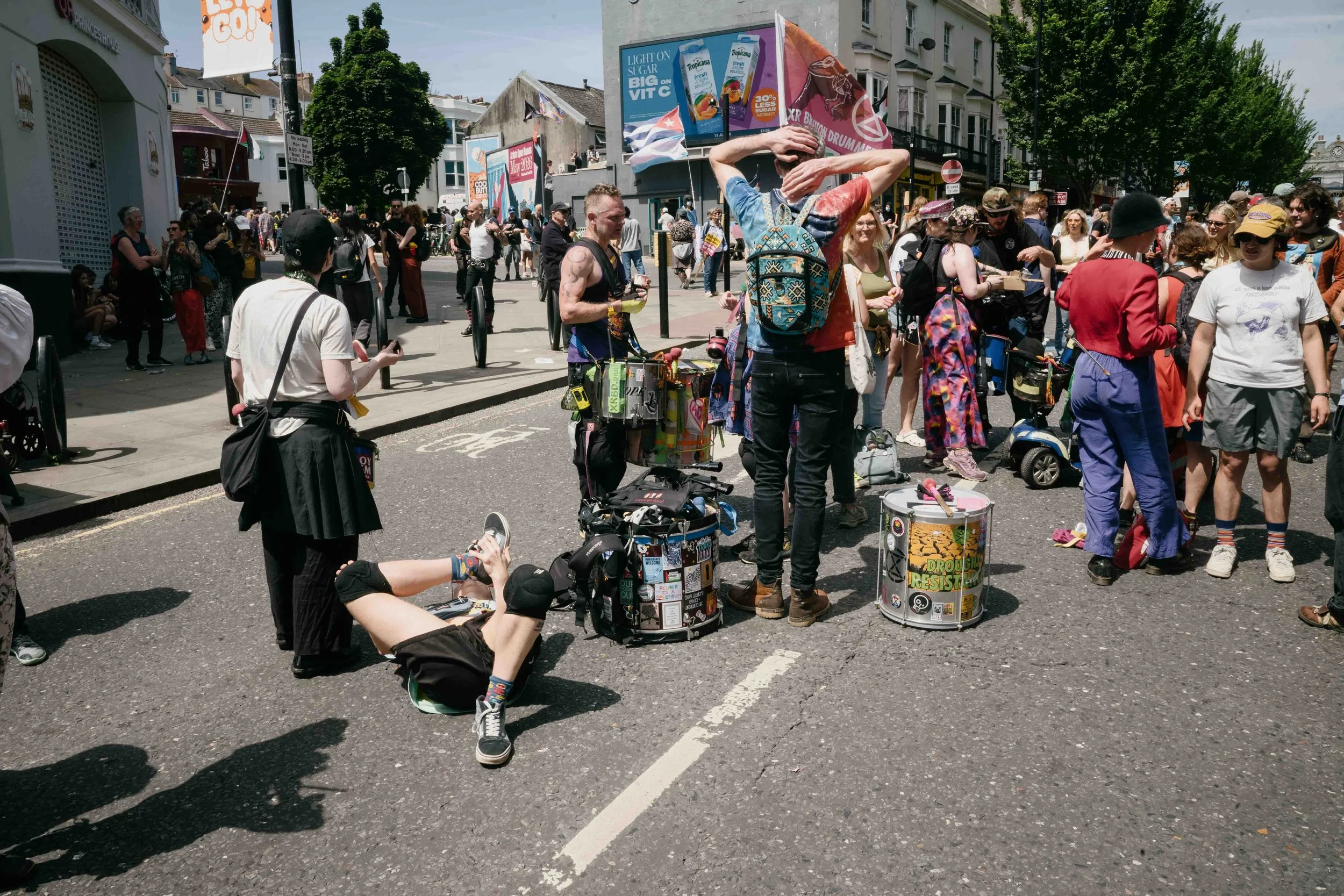
Today felt like both. Two sides of something old, playing out again by the sea. A city that's seen it before and knows its own mind. A stranger who gave me thirty years of context in two minutes. Young officers doing a hard job with quiet dignity.
Brighton doesn't do things quietly — but it does do them with a kind of stubborn confidence that I've come to love. Today was a reminder of why.
Until next time, keep snapping
Yes please, keep me posted when there’s a new blog
Instagram - Film