Trans Pride Brighton, July 2026
A Chilled Day. An Unchilled Moment.
Why Brighton
There are cities that tolerate difference and cities that are built from it. Brighton is the latter.
It has been a refuge and a gathering point for LGBTQ+ communities for decades — longer than most of the legislation designed to protect them. The Kemptown scene, the annual Pride in August, the sheer density of queer life woven into the fabric of the place. Brighton doesn't perform acceptance. It simply gets on with it.
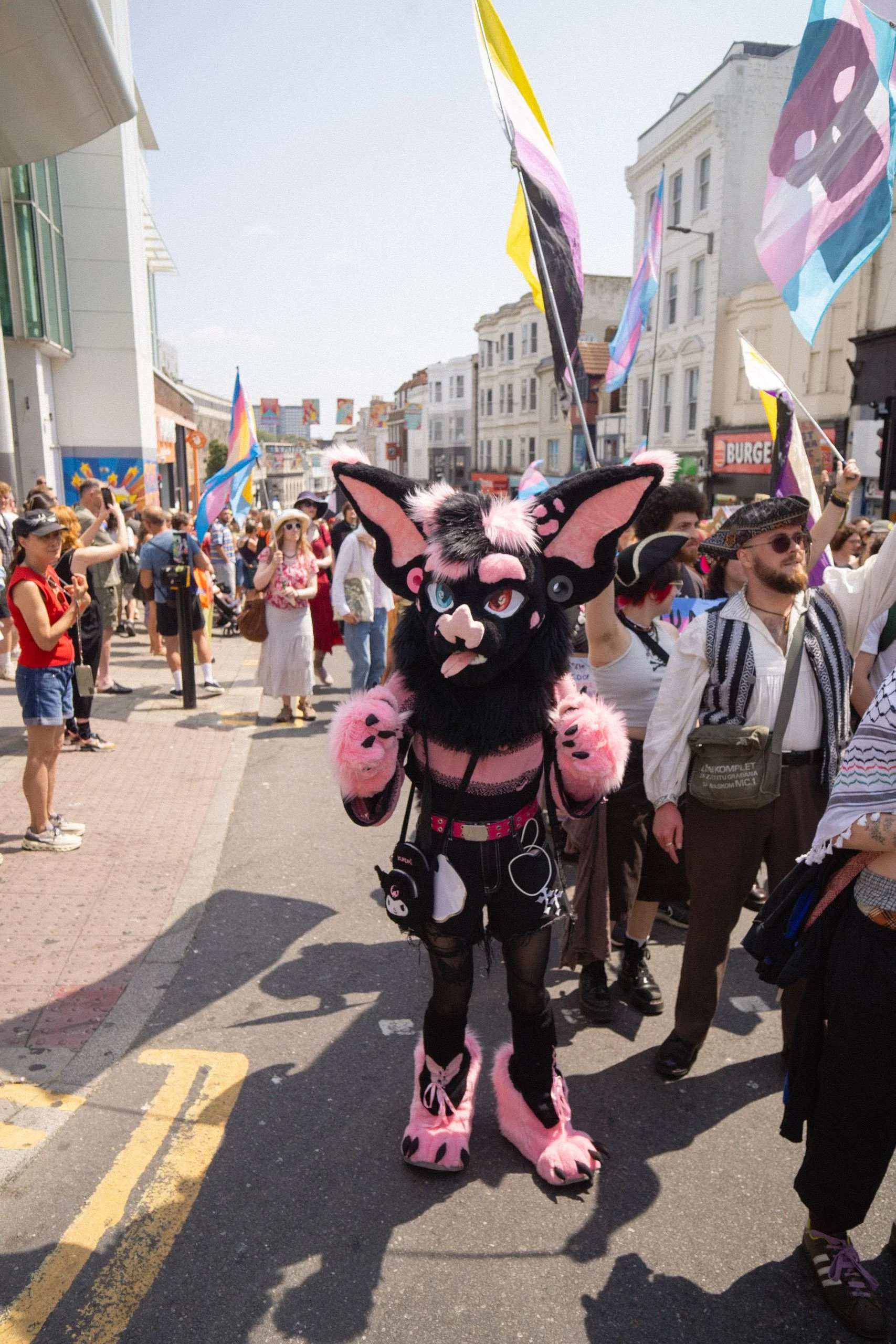
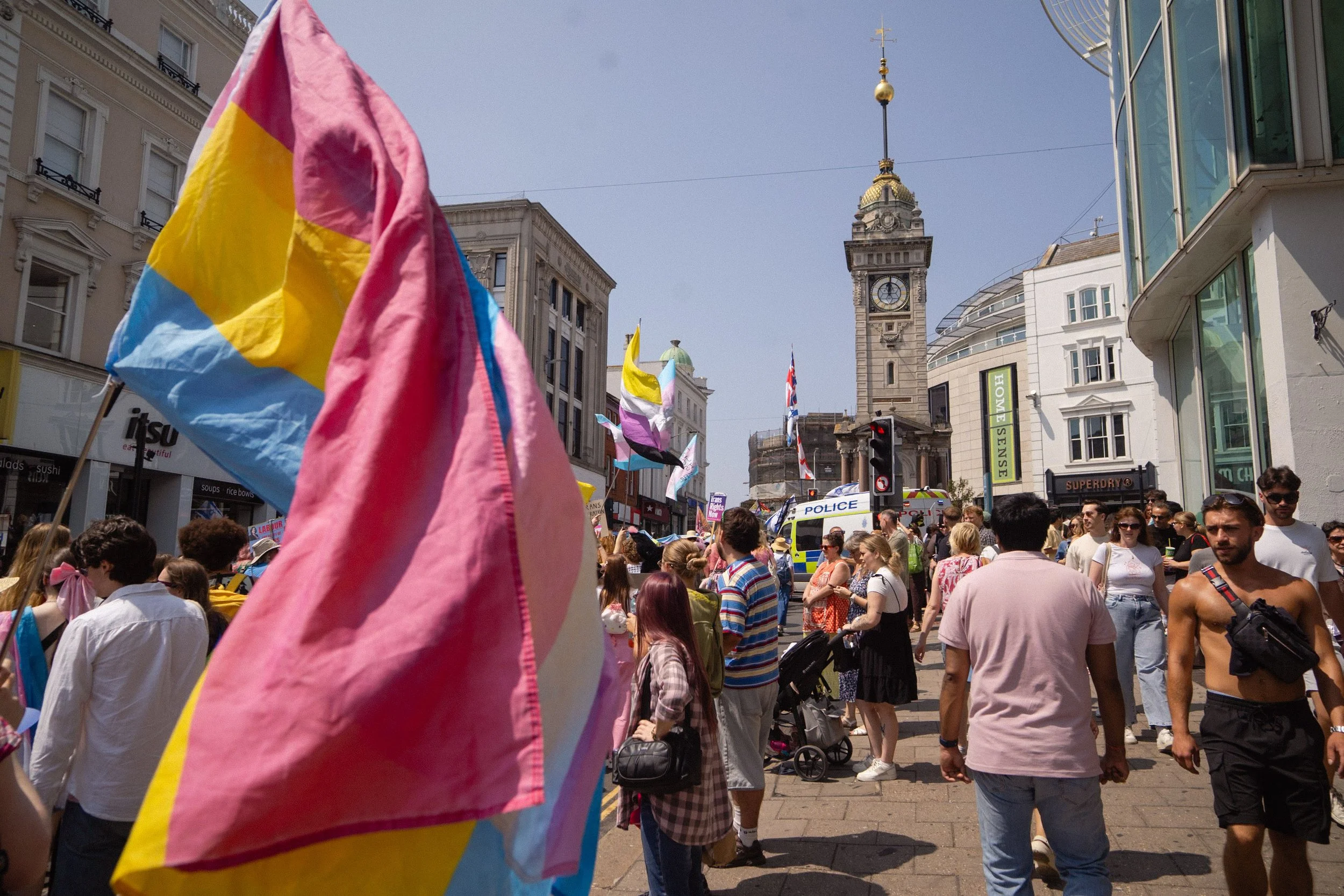
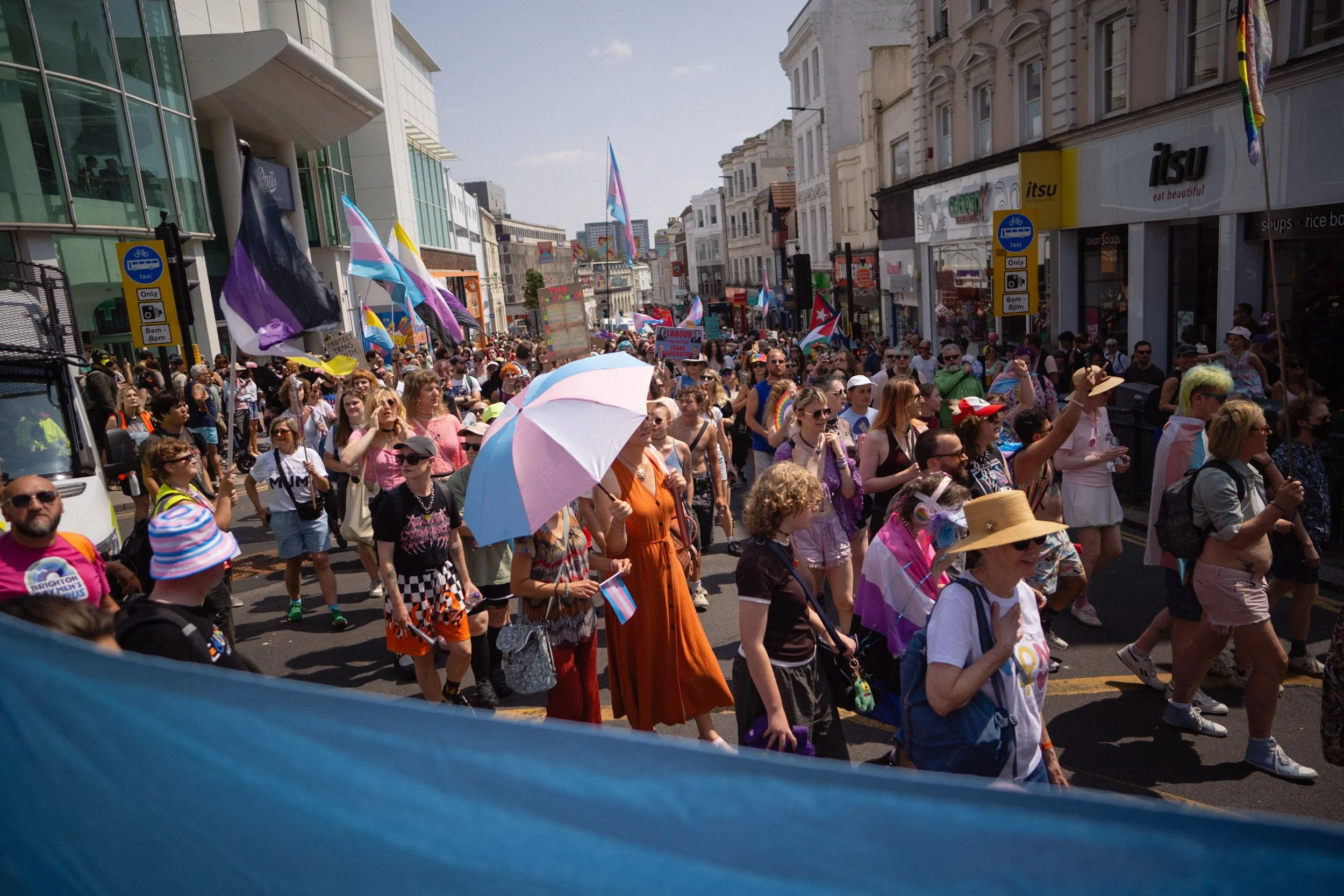
Trans Pride Brighton has been part of that fabric since 2013, when a small group of organisers decided that trans people deserved a dedicated space within the broader Pride calendar — not a footnote, not a float, but a march of their own. It was one of the first events of its kind in the UK, and it has grown every year since.
What has also grown, in the years since, is the noise around trans rights in Britain. The political temperature, the media coverage, the Supreme Court rulings, the parliamentary debates. The bathroom signs. The wee.
Against that backdrop, a chilled day in Brighton is a political act whether it intends to be or not.
Open as Usual
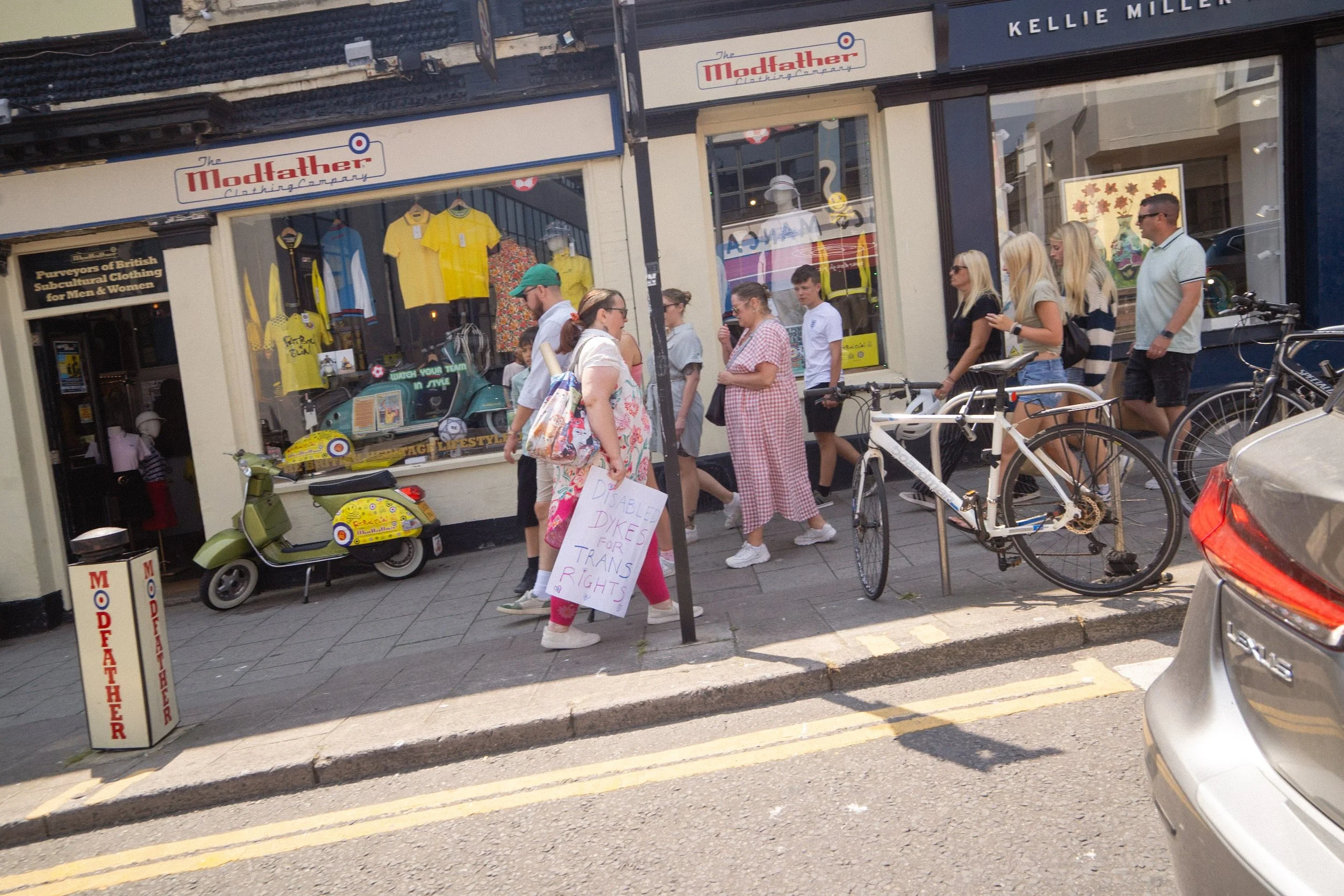
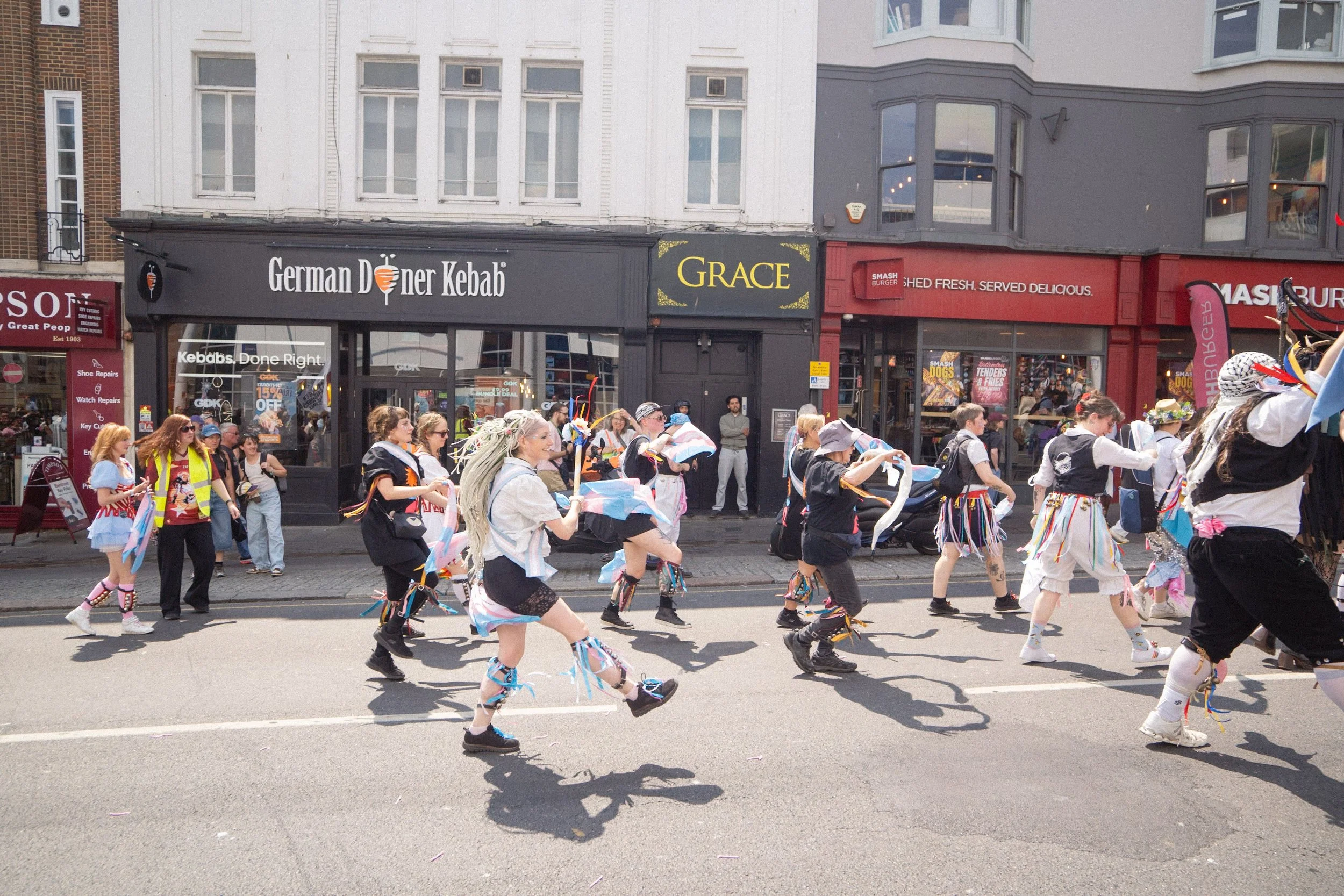
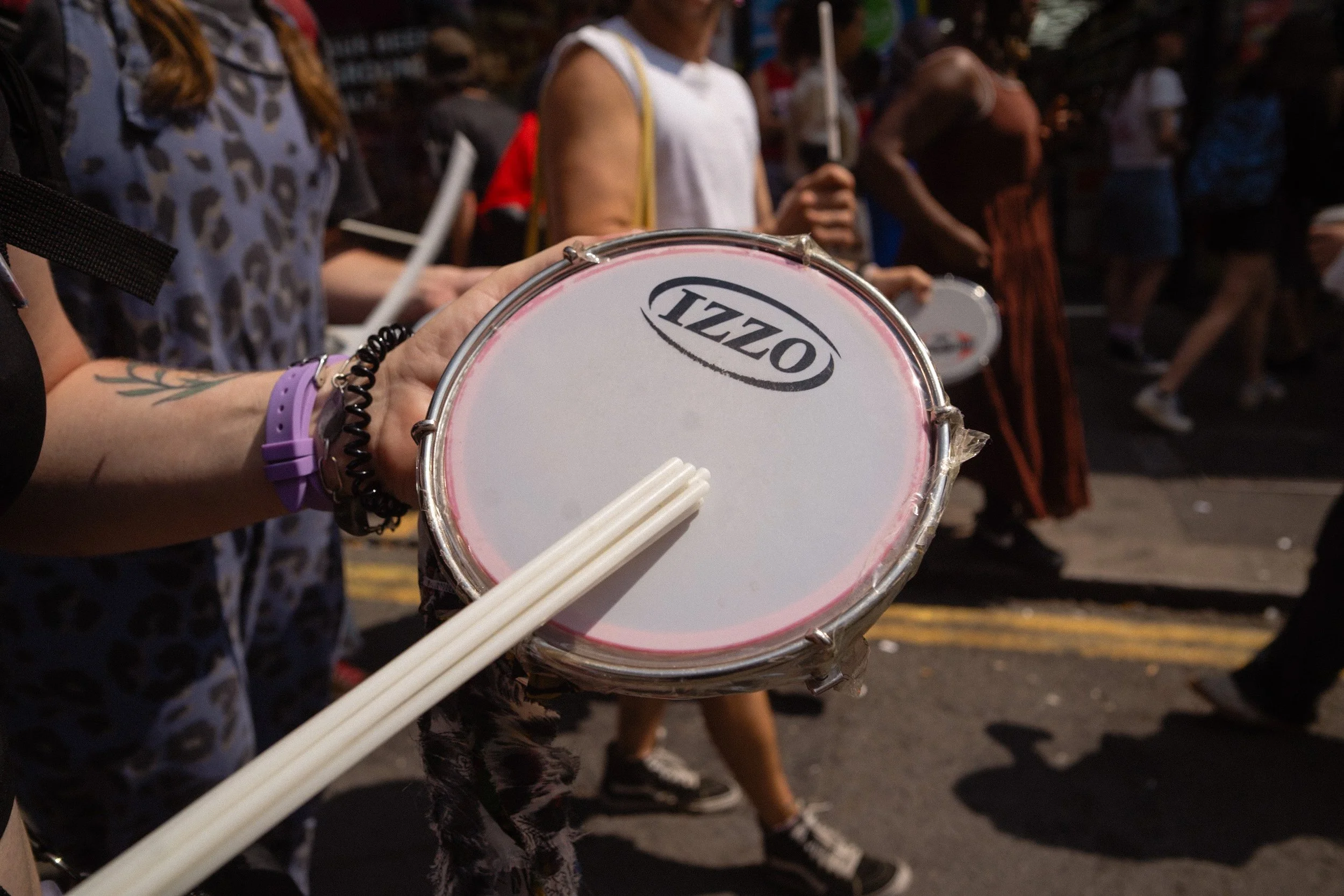
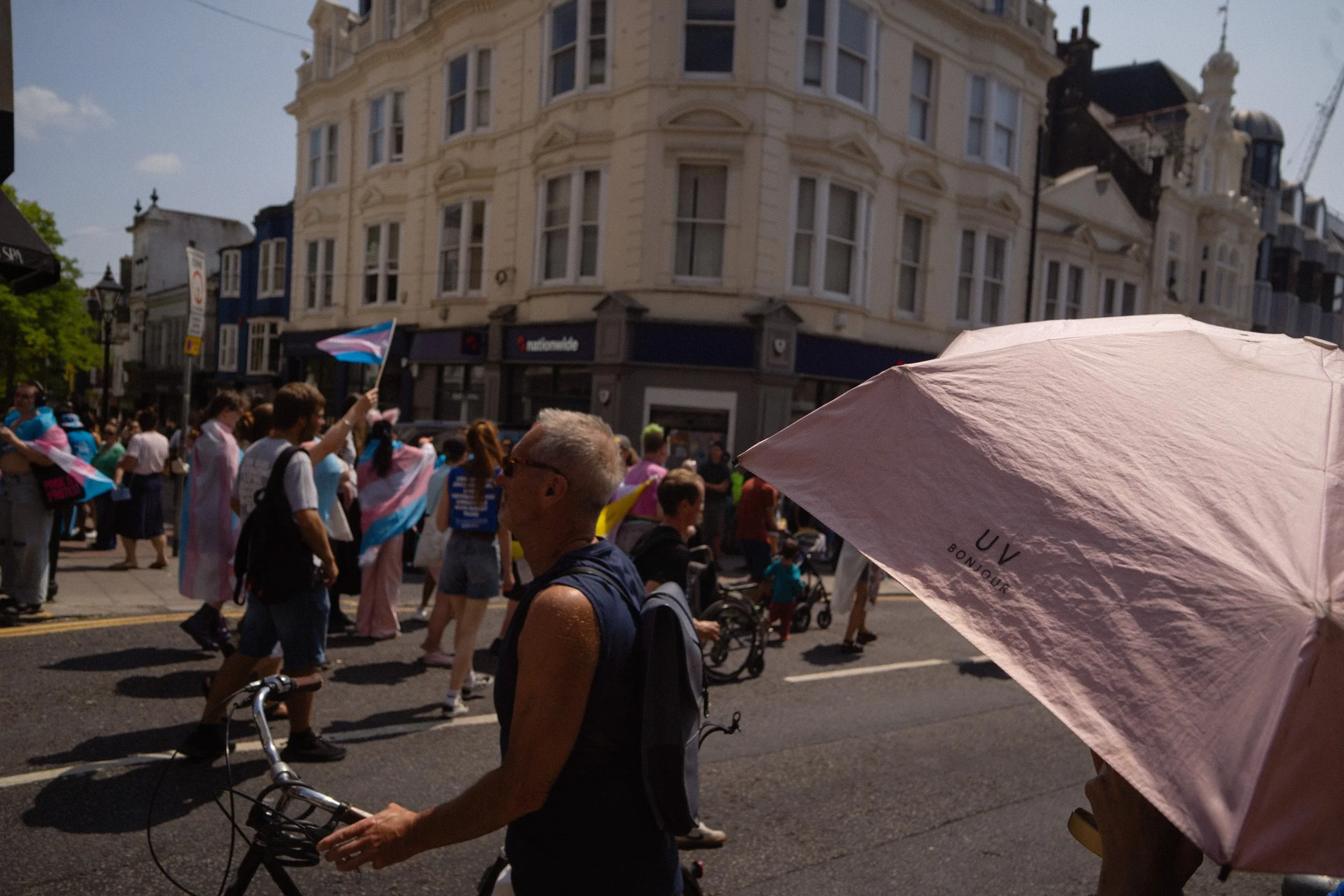
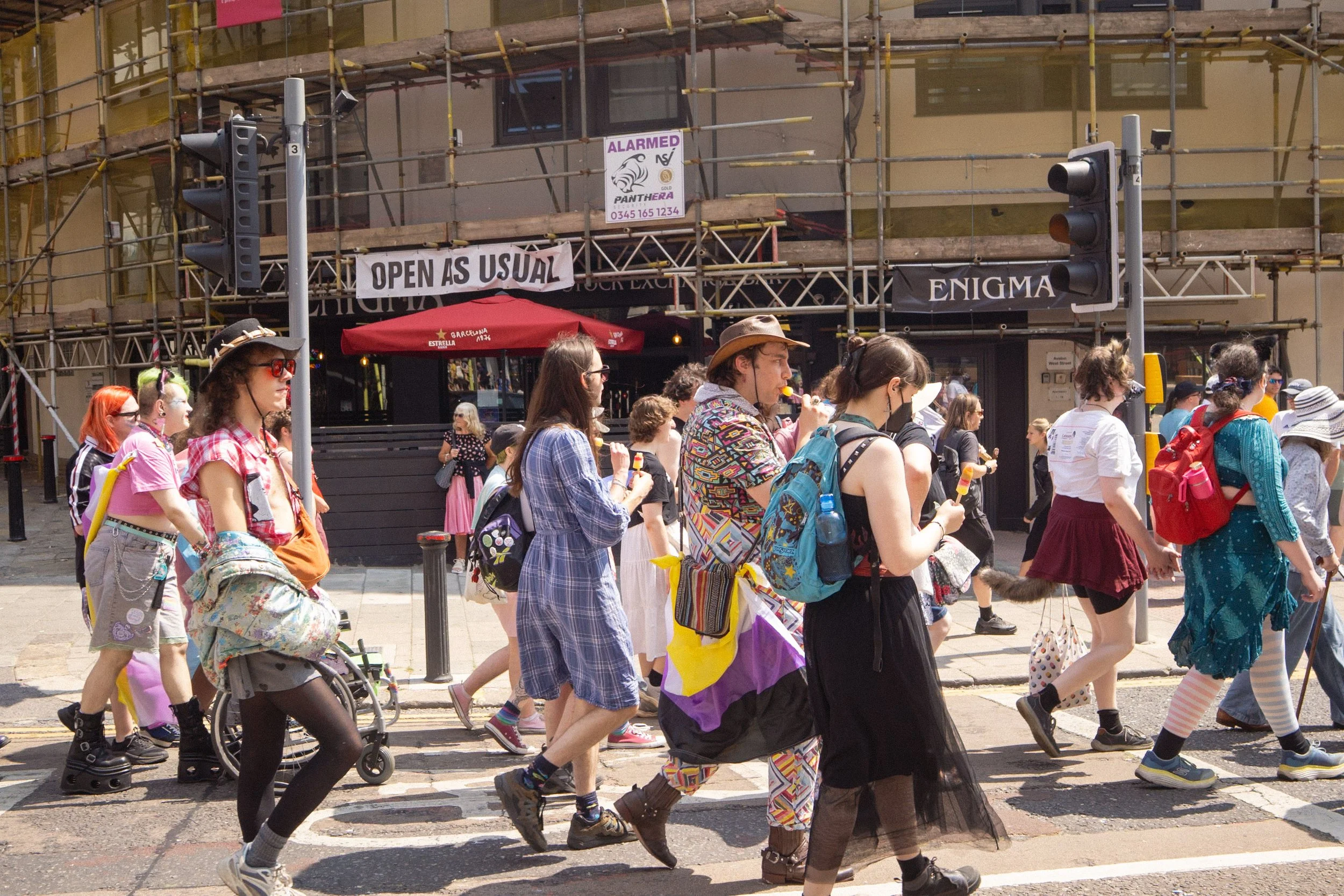
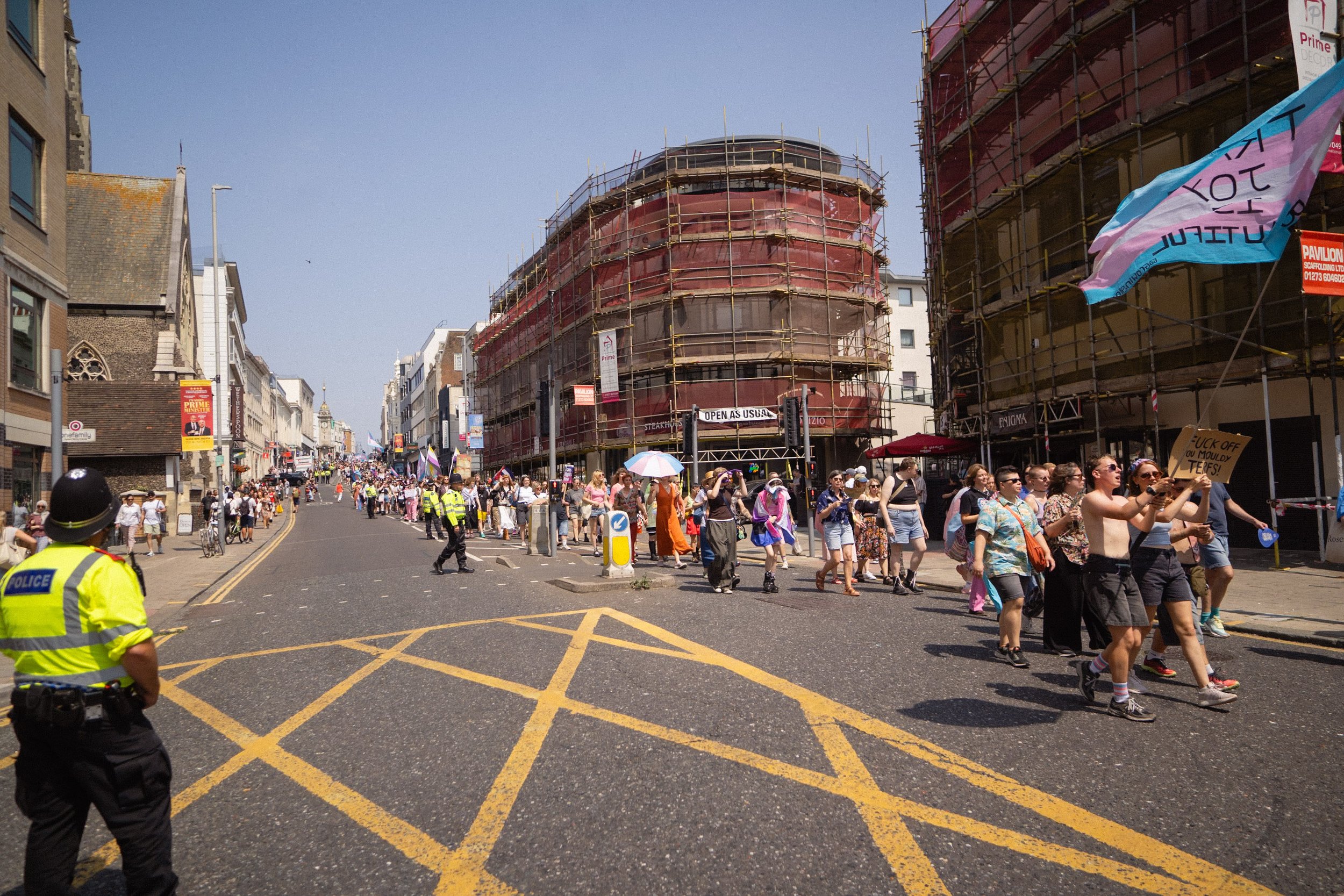
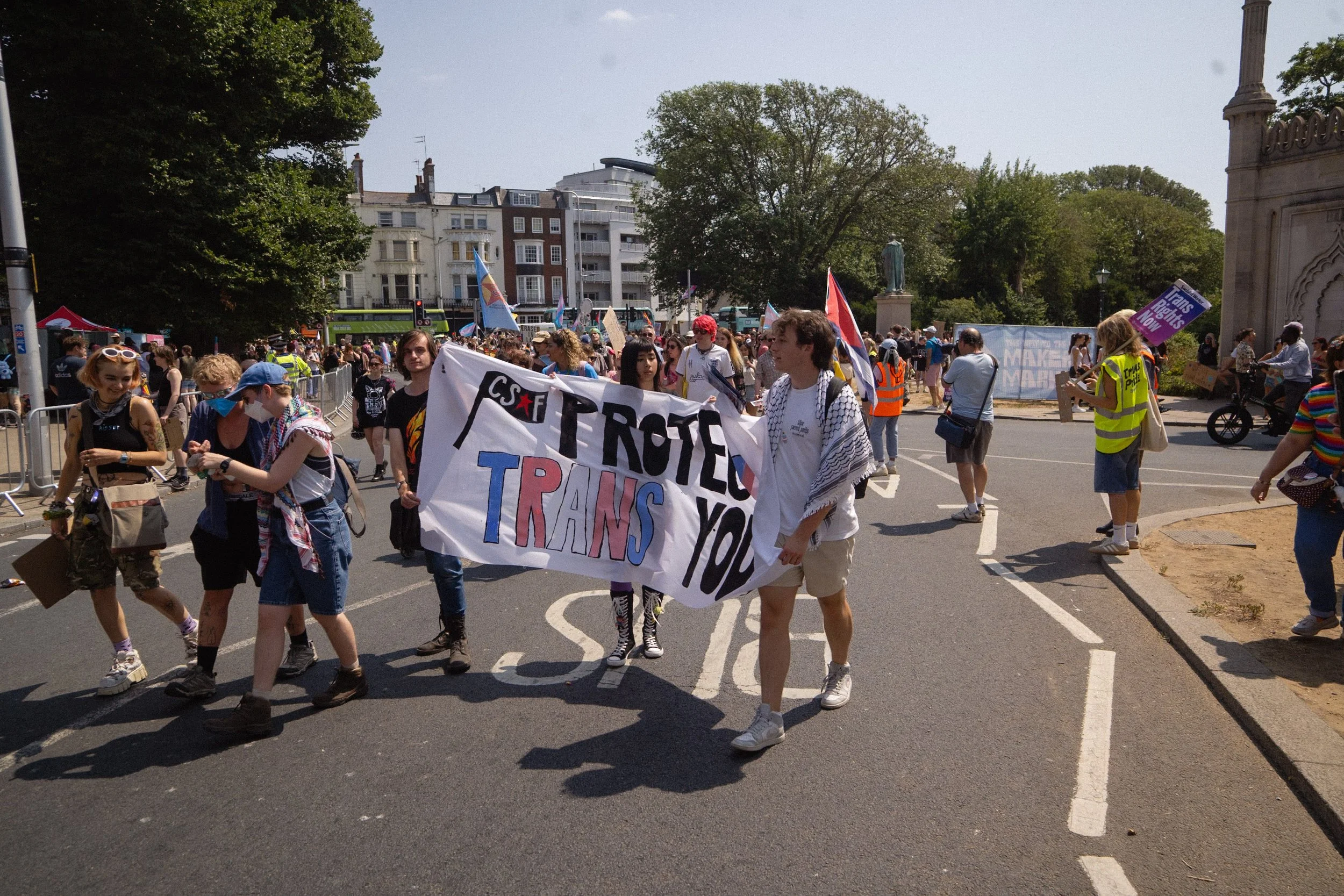
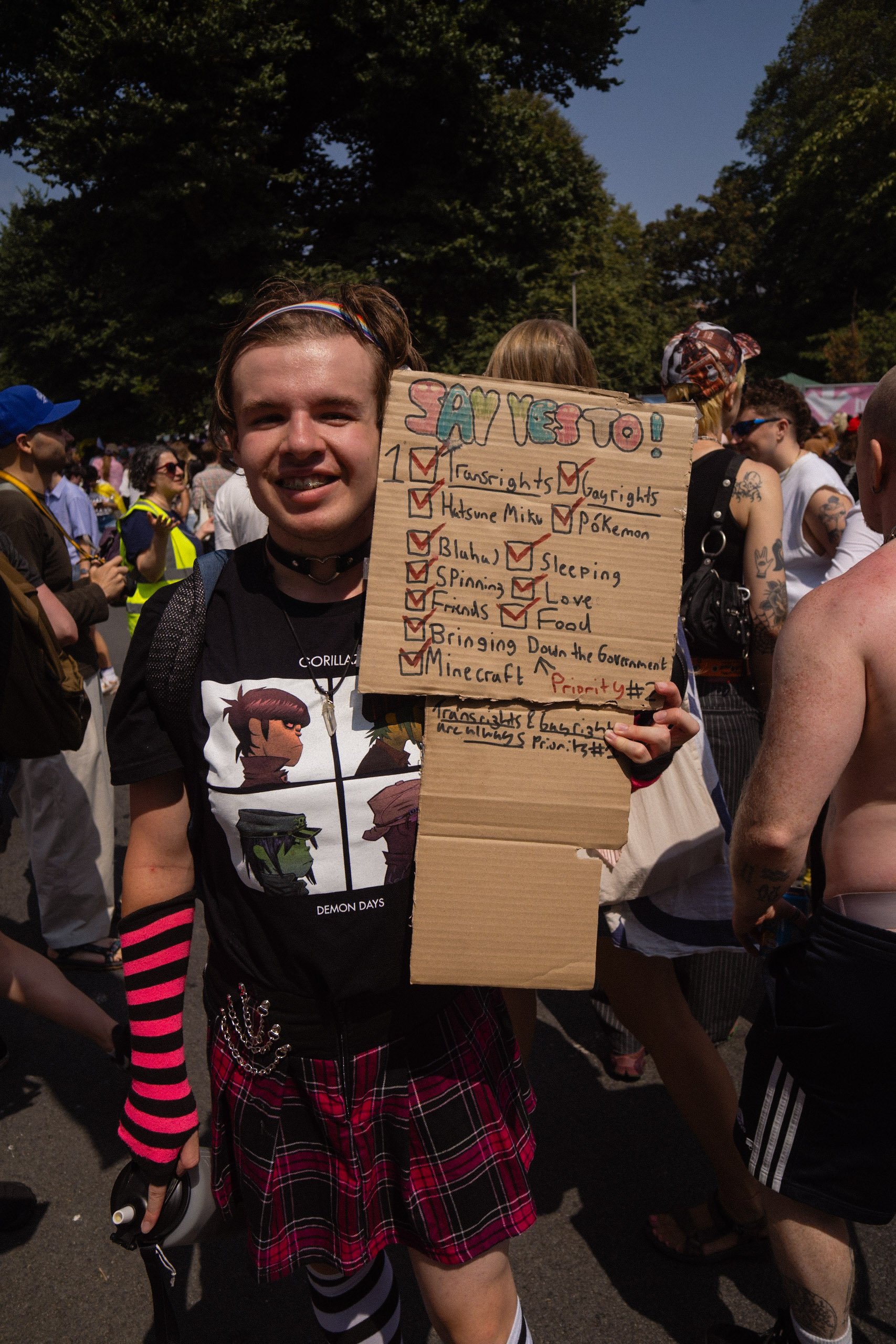
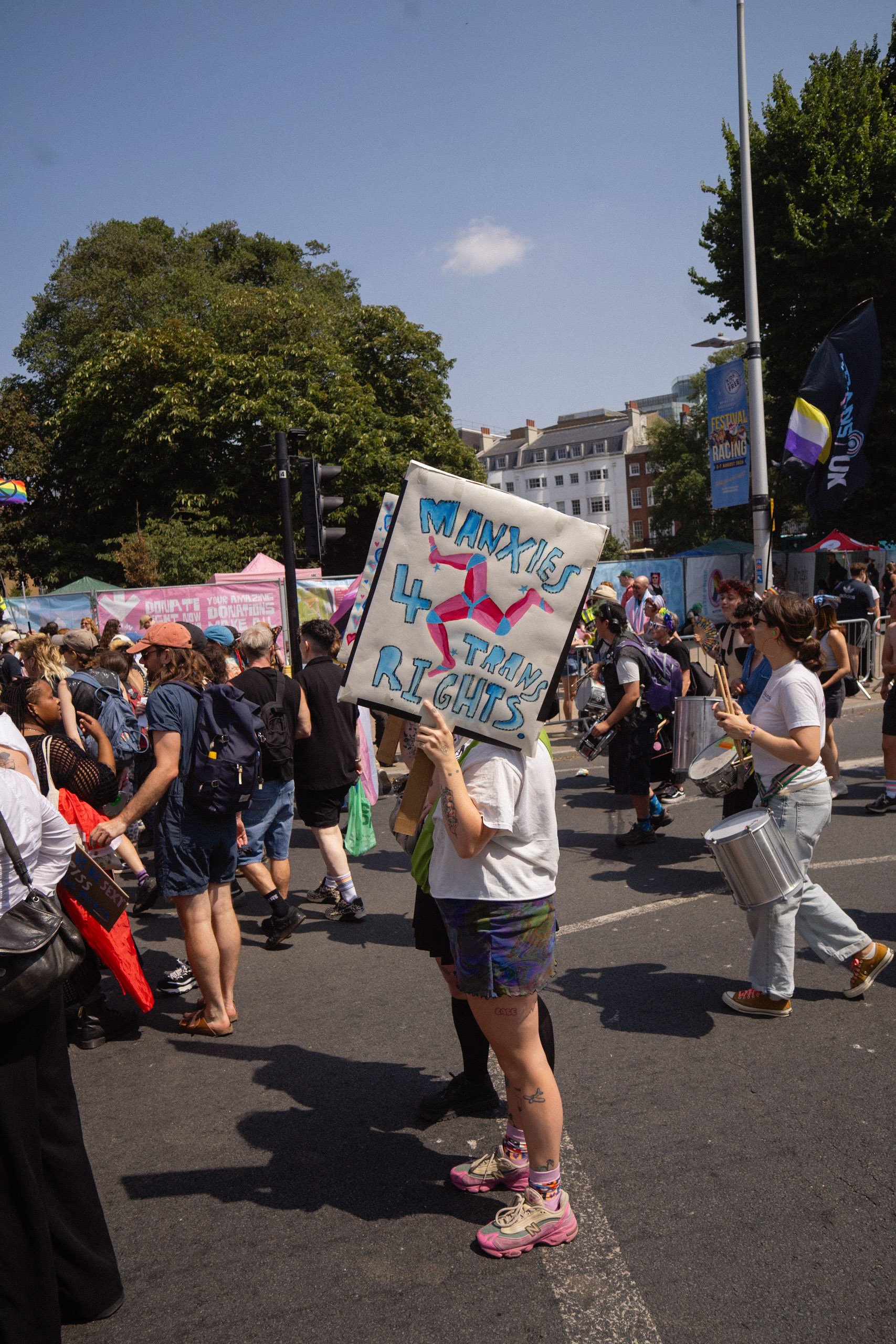
What struck me on the day was how relaxed it was. Not passive — the signs were sharp, the flags were flying, the drum lines were going — but there was no tension in the crowd. People were dancing. People were eating ice lollies in the July heat. People were dressed exactly as they wanted to be dressed, moving through the city centre as though it belonged to them.
Because, for the afternoon, it did.
The city largely carried on around the edges of it. Bars stayed open. Shoppers paused to watch from the pavements. One banner above a pub doorway read Open as Usual — not a protest sign, just a pub doing what pubs do — but it landed as something else entirely. Business as usual. Life as usual. That's all anyone was asking for.
"Be careful what you hate. It might be someone you love."
That sign, hand-painted and carried through the street, is both a plea and a warning. It also happens to be accurate.
The Signs
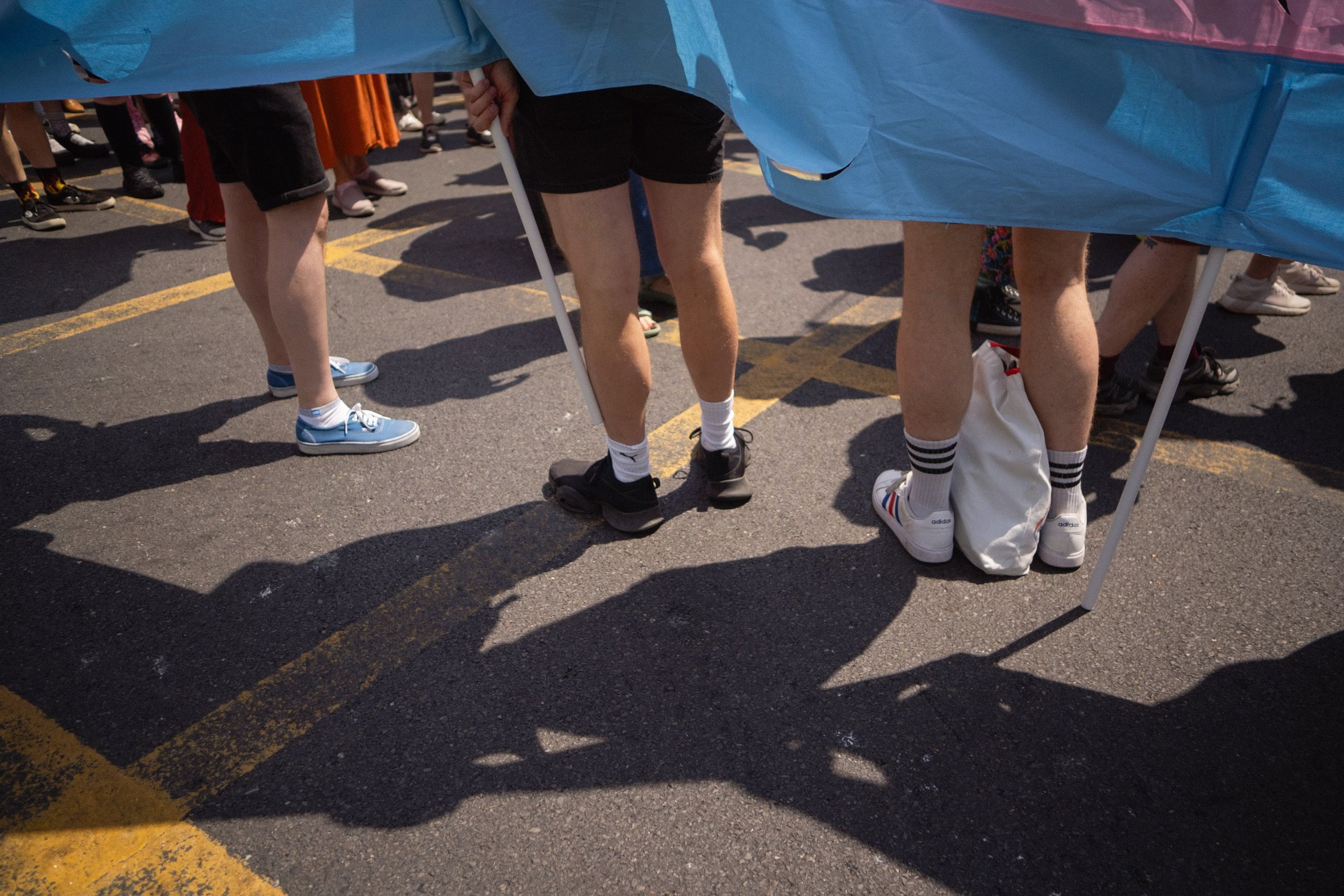
Street photography at a march is its own discipline. You're not making the event; you're reading it. And what a march says through its placards and banners is often more revealing than anything a speech could manage.
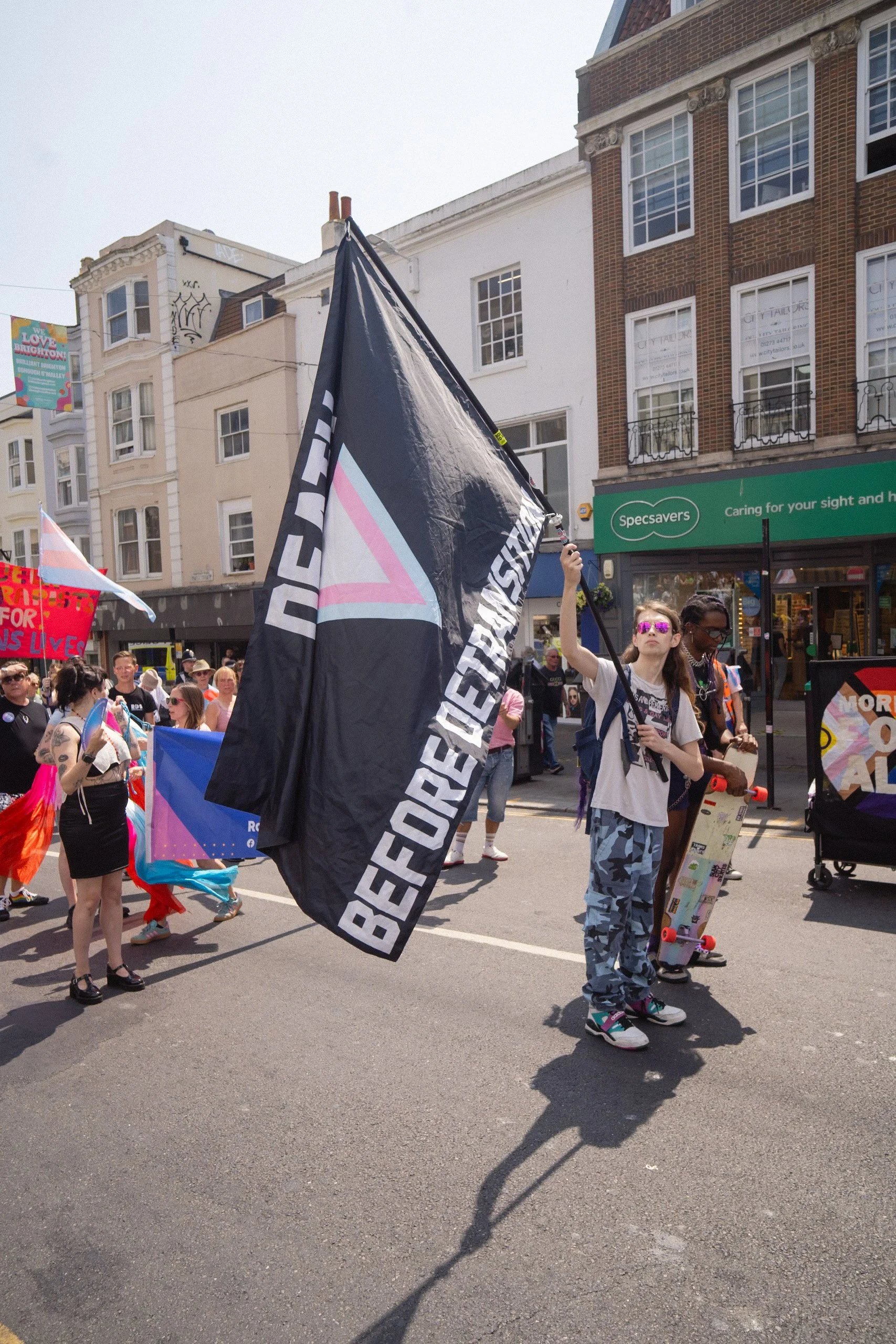
"Dead Before Detransition." A large black flag, carried by a young person in camo trousers and coloured trainers, held high above the crowd. The weight of that phrase is considerable. It is not hyperbole — it is testimony. And it landed.
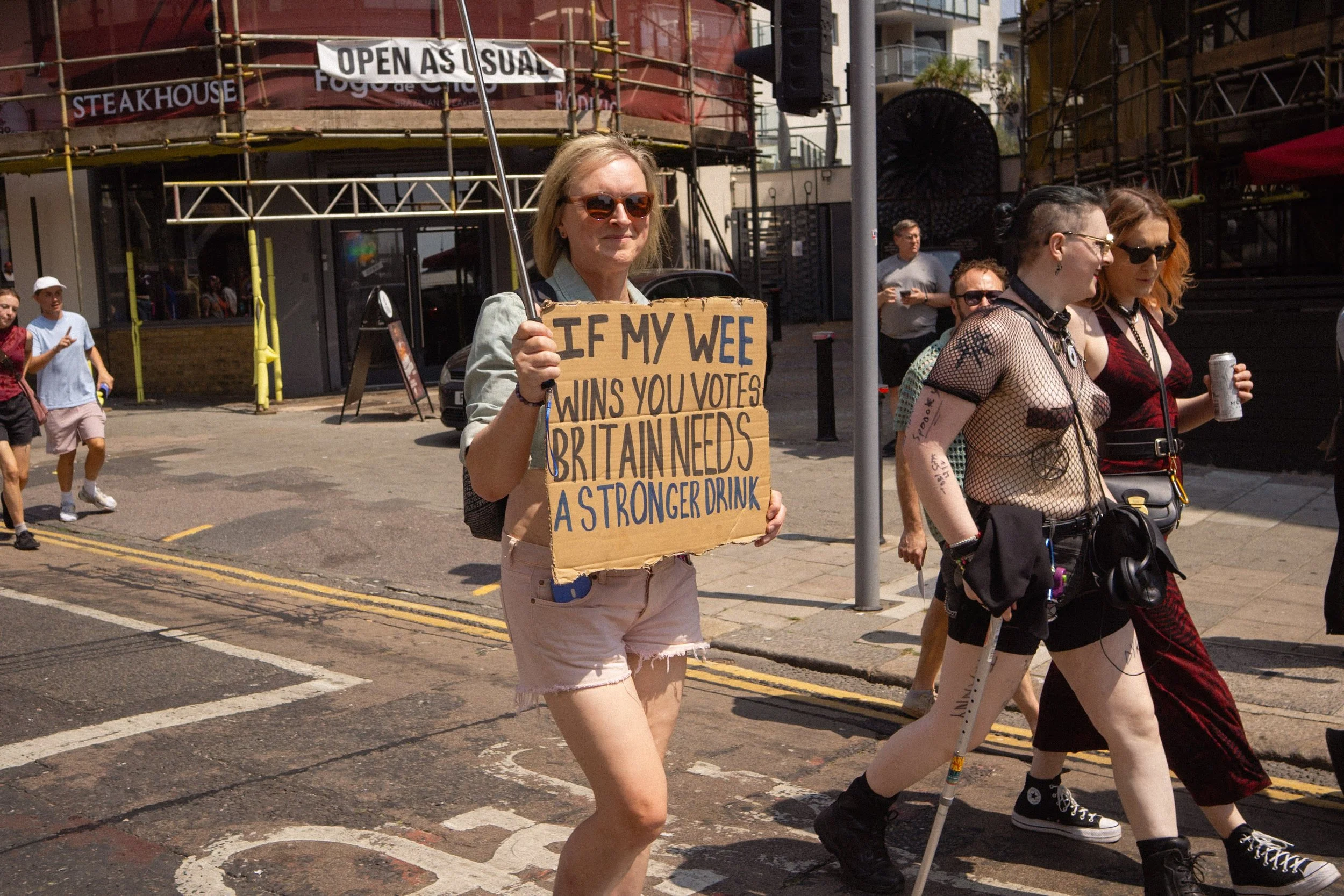
"If my wee wins you votes, Britain needs a stronger drink." Cardboard, marker pen, absolute precision. The bathroom debate — the idea that trans people's use of public toilets represents some kind of threat — has been deployed by politicians across the spectrum as a wedge issue. This sign answered it in eleven words. Brighton laughed. Brighton usually does.
The Pedigree
Trans Pride Brighton is free to attend. It is community-organised. It has no corporate sponsors headlining the stage, no VIP enclosures, no branded lanyards. It is, in that sense, closer to what Pride was originally — a march, a gathering, a refusal to be invisible.
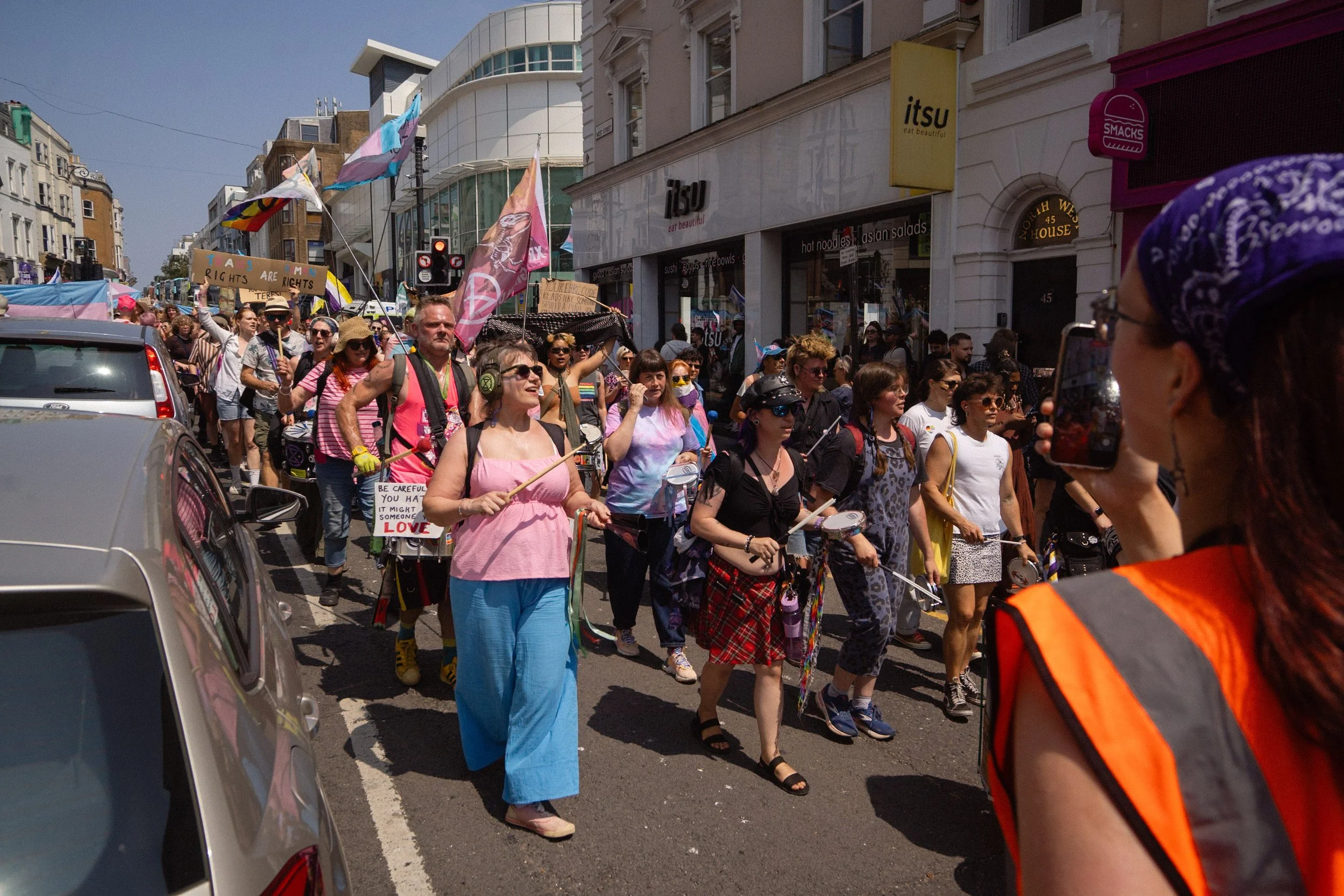
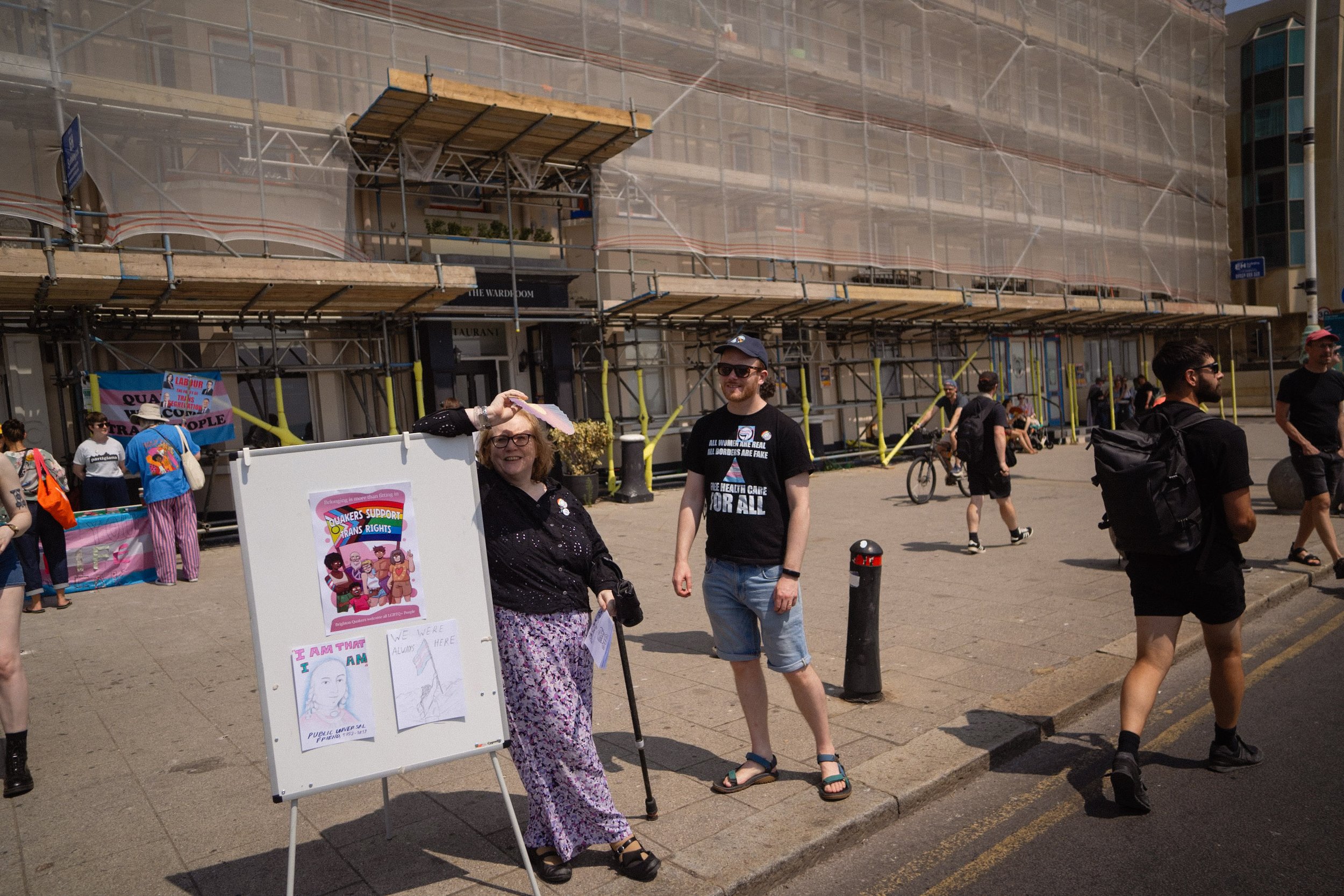
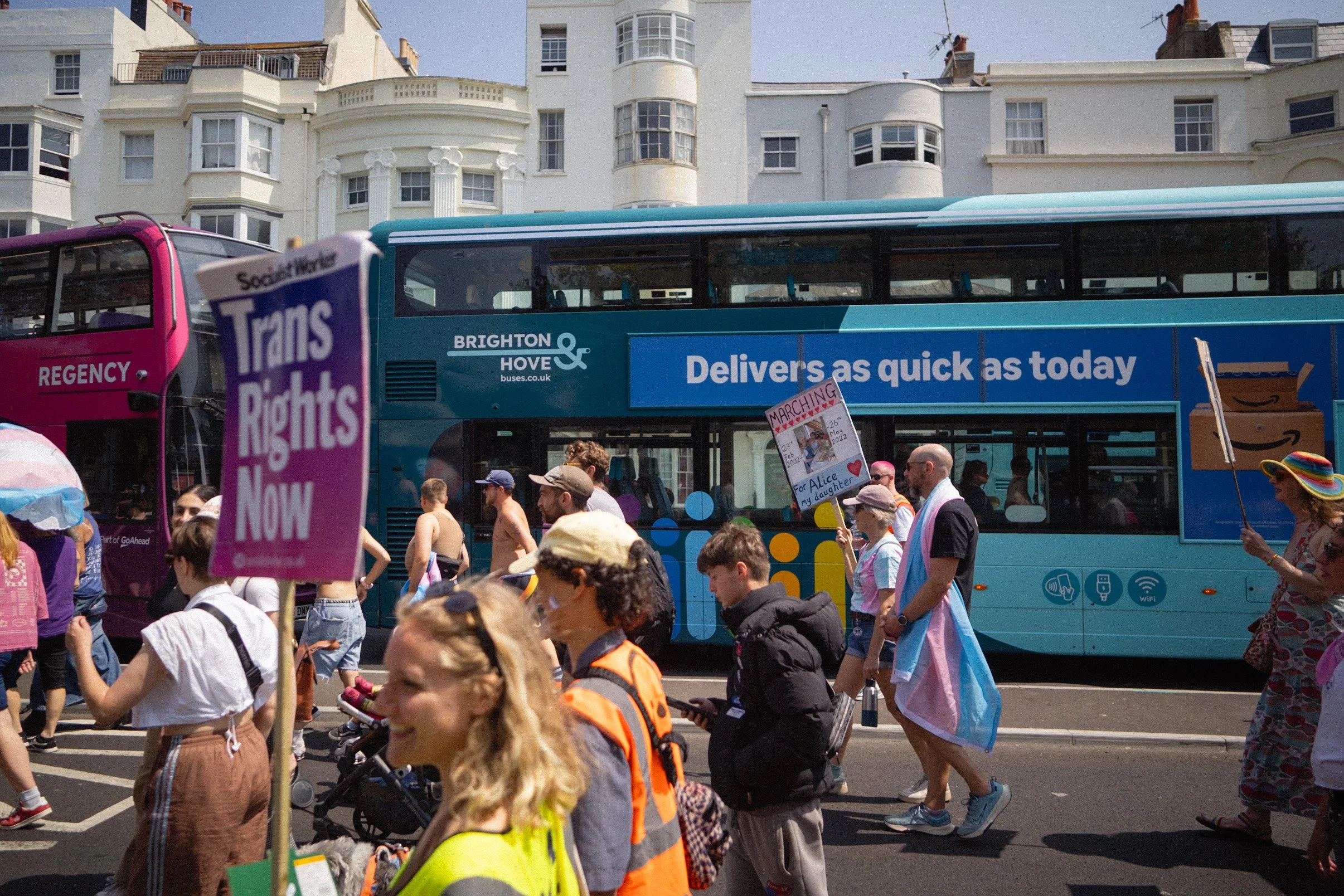
That it takes place in Brighton is appropriate. The city has always understood that visibility is not vanity. It is survival.
The people who turned out on the 18th of July were not making a statement at anyone. They were living their lives on a sunny Friday afternoon, in a city that has always made room for exactly that.
The camera just happened to be there.
Until next time, keep marching