Brexit, my Brexit
O Captain, my Captain — our fearful trip is done.
Except it isn't done. That's the problem. We don't know where we're going.
Ten years ago this month, Britain pressed a button it couldn't un-press. Twenty-third of June, 2016. The margin was thin — 52 to 48 — but the consequences were not. A decision made in the space of a single day has been ricocheting ever since, a butterfly flapping its wings somewhere over a polling booth in Sunderland, and a decade later the storm has not arrived, but something is building on the horizon that we cannot quite name.
"The unknown sent us on a trajectory into the unknown."
That is Brexit's defining condition. Not the trade deals or the queues at Dover or the strawberries rotting unpicked in Kent. It is the shapelessness of what comes next. We voted to leave something. We never agreed on what we were arriving at.
An Englishman's Home Is His Kebab Shop
There is an old saying — An Englishman's home is his castle — and it contains within it everything you need to understand the Leave vote. The drawbridge. The moat. The idea that Englishness is a thing to be defended rather than shared, inherited rather than made.
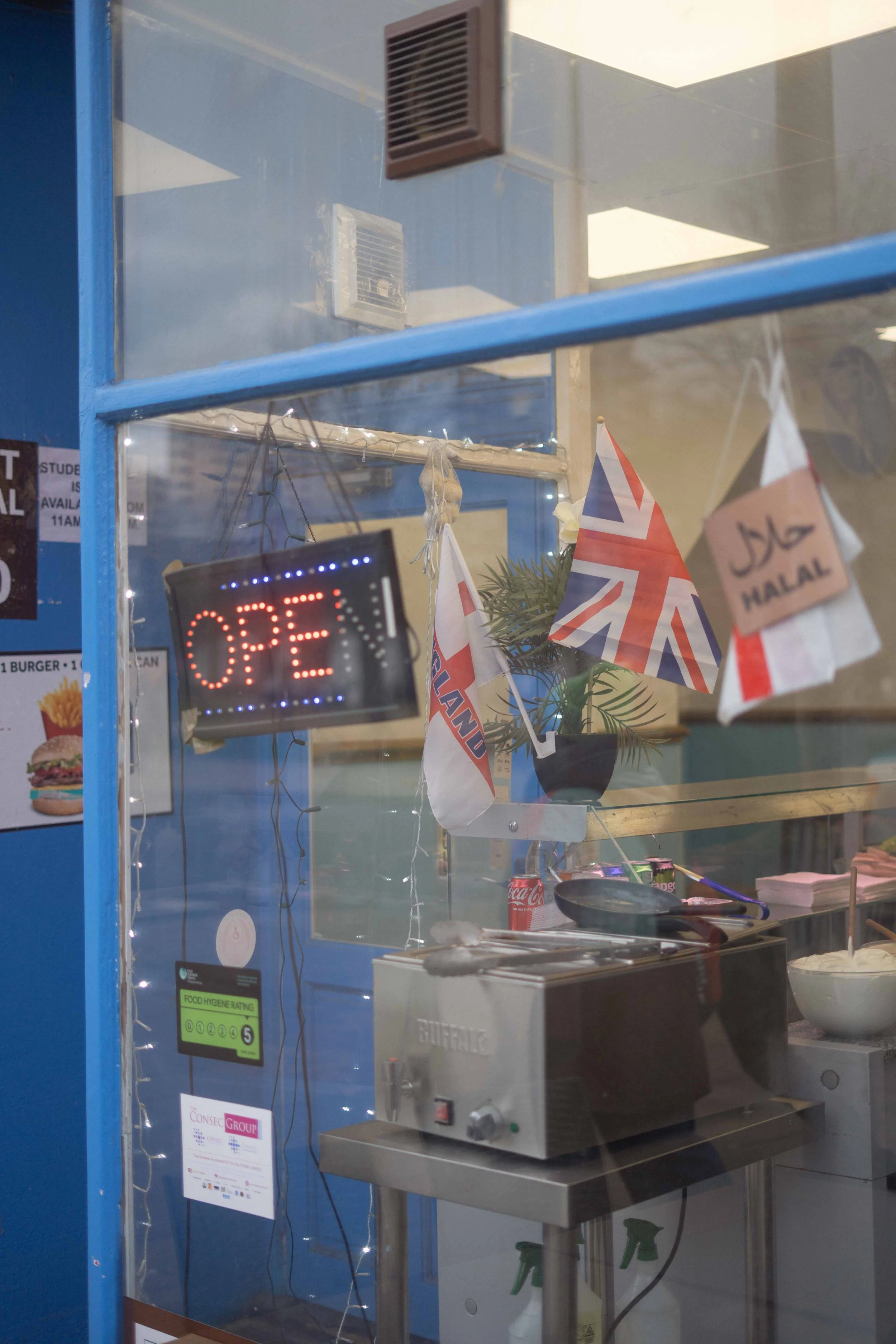
Walk the streets of any English town and ask it what England actually looks like. The answer is not the castle. It is the kebab shop: Union Jack in the window, halal sign alongside it, England flag between the two, the OPEN sign glowing red. It is the most English thing imaginable and the most unEnglish thing imaginable, simultaneously. It is the country that voted to close the door, feeding itself every night through the gap underneath it.
This is not irony. It is identity. Britain has always been a country of contradictions held in uneasy balance. Brexit did not create the tension — it detonated it.
The Spell Cast in June
Spells & Charms. Harry Potter. Lord of the Rings. The Hobbit. Game of Thrones. Britain sells its mythology to the world by the container-load and cannot understand why the world keeps arriving to live inside it.
The referendum was a spell cast by people who wanted their country back. What they got was a country more contested, more divided, and more uncertain of itself than at any point in living memory. The spell worked. Just not the way they intended.
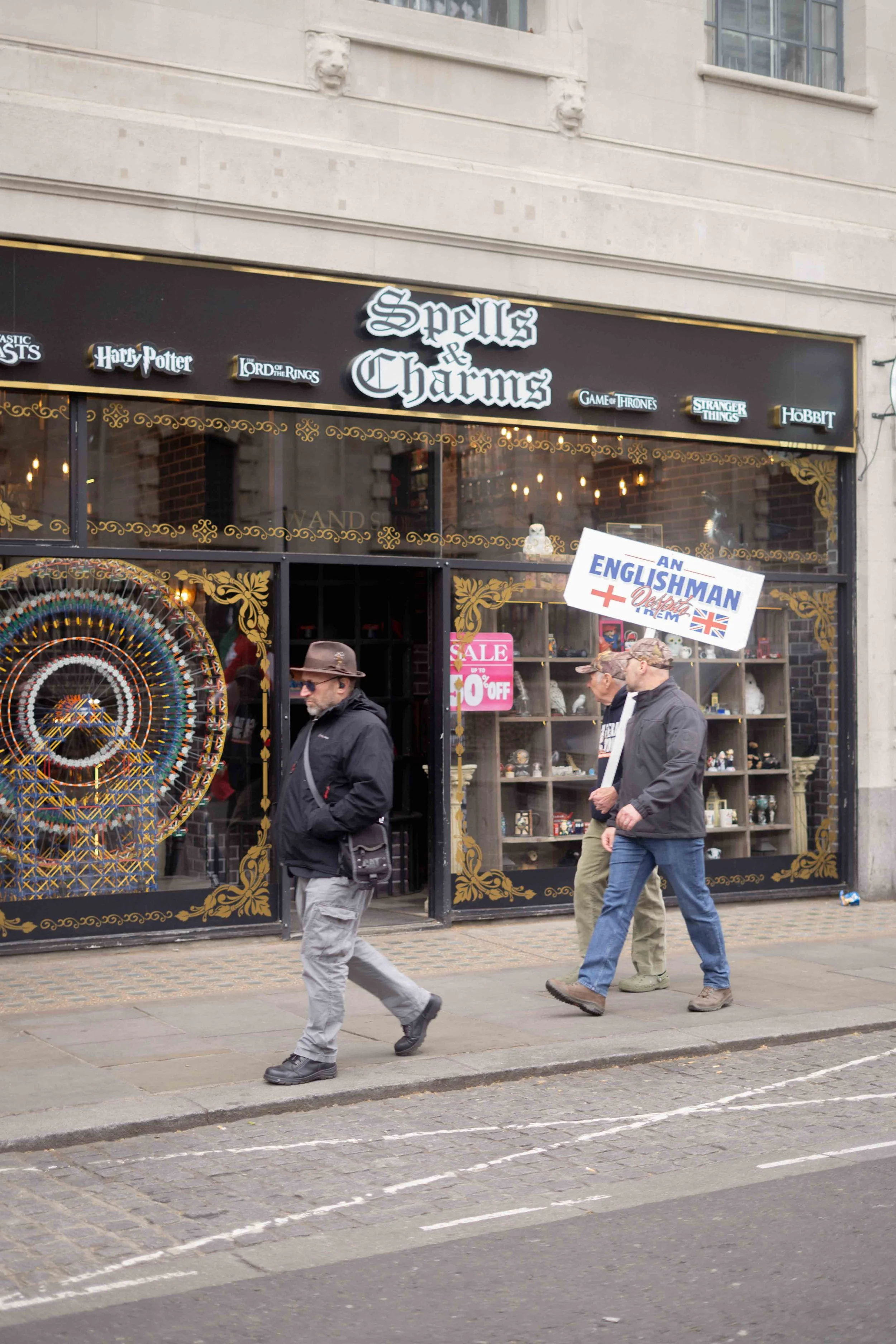
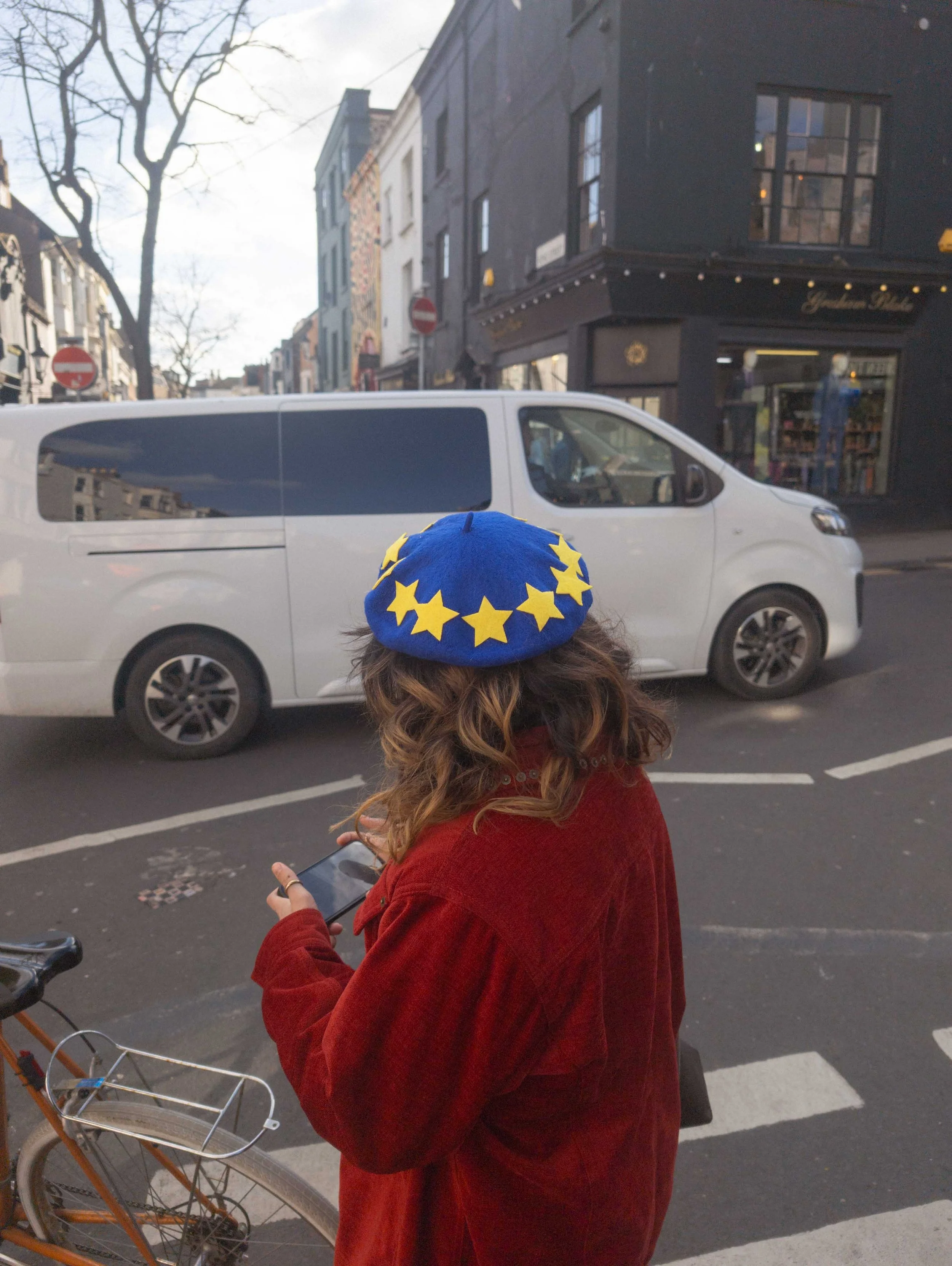
You can still see the believers and the bereaved on the same streets, sometimes passing within feet of each other without acknowledgement. A woman in a blue beret ringed with yellow stars, scrolling her phone at a Brighton crossroads. Men carrying placards through the old city. Neither speaking to the other. Both certain they are right.
The Era of Salvage
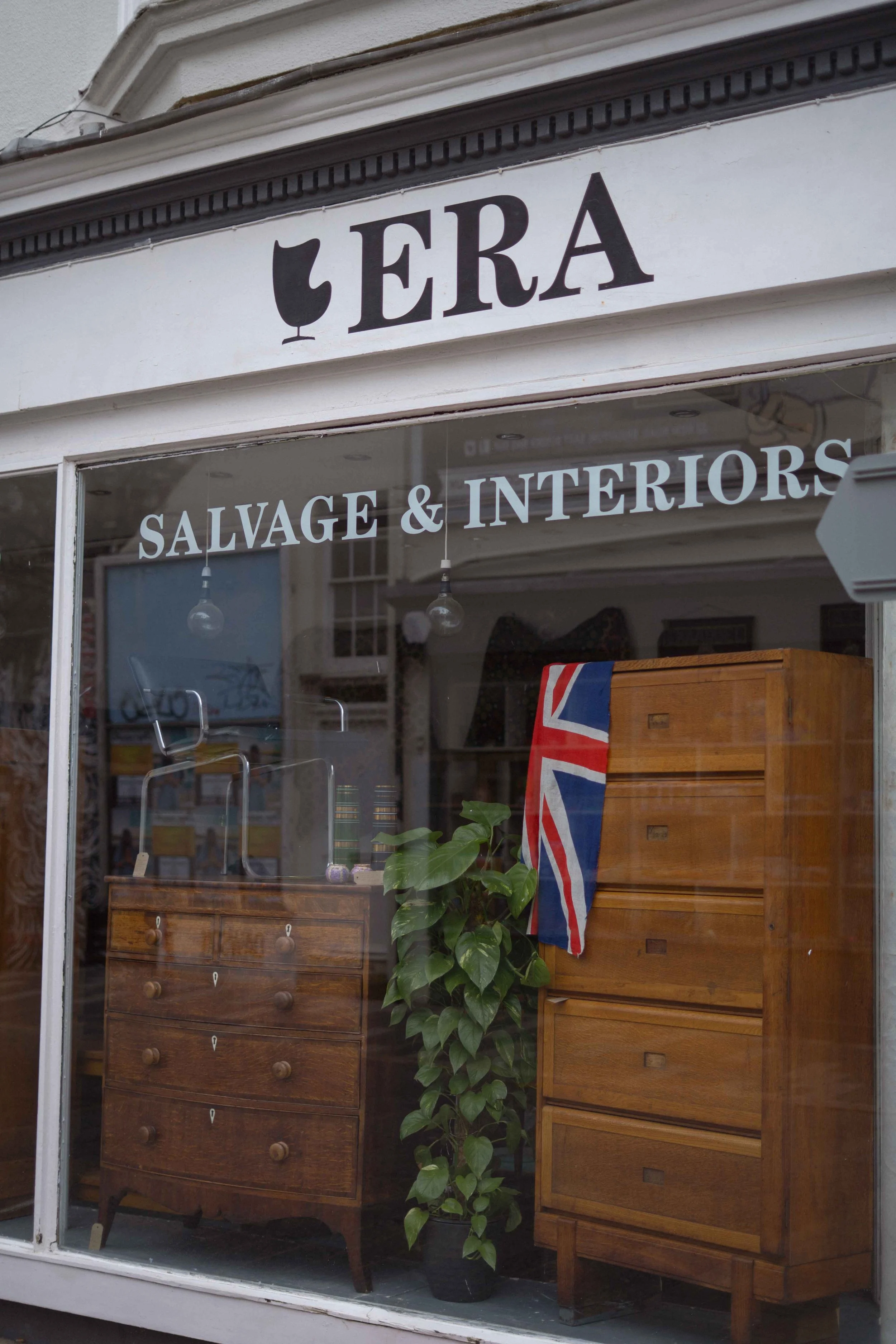
ERA — Salvage & Interiors. A Union Jack draped between two wooden chests of drawers in a shop window, half-decorative, half-forgotten. There is something in that image that captures the post-Brexit condition perfectly: a national symbol repurposed as furniture dressing, displayed alongside things that belonged to another time, offered for sale at an uncertain price.
Britain has been in the salvage business since 2016. Salvaging its reputation. Salvaging its institutions. Salvaging its sense of itself. The interiors have been rearranged; nobody is entirely sure they prefer the new layout.
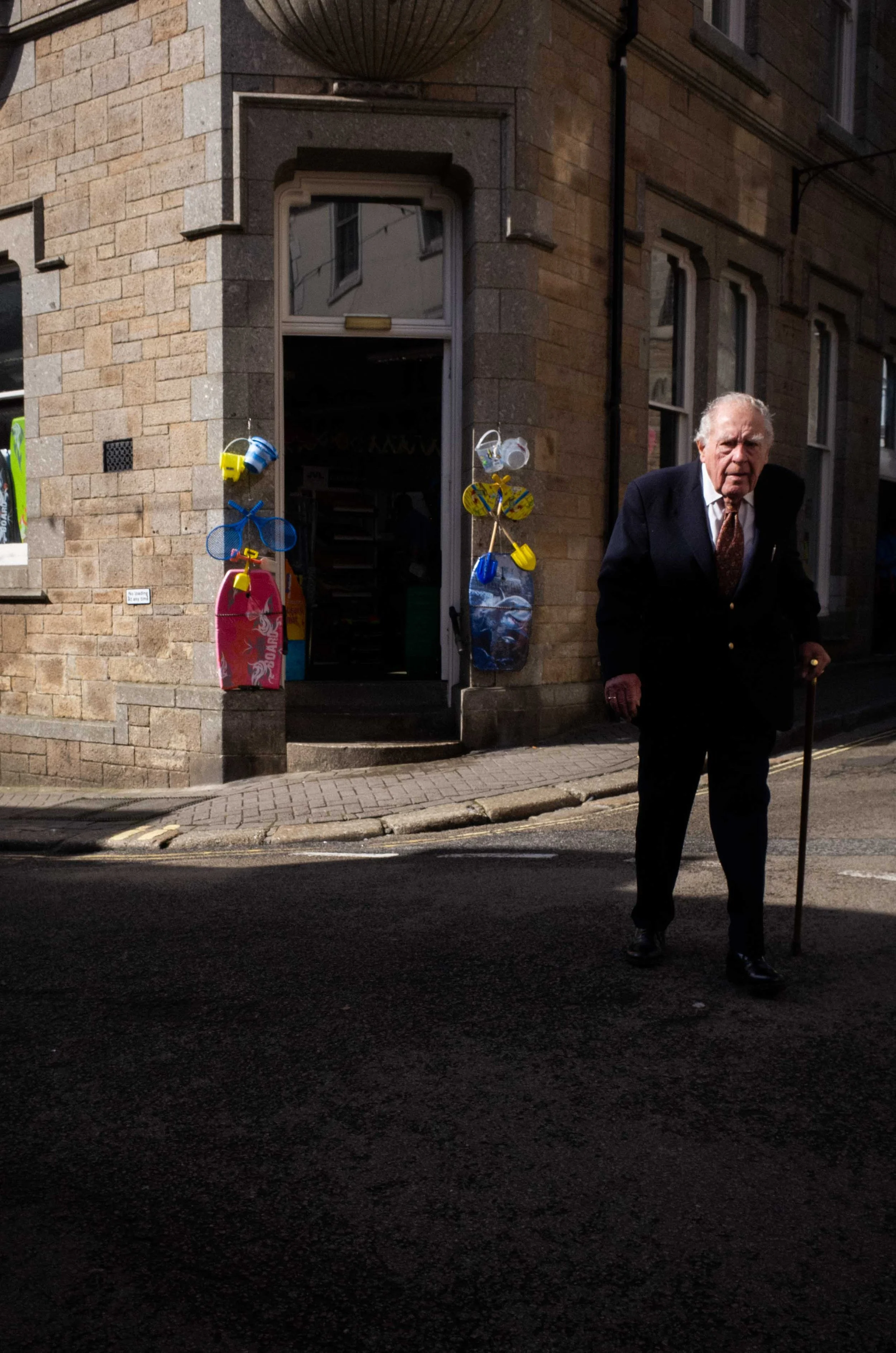
The elderly man walking the seafront town in his dark suit, cane in hand, dressed for a formality that the street no longer requires — he carries himself with the bearing of a country that remembers itself differently. Whether that memory is accurate is another question.
Little Britain, Under Construction
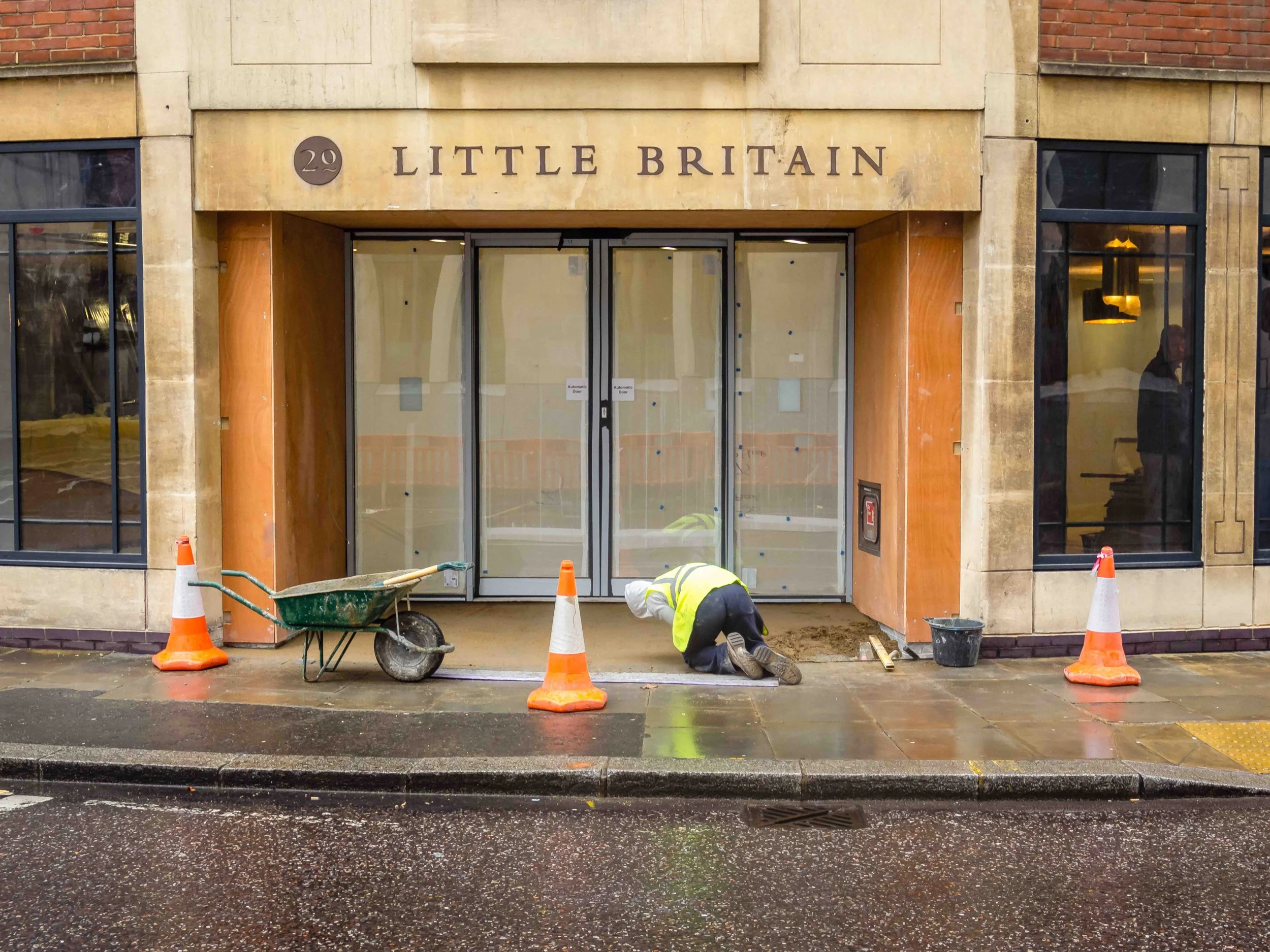
There is a building in London called Little Britain. Outside it, a worker in a hi-vis jacket kneels on the wet pavement, head down, working at something in the ground. The entrance behind him is boarded up. Cones everywhere.
It could be a photograph taken on the morning of 24th June 2016.
The vision of Little Britain — sovereign, self-sufficient, free from the bureaucratic grip of Brussels — has spent a decade under construction and remains, in important ways, boarded up. The project is not abandoned. But the entrance is not yet open.
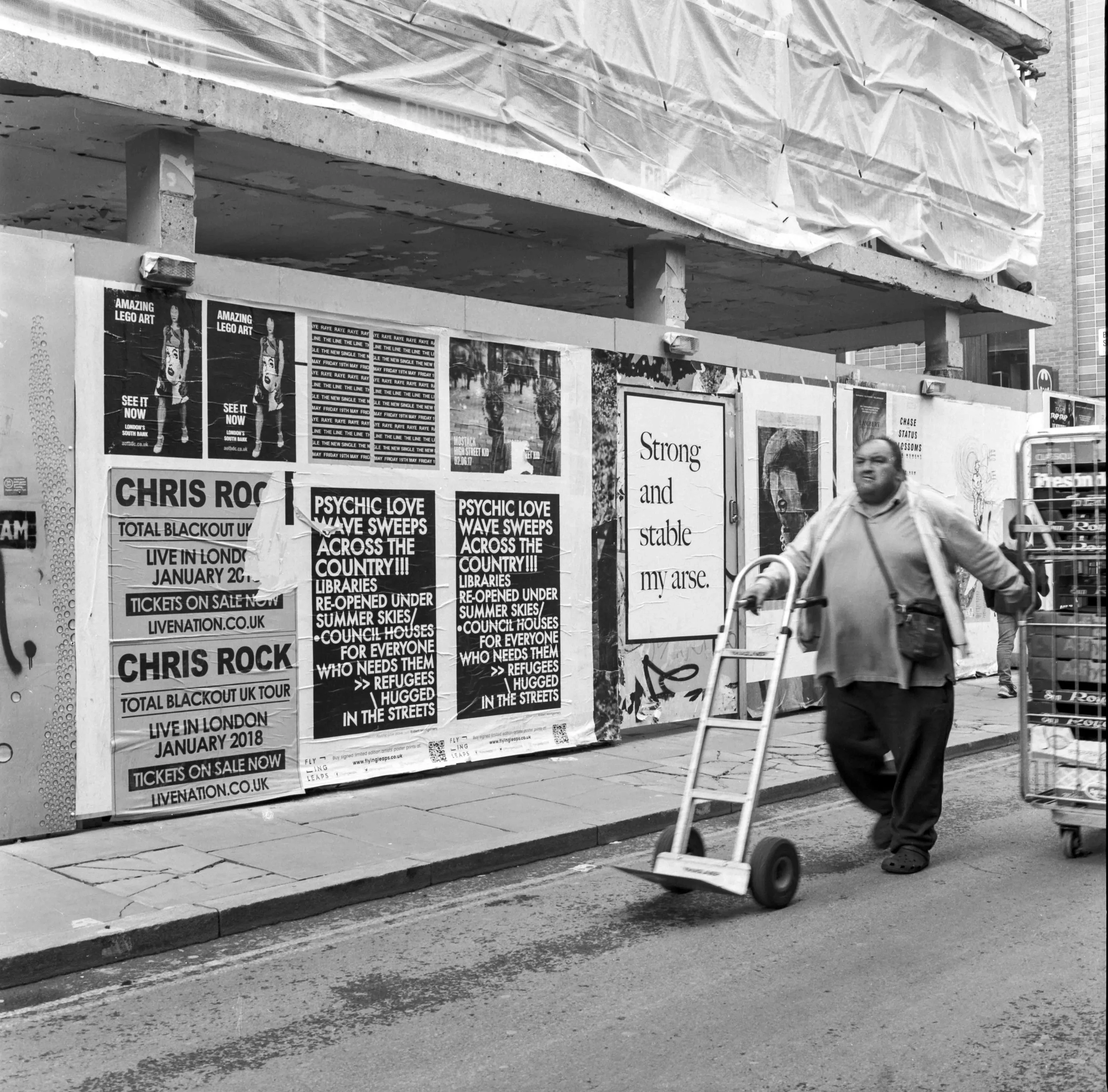
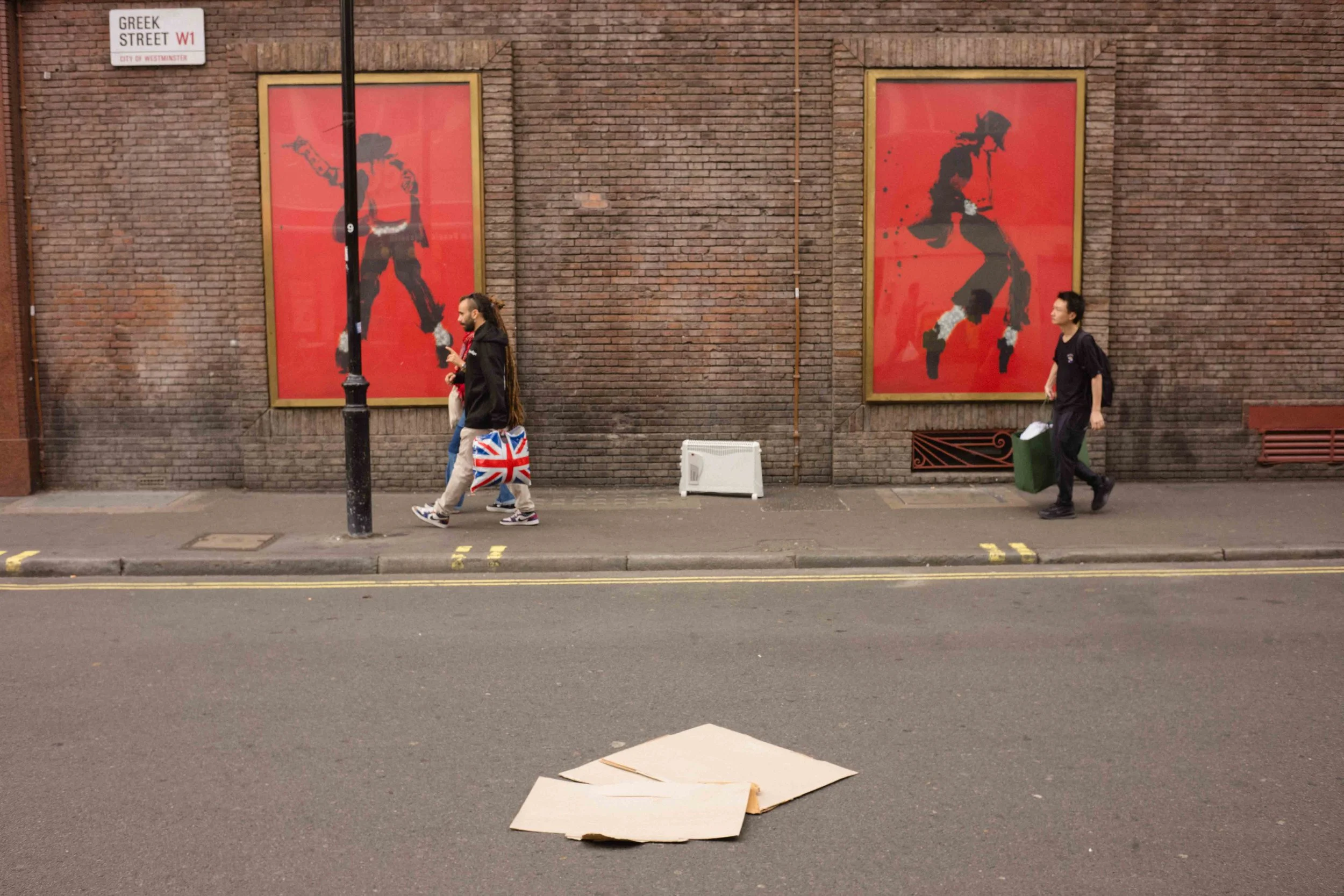
Meanwhile, the street outside carries on regardless. Multicultural, busy, indifferent to the political weather. On Greek Street, a man with long dreadlocks carries a Union Jack bag past a Chinese man heading the other way, both of them moving in front of twin red posters of Michael Jackson mid-dance. This is what London looks like. This is what Britain looks like, whether the dreamers of Little Britain want it or not.
The Trajectory
Here is what concerns me. Brexit did not emerge from nothing. It was the product of decades of austerity, deindustrialisation, and a political class that had stopped listening. The Leave vote was, in part, a howl from communities that had been told for thirty years that globalisation was working for them when they could see with their own eyes that it was not.
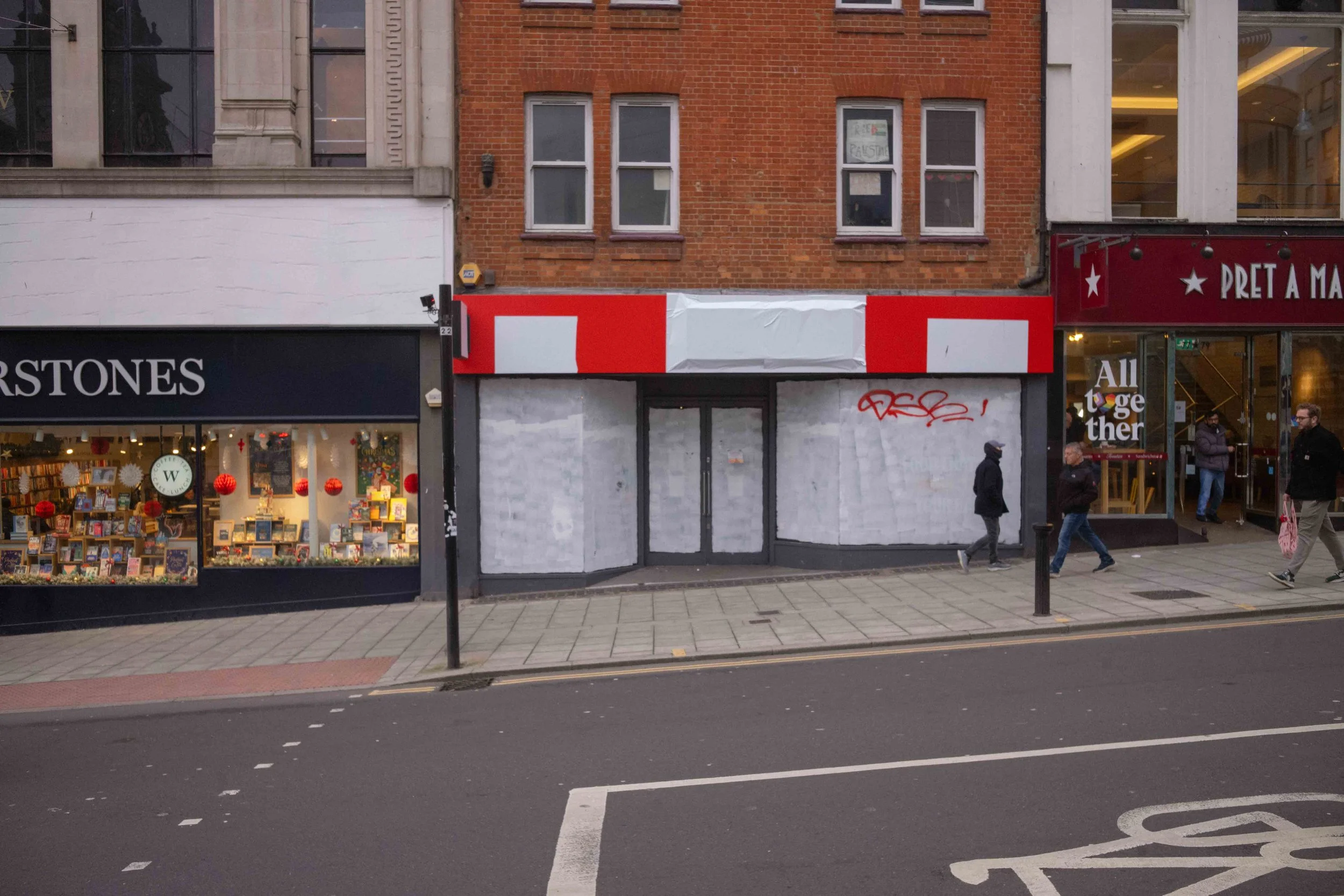
That howl found its expression in Brexit. But Brexit did not fix the thing that generated the howl. The shops are still boarded up — not just in London, but in every high street that Waterstones and Pret a Manger and "All Together" slogans cannot paper over. The anger did not dissipate. It continued downstream.
"The butterfly flaps its wings. Ten years later, the storm has not yet broken. But the sky has a particular colour."
The far right did not invent British disillusionment. It found it, already there, and offered it a shape. That is the butterfly effect of June 2016 that nobody in the campaign — Leave or Remain — wanted to acknowledge. When you destabilise a consensus without offering a replacement, you do not create a vacuum. You create a space that something else will fill.
We have not arrived there yet. That is the honest answer. We are in the ten-year corridor between the decision and its final destination, and neither door at either end is fully in view.
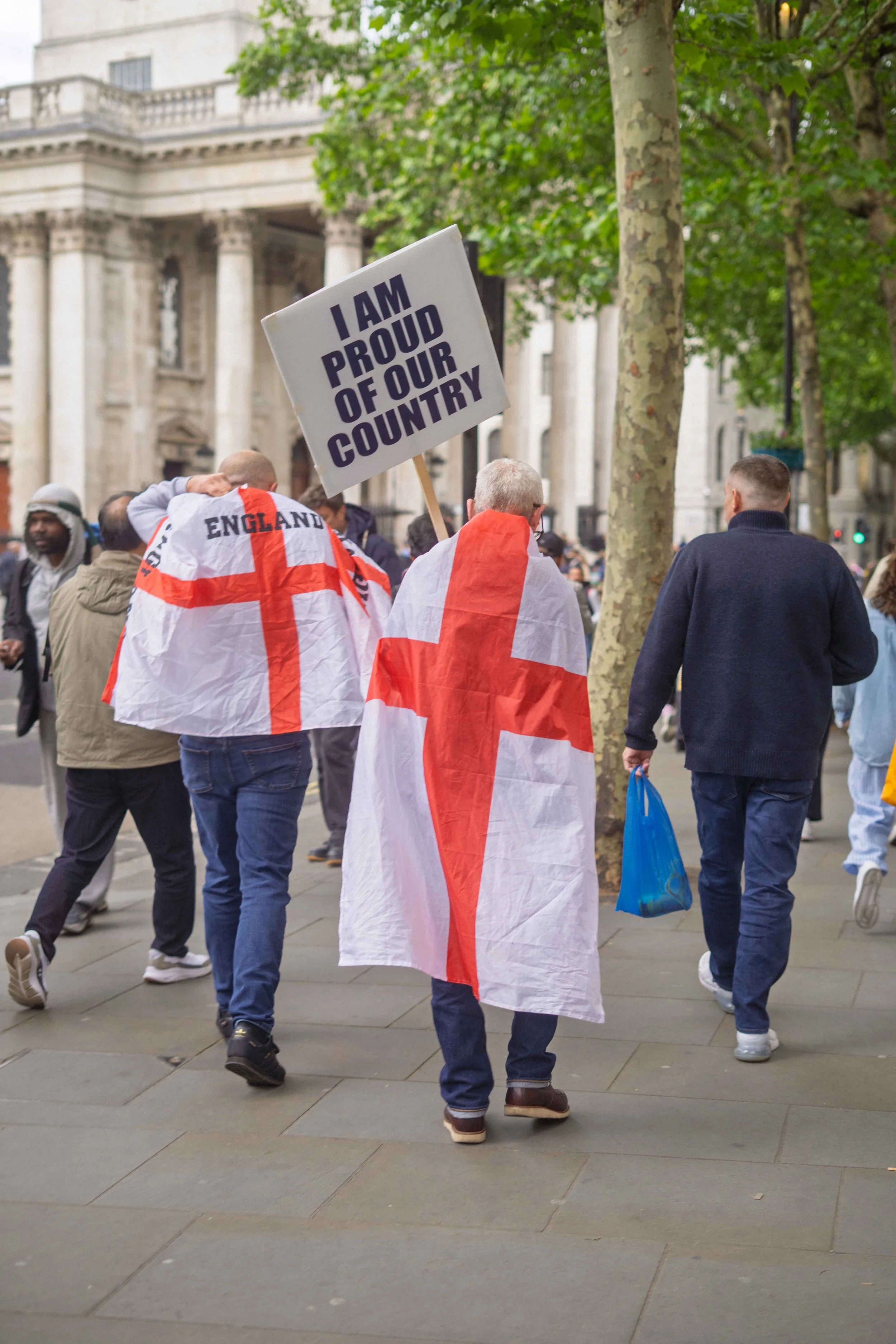
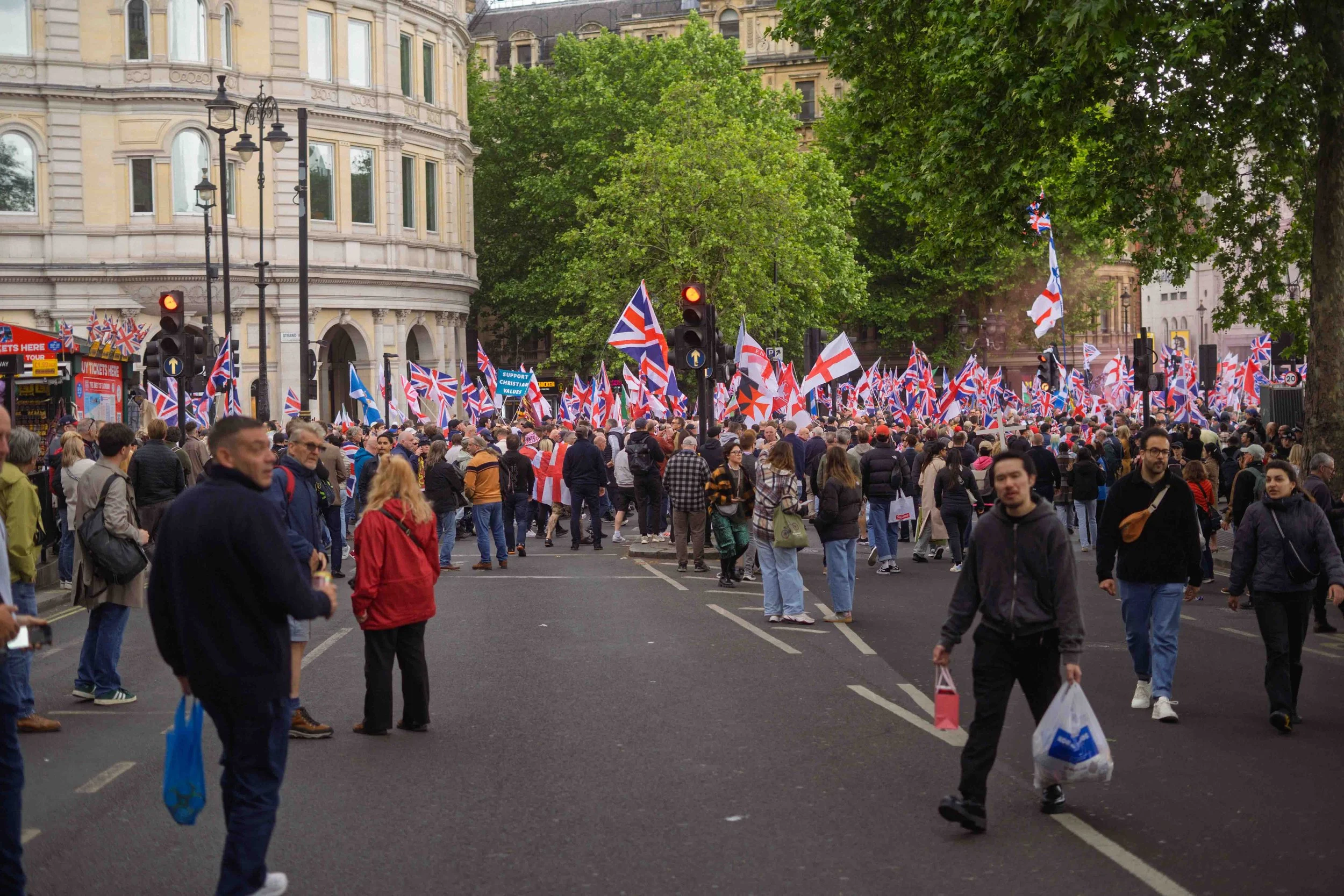
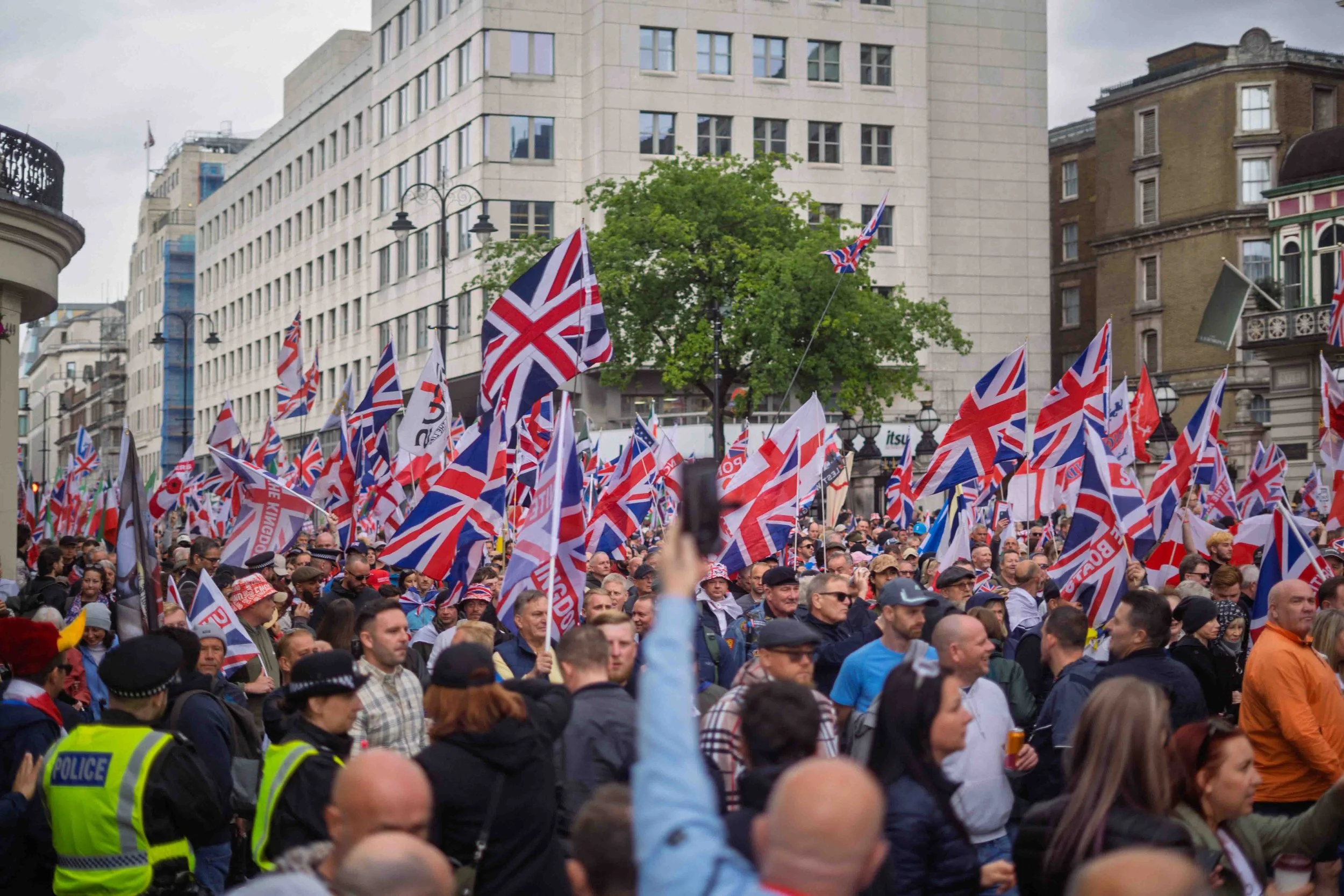
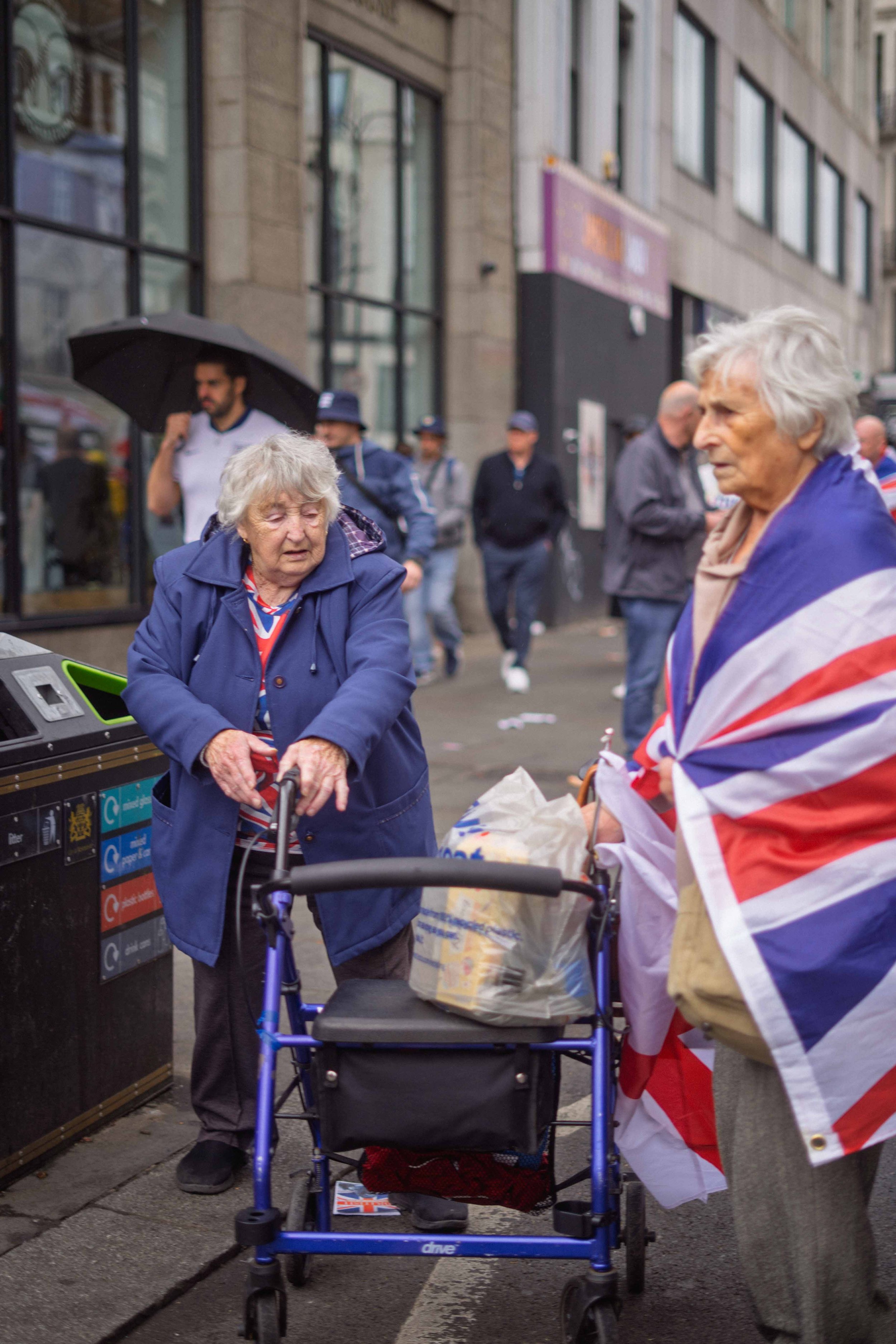
What England Is
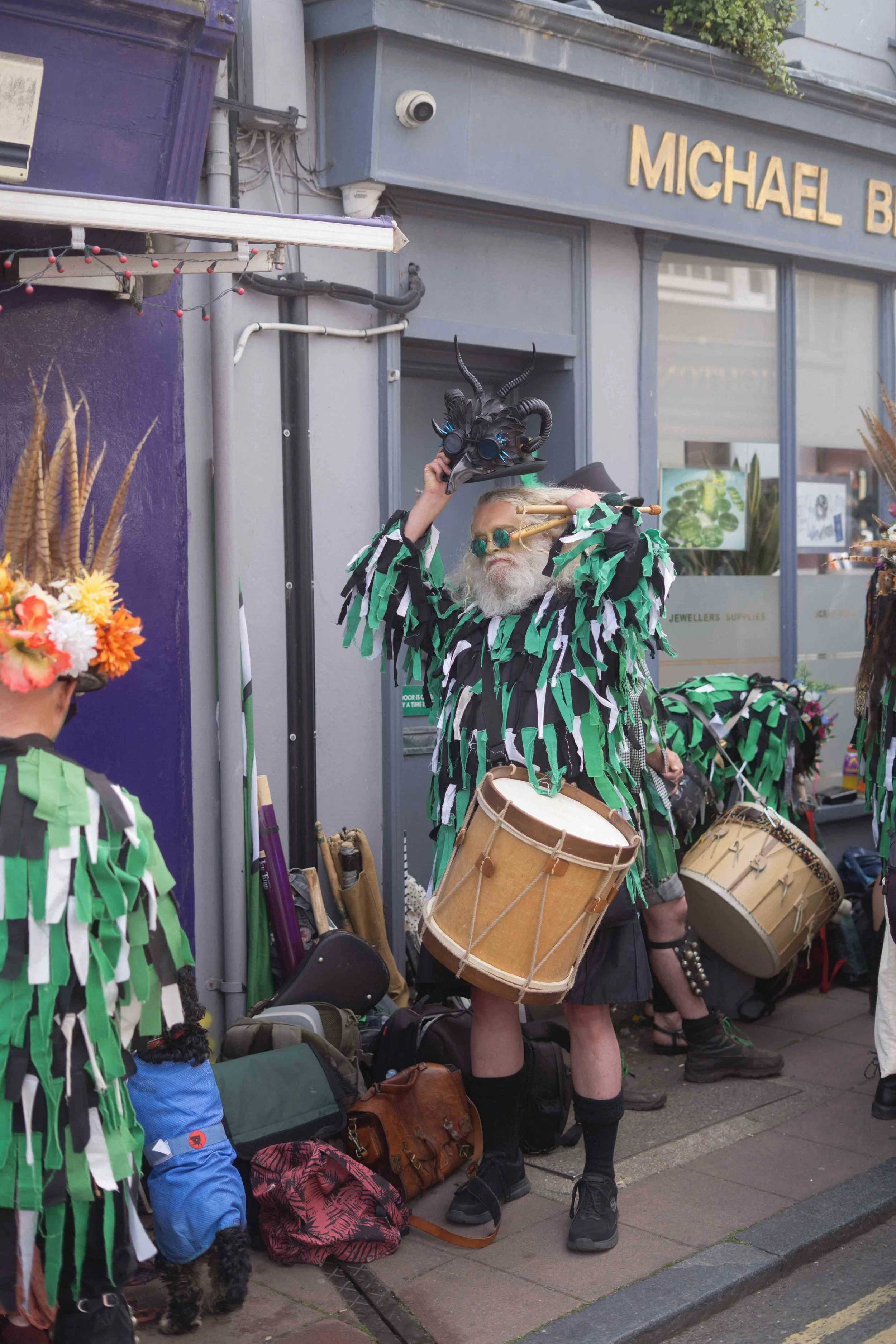
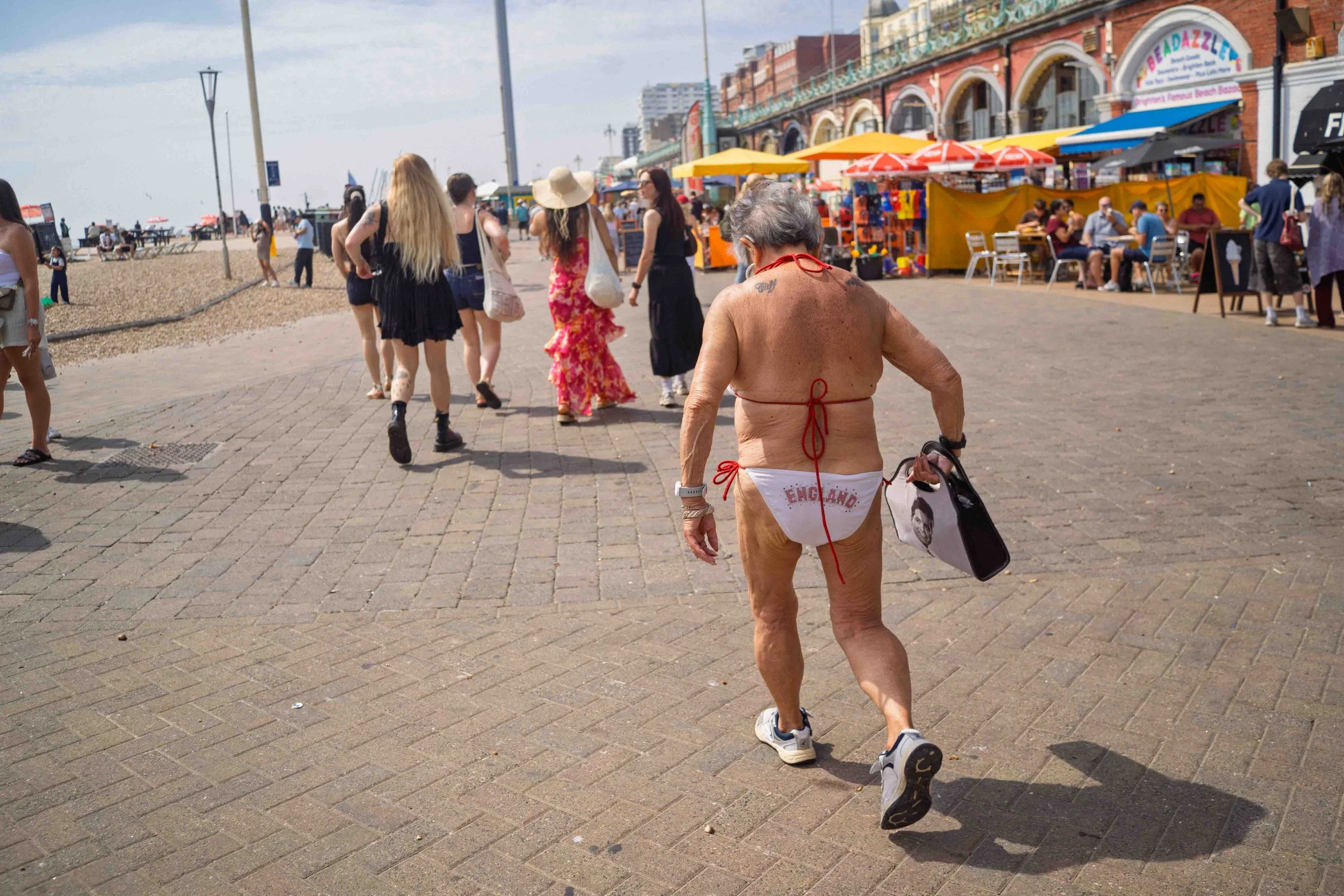
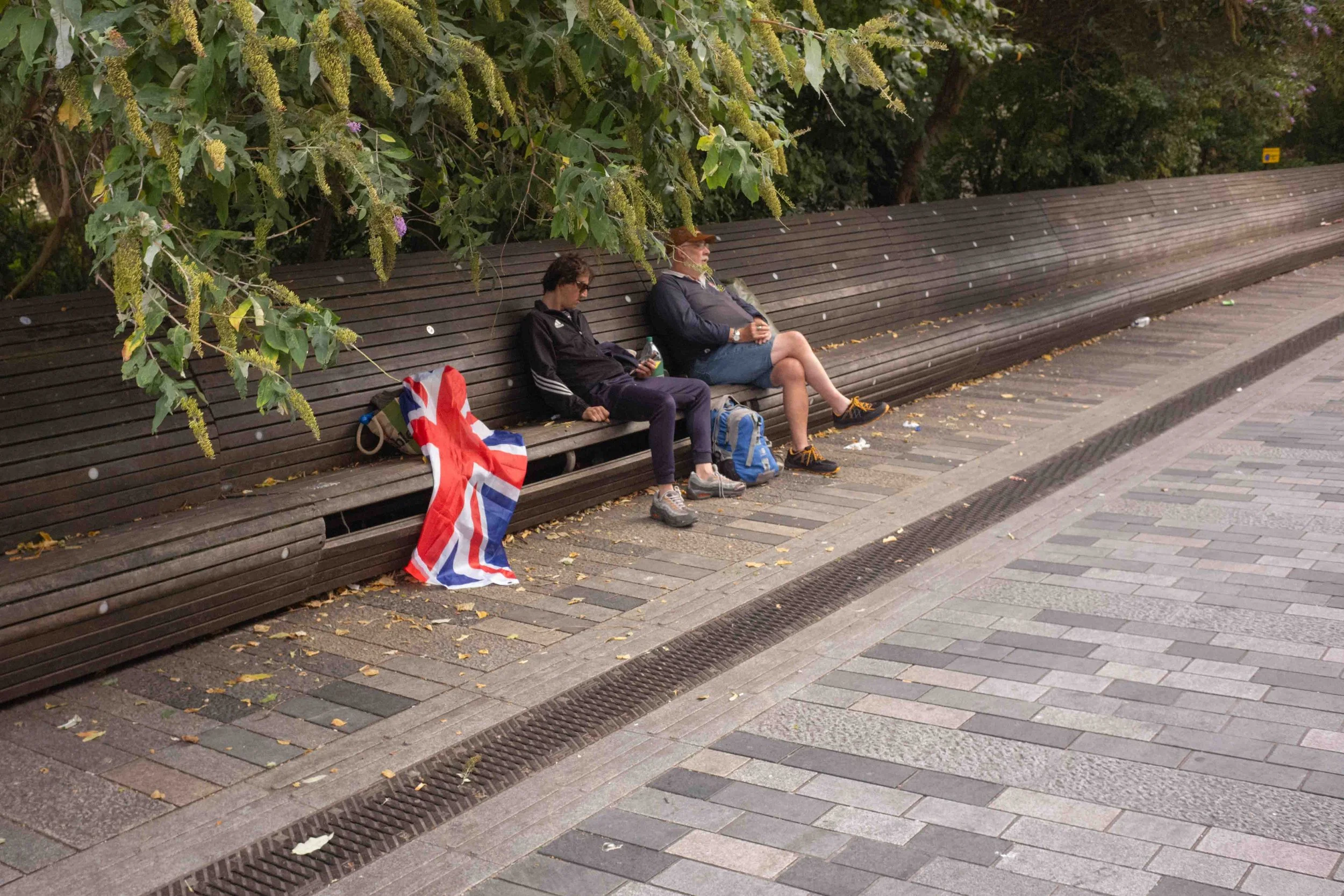
England, this summer, is an older man on a Brighton promenade in an England bikini, walking in the full sun without apology. It is Morris dancers in horned hats and shredded green coats keeping something old alive in a Brighton side street, whatever that old thing is. It is a Union Jack left on a park bench like something forgotten, or discarded, or simply put down for a moment's rest.
It is loud and quiet, proud and deflated, certain and entirely lost, all at once.
The kebab shop is open. The England flags are in the window. The halal sign is next to them. Whatever Britain thought it was voting for in June 2016, this is what it got: itself, unresolved.
The unknown sent us into the unknown. We haven't arrived yet. The question is where we're heading.
Until next time, keep snapping